#oneaday Day 90: Dream modding

The Dreamcast is a notoriously unreliable and temperamental console, particularly now the poor old thing is getting on a bit in years, so I've been meaning to look into optical drive emulators (ODEs) for a while, as I mentioned here.

Well, today I finally got together all the bits for one of these possible ODE solutions, known as GDEMU. This included the GDEMU board itself along with a mounting kit that plugs the gap left behind when you remove the Dreamcast's original GD-ROM drive, and also allows easy access to the "disc change" button for multi-disc titles. (It also supposedly helps with airflow; having a honking great hole inside the Dreamcast supposedly isn't great for that.)

I'd looked up instructions on how to fit a GDEMU and for the most part it seemed like a very simple job. I normally hand over anything that requires delicate use of tools to my wife as she's much less cack-handed (and much more handy) than I am, but this looked like something I thought I could probably do myself. So I decided to be brave and to do it myself.

And you know what? It was easy. There were just a few steps to the process that went roughly as follows:

  • Remove three screws from the bottom of the Dreamcast
  • Remove the modem (it just pops out)
  • Remove the screw that is revealed when you remove the modem
  • Pop off the top of the Dreamcast
  • Remove three screws holding the GD-ROM drive in place
  • Remove the GD-ROM drive (it's just plugged directly into a connector that sticks out from the bottom of the casing)
  • Screw the mounting kit to the GDEMU board (I forgot to do this, but getting the board back out to do it was easy… I then also forgot to put the button for the disc change in the mounting kit, but, again, it was easy enough to undo the work and correct the mistake)
  • Stick the GDEMU board into the socket the GD-ROM drive went in
  • Screw the GDEMU board into the Dreamcast case where the GD-ROM drive used to be
  • Put the case back together
  • Put the four screws in the base back in
  • Put the modem back in
  • Done!

Most places online also recommended putting some resistors in the power supply between the 12V pin and one of the three Ground pins. This is apparently because without the original GD-ROM drive drawing from the 12V… whatever it is, the inside can get a lot hotter than it would do normally, but this can be avoided with the resistors, which basically trick the power supply into thinking the GD-ROM drive is still drawing power. I don't entirely understand everything about it, but I understood what I had to do, which was twist the wires on three resistors together, then poke one end in the hole with the 12V pin, and the other end in the hole with one of the ground pins.

This was the one part of the procedure I really wasn't sure about. I haven't done any sort of fiddling with electronic components before (outside of maybe a term's work on very simple circuits — mostly logic gates — in secondary school Design and Technology and Science classes) so I was a bit nervous I'd poke something in the wrong hole and make things go bang. I was reassured by some people who take apart old computers and consoles all the time that it was very unlikely putting a few resistors in would make anything go bang, but I was still a bit concerned the resistors might not stay where they were supposed to be or would short-circuit something.

It took a few attempts to get it done to my satisfaction, but eventually I got the resistors in the right place and was satisfied that they were as secure as they were going to be without getting hot glue involved, and I put the whole shebang back together.

And, believe it or not, when I booted it up, it all worked first time! I was expecting something to go wrong somewhere, but no — everything went very smoothly, and I now have a Dreamcast that has a nice selection of games built right into it. No worrying about the drive failing mid-game and causing a reboot to the system menu; no worrying about discs not reading properly; no worrying about region, either.

I'm very happy with how things went, and I'm looking forward to using my Dreamcast a lot more now it's been "revitalised" like this. It also encourages me to look into similar solutions for other consoles — particularly the Saturn. I have a Saturn that I acquired at some point (but no power supply, AV cables or controllers… or indeed games) that it would probably be fun to get loaded up with games in the same way. So I'll probably do that at some point.

Long term I'd like to get all my classic systems hooked up with a solution like this, such as the Everdrive range for cart-based systems. As fun as it is to collect for old consoles, I've been burned just a few times too many by cartridges that don't work — I have two copies of Desert Strike for SNES that don't work in the exact same way, for example — plus I don't really have a lot of room left for collecting, either.

There's still a certain magic about playing games on classic hardware — and part of that, admittedly, is using original media; the clunk of the cartridge slot on consoles like the SNES in particular is a fun part of the experience. But as many of these old games are starting to run into reliability issues by virtue of their age, it's great that we have alternative solutions that allow us to still enjoy the consoles themselves, even if the media is past its best. And for everything else, we have emulation and modern, officially licensed solutions like the Evercade.

Now maybe time for a bit of Dreamcast before bedtime, I say.


Want to read my thoughts on various video games, visual novels and other popular culture things? Stop by MoeGamer.net, my site for all things fun where I am generally a lot more cheerful. And if you fancy watching some vids on classic games, drop by my YouTube channel.

If you want this nonsense in your inbox every day, please feel free to subscribe via email. Your email address won't be used for anything else.
#oneaday Day 87: The most toxic person in retro gaming

One of the things that continually surprises me is quite how toxic the retro gaming community, particularly in the UK, can really be. I'm fortunate that I have only ever really encountered people who are thoroughly nice and lovely — and, even better, have been able to draw inspiration from them to make my own creative work better.

In this regard, I'd particularly like to throw some love (and some links to their YouTube channels) at, in no particular order and off the top of my head, RoseTintedSpectrum, WhatHoSnorkers, Timberwolf, Gouldfish on Games, Dudley of Yesterzine, Kim Justice, Slopes Game Room, Digitiser, More Fun Making It, Beyond the Scanlines, Gears of Games, Yawning Angel and doubtless myriad others that I'm forgetting. All of these folks are thoroughly lovely, supportive people that I am happy to have had direct contact with to varying degrees at various points over the course of the last few years. Click those links and subscribe to all of them. They do amazing work.

Sadly, there's a really unpleasant underbelly to the retro gaming community in the UK, and a lot of it centres around an individual known variously as "George Bum", "George Cropper" (not his real name), "Funky Spectrum" and any number of other aliases. "George" is a serial harasser who has been thrown off YouTube for his behaviour, and now festers in his own filth on his own little website (which, no, I'm not linking to), surrounded by chirruping sycophants who hang on his every shit-encrusted word — many of whom are very much old enough to know better.

I'm not pulling any punches here: "George" is an absolutely vile human being, and the way he has picked on several members of the retro gaming community for years at this point without any sort of punishment is utterly repugnant. He has particularly targeted the YouTuber Octavius with stalker-like obsessiveness, and is almost as bad with his fixation on Peter "Nostalgia Nerd" Leigh and his Norwich-based vegan bar-cum-arcade Barcadia. Most recently, he's had Kim Justice in his sights, because he thinks her well-researched book is not as good as his AI-generated drivel that he listed on Amazon for £250.

And yet no-one does anything about him. Because there's not really anything that can be done about this festering waste of space any more.

He's in his element on the Twitter of 2024, which is a disgusting sinkhole full of the absolute worst people on the entire Internet — many of whom are openly spouting their garbage under their real names — although I take some small comfort from the fact that anyone with any sense has abandoned the platform long ago.

He's been banned from YouTube for his harassment videos. (Of course, he maintains he did "nothing wrong".) Now, at least, he's confined to his stupid website. Sadly, as it's self-hosted I suspect there's not much anyone can really do about him short of actually raising a legal objection to some of the things he posts on there. And I doubt anyone wants to go through the time, energy and expense involved in doing that.

Which sucks, really, because it means this festering boil on the arse of UK retrogaming will never truly get lanced. All I can really do is encourage anyone reading this to never go anywhere near him. He is Bad News.


Want to read my thoughts on various video games, visual novels and other popular culture things? Stop by MoeGamer.net, my site for all things fun where I am generally a lot more cheerful. And if you fancy watching some vids on classic games, drop by my YouTube channel.

If you want this nonsense in your inbox every day, please feel free to subscribe via email. Your email address won't be used for anything else.
#oneaday Day 83: Modernising the old stuff

One of the nice things about being into retro gaming and computing these days is that there are a lot of very convenient things you can use that simply weren't a thing Back In The Day for one reason or another. And while I'm not a huge fan of doing major modifications to classic hardware that effectively rips out the original "soul" of the machine, I do want to share a few things that just make life a little bit easier for various use cases.

SDrive-MAX (Atari 8-bit)

One of the most common points of failure on classic hardware is old media — both in terms of the media itself, and the hardware required to read it. I have several disk drives for my Atari 8-bit computers, and none of them quite work properly. One of the 1050s can be coaxed back into behaving itself by taking it apart, giving it a poke and putting it back together again, but that's a bit of a pain and I'm always wary of doing so.

So what's the alternative? Well, enter the SDrive-MAX, a little gizmo that plugs into the Atari 8-bit's SIO port (precursor to USB, fact fans) and effectively acts as a virtual disk drive. Like most convenient add-on gizmos these days, it's based around a little Arduino mini computer that basically pretends to be an Atari disk drive. Set it up with the default gubbins and it automatically boots to a convenient menu screen — using the Atari's own OS, not anything you've "bolted on" to it — where you can choose from disk images and executable files you've put on an SD card. You can even create new disk images to save things — such as documents in productivity software and saved games in games — and mount multiple disk images simultaneously for easy swapping between.

It's a lovely little thing, and has effectively removed most of the need I might have for a classic Atari disk drive. There are some old files and documents trapped on old Atari floppies that I'd like to find a solution to preserve at some point, but if I just want to play a game or something on real Atari 8-bit hardware, the SDrive-MAX is all I need.

UltraSatan (Atari ST)

A similar sort of thing for Atari ST is the UltraSatan. This, once again, is a little gizmo you plug into a port on the base spec micro without having to make any modifications, and it allows you to load things from SD card rather than having to rely on floppy disks. There are ways to make it boot floppy disk images, but by far the most convenient thing to do is set it up as a virtual hard drive and boot everything from there.

One of the most popular things to do in this regard is contact a slightly intimidating member of the Atari enthusiast community who has diligently worked to convert a massive selection of Atari ST games to run from hard drive. Not only that, but he's set a lot of them up to support save states and quick quitting back to the desktop without having to reboot the machine — and he's also put in the work to ensure that the vast majority of things work on all variants of the ST's operating system, thereby completely eliminating one of my biggest bugbears with the ST: the fact that some games will only work on certain models of ST.

Like the SDrive-MAX, the UltraSatan fitted with the "PeraPutnik" driver and hard drive image turns the ST into a ready-to-go gaming battlestation, loaded up with every game you might possibly want to play (and some you'll never want to touch). And because using it doesn't involve faffing around with anything inside the ST — it plugs into the hard drive port that already exists on most STs — you can still use your old floppies, too.

MemCard Pro 2 (PlayStation/PlayStation 2)

One thing PlayStation enthusiasts have almost certainly run into at some point is the challenge of remembering which memory card has what saved games on it. If you have a large PlayStation and PlayStation 2 collection, it can be easy to lose track of what is saved where, unless you're diligent about labelling and cataloguing your cards, which I'm willing to bet most people are not.

Enter the MemCard Pro 2, another little gizmo built on a tiny computer. This time, it's not for booting game images; it's for creating virtual memory cards on an SD card. This means you can easily organise and catalogue your saved games without having to constantly swap cards; changing memory cards is a matter of pressing a button on the device, or using the Web-based interface from your mobile phone to select a "card" directly.

It supports both PlayStation 2 and PlayStation memory cards, and the only limit to how many virtual cards you can have is the size of the SD card you put in it. And with PS2 memory cards being 8MB (and PS1 being 192KB!) you can fit a lot on even a small SD card.

Even better, if you're just getting into PlayStation collecting and you start a game for the first time, the MemCard Pro 2 can automatically detect and create a memory card specifically for that game. If you use this feature, you basically never have to switch anything ever again — though if you have existing saves on old memory cards, you'll probably want to spend some time copying them across to the MemCard Pro 2 at some point.

8bitdo Retro Receiver (PlayStation/PlayStation 2)

Finally, you can easily upgrade your PlayStation or PlayStation 2 to modern wireless controls with this lovely little thing. You can pair it with all manner of devices, including Sony's own DualShock 4 controllers to keep the authentic PlayStation feel, and finally bin all those old DualShock 2s that have been making weird rattling noises for years. Lovely stuff.

I'm looking forward to adding the Dreamcast GDEMU (and I also ordered an EverDrive for the N64) to this mix. Modernised retro consoles ahoy!


Want to read my thoughts on various video games, visual novels and other popular culture things? Stop by MoeGamer.net, my site for all things fun where I am generally a lot more cheerful. And if you fancy watching some vids on classic games, drop by my YouTube channel.

If you want this nonsense in your inbox every day, please feel free to subscribe via email. Your email address won't be used for anything else.
#oneaday Day 82: Ode to ODE

I've bought an ODE for my Sega Dreamcast. For the unfamiliar, an ODE is an Optical Drive Emulator: a replacement for ageing optical disc drives that instead loads disc images directly from some sort of flash storage — usually an SD card of some description.

I've been meaning to do something like this for a while, but the seemingly prohibitive cost of doing so was putting me off a bit. But it turns out I was looking at the absolute most expensive possible way of doing it, known as a "MODE" device. This is apparently a nice bit of kit, but a much more affordable means of doing almost exactly the same thing is known as a GDEMU.

I'm generally hesitant to go for console modifications because I'm not at all confident with my own skills at taking things apart, putting things that weren't originally supposed to be there inside, then putting it all back together again — and the instructions for doing so are usually put together by the sort of person who installs Linux for fun. But the Dreamcast GDEMU operation looks so simple I'm pretty sure even I can do it. You unscrew the case, unscrew the disc drive assembly, take the disc drive out and then plug the GDEMU directly into the same socket the disc drive was in. And that appears to be it — aside from a slightly scary-sounding suggestion that you stick some resistors in one of the bits of the power supply to help prevent overheating since the disc drive is no longer using that part of the power supply.

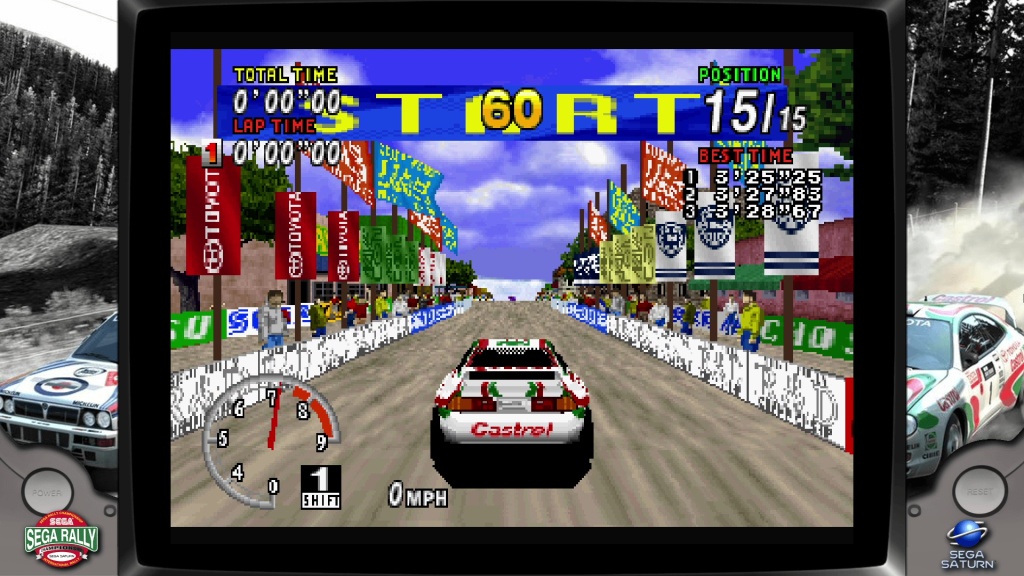
The way I see it is this: my Dreamcast is already a battered old thing that likes to reboot Sega Rally while I'm in the middle of playing it, and I'm pretty sure that the disc drive is to blame for all the woes I have with it. So if you take that out of the equation and replace it with something solid-state, then it will become much more enjoyable to use, and thus I will probably be more likely to use it on a more regular basis. If it all goes wrong, I'm left with a Dreamcast that didn't work all that well in the first place, so no biggie. And if it does work, I have a revitalised machine that will hopefully be a lot of fun to use.

The reason I'm considering this at all in the first place is because although Dreamcast emulation is in quite a good place, it's nowhere near as "near-perfect" as emulation for the classic cart-based systems and the PlayStation at this point. There are just enough little graphical glitches and considerations with Dreamcast emulation to make me want to take this approach with real hardware; I'm sure that will change with time, but for now, I think it's going to be a more practical, enjoyable option.

The Dreamcast is a delightful system with a small but well-formed library filled with some great arcade-style games. It's probably the last console where classic arcade-style games was a priority of the library — and while that probably contributed to its downfall as more ambitious, more hefty games took hold of the public's imagination on other platforms, it makes the Dreamcast a very appealing prospect today. An ideal system for when you don't want to get involved in anything too deep, but you still want to play a game.

So I'm looking forward to giving all this nonsense a go. It'll be a while before all the parts I need arrive, but I'll give a full report when they do.


Want to read my thoughts on various video games, visual novels and other popular culture things? Stop by MoeGamer.net, my site for all things fun where I am generally a lot more cheerful. And if you fancy watching some vids on classic games, drop by my YouTube channel.

If you want this nonsense in your inbox every day, please feel free to subscribe via email. Your email address won't be used for anything else.

#oneaday Day 80: Gaming specialism vs. generalised mediocrity

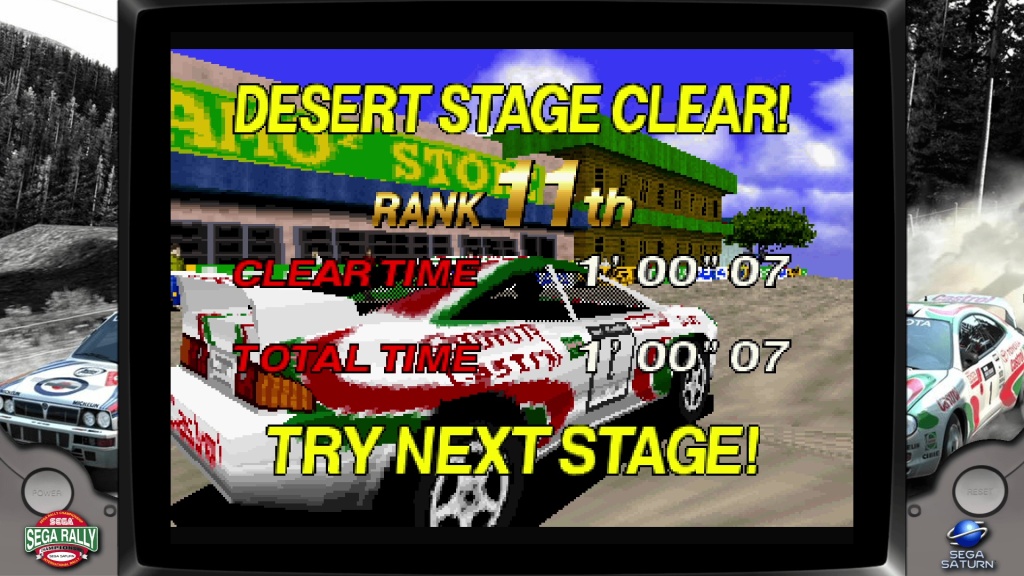
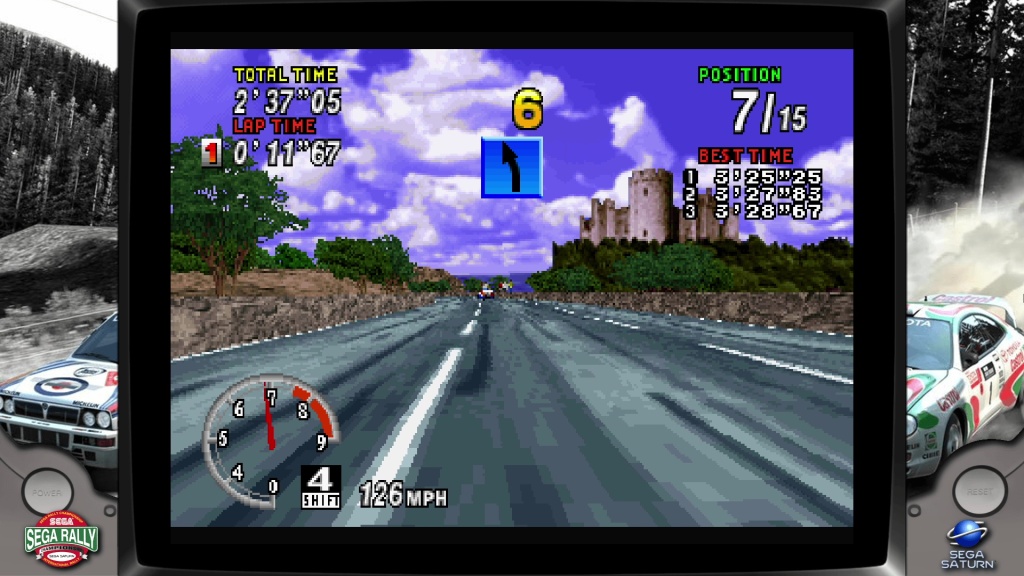
I decided to hop on board with a friend's "high score" (well, "best time", really) challenge over on his Discord today. The game? Sega Rally on the Saturn, a game (and console) I have precisely zero experience with outside of an occasional go on an arcade machine back in the '90s.

Unsurprisingly, I am not yet at a standard where I can even enter the challenge, given that it requires participants to complete all three stages of the game and post a time on the game's high score table. But I'm not mad about that. In fact, it brought something into focus that I've probably been aware of for a good long while, but which I hadn't really thought about actively before.

A key difference between older, arcade-style games and the stuff we typically get today is that older games demand that you specialise — get really good at one very specific thing — while today's games only demand that you reach a bare minimum acceptable standard in a wide variety of different activities.

Using racing games as an example, when you play Sega Rally, outside of stuff like the Time Attack and two-player modes, you're always doing the same thing. You're always racing the same three courses in the same order using one of the two same cars each time. Minimal variables. Minimal randomisation. Maximum scope for learning how to play the game well, and developing specific strategies that work for you.

Compare with a modern-day racing game. Leaving aside the fact that arcade-style racers barely exist any more outside of the indie space, today's racing games are much more likely to give you hundreds of individual challenges to complete, and never really demand that you get good at one of them to a notable degree. Rather than specialising in one very specific thing, you are developing a standard of generalised mediocrity — enough to get by, but nothing more.

Of course, some players choose to take things a little further and want to top the online leaderboards or beat things on the hardest difficulty, obtain "S-Ranks" or whatever. But I'm willing to bet that a statistically significant portion of players of any given game featuring a wide swathe of content (ugh, I know, but bear with me) will play each thing the precise number of times they need to in order to mark it as "complete", and then never touch it again.

I'm not saying either of these approaches is wrong per se — although I suspect a game as "content-light" as Sega Rally would be a hard sell as a full-price game today — but it is interesting how different those two types of game feel. My brief jaunt with Sega Rally this afternoon was genuinely exciting. I could see myself improving as my lap times got better with each attempt — and the successful completion of the challenge was within sight. Add the competitive element to that (once I've actually cleared the three races, of course) and you have even more exciting thrills.

This isn't to say that games like this don't exist in the modern day, either — although they're less common. The last time I really feel like there was a highly competitive, specialised game that I spent a significant amount of time with was probably Geometry Wars 2 on Xbox 360, and that must be pushing 20 years old at this point. But it was the exact same sort of thing I was feeling today with Sega Rally: a specific, well-defined, non-randomised challenge, and the desire to do well at that one thing.

The other benefit of games like this is that they're much more friendly to shorter sessions. This makes it ideal for those of you who have been browbeaten into believing you "don't have time" to play games any more, or if you only have a half hour before your food arrives, or before you have to catch the bus, or log on to Teams and pretend that you're working or something.

There's something to be said for the "no strings" aspect of these games; the fact that they don't demand your commitment over the long term, and they're not trying to bribe you into making that one game your complete lifestyle with things like Battle Passes, microtransactions, progression systems and other such shenanigans. On top of that, it often just feels like games that have a small number of very specific challenges to complete are probably better designed; if you only have three tracks in your racing game, you better make sure they're damn good ones, whereas if you have 100 tracks, who cares if one or two are a bit of a stinker?

If you haven't played a "specialised" game like Sega Rally for a long time, I highly recommend the experience. Boot it up, spend some time with it, enjoy the experience, then set it aside and do something else. Far from being a "waste of time", as certain quarters of modern gaming might like you to believe, I think you might be surprised what a pleasantly invigorating experience it is… and how likely you might be to come back and try again later.


Want to read my thoughts on various video games, visual novels and other popular culture things? Stop by MoeGamer.net, my site for all things fun where I am generally a lot more cheerful. And if you fancy watching some vids on classic games, drop by my YouTube channel.

If you want this nonsense in your inbox every day, please feel free to subscribe via email. Your email address won't be used for anything else.

#oneaday Day 68: YouTube thoughts

I've been pondering my YouTube channel ever since I wrote this post. Indeed, I'm still firmly of the opinion that Not Everything Has To Be Content, but I also think I work best when I have some sort of "structure" to proceedings, to know what I'm doing when. So I've come up with something for myself.

This is not intended to be a completely rigid structure of [x] videos per week or anything like that, but more some guidelines for me to work within that allow me to cover my diverse interests, celebrate a variety of games and still focus on the things that I'm most passionate about.

So here's what I'm going to do. I'm going to work on a four-week cycle, which will go as follows:

Week 1: Atari 8-bit. One or two videos on Atari 8-bit games. Now I've covered all the built-in games of The400 Mini, this will be pretty much anything.

Week 2: Atari ST. I love the ST, and there are sections of my audience who love it too, so I want to make sure I make some time for it. Like the Atari 8-bit week, this will be one or two videos on Atari ST games.

Week 3: Public Domain and Magazines. This is relatively "open" to interpretation each time it rolls around, but in this week I'd like to either take some time to read through a magazine on camera, or to cover some of the Page 6 Public Domain Library disks for Atari 8-bit and ST, as I enjoyed the few videos I made on those a while back.

Week 4: Wild Card. This can be absolutely anything I feel like doing. If I feel like playing some DOS games, I'll do that. If I feel like playing some SNES games, I'll do that. If I feel like playing some Amiga games, I'll do that.

I feel good about this; it lets me cover the things that I definitely want to keep covering on the channel, as well as the flexibility to do other stuff. And at any point, I won't feel guilt if I want to take a week off due to fatigue or the weather or anything like that… I'll just pick up where I left off!

So that's that. I'm going to start implementing this from this coming weekend and we'll keep moving from there. I hope you enjoy!


Want to read my thoughts on various video games, visual novels and other popular culture things? Stop by MoeGamer.net, my site for all things fun where I am generally a lot more cheerful. And if you fancy watching some vids on classic games, drop by my YouTube channel.

If you want this nonsense in your inbox every day, please feel free to subscribe via email. Your email address won't be used for anything else.

#oneaday Day 65: Retro Games Aren't Bad

It seems we've reached the point in gaming history where everything over a certain age is automatically "bad". I'll be honest, as an enthusiast of gaming from the 8, 16 and 32-bit eras, this is a massive bummer to see, because it makes it a huge uphill struggle to convince people that it's worth exploring gaming history.

I'm sure this is a temporary thing, and that the people who would get something from acknowledging and exploring gaming history will always find their way into the classics of yesteryear, but it's still frustrating and annoying. Particularly when people start spouting their opinions as fact.

Nowhere is this more apparent than in the realm of home computer games rather than console games. Home computer games were of massive importance to the games industry in Europe, but to see folks so casually write so many of them off because they are perceived as "worse" than console titles from the same period is a huge fucking bummer. Plus we get the old "inverse hype" problem: games that were popular back in the day are now lambasted as "actually not being that good after all", rather than any consideration being given to why they might have been popular and so well-received back in the day.

A good example is pretty much anything by The Bitmap Brothers. On their original release, to home computer fans, a Bitmap release was an event. These were games that were slickly produced, good-looking and, particularly unusually for the period, sounded great, too, thanks to their use of sampled intro music.

Yes, there were cases where the hype definitely got the better of everyone, with Xenon 2: Megablast probably being the best example of this, but there are other cases where hate is thrown for reasons I genuinely don't understand. Probably the best example of this is Gods, a well-presented platformer with some interesting levels, plenty of secrets and a lot of replayability.

Speak to someone today about Gods and chances are they'll brand it as "bad". Having been playing Gods quite a bit recently due to the impending release of The Bitmap Brothers Collection 2 for Evercade, though, it absolutely is not "bad" at all. To say so is ridiculous. Are there elements of it that might be an acquired taste, or for which game design has moved on? Absolutely. It has stiff controls, an inexplicable inability to jump straight upwards and some of the most obtuse secrets in all of gaming. Like most European-developed platformers, it has no concept of invincibility frames other than immediately after respawing. And it doesn't scroll or move as smoothly as games developed for console.

But none of those things make Gods a "bad" game. They might make it a game you need to put a bit of time in before you understand it, sure, but again, that's not "bad".

There are plenty of other examples of this, too. The James Pond series springs to mind. This is a series that certainly does have a stinker in its midst in the form of The Aquatic Games, but the most commonly cited game from the range that people think is "bad" is James Pond 2: Robocod, which is probably the best of the bunch. And it's a game that is still pretty good to this day.

Again, though, context is everything. You have to understand that in Europe, console ownership was by no means the "norm" — and those folks who did have consoles maybe only had three or four games. For those who didn't have a console at all, Robocod was a revelation. Here was a scrolling platform game that, to ST and Amiga owners, offered many of the same appeal elements as titles like Super Mario Bros. and Sonic the Hedgehog. Is it as good as either of those games? No. But that absolutely doesn't make it "bad", either. It makes it especially noteworthy that it was among the best platformers we had on 16-bit home computer platforms at the time.

I guess a lot of this is a side-effect of the way that online discussion seems to have precisely zero nuance to it these days, whether you're talking politics or video games. Everything is an us-vs-them situation, and there are accepted "correct" and "wrong" opinions. And the lack of nuance means that it's near-impossible to have a viewpoint that takes a little from column A, a little from column B, because both columns want to hand you a flag and make you stand in line glaring at the other group.

I won't get into political examples, because that's a sure-fire route to starting some arguments — though I will say that Disco Elysium, which I played recently, handles the "shades of grey" quite nicely — but in the case of video games, there's very much a divide between those who think console games are the only retro worth preserving, and those who acknowledge that home computer gaming is a thing that actually existed, and in many cases prefer it to what consoles offered.

I occupy a space between those two viewpoints. A lot of my online work focuses on home computer games precisely because there's not nearly enough discussion about them compared to console games, but that doesn't mean I reject console games altogether. On the contrary, in more recent years in particular I've had a lot of fun exploring parts of the NES, Master System, Mega Drive and SNES libraries that I never had access to back in the day. And those systems are technically superior to the general-purpose home computers of the time.

But that doesn't mean home computer stuff should be rejected either. There's value there. There's cultural history there. Sure, they might not scroll as smoothly, sound as nice or play as well as some console games, but they're not "bad". They are part of gaming history, too. And it's starting to genuinely annoy me when people just reject things they've arbitrarily decided are "bad" for one reason or another.

So if that's you, knock it off. And if it's not you? Well, I've got a bunch of videos you might be interested in


Want to read my thoughts on various video games, visual novels and other popular culture things? Stop by MoeGamer.net, my site for all things fun where I am generally a lot more cheerful. And if you fancy watching some vids on classic games, drop by my YouTube channel.

If you want this nonsense in your inbox every day, please feel free to subscribe via email. Your email address won't be used for anything else.

#oneaday Day 60: Not everything has to be "CONTENT"

I've gone on the record numerous times about how much I hate the word "content" to describe individuals' hard creative work online, but that's not what I want to talk about today. Instead, I want to talk about a somewhat related matter that has arisen as self-publishing your own writing, videos and all manner of other creative material online has become more and more straightforward.

And that is: not everything you enjoy has to become "content". Not everything you do has to turn into a video or an article or a blog post or even something on social media.

I am saying this primarily to myself, because I've definitely felt myself veering in that direction at times. Indeed, a significant portion of my game collection consists of stuff I picked up because I thought it would be fun and/or interesting to write about at some point — though this was back when I was working an incredibly boring job pre-COVID and had both the time and mental energy to be able to post something substantial about video games nearly every day.

The trouble with thinking that "everything has to be content" (and I'm using that phrase as a shorthand, not as approval of the term) is that it gradually makes it more and more difficult to just enjoy yourself — to such a degree that it can lead to a form of analysis paralysis where you end up discarding certain experiences on the grounds that they won't be "meaningful" enough. And by "you" in that sentence, I mean "I".

I am proud of what I have created online: there's this blog, which might be of interest to someone; there's MoeGamer, which features a wealth of in-depth articles about games that don't get much attention anywhere else; and there's my YouTube channel, which focuses primarily on retro platforms that don't get as much love as others.

But my brain is always going. It's always thinking "oh, yeah, wouldn't it be cool to make an in-depth video about Disco Elysium?" or "go for it! You absolutely can write one article for every single game on Evercade!" or "don't start playing something else until you've finished what you're playing, because you might not be able to write about it otherwise".

These of the words of someone who is at risk of turning his hobby into work, and I have become increasingly conscious of it over the last few years. The trouble is, I am increasingly aware of how I'm growing older, and thinking about what sort of "legacy" I want to leave behind. My wife and I aren't having children — by choice, I should probably add — but that doesn't mean I don't want to leave anything behind. I would love it if some of my writing and videos were useful to someone down the road, even if they only have something of a niche interest audience now.

But that doesn't mean I should spread myself too thin and try to cover everything. That's simply unrealistic. So I think I should probably try and impose some restrictions on myself to keep my "ambitions" under control, because otherwise I risk 1) overwhelming and burning myself out, and 2) never being able to "just enjoy" something ever again.

So for now I think what I'm going to do is I'm going to keep my YouTube channel focused near-exclusively on Atari stuff: primarily 8-bit and ST, perhaps with some 2600 stuff thrown in here and there if I can be bothered. MoeGamer I'd like to get back to doing some stuff a little more regularly with, so I think I will continue to use that as a means of posting in-depth thoughts on games I've actually finished in the case of narrative-heavy games, or spent enough time with to be able to comment on in the case of gameplay-centric titles. That may mean updates are sporadic, but there's nowt wrong with that. It's not a professional site, and I'm not in a position where I need or want to use it as a "portfolio" of sorts right now.

Evercade stuff is my day job, so any time I'm tempted to write something or make a video about Evercade stuff in my free time, I should instead channel that energy into doing something about it during working hours, particularly if I hit a period of "downtime" between major time-sensitive jobs. Of course, there are things I can't do or say when doing things from a "professional" perspective, but honestly it doesn't really matter too much; if I was doing Evercade stuff privately, I'd be wanting to explain why each and every game (yes, even the "bad" ones) is interesting and worth exploring rather than tearing it apart, and that's not much different from taking a slightly more "marketing" approach. (Incidentally, if you want to see some of the stuff I've done professionally for Evercade, check out the official Evercade blog, and particularly the Evercade Game Spotlight, Evercade Cartridge Preview and Top 5s sections.)

Everything else? I should just enjoy it. Sit back, enjoy without guilt. Write about it or make a video if I feel like it, but don't place undue pressure on myself to make everything into a video or an article. Sometimes a good time is just a good time and doesn't need writing about. Sometimes a good time is something best kept to yourself. Sometimes it's nice to try and forget that the Internet exists, and get yourself back into the '80s mindset of just enjoying things because.

Anyway, that's my ramble for today. I'm off to go put it into practice.


Want to read my thoughts on various video games, visual novels and other popular culture things? Stop by MoeGamer.net, my site for all things fun where I am generally a lot more cheerful. And if you fancy watching some vids on classic games, drop by my YouTube channel.

If you want this nonsense in your inbox every day, please feel free to subscribe via email. Your email address won't be used for anything else.

#oneaday Day 51: The Art of the Thumbnail

I'm in a Discord with some other (relatively) low-subscriber retro gaming and tech YouTubers, and we've had some interesting discussions over there. One subject that comes up frequently that I think I've derived the most value from is that of video thumbnails.

To put this in context, prior to joining this Discord, and for quite some time, my YouTube channel looked something like this:

I don't dislike this look. I was rather fond of how each "series" I was doing had its own distinct appearance, and I feel each thumbnail got nicely to the point: telling viewers that it was a video about a particular game on a particular platform.

But that's not really how YouTube works. However nice it looks to have a lineup of games with lovely consistent thumbnails Criterion Collection-style, it doesn't necessarily bring the views in. And so, with the advice and encouragement of the folks in the aforementioned Discord, I do things a little bit differently now.

This is how my channel looks today:

I'm pleased with this. Because I feel like these thumbnails do a much better job of intriguing and attracting the viewer's attention without assuming knowledge — i.e. "what is 'Atari A to Z'?" — while still allowing me a certain degree of consistency and coherence that makes my work immediately identifiable if you know what to look for.

Best of all, I haven't resorted to any of the more flagrantly transparent "clickbait" techniques, and "YouTube Face" is nowhere to be seen. The videos I make on YouTube are not for the same audience as Mr. Beast, so I make zero effort to court the sort of people who respond to those sorts of thumbnails.

And it works. At least I think so. Some of my videos perform about as well as what I considered a "solid performance" two or three years ago — that is to say, breaking three figures in the view count — but quite a lot more of them exceed that by two, three or even four times. And I've had a few breakout successes: my Super Woden GP 2 video sits at 86K views to date, my look at Ultima love letter Moonring has 21K views to date (and a very long tail), my video covering the announcement of The400 Mini attracted 14K views, and most recently a video on Project Gotham Racing 3 brought in a relatively modest but still impressive-for-my-channel 2.5K pairs of eyes.

I don't do this for the views, as I quite frequently state; I do it because I enjoy it. But I won't pretend it's not nice when a video does well — at least partly because it results in a bit of pocket money for me. That Super Woden GP 2 video made me over a hundred quid within a few days of it being posted. And now I get a small payout from YouTube earnings (i.e. the minimum payment threshold) every couple of months, whereas once it was a far-off goal I thought I'd never achieve. That's nice.

The secret behind those thumbnails? It's not really anything complicated. The most effective advice from the Discord I've followed is to keep text to just a few bold words, and present those words using at least two of the following: a bold outline around the letters; a bold drop shadow; and slightly rotating various parts of the complete text so that the eye is drawn to lines that aren't quite "straight". That's about it. I don't overuse colour; I don't overdo the "big red arrow" or "circling the obvious thing" tricks (although I put in a big red arrow occasionally as an in-joke to the group, which refers to itself as the "Big Red Arrow Club"); and, as noted, I don't do the "YouTube Face".

It works for me. The result is a channel full of videos I'm proud to call my own, and which a gradually (very gradually) growing number of people are coming to appreciate. That's pleasing to me.

YouTube and YouTube culture has myriad problems, but it's still the best place to create and share stuff like this. It's a valuable means of self-expression and sharing one's interests, and it's something I'm glad I decided to get stuck into exploring properly.

You are subscribed, right?


Want to read my thoughts on various video games, visual novels and other popular culture things? Stop by MoeGamer.net, my site for all things fun where I am generally a lot more cheerful. And if you fancy watching some vids on classic games, drop by my YouTube channel.

If you want this nonsense in your inbox every day, please feel free to subscribe via email. Your email address won't be used for anything else.

#oneaday Day 50: Another Project Complete

As of today, I now have videos recorded for all 25 of the games included on The400 Mini, the miniature games console based around the Atari 8-bit. Not all of them have been published yet — the final one, which covers both Centipede and Millipede, will be out later in the week — but it's nice to feel like another creative project is "done". If you're interested, I set up a playlist on YouTube here:

As you'll note from the thumbnail, this playlist includes both videos that I've previously recorded that happen to cover the games on The400 Mini and new vids that I've recorded specifically to look at everything included on the system. The Atari 5200 games included in the playlist, covered during my "Atari A to Z Flashback" project, where I made videos for all 150 games on Atari Flashback Classics for Switch, are fundamentally identical to their Atari 8-bit counterparts, and a few others I'd previously covered on the 8-bit-centric "Atari A to Z" series.

I'm pleased with this, at least partly because it means I can now get on with exploring the broader Atari 8-bit library once again. The games included on The400 Mini are a fun cross-section of what was out there on Atari 8-bit, but they are just a fraction of the whole picture — a picture that today includes some incredible efforts from modern developers who are still putting out amazing stuff for the platform.

One of the things that I hope comes to light for people who watch my videos is that a lot of games that ended up being very famous across multiple platforms actually got their start on Atari 8-bit. Off the top of my head that I've covered already, there's Boulder Dash, Alley Cat, Spelunker, Lode Runner, M.U.L.E. and plenty of others besides.

All of these are arguably more famous in other incarnations (except perhaps M.U.L.E.) but I feel it's important to acknowledge where they came from in the first place; a lot of self-styled gaming historians don't give the Atari 8-bit the credit it is due, assuming it to be a niche system on the level of stuff like the Oric Atmos, Dragon 32 and suchlike. But no; while the Atari 8-bit never had the same widespread acceptance of the ZX Spectrum and Commodore 64, it was still a lively, active and well-supported system (supported by everyone except Atari for significant portions of its lifespan, anyway) with some excellent capabilities that the platform's more talented programmers really got to grips with.

I realise this all might sound a bit fanboyish, but that's just because, well, I'm an Atari fan. Always have been. And I feel it's a bit silly for big chunks of computing and gaming history to be ignored just because they didn't happen on the most famous platforms.

And so I will continue to bang that drum on my YouTube channel. I have a platform there, and have amassed a following of quite a reasonable size. If the stuff I do convinces just one or two people to explore things a little beyond the usual scope of "retro" — or just to acknowledge that Atari home computers exist — then I'll feel like I've done a decent job.


Want to read my thoughts on various video games, visual novels and other popular culture things? Stop by MoeGamer.net, my site for all things fun where I am generally a lot more cheerful. And if you fancy watching some vids on classic games, drop by my YouTube channel.

If you want this nonsense in your inbox every day, please feel free to subscribe via email. Your email address won't be used for anything else.