#oneaday Day 316: Mario Kart World looks like fun!

You will doubtless be aware of the impending release of the Nintendo Switch 2, and its launch title Mario Kart World. You may also be aware of the fact that people are complaining about the price (not unjustifiably). And you may even have sat down and watched the Mario Kart World-centric presentation the other day.

Some people seem to be a bit down on Mario Kart World. I had to banish a video from my YouTube recommendations earlier for it claiming to offer "the unfortunate truth" about the new game, when said "truth" was just that the video maker, who hadn't played the game, didn't think it going open world was a good idea.

I'm not going to get into whether he's right or wrong (he's definitely wrong, though), but instead I want to talk about my own personal response to what I've seen of Mario Kart World so far, with the caveats that I haven't played it, I haven't been to any of the "Nintendo Switch 2 Experience" events, and that have preordered the Switch 2 bundle that comes with a digital copy of Mario Kart World, so I am perhaps predisposed to like the thing I've spent money on.

Basically, I'm well up for what Mario Kart World has to offer. I like common-or-garden Mario Kart to a decent degree, and it usually comes off the shelf any time friends are over. But despite the improving tech, visuals and course design with each new installment, the overall structure of the game hasn't really changed all that much since the SNES original. Mario Kart has always had a bit of a problem with its single-player modes being a bit bare-bones, and this is something that has never really been fixed over the course of 8 mainline installments. It was particularly apparent in the Nintendo 64 era, where Rare's Diddy Kong Racing offered an impressively substantial single-player "Adventure" mode that really made Mario Kart 64's paltry grand prix offerings look a tad weedy.

Granted, today the enduring appeal of modern Mario Kart games is in playing online, where you get the performance and visuals of single-player but the thrill of competing against real opponents. But that's not something that everyone enjoys — particularly since, as a popular game, it's filled with people who have no-lifed their way into mastering the most important "skills" (and/or exploits) in order to win every time. Playing Mario Kart online as a casual player is a great way of testing whether or not you really believe that "it's not the winning that counts, it's the taking part". Because after myriad sessions of seeing the frontrunners scream off over the horizon, never to be seen again, and not really knowing why or how they did that, it gets a bit old.

Mario Kart World, now, though, that's different. Online is still going to be an important part of the experience, and with the Nintendo Switch 2's GameChat feature, it looks like a potential return to the early days of Xbox Live, when it's easy to get folks together to shoot the shit while you're playing games — and not necessarily the same games. The key difference, this being Nintendo, is that GameChat is restricted to your friends, so no jumping into public lobbies and immediately being screamed at or called a racial epithet, unless that's what your friends are like. In which case you should find new friends.

But perhaps more importantly, judging by what we've seen so far, is that Mario Kart World offers a substantial single-player experience, and it's all down to that open world. Driving games are one type of game where it makes perfect sense to have an open-world map, and theming the game around rough-and-ready vehicles such as go-karts and motorcycles makes it feel less weird to go off-road exploring. One of my favourite games in this regard is Codemasters and Asobo Studio's Fuel, which has an absolutely vast open world filled with events to participate in and things to find. Plus it's just plain fun to drive around and see how a variety of different vehicles handle the various terrains.

Fuel is a semi-realistic game, though; Mario Kart World, meanwhile, is not beholden to the laws of reality, being a game set in a cartoonish fantasy world. That means we can have a map with incredible geographic diversity, weird and wonderful things to discover and a real sense that you might find anything around the corner. For all I love Fuel, its overriding colours are dull green, grey and brown, and any changes in the map you encounter as you pass from region to region are gradual rather than drastic. Not so in Mario Kart World, and I think that's going to be a lot of fun.

One of the things I really like the sound of is how the races link together, with circuit races leading to point-to-point races that take you to the next course in the sequence. I absolutely love point-to-point races — a side-effect of growing up with games like OutRun and Lotus Turbo Challenge — and Mario Kart World sounds like it's going to implement them not only as interstitial races in the main Grand Prix events, but also as non-stop "knockout" rally competitions that unfold as one long race taking you between multiple areas, with the bottom [x] participants being knocked out at every checkpoint.

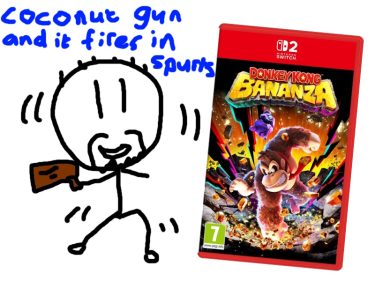
But then the open world is filled with collectibles to find — the exact function of which we don't know just yet — and "P-switch challenges", which task you with completing various missions that test your driving skills. It's this exploration aspect that I think I find most exciting, particularly as you can not only play it solo, but you can bring friends along, too. Burnout Paradise was excellent fun in its multiplayer free-roam mode — sadly, I only ever really got to play it with friends once — and I can see this being very enjoyable; a great way to virtually hang out with friends over GameChat while having a meaningful, but relaxing and not-too-demanding, gaming experience.

Whether or not all this is really "worth" £75 for its physical RRP remains to be seen, and "game worth" is a completely subjective thing anyway. But I know that after seeing the announcement and the subsequent Direct, I'm very much on board with Mario Kart World, and I'm looking forward to getting stuck into it when June finally rolls around.


Want to read my thoughts on various video games, visual novels and other popular culture things? Stop by MoeGamer.net, my site for all things fun where I am generally a lot more cheerful. And if you fancy watching some vids on classic games, drop by my YouTube channel.

If you want this nonsense in your inbox every day, please feel free to subscribe via email. Your email address won't be used for anything else.

#oneaday Day 314: The news churn

There was a good piece over on Aftermath today titled "Video game blogs from the 2000s were fast, reckless and very bad at news". The gist of the piece was that video game websites that adopted a continuously updating "blog" format, in contrast to the "magazine" approach many earlier gaming sites had used, inadvertently set in place a format for games journalism that isn't particularly helpful for readers, and is definitely not good for the writers.

The piece goes on to note that the pressure to have [x] number of articles per day, or the fact that many writers were paid (a pittance) by the article placed a great deal of pressure on the site's writers to make even the most mundane, pointless bullshit somehow "newsworthy". It is this, among other things, that led numerous websites to continuously and uncritically quote Wedbush Securities analyst Michael Pachter whenever he spouted off something that was either immensely obvious (the new Grand Theft Auto will probably sell well!) or so utterly vague as to be completely useless.

I wasn't involved in the biz at the start of this, but I definitely felt its effects. When I joined GamePro in 2011, the site was just starting to experiment with a new format for its news coverage. At the start of my shift each day, I was to dig up a bunch of stories and post them as just headlines and a brief summary on a front-page forum as a sort of "news briefing". Then, later in my shift, after the stories had all had a bit of time to percolate, I would write one or two up in further detail based on which of the posts had seemingly been the most popular, judged primarily by comments.

GamePro's readers initially fucking hated it, because the way it was implemented cluttered up the front page of the site's main forums, and I wasn't a huge fan of it, either, because it felt like the time I spent digging up those initial stories — which, more often than not, took the form of either another site having reported on something first, or a press release we'd received that morning — could have almost certainly been better used finding bigger stories to explore, or writing features, or reviews, or anything other than desperately, vainly scrabbling for just a scrap of news, please, guvnor.

That said, over time it did seem to settle down a bit, I broke a few genuine exclusives and provided some good editorial commentary on other stories that were happening, and I was told on multiple occasions that the work I was doing was playing a big role in giving the site a nice uptick in traffic.

Of course, even that uptick was all for naught when IDG Media unceremoniously closed the site and the magazine just before Christmas that year, meaning I woke up one morning all set to do work, only to find that not only was there no job to work any more, all the stuff I had written was about to become absolutely impossible to find due to the inexplicable decision to fold some (not all) of GamePro's material into the unrelated publication PC World. Good stuff. (If you dig deep enough into PC World's atrocious search function, you can still find the odd bit of my stuff, but it's not easy to find, which was great for building a portfolio, I can tell you.)

Something similar happened at USgamer, also. When we started the site, the intention was for the whole thing to be a return to something like the 1up.com days: a primarily personality-driven site, where each of the writers would have their own specialisms, and they would be free to write about whatever they wanted, developing their own little sub-communities in the process.

That went great for a while! I wrote about anime RPGs and visual novels, another chap wrote about racing sims, and all the other people on staff each had their own Things, too. Comments from the community were positive; I can't speak specifics to the other folks' work as I didn't tend to delve into their comment sections, but on my pieces, there was always a great deal of appreciation for my work making USgamer a site that was welcoming and inclusive to a portion of gaming that didn't always get a lot of love and respect from the mainstream sites. This was all pre-Gamergate, I'll add, so there was no culture war bullshit going on; it was just folks who liked anime-style games, including those with mildly provocative content (as there was a fair amount of in the mid-2010s) having an appreciation for a site that didn't just write their favourite games off as being for perverts or whatever.

That lasted for a few months, but then an edict came down from On High (in this case, USgamer's parent company Gamer Network) that we needed to juice the numbers. In other words, abandon everything we'd done to make the site unique and start the daily churn of news and guides that is so painfully familiar to this day. I went from being able to post whatever I wanted to having to get manual approval for each and every news story I wanted to post, and I was outright forbidden from covering certain games.

Eventually, when I was laid off from the site — again, through waking up one morning only to discover I didn't have a job any more — I was forced into spending the majority of my days rejigging and reposting "guide content" from Prima Games, which was also under the Gamer Network umbrella at the time. Out of spite, I stuck with several of my regular weekly columns even with this SEO-juicing bullshit I had been lumbered with, and it was that degree of spite for what the site had become that eventually led me to create MoeGamer: a site where I could play by my rule and cover whatever the fuck I wanted, and fuck traffic numbers.

MoeGamer itself has had a few evolutions over the years. Initially, it was an occasional blog where I basically continued writing my JPgamer column from USgamer — I'd just write about things that interested me, or which I'd happened to play recently, or which had been on my mind. Eventually, when I was working a series of very boring office jobs that had nothing to do with the games press, I launched my "Cover Game" feature, with a mind to giving underappreciated, oft-overlooked titles the level of detailed coverage that your average traffic-baiting triple-A title did. At the height of my boredom in the office, I was posting stuff on MoeGamer daily, including episodes in each multi-part Cover Game feature, plus shorter one-off articles about things that I found interesting, or had happened to collect back when CEX did free shipping (ahh, those heady days), or that I had always loved but never written about.

Today, I actually like my day job, so MoeGamer has had to take a bit of a back seat, but I'm still writing over there sporadically. It's nice to have a space that is for a specific subject, and a contrast from this general-purpose thought-dumping ground that is this blog. I don't have any intention of making MoeGamer "big" or "famous" or trying to make money from it; it's just my site about games I like, and over the last 10+ years I've filled it with a lot of work I'm very proud of. Today, I think I'm more proud of what I've built with MoeGamer than my all-too-brief time as part of the professional games press.

I've pretty much taken the MoeGamer approach with YouTube, too, albeit with more of a focus on retro games than RPGs and visual novels. And y'know what? While my channel hasn't exploded in terms of growth since I launched it (or since I started using it a bit more actively around 2018 or so), it has seen steady growth without me putting any effort whatsoever into either algorithm-baiting or SEO juicing. I have over three and a half thousand subscribers over there right now, and while that's a drop in the ocean compared to the Mr Beasts of this world, I feel creatively fulfilled and proud of what I've done, and am not an awful human being.

So much about the modern Internet sucks, and as Ed Zitron frequently notes, so much of it is about the growth-at-all-costs mindset. It's not just business that this "rot economy" infests; it's creative pursuits, hobbies, specialist fields. So many people are desperate to monetise everything they put online that the actual value for the people looking at the articles, videos and suchlike is diminishing — and the conditions for those producing the work are becoming increasingly intolerable. Throw AI garbage into the mix — and the fuckers who are now flooding YouTube and social media apps with AI-generated bilge that they pump out all day every day — and you have a real melting pot of absolutely rancid filth.

It's definitely a good idea for people who are Into Things to retreat into their own little specialised corners of the Internet, rather than the whole Internet being treated as some great Marketplace of Shit. This is happening to a certain degree, with many communities forming on Discord these days — though Discord itself isn't immune to enshittification, and I suspect we'll all have to find a new home before long — but I do miss the glory days of forums. I really do. I know a few forums still exist, but the 1up.com Radio Boards days are long gone, and every day I miss them a little more.

This has been quite the ramble, and I'm not sure I made a specific point along the way, but hopefully you understand what I was waffling on about. I am grateful to Past Me for setting up spaces like this blog and MoeGamer for me to continue to express myself, and as time goes on I feel personal spaces like these are going to once again become an important part of life online. Because the alternative is wading out into the mires of advertising-laden shit that is the rest of the Internet, and that gets less appealing day after day.


Want to read my thoughts on various video games, visual novels and other popular culture things? Stop by MoeGamer.net, my site for all things fun where I am generally a lot more cheerful. And if you fancy watching some vids on classic games, drop by my YouTube channel.

If you want this nonsense in your inbox every day, please feel free to subscribe via email. Your email address won't be used for anything else.
#oneaday Day 309: The most enduring game genres are the ones we used to think were too prolific

I settled down this evening to play some PC Engine games on my Coregrafx Mini, a delightful little mini system that I'm very fond of, but which I realised contains a number of games that I haven't explored at all as yet. The pull of Soldier Blade is, I'm afraid, often far too much to resist, as it was once again this evening — though I did at least spend some time with Lords of Thunder, which I've not got around to trying before. (It is hard.)

One thing occurred to me while I was playing, and that is the title of today's post: the fact that game genres we used to think were overdoing it a bit have ended up being the most enduring; the ones that have "aged the best".

What I mean by this is that back in the 16-bit console era in particular — I'm talking Mega Drive, Super NES and PC Engine to an extent (yes, I know the PC Engine isn't actually 16-bit, but its capabilities put it pretty much up there with the Mega Drive, so shut up) — reviewers were often a bit jaded and cynical any time certain types of game showed up. There was a near-constant cry of "where's the originality?" among critics of the period, and this, to an extent, filtered down to members of the public who, at the time, only really had the word of the folks who wrote for the magazines to go on, since the Internet wasn't yet a thing.

There are several game genres that spring immediately to mind when I think about this: shoot 'em ups, fighting games and beat 'em ups. Yes, the latter two are different, despite the term "beat 'em up" being used interchangeably to describe both in the UK in the late '80s and early '90s. (If you're wondering, fighting games refer to competitive games where combatants — either human or computer-controlled — fight in closed arenas one-on-one, or perhaps in tag team battles, while beat 'em ups typically involve one or more players cooperating against a stream of enemy characters, often, though not always, going on a journey as they do so.)

Shoot 'em ups, beat 'em ups and fighting games reached a point where they elicited little more than groans from the jaded reviewers of the period. This led to situations that are laughable in retrospect, such as the TV show GamesMaster rating the UK release of the absolutely classic and genre-defining NES beat 'em up River City Ransom (known as Street Gangs over here) just 32%. In the show's defence (slightly), the game didn't show up over here until 1992, three years after its original release and well into the next generation of games consoles. Still, 32% is an embarrassing rating for a game that is quite rightly regarded as incredibly important to gaming development and history. But I digress.

The point is, members of the games press were — perhaps understandably — jaded at the number of shoot 'em ups, beat 'em ups and fighting games that were coming out, particularly from 1991 onwards, post-Street Fighter II. I say "perhaps understandably" because gaming back then didn't have quite the same breadth it does today; technology precluded certain types of game that we take for granted today from being made back then. Consequently, for someone whose job it was to look at the games coming out each month and then write about them, one could understand why it might get a bit tiresome if there didn't appear to be much variety — or originality, as was the constant refrain back then — in each new crop of new stuff.

But, as it turns out, there were a lot of shoot 'em ups, beat 'em ups and fighting games made for a very good reason: these are three very flexible genres that you can do a lot with, and all three of them have also scaled well with advancing technology.

Let's focus on shoot 'em ups, because that's what I've been playing this evening. You can go back to a shoot 'em up from 30-40 years ago (Xevious is 42 years old, fact fans, and Space Invaders is just shy of 50) and still have a good time with it today, even if you weren't there for it first time around. The genre has evolved over time, yes, in terms of both presentation and mechanics. But there's a timeless quality to it that means, outside of games that really didn't get it even when they were originally released — and there are plenty of those — the 30-40 year old games are just as playable and accessible today as they ever were. Likewise, if it were possible to take a game like, say, Eschatos back to the past, a Raiden fan would be immediately at home.

The same is true for both fighting games and beat 'em ups, too. I probably don't need to tell you that fighting games remain one of the most popular forms of competitive video game out there; while they have grown in complexity over the years, the fundamentals are still pretty much just as they were in 1991 with Street Fighter II. In fact, some fighting game pros even specifically recommend beginners should start with Street Fighter II to get accustomed to the genre without added complications like special meters and peculiarly named mechanics found in later titles.

The beat 'em up has had a slightly rougher ride over the years — at least it seems that way to begin with. It found favour until the early '90s due to it being a great means of showcasing beautiful character and background pixel art. It reached a particular high with Konami's excellent licensed arcade games such as Teenage Mutant Ninja Turtles, The Simpsons and Asterix (kudos if you played the last one, it remains my fave of those games), but then sort of fell off the map a bit for a while.

At least, it seemed to. What actually happened is that it became the basis for a whole bunch of other, brand new genres that were suddenly made possible thanks to the advent of the 3D age: action-strategy games like the Dynasty Warriors series; arena combat games like the Senran Kagura titles; character action games like the God of War, Devil May Cry and Bayonetta series. All are definitely their own discrete types of game these days, but they can all be traced directly back to beat 'em ups. And, in more recent years, the traditional belt-scrolling beat 'em up has made a triumphant comeback with excellent titles like Streets of Rage 4, Fight 'n' Rage and Teenage Mutant Ninja Turtles: Shredder's Revenge.

I think the difference people would point to today, as outlined above, is that these days, we have a lot more choice. Hundreds, possibly thousands, of new games come out each week, and they cover all manner of interactive experiences, ranging from the comfortably familiar to the gleefully experimental. Shoot 'em ups, fighting games and beat 'em ups are no longer seen as passé and unoriginal because they get more lost in the noise these days — and, with the possible exception of fighting games, they have somewhat declined in importance to the overall market. If a company wants to make money these days, they do a big open world game or a cinematic action game about a middle-aged white dude being sad. Shoot 'em ups and beat 'em ups in particular have become niche interest, and fighting games, although popular and doubtless very important to the bottom line of companies like Capcom, have a considerably higher barrier to entry than they used to.

But none of them have gone away. None of them have declined in importance so much as to be completely unviable as a commercial prospect today, or completely unknown to those who came to gaming in more recent years. And many of those games that were decried as unoriginal, boring takes on crowded genres back in the early '90s are judged much more generously and accurately today.

And that's good. When the day comes when there's a gaming system with no good shoot 'em ups or beat 'em ups (I can personally take or leave fighting games, to be honest, but I do respect them), that's the day I don't buy that gaming system. Thankfully I don't think that day's coming any time soon — and even if it did, there is a vast library of stuff from the years that have led us up until this point to explore, both through emulation and official rereleases for modern platforms. I think I'll probably be OK.


Want to read my thoughts on various video games, visual novels and other popular culture things? Stop by MoeGamer.net, my site for all things fun where I am generally a lot more cheerful. And if you fancy watching some vids on classic games, drop by my YouTube channel.

If you want this nonsense in your inbox every day, please feel free to subscribe via email. Your email address won't be used for anything else.

#oneaday Day 308: The apparent need to hate

It's been interesting to see the public response to Blue Prince since it came out yesterday. A bunch of folks on Steam, the absolute worst place to talk about video games, seem oddly resistant to the idea that it might actually be quite good.

(For the record, I'll note that for now, after about 6 hours of play, I'm definitely enjoying Blue Prince, but I'm not yet convinced of all the "Game of the Year!" accolades it's already getting. I am open to it convincing me, however.)

Earlier, I saw someone praising a negative review by saying "finally, an honest review", and others noting that the "positive reviews are suspicious", despite the vast majority of them being articulate and knowledgeable about the game and its appeal elements. In the Discussions tab, which is where hope really goes to die, there are some folks getting legitimately angry that some people are enjoying the game more than they do.

I'm not entirely sure why this is occurring, either. Blue Prince is not, to my knowledge, a particularly — and you'll pardon me for using this obnoxious word — "woke" game in that it doesn't force Gamers™ to acknowledge the existence of black, female, homosexual or transgender people. (If it does later, it certainly doesn't within its first 6 hours of play. This is not a criticism — more a side-effect of the way the game is designed and structured, since you are alone while you play, and the other characters appear in photographs, notes, journal entries and suchlike.)

I mention this because the attitude I'm seeing from some people is normally reserved for the "anti-woke" crowd when they want to tear a game down for challenging their narrow-minded perceptions of the world. But… there's seemingly nothing like that in here, which makes the sheer passion with which some people seem to hate this game on principle all the more confusing.

Now I will admit that Blue Prince is probably not a game for everyone. It is slow-paced, thoughtful and contemplative. There's nothing that one would call "action". It requires that you learn its rules through play rather than having your hand held through tutorials. And it is a game where, despite there being no real "skill" involved from a hand-eye co-ordination perspective, you will still fail a lot before you roll credits on it — and where you will doubtless fail even more after those credits have rolled and there is more to discover.

I get that. When I encounter a game like that, my response is to go "Eh, okay, I see why some people like that but it's not for me." Then I turn it off, uninstall it, whatever, and I don't play it again. I might return to it when some time has passed — there are several games I've come to appreciate many years after I bounced off them when I first encountered them — but, in most cases, I won't be mad at the game. I think the maddest I've got at a game was with Call of Duty: Modern Warfare 3, because I found the single-player campaign in that singularly insulting to my intelligence, but even then I just… did what I outlined above. I uninstalled it, then I didn't play it again. Job done.

The funny thing about the people getting absolutely frothing mad about Blue Prince right now is that in most cases, they are revealing themselves to have not understood what the game is doing. Blue Prince is deliberately obtuse in some ways, yes, but I am particularly stupid when it comes to things like this and I got the general vibe of what's expected of me pretty quickly. The people getting most upset by it are the ones who seemingly want a simple, straight line to the finish, to max out all the achievements and say they're "done" with it. Rather delightfully, Blue Prince is not at all forthcoming with achievements and trophies; it eschews the usual "started the game!" and "got a Game Over!" achievements in favour of a small collection of awards that demonstrate you've made meaningful progress. The fact that this is probably making some people mad is quite enjoyable.

Also whiny little babies pissing and moaning about "no ultrawide support" can get in the bin. Buy a normal person monitor, or play the game in 16:9. No-one gives a shit about your "no ultrawide, no buy" policy.

Anyway, Blue Prince has been a good time thus far. Like I say, so far I remain unconvinced of its "Game of the Year" status, but I'm willing to keep plugging away at it to see what I can discover, because there's enough here that I do like. And if I end up tiring of it? I won't be mad, and I won't feel like I've wasted my time. It's nice to be part of the current conversation for once and to experience something that has clearly resonated with a lot of people for one reason or another.


Want to read my thoughts on various video games, visual novels and other popular culture things? Stop by MoeGamer.net, my site for all things fun where I am generally a lot more cheerful. And if you fancy watching some vids on classic games, drop by my YouTube channel.

If you want this nonsense in your inbox every day, please feel free to subscribe via email. Your email address won't be used for anything else.
#oneaday Day 307: Blueprints to my brain

After seeing the glowing praise it's been getting recently, I decided to give the new indie darling Blue Prince a go. I've been suspicious of sudden indie darlings ever since I absolutely detested my time with Jonathan Blow's Braid, but everything I was hearing about this one made it sound thoroughly interesting. As such, I was more than happy to forego my usual suspicion and give it a go.

For the unfamiliar, Blue Prince positions you in the role of an heir to a rather curious mansion. Said mansion supposedly has 45 rooms… except it doesn't, and there's actually a super-secret hidden 46th room somewhere. Your dead uncle has challenged you from beyond the grave to find said 46th room. Succeed, and you inherit all his stuff; fail, and you're doomed to perpetual roguelike hell.

Yes, Blue Prince is a roguelike of sorts in that it's based around repeated runs of the same thing with a heavily randomised element. But it's not a combat-based game, nor a role-playing game; instead, its focus is purely on exploration. While the roguelike descriptor is apt, Blue Prince is perhaps better thought of as being akin to tabletop games such as Betrayal at House on the Hill.

The way it works is like this: each in-game day, you begin a new run with 50 "steps" of stamina available to you. Each time you cross the threshold from one room to another, whether you're making progress or backtracking, you use up a step. Your initial aim is to make it from the entrance hall in "rank 1" of the mansion to the antechamber in "rank 9"; things get a little more complex later, but I haven't got that far yet, so I can't talk about that side of things with any great authority as yet.

Each time you open a door in the mansion, you pull three room "cards" from the deck you have available and can pick one to draft. This room then attaches to the door you just opened, and you gradually build out the mansion map from there. Rooms are automatically oriented based on the direction the door you opened is facing, and in this way you can plan out your route to a certain extent; as time goes on, you'll familiarise yourself with the "deck" of room cards and know which ones work better where. For example, you might want to find a means of safely ditching "dead end" rooms as soon as possible so they don't come up later in your run, but various rooms have special effects (both positive and negative), too, so you'll need to bear those in mind.

As you progress through the mansion, you'll acquire various resources. Keys are used to open locked doors. Gems are used to draft certain particularly powerful or helpful rooms. Coins are used to purchase items in special "shop" rooms. Dice allow you to redraw three room cards if none of the ones you initially drew tickle your fancy. And then there are a variety of items that show up along the way, too; for example, the metal detector makes it easier for you to locate keys and coins, while the shovel allows you to dig in patches of dirt to find additional resources and items.

You'll run into puzzles of various types in the mansion. These appear to take two basic forms: firstly, there are self-contained puzzles that always show up in specific rooms, and these usually reward you with resources or items if you solve them correctly. Secondly, there's the overall meta-progression puzzles, which involve you figuring out the somewhat convoluted means through which you can actually move forward and, once you reach it, get into the Antechamber.

Blue Prince does have a few things that carry over from run to run, but the main thing is knowledge. Information you learn in one run can be used in the next; there's no not being able to do something because your character hasn't seen a particular piece of info in this particular run. As such, it pays to take notes and/or screenshots as you play, because as you discover new pieces of information, you'll eventually find a use for it. It might not be right away, but you'll get there in the end.

The game also isn't completely randomised. As previously noted, you can learn the deck so you can have a good idea of what rooms you should burn early on in order to draw more helpful ones as you get deeper into the mansion. Certain rooms will only show up in certain positions on the map, or display particular scenery elements if positioned in the right place. A "coat check" room allows you to stash an item in one run and pick it up in the next; under normal circumstances, you lose everything at the start of each new day, aside from the knowledge you, the player, have accumulated.

I've played for about three or four hours tonight and I'm starting to get a feel for it. It's a really interesting game. Some folks claim to have spent upwards of a hundred hours playing this and this intrigues me; the central gameplay mechanic is intriguing and enjoyable, but I am very much under the impression that "winning" the central challenge is just the beginning of what makes Blue Prince so interesting. Right now, everyone is being deliberately obtuse about things — partly at the developer's request, and partly just not to spoil it for everyone else — but I am definitely intrigued to see where things go.

My only concern is that I fear I may be too stupid to figure this game out by myself. But that's what talking about it with friends online is for, right?


Want to read my thoughts on various video games, visual novels and other popular culture things? Stop by MoeGamer.net, my site for all things fun where I am generally a lot more cheerful. And if you fancy watching some vids on classic games, drop by my YouTube channel.

If you want this nonsense in your inbox every day, please feel free to subscribe via email. Your email address won't be used for anything else.

#oneaday Day 300: Paying the tax

I make no apologies for admitting that I preordered a Switch 2 today, even after everything I said yesterday. I thought about it a bit, and I basically came to the conclusion that I was almost certainly going to get one regardless of how much I complained about certain elements of it — and that in doing so I may well be Part of the Problem — and so I might as well just get it out of the way and do it.

So I did. Someone I know happened to spot that Argos had preorders go live today, so I snagged one. I went for the one with Mario Kart World pre-installed, so I basically get that game for £30 instead of £75. Not having a physical copy sucks a bit, but at the same time, Mario Kart World is one of those games that is going to get lots of updates and DLC, making a physical version arguably useless in the long term. That's a thing that happens these days, and that's not going away, so I may as well just enjoy the things while they are current, and I may well be dead by the time it's no longer possible to access the online elements. (Not that I'm planning on being dead any time soon, but you know what I mean.)

There's enough about Switch 2 that I like to make it worthwhile. The "Switch 2 Versions" of original Switch games are compelling, for one; I haven't yet played The Legend of Zelda: Tears of the Kingdom, and now it will be nice to be able to do so at higher resolutions and frame rates. I'm by no means a frame rate and resolution snob — I was eminently satisfied with how Breath of the Wild looked and performed — but if the option is there to make it better officially without getting into hacking, modding and piracy territory, I'm all for it.

There's also some of the multi-format "big" games that are quite appealing. I might finally play Cyberpunk 2077 on Switch 2, for example, or Hitman: World of Assassination. The nice thing about Switch 2 versions of these coming so late is that they should be "complete" versions with all their additional DLC, updates and what have you baked into the Switch 2 version from day one. And hopefully with a physical release.

One thing I'm not super enamoured with is this "game key card" business. If you haven't seen it yet, it's the replacement for the "code in a box" system, whereby you could buy a Switch case that contained nothing more than a download code. This new version actually has a Switch cart in it, but the cart doesn't have the game on it; instead, it lets you download the game and play it while the cart is in. I initially thought this was utterly stupid, but if you read the fine print on the Japanese website (which a pal graciously translated for me earlier) it became clear that this is not the same as redeeming a game on your account from a code; it is transferable, so you can lend it to others, take it round to a friend's house, all that sort of thing. It's still a bit of a weird way of doing things, but I don't hate it as much as code-in-a-box.

(And look, I get why code-in-a-box is a thing; it lets people buy digital games as gifts and give the person something physical to open on their special occasion. But it's still a pisser to find what you think is a physical release of a game only to discover it's… not that.)

I can sort of understand why the game key card thing is being used for stuff like Street Fighter 6, which is a game that gets updated regularly with balance patches, DLC and suchlike, and which has a massive filesize. I'm a bit pissed the Bravely Default remaster is using this system, though; there's no way that game wouldn't fit on a low-capacity cartridge. But oh well.

Like I say, though, there's enough about Switch 2 that I do like to make it, I think, worthwhile. It will be interesting and fun to use the social features if (and that's a big if right now, particularly with the chaos ensuing from Trump's dumbshit tariffs in the States) my friends happen to pick a Switch 2 up; it would be nice to get some sort of regular "game night" going, and the built-in chat features could even be a decent means of recording a podcast or streaming something in collaboration with another person.

Plus Mario Kart World does look good. I'm still not convinced it's £75 good, but I'm sure I can get £30 value out of it.

It's certainly going to be interesting to spend some time with Switch 2 when it arrives in a couple of months. I'm looking forward to it. Yes, I'd love it to be cheaper. Yes, I'd love it if we had a 100% guarantee that original Switch games will work on it (which we don't, yet, but they are supposedly working on it.) Yes, I wish I didn't have to buy a new format of memory card for it.

But I also understand why all these things are the case, and moaning and complaining about them almost certainly isn't going to change anything about them this close to release. So I may as well suck it up, pay the money and enjoy the thing I knew I was always going to enjoy anyway. And so that's exactly what I'm doing!


Want to read my thoughts on various video games, visual novels and other popular culture things? Stop by MoeGamer.net, my site for all things fun where I am generally a lot more cheerful. And if you fancy watching some vids on classic games, drop by my YouTube channel.

If you want this nonsense in your inbox every day, please feel free to subscribe via email. Your email address won't be used for anything else.

#oneaday Day 299: Switch 2 Tax

It was the Nintendo Switch 2 reveal today. And while there's a lot to like about the system — 1080p and up to 120fps handheld, 4K docked, HDR, nifty online socialisation functions, upgrades to certain Switch games that include both a performance boost and new stuff for the games — one thing is giving me a lot of pause that I wasn't feeling before the announcement.

And that one thing is the price of games. As someone who collects physical video games, I naturally will want to continue doing that for any new console hardware I pick up. But the new Mario Kart is seventy-five fucking pounds for a physical version, and the new Donkey Kong game is sixty-six quid.

Donkey Kong is just on the borderline of what I'll consider paying if the game is legitimately good (and it's a real borderline case here as I don't really like Donkey Kong as a character), but more than £70 for a game that will almost certainly also have paid DLC is well over that line for me. I'm sure Mario Kart World, as the new game is called, will be very good, and I'm quite curious to play it — but £75 to have a copy on my shelf (and not much less than that for a digital-only version) feels… excessive. And I'm someone who voluntarily pays £35 to limited-print companies for £10 indie games just so I can have them on my shelf.

This feels like a mistake for Nintendo. It feels like it might put all the goodwill they built up with the Switch at serious risk of unravelling. I'm sure they will justify it by saying the new cartridges are higher capacity, the tech is more advanced or whatever, but it still feels like… a lot.

Couple that with the fact that while the launch lineup looked neat, there wasn't a singular game that made me go "yes, give it to me, I need this right now". We had a bunch of very welcome ports of stuff like Hitman: World of Assassination, Cyberpunk 2077, Final Fantasy VII Remake Intergrade (though no mention of Rebirth, interestingly) and numerous others, a Bravely Default remaster that I've been hoping we'd see for quite some time, the aforementioned new Mario Kart and Donkey Kong games, and a few other bits and pieces that were perfectly nice enough, but not really "system sellers" for me.

Not yet, anyway. I have no doubt I'll probably end up with a Switch 2 eventually. But today's announcement makes me feel like I probably don't need one at launch. Probably. Probably.

There's a few days until preorders open. I will have to mull it over quite seriously. Quite seriously indeed. In the meantime, though, it's not as if I'm short of regular-ass Switch games to play, including a selection of pretty chunky RPGs I still haven't gotten to.

So we'll wait and see, I guess. It was a good presentation, and there's a lot to like about Switch 2. But I feel like a lot of people who were all set to preorder day one are now having very serious thoughts about the situation, just like I am. I feel like this should have been an easy win for Nintendo, but as it stands, they could potentially have a problem here.


Want to read my thoughts on various video games, visual novels and other popular culture things? Stop by MoeGamer.net, my site for all things fun where I am generally a lot more cheerful. And if you fancy watching some vids on classic games, drop by my YouTube channel.

If you want this nonsense in your inbox every day, please feel free to subscribe via email. Your email address won't be used for anything else.

#oneaday Day 297: Transgender Day of Visibility - Video Game Edition

It is, apparently, Transgender Day of Visibility. My Bluesky feed has been festooned with cyan, pink and white banners all day, so the "visibility" part is definitely doing all right — but, of course, there is still a lot of work to do in terms of trans acceptance, particularly with the steps backwards in tolerance and inclusiveness that the United States administration appears determined to go through with right now.

So with that in mind, I hope no-one will find this patronising or anything, but I thought I'd highlight some trans game developers I've become familiar with over the years and point you in the direction of some of their works. I'm not going to go too deep into their respective histories, because 1) those histories are pretty well documented elsewhere online, where they have been considered to be anybody's business, and 2) if they aren't, it's not really anyone's business. So today we will mostly be focusing on their accomplishments.

Danielle Bunten Berry

Perhaps the most famous name on this admittedly fairly short and hastily assembled list, Dani Bunten Berry was responsible for some of the most ambitious, audacious games of the early 8-bit microcomputer era.

Her most famous work is probably M.U.L.E., an economic simulation that began life on Atari 8-bit and was subsequently ported to a variety of other home computer and console systems. There have also been several attempts to bring M.U.L.E. to the tabletop to varying degrees of success, but part of M.U.L.E.'s genius is that it can only really be done justice on a computer.

People are still playing M.U.L.E. in its original form today. People are playing hacked versions that allow online multiplayer. There have been several modern ports of the game. It's a widely beloved game with good reason — don't let that "economic simulation" descriptor put you off. It's easy to pick up and straightforward to play, and every game is a little bit different — particularly if you're fortunate enough to play it with other human players. A four-player game of M.U.L.E. is very different to a single-player game against three computer opponents.

That's not the only amazing game to her name, though. She also made Seven Cities of Gold, one of the first ever open-world sandbox games. Casting players in the role of Spanish explorers, the game tasks you with just… well, exploring. There was no set goal, no "right" or "wrong" way to play; just a set of mechanics for you to engage with, and the rest of your time with the game would be spent creating a unique emergent narrative all your own.

Dani Bunten Berry was sadly taken from us in 1998, but her legacy lives on, both through her classic games that are still being enjoyed to this day, and through the games that they inspired.

Cathryn Mataga

Perhaps not quite as well-known a name as Dani Bunten Berry, Cathryn Mataga has nonetheless given us some excellent games over the years, beginning with the 8-bit microcomputer titles Zeppelin and Shamus, and moving on to work on a variety of excellent role-playing games, including the original 1991 MMO version of Neverwinter Nights, and several Dungeons & Dragons games: Gateway to the Savage Frontier, Treasures of the Savage Frontier, Stronghold, and Dark Sun Online: Crimson Sands. She also worked on Rampage 2: Universal Tour, but we won't hold that against her.

One of her most notable achievements was the Game Boy Color version of questionable "classic" laser disc game Dragon's Lair. Unlike the original Game Boy version, which was actually a reskinned Spectrum game port, the Game Boy Color version was more akin to the Atari ST and Amiga versions, which recreated the video sequences of the laser disc original with enormous, screen-filling sprites overlaid atop static backdrops. The result is a game that is still… well, it's still Dragon's Lair, but the technical achievement on a cart-based 8-bit handheld format is absolutely something else.

Rebecca Heineman

Rebecca Heineman is arguably best known as one of the first ever video game tournament champions, but she is also a talented, experienced and prolific developer and writer. After winning the Space Invaders tournament that gave her an initial taste of fame, she was offered writing and consultancy jobs, and as part of all this, still aged just 16, she happened to mention that she had, in her free time, successfully reverse-engineered game code for Atari 2600 games, as you do, allowing her to develop software for the machine without having to go through Atari. This early hacking experience got her a job at strategy game specialists Avalon Hill, where she made a game engine and base code for a variety of projects as well as a ton of documentation and a full game all of her own.

In subsequent years, she worked on a variety of projects, including the notorious Chuck Norris Superkicks for multiple platforms, but really hit the ground running when she co-founded Interplay alongside Brian Fargo, Jay Patel and Troy Worrell. At Interplay, she worked on a variety of projects as programmer, with probably the most high-profile among them being Wasteland and The Bard's Tale. She also designed The Bard's Tale III: Thief of Fate, Borrowed Time, Mindshadow and numerous others, before moving on to other projects.

She's still active in and around the industry today, and can often be found chatting on Bluesky. It's clear that the passion and enthusiasm for video games and development has never truly left her, and it's inspiring to see, to be sure.

Jennell Jaquays

I must confess, I didn't know this name before I looked at Rebecca Heineman's website, but after reading her story, I feel compelled to include her.

Jennell Jaquays, who was Rebecca Heineman's wife, is sadly no longer with us, as she passed on in January of last year. But her influence can be keenly felt in both the tabletop and video game spaces. Her early career included contributing to a variety of tabletop role-playing game publishers, with her Dungeons & Dragons modules Dark Tower and The Caverns of Thracia often held up as her most influential work. She is regarded as a pioneer of non-linear, flexible, multi-path scenario writing, as opposed to the more typical straightforward and linear scenarios that tended to be published at the time. Supposedly, the term "Jaquaysing" refers to creating scenarios with this sort of thing in mind — though this comes from an uncited reference on Wikipedia, so maybe take that with a pinch of salt.

In the video game space, she worked at Coleco, creating several of the excellent arcade game ports for that system, including Pac-Man and Donkey Kong. She put together one of the first actual development studios for making video games — at the time, many games were solo efforts — and went on to contribute to Epyx, Interplay and Electronic Arts. She had a stint as a level designer at id Software in the late '90s, working on Quake II and Quake III Arena, and went on to develop a pioneering video game education programme, as well as some particularly effective advocacy for LGBTQ+ folks that lead to Barack Obama taking action on banning conversion therapy back in 2015.


There are a lot of wonderful people throughout video game history. These are just four that I consider well worth celebrating. Of course, every day should be about including and accepting people regardless of their age, race, gender identity, sexuality or any number of other characteristics — but it becomes more and more clear by the day that we still have a lot of work to do. That's why days like today are so important — now, perhaps, more than ever in recent memory.


Want to read my thoughts on various video games, visual novels and other popular culture things? Stop by MoeGamer.net, my site for all things fun where I am generally a lot more cheerful. And if you fancy watching some vids on classic games, drop by my YouTube channel.

If you want this nonsense in your inbox every day, please feel free to subscribe via email. Your email address won't be used for anything else.

#oneaday Day 293: Nintendo Direct immediate reactions

There was a Nintendo Direct today, almost certainly the last one we'll ever see devoted to the original Nintendo Switch. So it seems fitting to go through the stuff that was announced and discussed and provide my own personal feelings about them.

Note: my own personal feelings. If you feel differently about any of these things, great! You have an opinion and a personality. You are not wrong for feeling differently to me, just as I am not wrong for feeling differently to you.

Standard procedure Internet of 2025 disclaimer over, let's get to it, shall we?

Dragon Quest I & II HD-2D Remake

Brilliant news. I haven't bought III yet, let alone played it, but I'm thrilled we finally have a modern way to play early Dragon Quest games that isn't those fucking awful mobile phone ports with the horrible visuals. Here's hoping they give IV, V and VI similar treatment, because while I'm lucky enough to own the Nintendo DS versions, I certainly wouldn't complain at the opportunity to play them on the big screen.

To date, the only Dragon Quest I've played to completion is IV. I got right to the end of V, but was underpowered for the final boss and couldn't be arsed to grind, so I never got around to beating it. I loved it up until that point, though. Bianca was my waifu.

No Sleep for Kaname Date

HELL YES. I love Kotaro Uchikoshi's work, and the two AI: The Somnium Files games are absolute masterpieces. I'm thrilled that we're getting another one. If you're yet to play the first two, I highly recommend setting some time aside for them (they're both pretty chunky by adventure game standards) and playing them fully. Can't wait to get back into that world with those wonderful characters.

Raidou Remastered

I never played the Raidou Kuzonoha games back on PS2, and they're super-expensive to collect today. I remember several folks whose opinions I trust enthusing greatly about them 15-20 years ago though, so I'm excited that I'll finally have the opportunity to check one of these games out. And that Shoji Meguro soundtrack sounds great.

I know absolutely nothing about the game other than it's supposed to be a pretty good time, so I'll likely be going in fairly blind to this. But I will be going in!

Shadow Labyrinth

Pac-Man-themed exploratory platformer? Interesting, and I can see the potential there. The "dark and edgy" thing is a bit of a turnoff, to be honest, but if the game's decent I can live with it. Not something I'm on the edge of my seat waiting to play, but I will follow with interest.

Patapon 1+2 Replay

Yes! Never really played the PSP versions much beyond trying them out at a friends house a very long time ago, but I liked their vibe and their music. Plus me and my wife often tease our cat Patti by going "pon, pon, Patti-pon", so it will be nice to finally educate my wife on where that actually came from.

Story of Seasons: Grand Bazaar

I've played a few Story of Seasons/Harvest Moon games in my time and quite enjoyed them, but my trouble is I've got it in my head that they sort of never end. I don't think that's actually true, and that my opinion is probably largely based on the number of people who have been playing Stardew Valley for approximately 300 years, but it's kind of put me off jumping into any of the more recent ones. I think the last one I played was the one on Gamecube?

Certainly not against this, but not rushing out of my way to pick it up, either.

Metroid Prime 4: Beyond

Cool that it actually exists and seems to be a decent way along. I've still never played a Metroid Prime game, though, so my excitement for this is somewhat tempered compared to many other folks. I do like Metroid from my relatively limited contact with the series to date (mostly Super Metroid) — I just haven't made the time for other entries in the series so far.

Disney Villains Cursed Café

I quite like the concept of this, as the "make drinks for patrons who have their own stories to tell" thing has been done well previously by VA-11 HALL-A and Coffee Talk. I just wonder if the Disney Villains thing won't end up holding it back rather than making it interesting. After all, I suspect there's fairly strict writers' guidelines in place on what these characters are and are not allowed to "do" in narrative terms.

Witchbrook

Well this looks adorable! I have a lot of time for school-themed games, and throw in a bit of magic that isn't the work of a raging transphobe and you have a winner, so far as I'm concerned. Will it beat Mana Khemia? It'll probably be a rather different experience, but I'm very much up for this, particularly with its lush pixel art.

The Eternal Life of Goldman

I must confess, I couldn't remember what this was just from the title as I think I tuned it out a bit when I was watching the show (no shade on the game, I was working at the time) but looking back at it now, it looks kind of neat. The animation on the characters is lovely, but the backdrops look a bit drab. If this has a decent story or some more varied environments, I might give it a look.

Gradius Origins

Yes please. The other Konami collections are excellent, so I will be happy to add this one to the mix.

Rift of the Necrodancer

I like Crypt of the Necrodancer, but my first impression of this is that it loses a bit of its charm by being a more conventional rhythm game rather than a combination of rhythm game and RPG. The visuals are nice, though, and it looks like it plays well enough. I was a bit concerned about the number of times they mentioned DLC, though. Perhaps one to wait for a "Complete" physical release of.

Tamagotchi Plaza

Do not care. Never had a Tamagotchi, have no attachment to them whatsoever, and the dentistry bit looked like one of those spam mobile games. No thank you.

Pokémon Legends: Z-A

I've never been a big Pokémon fan, though I moderately enjoyed Sword/Shield a while back. Another one I'll keep a bit of an eye on, but probably won't rush out to buy.

Rhythm Paradise Groove

I feel the exact opposite about this as I do about Pokémon. A new Rhythm Paradise/Rhythm Heaven/whatever you call it in your neck of the woods is an insta-purchase for me after loving the DS and Wii versions.

Virtual Game Cards

Seems like a decent solution to sharing digital games. A little more cumbersome than it perhaps needs to be, but that's Nintendo for you. I do like that you can "lend" digital games to family members, though; I've been hoping for a way to do that so my wife can play the Atelier Arland series for a very long time.

SaGa Frontier 2 Remastered

I bounced off this hard on PS1 but I'm much more open to it these days. The art is kind of weird though; the heavily pixelated characters on the upscaled backdrops just look a bit odd. Not "ew, I'm never buying this" odd, just a bit odd. Which would be firmly in keeping with SaGa in general.

Monument Valley

Hooray! A mobile game breaking free of its mobile prison! I was always curious about this but had absolutely no desire to play it on a mobile device. Now I don't have to!

Everybody's Golf: Hot Shots

Yes please! Arcadey golf games are very much my jam, and while the Mario sports games are insistent on getting a bit too experimental with their more recent installments, this looks like it will be a good old-fashioned silly golf game. I am definitely there for this.

Marvel Cosmic Invasion

I have zero stakes in the Marvel race, but Tribute Games is always a good time. As someone else pointed out earlier, I hope they don't just get stuck doing licensed stuff until the end of time, though.

Tomodachi Life: Living the Dream

I had zero contact with (and, really, interest in) the original Tomodachi Life, but I know it's responsible for some funny moments. I also remember having some funny times with… what was it called, Miitomo? So I'll have a look and see what this is, but not one I'll be rushing out to buy or anything

Nintendo Today

Sure, Nintendo. Another app just for your news. I'm fine with this.


On the whole, I think it was a pretty good presentation! As some folks pointed out, this can be looked on as the Switch's last desperate gasp before Switch 2 shows up, and thus there's a lot of "niche interest" stuff here. But that's good! I like niche interest! I am the niche! So I say bring it on.


Want to read my thoughts on various video games, visual novels and other popular culture things? Stop by MoeGamer.net, my site for all things fun where I am generally a lot more cheerful. And if you fancy watching some vids on classic games, drop by my YouTube channel.

If you want this nonsense in your inbox every day, please feel free to subscribe via email. Your email address won't be used for anything else.

#oneaday Day 291: If you like old games mags, here's a podcast you might like

The other day, I was contacted relatively out of the blue (no pun intended) on Bluesky by a chap called Ty Schalter, who wanted to let me know he and a fellow writer, journalist and author, Aidan Moher, were launching a new podcast, and would I mind giving it a bit of a nudge on socials.

Firstly, I was flattered that Ty thought I had anywhere near enough reach online to make a difference these days, but I indeed shared it anyway, and am, in fact, doing so again right now. Secondly, I was 100% on board with the concept for the podcast, which was to take a fond look back at classic games magazines. Here's the first episode for you to enjoy:

Now, as I stated in no uncertain terms just the other day, I am a big fan of old computer and video games magazines, and am always up for some discussion of them. These days, it's a bit tempting for everyone to look at the worst of their output, go "ugh, cringe" and leave it at that, but Schalter and Moher are doing the subject justice, judging by their first episode; they're acknowledging that while there are often faults we can pick from a 2025 perspective, these magazines were a vitally important part of gaming culture, particularly in the days before we had always-online Internet and, later, mobile phones.

What you've gotta remember is that in the '90s, if you had an Internet connection at all, it was a dial-up one that you had to ration your time with so as not to leave yourself with an astronomical phone and/or usage bill; earlier than that, the only online services out there were self-contained bulletin board systems. There was also a curious "in-betweeny" phase in the early '90s where services like AOL and CompuServe came to prominence; these offered global online services somewhat akin to the modern Internet, but in their own curated walled gardens. Later, both services provided access to the broader Web, but initially, they were their own little communities.

Why is this important? Because it meant that it was nowhere near as easy to talk about games with people as it is today. There was no magic black slab in your pocket that connected you to the rest of the world, and there was no guarantee that when you "logged on" with your computer that you'd find someone you wanted to talk to. There certainly wasn't the opportunity for carving out your own little space online as there is today, and absolutely no social media. (Maybe it wasn't all bad.)

This meant that magazines played a crucial role for video game enthusiasts: they were the main way that people who enjoyed games found out about new releases, the latest news and in-depth information about stuff that was already out. They were a point of common contact that, when we met up with our "real-life" friends (remember them?), we could use as the basis for a discussion. They were a connection to the outside world — and for many of us, a lifeline that made us feel much less alone in our passion for what is, most of the time, a fairly solitary pastime.

Schalter and Moher get this. They understand that for many of us, magazines were "the gaming community". We came to the mags not just for the games, but in many cases, for the personalities involved and the opinions we trusted. We'd obsess over a 250-word review of a 40-hour RPG, reading it repeatedly and drinking in the screenshots, wondering what it would be like to actually play the thing. We'd base our purchasing decisions on the arbitrary numbers the reviewers thought up, for better or worse. And we'd get to know the studios behind our favourite games through special features, interviews and preview reports.

Many of these things can be argued to still be present in today's games press, to be sure. But the daily churn of gaming news online makes it somehow less special than it was to get a monthly magazine. What game would be on the cover? What games would get in-depth features? What games were getting walkthroughs, tips and cheats? Would there be any cool cover-mounted gifts or bonus booklets included?

While it can be funny to look back and laugh (or cringe) at The People We Were 20-30+ Years Ago, it's important to take a look at the full picture for an understanding of why things were the way they were — and why so many people are still nostalgic for an era long past.

That's what the Fun Factor podcast seemingly aims to explore, and judging by the first episode — which features lengthy reminiscences about Final Fantasy VII that I'm sure will be familiar to anyone Of A Certain Age — it's going to be a good listen over the long term.

So go give that first episode a listen now, and if you're so inclined, support the podcast on its official website. You can also follow the pod, Ty and Aidan over on Bluesky.

I'm excited to see where the show goes from here, as it's a subject near and dear to my own heart. And if you have any fond nostalgia for that supposed "golden age" of magazines, I recommend checking it out, too. 'Cause heaven knows we could all do with some fun, happy stuff to enjoy right now, I'm sure.


Want to read my thoughts on various video games, visual novels and other popular culture things? Stop by MoeGamer.net, my site for all things fun where I am generally a lot more cheerful. And if you fancy watching some vids on classic games, drop by my YouTube channel.

If you want this nonsense in your inbox every day, please feel free to subscribe via email. Your email address won't be used for anything else.