The Squadron of Shame Squadcast #12: No Shame

The long-awaited first 2009 episode of The Squadron of Shame SquadCast is now available for download!

Subscribe now using one of the following links:

Subscribe via iTunes (M4A version)
Subscribe via RSS (M4A version)

Subscribe via iTunes (MP3 version)
Subscribe via RSS (MP3 version)

Direct download this episode (M4A version)
Direct download this episode (MP3 version)

You can also follow the Squad's updates on Twitter here.

This episode, we delve into Games of No Shame. These fall into several categories – the games everyone loves that you hate, the games everyone loves that you love too, the games that everyone hates that you love and the games you're terrified of being caught playing.

Also on this episode, Beige talks about jizz and Pokémon, we use the phrase "sucks like a banshee" and Pishu goes a-hustlin'.

Follow us on Twitter for up to date news, including rollout information of our exciting new website now that 1up has witnessed the power of that fully operational battle station that is UGO.

Stay tuned!

Art/Fart

Now with pictures! Happy now? 🙂

The idea of "games as art" is an over-discussed topic and has been since the days of the later Final Fantasy games, which many regard as one of many points where video games just started to show their potential to tell interesting stories in interesting ways.

So I'm not going to talk about games as art – at least, not "mainstream" games. I want to take a moment to share a few curious experiences I've had recently. I hesitate to call all of these examples except one "games" by virtue of the fact that they're not really traditional "games" as such, more interactive artistic works, and I think that's fast becoming a genre of its own – something I'm all for.

A few of these games are probably quite well known by the side of the gamer community that is interested in this sort of thing, a couple of others you may not have heard of. So I hope that by the end of this post you might be inspired to check out some things a little bit outside the box. You may well find them pretentious, boring and crap – I'm sure many people do – but like any work of "art", there are bound to be differing opinions, expectations and feelings about them.

So let's jump in with probably the most well-known of the titles I'm going to discuss today. There may be spoilarz ahead… and you can click the game titles to visit the sites for them. (If you're reading this on Facebook, you might not be able to. Click here to read this post properly.)

Braid

Braid
Braid

Braid is a game by Jonathan Blow that represents, to me, one of the interesting things about the Xbox 360 – the fact that this is a console with such diversity that triple-A "blockbuster" titles like Gears of War 2 and independent "arthouse" (for want of a better term) games like this can happily coexist on the platform quite comfortably. With the recent launch of the NXE and the Community Games project, I think it's relatively safe to say that Braid will not be the last game of its type that we'll see.

But what is Braid? Ostensibly it's a platform game that largely centres around puzzles rather than action. The central game mechanic is an interesting "time rewind" system which has an interesting twist put onto it in each of the game's worlds. In some worlds, you can simply rewind time if you make a mistake. In others, certain areas or objects are immune to time manipulation, so you can rewind time in the areas around the object and remain unaffected by this. In yet others, time winds forwards while you run to the right and backwards while you run to the left. It's an interesting mechanic that makes for some absolute brain-benders, and I maintain that I'm far too stupid to ever solve the game without help.

Still, the interesting thing about Braid for me, and the thing which divides opinion the most, is the "meaning" behind it all. Each world is preceded by a series of text interludes, describing the main character's quest to reach a princess in floaty, dreamy, vague language and tying the central mechanic of each world in with the main character's conflicting emotions and feelings about time, place, love and loss as he proceeds through the game. It's a fine line between "emo bullshit" and "existential masterpiece" – and there's plenty of people on both sides of the debate on this one. One thing is certain though, everyone who has played the game has plenty to say about it, whether it's good or bad.

Passage and Gravitation

Gravitation
Gravitation

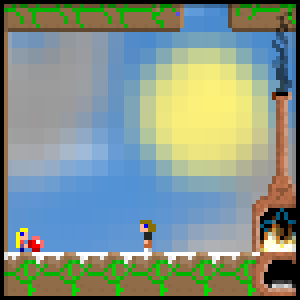
These two "autobiographical" games by Jason Rohrer at first glance appear to be simplistic "retro" style games with eye-catching super low-res pixel art. But look into them a little deeper (or, if you need a little prompting, as I did, read the Creator's Statement that Rohrer has thoughtfully posted for each game) and you'll find that each of these two games represent a deeply personal exploration of a certain aspect of "life" to Rohrer – with Passage offering a look at mortality, companionship, ambition, love, loss and the balance between these things and Gravitation looking at the concept of fatherhood, the creative process and again, the balance between these things.

Each is represented very simply with the aforementioned low-resolution pixel art. But it's the little things about the presentation and the games themselves that carry the deeper meaning. In Passage you start on the left of the screen, with more of the "world" – your life – stretching out ahead of you. Very shortly after the beginning, you have the choice of picking up a companion, who then stays with you until almost the end of the game. This makes you unable to reach some areas of the game, but it's actually quite difficult to consider leaving her behind. If you're me, anyway.

As you progress through the game, you gradually move across the screen towards the right side, meaning that at the beginning, you are looking forward to what is ahead, while at the end you are looking back on where you have just been. Shortly before the end, had you chosen to take your companion with you, she dies, leaving you as an old, lonely man left to trudge on towards his own death alone. This moment, although it is represented simply by the companion suddenly turning into a gravestone and the speed of movement of your character suddenly cutting to a quarter of what it was originally, is a hugely touching moment due to how understated it is. For me, it put across the idea that death is unglamorous, is unavoidable, but there is always someone left behind to trudge on without the person who is gone. I found it to be quite a beautiful, thought-provoking sentiment that is all the more poignant when you read Rohrer's description of the meaning behind the game.

Gravitation, conversely, does not deal with a subject such as death, but rather the struggle that a creative person has between his art and his family. The game starts with you playing "catch" with a child figure. Each time you bounce the ball back to the child, a little heart appears above their head, but you cannot make any progress in the game itself by doing this. To score "points", you have to leap up a huge tower, with gravity that is constantly changing, presumably representing varying degrees of motivation (or "mania" as the Rohrer puts it), and collect stars, which fall to the ground and form rocks. Following this, you have to drop back down and push these blocks into a furnace.

The twist is, the more stars that drop, the less able you are to get to your child to play with them, as the rocks that appear form directly in front of your child, blocking your way to her, and this also seems to have an effect on the gravity of the game. So it becomes a balancing act between play with your child and the "work" of pushing the blocks into the furnace.

These two games are two of my favourite examples of this subgenre because of their simplicity of presentation and gameplay, and the amount of "interpretation" that can be had by looking more closely at what is happening. I think it's also really interesting to see "autobiographical" games, as Rohrer calls them, and he himself points out that this is not something that many developers have done as yet.

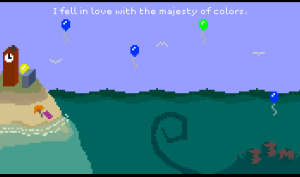
The Majesty of Colors

The Majesty of Colors

This is another game that chooses to use 8-bit style pixel art as its means of presentation, giving it a distinctive look and character that seems entirely appropriate for the game. I can't pin down why this is, but I love it. This is also the first of two games hosted on Kongregate, which originally became my favourite Flash games site purely for the presence of Desktop Tower Defense following my brother's recommendations, but seems to be developing into an interesting community of indie developers, "interesting game enthusiasts" like myself, and illiterate 12 year olds who just want to play stuff with badly-drawn animé-style characters. Fortunately, like the Xbox 360, the groups seem to coexist quite happily, meaning we get titles like this.

In The Majesty of Colors, you play a betentacled sea monster. The game opens in black and white with balloons floating past your face and the "monster's" inner monologue represented as text across the top of the screen. Grabbing a balloon and bringing it close to the monster's eyes suddenly brings the world into vibrant colour, and the story itself begins. Essentially, the player can choose to manipulate the humans who appear on the scene either through violence or helping them, and this eventually leads to one of five endings, each of which involves the "monster" (whom, it transpires, is actually a person having a dream) awakening in very different ways.

I kind of don't want to say anything else about this one, because I believe it's worth experiencing. It's a simplistic game with not a lot of "point" to it as a game, but it's very much an interactive work of art to me.

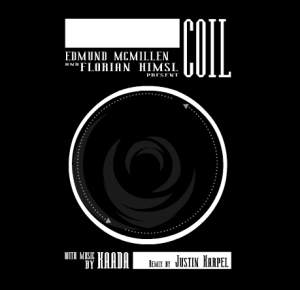
Coil

Coil
Coil

The first of two games by Edmund McMillen, Coil is a self-professed game with no instructions that requests you "keep an open mind while playing". It's presented in a rather abstract manner, with mouse-driven mini-games interspersed with Braid-style text interludes. The story of the game appears to be deliberately ambiguous to provoke discussion, but the consensus from many people seems to be that it is about a woman who was raped and the feelings she develops towards the child that is the product of that incident.

Like The Majesty of Colors, I believe this is a "game" that's somewhat open to interpretation, and another that will probably split opinion. The lack of instructions can make it challenging to progress, but it's worth persevering with the story to see what you think of it.

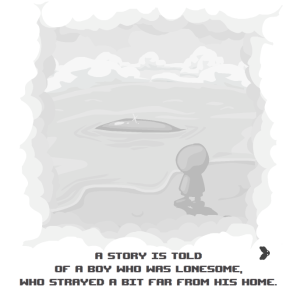
Aether

Aether
Aether

Another from McMillen, Aether seems to be a rather personal story about childhood feelings of inadequacy in the eyes of others. Players swing through space atop the back of a curious blob-like monster trying to solve simple puzzles on planets to restore colour to their lives. The game is a somewhat abstract "journey into imagination" that seems to represent an individual's struggle for validation and acceptance by others. It also has some fabulously hypnotic dynamically remixing music which really helps with the atmosphere.

So there you have them. Pretentious crap or an interesting method of displaying a work of art and telling a deeply personal story? I vote the latter, though I am more than prepared to hear people disagree, which they no doubt will!

On Evil

After completing Fallout 3 recently, I suddenly had a hankering to return to Oblivion, a game I hadn't played for well over a year. Fallout had tickled my free-roaming Western RPG bone (if there is such a thing, and I don't invite you to postulate where it might be in the comments) and I wanted more.

Oblivion is one of those RPGs I've started at least ten times with different characters to experiment with different things. The thing I've really liked about it every time I've played it is that each time I emerge from those Imperial sewers I can wander off in a different direction and do something completely different. One time I went straight for the main quest (and didn't finish it). One time I headed straight for the Arena in the Imperial City to kick some ass (bare-handed on that occasion, that was an entertaining challenge). One time I headed for the Mages' Guild and took that questline to its conclusion. Yet another time I decided to explore the dungeons scattered around the landscape, simply to acquire as much loot as possible.

But there's one thing that all these trips into the wilderness had in common – they all involved me being "good". Not once did I veer towards the dark side, bad Jedi, Renegade, negative reputation, whatever you want to call it. I always do this. In any game that promises "moral choices" I inevitably end up playing the "good guy" because, at heart, despite my grumpy old man persona, I'm a good guy. I even did this in Fallout 3, where it's kind of "all right" to be a bit of a bastard because, well, everyone else is.

Not this time, though. I decided that this time was going to be the time I went very, very bad in Oblivion.

I started by hunting down the Gray Fox to start the Thieves' Guild questline, which I promptly made my way through. For those of you unfamiliar with it (and be aware there are spoilers ahead) this sequence of quests takes you from lowly burglar up to an extremely high-profile thief, culminating in you stealing one of the series' titual Elder Scrolls from the Imperial Palace. By the time you've pulled this off, if you're anything like me, you feel like you're a badass thief, but you also feel faintly bad for taking advantage of the blind monks you stole it from.

This is nothing – nothing – compared to how sullied you feel after completing the Dark Brotherhood questline, however.

The Dark Brotherhood come to you in your sleep after you commit your first unprovoked murder in the game. In my case, this happened as part of a sidequest I happened to be completing at the time. I had two possible solutions to the quest, which essentially revolved around a captured bandit and his lover having a disagreement. My choices were to either betray the bandit or his lover. I elected to betray his lover, who had put across the impression of being something of a heartless bitch anyway, and after all, honour among thieves and all that.

Actually, "betray" doesn't quite sum up what I did to her. I broke back into her house while she was sleeping and shot her in the head with a magic arrow, which exploded and sent her flying, smacking straight into her ceiling before collapsing in a crumpled heap in front of her fireplace. This spectacle was faintly amusing, as ragdoll physics deaths are often wont to be, but the ominous words across the top of the screen "Your murder has been witnessed by forces unknown…" sent a slight chill down my spine. Sure, I'd stolen stuff before, but the Thieves' Guild questline had felt faintly "Robin Hood"-ish. This was getting into full-on evil territory now, and I wasn't sure I liked it.

I also wasn't sure I liked it when a mysterious robed gentleman visited me while I was sleeping off a level gain and offering me membership in the Dark Brotherhood conditional on my murdering an old, helpless man named Rufio.

In for a penny, in for a pound. I killed Rufio and thus began my run through what many believe to be Oblivion's best questline. The Dark Brotherhood storyline is a tale of murder, betrayal and vengeance filled with a lot of violence and some excellent plot twists, some of which are left for the player to interpret themselves, which is a touch I really liked. For example, one late quest in the sequence has you picking up a series of "dead drop" orders containing the names and locations of people for you to assassinate. Now, you can blindly continue through this sequence of assassinations by simply following your quest log's instructions – but if you actually look at the dead drop items in your inventory, you may spot that at a certain point, the "handwriting" that the notes are written in changes. At the time, I simply figured this to be some variation or inconsistency in the presentation but it actually turned out to be an extremely pertinent piece of information.

I had a massive amount of fun with the Dark Brotherhood questline but, as I say, it left me feeling faintly soiled. The experience I had, though, plus the fact that it had an actual emotional impact on me – arguably a more powerful emotional impact than a "good" questline – makes me more inclined to check out more "evil" options in other games from the outset. I know I'm certainly keen to try Fallout again as a more "evil" character in the future, if only because Fallout makes a big deal of the fact that your choices are supposed to have pretty major consequences later in the game. I'm yet to see if this actually is the case, but I'm certainly interested to find out.

Now, of course, my Oblivion character is on a quest for redemption. Wish her luck.

Board Gamery

Happy December, everybody, and I hope all you vidyagames fans out there survived the November onslaught of awesomeness. I plumped for Fallout 3 and played it from beginning to end, loving every minute… but more on that another day. There have been plenty of "November games" blog posts all over the place so I thought I'd take a step back and blog about something different for a change.

I've mentioned board gaming before but I think it's time we had a full-on post devoted to it. So here goes.

I've been a fan of tabletop gaming for many years, ever since my then-teenaged brother's then-girlfriend introduced me to Hero Quest and Space Crusade, games which captivated me not only with their cool, super-detailed little Citadel Miniatures pieces but the fact that they told a story and did something far beyond games that I had played in the past had done. They had interesting mechanics that went beyond "roll and move", they had an interesting twist on the traditionally competitive nature of other board games by pitting up to three players (the Heroes or the Marines, depending on if you're talking about Hero Quest or Space Crusade) against one more powerful player (the Dungeon Master or the Alien).

I was so captivated by Hero Quest and Space Crusade that I managed to convince my folks to get me a copy of Advanced Heroquest for one Christmas/birthday/present-receiving opportunity – this despite the fact that I didn't really have anyone to play with on a regular basis. AHQ took Hero Quest and took it to the next level, with a more "RPG" style system involving character statistics, equipment, hit rolls and all sorts of other interesting rules. More intriguingly, it featured both random dungeon generation, meaning a different experience every time, plus a comprehensive set of rules for solo play, so that my lack of gaming friends living nearby wasn't an issue.

Fast forward a few years and we reach the present. At some point last year, my buddies Sam and Tom and I decided to sit down and play some board games. We started with Risk and then, following some lucky victories on eBay, we dug out Hero Quest and Space Crusade.

This was the beginning of things – that and discovering Board Game Geek, a site with a big, lively community that discusses board games in great detail and offers excellent, articulate community reviews. (Board gamers seem to be typically rather more articulate than many video gamers, I've noticed.) Over time, we started to amass a collection of interesting and out-of-the-ordinary board games. I'd like to share my thoughts on a couple of them with you now.

Pandemic

Pandemic is a peculiar game from the off in that it's not competitive at all. It pits two to four players against the game itself. The premise is that the players are all members of an elite disease-fighting organisation and have been tasked with curing four deadly diseases that are sweeping the planet. Each player has a unique "role" which gives them a special ability – the Medic, for example, is better at "cleaning" a city of disease, the Scientist discovers cures easier than the other characters, the Dispatcher can move other players on their turn to put them into a strategically advantageous position, the Researcher can exchange information (coloured cards that have to be collected as a set to discover a cure) with other players easier than the others and the Operations Expert can build a Research Facility (a location where cures can be discovered, and also a means of "fast traveling" between locations) anywhere at no cost.

It's the balance between these roles and the strategy which you have to develop that makes this game so interesting… and it's the random element thrown up by the fact that the diseases spread a certain amount each turn that makes it exciting and difficult. It often seems relatively easy to get to the "halfway" point with two of the four diseases cured before an epidemic sweeps through an area which had looked somewhat "quiet" before, leading to a situation difficult or even impossible to recover from.

Pandemic is simple to learn and encourages a huge amount of communication and strategising between players. I really like it, even though the "Heroic" game we've been playing recently (which makes the game more challenging by throwing more "Epidemic" cards into the mix) kicks our ass every time we play it. It's the kind of game where you think "well, next time if we do this…" every time.

Our worst game lasted two turns. That's two players' turns, not two rounds of the table.

Check it out on Board Game Geek.

Agricola

I mentioned this on the recent Squadron of Shame podcast (see links to the right if you want to listen or subscribe) but it's worth mentioning again. Agricola is currently one of the Geek's top-rated board games. Players take on the role of a 16th-century German farmer struggling to get by in difficult times. Throughout the course of the game, you have to try and feed your family, grow your family (more family members means more actions per turn), plough fields, sow crops, breed animals and ensure that your farmyard is as full as possible.

The difficulty comes in the fact that all this has to be done in the space of 14 turns, which never seems to be quite enough time.

Each turn, players use one of their "family members" to take an action from the "action spaces" on the board in the middle of the table. This could be anything from taking resources, required for building pretty much everything, to actually building said structures, to baking bread to produce food. The interesting way the game works is that as it progresses, more and more action spaces become available so it gradually increases in complexity as time goes on – that and the fact that once one person has taken an action, no-one else can on that turn.

I am shit at Agricola. I'm not sure what it is – perhaps it's an inability to look as far ahead as my buddies – but I enjoy it nonetheless as it's satisfying to put together your farm, however feeble it ends up looking at the end of the game!

Check it out on Board Game Geek.

Mystery of the Abbey

Describe Mystery of the Abbey to someone and the first thing everyone says is "Oh, that sounds like Clue(do)". Try it – here's a description.

There's been a murder at the Abbey. The players have to discover the identity of the culprit by gathering information, eliminating suspects through questioning and deduction before finally revealing the identity of the perpetrator.

It's more interesting and thought-provoking than Clue, though, in that it requires you to spend a little time formulating your questions. Rather than simply "calling Colonel Mustard into the library with the candlestick", you have to actually ask your fellow players questions, being careful to phrase them in such a way that reveals information to you and not to others. Players that you question can either take a vow of silence, in which case no information is exchanged, or answer your question, which gives them the automatic right to hurl a question straight back at you.

The Abbey setting provides scope for a number of interesting rules, too. Every four rounds, the investigative monks have to tromp back to the Ecclesia to take Mass. At Mass, as everyone knows, monks gossip, so players have to pass a particular number of cards (each card representing a monk who DIDN'T commit the crime) to the next player on the table. In this way, it becomes another challenge to conceal certain innocent monks from the other players for as long as possible.

Then there's the Penance rules. These are some vaguely-defined but incredibly harsh rules that punish not following the way of the Abbey. If a player moves out of turn, or breaks a rule, or forgets to move the little bell that marks progress towards the next Mass, then the other players can call "Penance!" (by common agreement) and send the monk back to the Ecclesia to miss a turn atoning for their sins. The Penance rules are particularly harsh, especially given the fairly mild-natured manner of the rest of the game, but it gives the whole thing a slight air of tension which is enormously entertaining.

Check it out on Board Game Geek.

So there you have it. Three great games that I highly recommend you check out if you're the slightest bit interested in going beyond what more "traditional" games like Monopoly can offer.

Ode to Game Music 2: The Art of the Final Boss

This is going to be a somewhat self-indulgent (and lengthy) gush on one of my favourite topics to do with video games in general, and with their music in particular. But I promise that I won't mention One Winged Angel at all in this post after this paragraph as I'm sure most people who are familiar with that of which I speak below will be overly familiar with this track already.

Oh, and if you're reading this on Facebook come and read this on my proper page. It has streaming audio and everything.

Everyone ready? Let's begin.

So, the final boss confrontation. To me, this can make or break a game. I remember learning very early on at school both when writing essays and preparing for performances that "people remember the beginnings and the ends of things more than anything else". And it's true. For me, by far the most memorable parts of many games are the very beginning and the very end. Sure, if the middle is interesting, compelling and/or fun I'll be more inclined to make it from the beginning to the end, but I'll be even more inclined to remember a game fondly if its finale is aurally spectacular. Conversely, if a final battle is somewhat underwhelming in terms of presentation, I'll be less inclined to think of it favourably.

Take Diablo II, for example – I think most people agree that Diablo is a fantastic game, but for me that final battle with Diablo was utterly underwhelming, and it was the music that killed it completely. Or rather, it was the lack of the music that killed it completely. Diablo has an eerie, ethereal sort of soundtrack that doesn't have much in the way of memorable tunes. Sure, it's atmospheric and sure, its production values are higher than for many games (it is a Blizzard title after all) but dammit if I didn't want something a bit more dramatic for battling the most evil thing in the history of ever!

So it is with this in mind that I want to share with you some of my favourite final boss confrontation soundtracks. The overdramatic climactic music may be something of a clichĂ© to many people but I can't get enough of it. If it involves "scary choirs", a phrase a similarly-inclined friend and I coined a while back to describe the chorus in One Wi… I mean that song at the end of Final Fantasy VII… so much the better.

These are presented in no particular order, I should probably say. And if you have any similar examples, please feel free to share them in the comments.

Final Fantasy I (Origins Version): Last Battle (Nobuo Uematsu)

Start as you mean to go on, with a bit of Uematsu. While he is probably one of the first composers that people get interested in when they start looking into video game music, his "mainstream" (for want of a better word) doesn't mean that his music isn't worth looking at. On the contrary, in fact – the Final Fantasy series has typically had spectacular finales and a huge amount of this can be attributed to the music.

This piece is from the remake of Final Fantasy I for the PS1. If you're unfamiliar with the first FF, the battle system consists of your party members standing on one side of the screen wafting their weapons around at a monster or monsters on the other side of the screen. There's very little apparent physical interaction between them, and said monsters don't animate at all.

That didn't stop this piece of music making the final battle with Chaos (incidentally, just how many unimaginative RPG designers have used something as generic as "Chaos" for their final bosses since FFI?) super-dramatic and exciting.

This piece takes in all the JRPG finale clichés. Pipe organ? Check. Tinkly piano breaks? Check. Loosely based on the game's main battle theme? Check. But I still love it.

Final Fantasy II (Origins Version): Battle Scene 2 (Nobuo Uematsu)

I'll say now that I'm getting all the FF music out of the way first so those who think it's been done to death (which, to be fair, it probably has) can happily skip to the later tracks.

Who's still here? Oh good. This theme is from battling the Emperor at the close of Final Fantasy II, one of the less well-known FF games because many people hate, loathe and despise it with a passion. Me? I enjoyed it, and this music, while simple, was pleasant to experience at finale time.

The interesting thing (well, to me anyway) about this one is that the main motif of the theme also made a reappearance in the final confrontation of Final Fantasy IV when battling Zeromus. This also happened a couple of other times, with the chord sequence for Exdeath's (still a dumb name) theme in Final Fantasy V bearing more than a passing resemblance to Sephiroth's theme in Final Fantasy VII.

Talking of which…

Final Fantasy VII (Nobuo Uematsu)

I have two tracks to share for this one for the reason that it does one of the things I love best in a good final confrontation soundtrack – it takes one of the earlier themes in the game and expands on it. The next few tracks in this post revolve around this kind of idea.

So this track (Those Chosen by the Planet)…

…becomes this track (The Birth of a God).

Eventually, anyway. Give it time. At about 1:25 in, we get that Sephiroth theme coming back to kick some ass. I remember the first time I heard this it was one of those moments where you get an involuntary shiver down your spine. I know for a fact this doesn't happen to anyone, but this one particular musical technique at work here – using a simple motif from an earlier piece of music in a completely different one, particularly if they are of markedly different styles – always has that effect on me, particularly if it's used at a dramatic moment.

Then, of course, after this track, you get that other one that I'm not mentioning.

Neverwinter Nights: Hordes of the Underdark (Jeremy Soule)

Mr Soule is very fond of the technique I mention above, as is clearly demonstrated by both his work on Neverwinter Nights and Dungeon Siege (up next). The moody, creepy opening track from Hordes of the Underdark (which, so far as I'm aware at least, has no title other than "x2_title") sets the scene for a descent into darkness with faint undertones of potential heroism ahead:

Slog your way through to the end of the game through its many traps, challenges and monsters and, musically, you end up almost right back where you started, but in a slightly different key at a slightly faster tempo with more screechy strings and clangy percussion:

There's even some pipe organ in there. Well done that man.

Dungeon Siege (Jeremy Soule)

Dungeon Siege as a game was, to many people, a relatively forgettable action-RPG. It wasn't by any stretch of the imagination bad, but most people seemed to think it was a fairly unremarkable game still riding the remnants of the Diablo II wave. Still, I remember it fondly for its music – in this case, both the very first and last tracks of the game providing strong "bookends" to the action.

Here's the track you get for setting out on your journey:

This being Jeremy Soule, there's more than a passing resemblance to the "sound" of Neverwinter Nights – if it ain't broke don't fix it, eh? – but to me, the main theme of Dungeon Siege is much more memorable. I know of people who have restarted the game many times simply to hear this music again. I was also delighted to discover that Dungeon Siege II also started with an alternative version of this theme.

Get to the end of the game (assuming it holds your attention, of course – and I maintain that it's actually an entertaining experience worth playing through) and your battle with the final boss is accompanied by this stirring soundtrack:

Scary choirs, clangy percussion, a hurdy-gurdy break and… there it is, lurking around the 1:08 mark, that opening theme. Once I heard that, any trace of gaming fatigue I had was immediately gone and I had to finish this game to do justice to the excellent soundtrack. It's strange. The adrenaline rush of the simple re-use of a musical motif – I often wonder if I'm the only one that this particular technique has an effect on. But then I think about how many composers out there do it and I know it can't just be me.

Space Channel 5 (Hataya, Tokoi, Nanba, Ohtani featuring Ken Woodman and His Orchestra)

My love for Space Channel 5 has, of course, been well documented in the past but I feel it's worth mentioning here simply because it's a completely different soundtrack to what we've heard above – and yet it still uses that same technique, and it has that same effect on me.

Space Channel 5's main theme, Mexican Flyer, is the basis for much of the rest of the game's soundtrack – if not in terms of reusing motifs then at least stylistically, with the blaring horns and Sixties stylings providing a backdrop to many scenes in the two games in the series. It's certainly a memorable, toe-tapping theme that sums up the "Gays In Space!" aesthetic nicely. So when I got to the end of Space Channel 5 Part 2 after, oh, the mighty 45 minutes of game that preceded it, I was immensely gratified to be dealing with the extremely bizarre and surreal finale accompanied by this piece:

This piece has everything I want from a finale – a bit of drama (0:33), a bit of cheesy false-hope "Yay! You did it!" (1:03) and cap it all with an ending that takes the main theme and builds on it from a simple vocal (1:20) up to everyone in the galaxy singing along with you (2:15). This is the kind of piece that makes you feel rotten if you fuck it up halfway through.

Persona 3 (Shoji Meguro)

There's just one more example of what you have probably surmised is one of my favourite musical clichĂ©s to fall back on, and that is the great and brilliant Persona 3. I'm not sure much more needs to be said about this at this time other than the fact that The Poem for Everyone's Souls…

…becomes, after 90+ hours, The Battle for Everyone's Souls.

It, of course, is them followed by the final battle mix of Burn My Dread featuring, in Beige's own words, some Japanese guy "rapping the fuck out".

Beyond Good and Evil (Christophe Heral)

Just two more, you'll be pleased to know. First up is the spectacular soundtrack of Beyond Good and Evil which I want to draw attention to simply for its high production values and the great "bookending" of the game that these two tracks achieve.

Shortly after starting the game, you are thrust right into combat with a mysterious enemy you don't know much about. During said battle, you are accompanied by this incredible piece of music that everyone who has played Beyond Good and Evil seems to comment on when describing the game's amazingly strong opening sequence. Dancing with Domz certainly sets the scene for an epic battle.

The return to this style at the end of the game with the piece Sins of the Father is made all the more effective by the fact that much of the music in the middle of the game has been either of a somewhat "gentler" style, or when things did get hectic, a more "electronic", "technological" sound. A return to the orchestral/choral stylings of the opening for the final confrontation helped, for me at least, to diminish the "Umm… what the fuck happened at the end of this game?" nonsense.

Trauma Center: New Blood (Atsushi Kitajoh)

I draw particular attention to Trauma Center here because I still find it utterly bizarre. I mean, we're talking about a surgical action/puzzle/shooter game here. And let's not forget the fact that the first Trauma Center game ended with you battling an illness that was "a form of Death itself" that had wrapped itself around the human heart.

I don't know about you, but when I think about doctors, nurses and surgeons, pipe organs and scary choirs (there they are again) don't spring immediately to mind. Neither do electric guitars. But what the hey. If you've played Trauma Center, you'll know that it's a sweaty-palmed and utterly terrifying experience, which these two pieces, heard during the final "battle" with the Cardia disease, reflect perfectly.

And on that note, it's good night from me. Congratulations if you made it through all that, and I hope you've enjoyed some of my picks. If you have any other final boss musics that you'd like to share, please post 'em in the comments.

My next post on game music (which will happen when it happens and not before, dammit!) will likely revolve around the art of the end credits music.
Pile of Shame: Oct 08

I've had a personal pile of shame lingering for many years now of video games that I bought, played, loved and never got around to finishing. It seems to keep growing, and PC games seem to be ones that I am particularly guilty of leaving ignored for some time. So it was with that in mind that I started to delve into said pile of shame to actually finish some of them. Prior to this post, Divine Divinity was the game that kept me occupied. I remember when I first bought it, my PC wasn't quite up to the job of running it particularly quickly, so that put me off playing it a bit. When I bought a more powerful PC, it was left on the shelf in favour of more fancy-pants games that showed off my shiny new processor and graphics capabilities.

Now I've got my even-more-powerful-than-that Mac happily Boot Camped up to the gills, I find I've been returning to the older games more and more. I think the fact that I can run said older games at 60+fps at 1920×1200 is one of the somewhat attractive aspects of this arrangement – especially when I consider that the intro to The Witcher, which I also picked up recently, ran at approximately 1.5fps at 1920×1200. Ouch.

Anyway, now DD is out of the way I'm going to talk about one game in particular which I've always had genuine affection for because it's just so utterly charming. It's moderately well-known in certain circles for many reasons, but I think there's an equal or possibly even greater number of people out there who won't be familiar with it at all. So what is it?

No One Lives Forever

No One Lives Forever, of course; or, to give it its full title, The Operative: No One Lives Forever, hereafter referred to as NOLF for the sake of my sanity.

NOLF is a first-person perspective shooter from the era of games such as the original Deus Ex. DX is actually quite an apt comparison to this game as both proudly boast of the player's ability to approach situations in a manner of their choosing (normally boiling down to either bursting into a room making lots of noise and shooting everyone in the face, or sneaking into a room quietly and then shooting everyone in the face) and the then-trendy "stealth action" elements.

Where NOLF shines is in its characterisation – both of the game world and of the people in it. NOLF's world is a brightly-coloured Sixties-inspired caricature of the world of secret agents and acronym-based criminal organisations. Many have compared it to Austin Powers but NOLF's humour is in many places far more subtle and less slap-you-around-the-face-with-a-vaguely-phallic-object-whilst-shouting-"Laugh dammit!" than Myers' ouevre. The protagonist Cate Archer, for example, is far from being a wisecracking caricature. In fact, she's actually quite a realistically-portrayed character battling against the sexist tendencies and chauvinistic attitudes of many people from the Sixties who just happens to get into some spectacularly over-the-top scenarious, including, amongst other things, falling out of a plane without a parachute and having to steal one from an enemy goon on the way down.

This is one of the brilliant things about NOLF – juxtaposition. Cate's deadpan and sarcastic delivery of many of her lines (including some brilliantly cutting comebacks to aforementioned chauvinism) contrasts brilliantly with the absurdity of some of the situations she finds herself in. Couple this with the famous "overheard conversations" which few games have handled quite as brilliantly as this game, and you get a great spy tale with a wonderful sense of humour infused throughout.

One thing struck me while playing this game, and it was this: first-person shooters used to be fun. I don't know what it is about recent FPSes but I just don't enjoy the new ones. I've never been inclined to finish a Halo game since the first one, I have absolutely no interest in Crysis and don't even get me started on Gears of War. Yes, yes, I know, it's a third-person shooter but it might as well be in first-person for all the blood, gore, shooting, unimaginative gameplay and brown backdrops. (Yeah, you heard.)

NOLF and other games of its era (and earlier) were something else, though. I haven't been able to pin down exactly what it is I find so compelling about them, though. Maybe it's the fact that they're more colourful. Maybe it's the fact that the gameplay is more varied – for all the great set-pieces in Halo, you were still running around sci-fi themed areas for the duration, whereas NOLF sees you doing everything from diving out of aforementioned plane to doing a deep sea dive to heading to a brilliantly camp Sixties space station, with different gameplay conceits to take into account in each environment. Or maybe it's the fact that the protagonist is an interesting, compelling character that you feel inclined to stick around with for the duration of their journey. I know I couldn't give a crap about Master Chief as he's dull as ditchwater as a character, at least in the way he's represented in the Halo games – the books may be another matter but as Halo interests me so little I've never felt inclined to check it out. Cate, on the other hand, is intelligent, sexy, sarcastic and has a wonderfully dry sense of humour.

I think many modern developers and publishers could learn a lot from revisiting some games from five to ten years ago rather than churning out identikit shooters with pretty graphics. I'd love to see a modern sequel to NOLF. Who knows if it will ever happen?

Next on the Pile are the X-COM games and NOLF2, along with The Witcher, which I'll post some thoughts on soon.

SquadCast: Persona 3

It's the first of our irregular special side-mission podcasts today as we explore the world of teenagers pointing guns at their heads, the tarot and giant penises riding chariots. Yes, you read that correctly. Persona 3 is an incredibly long game – too long, perhaps, for a Squad main mission, so those of us who have played, finished (or "almost" finished) it decided to get together for a chat and a chin-stroke.

This podcast also features Beige and Pishu's report from PAX 08, our regular Personal Piles of Shame section and selections from the soundtrack of the game.

Featuring: Chris "RocGaude" Whittington, Mark "Beige" Whiting, Chris "Papapishu" Person and Pete "Angry_Jedi" Davison.

Subscribe using one of the links below:

M4A Enhanced version via iTunes
M4A Enhanced version via RSS

MP3 Standard version via iTunes
MP3 Standard version via RSS

Spore: My Take

Okay. Let's get one depressingly inevitable thing out of the way first.

O HAI OMG AI CAN HAZ SPORN YA?

Now that's done, we can begin.

There's been a whole lot of ranting about Spore's DRM recently (not least from myself, albeit I seem to be coming from the opposite direction to 99% of the rest of the Internet) but I'm not here to talk about that today. I'm actually going to talk a bit about the game, having spent some time with it and played it from start to "finish" with one of my creatures and started again with another.

I'll start by saying that Spore is enjoyable and plain FUN. Many developers these days are dead set on either creating a movie, or creating something that's self-consciously "hardcore" or something equally unappealing to a cynical old bastard such as myself. Spore eschews all of that by providing an experience that is pleasantly "light" to play yet has something that may not be "depth" but is certainly an addictive quality that keeps me wanting to return to it.

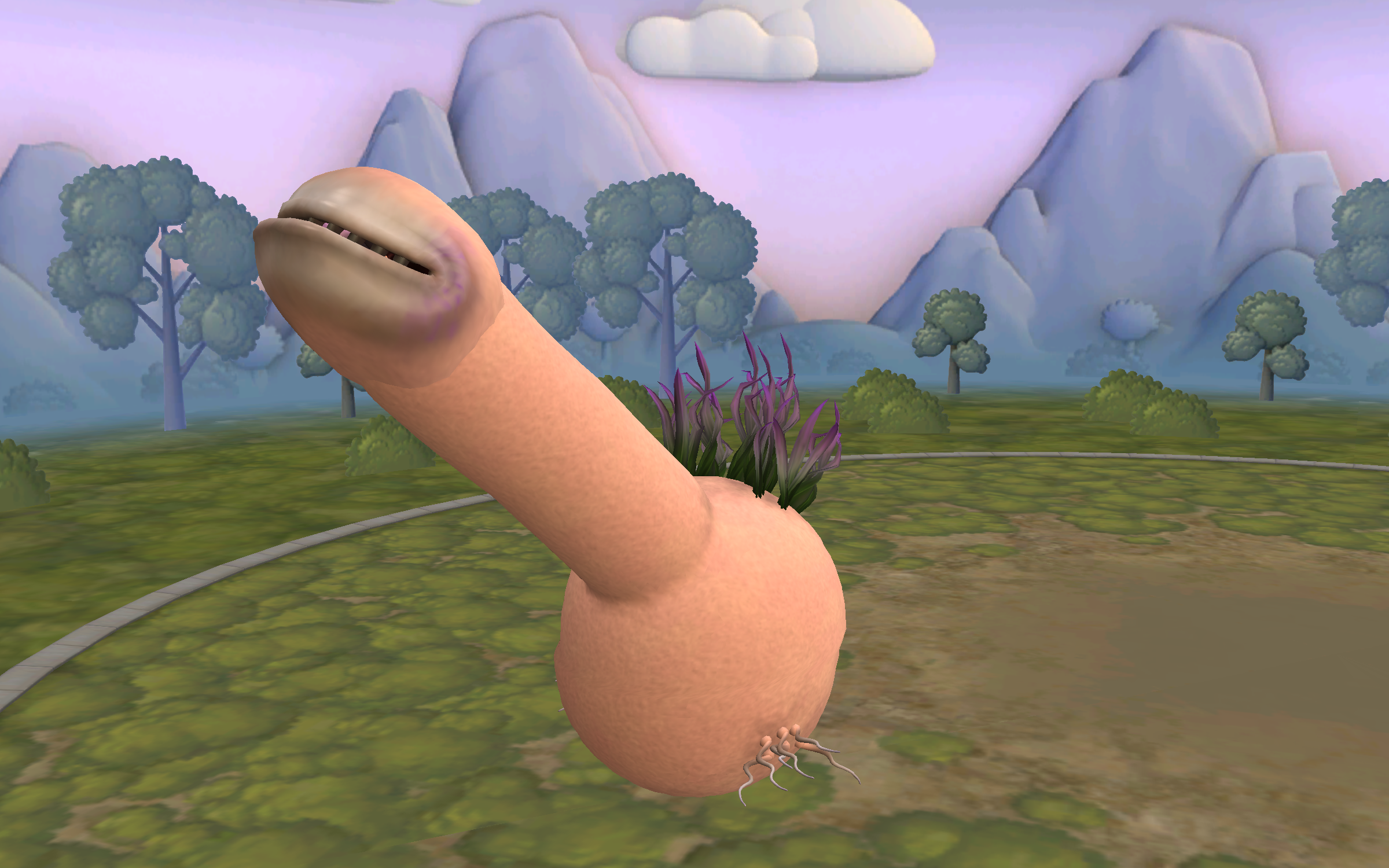
Part of the appeal is, of course, the user-generated content. The fact that, once my little single-celled creature evolves sufficiently to crawl out of the primordial soup and onto land, he/she/it will encounter creatures created by my friends, family and colleagues… well, that's just awesome. Already I've had discussions with several people with amusing stories about my creatures turning up in others' games, and even my spacefaring race's starship turning up and suddenly abducting creatures from their game! (Disappointingly, the above-pictured "Massive Cock Monster", produced by myself and a colleague from work upon his first discovery of the Creature Creator, hasn't appeared in my galaxy as yet but I'm sure it's only a matter of time.)

This is the great thing about replaying Spore. The first time I played it, I didn't notice any of this stuff – I was concentrating on actually playing the game and understanding the mechanics. Fortunately, the mechanics themselves are very simple to pick up and build in complexity at an almost perfect pace – starting with simple directional controls in the Cell stage, adding an MMO-style "hotbar" in the Creature phase for using attacks and social abilities, adding a simple RTS interface in the Tribal phase, refining and increasing the depth of this in the Civilisation phase… before combining everything you've learned throughout the last few hours into the much more lengthy Space phase. And the great thing about the Space phase is that in your travels to the various planets around the galaxy, you can drop down onto a planet and see a computer-controlled species/tribe/civilisation going through exactly what you've been through – you can either sit back and watch it or do your damnedest to interfere with it through various means. Once you've been through the Space phase and experienced this a few times, going back to a previous phase means that you suddenly notice a whole lot of weird shit going on… like a sudden stampede of creatures running away from a now gigantic-appearing spaceship which is lasering them to death, or abducting them, or dropping meteors on the planet.

So that's a lot of fun, and to me one of the best things about the game – the fact that it FEELS like a coherent universe where not only do you go through all these stages, but "everyone else" has to as well – and that "everyone else", despite being computer-controlled, feels like it's controlled by other people thanks to the fact that they were all DESIGNED by other people.

Vaguely related to this is the thing I like most about the aesthetic of the game – the constantly changing sense of scale. Right from the very beginning, Spore is a game about growth. Eat enough primordial goo as a wobbly cell thing and you get bigger, until you can eat the things that used to be screen-sized. Wander around as a creature and everything seems very large. The world is a big place, any invading spaceships seem huge and threatening and it's a scary place to be part of. Become a tribe and you feel like you've taken a step back. What was once a single screen-filling creature has become a group of creatures that appear smaller individually but exhibit a greater influence on their environment. Become a Civ and you barely see your creatures at all, as they spend all their time in buildings and vehicles – but their influence spreads and grows until they have dominated the world. Reach the Space stage and, while your spaceship of your own design is undoubtedly cool, it's presented as quite a small object on screen, making you feel suitably insignificant when surrounded by the thousands of stars that make up the Spore galaxy, until you start conquering or buying out star systems and you see the tangled web of your empire spreading across the galaxy map, growing bigger and bigger with each new conquest.

Other little things tickle my happy places in nice ways. The community side is dealt with well, though I wish there was some notification when someone comments on your creations as at present you have to check your page to see if any comments have come in. There's Achievements too, a clear nod to both Xbox Live and Steam's successful integration of this feature – and they're an interesting mix of achievements too, with a combination of simple "play this game for 40 hours" style ones along with more complex "Win the Civilisation Stage by launching nuclear missiles"-type ones that encourage replaying the game in different styles – plus the fact that playing the game in different styles actually makes a difference. My first race was an aggressive species of carnivore, which meant they spent a lot of their time fighting. (Plus their voice ended up sounding like Brian Blessed, a fact which I was immensely pleased about.) My new species is completely different. They are non-aggressive, social herbivores, which has meant that the strategies required to survive the various stages (they're currently up to the Civ stage) are rather different, focusing on defence or negotiation rather than outright killfests.

So is Spore the masterpiece the hype makes it out to suggest? Who knows. What I do feel, though, is that different people will take different things from it. I will certainly enjoy revisiting it with different creatures with different personalities and abilities and attempting to play the game in different ways. Others may tire of it quickly due to its relatively simple gameplay – simple compared to a more in-depth strategy game, at least. Others may spend most of their time in the Creators and enjoy adding more and more content to both their and other peoples' games. It's certainly a game with a broad appeal and, if we have to use that over-used term "casual" game, it's a good example of a game that is easily accessible by both people who have been gaming for years and those who are relatively new or not as obsessively interested in the hobby as some of us.

(Oh, and the fact that they incorporated the music from M.U.L.E. into the trading screens in the Space phase is enough to make me want to have Maxis' babies… though the purist Atari geek in me wishes they'd used the Atari version instead of the inferior C64 tune. My new creature, Gollumer, is a homage to that game.)

Check out my profile on the Sporepedia and feel free to add me if you've got the game and haven't added me already – the name is, of course, "angryjedi".

Fuck the Internet

Okay… the irony of saying "fuck the Internet" on a blog post isn't lost on me, but bear with me. There's a rant and a half coming your way right about now about, paradoxically enough, people moaning. However, I feel rather more justified in my meta-moaning than the whiny little sods I will be discussing throughout the next few paragraphs.

But first, a little history lesson, if you'll indulge me for a sec.

My family had been online junkies since before the Internet was a widespread global phenomenon. An irregular "treat" for us was to be able to use our Atari with its mighty 300bps modem to dial up to a local bulletin board system, read some messages and maybe download some BASIC games to play. At the time, I thought this was incredily cool. Looking back, at the time, it was incredibly cool. I mean, being able to use your telephone line to dial into someone else's computer and do stuff with it? Neat.

A few years later came CompuServe, which was a step closer to the "real" Internet, at the time still very much in its infancy for consumers. CompuServe offered a service that was essentially hundreds of these bulletin board services, called "forums" along with news, entertainment and real-time chat services. Again, it was something of a "treat" to be able to go online and look at stuff and to actually be able to communicate with other people. As a matter of fact, as a result of a message exchange between myself and another chap on the CompuServe Gamers' Forum, ten levels that I had created for Wolfenstein 3D made their way onto the official Apogee "Super Upgrades" expansion pack for Wolf3D, netting me a cool $200. I still have a (now very faded) photocopy of the cheque as I thought that was so awesome.

A while into the "CompuServe Age", I read an article in PC Format magazine discussing this new and interesting-sounding thing called the Internet. The article was awash with buzzwords like "telnet", "FTP" and curious sounding things with lots of dots and coms in them. But it was still quite some time before CompuServe actually offered full Internet access.

Now here we are, some ten-to-fifteen years later. Web 2.0 in all its self-publishing, self-expressing, lower-case logo glory is upon us offering anyone with a pulse the opportunity to spill their guts on the Internet and share their innermost thoughts and feelings on a whole variety of topics.

This, on the surface, is a great thing. Never before have people had such an opportunity to self-publish anything they like – be it creative writing, academic research, odes to the fit girl in class 3B or simply waffly old bollocks like this place. Why, then, do so many people feel the need to use this great medium to batter down anything around them?

I have two recent examples of this, though these are by no means isolated examples. They are merely the most recent things where this issue has cropped up. Firstly, we have the "new Facebook". Secondly, we have EA's new game Spore. Let's take these two things in turn.

First up is Facebook. Facebook is such a global phenomenon that I heard on the news this week (on the radio, how old-school of me) that they're planning on making a movie (presumably of the docu-drama variety) on the site's rise to success.

For the unfamiliar… actually, balls to that, even my Mum has a Facebook account. You all know what Facebook is. Let's not forget that it's a free service supported almost entirely by ads that anyone can sign up for and use and never have to pay a penny. It's a social tool that's allowed millions of people across the world to connect with one another and rediscover old friendships after many years, in some cases. In short, it's a pretty marvellous thing that both Facebook themselves and numerous third parties keep adding new features to.

So recently Facebook redesigned their site, changing the way the functionality of the site works and, to me, making it rather more streamlined and clean. It also uses more of the browser window which, when you're working on a 1920×1200 screen, is most welcome. They've obviously worked hard on this site redesign and are still tweaking things even as we speak – each time I log on I see some new little feature that makes navigation and use of the site even easier.

So how does the community at large respond? By creating "OMG 1 MILLION PEOPLE MUST JOIN THIS GROUP AND STAND UP FOR OUR RIGHTS! NEW FACEBOOK SUCKS!". You'd think that Facebook had summoned the spirit of Hitler and then allowed it to rape all the world's children before taking a chainsaw to them, while the shareholders sat in the background wanking and laughing. But no – they've done what any good website does every few years, they've had a refresh and a redesign – and, compared to many websites' complete overhauls that I've seen over the years, this has been a fairly minor one in the grand scheme of things. You can still do everything you used to be able to, and more so in many cases.

So why bitch and moan? It escapes me. Do these people seriously think that getting a million people together in a group that is HOSTED ON THE FUCKING SITE THEY ARE COMPLAINING ABOUT – the site they aren't paying a penny to support yet are happily cluttering up bandwidth with their photos and videos – is going to achieve jack shit? Why bother? Fuck the Internet.

Why bother complaining about the complainers? It makes me feel better. One may argue that all these people are doing is "making themselves feel better" also, but the fact is, it is Facebook's prerogative to change their site as and when they want to – whether it is from the perspective of improving the users' experience (they must be sitting around thinking "Those ungrateful bastards" right now) or from the perspective of increasing advertising revenue (which for a site that doesn't make much money from its users is perfectly reasonable).

Next rant. Spore.

Spore's a great game that came out this week. From Will Wright, creator of the Sim games (and the The Sims games, natch) it allows you to… again, I'm sure you all know about Spore already, so I'll cut to the chase.

Spore ships with some security software by Sony called SecuROM. SecuROM is a system that is designed to protect discs against being copied and installed by hundreds of people… i.e. piracy. As such, it limits a purchaser of a copy of Spore to installing it on three separate machines. That's not, as many people have assumed, three installations and then it's all over… that's three machines.

Who has three machines? How many people, apart from people with more money than sense, buy a new PC gaming rig often enough to make this an issue? I buy a computer roughly once every five to seven years and it serves me fine in that time, unless I want to run something like Crysis – which fortunately I have no interest in whatsoever.

EA released a statement quoting usage and activation statistics from the Spore Creature Creator, released some months prior to the full game. While Creature Creator's stats may not necessarily reflect exactly the same userbase as Spore, the figures were telling. Most users activated the product on one computer. A few did it on two. And about 1% tried to activate on more than three. I'm often loathe to believe company hyperbole, but in this case those figures certainly seem a reasonable assumption in my experience at least. I don't think I know anyone who has more than one computer for gaming purposes. Sure, I know some guys who have PCs for gaming and Macs for professional/creative work, but even then, that's still only two computers.

The nonsense with Spore went way overboard. Amazon.com was bombarded with over 1700 one-star reviews of the game, very few of which commented on the game at all. Several users bandied the word "draconian" around and many promising to go and pirate the game rather than purchase it – indeed, the main argument that many people were throwing around was the fact that somehow Spore had been leaked, cracked and torrented even before the game's street date, thereby, to these people, making the DRM pointless.

The fact is, were there not such wanton levels of piracy on the Internet today, these measures wouldn't be necessary – and the people on Amazon who claimed that pirating the game was "making a stand" are simply adding to the problem, not making a point. EA's a big company and they have to be seen to be doing something more than plugging their fingers in their ears and going "lalalala" on the subject of piracy. While DRM clearly doesn't work as it should at present, at least it represents a symbolic gesture on EA's part to help tackle the problem.

The fact is that Spore's actually a great game, but all this nonsense has put lots of people off playing it, for completely unjustified and ill-informed reasons. It'd be lovely if just, for once, people on the Internet could sit down, appreciate what someone else has done for them, pay for it if it's a paid-for service (like Spore) and appreciate it being free if it's a free service (like Facebook) without bitching and moaning any time some tiny little change to the "norm" comes along. I'm sure there's something Orwellian in there somewhere…

Anyway. Rant over. Assuming no-one else pisses me off my next few posts will be about Spore and other games I'm playing at the moment!

Listen!

Don't worry, I'm not gonna waffle on atcha. It just occurred to me that at least two out of the three games discussed below have awesome soundtracks. In the case of Space Channel 5, it is, of course, the game's raison d'ĂȘtre but Divine Divinity has a notably good soundtrack also. Castle Crashers, while having a great intro theme, has a somewhat more forgettable soundtrack, though it does suit the action nicely.

So without further ado, here's a few clips from both games for your entertainment.

Introducing Ulala! (Space Channel 5)

This first tune gives you a strong introduction to Space Channel 5 – it's played during the first level. By a short while in, you're left in no doubt as to how you're supposed to be feeling while you're playing. Gay. In every sense of the word.

Which One Is Real? (Space Channel 5)

What was the last music game you played with a bebop-like section?

Perfection! Space Elementary School Band (Space Channel 5 Part 2)

You'll either love or hate the infectious cheerfulness of this track.

Blank TV/Ulala Support Chant (Space Channel 5)

A capella! Awesome. This piece of music sums up the whole "get everyone behind you" thing that makes the finales of the two SC5 games so awesome.

Main Theme (Divine Divinity)

The main theme from the game is an interesting composition, eschewing the kind of "epic" soundtrack that Baldur's Gate always went for in favour of a more haunting melody.

Forest (Divine Divinity)

This is a simple piece, but evokes a sense of loneliness which is apt for the setting the music appears in.

Bitva (Divine Divinity)

A huge change of pace for this one reflecting the diverse nature of DD's soundtrack.

Enjoy. You can download the tracks from DD at Larian's official website. As for SC5? You're on your own, though resourceful soundtrack collectors probably know the first places to look.