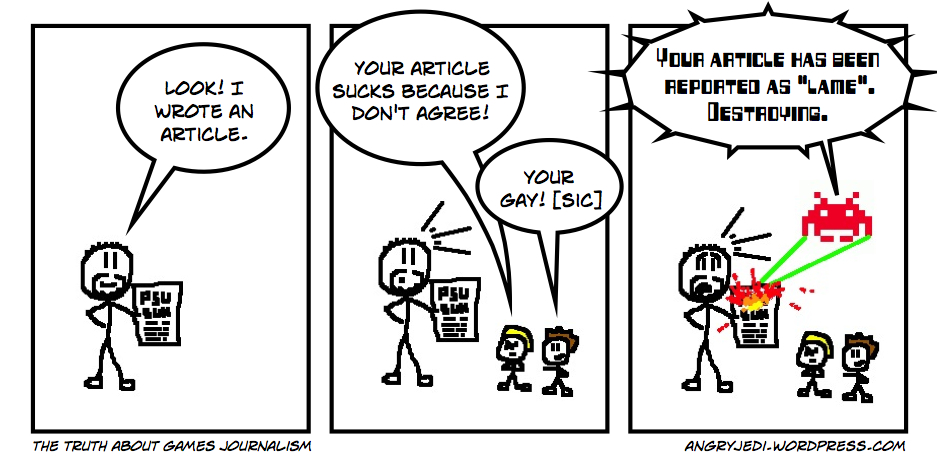
 There is an increasingly popular—and increasingly worrying—tendency for games journalism and writing about games (which some people are keen to point out are two different things) to be judged as "broken" or "lame".
On paper, you can perhaps understand why this is. Gaming is one of the most popular subjects for wannabe writers to pebble-dash the Internet with, and there are so many people out there who want to do it "professionally" that a good 90% (I made that up) of gaming-focused sites out there can't even pay their writers, however awesome they are. As such, there is a lot of crap out there, but it's generally quite easy to spot, and there's certainly no need for sites like this.
Fellow #oneaday-er and all-round lovely grumpy chap Ian Dransfield of Play Magazine wrote an impassioned rant on this subject. I highly recommend you go and read it. Now. Go on.
I agree with the Dransfield. No kind of journalism should be homogenised, automaton-written garbage. It should have scope for individual opinion and comment, and certain outlets should have the opportunity to develop distinctive "voices" on the matter. It's worked for our newspapers for years, after all—for all the shit everyone gives the Daily Mail about their bizarre and often misguided opinions, at least they stick to their guns. Similarly, were the Daily Express ever to write about anything other than Princess Diana, the nation would be in uproar.
One of the things that bugs me most about today's games journalism is the plague that is N4G. For the uninitiated, N4G is a community-driven news-aggregation service. Community members may post articles to a "pending" queue, and they then have to get ten "approvals" in order to show up in the main news feed.
Fair enough, you might say. It separates the wheat from the chaff, surely. And surely the people who have approval rights must all be published professionals, right?
Wrong. Anyone can submit any page to N4G with no requirement that the article be your own. Get three articles approved by the community (a simple case of rounding up ten Twitter/Facebook friends to help you) and voila—approval rights. This then means that your opinion has as much weight as someone who's been doing the job for fifteen years.
This may still not sound unreasonable. So let me show you the drop-down menu of options available for "reporting" an article if you believe it to be "inappropriate":
 Yes, you have read that correctly; one of the options for reporting an article as unworthy of appearing in the N4G news feed is that it is "lame".
N4G is seen as a primary means of promoting games-related articles, and sure enough, it does seem to generate a lot of hits for sites, so I can't fault those people who do take advantage of it to get more readers to their sites—fair play to you. I can say with some honesty, though, that I have never used it as a place to go to find out the latest news. The whole thing is too chaotic, too run by people who write comments after reading only the headline and not the article and—ugh—it makes me mad, I tellsya. I can't take it seriously in the slightest.
My main issue with it is one of the things Dransfield points out in his article: who are these people to say what is and is not "relevant"? What gives them the right to brand something as "lame" simply because it doesn't have "HALO IS A REALLY COOL GUY" in the headline? What gives them the right to ignore a supposed "duplicate article" on a subject which offers some opinion or additional facts over and above what has already been written first, in haste?
Absolutely nothing. Traditional news outlets and even longer-established specialist press (such as publications for music and films) aren't held to account in the same way. But games journalism, being a younger industry, seems to be held to entirely different standards, and judged unnecessarily harshly. There is a lot of negativity surrounding the games press, and not enough positivity. Trolling and flame wars are particularly prevalent on articles about games, and platform-specific articles seem to bring out the very worst in the community.
Here's food for thought then: in a world where we're so concerned about free speech a goodly proportion of the Twitter population in the UK (and beyond) is supporting the legal fees of someone they've never met, why are we so harsh on this particular breed of writers? Why shouldn't they be able to write what they feel, rather than what will "get hits"?
If you would like to share this post with the community, then please feel free to make use of the buttons below.
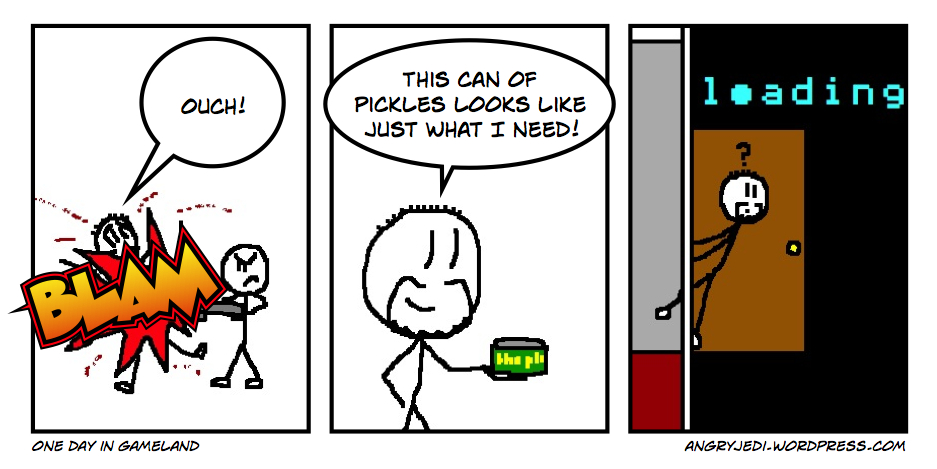 In discussing Deadly… I mean DEADLY PREMONITION with a couple of others recently, we came to the conclusion that the universe of games has such a distinct logic, such a distinct culture, that you could probably write an entire treatise on the culture, physics, metaphysics and theology of Game-Land.
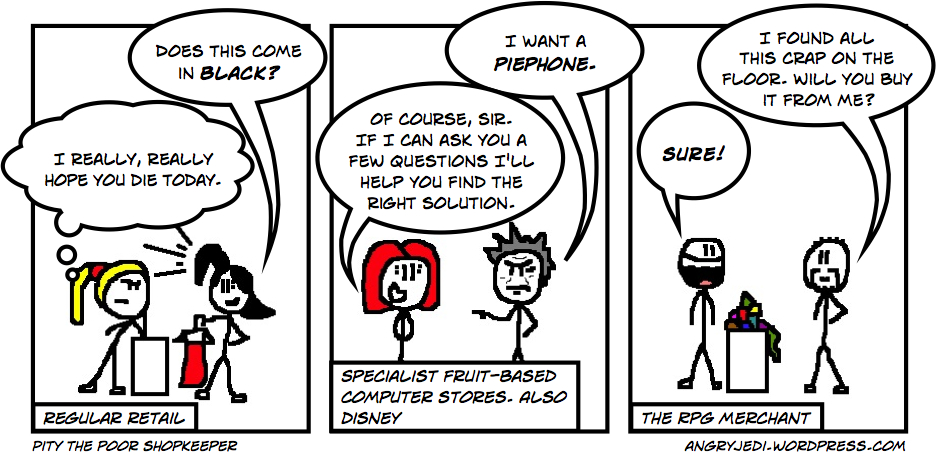 The poor shopkeeper doesn't have it easy, whatever form they take. If they're a retail monkey working for minimum wage in some sweaty hell-hole where chavs repeatedly come up and ask if the nearly-black garment they have in their hands is available in black, then they're probably losing the will to live by the second. If they're working in a, shall we say, "premium" retail environment they're probably having a better time but rapidly growing sick of the fixed grins they're forced to wear, not to mention the stock phrases that spew forth from their mouths like some form of verbal effluvia.
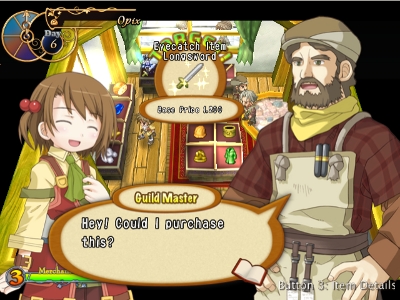 So far, so Animal Crossing, you might say. And you'd kind of be right. Except not. There really isn't another game quite like Recettear out there. There are games which focus on individual elements of the game, sure. But none which blend together such peculiar and diverse elements with such successful results.
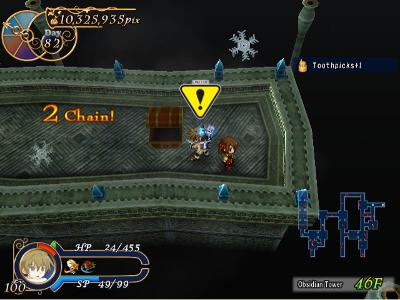 Yes, there are dungeons. Because sometimes the local markets just don't have the things people want to buy. When that's the case, Recette is free to pop down to the local Adventurers' Guild and hire one of the guildies she's made friends with. It's then into an action-RPG dungeon crawler to kick monster booty and gather lots of crap that people might want to buy.
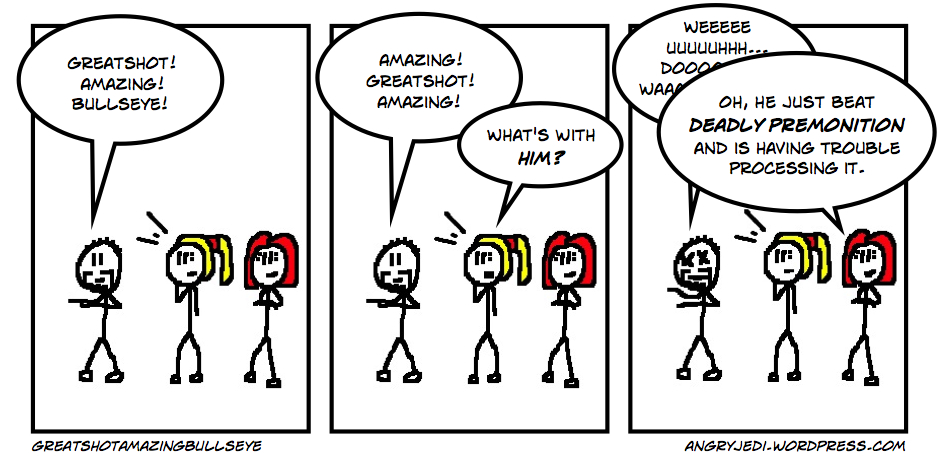 I beat DEADLY PREMONITION tonight and made the confident announcement that it was, barring any last-minute wonders, very much my Game of the Year for 2010. It won't be everyone's Game of the Year for 2010 by any means, for various reasons. But personally speaking, it's very much the most satisfying gaming experience I've had all year. Which is nice.
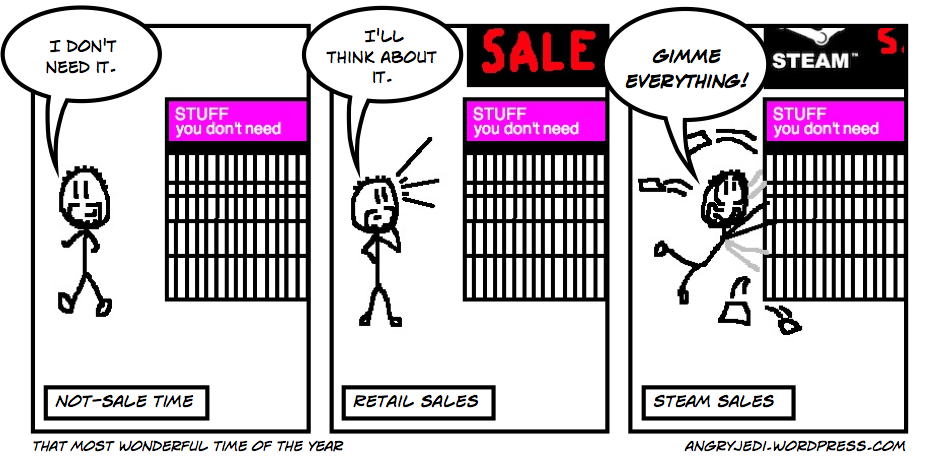 We're coming up on holiday season. If you're American, it's already started with Thanksgiving. And you know what that means if you're a gamer: Steam sales.
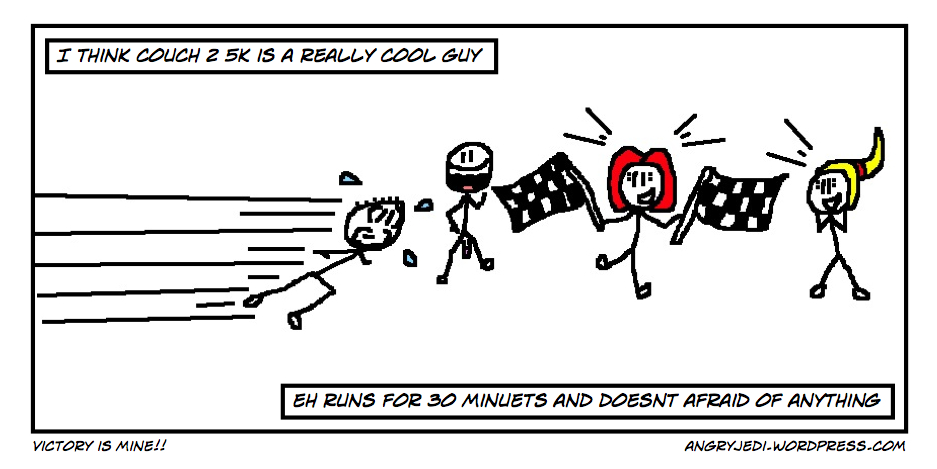 I've been somewhat short of what one might call "victories" recently. In fact, most of my endeavours for the last I-don't-know-how-long-now have ended in what could politely be called failure. As such, I've been in a bit of a funk recently, getting very tired of… well, everything, really.
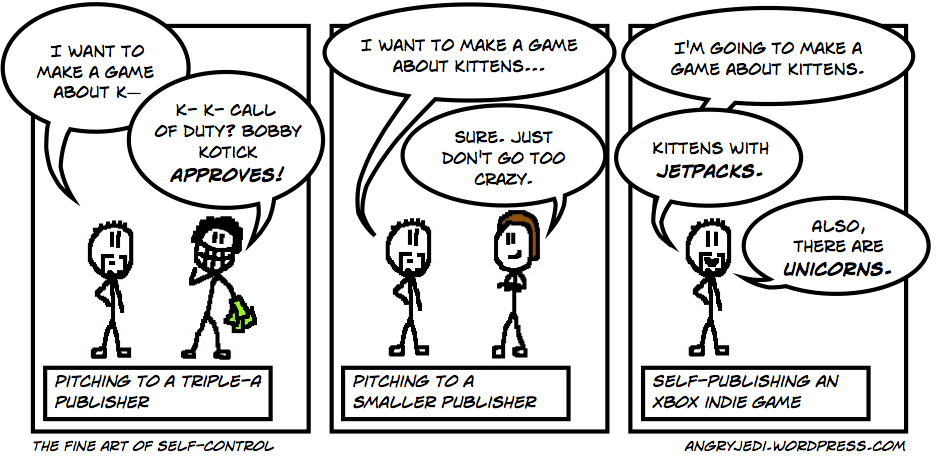 As I have mentioned once or twice previously, the Xbox LIVE Indie Games Marketplace is a veritable treasure-trove of unappreciated hidden gems of gaming.
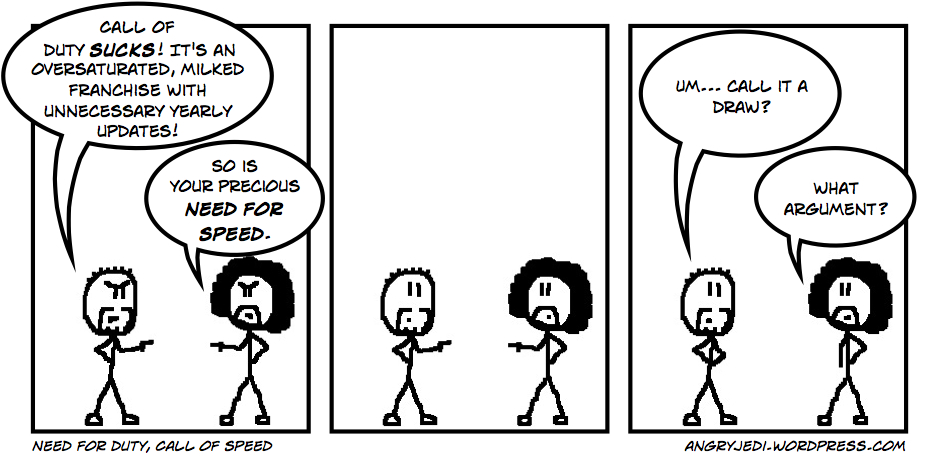 My brother was good enough to send me a copy of the new Need for Speed: Hot Pursuit. It arrived this morning and I've spent a fair amount of time putting it through its paces today. I shall now share my thoughts for the benefit of those of you considering it.
 The latest episode of The Squadron of Shame SquadCast is currently uploading. In it, we discuss the ever-present topic of video game violence. Is it really destroying our children and turning them into violent assholes?
 Ahh, all you people out there playing Call of Duty: Black Ops. I hope you're having a good time. I seriously doubt you're having as good a time as me. Because I'm playing DEADLY PREMONITION, a game so remarkable it insists on its title being in capitals whenever it announced you're playing it on Xbox LIVE.