2096: Sod Off, McIntosh

0096_001

I have, to date, resisted taking the bait of the one and only Jonathan McIntosh, the complete tool who is responsible for the majority of the garbage that Anita Sarkeesian spouts on a regular basis, but witnessing his whining today that tabletop gaming is heavily steeped in colonial themes and mechanics, and that this leads to it being an overwhelmingly white hobby — this somehow being a bad thing, even if it were true (which I somehow doubt, since he failed to show any actual data to back up his assertion) — just proved to be a little too much for me. First he attacks video games; now, it seems, he's starting on other forms of entertainment, too.

I honestly pity him a little bit. I don't really understand what could have possibly happened in his life to make him such a malodorous thundercunt, but it can't be a particularly pleasant life looking at the world through such an utterly joyless lens. Video games and tabletop games — not to mention all the other forms of entertainment media he's doubtless had a pop at — are designed to bring joy to people, and in the latter case in particular, they're designed to bring people closer together to share an experience in a face-to-face, social environment.

I'm not denying that there are plenty of games — particularly of European origin — that have colonial themes. But the reason for this is not anything to do with living out white supremacy fantasies or anything like that; it just so happens that the very concept of building up a civilisation or colonising an unexplored land makes for compelling, competitive gameplay.

And McIntosh's assertion that the heavy use of colonial themes leads to it being a white hobby is absurd, anyhow; tabletop gaming is one of the most inclusive hobbies in the world. Thanks to its heavy reliance on abstract rather than literal representations, you can imagine whatever you like unfolding on the board in front of you. Who's to say that the colonists in The Settlers of Catan are white, since you never see them? The meeples of Carcassonne have neither gender nor race. Agricola features a completely egalitarian society where both men and women do their part for the greater good as much as each other. Terra Mystica's "human" characters are of a variety of ethnic origins. (Sorry, they're "People of Colour"; God, I fucking hate that obnoxious phrase.)

Not only that, but his assertion that there are a "staggering number" of board games that focus on colonialism is likewise absurd. Looking over at my game shelf, it's clear that this is just plain bollocks. Just on the top part of my shelf, I have a game based around King Arthur and the Knights of the Round Table; one about medieval monks solving a murder; another about 1920s high society solving a murder on a train; another about Egyptians building a palace for Cleopatra; another about Middle Eastern-inspired nomads attempting to take control of a desert region and the genies that live there; one about driving cars very fast; one about the whole world coming together to fend off an alien invasion; and a dungeon crawler whose main character is a dark-skinned elf.

So fuck the fuck off, Jonathan McIntosh. Your views are utterly poisonous to the sanity of people who just want to enjoy their hobbies. If these things bother you so much, then perhaps you should find something more enjoyable to do with your time. Go and help starving children in Africa or something if you really want to make the world a better place. But no; that would involve getting off your pasty white arse and actually doing something rather than indulging in constant armchair slacktivism on the Internet, wouldn't it? And we couldn't possibly have that; far better to keep scripting nonsense for that pet hoop-eared cretin of yours to keep regurgitating just as everyone is starting to forget about you and enjoy the things they love again.

Get some joy in your life. And allow those of us who already have some joy in our life to enjoy it in peace, you absolute bellend.

I thank you.
2095: Exploring Space

0095_001

I'm starting to get a bit interested in Elite Dangerous after chatting about it with a friend the other night. It sounds like the ongoing, active development of the game is starting to pay off a bit with some actual Stuff to Do, albeit Stuff that gets a bit repetitive after a while, from what I understand. There's a great deal of potential there, however, and with the status of Star Citizen a little uncertain, Elite Dangerous is starting to look a little more like the "safe" choice for next-gen space opera action.

I'm a little loathe to pay full price for Elite Dangerous at this point, however, since the thing I'm particularly interested in — the Horizons expansion, which adds planetary landings to the mix — costs about the same as the base game of Elite Dangerous and, in fact, comes with a copy of Elite Dangerous included, too, meaning that if you want to play Elite Dangerous now and enjoy Horizons when it comes out, you effectively have to pay for it twice, which is a bit poo, but that's not what I'm going to get into today.

Anyway. The point is, while I was looking at Elite Dangerous and willing the price to magically drop by itself, I spotted some "related" games on Steam that looked intriguing. One in particular caught my eye: Rodina. I became even more interested in this after reading a user review that compared it favourably to 16-bit classics Starglider and Damocles, so I decided to check out the free demo this evening.

Rodina is a game that prides itself on seamless exploration. And for once, that isn't an exaggeration: you start the game on foot on an asteroid, follow a signal to find your spaceship, hop into your spaceship, wander around inside your spaceship, take off, fly around the asteroid, find some bits to make your spaceship better, take off again, leave the asteroid, start flying around the solar system and start investigating planets for a mysterious alien menace that appears to have thwarted humanity's attempts to colonise the stars.

Rodina is technically in Early Access at the moment, but it is possible to "finish" it already, apparently, by seeing through the whole story. The story is primarily told through text boxes that appear through a combination of messages you receive on your ship's communication system and data crystals you find scattered around on the various stellar bodies around the solar system. It's an intriguing little tale with some good writing, though seeing interactions between people depicted through this rather cold medium makes the game itself feel like a rather lonely experience — doubtless intentional.

The premise is intriguing enough, to be sure. The execution… well, it's difficult to make a fully informed judgement based on just an hour of the demo — take note, Mike Diver of Vice and your atrocious Senran Kagura 2 review, no I haven't forgotten about you — but I have mixed feelings so far. On the one hand, it's cool to see a game with such a great sense of scale; the solar system in which the game unfolds feels big, and stellar bodies feel like more than bitmaps you fly towards until they suddenly, magically become a 3D planet surface. There's a cool atmospheric re-entry system where you have to wrestle with your ship's controls as you descend, and successfully popping out of the bottom of this is always a satisfying moment.

Trouble is, like many games of this type, the scenery is a little bit bland, or at least it has been in what I've seen so far. Everything, be it planet or asteroid, appears to be variations on "coloured ground with procedurally generated mountains"; there aren't any real geographical features to speak of, so don't expect something like No Man's Sky from this. This takes a little bit of the fun out of the exploration; a key part of space exploration simulators — and what I'm hoping Elite Dangerous: Horizons will nail later in the year — is allowing you to discover all manner of weird and wonderful things around the galaxy. Rodina has plenty of things to discover, for sure, but for one thing, they're all signposted with waypoints when you get close enough, and secondly, everything I've discovered so far has been nothing more than a few randomly scattered crates and barrels and one or two data crystals. While the story these apparent crash sites was revealing was interesting, by the end of the demo it was already starting to get a little bit tiresome to track down these logs.

There's a lot of potential, for sure, and just as I was finishing the demo, the game was starting to open up a bit, suggesting that I travel to the actual planets in the system to deal with the alien menace rather than just finding log after log. It sounds as if at the present time, there aren't really any friendly NPCs to interact with, which is a shame, but it's something the developer intends to include in the future.

I'm not sure I liked the demo enough to want to drop 11 quid on the full game just yet, but it's certainly an intriguing little game with a great deal of potential that I'll probably keep my eye on to see how it develops. I'm all for more space games, since we've been deprived of them for a good few years; hopefully this is the beginning of a renaissance.

2094: The New School

0094_001

In response to The Daily Post's writing prompt: "The New School."

"You get to redesign school as we know it from the ground up. Will you do away with reading, writing, and arithmetic? What skills and knowledge will your school focus on imparting to young minds?"

As longtime readers (and actual friends) will know, I used to be a teacher — initially in secondary schools and later in primary schools. In the first instance, suffering a massive stress and depression-induced nervous breakdown caused me to abandon that particular career path; in the second instance, recognising the telltale signs of Something Bad About To Happen In My Brain caused me to get out before it happened again. I still do some private music teaching, but my classroom days are well and truly over.

Thing is, my woes in the classroom weren't because I was a bad teacher. In fact, I was actually a pretty good teacher, as observations of my practice will attest. The trouble is that the way schools are in the UK today — or, at least, as they were when I was teaching back in the early years of the new millennium up until about 2010 or so — aren't particularly conducive to effective teaching by people like me who know their stuff about a variety of topics, but who aren't necessarily particularly strong on the whole "behaviour management" side of things. And unfortunately, the overall standard of behaviour in modern schools has significantly declined since I was a student myself; teachers no longer command respect and authority simply by virtue of the fact that they are teachers, and many students are able to get away with appalling behaviour, often with a ready-made "special educational needs" excuse ready to go as soon as you might want to do anything about it.

So what would a completely redesigned, money-is-no-object, Utopian school look like in my mind? Well, let's consider a number of different areas.

Firstly, I think it's important to take ability levels into account: there should be specialist teachers for different strata of ability in different subjects as well as just subject specialists. The reason I say this is that there are some teachers who are particularly adept at handling pupils who struggle to take in or retain information, and others who are particularly strong at pushing the more talented children as far as they can possibly go. Mixing both of these types of pupil in the classroom along with a bunch more who are somewhere around the middle is not conducive to good learning; the requirement to provide "differentiated" lesson plans is largely a product of the way schools work these days rather than a particularly effective, proven method of getting things done. This is particularly apparent in primary school, where classes tend to stay together for all their subjects, with one teacher expected to effectively deliver three or four different lessons simultaneously in order to cater to each of the ability groups.

When handling ability groups, however, it is, of course, important to have a little tact and sensitivity about the whole thing: there should not be a stigma attached to being in a particular group. This is something I'm not entirely sure could be prevented entirely: even if you make a specific effort to obscure the fact that groups are based on ability levels, kids, in my experience, tend to know when they're in the "top" or "bottom" sets for something. An alternative, more radical approach, of course, would be to make schools themselves more selective, with entire educational establishments specifically catering to "challenging", "gifted" or "average" students. That way the entire school can be set up to support all its pupils most effectively.

Yet another angle you can take on this is that modern youth's perception of academic success and suchlike needs to be repositioned. For many years now, it's not been particularly "cool" to perform well in school; an effective new way of thinking about school would incentivise good performance — or at least progress — to encourage all pupils to push themselves that little bit further. The con to this sort of idea, of course, is that it engenders elitism; those students who know that they are at the top of the ladder may become complacent, and this may lead to conflict. This is why I'd lean towards my earlier idea of stratifying entire educational establishments: that way, the attainment level across an entire establishment is fairly "flat" and thus all but eliminates these conflicts — though also an element of healthy competition.

Alongside questions of ability levels is the matter of the dreaded "league tables" — those facts and figures that come out each year and reduce each school down to the number of A-C grades they get at GCSE and/or A-level time. The trouble with league tables is that while they demonstrate a school's ability to prepare pupils for exams, they don't demonstrate other aspects of education such as preparation for later life and learning skills. They also don't take into account how much individual pupils improve between joining and leaving a school, which, in many ways, is a far more relevant metric than just the end results of each cohort's exams. League tables as they are, then, need to be scrapped altogether in favour of something that paints a more realistic picture of how schools are performing — and which doesn't encourage schools to be seen as "better" or "worse" based purely on a rather arbitrary number.

Now, the biggie for me would be the matter of behaviour. As I mentioned earlier, behaviour management was not one of my strong points, and this was largely because I didn't feel like I was particularly well-equipped to deal with a lot of situations that came my way. How do you handle a child who threatens to knife you because you asked them to stop talking, for example? A child who continues to beat up his peers because his parents told him it was all right to do so (and whose parents repeat this advice to you at a Parents' Evening)? A child who shows fundamental disrespect for other people's property, even when taking good care of that property would allow them to have a more enjoyable experience at school? As modern education stands, there is really very little that most teachers can do against poor behaviour; it mostly comes down to psychological tricks of various degrees: convincing children that they "want" to behave well; incentivising good behaviour; leading by example.

Balls to all that, I say; teachers need the power to punish. I'm not (necessarily) talking about corporal punishment — though I got smacked as a kid and sure as hell didn't do the things that got me a smack again after the first time — but rather a wider range of tools and support that teachers can use to keep their classrooms under control. Whether this is additional people in the classroom to help out or stronger powers to impose sanctions on poorly behaved children, I'm not entirely sure; what does need to happen, though, is that pupils need to know their place and to show the appropriate amount of respect, both to authority figures and to their peers. This, I think, would be the most challenging part of redesigning schools, but would probably have the biggest impact if done correctly.

Other ideas I've had floating around my head include some means of "gamifying" the classroom. Rewards of various kinds have been proven to provide a good incentive for kids to perform and behave well, but there's not much in the way of consistency with how these are applied between educational establishments. So how about some sort of nationwide reward scheme, administered electronically with its information stored on the Internet? There could be leaderboards and achievements, just like a video game, and these could run the gamut of the school life experience from academia to sports, thereby allowing all students to clearly see where their strengths are and have their achievements celebrated. Were money no object, these could even translate into some form of real-life rewards to encourage healthy competition or striving for clearly-defined goals.

These are all nice dreams, but unfortunately all of them would doubtless be impractical to implement in one way or another. Shame, really, since if many of these were in place, I'd strongly consider returning to the classroom. As it stands, though, I value what is left of my sanity too much to ever stand at the chalkface ever again.

2093: Pondering Crowdfunding

0093_001

I've gone back and forth in my opinions on crowdfunding a little, but after seeing a number of people spilling a bunch of salt yesterday over nothing more than a rumour that Square Enix might be looking into the possibility of using it to bring more niche, "unlikely" titles over from Japan to the West, a bit of reflection has convinced me that, on the whole, I'm in favour of it.

It is important to accept, however, that there have been a number of crowdfunding fuckups over the years — and, more importantly, a number of high-profile projects that have so far failed to live up to their potential or deliver what was originally promised. Anita "I Hate Fun" Sarkeesian's Tropes vs. Women YouTube series (which I seriously regret chipping in even $5 towards, feeling the way I do about the social justice crowd these days) is several years behind schedule; Keiji Inafune's Mega Man successor Mighty No. 9 has been delayed several times and has had a number of setbacks along the way; Chris Robers' Star Citizen is in a state where no-one seems to quite know what's going on with it and if we're ever going to see it at all, despite it being the most crowdfunded thing in history.

All of these projects still arguably have time to redeem themselves if the finished product comes out worthwhile (fuck Sarkeesian, mind, the joyless hoop-eared twat) but it's understandable that issues like this have caused some people to view crowdfunding with a certain degree of trepidation.

But then at the other end of the spectrum — and here's where my overall positive attitude towards it comes in — there are the success stories. Ambitious visual novels that people once believed would never see a Western release are being localised, for example — the Grisaia trilogy saw its first release a few months back, with the second installment's translation nearing completion; Clannad is coming along soon; and Muv-Luv's Kickstarter is a hair's breadth away from its final stretch goal — and crowdfunding has proven to be an effective means for people to demonstrate that yes, they really want to see things like a new 2D Castlevania (in everything but name), a third installment in the Shenmue series, or the return of early '00s-style isometric role-playing games. Without crowdfunding, none of these things would have happened, because the (understandably) risk-averse games industry as it exists in 2015 would have a tough time convincing shareholders and the like that yes, it really would be a good investment of time and budget to put together something along the same lines as a game released 15 years ago.

One of the most common arguments I see against someone like Square Enix dipping their toes into these waters is that "they have enough money already; why do they need us to give them our money up-front?" Well, for exactly the reasons just mentioned: game companies are, like it or not, a business first and foremost — though they may be staffed by artistic, creative types — and as such, they need to know that any project they undertake is going to be worthwhile for them. Crowdfunding is a means of not only gauging interest in a potential project — with little to no risk if the desired target isn't reached — but also generating some initial operating funds to get it underway. Some projects run over budget, of course, while others are specifically designed with additional funding sources in mind — Shenmue III springs to mind in this instance, for example — and others still, like Star Citizen and Broken Age, end up with a whole lot more money than they originally expected and have to make some tough decisions on how that money is to be spent. The point stands, though; crowdfunding is an easy way to demonstrate that yes, there is an audience for this sort of thing, here's a rough estimate of how big that audience is, here's what we might be able to do for them.

Crowdfunding also taps into an important development in modern society: social media, and the effect this has had on the concept of "word of mouth". I wrote a while back about how the Kickstarter for Muv-Luv comfortably achieved its initial funding goal entirely through word of "mouth" (with "mouth" in this instance also covering "keyboard fingers"), without a peep from the mainstream press — though Kotaku, to their credit (there's something you won't hear me say all that often) did eventually put up a story about it a few days later. We're no longer in an age where new products are dependent on the press to get noticed and promoted; there are plenty of creative works out there across all media now that don't have any column inches — be they print or virtual — devoted to them but are still regarded with love by their fans.

So I don't necessarily think that Square Enix delving into crowdfunding is particularly greedy. They're a business — and a big one, at that — who need to ensure that they're going to be able to make money on any projects they undertake, particularly as they've become a bit more cautious in the last couple of years after a few big-budget failures. Something like RPG series that have traditionally sold quite poorly in the West (hello, Dragon Quest) don't represent a particularly good return on investment for them to just do out of the goodness of their hearts, whereas if fans can show their support for such projects financially up-front, Square Enix is more likely to sell more copies and fans are more likely to get things that they previously thought they'd never be able to enjoy if they were leaving things entirely to the Men In Suits.

As such, if Square Enix decides to jump into the crowdfunding arena, I say good on them. If it means we get games that we wouldn't get otherwise, I am all for it. The traditional model is no longer the only way of funding and buying games, and we should embrace new ways of showing our support for the things that we want to see rather than pissing and moaning about the inevitably drab nature of commercially "safe" products. There's always going to be dull-as-dishwater commercially viable megahits; they're never going to go away, not with the size of the industry as it is today. But what we do have some control over is the smaller end of the market: the niche interest titles that have the most passionate fans in the world; the games that have enthusiasts who will do anything to play a new installment in their favourite series; the games who have fans that are willing to put their money where their mouth is and show that little projects matter, too.

The end result is a more interesting, colourful and diverse games industry; the alternative is a situation where we're subjected to nothing but Call of Duty, Assassin's Creed and Forza Motorsport until the end of time. And while all of those games are good, if that's all there was to play, I wouldn't be nearly as interested in and excited by gaming as I am today. So if a way to support alternatives presents itself, I'm going to take it; you should think about it, too.

2092: I Can Have a Darkside If You Want Me To

0092_001

I decided that I was going to get over my "rut" with Final Fantasy XIV today and get my mojo back, so I booted it up and decided to try something I hadn't done before: give Dark Knight a go.

Dark Knight is the new tanking class that was added in the Heavensward expansion. So far, I've levelled Paladin (the main "defense tank") to 60 as my main, and I have Warrior (the main "wallopy tank") at 50, so I have a reasonable understanding of it. Dark Knight was a bit of a mystery, though; although I'd read a bit about it, I didn't really have a bead on how it might actually feel to play it.

Turns out it feels like a hell of a lot of fun — far more so than the rather weedy-but-graceful-feeling Paladin, and, for my money, also more so than the cumbersome swings and heavy hits of Warrior.

I've only levelled fro 30-34 so far (you start Dark Knight at 30, unlike pre-expansion classes, which start at 1) so I don't have a huge amount of experience as yet, but I've enjoyed what I've done. The class feels like a good balance between the relatively straightforward, set combos and defense of Paladin and the more intricate combos and damage-buffing of Warrior. There also seems to be a bit more in the way of "stance-dancing", since there are a number of abilities that only work when you have a specific status effect active — or in some cases, if you don't have it active. The skill "Blood Weapon", for example, which increases your attack speed and allows you to drain MP from enemies, will not work if you're in the defensive "Grit" stance, but that's fine, since Blood Weapon is an offensive skill and Grit carries a hefty damage penalty, so the two aren't really compatible.

I like this way of playing; rather than Paladin's approach of sticking with Shield Oath most of the time and giving it a bit of Sword Oath only when you have a hefty aggro lead on the rest of your party, Dark Knight allows you to switch back and forth a lot more freely, giving combat a much more dynamic feel. The rhythm I was getting into by the end of tonight's session saw me doing my basic aggro combo, weaving in the "Low Blow" stunning kick (which is off the global cooldown) and also dropping in the off-GCD "Reprisal" proc to reduce enemy damage after a successful parry. Then, when Blood Weapon was up — it actually has a pretty short cooldown — I'd drop Grit, hit Blood Weapon, unleash as many attacks as I could manage — including DRK's DoT, which, unlike PLD's, isn't part of a combo, so can be applied immediately — before switching back into Grit again once Blood Weapon dropped. The timing of Blood Weapon's cooldown usually meant that I could rotate defensive cooldowns at the same time as throwing up Blood Weapon, too, so I could mitigate at least some of the increased damage I'd be taking by dropping Grit's considerable (20%) reduction in incoming damage.

DRK's AoE aggro move is also a bit more intuitive than PLD's Flash, whose radius I'm still not entirely 100% sure of. Unleash, meanwhile, displays a very clear area of effect when you use it, making it extremely apparent whether your positioning is right or not. It's not quite as satisfying as WAR's cone-area Overpower, being a weird-looking spell with an annoying sound effect rather than a distinctly HULK SMASH-style swing of your axe, but I've also found so far that DRK appears to be able to hold aggro pretty well even with only a couple of Unleashes at the start of the fight — perhaps a side-effect of its increased damage when compared to something like PLD.

I'm digging DRK so far, then, and although it's another tank class like my main, it feels different enough from PLD already that I feel like it's going to be enjoyable to level. And who knows? I might even end up maining it if and when I get it to 60.

2091: Singular Sensation

0091_001

In response to The Daily Post's writing prompt: "Singular Sensation."

"If one experience or life change results from you writing your blog, what would you like it to be?"

I've talked about how this blog is helpful to me personally on a number of occasions in the past. It's an outlet, mostly, albeit one I've chosen to make public as a means of sharing "who I am" with the rest of the world. You may like what I say, you may hate it, you may judge me harshly or you may empathise with the things I'm saying, but you can be certain that everything I write here is the honest truth at all times, warts and all.

And, to be honest, I've already had experiences and life-changing results from writing this blog, though I didn't necessarily know what effect I was having at the time. My particularly tough year back in 2010 is something I keep coming back to, but I don't mind admitting that sitting down and getting some thoughts down on "paper" on this very site each day helped me through the worst of a terrible situation. It didn't immediately resolve anything, but it at least gave me the chance to feel like I was able to express the many, many conflicting feelings swirling around in my head at the time.

And this is something I still keep in mind when I write something here every day now. I write from the heart, without particularly planning things out or attempting to compose something with good structure; instead, this is a scratch pad for random thoughts, a place to jot down memories so I don't forget them, a place to enthuse about the things I love and a place to rant about the things I hate. I do try not to stick to the same topic all the time, but you know what people are like — everyone likes what they like, so even with the best of intentions, I know that I inevitably find myself drifting back towards the things I enjoy writing about the most.

Actually, my occasional adoption of these writing prompts from The Daily Post is an attempt to mix things up a bit; the prompts aren't always particularly appealing or relevant to me, but when they are, they can providing a good starting point for something to write about. Plus I've found that posting a pingback to The Daily Post via the link at the top of one of these posts brings in some new people who perhaps wouldn't have found me normally. Sometimes those people stick around; at other times, they may linger for just one or two posts before disappearing into the darkness of the Internet once again. Either way, it's nice to come across new people now and again, and know that I've touched their lives, even in a minor sort of way.

So, then, I don't think I have any particular grand plans for something I want to achieve using this blog. By this point, it's something I just keep around because I've been doing it for so long — and, well, I kind of enjoy coming up with something to write about each day, too. It's part of my routine now; so much so that whenever I'm away from home I always make sure I have some means of posting while I'm away. After 2,091, it's a hard habit to break — and I don't particularly want to, either.

So whether you're a longtime reader or someone who's just dropped by after seeing a pingback on The Daily Post, thank you, once again, for listening to my nonsense, and I hope you got something out of it, even it was just the hint of a smile for whatever reason.

2090: Fighting Games Are Confusing Love Max!!!!!

0090_001

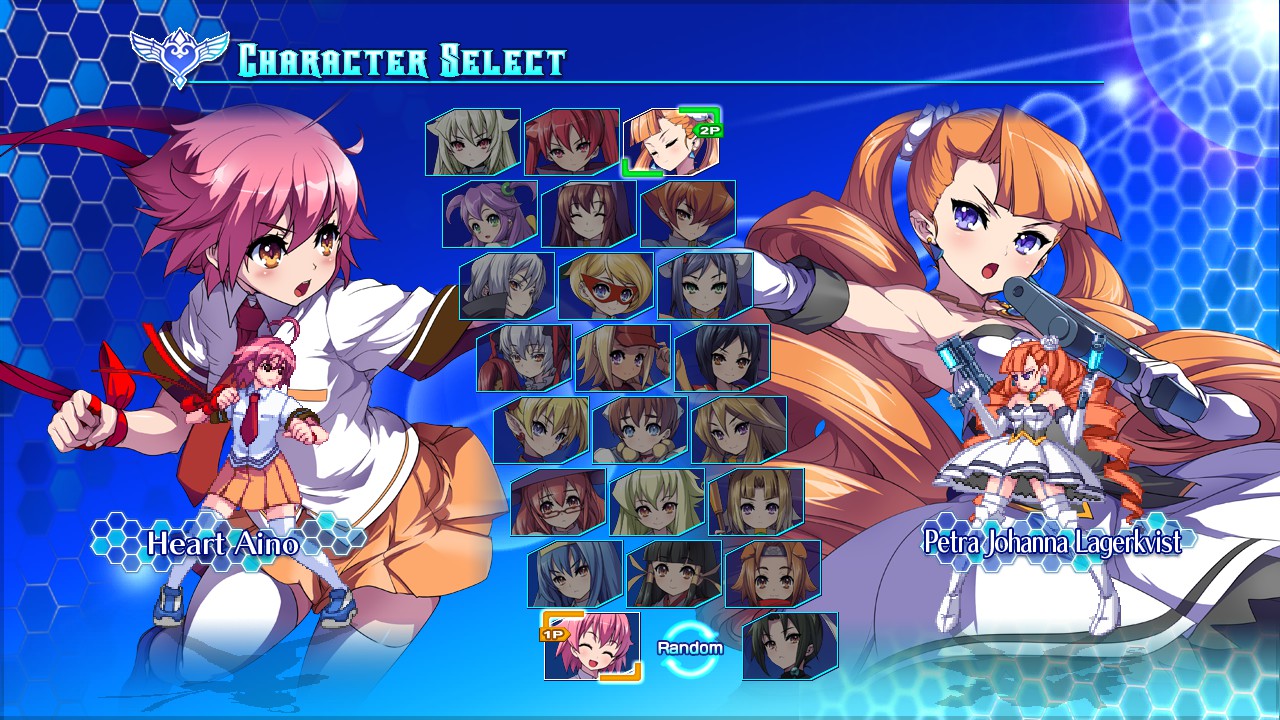
Was playing a few games with Andie earlier, and on a whim I decided to give Arcana Heart 3 Love Max!!!!! a try, since it had been eyeing me up from the Steam store for a while, and I'd been curious to give a modern fighting game a go.

My history with fighting games is a bit patchy. I played a lot of Street Fighter II back on the Super NES; I had an American copy, so it ran in super-widescreen thanks to NTSC/PAL differences, but it was still pretty fun. I also played a bit of Street Fighter IV on the 360, and various installments in the Dead or Alive series over the years. But I've never really got my head around anything more complex than the original Street Fighter II which, as fighting game enthusiasts will doubtless know, is considerably simpler than the monstrosities we have today.

One of the reasons I decided to give Arcana etc etc a go was because it appears to be regarded as a reasonably accessible example of a genre that has become increasingly impenetrable to newcomers over the years. It still has its fair share of complexity, mind you, and a few systems whose use isn't immediately obvious — not to mention a lack of in-game tutorial — but once you get your head around the basic systems, it's relatively straightforward.

arcana2

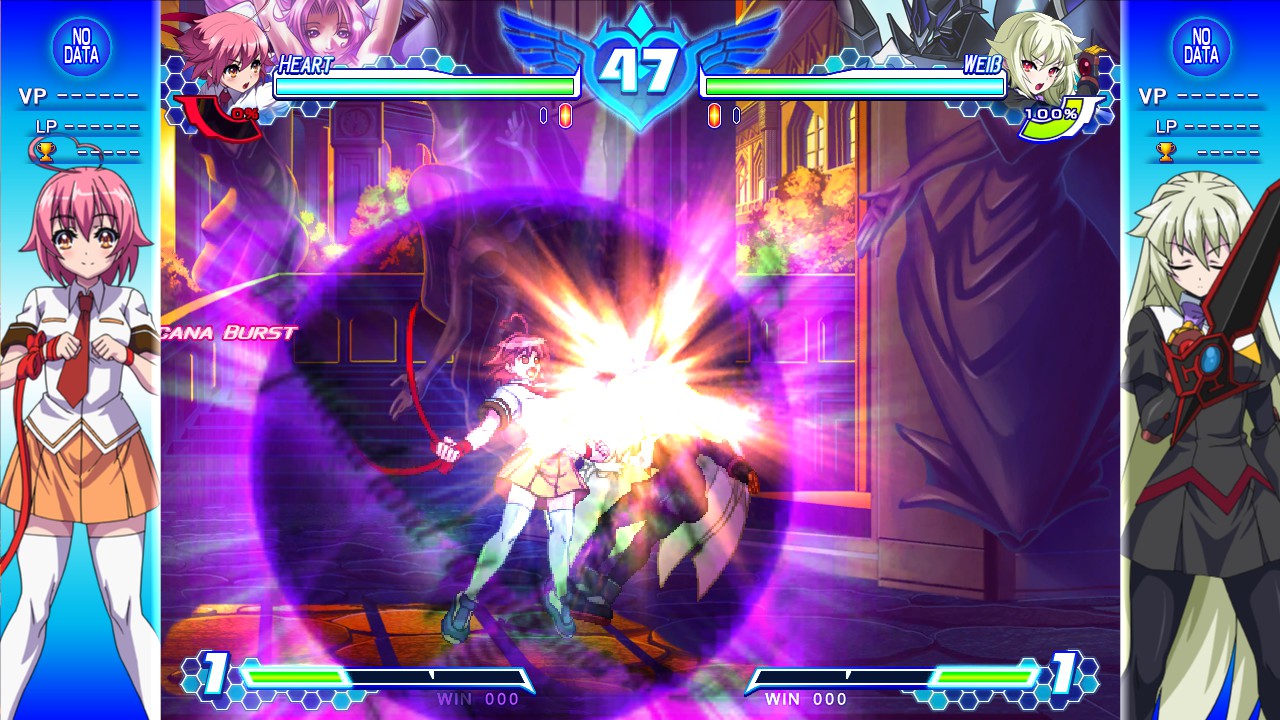
The basic controls are pretty simple. You have a light, medium and heavy attack, and standard Street Fighter-style button combinations (various quarter and half-circles along with the Dragon Punch Z-shape plus an attack button) tend to unleash special moves for most characters. There's also a "homing" button, which is Arcana Heart's main distinguishing feature from other games of its ilk; tapping this causes you to home in on your opponent, and tapping it again causes you to home in more quickly while allowing you a certain degree of control over your trajectory. By using this, you can have some pretty impressive mid-air battles rather than being confined to the ground; it also makes for some interesting dodging mechanics that I haven't quite got the hang of yet.

The Arcana part of the title refers to a significant addition to the usual fighting game formula: as well as selecting a character, you also pick an Arcana to assign to them. Each of these Arcana have their own set of benefits and drawbacks as well as a few extra special moves; essentially, they allow you to tweak and customise the character you're using in various ways according to how you like to play. It also effectively makes the character roster expand considerably, as equipping a new Arcana in many cases makes a character play rather differently.

The bit that usually confuses me about modern fighting games is all the gauges on screen at any time. Arcana Heart, despite doing a piss-poor job of explaining these in the game itself, is relatively easy to understand once you know what they all do. Your health bar is self-explanatory; the little curvy bar next to it is called the "Focus bar" and allows you to trigger a short-lived mode where you move faster and have some other buffs; the bar at the bottom is your "Arcana bar" and is expended on super-special moves of various descriptions. The Arcana bar starts at one-third of its maximum possible value; in order to expand it, you have to land attacks or get hit, but the bar will only grow if it's not in the process of recharging. In other words, you have to restrain yourself a bit with the supers if you want to grow the bar to its maximum potential, which you'll need to do if you want to unleash the most devastating moves in your character and Arcana's respective arsenals.

arcana1

I absolutely haven't got my head around how to play the game well yet, but I feel I at least understand the basic systems, which is more than I can say for some other modern fighting games out there. I feel like with a bit of practice — as well as curtailing my tendency to panic when playing fighting games and lapse into button-mashing mode — I might be able to get the hang of this, and hopefully have the opportunity to teach it to some friends, too, as I can see it being a lot of fun against other people owing to its inherent ridiculousness.

A decent investment, then; I'll be curious to see how much — or indeed if — I improve with a bit of practice.

2089: Connect the Dots

0089_001

In response to The Daily Post's writing prompt: "Connect the Dots."

"Scour the news for an entirely uninteresting story. Consider how it connects to your life. Write about that."

When looking for "entirely uninteresting stories", your first port of call should almost certainly be your local newspaper. Sure enough, the Daily Echo didn't disappoint with this marvel:

BREAKING: City bridge closed due to 'police incident'

A SOUTHAMPTON bridge was closed this evening due to a 'police incident'.

The Itchen Bridge was shut at around 6.30pm but the exact nature of the incident is unknown.

And the bridge was quickly reopened at 6.40pm.

This is currently the top story on the Daily Echo website, which probably gives you an idea of the sorts of things that get posted on there. But let's ponder the actual question from the daily post: how this connects to my life in some way.

Well, okay. This is actually quite an easy one in many ways. The most obvious connection, of course, is that I live in Southampton, and consequently I know where the Itchen Bridge is. But the connection actually runs a little deeper than that: about five or six years ago, I used to live very near the Itchen Bridge in the town centre. The bridge itself was within walking distance, only about five minutes or so away. This didn't really have much of an impact on my life for the most part, as I tended to find other ways to cross the river owing to the toll gates at the other side of the Itchen Bridge. But during my oft-mentioned "difficult period" in my life — the time my first wife left and my life pretty much fell apart — the bridge became somewhere that I liked to occasionally head towards in order to just stand and reflect.

I don't think I ever seriously considered jumping off the bridge, though with my mental state at the time I won't lie to you: I certainly thought about it more than once or twice. Ultimately I knew that I'd never actually have the courage to do it, though, for all manner of reasons: firstly, part of me, despite being deeper in a pit of misery than I'd ever been in my whole life, I didn't really want to die; secondly, even contemplating that sort of thing made me feel guilty about the people I'd leave behind; thirdly, the idea of jumping off a bridge into horrible dirty water sounded both terrifying and unpleasant. And, I mean, I know killing yourself (or the contemplation thereof) isn't particularly pleasant anyway, but I kind of figured there were easier, less painful ways to do it.

That didn't stop me regularly going out to that bridge, though, noticing the Samaritans stickers on the railings every time I walked up to its highest point to look out over the water. I never called them — as I say, I knew that I didn't really want to jump — but they always gave me pause when I saw them. Perhaps they did help, in their own way.

Eventually I settled for getting these musings out of my system with a piece of creative writing. In the short first-person narrative — which was left a little open-ended in case I wanted to expand it into a full-on story at some point — the protagonist, who was very obviously me, walked out to a bridge that was very obviously the Itchen Bridge, tormented by his own despair, and jumped. At the last moment, he was saved from his seemingly inevitable demise by a character I'd created and had my own story in mind for; this particular little narrative was set after that other story, even though, to date, I still haven't written all of it. In other words, the character who saved me was the character as she was at what I had planned to be the conclusion of her original tale; as it happened, she fit nicely into this little fantasy scenario, though.

But I digress. How does this news story connect to my life? Well, my first thought upon reading the headline of the story on the Daily Echo website was "someone's probably jumped". Given that the bridge was re-opened after just ten minutes, though, I wonder whether that was really the case or not; at the moment, it looks pretty much like a non-story, despite its prominent billing on the Daily Echo website. I guess my thought process ran something along the lines of "I wonder if there would have been a story like that on the Daily Echo website if I'd actually given in to my despair and jumped back in those dark days?"

Bleak? Oh, absolutely and definitely. But, well, there you go. That's me.

2088: μ's, Music Start, and Never Stop

0088_001

It's been quite a while since I watched Love Live! — long enough that I'm considering watching it again, particularly as what appears to be Love Live! The Next Generation of sorts is currently brewing — but ever since I watched it, it's been a pretty regular part of my life. Specifically, it's pretty rare that I go a day without listening to at least a few of the songs both from the show and which were released as singles and albums as spin-off products.

One of the reasons I really enjoyed Love Live! as much as I did when I first watched it was because of the music. Sure, the story was fun and the characters were loveable and memorable, but if a show about music doesn't have good music in it, then, well, it fails. Fortunately, Love Live! had great music that complemented the story really nicely, even if you don't understand the Japanese lyrics.

The reason I like Love Live!'s music so much is because each and every one of them is an absolutely perfectly crafted pop song. Everything about pretty much every Love Live! song is put into place so immaculately, so beautifully, that it's hard not to get swept up in the energy of it all. The choice of vocalists; the backing track; the melodies; the harmonies; the chord sequences — all these elements combine to make something naturally delightful and pleasing to listen to, and intoxicatingly addictive.

Here are a few favourites.

This song is only heard as an instrumental in the show itself, but I liked it as soon as I heard it with lyrics in the Love Live! mobile game. It's a wonderfully cheerful, upbeat piece about friendship or something; it doesn't really matter. It just sounds nice, has a catchy tune and is eminently suitable for singing along to, even if you just babble Japanese-sounding syllables to the rough melody.

Also I like the "la, laaaa, laa laa laa laaaaa" bit at the end. Andie hates it, but whatever.

I adore this song, partly because it's the first song (aside from the OP) in the show, and it's a beautiful moment: Honoka, Umi and Kotori all coming together to try and achieve something for the first time, even in the face of adversity. It's also another really catchy song with some toe-tapping rhythms that fit well with the dance moves depicted in the show. And come on, listen to it. I defy you to reach the end of that without cracking a smile.

This is a gorgeous song in many ways. I particularly like it as it highlights Umi's voice, which is one of the most understated yet pleasant to listen to voices in the cast — a fact that goes with Umi's rather straight-laced personality. This song also reflects Umi in another way: the fact that in many ways she's the most "Japanese" of the cast, without any particularly exaggerated physical or personality traits, and this song — particularly its calming opening — fits her perfectly.

This one… well. What more can you say about a heavy metal song about enjoying hamburgers after school? Just rock out to it.

This one took some tracking down and I wasn't sure why… until I realised that it's not from Love Live! itself at all, but actually from a disc of character songs for the PS3 game The Guided Fate Paradox. That said, it does feature Eli from Love Live! on vocals, and as such is worthy of inclusion. It's also a pretty awesome song in the Castlevania mould in its own right. So there. And now I think I actually need to play The Guided Fate Paradox because I had no idea how good its music was.

2087: Virtual Photography

0087_001

I've been fascinated by the idea of "virtual photography" for quite some time now. For those wondering what on Earth I'm talking about, I'm referring to the idea of creating aesthetically pleasing screenshots using video games as the base medium, but sometimes involving editing software to touch them up a bit or get rid of some of the inevitable glitches you find in polygon-based games.

A lot of modern games are embracing their photo-realistic nature by including a photo mode right there in the game itself; these modes often include numerous realistic filters and settings that work like an actual camera, as well as, often, an enhanced version of the game engine that sacrifices framerate in the name of visual fidelity, since virtual photography is more concerned with the quality of still images than fluidity of movement.

What I've found more interesting over the years, though, is the ability of games to let us photograph things we simply wouldn't be able to in reality. Fantastic structures, stylised characters, improbable situations, that sort of thing. And as such, although I like the idea of photo modes in stuff like Forza Motorsport and its ilk, I'm inevitably drawn much more towards games that allow you to photograph characters and fantastic environments rather than cars. Nothing against cars, of course; I'm just more interested in people and places.

Second Life

A few years back, I spent quite a lot of time in the social/creative MMO Second Life. I was going through some difficult stuff at the time, and the people I met in there helped me through it a great deal — more than they perhaps knew. To my shame, I haven't been back for quite some time and I don't know how many of them would remember me now — it's been a good five years or so since I logged in, I think — but I have fond memories from that time, and pleasingly, I have a visual record of many of those fond memories.

3223947368_76b1819f2d_o

Early on in my time "on the Grid", as Second Life players called it, I developed a fascination with photographing people's avatars. Since your avatar was a reflection of your personality in Second Life — you could change appearance at will, and there was no "level-locked" equipment or anything; you just had to create, find or purchase items — I found this to be an interesting means of coming to understand various people. Above you can see one Kade Klata, someone who was a great friend to me during the aforementioned difficult times, and someone who got me into this whole virtual photography thing in the first place.

Kade disappeared off the Grid one day and I was never sure where she went; wherever you are, Kade, I hope you're happy, and I hope you know you touched my life for the better.

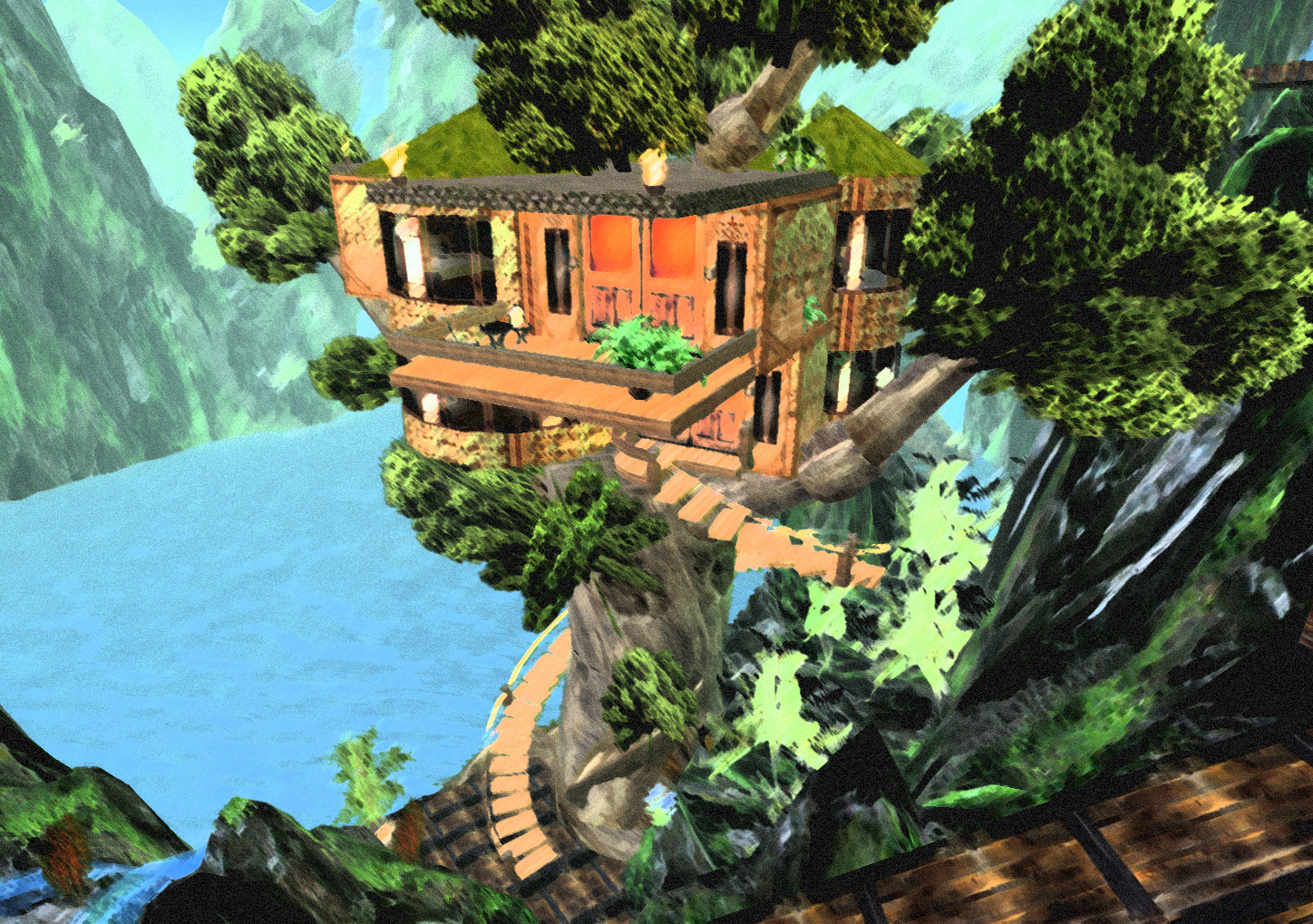
1602324153_14edba8df5_o

This was an early experiment with using heavily stylised filters to smooth off the rough edges of Second Life's graphics. This particular image was taken in a region called "Botanical", which was renowned for having beautifully constructed scenery. Worthy of note is the fact that all the buildings, scenery and objects in Second Life are constructed by the "players", so someone had spent a lot of time on this place; it seemed only fitting to immortalise it somehow.

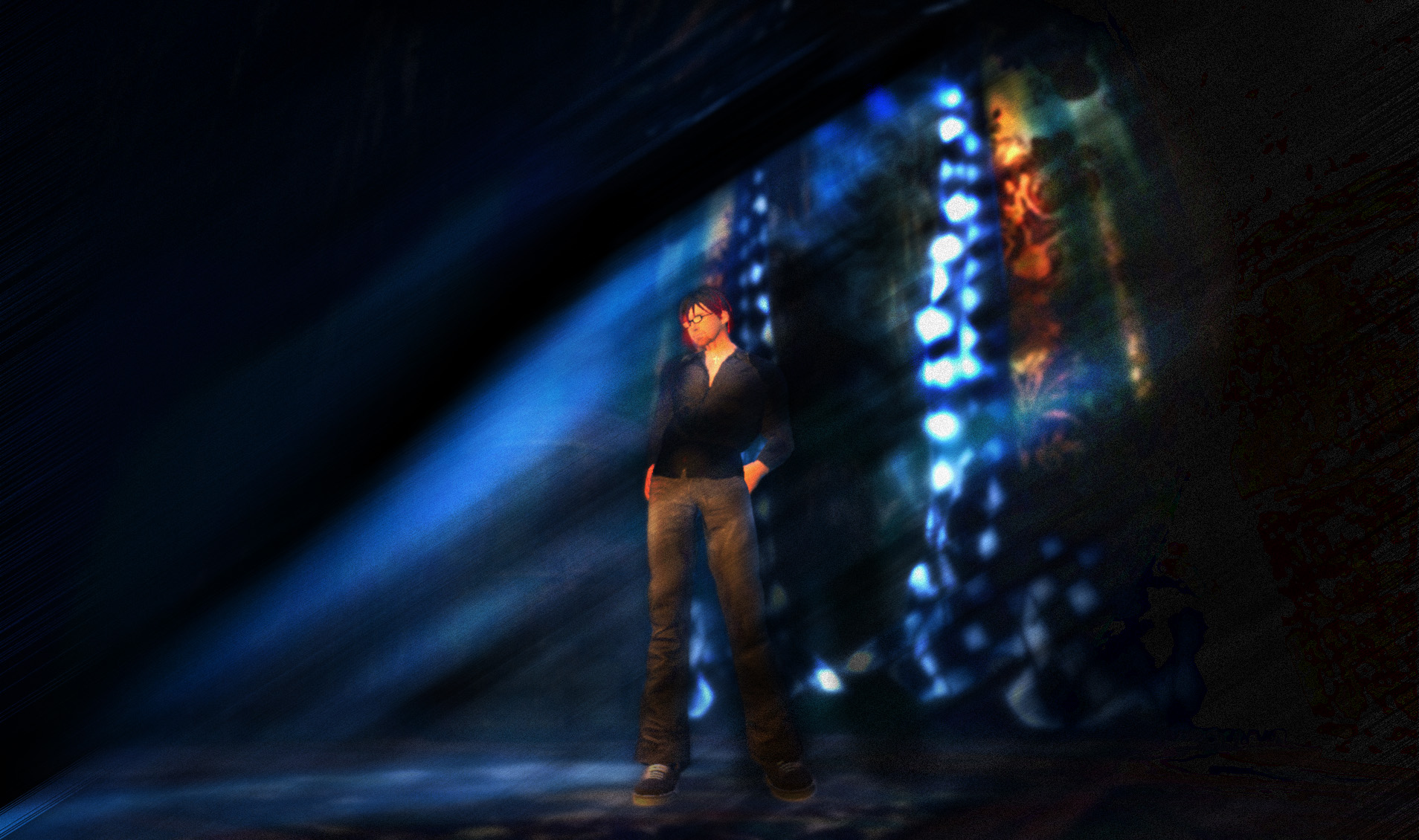
3258277477_fbe89bfa7f_o

I normally hate taking pictures of myself, but even though I loosely modelled my Second Life avatar on myself, I actually enjoyed putting myself into virtual photographs. This image was in a moody area called "Templum Ex Obscurum"; I forget what its actual purpose was — perhaps just to look pretty — but I was pleased with how this shot came out, and even more pleased with the fancy lighting I managed to create while figuring out how Photoshop worked.

3285581914_daf20efc8f_o (1)

I don't mind admitting that when I was most involved in Second Life, I was somewhat emotionally fragile. One of the things I liked most about that virtual world when I was in it, though, was the fact that there were all manner of ways to express yourself. This image, taking alongside one "Rylan Carling", who graciously agreed to come and model for me, was actually rather cathartic to create. (That's "me" in the background; by this point, I'd been given something of a virtual makeover by a friend.)

3315075174_3e31bdb6f2_o

…Yeah, I was pretty emo around that time. (Hell, I still am; I still like this image and what it symbolised when I was putting it together.) Anyway, enough of that; if you want to see more images from that time, take a peek at my long-abandoned Flickr account.

Final Fantasy XIV

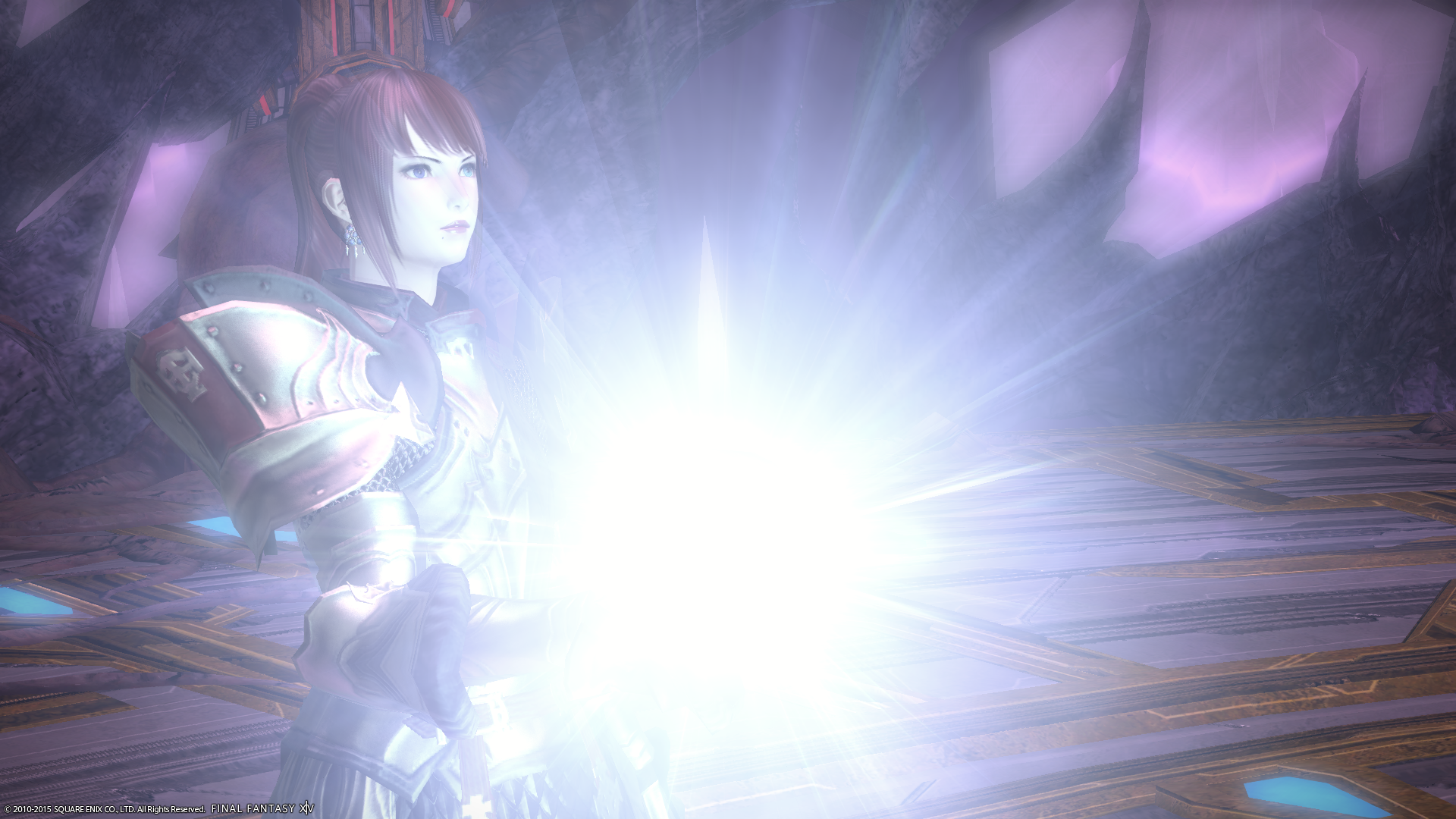
The inherent drama in a role-playing game makes for some great "photos", assuming you can time pressing that screenshot button correctly. Like this:

ffxiv_06092015_212131

Or this:

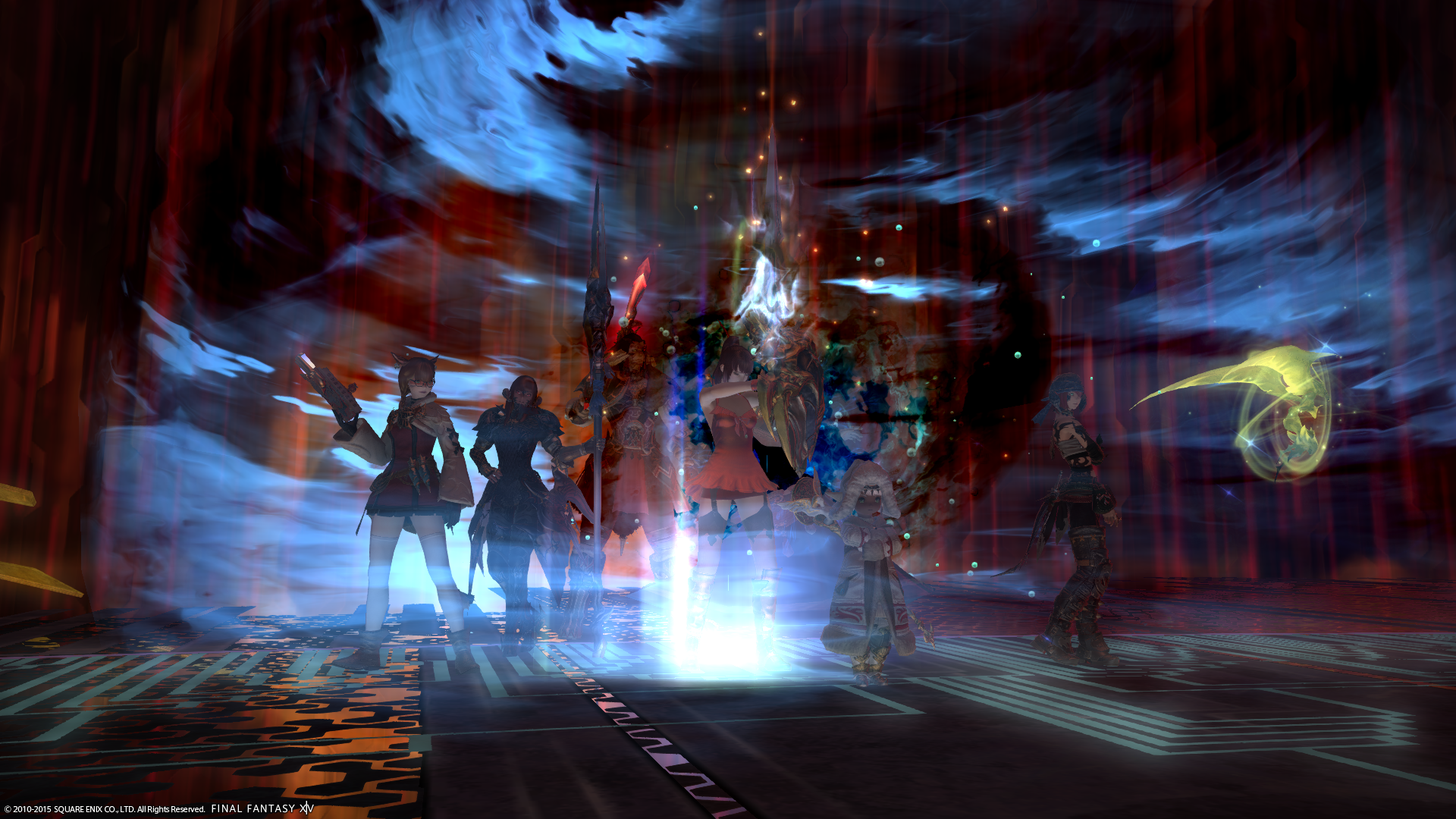
ffxiv_30062015_163714And then, of course, like Second Life, there's the self-expression element of everyone's avatars thanks to the "Glamour" system, whereby you can make one piece of gear look like another.

This image is pretty special to me; it's our whole Free Company meeting for a "group photo" shortly before the release of the first expansion pack Heavensward.

ffxiv_01062015_002447

Custom Maid 3D 2

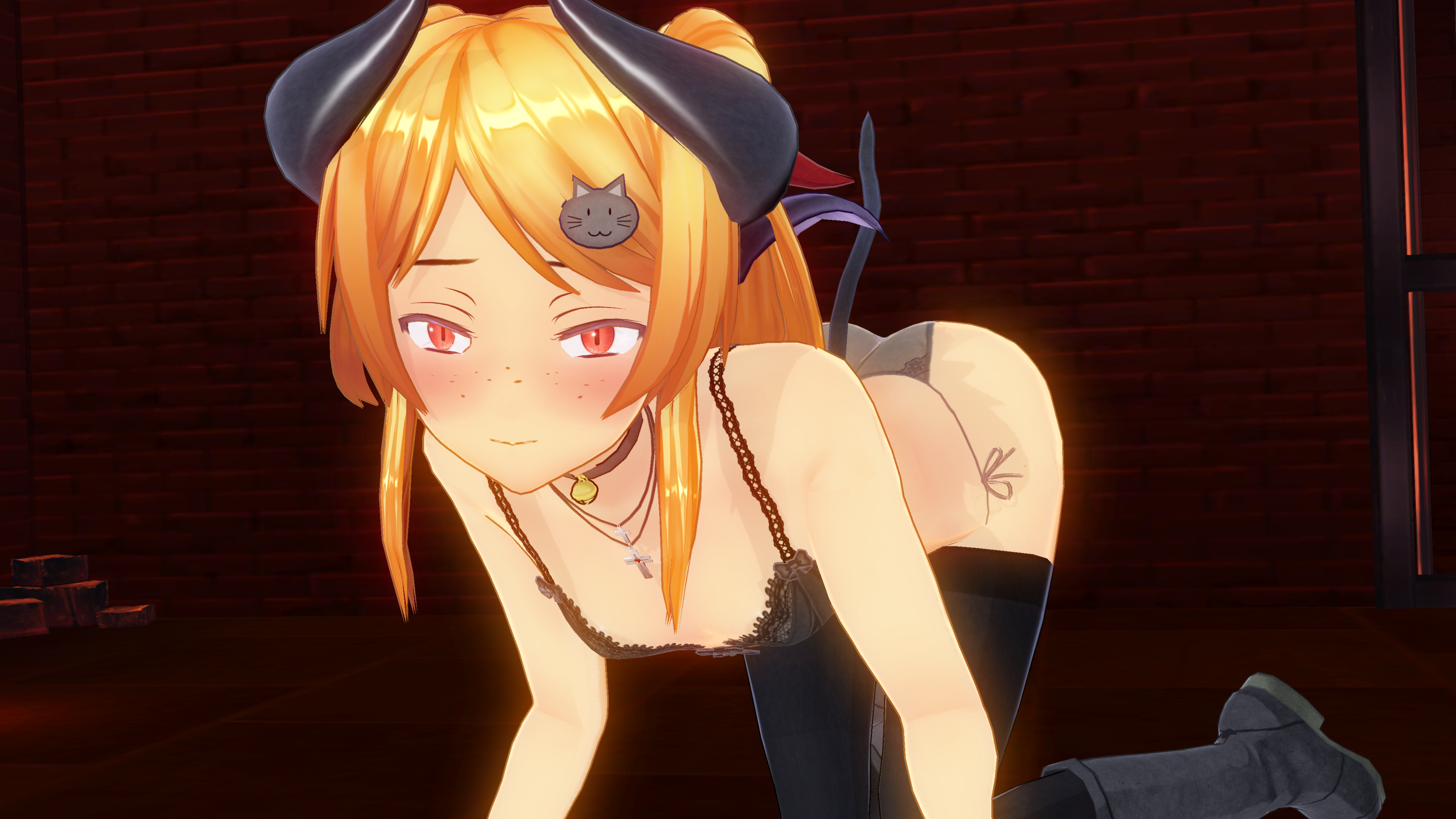
And finally, it would be remiss of me to talk about virtual photography without mentioning Custom Maid 3D 2, which I introduced to you all the other day. Unfortunately, the vast majority of the "photographs" I've taken using this are, shall we say, not entirely suitable for publication on this particular blog (I have a few standards!) but, well, here's a few that I feel I probably can just about get away with…

img20151007103907

The thing that's impressed me most about CM3D2 so far is the fact that it's the closest I've seen 3D graphics get to 2D art. The character models, the art style, the outlining, the cel-shading and the expressiveness of the faces — all of those things combine to create something that is not at all "realistic", of course, but which is a very convincing recreation of the idealised anime style.

img20151007104322

As you'd expect from something with the word Custom in its title, the character creation system in CM3D2 is pretty astounding, allowing you to customise pretty much anything from face and body shape to eye style and whether or not the character has one or two of those cute little "fangs" you sometimes see anime girls depicted with. You can even set how heavy their boobs are. And choose their clothes, obviously. Dressing your maids up is one of the most fun parts of the game that doesn't involve doing lewd things.

img20151007103022

Even the lewd bits are eminently suitable for virtual photography, though, since there are a number of "actions" that simply pose rather than… you know… do stuff. Combine these poses with the control you have over their costumes as well as the camera control mod that allows seriously precise positioning of your viewpoint plus the wonderful ability to make the characters look at the camera on command (assuming it wouldn't be physically impossible) and you have a virtual photo studio that's a whole lot of fun to play around with.

Games are art, yo.