2106: Sex and Games Make Sexy Games...?

0106_001

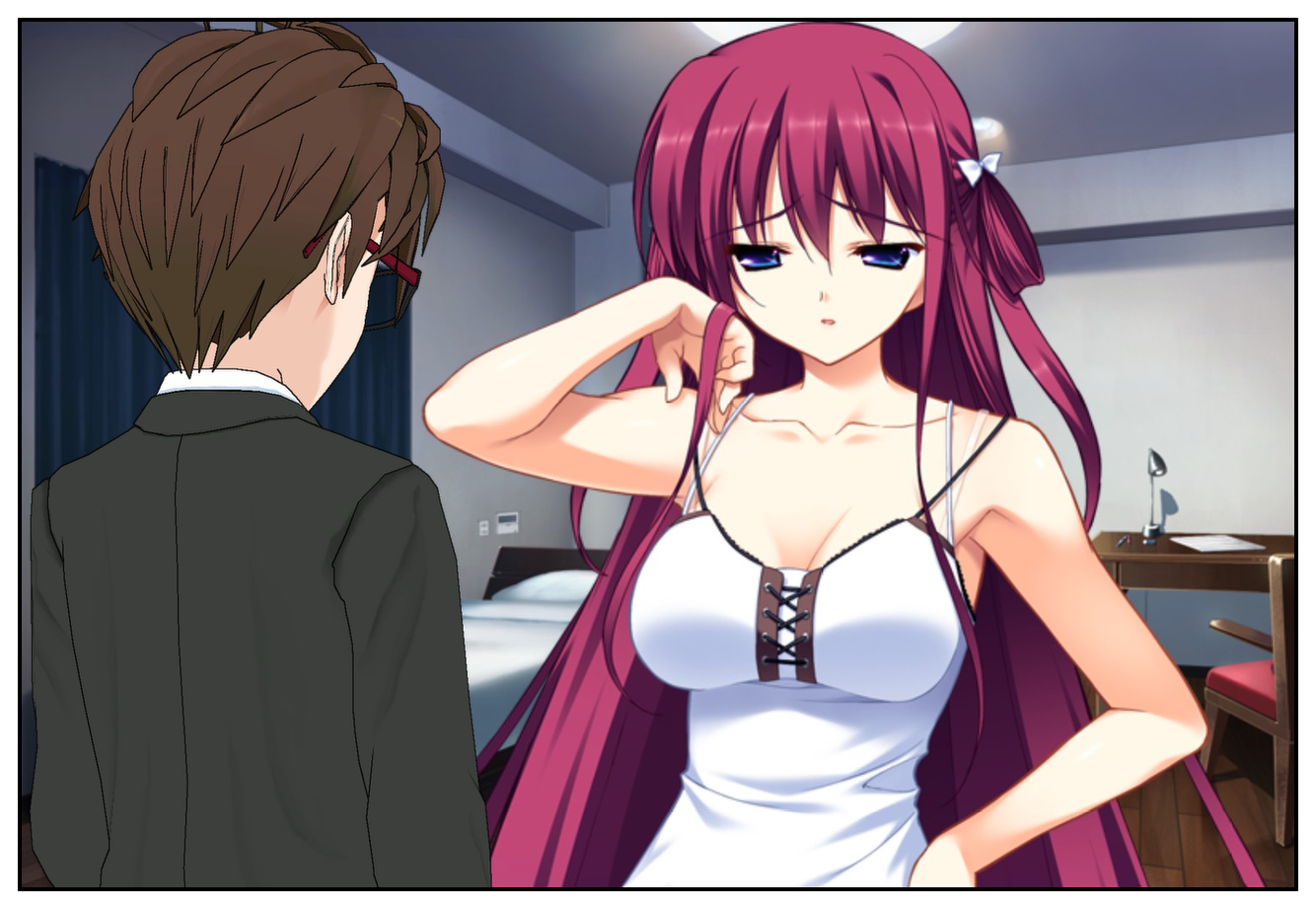
I penned a lengthy article about The Fruit of Grisaia for my good buddy Matt Sainsbury over at Digitally Downloaded, and it was published today. Please go and read it (it's spoiler-free!); I was really pleased with how it came out.

In the piece, I noted that I believe the 18+ version of The Fruit of Grisaia to be the definitive version, and I stand by this statement, even with the all-ages version on Steam incorporating a few new scenes from the (also all-ages) Vita version to make up for the lack of rude bits. The story is mature and adult, after all, sex aside, so there's really no reason to read a version that is neutered in any way when a version more true to the writers' original vision exists.

This prompted an interesting discussion on Twitter after the fact, not directly related to Grisaia, but to sexual content in games and visual novels in general. We're still in a situation where a visual novel featuring explicit sexual activity — such as Grisaia, or numerous others like it — isn't able to be featured on high-profile storefronts like Steam on PC, the PlayStation Store on PS3, PS4 and Vita, and the Xbox Live Marketplace on Microsoft platforms. And I'm not talking about nukige (the visual novel equivalent of a "gonzo" porn movie, where the sexual content is pretty much the sole reason for its existence) — I'm talking about eroge, which are visual novels that incorporate sexual content as part of their narrative.

The Fruit of Grisaia features a number of scenes where the sexually explicit situations are integral to the overall narrative. I won't give specifics to protect those who intend to read it against spoilers, but suffice to say that in each and every case, the sex scenes serve a purpose, whether it's to reflect the deepening relationship between the protagonist and the heroines, to provide a tragic juxtaposition between pathos and eroticism, or simply to demonstrate another aspect of the characters' personalities. In Amane's route in particular, the sex scenes are very much front-loaded towards the start of her individual path, with the remainder exploring exactly why she is, in her own words, such a slut. And boy does she have some interesting and compelling reasons. But I digress.

The unfortunate thing with this topic is that there's a curious double-standard applied between Western and Eastern publishers in particular. Western publishers such as Rockstar and CD Projekt can get away with depicting explicit sex acts in their games such as Grand Theft Auto and The Witcher, but if a Japanese game dares to show a little skin, it makes the collected prudes of the world clutch at their pearl necklaces (not that kind of pearl necklace) and faint onto their chaise-longues. At best, we get "minor edits" to cover things up and make things a bit less explicitly sexual — Dungeon Travelers 2 on Vita, for example, had an image that depicted a monster girl apparently fellating a ghost changed so that she was just writhing around a bit instead — while at worst we end up with butchered "all-ages" releases cutting out entire scenes.

All-ages releases aren't always bad if they're done well, of course; one of my favourite visual novels, Aselia the Eternal, began life as an eroge but subsequently got expanded to such a degree in its all-ages console format (which was subsequently backported to PC, and this was the version that got localised) that the non-dirty version is now considered to be the definitive way to enjoy that particular tale. But there are cases such as The Fruit of Grisaia where I simply can't imagine them quite working in the same way without the erotic scenes.

The discussion on Twitter turned to localisation specialists Sekai Project, who Kickstarted the Grisaia trilogy and were originally intending to only bring us an all-ages release. After considerable feedback from fans, they eventually relented and agreed to publish a localised 18+ version of Grisaia via their Denpasoft imprint, even going so far as to allow Kickstarter pledges (like me!) to upgrade their donation and get digital copies of the 18+ versions as well as the physical, packaged and digital Steam releases of the all-ages versions.

In my experience so far, Sekai Project know their craft and they understand the art form that is the visual novel. They recognise that eroticism is an important part of many of these works, hence the existence of Denpasoft in the first place. But the concerning thing for some people is that the 18+ releases don't seem to get much attention, even from Sekai Project themselves. Denpasoft's website is a pretty bare-bones affair, and its Twitter account isn't particularly active, whereas Sekai Project is always tweeting about something or other, launching new Kickstarters and generally enthusing about their work — and with good reason.

Why, though, are the 18+ releases dirty little secrets rather than celebrated and promoted alongside the all-ages versions? I don't have a definitive answer for that, only theories, but I wonder how close to the mark I am.

In short, Sekai Project as a brand is keen to promote the Japanese visual novel as a valid art form and type of game to be celebrated by as many people as possible. Their keenness to get their work on Steam shows a keenness to get these titles in front of as many people as possible, since Steam is an enormous market to tap into. Unfortunately, Steam doesn't allow adult content — aside from the aforementioned exceptions for Western games — and so any originally 18+ visual novels that come to steam will have been necessarily neutered. Sometimes there are fan patches available to restore the cut content, though in situations like The Fruit of Grisaia, the all-ages and 18+ versions are completely different base games — the 18+ version is based on the PC original, the all-ages version on the Vita version — and cannot be easily patched.

Sekai Project, as a brand keen to get their stuff noticed, is probably aware of the way the games press has been in the last few years with regard to anything even remotely sexual. As such, their apparent unwillingness to promote the explicitly sexual versions of their games is probably less to do with them being "ashamed" of the content itself, and more an attempt to enjoy a quiet life without enraging the massed heavenly hosts of Anita Sarkeesian's 43rd Puritan Squadron (Polygon Division). Can you imagine what those narrow-minded, sex-negative fun vacuums would make of your average visual novel sex scene? It wouldn't be pretty. Fuck Anita Sarkeesian, and fuck what she has done to intellectual discourse about games as art. (I'm aware it's not entirely her fault, of course, but the members of the press who endlessly bleat on about feminism and the like are pretty much following her cultish teachings to the letter.)

I'm not saying that all visual novels have to have sex in them to be good, of course. But sex is an important part of art, which visual novels are, and sex is also an important part of relationships, which visual novels tend to depict with a strong degree of intimacy. Sex is a basic fact of life, of humanity, and the fact that there are so many roadblocks to exploring it effectively in video games and visual novels is kind of sad, really; thankfully, we're not (yet) in a situation where publishers like JAST, MangaGamer and Sekai Project are giving up on publishing erotic content in the West completely, but we're also sure as hell not (yet) in a situation where a mainstream press site would be able to publish something about a work of The Fruit of Grisaia's ilk without getting a massive hate-boner and then spunking vitriol all over the page, completely missing the point of the "controversial" content in the process; I vividly remember just mentioning Kana Little Sister in one piece on USgamer, and getting attacked by one particularly puritanical reader for "promoting a pedophilic incest simulator".

It's difficult to know how this situation can be improved — or even if it needs to be improved. Could there be scope for a Steam-esque platform that allows adult games to be released and promoted, rather than relying on Web stores that many people have understandable hesitancy trusting? I wonder. In the meantime, I'll keep banging my drum about the most interesting, compelling eroge — and, hell, nukige, since there's plenty of interesting stuff there, too — and hope that at least a few people will listen.
2105: Into Darkness

0105_001

The official trailer for Final Fantasy XIV patch 3.1 came out recently, and it's looking simply marvellous. I am happy about this, because although I feel like I've got over my "rut" with the game, I'd still love to see something new at last. It's been a long time coming, after all.

My initial reaction to the announcement of 3.1 was slight disappointment, but in retrospect this was rather silly. I'll tell you my thinking, though: previous content patches for the game tended to include three new dungeons, a new raid (either a 24-player casual raid of the Crystal Tower ilk, or an 8-player hardcore raid of the Coil ilk) and maybe some new quests and minor mechanics here and there. And gear, of course. 3.1, meanwhile, only includes two new dungeons, one of which is a "Hard Mode" version of an existing dungeon — Pharos Sirius — which immediately made me feel a bit let down that we weren't getting as much new stuff as we had in the past.

But then I considered things a bit more, and there are plenty of interesting things happening outside the dungeons, because dungeons aren't the only interesting thing you can do in the game. They're cool, sure, but I get the impression that Yoshi-P and the FFXIV team very much want to try and shake up the basic formula of the game a little bit having got it where they want to be over the course of A Realm Reborn and vanilla Heavensward. In other words, that means getting people out of the "grind the same thing over and over" mentality and into doing more varied things.

Perhaps the thing I'm most intrigued by — and most mystified by — is the new Exploratory Missions system, whereby individual players, parties, alliances and Free Companies can fly off into the Sea of Clouds with their airship(s), explore a region for 90 minutes, kick the shit out of some monsters, find treasure, complete objectives and gather stuff. This has the most potential to shake up the basic structure of the game, and I really hope it turns out well.

Details are still a bit thin on the ground as yet, but it seems like there will be three difficulty levels for these exploratory missions, with the hardest level being pitched towards Free Companies with their own airships. Monsters will have difficulty ranks between 1 and 6 instead of conventional levels, and there are apparently Hunt-esque "marks" to defeat as well as regular monsters. There will be objectives to complete that will allow players to earn the all-important Tomestones to upgrade their equipment, and treasure chests that contain new Aetherial equipment with randomised stats.

The randomised element of the Exploratory missions is the thing I'm looking forward to the most, to be honest. Exactly how random it is I'm not entirely sure as yet, but I know at the very least there will be several different areas that you can fly to when you start one of these missions — it seems you won't be able to explicitly pick where you want to go and will instead be assigned a random landing point in a random region. The equipment you can find will be scattered in bronze, silver and gold chests, and presumably tracking these chests down will involve actual exploration of the area rather than the current situation in dungeons, where equipment can be found in boss chests and stuff in all the other chests is fairly underwhelming in its awesomeness, usually consisting of either potions or crafting materials.

Aside from the Exploratory Missions, the thing I'm looking forward to the most is the new Minstrel's Ballad trial, which is a considerably expanded version of the final boss fight from the Heavensward story quests. This was an absolutely spectacular fight, albeit not particularly difficult, so it will be exciting to have the opportunity to see this realised as something closer to what the creators apparently originally intended. It will be a ten-phase fight — they stopped short of going for thirteen phases to match the thirteen Knights of the Round — and will apparently be on par difficulty-wise with Extreme-level primal fights and the first area of Alexander (Savage). Hopefully this doesn't mean it will be a glorified DPS check like Alexander is, but from the little I've seen of it so far, it looks like there's going to be some interesting mechanics at play.

Anyway. Patch 3.1 is coming in early November, which isn't far away now. I'm really looking forward to seeing what it has to offer, and actually a little bit thankful that the new Relic weapons — which are apparently known as "Anima Weapons" — aren't coming immediately, instead inviting us to grind ourselves into oblivion from patch 3.15 onwards.

In the meantime, I've got Dark Knight to level 50 today, so only ten levels to go before I can officially retire Paladin for the most part and start playing a tank class with a bit more damage output at high level! Darksiiiiiiide!

2104: Adult Content

0104_001

From a Plinky prompt:

"When did you realise you were an adult?"

I'll be frank with you, dear reader; despite being 34 years of age, despite being married, despite being a homeowner, despite having a new(ish) car… I don't feel like I'm an adult.

I mean, obviously I know I am an adult, because I have to worry about things like council tax, credit cards and putting the rubbish out. But I don't feel like an adult. I'm not particularly houseproud (except when I know people are coming to visit), I'm not the sort of person who enjoys DIY "projects" — I doubt the day when I really want to "do the bathroom" or similar will ever come, whereas for some friends of mine it came practically the moment they left university — and I don't really know how insurance works.

These are things that people never teach you, you see — or at least, they didn't when I was in education. During my few years as a teacher, I did deliver a few "Key Skills" classes that, among other things, involved a whole lesson on how to work a washing machine — yes, really — but I must confess to feeling a little hypocritical educating the youths of the day on things that, in some cases, I wasn't hugely familiar with myself.

Regular readers will, of course, know that my brain is riddled with hangups and anxieties over all sorts of things, ranging from simple communication with other people to how, exactly, you go about calculating your tax code. These anxieties, at times, build into what feels like outright fear, and I find myself worrying that I'll get everything "wrong" and mess it up; this feeling, when it grows big enough, is enough to completely paralyse me from doing something I need to do, putting it off and putting it off until it becomes a considerably bigger problem than it would have been if I'd just done it when I first became aware of it.

I probably shouldn't do that. One of these days I'll end up putting off something really important and getting myself into a disastrous situation. Fortunately, I'm not alone; I have people who look out for me, and while I don't want to become dependent on them or anything, knowing that sets me a little more at ease with my life than I would be if I was trying to struggle through all by myself.

So, in answer to the original question… when did I realise I was an adult? I don't think I ever have realised that I was an adult; I don't feel like I am an adult, I feel like I still have a hell of a lot to learn about the world, and I don't have the first clue how to go about doing it. And, more to the point, I'm not sure I particularly want to.

That's probably not a very grown-up attitude to take. But, well… you know.

2103: Amane, the Girl Who Learned to Say Thank You

0103_001

I finished Amane's route in The Fruit of Grisaia tonight, bringing my time with this absolutely incredible visual novel to a close, and frankly I'm a bit of an emotional wreck right now, but I will do my best to try and collect my thoughts and post something reasonably meaningful.

One thing I will say before I jump into spoiler territory after the "More" tag is that I'm really glad I saved Amane's route for last. Not just because she was immediately my favourite girl — and still is after playing through her route — but because her route acts as a rather wonderful way to wrap up the entire experience. Her good ending is particularly "conclusive", and as the last thing I saw in the whole work, it feels like I've had a great sense of closure — although, as always with this sort of thing, I'm going to miss these characters very much. At least I have two more games in the series to look forward to!

All right. Let's get spoilery.

Continue reading "2103: Amane, the Girl Who Learned to Say Thank You" →

2102: Seven Wonders

0102_001

In response to The Daily Post's writing prompt: "Seven Wonders."

"Khalil Gibran once said that people will never understand one another unless language is reduced to seven words. What would your seven words be?"

Regular readers will doubtless be aware that I require considerably more than seven words to get my point across in most situations, but this is an interesting question, regardless. What are the most fundamental things that you might need to communicate with other people? And, by extension, if those were the only things you were able to communicate, what effect might that have on your life?

A hasty answer to this question would consider fairly "obvious" words that reflect basic survival: food, drink, friend, dangerous, stop, help, run. Being forced to rely on words like that, though, would essentially put us on the level of primitive man: living for nothing more than basic survival and basic relationships with one another that boil down to people and things being good or bad. That, while a stable existence, would be rather dull.

So you could throw some words in there to spice things up a bit. Love. Hate. Sex. Kill. Although with those latter two in particular, you're still not really operating on a level anywhere particularly beyond that of the cavemen.

But with only seven words to play with, how on Earth can you hope to make yourself understood? How could you possibly express yourself in all the many weird and wonderful ways humanity does today? These two things aren't necessarily the same, since expressing yourself "clearly" does not necessarily mean that you're being understood.

Well, then, you have to consider that not everything about communication involves words. Humanity can communicate with eye contact, with body language, with physical contact, with visual imagery, with music, with sound, with empathy, with sympathy. Consider the works of art that you might have indulged in that have no words as such: silent movies, instrumental pieces of music, visual art, dance recitals, even video games like Flower and Journey.

When you think about it that way, do we even need words at all? Well, yes, I think we probably do, since expressing the fact that you're hungry entirely through a spectacular but ultimately impractical ballet performance is not really the most efficient way to go about things. But with the above in mind, what it does mean is that we could get by with a bare minimum of language to cover our basic needs — food, drink, friend, dangerous, stop, help, run, perhaps substituting "sex" for one of those depending on your attitude towards fornication — and the actual expressive side of communication could be handled entirely by non-verbal forms of art.

That would certainly be an interesting way to live, but to be honest, I think I like words too much to ever want to abandon them in that way. So don't worry, dear reader; tomorrow's post will be made up of more than the seven words I've proposed today. And I hope the words I choose will help you to understand me just a little bit more than the day before.

2101: Things I Couldn't Do

0101_001

I lost another three and a half pounds this week, bringing my total weight loss since the very end of January this year to five stone and six pounds — nearly five and a half stone. I may not be the sort of person who is particularly good at showing genuine-seeming excitement when speaking in person, but believe me, I'm pretty much ecstatic about this — though I have no intention of stopping here, as the initial "target" I set is still a little way off.

Back when I decided to start losing weight with Slimming World at the end of January, I was just under 23 stone. That is, quite obviously, Too Heavy. I'd always been aware I was overweight — particularly when arseholes in the street would make some off-colour fat joke in my direction — but towards the start of the year, I'd started to become somewhat conscious that more than just being roly-poly and jolly, things might actually have started becoming a bit of a problem.

I could tell this in a number of ways. Firstly and most obviously was the fact that I was terrified to know my actual weight. I wouldn't get on scales, I wouldn't even contemplate it. I just knew that I was too heavy, and I wouldn't tell anyone even what I thought I weighed. The most difficult part of attending my first Slimming World meeting was knowing that I'd find out exactly how much I weighed — and, to be perfectly honest, it was actually a little worse than I thought it was, since I'd silently estimated myself around the 20 stone mark for a while.

Secondly, I was extremely uncomfortable all the time. The chairs I sat in at the job I was working at at the time felt like they were too small for me, but I stubbornly refused to order a "special chair" like the one provided for the resident fat bloke in our department — who was considerably larger than me, even — because that felt humiliating. I was terrified of the prospect of going abroad ever again, because I didn't want to be one of the people who had to ask for a seat belt extension — that felt like it would be humiliating too. And I was still carrying around painful memories of the time Andie took me to Alton Towers for what should have been a really nice weekend — and was, for the most part — but which had at least part of it that felt utterly mortifying.

Thirdly, and somewhat related to the Alton Towers story, there were things that I felt like I simply couldn't do any more. I didn't go along to a significant part of a close friend's stag weekend because it involved doing stuff at Go Ape and riding Segways, and a bit of research beforehand indicated that I would probably be too heavy for both of those things. So instead I just joined the group for the evening's activities. I didn't feel like I could climb a ladder because I was scared it would break; I didn't feel I could even do basic do-it-yourself around the house that involved using a stepladder because there was a prominent notice on it indicating a maximum recommended weight that was significantly below what I actually weighed; I didn't feel safe standing on anything that was off the ground, in fact, even if it was quite obviously designed to hold up things considerably heavier than one miserable, overweight thirtysomething.

In short, I was utterly miserable, and I knew it was my own fault for not taking better care of myself. I'd eat crap day in, day out, kidding myself that I wasn't having much junk, just an occasional treat; I'd deal with emotional episodes by eating because I felt like I "deserved" something nice; sometimes I'd just eat because I was bored, and I felt like eating something sweet might relieve that boredom.

I knew all these things before I started Slimming World. What I wasn't prepared for was how surprisingly easy it ended up being to change those habits — and what an immediate impact it would have on both my physical and mental wellbeing. I lost eight pounds in my first week on the programme, and have seen fairly consistent losses (albeit somewhat smaller ones!) ever since. I feel happier and more confident in myself; I don't feel ashamed when I see myself in the mirror any more — sometimes I actually quite like what I see, as narcissistic as that might sound — and while I'm still uneasy to do some things such as climbing ladders, I know that even if I'm still not quite 100% at a stage where I can live life "normally", I am on the right track and that I will get there eventually, at least so far as my physical wellbeing goes. My mental health is, of course, another matter, but that's a whole other set of things to deal with that I'm not sure how to even start tackling just yet.

I've found myself thinking about the future a bit since seeing my progress. Not in a particularly grand way or anything — just thinking about the things that I wouldn't have been able to do at the start of this year (such as those mentioned above) that I would be able to now. Andie and I are having a belated "honeymoon" at Center Parcs at the very end of November, for example, and I know that everything about that holiday is going to be much more comfortable and enjoyable for me than the last time we went. (Not that I didn't enjoy last time, mind you; it was just physically exhausting to lug myself around.)

And I feel like it would be something of a symbolic "victory" for me if, once I reach my target (or perhaps even go beyond it if I feel like I want to go further), I return to Alton Towers and comfortably hop onto all the rides that I simply wasn't able to physically fit onto the last time I went. I don't feel I'm quite ready for that just yet, but it won't be that long now if I carry on at the rate I'm going. And that's a good feeling; there are many things in life that it's impossible to "take back", but thankfully the mistakes I've made with my body and my habits don't appear to be counted in that category.

2100: Mobile Games that Don't Suck

0100_001

Occasionally, I take a peek into the murky waters that is mobile gaming because among all the crap you occasionally find some good things. There's a lot of derivative stuff, which can make it difficult to determine which games are worth spending your time and/or money on, and some of them do a better job of iterating on existing formulae than others.

Two games in particular spring to mind as having been casually keeping my attention lately; neither are fantastic games, but they're good for a few minutes on the toilet or in bed or waiting for the kettle to boil or something.

I Love Pasta

I downloaded this for two reasons: the endearing name, and the cute artwork. Turns out it's actually quite a nifty little restaurant management game that initially looks like a Zynga-esque "tap and wait" game, but which actually opens up and has an intriguing amount of depth the more time you spend with it.

The game opens with your father buggering off and leaving you with a pasta restaurant to take care of, and little in the way of training. Fortunately, a local chef comes to your aid and starts giving you some advice, and from here it's up to you to make your own pasta, develop a range of dishes to serve on the menu, keep your customers happy, make as much money as possible and ultimately help build up the area of town around your shop.

As I said, the basic gameplay is rather Farmville-esque — you tap on a pasta machine or cooker, choose something for it to produce, then wait, either for the machine to make the pasta or the food on the cooker to sell out. Then you repeat. This is the basic activity you'll be doing all the time, because it earns you money and experience points. From here, though, things get a little more interesting.

Rather than always serving the best meal you possibly can, for example, you might want to consider mixing things around a bit. Dishes each have their own experience level that rises as you make them more times, and levelling up a dish not only improves its quality, it allows you to add items to its "set menu", which confer various bonuses when the dish is sold. Some dishes also have prerequisite experience levels in other dishes before you can learn them, too.

Learning a new dish sees you playing two minigames: firstly, a game of Concentration with the main ingredients, followed by an inexplicable but fun rhythm game in which you fend off ingredients being hurled at you with a frying pan in time to some delightfully upbeat music. After this, you're able to sell the dish whenever you have cooker space available, though you'll also need to manage your inventory of ingredients, as you can't make a bolognese without tomatoes, for example.

Other activities include sending your employees into town to shop — they can do this a certain number of times according to their HP value and become exhausted after a while, but while they have the energy they'll bring you stuff back from the market for free. Alternatively, you can order specific items, but these take varying amounts of real time and money to arrive at your restaurant.

There's also an obligatory gacha component to the game, though it's not immediately obvious: each of your employees have various equippable items which contribute to their HP, cooking and attractiveness stats, each of which allow them to perform more efficiently for you. As with most games of this type, you can fuse items together to increase their effectiveness, and draw new ones using in-game currency, the "friendship currency" of puzzle pieces or the hard currency that you buy with real money — naturally, the best items are more likely to appear if you spend real money, though I've still nabbed an A-rank top from a puzzle draw.

The game dribbles out new mechanics at a nice rate as you level up; initially it's very simple, but later you'll be catering to specific characters to raise their affection levels, building up a separate Market Town area, hiring people to staff the shops in the square around your pasta restaurant, and serving food to people on the street according to clues they give you. It's a fun little game with adorable artwork and a surprising amount of depth; it's no true simulation, of course, but as something to while away a few minutes with it's worth a look.

Mabinogi Duel

mabinogiI was introduced to this game by someone over on the new Niche Gamer Forums, who said it was a genuinely good game. And it is! It's a card game, but unlike most mobile card games, it's an actual card game rather than a collectathon. It most closely resembles Blizzard's Hearthstone in execution, but it has plenty of unique mechanics of its own that distinguish it — plus, for what it's worth, I much prefer the art style to that seen in Hearthstone, but that might just be me.

The basic gameplay involves using collected mana points of various elements to summon creatures and cast spells. So far so Magic, and indeed the game wears its inspiration on its sleeve. It works well, though, with nicely streamlined game systems and one or two things that would be difficult to implement with physical cards. While in a fight, you can "level up" up to twice, for example, with a higher level making all your cards more effective and allowing you to take multiple actions per turn.

The game features a fun tutorial with an overwrought but surprisingly humorous tale about a half-elf suffering racism and wanting to turn himself fully human. His journey provides a convenient excuse for you to be presented with an array of different opponents who provide a good means of teaching you various different mechanics. By the time you've cleared the scenario, you'll be ready to play more freeform games, and that's where what looks to be an interesting metagame comes into play.

Unlike many games of this type, you can actually trade cards with other people in this one, as well as purchasing booster packs to bolster your virtual ranks. You can also use "rental decks" until you collect enough cards of your own to be competitive, and there are various Mission and Arena modes that allow you to participate with various restrictions and special conditions in place, for those who enjoy that sort of thing.

For a game I'd never heard of before the other day, Mabinogi Duel is one of the most impressive mobile games I've seen for a long time, and I'm looking forward to learning a bit more about its meta. If you're a fan of Magic-style card battling, it's well worth a go.

2099: Further Travels in the Dungeons

0099_001

I've played about twelve hours or so of Dungeon Travelers 2 so far, and despite my relative inexperience with the genre, I'm inclined to agree with those people who describe it as one of the best dungeon crawlers on the Vita. The really exciting thing about it is that I know I haven't seen everything the game has to offer, and that it's gradually increasing in depth and complexity as I progress.

This is a good structure: it keeps a challenging game accessible and easy to understand, and allows the player to spread their wings a bit as they become more confident with the various systems.

A case in point is the party formation and progression systems, which gradually introduce you to core concepts of the game a little bit at a time, then present you with more and more unusual cases, then open up progression a bit, then a lot, then give you more party members, and so on.

You start the game with just two characters: a Fighter (tank) and Magic User (damage dealer/healer). Shortly afterwards you're joined by a Spieler (essentially a damage dealer, but with many skills relying on RNG), then later by a Maid (a support class that doesn't use "TP" to power her skills) and a Scout (a high-speed damage dealer that can either be a melee or ranged combatant).

Once each of these characters hits level 15, they can move up a tier of classes, with each class splitting into two or three alternatives, then each of those splitting into another two possibilities further down the levelling track. Fighter can become either Paladin (damage-soaking tank) or Berserker (damage-dealing tank), for example; Magic User can become a Sorceress (straight damage dealer), Enchantress (buffer) or Priestess (healer). The interesting thing is that changing class in this way doesn't prevent you from accessing the skill tree of the old class; it simply adds a new skill tree, offering you more choices to spend your skill points on with each level up. In this way, you can customise each character significantly — and, importantly, there's the opportunity to undo things if you made a mistake, though this does involve resetting their level to one of the significant milestones (level 1, level 15 and so forth) and levelling them again.

I like this approach; it's a little different from the Demon Gaze/Etrian Odyssey approach of allowing you to create your own party completely, because it means that you're eased into the game's systems with a proven, workable party lineup that you get more and more freedom to play with as the game progresses. The drip-feed of new characters into your party is entirely deliberate, too; in total, there are 16 different playable characters in the game, but rather than overwhelming you with endless possibilities from the outset, you're introduced to these characters and their classes one at a time, giving you the opportunity to get a feel for how they work in a party situation, then by the end of the game you'll have a complete lineup of available characters to pick and choose for your active party as you see fit. Given the apparent complexity of the game's systems, this seems like an eminently sensible way to do things, striking a good balance between accessibility for genre newcomers and flexibility for veterans. True dungeon crawler vets will doubtless be most interested in the "endgame" dungeons, anyway, by which point any frustration they might have felt at the artificial limitations imposed on them in the early game will have been removed entirely.

So the systems are good, then — at least, they certainly appear to be from my experience thus far. What I've been pleasantly surprised to see alongside these solid mechanics is some decent writing, story and characterisation. Dungeon crawlers are often designed in such a way that the story just sort of happens with or without the player character(s) having an active role in the unfolding narrative, but Dungeon Travelers 2 makes a point of making each and every party member — including your protagonist — into a human being rather than a set of stats and abilities. This is achieved in a variety of ways: interactions and conversations in the story scenes between dungeon missions; one-liner comments as you explore the dungeons; and "sub-events" that are triggered by the actions you've taken in the dungeon and in battle. This latter aspect is particularly impressive; there are sub-events for a wide variety of different situations and events, ranging from equipping a particular item to a character getting knocked out in battle, and as well as being entertaining and amusing, they can also help you figure out things about the game systems for yourself. When Melvy the Magic User complains that her spells were being interrupted by heavy hits, for example, you then become aware that you, too, can interrupt enemy spells if you hit them hard enough — and that you need to shield Melvy from attack when she's chanting.

The other good thing about this part of the game is that it gives a strong sense that the game world is bigger than the part of it that you see. As the name suggests, Dungeon Travelers 2 unfolds almost entirely in dungeons, with story scenes confined to menu screens and visual novel-style talking head segments. Despite the lack of an "overworld" and "towns" to explore, you get a very clear sense that the writers have thought about the game's overall context, including off-screen characters, how society works, events that occurred prior to (and during) the game's narrative and relationships between characters. You see all this through the eyes of just one individual, but there's a strong feeling that you're part of a much bigger world, even if you won't see most of it in the game itself. This is good; it gives your actions in the game context and meaning, and helps provide some impetus to keep pushing forwards. It's no good being told to save the realm if you don't know anything about the realm in question, after all.

As you can tell, then, I'm having a real blast with the game so far. After my initial embarrassing death in just my third fight, the game hasn't kicked my ass too severely, though it is pretty good at sending clear signals that Now Would Probably Be A Good Time to End This Expedition and Go Back to Town, usually by flattening one or more party members unexpectedly. It never feels cheap, though; any and all character KO's are usually the result of overextending yourself and getting a bit ambitious, and as I recall from my tentative first steps into Demon Gaze, dungeon crawlers are all about being cautious as well as killing things and taking their stuff.

I've no idea how long the game is or indeed how large the dungeons get. I'm hoping this is a game that's going to last me a while, though; I have every intention of trying to see everything it has to offer.

2098: Makina, the Girl in the Wrong Place at the Wrong Time

0098_001

I finished Makina's route in The Fruit of Grisaia at last. It's a long route with a noticeably different tone to the previous three I've completed, but it was just as enjoyable.

Spoilers ahead, so I'll put the rest behind a More tag for the convenience of those browsing my front page.

Continue reading "2098: Makina, the Girl in the Wrong Place at the Wrong Time" →

2097: Dungeon Travelers 2: Some Initial Impressions

0097_001

Dungeon Travelers 2 came out on PlayStation Vita yesterday. To say I've been eagerly anticipating this game is something of an understatement; I've been deliberately holding off playing anything else "big" until it came out, because I was keen to be able to devote some time to it. And, after a good few hours with it today, I'm not at all disappointed with my decision to do so.

For the unfamiliar, Dungeon Travelers 2 is a first-person perspective dungeon crawler RPG (of the Wizardry mould that Japan loves so) created as a collaborative effort between visual novel producers Aquaplus, weird-but-cool RPG specialists Sting and That Company People Mostly Know The Name Of Because of Persona, Atlus. It has a somewhat convoluted history: its Japan-only predecessor Dungeon Travelers was a fleshed-out remake of a dungeon crawler that was part of a fandisc for Aquaplus' visual novel ToHeart 2, though Dungeon Travelers 2 itself doesn't have anything to do with either the first game or ToHeart 2, simply sharing some aesthetic sensibilities and mechanics.

Dungeon Travelers 2 shot to notoriety a few months back when Polygon's Phil Kollar berated publisher Atlus for localising the game, which he referred to as a "creepy, porn-lite dungeon crawler". I responded in some detail to Kollar's nonsense back when he first blurted it out over at MoeGamer; take a look. Ironically, Kollar's condemnation of the game actually made a lot of people — me included — who had never heard of it before aware of its existence, and I can't help feeling that the game has been a bigger success than it probably would have been if he'd just kept his mouth shut. In that sense, I'm not complaining; it's just a little frustrating to know that he almost certainly won't have given it any time and attention since that initial piece, having written it off as the usual pervy nonsense.

DT2-1

Dungeon Travelers 2 is an ecchi game, though, make no mistake, if you hadn't already noticed from the artwork that peppers this post; within five minutes of starting the first dungeon, you're presented with a rather fetching view of one of the heroines' panties-clad buttocks, and every boss fight is followed by some rather beautifully drawn artwork of said boss in a somewhat disheveled, suggestive state. Not only that, but the vast majority of enemies are scantily clad cute female characters (the rest are, inexplicably, sentient fruit) that draw a certain degree of inspiration from the popular "monster girl" aesthetic, albeit in a less overt way than something like the anime Monster Musume.

Here's the thing, though; the ecchi content of Dungeon Travelers 2 works because, like other games that fully embrace their ecchi (or even hentai) side, it's consistent in its use and it thus becomes part of the overall aesthetic. It's a sexy game; it's not about sex as such, mind you, but beautiful girls in sexy poses are very much part of the way it looks, and it is not at all ashamed of that fact. In order to fully enjoy it, you absolutely can't be ashamed of it, either.

But the ecchi content is the least interesting thing to talk about when it comes to Dungeon Travelers 2, because it's a really solid game with some interesting mechanics. Of particular note is the game's approach to teaching you how to play; the electronic manual provided with the software gives you only a bare-bones outline of the interface, but through a combination of in-game lectures (delivered by the deliciously sarcastic Maid-Sensei) and in-context, in-character sub-events that are triggered by your various actions in the dungeon and in battle, the game teaches you how to play and things to watch out for without resorting to insulting your intelligence. Maid-Sensei's lectures are the nearest thing to an outright tutorial, but those are skippable; the sub-events, meanwhile, are short, snappy, humorous and get their point across without being dull.

DT2-2

There are some interesting systems at play. The concept of the game revolves around "Libras", who are individuals that are able to seal away monsters in books. The protagonist character is one of these Libras, but he doesn't take an active role in battle; instead, the game is presented as you, playing the role of Fried the Libra, issuing orders to your gradually expanding party of pretty girl bodyguards and performing the important task of sealing away the monsters when they've been defeated.

It doesn't stop there, though; the Libra concept is a core system of the game. By defeating enough monsters, you can create "Sealbooks" which have two main functions: firstly, they represent the fact that you have researched the monster sufficiently to understand their behaviour and characteristics, depicted in game as revealing their full stats, and secondly, they can be used as a piece of equipment, with each individual monster's Sealbook having a different special effect. Thanks to a "completion percentage" figure in the game, there's a definite element of "gotta catch 'em all" going on that I anticipate is going to cause me some issues in the future.

Alongside this is a detailed class system for all your party members, with each character able to level up a number of different classes and learn skills using earned skill points. It's possible to build and specialise characters in a variety of different ways, and the early game introduces you to a selection of interesting classes, beginning with a fairly straightforward tank and DPS combo — pleasingly, the tank class is able to provoke enemies and increase the likelihood that they'll be hit in favour of squishy mages — before giving you the peculiar "Spieler" class, which so far appears to be heavily based on luck and random chance, and the "Maid" class, which plays a supportive role that is very distinct from a dedicated healer by buffing and allowing characters to restore the points they use on skills as well as their all-important HP.

DT2-4

I'm not particularly deep into the game as yet, so the dungeons haven't got especially complicated so far. There have already been some challenging fights, though, and the game is not afraid to slap you about a bit until you remember that you have to play dungeon crawlers a little differently to more conventional RPGs. I got a Game Over in the third fight I had in the whole game, for example, because I overextended myself and forgot that it's perfectly acceptable in this type of game to advance a bit then run screaming for the exit to lick your wounds and restock; compare and contrast to your more typical JRPG, meanwhile, in which you tend to always be moving forwards rather than backtracking or making multiple expeditions.

In fact, what Dungeon Travelers 2 reminded me of, of all things, is a board game of the Advanced Heroquest ilk. The basic structure is the same: get overarching quest, go into dungeon, come back out if things get hairy, go back in, find treasure, go back out, resupply, go back in, fight a bit further… and so on. The "multiple expeditions" nature of exploration in the game is inherently satisfying, since you can easily see on the convenient automap when you're making progress, because you'll be revealing new areas. Discovering new monsters is enjoyable, too, since they're all depicted with some truly lovely artwork, and the juxtaposition between the "pretty girl" monsters and the "sentient fruit" monsters is bizarre and hilarious.

I'm enjoying it a great deal so far, then, and I'm looking forward to spending a lot of time with it. I'm a relative newbie to the dungeon crawler subgenre of RPGs as a whole, but between Demon Gaze (which was my first real hardcore dungeon-crawling experience) and what I've experienced of this so far, I'm very much a believer already.

To the dungeons, then, where pretty girls await!