2196: Starward Rogue, a Game About a Severed Head in a Mech

0196_001

I took a look at Arcen Games' latest today. I've followed this interesting developer for a few games now, most notably A Valley Without Wind and its sequel: two games that fused, oddly enough, turn-based strategy with Metroidvania-esque platform shooting. Arcen's latest game Starward Rogue continues the dev's tradition of fusing disparate genres together, in this case arcade shooters and roguelikes.

I say "disparate"; Starward Rogue isn't the first game to combine roguelike elements with a shoot 'em up core, but it is the first I recall seeing designed around the principles of Japanese-style arcade shooters, particularly those of the "bullet hell" variety. That means intense, complex bullet patterns that you need to navigate through as well as enemies to defeat, and it makes for an exciting, very interesting take on a genre that all too often coasts along without any real innovation.

Starward Rogue casts you in the role of a severed head in a mech as you attempt to rescue someone called Rodney from the depths of a dungeon called the Megalith. I believe these two elements are a reference to one of Arcen's other games, but it's one I'm not familiar with at this time. Fortunately, no real knowledge of whatever the other game it's referring to is required; it's simply a bit of fanservice for those who have played the game's spiritual predecessor. Rodney is an entertaining character in his own right, though my only direct contact with him so far has been in the tutorial sequence.

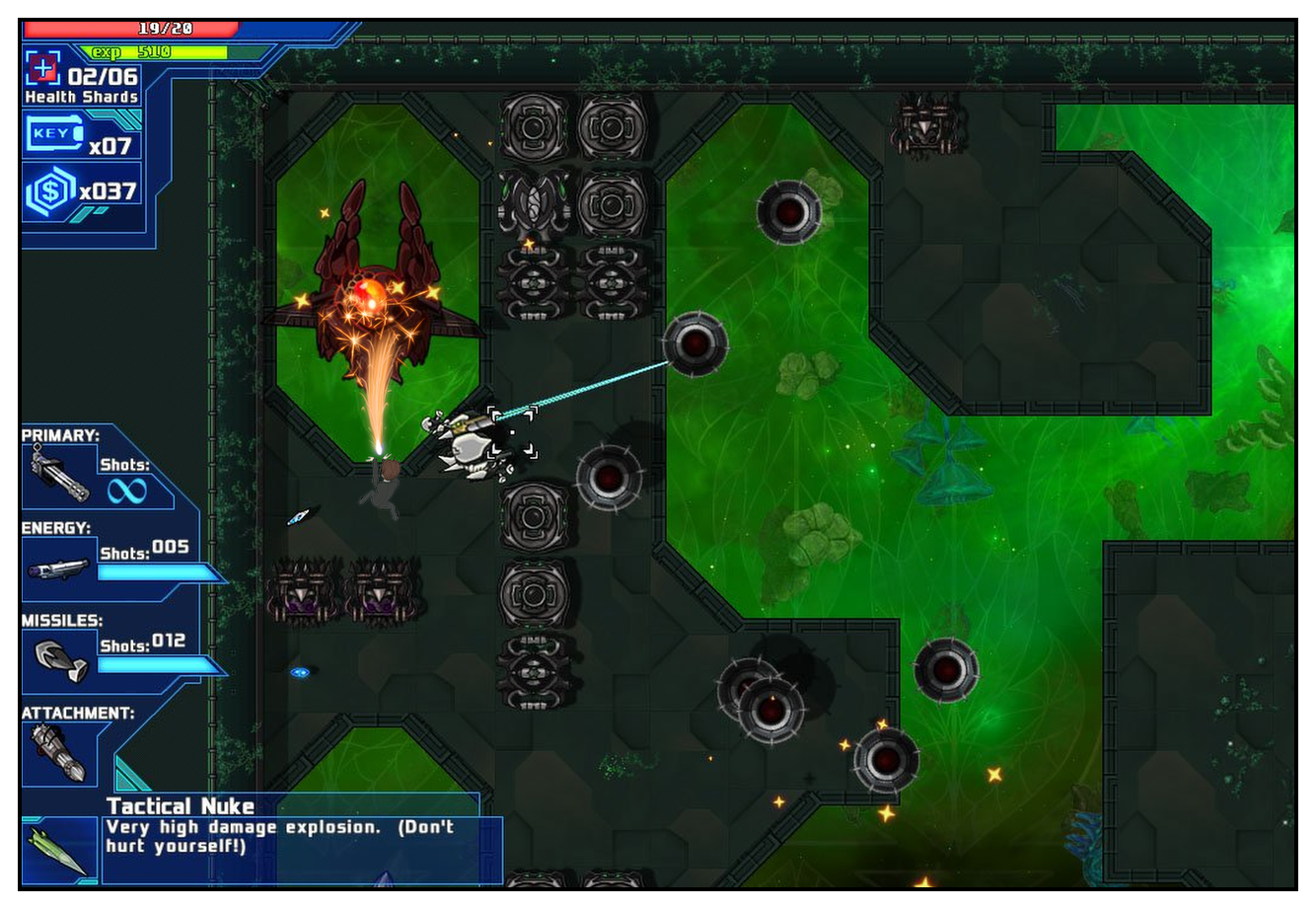
Starward Rogue's gameplay is balanced nicely between exploration and action. Each level of the Megalith is split into discrete rooms, each of which has to be cleared of enemies before you can move on to the next one. Unlike similar games such as The Binding of Isaac, though, Starward Rogue's rooms are often more than a screen wide and tall, and there are a number of unique designs and layouts that you'll encounter over the course of the game, which are then combined with various enemy and trap waves — the latter tending to be non-destroyable obstacles or gun turrets that will spew out hot fiery death as you try and take down the enemies, then deactivate when you've cleared the room.

Levelling up is a simple process: no stat allocation here, simply pick one of three randomly selected perks. These vary from increased damage to having a full map available from the start of the floor — and even being able to skip the rest of the floor you're on. Alongside these passive bonuses you get from levelling, you can also equip and upgrade your infinite-ammo main gun, your recharging Energy-based weapon (which recharges when you enter a new room) and your limited-ammo Missile weapon. There are also various other passive upgrades you can collect, and one-shot consumable items that generally have some sort of "smart bomb" effect.

Much like the aforementioned The Binding of Isaac, Starward Rogue is a game intended to be replayed and rechallenged. There are a number of different mechs with which to play the game, and there's a checklist of enemies and items you've found over the course of all your runs. There are also five difficulty levels to choose from, with Very Easy all but guaranteeing a full clear run unless you are the very worst kind of incompetent moron, and the highest difficulty claiming to offer difficulty on a par with the legendary Touhou series. And on top of that there are a bunch of achievements to earn, too, so it's very much a game that will keep you busy for a long time if you get it — though it's accessible enough to be able to pick up every so often for a quick blast even if you've left it alone for a while.

I completed a Very Easy run earlier — there's no shame in starting either a roguelike or a shoot 'em up on the lowest difficulty, and this game is both! — and am already looking forward to giving it another shot soon. If you're a fan of The Binding of Isaac and its ilk — "roguelites", to use the popular term — then you could do far worse than give Starward Rogue a look.

2195: Quest Complete

0195_001

We played through the whole Warhammer Quest: The Adventure Card Game campaign today with the full complement of four players, and despite failing the first four quests, we were ultimately victorious, saving our local town-in-peril from a full-on orc invasion.

It's an interesting game. The first four quests felt very difficult indeed, with our party quickly getting overwhelmed before we were able to complete our objective. On one occasion we got frustratingly close to victory — like, one extra action would have let us win, probably — while on others it very quickly became apparent that we weren't going to make it out of this particular dungeon in one piece.

What's interesting is that if you know this is going to happen, you're not necessarily resigned to playing out the last few turns of your inevitable bloody demises; instead, you can do what you can to minimise the damage you'll suffer in the subsequent quest. Each quest has both "reward" and "penalty" affects according to whether you succeeded or failed, you see, and these range from adding a "Nemesis" monster into the monster deck for the subsequent quest (a penalty, obviously) to adding one of the four "Legendary Fortune" cards into the Gear deck, allowing the lucky drawer to take and equip one of their three Legendary items.

Where the interesting stuff comes is once a couple of these rewards or penalties have resolved themselves. Since we failed the first few quests, the Nemesis from the previous mission would end up in the next quest's monster deck, in addition to any Nemeses the quest threw at us. This was obviously a bad position to be in, but there's a ray of hope for a party in this situation: if you kill a Nemesis added to the monster deck in this way, they are perma-killed and won't come back again. As such, when it became clear that we weren't going to successfully complete a quest, we'd simply turn our attention to the Nemeses who were harassing us and take them down so we wouldn't have to deal with them again in the campaign, and this ultimately worked out pretty well. Facing three or four extra Nemeses in the final quest rather than the one we did successfully deal with would have made a big difference to the eventual outcome of the campaign.

At the moment, we're not quite sure whether our failures in the first quests were due to our own incompetence (largely due to lack of knowledge of the game) or due to bad luck — or a combination of both. I suspect a bit of both, though it's not at all unusual for a cooperative game such as this to be tuned to a very high level of difficulty to encourage replayability. I'd be interested to try the campaign again and see if we perform any better — or if the few random, non-fixed elements and dice rolls we had to deal with throughout really were the deciding factor in our success or failure.

Interestingly, Warhammer Quest: The Adventure Card Game also comes with a non-campaign "Delve" quest that is much longer than an individual campaign quest, and provides a condensed form of the campaign's progression automatically at set intervals through your progress. It sounds like this will be a stiff challenge as well as significantly more randomised than the campaign quests, so it will be fun to give that a go sometime.

All in all, it seems like a great game, and I'd be happy to play it again sometime. A day well-spent, I feel!

2194: Second Re;Birth

0194_001

Having beaten Hyperdimension Neptunia U Action Unleashed to my satisfaction by successfully attaining the Platinum trophy, I immediately started on Hyperdimension Neptunia Re;Birth2, the Vita-based remake of Hyperdimension Neptunia mk2, previously my favourite game in the series, if not mechanically then certainly in terms of story and characters.

Re;Birth2 is less of a drastic difference from its predecessor because mk2 was already using the initial, slightly unrefined version of the systems seen in Hyperdimension Neptunia Victory and beyond. Re;Birth2 is still worth playing if you're already familiar with the original, however — not only has the battle system been updated to be in line with the solid, enjoyable mechanics of the later installments of the series, the game has also been updated with new scenes and new characters, including the welcome reappearance of RED, one of the best characters from the very first Hyperdimension Neptunia game, and one who was sadly absent from Re;Birth1. Not only that, but the presentation has been brought in line with the rest of the series, too — rather than mk2's somewhat muddy character models used in dialogue sequences, Re;Birth2 makes use of the beautiful Live2D incarnations of Tsunako's art like the other games.

Also added to the base game is the Remake system previously seen in Re;Birth1. This is essentially a crafting component, but as well as crafting items — which you do to make them available in shops rather than adding them to your inventory — you can also craft new game mechanics and visual options. Re;Birth1 had a few interesting options in this regard, but Re;Birth2 takes the idea and really runs with it, going so far as to add everything from a whole real-time passive minigame called Stella's Dungeon that you set running in the background while you play the rest of the game to the ability to make the girls' eyebrows stand out more on their 3D models so they look more like the 2D artwork.

As is tradition for most of the Neptunia series, Re;Birth2 is a gradual evolution rather than a dramatic reinvention, but some of the new additions and changes are very welcome. One of the craftable Plans in the Remake system, for example, allows you to obtain items and experience points from enemies you "symbol attack" on the field screen. In the original mk2, if you attacked an enemy that was significantly lower level than you on the map, they'd simply die and you wouldn't get anything. It was for clearing your way through a dungeon rather than grinding, but it actually wasn't all that useful, since you often wanted to fight enemies in order to collect their drops for various purposes. Re;Birth1 added the option to turn this off via its Remake system, which was a start, but the ability to get rewards from this is new for Re;Birth2, and extremely welcome in the late game, where you're likely to completely destroy most enemies as you grind out Lily Ranks and rare drops.

Coming to this game straight off the extremely light-hearted and silly Hyperdimension Neptunia U Action Unleashed was quite surprising: the overall tone of the whole experience is very different. It's significantly darker, particularly in the opening sequence, and it features some of the best villains the series has seen, each of whom are complex and interesting characters. The use of the extremely girly Nepgear as protagonist was inspired in this instance, since the juxtaposition of her innate sweetness and naive nature with some of the nasty shit that goes on — particularly in the Conquest ending path — is very effective indeed.

I'm only in Chapter 2 of Re;Birth2 so far, but I'm already having a blast with it and reminding myself how and why I love this series — particularly its mainline games. It's going to be a Nep-Nep-filled few months, I'm afraid, since there's Hyperdimension Neptunia Re;Birth3 to go after this, by which point a lovely shiny copy of the actually-brand-new-and-not-a-remake Megadimension Neptunia V-II for PlayStation 4 will finally be in my grasp. Can't wait.

2193: First Suda Experiences

0193_001

On a whim earlier — and partly because I'd been pondering the wisdom of attempting to put an actual book together on interesting Japanese games — I fired up my Xbox 360 for the first time in ages and put in a disc that had never yet graced its DVD drive: Shadows of the Damned.

I picked this game up a long time ago back when Game and Gamestation were having their difficulties and were selling off huge amounts of their stock at ridiculously low prices. (Entertainingly, preowned Xbox 360 games now just normally sell for about the same price they did when the company was trying frantically to get everything out the door as quickly as possible.) It was one of many investments for the future — games that I thought looked interesting, but didn't necessarily want to play right now. I own several games by Goichi "Suda51" Suda, and haven't played any of them, for exactly this reason.

I didn't even know a whole lot about Shadows of the Damned. I remember a few people talking about it when it came out — largely about how in-your-face shocking it was — but never knew details. This meant I could go into it pretty much with beginner's mind, which is always the best way to approach the more interesting games out there, particularly "auteur"-style works such as that produced by Suda.

Anyway, after an introductory sequence in which the protagonist's girlfriend was hanged, raped by demons that crawled out of her corpse, brought back to life and attached to the Lord of Hell's dick, who then dragged her into the Underworld promising to continually rape, kill and resurrect her until the end of time, the protagonist leapt into the convenient hell portal and met up with his demonic friend Johnson, who can helpfully turn himself into a motorbike or a gun.

After that initiation, I knew I was in for a bit of a strange ride. What I was pleasantly surprised to discover is that said ride is also a lot of fun — not just for its entertainingly written and wonderfully delivered dialogue, but also for its gameplay. Essentially a third-person shooter somewhat akin to later Resident Evil games, Shadows of the Damned features a number of interesting mechanics which gradually start to overlap and intertwine as you progress. Initially you'll have to deal with just one kind of obstacle at a time, then two, then several with enemies trying to chew your face off. The opening is paced in such a way as to be challenging, but also to equip you with everything you need to progress further.

One striking thing about the game so far is that it reminded me how long it's been since I played an honest-to-goodness completely linear game. Shadows of the Damned is split into discrete levels, each with a clear path through them — albeit with a few diversions to find items and suchlike — and it made me realise how much more focused an experience this provides than the open worlds we tend to get confronted with these days. That's not to say there's anything particularly wrong with an open world, but sometimes clear corridors and pathways are nice — they certainly keep the pace rolling along at a fair old lick.

I'm only a couple of levels in so far, but I've greatly enjoyed what I've played; everything about this game seems to work perfectly well together to create an experience that very much makes you sit up and take notice of it. I'm looking forward to seeing the rest of it — and I'm suddenly inclined to check out the other Suda games I have on my shelf!

2192: Things That Stopped Me From Sleeping Last Night

0192_001

I didn't get to sleep until nearly 5am this morning due to a fairly bad anxiety attack. Here, in roughly chronological order, is a probably non-exhaustive list of things that this anxiety attack caused me to worry about.

  • Whether I'll get a new job in time to make the next mortgage payment
  • Whether I'll get a new job at all
  • Whether it's possible to support myself financially through non-conventional means such as Patreon or its ilk
  • Whether I'm a good person
  • Whether our pet rat Clover is all right
  • Whether or not I should be upset over the fact I was blocked without warning or discussion on Twitter by someone I had previously got on very well with on the grounds that I had said "ignorant nonsense"
  • Whether or not I had really said "ignorant nonsense", or whether this person was an idiot
  • Whether or not I had genuinely upset this person, regardless of whether or not they were an idiot
  • Whether it mattered if I had genuinely upset this person if they were going to just cut all ties with me without even attempting to talk about whatever the issue was
  • Whether I should have gone to sleep earlier
  • Whether it's worth getting up in the morning
  • Whether I should apply for jobs in the same field I've just been looking into, or whether I should be looking elsewhere
  • Whether I should train in a new field
  • How I could possibly afford to train in a new field
  • What it would be like to work in a new field
  • Whether I'd gained weight this week after having a Chinese takeaway and fish and chips rather than sticking to Slimming World (got weighed this evening — I hadn't, in fact I had lost a pound)
  • Whether I'll get a new job at all (again)
  • Wouldn't it be nice to win the lottery?
  • What am I going to do when I come to the end of the period I'm leasing my car? Is it in good enough condition for me to just give it back? Can I just give it back?
  • Whether I've made a lifetime's worth of irreversible mistakes
  • Whether I can get my life back on track
  • What it would be like to put a gun to your head
  • Whether I would have the courage to pull the trigger
  • Whether I want to pull the trigger
  • Whether I was ever going to get to sleep
  • Whether I was ever going to get to sleep ever again
  • Why I can fall asleep in seconds in the morning, but not at night
  • Whether I should feel bad for liking Jeremy Clarkson
  • How much Lily Rank grinding I had left to do in Hyperdimension Neptunia U
  • Whether the meandering course that my friendships and relationships have taken over the years is the "right" path
  • Whether there is a right path for interpersonal relationships
  • Why my friend who had once been attacked by a dogpile of politically-correct nutcases on Twitter now appeared to be one of those politically-correct nutcases
  • Whether or not I should go back to Final Fantasy XIV
  • Whether I'd know if someone broke into the house
  • Whether someone who broke into the house would steal my massive TV, or just something small
  • Whether someone who broke into the house would come into our room and kill us

Anxiety sucks, because everything seems like a massive deal. Some of the things I was worrying about are important, but some of them are not. Last night, everything felt terrifying and disturbing. Last night, everything stopped me from sleeping. I would rather that did not happen again tonight.

2191: On the Objectification of Waifus, and Why Anita Sarkeesian is Wrong (Again)

0191_001

The yawning portal of despair that is Anita Sarkeesian's mouth once again creaked open earlier today, and as usual a stream of ill-informed rhetoric belched forth, bringing pain and misery to all within earshot. This time around she was mad about arses. She was mad that female characters had nice arses that game developers liked to show off, but she was also mad that male characters had their arses hidden by cloaks if they are Batman.

The above is, of course, a rather sweeping simplification of what she was arguing, but I don't want to provide an in-depth critique of her latest video, largely because I can't stomach watching her smug face whining any more. Instead, I want to refute one of the core aspects of her overall argument: the fact that women are objectified in games, and that this is bad.

Actually, no; I'm not going to refute the fact that women are objectified, because they are. And so are men, but I'm not going to focus on that aspect, either; let's stick to the women. So to speak.

The key point that Sarkeesian perpetually misses when talking about the depiction of women in video games is that the most popular characters — male or female — are pretty much always popular for reasons other than their appearance. We'll go into some specific examples in a moment, but it's also important to acknowledge that appearance is important, and that objectification does occur — it's just not the sole, driving force that Sarkeesian seems to think it is, and it's frankly rather insulting to everyone for her to suggest that men are only interested in looking at nice arses and nothing else.

Men are, of course, interested in looking at nice arses, and here's a key point. Objectification and judging by appearance occurs immediately the moment a player is first confronted with a new character — and particularly when the player is offered a selection of characters to choose from. At this point, the character becomes the "face" of the product that is the game, and it's perfectly natural for someone to gravitate immediately towards someone they like the look of for whatever reason. Depending on the person, this reason may well be that they find the character physically attractive — but it can also be that they find them amusing or relatable, like the way they're dressed, remind them of someone else, remind them of themselves or any number of reasons.

Importantly, though, whether the player is inclined to stick with that character in the long term is not determined by objectification and their appearance. It's all to do with personality, character and capability. A character can be the most gorgeous, hottest piece of ass you've ever seen, but if they're boring, they're not going to hold a player's interest.

Let's consider a few examples. These are based on my personal experiences with these characters, and anecdotal evidence of what I have seen others saying about them.
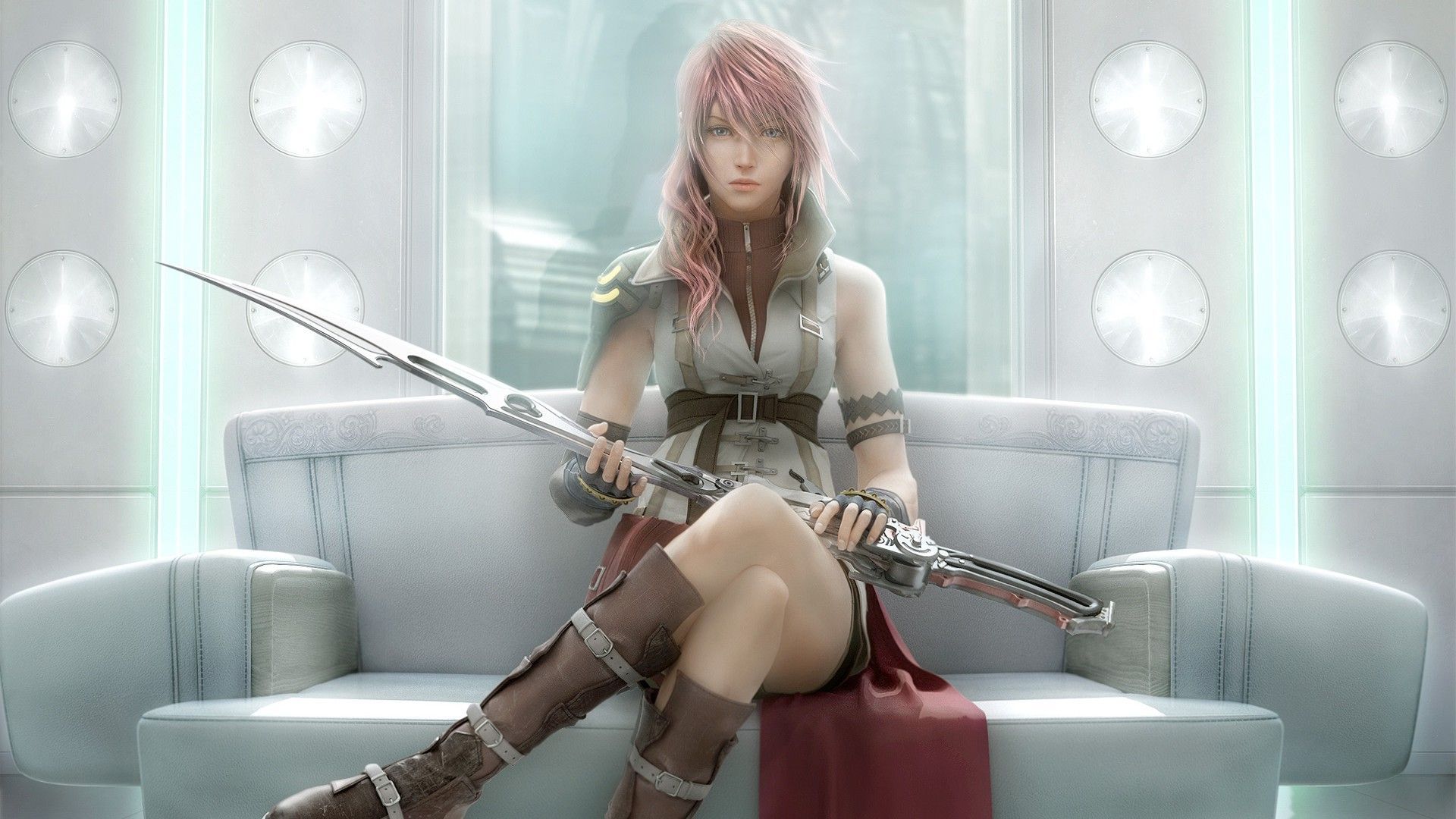
lightning-final-fantasy-xiii-game-hd-wallpaper-1920x1080-2941

This is Lightning from Final Fantasy XIII. She's an extremely attractive, striking character, but in an understated rather than self-consciously sexy way. She's slim but toned, wears a short skirt, has pleasingly tousled hair, has perpetually pouted, parted and moist lips, and wears sexy boots.

She's also one of the most widely disliked characters in the entire Final Fantasy series thanks to being seen as "boring". This is partly due to her single-minded nature, partly due to the rather monotone delivery by voice actor Ali Hillis and partly due to the fact that, as the main player-protagonist character in the game, she was pretty obviously kept as a bit of a "blank slate" for the player to interpret and identify with as they saw fit.

I personally don't think she's all that bad, but there are far more interesting characters in Final Fantasy XIII. Lightning does, however, act as a suitable proxy for the player to interact with the world and its inhabitants, and in that respect she's a successful game protagonist. I just don't see many people declaring her as a "waifu".

Hyperdimension_neptunia_wallpaper_by_missy28352-d643m0u

This is Neptune and Nepgear from the Neptunia series. They are very popular "waifu" choices, but you'll note that they both err rather on the side of "cute" rather than "sexy", leaving aside their plugsuit-style HDD/goddess forms seen in the background of the image above. Actually, that raises an interesting point: those who proudly declare Neptune or Nepgear as a favourite character or "waifu" tend to do so with their human incarnations in mind, not the sexed-up HDD versions.

Why are Neptune and Nepgear popular then? Because they have strong personalities, and are interesting characters. Neptune is one of the most incompetent RPG protagonists the genre has ever seen, although her scatterbrained nature acts as an eminently suitable metaphor for the chaotic way most people play RPGs — putting the world on hold to go and grind out some sidequests — while Nepgear is the perfect foil to her sister, being nice, polite, quiet, intelligent and, frankly, a bit of a doormat to everyone around her.

While I won't deny that there are people out there who want to sexualise these two (there's plenty of Rule 34 artwork out there to confirm that) it's also true that the vast majority of Neptunia fans who pick a favourite — whether it's Neptune, Nepgear or any of the other main cast members — are doing so not on the basis of which one they want to fuck the most, as Sarkeesian suggests, but rather the one that they simply enjoy spending time with the most.
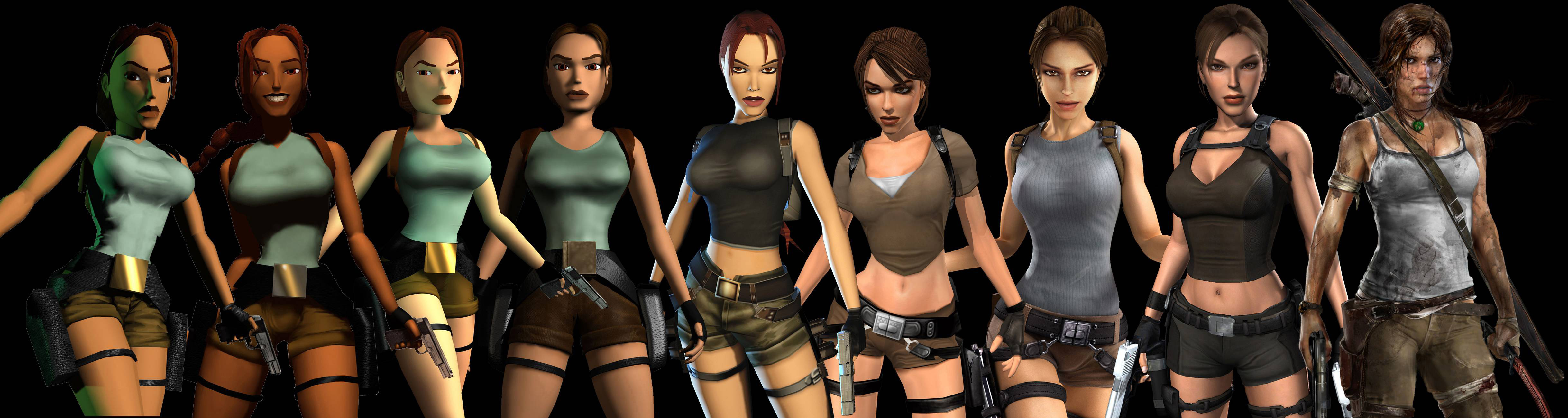
lara_croft_evolution_new

Here are the various incarnations of Lara Croft from the Tomb Raider series over the years. While Lara tends not to inspire the same sort of fanatical "my waifu!" declarations that female protagonists of Japanese games — and the reasons for that are a whole other matter worth discussing another time — she's still a popular character, and not because she's sexy.

Oh, sure, her tiny shorts and enormous rack made for some striking box art back when the original Tomb Raider came out, but if there was no substance to her, she wouldn't have been able to hold down a series for so long. A series that has been "rebooted" twice, yes, but a series in which she has remained a fairly consistent character, all told: a strong, confident, somewhat posh British woman with a plummy accent, a penchant for gunplay and acrobatics, and a desire to constantly challenge herself.

Moreover, she manages to be a female character that doesn't alienate anyone: she's not "girly" in an exaggerated manner, but nor is she overly masculine or aggressive. She manages to occupy a somewhat understated middle ground similar to what Lightning's creator Toriyama was presumably going for, only with arguably slightly better results. In other words, she has appeal elements designed for lots of different people and, despite her "sexiness quotient" being toned down a bit over the years, particularly in the most recent games, she's still a good-looking lady. But, importantly, that's not why people like her.
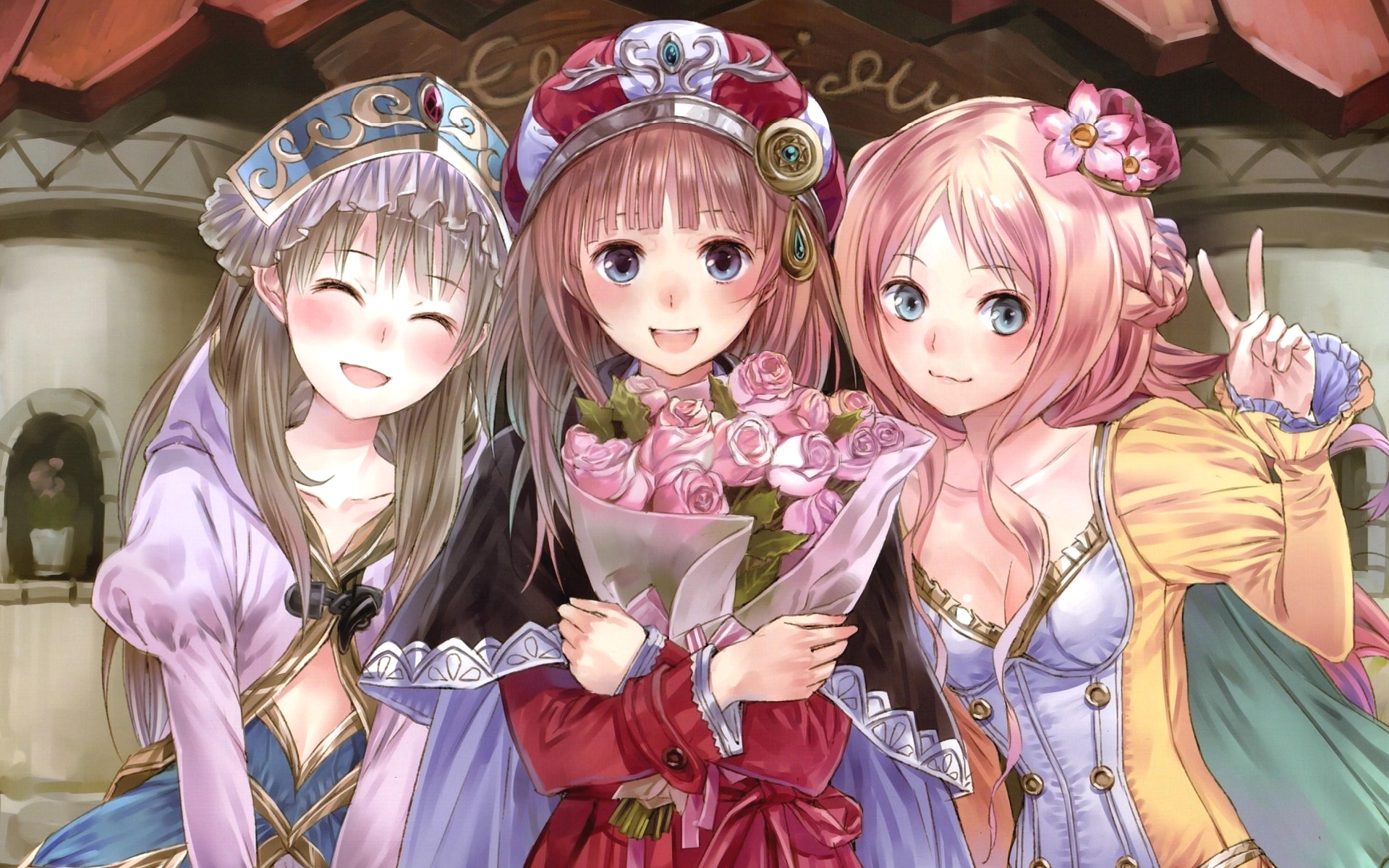
atelier meruru, atelier rorona, atelier totori, kishida mel, merurulince rede arls, rororina fryxell, totoori

Finally for now — I could happily go on with this all day — here is Totori, Rorona and Meruru from the Atelier Arland series. All pretty young things, I'm sure you'll agree, and all clearly designed to initially draw the player in with their attractiveness — or, perhaps more accurately, cuteness, much like Neptune and Nepgear.

But, again, anyone who proudly declares any one of these girls as their "waifu", or just as a favourite character, is not doing so because they want to fuck them. No; they're doing so because they like Rorona's optimistic but clumsy nature; Totori's inherent sweetness; Meruru's lively, bubbly personality. Again, it's a case of wanting a "relationship" of sorts with these characters — of wanting to hang out with them as people, rather than objectifying them as something to jack off to.


Objectification and aesthetics play an important role in determining our initial attraction to something. But a relationship built purely on physical attraction and nothing deeper is a relationship that will not last long — and a relationship that will be forgotten shortly after it has ended. This is not what modern gamers are looking for — and it is not what the vast majority of modern games are providing.

Men are complicated creatures. No, people are complicated creatures. To boil down everyone's thinking to "everyone judges everything by appearance" is both reductive and unhelpful. And yet this is exactly what Sarkeesian is doing — just another reason she continues to lose credibility with pretty much everything she says.
2190: Rubble Without a Cause

0190_001

I played through the second episode of the new King's Quest game today. It's a lot shorter than the first one, so I was able to get through it in a single sitting. Despite being fairly short, though, it's an interesting contrast from the previous episode; rather than being a relatively large (for an adventure game) open world with a non-linear series of puzzles for you to tackle at your leisure, Rubble Without a Cause, as the second episode is known, takes place in a much more confined environment, and largely focuses around one big puzzle: how to free everyone from captivity at the hands of the goblins.

Yes, instead of throwing us back into Daventry, Rubble Without a Cause puts us underground in a goblin prison complex. Graham is dismayed to discover that most of the major characters from the town of Daventry appear to have also been abducted, along with the eccentric merchant's "unicorn" Mr. Fancycakes. Thus begins a quest to find a way out of this predicament.

There's a twist, though: unlike most adventure games, you don't have all the time in the world with which to achieve your goals. Unfolding over the course of several days, the adventure sees the health of all of the prison's occupants — with the exception of Graham — decline as the days pass. Thus you're presented with some difficult, mutually exclusive choices throughout as you determine who it is best to give medicine and food to as they require it. And once you start getting closer to escaping, you need to determine which potential companion is going to provide you with the best chance of succeeding, and ensure that they are in good health for when you make your attempt.

The small scale of the episode initially felt a little disappointing, but on reflection after finishing it, I very much liked the concept of it being based around one central problem for you to solve, and felt this was a good use of the episodic format to provide a short-form but complete-feeling experience. You can solve it in a number of different ways, too — it is, I believe, even possible to complete the episode without anyone running out of health and being carried away by the goblins, but I most certainly did not succeed in that particular endeavour today.

In many ways, the King's Quest episodes we've seen so far are a great example of "gaming short stories" — quite literally, since they are presented as stories narrated by the ageing King Graham (whom I'll be very surprised to see survive the fifth episode) to his grandchildren. This presentation of the narrative as a participant narrator looking back on his past actions is an interesting twist on how old Sierra games such as the original King's Quests used to work, with a strong contrast between the omniscient, non-participant narrator and the in-character dialogue between characters. King's Quest, as a series, maintained this style of presentation until its seventh installment, and it's good to see new developers The Odd Gentlemen returning very much to the "feel" of the classic Sierra adventures.

So was Rubble Without a Cause worth playing, given its short length? Well, if it was a standalone game by itself, I'd perhaps feel a little short-changed at its small scale and short length. In the context of the whole series, though, it makes a good, nicely contrasting follow-up to the excellent first episode, and has me once again hungering to know what happens next!

2189: Reflections on the Last Five Years, Or: Life After Games Journalism

0189_001

I've had a whole lot of thoughts swirling around in my head for some time now about various matters, and I feel as a therapeutic exercise — not to mention an opportunity for some of you to get to know me a bit better — it's important that I express them somehow. I know all too well how frustrating, stressful and ultimately unhealthy it can be to have unresolved emotions and thoughts surrounding things that have happened to you — particularly bad things — and so this is my attempt to reboot my mind and try to move on a little.

Consequently, certain aspects of this post are more than likely to rub a few people up the wrong way. To those people whose jimmies are rustled I say simply: fuck you, I don't give a shit, and if you really cared you wouldn't have done the things you did in the first place.

In the interests of at least a facade of professionalism, I will not be naming individuals who have had a negative impact on my life in this post, though it will doubtless be extremely obvious to anyone who has been following me for a while who the people in question are. I will, however, be naming the companies involved, since that is less personal; everyone knows how unpleasant it is if you Google your own name and find something not terribly complimentary, whereas, unless you own a monolithic corporation, you probably care a little less about someone talking smack about your monolithic corporation. That's how I'm going to attempt to justify myself about this, anyway.

Also, this post is crazy long, so for the benefit of those who only read on my front page, here's a Read More tag.

Continue reading "2189: Reflections on the Last Five Years, Or: Life After Games Journalism" →

2188: Neptunia Games I'd Like to See

0188_001

With Megadimension Neptunia V-II and Megatagmension Blanc and Neptune vs. Zombies on the way to the West, hopefully with Neptunia vs. Sega Hard Girls to follow in the near future, a Neptunia fan such as myself has to ponder what might be next for the series, particularly now it's made the jump to PlayStation 4 and PC as well as Vita.

With that in mind, I had a think about some Neptunia games I'd like to see, particularly in the vein of "spin-offs" such as Hyperdimension Neptunia U Action Unleashed and Hyperdevotion Noire. Here are said thoughts, expressed in the style of a overly excitable PR blast, overuse of exclamation marks and all.

Hyperdimension Neptunia Infinity Dungeon

Gamindustri is in peril once again… and the CPUs are nowhere to be seen?!

Top Guild agent IF is assigned to the mystery and quickly discovers that the monsters pouring out into Gamindustri appear to be coming from a new dungeon that opened in the vicinity of Planeptune. Not knowing what to expect, she begins her quest to uncover the fates of her friends, the CPUs and the CPU Candidates. Just how deep does this mysterious dungeon, whose walls seem to shift and twist before her very eyes, really go?

FEATURES

  • The first Neptunia roguelike! Explore an infinite array of procedurally generated levels as IF and your favourite Neptunia characters as you attempt to discover the source of the Infinity Dungeon's power!
  • An all-new twist on Neptunia's crazy combat! Tactical turn-based movement allows for seamless transitions between exploration and combat; meanwhile, for the first time in the series, make use of the environment in creative ways to defend yourself and inflict massive damage on your foes!
  • Looking for a more direct route? Make your own! All of Hyperdimension Neptunia Infinity Dungeon's levels are fully destructible, with IF and friends' special moves just as likely to bash holes in the walls of the dungeon as they are to smash their enemies into oblivion!
  • Mix it up with Irregular Quest conditions! The Infinity Dungeon works in strange and mysterious ways; some floors will challenge you to clear them against the clock, while others will task you with defeating the enemies as stylishly as possible. Uncover and fulfil the Irregular Quest conditions to maximise your rewards!
  • A wide cast of playable characters! Explore the dungeon as IF, Compa, Neptune and the rest of the gang — plus a few special guests!

Coming soon to PlayStation Vita and PlayStation 4, featuring Cross-Save support. Pre-order your Limited Edition now, featuring a 2CD soundtrack, artbook and fully poseable IF figurine.

Hyperdimension Neptunia U2 Action Unchained

Peace reigns once again in Gamindustri, but the world — and its CPUs — are restless.

Enter, once again, intrepid journalists Dengekiko and Famitsu, who once again have an offer for the CPUs and their Candidates: a means of entertaining both themselves and their people, plus a way to keep their fighting skills in shape.

FEATURES

  • Hack, slash… and think?! Hyperdimension Neptunia U2 Action Unchained's dungeons are like nothing you've ever seen in the Neptunia series, combining challenging combat encounters with head-scratching puzzles that will require you to use your smarts, dexterity and a bevy of interactive items to progress. Nep-Nep might need some help with that last bit!
  • Custom combos GET! Edit your favourite fighter's moves and abilities as you see fit from a wide palette of options that expands as you progress. Develop your own personal fighting style for each character and display your skills with a selection of different weapons, each with their own movesets!
  • Fight one-on-one or go toe-to-toe against the horde! Hyperdimension Neptunia U2 Action Unchained's combat encounters range from challenging one-on-one battles against both monsters and incarnations of Gamindustri's great heroes to large-scale battles against overwhelming odds. Can you stem a seemingly never-ending tide of monsters?!
  • Fight smart, and fight cool! It's not just about beating your opponents; it's about making yourself look great! Mix up your combos, SP Moves and EXE Drives to impress the audience and earn more Shares to maximise your favourite character's abilities!

Coming soon to PlayStation Vita and PlayStation 4, featuring Cross-Save support and Cross-Play online co-op for 1-4 players. Pre-order your limited edition now, featuring a 2CD soundtrack, huge wallscroll and collection of chibi Neptunia figurines.

Hyperdimension Neptunia Gamindustri Idol Project

"Is anyone else getting a distinct sense of deja vu?!"

A new foe threatens Gamindustri — and this time it's not the fault of the monsters. No, the CPUs' very power is threatened by the rise in popularity of idols — and this time there's no Producer to help them out! Fortunately, old friend 5pb. is on hand to give the CPUs and their Candidates a bit of advice on winning the love of the people back…

FEATURES

  • Rhythm action gameplay developed in collaboration with SEGA and Crypton Future Media, developers of the Hatsune Miku Project DIVA series! Enjoy 35 songs, including classics from the Neptunia series and originals composed specifically for this game, as you challenge taxing note charts at four levels of difficulty!
  • Customise the CPUs as they aim for idol glory! A huge variety of costumes, accessories and stage props are on offer for both the CPUs and the Candidates; some even have special effects, but you'll have to experiment to find out what works best for you!
  • Two ways to play! Take on a new story of the CPUs and the Candidates attempting to win back the support of the people of Gamindustri, or play for fun in Arcade mode as you try to top your best scores!
  • Take the battle for best idol online! Join the Guild online to track your progress and best performances against players from all over the world! Share your customised CPU Idols and stage setups as you attempt to dominate not just Gamindustri, but our world too!

Coming soon to PlayStation Vita and PlayStation 4, featuring Cross-Save support and Cross-Play online functionality including social features, sharing and leaderboards. Pre-order your limited edition now, featuring a 2CD soundtrack, commemorative concert programme and collection of pendants, allowing you to proudly show the world who your favourite CPU Idol is!


Note: I know these games are not real. I also know that Hyperdimension Neptunia: Producing Perfection is a thing. Thank you in advance for your time and your desire to point these things out to me, though.

2187: Entering the Caves of Qud

0187_001

It's been a while since I delved into a full-on proper roguelike — and by "proper" I mean none of that "roguelite" nonsense — so I was excited to give Caves of Qud a go after picking it up in the Steam sale a while back.

So far I feel like I've barely scratched the surface of this game — largely because it's very fond of killing players off even in its introductory quests — but I like it a whole lot already, simply for the sheer amount of depth there is to it, while simultaneously remaining pretty much as accessible as it's possible to be for an almost-ASCII roguelike.

Caves of Qud is a far-future roguelike in which you play the part of Some Dude/Gal who shows up in a small settlement one day and… well, there's no real initial goal beyond finding out what interesting things there are in the mysterious and far-off region of Qud up in the top-right corner of the map. The inhabitants of the first village are more than happy to present you with a few quests, however, and it's these that will provide the motivation for your initial explorations.

Caves of Qud gets interesting before the game proper starts, though. Being set in the far future, we're not in a land of elves, orcs and goblins here; we're in a land where horribly mutated individuals are the norm, and indeed it's entirely possible for you to play the game as a four-armed furry narcoleptic esper who is good at butchery and first aid, and perhaps beneficial to do so. For those who prefer slightly more "conventional" characters, you also have the option of playing as a "True Kin", who start the game with better attributes, but less customisation, and as such are, in theory, better for beginners.

The mutations are pretty interesting, since many of them have attached game effects, not all of which are directly related to dealing or soaking damage. A character that is able to spit slime, for example, doesn't do so to damage enemies — instead, slime causes anyone who steps on it to have a chance of slipping, including yourself. In this way, it can be used as a defensive measure when gobbed out between you and the enemy while you're attempting to sprint away and heal the wounds you've taken.

That's not to say the more conventional aspects aren't interesting, though. The game has an intriguing twist on the usual roguelike formula of having unidentified items: as you progress, you'll occasionally come across "artifacts", which you can use your character's intelligence to attempt to make some sense of by examining them. Sometimes these artifacts are useful pieces of equipment; at other times, they're a folding chair. You can, however, use this knowledge to your advantage by offloading the aforementioned folding chair to a character that isn't all that bright on the grounds that it's a Mysterious and Wonderful Artifact From the Old World. There are lots of wonderfully subtle touches that the game doesn't explicitly tell you about, too. Little graphical effects may look like glitches until you realise that they're raindrops, or water splashing as something moves beneath the surface; characters, enemies and monsters can get splattered with blood during combat; and not every enemy is worth engaging "just because it's there". Stumble across a Slumberling in a dungeon, for example, and you'll discover that poking it with your sword is a very bad idea indeed; take a moment to examine it before poking it, however, and you'll discover that these are creatures that spend most of their time in a deep hibernation, completely oblivious to their surroundings — and that they really don't like being disturbed.

As I say, I feel I've barely scratched the surface of all the possibilities this interesting game offers so far, but it keeps me coming back for more despite its high level of difficulty — rather than easing you in and then spiking after an initial "tutorial" area, Caves of Qud starts hard and stays hard — and one day I might actually get beyond that first dungeon… until that time, however, I shall enjoy building new characters with increasingly outlandish combinations of mutations and watching them die at the hands of a swarm of snapjaws as they bleed to death after tripping over a thorny plant in the floor having been terrified by a nearby piece of Dreadroot.