2256: TrackMania Turbo Demo Impressions

0256_001

Those who know me well will know that I've been a huge fan of the TrackMania series since the original release of TrackMania United, and have spent many hours on the various updates to United and the eventual follow-ups TrackMania 2 Canyon, Valley and Stadium. So it was with some excitement that I realised that the next official sequel, TrackMania Turbo, was releasing this week, though I was torn on whether to pick it up for console (PS4, in my case) or PC, which has traditionally been the home of TrackMania.

After playing the PS4 demo for a bit this evening, I think I'm going to grab the PS4 version. I'm very impressed with how at home it feels on console — much of the clunkiness of the PC versions, particularly in the menus, has been tidied up considerably, making it much more controller-friendly, and the addition of a variety of local multiplayer modes makes it eminently suitable for console play. It, so far, seems to be a highly polished product, which addresses what has always been my main criticism of the series as a whole: the fact that in terms of gameplay, it is wonderful, but in terms of interface and user-friendliness, it has traditionally been a ridiculous mess, only made worse by the gazillions of mods server operators apply to their custom dedicated servers, making the game screen more complicated than your average MMO come raid time.

PC players on Steam seem to be a bit salty that TrackMania Turbo has stripped out a number of features they've come to take for granted: specifically, the ability for players to run their own dedicated servers and install gajillions of mods that make players' screens look more complicated than your average MMO come raid time. And while this is a bit of a shame from the perspective of the game's flexibility — something that TrackMania has always prided itself on — I don't think it's going to hurt the complete package, and in fact it may well be good for the series as a whole. TrackMania Turbo will serve as the friendly face of TrackMania, in other words, while the truly hardcore still have United and TrackMania 2 to play and mod to their heart's content. Both of those games are still a hell of a lot of fun to play, after all — and surprisingly good looking, to boot, especially considering their age.

But what of TrackMania Turbo then? How does it shape up compared to its illustrious, if clunky, predecessors? Judging from the five tracks available in the demo, extremely favourably. In fact, if the whole game handles in the way those early tracks do, I'm confident that it will become a new favourite arcade racer.

The thing I like the most is the unabashedly arcadey handling. We're talking Ridge Racer-tier drifting here: release the accelerator, steer around a corner and slam the gas back on and you're going sideways. Hit the brakes and you'll find yourself in an even tighter drift, allowing you to get around even the most ridiculous of corners without losing anywhere near as much speed as if you'd have to drive "properly" like in boring driving sims.

The game screen, sans custom mod clutter, is clean, clear and offers ample feedback on your performance as you play, including split times, worldwide and regional rankings, and fun little extras like arcade-style counters showing how far you've jumped or drifted for — a nice addition that gives the game a very "Sega" feel.

I was debating whether or not I wanted to grab the game today. Playing those five tracks in the demo has made me quite happy to pick it up, though; I can see it being a whole lot of fun, and I hope it's a big success, helping to show console players the joy of this wonderfully silly but skillful and creative series.

2255: Things I Feel Irrationally Weird About Saying Out Loud

0255_001

Number 9,752 in my List of Things That I Don't Quite Understand About Myself is the fact that there are some things I feel irrationally weird about saying out loud.

Normal things, to be clear; the sort of things that regular people probably happily say out loud without a second though. And yet I always feel peculiar whenever I'm put in a situation where I might have to say one of them, and will often do everything I can to avoid saying the thing in question.

Here is a non-exhaustive list.

  • My own name. I've felt awkward about saying my name — particularly my full, non-abbreviated name — ever since I was little. I find it hard to pin down exactly why this is or what set me off thinking this way in the first place, but I have a feeling it has something to do with how much I disliked my speaking voice when I was growing up; I used to absolutely hate hearing recordings of myself, both before and after my voice broke, because I really didn't like my accent and the way I pronounced things. I actually have reasonably good diction for the most part; when I was little — and to an extent even now — I worried that I sounded "too posh", and the name "Peter" is a name that it is very difficult to make sound cool when you sound even the slightest bit posh. As such, I have gravitated towards "Pete" ever since, but still avoid saying it out loud whenever possible.
  • Other people's names. I know lots of people on first-name terms. I hate calling any of them by name. Unlike my hang-ups about my own name, this is nothing to do with not liking their names — it's a peculiar reaction I have where I feel that someone's name has significant power and meaning to a person, and that using it in a carefree manner to attract their attention or address something to them is somehow insulting. This is, of course, complete nonsense, since we rely on our names to identify ourselves to one another. I feel this one may be something to do with my own reaction to my own name: perhaps I'm subconsciously worrying that other people don't like hearing or saying their own name too.
  • Tummy/belly. Stomach. Always stomach. My stomach hurts. I have a stomachache. Never, ever, ever I have a tummyache or a bellyache. Why? My reaction to these words is that they are somehow "childish" and not something an adult should be saying. Once again, this is nonsense, of course, but I still just can't bring myself to say them.
  • Variations on "goodbye". I hate saying goodbye. Not in the romantic "I hate goodbyes!" sense, but in the fact that I simply hate saying goodbye, bye-bye, see you later, see you round, ta-ta for now, bye. I honestly don't know where this one has come from because saying "goodbye" is a fundamental part of human interaction: it's a means of demonstrating that your time with someone else has now ended, and that you are going to go elsewhere and/or speak to someone else. Perhaps I think it's "rude" somehow — that I always think the other person I'm speaking to should be the one to terminate the interaction? I don't know, but what I do know is that it's ruder to leave without saying goodbye, which I have been known to do on numerous occasions simply to avoid this hideous awkwardness.
  • Excuse me. "Excuse me" tends to go hand-in-hand with speaking to strangers, and I do not like speaking to strangers, particularly those I perceive to have more "power" than me in a particular situation. Which is, to be honest, most people most of the time. This one I kind of understand, but it's still fairly irrational.
  • Toilet. I cringe every time I use the Americanism "bathroom" to mean "toilet", but I still use it anyway, particularly when in an unfamiliar place or with unfamiliar people. "Do you have a bathroom I can use?" Of course you do, what sort of house would it be if you didn't? Somehow I see framing the question in this manner as more polite than "Can I use your toilet?" — evidently my mind subconsciously converts "can I use your toilet?" to "can I get my penis out and spray urine into something in your house?" which results in feelings of shame.

I'm pretty sure there are more, but making this list is depressing me about my own lack of social skills. (Not really, but, well, that's probably enough to be getting on with for now.) So let's leave it there for now. I may well return to this topic if I think of some more!

2254: The Irritating Trend of Gleeful Negativity

0254_001

Earlier today, a rumour broke that Nintendo would supposedly be stopping Wii U production by the end of this year. Nintendo subsequently denied this, of course — even if it turns out to be true, Nintendo keeps an Apple-esque veil of secrecy over all its upcoming plans and doesn't tend to comment on rumours and speculation.

Predictably, as soon as the first report was published, everyone was all over the news like vultures circling a still-warm corpse. The Wii U is arguably tied with the Vita as the gaming industry's favourite whipping-boy, and it honestly makes me feel a little disgusted at the amount of glee some people seemed to be directing at the prospect of what is a very good console — albeit less powerful than its Sony and Microsoft counterparts in this generation — going the way of the Dreamcast.

Nintendo aren't particularly popular with certain groups of gamers at the moment, largely due to the controversy surrounding the English localisations of Fire Emblem Fates and Bravely Second due to perceived unwelcome pressure from sociopolitical groups. Regardless of whether or not the decisions made for those games were mistakes or not — and sales figures for Fire Emblem certainly seem to suggest that there are a lot of people who aren't particularly bothered — Nintendo is still in a unique position in the business, however: they have a console platform that is completely separate from its competitors, which is the only place to play certain games, and which is still the only place to play first-party Nintendo games.

Platform exclusives might not be as much of a big deal as they used to be — both Sony and Microsoft's first-party work in recent years has been a little lacklustre for the most part — but they're still Nintendo's bread and butter. Super Mario, Mario Kart, Super Smash Bros. and Zelda are all staples of any Nintendo platform, and with the Wii and Wii U generations we've added Splatoon and the Xenoblade series to that list. All very strong, polished games; all games that make the Wii U a unique console with a ton of its own character.

This is what bugs me, y'see: the most important thing about a games console is the software library that runs on it — the games. And the Wii U, despite not being the most technologically advanced system on the market, has some of the very best games in recent years available for it. Not only that, but it continues to fly the flag for family-friendly gaming while Sony and Microsoft primarily court the gritty realism of modern triple-A titles. Wii U games, for the most part, are awash with primary colours, cheerful music and the clear self-awareness that they are games; they're not trying to be movies, or works of art, or anything like that: they're just trying to be a ton of fun for their audience — and succeeding.

But despite that strong (albeit small) library of games for the system, it's everything else about Nintendo's system that gets criticised: so much so that the worthwhile achievements of the games — and make no mistake, there are enough good games available for Wii U to make purchasing one worthwhile — get overshadowed. Their online system sucks! (Except all these bits that don't!) Their marketing is rubbish! (You're not helping!) The controller is weird! (Play Splatoon with it, then tell me that's not infinitely better than playing an FPS/TPS with a regular gamepad!) You can't buy new GamePads! (Then don't break it!) Their downloadable games are too expensive! (Then don't buy them!)

I'm being facetious to an extent — there are valid criticisms to be made of much of what Nintendo has done in recent years, but there's also a lot to praise. And when it comes down to it, none of these criticisms are particularly important to the Wii U doing what it is primarily designed to do: to play games.

Which is why I get so frustrated when I see people who don't own Wii U's revelling in its "failure". And why I get so frustrated with a media who will post 57 articles about the latest mediocre triple-A blockbuster game to be released on Xbox One and PlayStation 4, yet barely mention the incredible technical achievement of something like Xenoblade Chronicles X. It's part of an increasingly overwhelming culture of gleeful negativity in all aspects of society: schadenfreude has always been a thing, of course, but there seems to be an increasing number of people out there who do nothing but piss, moan and complain about absolutely everything rather than finding something they do like and enjoying it — either quietly or, as I tend to do, as loudly as possible so other people might be able to discover and enjoy the things I've grown to love.

Still. If the Wii U does fail and does cease production this year, it's all but assured a place in gaming's Valhalla alongside Sega's Dreamcast: consoles dead before their time, with libraries of great games that only a few people played when they first came out, and that more and more people regret getting rid of when they become super-rare a few years down the line. Yep, I'll be holding on to mine for sure; I may not have a ton of games for it, but those that I do have are among my favourites in my game collection.

And no, you may not borrow Xenoblade Chronicles X in five years' time.

2253: It is the Piece of a Smile Everyone Acquires

0253_001

I've already written generally about how much I like yuri/shoujo ai slice-of-life anime Yuru Yuri, but I wanted to single out a particular episode as a great example of what this genre does really well: the third season's eighth episode, boasting the impressively Engrish title It is the Piece of a Smile Everyone Acquires.

Yuru Yuri has a few aspects in common with other, similar slice-of-life shows, but the show it reminds me of most is Squid Girl/Ika Musume — a show where, despite its fantastical, ridiculous premise, manages to be oddly believable and comforting in how it depicts its relationships between characters. It's not so much the thematic similarities that I'm concerned with, more the format: Ika Musume explicitly splits each of its "episodes" into several smaller vignettes that tell miniature stories in their own right, and within these vignettes the show often experiments with form, structure and even aesthetic. Its most striking episodes are the ones where it goes completely off-piste, such as those that feature the "miniature Squid Girl", whose sequences are completely dialogue-free, and which make wonderful use of music and animation to produce surprisingly evocative, emotive scenes.

The similarities between Yuru Yuri and Ika Musume struck me during the pre-credits opening of It is the Piece of a Smile Everyone Acquires because it adopts a similar approach to the aforementioned "miniature Squid Girl" episodes: it's completely dialogue-free, focuses on a character that isn't normally at the forefront (or, in the case of mini-Squid Girl, isn't normally in the show at all in that form) and does all its storytelling through its soundtrack.

In the case of It is the Piece of a Smile Everyone Acquires, the episode opens by focusing on the student council president, a character who is so meek and timid that we only ever see her mouthing words in regular episodes; she has no voice, so far as the audience is concerned. The characters always understand, her, though, which is the core joke of her character, but this opening sequence approaches it from a different angle, showing how she understands people — and makes herself understood — without the use of words.

Yuru Yuri already has a wonderfully evocative soundtrack that complements its on-screen action perfectly, but this opening sequence in It is the Piece of a Smile Everyone Acquires takes things to a new level: adopting an almost programmatic approach to its music, with distinctive themes and instrumentation being used for the individual characters who show up over the course of the sequence, it's a fine example of how words, sometimes, simply aren't necessary: you can make an interesting and heartwarming piece of art using only visuals and sound. (You can make an interesting and heartwarming piece of art using only one of those things, too, of course, but this is a TV show we're talking about here; to deliberately refuse to use one of the core features of the medium is noteworthy.)

The rest of the episode is entertaining in itself, too, but somewhat more conventional for the most part; this pre-credits sequence, however, was so striking I felt I had to write something about it. I'd share the video here if it was on YouTube, but no-one appears to have ripped it; you can, however, watch the full episode on Crunchyroll at this link, and I can highly recommend the whole series from the very beginning if you want some enjoyable, lightweight fluff to cheer yourself up with.

2252: Estival Versus: Early Impressions

0252_001

As I said the other day after finishing Senran Kagura 2: Deep Crimson, the follow-up to the Vita spinoff Shinovi Versus, Estival Versus, was waiting for me to stick it in my PS4 and start rumbling in the sunshine. So that's what I've been doing.

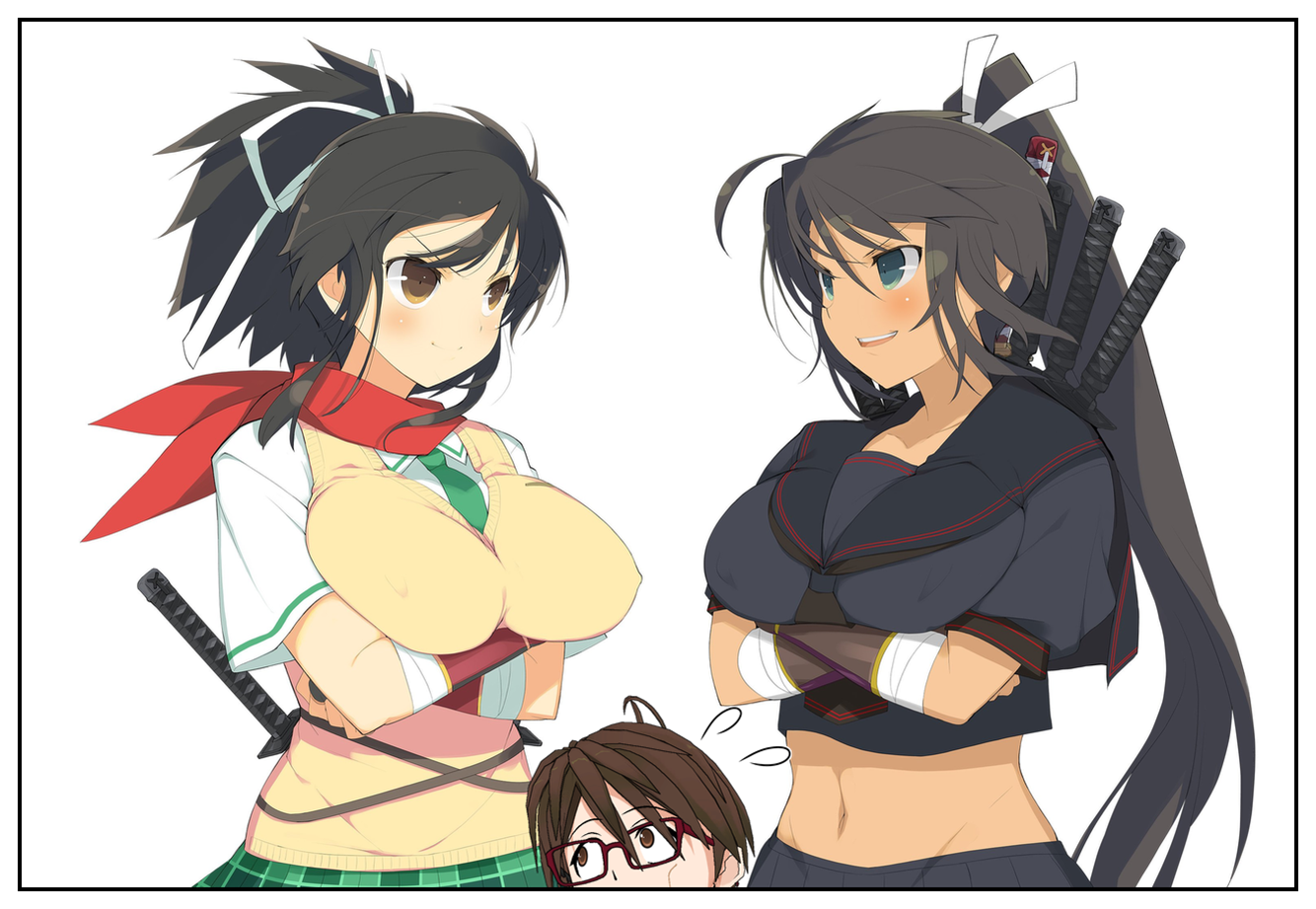
A recap for those who aren't familiar with the complete Senran Kagura series and its continuity: first came 3DS game Senran Kagura Burst (actually a remake of the Japan-only Senran Kagura: Portrait of Girls with an additional full-length story from the perspective of the "evil" shinobi), which introduced the ten girls who make up the cast members from "good" shinobi school Hanzou and "evil" shinobi school Hebijo (as well as recurring guest characters Daidouji and Rin) and took the form of a 2.5D brawler with simple RPG-style character progression.

Then came Vita game Senran Kagura Shinovi Versus, which followed on directly from Burst's story and introduced ten new characters: five from another "good" shinobi school Gessen and five who took the place of the now-renegade Homura's Crimson Squad at Hebijo. The story focused on characterisation of the four groups and their interactions with one another, but in its final moments teased what would become the main conflict of the Senran Kagura series: the clash between shinobi (both good and evil) and the demonic youma. Gameplay made the jump from fixed-perspective 2.5D to third-person 3D, leading many to (somewhat erroneously) draw comparisons to Koei Tecmo's Warriors series.

This was followed by 3DS game Senran Kagura 2: Deep Crimson, which left behind the new Gessen and Hebijo characters in favour of focusing on the original cast once again, and pushing the shinobi-youma plot arc forward with the introduction of legendary character Kagura and a strong focus on the machinations of the evil Hebijo chairman Dougen. Deep Crimson returned to fixed camera angles but had a stronger sense of depth than Burst, making it feel more along the lines of a somewhat less setpiece-heavy Devil May Cry than Streets of Rage.

And then we come to Estival Versus, the latest release. (There was also Senran Kagura Bon Appetit among all that lot somewhere, but that's a deliberately comedic spinoff rather than a canonical entry in the main narrative.) Estival Versus is the first of the series to appear on home consoles as well as handhelds thanks to its simultaneous PlayStation 4 and Vita releases, and it marks a return to Shinovi Versus' 3D fighting formula, with battles unfolding in large 3D arenas rather than side-on, linear levels.

My initial impressions here are based exclusively on the PlayStation 4 version, I should probably point out; from what I understand, the Vita version is pretty solid, mind, it just runs at a lower framerate and resolution — and, obviously, is on a smaller screen (unless you use a PlayStation TV). As such, take comments about the technical performance of the game accordingly.

Well, then, that would seem like a decent place to start: for the most part, Estival Versus runs beautifully fluidly, with crisp, high-definition graphics, the beautiful character animation that has come to exemplify the series, and a smooth framerate that usually sticks around the 60 mark with a few exceptions when things get particularly busy. Even when the framerate drops, however, the action continues to feel fast and fluid, giving the game a pleasantly "arcadey" feel.

The jump to the big screen makes a surprising amount of difference. Combat feels rather more weighty than it did in Shinovi Versus, particularly when you use the characters that wield heavy, slow weapons rather than the more hack-and-slash-friendly characters. This is a good thing, on the whole; every character feels noticeably distinct from one another, and getting to learn some of the more challenging characters is satisfying.

Besides the returning cast from Shinovi Versus, there are a number of new characters, too: the three "Mikaruga Sisters", each of whom handles very differently, along with some other characters who are particularly important to a number of aspects of Senran Kagura lore at large.

I can't speak for the entire story yet, but Estival Versus so far seems to be following a similar pattern to Shinovi Versus: beginning with what sounds like it should be a throwaway plot that simply provides an excuse for all the characters to fight one another, but which actually turns out to be a means of exploring these characters in a considerable amount of depth. Here, the basic concept is that the casts from the four schools have been somehow whisked away to a tropical paradise where dead shinobi who have not yet found rest appear to linger. Shortly after arriving, the girls are challenged to take part in the "Shinobi bon dance" ritual — a battle royale that demands each of the groups smash the others' festival platforms in an attempt to assert their dominance and, subsequently, be allowed home first.

It sounds kind of dumb initially, and indeed the first couple of chapters of the game largely consist of the girls messing around and being silly with one another. By the third "day" of the festival, however, things start picking up, and some of the central mysteries surrounding the situation the girls find themselves in start to unfold. I anticipate that by the eighth day, there will have been some very significant happenings in the world of Senran Kagura, though I shall refrain from conjecture here for fear of inadvertent spoilers.

Estival Versus so far appears to be a very fun game indeed, with a solid single-player mode, some interesting-sounding online multiplayer modes (both cooperative and adversarial) and the now-obligatory Dressing Room feature, which allows you to play dress-up with your favourite girls, pose up to five of them in a diorama and then snap pictures of them from various angles. I'm not sure I'd recommend it to someone as their first Senran Kagura game, since, like Deep Crimson, it's the midpoint of a series — a series that currently has no end in sight, I should add — and, unlike many other franchises out there, it begins by immediately working on the assumption that you already know who these characters are, how they relate to one another and what they went through together in the previous games. Like Deep Crimson, there are some efforts made to give a bit of context in the early hours of the narrative, but you'll get far more out of it if you've played through the stories of Burst, Shinovi Versus and Deep Crimson beforehand to understand where things are in these girls' world right now.

Very much looking forward to seeing how things develop — and perhaps jumping into the multiplayer a bit, too. If you have a copy and are playing online, feel free to add my PSN ID Angry_Jedi to your friends list; do please leave a note with your friend request if you know me from here or Twitter, however!

2251: GTA Online: More Fun Than I Originally Gave it Credit For

0251_001

Some friends and I have managed to spend most of today playing Grand Theft Auto Online, the sprawling multiplayer mode for Grand Theft Auto V on… well, everything, but we were playing on PC, because we all have excellent gaming rigs and like it looking lovely and running at 60+ frames per second.

Anyway. Regular readers will know that my reaction to Grand Theft Auto Online has been somewhat lukewarm in the past, but today we had a ton of genuine fun, both in the free-roaming mode and in the more structured activities. I think it's finally won me over as something I want to play more of — I'm still unconvinced that I want to play it with strangers, as popular triple-A game multiplayer modes tend to attract the very worst kind of person, but I definitely want to do a lot more with friends.

It has problems, though; fairly significant ones for an online game. Mostly the issues relate to the overall clunkiness of setting up and managing online sessions. There's no party system, for instance, which makes sticking together with the same group of players when moving from activity to activity a little troublesome at times, though the addition of the "Remain Host" option alleviates this somewhat by ensuring whoever initiates an activity remains in control of the session's options after it's over.

The problems with the party system are further compounded by Rockstar's insistence on using its own proprietary login system for online IDs — the Rockstar Social Club. I can understand why they've done this — there's some nice detailed stat-tracking and suchlike on the Social Club website — but it's a shame it doesn't integrate with something like Steam. On consoles it integrates perfectly with Xbox Live and PlayStation Network, making it straightforward to find and invite people, whereas the addition of an extra layer of user IDs and accounts on the PC version makes it a bit of a faff to get set up to play with friends. Social Club is also a bit of a temperamental beast; we spent nearly an hour at the start of our session earlier with one of our friends steadfastly appearing offline despite him being logged in to GTA Online; turned out the solution was just to open the Social Club interface in game, and then he magically appeared online. Dumb. Broken.

Fortunately, once it works, it seems to stay working for the most part, and while there are a few aspects of the experience you miss out on when playing in small, private sessions rather than in large public games, we certainly didn't feel like we were being deprived of anything to do. Pleasingly, there are a lot of activities tuned for 4 players, which is typically the number of people we manage to have available at any one time, so there were plenty of options for us.

Over time, Grand Theft Auto Online has expanded with a veritable fuckton of new game modes and ways to play, too; open-world activities in Free Mode might challenge you to capture and control an area on the map; "adversary" modes give you unconventional and sometimes asymmetrical ways to compete against each other; missions provide relatively freeform objectives for you to complete as a group. And then, of course, there are the Heists, which we are yet to see one through to its conclusion, but which promise to be a ton of fun.

Particular highlights for us today included the "Hasta la Vista" adversary mode, in which the four participants are split into two teams: two on pedal bicycles, two in big rig truck cabs. The players on the bikes have to reach the finish line. The players in the trucks have to stop them by flattening them. The huge difference in weight, size and manoeuvreability between the two teams makes for a really fun, silly experience that is much more interesting than a straightforward race.

We also had great fun with the air races. In our first race, which gave us free reign to choose our aircraft, I ill-advisedly attempted to fly a small passenger jet and failed miserably to complete the course. In the second, we all flew small, nimble aerobatic planes, and — particularly when played in first-person — it was thrilling and terrifying.

Even just straight deathmatches are fun. The realistic city environments in which the game takes place make for great places to play cat-and-mouse (with shotguns), and it's immensely satisfying to battle your friends for ultimate supremacy, or at least bragging rights.

Grand Theft Auto Online feels like what Grand Theft Auto has always wanted to be: a realistic-looking but chaotic, silly, cartoonishly violent and darkly humorous playground for people to let loose in using a variety of methods: driving, flying, boating, skydiving, cycling, shooting, bombing, robbing, running, climbing, jumping… while I don't think anyone will ever make the argument that it's great art, it's not trying to be; it's a stark contrast from the single-player mode, which does tell a good story and tell it well. Rather, it's a game where the stories are, for the most part, emergent; the stories are the things you reminisce about with the friends you've been playing with, and most of them start with "do you remember that time when…?"

So yeah. Grand Theft Auto Online, your interface sucks and you need to hire people who understand how multiplayer games work. But despite all that, you've won me over. I'm greatly looking forward to the next time I can flatten my friends in a dump truck and blow them up with a rocket launcher.

2250: Is There Anything More to 'Senran Kagura 2' Than Big, Bouncing Cartoon Breasts?

0250_001

Senran Kagura 2: Deep Crimson is actually something of an increasing rarity in the modern games sphere: it's a sequel that actually rewards knowledge of its predecessors rather than acting as a standalone story or reboot. For sure, you can play through Deep Crimson without having played Senran Kagura Burst or Senran Kagura Shinovi Versus — despite the "2" in the title, this is actually the third in the series canonically, or fourth if you count the original Japanese release of the first half of Burst as Senran Kagura: Portrait of Girls — but you will get far, far more out of it if you have knowledge of the setting, characters and backstory of what's going on.

Senran Kagura as a series concerns itself with the happenings in the secret world of the shinobi. Trained in secret at specialised academies, shinobi are split into two main groups: "good" and "evil". "Good" shinobi follow orders, help people, Do No Wrong, that sort of thing. "Evil" shinobi do the more shadowy work that is more traditionally associated with those of the ninja persuasion — assassination, espionage and generally being a bit of a bastard without anyone finding out about it until it's much too late.

youma1Life can't be interpreted in such black-and-white terms, however; there are myriad shades of grey, and this becomes particularly apparent over the course of the Senran Kagura series' overarching narrative threads and themes. In Senran Kagura Burst, the "good" shinobi of Hanzou Academy came to understand a little more about their "evil" Hebijo counterparts and that they weren't so different despite their theoretically opposing ideologies; in Senran Kagura Shinovi Versus, we learned the truth about this stark good-evil divide: it's an artificially created construct intended to provoke bloodshed between the two opposing sides, the net result of which lures horrific creatures known as youma out of the darkness so they can be slain by high-ranking shinobi.

In Deep Crimson, the questions over what "good" and "evil" really mean are further raised when the Hanzou students are tasked with initially capturing and then slaying a young girl called Kagura. Kagura, it seems, is destined to fend off the youma in particularly spectacular fashion, so surely the "good" shinobi want to keep her safe rather than splatter her over the nearest wall? Being good little, well, good shinobi, though, they set about making preparations for their mission, because good shinobi follow orders and don't question them. It takes the "evil" shinobi of Homura's Crimson Squad — the former Hebijo students — to convince them to think for themselves and realise that questioning this sort of drastic action is really probably okay if you stop to think about it for just a moment or two. And indeed, there's quite a lot more to Kagura than initially appears.

youma2In Senran Kagura Burst, the relationships between the Hanzou and Hebijo girls was explored through each of them fighting one another and coming to an understanding with their opposing counterpart. It was revealed that "evil" is actually a more inclusive concept than "good" in the world of Senran Kagura, since "good" can turn people away for "not being good enough", while "evil" accepts everyone, no matter how nice or nasty they might have been in the past. Indeed, Burst's storyline — particularly the Hebijo-specific path — takes great pains to humanise the Hebijo girls and depict them as interesting, flawed and often tragic characters who all have their own reasons for turning to the darker path.

In Deep Crimson, these relationships are further explored in a number of different ways, both through the narrative and through the game mechanics. A significant addition to Burst's 2.5D brawling action is the ability to play missions in cooperative pairs, either with another player on a second 3DS system or with the AI taking control of the other character and you being able to switch the one you're in direct control of at will. The game's narrative makes a point of putting "opposing" — or perhaps it's better to say "complementary" — characters together; here, rather than fighting against each other, as in Burst, the girls come to understand one another better by fighting alongside one another against the shared threat of the youma. This doesn't, of course, preclude the fact that a number of comic misunderstandings lead to physical altercations between these pairs at several points in the story — Senran Kagura as a series has always known how to strike a good balance between pathos, drama and humour — but the net result of all the girls' battles right up until the end of the game is that they all come to understand, appreciate and like one another better.

youma3This paired-up action is more than just a gimmick, too; the way it's presented really creates a strong sense of these characters being real people and having actual feelings towards one another. Whether it's the tomboyish, loudmouthed Katsuragi giving the emotionless Hikage an enthusiastic high-five after a successful combat or the dour but utterly besotted Yagyuu catching her darling Hibari in a perfect princess hold after a joint special attack, the game's beautiful animations are absolutely packed with personality, giving each character both a unique look and feel, making them all instantly recognisable.

This uniqueness extends to the way each of the girls plays as well. Far more so than in Senran Kagura Burst, at least, each girl has a very different fighting style, with their own unique button combinations required to unleash combo attacks and specific moves. While you can get away with button-mashing to a certain degree early in the game, once you start fighting more powerful bosses — and even more powerful individual enemies — factors such as positioning, launching, air control and dodging become significantly more important, and there are even some RPG-style status effects to inflict and contend with, just to make things that little bit more interesting.

Each character's three special moves are unique, too; while some are simple area-effect nukes around the character position, others are charge attacks across the arena, good for cutting through swathes of enemies, while others have more specialised uses that can turn the tide of battle in your favour. Of particular note is Haruka's "Death Kiss" move, which charms anyone hit with a large heart-shaped projectile and prevents them from attacking for a brief period; frustrating and combo-breaking when it hits you, massively useful when you're able to do it yourself.

youma4Unfolding across five separate chapters — each with an escalating focus and scope from the previous — and culminating with some dramatic moments of personal growth and epic conflict in the final chapter, Deep Crimson's narrative is a strong one that is paced well and feels like it's the series really hitting its stride. While Burst in particular felt like it was more concerned with introducing the characters and their relationships with one another — no bad thing in a series as characterisation-focused as this — Deep Crimson feels like the overall narrative of the series is moving significantly forwards. The characters aren't treading water: their personal growth in the previous installments is acknowledged and used as a basis for this game's narrative to build on, and this is where the particularly rewarding aspect of complete series familiarity comes in. It has, so far, been an absolute pleasure to witness these girls growing up and finding out more about themselves, their place in the world as people — and their place in the world as shinobi.

As I say, you can absolutely get some appreciation out of Deep Crimson if considering it in a vacuum, but the Senran Kagura series as a whole is at its most rewarding when you take in every piece of information available out there: creator Kenichiro Takaki and his team have created a very strong and believable setting and sense of context across these games, with some wonderfully human-feeling characters that interact with one another in relatable, believable ways — even when they're being silly rather than serious. Like other prolific Japanese series such as Neptunia, the cast has transcended its original context to become a convincing set of "virtual actors" who wouldn't feel out of place in situations other than fighting for their lives — indeed, we've already seen them put their weapons down and do other things in the immensely silly (but immensely entertaining) Senran Kagura Bon Appetit — and I sincerely hope that we see a lot more of these girls in the coming years.

Fortunately, I needn't lament that my time with them has come to a close with the conclusion of Deep Crimson's story, since Estival Versus has just released and is eagerly awaiting insertion into my PS4. More thoughts on that to come when I've spent some time with it.

Oh, hold on now, I didn't answer the question in the headline, did I?

YES

2249: Catching Up on Deep Crimson

0249_001

My copy of Senran Kagura Estival Versus arrived the other day. I haven't booted it up yet, because I realised that I was yet to play through its predecessor, the 3DS-based Senran Kagura 2: Deep Crimson. Since the Senran Kagura series is heavily narrative-based and subsequent installments often make reference to events in their predecessors — even between the "main" series on 3DS and the Versus subseries on Sony platforms — I didn't want to jump into Estival Versus until I had, at the very least, beaten the main story of Deep Crimson.

I find the contrast between the 3DS and Sony incarnations of Senran Kagura to be quite interesting. The 3DS games, being the "canonical" storylines, for want of a better word, play like modernisations of 2.5D brawlers such as Streets of Rage, while the Sony games unfold with more of a sense of "3D", feeling more like a blend between Dissidia Final Fantasy and Omega Force's Warriors/Musou series. I'm torn as to which I prefer, to be honest; I've always had a major soft spot for 2.5D brawlers, and, upon firing up Senran Kagura Burst for the first time and discovering it was essentially a new Streets of Rage game, I was delighted. That said, the Versus series seems to be the one that tends to be more well-received, and I like the larger, extended cast that they incorporate.

I don't have to pick a favourite, do I? No? Then I won't. I love them all.

All right, Deep Crimson then. I'm coming up on the last missions of the game having blasted through the previous four chapters, and I've been really enjoying it so far. One thing that has developed considerably from Burst is the fact that each character feels very different to the others now. A lot of Burst could be got through by mashing the attack button and occasionally avoiding enemy attacks, though naturally you'd get more out of it — particularly in boss fights — if you learned some of the combos and when the characters' special moves are especially effective. Deep Crimson, meanwhile, roundly punishes button-mashing, since there appears to be some sort of attack priority system going on, where hurling yourself at the front of an enemy while flailing wildly is a sure-fire way to get yourself defeated swiftly. Instead, mixing up light and strong attacks with air attacks, launches and special moves is essential; it feels much more like a "fighting game" than a button-mashing brawler, which is both enjoyable and rewarding. (Not that there's anything wrong with a button-mashing brawler, of course; I still love me some Streets of Rage.)

Of particular note is the increased emphasis on special moves' usefulness. I got through a lot of Burst and Shinovi Versus without making heavy use of these impressive, powerful moves, but Deep Crimson makes effective use of them a necessity. In a nice nod to series narrative continuity, all the girls start with their powered-up moves that they learned in the previous games, too, providing three distinct, situational moves to unleash at the appropriate time — and if you've wailed on your opponent enough to charge up your ninja scroll meter too, of course. There's a nice mix between area-effect nukes, frontal cones, charge attacks and some outright bizarre abilities (Hibari's "now I'm a giant and I'ma stomp on you!" move is particularly peculiar) that means learning how each character plays is essential; you can't go in hitting buttons randomly and hope for the best, particularly in the tougher fights against stronger individual opponents or duos.

Narrative-wise, Deep Crimson raises the stakes significantly from Burst and even Shinovi Versus. Burst was, up until its final moments, heavily slice-of-life in nature, albeit slice-of-life with shinobi battles. There was a big, ridiculous final boss battle in its final chapter that teased where the series might go in the future, but then it ended. Shinovi Versus, meanwhile, again concentrated on the daily lives and backstories of the characters, but ended with an even bigger tease about the truth behind shinobi in the modern world: their mission to reveal and battle youma, hugely destructive evil creatures who demand blood sacrifices and generally fuck shit up.

After two games of us only ever seeing one youma though — Burst's final boss Orochi, whom you fight both on the inside and the outside depending on which of the two main narrative paths you follow — I was beginning to wonder if youma were going to be one of those threats that was always mentioned in hushed whispers but never actually seen. I thought it would be disappointing if we didn't get to fight some big slobbering monsters, though, because although it's fun to see some shinobi-on-shinobi action, some big slobbering monsters would mix things up nicely.

Deep Crimson is well aware that I probably wasn't the only person feeling like this, and opens with a retelling of Burst's final moments, and then only continues to escalate from there. It tells an interesting tale that delves further into the overall series mythology — particularly the role of the high-ranking ninjas and of Kagura, a mysterious young girl who shows up and appears to be destined to fight youma.

The particularly interesting thing about the narrative is how it plays with the concepts of good and evil. This is always something that Senran Kagura has been particularly good at, with the majority of both Burst and Shinovi Versus exploring the nature of what "good" and "evil" shinobi really mean, and how people can find ways to build bridges across the frothing waters of conflicting ideologies. With Deep Crimson, though, the Hanzou girls — canonically the "good guys" — find themselves confronted with an order that they're not sure is really the right thing to do. Meanwhile, Homura's Crimson Squad, the former Hebijo Academy students and the characters originally positioned as the "bad guys", are placed in the position of doing what you'd traditionally expect the heroes of the piece to be doing.

The other thing that's interesting — and the thing I love the most about Senran Kagura as a whole — is how it juxtaposes the heavy, violent and often philosophical shinobi drama with the breezy silliness of a bunch of teenage girls trying to figure out who they are and what their place in the world is. Every single character in Senran Kagura is a well-defined, interesting person with a unique and worthwhile backstory, and they all get their own time in the limelight. Some characters — Homura is a particularly good example — undergo a huge amount of personal growth and development over the course of the series, and it's been a real pleasure so far to watch these girls grow up, learn about themselves and their place in shinobi society.

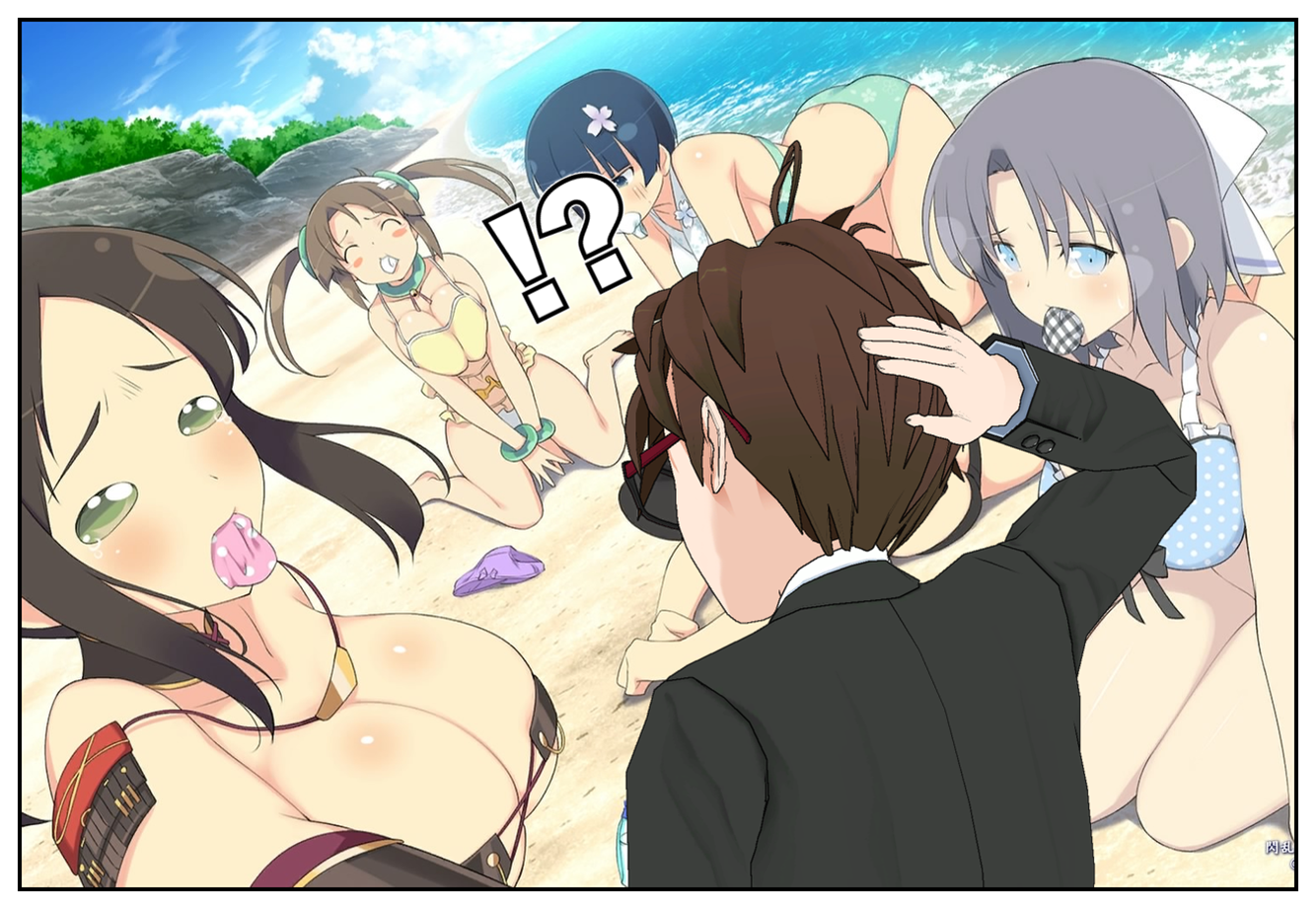
This latter aspect in particular is what makes me so infuriated when people dismiss the series as "just boobs". There's some truly remarkable character and plot development going on in this series. Yes, there are big jiggly boobs; yes there are panty shots; yes, combat usually concludes with all the participants stripped down to their undies, but none of this takes away from the well-written, extremely well-characterised drama (and comedy!) that provides the context for the action. It truly is a series deserving of more credit than it gets, and as I close in on the end of Deep Crimson I find myself enormously excited to jump in to Estival Versus, whose core concept promises to tug at the heartstrings particularly strongly. But that's a story for another day, of course.

"Just boobs" my arse.

2248: Pinning Down the Problem with Coverage of Niche Games Like Senran Kagura

0248_001

I made a mistake last night; actually, I made two. I read a Kotaku article, and then I commented on it.

The article in question was Mike Fahey's "Let's See How Long it Takes Senran Kagura to Make You Uncomfortable", which took the form of a Let's Play of the first half an hour of the game — well, the first half an hour of story, to be precise, up to the opening credits — and which was written in an obnoxiously holier-than-thou tone, with Fahey claiming that he is okay with fanservice, but then going on to completely contradict himself by not engaging with latest Senran Kagura game Estival Versus on anything more than the most superficial level.

I'm not going to take that article apart piece by piece because I already did that in my comment, which, within two replies, had me being accused of being a paedophile — how predictable thou art, Internet — but instead I want to talk a bit more broadly about what I think the issue is with coverage of popular but niche-interest titles such as Senran Kagura and Japanese games in general.

Sex.

Not the presence of sexual, titillating, provocative, ecchi or even hentai content; I'm all for that, and happy whenever games feature it in an unabashed manner. But the fact that whenever mainstream games writers come across one of these games, that is all they can fucking talk about.

Let's focus specifically on Senran Kagura for a moment. As legend has it, Senran Kagura as a series exists because creator Kenichiro Takaki wanted to see boobs popping out of the Nintendo 3DS' stereoscopic 3D screen. A shallow inspiration, for sure, and if he'd left it at that — if Senran Kagura had been nothing but pretty girls thrusting their boobs in your face — then the series would have sunk without trace before it even became a series. Instead, we're now confronted with Estival Versus, which is the sixth game in a series that has only been around since 2011 — a series which shows no sign of slowing down and, rather, much like fellow beloved niche series Neptunia, continues to go from strength to strength with each installment.

Surely "3D boobs" aren't enough to carry six games' worth of content, though, I hear you say, and you'd be absolutely right. The reason why Senran Kagura is so popular, and why it now spans four different platforms (Vita, PS4, 3DS and mobile) is because for all Takaki's bluster about "tits are life, ass is hometown", it is extremely, painfully obvious throughout every installment of the series that both Takaki and the people he works with absolutely adore these characters and want to tell interesting, enjoyable, emotional and thought-provoking stories with them. They also want to tell silly, funny, self-parodying stories with them. And they want us to watch these girls grow up, both as young women and as trainee shinobi. In other words, they want us to think of the complete Senran Kagura cast as, effectively, a set of "virtual actors" who can come back time and time again in different games, and fans will follow because they want to see what their favourite characters are up to, not because they want to see 3D boobs.

This is the frustrating thing that pieces such as Fahey's nonsense completely fails to take into account. Sexuality is part of Senran Kagura's aesthetic and appeal, sure, but it's not the main point. There are far more interesting things to talk about, such as the relationships between the girls, the nature of good and evil, the series' extensive use of Japanese mythology (specifically the subject of youma), the juxtaposition between the narratives' slice of life elements and the more fantastical shinobi elements, and how each and every one of those characters has gone on a significant personal, emotional journey since their first appearance in their respective games. (Mobile game New Wave is arguably the exception to this, being your bog-standard Mobage virtual collectible card game with non-existent gameplay, but, what with it being a mobile game, I don't really take it particularly seriously anyway.)

To put it another way, when writing about Senran Kagura — or indeed any other Japanese game that decides to make use of a provocative art style or aesthetic — focusing entirely on the sexual elements and how "weird" they are or how "uncomfortable" they make you feel is doing both the game and the audience an enormous disservice. The majority of the games' audience know what they're getting into with regard to the fanservice, so they probably want to hear more about what makes each particular installment unique; what the most interesting parts of the narrative are; whether they stand by themselves or fit into a larger narrative — that sort of thing. Focusing on sexuality and how "problematic" this sort of thing is is nothing but lazy writing that requires little to no research; indeed, when Senran Kagura 2 came out last year, there was at least one review that proudly stated it was based on less than half an hour of playtime, and I'm honestly surprised we haven't seen more Estival Versus bullshit. The European release isn't until Friday, so perhaps there will be some more then — or perhaps I'll be pleasantly surprised. I'm not holding my breath.

What I want to see, then, is someone covering a title like Senran Kagura and treating the sexy stuff as just what it is: part of how the game looks, but not the point. I'd even like to see someone challenge themselves to write about it without mentioning the sexy stuff at all if they didn't think it was directly relevant to what they found interesting. I want to see someone engaging with it on a personal, emotional level: how did the story make them feel? Which characters did they relate to? Were they particularly attached to any specific pairings of characters? Which characters did they enjoy playing as, and did that match up with the characters they liked as people? Did they learn anything from the experience? Did they come away from the experience feeling like they had taken something away from it, either emotionally or in terms of knowledge or skills?

These sorts of things are surely basic questions when it comes to criticism of creative works, but it seems they're too far beyond your average games journalist in 2016, who would rather post animated GIFs, talk about how jiggly boobies make his swimsuit area feel a bit funny and make implicit assumptions about people who do like this sort of thing — assumptions that are further reinforced by the attitudes of people in the comments section, who make people with differing viewpoints afraid to speak their mind for fear of being branded as something extremely unpleasant.#

The sad thing is that something like Senran Kagura ticks a whole lot of boxes that these hand-wringing idiots claim to want from their games: powerful, non-submissive women in lead roles; the presence of "people of colour" (God how I hate that fucking phrase); stories that acknowledge the complexity of emotions within the human heart and mind; gameplay that reflects the narrative themes; sensitive treatment of distinctly "adult" concepts, including trauma… the list goes on.

And yet because boobs, they either fail to see — or deliberately ignore — the presence of all these things. That's just sad; not (just) because I'm fed up of reading this sort of spastic dribbling on wannabe tabloid sites (not to mention feeling the need to write my own spastic dribbling in response) but because there are a lot of people out there who are deliberately, willfully depriving themselves of some excellent, intriguing, engaging and emotional gaming experiences, all because they can't look past something a bit sexy.

As I said on Twitter earlier today: thank heavens for social media and personal blogs, at least, where people who are actually into this sort of thing can find one another and enthuse about the things they love at great length without worrying about offending the always-offended. I just wish we hadn't been so let down by the media.

2247: Yuru Yuri: Charming, Dumb, Gay as a Window

0247_001

I finally started watching the third season of Yuru Yuri, an anime whose first two seasons I found immensely enjoyable despite it being one of those "slice of life" affairs where pretty much nothing of note happens throughout.

Yuru Yuri is packed with charm and some wonderful characters, though, and it's through the strength of these characters that the show truly shines.

For the uninitiated, Yuru Yuri follows the total lack of adventures of a group of four schoolgirls who form a club that doesn't really do anything except hang out and drink tea. Over the course of the first couple of series, a few other regular cast members were added, and each of these put in frequent appearances in the third season — so frequent, in fact, that, judging by the new title sequence, they're now considered to be core members of the cast rather than regular recurring characters.

The astute and/or weebtastic among you will know that yuri is used to refer to Japanese popular media with lesbian undertones (or indeed explicit overtones) and the inclusion of this term in the show's title is no coincidence. There are no male characters in the show whatsoever, and there are numerous members of the cast — both regular and irregular recurring — who clearly have the hots for another one of the girls.

The most obvious is first-year Chinatsu's infatuation with her cool, calm and collected senpai Yui, but there's also the clear attraction between the mostly sensible (but painfully tsundere) student council vice-president Ayano and the utterly chaotic, hilarious Kyouko, who is a total dick but somehow immensely likeable with it. Then there's former series protagonist Akari's older sister Akane, who puts up a facade of being the sensible onee-san, but is actually a complete siscon, degenerating into wildly inappropriate acts with Akari's possessions whenever she's by herself (or thinks she's by herself). And Chinatsu's sister Tomoko, who is infatuated with Akane. And… you get the idea. There's a whole lot of lady-love going on.

This isn't an ecchi show by any means, though; the yuri side of things isn't fetishised at all, and we never actually see anything going on between these characters. It's a show that, when it deals with feelings of affection, prefers the more romantic side of love in the schoolyard rather than anything overtly sexual. It's all sidelong glances, lingering looks, wondering if that contact was intentional; of course, some characters make their feelings more obvious than others — Chinatsu and Ayano both being the most obviously gay for their respective objects of affection, albeit in different ways — but still, for the most part, the show depends on the feeling of "will they ever realise or acknowledge their feelings for one another?" and actually resolving one of these strung-out instances of romantic tension would almost certainly throw the rhythm and feel of the show off somewhat.

Mostly, though, Yuru Yuri is a show that makes me feel happy when I watch it. It's not deep and meaningful and it doesn't have anything especially profound to say beyond "friends are great", but it's always a pleasure to enjoy an episode. It's one of those shows where you feel like you're being included in a group of friends just hanging out and having fun; there's no real point to it all, but it's nice to experience nonetheless.