2266: Nights of Azure: A Peculiar Game Destined for Cult Status?

0266_001

Two of my favourite games of all time are Cavia's Nier and Ganbarion's Pandora's Tower. They're both gloriously unconventional takes on the role-playing game genre, mechanically and narratively, and they're both extremely rewarding to engage with. They were also both the recipient of mediocre to middling reviews when they were first released, and have since — at least, in Nier's case — broken free of that critical mire and attained cult status.

I've only played a couple of hours of it so far, but Gust's Nights of Azure looks like joining these two overlooked classics in "flawed masterpiece" territory, as it has a lot in common with these two ambitious titles.

Nights of Azure casts you in the role of Arnice, a half-demon woman tasked with slaying Fiends and keeping a young woman called the Saint safe so that she can perform a ritual that will seal away the evil Nightlord and prevent the world from falling into perpetual darkness. There have been numerous Saints throughout the generations, but this time around the young maiden who has been chosen happens to be one Lilysse, a woman with whom it quickly becomes very apparent that Arnice has previously had an extremely close relationship with. Like, lovers close.

The two women are polar opposites in many ways. Lilysse is carefree and demure, while Arnice is confident and serious, though she has an easily rattled side to her. Their reunion after what has seemingly been quite some time apart begins with the two displaying that characteristic awkwardness around one another that two former lovers often show, but it's obvious that there are still feelings there — particularly once Arnice starts finding crystallised memories around the city that forms the backdrop to the story, and when she starts exploring dream sequences that give you the option of either exploring the overall lore of the setting or the relationship between Arnice and Lilysse.

The gameplay of Nights of Azure isn't your standard action RPG. There's a bit of Castlevania in regard to the gothic opera aesthetic; there's a bit of Shin Megami Tensei in the demon-summoning mechanics — the majority of your damage output in combat will come from your summoned demons; Arnice is mostly there to give orders and support; there's a bit of 3D brawler action in terms of the basic controls; and there's even a touch of the Souls series in there with regard to one of the game's two main currencies being "blood" which can be used either to power up Arnice or purchase things.

Combat is fairly straightforward but satisfying. Arnice has a weak and a strong attack — initially with just a sword, but later with three other weapons — and a special attack that consumes her SP bar. She also has four decks of up to four Servans each to summon, and these also cost SP to summon. When a Servan is summoned, it performs a special ability, so it's tactically advantageous to wait for a good moment to summon them rather than getting them out right away; once they're out, they also have access to a Burst ability as well as their skills that they use automatically. This Burst ability is strong and tied to the Servan's role in the party, be it tank, damage dealer or healer, and is limited by the Servan's own SP bar.

The Servan stuff is interesting because it reminds me of the good bits of Japanese collectible card games on mobile: you collect units, you level them up and upgrade them, you customise them with attachments, and you take a suitable deck into battle with you to deal with any encounters you might face. Unlike Arnice, Servans level up just by engaging in combat — no Blood required — and gain access to more abilities as they reach higher levels. Arnice can find or purchase Fetishes throughout the game, too, and these can either be "actualised" into a new Servan, or given to an existing Servan to buff them up. Servans' skills can also be customised by giving them various items.

The structure of Nights of Azure is pretty intriguing, too. All the main action goes on at night-time, and you're limited to bursts of 15 minutes in the action stages before you have to go back to Arnice's home base. In practice, this never really becomes an issue because you'll reach a checkpoint or finish an area long before the timer expires in most cases. After coming back from the evening's adventures, Arnice does some "daytime activities" that can result in the acquisition of skill points in four different fields, which can then be spent to acquire different abilities. She's also able to take on quests aside from the main story, which are generally either "kill [x] of [y]" or "find [z]", but reward her with useful items and currency. There's also a battle arena where she can take on combat challenges with specific conditions to clear, with varying rewards on offer according to what her score is when she's completed the challenge in question.

All in all, it feels like a very, very odd game so far — though this isn't a bad thing at all. It feels inventive and interesting rather than being same old, same old, and I'm interested to see how it develops further. The core narrative of the relationship between the two leading ladies is intriguing and compelling, and the whole narrative is dripping with initially unexplained mysteries, supported by the overall aesthetic having a wonderful otherworldly feel to it — drenched in blue mist with character models that look like flowing pencil sketches, somewhat similar to the Atelier series.

And the music. Oh gosh. How wonderful is the music? Combining Michiru Yamane-style gothic rock tracks in the action stages with some distinctly Shoji Meguro-style jazz and funk back at the hotel and some beautiful solo piano pieces during the more heartfelt moments, the soundtrack is absolutely lovely.

It's a pity the translation is so atrocious, riddled with typos and grammatical errors — and one of the PSN trophies even refers to the protagonist by the wrong name, presumably an erroneous transliteration from the original Japanese — but ultimately even these flaws don't detract from an immediately intriguing, compelling and downright bizarre action RPG that deserves a great deal more love and attention than I can guarantee it's (not) going to get from the gaming community at large.
2265: Final Fantasy XV's Going to Be Something Special

0265_001

The other night, Square Enix held a livestreamed event showing off some information about their upcoming RPG Final Fantasy XV. It was, I think, the biggest deal I've ever seen any company make about one single game, and as a marketing exercise, it was enormously successful — despite the rather irritating hosts (I now have even less desire to check out Kinda Funny Games than I did before, which wasn't much) the event did a good job of teasing the game as well as uncovering some genuine surprises.

This latter aspect is no mean feat in this day and age of leaks and rumours, and it was almost ruined earlier in the day when Gamespot "accidentally" (yeah, I'm sure you hated all the traffic you got) leaked the game's September 30th release date. Fortunately, the other surprises — and there were several — were successfully kept under wraps, and Square Enix were even able to have a bit of fun with the knowledge that the release date was already out in the wild rather than doing the usual po-faced corporate thing.

So what's so exciting about Final Fantasy XV then? Well, for me, the most interesting and exciting thing about it is the fact that Square Enix is clearly going all-out on this one. They are taking it very seriously and obviously throwing an enormous budget at both the game and its extended universe.

Yes, I said extended universe: that was one of the biggest surprises of the presentation for me. Because Final Fantasy XV won't just be telling its story through the game, though this will naturally be the main focus. Alongside the game we're also getting a prequel anime series, depicting how the main character Noctis and his friends became so close, and a feature-length CG movie called Kingsglaive, which shows a parallel story to the game focusing on Noctis' father King Regis. Not only that, but we're also getting a mobile game that actually looks like it might be quite fun, and is actually part of the main game's world.

Final Fantasy XV does have a bit of an uphill struggle ahead of it, however, for numerous reasons. Although Final Fantasy XIV built a considerable amount of goodwill for the series — particularly among lifelong Final Fantasy fans — its audience was relatively limited compared to the rest of the series thanks to its status as a massively multiplayer online game, and a subscription-based one at that. Its single-player predecessors, the three games in the Final Fantasy XIII series, however, had a somewhat peculiar reception — Final Fantasy XIII was roundly praised on its original release, but since then it has seemingly become fashionable to bash it, with complaints ranging from the protagonist Lightning being boring (she isn't), the game systems being too simple (they aren't) and the tutorial being 20 hours long (kind of true, but it actually keeps the early hours of the game moving along at a good pace).

Not only that, but Final Fantasy XV is a radical reinvention of how we play Final Fantasy. Or, at least, that's what people think. In truth, Final Fantasy hasn't been what the people complaining about XV's systems think it is for quite some time now, and XV is simply following a pattern of the game gradually experimenting, changing and innovating with each new iteration.

The reason why people feel that XV is such a sudden shift in direction — even though it really isn't — is because their frame of reference is still, for whatever reason, limited to Final Fantasy games up to maybe X at the latest, and X is the point where the series started getting a lot more experimental than it had been.

That's not to say, however, that the series had rested on its laurels; on the contrary, despite the early installments in particular seeming quite similar in terms of mechanics, each did something very different. Don't believe me? Well, all right. I'll prove it.

  • Final Fantasy: First in the series. Eschewed static character classes in favour of the ability to "promote" each of the classes to a more powerful, effective version partway through the game. Established the "Jobs" that have been used in many other Final Fantasy installments since.
  • Final Fantasy II: Eschewed a traditional progression system in favour of an Elder Scrolls-style "level it up by doing it" system. Get more HP by getting hit. Get more MP by casting magic. Get more strength by hitting things. Took some getting used to, but was an interesting twist on the standard RPG formula, and is all the more remarkable considering it came out in 1988.
  • Final Fantasy III: Returned to a traditional levelling system but combined this with the ability to switch character Jobs without having to completely respec or reset levels. You could change your party makeup on the fly without having to change characters, in other words.
  • Final Fantasy IV: First 16-bit installment in the series. First use of the Active Time Battle system, which combined the strategy of turn-based combat with a real-time element. Stronger emphasis on story and characterisation through static, non-customisable characters.
  • Final Fantasy V: Revamped Final Fantasy III's Job system and made it even more flexible with the ability to equip abilities you had learned from other Jobs, allowing you to effectively create hybrid characters. Used Active Time Battle.
  • Final Fantasy VI: One of the most impressive games on the Super NES, both technically and in terms of storytelling. First use of the "learning abilities from equipping things" system used in several other installments — here, abilities were learned by equipping Espers, the summonable creatures. Used Active Time Battle.
  • Final Fantasy VII: First 32-bit installment in the series, first CD-based installment in the series and first 3D polygonal installment in the series. A spectacular achievement of the time, both technically and in terms of storytelling. Introduced Materia, which have made an appearance in a couple of other Final Fantasy games. Used Active Time Battle, brought to life in animated 3D rather than relatively static 2D for the first time.
  • Final Fantasy VIII: First installment to have realistically proportioned characters. Outlandish character development system in which character level was less important than the Guardian Force (summon) you had equipped on the character, and what magic spells you had Junctioned to stats. An unpopular installment due to its initially baffling and easily gamed mechanics, but a solid story and visually very impressive for the time. Used Active Time Battle.
  • Final Fantasy IX: A supposed "return to the roots" of the series, featuring less realistically proportioned characters but maintaining the polygonal characters on pre-rendered backdrops aesthetic of VII and VIII. Brought back the "learn things by equipping stuff" system, this time with abilities attached to equipment. Used Active Time Battle.
  • Final Fantasy X: First entry on the PlayStation 2, and first entry to have full 3D polygonal environments both on the field and in battle. Also first entry to have voice-overs, which also meant the end of being able to rename your characters — except for the protagonist, whom no-one ever said the name of throughout. Did not use Active Time Battle, instead using a turn-based system with a manipulable turn order called Conditional Turn-Based Battle. Also eschewed traditional levelling in favour of the "Sphere Grid" system, which allowed either a little or a lot of control over character development depending on if you chose the original or "advanced" version at the outset of the game.
  • Final Fantasy X-2: First direct sequel in the series. Returned to Active Time Battle, but revamped it with variable length turn bars. Also brought back the Job system, but revamped it with the ability to change Job in mid-battle. First non-linear entry in the series, with the whole world map open from the outset and the freedom to tackle challenges in whatever order you want, level and gear permitting. Also featured multiple endings according to how much optional content you saw.
  • Final Fantasy XI: First massively multiplayer installment in the series. First entry since the original Final Fantasy to feature a player-created character. First entry to use a freely rotatable over-the-shoulder camera rather than fixed camera angles. First entry to feature pretty-much-kinda-sort-of-real-time combat.
  • Final Fantasy XII: First single-player installment to feature MMO-style pretty-much-kinda-sort-of-real-time combat. First truly open-world single-player Final Fantasy in which it was possible to run from one end of the world to the other without having to go to a separate "World Map" screen. First (and only) use of the License and Gambit systems, allowing for a considerable amount of character customisation and tweaking of party members' AI respectively.
  • Final Fantasy XIII: First PlayStation 3 entry in the series. First use of Paradigm system, allowing for switching of roles in mid-battle — though these weren't the old Jobs from past installments. Changed focus in battle from micromanaging turn-based combat to switching your party lineup (and, consequently, abilities) to respond to situations. Had a lot more tactical depth than people in the last few years gave it credit for.
  • Final Fantasy XIII-2: Built on XIII's base systems and mixed things up a bit with two fixed party members and a third slot taken by recruitable, trainable, nameable monsters. Featured an absolutely baffling non-linear time-travelling storyline, showing everyone that XIII's linearity perhaps wasn't such a bad thing after all. First Final Fantasy to have DLC. (Oh, yay.)
  • Lightning Returns: Final Fantasy XIII: First second sequel in the series. First game to focus exclusively on one character (with the arguable exception of Final Fantasy XI, though you try doing anything solo in that game). Featured a Job-like system where you could change outfit in mid-combat for access to different abilities, and each outfit had its own independent Active Time Battle-esque bar. Allowed free movement and dodging in combat. Featured a non-linear, time-limited structure designed to be replayed.
  • Final Fantasy XIV: Second attempt at a massively multiplayer installment in the series. Massively ambitious — too much so. Gave players a great deal of freedom but not enough direction. Had a seamless open world. Technically impressive — if you could run it — but a disastrous failure.
  • Final Fantasy XIV: A Realm Reborn: The most impressive "phoenix from the ashes" I've ever seen. A Realm Reborn ditched its predecessor's more unconventional aspects and adopted a more traditional MMO structure with a heavy focus on matchmaking cooperative content and a Job system in which you could individually level Jobs as if they were completely different characters. The most story-heavy MMO I've played for some time, and a true love letter to fans of the series, with guest appearances from characters including Gilgamesh, Ultros, Shantotto, Lightning and numerous others. Expanded by Heavensward.

So as you can hopefully see from that breakdown, Final Fantasy has consistently reinvented and updated itself with each installment. While the entries between IV and IX all used the Active Time Battle system for their battles, their core progression mechanics were very different to one another. And from X onwards, the series became considerably more experimental with both battle and progression mechanics; its only look back to the "line up in a row and take it in turns to hit things" approach was X-2, and even that did plenty of interesting things with the basic format.

Now we've established that Final Fantasy has been pretty consistently inventive throughout its considerable lifespan, XV's approach doesn't seem quite so scary a change. And it seems even less scary when you actually play either the Episode Duscae demo that came out around the time of Final Fantasy Type-0 HD — we didn't even get into spinoffs in the list above, otherwise we'd be here all night — or the recently released Platinum Demo, which primarily acts as a showcase for the game's engine and basic mechanics.

My friend Chris described Final Fantasy XV's approach to combat as taking the philosophy behind turn-based combat and applying it to a real-time depiction. This is why you don't button-mash — you hold a button down to attack. You have time to consider what you're doing rather than hack-and-slash. You have limited resources to use for casting spells or defending. The strategy is there, it's just in a slightly different form to what we might be used to.

And, having spent some time with both Episode Duscae and Platinum Demo, I'm convinced. The fluidity of the combat animations and how seamlessly you can switch from one weapon to another mid-combo is sure to make for some interesting battles, and once party members and more spectacular abilities start coming into play I don't doubt we'll be seeing some truly exciting setpieces, of which the battle with Behemoth in Episode Duscae is just a tame example.

Final Fantasy may not be what it used to be, then, but it's never really been "what it used to be", because it's reinvented itself with each and every installment. Embrace and enjoy the change — XV genuinely does look like it's going to be a real work of art when it's finally with us at the end of September, and I for one can't wait to get my hands on it.

Or, if you really can't deal with Final Fantasy doing new things… well, there's always Bravely Default, which absolutely is doing what Final Fantasy used to do, and I say that with great fondness.

2263: Fuck This Culture War; Everyone Needs to Rebuild

0263_001

This is the "earliest" I've ever posted on here, at 12:22AM (edit: now 1:19AM, it's taken an hour to write all this crap), and since I haven't been to bed yet it's technically still "yesterday" so far as the original rules of #oneaday go, but I wanted to address this subject immediately while it was fresh in my mind, so here I go breaking with convention somewhat.

Today, Alison Rapp got fired from Nintendo. If you don't know who Alison Rapp is or why she got fired, I'd urge you not to look into it; it's a complicated, messy situation that everyone involved could have probably handled better — but it also, after a certain point, became a bit of an inevitable outcome to just one of many shitstorms the games industry has already endured in just the first three months of this year.

The matter of Rapp is a symptom of a much larger problem that has been rumbling away for the last few years now: a so-called "culture war" between two somewhat ill-defined sides whose edges have a tendency to blur into one another somewhat. It's a whole world of hypocrisy, kneejerk overreactions, dogpiling and public shaming, and it's made the Internet an altogether far more unpleasant place to be than the "global village" it was once positioned as.

The culture war in question is broader than the field of games, but it's in gaming that it's perhaps most clear to see. Described by commentators via the gross (and erroneous) oversimplification that it is a battle between "GamerGate" and "SJWs", the conflict is primarily between people who claim to be in favour of free speech, against censorship and against public shaming of politically incorrect viewpoints, humour or creative material, and people who claim to be in favour of increased diversity in culture, improving the representation of women, homosexual people, transgender people, people from non-white, non-English-speaking cultures and any number of other minorities you might care to mention.

Fundamentally, both "sides" have good points, and both sides actually also have a lot in common. The "free speech" side are all in favour of diversity — they just don't want it to come at the expense of the ability for traditionally privileged groups to be able to speak their mind as well, which is perhaps a valid concern, given the number of people on the "diversity" side who will explicitly state that they reject the opinions of white men, regardless of how much merit they might have. Conversely, the "diversity" side are also in favour of free speech — that's the core of the diversity they're fighting for, in fact: the ability for everyone, regardless of social, cultural, sexual, gender…al background, to be able to speak their mind, make the creative works they want to make and celebrate them.

Unfortunately, something went wrong somewhere along the line. The origins of the GamerGate controversy amid the tell-all blogpost of relatively unknown indie developer Zoe Quinn's ex-boyfriend — as well as accusations that aspects of her personal life had given her TWINE game Depression Quest rather more favourable coverage than it would have otherwise garnered — gave the "diversity" crowd a considerable amount of what they saw as ammunition to prove that "gamers" — inasmuch as that is a coherent group, which it absolutely 100% isn't — were misogynistic harassers keen to drive women out of gaming, which was something they'd been trying to argue for a couple of years already. "Gamers", meanwhile, hit back, quite rightly resenting the implications that they were a bunch of woman-hating fuckheads who wanted to play nothing but brown guntastic dudebro sims where people say "bitch" a lot.

No-one came out of this looking good. Quinn's name was dragged through the mud — whether it was justifiably so or not, I can't say for sure, though I must admit my few sightings of her on social media had always rubbed me up the wrong way — but at the same time, an entire group of people whose only common factor was a shared hobby that they all loved — and yes, that group includes men, women, straight people, gay people, cis people, trans people, black people, white people, Asian people, Latino people and any other arbitrary denominations you'd care to come up with — came under attack from people who decided that they knew better, and that they knew how the world should behave. And the conflict then proceeded to escalate, and now it's been going on for several years — and yes, this nonsense did start before "GamerGate" ever became a thing… remember the Mass Effect 3 controversy?

There's a lot more to it than all this, but I don't want to get bogged down in details, largely because I've only really casually observed from the sidelines while all this has been going down and can't speak with any great authority on what's been going on in either camp.

What I can talk about, however, is the overwhelmingly negative effect that the last few years has had on gaming culture as a whole, because it fucking sucks. It really does. As someone who loves games, and has done since he was a small boy; as someone who loves talking about games, and writing about games, and telling all his friends about games they've never heard of… it really, really fucking sucks.

This "culture war" we're living is not conducive to social progress, nor is it in any way making the games industry a better place for anyone. Why? Because both sides want it their way and no other way. Compromise is off the table, and opinions are firmly entrenched. GamerGate bad, progressiveness good. Unless you're involved in GamerGate, in which case GamerGate good-but-misunderstood, SJWs bad. Proceed to yelling at one another, making unpleasant attacks on each other and, if you're Graham Linehan, trawling through a young man's Facebook photos to find a picture of him with his mother to ask him if "she would be proud" of how he behaves online, simply because they are on opposing "sides" of this nonsense. (Yes, this really happened.)

There's no nuance in this discussion. No acknowledgement that both sides have good points — the progressives take things too far with their claims of "diversity" inevitably just veering into overcompensating "oppression of the privileged" territory while crying "GamerGate did it!" any time something bad happens; the free speechers are a little too resistant to things outside their comfort zone, consistently refusing to accept games like Gone Home as "real games" because they don't conform to arbitrary guidelines of what is acceptable in the medium — and no attempts to understand one another. Battle lines are drawn. Weapons of choice are snarky comments fired from deep in the trenches of the Internet, escalating to insults and name-calling, and in some cases even to having tangible effects on aspects of people's "real" lives, like their jobs and family.

And no-one will admit that this "culture war" is all a big steaming pile of shit that is just causing culture as a whole to stagnate. All we're achieving is making individual subcultures within the "gamer" umbrella become more and more isolated and insular from one another, when what we should be doing is encouraging cross-pollination and exploration of games from outside your comfort zone.

And make no mistake, no-one is blameless in this. The whiny channer who bitches about "walking simulators" and how they're bullshit is no better than the whiny Kotaku writer who bitches about how Senran Kagura's boobies make him feel uncomfortable. The Redditor who cries "censorship!" over changes to a game's script in localisation is no better than the forum poster who complains to Blizzard that he's upset he has to see a lady's bottom in tight pants. The feminist who claims everyone against her opinions is an "MRA" is no better than the actual MRAs who believe in feminist conspiracies. Get it? Fuck all of this conflict; none of it achieves anything whatsoever except making the people who just want to get on with their lives and enjoy the things they love completely and utterly fucking miserable.

Yes, I am talking about myself here. I have friends on both "sides" of this debacle, and I'm terrified of them interacting with one another, or of any of them believing me to be one "side" or the other for fear of being ostracised. I'm already a bit of a hermit; I don't need to lose friends over something that I really don't want to get involved in. But I am losing friends; there are people I don't feel comfortable talking to online any more because I know that they'd believe my opinions to be "wrong" in comparison to them, and there are people I just don't want to associate with any more because they appear to have turned into dribbling, rabid, irrational psychopaths who simply won't listen to reason.

All I want — and I realise saying this here is just pissing in the wind, but regardless — is for people to accept one another for who they are, and what they like.

No shaming people who enjoy Japanese games for being "paedophiles".

No shaming people who enjoy "walking simulators" for liking "not-games".

No shaming men for enjoying attractive women in their games.

No shaming creative independent developers for using gaming as an interactive medium for creating works of art.

No shaming writers for depicting things that they don't necessarily agree with, but want to show.

In fact, no more shaming, full-stop. No more blanket accusations. No more assumptions. Just acceptance. It doesn't even have to be understanding — I don't expect everyone I know to understand exactly why titles like the Neptunia series and Senran Kagura mean so much to me, so long as they respect that I feel that way, and don't call me and the things I love "skeezy" or "gross" or whatever 12 year old girl's words they're using this week. I certainly don't understand why people love, say, The Witness or Crusader Kings 2, but I'm certainly not about to start shaming the people who do, because I'm glad they have those things that they can enjoy while I have things that I can enjoy.

That's diversity, right there: everyone having something that is "for them". And the only way to make it better is to make more of everything for everyone — and accept that not every individual thing is aimed at every single individual person. And to accept that this is fine. And perhaps even to occasionally take a look at things you wouldn't normally consider just out of curiosity — all in the name of understanding.

Culture becomes richer and more interesting when its smaller subdivisions are able to go off and do their own thing in peace, occasionally crossing boundaries and drawing influences from one another, or at least recognising, contrasting and celebrating the things we do similarly and differently from one another. That's the exact opposite of what we have right now; currently, our smaller subdivisions in culture are erecting 30-foot tall barbed wire fences and firing artillery shells full of shit over the top of them.

So fuck this culture war. Fuck all the arguments I'm seeing on Twitter right now. Fuck the people who think that yelling "GamerGate did it!" or "SJWs did it!" is more important than enjoying this hobby that we all supposedly love so much. I want to go back to a time where anyone can post something about a cool new game they've tried out, and not have to worry about someone, somewhere getting offended or insulting them for it. I want to go back to a time when the press didn't hate its readers, and the readers didn't distrust the press. I want to go back to a time when Japan's weirdness was regarded as something people wanted to explore and find out more about, rather than get skeeved out by. I want to go back to a time when weird, experimental games were cool and exciting rather than "blargh, not another pretentious indie game".

Basically I think I probably want early '00s-era 1up.com back.

But sadly, I'm not sure we're ever going to get days like that back.

Oh well, all I can attempt to do, at least, is attempt to be the change I want to see in the world. Hopefully a little positivity will go a long way.

Now I'm going to bed. Please be a better place in the morning, world.

2262: Have You Played Major Havoc Today?

0262_001

Continuing my exploration of Atari Vault on Steam — and partly in honour of the fact that for some inexplicable (but welcome!) reason, Atari founder Nolan Bushnell followed me on Twitter earlier today — I thought I'd take a look at another game I was previously unfamiliar with: Major Havoc.

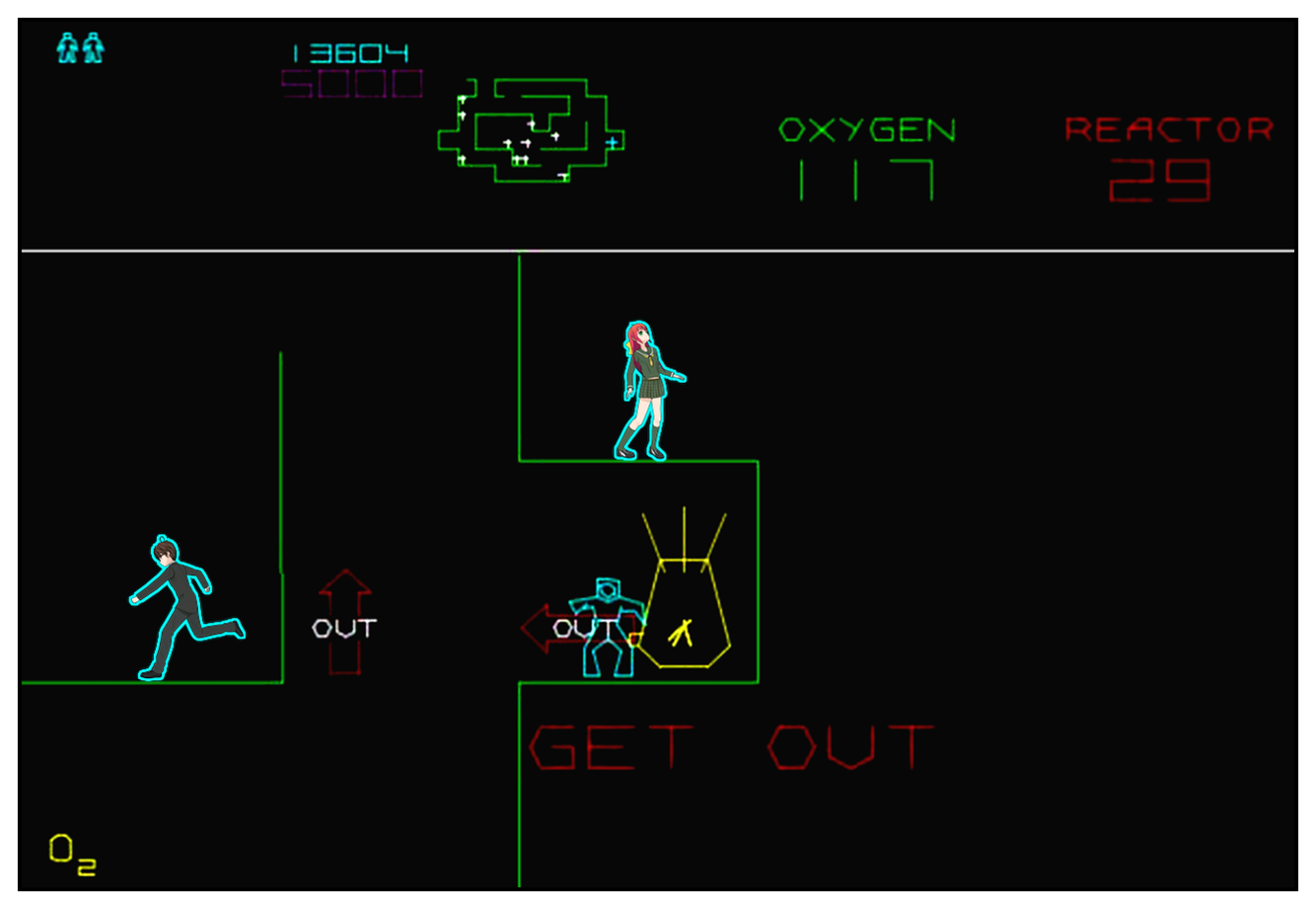
Major Havoc is one of those games from the early '80s that eschewed sprites, bitmaps and pixels in favour of vector graphics, giving it a very distinctive, recognisable look that stands alongside other vector games such as Asteroids, Battlezone, Red Baron, Tempest and Star Wars. In keeping with the inventiveness of video gaming's youth, Major Havoc is a rather peculiar game with some ambitious concepts, and quite possibly one of the first attempts at cross-genre gaming.

Major Havoc is split into several phases. First of all there's a quasi-3D shoot 'em up section, where you control Major Havoc's spaceship at the bottom of the screen and shoot incoming enemies as they come towards you. The interesting thing about this part is that it's not just straight Space Invaders-style waves of enemies: the first level features enemies that turn into a different form and home in on you when you hit them; the second features Galaxians-style swooping enemies, and the third starts with swirling, spiral enemies that draw lines on the screen, which subsequently become a maze you have to navigate your ship through as you approach your destination. (I can't get past this one, so I can't speak to what comes later!)

Following this, you have a Lunar Lander-lite section where you have to land Major Havoc's ship on a flashing white platform atop the target you were approaching in the first phase. Then Major Havoc gets out of the ship and you're seamlessly taken into a side-on platformer with weird gravity (hold the jump button down and you keep rising; let go and you'll fall) where you have to find a reactor, set it to explode and then get back out to your ship before you blow up with it. After that, the process repeats with a different wave of enemies, different platform to land on and different maze to negotiate.

It's a really cool game that tries some things I certainly haven't seen before, and the blend of space shooter and platforming hasn't really been attempted again (to my knowledge, anyway) until FuturLab's very recent Velocity 2x on PlayStation 4 and Vita.

It's also a stark reminder and interesting reminder that differences between Eastern and Western games have always been very apparent, though not always in quite the same way as today — Atari's games of the early '80s capitalised on the popularity of futuristic sci-fi thanks to Star Wars and made effective use of technologies such as vector graphics to create that aesthetic, while Japanese games of a similar era were often based around pixel art with cute aesthetics and more mascot-like characters.

Major Havoc, then: pretty neat, and another nice discovery from the Atari Vault. Looking forward to discovering more. (Also, hi, Mr Bushnell, if you're reading, which you probably aren't. Thank you for following.)

2261: Tracer's Ass

0261_001

In yet another disappointing example of developers caving in to the demands of a minority of players, it seems that World of Warcraft developer Blizzard has made changes to a character in its upcoming game Overwatch, apparently for little reason other than to placate one poster who played the "sexualisation!" card. Here's an archive of the thread in question, in case it mysteriously disappears.

Now, normally I would say that everyone is perfectly welcome to give their opinions on character design and appropriateness and whatever. But what we have here is Blizzard explicitly stating that they're going to change an animation for one character because a poster is worried about it sending the wrong message to their young daughter, who is already interested in the character through trailers. This goes a step beyond someone just stating their opinion, and it's a dangerous road for any developer to embark on, because if you make changes for just one poor soul, where do you then draw the line when someone else claims to be offended by something you found to be quite innocuous and may even be proud of or happy with?

There's an argument, of course, that there were people in Blizzard who already wanted to change the pose and this simply provided a convenient excuse, but I'm not sure I buy that. Even if true, it doesn't send a great message to the community, and it has the potential to put Blizzard in a sticky situation down the line, as previously noted.

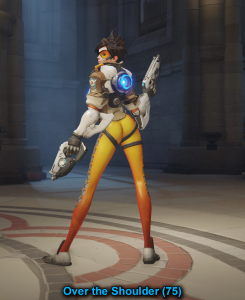
TracerThe pose in question, incidentally, can be seen in the picture here. There's nothing particularly offensive about it; the only even vaguely sexualised thing about it is the fact that Tracer is wearing very tight trousers indeed, and that some people have chosen to interpret this as her "presenting" (you know, like baboons do when they're in heat) rather than, you know, just doing a cool action hero pose.
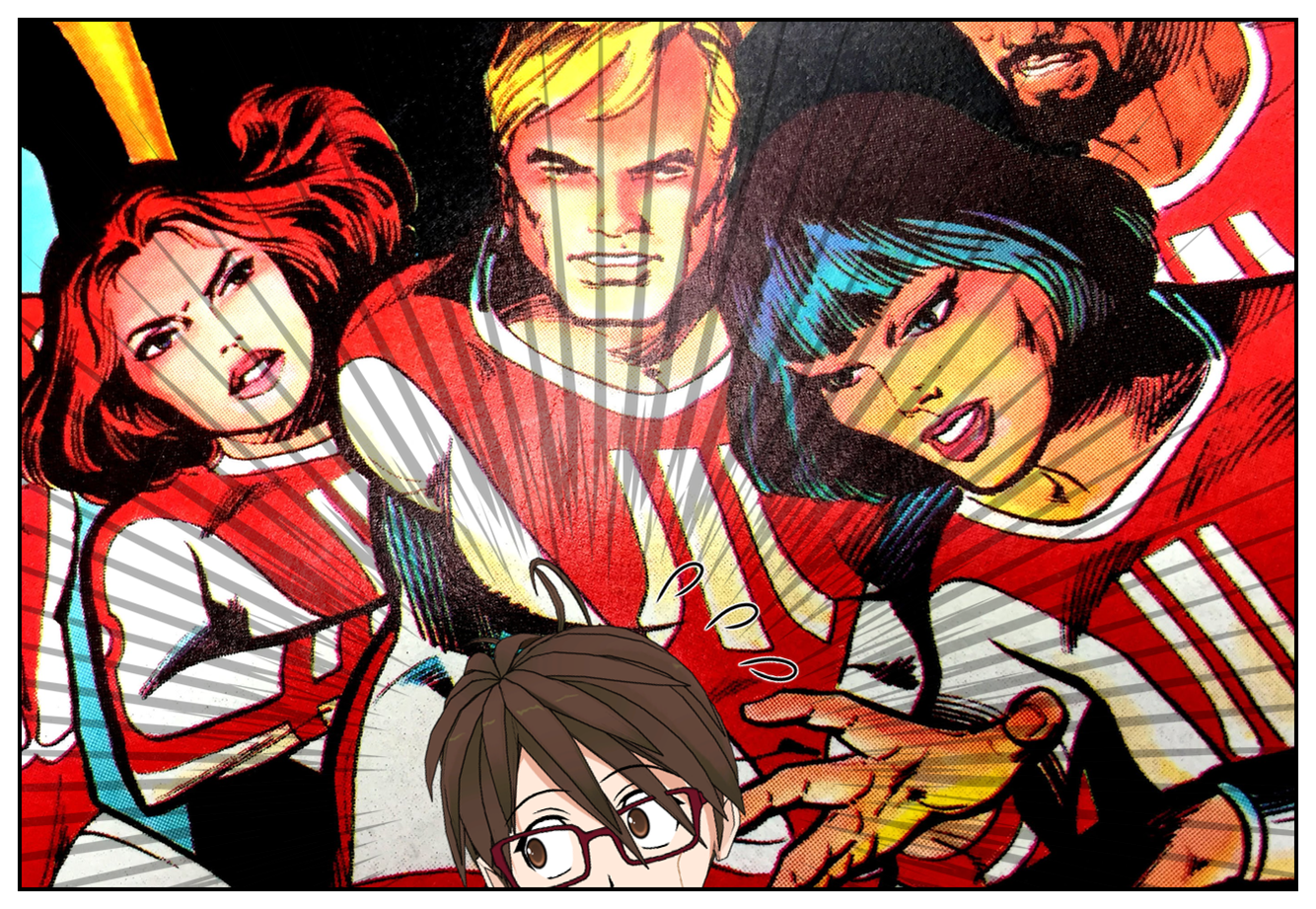
I'm not going to argue about whether or not this is sexism or objectification or sexualised or whatever because I'm frankly really, really tired of that discussion happening over and over and over and never, ever going anywhere. Instead, what I wanted to do was share this response — and my own thoughts, too.

"Today, I feel like my voice no longer matters to Blizzard," writes disappointed Blizzard fan and longtime World of Warcraft player Ginny Higerd, a 30 year old woman who goes by @mahoumelonball on Twitter. "I'm not attractive. I'm not skinny. I've been teased about my appearance since elementary school. […] I love being a sexy night elf character. I love being Tracer. I love being Nova. I LOVE these strong women that can be confident in their abilities and their appearance, because in the real world, I'm none of those things. These games were an escape for me. I channel myself into these characters, because I would give anything just to be like them."

Higerd's words resonated with me a great deal, because it kind of sums up how I feel about the whole thing with "sexualised" or "sexy" characters. When I play a game with an attractive female cast — or deliberately make my custom avatar, where available, to be an attractive woman — I am not doing so to get my rocks off. I'm doing so because I like the way the character looks, and I like feeling like I'm taking on the role of someone else — someone who's not me, and someone I'd like to be, but will never get to be. Much like Higerd, I am none of the things that these characters represent, and I love having the opportunity, however limited it might be, to feel like I'm if not one of them, then certainly at least hanging out with them.

To take things a bit deeper, I've always been fascinated by what it would be like to be female, for a variety of reasons. Some of these reasons are sexual in nature, others are simple curiosity about the differences between the sexes — and the different ways people respond to men and women. I have recurring dreams and fantasies about having the ability to switch between being a man and a woman at will, and it's sometimes frustrating that I can't do that, even though it's obviously an impossibility. This isn't an indirect means of coming out and saying that I want to make any sort of transition, I might add — it's just something that has fascinated me for a long time, and here's the thing: video games have always provided me with a means to explore that fantasy in its most idealised form. Because what's the point in getting to live out a fantasy if it's not quite perfect? Assuming you can recognise the difference between fantasy and reality, of course, which all but the most deluded, mentally unstable have absolutely no problem with, what with the escape from reality into fantasy being one of the main reasons people like to game in the first place.

Games are, at their core, pure escapist fantasies of various descriptions. Like any other form of art, they can be autobiographical, realistic, fantastical, historical, abstract, stylised, childish, provocative, erotic and any number of other descriptors you might care to mention. I have an almost infinite amount of respect for the talented men and women who make these experiences come to life on my television and in the palm of my hand, and I would never, ever question how an artist has chosen to represent a character that they created, nor would I start demanding that there are more characters that look like me for the sake of that increasingly irritating buzzword "diversity". Instead, I would look to understand the character in question through playing as them, and determining what I can learn about them — and about myself — through how they play and how they act. Over the years, I've found far more characters I can relate to that don't look like me than those that do.

Characterisation is a great deal more than just physical appearance. And, ironically, it is the ones who judge characters like Tracer based solely on their physical appearance who are the ones indulging in objectification, not those who enjoy the designs of these characters for whatever reasons they might have. And I'm growing increasingly impatient with those who cry "sexualisation!" at every opportunity without 1) offering any "solutions" (to this non-existent problem) and 2) explaining exactly why it's somehow bad to have characters that look nice in our interactive fantasies.

2260: Have You Played Liberator Today?

0260_001

I like retro compilations, not just for the ability to play games from my youth on modern hardware, but also to discover some classics that, for whatever reason, I missed out on when they were first released.

Such has been the case after just a few minutes with Atari Vault, a new release on Steam that packages together about a hundred Atari 2600 and arcade games from the late '70s and early '80s — including a few previously unreleased prototypes, which is kinda cool.

One such discovery I made today was an interesting (and surprisingly impressive for the time) game called Liberator, a quasi-sequel to Missile Command that flipped the concept of the original Cold War-inspired game on its head by putting you in the role of the aggressors, attacking enemy bases on planets in order to liberate the population from the villains.

Liberator, I've discovered, was quite a rare game even on its original release, which might explain why I've never come across it before. According to Gaming History, the original arcade machine sold for a whopping $2,000 and did not prove particularly popular, with only somewhere in the region of 760 cabinets actually being made — all this despite it being a game absolutely made for cross-promotion with Atari's "Atari Force" comic series. The curse of old-school Atari constantly and consistently failing at marketing strikes once again, I guess.

Anyway. The game plays quite a bit like Missile Command in that it's a somewhat different take on the shoot 'em up. Rather than firing directly at things, you fire at a crosshair on screen, and your missiles detonate when they reach the point you fired at. Thus, to destroy things, you have to cause explosions at locations where the enemies will be when your missiles arrive — usually meaning you have to fire ahead of them carefully, anticipating their movements.

Much like Missile Command, you can fire from several different places on screen, and these missile launchers — here depicted as starships orbiting an enemy planet — can be independently destroyed, acting as your "lives" for the game session. The game, then, becomes a matter of balancing your offense on the planet surface, which requires you to destroy enemy missile bases on the rotating globe ahead of you, and defending yourself against incoming missiles and other attacks. Not every attack is guaranteed to hit you, either, so you also need to spot which things you need to prioritise destroying and which you can safely ignore.

It's an interesting game; very simple, but undoubtedly addictive in the same way that Missile Command is. It's a good-looking game for the time period (1982), as well, with some decent pixel art for "Commander Champion", who briefs you on your mission, and a well-done 3D rotating globe effect for the planets you're orbiting. Sound effects, meanwhile, are the same bleeps, burbles and booms from Missile Command — nothing special, but certainly iconic of this particular period in gaming.

There's a lot more to explore in Atari Vault, but I anticipate that Liberator will be one I keep coming back to!

2259: Back to Solo Play

0259_001

I've been back and forth on whether or not I should continue playing Final Fantasy XIV for a while now. I do love the game and all it offers, but the long period of time between the release of expansion pack Heavensward and its first major content patch caused me to get significant burnout, and while I did get temporarily enthused around the start of the patch 3.2 cycle, I'm once again feeling that I don't really want to do the endgame grind, nor do I want to raid.

Those who have been following my blog for a while will know that I've been one of the loudest, most enthusiastic people about Final Fantasy XIV ever since the beta of A Realm Reborn. So why the change of heart? Well, a number of reasons, really.

First up is the aforementioned endgame grind. This has always been present in the game — it is an MMO, after all — but first time around it somehow didn't feel so bad, perhaps because I never got "ahead of the curve" and made content irrelevant by outgearing it within a day or two of it releasing. In other words, taking on challenges was always exciting and there was always something to aim for; that aspect is still there, but if anything, I think there's now too much to grind on for what feels like relatively little reward.

Take the Anima weapons, for example — Heavensward's version of the Relic weapons from A Realm Reborn. The first step of this process either requires you to give up a fully upgraded level 50 relic (which a lot of people had at least one of by this point) or to repeatedly run FATEs around the Heavensward areas until you got Atma-like drops at a very low chance. The second step requires you to run ten dungeons that, at the level you're constructing the Anima weapon at, are completely irrelevant to you unless you're collecting gear for alt classes. The final step requires you to collect 20 each of four different items and then do some other bits and pieces.

The first step either takes seconds or hours of boring FATE grinding, though you can at least attempt to get the items from FATEs while levelling another class. The second step is just plain tedious, though it is presumably there as an attempt to keep older dungeons populated for those who are coming up through the 50s. And the third and final step is an absolutely brutal grind that either takes weeks of daily quests or repeated running of dungeons and/or the first (now largely irrelevant) part of the Alexander raid dungeon. Oddly, the jump in item level and power for this final step is significantly smaller than that for the second step, despite the final step being by far the most significant undertaking.

I currently have 8 out of the 60 items required to upgrade my Relic to its (currently) final form, and the next step of the process is coming soon. I just don't feel any inclination to do this alongside grinding daily quest reputation, Tomestones to purchase gear, XP for classes that haven't reached 60 yet, not to mention crafting and gathering, both of which are one of the few reliable ways to make a decent amount of money in the game.

The trouble, then, is not that there's nothing to do as such — it's that there's too much to do, but that too much is based on doing the same things over and over again for weeks or even months. The worst of both worlds, if you will — for me, anyway. There are plenty of people still playing who seem to be quite happy indulging in this grind. Some are even already working on their second or third Anima weapons.

I don't begrudge anyone how they spend their time, but having been playing a bunch of other stuff recently, I just don't want to commit the amount of time necessary to progress at a meaningful pace in Heavensward, because it means that I won't have time to enjoy other games like Senran Kagura Estival Versus, Dungeon Travelers 2, the upcoming Trillion God of Destruction and the many, many RPGs that are still on my game shelves, as yet unplayed. I've tried finding that magic balance between FFXIV and other games, and it just doesn't really exist for me — I always end up going in an "all or nothing" direction, and right now I'm feeling like I would rather play other things.

I'm not hanging up my Eorzean adventuring shoes completely; I fully intend to continue dropping in on the game to see how the plot develops with each new content patch, but I no longer have any desire to stay "current" with content progression, raids or Extreme-level Primal fights. In a way, I'm a bit sad that I feel this way, as FFXIV has been such a significant part of my life for so long — and my wife now plays more than I do — but ultimately, if you're not happy or having fun doing something that is supposed to be enjoyable, then there's really no point carrying on with it.

Alongside all this is the social matter: our Free Company has become very quiet over the last few months. I'm not entirely sure what's caused this and I don't really want to investigate for fear of dredging up any drama that might be involved. But playing the game isn't the same social activity it once was, with Free Company chat a lively place filled with people having fun, joking around and enjoying themselves. Many of the regular faces are still there, but remain quiet in "public", instead preferring to converse in small, private Linkshells rather than the main guild channel. It's made for an atmosphere that isn't anywhere near as welcoming and fun as it once was.

And alongside this is the matter of the overall game community and how it has declined somewhat over the last few months. MMOs always have a problem with elitism at their top end, but Final Fantasy XIV always used to feel like it was one of the more positive, friendly communities out there. Now, though, it's a place where you get yelled at if you don't speedrun dungeons, where newcomers to fights are sometimes kicked out of groups, and where players bitch about people they perceive to be "inferior" to them both in-game and on social media. The rise in popularity of DPS parsers also means that the particularly elitist players have data to hold over the heads of people they think are underperforming, and rather than offering feedback on how to improve, many of these people think that simply quoting them their DPS figure is enough to make them want to "git gud".

This is a generalisation, of course; I've still had plenty of positive experiences in the game in recent months, and I always made a point to be the change I wanted to see in the community by being friendly and conversational when playing with others, offering advice without berating when necessary. But it's just got to a point where this side of things has become exhausting and even stressful at times, and that's not conducive to having fun.

So I'm stepping away. For how long, I don't know, though as I say, I'm pretty sure I'll be back in for the next patch, at least to see how the main scenario storyline develops. Raiding, though? Nope. Sephirot EX? No thank you. Anima grind? No, thank you.

Now, I'm 86 hours deep in Dungeon Travelers 2 and I have grinding to do… he said, without a trace of irony.

2258: TrackMania Turbo: Impressions from the Full Version

0258_001

I knew after just a couple of minutes of playing TrackMania Turbo's demo that I needed the full game in my life, so it wasn't long before I was in my local game emporium picking up a physical copy. (Discs rule. Yes they do.) And I've been spending some time with the full version. Here are some things you might like to know about it.

It's an arcade racer with gloriously old-school handling

That means tapping the brakes to suddenly find yourself going sideways, powersliding around corners, releasing the accelerator to slow down only when you absolutely have to, and all that good stuff. It's not realistic in the slightest, but TrackMania has always been about having fun that just happens to be in cars; it's never been trying to be realistic, and it's always been all the better for it.

There are four distinct environments, each with a very different feel

Earlier TrackMania titles incorporated multiple environments, each of which had its own unique vehicle with its own unique handling. TrackMania 2 bucked this trend by releasing each environment as a separate game — Canyon, Valley and Stadium. It was a controversial move that some saw as new publisher Ubisoft trying to make a bit more money off the game and perhaps it was — but each of these environments was very well fleshed out with plenty of variety. Plus each individual game was a fraction of the price of a brand-new triple-A game.

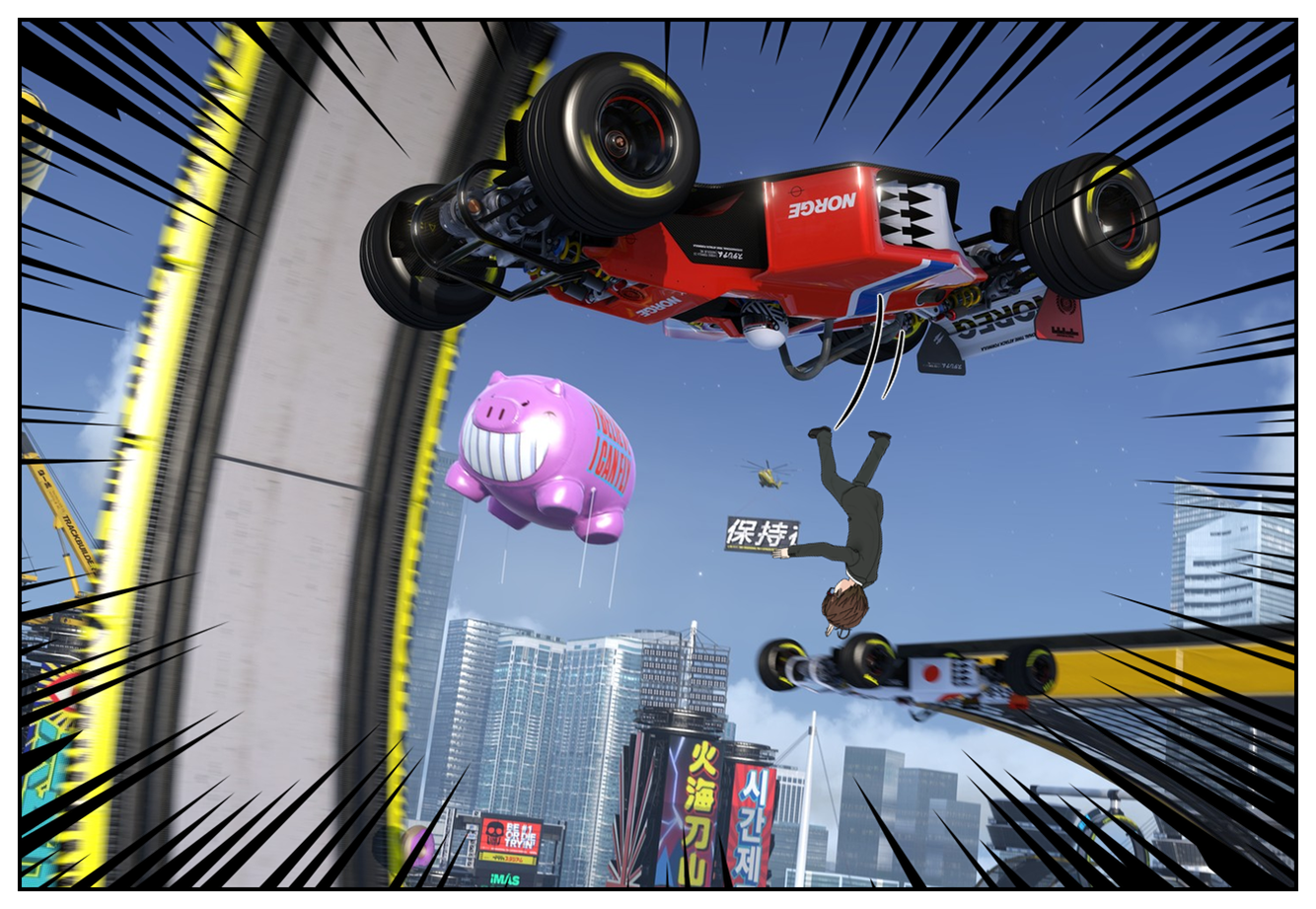
TrackMania Turbo incorporates revamped versions of the Canyon, Valley and Stadium environments from TrackMania 2 and adds its own Lagoon environment to the mix. Lagoon is somewhat similar to the Island environment from TrackMania United, but with a few additions — most notably magnetic rollercoaster tracks that your car sticks to, allowing for corkscrewing, loop-the-looping and all manner of other acrobatics with zero risk of your car flying off into the sunset or plummeting from a great height into shark-infested waters.

Pleasingly, each environment feels very different. The Canyon cars are extremely drifty — we're talking Ridge Racer territory here. The Valley cars, meanwhile, are a little more twitchy, plus the wider variety of road (and off-road) surfaces means that you have to adapt to several different ways of throwing your car around. The Lagoon cars are the most sensitive and grippy of all, able to get around very tight corners without having to drift (or even slow down, in some cases), and the Stadium cars are much like their counterparts from the previous games: heavy but grippy, with the ability to throw them into a drift with judicious application of the brakes.

There's a 200-level campaign

Yep, 200 races for you to complete. You can't just challenge them in any order, though; you have to start with the "White"-level Canyon tracks, then attain enough medals to unlock the "White" Valley tracks, then the "White" Lagoon tracks and finally the "White" Stadium tracks — only then will you be able to move up to the next tier. The top two tiers of difficulty require silver and gold medals respectively, while the first three only require bronze medals.

This structure is a bit more restrictive than past TrackMania games in that you can't jump back and forth between each environment's mini-campaign if you get fed up with a particular track, but ultimately it gives the game a good sense of progression.

There's a bunch of ways to play multiplayer

TrackMania has always been an incredibly overlooked local multiplayer party game, and hopefully its jump to consoles will help fix that. Turbo incorporates a number of different ways to play together.

Split-Screen is self-explanatory: everyone races together, first over the line wins, and the overall winner is determined by a best of three. This is noteworthy for being one of the only four-player split-screen games I've seen on the last two generations of consoles.

Arcade mode is a flexible mode where you can pick a track and then attempt to set a time using three "credits". The top ten times are recorded on a high score table, so you can challenge your friends to beat your best times that you've previously set — or have a mini-tournament there and then.

Hotseat mode is most similar to the previous games' multiplayer option. Up to 16 players can play in turn, each of whom is given a full tank of gas. Each player then attempts to set a time on the course; if the current leader is beaten, they then have to try and beat their challenger. The process repeats until everyone has run out of gas, and whoever is top of the leaderboard at that point is the winner.

All these local multiplayer modes can be played using any of the 200 campaign tracks (all of which are unlocked from the outset — no need to play single-player to open them up for multiplayer), any tracks you've built using the game's track editor, or a randomly generated track that the game builds for you. This latter option is fun, but a little time-consuming: you can watch the game building the track piece-by-piece, then it has to spend a few moments calculating shadows for the objects it's added. (Pro-Tip: choose "Fast" rather than "Nice" for lighting quality unless you want to wait a good 3 or 4 minutes before you can play the track.)

It's built for console

TrackMania has always felt like a PC game. And I don't necessarily mean that as a positive thing. Past installments have been highly customisable and expandable, but this came at a price: a clunky, inconsistent interface and an online component that required you know about (and are able to set up) dedicated servers and suchlike. The game was considerably expanded by a worldwide community of modders, in other words.

TrackMania Turbo doesn't support mods, nor does it do dedicated servers — at least not in the same way as the earlier PC games. This, naturally, has made the PC crowd get furious as they are wont to do, but really for the average player it's a change for the better. Multiplayer is now a case of just creating a room or joining an existing one. The interface is consistent and controller-friendly. You don't need to worry about having the right mods installed just to make other people's cars show up, or spend time tweaking settings to optimise performance. It is an overused phrase, but TrackMania Turbo just works, and thank God for that.

It's the best arcade racer for years

While many of the more "arcadey" racing games have gone in the open-world direction over the last few years, making for sprawling, unfocused experiences where you dribble from one type of activity to another, TrackMania remains so true to its arcade inspirations that on its title screen it prompts you to "insert coin or press X", followed by the sound of a coin clunking into an arcade machine when the main menu appears.

It's presented well, with a clear, uncluttered interface, wonderful handling and a pick-up-and-play nature that is accessible (but challenging) to all ages, and with the combination of the track editor, the ability to download other players' tracks and the random track generator, has potentially limitless replayability.

So if you like arcade racing — or the technical, puzzle-like stunt racing of titles like Ubisoft stablemate Trials — then you absolutely, definitely should pick up a copy of TrackMania Turbo as soon as possible.

2257: Rebooting MoeGamer

0257_001

I've already written a substantial post over on my other site MoeGamer about a new plan I have to start writing more hefty long-form pieces on a regular basis, but I figured I'd write something here too. And, since I'm the sort of person who will happily write the same thing in two different ways because he enjoys the act of writing itself, I'm not just copying and pasting the text over, oh dear me no.

I'm rebooting MoeGamer. It's not a drastic reboot, change of theme, change of layout or anything like that: it's changing the way I'm thinking about it. To date (well, until last August) I posted on MoeGamer as and when I felt like it: when I particularly wanted to write about a favourite game, or when I particularly wanted to refute something stupid I'd seen from the mainstream press. ("There haven't been any good RPGs since Final Fantasy VII" was a good example; "Dungeon Travelers 2 is a creepy, porn-lite dungeon crawler" was another.) I made an effort to post pieces of several thousand words in length, much as if I'd be writing a feature article on a regular games site.

And that was fine, apart from a couple of issues, the major one being that it's very difficult to stay up to date on things to write about if you set yourself even quite a conservative schedule of posting. Eventually, the prospect of running out of things to write about became a bit demoralising, so I stopped to have a think and reflect on what I wanted to do with the site, if anything.

Today, Destructoid published a review of Dead or Alive Xtreme 3 which attracted some attention. Not only was it written by a writer with a lengthy track record of baiting the outrage brigade at every opportunity, said writer took the opportunity to insult both the game and the people who might be interested in it over the course of his article. And, once again, I was reminded of the woeful inadequacy of the mainstream games press when covering more specialist titles such as modern Japanese games.

As foul a taste as the review left in my mouth, it gave me an idea. Why not try doing something completely different? By not being beholden to advertising revenue, I have the freedom to wax lyrical about games I find interesting or noteworthy as much as I want. And in-depth analysis is what these games in particular are sorely lacking. Now, I'm not particularly saying Dead or Alive Xtreme 3 is necessarily worth some in-depth analysis — although I haven't played it yet, so couldn't say for sure — but there are plenty of games out there which are being done an enormous disservice by games journalists who either don't have the time to invest in 100+ hour RPGs, or who feel "this game is about boobs" is somehow sufficient to describe Senran Kagura.

Much of the problems with modern games criticism come from the twin pressures of time and performance. Everything posted on a site has to perform well, and it has to be timely, otherwise the ad revenue will be shit and no-one will get paid. Unfortunately, this leads to clickbait of various forms — most commonly of the outrage variety these days. I don't necessarily blame the games journos themselves for this — though there are certain writers, whom I shall refrain from naming for the moment, who can eat a thousand dicks over their incompetent coverage of games that deserve better — because I know from experience they quite simply don't have the time to explore a game fully in the same way a regular ol' player will.

But I do. Because I'm a regular ol' player. So why not leverage that fact and take an extremely in-depth look at a game after the fact, pick apart why it's noteworthy (or not) from several different angles, and ultimately build up a library of deep, interesting analyses of games that don't get the time of day from the mainstream games media?

The plan's pretty simple. Pick a game each month, focus exclusively on that. Write about its mechanics, narrative, aesthetics and context — going into a full article's worth of detail on each rather than trying to cram everything into a single "review". Add additional detail as appropriate. Move on to something new the following month. Repeat.

This approach gives me time to work my way through substantial games such as JRPGs and visual novels and complete them to my satisfaction, then write about them in detail. It provides a suitable structure for me to post content regularly. And it provides a variety of perspectives for people who are interested in games for different reasons — not everyone's as much of a narrative junkie as I am!

I'm sure it'll be a challenge and I'll doubtless run into some hurdles along the way. But while I have the time to pursue various creative endeavours, it's probably best I do that rather than sitting at home twiddling my thumbs and occasionally bursting into tears at the fact I still don't have an actual job.

I'll be kicking off this new-style MoeGamer at the beginning of April with coverage of the recently released Senran Kagura Estival Versus, and taking things from there. I'm looking forward to this new challenge, and I hope you'll be interested to read my work.