2286: Disappointment

0286_001.png

This post is a response to WordPress' "Daily Post" writing prompt for today.

My immediate reaction to the word "disappointment" when seeing today's writing prompt was… well, disappointment in The Daily Post's prompts of late.

Longtime readers may recall my occasional use of The Daily Post's writing prompts and the fact that they led to some interesting explorations of topics I might not normally explore on this blog. My default go-to topics for writing about are video games, games journalism and mental health issues, but the prompts from The Daily Post gave me a nudge to consider other topics now and again, whether they be nostalgic, hypothetical or just plain weird.

Lately, though, the prompts on the site have just been single words, and these don't inspire me nearly as much as the questions or phrases that used to make up The Daily Post's bank of writing prompts. I'm trying to pin down exactly why the change to this style of prompt fills me with such disappointment, and I think it's because it provides the opportunity for too broad a range of things to write about; single-word prompts are too flexible.

Let me explain what I mean. When I decide to make use of a writing prompt for a day's post, I like it being in the form of a question or an exam-style "Phrase. Discuss." prompt because it provides some sort of direction to the writing. Creativity is, to me, at its most interesting when you work within some sort of constraint, because you then have to not only use your creativity to produce the work itself, but you also have to use your creativity to perhaps bend the rules of the constraint in question, too. A single word doesn't constrain me at all; I can still pretty much write about anything tangentially related to, say, "disappointment", and I've technically fulfilled the brief. That, to me, isn't a helpful writing prompt. That, to me, makes me feel like I should have just started writing any old thing off the top of my head rather than looking for a prompt.

I'm aware that my experiences and feelings about this aren't going to be the same as everyone else's, and that there are doubtless plenty of bloggers out there who relish the chance to tackle the challenge of a single-word prompt and make it interesting. But for me, I always found The Daily Post much more enjoyable when it provided much clearer briefs and prompts on what to write about — and much more interesting to see how other people interpreted these briefs, too.

Hopefully we'll see a return to form for The Daily Post at some point in the near future. If not, well, I may have to contemplate setting up something of my own. I can't be the only one feeling disappointment in this way!

2285: A Day with Star Fox Zero

0285_001

My copy of Star Fox Zero arrived today, and I've spent most of today playing it. Here are some thoughts, organised under various headings for your convenience.

Is it Star Fox?

Most definitely yes. Combining the basic core mechanics from Lylat Wars/Star Fox 64 (most notably the scoring system) with a number of levels and encounters inspired by the original Starwing/Star Fox, Star Fox Zero is very much a Star Fox game that knows its roots, knows what the people want and delivers on all fronts.

You want specifics? Okay. The forced-scrolling stages are as pure a Star Fox experience as you're going to get. Learnable groups of enemies (chainable for high scores and bonuses), environmental obstacles, hidden collectibles, alternative routes triggered by various actions you take in the level — it's all here. On top of that, clear inspiration has been drawn from the SNES original with levels based primarily around simple (albeit beautifully textured) geometric shapes in awkward arrangements — plus the final boss battle against Andross is, of course, against a giant head that spits flat blocks at you.

Not only that, but there are plenty of direct quotes and callbacks to the old games, both in dialogue and music, and the end sequence is pretty much a shot-for-shot recreation of the N64 game's ending.

So why not just play Lylat Wars?

Well, besides the fact that Star Fox looks glorious and spectacular in HD, there's plenty of new stuff, too. The most notable addition is the ability for vehicles to transform. The Arwing fighter can turn into a bipedal walker for more precise navigation through confined spaces — ideal for blowing up capital ships from the inside, say — and the Landmaster tank is able to turn into a bomber aircraft for a limited period. There's also a helicopter-like vehicle called the Gyrowing that can move and strafe in all directions, and this also comes with an attached robot-on-a-string called Direct-i that can either be used to grab objects (like conveniently placed bomb boxes) or sneak into tiny holes to hack computers or grab secret shiny things.

As a result of the varied vehicle lineup, stages have much more variety than the previous games. There's a much stronger emphasis on the free-roaming All-Range Mode when you're in the Arwing, and there are some dogfights throughout the game that rival the Ace Combat series for twisty-turny lock-on fun.

What about those controls?

People have been making much too big a deal about these. They're really not that complicated — and not that different from the N64 version, for that matter.

Here's how they work in the Arwing: left analog stick turns and climbs or dives. Right analog stick rolls, boosts and brakes, fulfilling the role that the C-buttons had on the N64 pad. ZR fires your guns — tap for rapid-fire laser, hold for lock-on charged shot.

Simple, right? The thing that people are getting hung up on is the addition of motion controls using the GamePad. These work by making your aiming reticle independent from the way your ship is facing, allowing you to move in one direction and shoot in another, eliminating the problem the past games had of forcing you to be in a potentially inconvenient position on the screen if you wanted to hit something in an awkward place. Much like the motion controls in Splatoon, these are surprisingly sensitive and precise, and can be re-centred at any time if you find your hands drifting from their original position. They're really not a big deal, though; you can get through the vast majority of the game without needing the added precision of aiming using them.

A slightly bigger adjustment for some people will be switching your attention between the TV and the GamePad screens during play, because you'll need to. The GamePad displays a first-person cockpit view of whatever vehicle you're in, while the TV screen usually displays a rear view of your vehicle, but has the option of switching you into a '90s flight sim-style Target Lock mode, which keeps both your ship and the thing you're targeting in view, meaning that the camera won't necessarily stay behind you. Most of the time, this is optional, but there are a number of boss battles in particular where you're forced into Target Lock view, which is your cue to keep one eye on the TV to recognise your relative position, but give most of your attention to the cockpit view on the GamePad. This is particularly important in the final battle, in which important elements are only visible through the cockpit view on your GamePad, but where dodging some of the boss' attacks is considerably easier from the Target Lock view, which gives you an overview of the action.

Once you become accustomed to using Target Lock view in combination with the cockpit view on the GamePad, you can have a full awareness of your position relative to the enemy on the battlefield, and position yourself accordingly. There's a small learning curve, but the payoff is great — plus it makes the TV screen really fun to watch for anyone sitting with you.

Does Peppy say "do a barrel roll"?

Of course he does.

Is the "barrel roll" still not actually a barrel roll in aeronautical terms?

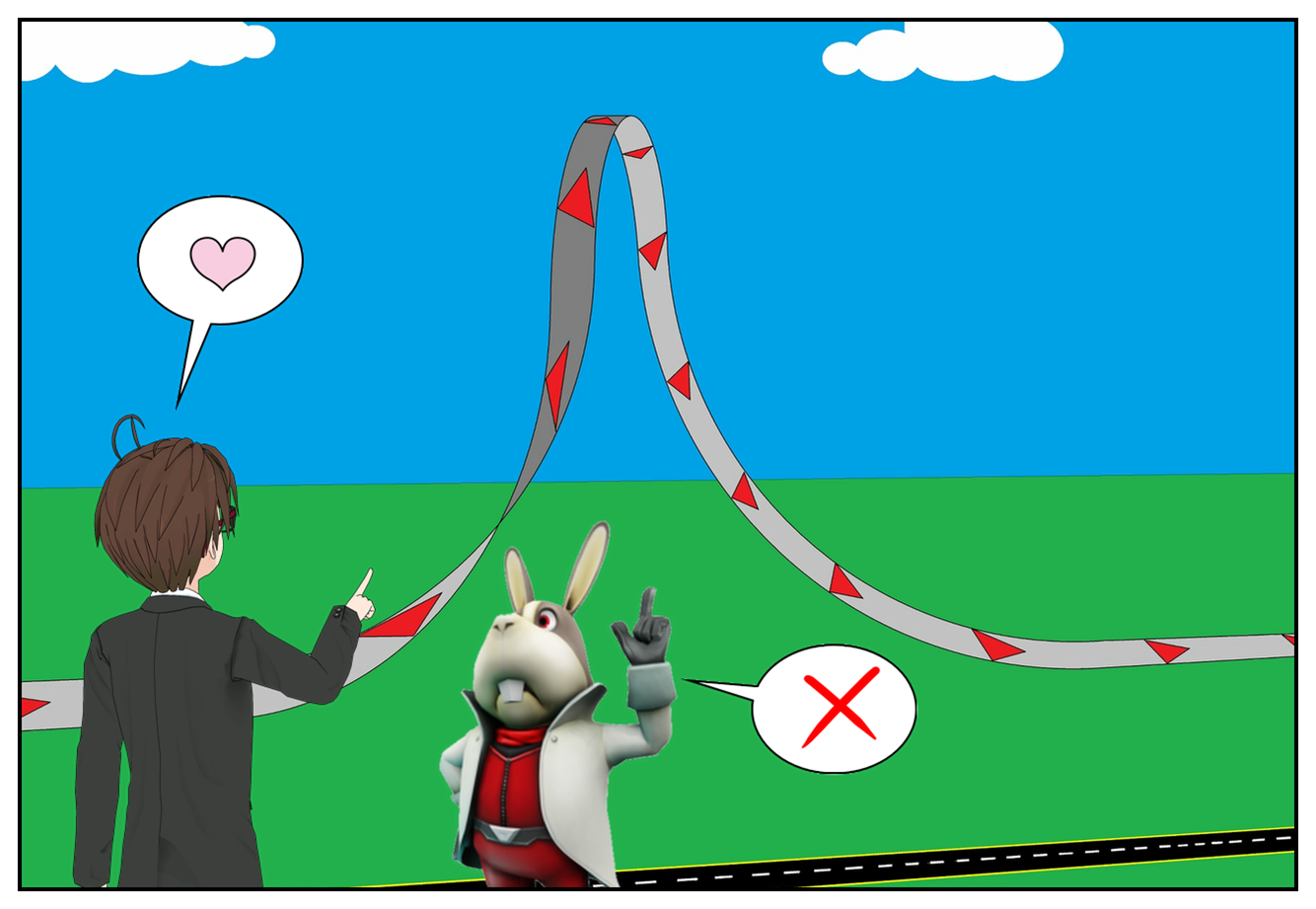
Correct. This is a barrel roll.

I heard this game's really short.

You haven't played many shoot 'em ups, have you? Star Fox Zero is actually pretty long by shmup standards, at a couple of hours from start to finish, but the point is not to play it once and never touch it again. The point is to replay it to find alternative paths, secret levels, hidden collectibles and the five medal conditions on each stage… then replay it some more in the "Arcade Mode" that unlocks after clearing the main game once to beat your best clear times and scores. There's plenty to do.

What is Star Fox Guard?

Ah yes. I actually hadn't heard of this at all until I preordered my copy of Star Fox Zero, but conveniently the edition of the game I got came with a physical copy of Star Fox Guard as well, which, it turns out, is a fun game in its own right, too.

Star Fox Guard is… kind of a tower defense game in that you have a thing you need to protect against being destroyed by evil things, and you have other things that shoot stuff at the evil things in order to prevent them reaching your thing.

Where it differs from your usual tower defense affair is that you're in direct control of all your towers. Twelve of them, in fact, scattered around maps of various layouts, and all of which have a camera attached to them. During a level, you'll have to keep an eye on twelve screens at once (thirteen if you count the GamePad map) and switch focus to one at a time in order to shoot incoming enemies manually.

Another twist is that you don't have to destroy all the enemies: the only enemies necessary to destroy to clear each level are the "Combat" variety, which will immediately destroy your core if they reach it. There's a specific number of these you'll need to defeat on each level, and once you reach it, the level is over immediately. All other enemies are "Chaos" enemies, which have various abilities that interfere with your cameras and towers, but which can't destroy your core directly. Some blow up and knock out nearby cameras completely for a few seconds; others spew gas that ruins your visibility; others still replace your camera's view with intermittent nonsense.

Unusually, there are also boss fights, in which you use your twelve cameras to take down a single large enemy, which may or may not have minions.

There's also a levelling system, which unlocks new types of camera and weapon to use — including some that can lock on to multiple enemies or slow enemies down — and a selection of Extra missions that add additional objectives or mechanics to the mix. Then when you're done with all that, you can create your own Squads of robots you've unlocked by progressing through the game and design your own fiendishly difficult waves of enemies for other players around the world to challenge, and you can challenge other players' Squads too.

While simple in execution, Star Fox Guard has has a surprising amount of care and effort put into it, and I can see it being an entertaining little diversion.

Is it good, then?

It's not an exaggeration to say that Star Fox Zero is the Star Fox game I've been waiting for since Lylat Wars. While it doesn't do anything particularly interesting with the story — it's a remake/reboot rather than a sequel — Star Fox has never been about narrative and characterisation. Instead, it's about satisfying, spectacular, cinematic space combat, and in that regard, it well and truly delivers.

Not too hard?

No. If you think it is too hard, you have no business reviewing games.

Right then.

Okay.

Thank you.

You're welcome.


Barrel roll diagram by Zaereth – Own work, CC BY-SA 4.0.

2284: Nights of Azure: Encounter in the Abyss

0284_001

I only have a couple of trophies left before I have the Platinum on Gust's action RPG Nights of Azure, and I'm coming away from the game very impressed. I wasn't quite sure what to make of it to begin with — though I adored its aesthetic and narrative — but once I got my head around its unconventional systems and subversions of standard RPG mechanics, I was well and truly enraptured.

The game has excellent combat. I was concerned that it would be a little hack-and-slashy when I first started playing, but as it progresses and you open up more and more systems and options for yourself, it becomes really interesting. In fact, oddly enough, one game that I'm constantly reminded of while I'm playing Nights of Azure is Final Fantasy XIV, of all things; while the two games may not appear to have much in common initially, one being an action RPG and one being a hotbar-and-cooldown-based MMO, I maintain that Nights of Azure is what Final Fantasy XIV would play like if it was a single-player action game.

Perhaps I should clarify that. Both are based on making good use of a gradually expanding roster of abilities that you unlock bit by bit as you progress through the game, rather than outright customisation (though Nights of Azure has considerably more customisation when it comes to equipment than FFXIV, with up to four items being equippable, each having both an effect on Arnice's stats and some sort of special effect). Both are based on a combination of open world adventuring (albeit in Nights of Azure's case, said "world" being just one town) and linear dungeons with boss encounters. And in both cases, said boss encounters are based heavily on learning the boss' attacks, how to avoid them, making sure you don't stand in area of effect markers, and recognising when it's safe to attack.

This latter aspect is particularly apparent in the later hours of the game and especially the "epilogue" chapter after you beat the final boss for the first time. The "epilogue" is actually a retread of the last chapter with some additional content and the ability to raise Arnice to the level cap of 11 rather than the previous 10; she also gains the ability to transform into Nightmare form as well as her previous Demon, Moon Rabbit, Phantom and Armour forms. More importantly, totally completing this final chapter unlocks the "true" ending, which I haven't seen yet, since I'm cleaning up the last few trophies first.

Throughout the game, there are a number of boss battles. These are all very good and have a nice amount of variety between them, but for me, the absolute highlight of the game's battles has been the optional "Abyss" battle in the Arena. The Arena is initially designed as a place to practice the various techniques you'll need to use in the game, ranging from chaining long combos to defeating enemies using only your summoned Servans. "Abyss", meanwhile, is the culmination of everything you've learned, in theory, pitting you against the toughest individual foe in the game over the course of several phases; a fight that rivals some of Final Fantasy XIV's raid bosses in its complexity.

Let me explain how I beat the fight and you'll see.

Your opponent is a demon girl fiend — Yfritte, I believe, though don't quote me on that. She's a level 11 opponent — enemies in the game go up to level 15, and your Servans can level this high with an appropriate ability, though Arnice herself can only level to 11. Unlike similar-looking enemies you might have encountered elsewhere in the game, Yfritte (as we'll call her, even if she isn't) has about a bazillion HP and, it becomes clear immediately after engaging her, isn't going to go down without one hell of a fight.

You start across the Arena from Yfritte with no Servans summoned. I summoned all my Servans immediately — my main party consisting of Alraune (healer), Plumie (ranged damage dealer), Toy Trooper (group of damage dealers) and Toy Sentinel (single damage dealer, hits lots of times) — and straight away set off Toy Trooper and Toy Sentinel's Burst attacks to deal some initial damage to Yfritte.

Using Arnice's Blood Sword, I alternated between using the Special attack, which knocks Yfritte down for a couple of seconds, and the Weak attack, which, with the Vlad's Crest item I had equipped, restored Arnice's SP quickly enough to perform Special attacks almost indefinitely, effectively stun-locking Yfritte. This process repeats until about 80% of her HP, at which point she summons two Manticores.

The Manticores can Paralyse you and your Servans, so it's a good idea to have status-repelling abilities or equipment on at least Arnice and your healer. They also have a nasty multi-hit fire breath attack, so staying behind or to the side of them is a good idea. Continue alternating Weak and Special attacks to repeatedly knock them down until Arnice's Transformation bar fills, at which point the combination of Servans I had equipped allowed me to transform into the speedy Moon Rabbit form.

Moon Rabbit's Special attack needs 100SP, but it's a huge area-effect attack that hits lots of times — and, with Vlad's Crest equipped, this means that 100SP is regenerated almost immediately if you hit more than one target with it. It also inflicts Bleed for some damage over time, so it's good for upping your average damage per second. I repeatedly triggered Moon Rabbit's Special Attack, taking care to catch Yfritte and the two Manticores in the AoE, until the transformation ran out, by which point the Manticores were dead and Yfritte had a chunk of life missing.

There now follows a short phase where Yfritte is by herself. She flings missiles at you from a distance, some of which home in on you, and sets off close-range area effect abilities when you're up close, some of which are powerful enough to one-shot Arnice. Distract her with your Servans — use Alraune's Mega Heal to top up their HP if necessary — and return to the Weak-Special combo to keep her off-balance.

After a while, she'll summon a huge number of level 1 Shadows. Move away from Yfritte and hack and slash through the Shadows to build up both SP and the Transformation bar. It's potentially worth unsummoning your Servans at this point, as the Shadows don't hit hard and if you keep clear of Yfritte (and avoid her missiles) you won't take a lot of damage. Plus when you re-summon the Servans, they'll have full SP again, although their HP will be where you left it, so be ready to heal if necessary.

I had a second deck of Servans set up to transform Arnice into Nightmare form, so I took the opportunity to use this powerful transformation once the bar was full. Nightmare form has a wide arc ranged attack that hits multiple times as its default weak attack, so spamming this and avoiding Yfritte's missiles does a significant amount of damage in a short space of time. Once I was safely in Nightmare form, I switched back to my initial deck, summoned Alraune for healing purposes just in case a shot got through, and prepared for the next phase.

The next phase comes when Yfritte summons a huge blue area of effect marker on the ground. This inflicts poison and is also slippery ice, so having status resist abilities or equipment is a good idea, particularly on Alraune. The Mermaid's Tear item completely nullifies any area-effect abilities, so this effectively allows Alraune to shrug it off and continue healing you. Don't summon any other Servans until the AoE disappears, since they're dumb enough to blindly charge straight into it, get poisoned and die straight away. Once it goes away, however, go nuts; return to the Weak-Special combo to knock Yfritte off balance until the next phase starts.

Next up, Yfritte summons a doll who chucks toys at you, which can be easily avoided, and a spirit-type who we'll affectionately refer to as the "bullet hell fairy". Kill the doll first, since it's not got many HP and will go down quickly. The bullet hell fairy is a little more troublesome, since she repeatedly summons large groups of bullets which then explode for significant damage. You can see where they're going to appear and get out of the way of them; use the Follow command on Servans to get them out of harm's way. They're always in the same formation: one at "twelve o'clock", then two more at "eight" and "four". Take care to continue dodging Yfritte's bullets and close-range AoEs while you deal with the fairy.

By now we're getting close to the end, but there's still a couple of phases to go. Yfritte will do another big AoE — red this time — so deal with it the same way: unsummon everything except an immune Alraune and perhaps pelt Yfritte from afar with the Blitz Shooter if she refuses to come out of her little safe space. When the AoE disappears, you're on the home straight.

Yfritte will summon some Shadows again — level 7 this time, so they don't go down so easily. Re-summon your Servans and get them to hack and slash their way through the hordes, though keep an eye on where Yfritte is so you don't get caught out by a one-shot AoE at this late stage in the fight. Build up SP with Weak attacks and clear an area with a Special from the Blood Sword, preferably catching Yfritte on the outside of it so you can knock her down for a bit of damage. Repeat until you charge up another transformation; it's a good idea to pick Moon Rabbit for this one for the large Special AoE, though Nightmare works too, since its ranged attack covers a wide area. Basically you want to rip through as many Shadows as possible while still hitting Yfritte in order to keep your SP topped up.

Towards the end of the fight, Yfritte will summon a Stone Hellion — the same really annoying ones that were in earlier Arena battles, equipped entirely with nothing but one-shot abilities with huge AoEs. Fortunately this one goes down a little easier than the boss-class ones in earlier battles, so catch him in a Moon Rabbit Special if you can while continuing to hit Yfritte. Take care to avoid all his big AoEs — Moon Rabbit's speed is really helpful here — and continue pelting Yfritte with everything you've got while making sure to stay clear of her bullets and AoEs as well as ensuring you don't get overwhelmed by shadows… and eventually, hopefully, you will prevail with time to spare.
2283: Emergency, Emergency, Incoming Enemy Fighters

0283_001

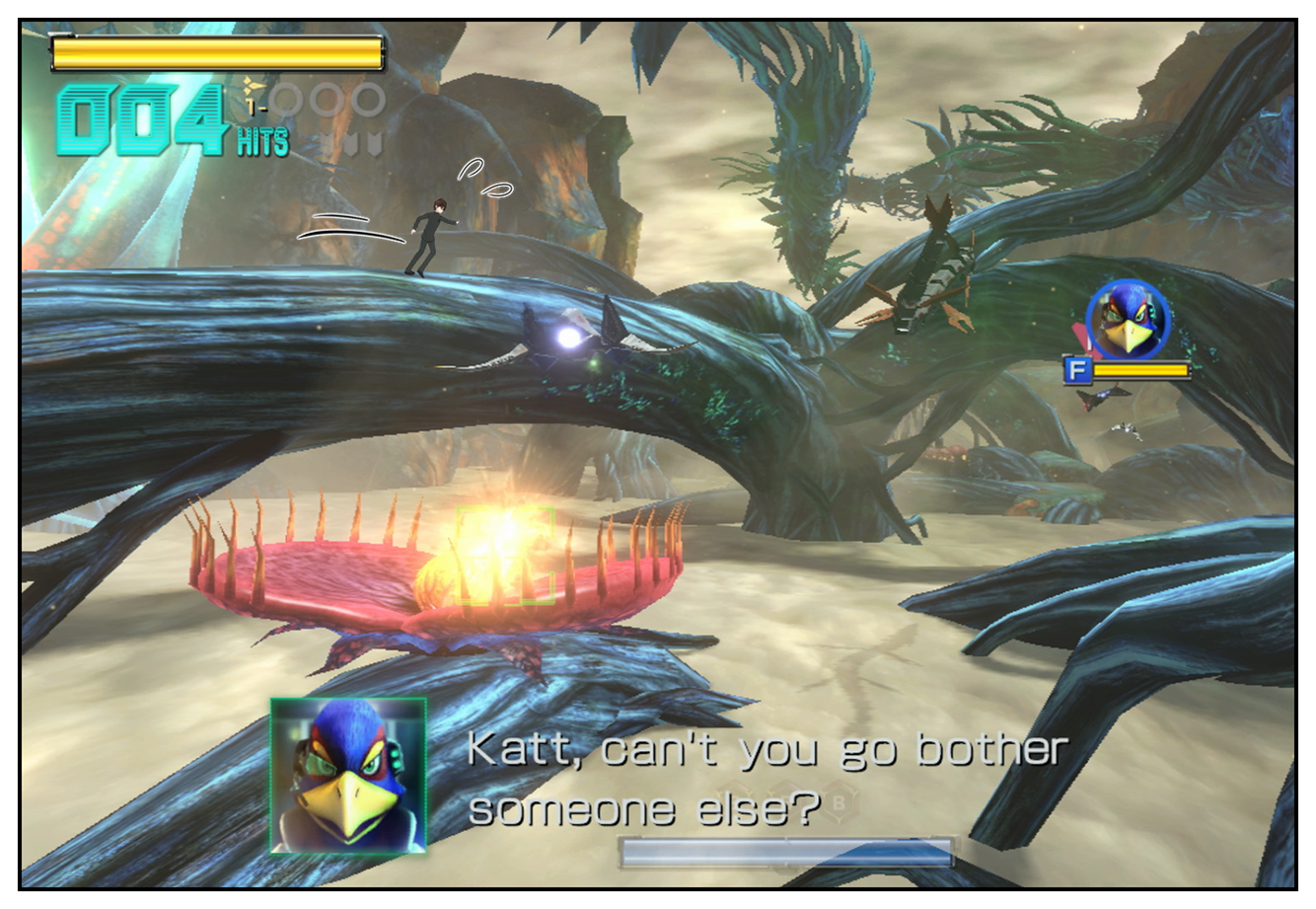
Star Fox Zero is out this week. This game has kind of snuck up on me, but I'm very excited to give it a go, because I love Star Fox.

Or, well, I love the original Star Fox/Starwing and the N64 sequel/remake/reboot/whatever it was Star Fox 64/Lylat Wars — I must confess, I never played the more recent games on the Gamecube and DS, partly because they weren't particularly well received and partly because they didn't quite sound like what I wanted from a Star Fox game, which is to say, a solid rail shooter in '90s arcade style.

I vividly remember playing the original Star Fox (in Japanese) for the first time. Having been playing computer games on the Atari ST, I was already used to what was supposedly Star Fox's biggest innovation: polygonal 3D graphics. And, in fact, in many regards, the polygonal graphics found in Atari ST games were often more complex and impressive than those found in Star Fox, though there were a few fancy tricks that Nintendo's game used sparingly that absolutely couldn't have been done on the ST, most notably some occasional texture mapping and the combination of hardware-scaled sprites with the polygonal ships and structures.

The fact that I wasn't as immediately gobsmacked by Star Fox's graphics as I felt like I was supposed to be didn't matter, though, because everything else about that game made up for its relatively simplistic polygons. The spinning, digitised speech-accompanied launch sequence that reminded me of an arcade game; the incredible music; the G-LOC-style zooming in and out of the cockpit in the spaceflight sections — all of these things combined to give me an experience on a home console that, while I recognised wasn't quite up to the standard of arcade games — most notably in terms of frame rate, resolution and screen size — certainly came damn close, reminding me in particular of Namco's Starblade, particularly in the first-person spaceflight sections.

Lylat Wars was interesting because there were a lot of things it did better than its predecessor, and some things it did worse. Most notably, the graphics were considerably better, with the game being probably one of the most visually impressive games on the N64, and the music was fairly atrocious, making use of Nintendo's dreadful MIDI synth chip that it used throughout most of the N64 era, which somehow managed to sound worse than the wonderful wavetable synthesis music of the previous generation's SNES. Thanks to its inclusion of digitised speech throughout instead of nonsensical babbling, Lylat Wars was also the birthplace of what was arguably one of the first ever gaming memes in the form of "Do a barrel roll!" — though my friends and I always preferred "You've gotta use the boost to get through!" for some reason.

I'm looking forward to trying out Star Fox Zero for myself, an am unperturbed by question marks over its strange-sounding control scheme; Splatoon's control scheme sounds strange on paper, and that certainly works extremely well, so I'm open to being convinced. I'm also reassured that Arthur Gies of Polygon hates it, because Arthur Gies of Polygon hates anything fun.

Game assures me that my copy has been shipped so if I'm lucky it might even arrive a day early tomorrow… if not, expect some first impressions on Friday.

All ships check in!!

2282: What Kind of Gamer are You?

0282_001

An email thread between me and my friends earlier extended to well over a hundred messages, and only part of it consisted of us casting aspersions on each other's sexuality or threatening to cave each other's heads in with Ikea shelving. No; the most interesting part of it was the part where we decided to discuss what games we'd find mutually pleasing to play on our vaguely regular Tuesday night board gaming sessions.

The struggle we have, you see, is that our group is split kind of down the middle. Two of our number — Tom and Sam — very much enjoy strategic, competitive games that they can train to be good at and quite reliably destroy the rest of us at given any opportunity they have. Their favourite game is Agricola, a game which I respect enormously from a mechanical perspective, but absolutely positively cannot get my head around from a strategic perspective. I can make the most perfect farm in the world and still lose due to not having enough points on cards or bonus points or whatever, and it's enormously frustrating.

Tom and Sam, meanwhile, have played a bunch of the game both in its tabletop and mobile app formats, and consequently know it rather well — what strategies work, what combinations of cards go well together, and a sensible sequence of actions to take. The rest of us, on the other hand, do not have this knowledge and tend to struggle our way through the game, usually fairly secure in the knowledge that we won't be victorious.

My friend Tim and I are essentially the "opposite" to this. We enjoy cooperative games in which the entire group plays against the game itself — or perhaps plays against a single adversary player, as in games such as Descent and Advanced Heroquest. For the most part, we have nothing against competitive games, enjoying plenty in our own right, but our preference tends to be for cooperative, heavily thematic games that encourage a touch of role-playing. If we do play a competitive game, we enjoy those that have an element of randomness to them, such as deckbuilders or those where dice rolls are a central mechanic — games such as Thunderstone, Carcassonne and Catan are among our favourite competitive games.

The wild card in our group is James, who has garnered something of a reputation among our little ensemble as being "the backstabber" — largely due to his enthusiasm for the game City of Horror, in which attaining victory is mostly dependent on being as much of an asshole to the other players as possible while maintaining a facade of apparent cooperativeness in the early stages.

As our email discussion proceeded, James explained his approach in a bit more detail. For him, it's less about outright backstabbing and more about pushing the boundaries of the game's rules to see what is possible. For example, in our last game of Agricola, he decided to see if the game — which, for the most part, has little direct interaction between players save only one person being able to take each action space at a time — could be played in an outright adversarial manner. Deliberately taking aim at both Sam and Tom — whom, you'll recall, are considerably better at the game than the rest of us — James decided to sacrifice any and all of his own scoring potential in the name of trying to make life as difficult as possible for Sam and Tom, hoping that either Tim or I would win. It was an entertaining exercise, for sure, though I still didn't win.

These gaming archetypes conform to how we tend to play video games, too. Tim and I tend to favour either narrative-heavy single-player experiences or cooperative affairs such as Warhammer End Times: Vermintide, whereas Sam and Tom are big players of hefty, competitive games like Civilization V. James is somewhere in a middle, a little less keen (or able?) to break the boundaries of the rules in video games, though he noted specifically that the thing he enjoyed most about Grand Theft Auto Online, which we're all playing semi-regularly at the moment, is being able to show up to each session dressed in an increasingly outlandish, freakish outfit to make us all laugh. Once again, making his own fun. (James, never quite able to shake off that "backstabber" reputation, is also the player most likely to shoot you in the face with a shotgun if you enter the same square mile of map that he occupies.)

Finding games that we all enjoy can be quite challenging at times, but it does happen sometimes. The aforementioned Grand Theft Auto Online is suiting our needs for video game multiplayer fun at present, for example, while this evening we ran two simultaneous learning games of Android: Netrunner for those among us who are less experienced to pick up the rules ahead of a planned "boys' weekend" of gaming at the end of the month, during which we're hoping to play a few games of Netrunner.

We left our email thread with the promise of coming up with a short(ish)list of games that we'd all be happy and excited about playing come a Tuesday evening, rather than our attempted "rota" system that we're currently using. We haven't quite perfected our list yet, but I'm confident we can find a selection that we'd all be happy to sit down for a game of.

Assuming James doesn't break the game, of course.

2281: Trying Times

0281_001

I'd like to be fairly open about this, within reason, as I don't want to sound like I'm constantly moaning about stuff — particularly with my desire to be more positive that I expressed the other day — but I feel it's important to share with those of you who read regularly and whom I consider to be friends.

It's a difficult period of life right now, as you might have surmised from some recent posts. I'd like to talk a little about what's going on and why, and how you might be able to help.

Basically the main trouble we're having stems from a chronic pain condition my wife has which is called, if I remember correctly, interstitial cystitis, also known as the rather literal "painful bladder syndrome". The issue has been bothering her for well over a year now, and for the last few months she's been off work due to how bad the pain has been. With me having also been out of work since my seasonal position at Game came to an end in January, as you can probably imagine, this has made financial security something of an issue. Technically I do have a new job now, but as I'll explain in a moment, the situation isn't exactly ideal.

Of greater concern than the financial issues — though they are related — is the matter of mental health, both for my wife and for me. Andie's inability to work has led to her being practically housebound, which as anyone who has been housebound will know, can lead to feelings of loneliness and isolation that can sometimes escalate into more severe negative feelings. Without going into details — this isn't the time or place for that — suffice it to say that Andie has had a very difficult time of it with both her mental and physical health over the last few months, and it's by turns heartbreaking, upsetting, frustrating and infuriating to cope with for me, since there's literally nothing I can do about it.

The reason I say the situation with my new job isn't particularly ideal is that, as anyone who has been left alone and isolated with mental health issues will know, being by yourself when you're feeling particularly low isn't a good or safe situation to be in. I know, I've been there — though thankfully the negative feelings I had never escalated to such a degree that I did myself serious harm. (The most I did to myself was bruise my hand a bit from thumping the floor in frustration.) My new job is in Basingstoke, which is at least half an hour's drive away and thus puts me out of range of being able to easily rush back if necessary. It puts Andie in the position where she feels like she has no-one to call on for help in the day if she needs it, and it puts me in the position where I don't know what state I might find her in when I get home, which is, naturally, rather worrying.

So with that in mind, for the next week or two I'm going to be taking some time to make sure she's all right — and that I'm all right, for that matter. We're getting some help and support from various sources — both family and medical — but anything those of you out there in friend-land can offer would be most welcome, even if it's just a kind word and a chat now and again. (If you do feel inclined to help us out financially, may I direct you to my Patreon page, where you can help me make my writing into a proper income stream.)

I hope things are going to be all right. It's easy to fall into a pit of negativity when this sort of thing happens and there doesn't seem to be any sort of easy solution. But with the right help and support, we'll hopefully make it out of this particular pit, be able to get back on track and start living our life the way we want it to again. That would be very nice right now.

2280: Three Wishes

0280_001

For a man of my age, I probably give the whole question of "what would you wish for if you got three wishes?" rather more time and attention in my head than it deserves, what with it being something (probably) impossible, but it's something to keep my mind occupied with when I'm trying and failing to fall asleep.

I've had numerous possible answers over the years — never resorting to "I wish I had three more wishes", I might add — but right now, at a particularly shitty point in my life, I find myself settled on three pretty-much definite answers.

  • 1. I wish my wife and I would be in 100% perfect health, mentally and physically. I've struggled with mental health for more years than I was probably aware of it, and it hasn't gotten any easier over the years. In fact, as I get older, it's got more and more difficult, particularly since several attempts to get a career started have gone nowhere — often through no fault of my own, as in the case of my misadventures in games journalism — and left me feeling increasingly useless and worthless to the world at large with each passing year.

    Alongside that, my wife has been struggling with a chronic pain condition that I'm always forgetting the name of for well over a year now, and it's taking its toll on both of us. She's been off work for several months now, and the pain has had a severe effect on both her mental health and, by extension, since I'm unable to offer any sort of help besides just being here when I can, my own as well.

    If we were both 100% perfectly healthy mentally and physically, we could get on with enjoying our lives the way we both want to. Life wouldn't feel like a constantly uphill struggle which, frankly, it does at the moment.

  • 2. I wish I had a million pounds. It may be a cliche to wish for a large amount of money, but if I had a large amount of money, it would remove the other main stressor in my life that is at least partly related to our physical and mental health issues: money worries. I don't even want to buy anything particularly extravagant with my hypothetical fortune; I'd simply pay off my debts, quit my job and continue living the way I do at the moment, pursuing my own passion projects in my own time without having to worry about where the money to pay the next bills and the mortgage is going to come from. The rest of the money would simply go towards day-to-day expenses and perhaps a few guilt-free treats.
  • 3. I wish I had the ability to switch between being a man and a woman at will. This one is less grounded in my actual real-life everyday existence right now, since having the ability to do this wouldn't make my current situation any better, but it's something that I've always returned to when pondering this question, and a concept in general that I've always found fascinating from the perspective of walking in "someone else's" shoes. I won't lie, part of my curiosity in this regard is sexual in nature — I mean, come on — but also I feel it would just be interesting to be able to switch between two completely different bodies and appearances at will, making use of the most "appropriate" one for various situations, whatever that might mean.

So there's my three wishes. If any Internet-connected genies are watching, I will happily accept just the first two if you're running a bit short on mystic mojo.

2279: Matchmaking: A Great Way to Waste Time

0279_001

I downloaded the Doom beta on PS4 earlier out of curiosity. I hadn't heard particularly positive things about it — though admittedly, this was mostly from disgruntled PC players who were whining about the lack of mod support and how it was "obviously built for consoles" — but as someone who actually used to really like Doom, I was interested to take a look.

I booted up Doom, fiddled around in the options a bit, took note of the entertaining options to weather, dirty up and scuff your armour in character customisation — not to mention painting it lurid shades of pink and purple — and then jumped into the multiplayer playlist.

Then, I waited.

And waited some more.

And then a bit more.

Well, okay, this perhaps makes it sound a bit longer than it actually was: it was probably less than five minutes in total, all told. But that was five minutes utterly wasted in which I wasn't doing anything apart from staring at the screen and perhaps rotating my character model a bit.

My mind was cast back to a comment someone I follow on Twitter made a while back, whose sentiment was along the lines of "rather than wasting your time with endless, pointless matchmaking games, throw yourself into enjoying games with stories; games with clear beginnings, middles and ends". At the time, I thought it a slightly extreme viewpoint, since I have enjoyed multiplayer matchmaking games in the past, but on reflection, he was absolutely right: for me, right now, matchmaking multiplayer games are a total waste of time and energy for what I find to be a subpar, unsatisfying experience compared to something that is either a bit more structured or something that has immediacy.

Doom isn't the only game where I've encountered the tedium of waiting for matchmaking queues. Playing a damage-dealing class on Final Fantasy XIV often leads to long queues for dungeons — although at least in that game, you can do other stuff in the open world while queueing, though there are a few limitations on your activities to prevent your queue popping and you being unavailable. Grand Theft Auto Online is particularly unpleasant to try and find a matchmaking session in, since it's riddled with people who pop into a lobby, then quit out again after five seconds if it's not already full. And I'm sure there are plenty of other examples, too.

So, I think I've had enough. I've felt a slight temptation to check out things like Doom and even the more recent Call of Duty games in the recent past, but on reflection, I feel they'll only frustrate me: time spent "waiting for players…" is time not spent enjoying a story in a single-player game, or trying to beat a high score in an arcade game, or chasing trophies in a game I've reached the post-game for.

This isn't to say I'm not going to play multiplayer at all, mind you: TrackMania Turbo has an excellent multiplayer where you can just jump in and out of player-made rooms at will, with no waiting around for there to be "enough" people to play. And I have a lot of fun playing Grand Theft Auto Online with my local friends. Those represent two different ways of having a fun online experience without getting matchmaking systems involved.

Strangers who are beyond that great wall of matchmaking, then? Fuck 'em; I've got better things to do than wait for them to show up to my party.

2278: Difficulty Switch A and B

0278_001

Spending a bit more time with Atari Vault over the last few days makes me appreciate one of the most interesting things about the 2600 — and something that, to my knowledge, hasn't really been done on any other console since: its use of difficulty switches and game selectors.

It wasn't unusual to see 2600 cartridges promising "9 video games" or similar on their front covers; by modern definitions, this wasn't entirely accurate, as each cartridge did indeed contain just one game, but tended to have multiple variations available to play. In some cases, these variations were minor — difficulty modes, essentially — but in others, they changed the gameplay fairly drastically. And along with these selectable games, the 2600 also afforded both players the opportunity to select their difficulty independently of one another.

Handicap systems are still found in modern multiplayer games in various ways, the most common of which being racing games' tendency to give the pack's back markers a slight speed boost to allow them to catch up a bit. But on the 2600, this was a revolutionary feature: by setting difficulty levels independently for each player, it became possible for experienced players to play "fairly" with newcomers, youngsters or those who simply didn't have quite the same dexterity and/or ability to handle those horrible Atari joysticks.

The ways that the difficulty switches were implemented varied from game to game. In the case of Air-Sea Battle, for example, the difficulty switches allowed players to set the size of their bullets independently — less experienced players could have larger bullets, making it easier to hit the targets. In Combat, the difficulty switches adjusted the speed of the player's bullets — more experienced players could choose to have slower shots, making it easier for their opponent to dodge. (Of course, you could then tweak the difficulty further by playing one of the variants where you could "bend" your shots around corners by steering after firing.)

It's a really interesting idea, and one of the coolest things about the 2600. I knew about the existence of these switches before — I've played some 2600 games before — but it hasn't been until I've actually started investigating some of these games in detail that I've really appreciated the surprising amount of interest and flexibility that they bring to these rough-looking but surprisingly fun old games.

Plus another nice feature of 2600 games I've discovered is that they're straightforward and easy to learn enough that my wife and I can play together without me having to spend hours explaining how to do things, or for us to play with an enormous skill imbalance thanks to the fact I have more experience than her. Thanks to the 2600's switches, we can tweak the experience to one that we both find challenging, but fair — and, it has to be said, the 2600 had some enormously fun two-player games that, while simple, can get very, very competitive very quickly!

2277: That Girl's in Lesbians with That Other Girl

0277_001.png

Playing through Gust's latest game Nights of Azure, I was struck with how… explicit the romantic relationship between the two heroines is. I don't mean sexually explicit; I mean that the fact that the two of them even have a romantic relationship is acknowledged at all.

Yuri (lesbian) themes are frequently a part of Japanese popular media — an interesting fact to toss back at those who are keen to paint the nation as being somewhat less than progressive when it comes to attitudes towards gay people. Indeed, while "real world" Japanese society in general may not appear to look on homosexuality with as tolerant an eye as we like to think we have here in the West, it's clear that there's plenty of the old "public face, private face" going on, since there are a ton of creators who are obviously fascinated with the idea of same-sex relationships — both male-on-male and female-on-female.

The thing that struck me about Nights of Azure's depiction of its central relationship is the fact that, as I noted above, it's pretty up-front about it. This is noteworthy because although yuri themes often make an appearance in Japanese popular media, they're often more implied than explicit, with it often being left up to the audience (and fan artists) to explore these relationships further.

Take something like popular anime Love Live. Even the most casual viewer will notice the blossoming relationship between Maki and Nico by the end of the run, but the show never particularly draws attention to it; it's just sort of there. Likewise, the Senran Kagura series features a number of obviously romantic relationships between many of its all-female cast members, but it's rare for these to be acknowledged or not "laughed off" by the characters — though, interestingly, latest installment Estival Versus did feature a scene where one character specifically called out Asuka and Homura for being so obviously gay for each other, even if they'd never properly admit it. And the Neptunia series is riddled with yuri undertones, ranging from Nepgear and Uni's heartwarming relationship to Noire's obvious but perpetually unspoken interest in Neptune — and, in most recent installment Megadimension Neptunia V-II, K-Sha's obsession with Noire, though this particular instance was an explicit admission of lady-love.

Nights of Azure, though… it's right there from the beginning, and it develops over the course of the game. Several other characters comment on it. And, most tellingly, there are outright romantic scenes between protagonist Arnice and other leading lady Lilysse. The two share moments of intimacy with one another that, on reflection, are actually quite unusual to see so explicitly depicted in games: in one scene, Arnice comforts an upset Lilysse by draping her arms around her neck from behind and holding her close; in another, the two dance together, their devotion to one another immediately apparent from the way they look at each other. And after a particularly heartfelt make-up session after a dispute between the two, we see them waking up in bed together, having obviously slept facing one another holding hands. (There's no yuri sexytime, though; it's not that kind of game.)

As with other Japanese games that feature yuri themes, Nights of Azure treats its central relationship with the appropriate amount of respect: that is to say, it's just there, and no-one thinks it's anything unusual. A couple of male characters are introduced by hitting on Arnice, but once they see she and Lilysse are obviously involved with one another, they back off — not with an "oh, wow, you're gay" sentiment, but with a simple recognition of "oh, well, you're together" that would have been the same if either of the two ladies involved were the opposite gender.

This is the sort of progressiveness and diversity that is a very positive part of the modern games industry — however, sadly, given Nights of Azure's status as a niche title that a significant number of people probably haven't even heard of, it's a game that you likely won't hear many games writers from big sites talking about.

Consider this my small attempt to acknowledge and celebrate the good that this game is doing, then, and rest assured that Nights of Azure is very much worth your time as an action RPG as well as an interactive lesbian experience.