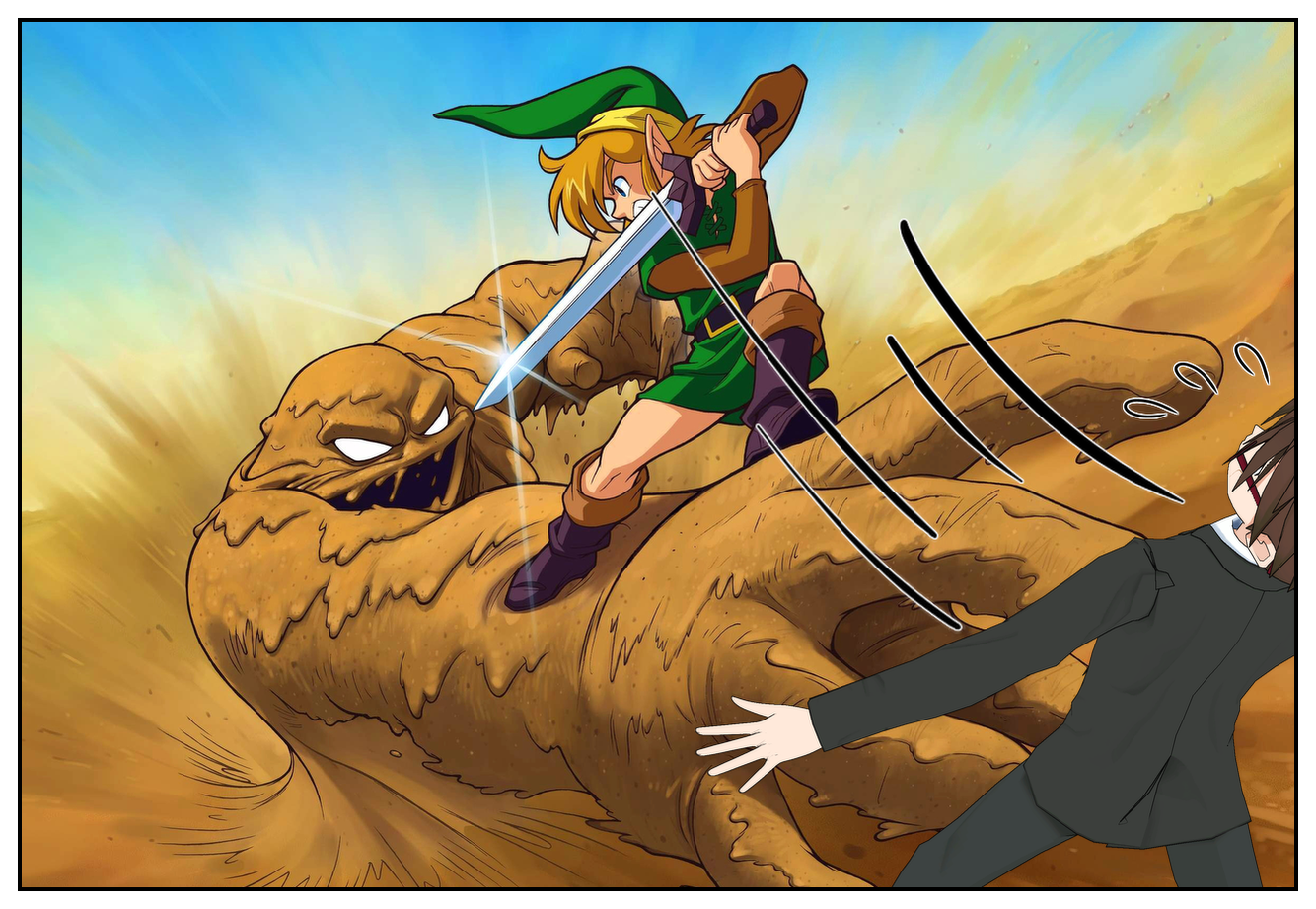
I remember playing Zelda 3, or The Legend of Zelda: A Link to the Past, to give it its full title, for the first time. It was an eye-opening experience; prior to this, most of the games I'd played on computer and console had been fairly straightforward arcade-style affairs — you put them in, you hit Start, you start playing from the beginning, you get as far as you can get before hitting a Game Over screen, you try again.
A Link to the Past was different, though. Having never owned my own NES, the series was new to me, and so I didn't know that it had been providing this sort of ongoing, lengthy grand adventure for quite some time prior to its Super NES incarnation. But I was immediately enraptured with it; here was a game that provided me with a convincing open world to explore, some challenging dungeons to defeat, a convincing sense of getting stronger and more powerful as the game progressed, and an enjoyable, if somewhat simple, story to follow.
I played A Link to the Past through numerous times, so much did I enjoy it. It got to the stage where I could run through the game pretty much on autopilot, though I must confess I never quite reached total completionist status with it; I enjoyed the experience of progressing through the game and beating it rather than doing things like hunting down the myriad Pieces of Heart scattered around the game's two worlds.
My love for Zelda waned a little over the years. I recall being a little underwhelmed with Ocarina of Time when I first played it, though I can partly attribute this to the fact that I had been playing Final Fantasy VII around a similar time and, to my inexperienced, rather shallow eyes, they simply didn't compare to one another. I enjoyed Ocarina of Time enough to finish it, mind, but I didn't love it in quite the same way I loved A Link to the Past. I did, however, love Majora's Mask in the same way I loved A Link to the Past, but that's probably a story for another day.
Anyway, to the point: after finally finishing (the first quest of) the original Legend of Zelda the other day, I felt like continuing my journeys through Hyrule, so I skipped Zelda II, not quite feeling up to its punishing ways at present, and went straight to A Link to the Past. (For the Zelda-illiterate: most of the Zelda games tell their own, self-contained stories that feature characters with the same names and same appearances as those in other games, but who are actually different people from different times. This means that skipping a game in the series doesn't mean you'll skip important plot, though if you care to research it there is a complicated, convoluted chronology of how it all fits together.)
I was immediately reminded how much I love this game, even so many years after I last played it. It has an extremely strong opening — one of the reasons it made me sit up and take notice the first time I played it — and some highly memorable music. It's also a massive, massive improvement mechanically on the original Legend of Zelda, which it most closely resembles; Zelda II went off and did a bunch of weird things with RPG mechanics and platforming, but A Link to the Past was a return to the original formula, but better.
And everything really is better. Instead of having to wander around aimlessly, hoping you'll find the right order to challenge the dungeons, you'll be nudged in the right direction by the game, though you'll never be completely railroaded, and you are free to go off and explore any time you want. There's also a much stronger sense of the overall map being a coherent world; Hyrule may be relatively small, apparently consisting of only a single village and a castle that is bigger than the whole village, but there are plenty of interesting things going on and memorable characters to stumble across.
And, somewhat surprisingly for a Nintendo game if you're used to Mario and its ilk, A Link to the Past is pretty dark and bleak in places. The strong opening I mentioned before sees Link acquiring his first sword and shield by stumbling across his dying uncle, who had left the house in Link's stead earlier in the night in an attempt to save him from the trouble that becoming the Hero of Hyrule would be. Later, there are other equally subtle, sad scenes, such as the spirit of the young flute-playing boy in a clearing, whom you later discover close to death in the Dark World, a realm that deforms body and spirit, so you grant his dying wish before he gives up on life entirely and turns into a tree.
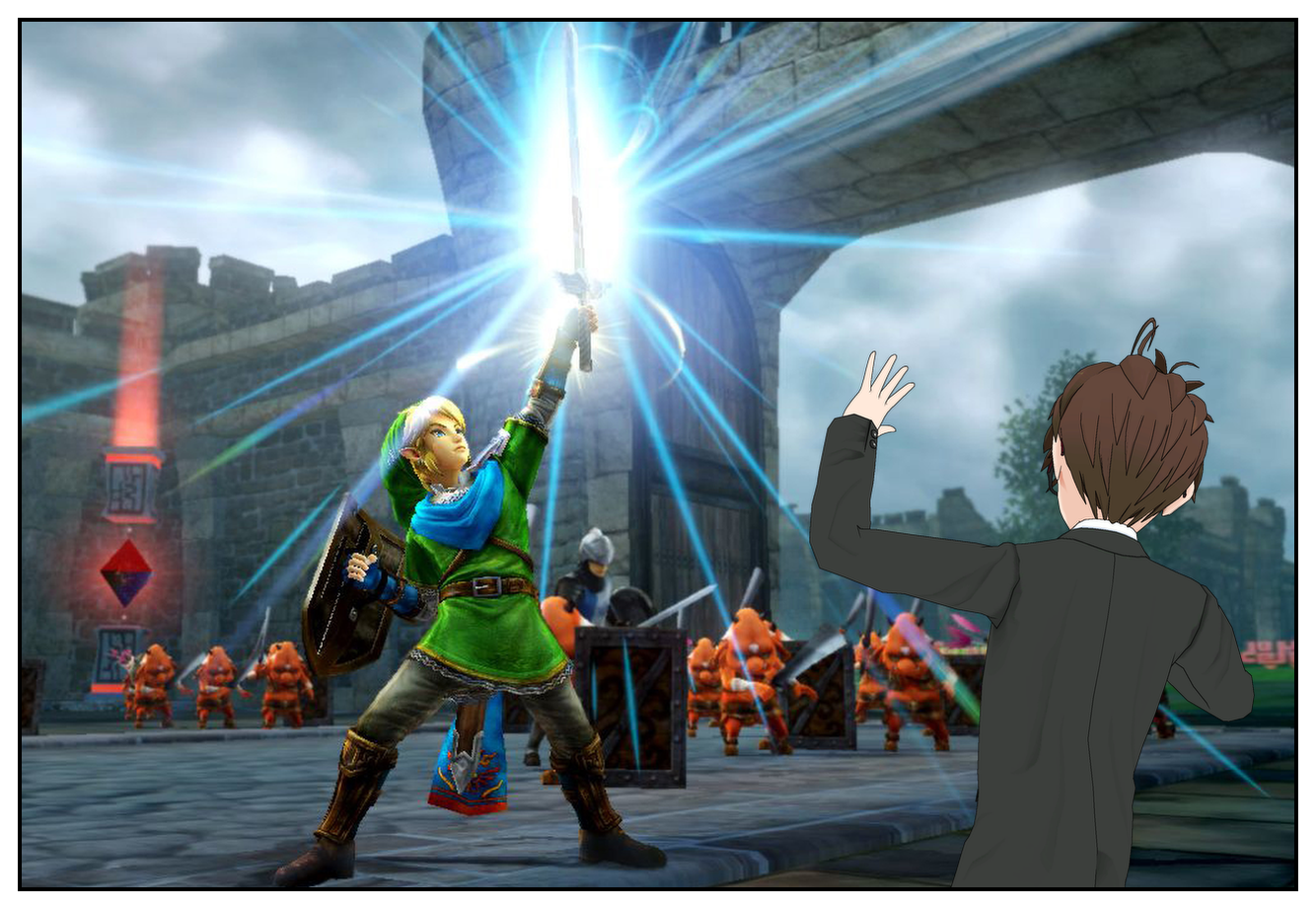
In many ways, it's kind of stunning to think that the same creative mind behind Super Mario Bros. also came out with Zelda, something that, while still ultimately pretty family-friendly, is a quantum shift away from Nintendo's mascot in terms of tone. I've spent a good few years feeling like I wasn't a particular fan of Zelda, since I felt as if none of them quite captured my attention in the same way as more conventional role-playing games, which had, of course, subsequently turned out to be a favourite genre. After enjoying the first and third Zelda games so much so far, though — not to mention Hyrule Warriors — I feel like it's probably time to educate myself on the series as a whole, so I'm going to try and work my way through them one by one. Who knows — I may even make it through Zelda II one of these days, though not today…