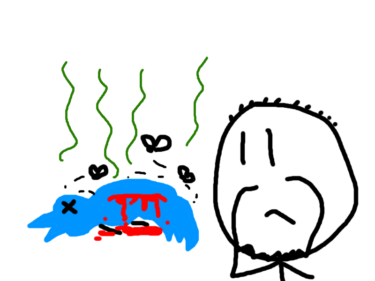
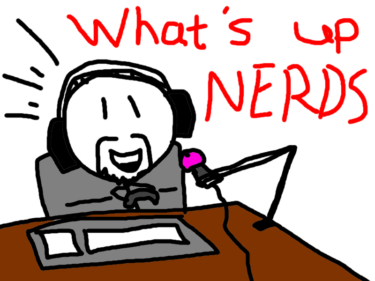
I, as you probably know, have a YouTube channel. I have had it for a grand total of about seventeen years at the time of writing, though I would say I've only really been actively, semi-regularly using it since about 2018, initially to host video versions of a podcast I was doing, and subsequently to kick off the series that I'm still running in one form or another to this day.
Over the course of those 17 years, I have picked up just over 3,600 subscribers at the time of writing, with the vast majority of those showing up since 2018. While that is obviously a drop in the ocean compared to big, successful channels out there, I am pleased with it, and honestly I don't particularly want my channel to grow any faster.
In order to acquire those 3,600 subscribers, I have done… nothing particularly special, to be perfectly honest. I have steadfastly ignored the advice of YouTube "gurus" to pursue trends, to be clickbaity with titles and thumbnails, and to "edit for engagement". In short, I consistently reject what is supposed "best practice" in favour of just doing whatever the hell I want — and I have seen some success doing just that. Could I see more success if I was following the supposed "rules" to the letter? Quite possibly. But then I don't think my channel would be mine any more.
One of the things I object to most about online culture in general these days — not just YouTube, but this applies all over — is how no-one really seems to have a personality any more. Everyone says the same things, everyone responds to things in the same way, everyone uses the same bank of reaction GIFs when they can't be bothered to use their words. In YouTube, this is best exemplified by the way you could watch five randomly chosen videos from five moderately sized channels, and I bet you'd hear the exact same sound effects and music clips, and see the exact same visual memes, in at least half of them — if not all of them.
This is because these things, supposedly, work. But in using that "best practice", you are eliminating a lot of the soul from your own work. You're making something that caters to the mysterious "algorithm" — or rather, an imaginary audience — rather than expressing yourself, as yourself. It's the same with the way people talk to one another online; because those reaction GIFs and snippy retorts like "skill issue" are universally understood by everyone, everyone uses them because they're seen as an efficient means of communication.
But, again, there's no personality there. Any time someone comes out with "skill issue" or "tourist" or whatever the derogatory term-du-jour is, I lose all interest in getting to know that person, just as I lose interest in a YouTube video the moment they start busting out the Metal Gear Solid alert noise, The X-Files theme and Spongebob "a few moments later" interstitial cards… and just as, at some point in the last 20 years, you've probably lost interest in someone who won't shut up about bacon, won't stop saying "the cake is a lie" or thinks declaring that pineapple on pizza is "weird" is a daring and brave opinion to express.
People like that don't have a personality of their own; their personality is The Internet, Circa 2025. And, as we've pretty comprehensively established at this point, The Internet, Circa 2025 is not someone you'd want to bring home to meet your parents. It's someone who deserves to be kicked into a ditch 50 miles from the nearest town and left to rot.
So, as much as there are probably things I could do "better" with my YouTube channel, I choose not to do them. I don't feel the need to. I didn't create that channel to be famous, I didn't create that channel to be a huge "thing", I created it as a means of expressing myself and sharing my own, personal enthusiasm for things that are important to me. That's it. That 3,600 people like what I do enough to want to follow it without me resorting to "best practice" says something to me: it says "if you're happy, just keep doing what you're doing".
So that's what I intend to do.
Want to read my thoughts on various video games, visual novels and other popular culture things? Stop by MoeGamer.net, my site for all things fun where I am generally a lot more cheerful. And if you fancy watching some vids on classic games, drop by my YouTube channel.
If you want this nonsense in your inbox every day, please feel free to subscribe via email. Your email address won't be used for anything else.
I fucking hate TikTok, and while I know there are all sort of "considerations" about the American ban of it that is happening right now — and which people seem to think Trump will overturn when he takes office — you are never going to convince me that it was a good thing for humanity as a whole. I feel like it is an app which has actively made the world more stupid, less inclined to pay attention to things and generally quite a bit shitter.
As an autistic person, I actively despise the idea of an app where a significant number of videos are either someone shouting directly "at" me, or outright sensory overload. Hell, a whole term was coined to describe the proliferation of these sensory overload videos, and that term is "sludge content". That is not something we should be celebrating.
A common pro-TikTok argument that people make is that "some people were reliant on it for income". If your sole employable skill is yelling incoherently into a camera, you should probably spend some time working on employable skills other than yelling incoherently into a camera. If you were using TikTok as a means of selling things, you should perhaps consider selling your things via a platform you actually have control over, like people had been doing for years before TikTok, and like people will continue to do for years from hereon. And if you really want to make money from videos, there are plenty of other means of doing so.
But then there's also the fact that people place a vast overemphasis on "monetising their content" online these days anyway. It's one of the major factors in the gradual degradation of social media as an actual means of socialising over the last decade and a half. A significant proportion of users are no longer interested in having conversations — you know, being social — on social media these days. Instead, they want to "create content" for others to "consume". How about you stop seeing dollar signs in everything you do and just do something because it's enjoyable, and because you might make some friends in the process? No?
"But you can watch sexy girls dancing on TikTok!" Brother, I'm not sure how to tell you this, but there are myriad ways to watch sexy girls dancing — and doing a lot more than that — on the Internet, and there has been pretty much since its inception. If your argument for Why TikTok is Good, Actually is that you can mindlessly dribble over something that makes your peepee hard, you are not providing a convincing argument.
"But what about BookTok?" What about all the myriad book-centric blogs that have been destroyed by the collective destruction of the world's attention span via shit like TikTok and YouTube Shorts? What about the fact that your average TikTok user almost certainly doesn't have the patience or brain power to sit down and read a book if they won't read a blog post? What about the fact that authors don't want to have to waste their fucking time yelling at their phone camera when they would much rather be writing something worthwhile?
TikTok is shit, and while I see and appreciate the arguments against the US banning it, I will be shedding precisely zero tears for it. It is one of the absolute worst examples of the enshittification of the modern Internet and people in general, and nothing you can say will ever make me change my mind on that fact. I just wish the fucking thing would go away here, too.
Want to read my thoughts on various video games, visual novels and other popular culture things? Stop by MoeGamer.net, my site for all things fun where I am generally a lot more cheerful. And if you fancy watching some vids on classic games, drop by my YouTube channel.
If you want this nonsense in your inbox every day, please feel free to subscribe via email. Your email address won't be used for anything else.
As the rot economy continues apace, more and more people are starting to recognise the modern Web for what it is: an unpleasant place, in which commercial interests and venture capitalists come first, and making an actually pleasant, enjoyable and educational place for the actual users is far, far down the list. As a result, "the old Internet" is often romanticised, perhaps to an overly nostalgic, rose-tinted degree, but I have to kind of concur; things did used to be much more enjoyable online before our daily routine was nothing but scrolling through the only two or three websites that actually exist to most people.
I think about this a lot when I'm writing on here or MoeGamer. I used to get fairly decent numbers on both blogs, even though I was just posting daily nonsense on this one. Now, I get maybe double figures daily on here, if that. MoeGamer still pulls in about a thousand views a day, which is nice, but a lot of those views are for things I wrote about several years ago at this point, and rarely for things I've written about recently.
Now, I don't do either this blog or MoeGamer for the views, but I feel the trajectory this site has taken in terms of numbers is symptomatic of the way the Web has changed over the years. People just don't do blogs any more, either as writers or readers. Part of this is down to the fact that RSS readers just aren't a part of people's daily online routine any more (though I'm aware they still exist) — and even those "magazine-style" apps that were never really a good replacement for Google Reader seem to have died a bit of a death. Not only that, but the usefulness of search engines has declined considerably, too.
Instead, it is, of course, all about social media. It's all about having a presence on the "important" social networks — though even that has seen something of an upset over the last few years, and particularly in the last few months. Twitter was already circling the drain in terms of usefulness for sharing stuff even before Elon took over and did… whatever the fuck he's doing there; Facebook has been such a horrible experience to use for so long now that I question the sanity of anyone who is still using it — to say nothing of the frankly quite disturbing policy changes they've had recently; and the less said about TikTok, the better.
So what, exactly, is someone looking to express themselves online to do today? If you want to get seen, you seemingly have little choice but to sign your soul over to one of these companies and plunge your data into the mire that is "The Algorithm". Telling people that they should start their own website is a noble and proper goal, and one I stand behind, but the fact is… a lot of folks just don't and won't leave social media — and many of the social media companies are doing their best to keep those folks on their platform as much as possible.
Look at Twitter (no, I'm not calling it "X") and how Elon is desperate for people to "post content" on it, completely failing to see that it is a platform woefully ill-equipped for anything other than that which it was originally designed for: microblogging. No-one in their right mind is going to set up a video-centric Twitter account instead of a YouTube channel, even if the site wasn't infested with the worst bigots the Internet has to offer. And no writer is ever going to use Twitter as their primary means of posting their work.
Everyone knows this. And yet it's so difficult to get people to notice you if you're not spending all day "building your personal brand" or some such bullshit. Artists struggle to get commissions without social media. Writers struggle to get publishers without social media. Video makers struggle to get views on their videos without social media. It all sucks, and it feels far too late to be able to do anything about it.
All you can do, really, is just be stubborn. Keep plugging away at your own personal passion projects, and do those projects for the passion, not for the potential of monetising them. I keep doing this blog because I like writing and it's good therapy for me — nothing more. It's always a thoroughly welcome sight when I see someone I recognise in the comments, but that's becoming an increasingly rare occurrence these days. Family and friends who used to read on a regular basis just… don't any more, and the worst thing is, I completely understand why. The modern Web simply isn't built to support personal sites any more, and that's a real shame. It feels like we're very much at risk of losing an important part of our collective culture — because what happens to everyone's "content" (ugh) when one of these social media companies eventually implodes?
Anyway, close your Meta accounts, get off Twitter and read more blogs. That's my advice for surviving online today.
Want to read my thoughts on various video games, visual novels and other popular culture things? Stop by MoeGamer.net, my site for all things fun where I am generally a lot more cheerful. And if you fancy watching some vids on classic games, drop by my YouTube channel.
If you want this nonsense in your inbox every day, please feel free to subscribe via email. Your email address won't be used for anything else.
I don't know if you've been following the recent news about Meta, Facebook's parent company, but if you still have an account over there for any reason, I thought you might be interested to learn the following.
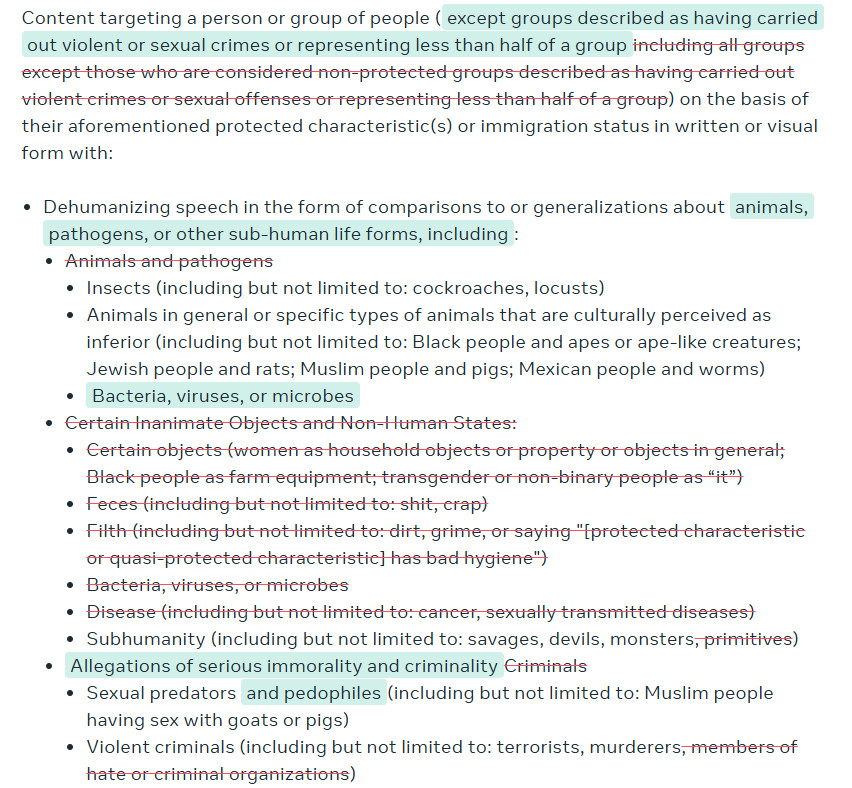
A few days ago, Meta (which covers Facebook, Instagram, Threads and WhatsApp Messenger) published some substantial changes to its Hateful Conduct policy, ostensibly a policy that was devised in order to, among other things, help marginalised groups feel safe using their services as a means of online socialisation. You can see the changelog at this link (click the "7 Jan 2025" link on the left of that page to see the changes highlighted), but here are some notable parts for your convenience:
The green highlighted stuff is newly added, the red strikethrough stuff has been removed. Note that the banning of "dehumanising speech in the form of comparisons to or generalisations about animals, pathogens or other sub-human life forms, including women as household objects or property or objects in general; black people as farm equipment; transgender or non-binary people as 'it'" has been removed. This was previously a "Tier 1" violation, among the most serious on the platform, and yet now it is A-OK.
Elsewhere:
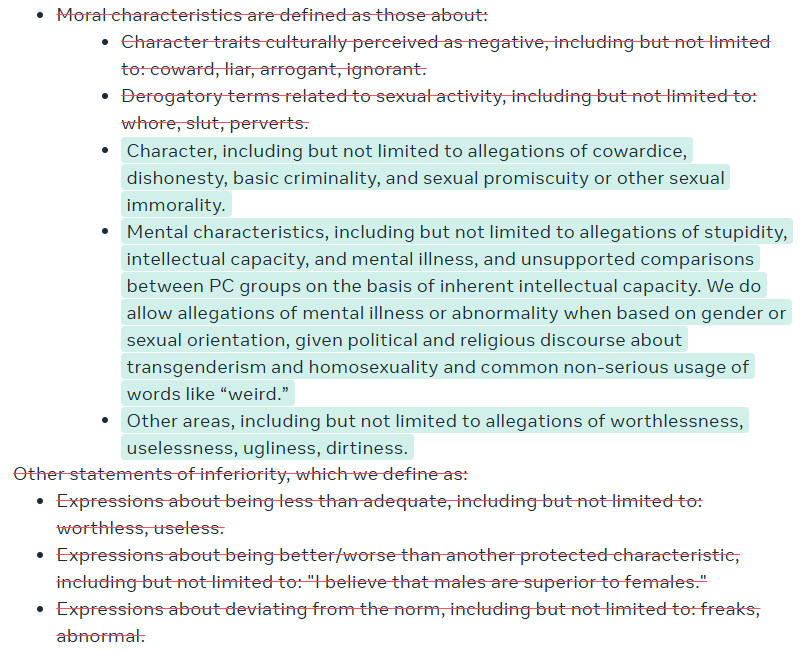
In this section, you will see that Meta now "allows allegations of mental illness or abnormality when based on gender or sexual orientation, given political and religious discourse about transgenderism and homosexuality and common non-serious usage of words like 'weird'."
Elsewhere still:
So you're cool to, like, blame the Chinese or whatever group of Johnny Foreigners you think created COVID, if you even believe COVID existed at all in the first place because you're a nutcase who believes vaccination programmes are about Bill Gates trying to fit you with a microtransmitter.
I shouldn't have to point out that these changes are Bad, regardless of whether or not you fall into one of the "protected" categories. It's particularly telling that amid the parts people are mostly focusing on — the stuff about homosexual and transgender people — they snuck in a bit about regarding women as objects and black people as farm equipment. You know, just to make sure everyone except white straight cis men gets their own share of a kicking. On top of that, they have deleted the trans and non-binary themes for Facebook Messenger, as well as the blog post announcing them.
This is not a "freedom of speech" thing; this is deliberately courting the worst people in the world and giving them carte blanche to be as sexist, racist, homophobic and transphobic as they desire with zero consequences. And you all know exactly why this has happened: because of the election result in the US.
The world's billionaires have been flocking to kiss Trump's ringpiece ever since the election, and of course Mark Zuckerberg is at the head of the queue. Social media is a veritable breeding ground for the worst kind of right-wing attitudes and has been for a while; all Zuck is doing is making it explicitly okay for this sort of thing to go on, much like Elon Musk has done with Twitter, destroying its value as social media in the process.
This isn't the only thing wrong with Facebook, of course. If you're still using it (again, I ask, why?) you have almost certainly seen how the News Feed or whatever it is called has declined over the years. Chances are yours has multiple "Suggested" posts (i.e. ads) in a row before you see anything from someone you actually care about, and many of those posts will be filled with AI-generated garbage slop like the infamous "Shrimp Jesus" and the many, many images of crying multiple amputee soldiers who don't exist saying it's their birthday. And rather than Facebook seeing this as a problem, it is being encouraged.
In fact, Meta announced plans to introduce AI-driven profiles to both Facebook and Instagram, presumably in an attempt to hide the fact that users are (correctly) leaving their services in droves. People stumbled across one of these AI-powered profiles on Instagram recently, discovering it to be, of course, full of images that never happened and hosting a chatbot that was little more than racial stereotyping. Meta were quick to say that this was an experiment from a few years back, but this is exactly the sort of shit they want to introduce.
Along the same lines, some Instagram users have found themselves presented with AI-generated images of themselves in their own feed, without having asked for them. In most cases, this is because Instagram's AI features count "using them once" as "perpetual consent to use your likeness", even if you don't want or need AI-generated images of yourself. Which no-one does.
Facebook is a shithole, and it's only going to get worse. If I haven't convinced you enough, I urge you to read at least some of the following links (plus the ones I've peppered throughout the above) for more on the story, because these folks report on this stuff for a living and can provide a lot more detail on what is going on.
Never Forgive Themby Ed Zitron – a comprehensive breakdown of how, over the last 10-15 years in particular, big tech has been systematically making life worse for everyone online under the guise of "growth". And it seeps into all areas of life, be it Facebook, Twitter and other forms of social media, or a cheap laptop you buy from Amazon.
AI Powered Buzzfeed Ads Suggest You Buy Hat of Man Who Died by Suicide by Emanuel Maiberg, 404 Media. Not directly related to Meta, though it is a tale of why AI-powered anything relating to advertising (a category which Meta stuff firmly falls into) is a pile of shit. I will say 404 Media has been doing some of the absolute best reporting on all this for quite some time now.
Where Facebook's AI Slop Comes Fromby Jason Koebler, 404 Media. Self-explanatory, though you may be surprised at the answer to the headline and the reasons why.
Mark Zuckerberg, Recipient of World's First Rat Penis Transplant, Announces Meta Will Stop Fact-Checkingby Matt Husser, The Hard Times. Also self-explanatory. The fact-checking thing is actually where all this started; Zuck is putting this side of things in the hands of the users via a Twitter-style "Community Notes" system, rather than having fact-checkers to combat disinformation on staff. Things just got worse from there.
Look, I get it. I appreciate that some of you might not be able to delete your Facebook accounts because it's the only means you have of getting in touch with some people. I can't really delete mine either, because I have to use it for work, though I haven't used Facebook "personally" for years now because I saw it enshittifying a long time ago and jumped ship. The only Meta service I use these days — and that's irregularly — is WhatsApp.
But I would urge you to look over all of the above, and consider whether that is a company you still want to have any involvement with. Not only are the policy changes above actively harmful, the service as a whole has, as Zitron explains in his piece linked above, gradually been getting worse and worse, abusing its users in the name of profit and growth, for years at this point.
There are always alternatives. You can email people, just like in the good old days, or alternative messaging solutions like Discord, Zoom and Skype exist. They all have their issues, yes, but they're not actively being harmful like Meta is now. You can build a website to share your photos. Hell, if you're hooked on social media, there are plenty of better alternatives to Facebook now. (Just don't join TikTok.)
Online is a garbage fire right now, and it's only getting worse. One day, we might be able to look back on this whole sorry situation and laugh, but right now it's getting to a point where it's outright dangerous for some folks online. And I would hope that you, dear reader, don't want to be part of making that problem any worse.
If you didn't know anything about any of this prior to today, I hope you feel a little better informed now. And if you did, I'd urge you to take that step and move well away from Meta as soon as you are able.
Want to read my thoughts on various video games, visual novels and other popular culture things? Stop by MoeGamer.net, my site for all things fun where I am generally a lot more cheerful. And if you fancy watching some vids on classic games, drop by my YouTube channel.
If you want this nonsense in your inbox every day, please feel free to subscribe via email. Your email address won't be used for anything else.
Why am I still doing this? Or, perhaps to the point, why did I start doing this again? This article from Aftermath does a good job of explaining why.
Since the rise of social media, I feel like it's significantly less likely for someone to have a "personal website", because everyone is concerned about their "reach" and "engagement", and if you want both of those things, you want to be on a well-established social media site.
But if you're more concerned with self-expression and having a space to truly call your own, having your own website is hard to beat. And I think as people become more and more disillusioned with social media — Twitter and Facebook in particular — I think personal websites are going to become more and more important to a wider range of people.
Times have changed a bit, though. The word "blog" seems to have fallen out of wide usage, to be replaced with "newsletter", this being a result of the assumption that people will sign up to get your posts delivered to them via email, rather than going out of their way to visit your site. However, most of the "newsletters" out there are actually just blogs: people having a space to call their own, writing whatever they feel like at any given moment.
The best blogs… sorry, newsletters… of course have a distinct focus. One of my favourites is Ed Zitron's Where's Your Ed At?, which is one of the few sites out there continually taking the garbage of the AI industry and other enshittified parts of the Internet to account for their making life worse for everyone.
And, of course, if you've been following me for a while, you'll know about my own MoeGamer, which is my main video game blog. MoeGamer has now outlived all of the professional, commercial sites I have ever written for, which is a nice feeling. Sure, I don't update it every day or indeed regularly, but there's a ton of stuff to read on there, and I've made sure all of it is hopefully relevant and interesting, regardless of when you come to it. No racing to get "news" out the door; no rushing games to meet embargoes; just in-depth articles about games that, for one reason or another, I have found it worthwhile to spend some time, effort and words talking about.
This site, though, this is mostly for me. This site is my virtual replacement for the personal diaries I used to write as a teenager, only at no point have I become embarrassed enough about something I've written to want to throw the whole thing in the outside bin so it would never be found by anyone, except maybe the dustmen, who I hope had a good laugh about how much I fancied Nikki Rose before flinging the book into landfill. This site is my reminder of at least part of my time on this planet which, for sure, has had some hefty ups and downs over the course of the last 15-20 years or so.
Does it have many people reading it? No. But I'm not doing it for them. I'm doing it for myself — and if anyone happens to stumble across this little corner of the Internet and gets something out of something I've written, that's just a happy bonus.
If you've never given this sort of thing a try and you find yourself frustrated at social media, I can highly recommend giving it a go. It's dead easy to get started with a platform like WordPress or its numerous imitators; in many cases, you can get up and running for free, too.
However you choose to do it, I can assure you of one thing: having a space to truly call your own, in which you can express yourself completely freely, is something that I've started to find increasingly important with each passing year. It's a good thing to have an outlet, for both the good feelings and the bad, and banging out 500-1000 words every so often just about whatever's on your mind is a healthy habit to get into.
That's why I'm still doing this. Not to be famous, not to make money, not to get engagement and followers. But because it's just something I want to do, and which I find is of great benefit to my overall wellbeing. Give it a try!
Want to read my thoughts on various video games, visual novels and other popular culture things? Stop by MoeGamer.net, my site for all things fun where I am generally a lot more cheerful. And if you fancy watching some vids on classic games, drop by my YouTube channel.
If you want this nonsense in your inbox every day, please feel free to subscribe via email. Your email address won't be used for anything else.
I've been umming and ahhing about whether or not to post this, but if I can't speak freely on my own fricking website, I think I'll explode, so I'm going to say it anyway.
I really, really don't give a damn about any drama surrounding an individual behind a particular project. I'm not saying you have to feel the same way, but I do want to express that I find it continually tiresome and genuinely upsetting when I want to talk about something that I think is cool, but the first response is always "but [individual] worked on it, so it's bad (and by extension you are bad for having anything positive to say about it)".
I'm not going to talk about specific cases here, because even doing that has the potential to attract ire towards me, and that's not what this post is about. What it is about is the sense of frustration I feel that the real people who worked on a project end up getting punished for the actions or behaviour of one individual — and, by extension, the attacks people who express enthusiasm for that project end up suffering also.
It is an unfortunate fact of capitalist life that in order to claw your way up to the top of the heap, you probably have to be a bit of a shithead. The way capitalism works, the way business works; you need to be a bit of a shithead in order to see success. You need to doggedly pursue the things you want to achieve, and you need to defend your commercial interests. This is true for pretty much all industries, whether it's groceries, tech, publishing or whatever. I defy you to find any company out there with an executive suite that has never done anything you're not a particular fan of, all in the name of either pursuing their goals or defending their commercial interests.
Trouble is, when the higher-ups at a company do something that is regarded as "bad" or "indefensible", the real people who suffer are those who are just doing their job underneath. When one CEO behaves poorly, the people who are actually making the products that CEO's company is known for end up getting punished for it. They could do an absolutely amazing job on whatever they worked on, but still get punished because their boss once did "A Bad Thing", often several years ago.
This, unfortunately, spreads outwards. Because "(CEO = Bad) = (Company = Bad)", anyone who then expresses an interest in or an enthusiasm for the products of Company gets yelled at by people who care more about the CEO than the company or the product. And that leaves people feeling like they simply can't express their enjoyment of something they like just as a product, because of one thing the CEO did half a decade ago.
CEOs should, ideally, not do shit things. It would be lovely if we lived in a world where CEOs did not feel the need to do shit things, be it in the name of pursuing their goals or defending their interests. But we do not. And frankly, I am, I'm afraid, long past giving a shit.
I've seen too many pointless, unnecessary arguments and too many strained, even broken friendships over this sort of thing, and it just doesn't matter. We live in a joyless enough world as it is; we should not be attacking one another over the things we choose to have fun with, so long as those things are not actively hurting someone. And in the specific instances I'm thinking about here, no-one is getting hurt except the folks who worked on them, and the people being attacked for daring to say something positive about them.
That's all I'm going to say on the subject. I do not want an argument on this, I do not want anyone in the comments trying to tell me I'm wrong for feeling this way. I'm fed up and I'm annoyed, and I am absolutely not in the mood for someone to tell me I'm wrong for feeling that way. So if you're gearing up to type a comment like that, zip it. I do not want to hear it.
Want to read my thoughts on various video games, visual novels and other popular culture things? Stop by MoeGamer.net, my site for all things fun where I am generally a lot more cheerful. And if you fancy watching some vids on classic games, drop by my YouTube channel.
If you want this nonsense in your inbox every day, please feel free to subscribe via email. Your email address won't be used for anything else.
It seems like Twitter's day in the sun is finally coming to an end. With the deadline looming for the site to start scraping everyone's posts to train its AI models, Elon being an absolute fucking maniac (not in a fun way) and Trump being in office, a lot of people — including some well-established figures and brands — have been jumping ship and turning to Bluesky. Hell, even the Clifton Suspension Bridge has decided to ditch Twitter. And no, I'm not making that up.
I haven't been following the progress of all the "Twitter alternatives" that sprang up a while back too closely, but it seems like a lot of people are favouring Bluesky, which I must confess is one that I've been on for a little while now. Threads sounds like an absolute dead end of a social network — tech commentator Ed Zitron describes it as "Twitter made of Instagram comments" — and the less said about shit like Gab, Truth Social and Parler (does that one even still exist?) the better.
I'm interested to see where things will go. The vibe on Bluesky right now is very positive; many folks quite rightly describe it as feeling like Twitter from 10+ years ago, and they're absolutely right in terms of atmosphere. The users have collectively decided to not allow it to fall into negativity and ragebait like Twitter has become in recent years, and there is a shared understanding that "block early and block often" is the best approach to anyone being a dickhead.
This is helped enormously by Bluesky's "nuclear block" function, which means that if someone quote-replies a post then blocks the person they quoted, the quote will appear as blocked for everyone. That helps prevent dogpiling and discourages people from going around looking for trouble. Couple this with the "detach quote" function, where if you do find yourself quote-replied and you're getting grief as a result, you can simply unclip your post from the quote and be left the fuck alone. Much better than Twitter's woefully ineffective mute and block functions — oh yeah, Twitter made block work so that anyone you blocked can still see your posts, which is… great.
At this point, anyone still on Twitter is in absolute denial. The place is infested with bots, scammers, right-wing fucknuts and Elon sycophants who want nothing more than just a crumb of billionaire dick to suck. And with the impending "AI" shit looming, I'm not surprised people have finally had enough. I'm certainly never going back, and I think my boss and I need to have a serious conversation about whether we start focusing our professional social media efforts on Bluesky instead of Twitter. There are a lot of cool retro game peeps over there, and I think Evercade would fit in well there.
Of course, there's always the thing to ponder: do people really want "brands" on a social media site? And I guess it depends what they're doing. If all they're doing is engagement bait crap, probably not. But this might be a fun opportunity to experiment with doing something a bit different, in a place with an altogether different vibe.
Something to consider next week, certainly — my boss is off this week, otherwise I'd have a chat with him about it tomorrow. In the meantime, Bluesky seems to be a pleasant enough place to hang out from a personal perspective, and a fair few people I know have showed up there. It's social media how it used to be before all those sites made us want to kill ourselves every day, and I'm sure that won't last forever. But while it does, we may as well enjoy it.
Want to read my thoughts on various video games, visual novels and other popular culture things? Stop by MoeGamer.net, my site for all things fun where I am generally a lot more cheerful. And if you fancy watching some vids on classic games, drop by my YouTube channel.
If you want this nonsense in your inbox every day, please feel free to subscribe via email. Your email address won't be used for anything else.
Well, it is this week, anyway. Andie is going out for a friend's birthday in the evening, so I thought I might take the opportunity to do a bit of streaming. You, dear reader, are welcome to stop by. Here's my Twitch channel. I'll be streaming from about 8pm UK time, all being well, and the duration will depend on how much fun I'm having and whether anyone is actually chatting. I plan to go for at least an hour or two, though.
The game I've picked to stream is one I deliberately haven't started yet. It's Experience's dungeon crawler Mon-Yu: Defeat Monsters and Gain Strong Weapons and Armor. You May Be Defeated, but Don’t Give Up. Become Stronger. I Believe There Will Be a Day When the Heroes Defeat the Devil King. I have picked this for several reasons:
I like Experience games.
I like dungeon crawlers.
It has a silly name.
As I understand it, it's a fairly light and breezy take on the dungeon crawler, so it should be eminently suitable for chatting while playing.
Now I'm sure anyone who is all about "optimising" their Twitch experience would recommend I play something people have actually heard of. But if you've ever paid my YouTube channel a visit you will know that I don't really give a shit about baiting the algorithm and getting huge viewing figures.
In fact, as I've discussed previously, I actually don't like it when a video does well, because after you crash through a certain number of views, people start to get a bit more mean and I'm not a big fan of that. So I'd rather just host a nice little comfortable stream for friends to drop in on as they see fit — and perhaps a few newcomers can pop along and learn a bit about a game they haven't seen before alongside me.
Streaming is something that, I know, you have to work hard at in order to get anywhere. To be honest, I'm not so fussed about trying to "make partner" or "go affiliate" or whatever — the thing that appeals to me about streaming more than anything else right now is the prospect of potentially making some human connections with people. I have been so bereft of good company beyond my wife and cats in recent years that I want to try various means of potentially meeting new folks. And streaming would seem like a potentially solid means of discovering people with similar interests that I might get along with.
I know that won't happen immediately. I'm fine with that. I've recorded lots of Let's Plays for YouTube, so I am intimately familiar with how to talk rubbish entirely to myself while playing a video game. But if some good conversation happens to come about? So much the better. We shall see, I guess.
Anyway, tomorrow evening, 8pm UK time. I'll let you work out what that is in your region. Let's hunt some monsters and have a good time!
Want to read my thoughts on various video games, visual novels and other popular culture things? Stop by MoeGamer.net, my site for all things fun where I am generally a lot more cheerful. And if you fancy watching some vids on classic games, drop by my YouTube channel.
If you want this nonsense in your inbox every day, please feel free to subscribe via email. Your email address won't be used for anything else.
I'll level with you, dear reader, I don't really know what to write about tonight, and it's already twenty past midnight, so I decided I would just start typing and see what came out. I had been looking for inspiration in past blog posts, but ended up just reading them rather than taking any actual ideas from them. It's times like this that I'm glad I've managed to keep this one site up and running for so long — even though it has had a few challenges in the last year in particular.
But anyway. Looking back at the blog posts I wrote more than 10 years ago — I was idly browsing through entries from January 2011 — I found it striking to ponder how some things have very much stayed the same (depression, anxiety, loneliness) and others have changed quite a bit.
In one post, for example, I noted a modest ambition of mine as being able to one day buy a brand-new car. To date, I have done that not once, but twice. Well, kind of. I got roped into one of those hire-purchase schemes because I am not good at talking to salespeople, and when the term on one was concluded, I was faced with either paying up several thousand more pounds to keep the car I'd already paid several thousand pounds into on a month-by-month basis, or switching to another new car and continue paying for that on a month-by-month basis.
Not having several thousand pounds to spare at the time, I chose the latter option, which resulted in me getting a worse car for more money. But at least when that one was up, I did have the money to spare to just finish purchasing it outright. Regrettably, it was due to my inheritance from my last remaining grandparent passing away — thanks, Nan D — but that same car is still sitting comfortably on my driveway and will hopefully last a good few years more yet.
Back in 2011, I don't think I would have ever contemplated having a nearly-new piano, which I do now. Of course, 2011 was right when I was in the middle of one of the worst periods of my life, having recently separated from my first wife and started enduring what, at the time, I thought was the great indignity of having to move back in with my parents. (My mental state was not good at the time. I mean, it's not good now, but it was really bad then. I am now, at least, genuinely and honestly grateful for that safety net I had and wouldn't like to think of what might happened to me had my parents not saved me from a very bad situation. But enough of that for now.)
On the whole, my life in 2024 is in a much better place than it was in 2011. I have a stable job that I like in a field I'm proud to be part of, a decent income, an incredibly supportive and understanding wife whom I love very much, two wonderful cats whom I also love very much, and a game collection that would blow the mind of my teenage self. In terms of general "life situation", I can't complain all that much.
But I miss people. As a socially anxious and introverted person, I'm sure that's not something the me of a decade or two back would have ever thought I'd say, but man. Loneliness fucking blows. And the longer it goes on, the harder it feels like it is to do something about it. There are people I probably could reach out to and attempt to rekindle past friendships, but what does one say in that situation, and via what medium?
I feel like I've had about a decade of everyone I know drifting away from me for one reason or another — or perhaps me drifting away from them, or perhaps both — and now I just don't really know how to handle that. I would like nothing more than to return to the good old days of the "Squadron of Shame" club on 1up.com and our later website and podcast, but I wouldn't even know where to begin recapturing those good old days — or even if it's possible to do so.
The one positive thing I've found in recent months is that social network BlueSky has a pleasing "early 2010s" Twitter vibe to it right now, and that is gradually helping me to build up a sense of online confidence that has been severely knocked over the course of the last decade or so.
That's a start, at least, as loathe as I am to rely on a social network website for interacting with people, knowing as I know now that all these services eventually go down the route of enshittification. Real-life, meanwhile, I have a lot more work to do in, as my present physical condition means that I'm afraid and/or ashamed to see anyone I used to know in person because of the amount of weight I gained over the COVID years, so that's going to be a harder, more long-term project, but, well, I guess I have plenty of time on my hands.
Well, then, how about that. "Nothing to write about," he says, then goes and rambles on for nearly a thousand words. I guess that's the approach to take when I can't think of anything, then. Just sit down and write. That's what #oneaday has always been about. And that's what I'll continue to do.
Want to read my thoughts on various video games, visual novels and other popular culture things? Stop by MoeGamer.net, my site for all things fun where I am generally a lot more cheerful. And if you fancy watching some vids on classic games, drop by my YouTube channel.
If you want this nonsense in your inbox every day, please feel free to subscribe via email. Your email address won't be used for anything else.
As I may have mentioned once or twice recently, we're going on holiday tomorrow. We'll be away from Monday to Friday visiting Center Parcs in Elveden Forest, which has been a thoroughly nice place to have some time away on all the previous occasions we've visited.
My intentions for this holiday are to unplug almost completely. I will post on this blog daily because of the whole #oneaday thing, but outside of that, I intend to avoid any sort of attachment to the Internet whatsoever, except where absolutely necessary to research things. That means I am making the following promises to myself:
I will not worry about writing anything for MoeGamer or making any sort of video for YouTube.
I will not poke my head in on Discord channels that are likely to annoy me.
I will not look at Twitter at all.
I will minimise my use of Bluesky.
I haven't really talked about the last one at all, but as you may have surmised from the sidebar, I have been dipping my toe back into social media with Bluesky recently. And for the most part, I've found it a thoroughly pleasant environment that feels very much like Twitter did in the early days. It's very left-leaning, which can at times be a little insufferable, and wherever you look you're very likely to run into either a particularly horny furry or someone proud of the fact they're wearing a cage on their cock, but for the most part it has been a remarkably stress-free social media experience so far.
Part of the reason for this is that the platform is built to discourage "dunking", whereas Twitter outright incentivises it these days. The main way Bluesky differs from Twitter is through its absolutely nuclear block function, which means that if someone quote-posts or replies to someone they have subsequently blocked, if you are following the person who made the quote-post or reply, the original post will appear as blocked to you also. This discourages people from going "looking for trouble" because you can't even see the username of the blocked post. This can be frustrating at times if you missed the original context, but for the most part I think it's a positive thing.
So anyway, as a result of all that, and the fact I have a few friendly faces there, I have been using Bluesky a bit recently, and thus, if I'm going to share anything about the holiday that isn't on this blog, I'll likely do so there. If you're a Bluesky user and want to follow me, here.
But yes. Anyway, the main point of this post is to note that I will be disconnecting from the greater part of the Internet as much as humanly possible while I am away, because I need it. I need some time away where I just don't put any unnecessary pressure on myself, or potentially put myself in situations where I might end up getting annoyed. I'm tempted to outright leave a few Discord servers to remove the temptation altogether, but probably won't go that far.
This holiday is to rest, relax and genuinely get away from it all. My mental health has been in the toilet of late, and the Internet has played a big part in creating that situation. So instead I'm going to be among the trees, play some video games, go swimming and look at friendly deer. We might go and fire a crossbow (not at the deer) and play some pool, too. We haven't decided yet. But it's going to be nice.
Today, meanwhile, it's last-minute packing and tidying up ahead of my mother-in-law coming to look after the cats — sorry burglars, the house will still be occupied while we're away — and perhaps finishing off Silent Hill 2 later.
Want to read my thoughts on various video games, visual novels and other popular culture things? Stop by MoeGamer.net, my site for all things fun where I am generally a lot more cheerful. And if you fancy watching some vids on classic games, drop by my YouTube channel.
If you want this nonsense in your inbox every day, please feel free to subscribe via email. Your email address won't be used for anything else.