2378: People Ruin Everything: FFXIV Edition

0378_001

I quit Final Fantasy XIV today.

I am sad about this. Really, genuinely sad. The game has been an important part of my life for quite some time now, and will always be special to me — hell, it's where I proposed to my wife.

But I think I'm gone for good this time. I've just had enough.

Not of the game, mind you; the game itself remains one of my favourites, with an enjoyably rhythmic combat system, plenty of distinction between classes and some truly memorable encounters — not to mention an incredible soundtrack and a great story.

No, I've had enough of the people who infest it.

The community's slide into unpleasantness has been a gradual but noticeable process. Whereas I described FFXIV's player base in my USgamer review (circa 2.0-era A Realm Reborn) as one of the most helpful, supportive and friendly communities in gaming, these days I regrettably can't say the same — though I find myself pondering whether or not it's because at the time I wrote that review, I'd only been playing endgame content for a short period.

Let me talk a bit about the incident that drove me over the edge today, then I'll talk a bit in more general terms about what I feel has gone wrong.

A short while back — like, earlier this week — FFXIV introduced a new type of content called Deep Dungeon. This was a completely new way to play the game, and involved descending into a 50-floor dungeon with up to three companions and clearing it out, one randomly generated floor at a time. The rewards on offer include tokens called "potsherds", which can be exchanged for various valuable items, and if you fully upgrade the weapon and armour you use in the Deep Dungeon — these are separate from those which you use in the main game — you get a high-level weapon for a level 60 character that is not quite the very best in the game, but certainly very respectable and suitable for all levels of content.

Upgrading the weapon and armour requires that you find silver treasure chests in the Deep Dungeon. Opening one of these will do one of three things: upgrade your weapon, upgrade your armour or explode, dealing damage to you and anyone unfortunate enough to be standing nearby. The deeper you go into the dungeon, the more likely it seems you are to come across trapped chests, and your weapon's upgrade level is also capped by your character's level within the deep dungeon — also measured independently of progress in the main game. To put it another way: your weapon and armour can go up to level +30, and in order to upgrade them to this level your character must reach level 60 in the Deep Dungeon, though thankfully levelling up is considerably quicker than in the main game.

After completing all 50 floors once, it's likely that your weapon and armour will be around the +10 to +15 mark, depending on how lucky you've been. This means you then have to challenge the dungeon again from floor 1 but with your upgraded gear, hoping you'll get luckier on the deeper floors this time. As incentive to run it again, however, every 10 floors gives you a generous shot of gil as well as Allagan Tomestones of Poetics, Esoterics and Lore, all of which are used to purchase the best level 50 or 60 gear available, so it's not as if running the upper floors again is a useless waste of time. Alternatively, if you enter the Deep Dungeon on a class you don't yet have to level 60 in the main game, completing 10 floors awards you with a large chunk of XP for your character's level in the main game, so it's also a good means of levelling alternative classes.

You may have surmised from that description that this structure puts a lot of pressure on Floors 41-50 to get players up to the magical +30/+30 needed to take away a shiny new weapon into the main game. And indeed, this is where the problems arise, with players doing everything from skipping fights with monsters that they don't feel the party "needs" to fight (despite some players not having reached level 60 at this point, and some enemies dropping treasure chests) to outright Vote Abandon-ing the whole dungeon if they don't feel they got "enough" silver chests in the first couple of floors.

I ran into one of these people today: a white mage, which is to say, a healer, and so an important, useful part of any group. Deep Dungeon, unlike everything else in the game, doesn't matchmake you into a party made up of one tank, one healer and two DPS, so it's entirely possible you'll find yourself running in a group with no healer at times, and as such having a healer in your group is something to be celebrated.

Unless it was this guy. Right from the very start of Floor 41, he ran off in completely the opposite direction to the rest of the party, leaving the remaining three of us to fight off monsters and get afflicted with various status effects that could have easily been cleansed if he had been there. But no; he had places to be, apparently, and finding those silver chests was more important than actually helping the other three people in there.

"Will you PLEASE stop running off?" piped up one of my companions halfway through Floor 42, obviously getting as impatient as I was with this git's shenanigans.

"I'm skipping mobs," replied our friend.

I then pointed out that not everyone in our party was level 60 yet — one was 56, one was 58 — and thus it would be in everyone's interest to kill as many monsters as possible, particularly as it's also necessary to kill a certain number to open the exit to the next floor anyway. He then complained about us being "slow" and "inefficient", and took great umbrage at several of us accusing him of "speedrunning".

Speedrunning is a bit of an issue in Final Fantasy XIV as a whole, particularly in dungeons, most of which are tuned more to the "casual" end of the difficulty spectrum, but nonetheless remain a good source of income for those valuable Tomestones. With a well-geared, confident party that knows what it is doing, most dungeons can be cleared in about 10 minutes or so, but this relies on everyone being both well-geared and confident in the speedrunning process, which usually involves the tank pulling as many enemies as possible at the same time, the healer working overtime to keep their HP topped up and the DPS doing area-effect attacks as much as possible.

It's quick, sure. It's also boring, because more often than not fighting like this means that you use maybe two or three of your complete suite of abilities, and fighting the monsters just becomes a case of standing in place hitting the same buttons over and over for ten minutes. Not interesting, and certainly not doing justice to the impressive encounters the Final Fantasy XIV team have created throughout the game. But no, at some point between 2.0 and 3.35, where we are now, someone somewhere decided that the de facto way to run dungeons was as quickly — sorry, "efficiently" — as possible, and woe betide anyone who slows it down for any reason, even if, say, the tank or healer say they don't feel confident or geared enough to do it.

Now, the thing with Deep Dungeon is that speedrunning is largely pointless, because monsters respawn, everyone needs to level up, you need to kill a certain number of monsters to open the exit to the next floor and, as with any good role-playing game, if you split the party you're probably asking for a bad time. With the levels being randomly generated, too, there's no set route through each floor, either, so you can't even work out a route that lets you avoid certain encounters as in certain fixed dungeons in the game, so it's really more trouble than it's worth.

That didn't stop this obnoxious White Mage from arguing his case increasingly aggressively though, eventually descending to insults about his perception of the rest of the party's skill levels. Hilariously, he even had a go at me on the grounds that I "wouldn't last five minutes in Expert Roulette" (the current two highest difficulty level 60 dungeons, neither of which are very tough) — I chose not to engage with him by explaining that actually, I had been playing the game since its open beta and as such knew it pretty fucking well by this point. Instead, I just voted to dismiss him from the party; my companions silently agreed, and thankfully he was booted shortly afterwards, to be replaced by a much friendlier person who unfortunately wasn't a healer.

This White Mage's attitude is representative of a considerable proportion of Final Fantasy XIV's player base as it stands today: the game, for these people, is about the relentless pursuit of "efficiency" so that they can acquire all the best gear, get all the achievements — achieve whatever they want to achieve, in other words — as quickly as possible then, in all likelihood, go on the official forums and Reddit to complain that three months is too long between content patches and that there's "nothing to do", despite smaller patches with additional features (such as Deep Dungeon, which was a significant addition) being added on a monthly basis.

I also saw this among a number of active Final Fantasy XIV players I used to follow on Twitter. There was a marked shift in their attitude over time; one person in particular that I started following as a result of attending an in-game "funeral" for a player who had sadly passed away in real life began as a very pleasant person to talk about the game with. But gradually over time he started caring more and more about parser figures — a parser being an external program you can run to see how much damage per second (DPS) everyone in the party is doing, a common means of harassing other players for "not pulling their weight" and technically against the game's Terms of Service, though I don't know of anyone who has been punished for it. He'd complain about parties he'd come across in Duty Finder; he'd post images of the parser figures; he'd shame people for not playing "well enough" or being "lazy". That relentless pursuit of "efficiency"; your DPS must be this high to ride.

I just can't stand it any more. It's ruined the game for me. Dungeons that I used to love running, like A Realm Reborn's final storyline dungeons Castrum Meridianum and The Praetorium, lose all their drama by people skipping all cutscenes — and yelling at people who don't — and speedrunning their way through as quickly as possible, even if someone in the group hasn't seen this part of the story before. (Not coincidentally, those two dungeons were also the last to have lengthy cutscenes in the middle of the dungeon run.) If I decide I want a leisurely run through a dungeon rather than a stressful but boring speedrun, I get yelled at. If someone in the party makes a mistake and there's a single death, everyone gets yelled at. And apparently not going fast enough in Deep Dungeon is now a cardinal sin, too.

Fuck all that. Fuck everyone who has ruined one of my favourite games of the last few years. And fuck this shitty behaviour being considered "normal" in all games, not just Final Fantasy XIV — indeed, I'm under no illusions, and am well aware that this sort of thing is a problem in all MMOs.

I just thought Final Fantasy XIV's community was better than that. It certainly was once — at least, I think it was. But no longer. The buildup of this crappy behaviour and how not-fun this makes the game for me has led me to both cancel my subscription and uninstall the game completely for the first time ever since open beta. And I doubt I'm the only one who feels this way.
2362: Geralt's Private Dicking

0362_001

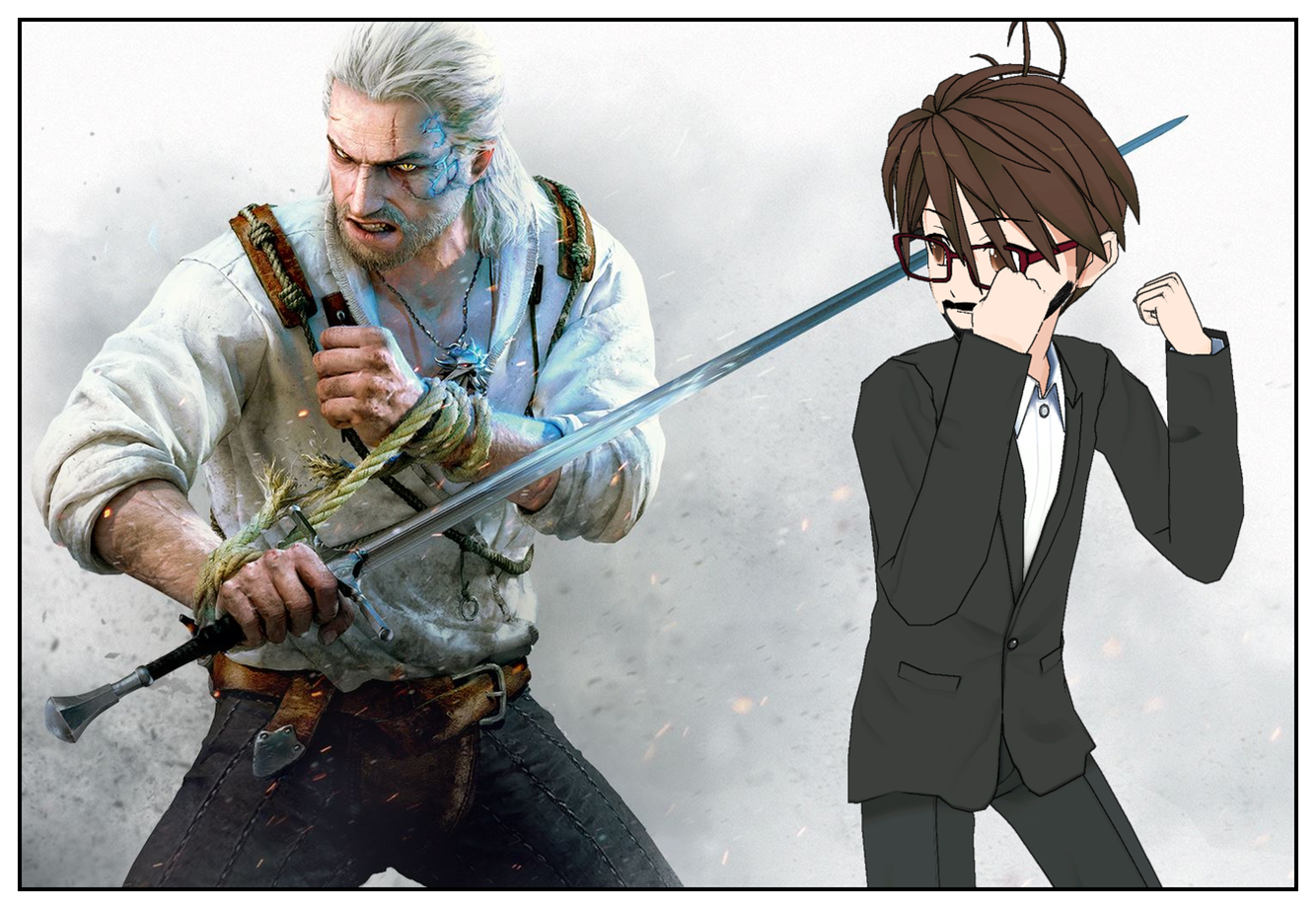
I've been enjoying The Witcher 3 so far. It's a lovely looking game with an interesting plot, some great characters and a shitload of things to do.

To a certain extent, I almost wish it was an adventure game rather than an RPG.

The reason I say this is that The Witcher 3, much like its predecessors, is at its absolute finest when presenting protagonist Geralt with quests that are much more complex than "go to x and kill y". Which, to be fair, is most of them, since The Witcher has never really done the whole "bring me 15 squirrel ears" thing, thankfully. However, the real highlights of the game are the quests that involve a lengthy investigation of something strange that has been happening.

These quests, of which there are numerous, play out in a similar manner to something like the enormously underrated Murdered: Soul Suspect, requiring you to comb crime scenes for information (perhaps using Geralt's heightened Witcher Senses) and come to some conclusions of your own as to what happened. Many of these quests have branching paths and different consequences for how you choose to proceed in them, too, making for an interesting experience where you never feel like you've made the "wrong" choice.

Since the world of The Witcher is one of dark fantasy, a lot of the things Geralt ends up investigating are pretty gruesome and horrifying. But, as with most people who deal with the unpleasant on a daily basis, Geralt has both a strong stomach and a wry sense of very black humour.

Herein lies one of the biggest strengths of the whole Witcher series when compared to the interminable tedium of Bethesda's Elder Scrolls series: personality. Despite the fact you can build Geralt's abilities how you see fit as he levels up, he is a strongly written character in his own right. Sure, there's a certain degree of leeway in how much of an asshole you can be to people throughout, mostly in order to allow for various different conclusions to narrative threads, but even with these options available, Geralt is still a well-defined character who maintains a consistent personality throughout the whole game. Whole series, in fact; he's grown and changed over the course of the three games he's been in to date, but he's still recognisably Geralt.

I'm intrigued to see how well-paced the whole game is. It's entirely possible to avoid the story-based quests altogether and just go hooning around the countryside on horseback looking for "points of interest" to clear, which usually involve killing monsters or bandits, but this gets a bit tiresome after a while. Instead, the best way to play, it seems, is to focus on a quest and where it takes you, pick up any other quests you might find on your way between key locations, and perhaps drop in on any points of interest that come up on your journey if they're not too far out of your way. Attempting to "grind" your way through each of the game's maps by methodically clearing out all the points of interest is clearly a way to drive yourself to insanity, and indeed it's precisely because I did this in Oblivion that I grew to hate the Elder Scrolls games. (Well, that coupled with their complete lack of personality and atrocious storytelling, anyway.) Thankfully, it's not necessary; it takes only a thousand experience points to gain each and every level, and completing quests is by far the most efficient means of getting said experience points, so in many ways the game is actively pushing you towards its most interesting things to do, which is absolutely fine by me.

Been playing for 18 hours so far and Geralt hasn't shagged anyone yet, though; wonder if I'm doing something wrong…

2348: I Beat Ys Seven

0348_001

I beat Ys Seven tonight. That leaves just one more Ys game to play through before I've beaten every one of the currently available games in the series, making me eminently ready for Ys VIII, whenever that makes its way West, because it almost certainly (hopefully) will.

Ys Seven is an interesting change after the three games built on the Ys VI engine — Ys VI, Oath in Felghana and Ys Origin. I kind of miss some of the defining aspects of those three games — most notably the platforming elements, which are completely absent from Seven — but Seven very much does its own thing and takes ownership of it, creating an experience that is satisfying in its own right, even if it's a slightly jarring change of pace initially.

The first thing to note about Ys Seven is that it's at least twice the length of previous Ys games. This still puts it at well under the average length of a typical JRPG these days — it took me 24 hours to beat on Normal — but makes it feel significantly longer than the previous titles. This isn't a bad thing, though; along with the greater length comes greater scope: Ys Seven's narrative feels more ambitious and, for want of a better word, epic than its predecessors; while past Ys games felt very much like you were taking care of business in a small, localised area, Ys Seven does a good job of making you feel like the fate of a whole country is at stake. There's a sprawling overworld to explore, and several villages, each with their own unique aesthetic.

This rather more sprawling scale comes at a slight cost: while past Ys games' small geographical area meant that pretty much every character in the game had a name and a story to tell, Ys Seven's NPCs, for the most part, feel quite a bit more generic. This is partly due to the fact that none of them have names, instead being called things like "Obliging Maid" and suchlike — with the curious exception of questgivers, who all have very Western names like "Kevin Lassiter" — but I suppose it does help keep the focus on the main cast, which, in keeping with the rest of the experience, is significantly bigger than previous Ys games.

Even your party is bigger. Adol is no longer alone, bringing up to two companions in tow this time, and there's a reason for this: enemies now have various resistances, meaning you need a balanced party that can cover all types of damage, otherwise you simply won't be able to kill some enemies. For most of the game, there's little reason to switch out from the default party of Adol, longtime companion (but first time playable) Dogi and whoever fills the third slot at that point in the party, but upon reaching the final boss the reason for the total squad size being seven members becomes clear. Be sure to keep everyone's equipment up to date — thankfully, inactive characters gain experience at the same rate as the front line, so there's no need to go out of your way to grind too much.

One aspect of the game that feels very different comes when you're fighting a boss. Whereas in past Ys games boss fights were almost puzzles and dexterity challenges, where you'd have to dodge incoming attacks and take advantage of openings, Ys Seven's bosses are often damage sponges that, at least on Normal difficulty, feel like they can be beaten more through brute force than anything. On the harder difficulty levels I can see them being stiffer challenges, because you're more limited in the healing items you can carry, but certainly on Normal, I could get through most bosses without too much difficulty by just making sure I had enough potions on hand. It wasn't until the final boss, which has significantly more complex mechanics than any of the other fights in the game, that I found myself having to be a bit more careful with what I was doing.

This isn't necessarily a bad thing; Ys Seven's boss fights are enjoyably hard work and feel like you're struggling against a powerful opponent. Like a lot of other things in the game, though, coming straight off Oath in Felghana, Origin and Ark of Napishtim, it's a bit of an adjustment for sure.

Above all, though, Ys Seven keeps the heart of Ys firmly intact. It's wonderfully sincere about everything, but isn't afraid to show a sense of humour now and again. That said, it's overall considerably darker than any of the previous installments, particularly around the middle of the story, giving it a distinctive feel. It's not overly grimdark or anything — it's still a bright, colourful, earnest quest featuring a silent protagonist who quite literally lives for adventure — but it was a little surprising to see things like a shirtless Adol getting tortured in a jail cell after a particularly dramatic revelation partway through.

I enjoyed it a lot, in other words. Now I just have Memories of Celceta to go and I'm up to date. And then I will have to physically restrain myself from going back to the beginning and doing a Nightmare run, I feel…

2329: Another Trip Up Darm Tower

0329_001

I finished my first playthrough of Ys Origin earlier. I chose to play through for the first time with Yunica Tovah, who apparently handles most like Adol in the subsequent 3D Ys games, but now I'm going through it again with Hugo Fact, who plays impressively differently.

One thing that struck me with Ys II in particular, and it appears to be a pattern that continues with Origin and its ilk, is how much shoot 'em up DNA is in this series. Numerous bosses have distinctly "bullet hell"-style attacks requiring intricate dodging and pattern recognition, for example, but this connection is most obvious when playing Origin as Hugo, since even his basic attack involves firing bullets. Hell, he even has two "options" (sorry, "The Eyes of Fact") floating either side of him to fire additional bullets, which double in number when he uses Boost mode.

It's interesting quite how different a feel this contrasting playstyle provides, since you're otherwise going through pretty much the same levels and boss fights as in Yunica's story, albeit with different cutscenes and a few minor changes here and there. Boss fights in particular are a very different affair when playing as Hugo, since rather than it being necessary to get in melee range as with Yunica, as Hugo you have to play a lot more defensively, attacking from range in suitable openings and taking great care to avoid attacks, since Hugo is considerably squishier than Yunica is. Not only that, but Hugo's individual attacks do quite a bit less damage than Yunica's axe and sword swings, though he makes up for this by being able to attack 1) from a distance and 2) much more rapidly than Yunica.

I'm also playing this second runthrough on Hard difficulty; I'm not quite brave enough for the series' signature Nightmare difficulty yet, but I thought I'd step things up for Hugo, since I felt pretty confident with Yunica by the end of my first playthrough. It's noticeably harder, particularly when it comes to boss fights. I'm not entirely sure if this is down to enemies' boosted stats or simply the different way Hugo plays that I haven't quite gotten used to yet, but I'm finding myself having to retry boss fights more times than I did on Normal with Yunica.

One of the things I like about Ys Origin so far is that although the boss fights are very difficult, I don't think there's been a single encounter in the game where I felt like I was beating my head against a wall. In other words, although I might fail a boss fight several times in succession, I'd make noticeable progress each time, chipping away a little further at the enemy life bar each time until I was eventually successful. It's a matter of practice and skill rather than luck; in some ways, it reminds me quite a bit of Final Fantasy XIV raid bosses, where you need to know what's going to happen in the fight before you can even think about being successful; flailing wildly isn't going to work, at all.

Anyway. I'm keen to get through Ys Origin for a second time with Hugo, and then polish it off a third time with the "secret" third character, whose story is quite a bit different from Yunica and Hugo's, from what I understand. By playing all three stories, you get the full narrative; this is an approach that some people find tiresome — particularly if they have to play through the same levels again with a different character, as you do here — but it's something I always enjoy. I really enjoy seeing stories from multiple perspectives, and while Ys is fairly conventional fantasy in many ways, it's well-written, well-localised and features some entertaining, endearing characters, so I'm more than happy to plough through it to see everything it has to offer.

Then after that, there's Time Attack, Boss Rush and Arena Mode, of course, which I'm curious to at least try… so much for being a short game!

2317: 25 Floors Up

0317_001

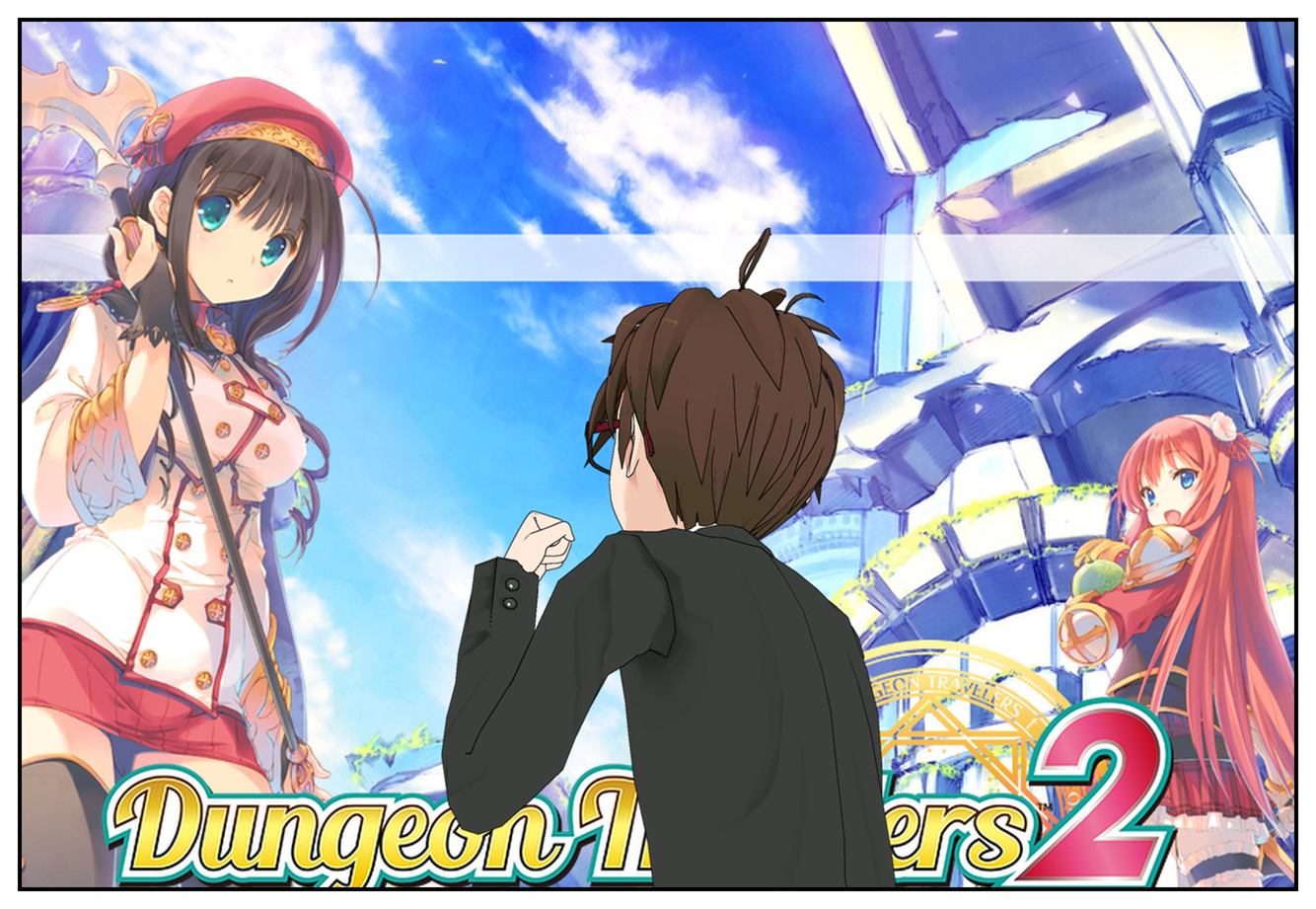
I'm on the 25th floor of the Tower of Bogomil, Dungeon Travelers 2's very definitely, totally, positively final dungeon, honest. There are just five floors to go until I reach the top and the final final boss, though I suspect I will probably have to go and fight at least one of the "Gods" that lurk at the bottom of the other postgame dungeons before it will let me in to get my teeth kicked in by the boss. Oh, there's also a five-floor annex to the tower, because of course there is. Each floor of this is pretty small, from what I understand, though; they're mostly about additional boss fights.

I checked the clock when I made my last save tonight: 208 hours. This is officially the longest I've ever spent on a completely single-player game. Final Fantasy XIV has it beat in terms of total playtime, of course, but being an evolving MMO, that's a somewhat different situation. Previous holders of the personal playtime records for me included Persona 3 (somewhere around 90 hours), Persona 4 (likewise), several of the Hyperdimension Neptunia games (100+ hours each, albeit split across several playthroughs) and Xenoblade Chronicles X (well over 100 hours and I hadn't even finished half of it — must go back sometime).

What's kind of impressive about that playtime for Dungeon Travelers 2 is that it's a single playthrough. I haven't started again, I haven't done a New Game Plus — this is the same save file I started months ago. And only now, after 208 hours, am I even vaguely near finished.

What's also impressive about the playtime for Dungeon Travelers 2 is that the vast majority of it occurred after the main ending to the story. The "Otherworld Chapter", as the postgame is called, unfolds largely without an ongoing narrative — it simply unlocks a series of challenging dungeons in sequence and tasks you with navigating your way through some increasingly perilous and head-scratchingly confusing locales with a mind to eventually opening up the aforementioned Tower of Bogomil and making your way to the top. Why? Just because. (Well, technically you think the final boss of the story, who managed to escape after you defeated her, might be lurking up there.)

This motivation for dungeon-crawling is one of the purest there is: the simple joy of exploration and discovery. And this is one thing that Dungeon Travelers 2 is absolutely exceptional at that. It may obviously be working within some tight budget constraints — there are a lot of palette-swapped enemies throughout the game, and each dungeon is based on a single tileset, which in the case of the Tower of Bogomil you see a whole lot — but the absolutely exemplary level design makes up for these limitations and then some.

What I found interesting is that Dungeon Travelers 2 keeps a lot of its tricks up its sleeve until the postgame. One of the latter story dungeons features some switch puzzles that involve opening either red or blue gates at once, never both, but the postgame also adds floors with conveyor belts, floors that are interconnected by ladders and pitfalls, floors that are full of teleporters on every step, one-way walls, secret passages and doors that demand you have a specific party makeup or class present in order to proceed.

Essentially, the main story of the game is getting you prepared for this pure exploration, combat and character-building experience in the postgame. You get a taste of what to expect in the future in the story; you get thrown in at the deep end once you're past the "final" boss. And it's hugely enjoyable, as my playtime will attest.

Five floors to go, then. I'm hoping I get it finished by the beginning of next month, because there's a ton I'd like to write about this game over on MoeGamer, so watch over there for some in-depth thoughts.

2315: RPGs are Weird

0315_001

In case you hadn't noticed, my favourite genre of game is the RPG or role-playing game. Which is kind of a weird type of game, when you think about it, particularly from a modern perspective.

Computer RPGs (hereafter "CRPGs") have their roots in tabletop roleplaying systems like Dungeons and Dragons and its ilk — indeed, the Dungeons and Dragons inspiration is very obvious even in Japanese titles like the original Final Fantasy, and we've also had a swathe of outright Dungeons and Dragons titles for various platforms over the years. Where CRPGs and tabletop systems diverge, however, is in their main purpose.

Tabletop role-playing is about different things according to who you speak to, but there are two broad things it allows its participants to engage in: firstly, it allows them to play-act a fantasy of some description, be it ruling the night as a vampire in modern-day New York, exploring the Planes and fighting otherworldly horrors or battling the Empire alongside Luke Skywalker and Han Solo. This is, for many people, the biggest attraction of tabletop role-playing: the chance to be someone else for a little while, and enjoy the experience with other people. Tabletop role-playing rules tend to be deliberately a little fuzzy around the edges, allowing for some bending here and there in the name of making a more entertaining experience for the participants; indeed, some of the most successful, effective systems have some of the most straightforward rules.

When those rules come into play, though, that's the other big strength of tabletop role-playing: they allow for all manner of things to happen. If you really want to boil it down, they're a means of using mathematics to create an abstract depiction of some sort of action, whether it's something that is possible to depict literally (attempting to use diplomacy to prevent a war) or something that is pure fantasy (infusing yourself with the power of the Gods to leap 50 feet into the air and stab a demon in the left nostril with your holy sword). But for most groups, these rules are in service to the main attraction: the roleplaying; the communal storytelling; the shared fantasies.

CRPGs, meanwhile, focus almost exclusively on this latter aspect: the use of mathematics to abstractly represent things happening. It's pretty rare to find a CRPG that affords you complete freedom to do what you want, and where they do exist, these experiences often feel a bit "empty" thanks to the lack of true human interaction — plus perhaps the awareness that the "freedom" you're enjoying is just an illusion: all it really is is the game designer having thought of more things that you might do than some other people would have.

Because truly freeform role-playing doesn't really work when you don't have other humans in the equation, we get a focus on mechanics and rules, with perhaps a story of some description overlaid on the top as justification for the rules and mechanics you're following. But it's still a little strange, as I say — particularly through modern eyes.

Why? Because we're at a stage where we don't need to abstractly represent things as much as we used to. In the early days of video games, the abstract, mathematical mechanics of CRPGs were in part a response to technological limitations: they allowed for the representation of things that it simply wasn't possible to render believably on the screen. Now, though, graphics hardware has come along to such a degree that there's not much we can't depict completely visually, given a talented art and animation team to bring these things to life. Not only that, but with the advent of motion control and virtual reality, we can even put ourselves among these things: these strange and fantastical locales; these weird and wonderful creatures. And we can interact with them physically.

So why, then, do we still have turn-based role-playing games that are deliberately and heavily abstract and unrealistic in their depiction of anything from battle to relationships?

Well, for a number of reasons, the first being that not every development company has infinite resources to be able to produce a game that depicts your every action literally on the screen. But there's also the matter that engaging in abstract mechanics and learning how a game's systems work is part of the fun. You can learn how to take full advantage of a real-time system, sure, but that takes practice and, frankly, not everyone has the physical dexterity to be able to do that. A mathematical-based system like a CRPG, though; that's accessible to pretty much anyone, though of course it does favour those with a bit more of a mind for numbers over those with twitch reflexes.

And then on top of all that, there's the fact that even though it is possible to depict a lot of things visually in games nowadays, there are still certain things that it's hard to represent in anything other than an abstract manner. Take the combat in something like Dungeon Travelers 2, for example: the concept of this game is that you're playing the role of a non-participant in combat, issuing orders for what up to five people should be doing, the results of which then unfold in front of you through a combination of visual effects, numbers popping up and text messages. By keeping to a simple representation of what would be an altogether chaotic affair if depicted literally — five people attacking up to five monsters — Dungeon Travelers 2 and its ilk allow the player to engage in enjoyably tactical, strategic gameplay that would be highly impractical to show in real-time.

The other thing that appeals to me personally about games like this is that they stoke the fires of the imagination. I know that Dungeon Travelers 2 doesn't depict things literally — there's very little animation in the game, even outside of combat — but I also know that it is keeping visual representations to a relative minimum in order to let my mind do the work. It provides just enough — the overall theme of the dungeon I'm exploring; music to support that; the voices and visual appearances of the girls in my party; the appearances and behaviours of the monsters we fight — to get my imagination fired up and fill in the blanks for myself. When Monica fires a Spiral Arrow and hits for 3,000 damage, I don't think "ooh, 3,000 damage!" — I think "Wow, that was an amazing shot." And I like that.

The bigger-name, bigger-budget CRPGs are starting to move more and more away from this sort of abstract depiction of what is happening — look at BioWare's games, for example, or Square Enix's approach to Final Fantasy XV (although in that case, it's a peculiar middle ground between a truly literal depiction and abstracted mechanics) — but I'm pretty sure there will always be a place for imagination-stoking, presentation-minimal CRPGs for people like me. At least I hope so!

2299: The Sprawling Endgame of Dungeon Travelers 2

0299_001

I must admit, when I first started playing Dungeon Travelers 2 I was concerned that its dungeons were a bit on the small side compared to the dungeon crawler I had previously played, Demon Gaze. As the game progressed, however, it became apparent that I didn't have anything to worry about.

And then I heard about the post-game content. And then I got into the post-game content.

Demon Gaze had a certain amount of post-game content — most notably a fairly straightforward dungeon where you re-fought all the bosses from earlier in the game, then a horrendously difficult true final boss right at the end. It took me quite a while to plough through it, mind you, though this was partly due to the fact I was also chasing the Platinum trophy, which necessitated a certain amount of grinding on the random number generator in the hope of getting some of the best item drops in the game.

Dungeon Travelers 2's postgame is on a whole other level, though. It's practically a whole other game's worth of content; you finish the main story of the game around about the level 50 mark or so, and the postgame will take you to 99 (and beyond, if you level reset in the hope of "crowning" your characters through permanent stat bonuses) across a number of different dungeons.

What I find most fascinating about Dungeon Travelers 2's postgame is how much effort has been put into it. I find myself wondering how many people will beat the final boss of the main story, watch the credits roll and then put the game down. It would be perfectly valid to do so, after all, since the game is technically "complete" then, even if you haven't even seen half of what it has to offer. There aren't even any specific trophies for the postgame — the only trophies you're likely to see pop in the postgame is the enormous grind that is "kill 20,000 enemies" (you won't even have killed 10,000 by the end of the main story, but you most certainly will have at least 20,000 under your belt by the end of the postgame) and the Platinum. In other words, the only reward you're going to get from seeing the game through to its true end is the satisfaction of having beaten it.

But boy, is that going to feel good when it happens. The postgame dungeons are significantly more challenging than their main story counterparts, and in some cases make use of mechanics that haven't been seen anywhere else in the game. There are dungeons where you have to contend with the relationship between several different floors, dungeons where you have to flip switches to open coloured doors in the right order, dungeons where you have to bring certain classes in order to pass through certain doors (bet you wish you'd leveled Tsurara now, huh) and dungeons that are just a single floor, but absolutely enormous.

Each of the dungeons has two or three bosses to fight as you progress through them, and a level 99 God boss at the very end who will most likely destroy you if you charge in there when you first reach them. Instead, what you're supposed to do is explore each dungeon until you reach a trigger point (normally just before the door to the God battle) which opens up the next one. In a couple of cases, you have to increase your Quest Rank to a certain level before the next dungeon will open up, too, so hopefully you've been paying attention to the Quests as you go through the game!

I'm currently on the second-to-last dungeon, Gear Castle. This is a five-floor futuristic tower with a lot of puzzles. The first floor featured switches that opened blue or red doors (and closed the others), while the second was largely based around conveyor belts that you could switch the direction of with levers around the level. The third, which I'm currently on, features a mix of these two aspects, and I'm yet to see what the fourth and fifth floors offer.

Once I'm through Gear Castle I'm on the home straight: all that stands between me and final victory — aside from that 20,000 kills trophy, which I have no idea how close I am to — is the 30-floor Tower of Bogomil and whatever lies at the very top. I understand that reaching the 26th floor of Bogomil is a significant moment, as it's at this stage your party should be levelled enough to take on the Gods, so I'm looking forward to that with a certain amount of trepidation.

All in all, the clock is going to be well over 200 hours by the time I'm finished with this beast, and I have absolutely loved it throughout. It's seriously one of the best dungeon crawlers — if not RPGs, generally — that I've ever played, and more people need to play and love it.

Assuming I make it to the end by then, I'm planning a month of coverage on MoeGamer next month. There's certainly a hell of a lot to write about.

2277: That Girl's in Lesbians with That Other Girl

0277_001.png

Playing through Gust's latest game Nights of Azure, I was struck with how… explicit the romantic relationship between the two heroines is. I don't mean sexually explicit; I mean that the fact that the two of them even have a romantic relationship is acknowledged at all.

Yuri (lesbian) themes are frequently a part of Japanese popular media — an interesting fact to toss back at those who are keen to paint the nation as being somewhat less than progressive when it comes to attitudes towards gay people. Indeed, while "real world" Japanese society in general may not appear to look on homosexuality with as tolerant an eye as we like to think we have here in the West, it's clear that there's plenty of the old "public face, private face" going on, since there are a ton of creators who are obviously fascinated with the idea of same-sex relationships — both male-on-male and female-on-female.

The thing that struck me about Nights of Azure's depiction of its central relationship is the fact that, as I noted above, it's pretty up-front about it. This is noteworthy because although yuri themes often make an appearance in Japanese popular media, they're often more implied than explicit, with it often being left up to the audience (and fan artists) to explore these relationships further.

Take something like popular anime Love Live. Even the most casual viewer will notice the blossoming relationship between Maki and Nico by the end of the run, but the show never particularly draws attention to it; it's just sort of there. Likewise, the Senran Kagura series features a number of obviously romantic relationships between many of its all-female cast members, but it's rare for these to be acknowledged or not "laughed off" by the characters — though, interestingly, latest installment Estival Versus did feature a scene where one character specifically called out Asuka and Homura for being so obviously gay for each other, even if they'd never properly admit it. And the Neptunia series is riddled with yuri undertones, ranging from Nepgear and Uni's heartwarming relationship to Noire's obvious but perpetually unspoken interest in Neptune — and, in most recent installment Megadimension Neptunia V-II, K-Sha's obsession with Noire, though this particular instance was an explicit admission of lady-love.

Nights of Azure, though… it's right there from the beginning, and it develops over the course of the game. Several other characters comment on it. And, most tellingly, there are outright romantic scenes between protagonist Arnice and other leading lady Lilysse. The two share moments of intimacy with one another that, on reflection, are actually quite unusual to see so explicitly depicted in games: in one scene, Arnice comforts an upset Lilysse by draping her arms around her neck from behind and holding her close; in another, the two dance together, their devotion to one another immediately apparent from the way they look at each other. And after a particularly heartfelt make-up session after a dispute between the two, we see them waking up in bed together, having obviously slept facing one another holding hands. (There's no yuri sexytime, though; it's not that kind of game.)

As with other Japanese games that feature yuri themes, Nights of Azure treats its central relationship with the appropriate amount of respect: that is to say, it's just there, and no-one thinks it's anything unusual. A couple of male characters are introduced by hitting on Arnice, but once they see she and Lilysse are obviously involved with one another, they back off — not with an "oh, wow, you're gay" sentiment, but with a simple recognition of "oh, well, you're together" that would have been the same if either of the two ladies involved were the opposite gender.

This is the sort of progressiveness and diversity that is a very positive part of the modern games industry — however, sadly, given Nights of Azure's status as a niche title that a significant number of people probably haven't even heard of, it's a game that you likely won't hear many games writers from big sites talking about.

Consider this my small attempt to acknowledge and celebrate the good that this game is doing, then, and rest assured that Nights of Azure is very much worth your time as an action RPG as well as an interactive lesbian experience.

2274: Holding Back the Night(s) of Azure

0274_001

The more I play Nights of Azure, Gust's latest game, the more I like it.

It's a slow burn, though, I must admit; although the setup and premise is intriguing, mechanically it feels a little obtuse to begin with — or perhaps I'm just overthinking it and trying to play it like a conventional grind-heavy RPG, which it emphatically isn't.

There are a whole bunch of unconventional aspects to the game, most notably its progression system. The level cap is just 11, for one thing, and unusually, the protagonist's level progression isn't a case of grinding for experience; rather, you collect "Blood" from fallen enemies, and then make use of this in increasingly large quantities to gain a level. Levelling up increases your base stats, unlocks new skills to purchase using the four different types of skill points, and sometimes gives you access to new weapons or abilities.

However, there's a more noteworthy aspect to levelling up, which is that it gives you access to a story scene between the protagonist Arnice and the "Maiden of Jorth", a mysterious young woman who looks awfully like Arnice's ladyfriend Lilysse and hangs out in a dream world. During these scenes, you generally have the option to either find out a bit more about the background lore of the world or a bit more about the relationship between Arnice and Lilysse.

It's interesting to see level progression and narrative progression intertwined so closely, as this isn't something that happens very often. In fact, outside of level-locked quests in MMOs, the last time I remember it happening in a single-player RPG is The Granstream Saga on PlayStation 1, though this came at it from the other angle in that you levelled up at predefined moments in the story rather than levelling up triggering story scenes.

There's a more conventional levelling system in there too in the form of the "Servans" system that forms the main basis for the battle mechanics. During the game's action sequences, Arnice can take one or more "decks" of Servans with her, and summon them in exchange for her SP. She can have up to four Servans out at once, and each of them have a combination of passive, automatically activated and manually activated "Burst" abilities. They all act independently of Arnice; while you can give them some rudimentary orders such as "Follow me" and "Attack my target", they mostly do their own thing according to their personality — some loyally attack your target without question; others hang back and attack if they feel like it; others still don't like fighting at all and would rather dig up items for you.

There was the potential for the lack of direct control of the Servans to be enormously frustrating, but it seems to work pretty well. Arnice isn't an especially strong combatant by herself, but wading into the melee yourself generally sends a clear message to your Servans as to which enemies you want to focus on. And the more you use them, the more they level up; after an action scene, they gain experience points in a more "normal RPG" style, levelling up and unlocking abilities of their own.

Each of the Servans seems to have a very different use; I have what feels like a good party right now, but I'm sure it won't be ideal for every situation. Of particular note in this system is the fact that each Servan has a coloured affinity, and the combination of affinities in your deck (or, rather, which affinity has a clear majority) determines what weird and wonderful demonic form Arnice can transform into after charging up through battle. These demon forms are enormously powerful in various ways — some hit hard, some are very fast, some can take a beating. They're particularly useful when it comes to the bosses in the game, which are interesting, challenging battles that demand successful juggling of Arnice's attacks, your Servans' attacks, positioning and well-timed transformations.

I don't feel I quite have my head around all the mechanics in Nights of Azure just yet, but I'm enjoying it a lot. The story and characters are compelling, and the game doesn't waste a lot of time with endless dialogue sequences; it's pretty pacy, moving from one episode to the next in short order, and the action sequences are cut into short, 5-15 minute chunks, making it an easy game to dip into.

There's a whole bunch of interesting stuff going on in this game, in other words, and I feel it's probably a strong contender to spend a month on over at MoeGamer in the near future. So I think I'd probably better start taking notes!

2266: Nights of Azure: A Peculiar Game Destined for Cult Status?

0266_001

Two of my favourite games of all time are Cavia's Nier and Ganbarion's Pandora's Tower. They're both gloriously unconventional takes on the role-playing game genre, mechanically and narratively, and they're both extremely rewarding to engage with. They were also both the recipient of mediocre to middling reviews when they were first released, and have since — at least, in Nier's case — broken free of that critical mire and attained cult status.

I've only played a couple of hours of it so far, but Gust's Nights of Azure looks like joining these two overlooked classics in "flawed masterpiece" territory, as it has a lot in common with these two ambitious titles.

Nights of Azure casts you in the role of Arnice, a half-demon woman tasked with slaying Fiends and keeping a young woman called the Saint safe so that she can perform a ritual that will seal away the evil Nightlord and prevent the world from falling into perpetual darkness. There have been numerous Saints throughout the generations, but this time around the young maiden who has been chosen happens to be one Lilysse, a woman with whom it quickly becomes very apparent that Arnice has previously had an extremely close relationship with. Like, lovers close.

The two women are polar opposites in many ways. Lilysse is carefree and demure, while Arnice is confident and serious, though she has an easily rattled side to her. Their reunion after what has seemingly been quite some time apart begins with the two displaying that characteristic awkwardness around one another that two former lovers often show, but it's obvious that there are still feelings there — particularly once Arnice starts finding crystallised memories around the city that forms the backdrop to the story, and when she starts exploring dream sequences that give you the option of either exploring the overall lore of the setting or the relationship between Arnice and Lilysse.

The gameplay of Nights of Azure isn't your standard action RPG. There's a bit of Castlevania in regard to the gothic opera aesthetic; there's a bit of Shin Megami Tensei in the demon-summoning mechanics — the majority of your damage output in combat will come from your summoned demons; Arnice is mostly there to give orders and support; there's a bit of 3D brawler action in terms of the basic controls; and there's even a touch of the Souls series in there with regard to one of the game's two main currencies being "blood" which can be used either to power up Arnice or purchase things.

Combat is fairly straightforward but satisfying. Arnice has a weak and a strong attack — initially with just a sword, but later with three other weapons — and a special attack that consumes her SP bar. She also has four decks of up to four Servans each to summon, and these also cost SP to summon. When a Servan is summoned, it performs a special ability, so it's tactically advantageous to wait for a good moment to summon them rather than getting them out right away; once they're out, they also have access to a Burst ability as well as their skills that they use automatically. This Burst ability is strong and tied to the Servan's role in the party, be it tank, damage dealer or healer, and is limited by the Servan's own SP bar.

The Servan stuff is interesting because it reminds me of the good bits of Japanese collectible card games on mobile: you collect units, you level them up and upgrade them, you customise them with attachments, and you take a suitable deck into battle with you to deal with any encounters you might face. Unlike Arnice, Servans level up just by engaging in combat — no Blood required — and gain access to more abilities as they reach higher levels. Arnice can find or purchase Fetishes throughout the game, too, and these can either be "actualised" into a new Servan, or given to an existing Servan to buff them up. Servans' skills can also be customised by giving them various items.

The structure of Nights of Azure is pretty intriguing, too. All the main action goes on at night-time, and you're limited to bursts of 15 minutes in the action stages before you have to go back to Arnice's home base. In practice, this never really becomes an issue because you'll reach a checkpoint or finish an area long before the timer expires in most cases. After coming back from the evening's adventures, Arnice does some "daytime activities" that can result in the acquisition of skill points in four different fields, which can then be spent to acquire different abilities. She's also able to take on quests aside from the main story, which are generally either "kill [x] of [y]" or "find [z]", but reward her with useful items and currency. There's also a battle arena where she can take on combat challenges with specific conditions to clear, with varying rewards on offer according to what her score is when she's completed the challenge in question.

All in all, it feels like a very, very odd game so far — though this isn't a bad thing at all. It feels inventive and interesting rather than being same old, same old, and I'm interested to see how it develops further. The core narrative of the relationship between the two leading ladies is intriguing and compelling, and the whole narrative is dripping with initially unexplained mysteries, supported by the overall aesthetic having a wonderful otherworldly feel to it — drenched in blue mist with character models that look like flowing pencil sketches, somewhat similar to the Atelier series.

And the music. Oh gosh. How wonderful is the music? Combining Michiru Yamane-style gothic rock tracks in the action stages with some distinctly Shoji Meguro-style jazz and funk back at the hotel and some beautiful solo piano pieces during the more heartfelt moments, the soundtrack is absolutely lovely.

It's a pity the translation is so atrocious, riddled with typos and grammatical errors — and one of the PSN trophies even refers to the protagonist by the wrong name, presumably an erroneous transliteration from the original Japanese — but ultimately even these flaws don't detract from an immediately intriguing, compelling and downright bizarre action RPG that deserves a great deal more love and attention than I can guarantee it's (not) going to get from the gaming community at large.