2509: Still on Chapter Three

0509_001

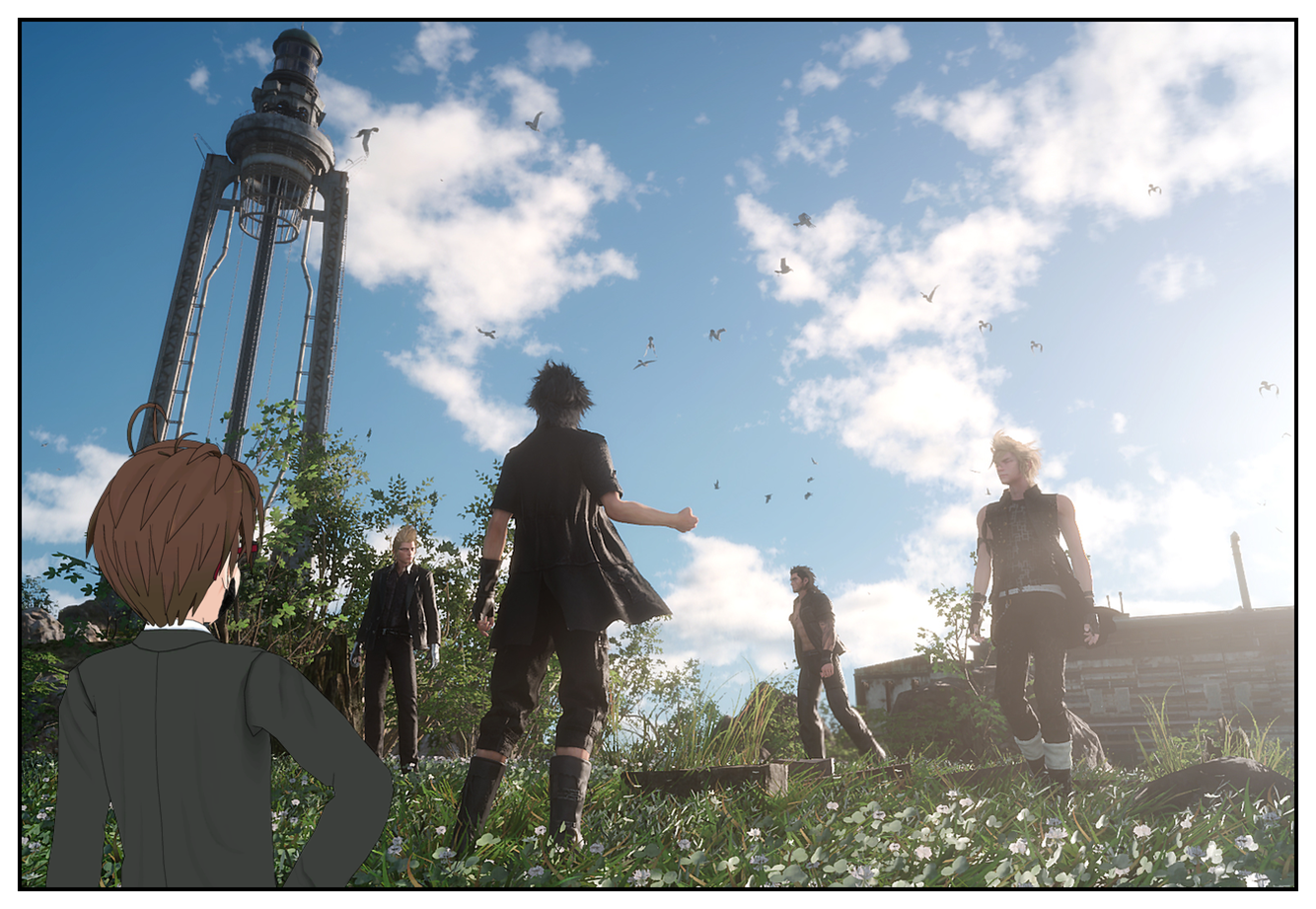
I am still on Chapter Three of Final Fantasy XV, appropriately dubbed "The Open World" — the point at which the majority of the main map opens up to you and you're let loose to go and piss around doing whatever you want before progressing the main story.

The fact this moment occurs so early in Final Fantasy XV is a curious inversion of the usual formula for Japanese RPGs in the Final Fantasy mould. The typical format is that the game spends anywhere between 10 and 30 hours sending you on a linear quest that takes in most of the major locations around the world, conveniently introducing you to all these places and gradually providing you with increasingly unrestrictive means of transportation between them. At some point in the game — usually not long before the final confrontation and the end of it all — you are effectively given the "keys" to the world and complete freedom to explore, usually in conjunction with some particularly convenient means of getting around such as an airship.

Not so in Final Fantasy XV. Here you're given the open world almost from the very beginning of the game, and there are a hell of a lot of things to do in it. I have been finding the myriad sidequests and hunts enormously entertaining and compelling, so much so that I haven't advanced the story beyond the party's arrival in the major town of Lestallum, and yet somehow I'm 30 hours deep in the game and past level 40 on all my characters.

There's an argument that this kind of structure kills pacing somewhat, and it's often a bugbear of mine with open world games. But I sort of feel like it makes sense this way around: that "open world" bit at the end of older Final Fantasy games often felt a little peculiar, as the narrative was demanding that you fend off some sort of imminent disaster, and yet there you were breeding chocobos, investigating crashed planes underwater or collecting frogs to get through a forest. The narrative demanded urgency, in other words, but the gameplay discouraged it.

In Final Fantasy XV, meanwhile, after the dramatic opening of the game, Noctis and his companions are simply out in the world, attempting to operate incognito while developing their own skills. While the Empire's invasion of Noctis' home city of Insomnia is something that needs Sorting Out at some point, the Noctis at the beginning of the game is not ready to face up to that responsibility, nor is he skilled enough or familiar enough with his unique powers to be able to simply charge in and take on a whole empire. It makes sense, then, for him to travel around the world, coming to understand it with his friends, developing relationships with people who could prove useful to know in the future, and improving his own skills in the process. The Empire will still be in Insomnia tomorrow, after all, and retaking a capital city is not the sort of thing you want to rush.

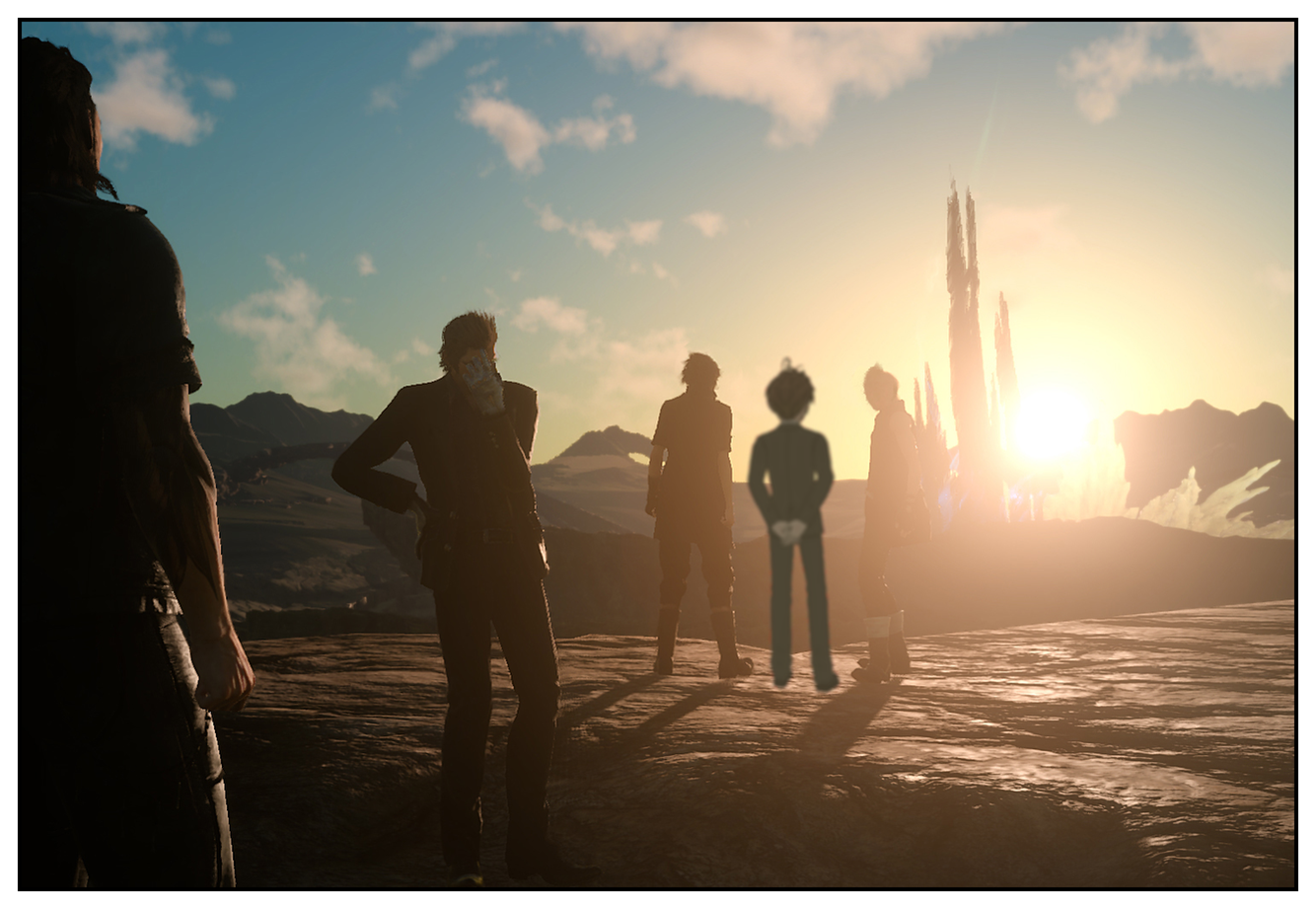
Practically speaking, it doesn't really need all that much justification, as exploring Final Fantasy XV's world is simply fun. Today I particularly enjoyed encountering the Rock of Ravatogh, a dungeon at the far Western side of the map that is actually a landmark you can see from the far Eastern side. Yes, it's that old open-world favourite "if you can see that mountain, you can go to it" — or in this case, "if you can see that mountain with weird pointy glowy bits sticking out of it and smoke billowing out of the top, you can go to it".

The Rock of Ravatogh, despite being an outdoor location, is treated as a dungeon rather than just a hill that you have to find your way up. This makes it a much more enjoyable, spectacular experience to climb, as it's been designed and paced to feel like a real trek up a mountain, rather than simply walking in a straight line up a sloping grass texture. There are sections where you need to avoid slipping, there are sections where you need to climb cliff faces, there are sections where you need to pick your way along perilous paths with sheer drops to one side of you. And there are some amazing views of the game world along the way, plus a great reward for making it to the very top.

The Rock of Ravatogh is only the second dungeon I've encountered in Final Fantasy XV, but it's very different to the first, which was a series of dark, underground tunnels with scary noises behind closed doors. This gives me hope that other dungeons in the game will be similarly varied and interesting to explore; I'm looking forward to encountering them for the first time.

2507: Into Duscae

0506_001

(Should have been posted last night, but I forgot to hit Publish!)

A little over ten hours into Final Fantasy XV so far and I'm well and truly on board.

Pro-tip: if you're finding the opening a bit slow, make an effort to not get sidetracked by sidequests and instead push the main story on at least until you're able to get into the Duscae region. From here, the game opens up a whole lot more and you'll have had a taste of various different experiences you can expect to see a lot more of throughout the rest of its duration.

One thing I was very pleasantly surprised about was the discovery that Final Fantasy XV has proper dungeons. This isn't particularly unusual for a Final Fantasy game, but it is relatively unusual for an open-world RPG, to varying degrees. Games like The Witcher 3 have kinda-sorta dungeons dotted around the place, but these often tend to feel like "oh look, another cave" rather than an exciting place to explore and loot. Games like The Elder Scrolls series have hundreds of the bloody things everywhere, but are often designed in a somewhat copy-paste manner, meaning that few of them feel "special". And games like the Xenoblade series pretty much do away with dungeons altogether; Xenoblade Chronicles X did have some underground areas, but again, like The Witcher 3, they felt more like part of the scenery than a discrete experience in their own right.

Relatively early in Final Fantasy XV's main story, you're taken to your first dungeon, and it works in traditional Final Fantasy manner: it's self-contained, it has its own music, it has secrets and branching routes to explore, and it has its own lineup of monster encounters. It felt like a significant gameplay moment to step into this place, and it was exciting and rewarding to explore. There were some surprising and interesting scripted encounters within, and the whole thing felt authentically… well, Final Fantasy.

And I think that's part of the reason I've never really found open-world RPGs to do dungeons in a satisfactory manner for my tastes: you often end up doing exactly the same thing in them that you do out in the open world, whereas Final Fantasy XV's dungeons look set to have unique mechanics, puzzles and methods of exploration. I'm looking forward to discovering more of them.

I think that sums up Final Fantasy XV's approach quite well, actually. It knows when to use scripted sequences effectively — dramatic confrontations, boss fights, dungeons — and when to use the more freeform, unpredictable and emergent gameplay more typically found in open world games. Purely emergent games (I'm picturing the Elder Scrolls series in particular when I use this description) often end up feeling a bit sterile and characterless because nothing has had any real soul put into it — it's all driven by mechanics. Final Fantasy XV, meanwhile, will surprise you with unscripted encounters out in the wilds (its equivalent of the random battles of yore), but also knows when would be a particularly effective time to have a monster burst through a wall or a villain to make their first appearance to make a speech and attempt to defeat you with Their Infallible New Weapon.

I like Noctis and his friends a lot; their constant banter, while occasionally repetitive, adds a lot more personality to wandering the fields than Skyrim's mute protagonist, and by restricting the party to those four core members (and occasional guests) the conversations can flow naturally rather than having to work by triggering responses to one another as in something like Xenoblade. Already I'm feeling that core theme of "brotherhood" coming through very nicely indeed. The supporting characters are great, too, running the gamut from all-business badass (Cor) to the flamboyantly colourful and gorgeous (Cindy).

I'm having a blast, in other words. I'm looking forward to my next day off, when I'll be able to really get stuck in.

2506: Fifteen

Well, it's Final Fantasy XV day and I've spent a good five or six hours playing it this evening.

It's good. Real good.

I haven't progressed that far in the story as yet as it's simply fun to wander around exploring, doing sidequests and listening to the soundtracks of old Final Fantasy games while the gang drive around in their car. However, I'm very much looking forward to the world opening up a bit more — I'm penned in to a relatively "small" area at the moment by barricades that prevent going more than a certain distance by road or on foot — and seeing what is out there to discover.

Even in this fairly fenced-off starter area it's clear that it's going to be a fun ride, though. In particular, I'm very much enjoying the combat; far from being a hack-and-slash action game along the lines of something like Kingdom Hearts, it manages to blend what looks like fast-paced action with relatively strategic, cerebral combat that rewards careful positioning and exploitation of enemy resistances and weaknesses.

And the world of Eos is one simultaneously filled with wonderment and pleasingly familiar mundanity. In the first few hours, I've spent time at a seaside resort, a motel and a truck stop, but also fought recurring Final Fantasy monsters such as goblins and flans, and run away screaming at the sight of an Iron Giant. I've hunted down groups of monsters and fished up a meal for a stray cat. And I've witnessed the devastation that Niflheim wreaked on protagonist Noctis' home city of Insomnia.

And the music. Dear lord. I already knew that the soundtrack was going to be something special from the preview tracks I'd previously heard, but the full experience is something else. Multiple battle themes according to the context make me very happy indeed, particularly as they're all wonderfully energetic, blasting pieces full of drama and excitement. But the more incidental music is very pleasant, too, changing according to the time of day and your surroundings and, in settlements, adjusting its mix according to whether you're inside or outside.

The whole concept of it being "a fantasy based on reality" has been pulled off very effectively so far. The world and the places you visit are all very plausible and realistic, but overlaid on the top of all that is the wonderful sci-fi/fantasy blend that Final Fantasy has been so good at for years. It really, really works as a setting, and I'm looking forward to exploring it in more depth over the coming weeks.

For now, though, as I have an eight-hour shift to work tomorrow and I have a cold coming on, I should probably call it a night there. Probably.

2484: Further Adventures in Hong Kong

0484_001

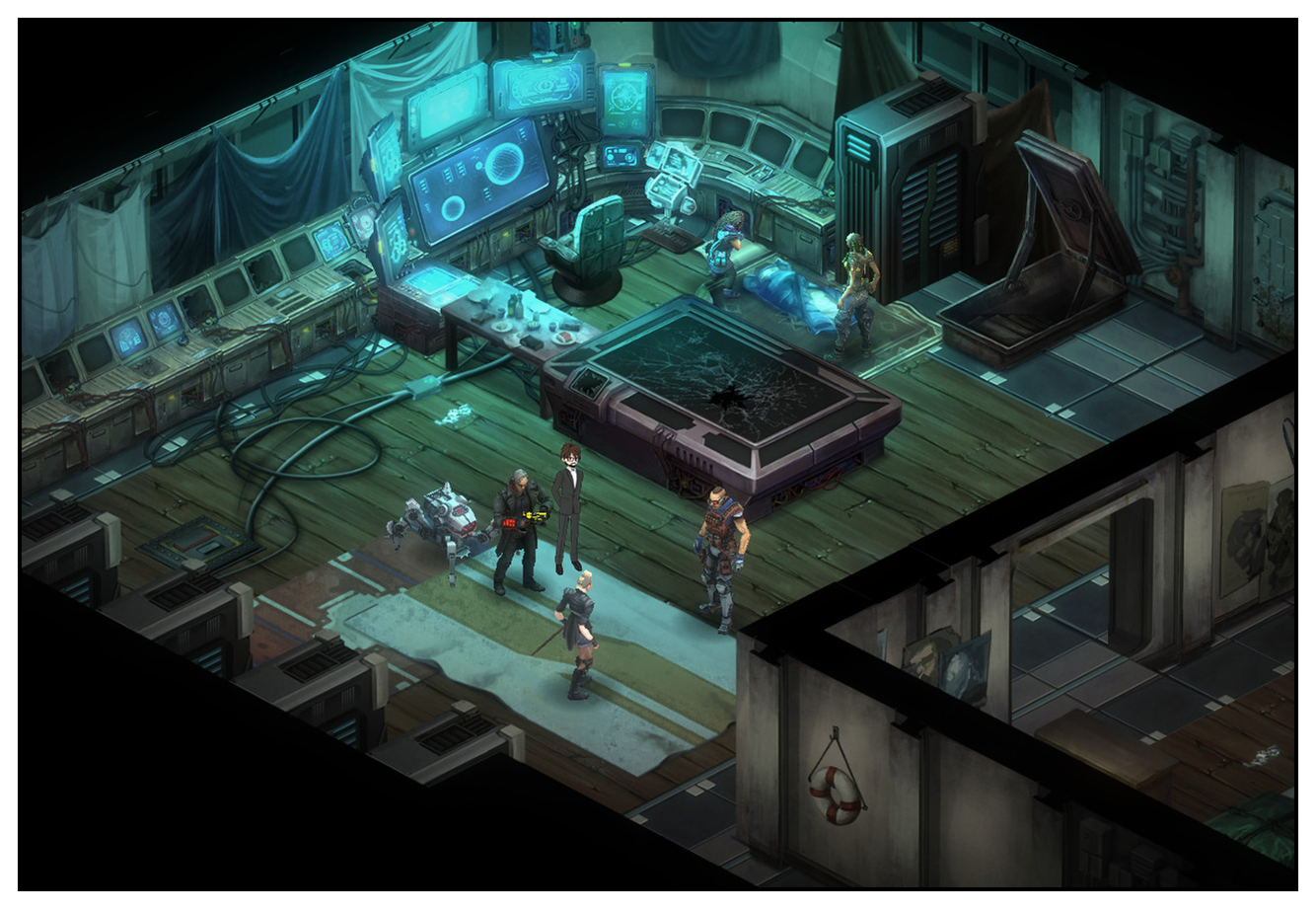
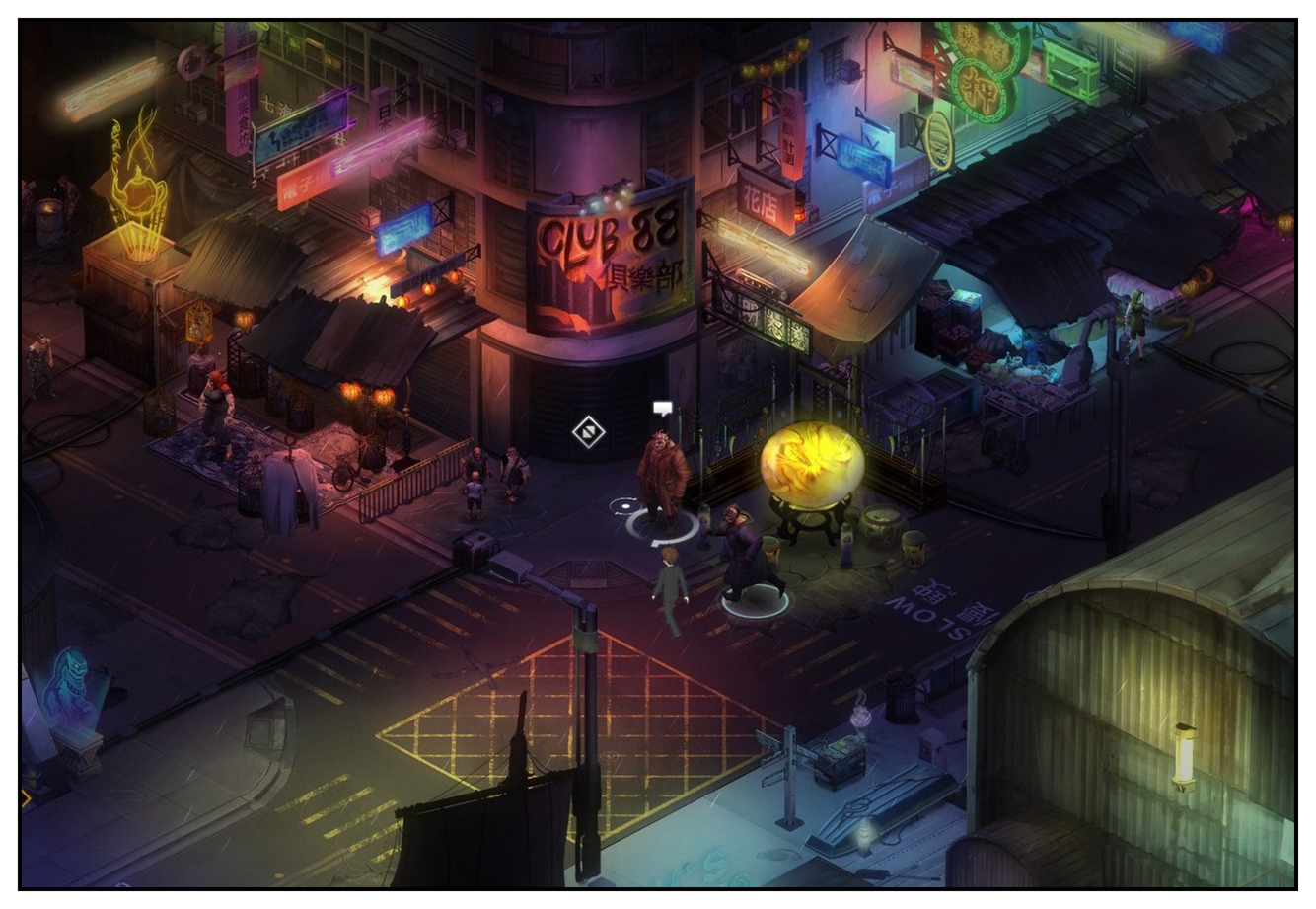
Shadowrun Hong Kong continues to be an excellent game. The best thing about it, I think, is quite how varied the different missions are — and how the game is structured, allowing you to accept multiple missions at a time, but forcing you to focus on a single one at a time once it begins. This approach helps prevent the problem a lot of Western RPGs have, where you get completely bombarded with quests and have no idea where to go and which order it is "best" to do them in, leading to an unfocused, meandering experience.

Shadowrun Hong Kong, meanwhile, features missions that take maybe 30-60 minutes to complete, tops, each of which has its own set of objectives and mini storyline to follow through. And they're not all a matter of "go somewhere, have a fight, get out again".

Over the course of last night and tonight, I've completed a variety of missions and no two have been alike. In one, I had to infiltrate a museum and steal the most valuable artifacts possible without tripping the alarms. In another, I had to solve a serial murder case — this had the option of concluding without combat were I to let the culprit go free. In another still, I had to disrupt the qi flow in the offices of a company that took great pride in its geomancy.

What it kind of feels like — which is fitting, given Shadowrun's background — is a tabletop role-playing session, with discrete adventures linked together to form a campaign, each of which features its own story, evocative narration and interesting characters. Where Shadowrun differs from other games that have attempted to evoke the feeling of tabletop roleplaying sessions, however, is that it keeps things focused and trims the fat.

It doesn't have Baldur's Gate's problem of pretty much everything being lootable, only for you to discover to your dismay that 95% of the containers in the game house identical rubbish shortswords and suits of leather armour. It doesn't have The Elder Scrolls' problem of everyfuckingthing being pick-upable, making it extremely difficult to distinguish meaningful, helpful items from pointless window dressing, particularly if, God forbid, you drop a key item in the room where you've been storing all the thousands of wheels of cheese you've been hoarding "just in case". And it doesn't have the older Dungeons & Dragons games' problem of sticking a little too rigidly to the tabletop ruleset and consequently not really taking full advantage of the benefits of playing on a computer.

The combat in Shadowrun takes this approach, too. It doesn't overwhelm you with tactical options, but it does allow you to do things like take cover and use your weapons in a variety of different ways according to your proficiency with them. Not everyone in the party is necessarily a "combat" character, either — my protagonist, for example, is a Decker, which means she's more suited to marking targets using her knowledge of technology than actually firing a gun or going toe to toe with opponents — though I must admit, this didn't stop me from outfitting her with retractable cybernetic claws for close combat should the need ever arise. Who doesn't want to be Cyber-Wolverine?

All in all, Shadowrun Hong Kong has been a pleasure to play so far. It's telling an interesting story and its mechanics are really solid. Its graphics are nothing special but, having grown up on Baldur's Gate and Fallout, this really doesn't bother me all that much — and, like those old classics, Shadowrun's visual shortcomings are more than made up for by its spectacularly good sound design, with excellent music complemented by ambient sound that shifts in volume and position according to where your character is standing on the map. It's incredibly atmospheric and does a great job of immersing you in the setting despite unfolding from the typically rather impersonal-feeling isometric viewpoint.

A winner, then. And cheap in GOG.com's current sale! Grab yourself a copy now and you won't be disappointed.

2483: Shadows of Hong Kong

0483_001

GOG.com has a sale going on right now; it's really rather good. Like their previous sales, they have a tiered reward system where if you complete various arbitrary tasks on the website and/or buy a couple of games, you'll get some freebies, no questions asked. This seemed like an ideal opportunity to acquire a few titles I've wanted to grab for a while, even if I didn't want to play them immediately.

Among the titles I nabbed in the sale today were two of the new Shadowrun games: Shadowrun Hong Kong and Shadowrun Dragonfall. I've spent a bit of time with the former this evening and come away very impressed — and a little surprised.

I'm not particularly familiar with the Shadowrun setting, but it's a concept I like: combining hacking, grime-and-neon cyberpunk with orcs, elves and magic fantasy brings together two of my very favourite things, so Shadowrun was always something I was interested in. I'd just never gotten around to checking it out.

I went in expecting something along the lines of the old Infinity Engine role-playing games — that is to say, largely functional graphics, excellent writing, deep character and party building and a non-linear storyline in which you were free to pursue all manner of different sidequests at your leisure before deciding that yes, now was the right time to go and confront The Big Bad, whoever it was this time around.

What I got from Shadowrun Hong Kong was… almost that, but with enough differences to the standard formula to give it a very distinct identity.

I'll back up a moment and give you some background. In Shadowrun Hong Kong, you play a player character of your own design, who can be male or female and any of the main races found in the setting: human, ork, elf, dwarf or troll. You can then either pick a starting class or build your own by spending "Karma", the game's skill point equivalent. There are no traditional experience points or levels in Shadowrun; you simply gain Karma in varying degrees for accomplishing various tasks. Consequently, you can build some interesting characters without having to "grind" as such.

The opening of Shadowrun Hong Kong sees you contacted by your onetime foster father Raymond Black, who urges you to come to Hong Kong to discuss something very important. When you arrive there, you're met by your adoptive sibling Duncan, an ork man that you grew up with but subsequently became estranged from following an unfortunate run-in with corporate security in your past. Your reunion is far from joyful, since Duncan doesn't quite know what to make of you having spent so much time apart from you, and before long it becomes clear that something very bad indeed is going on. A group of mercenaries that Black hired to escort you are murdered along with Duncan's superior officer Carter, and all of a sudden you're on the run, thrust into Hong Kong's seedy underbelly to wipe your old identities clean and take up the mantle of Shadowrunners: individuals who work on the fringes of society, often doing illicit deeds for whoever will pay the most. Your eventual aim is to determine what has become of Black, and perhaps to make sense of some mysterious dreams you start having shortly after the story begins.

So far so RPG. Where Shadowrun Hong Kong diverges from what I expected is in its structure: rather than unfolding in a large open world that you can explore at will a la Baldur's Gate or the first two Fallout games, Shadowrun Hong Kong is instead mission-based. There's a "hub" area from which you can interact with NPCs, purchase equipment and accept new missions, but each of these missions are self-contained areas that combine a variety of different gameplay styles, each telling their own mini-story along the way, ultimately — I presume, anyway — combining to tell the entire narrative.

The missions are pretty varied; none of them appear to be simple "get to point X" or "kill Y". Rather, you're often given a fairly vague objective — perhaps with some optional additional tasks along the way — and then left up to your own devices to decide how to handle it according to how you've built your character and the party you've brought with you.

One of the first missions in the game, for example, sees you having to deliver a message from the local crime lord Kindly "Auntie" Cheng to one of her underlings, who has started to take things into his own hands a little too much. In order to get to the recipient, you can fight your way in through the guards that block the entrance (in which case you'll fail the optional "don't kill anyone" objective), or you can sneak across the rooftops, or you can hack the electronic locking system in the basement, or you can learn the keycode to another "secret" entrance. Along the way, you'll encounter a number of side objectives, including assisting a young woman who is researching qi flow in the area and retrieving a stolen credit stick from an old man who is mugged by one of your target's henchmen. Most of these side objectives can be resolved in multiple ways, too; for example, when attempting to recover the credit stick, you can fight the guy and take it by force, attempt to smooth-talk your way through the situation or use your knowledge of criminal culture (assuming you have it) to appeal to his sense of "honour among thieves".

If and when combat does erupt, the action switches to mechanics straight out of the more recent XCOM games. Each character has a number of "action points" per round, and these can be used on moving, using items or performing various attacks with their weapons. More powerful techniques, spells or items tend to take multiple action points to perform, and some also have a "cooldown" of a number of rounds before they can be used again. There's a simple cover-and-flanking system in play, allowing you and your enemies to gain tactical advantages over one another through careful movement, and as your characters grow stronger they have more and more different abilities available to use.

Hacking, meanwhile, results in a gloriously abstract minigame straight out of a 1990s RPG whereby you control an "avatar" of yourself in cyberspace, attempting to avoid the various security measures or brute-forcing your way through using "combat" programs if necessary. Reach your eventual destination — be it a valuable piece of data or simply the method to unlock an electronic door — and you'll have another minigame within the minigame, whereby you'll have to remember numerical combinations and then decrypt a sequence of glyphs before time runs out. And, in true cyberpunk tradition, fucking up hacking can damage your physical body, so you have to be careful.

The whole thing is tied together by a wonderfully evocative script written by people who actually know how to write, combining vibrant, descriptive narration with believable dialogue. In many ways, it's as much a piece of interactive text-based fiction as it is an RPG or tactical strategy game; whatever it is, I really like it so far, and am looking forward to playing some more as a much-needed break from all the Palace of the Dead in FFXIV!

2467: Encylopaedia Eorzea

0467_001

I'm going to do a more detailed write-up on this over on MoeGamer when I've read and thoroughly digested everything in this massive tome, but I thought I'd give some initial thoughts here.

Encylopaedia Eorzea is here! Yes, for a long time the Final Fantasy XIV team had been suggesting that a lore book might be on the cards, and at FanFest last week, it was finally revealed. It was put up for sale at the start of this week and seemed to develop a waiting list very quickly; fortunately, I managed to get in early and snag a copy.

£34.99 gets you a formidable hard-backed book over 300 pages in length, printed on gorgeous thick, parchmenty paper and presented in full colour. The book is heavy enough that it would probably do some damage if you smacked someone with it — and you all laughed at Arcanist, Summoner and Scholar's auto-attack!

The tome as a whole is split into eight different "books", each dealing with a different aspect of Eorzean lore.

The first, and shortest, concerns "the basics" of the planet Hydaelyn and what makes Her tick, including geography, the relationship between Hydaelyn's light and Zodiark's darkness, the Twelve gods in the Eorzean pantheon, and the basics of "aetherology" — the underlying (fictional) science of how the elements interact with one another to create life, magic and other effects.

The second, and one of the longest, concerns Hydaelyn's history, reflecting on the world's cycle of Astral and Umbral eras, with the latter's arrival being heralded by a Calamity of some description — each elementally themed in the case of the first six, and the seventh (used as the initial story catalyst for A Realm Reborn) covering all elements in the sheer magnitude of its disaster. This book is particularly interesting because it gives some background reading on the mysterious ancient civilisations of the Amdapori, the Mhachi and the Allagans, all of whom are explored to a certain degree in the game itself. It also provides a good primer of the storyline for Final Fantasy XIV 1.0, which is no longer playable, but which is concluded through A Realm Reborn's cycle of raid dungeons, The Binding Coil of Bahamut, The Second Coil of Bahamut and The Final Coil of Bahamut.

The third book provides a primer on the different people of Eorzea and where they came from. It only explores the playable races of Hyur, Elezen, Lalafell, Miqo'te, Roegadyn and Au Ra — those hoping for some information about the Padjali or a hint as to whether or not we'll ever see Viera in the game will have to keep theorycrafting.

The fourth book is the longest and concerns the geography of Eorzea, including all the zones from A Realm Reborn and Heavensward as well as short look at Ala Mhigo (subject of the upcoming expansion Stormblood) and the Garlean Empire (recurring villains).

The fifth book concerns Hydaelyn's "servants", and explores the various characters that you come into contact with throughout the game, right from the main "protagonists" the Scions of the Seventh Dawn to the recently introduced Warriors of Darkness. This section also includes information about groups involved in sidequests in the game, too, such as Hildibrand's Agents of Inquiry, the organisation NOAH who spearheaded the investigation into the Crystal Tower and a section entirely devoted to more minor NPCs such as those who served as the face of the Relic quests, and poor old Edda, who has had a rough ol' time of it both during life and in death.

The sixth book looks at Hydaelyn's "disciplines" — in other words, the playable classes in the game. Interestingly, the book makes no mention of the base classes on which the more familiar "Jobs" are based; the focus is entirely on the higher-level incarnations of the Jobs.

The seventh book concerns Hydaelyn's "burdens" — the various beast tribes of the realm, and the Primals associated with each of them. This section also looks a little at as-yet underexplored groups such as the gigants, as well as the eikons of the Warring Triad, which we're halfway through the story for in the game at the time of writing.

The eighth and final book is a bestiary of monsters from around the realm, divided into the various "-kin" categories. It also incluides a look at voidsent, elementals and chimeras.

There is a lot of information in this book, and it's presented in a clear, enjoyable to read manner. The thing I've found most beneficial about it is that it provides a good summary of the various storylines that have unfolded during the game since its launch; this is several years ago now, so it's not surprising that some details may have slipped many players' memories! The lore book acts as a good reference guide for those who may have forgotten some of the finer details.

Above all, though, Encyclopaedia Eorzea is clear evidence that the team behind Final Fantasy XIV have built more than just a game. They've truly built a world for people to inhabit, which has its own history leading up to today, as well as many more stories yet to tell. And if you flip through it's pages, you'll understand just why so many people still like to call Eorzea home.

2437: Ultimate Fencer

0437_001

I finished up Fairy Fencer F: Advent Dark Force this evening, including getting the Platinum trophy, and I've come away thoroughly satisfied with what is possibly Compile Heart's best game to date, although it's a close-run thing between this and MegaDimension Neptunia V-II.

I was particularly impressed by how much the two new narrative paths diverged from the original Fairy Fencer F's storyline — while they involve many of the same dungeons, locales and characters, the important stuff about the story is very different indeed, right from the characters' personalities in some cases all the way to their motivations and eventual goals.

I found the fact that the game wasn't afraid to be a bit dark to be very much in its favour. Its colourful Tsunako character designs would suggest an adventure similar in tone to the Neptunia series, but in actual fact Fairy Fencer F is lighter on the comedy, heavier on the drama and even tragedy at times. That's not to say there isn't any comedy at all — what comedy there is tends to be well-timed in order to lighten the mood after some particularly heavy exposition — but it's not the main point of it all.

This seems to be a direction that Compile Heart is moving in with its recent releases, and one that it seems to feel comfortable with. The Neptunia series has been expressing greater confidence with storytelling as it has proceeded, too — while the first game felt a bit like a string of amusing events loosely tied together with the semblance of an overarching plot, mk2/Re;Birth2 took a much darker tone with some truly odious villains (and one of the series' most notoriously unpleasant optional endings) and Victory/Re;Birth3 had a much stronger sense that it had been composed as a complete story rather than a series of episodes. As for MegaDimension Neptunia V-II, that had its darker elements — particularly towards the end — and consequently, narratively speaking, was the most "structurally sound" of the series.

I didn't play the original Fairy Fencer F when it came out, but I've now experienced that game's story thanks to Advent Dark Force's Goddess arc. It's clear that Compile Heart wants to experiment with more ambitious narratives, but thought, quite rightly so, that Neptunia probably wasn't the best place to do it (although that said, mk2's Conquest ending is effective precisely because it is so tonally dissonant with what you've been conditioned to expect from the rest of the series). Fairy Fencer F jumps in headfirst with a likeable cast of rogues, many of whom are a bit morally ambiguous, and which Advent Dark Force does a good job in exploring over the course of its three distinct narrative paths.

Perhaps most striking about Advent Dark Force is that it isn't afraid to let main characters die — something that would be unthinkable in a Neptunia game, regardless of how dark the overall plot got — and it demonstrates this early on. In most of the narrative paths, which take place after a "time loop" at the end of the common route, then diverge in three very different directions, protagonist Fang seeks to atone for the deaths he directly or indirectly caused in the common route, with varying degrees of success. Each path features a different combination of characters from the complete playable cast, with some of these characters dying or even being on the "other side" in different routes.

Of particular note is the character Sherman, who — mild spoiler, sorry — is the villain in the original Fairy Fencer F story, but in the Vile God arc he spends a significant amount of time being the protagonist in Fang's absence. In the Evil Goddess arc, meanwhile, he has a more complex role that I'll leave for you to discover.

One of the other great things about the additional routes in Advent Dark Force is that it gives some of the "filler" characters from the original something to do. Fairy-loving scientist Harley, for example, doesn't have a whole lot to do in the original game's narrative, but in the Evil Goddess arc in particular she plays a leading role. Likewise, in both the Vile God and Evil Goddess arcs we see a lot more of the taciturn child assassin Ethel, including how she became the person she was and how it came to be that she could only communicate through the word "kill" with varying intonation.

After having finished all three routes, I'm left with the feeling that I have when I finish a good visual novel: I have a good, solid understanding of all the characters, the situations in which they found themselves and the world which they inhabited. And, if the post-credits sequence in the Evil Goddess arc — clearly intended to be the "true" path — is anything to go by, then I have little doubt that we're going to see more of these characters in the future. I certainly wouldn't complain about more Fairy Fencer F games if it gives Compile Heart a chance to spread their wings and explore more ambitious narrative themes — particularly if the game itself is as good as Advent Dark Force ended up being.

I'll say one more time for now: if you're still ignoring (or worse, deriding) Compile Heart games and call yourself a fan of JRPGs, you're missing out on some great experiences. Fairy Fencer F: Advent Dark Force is a good entry point to start exploring their work for yourself if you feel a little overwhelmed by the amount of Neptunia out there already; if you enjoy good, traditional JRPG stories, solid combat, wonderfully loathsome villains (one of them even does the ol' "ohohohohohoho!" beloved of '90s anime) and a colourful, immensely memorable cast of characters you can't go wrong with this one.

2412: Looking Back on Three Years, Off and (Mostly) On, in Eorzea

0412_001

With it being Final Fantasy XIV's third anniversary it's only fitting that I take a look back at the reason I've been playing it since its closed beta — and why, even though on several occasions I've felt like I might be "done" with the game, I keep on coming back, time after time.

These memories are presented in no particular order, but it makes the most sense to start with this one.

Knowing FFXIV was going to be something special

I jumped into Final Fantasy XIV's closed beta after a casual discussion with a Twitter friend about Final Fantasy XI and how much I liked it despite never really getting all that far with it. Eventually I found myself with an invite to the testing period of the game, and I was immediately smitten with it. Everything about it felt Final Fantasy. The look, the feel, the music, the controls, the battles, the monsters — and yet, it had enough of its own unique identity to make it feel like far more than just series fanservice.

Specifically, Final Fantasy XIV adopts a somewhat "dark fantasy" tone throughout, clearly heavily inspired by works such as Game of Thrones and The Witcher in places. Sure, there are still moogles and chocobos, but there are also complicated political machinations, betrayal, murder and, technically, just prior to the start of 2.0's story, apocalyptic catastrophes.

I was immediately drawn into the world in a way that World of Warcraft never quite managed to enrapture me. NPC dialogue, although localised with more than a few liberties taken from the original Japanese, much to the chagrin of people who play with Japanese voiceovers, was beautifully written with an almost Shakespearean tone in places, blending old- and middle-English words and phrases with modern spellings to make it actually comprehensible.

The fact that Final Fantasy XIV placed any emphasis on its main story at all — let alone to the degree that it has ended up doing so — was a unique feeling for me. Even its predecessor Final Fantasy XI's main story had felt like a side activity you did when you had done enough level grinding to be able to take on the next mission; here, the main story was tightly tied in with your character's progression: you advanced through the levels and became more powerful both in terms of mechanics and narrative, until you eventually reached level 50 and took on your most terrifying challenges yet.

During the closed beta, I only played up to about level 20 or so, but that was enough to know that I wanted to keep playing — and to know that I wouldn't mind when the servers were wiped post-beta to prepare for the start of live service.

Making some great friends

My friend who had urged me to try out FFXIV was all set to assemble a Free Company — FFXIV's take on guilds — as soon as the facility became available, and many members of that free company, centred around the Giant Bomb video games website, became great friends. I even took a trip to PAX East to hang out with a bunch of them and had an absolute blast. And while I recently left said Free Company in favour of a smaller group who are more local to where my wife and I are, FFXIV's various ways of keeping in touch — as well as extra-game means of communication like Discord — mean that I'll never be far away from this band of loveable rogues.

Castrum and Prae keeping me up until 5am

When I reached level 50, I was proud. The only other MMO I'd ever reached the level cap in prior to that day was World of Warcraft, and I'd stopped playing shortly afterwards, as my lack of friends playing had made that game a rather lonely experience at high level — this was the days before its current Dungeon Finder system, itself inspired by FFXIV's Duty Finder.

I'd heard the final two story dungeons, intended to be done pretty much as soon as you hit 50, were quite an experience, and so I asked the Free Company very nicely to accompany me on my first run through them. This was — and still is — the best way to run these dungeons, since they're both full of cutscenes, and running with a completely preformed party means no risk of other people running ahead and starting boss fights while you're still watching dramatic scenes.

The experience of running Castrum Meridianum and Praetorium left such an impact on me that I immediately wrote about it on USgamer. It remains one of my fondest gaming memories to date, and it makes me a bit sad that people coming to it now will more than likely be partied up with a group of people who outgear it to such a degree that every boss fight is a complete steamrollering. Pro-tip, then — if you're just hitting 50 for the first time and you have 7 friends handy, queue up for Castrium then Prae and check the "minimum item level" option in Duty Finder in order to experience these two dungeons at their original difficulty level from shortly after launch.

Entering the Coil

I happened to be up and about one night when some Free Company-mates were heading into the endgame raid dungeon The Binding Coil of Bahamut. At this point, the raid had been "unlocked" because better gear than it offered was already available, and so it was there for people to run just for the experience of the unique story it offered, as well as unlocking subsequent chapters.

Coil was a whole other level of the game for me. The encounters were much more complex, they demanded much more coordination and awareness of what was going on, and the unique story, music and enemies you fought in there made it feel like a truly "special" experience.

Forming LoCoBomb and tackling Coil proper

Loose Cannons, or LoCo, were Giant Bomb's neighbours in the Limsa Lominsa housing district of Mist, and they're now my new Free Company. LoCo is a tiny little group compared to the hundreds of members of Giant Bomb (many of whom are inactive players, but still) but we struck up a mutual friendship with one another, even going so far as to put together a rather casual, slapdash static for tackling The Binding Coil of Bahamut, a little later than much of the rest of the player base, but tackling it nonetheless.

Raiding together was a great way for us to get to know one another better, and we had a lot of fun times working out way through the first four Turns until we hit our first real barrier: Turn 5.

Toppling Twintania

Turn 5 of Coil was originally the hardest fight in the entire game, facing a party of 8 players off against the rather angry dragon Twintania. Accompanied by the fantastic piece of music Thundererthis was a genuinely terrifying confrontation in which you really felt like you were battling against insurmountable odds.

Twintania was our first real encounter with having to properly coordinate raid tactics thanks to now-notorious mechanics such as Divebombs and Twisters. Taking her down for the first time was an incredible feeling, only to be matched by the time we finally bested the final boss of the Second Coil of Bahamut.

Nailing Nael

Turn 9 of Coil — or Turn 4 of Second Coil, if you prefer — quickly took over from Turn 5 as being the hardest fight in the game, mostly due to how unforgiving it was. The fight featured a wide variety of tasty instant death mechanics and even a few sections where careless play could wipe the rest of the raid without too much difficulty.

After a long slog through Second Coil — Turn 6 gave us a lot of grief, though the subsequent two went a little smoother — LoCoBomb persevered and were eventually victorious, however, and we still weren't sick of the two incredible boss themes Tempest and Rise of the White Raven.

This encounter remains, to date, my favourite boss fight of all time in any game ever. Ten character levels, over a hundred item levels and one expansion later and it's still not particularly easy to clear.

Phoenix from the Flames

A lot of people will note that Turn 12 — Turn 3 of Final Coil — is as memorable an encounter as the grand finale Turn 13, and I'd certainly agree with that. Resolving a large number of questions surrounding what really happened at the end of Final Fantasy XIV 1.0, Turn 12 sees the party facing off against the iconic Phoenix, accompanied by this magnificent arrangement of the game's main theme Answers. I still get shivers every time I hear it. And the recent The Rising event in the game now brought it out at the perfect moment to genuinely give me goosebumps all over my body.

The Final Witness

The final battle in Final Coil is appropriately spectacular. It wasn't horrendously difficult by the time we got to it — each subsequent patch had increased the amount of bonus HP and damage you'd be blessed with when you went in, theoretically allowing more and more people of lesser skill and/or gear to enjoy all of Coil's story — but it was still an immensely worthy absolutely, positively, definitely final boss. And it made incredible use of Answers.

An in-game marriage and a real-life proposal

(if the embed doesn't work, go here to embarrass me)

January 3, 2015: Amarysse Jerhynsson married W'khebica Qimi (now Wuckle Bunny, because no-one can spell authentic Mi'qote names properly). During this process, the player behind Amarysse Jerhynsson — yours truly — made a rather lengthy virtual speech that culminated in him proposing to the player behind W'khebica Qimi, who was sitting in her study upstairs from him at the time.

We married in June 2015. And who says computer games are antisocial?

Heavensward and beyond

The first full expansion for Final Fantasy XIV was an exciting moment, as it would take us to brand new areas, see us tackling brand new dungeons and battling fierce new foes. It was everything most people hoped for, with an excellent story — to some, better even than A Realm Reborn's at times meandering narrative — and one hell of a final boss fight.

While the long lull between Heavensward's release and the first major content patch finally arrived with us was, I feel, largely responsible for the fact that my former Free Company are no longer quite as obviously "active" (at least in public channels) as they used to be, Heavensward has, on the whole, been a great evolution of A Realm Reborn's base, even introducing a number of brand new types of content to the mix, with my favourite being the new randomly generated Deep Dungeon.

Heavensward's raid scene hasn't appealed that much — I'm not really a fan of steampunk in general, and the narrative set up around Alexander was feeble and unmemorable compared to the majesty of Coil — but there's still been plenty of stuff to do, and as we saw with the Live Letter yesterday, there will continue to be more and more stuff to do as we start the buildup to the second full expansion, set to be revealed for the first time in October.


It's not many games you can play almost continually for three years and still look upon fondly, but I guess anything you spend that much time in the company of eventually becomes something you really, truly can't ever let go of.

It's hard to get this across to people who haven't been on the journey I've been on, and it probably won't be quite the same for someone who starts right now, but I stand by my nomination of Final Fantasy XIV as my Game of the Year for 2013 over on USgamer, and given the number of hours I've played, it's probably my GotY for 2014, 2015 and 2016 too.

2405: Revisiting One Way Heroics

0405_001

Upon realising that the Spike Chunsoft enhanced remake of One Way Heroics was, in fact, coming out in just three weeks' time, I decided to revisit the original game, which has long been one of my favourite takes on the roguelike genre thanks to it being quite unlike pretty much any other game I've ever played.

For the unfamiliar, One Way Heroics places you in a randomly generated world map that continuously scrolls, like those old Super Mario World levels that everyone hated. This being a turn-based roguelike, however, One Way Heroics only scrolls when you take an action, be this moving, attacking or fiddling around with something in your inventory.

The aim of the game is ostensibly to defeat the Demon Lord and save the remaining part of the world from being consumed by the mysterious darkness that is just out of shot on the left side of the screen. More often than not, you will fail in your task, either by yourself being caught in said mysterious darkness by miscalculating how many turns it would take you to cross the mountain range you found yourself stuck in the middle of, by dying embarrassingly to a nearby feral dog who gave you a nasty nip right in your most sensitive areas, or by forgetting you had a bag full of highly flammable (and explosive) items and then going toe-to-toe with a fire-breathing imp.

It's not an insurmountable challenge, though. In fact, defeating the Demon Lord is more a matter of persistence than anything else; she (yes, spoiler, she's a she) appears at regular intervals throughout your journey, sticks around for a few in-game hours during which you can either attempt to do some damage or run away from her, then she disappears again for a bit. Damage you deal persists from encounter to encounter, though she does have the chance to heal a few HP and erect a few magical barriers in between your various clashes. As such, so long as you can keep yourself alive, you can eventually wear her down bit by bit rather than having to defeat her all in one go.

Except, if you look a bit deeper into the game, defeating the Demon Lord isn't the only way to finish the game. In fact, it's arguably the easiest way to clear the game, since the other endings mostly require all manner of convoluted requirements and lucky rolls on the ol' random number generator. That said, the game's "Dimensional Vault" system does at least allow you to carry useful items over from playthrough to playthrough, so you can effectively prepare for the more complex conclusions a bit at a time, much like preparing to fight the Demon Lord, only over the course of several playthroughs instead of just one.

The other ways to beat the game vary from defeating the Darkness itself (which requires a Holy weapon, a very rare find indeed) to reaching the End of the World at the 2000km mark. The subsequently released One Way Heroics Plus expansion also added a number of other ways to clear the game, including finding your way into a whole other dimension to discover who or what is really behind this whole creeping darkness thing, and then either surviving until the end of that dimension or defeating said ne'er do well once and for all.

On top of all that, there are character-specific endings, too. During each playthrough, you have a chance of encountering a number of different non-player characters who, assuming you meet the prerequisite requirements to recruit them (usually some combination of cash and charisma levels) can join your party. As they fight alongside you and you meet various conditions (different for each character), they gain affection for you, and after having had three separate conversations with them, revealing their backstory and the truth about themselves — including, in many cases, why there appears to be a version of them in each and every dimension out there, more than aware of what you're up to — clearing the game gives you their unique ending on top of whichever particular finale you went for.

These little stories that are attached to the party members are one of the most interesting things about One Way Heroics, because they elevate it above being a simple mechanics-based roguelike and give it a touch of narrative. Not enough to be obtrusive — the emphasis is still very much on preparing your character to clear the game in whichever way you deem most appropriate — but enough to give you a real feel for who these people are and what their place in the entire mystery of One Way Heroics is.

One particularly interesting thing about them is that you can go a very long time without encountering any of them at all, and thus assume that One Way Heroics is entirely mechanics-based. Another is that their storylines are all pretty dark in tone right up until the end, which is all the more effective due to the fairly breezy tone the rest of the game has going on. I defy anyone not to shed a tear at Queen Frieda's ending in particular, though I shan't spoil it here.

Replaying One Way Heroics over the last few days has reminded me quite how much I like this quirky little game, and I'm extremely excited to see how the new version pans out in comparison. From the looks of things, it takes the basic mechanics of the original and gives it a fresh coat of paint along with a new setting and storyline, plus a number of guest characters from other games including Danganronpa and Shiren the Wanderer.

All being well, I'm probably going to devote next month on MoeGamer to this game, its expansion and its new version, which will be out partway through the month. It's an underappreciated gem, for sure, and one which everyone the slightest bit interested in the more unusual side of RPGs owes it to themselves to check out.