2032: Everybody's Gone to the Rapture

0032_001I'm never quite sure how I feel about so-called "walking simulators" — that subset of first-person games that first appeared with the original Half-Life mod version of Dear Esther, and which has subsequently spawned all manner of variants, including The Vanishing of Ethan Carter, Gone Home, a remake of Dear Esther and The Stanley Parable.

The reason why I say I'm not quite sure how I feel about them is that reflecting on the ones that I've played, in some senses I feel like they're quite an "easy" way for a developer to make a narrative-centric game — "easy" being very much relative, of course, since although walking simulators don't need things like encounter design and balancing, they do need to worry about world design and pacing, arguably even more so than games with more conventional "mechanics" in place. But despite this, there are times when I experience a walking simulator's story, and I wonder if a game was the best way for them to tell that story; if all you're doing is following a path listening to audio logs or reading notes, why not just listen to an audiobook or read a book?

20150814013236

But then I think a bit harder, and I think about the subtle ways in which these games use interactivity to provide a distinct experience from reading a book, watching a movie or even playing a mechanics-focused game with a strong story. Sure, you can attempt to charge straight through to the end and "speedrun" the game, but why would you do something so dumb? These games are made to be explored and savoured like a work of art; some do it better than others, but most have at least some degree of exploration about them.

The most recent one I've played — Everybody's Gone to the Rapture, a new PS4 release from The Chinese Room, creators of Dear Esther — actually does, I think, the best job of creating a surprisingly compelling game out of its stories (because there are several) without resorting to putting in adventure game mechanics or anything like that. (Not that there was anything wrong with Ethan Carter's investigation sequences, of course, but I can see them killing pacing a bit for people who have trouble figuring that sort of thing out.)

20150814013242

Everybody's Gone to the Rapture sees you arrive in an idyllic Shropshire village shortly after everyone has apparently disappeared. By following a trail of clues and memories deposited by mysterious glowy light… things around the village, it's up to you to try and piece together what happened and why. Did the world really end? Well, no, because you're still in it and it's still there — but if that's the case, where did everyone go?

A lot of Everybody's Gone to the Rapture involves following said glowy orb things around as they lead you to the next area of story, but the game unfolds in a seamless open world that you're free to wander around and explore at your own leisure. In doing so, you might be able to uncover some mysteries, or more likely you'll spend some time indulging in what the real joy in these games is: rummaging through someone else's house.

Gone Home was great for this, and made good use of gamers' propensity to open every cupboard, drawer, door, window, chest and toilet just in case there's something hidden inside. By exploring Gone Home's house, you'd discover a number of different story arcs, most of which were subtly told but came to their own distinct conclusions over the course of the game.

20150814013258

Everybody's Gone to the Rapture is a little more explicit about its storytelling in that rather than reading notes, you're witnessing blurry recreations of things that happened between the characters previously, but there's still some brainwork to do: you don't necessarily encounter these events in chronological order so you'll have to figure out what happened when, why and with whom.

There are also lots of more subtle touches around the place. Poke around in people's houses and you might find boxes of leaflets showing what they were up to, or the books they liked to read. The whole village is immaculately designed and really, genuinely looks and feels like a remote country village in England. It's a pleasure to explore, and the game generally rewards you for doing so with fragments of stories to find; it's entirely possible to finish the game without having seen all of the story arcs come to their conclusions, but if that's the way you choose to play, it's a valid option.

I'm conscious I've been talking very vaguely here, but really, there is no more point to Everybody's Gone to the Rapture than its story, so I'm hesitant to spoil it while it's still new. It's worth experiencing; I don't regret grabbing it and playing it through in a single sitting (which I would suggest is The Way to Play It — it's not very long) but, like most walking simulators, I wonder if I'll ever return to it for any reason other than to show people how gorgeous Cryengine-powered graphics can look. I somehow doubt it, but that doesn't mean it wasn't a good or worthwhile experience; it was beautifully presented and told its story well despite getting a bit wiffly-waffly "oh, let's be vague and let people come up with something for themselves" at the end, as these things tend to go.

Worth a look then, if you like that sort of thing. I doubt it'll make many converts to the walking simulator fold, if you're the sort of person who is staunchly against them or doesn't get their appeal, but for those who do enjoy this style of storytelling, The Chinese Room has once again proven that they're masters of their art.

2029: Our Video Future

0029_001I've been playing a bit more with making some videos using the PlayStation 4 and its ShareFactory software. As it turns out, today I actually hit the upper limit of how many clips of commentary it's possible to add to a single project; apparently I need to record narration all in one go, then split it up later if necessary rather than recording in small chunks!
This was today's project:

Sword Art Online Re:Hollow Fragment is a really good game that I'm enjoying a whole lot, and making a video about it seemed like a good idea, because a lot of people who haven't taken a chance on it and just started playing it really don't know anything about it at all. My good friend Chris Caskie, for example, specifically thanked me for showing all the different parts of the game across the course of my six-minute video, since gameplay footage he'd seen in the past had only ever shown a tiny (and, from the sounds of things, boring) excerpt of what's actually on offer.

I think I've found a format I like working in, too: I never felt quite comfortable doing "Let's Plays" or recording live reactions as if I was streaming a game. At least part of this, I feel, is due to the fact that, as a viewer, I don't really have much interest in Let's Plays and streaming, because I'd much rather play a game than watch someone else play it. What I do appreciate, however, is the opportunity to see a game in action, find out a bit about it and perhaps a touch of personal opinion as to whether or not it's worth exploring. I am also uninclined to spend 20 minutes watching someone go through options menus and whatnot; short and relatively snappy is the key, summarising everything I might want to know about the game without rambling on and on about it for too long.

So that's the format I've adopted in my last couple of videos. I feel it works well; I've been pleased with the result (though not so much with the sound quality; I need to 1) adjust the sound levels between the game footage and my commentary recording and 2) invest in or find a pop filter for my headset microphone, which is otherwise proving to be pretty good for this) and I actually find myself going back and watching the videos I've recorded again; considering a few years back (prior to the first time I went on a podcast) I absolutely loathed and detested the sound of my own voice and would rather have stuck my head into a woodchipper than listened to myself, this is Progress of sorts, I guess.

I think the fact I'm enjoying making these videos — and that I can do so quite quickly — is important though. I will always be someone who enjoys writing about games first and foremost, and that's what the magazine project I'm currently working on is all about. For a basic "review" of sorts, however — which is effectively what I'm doing with these videos, or at the very least providing some first impressions after a few hours of play — video seems to be an eminently suitable medium, perhaps even better than dry written words on a page.

Perhaps I'll even be able to make some money off this sort of thing eventually, though I'm realistic here; my viewing stats have broken three figures on, I think, just one of my videos posted to date, with the others having anywhere between 10 and 70 views. That's not at a point where it's worth putting ads on my videos as yet, though that said I haven't really made a huge effort to try and promote what I'm doing; I'm just putting it out there to see what people think.

If nothing else, it's something to do on empty, tedious days, and I'm having a whole lot of those at the moment.

2026: Hollow Fragment

0026_001The next "big game" of the moment for me is Sword Art Online: Re: Hollow Fragment, a PlayStation 4 rerelease of an earlier Vita game, which itself was an expanded version of an even earlier PSP game. The Vita version had a notoriously dreadful translation, but I'm pleased to report that the PlayStation 4 version is at least readable — though the conversation system is still bafflingly nonsensical at first.
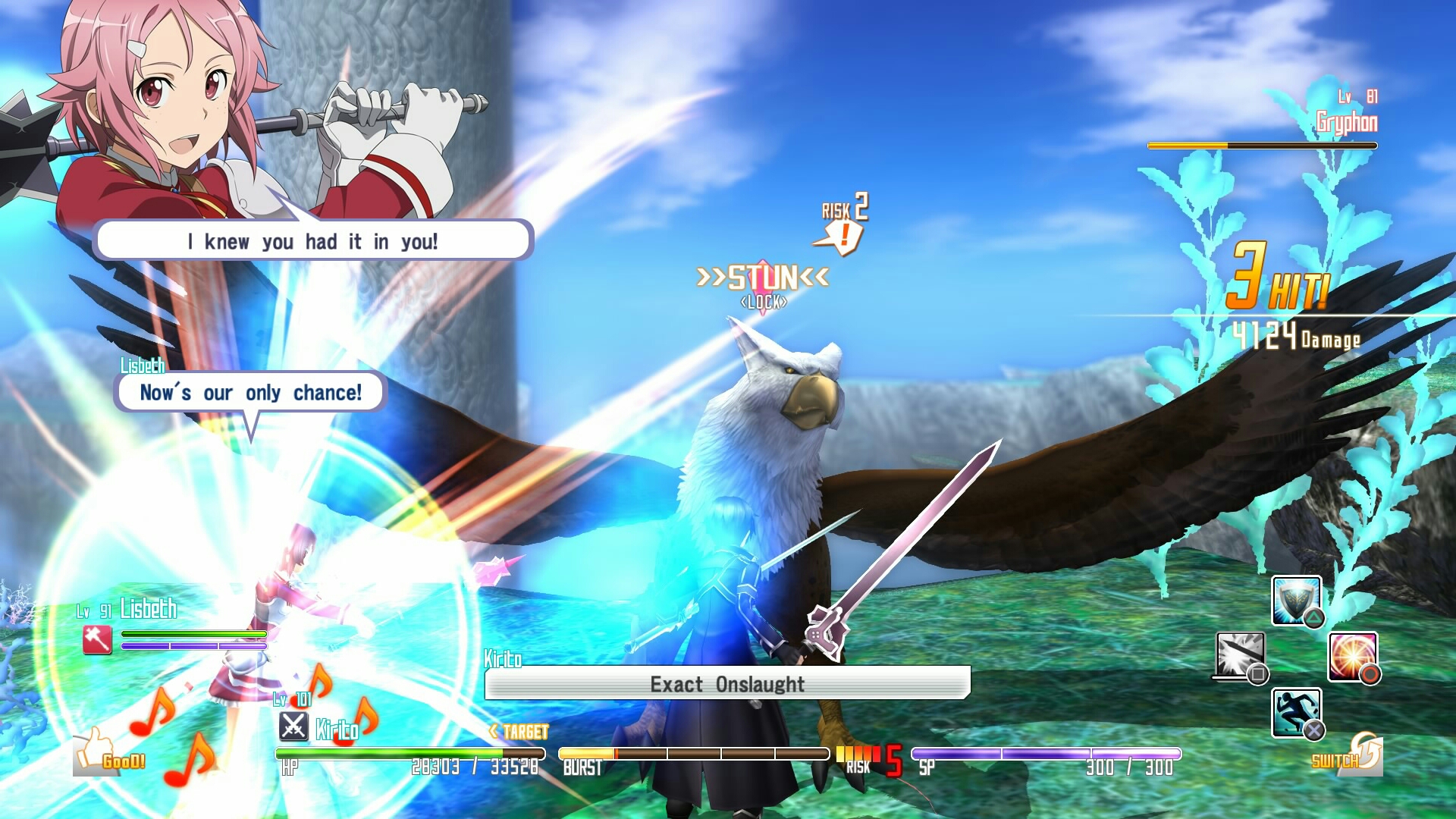
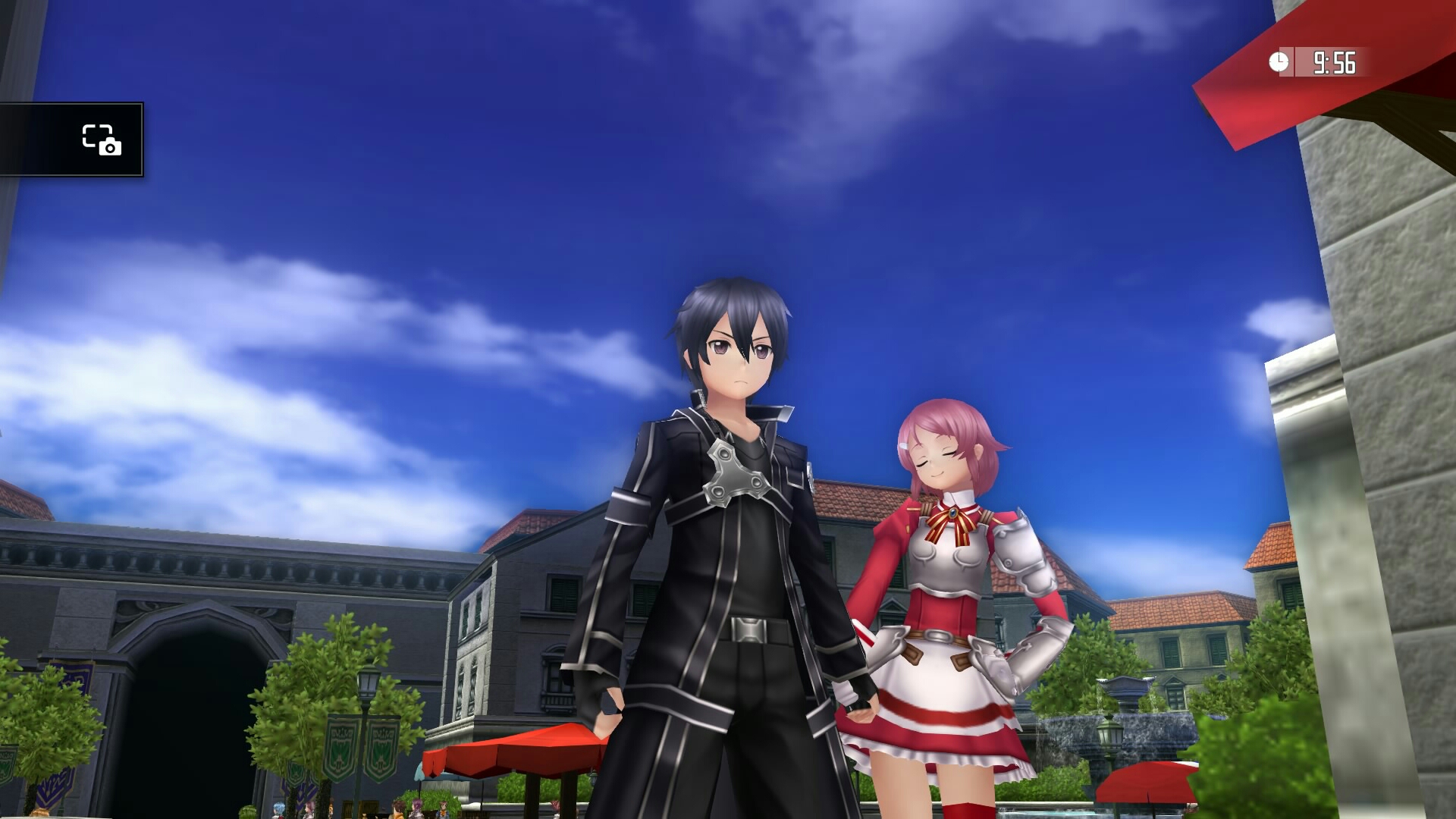
Sword Art Online, for those not into the animes, was a popular show a couple of years back. It was one of those "mainstream" shows that became really popular and which everyone subsequently decided they hated for one reason or another. I never quite understood the hate; sure, it was cheesy as fuck in places, but it was an enjoyable, beautifully presented show with an amazing soundtrack and a concept I've always loved ever since I played .hack for the first time: the MMO that is trying to kill you.

1269018045555712327

The Sword Art Online anime concerns Kirito, a protagonist who is a blatant self-insert for the writer, but I won't hold that against anyone, since self-inserts can be a wonderful means of escapism. Kirito becomes trapped in the new virtual reality MMO Sword Art Online after the game launches out of beta and the "logout" button is removed by its designer, capturing all 10,000 launch day players in the virtual world. To make matters worse, said designer — the villain of the piece — informs the players of a little tweak to the rules of the game: if they are forcibly removed from their VR equipment, or if they run out of HP and "die" in the game, then their VR equipment will fry their brain with microwaves, killing them instantly.

There's a get-out clause, though; if the game is cleared by someone defeating the final boss on the 100th "floor", everyone who survived will be allowed to escape. After two years of the game, it becomes apparent that this goal is still a long way off, and player numbers are dwindling as more and more people either fall victim to carelessness or despair along the way. Ultimately, the first arc of the anime concludes with Kirito and his friends defeating Sword Art Online's designer and freeing themselves from the virtual world of Aincrad, only to find themselves in numerous subsequent adventures in other virtual worlds. You'd think they'd learn.

20150807192933

Hollow Fragment, meanwhile, takes place in a reality where Kirito's defeat of Heathcliff at the end of the first arc was not the end of Sword Art Online, and the players find themselves still trapped within the game. Moreover, they discover that once they pass the 75th floor — the floor where Kirito defeated Heathcliff — they are unable to return to the lower floors, and many of their skills and items become "corrupted", mere shadows of their former selves. The game, then, continues; it looks as if the only way to escape really will be to defeat the boss on the 100th floor.

Except that's not all, because clearing out 25 floors of dungeon would be far too easy a task. In the opening of the game, Kirito finds himself transported to the "Hollow Area", an unexplored part of the Sword Art Online world where strange things happen and rare, high-level monsters and items abound. Acting as a sort of "testing area", the Hollow Area allows Kirito to uncover a number of mysteries surrounding the virtual world of Aincrad as well as beef up his own character's power significantly through various research trees. The flow of the game then becomes a journey back and forth between three distinct components, then: Aincrad, the Hollow Area, and what I like to refer to as Waifutown.

20150807192908

Aincrad is pretty straightforward. Upon arriving on a new floor, you're shown a big tower off in the distance and informed the boss is waiting for you at the top of it. Between you and said tower are several overworld areas populated by enemies, so you'll need to fight your way up to the boss room in order to challenge it. Along the way you'll also need to gather intelligence on the boss by completing quests and defeating specific named monsters (NMs) as well as helping your fellow "players" to level up enough to take on the challenges ahead. Each "floor" is pretty linear in its design, though the dungeon at the end of it is more maze-like and unfolds across several levels, and you'll be doing a fair amount of backtracking to complete quests.

The Hollow Area works a little differently. Rather than a linear sequence of areas leading to a dungeon maze, the Hollow Area is an interconnected network of zones more akin to a regular RPG or even MMO map. The Hollow Area is split into several different regions, each of which you'll need to build up points in by completing "Hollow Missions" that appear and disappear in real-time as you play. While completing Hollow Missions, you can take on research tasks, which give you specific objectives to complete; once these are completed, you can then implement the research into Kirito's character to improve it. You have to content with bosses here, too, though in the Hollow Area they guard region transitions rather than separate floors.

20150807192902

Waifutown, meanwhile, is what you do when you're not adventuring. The town on the 76th floor that acts as your adventuring home base is home to most of the characters who got their own episode in the original Sword Art Online anime arc, along with a couple from the later arcs (Leafa and Sinon) who have been shoehorned in for the sake of having a few more waifus to pursue. In town, you can shop, upgrade weapons and hang out with your fellow adventurers. This latter aspect is important; by hanging out with your prospective adventuring partners, you can increase your relationship with them (up to and including sleeping with them) which subsequently helps them perform better in battle. By building up your relationship as well as "training" their AI by praising it when it does well, you can tailor each of the companion characters to your own liking. Or you can pick a waifu and spend the whole game with them if you so desire.

Sword Art Online is an enormous and surprisingly complex game. There are a lot of different systems at play — it's going all-out with the "simulated MMO" aspect in this regard — and, while it's daunting to begin with, the many different ways in which it's possible to progress in the game make it feel like you're always achieving something, and that there's always a choice of things to do at any given moment. While its graphics look like butt outside of the beautiful 2D artwork — its PSP roots are very apparent — it really doesn't matter all that much; it plays satisfyingly well, feeling quite like a high-speed Phantasy Star Online at times, and there's a wonderful, constant sense of discovery and exploration as you work your way around this strange and wonderful virtual world. (And yes, I'll probably make a video about this at some point so you can actually see how it plays.)

20150807205839

Also you can bed Lisbeth. 10/10

2024: Galak-Zed

0025_001Been playing some Galak-Z on PS4 today. This is a game I've had my eye on for a while, and it's finally been released.

Galak-Z, for the uninitiated, is a "roguelite" — that is, it incorporates some aspects of roguelikes (most notably permadeath and randomly generated elements) while adding some persistent elements and making the overall experience a bit more friendly and accessible to the average person who gets frightened by ASCII.

It's actually got quite a bit in common with the indie darling Rogue Legacy from a while back, in that there's a constant sense of "progression" even when you're fucking things up repeatedly, because even when you mess up, you'll be unlocking stuff that might make future playthroughs a bit easier. Make no mistake, though, Galak-Z is a challenging game that is not afraid to kick your arse.

At heart, it's a top-down space shooter in which you complete various missions that usually boil down to "find dungeon, find thing in dungeon, destroy/collect thing, escape". This simple structure works in the game's favour, as it keeps missions short and snappy with the possibility of variations along the way according to map layouts and the enemies you'll encounter. And treasure, of course; one of the most fun aspects of Galak-Z is gradually outfitting your ship with all manner of death-dealing machinery and hoping it will save your life when one of those bastard Hammerhead ships starts chasing you.

Rather than simply tasking you with surviving as long as possible, Galak-Z is mission-based. To be specific, it's split into five "seasons", each of which requires you to complete five episodes in a row without dying in order to progress to the next. In a charming nod to '80s era Saturday morning cartoons — which the game's whole aesthetic is based on — each episode has a randomly generated title and writer, plus some enjoyable banter between the playable protagonist A-Tak and the heroine Beam.

I'm not sure what the game's longevity will be like as, having not yet finished the first season, I can't say with confidence whether the later missions are more adventurous and complex. It's certainly holding my interest right now, but I feel it may need a bit more to keep me playing in the long term. It remains to be seen whether it will provide that for me, I guess — count on a situation report when the time comes!

In the meantime, I made another video with ShareFactory detailing the game, how it works and what it's all about. Take a look!

2022: Video Star

0023_001Been experimenting a bit more with video today. Specifically, I had a play with the PlayStation 4's app ShareFactory, which allows you to take video clips and screenshots you've saved while playing PS4 games, then edit them together with commentary, music, transitions and effects into something that can then be rendered and uploaded (almost) directly to YouTube, Facebook or DailyMotion.
ShareFactory is a decent bit of software, it turns out, and works quite nicely with the DualShock 4 controller. Its interface is initially a little difficult to parse, since it's largely icon-based and not immediately apparent what all of said icons are actually for, but once you get your head around it it mostly works well.

ShareFactory is no Final Cut, obviously, but then it doesn't need to be. To make an effective gameplay video, all you need at most is the game footage along with perhaps some still images, some music and some commentary. There's no real need for multiple tracks of video or anything like that — though I believe ShareFactory  does support picture-in-picture if you have a PlayStation camera — because you're not making a multi-angle extravaganza of a movie; you're making a video about a game.

I learned something else while making my ShareFactory project, too; I much prefer making videos that are "pre-scripted" rather than improvised Let's Play-style videos. This is probably due to the fact that I also prefer watching videos that are pre-scripted rather than improvised Let's Play-style videos. I grew up on traditional media, remember; I'm not really interested in watching Kids React To Something Pretty Mundane, nor am I interested in listening to someone's reactions in real time as they play something for the first time. I am, however, interested in seeing video used in the "documentary" style; footage of something relevant, with explanatory commentary over the top. This sort of thing doesn't have to be dry and boring, either; more importantly, though, it tends to be a lot more concise, with pre-scripted videos more often than not clocking in at considerably lower durations than Let's Plays.

More to the point, though, it means that I can write something in a "traditional" manner, then just read it out (with feeling!) when it comes to time to record the video. The only real difference is that in the script I found it was a good idea to mark where different video clips/sections should begin. That really helped with editing later, particularly with the way ShareFactory's workflow goes. I could take a clip at a time, record the commentary, then trim/split the clips down to fit the commentary afterwards. After that it was a simple matter to upload it to YouTube and share it with the world.

What's that? You want to see it for yourself? Okay then!

2018: How to Win at Omega Quintet

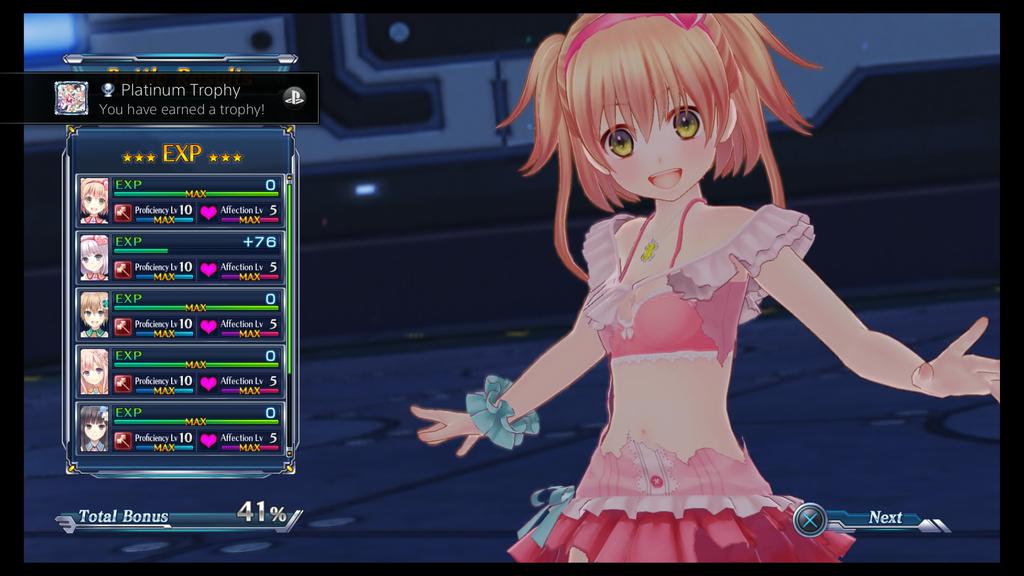
0019_001I finally finished getting the Platinum trophy in Omega Quintet this evening, and feel I've had a thoroughly satisfying time with that delightful game. It remained fun for all of the 170 hours I played it for — excluding the Order Break-happy bosses in the DLC dungeons, which can fuck right off — and I'm pleased that Compile Heart has got off to a running start in the PS4 era.
One thing I noticed, though, is that there aren't many guides out there for Omega Quintet. GameFAQs doesn't even have an FAQ page for it, though the discussion boards are quite active. As such, it's fairly likely that there are people out there who want some hints and tips about how to get good, particularly as in its later hours (and particularly post-game) Omega Quintet can get quite challenging.

CLMTC0ZWwAAKX1W

Here are some helpful tips, then. These all assume that you have progressed at least far enough in the game to have the full party of five.

  • Arrange your party either in a straight line formation, an "M" or a "W" shape. Whoever is in the middle slot (I recommend someone like Otoha or Kanadeko, since they have high Stamina) should have Takt paired up with them. The reason for this is that this means Takt can cover the maximum number of party members with Group Defense if the party is hit by an area-effect attack.
  • Speaking of Takt's defense abilities, always use them. Not only do they reduce damage, they also cause status ailments to be resisted by all party members being hit by the attack, even if you accidentally hit Pair Defense instead of Group Defense on an area-effect attack. Neither Pair nor Group Defense will block stat drains, however.
  • In the early game, stick with the girls' default weapons — spear for Kyouka, fists for Kanadeko, hammer for Otoha, gun for Nene and fans for Aria. In Disc Analysis concentrate on unlocking and upgrading the relevant weapon skills; you can always branch out later.
  • Also in the early game, consider specialising each girl. Kyouka's high Vitality (speed) makes her ideal as a "buffer" since she usually goes first in the turn order, so equip her with skills like Scorch Choir, Chorale, Bastion and Charge to allow her to buff up the entire party's stats. Aria, meanwhile, makes a good healer due to her high Divinity, while Nene makes a good "mage" with her high Knowledge stat. Otoha and Kanadeko are your de facto physical attackers, so concentrate on getting their weapon skills up to scratch as soon as possible, then choose elemental skills that complement and support the others.
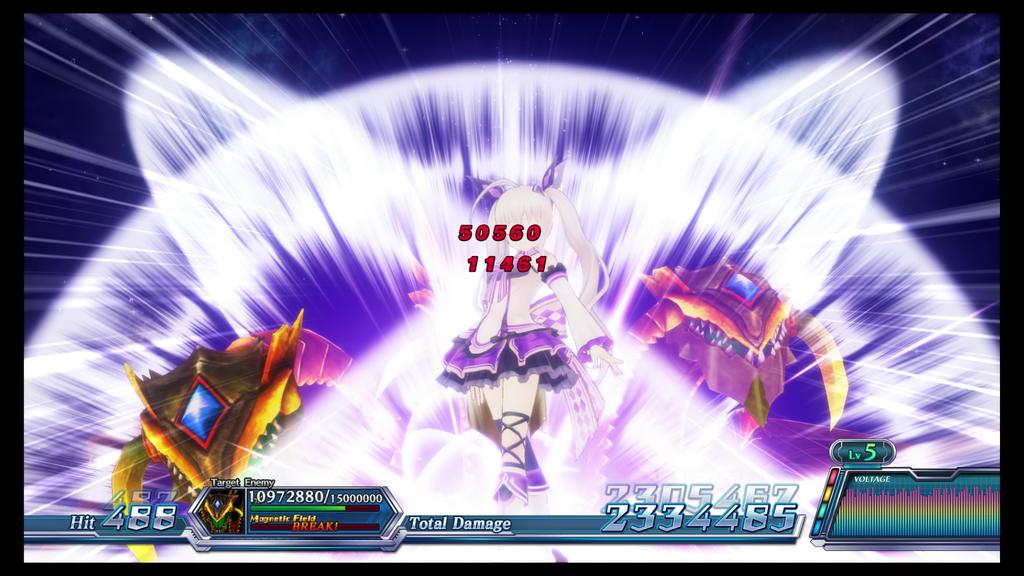
  • Go for big bonuses when you can. You earn bigger bonuses the bigger the number of hits in a single combo (i.e. before an enemy gets a turn), the more enemies you defeat simultaneously (on a single turn; doesn't have to be in a single action), the more HP you Overkill an enemy by, the more Links you get (more on those in a sec), the higher your Voltage is (more on that in a sec, too) and the more Requests you complete if you trigger Live Concert Mode.
  • Links are your way to earning lots of experience, EP (money) and Approval (which unlocks quests). Pay attention to the type of attack the interface says a skill "links" to, and use them in this order whenever possible. The more links you chain without a break, the bigger your bonus at the end of a fight.

CKw4FlHWcAApAwT

  • Links also help with earning Voltage, but the most reliable means of bumping up the Voltage meter is to get lots of critical hits. To do this, use area-effect attacks and reduce the enemy stats as much as possible. If the damage numbers that pop up when you hit something are red, that's a critical hit and will earn you Voltage. Note that only physical (Mic) skills will critical; E Skills will not, so even though some E Skills hit lots of times over a wide area, they're not good for earning Voltage. They are, however, good for earning bonus actions through the hit count.
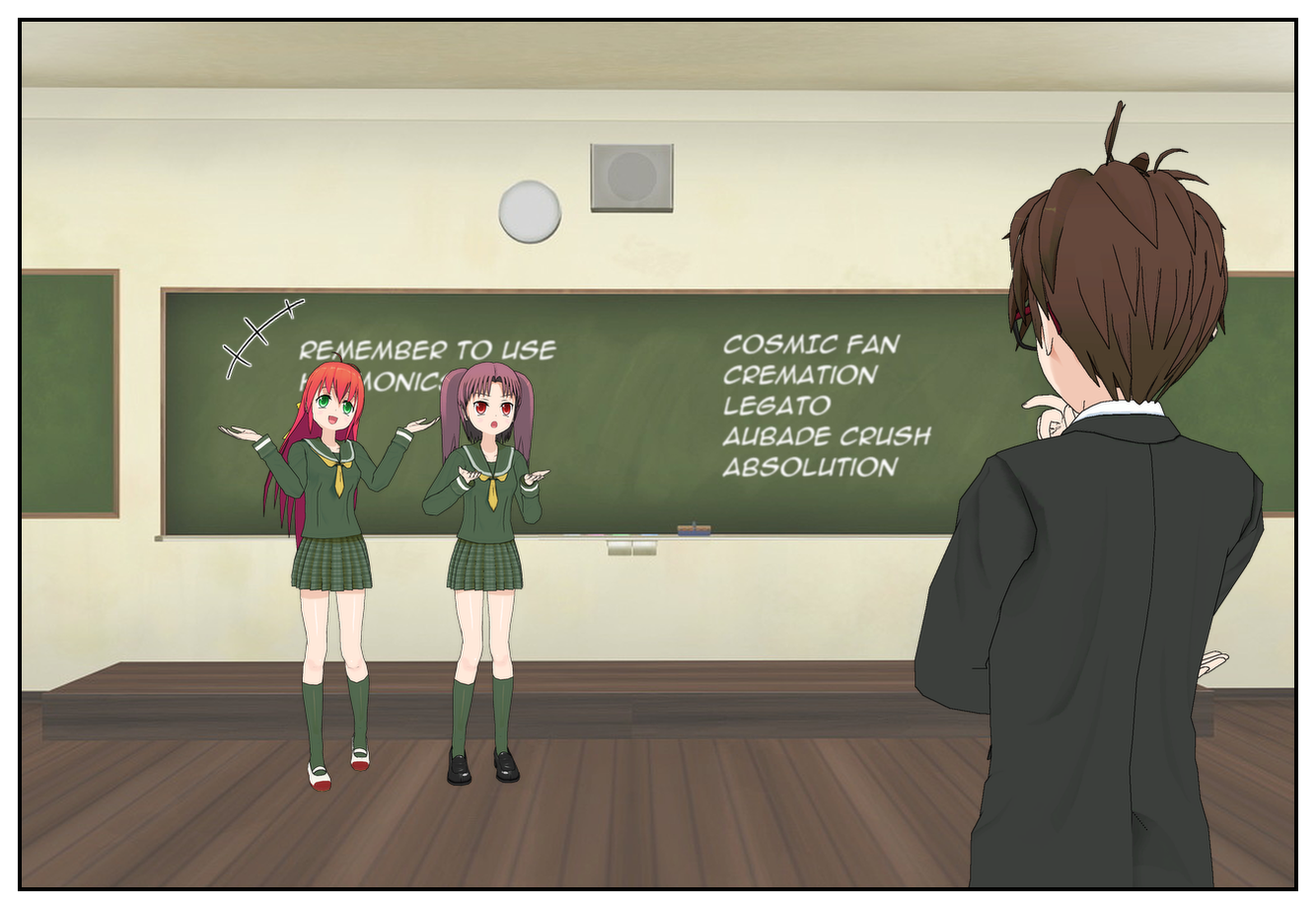
  • Consider Chain Skills when picking discs to set on each girl. Some are more useful than others. By far the most useful of all is Cosmic Fan, which you obtain late in the game. This requires four different girls to cast Cremation, Legato, Aubade Crush and Absolution. It hits for a bunch of times, but its main benefit is that it reduces all the stats of everything it hits — and it covers a wide area. If you have the slots for it, give all five girls Cremation, Legato, Aubade Crush and Absolution, because this way you can case Cosmic Fan five times in succession if turn order lines up correctly and you use Harmonics.
  • Speaking of Harmonics, use it whenever you can, but don't waste it. Manipulate the turn order by using abilities or items with low wait times, and don't forget to use Takt's Pursuit to knock enemies back in the turn order. Ideally, you want each Harmonics to have all five girls ready for action, preferably to hurl out some Cosmic Fans and debuff the enemy into oblivion.
  • Order Break is the most annoying thing in this game, and it's not immediately apparent what triggers it if you're not paying attention. The specific conditions vary according to the party of enemies you're fighting — certain enemy lineups in the post-game will even cause an immediate Order Break at the start of a battle, even if you got a Surprise Attack in on them. The most common conditions for triggering Order Break are reducing an enemy below 50% of its HP, Guard Breaking an enemy and defeating an enemy. Consequently, you want to try and avoid meeting any of these conditions until you're in a situation where you can unleash the Harmonics combo from hell to obliterate everything in a single turn.

CLKrjCJW8AAhx6u

  • Speaking of the Harmonics combo from hell, here's how to kill pretty much everything in the late game with ease:
    • Level up all five girls' hammer or fan skills to at least proficiency level 7. The quickest way to do this is on the lower levels of the Training Facility dungeon, which are also good for earning a lot of experience. Hammers are recommended in preference to fans, but it will depend what equipment you have available.
    • Learn Takt's Special Fanfare skill if you have the skill points for it, and assign this to Level 2 Live Concert. Special Fanfare significantly increases damage from Special Skills, so it's important for finishing battles quickly.
    • Make sure all five girls have all four Cosmic Fan spells. (Cremation, Legato, Aubade Crush and Absolution).
    • If you've kept developing Nene as a mage-like character (Knowledge-focused equipment), also give her Flame Typhoon and Raging Vortex.
    • Give all the girls Earth Assault.
    • Make sure all the girls have the main area-effect skills for the weapon whose proficiency you've levelled. Important ones are Ultimate Crush and Howling Earth for hammer, Light Crescent and Herd of Artemis for fan. If you have the skill points to spare, upgrade these and the Cosmic Fan spells as much as you can.
    • Fight a weak enemy somewhere and end the fight with Voltage level 5. Note that if you return to the Office, your Voltage will be reset, so if the tough enemy you want to kill is out in the world, you'll need to defeat a weak enemy in a world dungeon (Verdant Greenbelt is a good bet), while if you're in the Training Facility, you'll need to defeat a weak enemy on an early floor, then move directly to the floor the fight you're struggling with is on without returning to the Office first.
    • Surprise Attack the enemy you want to beat if possible. This should see all five girls' turns lined up at the start of the battle. If there's a gap in the turn order, escape if possible and either reduce the Vitality of the speediest characters by removing Vitality-boosting equipment, or boost the vitality of the slowest characters (Nene is usually the problem here) with amps or equipment.
    • If you're fighting a boss or quest mob, Surprise Attacks may not be possible. In this case, you'll need to manipulate the turn order using Takt's Pursuit and defending. Try to line up all five girls without triggering Order Break, so take care you don't do too much damage to the enemies in the process.
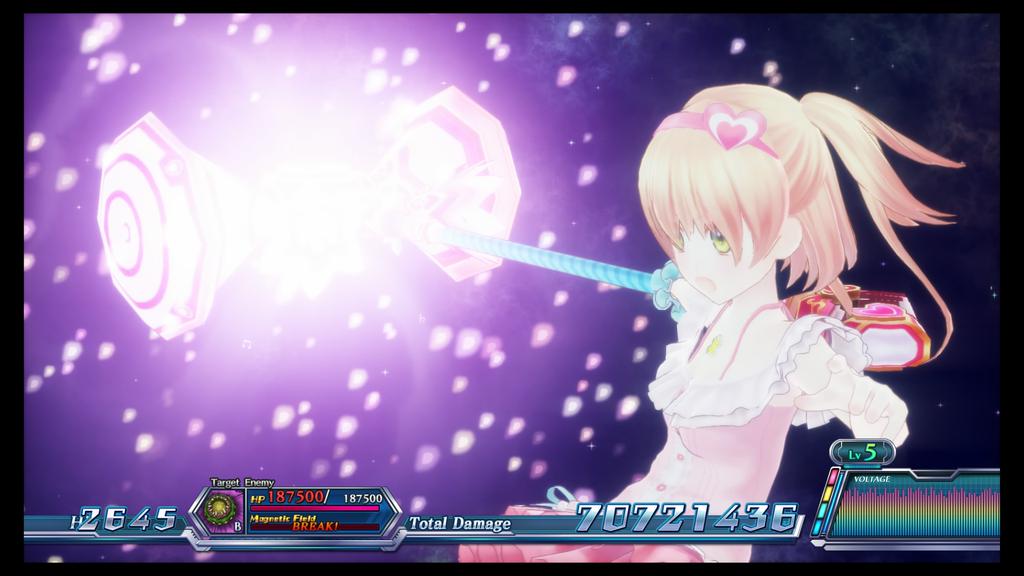
    • Assuming you got the turn order lined up (preferably with a Surprise Attack) immediately trigger Harmonics and cast two Cosmic Fans. Do not cast Cosmic Fan through the Chain Skill menu, however; cast each individual component one at a time on the same target, which should be somewhere in the middle of the enemy party. The reason for this is that Cosmic Fan's Chain Skill menu option does not input the commands in the right order to maximise your Link bonus. The order you should choose is: (Girl 1) Cremation, (Girl 2) Legato, (Girl 3) Aubade Crush, (Girl 4) Absolution, (Girl 4 again) Cremation, (Girl 5) Legato, (Girl 1), Aubade Crush, (Girl 2) Absolution. After this, Defend with everyone. This will have several important effects: it will lower the enemy's stats enough to let you get critical hits more easily, it will boost everyone's action count to at least 6 or 7, possibly the maximum of 8, it shouldn't do enough damage to trigger Order Break, and the Vitality debuffs it applies will hopefully allow you to get another immediate turn with all five girls lined up.
    • If you do get this second turn — which most of the time you should, assuming you don't trigger Order Break — trigger a Level 2 Live Concert Mode (which should have Special Fanfare attached to it if you have it) and then immediately trigger Harmonics again.
    • Now follow this sequence, which assumes everyone is equipped with a hammer. Make sure all the E Skills target the same enemy in the middle of the formation in order to trigger Cosmic Fan:
      Kyouka: Cremation
      Otoha: Legato
      Kanadeko: Aubade Crush
      Aria: Absolution, Cremation
      Nene: Legato
      Kyouka: Aubade Crush
      Otoha: Absolution, Cremation
      Kanadeko: Legato
      Aria: Aubade Crush
      Nene: Absolution, Cremation
      Kyouka: Legato
      Otoha: Aubade Crush
      Kanadeko: Absolution, Cremation
      Aria: Legato
      Nene: Aubade Crush
      Kyouka: Absolution
      Nene: Flame Typhoon, Raging Vortex, Earth Assault (for extra Link bonuses and to increase the hit count)
      All other girls in succession: Earth Assault (to bump up the hit count)
      If you're at Voltage level 2 or higher: Aria: Solitary Rhapsody (otherwise ignore this step)
      All other girls in succession except Otoha: Ultimate Crush, Howling Earth, if enough action points left use Break Prototype on the strongest enemy to maximise hit count.
      Otoha: Ultimate Crush, Howling Earth, if enough action points drop in a Break Prototype on the strongest enemy, then finish with Shrine of Hope on an enemy that has Guard Break (which will probably be all of them after that mauling, but prioritise moth- or plant-type trash enemies, since these have the weakest Magnetic Fields) and which also allows the area of effect to hit everything. (Shrine of Hope gets significantly more powerful the higher the hit count is, hence the overblown combo leading up to it.)
    • Everything will probably be dead after that. If you left a boss-level enemy standing but killed all the trash, you'll probably suffer an Order Break, so defend through it as much as possible and cleanse any debuffs or stat reductions as soon as you can afterwards. From here try to keep the boss debuffed with a combination of Cosmic Fan in Harmonics when possible, and Aria's Solitary Rhapsody and appropriate E Skill. It's also a good idea to Paralyze and Seal the boss using water and earth skills respectively, and any skills that have SP Break are useful too; if you can actually make the boss run out of SP, it will only use basic attacks on you, which can still hit hard without stat debuffs, but which won't inflict ailments on your party.

CKEd2bFWgAAgA7G

The last bit in particular, although complicated and requiring some preparation, will make the difference between fights that drag on for half an hour and fights that are over in two turns. If you're stupid enough to go for the Platinum trophy like I did, you'll need to master it for efficient Approval Rating farming in the post-game!

Well, now I've written 2,000 words that have probably baffled most regular readers of this blog — sorry! — I hope, if you stumbled across this blog while Googling things about Omega Quintet, that my tips have proven at least a little helpful, and I hope you continue to enjoy this great game!

2017: Quest for the Crown

0018_001It's weird to see a new King's Quest game on sale. I haven't tried it myself yet — I'm probably going to — but the early buzz surrounding it is very positive indeed, even sans involvement from series creators Roberta and Ken Williams.
For those not quite as old and jaded a gamer as me, King's Quest was one of the very first graphical adventure games. I hesitate to call it a "point and click" adventure, because although it supported mouse control, you actually had to type things in to a text parser in order to actually do anything. As the series progressed, it gradually and noticeably improved; by the fifth installment, it had made the full transition to a more conventional point-and-click interface as well as offering a "talkie" CD-ROM version; the seventh installment abandoned traditional pixel art in favour of some distinctly Disney-esque animation, and the eighth… well, most people don't talk about that one.

For me, King's Quest as a whole is an important series to me. It represents one of the earliest game series I played, and also some of the earliest games I actually played to completion. They also represent an early form of using the video games medium as a means of telling a story — albeit a very simple one in the case of the first couple of games; from the third game onwards it started to get quite ambitious — as well as a wonderfully vivid realisation of the world of fairy tales.

Back in the days when King's Quest first appeared, it wasn't at all unusual for games to take heavy inspiration from existing works of art. Numerous games made use of famous classical tunes for their "themes", for example, and others drew liberally from popular mythology for inspiration. The original King's Quest games were no exception, as they saw you running into everyone from Rumplestiltskin to the Big Bad Wolf — and, in many cases, dying horribly at the hands of fairy tale monsters.

Despite the fact that it drew heavily on popular mythology, though, King's Quest had a feel and an atmosphere all of its own. Like the best fairy tales, it presented a world that appeared colourful, happy and vibrant on the surface, but which was mean, horrible and out to get you underneath. The King's Quest games were notorious for having a wide variety of means for the protagonists to die throughout them, ranging from being eaten by a giant to tripping over your wizard master's cat while being too far up the stairs, and subsequently breaking your neck when you hit the ground. So frequent (and frustrating) were the death scenes in King's Quest and other adventures from the same stable Sierra that main rival LucasArts made a specific marketing point of the fact that it was impossible to die or get stuck in most of their games — with the Indiana Jones games being the only real exceptions, and even there it was pretty difficult to die.

But as frustrating and irritating and, at times, downright illogical as the old-school King's Quest games could be, they represent one of my formative experiences. They're something that helped me understand a medium that, as you'll know, is very important to me. They're something I shared with my family, since many of us used to play them together and try to solve them. And they're something that I will always have fond memories of.

It's for this reason that I'm really happy to see King's Quest making a comeback — and, moreover, to see that it's being received very well so far. I'm excited to give it a try for myself very soon, and I look forward to seeing how the subsequent episodes develop over the course of the series.

2015: Ziggurat Vertigo

0016_001One of the best — or worst, depending on your perspective — things about PlayStation Plus is that there are regular deals on a wide variety of games, seemingly almost at random. During these sale periods, games drop to Steam sale-tier prices (i.e. £2-3 for a typical indie game) and consequently make trying some new things out a rather more appealing prospect than it might be under other circumstances.
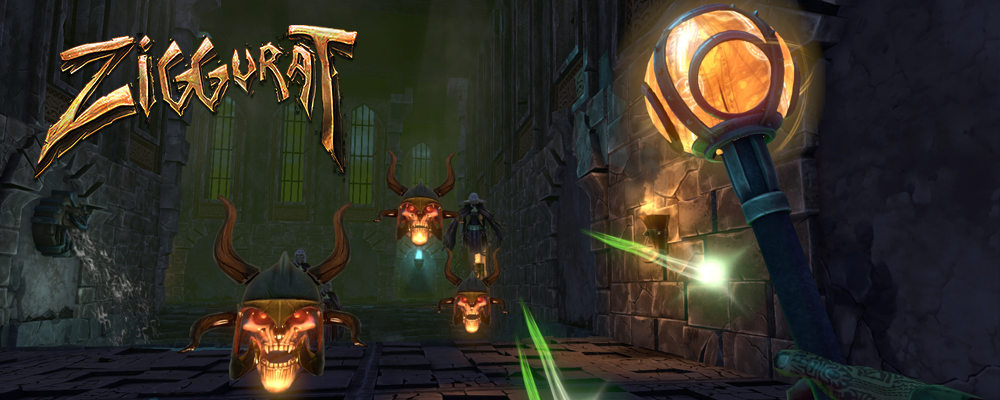
So it was that I came across a PS4 game called Ziggurat the other day. I didn't know much about it, but it sounded like it might be fun, so I grabbed it for £3 and gave it a shot. Turns out it is a lot of fun — and nothing to do with a not-particularly-good iOS game by the same name that I played a while back. (Thankfully.)

bannerZiggurat is the latest in the interminable line of "roguelites" out there; that offshoot of the roguelike genre that keeps the "permadeath" and "procedurally generated" parts and ditches the heavy-duty stat crunching and turn-based exploration in favour of something a bit more immediate, accessible and, in many cases, action-packed. Sometimes it works better than others; procedural generation is something that is very impressive on paper, but in practice it can often lead to levels that are chaotic messes with no real sense of "design" about them, just some tiles splattered around the map at random. This sort of thing is fine in an ASCII roguelike, but less fine in a game with actual visuals.
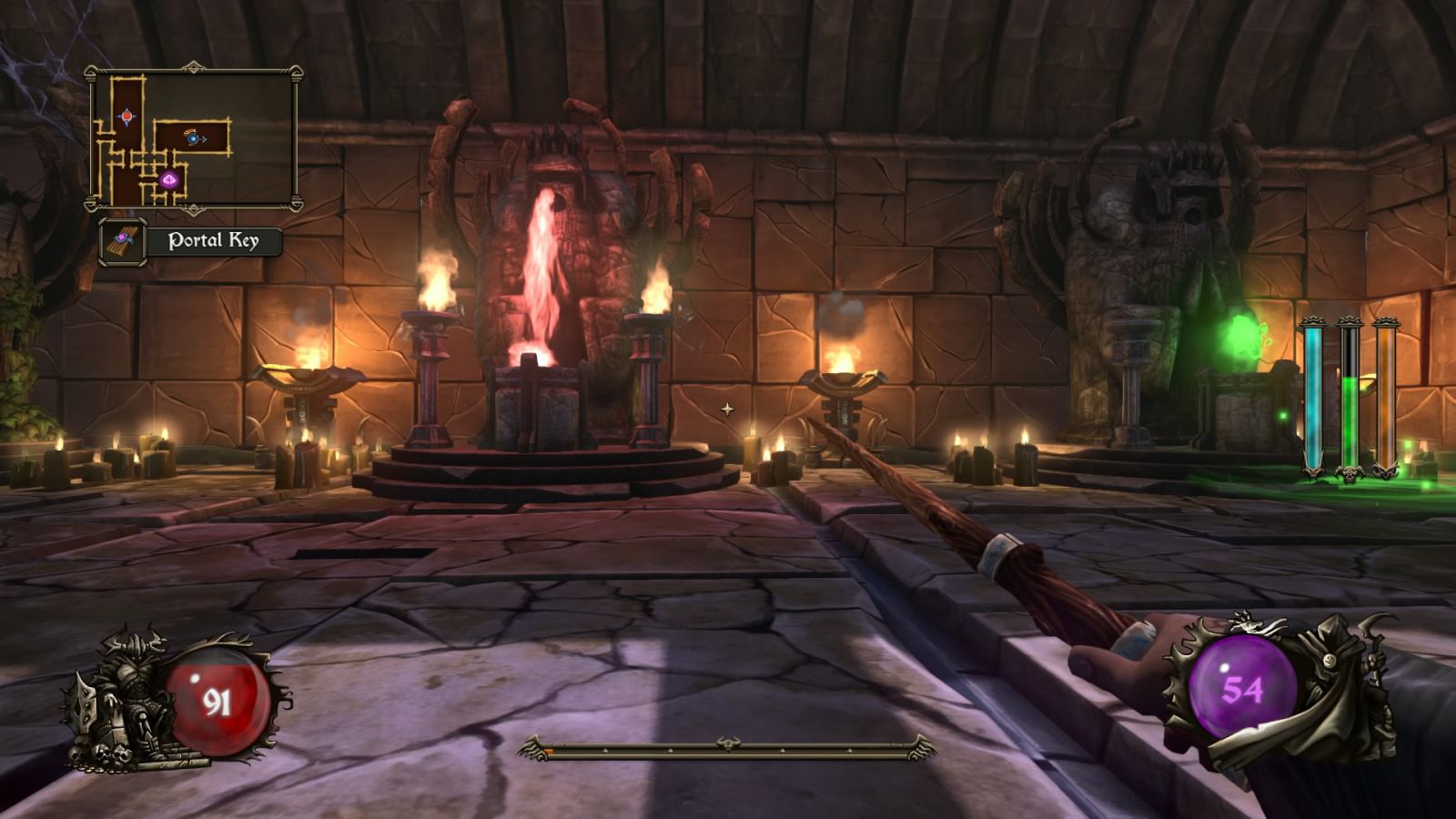
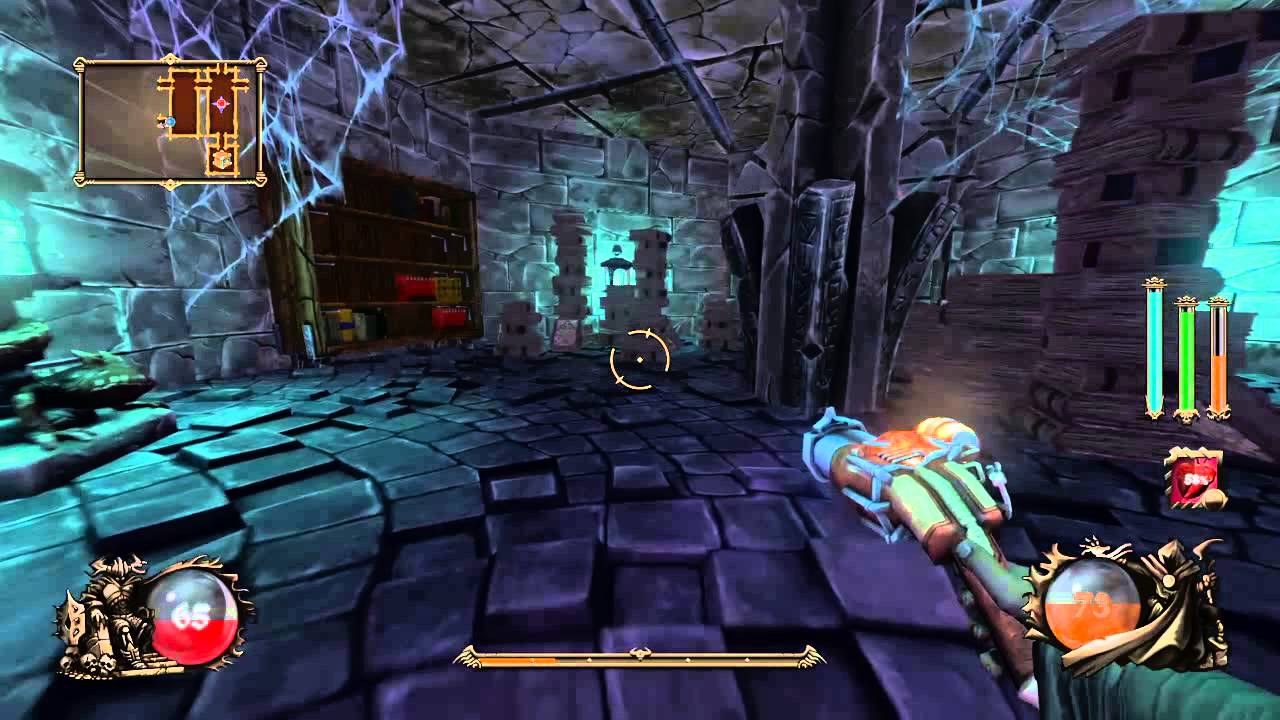
Thankfully, Ziggurat eschews the totally random approach and instead constructs its levels in a modular manner, somewhat similar to how board games like Advanced Heroquest and Descent construct their dungeons. Rooms are linked together by corridors to make an enclosed map; you start in one place, have to find a "portal key" somewhere in the level, then take it to the boss room, fight the boss and continue to the next level. It's a simple, tried but true structure and fits well in the context of the game.

ziggurat-03

There is a sort of plot to Ziggurat, but it's of the "back of a napkin" tier from old-school arcadey games from the 8- and 16-bit era. You're some sort of wizard, and every so often the opportunity arises to fight your way through the eponymous Ziggurat to become a super-awesome elite wizard. It's more likely that you will die, though, which is okay, because the "sacrifices" of unworthy novices pay tribute to the old gods, or something like that. It doesn't really matter.

What you do need to know is that Ziggurat is pretty much a spiritual successor to Heretic and Hexen, two games that came out back in the golden age of 2.5D sprite-based first-person shooters. Heretic and Hexen were noteworthy in that they were first-person shooters that opted for a fantasy setting rather than the (then) more common space marine situation. (Military shooters were still somewhat niche interest at this point, and multiplayer was something that was only really played by people who had IPX networks at their workplace.) Despite the fantasy setting, though, neither Heretic nor Hexen were role-playing games; they were action games through and through, with most of the weaponry on offer having clear analogues in more conventional modern and futuristic weaponry.

Ziggurat follows this pattern nicely. You start with a basic magic wand that is a rough analogue to the peashooter pistol that was the default weapon in games like Doom and its ilk. As you progress, you'll acquire spellbooks (shotguns), magic staves (machine guns) and alchemical weapons (rocket/grenade launchers). Each of these weapons requires a different colour mana (ammo type) to power, with the exception of the pistol… sorry, wand, which recharges its mana over time if you stop firing.

maxresdefault

The interesting addition to the Heretic/Hexen formula — and something that Hexen II touched on — is a progression system. As you defeat enemies, they drop "knowledge crystals" which provide experience points. Filling your experience bar causes you to level up and be able to pick from cards that depict "perks" of various descriptions. These are randomly drawn each game and range from immediate benefit (heal life, regain mana) to ongoing buffs (recover health when you enter a new room, increase the amount of mana you can hold for a particular weapon) to temporary buffs (magic wand does double damage in your next combat). Once you've picked one, on subsequent level ups you generally get the option to buff up a perk you've already taken or add a new one to your collection. There are even some perks that allow you to choose from a wider selection of perks on subsequent level ups, so there's a fair bit of variety.

Structurally, Ziggurat isn't quite as freeform as Heretic and Hexen. Rather than fighting your way through a linear-ish level, you freely explore the level, uncovering rooms one at a time. Rooms will generally be either a "special" room of some description — perhaps with traps, treasure or the portal key — or a standard room with a swarm of enemies to defeat. If you encounter enemies, you're deemed to have started "a battle" and are locked in the room until you defeat all of them. There's a decent mix of enemies, ranging from carrots that charge at you screaming to ghostly maidens that fling some description of otherworldly shit at you. Like the classic first-person shooters of yore, different weapons are more or less practical against different enemy types, though a generous auto-aim facility makes aiming and shooting with the controller less of a chore than it is in some games.

A pleasantly old-school throwback in Ziggurat's overall structure is the fact that you have a score, though you don't find out what it is until the end of a level or the end of your game. You score points for all sorts of things, ranging from collecting items to clearing rooms — and, obviously, the longer you survive, the higher your score will be. There's even an "Endless" mode to challenge for those who are gluttons for punishment — though I'm yet to make it past the second level on normal mode!

Ziggurat is a lot of fun, then, and if you're looking for something relatively quick and throwaway to play — and you miss the '90s era of first-person shooters — then you could do far worse than give it a shot, if you'll pardon the pun.

2002: Arcade Games are Alive and Well

0003_001

We live in an age where the default assumption about video games is that they will be big-budget affairs with star-studded voice casts, more pyrotechnics than a Michael Bay movie and, indeed, a budget to match. The reason for this is that many of the games that become household names — Call of Duty, Assassin's Creed, Grand Theft Auto — very much fall into this category, at least partly due to their marketing budget, but also due to their perceived "quality". Games have moved on since their roots in the '70s and '80s, or so the popular theory seems to go, and we should be looking to our interactive entertainment for challenging creative works that offer interesting new spins on social themes; deep emotional narratives; and innovative play mechanics.

As someone who grew up roughly alongside the birth of gaming (give or take a few years; I wasn't quite around for Pong) I think I speak for many other members of my cohort when I say that the above is all very well and good and should be celebrated when it's done well, but sometimes all you want to do is shoot or punch the shit out of some things without having to think about anything too complicated.

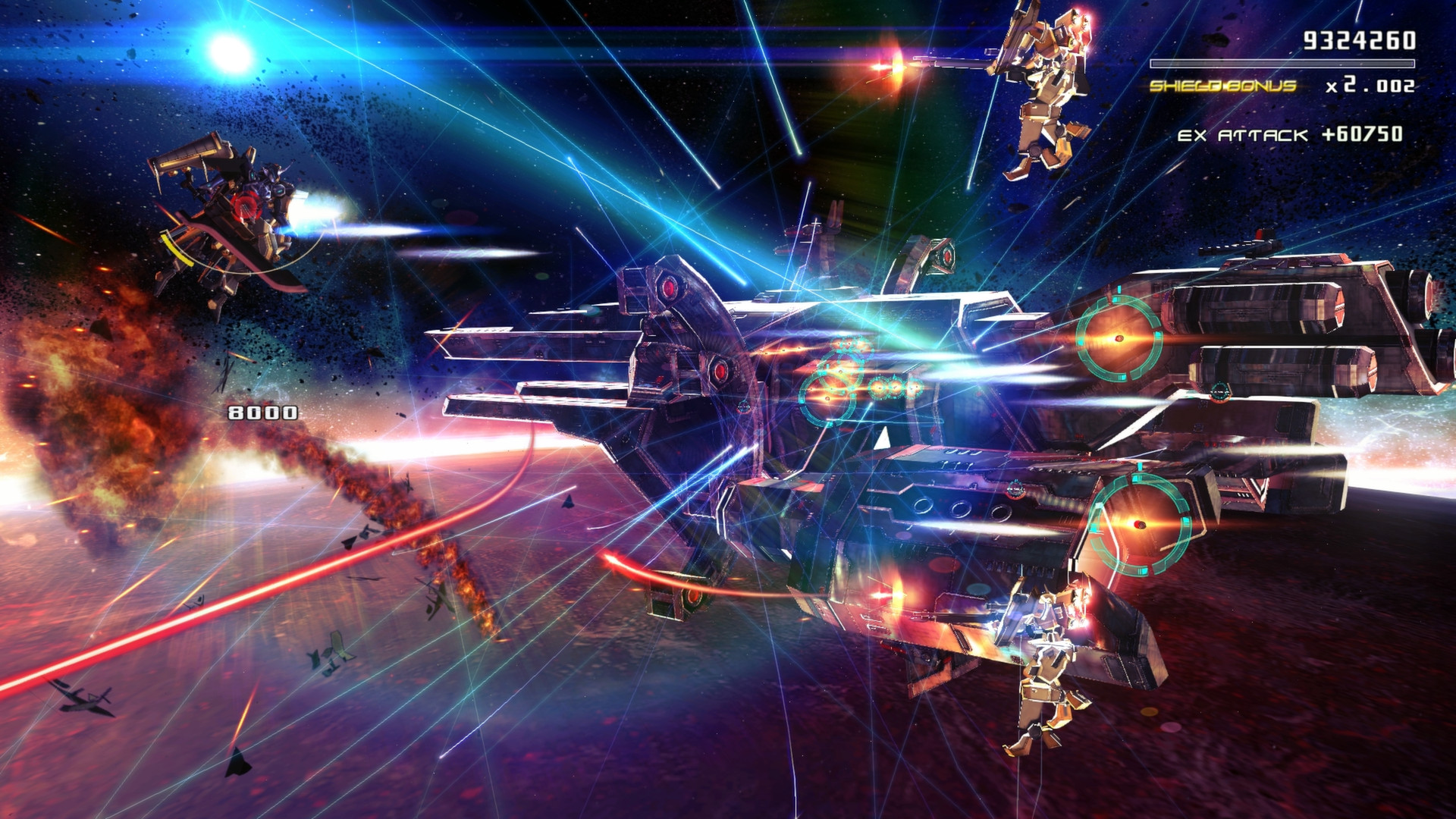
Astebreed is a great shooter with a ton of immediacy but a rewarding amount of depth for those willing to learn its intricacies.

One of the things I've been gratified to discover about the PlayStation 4 as a gaming platform is that it appears to be becoming an excellent home to a wide variety of arcade-style experiences as well as the big-budget, big-name games of today. The PC has been happily championing this sort of thing for a while thanks to its well-established digital distribution systems, and the Xbox 360 looked for a while like it might be assisting in the revitalisation of the "arcade-style" experience thanks to Xbox Live Arcade (which started to disappear up its own arse once things stopped costing 400 or 800 Microsoft Spacebux and instead took 1200 as the "default") but I feel like this is a field where the PlayStation 4 in particular is really starting to come into its own.

While I'm still ploughing through Omega Quintet on PlayStation 4 (I'm approaching the Platinum trophy now, at last!), the last few games that I've bought and really enjoyed on the platform are all short, arcade-style, score attack-type titles that are just plain fun. None of them are trying to say anything particularly deep and meaningful (with the possible exception of Astebreed, which has one of the densest half-hour narratives I think you'll ever find in a video game) and are instead focused on the simple joy of play: the thrill of taking on seemingly insurmountable odds, the fun of seeing scores climb into the millions, the satisfaction of beating your friends.

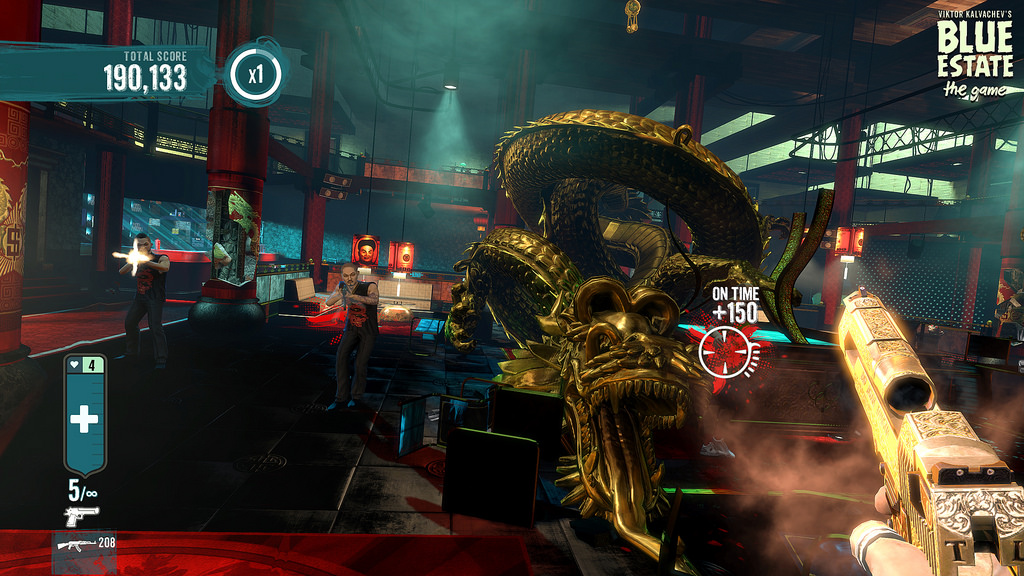
Blue Estate is pretty much a PS1/Dreamcast-era lightgun shooter, making good use of motion controls to approximate the arcade experience.

The games in question — and doubtless there are more, but these are the ones I've been particularly enjoying — include cinematic Japanese shoot 'em up Astebreed, Western bullet-hell shooter Jamestown+, the Defender-inspired Resogun, the inordinately satisfying rock-bursting shmup Super Stardust and lightgun-style rail shooter (a genre I thought was dead) Blue Estate. If you're looking for a quick fix of gaming and don't have the time or inclination to sit down and start chipping away at something more substantial like an RPG, I can happily and confidently recommend all of the above; they're fun, they have a ton of immediate appeal but a lot of hidden depth, they're easy to understand and teach to others (and, in most cases, have some form of multiplayer mode) and, for those concerned about such things, they're cheap.

Smoky, beer-scented arcades may well be fast becoming a thing of the past, but the arcade-style experience still very much lives on at home on PS4… and on Vita too, for that matter, but that's probably a whole other day's post, so we'll leave that for another day!

1998: Fist of the Father

Final Fantasy XIV's new raid dungeon Alexander launched earlier this week, and our regular raid group (with a few tweaks) took our first steps in there this evening.

I'd heard Alexander was significantly easier than The Binding Coil of Bahamut and was mildly concerned about this, but there are two things that set my mind at rest, having run through the first area now: 1) it's not easy, though it's straightforward enough once you know what to do, and 2) "Savage" mode is coming in a couple of weeks for the truly hardcore. (And it has different loot from the sound of things, too, unlike the Savage mode of Second Coil of Bahamut, which was largely a "bragging rights" sort of situation.)

I wasn't quite sure what to expect from Alexander. The concept itself is pretty weird: an iron giant raises itself out of the water in the Dravanian Hinterlands, but stops moving just as its hand grasps the bank. Through a convoluted series of interactions with the local goblins, you manage to find a way through the portal that is in its hand, and start working your way through in an attempt to find and destroy the core; the giant, it seems, is a Primal, and while it's active, even if it's not moving, it threatens to suck the very life out of the land.

Once inside you're in a cool, mechanical and metal environment. It's a big contrast from the previous raid dungeon, which made heavy use of the neon-glowing Allagan aesthetic, but since Heavensward as a whole has a lot of neon-glowing Allagan stuff just in its normal content, it seems the devs made the wise decision to not continue down this road with the new raid. Fine by me.

The bosses so far are appropriately steampunky in nature, and unlike Coil, which tends to be a short run to a single boss, the first level of Alexander features two bosses. The first is pretty much a pushover, but it's fun that it's more than just a single thing to fight. The main boss of the level, meanwhile, is a fairly involved fight that demands everyone knows what to do and performs their role appropriately. It's a little more forgiving than Coil was — mistakes are less likely to immediately wipe the whole group, though they will put you all at a disadvantage — but still challenging. We managed to clear it within a couple of hours, though, and even went back in to go get some more loot for those who lost the rolls after we'd finished.

We're hopefully going to jump in and see some more of it over in the weekend; I'm curious to see what mechanical mysteries the later levels have in store, and excited to be running with my regular group again.