1117: Another Game with a Barely-Pronounceable Title

Page_1If you had no idea what genre a game called Ar Tonelico: Melody of Elemia fell into, it's highly likely that you'd guess that it was a JRPG. And you'd be absolutely correct. It's a title that doesn't make a whole lot of sense if you know nothing about the game, though to its credit, unlike many other barely-pronounceable game names, its relevance does become apparent almost immediately. However, it's still pretty much the exact opposite of the rather literal naming conventions adopted by social and mobile games these days, which tend to be called things like "City Wars" and "Farm Town" and "Slots".

Strange name aside… yes, I've been playing the PS2 game Ar Tonelico: Melody of Elemia, hereafter referred to as Ar Tonelico to save me typing out that whole title every time. I knew literally nothing about this game prior to firing it up for the first time, but had been urged to do so by a friend over at the Squadron of Shame who has been accompanying on my journey through the oddest and quirkiest undiscovered treasures that the Japanese role-playing game genre has to offer. I promised him that the next game I played after I completed the crap out of Hyperdimension Neptunia mk2 would be Ar Tonelico, so here I am.

So what's it all about? Well, if you live in the UK, don't count on any help from the box or manual — the game never saw an official release in the UK despite being fully-translated into English, and instead your best bet for a copy these days is Italy, of all places. It's rather peculiar to think of Italians playing JRPGs, but there you go.

Anyway. Ar Tonelico initially appears to be a rather straightforward JRPG with a floppy-haired, youthful protagonist wandering around the world seeking adventure on a Grand Quest to Save the World. And on the one hand, it is. On the other hand, however, it does a lot of very, very interesting things that have really made me sit up and pay attention, even only about four hours into the whole experience.

For starters, there's a deep crafting system to explore. This is a game from Gust, developers of the Atelier series (which I am yet to try but have all the PS3 incarnations of on my shelf), and their specialism is deep crafting systems. In Ar Tonelico's case, it takes the form of the peculiarly-named "Grathmeld" system, in which you have to find recipe cards around the world and in shops, find ingredients inside chests, shops and monsters and then fuse them all together using crystals. When you craft, you get a fun little animated sequence of your character Lyner assembling whatever item it is, then if it's a new item he has a fun little conversation with one of the other characters about it, and a discussion often ensues about what the new item should be called. You can't freely rename items, which is a shame, but you do get to choose between a couple of different suggestions, and the game then tracks which character named which item, which is a nice touch.

Perhaps the most bewildering aspect of the game is its battle system. For the first hour or two, it's a very conventional turn-based "attack, magic, item" affair. But as soon as you encounter the "Reyvateil" characters, also known as Song Maidens, things start to get interesting.

Reyvateils sit in the back row of your party and don't follow the usual turn order. Instead, they act like a mage or priest in an MMO, sitting behind the front row of fighters charging up spells (or Songs, in this case) to have various effects, while at the same time the front row is knocking seven shades of shit out of the enemy and ensuring the Reyvateil doesn't take damage. A strong focus is placed on the party's "harmonics" with the Reyvateil, with this represented by a bifurcated horizontal meter at the bottom of the screen. The left half of the bar fills when the front row lands successful attacks and drops when they take damage. The right half of the bar fills as the Reyvateil chants to charge up a spell. Should the two halves meet, the whole party goes up a "Harmonic level", which means the Reyvateil's spellcasting speeds up and the front row gain access to stronger attacks. The Harmonic level at the end of the battle also determines what rewards you receive.

There's another consideration in that system, which is the cap on the Harmonic level. At the start of each battle, you can only level the Harmonics up to 2; to increase the cap, you have to let the Reyvateil unleash her magic and deal enough damage for a separate bar to fill and open up the next level cap. The trouble is, at least early in the game, most enemies are absolutely obliterated by the Reyvateil's Song Magic, so you'll sometimes find yourself deliberately pulling your punches a little in an attempt to earn some higher Harmonic levels. It's an interesting system that will doubtless come into its own in more difficult battles later.

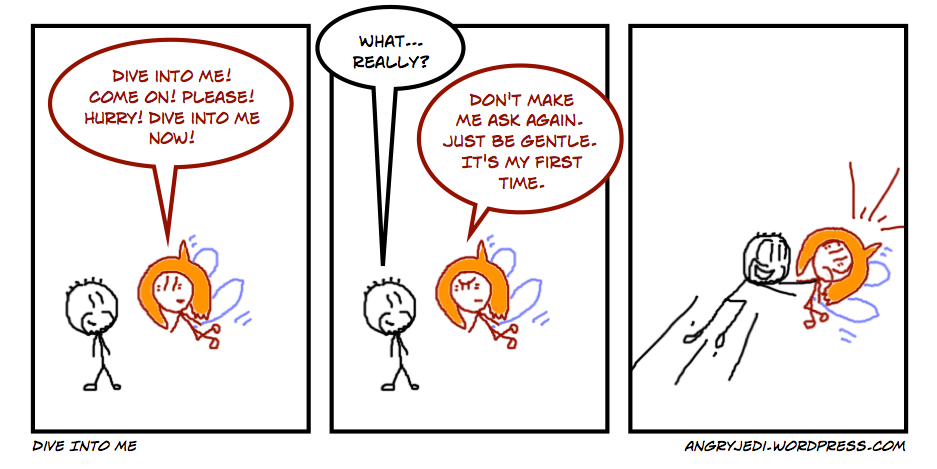
By far my favorite part of the game so far, however, has been the "Dive" system, where the protagonist Lyner is able to enter the subconscious of a Reyvateil and learn more about her. A Reyvateil's subconscious is split into ten distinct levels, each of which is made up of a number of different locations. Lyner must spend "Dive Points" earned through battle — which represent the trust the Reyvateil holds in him — to trigger various events, with revelations and strange happenings often unlocking new spells for the Reyvateil to cast in the real world. These vary from simple attack magic to "green magic" spells which can be cast outside of battle, usually to solve puzzles.

In gameplay terms, it's an elaborate means of unlocking abilities. But in story terms, it's a way of literally doing a deep dive into a character and discovering their innermost secrets. The scenes I've seen already have been heartfelt, interesting and help make me interested in the character. I'm very intrigued to see how they continue as the game progresses, as it's clear that the whole point of the "Dive" system is to help the Reyvateil come to terms with repressed memories and emotions in a vaguely similar manner to Persona 4's "Midnight Channel" — or perhaps just to peek in on some embarrassing things they'd rather forget about.

At four hours in, that's about all I can say so far, but I'm enjoying it a great deal. It looks super-dated — it's in 4:3 aspect ratio running on the PS2 and it pretty much looked like a PS1 game in the first place — but none of that matters to me. It is worth noting that it has an astonishingly good soundtrack, and that the English dub appears to be handled by the entire cast of Persona 3, which is fine by me — if a little odd to hear voices I recognise playing characters I'm less familiar with. (If you're wondering why I'm not playing with the Japanese voices, which are also included on the disc, it's because the FMV sequences in the game use the English voices, and it would be somewhat jarring to go back and forth between the two. The game also isn't fully-voiced, either, so it doesn't make as much difference as it would have in, say Hyperdimension Neptunia mk2.)

I'll be sticking with this one, then — though I may well be splitting my time between it and the Gamecube version of Fire Emblem when that eventually arrives. (The new 3DS version isn't out here until April, and I'm told I should play the Gamecube version before the Wii version that I scored for a song when Game was in trouble a while back.)
#oneaday Day 787: Shadow Hearts: A Scoreless Review

20120316-014112.jpg

Shadow Hearts for the PS2 is a game which seems to be almost universally adored by everyone who has played it. It's certainly a far cry from the reaction its PS1 predecessor Koudelka got, for sure, proving that yes, sometimes developers do learn from their mistakes.

Is it worth playing in 2012, though? That's one of the questions I set out to answer when I eschewed the latest and greatest in fancy-pants HD gaming and booted up Sacnoth's classic for the first time. I'd never played it before, so coming to it as a 2012 gamer would be my first experience — hopefully allowing me to determine whether or not it's still worth your time.

First impressions are striking, and not necessarily in a good way. We're in full-on old-school JRPG mode here, with polygonal characters wandering around on top of pixelated prerendered backdrops, occasionally stopping to perform a canned animation and generally not looking overly natural in their surroundings. Couple this with that much-maligned mainstay of Japanese roleplaying games, the random battle, and you have an experience which takes a little getting used to if you're accustomed to the ways in which the genre has grown, changed and adapted over the years.

Once you get your head into the mindset of how things work, though, all that culture shock quickly fades away. The characters may have somewhat wooden animations, but they're detailed 3D models with plenty of personality, and they provide the party you eventually assemble over the course of the game's 30 hours or so with a distinctive look. When combined with the good quality localisation job which has been done on the game's dialogue, the game's cast comes together as a loveable, memorable crew of misfits that is all the more notable for not relying on traditional JRPG archetypes.

The plot, too, is interesting and unconventional, blending real-world events from the early 20th Century with pure fantasy that occasionally drifts into Lovecraftian "it came from beyond the stars" territory, though with a slightly light-hearted edge on everything. It works well, and all the more so for the fact that it doesn't feel the need to necessarily spell things out for the player. You can tell that we're dealing with some sort of twisted alternate history here when we see how comfortable everyone is with the use of magic, for example — there are no exaggerated "Wow, you have amazing special powers!" scenes when new characters join the party, even when protagonist Yuri reveals the ace up his sleeve: his ability to transform into slobbering death monsters.

The characters' special abilities are what provides depth to the game's combat system. Characters tend not to be single-minded specialists, but often have a range of skills that unlock over the course of the game which can be applied to a variety of situations. Even leading lady Alice, who is set up pretty early on to be your stock "healer" character, has some entertaining tricks which she can perform — and she's not the only one with the ability to heal, either. Even some of Yuri's monster forms have the ability to heal, meaning the player can stick with a party arrangement that works for them — or that is simply made up of characters they find appealing. Given Yuri and Alice's importance to the overarching plot, however, most players will likely find themselves spending the majority of their time in the game with these two and one of the four other characters in the third slot.

Combat unfolds via a rather sedate turn-based system. There's no time bars here, just a simple behind-the-scenes initiative calculation determining who gets to go next. There are two twists on the traditional turn-based combat formula, however: sanity, and the Judgement Ring.

Sanity points gradually drain over the course of a fight, reflecting the mental strain battling horrific eldritch monsters has on the human psyche. Running out of sanity points causes the character to go Berserk, attacking enemy and ally indiscriminately accompanied by the word "Violently" curiously emblazoned in the air over their head. In a nice nod to characterisation through statistics, different characters have varying pools of sanity points according to their own mental faculties. Alice, for example, being a bit of a scaredy-cat girly-girl at times, has a very small pool of sanity points, while Yuri, who is wandering around with a variety of monsters living in his psyche, has a very large pool which he expends any time he turns into a monster — presumably a rather traumatic experience.

Meanwhile, the Judgement Ring is the mechanic which drives the whole game. Rather than simply hammering the Attack button to get through fights as quickly as possible, the Judgement Ring is a timing-based system that requires players to accurately tap the X button on their controller in time with a predefined pattern. Said pattern varies according to what the player is trying to do — using an item only requires one tap, for example, while the characters' later special abilities may require three or four carefully-timed taps in total. It's a simple means of making combat feel significantly more interactive than turn-based titles otherwise can, and it's also used outside of combat to resolve situations which would be handled by a dice-based "skill check" in a tabletop RPG — kicking down a door, negotiating for better prices in a shop, perfomring a task which requires endurance.

Whether or not you'll find Shadow Hearts to be a palatable play experience in 2012 will depend a lot on your patience. While the random encounter rate isn't overly high, you can expect exploration of the game's world to be frequently interrupted by battles with enemies — and, as is common for this breed of role-playing game, you'll see the same enemies and groups of enemies quite a lot over the course of a dungeon. Boss battles, meanwhile, are generally fairly lengthy experiences, partly to put a bit of pressure on the game's sanity system. Later conflicts can feel like they're dragging on a bit, particularly once you've managed to acquire some equipment for the party which allows them to shrug off things like status effects. The requirement to use the Judgement Ring with each ability use and attack helps keep things moving, but a few of the later bosses just go on a little bit too long to be comfortable or fun. The final boss is particularly prone to this, it has to be said, as it's something of a damage sponge. In a game where three-figure damage is considered a strong hit, taking down something with over 10,000 hit points is a task you'd better set aside plenty of time for.

Presentation has also moved on significantly since the game's original release back in 2001. Video sequences feature characters with that obvious sort of "rendered on the cheap" animation, and the voice acting is woefully inconsistent. Some English characters speak with an American accent, and others speak English at times and then yell something in Japanese in the middle of battle. The slightly rough edges do give the game a certain degree of charm, however, and the lengthy sequence where an old lady reads you a ghost story — complete with vocalised sound effects — is extremely memorable.

All in all, though, Shadow Hearts' charms considerably outweigh its idiosyncracies, and the game remains fun, entertaining and engrossing today. While it's not the most technically polished, high-budget JRPG — something which was apparent even back on its original release, especially when compared to Final Fantasy X, which came out the same year — it's certainly one of the most memorable. And, crucially, by clocking in at around 25-30 hours, beating the game is well within the reach of even people who like to go outside sometimes. In these days of everyone seemingly being increasingly busy, the importance of brevity shouldn't be underestimated.

So should you check it out in 2012 if you've never played it? Sure, but do be prepared for that initial culture shock as you adjust to the Way We Did Things over ten years ago. Times have changed, for sure.

#oneaday Day 783: Prepare for Moxibustion: Shadow Hearts First Impressions

20120311-235149.jpg

[I am not at all sorry for the above image.]

I recently acquired copies of Shadow Hearts and Shadow Hearts: Covenant for PlayStation 2. My good friend and podcasting buddy Mark has been extolling the virtues of this series (well, its first two entries anyway) for a considerable amount of time now, and given my current aversion to recently-released triple-A titles, I figured it was about time to give it a shot.

For those unfamiliar with this particular little gem, Shadow Hearts is a Japanese roleplaying game from 2001 developed by a company known as Sacnoth (later Nautilus) and published by Midway in Europe. It's the sequel to an unusual PlayStation 1 roleplaying game called Koudelka, which blended survival horror and tactical RPG elements to create a game that had a rather mixed reception upon its original release. Shadow Hearts, unlike its predecessor, is a much more traditional Japanese roleplaying game, with a great deal in common with the PS1-era Final Fantasy games. Players control a 3D character on a flat, prerendered backdrop and are thrown regularly into random battles against enemies which are otherwise invisible on the field.

Aside from these basic mechanical and technical similarities, however, Shadow Hearts is a very different beast to Square Enix's franchise, for a wide variety of reasons.

Mechanically, an innovative feature in the game was the "Judgement Ring" system, whereby any action which would be resolved in a tabletop roleplaying game by a throw of the dice is instead left up to the player's reflexes and sense of timing. The titular Ring appears on screen with markers placed on it to show where the player needs to press the button. An indicator sweeps round it, and the player must tap the button as the indicator passes through the various areas. There are variations on the theme, but this is used throughout the game whenever there is an element of chance — both in and out of combat. For example, the Judgement Ring is seen when attacking an enemy, attempting to cast a spell or use an item in combat (outside combat, magic and item use automatically succeeds, thankfully) or attempting to haggle for a better price in shops. It's a simple system that through its inclusion lends a much greater feeling of interactivity and involvement to a genre known for making the player sit back and tap the X button 300 times before getting to do anything. Its timing-based nature means that combat can't simply be resolved by strapping a rubber band to the X button and walking away — the player must learn the various characters' "rhythms" for their attacks and stay on their toes to tap the button appropriately.

It's not just in mechanics that Shadow Hearts differs somewhat from the norm, however. In a typical Japanese RPG, the party tends to be made up of a group of idealistic teenagers (with optional "old man" character who is actually simply in his late 20s), at least two of whom will be childhood friends; at least two of whom will fall in love with one another; at least one of whom will be a moody bastard who grows to understand human kindness and friendship by the end of the story; and at least one of whom will be a demure, shy girl while another will be a borderline-inappropriately sexy girl in a teeny-tiny skirt. This kind of ensemble works well, which is why we see it so often, particularly in popular franchises such as Final Fantasy.

Not so in Shadow Hearts. In Yuri, we have a moody protagonist, sure, but he's angsty because he can turn into monsters. Also he's half Russian, which explains why he hails from Japan but has a name which is commonly used to refer to lesbian-themed content in Japanese. (His name also means "lily" in Japanese, which might explain why he's so upset and surly. Although if we take "Yuri" to be the Russian half of his name, then that means "farmer", which is a bit more manly.) Then in Alice we have the shy, demure girl, but she's clad in what can only be described as an incredibly impractical outfit which precludes her from ever volunteering to bend over and pick anything up ever. She's also English. I've never met any English girls who dress like that. But then I wasn't alive in 1913, either.

Aside: not only does Shadow Hearts take place in the "real world" (albeit a real world with magic and demons and vampires and whatnot), it also takes place in recognisably "recent" (relatively) history, meaning we get a pleasing blend of low-tech fantasy-style stuff with the trenchcoats and Mauser pistols of the World War I-ish era.

But back to the cast. We also have a crotchety old Chinese oracle who calls people "son of a bitch" all the time and a friendly vampire called Keith (Keith?) who woke up from a 200 year slumber only to find himself bored stiff with nothing to do in his monster-infested castle. There may be more, but I haven't got that far yet. Already it's a memorable, bizarre cast, though the game nails the whole "suspension of disbelief" thing so well that it seems perfectly natural for this oddball group to be hanging out together while discussing the movements of the Japanese army.

Shadow Hearts is a slow burn that takes a while to get going. If you've been playing more recent Japanese roleplaying games that tend to be a bit pacier or have battle systems that veer a little closer to "action" (see: Final Fantasy XIII and its sequel, The Last Story and Xenoblade Chronicles to a certain extent) then there's a bit of an adjustment period to get back into random battles and completely turn-based combat. It's also a bit of a culture shock to go back to a game where the dialogue is pretty much all text — though this rekindles the once-common love for renaming your characters; a joy which the age of voice acting has rendered obsolete.

I'm guessing I'm about halfway through at the moment. Further thoughts to follow when I've beaten it.