2484: Further Adventures in Hong Kong

0484_001

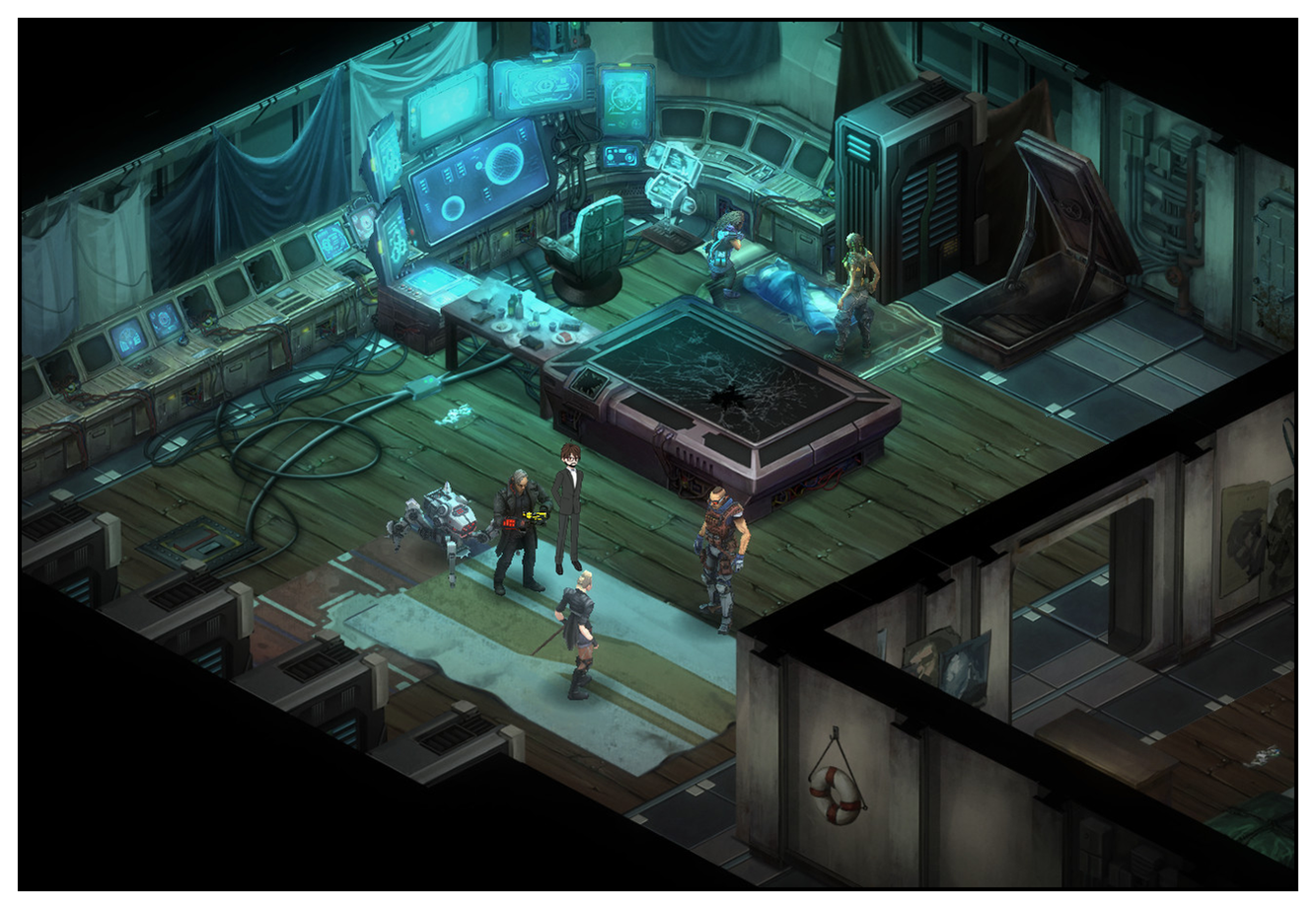
Shadowrun Hong Kong continues to be an excellent game. The best thing about it, I think, is quite how varied the different missions are — and how the game is structured, allowing you to accept multiple missions at a time, but forcing you to focus on a single one at a time once it begins. This approach helps prevent the problem a lot of Western RPGs have, where you get completely bombarded with quests and have no idea where to go and which order it is "best" to do them in, leading to an unfocused, meandering experience.

Shadowrun Hong Kong, meanwhile, features missions that take maybe 30-60 minutes to complete, tops, each of which has its own set of objectives and mini storyline to follow through. And they're not all a matter of "go somewhere, have a fight, get out again".

Over the course of last night and tonight, I've completed a variety of missions and no two have been alike. In one, I had to infiltrate a museum and steal the most valuable artifacts possible without tripping the alarms. In another, I had to solve a serial murder case — this had the option of concluding without combat were I to let the culprit go free. In another still, I had to disrupt the qi flow in the offices of a company that took great pride in its geomancy.

What it kind of feels like — which is fitting, given Shadowrun's background — is a tabletop role-playing session, with discrete adventures linked together to form a campaign, each of which features its own story, evocative narration and interesting characters. Where Shadowrun differs from other games that have attempted to evoke the feeling of tabletop roleplaying sessions, however, is that it keeps things focused and trims the fat.

It doesn't have Baldur's Gate's problem of pretty much everything being lootable, only for you to discover to your dismay that 95% of the containers in the game house identical rubbish shortswords and suits of leather armour. It doesn't have The Elder Scrolls' problem of everyfuckingthing being pick-upable, making it extremely difficult to distinguish meaningful, helpful items from pointless window dressing, particularly if, God forbid, you drop a key item in the room where you've been storing all the thousands of wheels of cheese you've been hoarding "just in case". And it doesn't have the older Dungeons & Dragons games' problem of sticking a little too rigidly to the tabletop ruleset and consequently not really taking full advantage of the benefits of playing on a computer.

The combat in Shadowrun takes this approach, too. It doesn't overwhelm you with tactical options, but it does allow you to do things like take cover and use your weapons in a variety of different ways according to your proficiency with them. Not everyone in the party is necessarily a "combat" character, either — my protagonist, for example, is a Decker, which means she's more suited to marking targets using her knowledge of technology than actually firing a gun or going toe to toe with opponents — though I must admit, this didn't stop me from outfitting her with retractable cybernetic claws for close combat should the need ever arise. Who doesn't want to be Cyber-Wolverine?

All in all, Shadowrun Hong Kong has been a pleasure to play so far. It's telling an interesting story and its mechanics are really solid. Its graphics are nothing special but, having grown up on Baldur's Gate and Fallout, this really doesn't bother me all that much — and, like those old classics, Shadowrun's visual shortcomings are more than made up for by its spectacularly good sound design, with excellent music complemented by ambient sound that shifts in volume and position according to where your character is standing on the map. It's incredibly atmospheric and does a great job of immersing you in the setting despite unfolding from the typically rather impersonal-feeling isometric viewpoint.

A winner, then. And cheap in GOG.com's current sale! Grab yourself a copy now and you won't be disappointed.
2483: Shadows of Hong Kong

0483_001

GOG.com has a sale going on right now; it's really rather good. Like their previous sales, they have a tiered reward system where if you complete various arbitrary tasks on the website and/or buy a couple of games, you'll get some freebies, no questions asked. This seemed like an ideal opportunity to acquire a few titles I've wanted to grab for a while, even if I didn't want to play them immediately.

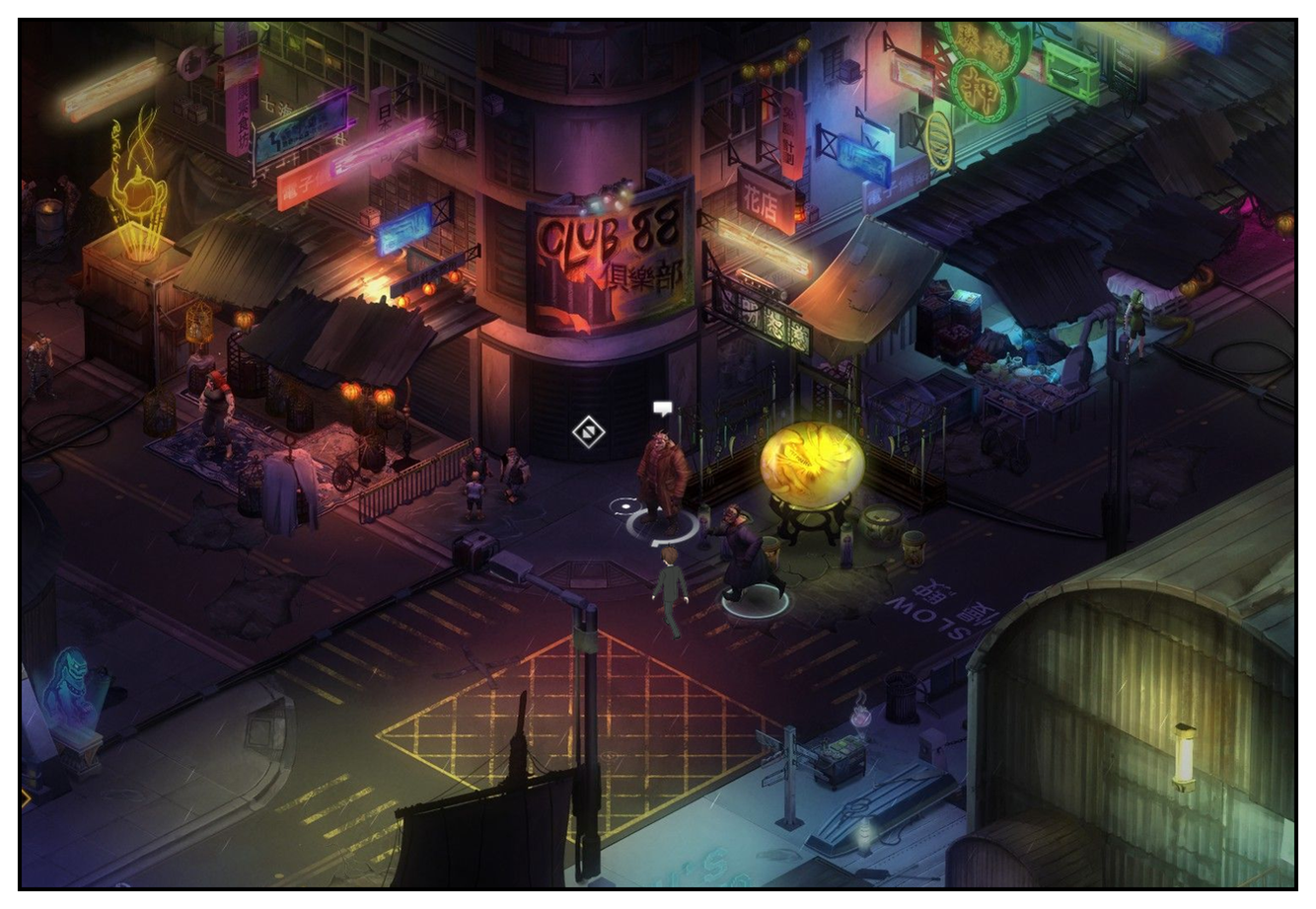
Among the titles I nabbed in the sale today were two of the new Shadowrun games: Shadowrun Hong Kong and Shadowrun Dragonfall. I've spent a bit of time with the former this evening and come away very impressed — and a little surprised.

I'm not particularly familiar with the Shadowrun setting, but it's a concept I like: combining hacking, grime-and-neon cyberpunk with orcs, elves and magic fantasy brings together two of my very favourite things, so Shadowrun was always something I was interested in. I'd just never gotten around to checking it out.

I went in expecting something along the lines of the old Infinity Engine role-playing games — that is to say, largely functional graphics, excellent writing, deep character and party building and a non-linear storyline in which you were free to pursue all manner of different sidequests at your leisure before deciding that yes, now was the right time to go and confront The Big Bad, whoever it was this time around.

What I got from Shadowrun Hong Kong was… almost that, but with enough differences to the standard formula to give it a very distinct identity.

I'll back up a moment and give you some background. In Shadowrun Hong Kong, you play a player character of your own design, who can be male or female and any of the main races found in the setting: human, ork, elf, dwarf or troll. You can then either pick a starting class or build your own by spending "Karma", the game's skill point equivalent. There are no traditional experience points or levels in Shadowrun; you simply gain Karma in varying degrees for accomplishing various tasks. Consequently, you can build some interesting characters without having to "grind" as such.

The opening of Shadowrun Hong Kong sees you contacted by your onetime foster father Raymond Black, who urges you to come to Hong Kong to discuss something very important. When you arrive there, you're met by your adoptive sibling Duncan, an ork man that you grew up with but subsequently became estranged from following an unfortunate run-in with corporate security in your past. Your reunion is far from joyful, since Duncan doesn't quite know what to make of you having spent so much time apart from you, and before long it becomes clear that something very bad indeed is going on. A group of mercenaries that Black hired to escort you are murdered along with Duncan's superior officer Carter, and all of a sudden you're on the run, thrust into Hong Kong's seedy underbelly to wipe your old identities clean and take up the mantle of Shadowrunners: individuals who work on the fringes of society, often doing illicit deeds for whoever will pay the most. Your eventual aim is to determine what has become of Black, and perhaps to make sense of some mysterious dreams you start having shortly after the story begins.

So far so RPG. Where Shadowrun Hong Kong diverges from what I expected is in its structure: rather than unfolding in a large open world that you can explore at will a la Baldur's Gate or the first two Fallout games, Shadowrun Hong Kong is instead mission-based. There's a "hub" area from which you can interact with NPCs, purchase equipment and accept new missions, but each of these missions are self-contained areas that combine a variety of different gameplay styles, each telling their own mini-story along the way, ultimately — I presume, anyway — combining to tell the entire narrative.

The missions are pretty varied; none of them appear to be simple "get to point X" or "kill Y". Rather, you're often given a fairly vague objective — perhaps with some optional additional tasks along the way — and then left up to your own devices to decide how to handle it according to how you've built your character and the party you've brought with you.

One of the first missions in the game, for example, sees you having to deliver a message from the local crime lord Kindly "Auntie" Cheng to one of her underlings, who has started to take things into his own hands a little too much. In order to get to the recipient, you can fight your way in through the guards that block the entrance (in which case you'll fail the optional "don't kill anyone" objective), or you can sneak across the rooftops, or you can hack the electronic locking system in the basement, or you can learn the keycode to another "secret" entrance. Along the way, you'll encounter a number of side objectives, including assisting a young woman who is researching qi flow in the area and retrieving a stolen credit stick from an old man who is mugged by one of your target's henchmen. Most of these side objectives can be resolved in multiple ways, too; for example, when attempting to recover the credit stick, you can fight the guy and take it by force, attempt to smooth-talk your way through the situation or use your knowledge of criminal culture (assuming you have it) to appeal to his sense of "honour among thieves".

If and when combat does erupt, the action switches to mechanics straight out of the more recent XCOM games. Each character has a number of "action points" per round, and these can be used on moving, using items or performing various attacks with their weapons. More powerful techniques, spells or items tend to take multiple action points to perform, and some also have a "cooldown" of a number of rounds before they can be used again. There's a simple cover-and-flanking system in play, allowing you and your enemies to gain tactical advantages over one another through careful movement, and as your characters grow stronger they have more and more different abilities available to use.

Hacking, meanwhile, results in a gloriously abstract minigame straight out of a 1990s RPG whereby you control an "avatar" of yourself in cyberspace, attempting to avoid the various security measures or brute-forcing your way through using "combat" programs if necessary. Reach your eventual destination — be it a valuable piece of data or simply the method to unlock an electronic door — and you'll have another minigame within the minigame, whereby you'll have to remember numerical combinations and then decrypt a sequence of glyphs before time runs out. And, in true cyberpunk tradition, fucking up hacking can damage your physical body, so you have to be careful.

The whole thing is tied together by a wonderfully evocative script written by people who actually know how to write, combining vibrant, descriptive narration with believable dialogue. In many ways, it's as much a piece of interactive text-based fiction as it is an RPG or tactical strategy game; whatever it is, I really like it so far, and am looking forward to playing some more as a much-needed break from all the Palace of the Dead in FFXIV!

2482: Palace of the Dead: Solo Guide

0482_001.png

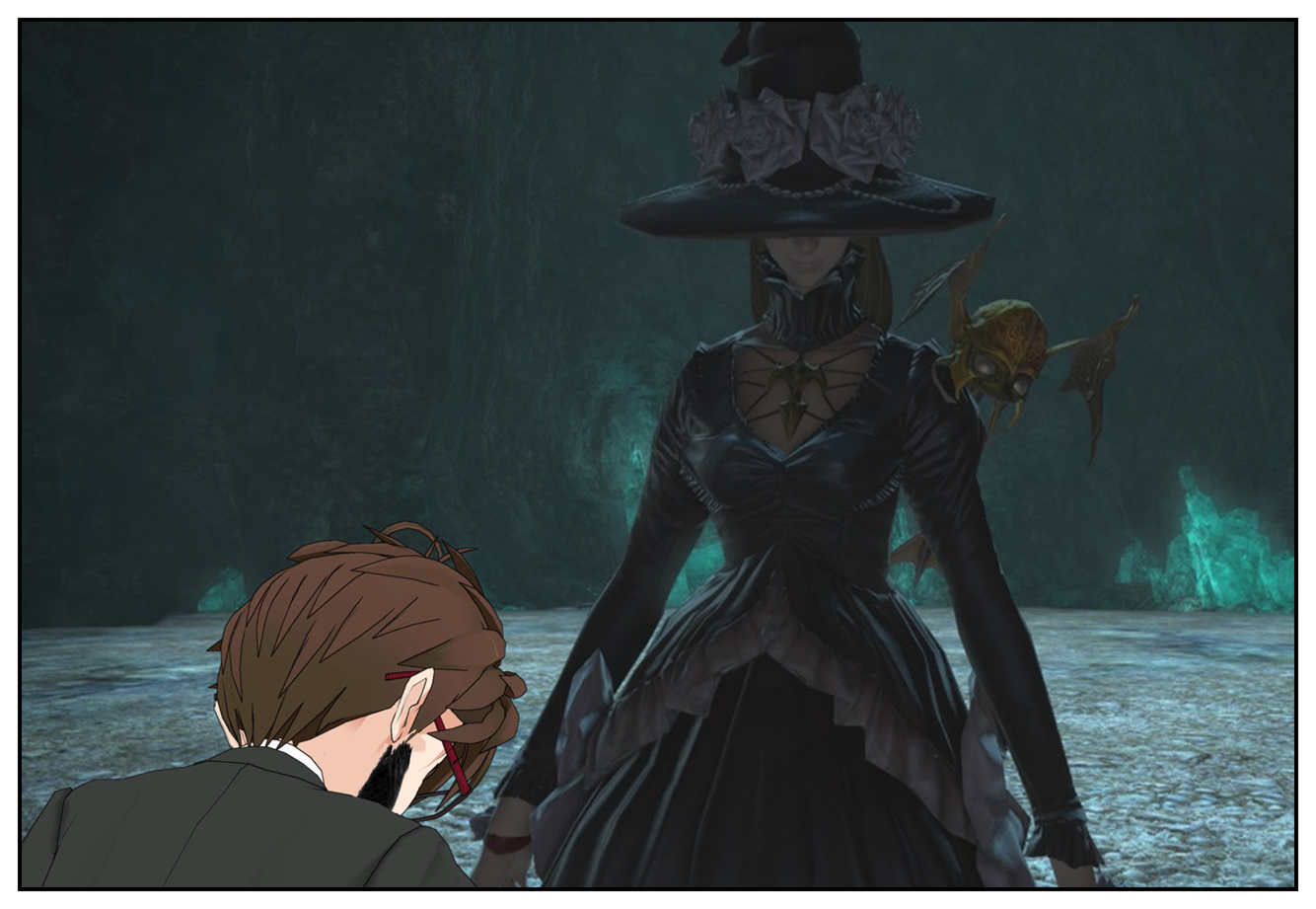
Been soloing a bunch of Palace of the Dead in Final Fantasy XIV over the last few days, so I thought I'd assemble some tips for those who are looking to challenge it.

General tips

  • Take your time on the early floors. You want to equal or exceed the boss' level when you reach it, so clear each floor thoroughly rather than rushing through. You can safely avoid enemies once you hit level 60.
  • Stay aware of your surroundings at all times. Most floors have patrolling monsters; keep an eye out for these and engage them in the corridors between rooms before pulling the monsters in the rooms themselves.
  • When fighting on the normal floors, DPS as hard as you can. Summoners, use Garuda-Egi. Tanks, use your DPS stance. The quicker things die, the easier a time you'll have. In most cases you'll probably want to concentrate on one enemy at a time — pull from a distance whenever possible.
  • When fighting bosses, the priority is on doing mechanics rather than DPSing as hard as possible. Summoners, get Titan-Egi to tank for you. Tanks, use your tank stance.
  • Drink potions whenever you can if you're not at full health. The last thing you want is to die to a landmine or exploding chest.
  • Save Pomanders of Serenity for floors where Auto-Heal is disabled. Most of the other floor effects aren't really anything to worry about, but Auto-Heal not working can really fuck you up.
  • Don't use Pomanders of Safety and Pomanders of Sight on the same floor because they're redundant. Safety removes all traps on the floor, and Sight allows you to see traps and thus avoid them. There's no need to use both.
  • Pomanders of Alteration are a gamble best used before you hit 60. If they spawn Mandragora-type enemies on the next floor, that's free EXP. If they spawn Mimics, however, you're in for a miserable time.
  • When using one of the transformation Pomanders, remember that you're not invincible. The Manticore may be able to kill everything in a single hit (assuming Knockback isn't disabled by a floor effect) but its HP and defense are the same as yours in your regular form.
  • Transformations are immune to Toad traps, and Pacification/Silence doesn't affect the transformation's ability. Landmines are still very dangerous, however, particularly as you can't drink a potion to heal yourself while transformed.
  • Save Pomanders of Resolution for the floor 100 boss. You'll need all three during the fight.

Enemies to watch out for

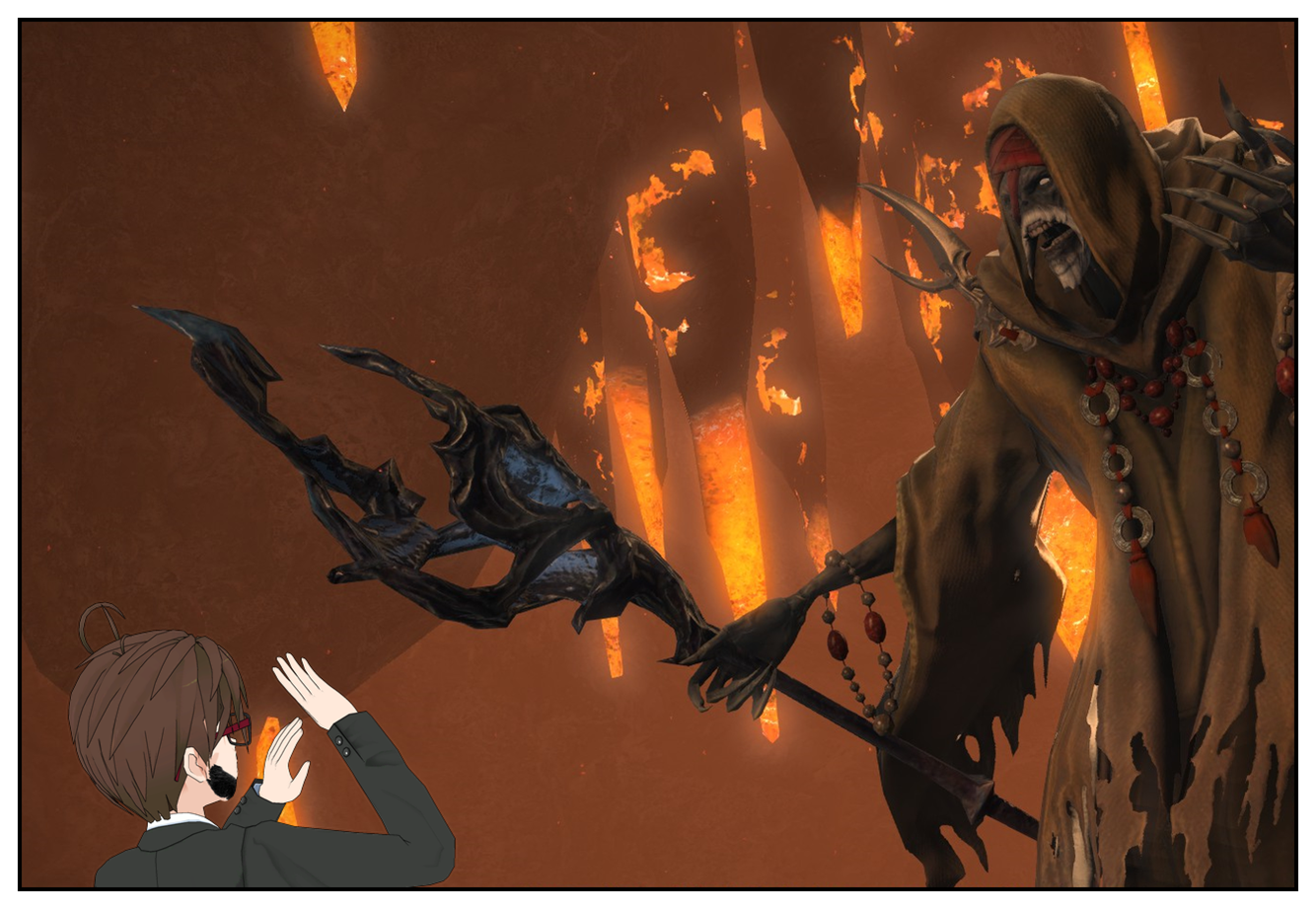
  • Hornets, found in the 1-10 block, have Final Sting, which will do a shitload of damage if you let it go off. You can actually run away from it and avoid the damage if you get far enough away, but it's best to try and kill the hornet before this happens.
  • Slimes, found in the 11-20 block, cast Rapture if you take too long killing them. This will almost certainly kill you, so kill them as quickly as you can.
  • Gaze attacks — marked by a very obvious glowing purple eye over the enemy model while they're casting it — can be avoided completely by simply turning your back to the enemy. It's particularly important to do this when dealing with Palace Cobras (petrification), Palace Deepeyes (powerful paralysis) and Palace Pots (Mysterious Light, which causes heavy damage and Blind).
  • Morbols will show up in the 11-20 block towards the end, complete with Bad Breath attack. Run towards them for the easiest path to avoid the large cone AoE.
  • Wraiths have a huge AoE attack that causes Terror. If you can stun it, do so. Otherwise, run for dear life as soon as you see the marker appear.
  • Palace Skatenes will cause Sleep on you shortly after they cast Chirp. This isn't a huge issue, however, since you'll wake up immediately upon taking a hit.

Boss tips

Floor 10: Palace Deathgaze

Pretty easy, and if you've fought basic Deathgaze-type enemies in the game you'll know what to expect. It has a heavy attack called Whipcrack that will do a chunk of damage, so pop a potion after it does this. Stormwind (a large cone AoE) and Bombination (circular AoE) can both be avoided. Aerial Blast covers the whole arena and causes Windburn (damage over time for a few seconds). It will cycle through these abilities until one or the other of you are dead.

Floor 20: Spurge

The Easy Way: Level to 35 or 36, pop a Pomander of Strength and a Pomander of Lust and then just go ham on Spurge and you'll probably kill it before it summons its first set of Hornets if your gear is up to snuff.

The Proper Way: There are two main phases to this fight, and they simply cycle around and around. In the first, Spurge will twat you for a chunk of damage with Bloody Caress, then fling two circle AoE attacks at you — one around itself and one aimed at you. During this time, keep your HP topped up and wail on Spurge as much as you can. The second phase starts when Spurge moves to the side of the arena. At this point, two Hornets will spawn, and Spurge will stay in place, occasionally shooting a large linear AoE attack called Rotten Stench. Avoid Rotten Stench while knocking the Hornets down as quickly as possible — otherwise they will use Final Sting on you — before returning to the punishment on Spurge.

Floor 30: Definitely-Not-Hydra

Pretty easy. When it hits you with Ball of Fire or Ball of Ice, immediately move to avoid the effect of the circular area the attack causes — damage over time for Ball of Fire and slowed movement for Ball of Ice. Keep hitting it while this is going on, and try not to bait any Balls of Fire or Ice into the very middle of the arena. When Definitely-Not-Hydra moves to the centre of the arena and starts casting Fear Itself, stand inside its hitbox to avoid the attack completely. Then repeat the process.

Floor 40: Ixtab

Ixtab will spew void crap over the ground every so often — move out of this to avoid damage. He will then summon two Bhoots which you should kill as quickly as possible to avoid being caught in their attacks. He also has an arena-wide attack that causes Terror, often causing you to stumble into the Bhoots' area of effect if they're still up. Aside from this, not a lot else to say.

Floor 50: Edda Blackbosom

Pay close attention to what Edda is doing. If she uses Cold Feet, turn away to avoid its Terror effect. If she uses In Health, you'll either need to get well away from her or stand right on top of her — react quickly to the AoE marker, but you have plenty of time to get from one extreme to the other if the cast goes off. If you get hit by In Health, one of the letters on the floor will light up. The more of these lit up when she casts Black Honeymoon, the more damage you'll take. Aside from this, she's pretty straightforward. Watch out for In Sickness, which causes Disease and slowed movement; cleanse this off yourself if you can.

Floor 60: The Black Rider

A few things to watch out for here. Firstly, keep out of the large purple circles he drops on the ground at all cost — they cause Bleed, which deals heavy damage while you're in them. Secondly, watch out for the aether sprites he summons around the outside of the arena and don't get caught in their blasts, as these deal extreme damage. Their appearance will often coincide with his charge attack, a linear AoE marker that follows you around. While this is casting, make sure your back is to a "safe spot" away from the aether sprites to avoid being knocked into their blast radius.

Floor 70: Big Snake Thing

I can't remember Big Snake Thing's name, but it's a big snake thing. The most important thing to do in this fight is move Big Snake Thing out of the watery patches it drops on the ground when it casts Douse. While it is in these areas, it gains Haste, which makes it nigh-impossible to avoid Electrogenesis when it casts. Aside from this, Big Snake Thing should cause you no real difficulty.

Floor 80: Definitely-Not-King-Behemoth

This is a daunting fight, but fairly straightforward if you know how to handle all the mechanics. Firstly, when DNKB casts Charybdis, move well away from the AoE marker because it will drop a tornado. Said tornadoes inflict a heavy damage over time debuff if you get sucked into one, and periodically they will suck in everything around them — there'll be a very brief AoE marker to show the effective range of this when it happens, so to be safe don't be anywhere near the tornadoes. Next, when DNKB walks away from you, follow him, because he's about to use Trounce, a massive conal AoE attack that is much easier to avoid if you're right next to him. Thirdly, at around 10% HP remaining, he will begin channelling Ecliptic Meteor, and unlike the other times in the game where this happens, there's nothing to hide behind. Try and kill him before it hits, but don't worry too much if it does — it hits for about 80% of your HP, so if you're topped up before it happens, you'll be safe and free to finish him off after the attack.

Floor 90: The Godmother

This is a bit like the final boss of Pharos Sirius (Hard). Attack The Godmother until a red bomb spawns, at which point you should stun its Blast ability if you can and kill it as quickly as possible while avoiding the AoE markers from the untargetable smaller bombs that spawn around it. When it's down, return to wailing on The Godmother. When a blue-grey bomb spawns, hit it with an instant ability while facing The Godmother to knock it towards her. You want the blue-grey bomb's Hydrothermal Combustion ability to hit The Godmother and interrupt her ultimate attack. From here, simply repeat these two processes until The Godmother is down.

Floor 100: Nybeth Obdilord

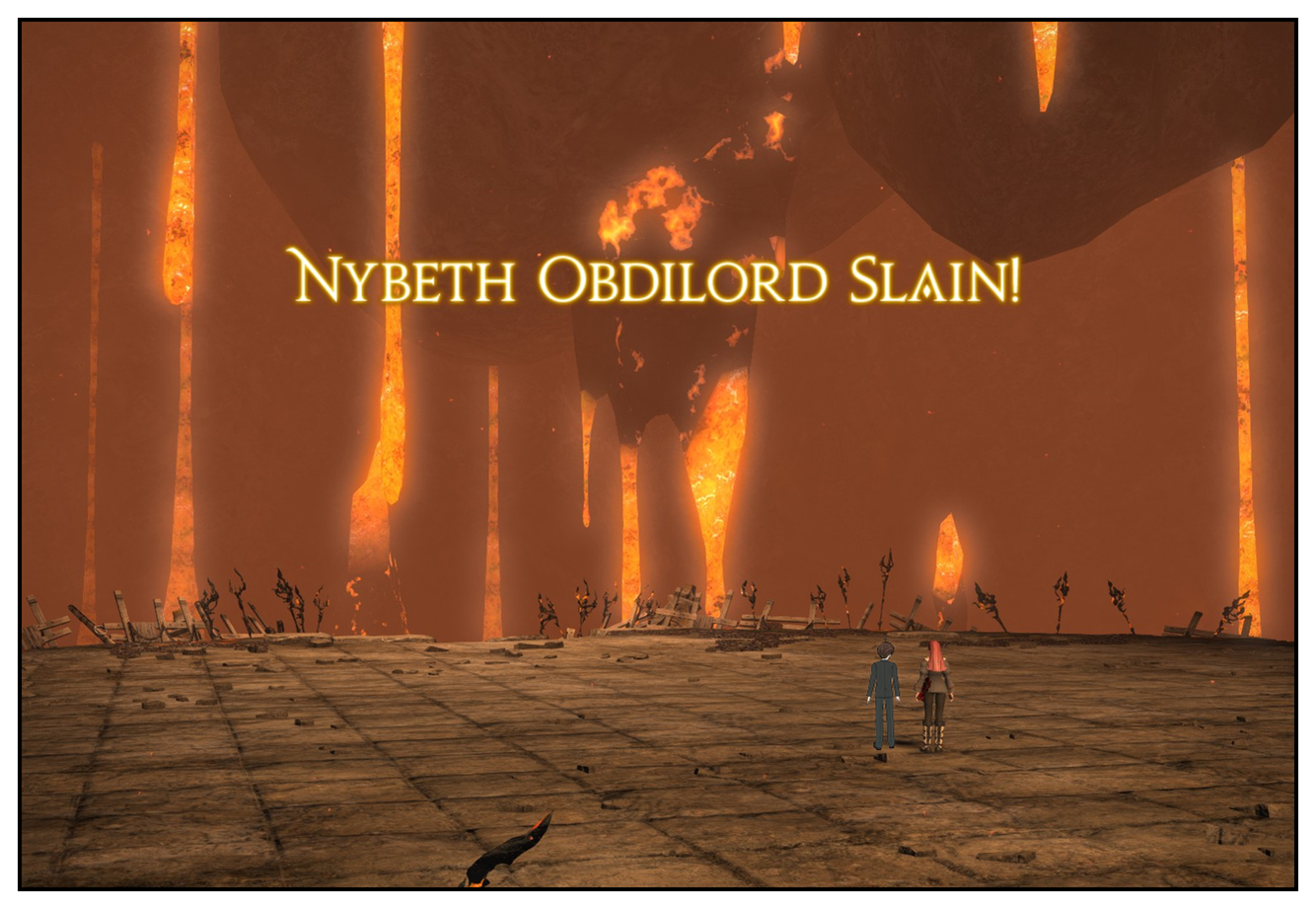
Try to make sure you have three Pomanders of Resolution by the time you reach floor 100 — block 91-100 seems to throw them at you, but save them up from earlier blocks to be safe if necessary. Nybeth himself isn't too much of a threat if you take care to avoid his AoEs, particularly the large cone-shaped Doom attack. The important mechanic in this fight is the adds that he spawns at roughly 90%, 70% and 30% of his HP remaining. As soon as they appear, pop a Pomander of Resolution and use Kuribu's attack to firstly kill the enemies, and then use the ability again on their corpses to remove them permanently from the fight. Click off the transformation before you turn your attention back to Nybeth. Repeat two more times and you're home free.

2479: Palace of the Dead, Solo

0479_001

One of the things that had me most interested in patch 3.45 for Final Fantasy XIV was the ranking system for the Palace of the Dead dungeon I talked about yesterday. This tallies a score for you whenever you play with a fixed party (be it solo or up to four players) and thus allows you to compare your progress against other players from around the world.

Alongside the introduction of this ranking system came a few rebalancing changes to make soloing Palace of the Dead a lot more practical than it was when it was first introduced; previously, anything above about floor 20 at a push was very difficult if you were by yourself, but now, you can theoretically go up to floor 100 and beyond if you've upgraded your gear enough and your skills are up to snuff.

One of the things I've appreciated about Palace of the Dead since its launch was the fact that since it's largely impossible to "outgear" it — your regular gear has no meaning inside, only your Aetherpool upgrade levels, and even those are capped and synced if they're too high for the floor you're on and the level you are — you had to actually play properly. That means no cheesing mechanics, no standing in AoEs because you have enough HP to just soak them up, and swift punishment if you don't know how to play your job properly and effectively, sometimes in an unconventional party lineup.

Today, I made it to floor 60 solo, initially using Arcanist to go as far as floor 50 (my Arcanist hadn't yet reached level 30 and thus couldn't be upgraded into Scholar or Summoner, but the experience point rewards from completing these floors were enough to get me from 23 to 30 without too much difficulty) and subsequently as Summoner.

Arcanist/Scholar/Summoner aren't classes I've played much in the past, though I found Palace of the Dead's accelerated levelling to be quite a good way to learn how they work. In particular, levelling Arcanist to 60 without Summoner's extra Job abilities was a solid way to learn the basics of how the class worked, then upgrading to Summoner built on that foundation. I am now regretting the fact that I haven't levelled Summoner prior to today, because goddamn, that class is fun.

The reason I picked Arcanist and Summoner to run solo is that they seemed the most naturally geared towards soloing in that they have the option of summoning a tank pet that can maintain the enemies' attention while you cover them in festering boils and fling magic at them. The tank pet doesn't get a lot of use in party play — largely because you normally have an actual human-controlled tank there that can perform the role better than an AI routine — but in Palace of the Dead, Topaz Carbuncle (Arcanist) and Titan-Egi (Summoner) have both proven invaluable, particularly when it comes to the bosses.

And speaking of the bosses, soloing floors 1-60 today has given me a new appreciation of these fights. When tackled in a party of four, they're mostly rather easy (with the possible exception of floor 80's boss, which has been the source of many a party wipe so far), though from floor 60 onwards they do start to have some more interesting mechanics. Solo, however, they all present a pretty formidable challenge as you have to dodge their mechanics, chug potions to keep your health topped up (assuming you're not a healer) and somehow in the middle of all that find time to fling a few damaging abilities in their direction. I'm sure you can already see how helpful a tanking pet would be in this situation!

Thus far the secret to successful soloing seems to be having decently levelled gear — currently mine is around the +64 mark, which has seen me safely to floor 60 so far, and from this point onwards the upgrades from the silver chests are less likely to fail, too, so repeated runs will eventually push it up towards +99, which I suspect will be strongly recommended to tackle floor 80 and onwards.

According to the leaderboards on The Lodestone, no-one on Primal data centre has made it to floor 100 solo yet. I have little doubt that will probably change by tomorrow — I think someone on Reddit from another data centre had done it already — but for now it's fun taking aim for the top spot. And if I don't attain that top spot, well, at least I'll be able to say I've done it.

2478: All About Palace of the Dead

0478_001

For the benefit of my Twitter friend @FinalMacstorm, who is contemplating returning to Final Fantasy XIV once he's done with Final Fantasy XV, here is everything you might want to know about Palace of the Dead, one of Final Fantasy XIV's newest pieces of content.

What is it?

A 200-floor dungeon with randomly generated layouts. The first 100 floors are its "story mode"; the second 200 floors are intended to be very challenging 4-player content, and as such can only be attempted with a preformed party.

How is it structured?

When Palace of the Dead first launched, there were 50 floors, which you tackled in blocks of 10 at a time. Every 10th floor, there is a boss. Beat the boss and your progress is saved, allowing you to pick up from the following floor either immediately or the next time you want to challenge Palace of the Dead. On floor 50, there's a final boss — a familiar face who has been well and truly put through the wringer since you first encountered them.

Floors 51-100 of Palace of the Dead were added today and are known as the "Hellsward" floors. They work in mostly the same way. Once you've cleared floor 50 once, you can start at floor 51 instead of floor 1 any time you reset your save data. Floor 100, again, has a final boss — this time it's Nybeth Obdilord from Tactics Ogre.

Floors 101-200 of Palace of the Dead were also added today. They can only be entered if you start from floor 51 with a preformed, fixed party and clear all the way to floor 100 without any full-party wipes.

What are the bosses like?

The bosses gradually ramp up in complexity as you go deeper into the dungeon. The first boss is very simple — essentially fighting a normal Death Gaze that has a few more HP than usual. The second is a heavily simplified version of the Raskovnik fight from Sohm Al, which in turn was a simplified version of the Rafflesia fight from The Second Coil of Bahamut. The third is a slightly simplified version of the Hydra fight. Later bosses incorporate mechanics from Odin, Anchag from Amdapor Keep (Hard) and King Behemoth from Labyrinth of the Ancients. Floor 80's boss — the aforementioned King Behemoth-inspired fight — features a pretty brutal DPS check against a slowly casting, insta-wipe ultimate ability. This is arguably the most difficult boss in the first 100 floors; Nybeth is a relative walkover by comparison, though his fight does require the DPS to be on their toes to deal with frequently spawning adds.

Is it endgame content?

While the main rewards for Palace of the Dead are level 60 weapons — item level 235 weapons that can subsequently be upgraded to item level 255 — you can actually start it as soon as level 17. It's best to wait at least until you've reached level 50 and have cleared the sidequest dungeon Tam-Tara Deepcroft (Hard), though, because Palace of the Dead's storyline follows directly on from that dungeon's narrative.

How does it work?

Your level inside Palace of the Dead is different to your level outside. Upon entering for the first time, you're reset to level 1, but the experience required to level up within Palace of the Dead is considerably less than in the main game. You can reach the level cap of 60 by about floor 40 if you're reasonably diligent about killing enemies on the lower floors. Each block of floors takes about 20-30 minutes to complete depending on how quick you are.

Your level inside Palace of the Dead can exceed your level outside Palace of the Dead, so it's a good way to "preview" how classes play once they reach level 60. Starting at floor 51 will immediately boost you to level 60 in the class you entered on while you're inside.

When you clear a block of 10 floors, you receive experience points for your level outside Palace of the Dead, making it quite an efficient way to level classes. If you're already level 60, you will instead receive Allagan Tomestones of Poetics, Lore and Scripture, the endgame currencies used to purchase high-end equipment and quest items. If you're level 50-59, you will receive Allagan Tomestones of Poetics and experience points.

What about gear?

Normal gear is irrelevant in Palace of the Dead. Instead, you have an aetherpool weapon and armour, which can be upgraded by collecting silver chests scattered throughout the dungeon. The maximum the gear can be upgraded to is +99, though on the lower floors there is a cap and level sync on upgrades to prevent you being too overpowered.

When your weapon and armour both reach +30 upgrades, you can "spend" these points to acquire an item level 235, level 60 weapon that you can use elsewhere in the game. When your weapon and armour both reach +60 upgrades, you can "spend" these points to upgrade the item level 235 weapon to an item level 255 weapon. If you allow your weapon and armour to upgrade to +90, this means you can get the i235 weapon and immediately upgrade it to i255.

Do I have to play in a party?

No. There are several ways to play. Firstly, entering with a matched party uses Duty Finder to seek out other people who are on the same block of floors as you and put you all together. Note that Palace of the Dead does not adhere to the usual party construction in the rest of the game, meaning it's entirely possible you may have runs with no healers, no tanks or all DPS classes. Each block is clearable with such a lineup, but you will need to make use of items as well as your abilities.

Alternatively, you can play with a fixed party, which simply takes the party lineup you choose to start with — from going solo to a full light party of four — and registers that as your group on your save data. To continue progressing, you must take the same group of people with you on the same classes, though if you need to disband you can convert fixed party save data to matched party save data at any time.

If you play solo, when you wipe you'll be presented with a score calculated as a combination of the highest floor you reached and the number of kills you got along with some other bits and pieces behind the scenes. Your high scores are recorded for each class, and you can also record a high score for a fixed party, too. Personal high scores can be reviewed in the game, while global high scores will be available on the Lodestone website from tomorrow.

What items can I use?

You can access your inventory in Palace of the Dead, so you can use any potions, elixirs and ethers that you might have collected, though note that there is a cooldown on these so you can't just chug them repeatedly. It's a good idea to hotbar your best potions as well as status-curing formulae.

Besides these items, golden chests inside Palace of the Dead drop single-use items called pomanders, which are collected in a shared party inventory. These have a variety of different functions. Some provide buffs for individual players, others benefit the whole party by revealing the whole map, removing traps on the current floor and others still allow party members to transform into various monsters with unique special abilities.

If you're playing with a matched party, your pomanders are lost when you clear each block of 10 floors. If you're playing with a fixed party, however, your pomander inventory is saved along with the rest of the data and will be waiting for you when you challenge the next block of 10 floors.

What do I get out of it?

Besides the weapons, there are hidden treasures called Accursed Hoards scattered throughout the dungeon. These can either be uncovered by chance by standing in the right place, or located using a pomander of intuition. You don't know what Accursed Hoards are until you appraise them back in Quarrymill, at which point they will be "drawn" and revealed to be whatever they are. Common items available through Accursed Hoards include fireworks and Grade IV materia. Rarer items include Grade V materia and glamour items. Super-rare items include a hairstyle and housing decorations.

2477: Outlast

0477_001

It's Halloween, the perfect time to play a scary game! As such, I played through Outlast today, a game which I've been meaning to try for ages, and which my wife was kind enough to gift me a copy of. (It was 75% off for Halloween, too, so she didn't really need any convincing.)

Outlast is a first-person horror adventure game in which you have no combat capabilities. The only thing you're armed with is a camcorder, which can be used to film events (which triggers the protagonist taking notes on them) and, more importantly, see in the dark. Your camcorder has infinite battery unless you're using the night-vision, in which case it drains at an alarming rate, meaning you need to ration its use as much as possible. There are, however, batteries scattered around the game world to replenish your charge.

In Outlast, you play the role of a journalist who received a tip-off as to mysterious, strange and downright horrible goings on at a mental asylum, once closed down but subsequently reopened by a private corporation. As these things tend to go, said private corporation puts up a charitable facade when really they're into some horrible shit, and it's your job to investigate exactly what they've been up to. I shan't spoil any more of the story specifics here, as the game is well worth playing.

In terms of gameplay, Outlast is largely exploration-based. You don't have a map of any description, so you have to rely on your own sense of direction and the subtle environmental clues the game places around — doors left open a crack, realistic signs on walls, that sort of thing. Most of the game consists of you trying to figure out how to get through your current environment, though occasionally you are beset by sometimes naked psychopaths (seriously, there were many more cocks in this game than I was expecting) who want nothing more than to see what you look like inside-out. When the game shifts tempo in this way, it turns into something of a stealth game where you have to outwit your foes. You can't kill or even incapacitate your foes in any way, so the closest Outlast comes to "combat" is running away until you manage to get out of sight of your pursuers long enough for them to give up the chase.

A lot of Outlast is spent crawling around in the dark, as you might expect, but the game does mix things up a bit with its environments. One particularly memorable sequence towards the end of the game sees you fumbling around outside in the dark and rain, meaning even your camera's night vision isn't a lot of help — you have to firstly figure out where you're supposed to go, and then how to get there.

As a horror game, Outlast is pretty effective, with a menacing atmosphere throughout and jump scares used sparingly for maximum impact when they do happen. I didn't find it as outright disturbing as something like Silent Hill because it doesn't have as much of the psychological metaphor stuff going on as Konami's classics, but it's pretty creepy, and the feeling of panic when you're running away from enemies reminded me of Silent Hill: Shattered Memories, which likewise eschewed combat in favour of making you run away dramatically.

The plot is a bit weird and it kind of felt a bit like they weren't sure whether to do a supernatural-themed story or a Resident Evil-style "big evil corporation" story, so ultimately it ended up as a bit of a mishmash of both. It worked, however, and had a suitably satisfying conclusions — and, although I'm yet to play it, most people seem to think that the DLC Whistleblower, which unfolds from the perspective of the character who sends an email to the main game's protagonist, is a superior experience with a better sense of closure. I'll have to check that out soon.

Overall, then, I enjoyed Outlast. At only about 5 hours from start to finish, it's a game you can easily beat in a single sitting, and doing so feels like the way the game was intended to be experienced. It's a relatively unusual take on the horror genre by lacking in combat –though this style has grown in popularity in the last few years thanks to titles like Amnesia, Until Dawn and the aforementioned Silent Hill: Shattered Memories — but the lack of an attack button doesn't mean it lacks any sort of gameplay depth. Rather, it does what it does extremely well, and was a fine way to spend Halloween, so far as I'm concerned.

2470: The Not-Games

0470_001

There seems to be a perpetual struggle in the world of video game enthusiasts to define exactly what is and is not a game.

At the head of this nontroversy is Fullbright Studios' Gone Home, a first-person interactive story where you walk around a house sans its inhabitants, piecing together a number of different plot threads scattered around the place, some of which are more explicit than others — and some of which are handled better than others. I liked Gone Home, but I felt like its "main" story — the one that lets you "finish" the game when you reach its ultimately rather mundane conclusion, despite what it has built you up to expect — was by far its weakest aspect, with much more interesting things going on through the "unspoken" stories: the bottle of whiskey hidden on top of a bookcase; the condoms in a drawer; the documents lying around the place.

To some people, Gone Home isn't a game, much as similar games in the genre that has become semi-derisively known as "walking simulator" aren't considered games either. Dear Esther, The Stanley Parable, Everybody's Gone to the Rapture, and others like them: all too many people are far too hung up on the rather dull question of whether or not they are actually a game rather than unpacking the dense, interesting narratives that each of these experiences feature.

For some reason, visual novels appear to largely escape this sort of discussion, despite being less interactive than a walking simulator. In your average visual novel, you click through reams of text for hours and hours and hours and occasionally make a choice. In a particular subset of the visual novel called the kinetic novel, you don't even make any choices: you just read and read and read, and then it's over with you not having actually done anything.

Even these almost entirely non-interactive affairs don't seem to get lambasted in the same way as Gone Home and its ilk, though, despite arguably being less of a "game" than something that has a 3D engine, WSAD movement controls and mouselook. In fact, even some of the most well-regarded games in the genre — The Fruit of Grisaia is the most prominent that springs to mind — only have maybe one or two meaningful choices to make in the whole game, with each acting as a fairly transparent means of setting a flag as to which character's route you're going to follow, and whether your get their Good or Bad ending.

I wonder why this is? Is it subject matter? No, I don't think so, because while, say, Gone Home has its narrow-minded detractors for being "progressive" — I think the statute of limitations is probably up on it by now and we can say its main story is actually about a young lesbian couple running away together — there are certainly plenty of well-regarded visual novels out there that deal sensitively with homosexuality, both male-male and female-female.

Is it about artistic intent and the overall "honesty" of the work? Perhaps. Titles such as Everybody's Gone to the Rapture often draw ire for being "pretentious" and, while I enjoyed all of the titles I've mentioned thus far, it's kind of hard to argue with that label. Everybody's Gone to the Rapture in particular feels very much like a case of "let's make this as arty and confusing as possible" before kind of running out of steam in its final moments and getting just a bit too silly and implausible. Dear Esther suffers from a similar problem, deliberately mixing a number of different narratives together — with some randomisation in the mix, too — to try and obfuscate what the whole damn thing is actually about for as long as possible. The Stanley Parable, meanwhile, completely runs with this and knows exactly what it is doing, laughing along with the player at every opportunity, too.

Contrast with a visual novel, such as the one I'm currently reading/playing: Supipara, by minori. Supipara is a kinetic novel: there are no choices whatsoever. Yet it's charming, compelling and addictive purely by virtue of its beautiful presentation, likeable and mysterious characters and intriguing premise that blends the mundanity of a slice-of-life tale with elements of the supernatural.

At no point does Supipara let any part of itself run away or overwhelm the rest of it. Its supernatural elements are incorporated honestly and without attempts to obfuscate or explain them away as quickly as possible, hoping we won't notice — Life is Strange, I'm looking at you. It just is what it is, and it invites you to judge it on that basis. There's no need to critically analyse it just to understand what the fuck happened in it — though this isn't to say there isn't value in applying some literary theory to unpack the various subtexts and themes in it — and thus it can be enjoyed on a number of different levels without Dear Esther's implicit suggestion that "you must be this smart to enjoy this ride".

I don't have an answer to the question "is [x] actually a game?" because your definition of "game" will doubtless be different from mine. Ultimately it doesn't really matter, anyway; the only thing you should be asking yourself when engaging with a piece of interactive entertainment — regardless of how interactive — is, quite simply, "is this a good use of my time?" If yes, great. If no, maybe put it down and try something else instead, while acknowledging the fact that some people might enjoy it more than you. There's really no need for the bitter arguments that have ensued since technology has allowed developers to get a bit more "artsy" with their creations.

Supipara is great, by the way. I'm going to do a full write-up on MoeGamer in the near future once I've read the whole thing, but for now I'll say it's one of the most beautifully presented visual novels I've ever seen, has a compelling, if low-key story, and some grade-A waifus. And what more, really, do you need to have a good time of an evening?


2467: Encylopaedia Eorzea

0467_001

I'm going to do a more detailed write-up on this over on MoeGamer when I've read and thoroughly digested everything in this massive tome, but I thought I'd give some initial thoughts here.

Encylopaedia Eorzea is here! Yes, for a long time the Final Fantasy XIV team had been suggesting that a lore book might be on the cards, and at FanFest last week, it was finally revealed. It was put up for sale at the start of this week and seemed to develop a waiting list very quickly; fortunately, I managed to get in early and snag a copy.

£34.99 gets you a formidable hard-backed book over 300 pages in length, printed on gorgeous thick, parchmenty paper and presented in full colour. The book is heavy enough that it would probably do some damage if you smacked someone with it — and you all laughed at Arcanist, Summoner and Scholar's auto-attack!

The tome as a whole is split into eight different "books", each dealing with a different aspect of Eorzean lore.

The first, and shortest, concerns "the basics" of the planet Hydaelyn and what makes Her tick, including geography, the relationship between Hydaelyn's light and Zodiark's darkness, the Twelve gods in the Eorzean pantheon, and the basics of "aetherology" — the underlying (fictional) science of how the elements interact with one another to create life, magic and other effects.

The second, and one of the longest, concerns Hydaelyn's history, reflecting on the world's cycle of Astral and Umbral eras, with the latter's arrival being heralded by a Calamity of some description — each elementally themed in the case of the first six, and the seventh (used as the initial story catalyst for A Realm Reborn) covering all elements in the sheer magnitude of its disaster. This book is particularly interesting because it gives some background reading on the mysterious ancient civilisations of the Amdapori, the Mhachi and the Allagans, all of whom are explored to a certain degree in the game itself. It also provides a good primer of the storyline for Final Fantasy XIV 1.0, which is no longer playable, but which is concluded through A Realm Reborn's cycle of raid dungeons, The Binding Coil of Bahamut, The Second Coil of Bahamut and The Final Coil of Bahamut.

The third book provides a primer on the different people of Eorzea and where they came from. It only explores the playable races of Hyur, Elezen, Lalafell, Miqo'te, Roegadyn and Au Ra — those hoping for some information about the Padjali or a hint as to whether or not we'll ever see Viera in the game will have to keep theorycrafting.

The fourth book is the longest and concerns the geography of Eorzea, including all the zones from A Realm Reborn and Heavensward as well as short look at Ala Mhigo (subject of the upcoming expansion Stormblood) and the Garlean Empire (recurring villains).

The fifth book concerns Hydaelyn's "servants", and explores the various characters that you come into contact with throughout the game, right from the main "protagonists" the Scions of the Seventh Dawn to the recently introduced Warriors of Darkness. This section also includes information about groups involved in sidequests in the game, too, such as Hildibrand's Agents of Inquiry, the organisation NOAH who spearheaded the investigation into the Crystal Tower and a section entirely devoted to more minor NPCs such as those who served as the face of the Relic quests, and poor old Edda, who has had a rough ol' time of it both during life and in death.

The sixth book looks at Hydaelyn's "disciplines" — in other words, the playable classes in the game. Interestingly, the book makes no mention of the base classes on which the more familiar "Jobs" are based; the focus is entirely on the higher-level incarnations of the Jobs.

The seventh book concerns Hydaelyn's "burdens" — the various beast tribes of the realm, and the Primals associated with each of them. This section also looks a little at as-yet underexplored groups such as the gigants, as well as the eikons of the Warring Triad, which we're halfway through the story for in the game at the time of writing.

The eighth and final book is a bestiary of monsters from around the realm, divided into the various "-kin" categories. It also incluides a look at voidsent, elementals and chimeras.

There is a lot of information in this book, and it's presented in a clear, enjoyable to read manner. The thing I've found most beneficial about it is that it provides a good summary of the various storylines that have unfolded during the game since its launch; this is several years ago now, so it's not surprising that some details may have slipped many players' memories! The lore book acts as a good reference guide for those who may have forgotten some of the finer details.

Above all, though, Encyclopaedia Eorzea is clear evidence that the team behind Final Fantasy XIV have built more than just a game. They've truly built a world for people to inhabit, which has its own history leading up to today, as well as many more stories yet to tell. And if you flip through it's pages, you'll understand just why so many people still like to call Eorzea home.

2464: The Palace of the Dead (Savage)

0464_001

Final Fantasy XIV's patch 3.45 is coming in early November, and bringing with it an additional 150 floors to the game's current Deep Dungeon, The Palace of the Dead. I am excited.

Palace of the Dead is a great piece of content that I'm pleased has remained popular since its launch. It flips most of the conventions of MMOs on their head and provides something different for people to do, with meaningful rewards and a decent shot of experience points for those levelling alt classes.

Palace of the Dead, in case you're unfamiliar, is a 50-floor dungeon that you tackle in blocks of 10 floors at a time, with a boss on each 10th floor. Each floor consists of a number of rooms arranged in a randomised layout, with an exit portal in one room and a resurrection gizmo in another for if things happen to go south and you don't have a healer. Both of these things are inactive at the start of a floor, so you have to kill enough enemies to turn them on before they can be used.

Some rooms have treasure chests and occasionally monsters drop them too. These come in three different varieties: bronze chests hold consumable items such as Phoenix Downs to resurrect fallen comrades and potions to heal HP; silver chests have a chance to upgrade either your weapon or armour (with the chance getting smaller as they get more powerful) up to a maximum of +30; gold chests reward you with "Pomanders", which are items that have immediate beneficial effects such as increasing your damage, turning all enemies in the nearby vicinity into chickens or frogs, temporarily transforming you into a manticore or removing all the hidden traps on the current floor.

In the last major patch, the Accursed Hoard was also added to Palace of the Dead; these are hidden treasures that have a chance of spawning on each floor. Standing on a spot where a Hoard is hidden reveals it, and if you successfully clear the block of 10 floors, you get one sack per Hoard you found, each of which contains a randomly drawn item from what seems like quite a large selection, ranging from the useless (fireworks) to the very useful (grade V materia) via formerly expensive glamour items.

The thing I like about Palace of the Dead is it takes almost everything the rest of Final Fantasy XIV established in terms of gameplay and throws it out of the window. Item level doesn't matter, stats don't matter and even conventional party composition (one tank, one healer, two damage-dealers) doesn't matter. There's some variation in individual performance according to the upgrade level of your aetherpool gear (which you can only use in Palace of the Dead until it reaches its fully upgraded level of +30, at which point it can be exchanged for a level 60, item level 235 weapon that you can use in the rest of the game) and your character level in Palace of the Dead (which is different to your character level in the rest of the game; you level up at a considerably accelerated rate in the dungeon, but have to reset to 1 every time you restart from floor 1) but otherwise, how well you do in there is entirely down to how well you know how to play your class.

It's interesting to see people realising this for the first time. You can't just ignore mechanics in Palace of the Dead because it's literally impossible to outgear it. You can't stand in area-effect attacks and soak the damage because, again, you can't outgear it. And you can't pull 30 enemies at once and hope to survive because, you guessed it, you can't outgear them. It's all about careful use of your abilities, consumable items and the Pomanders; you have to be constantly aware of the situation of both yourself and your party members, as an unfortunate mistake could lead to a wipe — and if you wipe in Palace of the Dead, you fail that set of floors immediately and have to start again from the last "checkpoint" you reached. (This is particularly heartbreaking if you reach the final boss on floor 50 with 5 Accursed Hoards in your pocket and then wipe because you forgot to pay attention to mechanics.)

The reason I'm looking forward to Patch 3.45 is that it promises not just more of Palace of the Dead, but that its last 100 floors in particular will be very difficult. And not "very difficult" in the sense that the current Savage raids are very difficult — i.e. they get quite a bit easier if you take the time to buff up your gear level — straight up difficult in that you'll have to pay attention, dodge shit and play your class effectively, perhaps in an unconventional party formation.

I'm interested to see quite how they're going to make it difficult. People have been clamouring for difficult ("Savage") four-player content for quite some time now, and Yoshi-P and the team specifically said during the last Live Letter that the lower 100 floors of Palace of the Dead were designed to be just that. What I find particularly interesting is that this is (hopefully) super-difficult content that you don't need to have spent ages preparing to be ready for, because your gear level when you go in doesn't matter; everyone in the entire game, assuming they have Palace of the Dead unlocked (which they can do as early as level 17 rather than having to reach the current cap of 60), has the potential to be a "world first" clear, which is something that has never happened before. Previous "world firsts" in the game were by raiders who were at the absolute top of their game with the best possible gear available, so in most cases it was fairly predictable who the acclaim would go to. With this, however, the title is anyone's.

I'm also intrigued by the proposed ranking system and how it works, since that hasn't been explained in much detail before. We know that there will be rankings for both individuals and parties, and that rankings are stratified by class/job, but we don't know exactly what causes you to score the "points" that determine your place on the rankings. Progress through the floors is a given — the mockup leaderboards we saw during the Live Letter displayed both the floor the characters had got to and their score — but what else will contribute to it? Clear time? Damage done? Kills? Accursed Hoard finds? Treasure chests looted? All of the above?

If they handle this properly, Palace of the Dead has the potential to become an enormously compelling metagame in its own right within the wider context of Final Fantasy XIV, not to mention a great way to learn and level alt classes that you perhaps haven't used much before. I'm very much looking forward to challenging the lower floors of this Deep Dungeon, and hope that it provides a suitable alternative to raiding for those who seek a challenge but perhaps don't have a group, have difficulty getting everyone together at the same time, or simply aren't geared enough.

I guess we'll see soon enough! (Also, I really want to see what happens when you sit on that bench…)

2463: You Can't Win Them All

0463_001

"You can't win them all" is one of those platitudes we hear numerous times throughout our lives. In childhood, it's used as a means of attempting to stop the inevitable crying after we lose a game against a sibling or fail to achieve something we really wanted to achieve. And in adulthood, it's used in circumstances ranging from the loss of a job to the end of a relationship.

And yet I feel it's a saying that a lot of people these days seem to have forgotten.

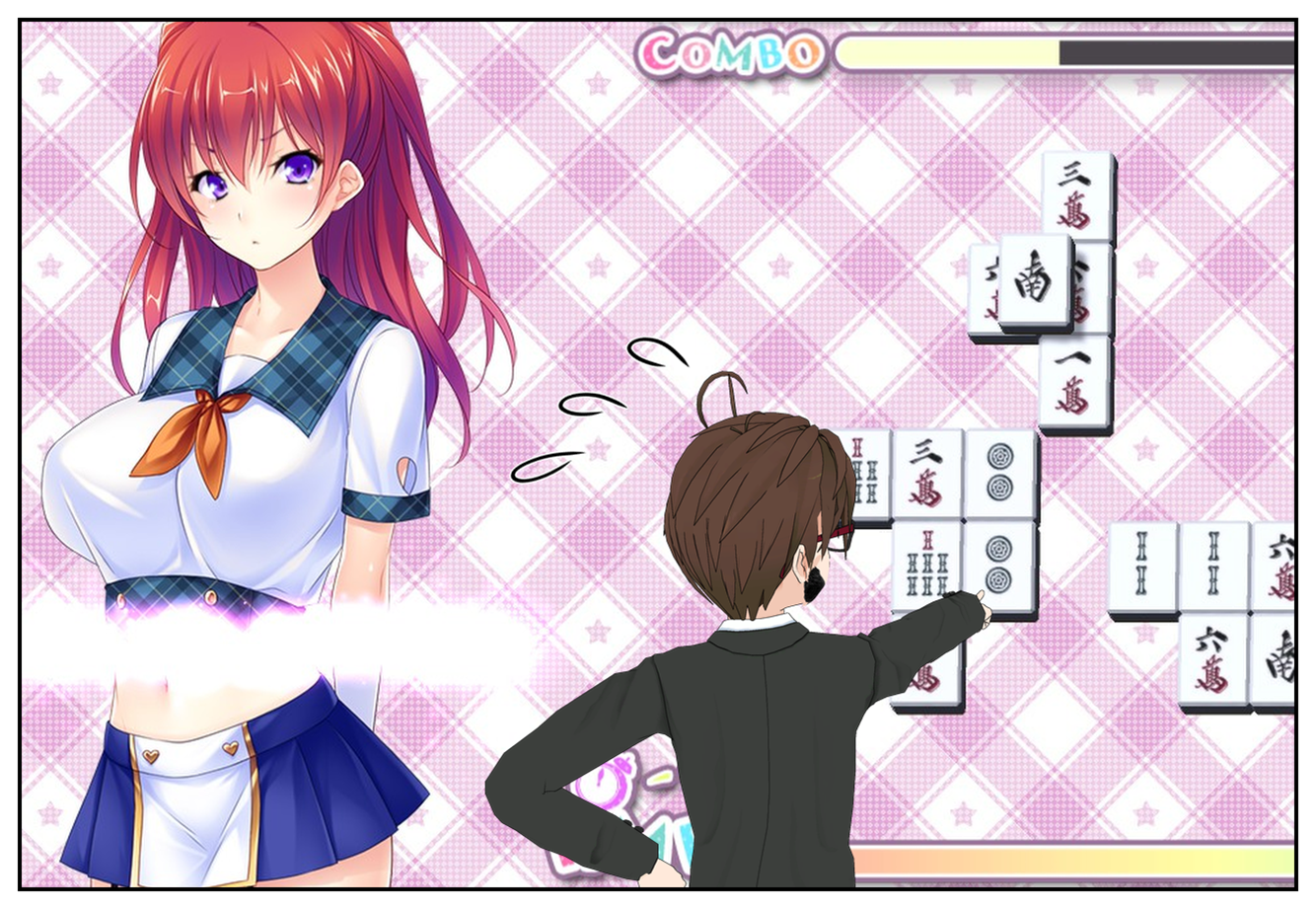
Today I've been playing a game called Delicious! Pretty Girls Mahjong Solitaire which, as I said in my writeup on MoeGamer earlier, is exactly what it sounds like. I've been having a lot of fun with it; mahjong solitaire is one of those simple-but-challenging things that I find enormously addictive, and Delicious! certainly likes to slap you around a bit with its various tile layouts. But that's all part of the fun, as is the case with pretty much any non-free-to-play-garbage puzzle game produced since the dawn of computing: the fact that victory always seems attainable, yet is often just beyond your grasp is what makes these experiences so enjoyable, exciting and addictive.

And yet, glancing at the Steam reviews and discussion pages, the most common complaint people seem to have about the game is that "it's too hard". The timer's too quick. The game gives you too many "unwinnable" layouts. In other words, it doesn't let you win every time. (A similar swathe of criticism was levelled at Frontwing's excellent ecchi puzzler Purino Party.)

"Victory" is something that people the world over seem to think they have become entitled to, with the fact that whenever you're doing anything competitive, the possibility of losing is what makes it competitive in the first place. You see it everywhere: in the Delicious! forums, where players complain that they have to keep trying levels until they get it right; in Final Fantasy XIV, where people vote to abandon a duty after the first party wipe rather than helping newcomers or people who aren't as familiar with the fights; in Overwatch, where someone will rant and rave at their team if they lose, completely ignoring the fact that there's always the possibility that you are, you know, simply outmatched.

It's hard to say exactly where this attitude comes from, but it seems firmly ingrained in society now, and repeatedly reinforced by lots of things that we do, particularly online with the growth of "gamification". "Well done!" everything seems to say, showering you with points, levels and achievements and inevitably begging you to "share" everything on social media. "You used this thing for the thing it was designed to do!"

People often joke about school sports days that don't have winners any more, but I've seen it happen: kids getting "participation trophies" even if they did the bare minimum. I've also seen "Celebration Assemblies", in which children get certificates for everything from getting 100% on a spelling test to — I'm not joking about this — sitting still in their chair for a whole lesson. This continues into adult life, too; at work Christmas parties, there's the inevitable cringeworthy "awards" ceremony, where whatever "lol, so random" douchebag who organised the whole debacle dishes out a series of completely arbitrary awards to ensure that everyone gets recognised for something, even if that thing is "drinking lots of coffee" or "being able to spell".

Failure is what makes experiences like games fun and exciting. If you win every time, you devalue the concept of winning until it is completely meaningless, and nothing feels worthwhile any more, which means you start to crave — or expect — more and more positive reinforcement with every passing day, and get annoyed or upset when your every whim isn't catered to, or things don't go the way you expect them to.

Me, I've had my fair share of failure, but every time I get a TIME'S UP or NO MORE PICK [sic] I just hit the Retry button, give it my best shot and eventually I might actually succeed.

Now, if only it were that easy to pick yourself up and start again after a repeated series of failures in life as well as games.