1279: Hauling Ass (and Wood, Propane and Other Exciting Things)

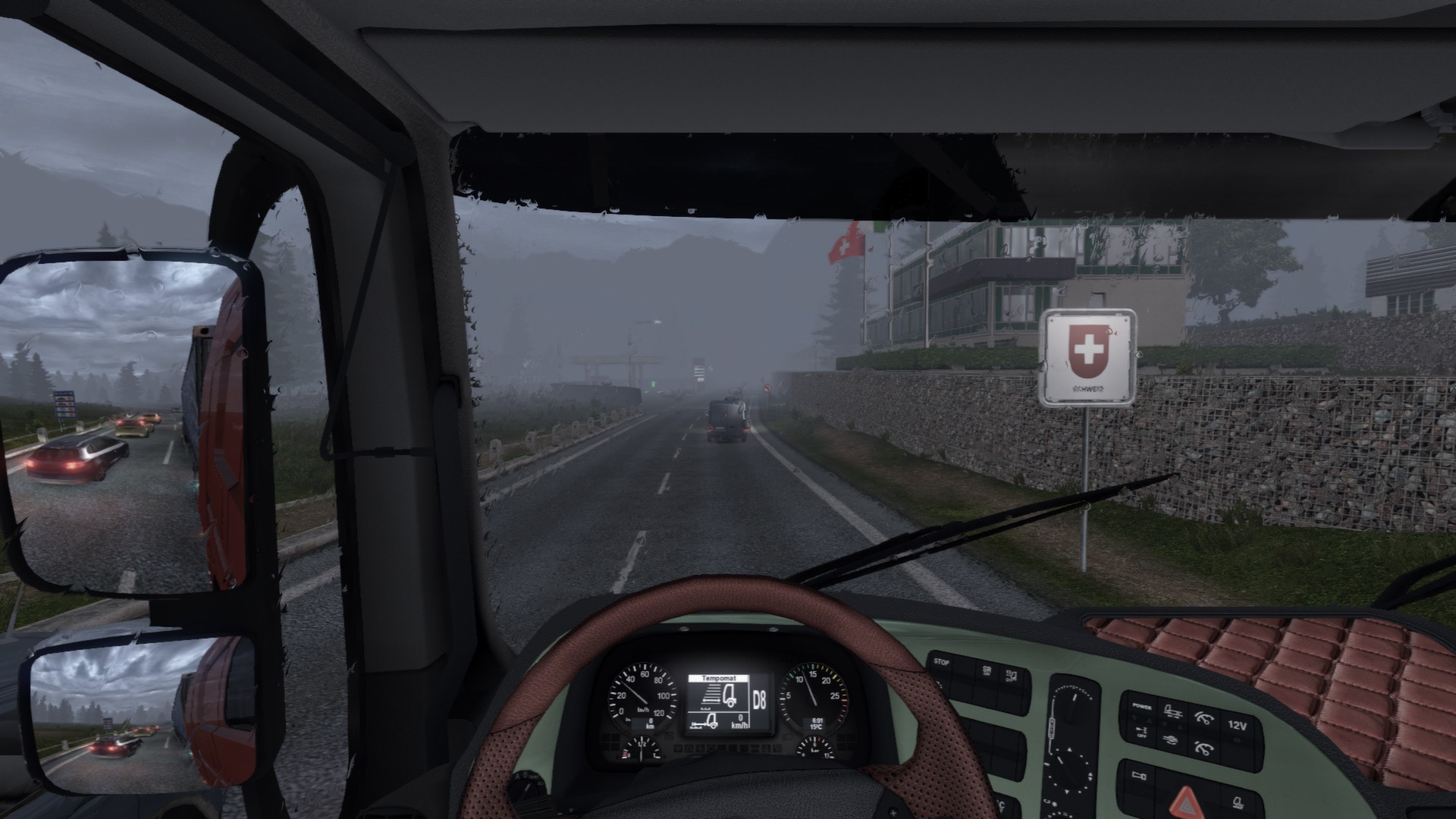
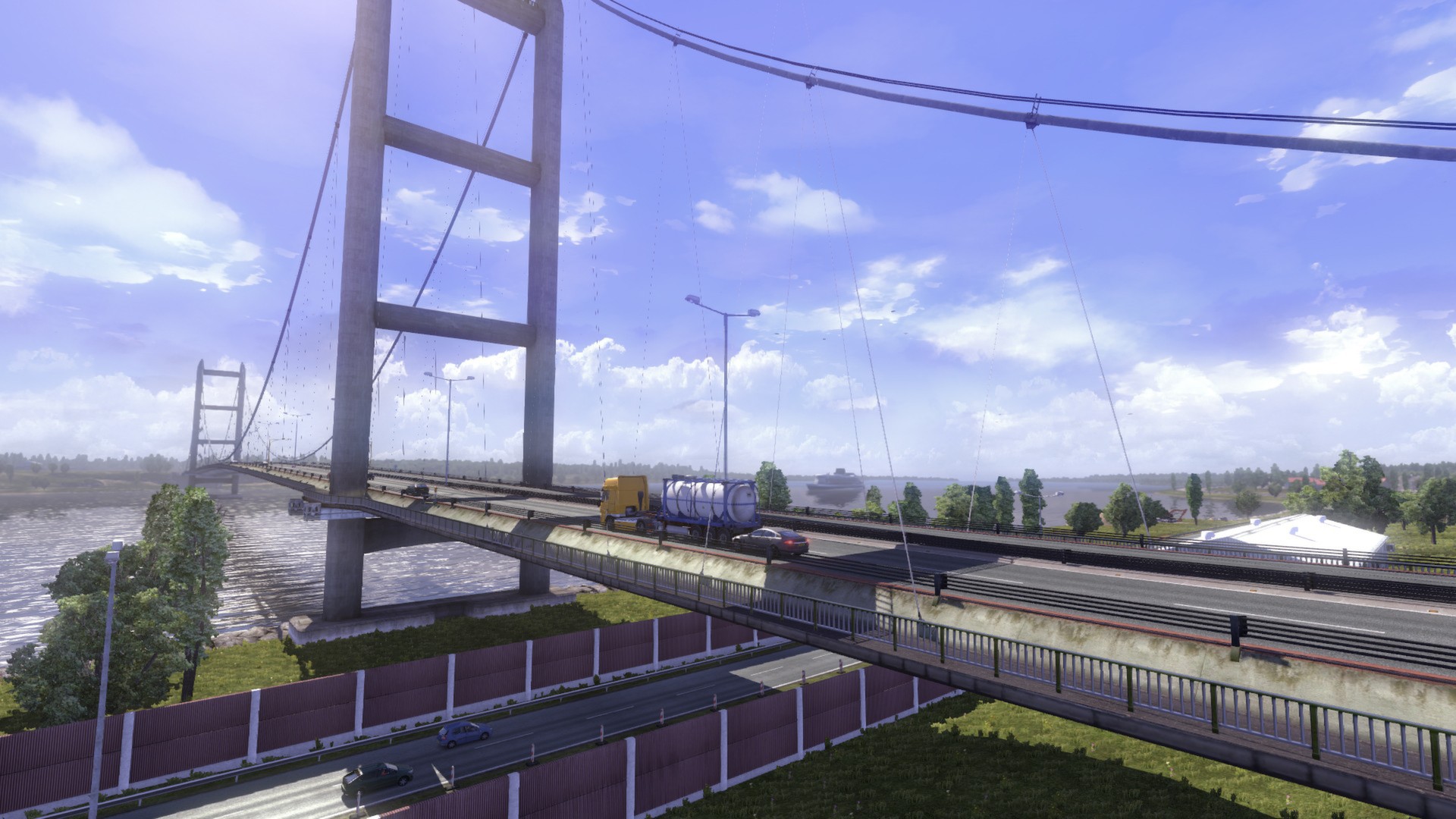
I picked up Euro Truck Simulator 2 in the Steam Sale the other day on a bit of a whim. This is one of those simulator games that, like Farming Simulator, was roundly mocked upon its original release, but promptly turned out to be a rather good game.

I haven't spent a huge amount of time with it so far and I don't know how much time I will spend with it in the long term, but early impressions are that it is basically a game that I've thought should exist for a long time — that is to say, it's Elite, but on the roads instead of in space.

Okay, that's perhaps not quite accurate; you're not really "trading" stuff, you're simply taking jobs and hauling shit (sometimes literally) from one place to another, and there's certainly no "combat" besides any accidents you deliberately cause yourself, but the idea of fusing a management/business game with a vehicle simulator is a sound one, and it has always surprised me somewhat that we've only ever seen it happen in space, really.

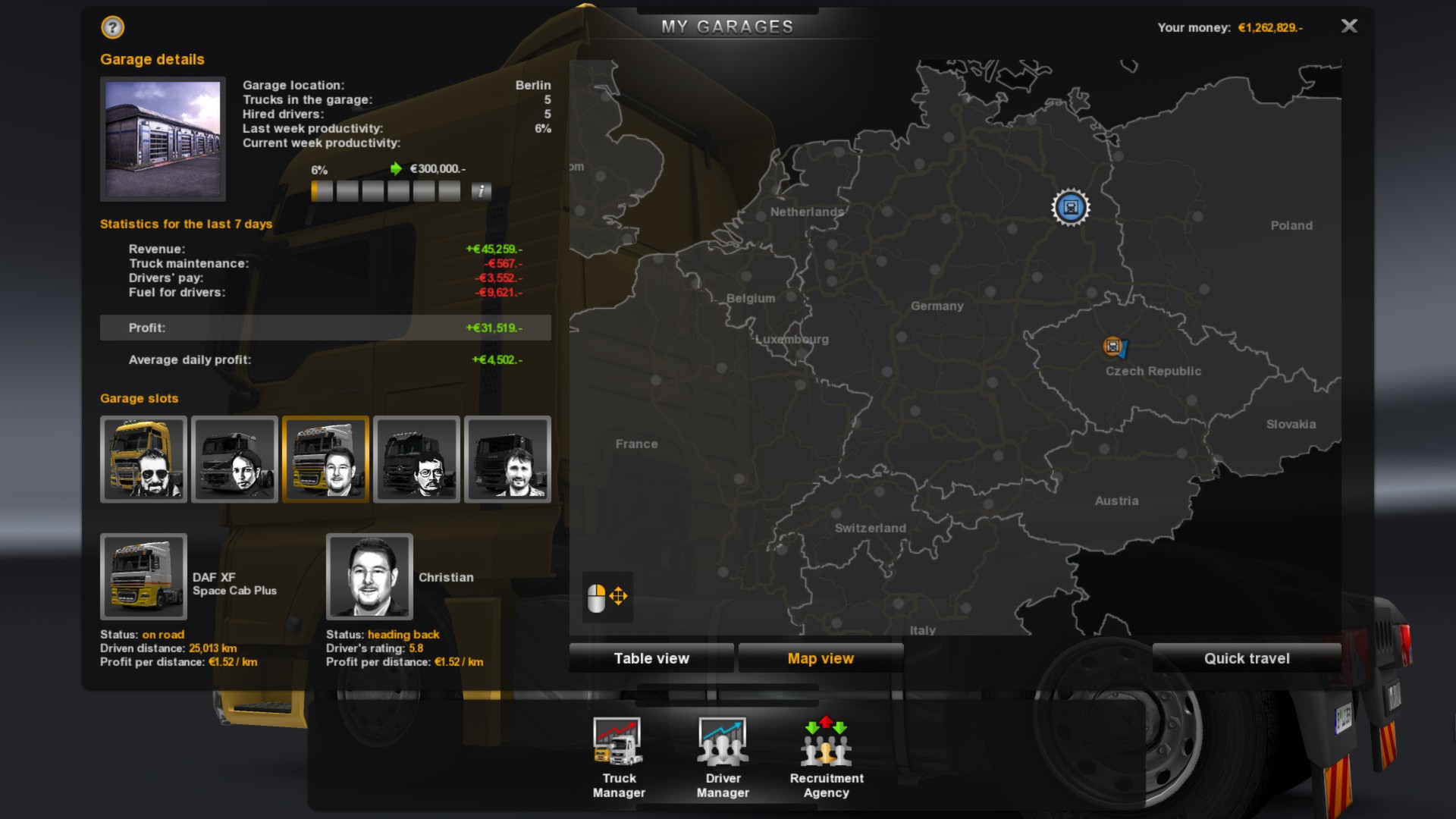
Euro Truck Simulator 2 is an odd experience. It's a driving game, but without all the jostling for position and chaos that normally accompanies driving games that focus on racing. It's an open-world game, but without anything to really "do" besides seek out truck dealerships, try and visit every road in the game and sightsee. I haven't got far enough into the game to look at the business sim side of things yet, but I assume that will add an element of light strategy to the mix, particularly once you start hiring other drivers, too.

It's a peculiarly relaxing experience to play. Once your truck is out on the open road, you don't really have to do a lot besides ensure you don't hit anything, and try not to get caught by speed cameras. But it's pleasingly chilled out to just trundle along at 50mph down some convincingly-realised (if geographically-inaccurate) roads that go to real, actual places with recognisable landmarks. It also implements another feature that I've always thought should be in open-world driving games — the ability to stream Internet radio stations as the soundtrack to your drive. I was listening to some pleasingly mellow German jazz while I drove from Southampton to Dover earlier.

I say it's a relaxing experience to play. Well, that's only mostly true: it's relaxing until you reach your destination and have to reverse the fucking thing into a parking space. Parking a truck is horrendously difficult and I have new-found respect for anyone who is able to do it successfully, particularly in a yard that doesn't have very much space available. I don't really understand how to make it go the correct way when I'm reversing it yet, but I'm sure it's something that comes with practice.

Anyway, I guess what I'm saying in a roundabout way is that if you've seen Euro Truck Simulator 2 in the Steam sale and are mildly curious about it, do yourself a favour and download it. You might just find yourself enjoying the experience. It's just a shame there isn't multiplayer; hauling stuff around Europe with a friend would be a lot of fun, I feel.

1255: A Realm Reborn, Redux

Jun 26 -- FFXIVI really, really like Final Fantasy XIV.

There, I said it.

It may not be fashionable to like a new (well, rebooted) MMORPG that steadfastly follows the old-school subscription model, but given the alternative is the inherent restrictions and inconveniences of the free-to-play model or the regular badgering to check out the "cash shop" in pay-once-play-forever games, I'll take a few quid a month on the promise of gradually-evolving content.

I'm not going to rabbit on about the game itself here — I've already written two articles over at USgamer on that very subject — but I do want to talk about one thing I'm quite looking forward to: the game's social aspect.

A touch of context here: I have a pretty wide circle of friends, but unfortunately the vast majority of them are scattered across the globe, from California to Japan and everywhere (well, not everywhere) in between. I get to see the friends I have in the local vicinity every so often and we have a good time, but 1) I don't necessarily get to hang out with them as often as I'd like — none of us are in our twenties any more — and 2) not all of them are into the same things as me.

One thing I'm looking forward to with Final Fantasy XIV is the opportunity to make new friends. But I have some personal struggles to overcome in order to make that happen.

As longtime followers will know, I suffer from a degree of social anxiety, particularly when confronted with strangers. I worry a lot about what people will think of me, and my low self-esteem and low opinion of my physical appearance causes me to immediately believe people will think the worst of me.

So strong is this issue — and yes, I know I should do something about it; that's not really the issue here — that I've been surprised to discover myself having the same feelings of anxiety when playing online games. I'm actively afraid of voice chat with strangers, for example — a hangover from when I was young and really, really hated the sound of my own voice — and I even find myself hesitant to do what I feel would be "butting in" to online conversations in virtual worlds such as World of Warcraft and Second Life. I haven't hung out in Second Life for a very long time, but on more than one occasion I behaved in that virtual world's virtual clubs exactly the same way as I did in real clubs; I'd sit or stand at the side of the room, watching everyone, and wondering what it would be like to talk to that person over there, who I found quite attractive, or that person over there, who was wearing a T-shirt emblazoned with a design based on something I found interesting.

Well, I feel like I need to take control of this somewhat. While my issues with interpersonal interactions with strangers in "reality" are a more deep-seated issue that probably requires a degree of professional help (or at least a lot of self-discipline), I can do more about the online thing. I chat with people with no problem on Twitter, for example, and pretty much every means of online communication has some form of "safety net" where you can either "escape" from an uncomfortable situation or "mute" people who are bothering you. Chances are I won't need to use either of those things, but the knowledge that they're there is comforting.

So where does Final Fantasy XIV fit into all this, then? Well, once the current phase of the beta test ends and the characters everyone starts playing as become "permanent," I intend on actually making some new friends. I want to play with other people; I want to enjoy the game together with people who like it as much as I do.

I've been hesitant to join "guilds" or equivalents in MMOs in the past because I fear not being able to commit to the regular play schedules that they often require. But the more I think about it, the more I think it might be something worth pursuing. After all, at present, I have no regular "social" event in my weekly calendar; my board gaming nights with my best "real-life" friends are sporadic and irregular, and hanging out with everyone else tends to be a more "spur of the moment" thing. Why shouldn't playing Final Fantasy XIV be some sort of regular, albeit electronic, social event, in which I can get to know people and hopefully make some good friends? Stranger things have happened.

The reason I'm picking Final Fantasy XIV for this purpose? Because Final Fantasy XI is, out of all the MMOs I've tried over the years — and that's quite a lot — the one in which I found people whom I most enjoyed hanging out with virtually. I have no idea where the delightfully entertaining "Bendix" and "Nefertari" are now, but I do quite often find myself missing them. Obviously having some friends a long time ago in a completely different game is no guarantee that the same thing will happen in Final Fantasy XIV, but it's as good a starting point as any, I figure. I've long since abandoned all hope of getting existing friends to play with me in an MMO, because it's impossible to coordinate.

It remains to be seen whether this plan is successful once the game enters open beta and rolls ever-onward towards its August launch. But I feel strangely optimistic about this coming opportunity to meet some new virtual people; I can represent myself however I want in the game, with no-one pre-judging anything about me besides my character's name and their appearance. And since everyone in Final Fantasy land is impossibly attractive in that distinctively "Japanese video game" sort of way, I don't even really have to worry about that, unless I accidentally call myself Pooface McScruntyflange. Which I probably won't.

Anyway, in the meantime, rest assured that Final Fantasy XIV is shaping up to be something actually quite special, and I'm really looking forward to getting stuck into the game as a whole for realsies. Enthusiastic blog posts will undoubtedly follow once my "real" character is born.

1222: Stupid Acronym, Great Game

May 24 -- FEARI've been playing First Encounter Assault Recon, or F.E.A.R. to its friends, recently. And while its acronym-based title is mildly cringeworthy — look, it must be scary, it's called F.E.A.R.! — what I've discovered is that it's actually a rather magnificent game that I'm sorry I haven't got around to sooner.
I'm not normally a big fan of first-person shooters because all too many of them these days follow the Call of Duty model — linear pathways with no divergence punctuated with predictable shooting galleries coupled with a story which neither I nor the developers could give a shit about because the focus of the game is squarely on multiplayer. That's not to say Call of Duty is necessarily a bad thing, of course — the millions of people who buy every single installment prove this fact — but it's just not for me.

For me, however, I grew up with first-person shooters as single-player experiences: Wolfenstein 3D, Doom, Quake, Duke Nukem 3D, Shadow Warrior, Blood, SiN, Half-Life… the list goes on. And while many of these had a multiplayer component, it was only really Doom and Quake that (arguably) pushed it to the forefront. Given the time they came out, it wasn't practical for me to explore multiplayer at all due to the poor quality of your average Internet connection — most of us here in the U.K. were still using dial-up at that point, after all. As such, I still tend to prefer the solitary experience of a good first-person shooter.

Which is why I'm enjoying F.E.A.R. so much. While it did launch with a (now-defunct, save for a fan-run service) multiplayer component, the focus of the game is very much on its single-player story. While perhaps a little slow to get started, after playing for a few hours last night, I found myself well and truly enraptured by the curious tale it has to tell.

To say too much about the story would be to spoil it, but suffice to say all is not as it first appears, as you might expect. The story is paced extremely well, flip-flopping between relatively conventional "military types barking orders at each other" and some seriously weird shit going on. Monolith, the developers of F.E.A.R., clearly played a lot of System Shock 2 at some point as a lot of the "weird shit" going on in F.E.A.R. is of a similar ilk to the "weird shit" that goes on in System Shock 2 — hallucinations, ghosts and all manner of other quasi-supernatural phenomena, all of which is kept tantalisingly mysterious throughout most of the game.

F.E.A.R.'s protagonist is the very embodiment of a silent protagonist the player is supposed to superimpose their own personality over the top of. He doesn't even have a name, for heaven's sake, being referred to only as "point man". Unlike many other first-person shooters, however, Point Man very much has a sense of presence in the game world — look down and you can see your feet; wander into an area where you're backlit and you'll project a shadow in front of you. While you never see your character from outside the first-person perspective, this gives a much better feeling of being "part of the world" than many other games of this type.

F.E.A.R. adopts a similar storytelling style to Half-Life in that the story unfolds as you play, and you never "break character" to see things from a third-person perspective. Much of the narrative is revealed through rather one-sided radio conversations between Point Man and other members of the F.E.A.R. team, but there are also numerous things throughout the game's levels that let you delve deeper into the details of what is actually going on. By hacking laptops to recover data files and listening to voicemails, you gradually start to get a very strong sense of who is who in this game world, even though you meet relatively few of the characters involved face-to-face. While I initially thought the story was going to be somewhat throwaway when I started playing the game, after about 6 hours of the campaign mode, I'm genuinely interested in what is happening and what will happen next.

The voicemails and laptops are, of course, simply variations on the oft-derided "audiologs" that are found in games like the aforementioned System Shock 2 and Bioshock, but somehow they seem to make a lot more thematic sense here. Because you're listening to messages — fragments of conversations — between people rather than someone inexplicably babbling all their innermost thoughts into a tape recorder, there's a much better sense of context, and of these characters having relationships. Similarly, the laptops simply contain data files that gradually reveal the facts of the events rather than incongruous audio logs or personal diary entries. It makes a lot of sense, and gives you a very strong feeling of "following the trail" to unravel the mystery of the game's strange goings-on.

I mentioned earlier that I disliked the Call of Duty way of doing things in single-player campaigns — linear corridors punctuated by shooting galleries — and it is in its level design that F.E.A.R. really shines. Most of the levels take place in realistic environments such as office blocks and service tunnels, but it rarely feels like you're being pushed down a single path, because there's often more than one. Charge into an enemy encounter and get shot to ribbons and it's probably because there's a better way to approach it. Come to a junction and choose one of two or three ways to get to your destination, some of which might offer some hidden goodies. Levels often require that you double back on yourself and discover pathways that have opened up as a result of various events, too, so there's a real sense of being in a real place rather than simply running forwards until the end. Likewise, it's not non-stop action — many levels feature long expanses of simply running around exploring and admiring the environment before coming across another squad of enemies. It's hard to explain how excellent and satisfying the pacing is without simply plopping you down in front of it to experience it for yourself.

And my God, you don't realise how much fun waypoint markers suck out of first-person exploration-based games until they're not there any more — F.E.A.R. doesn't once patronise you with a "FOLLOW" marker over anyone's head, and instead trusts that you have the intelligence to explore the level for yourself and determine what the correct route is. While this could easily lead to confusion and running around in circles, F.E.A.R.'s levels are so well-designed that the correct way to go tends to feel very "natural" — highlighted in subtle ways through environmental cues rather than big flashing arrows or golden breadcrumb trails. It's a good way of doing things, and one I wish modern first-person shooter makers would go back to.

Suffice to say, I've been having a blast (no pun intended) with F.E.A.R. and if you, like me, are weary of modern military shooters but still enjoy occasionally shooting the heads off people with a shotgun in slow motion, then I strongly recommend you check it out — particularly if you're a fan of intriguing, creepy horror as well as action. I haven't yet finished the game, but I'm hooked on the story. It's dangling enough clues in front of me to keep me interested, yet keeping me in the dark enough that I can't quite tell where it's going. I'm looking forward to seeing how it ends, and if the expansions and sequels are even half as good as this, I'll be very happy indeed.

1218: Sins of the Fathers

May 21 -- Gabriel KnightI've been replaying Gabriel Knight: Sins of the Fathers recently. I've been meaning to do this for some time now and have in fact restarted it several times, but never got around to finishing it for various reasons. This time is "the charm", though, and I intend on running through the whole series — I can't remember much about The Beast Within (except, bizarrely, for the puzzle solution "Thomas? Thomas? Herr Doktor Klingmann here. Show our wolves to Mr. Knight.") and I've never finished Blood of the Sacred, Blood of the Damned. Perhaps more impressively, I've managed to survive this long without having the latter spoiled at all, though I do know it ends on an apparently-infuriating cliffhanger that will likely never be resolved. Oh well.
Back to the subject, though: Sins of the Fathers is still a cracking good time, and one of the best adventures that ever came out of the Sierra stable. Sure, it's not quite as elegant as LucasArts' best work — the lack of smart cursor is still somewhat exasperating when hunting for teeny-tiny interactive hotspots on the screen and the game has a peculiar habit of adjusting its animation speed seemingly at random occasionally — but the important thing is that it tells one of the best stories ever seen in video games. And it's a well-written story, too, because having a good story and being well-written aren't necessarily the same thing.

I first played Sins of the Fathers when I was but a teenage whelp. I enjoyed it a lot and have thought back fondly on it and its successors ever since, but playing it now at the age of 32, I find myself wondering how much I truly appreciated it when I first played it. Playing it now, it's abundantly clear that it's a genuinely mature game, written for adults. This doesn't mean it's full of sex, violence and bad language — though it does contain all three to varying degrees — but that it doesn't treat its audience as idiots. The characters are written in such a way as to be realistic and believable, even once the plot starts entering its stranger territory in the latter half of the game.

It's also a wonderful example of pacing. By splitting the game into "days", it has a somewhat episodic flavour that helps structure the story and gradually ramp up the intensity as it progresses. The activities you're doing on Day 1 of the game are rather mundane — they're the interactive equivalent of "establishing shots" — but by the end of the game, you're thoroughly immersed in the game's small world, feel like you know the game's cast of characters extremely well and you're emotionally invested in seeing things through to their conclusion.

The amount of detail in the setting is impressive, too. The topic-based conversation system allows you to quiz most of the game's characters on any of the subjects Gabriel has found out about throughout the course of the plot, and most people have something to say about most of them. Whether it's discovering Gabriel's family history or delving into the historical roots of Voodoo, there's a massive amount of obviously well-researched material in the game — much of which can be safely skipped past if you just want to get to the meat of the plot, but much of which provides some wonderfully flavourful background information on the game world, plot, characters and real-life concepts on which the narrative is based.

Also, mid-'90s all-star voice cast? Tim Curry! Mark Hamill! Leah Remini! Michael Dorn! Efrem Zimbalist Jr!

In short, if you haven't yet played Sins of the Fathers, you should rectify this as soon as possible. It costs just $5.99 over at GOG.com, so there's really no excuse. Get to it, Schattenjäger!

1214: Inner Sanctum

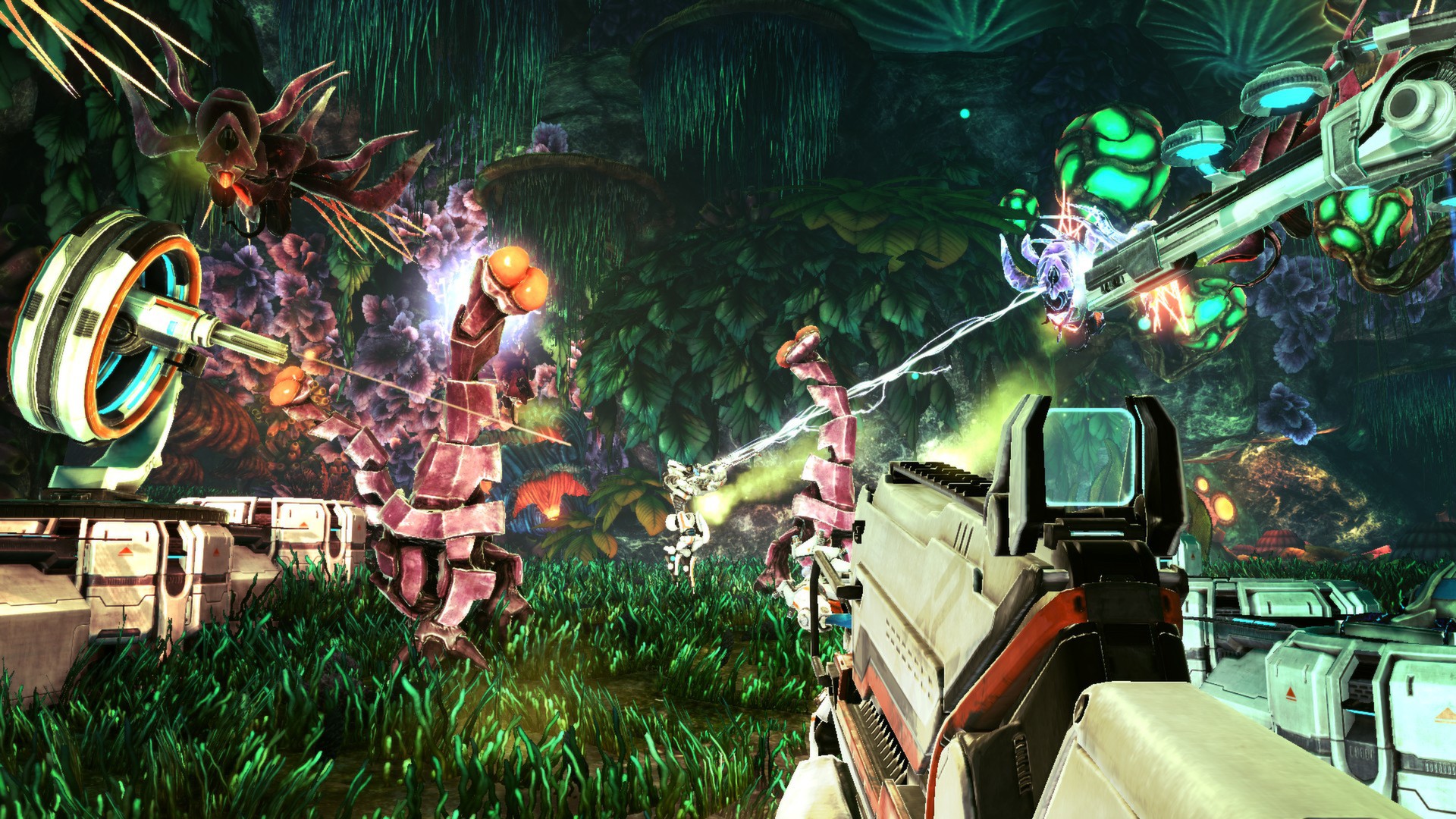
ss_41673936cf0df5cdf2b4c0549e118829730d8e88.1920x1080Mark and I played a bunch of a recently-released indie game today. That game is Coffee Stain Studios' Sanctum 2, which I purchased a copy of for Mark as a thank-you present for putting us up for the last couple of weeks, and which I was also interested in playing. I enjoyed the original game's interesting fusion of tower defense and first-person shooter mechanics as well as its distinctive presentation and excellent music, so I was actually quite interested to try the second game, and purchased a copy without a second thought.
Then the game was released, and I decided to take a peep at the Steam Community page to see what the rest of the world thought of it.

Big mistake.

It seems that Sanctum 2 is the latest victim of elitist players expecting one thing from a game and getting something slightly different, then throwing all their toys out of the pram, demanding refunds and hurling abuse at the developers. Because Sanctum 2 is not the same game as the original Sanctum, it seems, it is worthy of scorn and vilification. Because Sanctum 2 incorporates a number of features that not only make it workable on console — it's also being released on Xbox Live Arcade — but change the game balance significantly from the original, apparently it is worthy of review-bombing on Metacritic and endless, endless whining on forums.

ss_18b928231ce4b8b50c8e6f1bd11e9ef7cbd88164.1920x1080You know what, though? I've played a good 4 or 5 hours of Sanctum 2 today in total, and it's great. It isn't the original game, no, but why would you want it to be? Sanctum is still available for download, so if you like that, go play that. Sanctum 2 is a distinctive experience that, while in possession of a couple of strange design decisions, is a lot of fun to play both solo and cooperatively with other people. It is both strategic and action-packed; challenging and fun; and it offers a significantly greater amount of content and depth than the original game did when it came out of the gates.
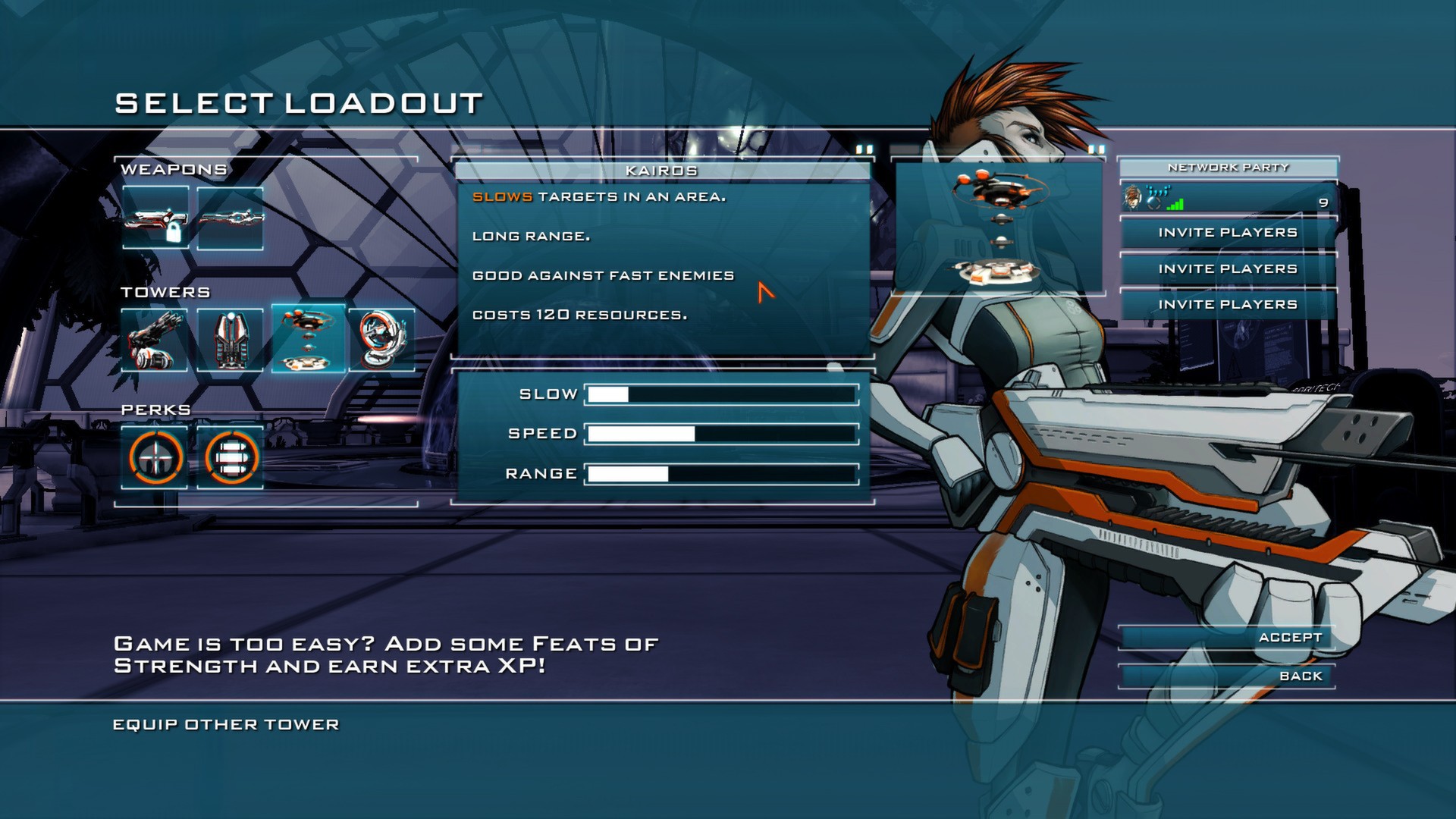
The complainers' biggest issues with the new game seem to be the fact that resources to build towers are now delivered as "drops" that have to be picked up manually, and that there is a hard limit of ten towers per level. The "drop" system means that everyone playing has to either agree on who is going to be in charge of building what — or charge off and race to be the first to pick up the resources. If you're playing with friends or people with whom you can communicate well, no problem. If you're playing with griefers and trolls, potential problem, but not insurmountable. (For what it's worth, I always prefer playing cooperative games with people I actually know anyway, and I'm sure I'm not the only one — and as such I probably won't run into this problem personally.)

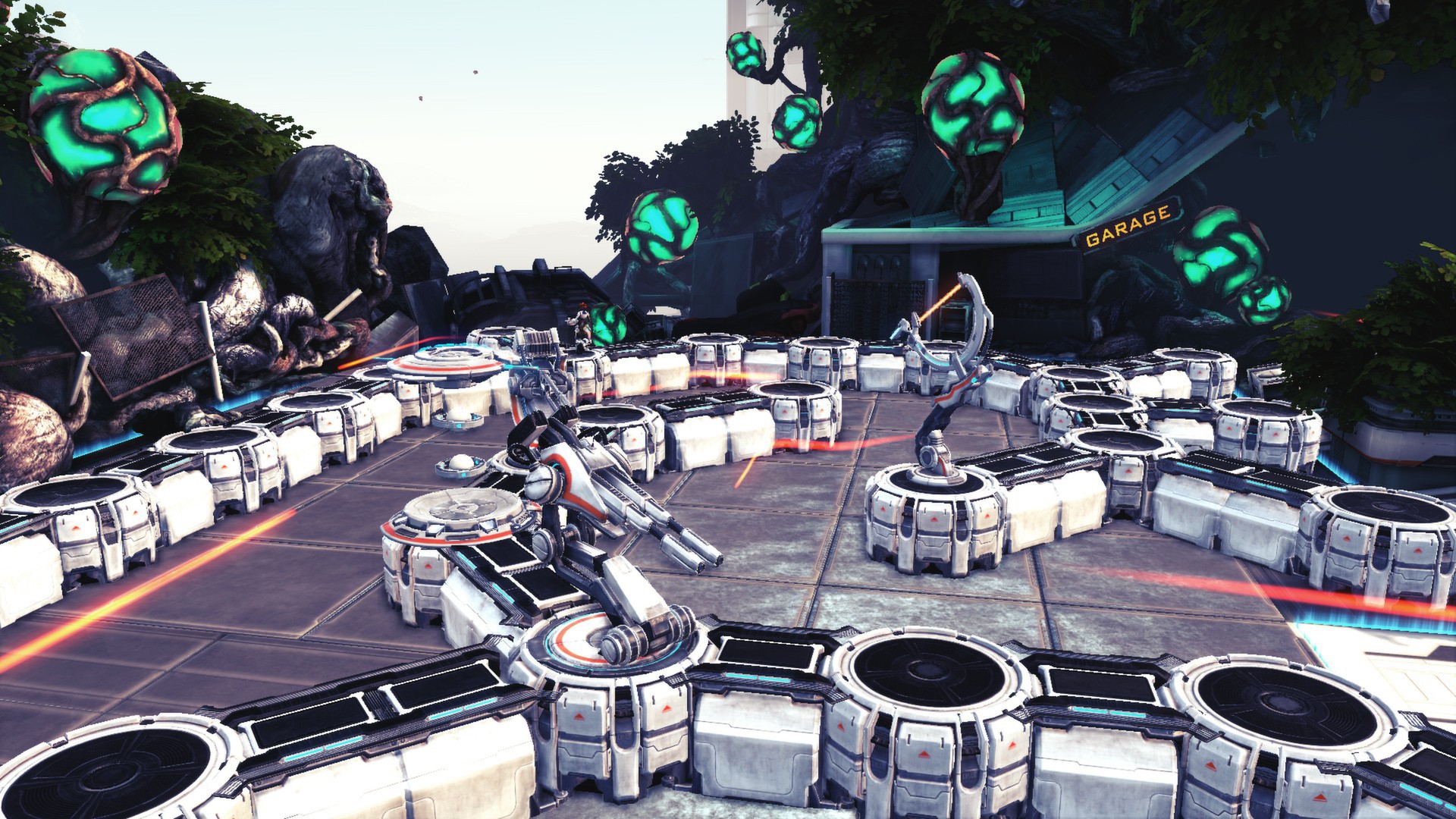
The ten-tower limit also simply isn't an issue in practical terms. I am yet to hit said limit, because plonking down "tower base" blocks to create a maze to hold up enemies does not count towards this limit, and the limited quantity of resources on hand means that it's only really practical to build a few towers per level anyway — you have to support your towers with your own gunplay in order to succeed. It's a true hybrid, in other words; you can't win without your towers, and your towers can't win without you.

Some complainers have also whinged about the fact that you supposedly can't make complex mazes in this new game. To those people, I would invite them to have a go at the level Mark and I were playing before we wrapped up for the evening, in which we were defending two cores simultaneously from assault, and built impressive mazes on both sides of the level in order to keep the enemies away from our precious charges as long as possible. Careful tower placement and resource management was a must, and the nature of many of the enemies that came along made it necessary to cooperate, communicate and use skill and tactics to take them down rather than simply firing blindly at anything moving.

ss_8a9cbab892d41cb1734508a572f1471a5b5a2117.1920x1080In short, Sanctum 2 is a very good game if you enjoy both first-person shooters and tower defense games that demand a slightly heavier degree of thought and strategy than normal. It's an excellent fusion of two fairly disparate game genres, and while there are a few things that could be tweaked here and there, it's perfectly enjoyable as it is. Not only that, Coffee Stain Studios have demonstrated that they are open to constructive feedback, too, and will likely continue to improve the game after its release. Given the abuse and vitriol that has been hurled their way today, they would be perfectly within their rights to just say "fuck you" to all the ungrateful gamers who are bitching about their new release, to be honest, so I have to admire them for their self-restraint in dealing with these people.

It is, essentially, yet another case of a not-insignificant number of people suffering under the assumption that Their Way is the Right Way, and that anyone who disagrees with them is somehow an awful person. These people preferred the original Sanctum to its sequel and that's absolutely fine; their behaviour towards Coffee Stain Studios and anyone who has expressed a liking for the new game is not.

1147: SimCity Limits

So I played an hour or two of the new SimCity earlier, and I have some thoughts. I shall now elaborate on these thoughts for your reading pleasure.

  • After the game applied a patch (which took a few minutes, though this may be more down to the fact that I hadn't long started up my computer and it was still doing that inexplicable hard-drive churning Windows does for about half an hour after you turn it on when you've had a computer for more than a year or so), I logged straight in and started playing with no hiccups whatsoever. Looks like those server issues are mostly sorted out — though there are plenty marked as "full". The team at Maxis/EA have bumped up the server number by a significant amount, however, so you should always be able to find one on which you can play. Pleasingly, too, you can play on any server in the world, meaning cross-region play is viable.
  • Is the "online-only" requirement a form of DRM? Frankly I don't give a shit, much like I didn't with Diablo III. As far as I'm concerned, it's an online game, regardless of the previous games' single-player status. Thinking of it in that way, regardless of the reasons for it, means considerably less frustration. It's annoying when you can't log in, yes, but it's annoying when you can't log in to World of Warcraft or Guild Wars 2, too. Getting irritable doesn't solve the issues, though. Go and play something else for a bit. There are enough neat things added to the game by it being online that I have no problem with it requiring a connection to play. It should have worked perfectly on launch day, yes, but I am yet to see any online game from any publisher — even those who know what they are doing — not have server issues for the first few days after launch. We should be past that by now, but we're not; that's a fact we can do little about.
  • The actual online component of the game is very cool, giving the game "world" a much greater feeling of life than in any other past SimCity game. I was playing a small two-city region with a friend earlier, and I was constantly kept updated as to what was going on in their city as well as mine. I could set up trade routes, send gifts of products or money or volunteer some of my "spare" emergency services to go and help out in their city, which brought me some money. There's actually a pretty neat requirement to cooperate here — if your city is manufacturing tons of stuff and has nowhere to sell it, you'd better ask the other people in the region nicely if they wouldn't mind awfully building some commercial districts so that you can send them your goods. The various city plots also all have various resources that can be tapped using the right specialist buildings, so there's plenty of scope for collaboration there.
  • The actual gameplay is simultaneously familiar and probably the biggest change to the series since it went isometric-perspective with SimCity 2000. Gone is the grid-based system, meaning you can build roads in any shape you like, and even make them actually curve. Gone is the rectangular zoning system, replaced with the ability to only zone immediately along roads, with the maximum building size on a road determined by how big the road is. In comes a much deeper use of various buildings like the police station and fire station, all of which can be expanded by bolting extra bits on to them such as new garages, offices, prison cells and other things appropriate to the structure in question. There's a huge amount of depth, but it's kept accessible by a simple, logical interface in which clicking on a particular category of items to build also summons relevant overlay information relating to, say, power, water or crime.
  • The available area for buildings cities is quite small, but again I don't mind too much. I don't think I ever played a previous SimCity well enough to fill a full region, so I'm absolutely fine with the small space. When it's full, I can either work hard to try and optimize it, knock it down and start again, or go and play in another region altogether. The game features a sort of "win condition" if you want one — each region has a space for a "Great Work" that generally requires the collaboration of all the cities in the area to complete, and if you want to say that you've "won" when you've built one, so be it.
  • The soundtrack is lovely, being composed by one Mr Chris Tilton of Alias and Fringe fame.
  • The tutorial is a bit patronising. I've played too many Facebook games to tolerate condescending pulsing arrows telling me what I should click on. I couldn't see a means of skipping it, either, though it did at least have some useful information to impart.
  • On the whole, it's pretty good. It scratches that nice "creative" itch that SimCity has always stimulated, and the collaborative aspect opens up some really interesting possibilities. Once the server issues are stabilised and the team at Maxis can start concentrating on doing things like the regular special events and competitions, it's going to be a really cool experience, I think.

1140: Another Valley Without Wind

I really liked A Valley Without Wind, even though I never came anywhere near to "finishing" it, for want of a better word. (I say that because once you beat the "Overlord" who was supposed to be your antagonist throughout the game, you simply moved on to another randomly-generated continent that was being threatened by another Overlord.) It was a really interesting, if somewhat flawed game that obviously had a lot of love thrown into it. It was a game clearly put together by people who had a vision of what they wanted to achieve and were willing to experiment in order to realise that vision.

For those who are unaware of A Valley Without WindI wrote about it a few times approximately three hundred days ago. Here's one post, here's another, and here's a bit of creative writing inspired by the game's emergent narrative.

I was intrigued and excited to hear that the developer was putting together a sequel to the game, and that said sequel would be provided free to everyone who owned a copy of the first game. (You don't see that sort of generosity in the triple-A sector, that's for sure!) Details were relatively scarce to begin with, but it sounded like the intention was to completely overhaul the game and make it a more focused experience. The reason it was being developed as a sequel and not as another one of the many updates that the first game saw is that it involved a fundamental rethinking of the game structure in particular — rather than being potentially endless and rather freeform like the first game, A Valley Without Wind 2 was to have much clearer victory and loss conditions, making for a game which felt much more like it had a "point".

I spent a little while playing A Valley Without Wind 2 today and I'm intrigued by what I see so far. Here's the gist: rather than playing the role of a series of adventurers given magical powers by a "glyph" like in the first one, in this game you play a single character who is immortal thanks to a crystal given to them by the big evil demon overlord dude whose dark forces you've infiltrated. This means that you can't technically die — well, you can, but it's more of an inconvenience than a tragedy, since you can just come back again afterwards.

You're thrown into command of a ragtag group of survivors on the planet of Environ as they attempt to scavenge resources, build up their defences and eventually take down the big evil demon overlord dude. The game unfolds in two distinctive components — a turn-based strategy game and a 2D side-scrolling platform game. This is a similar structure to the first game, though the overworld map in the first game didn't involve much strategy and was more a means of simply exploring rather than anything else.

Each turn, you can move any of the survivors in your group to any of the "purified" squares in your domain. If they're already in a suitable location, they can perform an action such as working a farm to produce food, working a factory to produce scrap metal or building a new structure. Occasionally, monsters emerge from the overlord's lair on the map and the survivors must deal with them. Eventually, after 15 turns, the overlord comes out to play and starts stomping around the map, and the survivors must avoid his unwanted attentions as much as possible while you build up your power to a strong enough level to take down His Demonicness.

To end a turn, you move yourself into a space next to your currently-controlled area and begin a 2D platform game mission in which the aim is to get from left to right and destroy a generator to "purify" that square and its surroundings. Beating the level ends the turn, causing time to advance. Each level has a different theme according to its terrain type, and many have special buildings and structures to explore. Within the levels, you'll find various types of enemy and pieces of equipment, many of which have peculiar randomly-generated special effects — how does a pair of boots that makes you run faster but sets you on fire in the process sound?

Your character is highly customizable, and you can tweak your "loadout" each turn if you want — though not once you're into a mission. Several different classes are available at the outset of the game, each of which has their own set of four spells. Additional classes become available as you explore, and defeating bosses in special "Level Up" towers unlocks new perks that improve your abilities in various ways. You have to find a good balance between expanding your territory so the survivors have space to run away from the overlord when he comes out to play; finding Level Up towers to improve your own abilities; and ensuring your forces have enough resources to survive. As soon as your last survivor dies, you lose the game, so it's in your interest to keep expanding and recruiting new members to your forces.

I really like what I've seen so far. It's much more "focused", though this has come at the expense of the wonderfully complex randomly-generated levels of the original game. One thing I really liked about the first A Valley Without Wind was the sheer amount of stuff there was to do. You could wander into pretty much every building and explore it to try and find cool stuff. You'd never get anywhere if you did that, of course, but the fact it was possible was really cool. By contrast, A Valley Without Wind 2's levels are much shorter and more linear, and traipses through buildings are linear shortcuts between two parts of the level rather than sprawling, mysterious structures to explore. On the whole, it's a change for the better — as I say, though, it does make me miss some of the first game's idiosyncrasies.

One thing I'm not sure how I feel about is the change to the soundtrack. The original game featured a rather wonderful score that had more than a touch of chiptune about it, giving the retro-style gameplay an even greater sense of retro flair. The new game features a number of recognisable themes from the first game, but a much more "realistic" sound to its score. It's good — but is it as charming as the bleepy chiptunes from the original? I'm not sure. One thing I will say, though; the title screen music is absolutely gobsmacking and well worth just sitting and listening to for a bit.

I'll be checking this game out a bit more in the coming days, and I'll be intrigued to see if it can hold my attention. I liked the first game a lot, but the fact I never really felt like I was getting anywhere put me off playing a long way into it. This new version appears to have fixed that particular problem with a much more focused experience, so I'm keen to see how it plays out. Knowing my general abilities in the strategic department, I am anticipating a complete loss at the hands of the overlord within 20 turns, but we'll just have to wait and see about that, won't we?

1060: Magical Diary

Still feeling shitty, but you don't want to read entry after entry about how shitty I feel, so I'll talk about a game I've been playing instead. I've had it in my Steam library for probably well over a year now — possibly more — but have only just got around to it. And wouldn't you know it? It's great.

The game in question is Magical Diary. This game initially attracted my attention with its promise of combining dating sim-like mechanics with dungeon crawling and puzzle solving. Any combination of "dating sim and…" will immediately get my attention and has done ever since I played Persona 3 for the first time, and here it's particularly well-implemented.

Here's the setup: you're a 16 year old girl (yes you are!) who has recently been inducted into Iris Academy, a Hogwarts-like establishment in New Hampshire that trains witches and wizards in the ways of pentachromatic magic. During your time at the school, you'll be juggling your time between studying the five colours of magic, each of which unlocks various different types of spells; managing your stress levels (which, naturally, increase with too much studying); and getting to know your fellow students, some of whom are rather more odd than others.

The gameplay is something like ancient eroge (and particular favorite of mine) True Love — at the start of each week, you set up your schedule, choosing which classes to attend (if any) and then letting the week unfold. Depending on your whereabouts at various points in the week along with past choices, numerous events will unfold and you'll have the opportunity to do things like run for class president, shop for magical accessories (which, pleasingly, appear on your character avatar as well as affecting your various stats) and, of course, go on dates.

Every so often, the school will throw you an "exam", which involves tossing you into a dungeon and demanding that you find your way out using the spells you've managed to learn. Generally there are several ways to solve a dungeon — for example, in one early case, you're locked in an area with no apparent exits, so you can do several things: methodically search the walls for illusions, cast a spell to stir up the air and indicate where the way out might be, cast a spell to determine if any living creatures passed by recently and so on. As you level up your five colours of magic, you learn a variety of interesting-sounding spells — and this isn't your usual "fireball, ice bolt" and that sort of thing — no, here you're dealing with things like empathy spells, manipulating matter, fooling the senses and all sorts of other things. It's really quite something.

I'm not that far into it yet, but I'm liking what I've seen so far. The graphics are good, the music is catchy, the writing is witty and full of character and the gameplay is interesting. It also looks like being a game that will be well worth replaying several times to tackle situations in different ways — I'll be very interested to do so when the time comes.

Right. Time to dope myself up on drugs and try and get some sleep. Or possibly play some more Magical Diary. One or the other…

1054: Death Means Nothing in Miami

Page_1So, after being repeatedly bugged by almost everyone I know to try Hotline Miami, I tried Hotline Miami. Actually, to be more accurate, I sat down to play some Hotline Miami several hours ago and somehow here I am at 1am having completed it. What happened there?

I had been warned of the strange time-distorting properties of this curious little game by those who had played it, but having experienced it myself this evening… yes, there's something very odd going on there. A genuine feeling of, for want of a better word, "addiction" — of not wanting to stop until you've seen it through, even if the level you're on is ridiculously difficult. My "Die 1,000 times" achievement attests to the fact that I apparently did spend quite some time on it this evening.

But allow me to back up for a moment for those who are unfamiliar with Hotline Miami and its dubious charms.

Hotline Miami is basically that game the Daily Mail have been worried about for years. It's a straight-up game about murdering people with a variety of implements. It's gory, it's gross… and after about five or ten minutes of playing, it completely desensitises you to the acts of wanton violence you're committing. It then shows its true (neon) colours — despite its hyper-violence, it's actually a sort of puzzle game, a sort of lightning-fast strategy game, a sort of… I don't know. I don't like throwing this word around as it's rarely true, but I have a suspicious feeling that it's *whisper* unique.

The setup of Hotline Miami is that you, the faceless, nameless protagonist, repeatedly receive strange phone calls from a variety of sources. The phone calls themselves seem relatively innocuous, but when you get to the location you were told to go to, you apparently feel a strange urge to don an animal mask and then slaughter everyone who is there. Which is sort of convenient, because everyone there also wants to slaughter you.

You work your way through the levels by killing all the enemies. You have to scavenge weapons from dead enemies or the environment, and guns only have a small amount of ammunition in them when you do find them. Melee kills are silent, whereas attacking with a gun will often bring enemies running. When enemies are unaware of your presence, they follow very simple, predictable patterns. All you have to do is complete each stage of each chapter by killing all the enemies, at which point you'll receive a score breakdown showing how you did. The better you score, the better your grade and the more stuff you unlock.

Unlockable stuff includes weapons, which show up randomly in the levels, and masks, which you can equip before the level starts. Each mask has a special ability — one provides larger amounts of ammunition in guns, for example, while another makes your bare-handed attack (which normally just knocks enemies down, necessitating a ground attack to finish them off) a fatal strike. After unlocking the latter, I found that I didn't really use the others all that much. Perhaps I'm just unimaginative.

There is a plot that gradually unfolds as you progress through the levels. Like the swirly, pixelated, colourful visuals, it is rather vague and dream-like, and the end leaves a large number of questions. There are a few nice twists and turns, but it's not really the star of the show here — it simply provides a loose justification for the various top-down locations in which you visit and kill everything.

Hotline Miami is tough. There are levels that will repeatedly kill you over and over and over again — a thousand times or more, apparently — but somehow it will keep you playing in that same, inescapably compulsive way that Super Meat Boy encourages "just one more go". The fact that respawning after death is completely instantaneous helps this somewhat — there's no real feeling of being "penalised" for dying, it's simply part of the learning experience for each level. Death ceases to become something that makes you want to throw your controller out of the window, and instead becomes an exhortation from the game to try again and do better. It's still frustrating — I called the game (or possibly myself) "dickhead" a good few times while playing — but the important thing to note about it is that when you die, it's usually your own fault rather than that of the game. This is the sign of a well-designed difficult game — one where you accept that you'll make mistakes and learn from them, rather than where dying repeatedly simply makes you want to switch off and play something that repeatedly massages your ego, gives you a cuddle and tells you everything is going to be all right.

Anyway. That's Hotline Miami. If you have no issue with your games being borderline abusive in terms of difficulty, hyper-violent with little to no remorse, and leave you feeling like you've had some sort of drug-fuelled experience for several hours, then you should probably check it out. Conveniently, it's 50% off on Steam this weekend. How about that.

You should also check out this "two-headed review" over at Games Are Evil.

Now, if you'll excuse me, I need to sleep… and probably have some very peculiar dreams.

1053: Kira Kira, Sparkle Sparkle

Page_1Having completely and utterly 100%-ly finished classic visual novel Kana Little Sister, which you can read all about here (and in the book I'm still fully intending on writing and have already written just under 3,000 words of), naturally I immediately started on a new project, and one of a markedly different tone.

Kira Kira (which, apparently, is Japanese onomatopoeia for "sparkle sparkle") is a game about a bunch of high school kids (natch) who decide to put together a band. I haven't got far enough to know whether or not their band is particularly successful, but given the intro sequence showed them well and truly rocking out with suitably ridiculous hairstyles and outfits, I can only assume that they enjoy at least a small degree of success. Given that there is also a sort of sequel called Kira Kira Curtain Call, too, it's probably a fair assumption.

The reason I'm playing Kira Kira now is actually because of a completely different game I picked up a while back called DeardropsDeardrops is also about a bunch of high school kids who decide to put together a band — I think, anyway, as I haven't played that one at all yet — but a fellow (and considerably more experienced) VN enthusiast on Twitter recommended that I play Kira Kira first, because some of the characters have cameo appearances in Deardrops. Got all that? Good.

I like this sort of "crossover" idea, and apparently it's not all that uncommon — I understand that the story of Kana Little Sister is depicted as a movie in another game by the same developer called Crescendo, which is also in my growing pile of shame. (I have a sub-pile purely devoted to VNs, but given that the damn things are so time-consuming yet enjoyable, I'm not getting to anything outside it at the moment! That's… fine by me, to be perfectly honest. But I digress.)

Anyway. Kira Kira. As I say, I'm not all that far into it yet so I'm hesitant to say too much right now, but so far early impressions are very positive. Coming off the back of Kana Little Sister's 640×480 visuals and distinctly synthesized music — both of which are great, I hasten to add, just obviously dated — the super-sharp, crisp visuals, glorious digital music, quality voice acting and wonderfully atmospheric ambient sounds of Kira Kira make it obvious that this is a much more recent production. It's a much more multi-sensory, "multimedia" sort of experience, and it makes a massive difference. Kana immerses the player with its compelling story and interesting characters despite its relatively simplistic aesthetics; Kira Kira has, so far, immersed me with its presentation — it's a bit early for me to comment on the characters and plot so far, but they seem to be an interesting enough bunch.

Kira Kira isn't just interesting from an audio-visual presentation perspective, however. No, the way it's written and the way the text is presented is quite interesting, too, adopting a full-screen "novel" style similar to that seen in Kana Little Sister rather than the more common "adventure" (smaller text box, larger, unblocked image) interface seen in many other titles.

In terms of the way it's written, it seems to be quite wordy so far, but that's not necessarily a bad thing. It allows the player to understand the thoughts of the protagonist quite deeply, and the narration is presented almost as if the protagonist is talking to the player at times — not quite breaking the fourth wall, but certainly testing its structural integrity. Maejima-kun, it seems, thinks about things a lot, including his feelings about people, the things he's seen and where his life is going. His introspective nature makes the beginning of the game seem rather slow paced — it's a good hour or two before the OP video plays — but, as I say, I have no issue with this personally; he seems like an interesting character thus far, so I'm happy to have the opportunity to get to know him. Plus on subsequent playthroughs, the "Skip" button is right there if I want to fast-forward through all his exposition.

What's really interesting about the writing, though, is that it provides a uniquely Japanese take on something that is peculiar to the Western hemisphere — rock music. The setup of the game is that the school's "Second Literature Club", which Our Hero is a member of having quit the tennis club some time back, are struggling to think of something to do for the upcoming cultural festival. Naturally, after Our Hero and the resident squeaky-voiced, faintly annoying ditzy girl Kirari attend a live show by local legends "STAR GENERATION" (the capital letters are important), they decide that forming a band is The Right Thing To Do, despite the fact that none of them play an instrument or indeed know anything about music whatsoever. Enter Our Hero's friend, a fan of punk music that hasn't been to any live shows himself, who decides to educate the club with an informative video about The Sex Pistols and the punk movement. The club are understandably rather bewildered about all this, having hilariously little understanding of culture outside of Japan ("R&B? Isn't that music for black people?") but decide that yes, they'll give it a shot.

That's as far as I've got so far, but it's an intriguing setup with potential for plenty of hijinks — yes, hijinks — along the way. I'm looking forward to seeing how it progresses — and to hearing more of the excellent soundtrack.