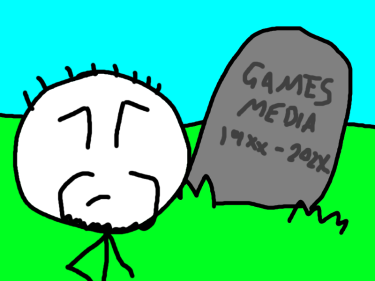
My distaste for groups like Valnet and GAMURS is hopefully well-established by this point, but today there's a whole new disgusting chapter to the sorry saga that, so far, has resulted in an almost entirely non-functional games press in 2026. According to Lex Luddy of startmenu, Valnet has just issued new contracts to writers on TheGamer (a site which Valnet had already gutted of its main features staff) saying that they will not get paid unless their articles reach a minimum viewership threshold. As Luddy points out, the remaining staff at TheGamer — and indeed across Valnet — already had pay that was tied to overall article performance, but this new step provides a hard cutoff on whether or not they get paid at all, based on viewership.

This is, I won't beat around the bush, disgusting. Tying pay to article performance is already a shitty thing to do, but to withhold pay completely based on view counts is outright exploitative. And it's not as if writers on Valnet sites are getting paid fairly anyway.
As several people replying to Luddy on that Bluesky thread pointed out, this has been a longstanding problem with online media in general. It should be the writers' responsibility to produce the material, and it should be the people running the website from a business perspective's responsibility to promote that material and ensure it gets read.
Unfortunately, for a long time now, writers have been forced into a position where they have to write provocative, baiting articles in the hope that they will get clicks, because the people running the sites seemingly just… don't do anything other than lay people off. And, of course, bring generative AI into the picture, because this type of Business Idiot has no understanding whatsoever of how the actual audience has zero desire to read AI-generated content, instead believing that because generative AI is fashionable and responsible for billions of dollars of imaginary money being thrown around, they might be able to get a piece of that pie by enshittifying their website.
And the really stupid thing is that you never can predict what is going to spread across the Web and "do well" if it's left up to the writers. There is no magic formula that says "IF you write an article like this, THEN it will always succeed". There are manipulative tactics — like clickbait and ragebait — that sometimes work, but more and more people are wise to them today, and refuse to share material that falls into that category. Video game enthusiasts are some of the most online-savvy people out there for the most part, so resorting to these tactics is declining in effectiveness as time goes on.
What does seem to work — to an extent, at least — is having someone who is responsible for making sure those articles get seen: advertising the website. Effective use of a dedicated social media manager is why longstanding sites like IGN and Eurogamer are still just about hanging in there, but they are the last few remaining holdouts of a once vibrant and thriving media sector — and they have their own issues. IGN, for example, is currently butting heads with its Creators' Guild union over fair pay rises in line with inflation, and Eurogamer cut its editorial staff considerably a while back.
Once again, I have to say that I am baffled by this. Video games, as a creative sector, are bigger than they have ever been, with a broader, more diverse range of releases than ever before. So why are we, collectively, apparently completely incapable of sustaining an enthusiast press?
Moreover, retro gaming is more accessible than ever before, too, meaning that there is a worthwhile place for some retro-centric sites to spring up and do a good job of covering classic gaming material — but so far, we've seen very few outlets even attempt to step into this space, with only Time Extension online and Retro Gamer in print coming to mind outside of the unpaid (or at least non-commercial) enthusiast blog sector.
The usual answer to this is "b-but YouTubers and streamers!" and I'm sorry, I don't buy it. YouTubers and streamers have a place in the modern media landscape, sure, but they fulfil a completely different function to a traditional press — and moreover, they demand a completely different sort of attention to written material. And if you've ever accused a traditional press outlet of "paid reviews", then I have some unfortunate news to tell you about a widespread concept known as "influencer marketing".
I am sad about all this! I spent a significant portion of my life looking at my brother with intense admiration for his role in helping to shape the games press in its prime, both in print and online, and hoping that I would one day be able to follow in his footsteps! And yet, by the time I did manage to get a meaningful foothold, things were already starting to collapse. I was, somehow, too late — and I am having great difficulty understanding why, because it's not as if video games have gone anywhere. One would think with the sheer number of the bloody things being released pretty much every day at this point, a functional games press would be a desirable thing to have. And by "functional", I mean "one with full-time employees who get paid a fair salary on which they can live, enjoy the medium that they have chosen to specialise in and be able to have a good work-life balance".
And yet here we are. I despair sometimes, I really do.
Want to read my thoughts on various video games, visual novels and other popular culture things? Stop by MoeGamer.net, my site for all things fun where I am generally a lot more cheerful. And if you fancy watching some vids on classic games, drop by my YouTube channel.
If you want this nonsense in your inbox every day, please feel free to subscribe via email. Your email address won't be used for anything else.