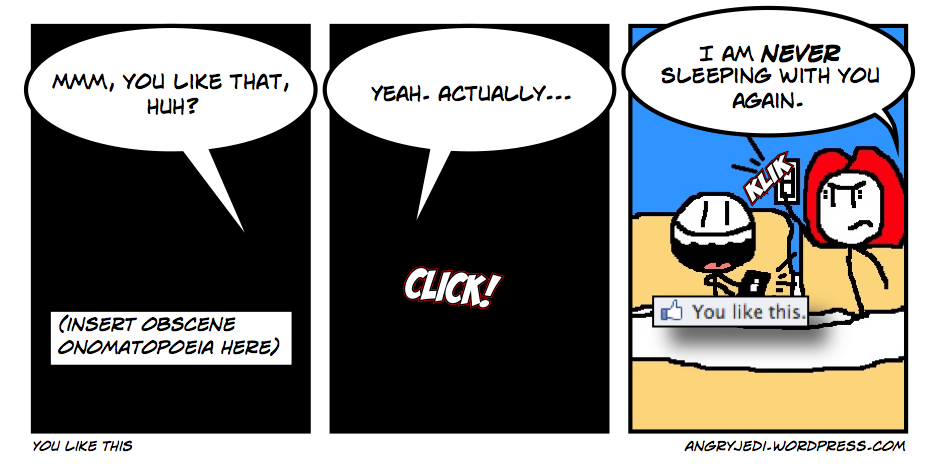
 I remember back in primary school we were encouraged to never use the words "nice" or "said" because they were boring. There are always better words to use, we were told, so we should be creative and extend our vocabularies.
Fast forward to today and we have much the same issue with the word "like", a word which is rapidly losing all meaning thanks to its total domination over the social networking space. Every day on Facebook, it's a fair bet that there is at least one entry in everyone's news feed that says "Amber likes OMG!! Where did you get you're shoes LOL! on ♥." or "Bob likes I hate it when your trying 2 go 2 sleep and u cant on Likebook." Not only do these sentences make no sense, they're a symbol of a peculiar shift in communication styles that has taken place in recent years, particularly amongst teens and tweens.
Essentially, rather than just typing "I hate it when you're trying to go to sleep and you can't" and sharing that particular inanity with the world (not to mention spelling it correctly), it seems that it's now much more the done thing to go and find a website which lists hundreds of said inanities for the sole purpose of allowing people to Like them on Facebook. There's a kind of "distancing" involved. Anyone can click "Like" on something. As soon as you write it yourself, it becomes more personal, and harder to do.
Trouble is, the word "Like" is being used so much that it stops making sense sometimes. Or its context is completely inappropriate. Take the latest "check-in" craze, GetGlue, which is actually a pretty neat idea. Users tag the things that they, yes, like as well as the things that they dislike and can then get suggestions of other things they might like based on other users' tastes. Fair enough. However, when a site offers you the opportunity to not only "Like" ebola but also check into it, you have to question if the correct terminology is really being used in this instance.
And where's the opportunity to dislike things? GetGlue is unusual in that it does specifically allow people to say "I don't like this". There's no opportunity to do that on Facebook. If a friend posts a status update that informs everyone that, say, their leg has fallen off and their family are dead and not only that, someone posted a bag of poo through their letterbox then the only things to do are to "Like" it, which seems rather tactless and inappropriate, or to actually leave a comment which will probably start with "I wish there was a Dislike button" and end with too many exclamation marks.
Perhaps Facebook is attempting to make us all more positive. Instead of writing "I'm so sad. My family are dead, my leg has fallen off and someone posted a bag of poo through my letterbox" which, let's face it, no-one is going to click "Like" on, perhaps you should put a positive spin on it. "My family are dead, my leg has fallen off and someone posted a bag of poo through my letterbox. But at least I found 76p in small change in my jacket pocket, Snickers later ftw!!!"
 aplenty from there on, I feel.
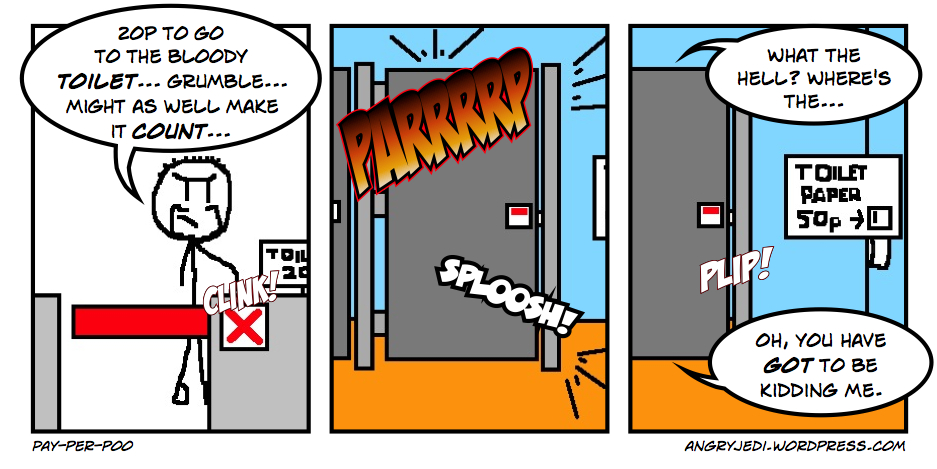 I came to a realisation today. I have a thing about the word "monetize" (or, arguably, "monetise" if you want to be English about it, although the latter is not recognised by a British English spellchecker). This is not news to those of you who have been following this blog for some time. Some of you may even recall the Money Robot, star of
 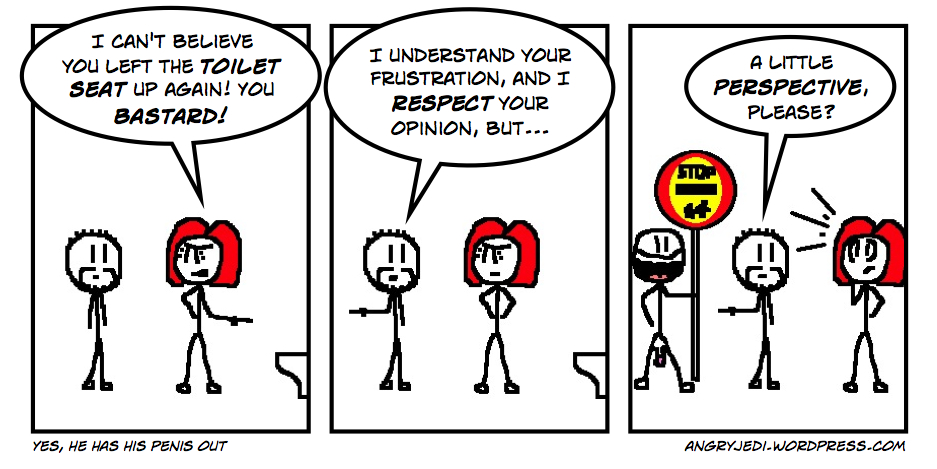 There are some things which have become so firmly entrenched in normal society that we just don't question them. We don't necessarily like them, but we certainly don't question them if someone happens to bring them up. They're so well-known that countless comedy routines have drawn attention to them over the years; so much so that many of them are now clichés. That doesn't stop people writing about them and perpetuating said clichés, though, as I'm about to do right now.
 I'm going to quote a LazyTown song at you and there is nothing you can damn well do about it.
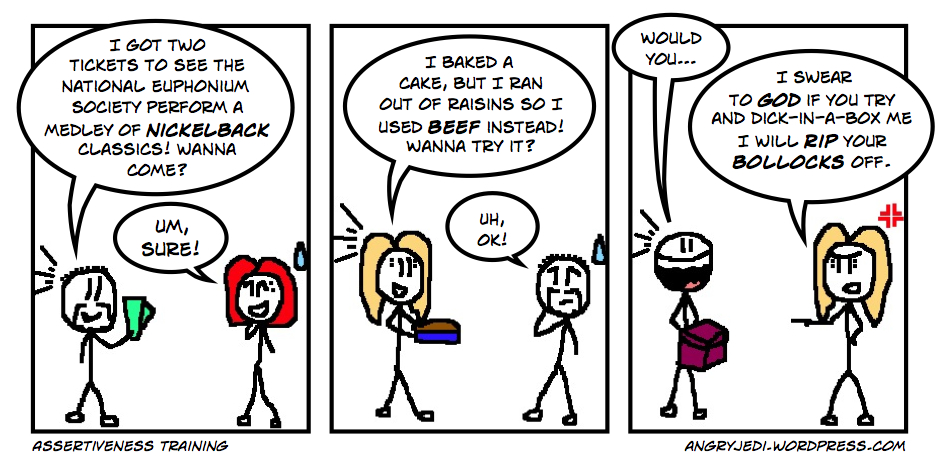 The most difficult word to pronounce in the English language is not the one with the most syllables. For starters, opinion differs on exactly which word is the longest and most complicated one. "Floccinaucinihilipilification" is right up there, for one, but then "guar hydroxypropyltrimonium chloride" is pretty long too, but it is a shampoo ingredient and technically three words. Then there's some weird science thing called "pneumonoultramicroscopicsilicovolcanoconiosis" which picky Scrabble players reject because it doesn't fit on the board and is also a word made up by SCIENCE! which therefore doesn't count.
 The death of a website is a curious thing. In practical terms, it's no different to deleting a file, switching something off, throwing out a piece of technology that is no longer used. But it's more than that. A dying website normally knows it is dying before the plug is finally pulled. And, these days in particular, it's not just a website that dies. It's the community that the site built. The readers who came back every day, whether they were vocal ones who commented on everything or people who just diligently read every article because they'd chosen that particular site to be their "home".
 It's been a curious few days for some people and things that are very dear to me. First up, you may have read my impassioned mourning of the apparent
  Twitter broke earlier today. This in itself is nothing unusual, as the existence of the term "failwhale" will attest. But this time it was partly a result of some new changes that the service made, particularly with regard to posting links.
 Irrational fears are weird. It's human nature to feel the "fight or flight" response, of course. But the things which trigger said response are very peculiar indeed.