#oneaday Day 828: It's Time to Get Over the Graphics Thing

20120426-001100.jpg

I read this piece on Game Informer tonight. It made me cross. If you can't be bothered to read it yourself, the gist of the piece is that Xenoblade Chronicles, one of the best games of the generation (in my humble opinion, anyway) "deserved better than what [Nintendo] forced [it] to be."

To be fair to the author Chris "Warcraft" Kluwe, he does commend the game's strengths: its excellent world, its inventive, creative ideas; even going so far as to say that the game had the potential to be "this generation's Final Fantasy VII". But to say that the Wii "laughs at [developer MonolithSoft's] dreams… and flushes them down the toilet of GameCube-era hardware Nintendo likes to call cutting edge" is a spectacularly blinkered viewpoint.

The fact is, it's unlikely that Xenoblade Chronicles (and its spiritual successors The Last Story and Pandora's Tower) would ever have been released had it not been for the Wii. The Wii's lower demands in terms of asset production means that a sprawling, ambitious game such as Xenoblade Chronicles can be produced on a fraction of the budget of an HD title. Even then, though, MonolithSoft had to cut corners; the "gasping fish mouths bobbing up and down through beautifully crafted dialogue" that Kluwe refers to are a symptom of this.

The sad fact is that Japanese role-playing games are not the unstoppable juggernaut they once were. Where once they were a system seller, now they are a niche interest at best. The "mainstream" has shifted well and truly to the West; even Square Enix's venerable Final Fantasy series is seen as little more than a particularly well-polished curio these days. Big-budget role-playing titles for HD consoles such as Lost Odyssey and, to a lesser extent, titles like Nier (aside: which I'm currently playing and is awesome) struggle to find a substantial audience (compared to "triple-A" titles, anyway) and, by extension, the ability to recoup the enormous spend necessary to craft a beautiful world in high definition and 5.1 surround sound. So developers and publishers simply aren't taking the risk because it's, well, too risky.

But the Wii gives them a platform to make these titles without having to spend as much money and time on the creation of assets. It's not a case of Nintendo "shackling an obviously talented team like MonolithSoft to the ball and chain of the Wii because [they] want to sell waggle" (for just one of many things wrong with that statement, Xenoblade Chronicles features no waggle whatsoever). It's a case of Nintendo giving talented teams the opportunity to do what they do best and then release them to a market of enthusiasts who are still clamouring for these titles. Yes, the Wii has a lot of waggle-based crap. But it also has an impressive library of Great Games That Absolutely Fucking No-One Has Ever Heard Of Ever Because They're A Bit Weird Or Nichey And Have 480p Visuals.

Just because JRPGs don't sell well compared to titles like Call of Duty and Mass Effect doesn't mean that no-one wants to play them any more. In fact, the audience for the genre is probably actually the same size that it's ever been; the difference is that the Call of Duty players have sprung up around them and outnumber them considerably. Given the simple choice between making something that will make fans happy and something that will make a metric fuck-ton of money, the vast majority of publishers will take the latter option. That's simply "good business", and there's nothing wrong with that at all — developers gotta eat, after all. But to deride Nintendo for providing a platform eminently suited to developers who actively want to create niche titles for console — games which often provoke intense passion among their fans (as you can probably tell from this post) — is simply ridiculous.

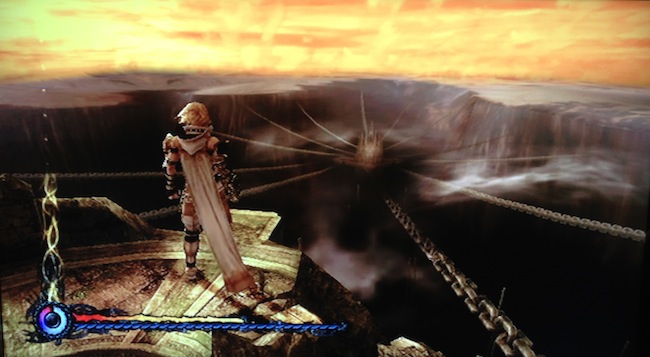
It's an age-old adage in the games industry that graphics do not maketh the game. Never has it been more true than in this strange period where we have two HD consoles and one SD system. Would Xenoblade Chronicles, The Last Story and Pandora's Tower have been better games had they been released on the Xbox 360 or PlayStation 3? Absolutely not. (Pandora's Tower, in fact, would have been considerably inferior due to the fact it actually makes good use of the Wii's unique control scheme.) They would have been better-presented games, sure, but the core gameplay in all three cases is brilliant — and, to add insult to injury, the graphics for all three aren't even what you could possibly describe as "bad" — just low-resolution. There's a difference — sadly, one seemingly lost on many reviewers who describe their visuals as "muddy" or "poor" and, in many cases, knock a point off the final score in punishment. I defy anyone who has stood on the Makna Falls overlook in Xenoblade Chronicles, seen the beautiful afternoon sunlight and shadows in the castle courtyard in The Last Story or stood atop the Observatory gazing towards the Thirteen Towers at sunset in Pandora's Tower to say that these games have "poor" visuals.

As such, I implore those of you who are gamers to stop caring so much about titles having pin-sharp graphics, fully orchestrated soundtracks and a voice cast of Major Hollywood Talent. Yes, these things make games more impressive and exciting to watch and play, but given the choice between a world made up of nothing but HD first-person shooters starring Morgan Freeman (with the world's population of racist teenagers on backing vocals via Xbox Live) and a world where I can play 100+ hours of Xenoblade Chronicles in 480p with a selection of unknown (but excellent) British voice actors, I know which I'd rather spend my time in.

That's just me, though. I illustrate my blog with stickmen, so take my word with a pinch of salt if you wish.

(Edit: Here's an unedited picture of Pandora's Tower running in 480p taken with my iPhone camera. Looks pretty lovely to me.)
#oneaday Day 827: You Should Back Republique on Kickstarter if You're an iOS Gamer -- And Perhaps Even if You're Not

20120425-005649.jpg

I backed the highly promising-looking project Republique on Kickstarter recently. Despite it looking like a high-quality endeavour from a reputable team (including former Halo 4 creative director Ryan Payton, no less) it's struggling to reach its goal of $500,000 — as of the time of writing, it's sitting at $86,477 with 16 days left to go.

For the unfamiliar, Republique is a bold attempt to create a "triple-A" game experience on iOS. The goals that the team hopes to achieve include designing a game specifically for touch-based devices; creating an intense action game without a focus on killing; creating a game with a believable, non-sexualized female lead; exploring "heavy" topics and saying something "meaningful"; and pushing cutting-edge graphics on mobile devices.

All reasonable ambitions, you might think. The thinking behind the game's design is that "gamers will embrace iOS when more games are made for them."

That, unfortunately, is where the problem lies — a lot of people are still resistant to the idea that a mobile device can play host to a "proper" game — i.e. one that you play for more than five minutes at a time, that doesn't feature a three-star rating system on every level and doesn't offer the possibility of purchasing in-game currency for faster progress. (That said, the ever-greedy EA has been sneaking the latter mechanic into some of its recent games, much to the chagrin of people who hate that sort of thing, particularly when they've already spent $60 on the game itself, but that's beside the point.)

To look at the popular titles on the App Store, you'd be forgiven for thinking that these naysayers had a point. Of the top free iPhone games at the time of writing, pretty much all of them are either casual or social fare, riddled with microtransactions and designed more as a moneymaking "service" than anything with meaningful gameplay. (Yes, even the ridiculously popular Draw Something falls into this category.) Paid apps don't fare much better, either, with the super-casual (and a bit rubbish) Angry Birds Space topping the charts, closely followed by numerous other lightweight titles.

This isn't to say there are no "core" titles on iOS. Far from it, in fact — Square Enix, for example, has put out some excellent role-playing titles including Final Fantasy I, II and III, Chrono Trigger, Chaos Rings and Final Fantasy Tactics. Sega has rereleased a number of its old Genesis titles including strategy RPG classic Shining Force. EA has put out mobile adaptations of its popular franchises such as Dead Space, Mass Effect and numerous others. But why do these titles flounder — relatively speaking, anyway — when compared to more casual fare?

It's a simple numbers game. Not everyone who owns an iOS device is a "core" gamer. Angry Birds et al have their place among those of us who don't know what RPG, HP, MP or FPS stand for, or who think "bullet hell" refers to driving through a particularly unpleasant part of Manchester in the middle of the night. As it happens, these more casual players probably outnumber the more dedicated "core" types to whom "triple-A" titles such as Republique might be marketed to. As such, they appear to dominate the charts on a regular basis.

Does that mean that "core" developers should give up and not even bother trying to put together something impressive on mobile platforms? Absolutely not, though they should be aware of what they're getting into and the problems they will have to overcome in the process.

Firstly, one of these "core" titles probably isn't going to top the charts. The Angry Birds series, for example, has enjoyed well over half a billion downloads in its lifetime and made developer Rovio a worldwide phenomenon in the process. Its simple gameplay and premise mean that anyone can pick it up, play and have fun. (Unless you're me. I hate that stupid game.) Conversely, a "core" title likely has a barrier of entry — "you must be this familiar with video games to ride", if you will. Not only that, but its audience must be people willing to sit down with a game for more than a few minutes at a time while they're waiting for a bus, waiting for the kettle to boil or waiting for their bowels to evacuate.

Secondly, iOS players are curiously resistant to what they see as "high" prices. Square Enix's titles, for example, have caught frequent flak for being anywhere between $8.99 and $17.99. Compared to a new release on PC, console, Vita or 3DS, however, these prices are still eminently reasonable — but they're expensive compared to the $.99 you pay for Angry Birds, and the fact that they're deeper, more impressive, bigger-budget experiences than Rovio's avian-flinging nonsense isn't often taken into account.

The problem here is that in order for a "triple-A" iOS title with high production values to be successful, it will need to overcome that particular resistance that players feel to paying more than, say, $5 for a game. The Kickstarter for Republique will provide those who pledge $10 or more with a copy of the full game when it's released — and going by the pattern of other successful video game Kickstarters, the full version will likely cost more than this "backer's rate". We're likely looking at $15-20 at least, and that's a price point that takes the game well and truly out of "impulse purchase" territory.

Or does it? Consider Thatgamecompany's recent PS3 release Journey. This game costs $15 and lasts approximately two hours. People have been willing to part with this much money for what they already know is a two-hour experience simply because other people have said it is good. In many cases, people have done this without a second thought — going into the game with "beginner's mind" is regarded as an important part of the experience. Does the virtue of the fact that Journey is a game presented on a large television screen make it inherently more valuable than a portable title for a multipurpose mobile device? It's certainly perceived that way, but why on Earth should that be so?

As the Camouflaj team say on their Kickstarter page for Republique, though, developers need to take more risks if "triple-A" gaming on iOS is to be taken seriously. Lengthy, deep games can and do work on the platform, even if they don't chart very highly compared to casual and social juggernauts. The most important considerations for any developer thinking about doing this, however, should be designing it specifically for the device. That means building a game around a touch-based interface, not putting in crappy virtual joypads with no tactile feedback. A game with touch controls needn't be shallow — games such as Undercroft that recreate what would have been the mouse-driven interface of old PC games work well, for example, so there's plenty of scope there.

From what I know of the team behind Republique, I believe that they have a good idea of what they're doing. I believe that their game could prove to be an excellent example of what mobile platforms is capable of for "core" gamers. And I simply believe that the project should be supported, not because I want to see an end to the casual titles on mobile — they have their place — but because as a format, mobile devices' capabilities are more than broad enough to cater to more than a "lowest common denominator" audience. It should be supported because it's a worthwhile project that, if successful, will benefit mobile gaming in general in the long run — not just iOS. That means you embittered Android types upset that this title doesn't mention your chosen platform at all should consider throwing a few quid their way, too. Vote with your wallet, as they say.

Check out the Republique Kickstarter and pledge a donation here.

#oneaday Day 826: No Kind of Atmosphere

20120423-235558.jpg

I've been watching Red Dwarf on Netflix recently. In the process I've discovered that there's actually a hell of a lot of that series that I'd never seen before, so I've been delighted to (re)discover it.

Red Dwarf was one of those series that That One Guy At University Who Endlessly Quoted Things endlessly quoted. Well, perhaps not endlessly — sometimes he was quoting Blackadder. I'm only just now, some ten years later, coming around to the idea that I can actually watch those shows again without hearing That One Guy At University Who Endlessly Quoted Things' voice in my head.

That's beside the point though. And the point is that Red Dwarf is still an excellent series, for more reasons than one.

First up, it's quite simply an excellent comedy series. The small cast of exaggerated characters makes for some excellent comic situations. The fact that all of the characters have at least one major flaw in their personalities is what makes them entertaining, too — Lister is arguably the closest we get to a "straight man" in the show, but even he's flawed; he's gross, he's selfish and his reliance on curry as his primary form of sustenance doubtless makes him rather unpleasant to live with. Rimmer, meanwhile, is by turns arrogant and crippled by self-doubt; The Cat is vain to a fault; and Kryten has difficulty with acting independently when it conflicts with his programming. Put these dysfunctional characters together and you have a recipe for plenty of comic conflict.

The less-considered side of the show is that it's actually a surprisingly decent sci-fi show, too. While it doesn't have anywhere near the budget of what we might be used to from more recent titles — or even shows like Star Trek: The Next Generation, which ran at a similar time — it manages to convey a convincing feeling of what Life Is Like In The Future. The show doesn't batter the audience over the head with lengthy descriptions of what things do or how they work; rather, it simply drops things into conversation that make it clear that we're absolutely not on 21st century Earth any more.

Part of this comes from the show's use of language. Its use of terms like "smeg", "gimboid", "goit" and numerous other faux-expletives was initially to get around the fact that it wasn't okay to say certain things on television, but over time these words became part of the show's identity. Numerous other shows have taken a similar approach since — Firefly features Chinese swearing, for example, while Battlestar Galactica features the multi-purpose invective "frak" at regular intervals. (It's not clear how much Red Dwarf's use of fake swear words influenced these titles, if at all.) Initially, the presence of these words is jarring as you wonder what they mean and why they're not simply using regular expletives. But over time, as you become invested in the worlds created by the writers, you begin to let these words wash over you and enter your vocabulary even though, in most cases, they're completely made up, portmanteau words or "loan words" from another language.

Ultimately, Red Dwarf succeeds due to the fact it never tries to get ideas above its station. It knows that it's a low-budget sci-fi comedy with a small cast, and rarely attempts to deviate too much from that formula. Some may argue that the later seasons do deviate from this formula and are consequently weaker as a result, but having not (re)watched them yet, I'm not going to comment on that right now. One thing the show doesn't do, however, is rest on its laurels; each season has its own distinctive identity, and it's quite fascinating to see the changes it goes through as the years pass by and the budget increases.

It's still great, then, in short, and if you've never had the pleasure of watching it, then you should check it out. It's all on Netflix (in the UK, anyway), so be sure to check it out if you're a member.

#oneaday Day 825: Bull, Horns, That Sort of Thing

20120422-235753.jpg

The Black Dog of depression has been rearing its ugly head a bit again recently for various reasons, and I'm sick of it. While there's not necessarily much I can do about it showing up and being a pain in the arse, I can at least try and work on some things to make me feel a bit better about myself.

For starters, getting upset at one's own reflection isn't particularly great news, and it's something that I can at least attempt to do something about. I have been fitness-ing off and on for some time now, but I figure it's Time To Get Serious. That means I'm going to hit the gym every morning before I start my working day rather than leaving it until last thing in the evening when it's easy to go "nah, fuck it". (Of course, it's easy to stay in bed and say "nah, fuck it" also, but I'm going to attempt to get out of this habit before it starts.) I won't necessarily be doing everything every day, but I'm going to attempt to get at least an hour of cardio stuff in per day at the very least. This will likely mostly be done on the exercise bikes, where I can sit back and play Final Fantasy VI on my fancy-pants tablet while I'm sweating. At other times, I'll use the crosstrainers and whack on a podcast — the Exploding Barrel Podcast from my good buddies Mike and AJ Minotti is always a favourite — or some inspirational music of some description.

As motivation and progress tracking, I'm going to be using Fitocracy, which I've posted about before here. I also considered resurrecting my Jedi Health Kick Tumblr from a while back, but given that Fitocracy provides the ability to post lengthy, blog-like status updates and has its own built-in community features, I'm going to stick with that. As well as tracking my workouts, I'm going to write a short post each day detailing how it went, how I'm feeling and what I'm aiming for. I'm also going to use Fitocracy's excellent Quests feature to take on some challenges that I might not have otherwise thought of — this will help prevent complacency if I'm making a "game" out of it all.

I'd also like to eat better. I think I eat when I get depressed, and I get depressed a fair bit, which doesn't help matters. I'd rather kick that particular habit in the face if possible — or at the very least change it so I munch on, say, carrot sticks instead of ALL THE BISCUITS, but that's the sort of thing that will take plenty of teeth-clenching willpower to resolve. I have faith in my own ability to do this, however — if there's one thing I'm good at it's clenching my teeth and stubbornly resisting things. Sainsbury's cream cakes are my most formidable adversary to date, however, so it remains to be seen whether I'll be able to defeat them using the power of my clenched teeth (and/or buttocks) alone.

So that's the plan. We'll see how long I'm able to stick with it. I'm saying this publicly so I have a bit more pressure to follow through on it. If anyone would care to join me and work out alongside me or just offer some words of encouragement, come cheer me on over on Fitocracy — it's free to sign up and there's a nifty companion iPhone app too.

#oneaday Day 824: Pandora's Tower: A Scoreless Review

20120421-230108.jpg

Pandora's Tower, the last of the three "Operation Rainfall" JRPGs for the Wii, is a beautiful game in many ways: visually, mechanically, thematically and in the simplicity of its execution. It's a fitting sendoff to three of the finest games of the entire console generation — and, indeed, some might say, to the Wii itself.

In Pandora's Tower, you take on the role of Aeron. Aeron is a quiet sort of chap, though not quite entirely mute. Aeron is in love with Elena, who is a singer from the "wrong side" of the war that our hero was involved with. She's also, thanks to a series of events which come to light over the course of the story, cursed to turn into a slobbering monster unless Something is Done. That Something, as revealed by a peculiar frog-like woman named Mavda who inexplicably carries her gigantic, incomprehensible skeletal husband in a cauldron on her back, is to consume the flesh of twelve "Masters" who reside in the Thirteen Towers, a mysterious structure suspended across the top of a seemingly bottomless chasm known as The Scar.

Thus begins Aeron's adventure, which is roughly equal parts dating sim, Ico and Shadow of the Colossus with a splash of Zelda here and there. It's up to the player to guide Aeron through the Thirteen Towers in an attempt to lift the curse from Elena while simultaneously ensuring that his beloved still loves him by showering her with gifts and affection.

The exploration of the towers makes up the meat (no pun intended) of the gameplay in Pandora's Tower. Unfolding from a series of non-controllable but dynamic camera angles, Aeron must work his way through the challenges that each tower confronts him with, smash the chains which lock the Master's door shut and then kick some serious ass.

Aeron is initially armed with a sword and the Oraclos Chain, an implement that symbolises the bonds between people and the power held within them. Using the chain, it's possible for Aeron to hookshot into far-off areas, tie up monsters, pull remote switches, tie things to other things and generally cause plenty of mischief. While it's tempting to charge in and simply attempt to hack-and-slash your way through the game's combat, the melee weapons Aeron acquires are in many way the least important things in his arsenal. Rather, the chain is the key to keeping Aeron out of harm and the numerous denizens of the Towers at bay.

By aiming the chain using the Wii Remote's pointer function (or the right analogue stick on the Classic Controller), it's possible for Aeron to attach the chain to all sorts of things. Hook it on to a handhold and he'll pull himself up Batman-style. Clip it on to a switch and he'll be able to pull it from afar. Attach it to a monster and it'll provide him with a suitably unfair advantage to exploit depending on which part of the monster it is hooked on to. Pull it taut and a "chain strength" gauge will gradually power up, enabling it to stay attached to things for longer or do more damage if jerked away suddenly with a flick of the wrist. It's a relatively simple mechanic — point, shoot and tug — but executed extremely well, making brilliant use of the Wii's unique control scheme without overusing any of its gimmicks. The variety of creative methods in which the chain is used throughout the game help keep it fresh despite the fact that Aeron doesn't really learn any new moves over the course of the game.

It quickly becomes apparent after a short period of play that combat is not the main focus of Pandora's Tower, however. Rather, it is an environmental puzzle game where the challenge is to determine how to reach a destination which is often in sight but tantalisingly out of reach. The fixed camera angles are used effectively to point the player in the direction of a puzzle's solution, helping to eliminate the frustration of pixel-hunting found in some games with a freely-controllable camera. The only slight issue with these is that sometimes enemies like to hide off-screen in the "changeover" point between camera angles, but they can usually be dragged around to where the player wants them using the chain.

The puzzles gradually ramp up in difficulty with each new tower at a good pace but never feel unfair — and there's an enormously satisfying sense of achievement when you figure out a particularly troublesome solution. This comes to a head with the game's Master battles, which are similar in concept to the Colossus battles in Shadow of the Colossus — each Master has a specific weak point which must be exploited through manipulation of the environment, spotting the patterns in their attacks and sometimes figuring out a quicker way to achieve something that initially seems obvious. The battles are more puzzles than anything, with a big part of the challenge being in figuring out what on Earth you're supposed to do, because the game certainly isn't going to tell you or hold your hand — a real strength of the experience and a big contributing factor to the aforementioned sense of satisfaction.

The dungeoneering segments are exceptionally well-designed, in short. This is a good thing, because not only does Aeron have to find his way to the Master's chamber alive, he also has a time limit to contend with. While he's in the Towers, Elena's curse is constantly progressing, with her inexorable descent into disgusting sliminess measured by an ever-ticking meter in the corner of the screen. Should this meter run out, Elena is beyond help and the game is over, so Aeron has to carefully manage his time between pushing forward in the tower he's currently exploring, and returning to Elena to temporarily stave off the curse using meat acquired from the tower's normal enemies.

Rather than this mechanic forcing the player to backtrack completely at regular intervals, however, the dungeons are designed in such a way that solving puzzles often opens up shortcuts to and from Elena. Find your way to a difficult-to-reach ledge and your reward will often be a ladder you can kick down or a locked door you can batter open, shaving valuable minutes off your time when you return to the tower once more.

Returning to Elena never feels like a chore, however, because Aeron's interactions with her are as well fleshed out (again, no pun intended) as the dungeoneering segments. When back at the couple's "home base", Aeron is able to chat with Elena, ask her to translate books and texts he's found in the towers and around their base, occasionally ask her specific questions about recent events and give her gifts. Most of these interactions have an effect on an "affection bar" at the side of the screen, which denotes how much Elena likes Aeron and also determines which of the game's endings will unfold once the story comes to its conclusion.

Aeron doesn't say much, but the player gets to know a great deal about Elena over the course of the story. She's a well-defined character with her own history, likes and dislikes, all delivered in an adorable soft Yorkshire accent. She does have something of a tendency to slip into sexist stereotypes — one exchange between her and Aeron sees her asking what he'd like her to concentrate on in the base, with the available options being "cooking", "cleaning" and "sewing" — but let's not forget that she can turn into a slobbering evil monster at a moment's notice, which does kind of undermine her "demure housewife" persona. To her credit, though, she does always feel bad whenever she makes a mess or breaks a gift as a result of her transformation.

Alongside interacting with Elena, Aeron is also able to call upon the mysterious Mavda between sorties to the towers. Mavda acts as a shop, crafting station, source of information and means of upgrading weapons, and there's a surprising amount of depth to these mechanics. Upgrading weapons, for example, usually requires several different components. If the player hasn't managed to find certain specific components, it's often possible to craft them using other pieces of detritus that they've picked up over the course of their last dungeon crawl. Certain components may only be found in certain towers, as each is themed after a particular element and contains its own distinctive monsters. Finding all the pieces for a particular weapon upgrade becomes a sidequest in itself, though it's a completely optional one that players don't need to engage in in order to be victorious.

These mechanics are all very well and good, but in the "HD age" a big determining factor in whether or not a person will take to a new game comes in its presentation. Pandora's Tower does not disappoint in the least: it is a lovely-looking game. Forget the fact it's running in 480p resolution on the Wii; this ceases to matter within a few short minutes of starting to play. This is a game with exceptional art design. Aeron is a young, fresh-faced youth with intricately-designed armour. Elena is a pure-faced, simple beauty, which makes her monstrous transformations all the more traumatic to witness. Mavda and her skeletal spouse are by turns grotesque and compelling. Outside the observatory that Aeron and Elena call home during their quest, lush green grass and cloudless blue skies fade into golden sunsets and deep navy nights. Inside their temporary quarters, everything is suffused with a warm, homely sepia glow. Within the towers, beams of light pierce the gloom through long-broken windows, brightly-coloured crystal formations cast strange glows on everything around them and the emerald green of natural foliage contrasts starkly with the dull greys and browns of the stone bricks that make up the tower surrounding it.

And the sound. Oh, the sound. Based largely on classical themes including Dies Irae from Verdi's Requiem and Liszt's Liebestraum No. 3, the soundtrack to Pandora's Tower is not the sort of in-your-face electronica-and-electric-guitars chaos typically associated with modern Japanese games — rather, it gives the game a unique atmosphere all of its own, filled with drama at some times, overflowing with love and tenderness at others. It perfectly reflects the small-scale, intimate tone of the game's narrative and rounds out a complete package that is beautifully, distinctively presented.

Pandora's Tower is a worthy successor to Team Ico's classic titles in many ways. It's a well put together game with exceptional presentation, a touching, intimate story and a sense of personal drama and emotion far removed from the ever-increasing stakes of mainstream titles. It's not just a fine Wii game, it's a fine game, full stop, and deserves to be looked back on in the future as a title that dared to try something a little different from the norm, with great results.

Time will tell if that's how history will treat Pandora's Tower, or whether it's doomed to be one of those increasingly-rare games that is always talked about in sentences that begin with "I wish I'd played…"

I know I'm glad I played it. If you get the chance, you should too.

#oneaday Day 823: Information Diet

20120421-013424.jpg

Know what I hate? Chavs. Know what else? Teaching. Know what else? We could be here a while. I'll tell you. Press embargoes.

I get why they happen, obviously — publishers and their PR people want to ensure that coverage of something is coordinated nicely so that everyone gets suitably whipped up into a frenzy all at the same time. But there's an unfortunate side-effect if you happen to, say, follow a bunch of different video games outlets at the time a major announcement happens: everyone bellows the same fucking thing at the exact same fucking time.

It's happening more and more nowadays, too. The most notable examples that stick in my head in recent memory are Assassin's Creed III and Borderlands 2, both titles that I have a passing interest in but find myself becoming curiously resistant to the more and more I get battered in the face with the same information from slightly different angles.

I think, on the whole, this is the "problem" I have been having with mainstream gaming overall. There's too much information out there — too much coverage, too many "behind the scenes" videos, too many "exclusive" interviews, too many press releases announcing a single screenshot (yes, that is a real thing I received today and I have no shame in naming Square Enix as the perpetrator). After a while, you become completely saturated with information about a product and subsequently have absolutely no inclination to want to touch it, ever. This was a big part of why I didn't want to play Mass Effect 3, for example — EA's appalling behaviour was just the straw that broke the camel's back, really.

I feel for my friends who work in games PR for "B-tier" games, too. It's hard enough to get a title like, say, Risen 2 noticed at the best of times but when you're competing with everyone beating themselves into an orgasmic and/or angry frenzy over Mass Effect 3, there's little hope for your title outside of groups of people like me who have forsaken the mainstream in favour of enjoying less heavily marketed titles.

Conversely, the games I have been playing and enjoying are the ones where information has been trickling out slowly, usually straight from the developers mouths without dribbling through the PR sieve. Take the "Operation Rainfall" RPGs Xenoblade Chronicles, The Last Story and Pandora's Tower (which I'm currently playing), for example — these received very little in the way of press attention despite being fantastic games. The aforementioned Operation Rainfall, a grassroots campaign to get these three excellent games localised and released in Europe and the US, received plenty of press, but information on the games themselves was conspicuously absent. As a result, I was able to go into all three of them pretty much blind and have a fantastic experience in the process — a big part of what made all of them great is the sense of discovery inherent in all of them. That just doesn't happen if you've been smothered in information for the six months leading up to the game's release.

As a result of all this, I've come to a decision, and if you're feeling the same way as me, I recommend you follow it too.

Cut back. Cut out the crap. If you follow a buttload of games journalists and outlets on Twitter, unfollow them. If you want some gaming news, pick one outlet and keep it on your follow list, but chances are if you follow lots of gaming fans, someone will retweet the news as it happens anyway. Otherwise, go seek out the news when it's convenient for you. Check the sites when you feel like it. Subscribe to their RSS feeds. Use Google Currents or Flipboard to receive information in an easily-digestible format. Receive information on your terms, not that of a carefully-crafted PR campaign.

This doesn't have to apply just to games — it can apply to pretty much anything that suffers from the problems described above. Film, TV, celebrity news, business, tech… anything, really.

I'm going to give this a try. It will doubtless initially feel somewhat weird to not see some familiar faces and logos in my Twitter timeline, but I have a strange feeling that I'll be a lot happier, less frustrated and less cynical as a result. Check back with me in a week or two and we'll see.

(If you're one of the people I do happen to unfollow, it's nothing personal. You just might want to consider getting separate professional and personal accounts!)

#oneaday Day 822: Xoom, Xoom, Xoom, Xoom, I Want You In My Room

20120420-012830.jpg

I've been spending quite a lot of time with my shiny (well, rather fingerprinty now) new Motorola Xoom since it arrived the other day, and I have to say I'm a big fan. While Android seems to be a little more clunky than iOS, particularly prone to slowing down for no apparent reason on occasion, I'm appreciating the things it does do. Having a fully-customisable homescreen is very pleasant, certainly, and the cool quasi-3D effect it does with the wallpaper is pretty neat.

What's becoming abundantly clear to me as I continue to use it, however, is that using it simply feels very different to the iPad. It might be the fact it's designed to be used in landscape as opposed to the iPad's default portrait orientation; it might be the unique array of apps on offer on both devices; it might be a combination of interface elements. I'm not sure exactly what it is, but I can say that both devices certainly have a place in my life at this moment for different reasons — and also that getting the Xoom has caused my desire for a 3rd-gen iPad to drop to zero.

If anything, the Xoom seems particularly suited for more "serious" tasks (and by "serious" I mean "not games") — I'm particularly fond of using it for Twitter, chat, email and that sort of thing. Google Currents has become my go-to app for reading the daily news. The built-in "share" functionality, which allows you to easily send stuff from one app to another easily, is pretty neat. The keyboard I have installed, which lets you type by drawing wiggly lines rather than tapping keys, makes me feel like a wizard, particularly with the sparkly particle pattern that comes from aforementioned wiggly pattern. And the inclusion of a USB port (albeit a micro-USB one that requires an adapter for pretty much every peripheral ever, making one wonder exactly why they didn't just put a regular USB port on it) means that it's possible to do things like hook up a keyboard and practically use the damn thing as a sort of laptop.

A big draw for me was the thriving emulation scene on Android, however. Within a few short moments of getting the device up and running I had downloaded NES, SNES, Mega Drive and arcade machine emulators and a few minutes later had successfully transferred my collection of ROM files of dubious origin. What I have now is a portable gaming device that plays pretty much any NES, SNES or Mega Drive game, and a whole heap of arcade games.

This… is awesome. I hadn't anticipated quite how awesome this was going to be, but the ability to play Final Fantasy VI while on an exercise bike at the gym, or Elevator Action while on the toilet, or Golden Axe while waiting for the kettle to boil… well… yes. It's awesome. The fact you can hook up a USB controller (or, for that matter, Wii Remote with Classic Controller via Bluetooth) and play these games as they were meant to be played — with actual buttons rather than floaty, crappy touchscreen controls — is a happy bonus. The fact you can use floaty, crappy touchscreen controls at times when having a controller is not convenient or socially acceptable is also most welcome.

I'm certainly not going to become one of those gits who bangs on about how much better Android is than iOS because there are things that both do far, far better than the other. But I've been very pleasantly surprised by my first experience with an Android device, and the fact it's turned out to be a portable retro-gaming powerhouse is just a happy bonus, really. Now I can finally get around to beating all the Final Fantasy games that are still on my "to-do" list. (V and VI, as it happens. Also Chrono Trigger, which may as well be a Final Fantasy game.) And, as previously mentioned, playing Elevator Action on the toilet.

Now, if you'll excuse me…

#oneaday Day 821: There are Bigger Problems in the World, Like Your Face

20120419-014338.jpg

Second only to the patented "Everyone Is So Entitled These Days And Should Just Shut Up" argument-defuser is the ever-faithful "Everyone Should Realise That There Are Bigger Problems In The World And Should Just Shut Up" conversation-closer.

I shan't get into the former here — everyone has talked it to death and should just shut up — but I feel I should address the latter, since I saw it come up on Twitter earlier today. (And, if you're reading this and you know that you used it, fear not — this isn't a personal attack on you by any means, just my own thoughts on that particular argument.)

The trouble with the "Everyone Should Realise That There Are Bigger Problems In The World And Should Just Shut Up" argument (hereafter referred to as ESRTTABPITWASJSU) is that it assumes that people who are commenting on or complaining about something are equating their personal reaction to something that is "close" or "important" to them with something that is unquestionably a Big Problem For The World.

This is not the case at all. Recent examples where the ESRTTABPITWASJSU argument has been applied include independent game developer Phil Fish's ill-advised admonishment of the entire Japanese game development community in a very public place (and subsequent beratement of those who criticised him on Twitter, culminating with him leaving the social network altogether); and public reaction to the Mass Effect 3 ending. I have no desire to beat those particular drums in any great detail for now, so let's put the specifics aside for a moment.

Yes. There are bigger problems in the world than both of those things. There are people losing their homes and livelihoods to the economic crisis. There are people in the world with not enough food or water. There are places in the world where diseases go unchecked. There are countries that are ruled by people with only their own interests at heart, not those of their people. There are wars being fought in the name of… what? And there are people who get so passionate about their religious beliefs that they blow themselves up in the name of their god, usually killing many other people in the process.

These are big problems. They are fucked up, massive, humongous problems that we, as individuals, can do very little about. Sure, we can throw our money at charities and, if we're feeling particularly activist-y, attempt to take some sort of action against. But realistically (or pessimistically, if you prefer) there is very little that Josephine McAveragepants can do about these things since she does not run a government and/or army and/or bank. The problems become so massive that they take on an unreal quality — they often feel like they take place in a parallel reality distant from our own.

This is why people prefer to turn their attentions to problems they feel they can solve, or that they feel they can at least have an impact on. They have every right to do that. They may often have selfish interests at heart, but recent examples of organised action aimed at these relatively minor issues have proven that it's far from being isolated individuals shouting and screaming about Games for Windows Live in Dark Souls or whether the Mass Effect 3 ending constituted false advertising (apparently, according to one Better Business Bureau blogger anyway, it does, believe it or not) — these are groups of people who are prepared to stand up and be counted in order to tackle problems they feel like they can face.

It's an idealistic, utopian vision to believe that people (read: the Internet) will rise up together and do something about the bigger problems in the world than the ones they have successfully tackled to date. Maybe it will happen one day. Maybe these small "victories" will give some people the confidence to try something bigger, a little piece at a time. Protesting, say, a war is a bigger deal than signing a petition against the ending for a video game. Some people may be scared to jump in at the deep end, particularly with the apparent risk to life and limb frequently presented by the media, so they take the "safe option". They feel like their voice is being heard, but relating to an issue which is smaller, closer, more relatable.

The key thing, though, is that none of these people who are sweating the small stuff are saying that the issues they feel strongly about are more important than the Bad Shit Happening Everywhere Else In The World.

No-one is equating those things except, ironically, in many cases, those people making use of the ESRTTABPITWASJSU argument.

#oneaday Day 820: Disagreement

20120418-000806.jpg

I hate arguing. In fact, I'd go further than that. I hate disagreeing. I have absolutely no doubt that this particular aspect of my personality is a side-effect of the social anxiety that I suffer from, but it sometimes makes discussions hard to participate in.

I'm fine with expressing my opinion and feel I can argue my viewpoint pretty convincingly in most instances — this blog is filled with numerous examples of that, as longtime readers will doubtless know. It's in the things that happen after my opinion has been stated that things get a little trickier — namely, if someone comes along with a diametrically-opposed viewpoint and the willingness (and/or ability) to argue until they're blue in the face about how much I'm wrong and how they're absolutely right.

Most of the time, these disagreements don't descend into "you're an idiot", but my discomfort with disagreeing makes me sometimes feel like it's implied. I like to think that I go through life as a fairly likeable sort of chap and take great pains to try not to offend anyone (swearing and masturbating stickmen aside, obviously — I'm referring specifically to personal attacks here) so having someone disagree with me and argue their case in an impassioned manner is a frustrating, disquieting experience that often makes me wish I had kept my mouth shut in the first place.

Part of this is due to the fact that I tend to cycle negative experiences around and around inside my head involuntarily. Even a seemingly innocuous, irrelevant discussion that might have gotten a little bit heated somewhere along the way is enough to keep me awake at night sometimes — and those rare situations where someone is actually genuinely upset by something which has occurred? I can pretty much forget about remaining calm, instead preferring to stare into space, replaying the incident in my mind and wondering what could have happened if things went a little differently.

It can happen before time, too. If I know there's some form of difficult conversation coming up, I'll find myself role-playing it in my head, imagining what might happen. Inevitably my mental conversation has the worst possible outcome, usually descending into someone getting yelled at or thumped. This does at least make having the actual conversation pleasantly surprising almost without exception, since no-one ever gets thumped and hardly anyone ever gets yelled at.

I guess part of the frustration over all this is to do with power, or more specifically, a feeling of powerlessness. If you know (or at least believe) that your opinion on something is inherently sensible and others seem to think that you're speaking gibberish, it's disheartening — particularly if said opponents of your viewpoint are aggressive and stubborn in their dismissal of what you have to say. It's particularly disappointing and upsetting when people whom you like and respect fall into this category, too.

Nine times out of ten, the argument just wasn't worth having in the first place, too. So what I have taken to doing most of the time these days is just stepping back before jumping in to a debate, thinking "will this get heated? Is it worth potentially getting upset over?" and then — only then — making a decision on whether or not to proceed. In some cases, said decision leads to launching a discussion and dealing with the consequences. In others, it leads to walking away — deleting the unsent tweet, closing the comments section, biting my tongue. And in extreme cases, it leads to me feeling like the correct course of action is simply to remove myself from the situation in question and ensure it doesn't arise again — online, that means unfriending, unfollowing and/or blocking people; offline… well, you just walk away and don't look back.

Some people are built for arguing. I don't think I'm one of them.

#oneaday Day 819: I'm a PC, and I'm a Mac...

20120416-232422.jpg

…and I'm also a PS3, a Wii, a 360, an iOS and an Android. I'm pretty frickin' multicultural when it comes to operating systems and platforms, in short. Always have been.

The whole "platform wars" thing always bothers me. It's usually started by the media and then perpetuated by fanboys who get angrier and angrier and spew more and more meaningless vitriol at one another until everyone leaves feeling rather embarrassed about the whole thing.

This isn't a phenomenon limited to children and teenagers, either. I've lost count of the number of times I've seen grown men and women posting ridiculous comments about how much they "hate" Apple/Microsoft/Google/Sony/Nintendo/that guy Barry from the chip shop (to be fair, he is a bit of a wanker) and getting increasingly riled up when people try to talk sense into them. Or when people deliberately bait them. Or when people take their comments a little too personally and start yelling back. Or… you get the idea.

It's been going on as long as there have been rival, roughly equivalent platforms doing similar things. We see it with every generation of computers, consoles, handhelds, smartphones, tablets, operating systems… it goes on and on. And, as I say, it's usually started by the media, though in most cases it's a bit of a "light the fuse and watch" sort of scenario, whereby they'll sow the seeds of conflict and then just let consumers batter each other into submission with increasingly-dumb arguments.

I've never subscribed to this particular attitude. I don't see the point. Every platform has its pros and cons. Some are likely to be more successful than others. Some will flop, hard. But they all have their place, and if you enjoy using them or find them useful, then that's a win. If you have no use for them or don't find them interesting, cool or exciting, then that's no loss to you. There's certainly no reason to judge people who do like them, though.

Let's take the Android/iOS distinction. These two groups are regularly at each others' throats, with Android users often hijacking iOS app Facebook pages with comments that just say "Android." repeatedly under the mistaken assumption that this will make the developer of said app want to support them, and iOS users honking on about incompatibility, how much better their devices are and how cool they look. The vocal proportion of both groups are insufferable arseholes, and I really wish they would shut up.

I entered the Android brigade today with the arrival of my new Motorola Xoom tablet. I got it for several reasons — work, curiosity and the emulation scene. What I found was that I gained an immediate appreciation of what Android did, but did not suddenly find myself hating iOS, Apple and everything they stood for. Instead, from a rational, relatively neutral (well, I have been exclusively iOS for mobile for a number of years now!) point of view, I could see that both of these operating systems had distinctive purposes, and could appreciate both of them.

iOS is simple, easy, consistent and clear. You know what you're getting with an iOS device. When you run an iOS app (games aside) you generally know what the interface is going to look like, and you can usually figure out how it's going to work. This is true to such a degree that when apps make minor changes to what is seen as the "standard" way that things work, it's very uncomfortable. A good example is the Spotify iPhone app, which has the "go back" and "now playing" buttons the opposite way around to how the iPhone's native music player has — it's a little confusing and irritating. Not enough to warrant INTERNET RAGE, obviously, but it highlights the fact that most iOS apps are a little more consistent with their interface design.

The "walled garden" aspect of iOS has its place, too. For those who are new to smartphones, tablets and technology in general, the fact that everything scary is walled off means that people can experiment and gain confidence with the device without breaking anything. Apple as a company has been increasingly moving towards the more "casual", "consumer" market over the last few years — various changes to OSX indicate this, too — and the easier and more consistent things are for users, the better so far as they're concerned. All this has the side-effect of irritating self-confessed "power users", however.

But then there's Android, which would be ideal for said "power users" if they weren't so stubborn. Annoyed at lack of customisation? You can do that on Android. Wish you could transfer files to the device simply by connecting it to a USB port, not by farting around with app-specific transfer programs? Sure, go ahead. Want to use non Apple-branded accessories, including USB gizmos? Knock yourself out!

The side-effect of all this, of course, is that it provides more things to go wrong. It's still pretty difficult to break an Android device from what I can tell — at least if you haven't "rooted" it, a process which I still don't really understand — but there are more variables in play. You can install apps from places other than one single "official" App Store. There's a greater risk of malware — something which is practically nonexistent for non-jailbroken iOS devices. The interface(s) for Android apps is (are) maddeningly inconsistent at times. And although the iOS App Store carries a lot of absolute garbage, there's even more on Android.

Both have their place, in short, and both have their own flaws — just as Windows and OSX have their place; PS3, 360 and Wii have their place; and if you really want to keep on using that Palm Tungsten you've had kicking around for years now, be my guest.

In short — and I'm aware I've said this before to little effect on the Internet at large, but it's nice to at least try — people should pretty much just shut the fuck up and enjoy what they've got while ignoring what they haven't got. We'd have a much nicer world without all this envy and jealousy floating around — since, after all, that's pretty much what most fanboy arguments tend to boil down to — so why do we still do it?

I guess it's fun to be contrary. Well, you can count me out. So far as tech goes, I'm multicultural and proud.