#oneaday Day 889: Rats!

We got two pet rats yesterday. We didn't start the day intending to end it with some pets, but they were cute and we've been fancying having a pet for quite some time. Given that we're renting our house (and contemplating moving at some point, too) it's not practical to get a cat or a dog, which would have been our first choice, so something small, cute and furry that doesn't go very far was ideal, really.

I've never owned my own pet before. Sure, my parents had cats for most of the time that I was living at home, so I was used to having an animal around as a child and very much loved both Penny and Kitty. But since leaving home (on both occasions) I've never had a pet that is "mine" (or "ours" in this case). It's a slightly daunting prospect, if I'm honest, because getting a pet is essentially saying that you're confident enough that you can take care of some form of small furry creature well enough that it not only doesn't die immediately but also (hopefully) comes to love and appreciate you.

Our two rats haven't quite got to that stage yet as they're both very nervy and scared still, but they're getting there. One thing that has struck me about them is how clearly-defined their personalities are. Never having owned a creature of the "small and fluffy" variety before, I never really thought about them having particular personalities. I know from experience that dogs and cats have their own distinct character traits, but I'd never really considered rats as being the same. It does, of course, make sense — every creature, whatever species it is, is different and will react to situations in different ways regardless of primal instincts. At the most complex end of the spectrum, we have humans with their various neuroses, phobias, passions and addictions. And at the other end, we have our two rats, whom it's impossible not to assign very "human" characteristics to.

One of our rats (who has since been dubbed "Willow") is very shy. When we first got them she sat completely motionless for a very long time just staring at us. She's moving around a bit more now but is still startled by loud noises and doesn't like to be watched while she eats, drinks or indeed does anything. She's already grown in confidence, though, so she'll be fine in no time, I'm sure.

The other rat (since dubbed "Lara") is the complete opposite. She likes to explore. She was the first to come out of the box and wander around the cage. She was the first to find the food and the water. She was the first to start climbing around the bars on the side of the cage — and she's really rather good at climbing, too. She seems to be the smarter of the pair, as she figured out very quickly how to get into the "hammock" they have hanging from the top of the cage, and spent a very comfortable-looking few hours in there earlier today. Willow, meanwhile, came close to figuring it out but didn't manage to get in there, and tended to bolt if we actually picked her up and put her in there.

I'm looking forward to the two of them coming out of their shell a bit more — they're both very young and very nervous at the moment, but I have several friends who keep rats and say they're great pets that are very friendly. It will be interesting to see these little balls of fluff grow and change over time, both physically and in terms of personality, no doubt. For the moment, they're very cute and fun to watch; as time goes by, I'm sure they'll become wonderful companions and parts of the "family" (for want of a better word).

#oneaday Day 888: Avatars, Masculinity, Femininity, Wish-Fulfilment, Self-Expression and Fantasy

20120625-020219.jpg

My fine friend Jenn Frank (for my money, one of the most interesting people on the Internet, given the many and varied conversations we've had over the years) reminded me of a discussion we had back in 2009. You can find it in the comments here.

Basically, the discussion centred around "avatars" — custom characters that you design to represent yourself online or in a video game. I raised the point that, generally speaking, if given the option, I would go for a female character. There then followed a discussion about the reasons for this.

I'm trying to pin down the reasons for this in my own head and there are lots of them. It's not a simple thing. I can't discuss any of this from a feminist perspective as I'm not well-read enough in feminist theory, nor indeed do I know enough about gender studies and whatnot to draw any firm conclusions. I do, therefore, apologise to those more "in the know" than me if any of this post comes across as ill-informed — but I'm not trying to write an academic paper, here. What I am trying to do is "think out loud" and explain myself a little. Then doubtless someone will come along and make some incisive interpretations of my words. (That or call me something uncomplimentary. Or both.)

Let's start with a little context. I am a man. I identify myself as male and have all the appropriate dangly bits to back up this assertion. (Actually, I feel weird when I hear parents talk to their kids and refer to me as "that man" but that's a whole other issue to do with how mature I do/don't feel.)

Despite my self-identification as male, I don't do many things that I (personally, I mean) would equate with the amorphous and stereotypical concepts of "masculinity" or "maleness". I don't like sports (I particularly loathe the soccerball), I have only a passing interest in cars, I prefer to avoid conflict (and particularly the threat of physical violence) whenever possible, I am not very assertive and I have never been sexually aggressive. On the flip side, I like "geeky" things, I certainly wouldn't turn down the opportunity to drive a fast "small penis compensation" vehicle such as a Ferrari and I find "traditionally beautiful" women sexually appealing. Naturally, there is nothing to stop women from liking any of those things I've just described (and indeed I know plenty of women who do), but let's, for the sake of argument, call them stereotypically "masculine" or "male" things.

Conversely, I do do many things that I (again, using my own personal definitions, stereotypes and prejudices rather than more fair and balanced definitions thereof) would regard as "feminine" or "female". I am emotional and sensitive (though I find expressing some emotions such as excitement to be difficult), I like to talk about feelings and innermost thoughts with people I trust, I enjoy My Little Pony, I respond strongly to works of art (particularly music, film and games) designed to elicit an emotional reaction and, as a child, I always preferred solitary imaginative "narrative-style" play rather than group physical activities.

Somewhere between those two extremes, too, is the fact that I am extremely introspective — to a fault, sometimes — and find myself relentlessly examining myself (not physically, except, you know, every so often to make sure I don't have bollock cancer), attempting to predict the future of social interactions or going over past interactions in my head. I'm not sure if that's a stereotypically male or female thing to do, so I'll call that a neutral influence for now.

On the whole, though, I think the more "feminine" influences in terms of the way I do things and respond to things tend to win out. As a result, despite being comfortable, secure and happy in the fact that I am male (there are things about myself I am not happy about, of course, though those have nothing to do with gender) I find myself somewhat drawn to the female perspective on things. Not exclusively, obviously, but that influence is most certainly there.

Now let's look a little about avatars and what they mean.

An avatar is how you choose to represent yourself. It might be in public if you're playing an online game or using a social network, or you might be the only person seeing it if you're playing a single-player role-playing game such as, say, Dragon Age.

There are several ways you can approach the creation of an avatar, and I find myself doing them all at different times.

Firstly, there's self-expression. Your avatar is used as a means of expressing something about yourself. It could be simply depicting yourself as literally as possible, or it could be using an image to demonstrate how much you like something.

Secondly, there's wish-fulfilment — using your avatar to change your self-representation or idealise yourself.

Thirdly, there's pure fantasy — going completely off-piste and into the depths of your own imagination.

For self-expression, I can think of a number of examples. I use my real picture in a few places, though as someone who is not overly confident in their own appearance I generally try and avoid this whenever possible. Instead, very often I'll use images of things I like to represent myself as — the most frequent ones to appear in the last few years being Phoenix Wright from the Ace Attorney series and Fluttershy from My Little Pony. I use Phoenix Wright simply because I think he's a great character and love the series he's from; I use Fluttershy as a projection of my own real-life social anxiety.

For wish-fulfilment, the best example I can think of is back when I used to spend a fair amount of time in online virtual world Second Life. My avatar there was like me, but not quite. He had a skin that looked like me, but his body shape wasn't as fat. He had hair that I could plausibly pull off, but would never have the guts to ask a hairdresser for. Personality-wise (for it is impossible to play Second Life and not find yourself playing a role to at least a small degree) he was like me — open and honest, a bit shy in new situations — but more confident in who he was than the "real" me. In short, he was my own idealised view of myself — the person I wanted to be. I learned a few things from him, though not enough to overcome my considerable arsenal of neuroses. I was happy inhabiting his skin, because he was me, with a few tweaks here and there.

For fantasy, I turn to everything else. The first time I played a female character in a video game was the original Baldur's Gate. At the time, I didn't have any sort of ulterior motive in mind, I just thought it would be an interesting change from the usual musclebound male hero. Of course, in Baldur's Gate, your choice of avatar is largely confined to the portrait you use, the colours you have on your armour and the voice set you use, but nevertheless, this is where it started.

Thus "Amarysse" was born, and this remains the name I have used for pretty much all my female protagonist characters in every RPG I have played since. (If she has a surname, it's always "Jerhynsson", because "Jerhyn" was the name of the only minor character from Diablo II I could remember. There is literally no logic more complicated than that at work, though I'm not sure why I chose Diablo II as source material.)

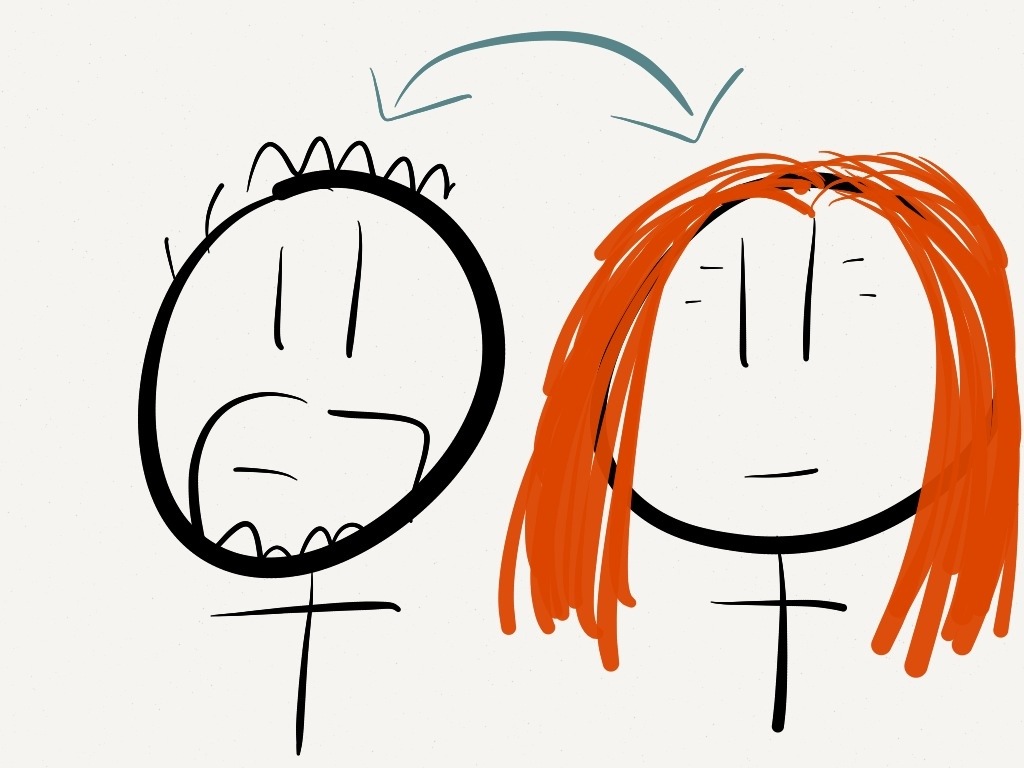
Amarysse doesn't have a specific personality as it depends entirely upon how the protagonist character in these RPGs has been written, but, depending on the customisation options I have access to, she usually has long red hair, a curvy (though not fat) figure, a lot of charisma (in BioWare titles, this means taking as many points in Persuasion as possible… always) and a seductive voice. She is several things to me: firstly, and most shallowly, she's my fantasy woman in every respect; secondly, she is all the things that I am not. She is female, attractive (according to self-perception — I have a distorted and negative view of my own aesthetic value meaning I consider myself unattractive even though I know there are people who disagree), confident, assertive, dominant, in control, flirtatious and often sexually aggressive should the game provide the option to act in such a manner. She kicks ass, takes names and isn't afraid to say exactly what she wants, in short. I admire her a great deal, both from a shallow, libido-led red-blooded heterosexual male perspective, and from the angle that I wish I "was her".

I've taken this somewhat further on a couple of occasions in Second Life (though not for a good couple of years now) by creating a female avatar alongside my "regular" male one. (She's not called Amarysse Jerhynsson there, though, so don't go looking for her.) This female avatar began as an experiment. Second Life is about doing whatever you want, after all, so I decided I wanted to see what life was like as a woman. I wasn't going to be a man playing a woman; so far as everyone who met my female avatar was concerned, I was all woman. No-one ever called my supposedly female gender into question once, despite the fact that I said prominently in my profile that I would not talk about my "first life" (a Second Life term to describe "reality") at all — which, in the strange world of Second Life, usually means that people have something to hide. I even made a few friends (all female — or at least represented as such) in the process, though eventually I felt bad about deceiving them and disappeared quietly.

My conclusions from playing this female avatar were interesting. Like Amarysse's many forms, this avatar was pure fantasy. But since there was no prescripted "narrative" to follow, I had to choose how I was going to represent her. This attractive, curvy redhead didn't look like the sort of person to be a shy, retiring wallflower (especially not in the clothes she tended to wear in the locales she frequented) so it made no sense to overlay my real-life (or wish-fulfilment) personality over the top of her. Instead, I decided that here was a woman who was confident in herself and assertive enough to walk into the middle of a room and simply start talking to someone she liked the look (or profile) of. Sometimes she was ignored, sometimes she got into a good conversation, sometimes things took an altogether different turn which we shan't get into here. The important thing is that it felt different to be her. I wasn't me, suffering from crippling social anxiety when faced with the prospect of talking to strangers. I was this strong, confident woman. When ignored or rejected, it didn't hurt, because that wasn't what she would feel — even if it was what I would feel. She was not only my fantasy woman, but she was also my own fantasy personality — perhaps the person I wished I could be, or simply a person I knew that was very different to who I was. I'm not sure.

Anyway. There is a point to all this, at least I think there is: the reason I like to play female characters. I've already said it, actually, but I'll repeat it for good measure. There are two reasons, in fact: firstly, it's a simple, shallow expression of my own fantasy woman; secondly, it allows me to truly be someone that I am not in almost every way possible. I habitually use games as my primary form of recreation and a means of escapism, so I find a good way of escaping everyday life and the things I don't like about myself is to play someone that is so completely different from me. I don't feel any "dissonance", though; it simply becomes an alternate persona.

Perhaps the character traits of my fantasy female characters lie dormant within me after all, and all I need to do to feel better about myself is figure out how to coerce them to the surface. I did, after all, say at the beginning of all this that I identify more strongly with the stereotypically "feminine" aspects of my personality than the "masculine" ones (and, as I've said, I use those terms loosely as gender definitions are somewhat fluid in this more enlightened world we live in today) so perhaps there's something to this.

Working all that out, however, is probably something best left to someone with a qualification in psychology!
#oneaday Day 887: Things I Don't Understand

20120624-002940.jpg

Herein follows an updated (though not comprehensive) list of Things I Really Don't Get, in no particular order.

  • Football. (Soccer for the Americans.) Those who have known me for a long time will be well-familiar with my aversion to the supposed "beautiful game" by now, and its popularity continues to elude me even as I'm supposed to be feeling patriotic and English while Euro 2012 is going on. I just couldn't give a toss, though. Related: I also don't understand why those who like football complain about ITV's coverage of it and then don't protest about it in a form any stronger than passive-aggressive tweets. Don't watch it if it bothers you that much. Crashing viewing figures would get their attention. (One response I received to this tonight was that they had "no choice" but to watch. This attitude is unfathomable to me when the vehement, often expletive-ridden criticisms of ITV's coverage is taken into account.)
  • Carly Rae Jepsen. Who the fuck is this person and why is their song Call Me Maybe so inexplicably popular at present? I listened to it out of curiosity on Spotify the other day and discovered a bland, predictable if marginally catchy pop song — certainly nothing remarkable to elevate it above similar offerings from other cheeseballs artists such as Ke$ha et al.
  • Rage of Bahamut. Discussed in greater detail here.
  • People who park in the pick-up area at supermarkets. Is your time so valuable to you that you need to park in an area that isn't a parking space, Mr BMW driver? (Because it inevitably is a male driver, usually in an expensive German car) There are free spaces over there. I'm sure it won't hurt you to get out and walk for an additional five seconds.
  • People who comment on brand pages on Facebook. Discussed somewhat here. It seems that for some people, the "like" and "comment" buttons have some sort of irresistible magnetic force that makes these people unable to leave an inane post by a brand alone before they've posted "lol" or some equally asinine comment. I follow J-List on Facebook because (1) I like the pictures (2) I find the posts about Japan interesting
  • Radio 1 giving an on-air guided tour of a festival ground when nothing was happening there. Radio 1 had/are having (I don't care enough to check) some sort of festival, and the other day they devoted a good ten minutes or so to someone walking around the (unoccupied) festival grounds explaining where everything was going to be. The impact was somewhat lost by radio's inherent lack of pictures.
  • Jedward. Come on. Are we not over this supposed "joke" yet?
  • Beauty products. Women must all be fucking scientists to understand all that crap they sell in Boots. I certainly wouldn't know when to buy a "serum" and when to buy "body butter".
  • The enduring popularity of shit TV. I don't think Take Me Out is on at the moment, but the sheer number of otherwise normal-ish people I follow on Twitter who voluntarily subjected themselves to this televisual carcrash is astonishing. Most claim they only did so in order to bitch about it on Twitter, but I can think of far less infuriating ways to spend an evening.
  • Instapaper, Read It Later et al. I've never used one of these services so I don't really understand what they do and can't really fathom out how they work from their descriptions. I'm something of a traditionalist in the way I read stuff on the Internet — I go to the site, I read it. If I don't have Internet access at the time, I don't read it. If you're lucky I'll subscribe to your blog by email but that's about it – I don't use Google Reader or anything either.
  • How you can play the same (non-MMORPG) multiplayer game for over 100 hours and not get bored. I got bored of the one time I tried Call of Duty multiplayer after about two or three hours tops. I got sort of into it for a little while but then realised that I wasn't really having as much fun as I thought I should be having and that I didn't feel like I was getting any better, either, so I stopped. The prospect of playing a multiplayer shooter enough to contemplate voluntarily paying a subscription fee for it is unfathomable to me.
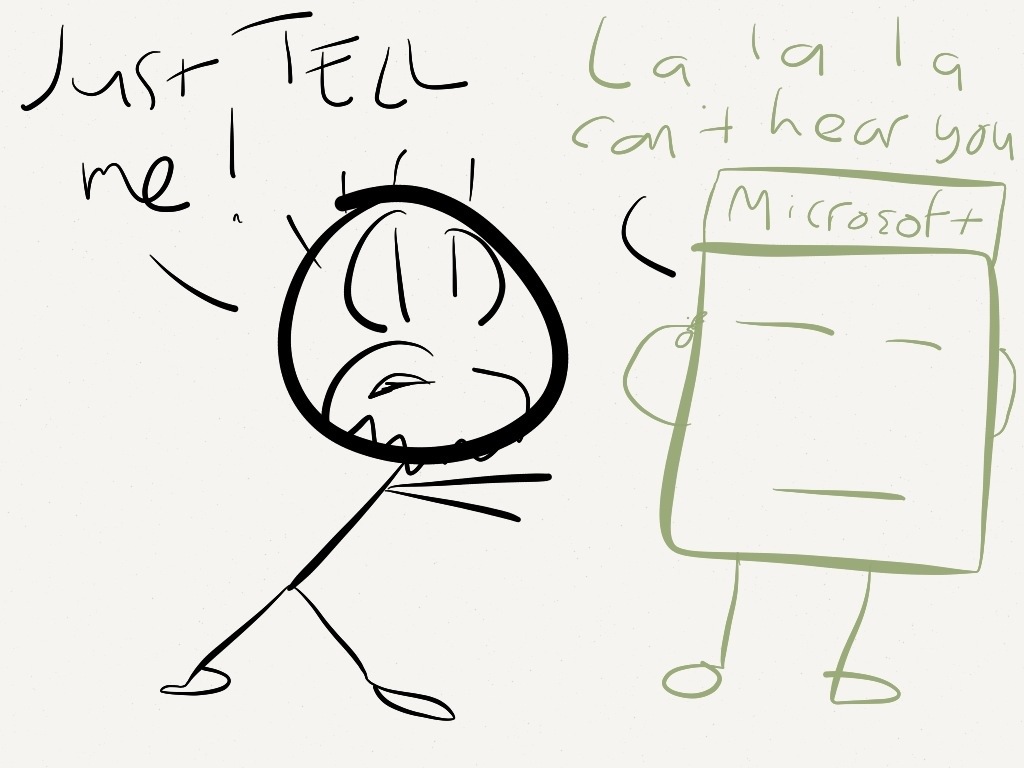
  • How Microsoft Word still doesn't work properly yet. Word first came out in 1983, yet here in 2012 I am still getting frustrated by the fact it occasionally and unpredictably changes fonts for no apparent reason, decides to format my entire document in bullet points when I tell it to undo my last action and is just generally a big buggy mess. Surely it can't be that hard to get right? It's not as if I'm even doing anything advanced; this is basic text editing that still encounters these glaring flaws on a regular (but unpredictable) basis.
  • How it's possible to have a "collector's edition" of a game that is only available via digital download. Special edition, fine. Premium edition, fine. But "collector's edition"? No.
  • Why all car parks don't take cards. I never have any cash on me because I rarely need it, so I can imagine there are plenty of other people who live their lives in a similar fashion. Payment cards are so ubiquitous now; why can't you pay for your parking with a credit or debit card in 95% of British car parks? (I made that statistic up. But it's certainly a lot of them.)
  • Fruit tea. It smells so good; it tastes so much like dirty bath water. Why must Nature be so cruel?
I think that'll do for now. Feel free to share your own Things You Don't Understand in the comments.

#oneaday Day 886: King's Space Police Quest for Glory Suit Larry

20120623-032608.jpg

I've been playing through the Quest for Glory series recently for the Squadron of Shame's upcoming podcast. I'd never played them before, and it turns out they're rather good — particularly once you get on to number 4 and you get John Rhys-Davies on narration duty. I shall refrain from further discussion of that particular series for now, however, as that would get into spoiler territory.

I do want to talk about Sierra in general, however. Sierra, if you're unaware/a young whippersnapper, was the developer and publisher of these games, and was notorious for being one of the "big two" names in adventure games in the '80s and '90s. The other was, of course, LucasArts.

Sierra and LucasArts took wildly differing approaches to what was ostensibly the same genre — the point and click adventure. While LucasArts embraced movie-style presentation and player-friendly interface features such as an intelligent cursor (i.e. one that automatically highlighted interactable objects for the player), Sierra games were punishing. LucasArts made a point in their game manuals to say that they wouldn't kill off the player character unnecessarily, and indeed in most of their games it was impossible to die or even fuck things up beyond all recognition. The exception to this was the Indiana Jones series, in which Indie found himself in danger and could indeed die — but generally only if the player really messed up.

Sierra games, meanwhile, at least in the early days would kill players if they took a wrong step on a mountain path. Or if they said the wrong thing to another character. Or if they got caught by a wandering monster. Or… you get the idea. They were hard, and not necessarily fair about it either. But the constant sense of peril that you felt a Sierra protagonist was in (at least until later games such as King's Quest VII and Gabriel Knight, anyway) provided a very distinctive flavour.

This isn't the only way in which Sierra adventures were unique. They're some of the earliest "auteur" games I can think of, where a selling point of each game was who it was written by. Each of Sierra's stable of game designers had their own specialisms — Roberta Williams handled the fairytale King's Quest series, Lori and Corey Cole handled the adventure/RPG hybrid Quest for Glory series, Mark Crowe and Scott Murphy worked on Space Quest, Al Lowe was in charge of the smutty Leisure Suit Larry series, and Jane Jensen worked on a variety of titles including the seminal Gabriel Knight. Each had their own distinctive "voice" and "style" that was all over their respective work, despite the things all the games had in common.

Different people were drawn to different series for different reasons — King's Quest provided a Disneyesque take on popular fantasy and fairytale tropes, for example, while Space Quest was a self-consciously silly sidelong glance at the world of sci-fi. Despite the early titles all being very clear parodies or homages to existing work, each series evolved over time to develop its own unique flavour — and, curiously, pretty much all of them managed to self-destruct with disastrously awful final instalments, the most notorious being King's Quest VIII's inexplicable shift into becoming a Zeldaesque action RPG rather than the gentle, light-hearted and family-friendly adventure it had been before.

Despite the fact that each series managed to commit seppuku in its own distinctive way, that doesn't make the earlier titles in the series any less worth checking out. Sure, many of the early entries have graphics that weren't exactly bleeding-edge even at the time of their original release, but their gameplay is solid, and their stories are the sort of thing I'd describe as being part of a gaming "canon" if such a thing existed. (It doesn't, making that whole statement pretty much redundant. But they're certainly fondly remembered by pretty much everyone who played them — even with the frequent and frustrating deaths taken into account.)

They're a reminder of a simple time when there weren't quite so many new games being released each month, and "a new game from Roberta Williams" was an exciting prospect. That excitement is still present in gaming to a certain extent today — many people are keen to see what auteurs like Jane Jensen (who's still steadfastly producing adventure games), Nintendo's Shigeru Miyamoto, Hideo "Metal Gear Solid" Kojima, Swery65 (Deadly Premonition) and Suda51 (No More Heroes, Lollipop Chainsaw, Shadows of the Damned) are up to today. The difference is that these "auteur games" are regarded as niche interests or cult hits today rather than big releases.

If you've never tried any of Sierra's games, head over to GOG.com and check 'em out now.

#oneaday Day 885: Foul-Smelling Vagina

20120622-013552.jpg

There, that got your attention, didn't it? Mention a stinky faff in your headline and everyone suddenly takes note. I'll remember that for the future.

Anyway, I do actually sort of want to talk about fragrant fannies today, but not in quite the way you might be expecting. I am instead referring to the social media backlash which "intimate hygiene" product line Femfresh encountered today on its Facebook page.

There were a number of reasons that Femfresh drew the ire of the Internet community today, but one of the most common complaints was its cover photo. Here it is:

Apparently, it seems a lot of ladies find the company's seeming inability to use "adult" words for their respective minges somewhat patronising — and before I go any further, I will point out that my use of various offensive euphemisms throughout this post is purely for facetious comedy value (and variety) rather than any ulterior motive — and thus took umbrage with Femfresh's page as soon as they saw the top of it. (Quite what they were doing on it in the first place is their business and their business alone.)

Not only that, but it seems that on the whole (shush!) women are, in fact, rather well-educated about what is and isn't appropriate to smear over or stick up their flange. "Bacterial vaginosis" is the result of using the wrong things, it seems, and no, I haven't Googled that because I don't want to. Don't let me stop you from doing so, however, if you're curious. Just don't come crying to me if Google Images decides to serve you up some tasty treats.

Anyway. Here are a few choice comments from the public:

"I call it a vagina because I'm not 12 years old and because I love it I'll go nowhere near this vile 'care range. Cheers."
— Holly Rae Smith.

"Are you kidding me? Trivialising something innately precious by calling it something so thoroughly ridiculous offends me and, believe it or not, all the posters on this page. Did you not perform any market research on this area and then develop a communication and marketing strategy? It appears not otherwise you wouldn't have received such an insane backlash on your attempts to flog a thoroughly unnecessary and damaging product…"
— Helen T

"Just to clarify, is Femfresh for vaginas or vulvas? Because your ad says vagina, which implies your product is a douche, in which case you're advertising a harmful product. If it's for vulvas only, change the words you're using to make it clear."
— Kirsten Hey

I shan't talk any more about the science of quim because I'm not a gynaecologist (I can, however, spell gynaecologist without using spellcheck) but I will focus on the larger issue here, which is that social media advertising campaigns can and will go very, very wrong if they're not thought out effectively. Instead of simply advertising their (apparently controversial) product, Femfresh made the mistake of attempting to engage with their "fans" when there was really no need to. By actively encouraging people to comment on their posts (and by posting vapid, patronising nonsense) they essentially brought about their own downfall. Everyone has been talking about Femfresh today, and they haven't come off too well. "All publicity is good publicity" doesn't really apply when the vast majority of those "publicising" your product are pointing out proven health risks.

The broader issue here is that social advertising should not be "essential" as so many advertisers seem to believe it to be. On Facebook, you can "Like" everything from HP sauce to a favourite video game. Doing so used to simply be a means of self-expression — quite literally, demonstrating that you liked something. Now, publicly "Liking" something is inviting the brand in question to bombard you with crap, ask you asinine questions at all hours of the day in an attempt to "build a community" around things that really don't need a community built around them. If people honestly think that their lives are going to be enriched when they click "Like" on the page of a thing that they're quite fond of, they are sorely mistaken.

Those who have "Liked" (or at least come across) Femfresh have taken a stand against this sort of pointless nonsense that is infesting social media like, well, bacterial vaginosis. In this case, it's because the advertising was both patronising and inaccurate. For less contentious products, it's going to be harder to train people to not be corporate shills — the last post on Pepsi's Facebook page has 1,094 "likes" and 74 comments, for example, none of which say anything remotely meaningful — but it seems we're starting to see a backlash of people who are no longer willing to be an unpaid part of a product's promotional team. I've certainly started "unliking" pages on Facebook that post nothing but pointless questions or fill-in-the-blank exercises rather than useful information (although seriously, what "useful information" could the official social media presence of HP Sauce ever really give you?) and I'd encourage others to do so too. This form of social advertising adds nothing of worth to society and, as Femfresh have seen today, can be completely counter-productive for the brand in question. (I guess there's an argument for the fact that today's debacle may have educated some women about bacterial vaginosis, but still.)

I'll leave you with this:

#oneaday Day 884: Just Write

20120620-235349.jpg

I have written a veritable bucketload of words today (including this 5,000+ word epic for the Squadron of Shame) so you'll forgive me for taking "the easy option" and indulging in some freewriting again this evening. (Technically I guess it's not truly freewriting if I go back and add a link to that sentence I just wrote after the fact, but eh. I'm going to call it freewriting and there's nothing you can do about it, really.

Today has been a fairly quiet and unremarkable day, as most days tend to be. There's nothing wrong with that, of course; having remarkable days all the time would quickly make them unremarkable and thus boring, and you'd get yourself into a cycle of increasing awesomeness, whereby it would take more and more remarkable things happening on a daily basis to make you determine that you had indeed had a "remarkable" day. So yes. Today was fairly unremarkable, which is fine. Though it did see the arrival of our new, massive, comfy sofa, so that was nice. And I guess that qualifies as something vaguely out of the ordinary, though whether I'd actually call it "remarkable" or not is up for debate somewhat.

Today I reviewed Zynga's new game Ruby Blast on Facebook. As per usual for Zynga, the game lifts game mechanics from other titles wholesale, though in the case of Ruby Blast the game isn't a straight clone of Wooga's Diamond Dash (its primary inspiration) but instead combines it with the "Diamond Mine" mode from Bejeweled 3. It works pretty well, though it does all the things about social games that probably annoy you if you're not already engaged with that particular part of the market. It has an "energy" system to throttle how much you can play, it continually asks you to share things and invite friends, and there's something just "off" about the aesthetic that makes you want to strangle the personality-free main character. Objectively, however, it's not a bad example of a social game — it's fun, quick to play, likely to earn a fair amount of money and actually encourages people to play together with a weekly leaderboard a la Bejeweled Blitz, which still rules the roost for social puzzle titles as far as I'm concerned.

What else did I do? I wrote up that epic Squadron of Shame article I posted earlier. That was the result of an extended conversation between me and my good friend Mr Alex Connolly, who makes his home all the way over in Japan. It's pretty awesome that we can have such an in-depth conversation across thousands of miles and then publish the (lengthy) results for all to see. The piece even got a shout-out from the developers of the game we were discussing, which was nice.

I also put my foot down on Facebook and determined that I am not going to put up with the facile social marketing crap that most "brands" tend to indulge in on Facebook. My new policy is that the second a game/company/other brand posts something inane, like "what are you having for dinner tonight" or "I like ________" then I will immediately unlike them. This will have little impact on their user figures, but I'll feel better about it. This kind of social marketing is apparently A Thing, and me saying it is stupid (it is) is not going to make it go away, sadly, because it's proven to be effective. Just look at any brand page asking an asinine question about what colour sauce you prefer on your kebabs and you'll see several thousand "Likes" and at least a few hundred comments, possibly more. Meanwhile we struggle to get people out of the house to vote for things that actually matter. Oh well.

I'm not sure where this rambling is going but I haven't stopped typing yet so I may as well continue for now. It's been quite warm today, but the night has become a bit chilly. I have the window open as I type this and the cold breeze is actually quite pleasant. I popped into the bedroom to see Andie before I started typing this and it is incredibly hot in there — way hotter than the rest of the house. I'm not sure why, nor do you, my readership, care. So I will stop talking about this nonsense forthwith.

I have had the song "Winter Wrap-Up" from My Little Pony stuck in my head all day. This is partly due to the fact that the other day I had to review a Facebook "virtual world" where it was possible to choose YouTube videos to put on the walls, and naturally (naturally?) the first thing that sprang to mind was PONIES PONIES PONIES. As such, I haven't been able to get that earworm of a song out of my head ever since. It's not a bad song. It's catchy. It has silly lyrics, but let's not forget it was part of an episode of My Little Pony, so we can forgive it a bit of silliness I'm sure.

I am closing in on a thousand words so I will be stopping soon. I am going to end this post with an embedded video of Winter Wrap-Up so you can all suffer like I've been suffering. It's just a shame I can't make it auto-play. Oh God, do you remember Web pages that auto-played MIDI files and other stuff? Thank heavens we moved beyond that. Now, we just have superfluous Flash animations and other crap. But it's been a very long time since I visited a website that had a background MIDI. I sort of miss it. But at the same time, any website that did do that would doubtless get mercilessly mocked. It would probably be a viral sensation these days, to be honest, but for all the wrong reasons.

Anyway. That's really nearly a thousand words now so it's time to stop, and the only thing that remains for me to do is this, as promised:

Yeah. Yeah.

#oneaday Day 883: Freewriting

20120620-011914.jpg

I have no idea what to write about today. So I've decided to just start typing and see what comes out. Doubtless it will be a ridiculous flow of consciousness nonsense post, but eh. What can you do.

I've used this technique before, of course. It's called "freewriting" and it's a good technique if you're planning on perfecting your creative writing craft. Well, maybe not perfecting, but it's a good means of practicing the art of getting ideas out of your head and onto the page as quickly as possible. This is an important thing to do, as ideas, if left unchecked, float around your head for a day or two and then dissipate without warning, often before you've had a chance to do anything with them. I find that I can generally hold A Good Idea in my head for up to a week at a time, but if I don't do anything about it (even if that "anything" is simply "make a note of it to come back to later") then it is gone forever. Usually. (Sometimes if it's a particularly powerful Good Idea, then it will be back with greater force. This is usually a sign that I should Do Something About It.)

Talking of creative writing, I downloaded an app for the Mac called Scrivener yesterday, and spent a little bit of time going through its tutorial and fiddling with it. It's a "writer's toolbox" sort of application, taking the approach that programming environments do for application development, only for creative projects. You have a "binder" in which you can organise the various bits that make up your work, and when it's all finished you "compile" it into its finished product, whether that's a short document or a full-length novel. There are all manner of different handy tools in there, including a corkboard where you can rearrange virtual notecards, the facility to store all your research within the single Scrivener project file and the ability to split your work up however you see fit for later recompilation. It looks pretty good, and I'm going to make use of it. I'm thinking that if I actually organise myself to start writing something, I might be able to finish it. Whether or not that will be sooner rather than later will depend on my own enthusiasm for the project and whether or not I'm able to maintain momentum. I made a start today with a couple of character sketches, so we'll see where I go from there. No, you're not getting a sneak peek yet.

And now I'm running out of things to say again. I have broken my freewriting streak by replying to someone on Twitter, which was an error on my part. I shouldn't leave Twitter open while writing. It is distracting. Everyone knows this. Perhaps I was thinking that it would provide me with inspiration for something to write. I guess it sort of has, now. You're probably wondering what I tweeted about. Well, it's all in the context, but I told Aubrey "Chupacaubrey" Norris that she is the "secret boss of PR". She was lamenting the fact that she wanted to be the Final Boss of something (Penny Arcade Report's Ben Kuchera had been referred to as the "Final Boss of Games Journalism" a few moments earlier) so I said that to be nice. Also she is awesome, and a fine example to the rest of the industry.

Anyway. I think that's enough for now. Sorry for the lame post (I'm not sorry at all) but it's very late, I'm tired, I just finished Quest for Glory II at last and now I want to go to bed. Maybe after I've sent all my Pocket Planes flights on their merry way.

Night night.

#oneaday Day 882: Microsoft Mysteries

20120619-011335.jpg

As I type this, Microsoft's mysterious event at which something may or may not be revealed is about to start. The usual rumours and speculation have been flying around and are just as infuriating as ever, but there's been something a little different about this event: unlike, say, Apple events, for which we tend to know the vast majority of the content well before it's announced, there's been nary a whiff of what this might be all about.

A lot of people seem convinced that the company are going to launch a tablet device, and that would make a good degree of sense what with the impending launch of Windows 8. But then there's a new Xbox on the cards. And Windows Phone is surely due for a kick up the arse. And then there's things like Surface, and all the things that Microsoft Research are up to — though let's not forget that they unleashed the monstrosity that is Songsmith on the world. (And now it's stuck in my head again. "You sing into a microphone while the drummer plays along…")

But the truth is that no-one knows. At all. No-one has any idea whatsoever what is going on, and this means that the event has the potential to be exciting. (It also has the potential to be a crushing disappointment, but that's part of what makes it exciting.)

This is something that to a large extent we have lost in the modern age of PR, leaks and the reporting of every little rumour that sneaks out. Think about it. If you reveal everything about your product months before it actually comes out, you walk a fine line between building anticipation and pissing people off with oversaturated marketing. I feel it all the time with modern high-profile video games, and I'm pretty certain tech enthusiasts feel the same way about new gadgets. I don't know to what degree it happens in other sectors, but given the way a lot of modern PR seems to work regardless of industry, I can imagine it is the same across a lot of different areas.

I can't be the only one who prefers to be surprised now and again by something. For all the mindless speculation that goes on around Apple product launches, the company itself is pretty good at keeping things under wraps until the last minute (though they let the cat out of the bag with iOS 6 somewhat). Microsoft has gone one better with this one by not letting even the slightest hint out to the press or the public. It's had a far greater effect on the public's anticipation than carefully-orchestrated "leaks" (most of which I doubt are really "leaks" at all) and "official" teasers — and as a result, everyone is on tenterhooks, watching the currently-running announcement (which still hasn't announced anything as I type this paragraph).

Basically, the lesson to be learned here, I think, is that sometimes it's okay to shut up and not tell anyone what you're doing. Because when you tease something and then respond to all questions with "we're not ready to talk about that yet" or "we do not comment on rumours or speculation" you just come across as a bit of an arse, really.

Ah, and there we go. The big announcement is the Microsoft Surface, though it's changed a bit since the table-sized device we last saw. The new gizmo is an iPad-like device with an interesting twist: its Smart Cover-like kickstand has a full multitouch keyboard secreted within it. There's also an optional other case with actual proper, tactile keys.

The fact the Surface is running Windows 8 means that it can run things like Office and the like. There'll apparently be a scaled-back version for Windows RT, and one with Intel chips for the full Windows PC experience. The latter will also incorporate stylus and "digital ink" input as well as multitouch, and apparently has the power of a full desktop PC — though whether or not it will run Crysis is yet to be seen as I type this…

#oneaday, Day 881: Vita Killed Mobile Gaming for Me

20120618-003330.jpg

I wanted to expand on a few things I talked about in my Vita post yesterday, specifically with regard to the differences between mobile (i.e. smartphone/tablet) and handheld (i.e. dedicated game-playing system) gaming.

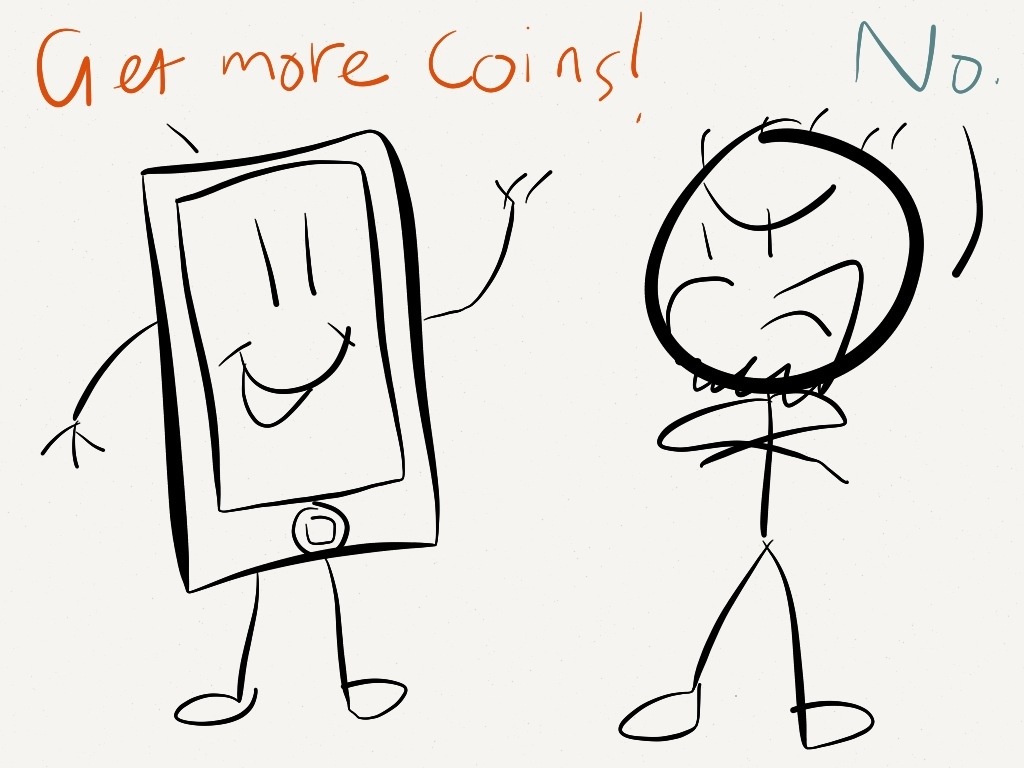
A single day with the Vita has been utterly refreshing. I've played a number of games on the system, including Everybody's Golf, Lumines Electronic Symphony, PS mini Velocity, Frobisher Says! and a couple of augmented-reality titles. Frobisher and the AR titles were free, Velocity was about 3 quid (PS minis are Sony's "app-tier" games — in fact, many iOS and Android games are ported to the PS minis catalogue) and the other two are "full-price" titles (though Everybody's Golf currently sells for a very reasonable 8 quid on PSN right now). In every instance, I was able to start up these games and enjoy them without being nagged to buy additional content or "Get More Coins!" even once. There were no exhortations to share things on Facebook or Twitter (though PSN can automatically share Trophies to Facebook) and no demands on the player that detracted unnecessarily from the immersion factor of the games in question.

This was the most striking thing about the whole experience. It's practically a given that a mobile phone game will have some form of "Pay To Win" button these days, usually in the form of the ability to purchase in-game money, items or even experience points using real currency. These are usually positioned as "timesavers", preventing players from having to "grind" to earn these things in the first place, though the fact is that the games themselves are very often designed in such a way that grinding (or paying) is necessary to progress. The game is designed to fit the business model, in other words.

Now, let's look at Everybody's Golf as a case study here. In Everybody's Golf, you earn points through play. Skilful shots, sinking the ball under par and winning tournaments nets you varying amounts of these points, which can be used as a cumulative expression of your skill and the currency through which you unlock additional content in the game — characters, costumes, equipment, courses and other bits and bobs. In other words, the better you are at the game, the more quickly you can progress at unlocking stuff. This is a simple "carrot and stick" approach, but it provides a powerful motivation for the player to actually work hard to improve their game — particularly when coming up against an apparently-notorious difficulty spike partway through the single-player component of the game. If the player was simply able to drop a few quid on purchasing additional points (which, thankfully, is not an option), all meaning of the content they acquired using these points would be lost. The unlocked characters, the new costumes, the new equipment — none of it would be a trophy of the player's achievements any more. Instead, it would simply be something that the player had thrown money at. Not only that, but the player's cumulative score would cease to be an accurate depiction of their skill and play time. It would simply become just another meaningless currency — one with an exchange rate with real-world money.

This might not sound like a massive issue but the difference is profound. When playing a mobile phone game, the near-constant presence of "shop" buttons or "Get More Coins" interface elements makes it abundantly clear to the player that they are making use of a service rather than enjoying a creative work for art's sake. That questioning feeling — "am I being screwed while I play for free? Should I pay for some coins?" — is ever-present in the player's mind. In the most egregious cases, developers even make the "cash shop" option glow or flash on screen to deliberately distract the player and draw their eye to it. (This happens in free-to-play PC titles, too.)

Now, I will point out at this juncture that I am not condemning this business practice as "wrong" necessarily — when you release your game for free or a ridiculously low price on the App Store or Google Play, you need to take steps to ensure that you at very least break even. Rather, I am saying that it has had a significantly negative impact on my personal enjoyment of mobile games of late. I find a game which doesn't ask me for more money after installing to be a pleasant surprise these days, rather than the norm. It wears you down after a while, particularly when you play as many iOS and Android games as I do — it is, after all, my job — and when I sit down to play a game just for fun, I simply don't want to be bugged by the "business" side of things.

Everyone plays games for different reasons. Some play games as simple timewasters while they're in a boring meeting, sitting on the toilet or waiting for a bus. Others use them as a high-tech equivalent of fiddling with a pencil. Others still want to compete against their friends, or express their creativity, or as a social outlet, or… you get the idea. There are probably as many reasons as there are people.

I play games purely for enjoyment and entertainment, usually in substantial, continuous sessions. Games are my primary form of recreation — where some people watch movies or TV, I play games. As such, in most cases, I'm not in it for a few seconds at a time — I'm there for an hour or more at once. During that time, I want to be immersed in the game experience without interruptions, particularly if I'm playing a story-heavy game. I do not want to be reminded that I'm playing a game if at all possible — unless it's built in to the experience in an entertaining, self-aware sort of way — and I certainly do not want to be reminded that making games is big business. I know this. I read all about it most days. I do not need to be reminded of it during play. Because there is nothing more immersion-breaking for me than exhortations to "Share this with your friends! Buy more coins now! Play again tomorrow for bigger daily rewards! Try our other games!" Even popups demanding that I rate an app 5 stars "now" or "later" have a negative impact on my enjoyment of a title.

This is where the Vita has provided the most pleasant surprises of all for me. Across everything I have played, I have been left alone to simply enjoy the game for what it is. In some cases, where competition is an inherent part of the game (like in Lumines), I am informed of my friends' high scores, but I'm not invited to brag to them. I'm certainly not confronted with half-finished games sporting interface elements that just say "Coming Soon!" and big flashing buttons to "Add Cash". It's been a blessed relief.

Couple that with the fact that the Vita games I've played so far are all deeper experiences designed to be played for longer periods at a time rather than five-minute timewasters, and a lot of the anxiety-inducing sense of ADHD that the diversity of mobile gaming offers is gone. I had to give up playing asynchronous iPhone games with friends because I found that keeping up with them was genuinely stressful. It felt like work, and it wasn't fun any more, so I stopped. I am sorry to any former Draw Something or Hero Academy players, but once something stops being fun, there's no point dragging it out unnecessarily.

All this may be painting an unnecessarily negative view of mobile gaming, but that's not the case at all — this is purely a personal response with regard how I want to spend my own free time. These ADHD games have a place and a massive audience — much larger than the audience the Vita currently boasts, as it happens. There's a lot of money to be made through "cash shops" and "get coins" buttons, so I can't blame publishers and developers for wanting to capitalise on this, whatever my own personal opinions on the matter.

Alongside this, there are some genuinely good games on iOS and Android that don't fall into these excessive monetisation traps — though interestingly, even Epic's Infinity Blade, one of the most impressive and supposedly "hardcore" games on iOS, now boasts the facility to purchase in-game currency with real cash, as do otherwise-excellent titles like Hunters 2. Equally, some free-to-play games — like the excellent Pocket Planes I talked about a couple of days ago — leave the decision of whether or not to pay entirely in the player's hands, and are generous enough to make the game perfectly playable to those who do wish to play for free.

A single day with the Vita, though, has been enough to convince me that dedicated handheld gaming most certainly still has a place, and I'm more than happy for it to be a part of my life. I can see myself leaving the vast majority of iOS gaming behind — board game adaptations and Pocket Planes (until it gets boring) excepted — in favour of the deeper, more rewarding, less skeezy-feeling experiences that Vita titles offer.

And let's not even get started on how fucking nice it is to have buttons again. Or how nice it is to have an online store that is not filled with endless regurgitations of the same FarmVille formula with zombies/fantasy kingdoms/monsters/pets attached. Or… I could go on. But I won't.

#oneaday Day 880: Not Going To Make a "Livin' La Vita Loca" Joke

20120617-012047.jpg

I bought a PlayStation Vita today. I'd had my eye on one for a little while, but having successfully paid off my credit card for the purchase of my new Mac, I decided a little treat was in order, so I did a bit of research as to what the fine folks of the Internet thought was good games-wise, and grabbed one today. I was fortunate enough to be able to snare a preowned but unused model from Game in Southampton today, which cut down the price considerably, allowing me to also grab an (overpriced) 32GB memory card along with a copy of Everybody's Golf to enjoy for about £270 in total.

I've only spent one round with the latter so far (but it's bringing back pleasing memories of Tee Off on the Dreamcast) so I won't comment on that too much, but I did want to talk a little bit about the system itself, as I believe it's worthy of note.

The Vita distinguishes itself from its predecessor the PSP immediately with its touchscreen-friendly interface. Featuring an icon-based homescreen somewhat akin to modern smartphones, the Vita invites you to touch, swipe, flick, peel and all manner of other things. You can reorganise your homescreen icons as you see fit, and even set backgrounds for different pages. You can't organise things into folders, though, which is a bit of a shame, but I can cope with that. PlayStation Network (sorry… Sony Entertainment Network, which still amuses me because its abbreviation is the same as Special Educational Needs) provides plenty of downloadable goodness, ranging from complete games that you could also buy as physical products at retail to smaller, cheaper, download-only titles and even free apps for access to Twitter, Facebook, Skype and Flickr.

The downloadable side of things has, for me, always been a big strength of Sony's systems from the PSP onwards. The PlayStation Store is a veritable treasure trove of underappreciated and overlooked gems as well as some of the most memorable "art games" (for want of a better term) in the business — games like Flower and Journey, for example. PlayStation Minis, too, provide portable-friendly experiences akin to what you might play on a smartphone, only with dedicated controls to enjoy them with, which is a big boon to anyone sick of poorly-implemented touch controls.

Besides the games themselves, though, Vita has a number of interesting and intriguingly noteworthy features. For starters, the system actually does multitasking considerably better than both iOS and Android. A tap of the PlayStation button freezes whatever you're doing and takes you immediately back to the "OS". From here, you can "peel" the app off the screen to close it completely, switch to something else (like, say, the settings app, or Twitter) and then be back into your game without any messing around. This is particularly beneficial when you want to browse the PlayStation Store for addon content, for example — even the PS3 requires a quit out of a running game to access the Store, whereas Vita manages to seamlessly switch to it, let you browse as you see fit, then switch back. This functionality also allows you to effectively do what the Steam Overlay does for PC gamers — while running a game, you can pop open a browser window and, let's face it, look at GameFAQs.

Vita's interface is gorgeous, too. The big, high-resolution LED screen makes things look great anyway, but the design of the OS just begs to be played with, too. On the homescreen, flicking between screens causes the icons to wobble like they're hanging on pegs. Rather than "slide to unlock" if the machine goes into standby, you use the same "peel" motion that is used for closing apps. And the soft keyboard is pretty good, too, with a decent predictive text dictionary built in — though the size of the screen and its position means that "thumb typing" as on a smartphone is next to impossible. Fortunately, as the Vita is primarily a gaming platform, you won't be doing that much typing on it, so it's a design flaw I can forgive.

The built-in apps are interesting, too. Near allows you to see other Vita owners in your nearby vicinity, see what they've been playing and their responses to them. (I was surprised to see quite a few Vita owners living near me — I was expecting it to be a virtual ghost town around here.) Welcome Park introduces the system's little quirks — the multitouch screen, the rear touchpanel, the two cameras and the built-in microphone — through a series of simple but surprisingly engaging minigames, all of which have Trophy support for those who care that much. There's also a pleasing number of free downloads from the PlayStation Store, including a selection of social apps, a simple finger-painting app and even some games, including the hilarious and WarioWare-esque Frobisher Says.

All in all, I'm very pleased with my purchase so far. I've become somewhat disillusioned with iOS gaming recently — perhaps due to the fact I get to see some of the very best and worst titles as part of my day job — so I've been surprised how good it feels to have a dedicated handheld system again, particularly one that doesn't possess an app ecosystem that encourages developers to include "Get More Coins!!" options even where they're not wanted/needed. I shall look forward to many Everybody's Golf sessions on the toilet in the near future as well as a thorough exploration of the myriad joys the PlayStation Store has to offer me.