1114: Amazing Discoveries

Page_1Amazing discovery of the day: my Nespresso "Aeroccino" milk frothing device not only heats and froths milk suitable for both lattes and cappuccinos (it's all to do with how wibbly-wobbly your whisk is, apparently), it also makes a killer milkshake.

I've had a pot of Mars milkshake mix lurking in my cupboard for months now — it even moved house with us back in December — but I've not had that much of it despite it being yummy because apparently I am crap at mixing powder-based milkshakes by hand. They almost inevitably come out either lumpy or not actually tasting of the thing they're supposed to taste of, and are thus infinitely more disappointing than a milkshake you'd pay well over the odds for in a single-portion bottle. (I say "single portion" — most of the nutrition info in the side of bottles of things like Mars milkshakes and Frijj seems to imply that a "normal" person would drink no more than half the bottle in one go. Who does that?)

As an experiment, then, I decided to use the Aeroccino, because I knew it had a "cold" mode that does all the stirry-stirry business, but doesn't do all the heaty-heaty business like it normally does. I plopped in the appropriate amount of milk and a few scoops of the Mars milkshake mix, then pressed and held the button until it went blue rather than the usual red… then sat and hoped that it didn't blow up. There's no reason why it should blow up simply from having a bit of powder in it as well as the usual milk, but, well, I was still doing something with it that you're not really supposed to.

What do you know? It made a perfect, lump-free milkshake that actually tasted like Mars milkshake without being all powdery and horrible. I call that a victory. It didn't even gum up the stirry thing with goopy half-dissolved milkshake mix, meaning it could just be rinsed out ready for the bajillion cups of coffee I will almost inevitably consume over the course of tomorrow. (I'm having a bit of a caffeine crash as we speak — I've largely been drinking strong black "Lungos" today and thus have been a bit wired for most of the evening.)

I find it oddly satisfying to use culinary implements for purposes other than that which they were originally intended. (Get your mind out of the gutter, you filthy pervert.) That and doing weird things with stock foods. Adding hot sauce to reheated bolognese. Layering a slice of beef under the cheese of cheese on toast. (I call this "Deluxe Cheese on Toast".) Dipping Bovril on toast into tomato soup. (Seriously, try this, it's delicious. Assuming you like Bovril on toast, obviously.) Making weird sandwiches. (I put a whole roast dinner — well, the leftovers thereof — in a sandwich once, and you really haven't lived until you've had a pie sandwich.)

I have no idea where I'm going with this post, to be perfectly honest. I think it's probably best that I just stop writing here as it's nearly 1am and I'm quite tired. I seem to have fallen into habits of staying up quite late again. I should probably try and kick that, because it makes it difficult to get up in the morning. Oh well.

See you tomorrow.

1113: Thin Skin

Page_1You know one of the people I admire the most on the whole Internet? Jim Sterling. While I may not always agree with his opinions and the way he argues them, that's not why I admire him. No, the reason I admire him is how he can say something which may end up being controversial in some way (either due to subject matter or by going against popular opinion) and then not let the subsequent barrage of vitriol flying his way bother him. Or, if he does, he manages to hide it exceedingly well and simply brush it off as part of the job. (I have a sneaking suspicion that if it really did bother him, he wouldn't still be in this business.)

I last wrote about this topic back on day 795 of this blog, and the things both I and Sterling said back then still ring true. I'm envious of Sterling because of the way in which he can rise above the abuse and not let negative comments get to him, because I am the exact opposite.

Let me explain to you what it's like to browse a comments section when you suffer from anxiety and depression in various forms. First of all, you find yourself hoping that there are comments there at all. It's nice to know that something you wrote has resonated enough with someone to compel them to respond. It's even nicer if said someone comes along and agrees with you. Everyone likes to be agreed with and made to feel like they're "right", even in topics where there is no clear "right" or "wrong" answer. It's particularly pleasing to know you've made a connection with someone who is often a complete stranger, and that you've been able to bond over the words that came out of your head and onto the page.

Now let's say there's a dissenting comment in there, too. It doesn't have to be a vitriolic or abusive one, just one which disagrees with you in some way. Immediately, all the good work done by the positive comment is undone. Immediately, you feel a knot in your stomach as you start to read the dissenting opinions, and immediately you start to feel like a failure as a human being because your thoughts didn't coincide with someone else's. Should you have written that article at all? Should you continue writing at all? Or should you just pack it in altogether, because every time a dissenting opinion comes along, you end up feeling sick to your stomach?

There is, of course, a specific example I'm thinking of in this case. As you may be aware, I write a regular column about visual novels every week for Games Are Evil. I don't claim to be an expert on the subject, just someone with a strong interest in the medium and an urge to tell others about the great experiences I've had with them. This week, I decided to write about the treatment of sex in visual novels, which often tend to be very explicit on the erotic content front. The first comment I got was from a regular commenter on the column, and fell into the first category I described above. A subsequent one fell into the second category, telling me that I'd chosen bad examples to back up my points and accusing me of not knowing my subject matter. The comment itself was relatively respectful in tone, now that I've had a few hours to stew on it, but I came away from initially reading it feeling pretty shitty about myself. I'd worked hard on that piece and had put myself out there by sharing my opinions, and to have them shot down in that manner and accused of not knowing my stuff was actually quite upsetting.

I am aware that I broke one of the cardinal rules of the Internet by looking at the comments section at all, I am also aware that it's highly possible that I will never see or hear from that commenter again, and I am also aware that everyone is entitled to their opinion and no-one is obliged to agree with me — but that simple failure to connect made me rather upset and has left me feeling quite glum all evening. It's a total overreaction, I know, and I should learn from Sterling's example and grow a thicker skin — or argue my corner better — but, well, that's the experience of living with anxiety and depression. It only takes a few poorly-chosen words to make someone like me feel like crap, and it's mostly our fault for being that way and not doing anything about it.

You should, of course, be able to freely express your opinions just as much as me, but just think about the way you're saying the things you want to say before you hit that "post" button, please?

1112: Freebies

Page_1It is a truth universally acknowledged, that a mobile game which carries the price tag of "free" must be in want of the contents of your wallet.

There are exceptions, of course, but it's pretty rare to find something that you can download for free that actually is free these days.

It's even rarer to find one of these games that doesn't suck, as the market becomes increasingly-flooded with appalling "card battle" games and gameplay-free tap-fests in which you do little more than log in every few hours for a shower of coins.

The last free-to-play mobile games which really captured the public's imagination came from Nimblebit. Their game Tiny Tower in particular got an alarming number of people hooked, despite the fact that there really wasn't actually very much gameplay there at all, and there certainly wasn't enough strategy to call it a successor to Sim Tower, like some people were. Their follow-up Pocket Planes captured people's interest for a while, too, but by that point a lot of people were starting to get wise to the fact that these games were little more than fairly mindless diversions rather than anything which required something more than the very minimum of brainpower.

It's been a while since Pocket Planes, and a whole ton of free-to-play mobile games have come and gone since then, many of them bloody awful. So it's only fair, then, that I pay a bit of attention to some which aren't complete crap and which are even actually — hush, now, don't tell anyone — quite good.

Here they are. They're free, of course, so you can try them out for yourself and see if they're worth bothering with for more than a single session.

Pixel People

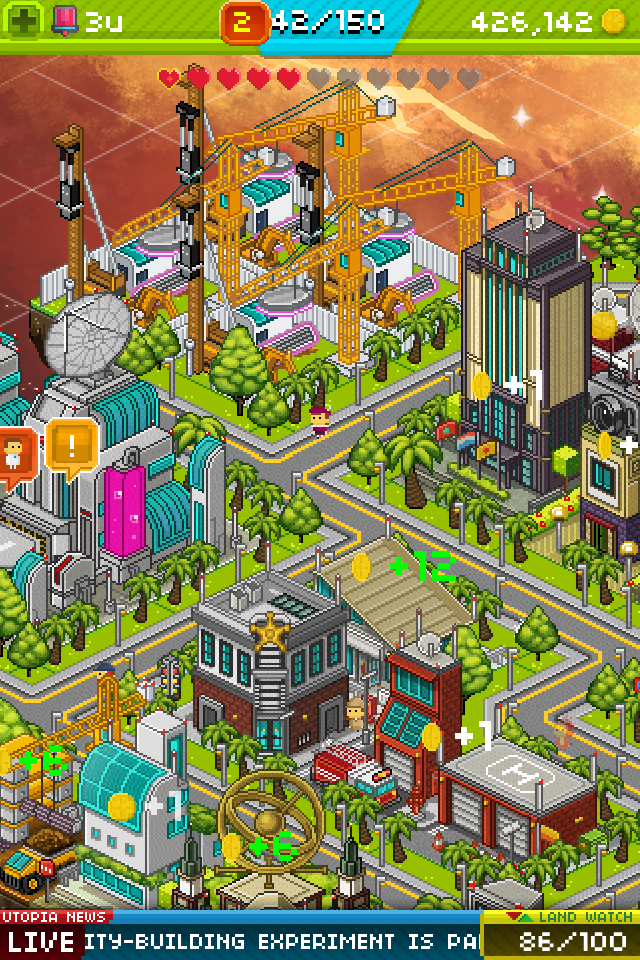
IMG_2147This new title published by Chillingo has more than a little bit in common with Nimblebit's games. It's populated by oddly-endearing pixelated people, there is no real hard "goal" as such and the majority of your time is spent making sure your income stream is as efficient as possible. You don't have any expenses to worry about — it's just a matter of how quickly you can make your pixelated town earn the spondulicks required to level up and expand your territory.

The basic gameplay in Pixel People revolves around genetic splicing. You're building a Utopian colony of clones, you see, and in order for it to run smoothly you need clones in appropriate roles. When clones are delivered to your colony — which will happen regularly so long as you have houses available for them — you are able to pick two "jobs" that you already know and splice them together to hopefully make a new one. The interface gives you feedback as to whether or not the combination you're trying will make a new job, so you won't waste clones or time, and there are various ways to unlock hints (including, yes, paying up) as you progress through the game.

The thing I like about Pixel People is that as you play through, you're constantly discovering new neat little things. You're never doing much more than picking random combinations of jobs and tapping on buildings to keep them producing money, but every so often you'll discover that tapping on a certain building performs a special function. Tap on the police station, for example, and you'll find your achievements list — the game doesn't even log in to Game Center until you've discovered this for yourself — and be able to claim rewards for challenges you've already completed. Tap on the observatory, and you can change the background of your colony — and also score yourself an achievement. While none of these things vastly affect the way you play the game and certainly don't give it any "strategy," they're a nice touch that keeps you wanting to play without resorting to the usual Skinner Box tricks of using experience points and showers of gold.

By far the best thing about Pixel Peoplethough, is that it just looks like one of those awesome gigantic pixel art town pictures. Despite the fact that the placement of your buildings and roads doesn't matter in the slightest — and you can move anything around at will, anyway — I've found it oddly compelling to just want to arrange my buildings into an aesthetically-pleasing, vaguely "realistic" arrangement rather than just clustering them all together haphazardly like I did when I first started playing. So now my cloning centre has a road running from it with shops and other facilities down it, running around a corner (on which the L-shaped university building sits), past a large park and into a residential district. Beyond the residential area is some natural forest land, which is where the sheriff and his deputy live, next to the Utopium mine.

I'm overthinking it. It's not that good, really, but if you liked Tiny Tower you'll probably enjoy Pixel People — and, like Nimblebit's titles, you never feel like you need to pay up to make satisfying amounts of progress.

Book of Heroes

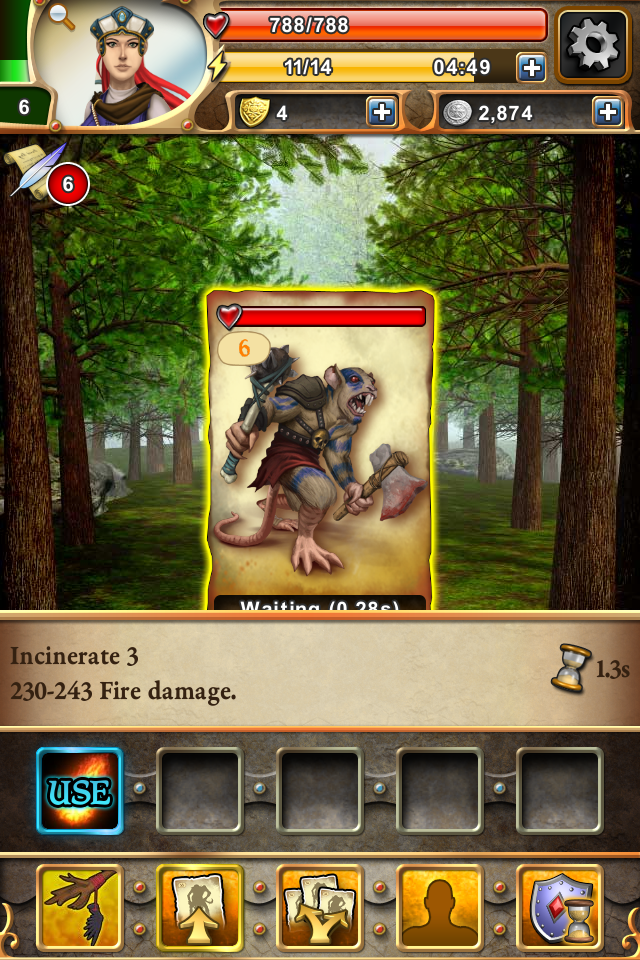
IMG_2148I remember trying this for the first time a good few months back, and I remember quite liking it then. Book of Heroes is a role-playing game specifically designed to be played in short, bite-sized instalments on your phone. It's largely text-based, its interface is designed for touchscreens, and it's not trying to be World of Warcraft or anything.

Since I last tried it, what I believe used to be a single-player experience has gone full-on MMORPG on your ass. Now you can compare your characters with your friends, chat in real time with other people, join guilds and go on "raids" together in an attempt to prove your own supremacy.

Mobile MMORPGs of this type are often utter garbage, usually falling into the "card battle" category and being completely free of any sort of gameplay or strategy whatsoever. Where Book of Heroes differs is in the fact that it actually demands some interaction from its players; rather than following a linear line of quests, you gradually open up a large number of areas in the game world to "explore" (well, fight a string of battles in) and complete various objectives before returning to town to spend all that hard-earned loot.

Combat is the main area where Book of Heroes differs from its rivals. Rather than taking all control away from the player, as happens frustratingly frequently with this sort of game, Book of Heroes allows the player to control their character's actions in a quasi-turn based format. Each action takes a set amount of real time to perform — we're talking seconds here, not "pay up to do this quicker" — and while an action is "charging" the enemies are doing the same thing. It becomes a matter of weighing up whether or not it's worth using the slow-charging super-powerful attack or whether you should try and get some quick hits in before the enemies have a chance to attack. It's a fairly simplistic system, but it works well in the context of a mobile game.

____

The thing with both of these titles is that they understand how mobile players treat games — as a diversion to dip into for a few minutes at a time, not a massively compelling experience intended to keep them hunched over staring at their tiny screen for hours. They're both eminently suitable for toilet play, and they're both simple to pick up but provide plenty of long-term… I hesitate to say "challenge" because neither of them are difficult in the slightest… umm… content, I guess, for players to check out over time. So, in short, they're at least worth a look.

Grab Pixel People here and Book of Heroes here.

1111: Oneoneoneone

Page_1So today is my one thousand and eleventh daily post on this blog, and the… errr, hang on… (*counts*… 11, 22, 33, 44, 55, 66, 77, 88, 99, 111, 222, 333, 444, 555, 666, 777, 888, 999… 1111) 19th time that all the digits in my post number have been identical, something which, coincidentally, will not happen again for another one thousand one hundred and eleven days.

This feels like it should be significant somehow, but in reality, well, it just isn't. It's just another arbitrary post number on a relatively unremarkable day. Regardless, since it feels like it should be something significant, I shall use this post as a permanent (well, as permanent as anything on the Web is) record of exactly what happened today, Saturday the 2nd of February 2013. (Yes, I know the post date probably says February 3rd, but that's because I played Hyperdimension Neptunia for too long and drifted all the way past midnight… as usual. I'm sure you're used to it by now.)

This morning I woke up rather late because I'd stayed up rather late the previous night reading my current visual novel fix, a rather compelling (if also rather wordy) tale called Kira Kira. I'll save any discussion of Kira Kira for another day and instead point you to my "first impressions" post over on Games are Evil if you're curious, since that's not relevant to what went on today.

Andie and I eventually got up, had some breakfast (bacon and omelette; Andie added some chilli peppers and onions to hers but branded it ultimately disappointing due to the lack of "kick" that said peppers had; I had a plain one as my digestive tract was already on fire following a spectacularly spicy dhansak at my friend Tim's on Thursday night) and contemplated what the day would hold.

Andie decided that she was going to look at new cars, as her trusty Nissan Micra "Ratty" had been starting to develop a few flaws and also had an impressive (though purely cosmetic) dent on the rear-left door. (It wasn't her fault, but it would have cost several hundred quid to fix.) I was going to spend the day editing the much-delayed Squadron of Shame horror-themed podcast, but was requested to come along for moral support on the car hunt, so I agreed. I've never bought a car myself before, and Andie hadn't done it "solo" before, either, so I understood her hesitance to go alone.

We took a drive down to a local used car dealership that was basically a big hangar-type building full of used cars of various descriptions. Andie took a bright red Peugeot 207 and a white VW Polo out for a spin; the Polo was a nicer car but was also several thousand quid more expensive, so that was eliminated from the running after some deliberations. Despite the best attempts of the newbie salesman and his boss double-teaming us and trying to convince us to buy a car there and then, Andie told them firmly that we would be taking a look at some other places before we made a decision. ("Why?" asked the boss guy, clearly only half-jokingly.)

We went and grabbed some lunch at The Crown, a pub I used to frequent as a student at Southampton University. It hasn't changed at all, though the prices have probably gone up a bit. We both had a "Crown Inn Burger", which is a burger with two toppings of your choice; Andie went for chili con carne and egg, I went for bacon and cheese. It was tasty — they do good burgers, so if you happen to find yourself in there, I recommend them. (I also recommend the "hill" or "mountain" of nachos, which are super-tasty.)

Following lunch, we went to a strip of car dealerships in the middle of town, opposite Ikea. There was a Hyundai place that looked like it also sold Renaults, a Honda place and a Ford place. Andie was particularly keen to look at the Fords, and I've had reasonably good experiences with Fords in the past too. (Apart from the fact that my Fiesta blew up on the way to work one day, and the Escort I subsequently had just flat-out died one day for no apparent reason.)

We took a look in the Hyundai place first, and were immediately accosted by a smug, smarmy salesman who completely ignored everything Andie said ("I'm interested in a used car," she said. "Here's a brand new Hyundai," he said. "Fuck you," we thought.) who showed us a car that we weren't really interested in. Then we tried the Ford garage and discovered that it closed at lunchtime on Saturdays, which seemed enormously counter-productive from a "we want to sell lots of cars" perspective, then discovered that this was apparently not an unusual practice, since the Honda place was also closed.

Eliminating both Honda and Ford from our deliberations, we moved on to a dedicated Peugeot dealership on the very far side of the Southampton urban area. I was flagging a bit and getting a bit depressed and frustrated by this point, but we stuck it out. Andie took a diesel-based Peugeot 207 out for a spin and really liked it, so after a bit of pondering we decided that it would make a good new car. Andie did a bit of haggling (and judging by how little they argued, could have probably got away with more, but it was late in the day and we were tired) and we agreed to part-exchange both Andie's current car and my elderly Peugeot 106 (which I really don't need any more) against the new vehicle. (The trade-in value on the 106 is considerably better than the cash prices I've been quoted for selling it to places like We Buy Any Car and whatnot, so it seemed foolish not to do that, as we'll both use the new car.)

Then we came home, and I posted the first of two new columns on Games are Evil (the second came later) then settled down for a bit of Hyperdimension Neptunia mk2. I'm closing in on the end of my second playthrough. I still haven't decided if I'm actually going to play it through seven times, but it's seriously tempting, plus it will actually minimise some of the "grinding" required to get certain specific endings, so I might; skipping events I've already seen lots of times cuts the total time down considerably, and fights are over in a flash when your main fighters are level 90+ and equipped with beastly weaponry. Man, I love that game.

Then, seeing the time stamp on my save game, I figured I should probably come and write this. So I did. After I click "Publish" I'm going to bed. Good night. Happy oneoneoneone day.

1110: The Collector

Page_1Reading this post from Matt Mason earlier made me think somewhat about my own game buying and playing habits and how they have evolved over time. I've come to the conclusion that I'm becoming something of a "collector", particularly when it comes to more obscure games that almost inevitably become hard to find if you don't snag them immediately upon release.

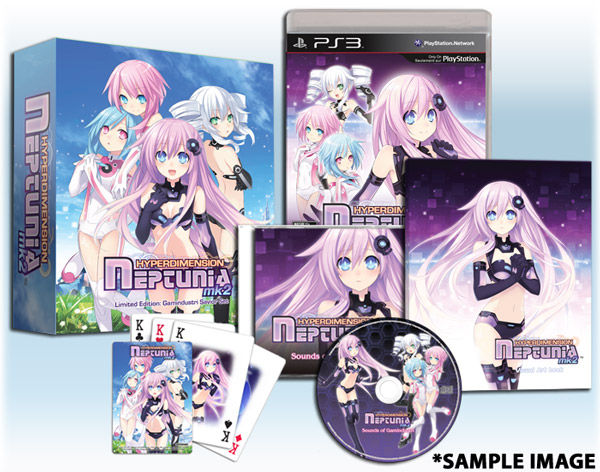
This doesn't mean that I pay over the odds to get "Collector's Editions" of games, though, because I tend to think that for the most part those are a waste of time — or perhaps it's just that I've never really had a Collector's Edition for a game that I felt particularly passionately about. Had I known how much I was going to love Hyperdimension Neptunia mk2, for example, I might have seriously considered spending a bit more and picking up the swanky limited edition that came with a soundtrack CD, an art book and some playing cards. (Yeah, I know the cards are a bit lame, but I love soundtrack CDs.)

NepnepLE-More often than not, though, the super-expensive limited edition versions are for games I have no interest in, like Call of Duty, Assassin's Creed and Skyrim. For sure, these limited editions are often cool, but there's only so many gigantic statuettes that you can scatter around your house before people start asking questions. (Particularly if one of those statuettes is a gory female torso… but let's not open that can of worms again.)

I'm actually fine with this, though, because I've been tending to find that the games I'm most interested in playing are the ones that maintain their value the best — simply because they're often not put out in particularly large quantities and thus often become quite hard to find after a little while. As such, I've come to accept that taking a chance on a new game like this often involves an outlay of at least £20 and may, in a few isolated cases, require payment of a price considerably inflated from what it would have cost when the game was first released. (I ordered a copy of Fire Emblem for Gamecube recently, for example… I'm pretty sure that's not what it cost when it first came out.) The fact that I've had to hunt for these games and occasionally pay a bit more for them than something of an equivalent age that had a wider release makes them feel somehow more "valuable", and makes me feel like my growing collection is something that I can be proud of. I know they're "just" games, but they represent a hobby that I truly love and which inspires me to do other things.

What this "collector's" attitude has meant in practical terms is that I'm now much more inclined to pick up interesting-sounding titles as soon as I become aware of them, rather than when I know I have time for them. This inevitably leads to an ever-growing backlog, of course, but it also means that I have things to look forward to. It's also an approach which works for my personal circumstances at present. In other words, I don't spend a lot of money on other "vices" — I don't drink, I don't smoke, I don't buy DVDs (with the exception of anime that can't be found for streaming online), I don't tend to travel a lot and, by the end of this month, I won't have any car expenses either (apart from any contributions I make to help Andie out with hers). This means that I tend to have a fair bit of disposable income that I don't feel guilty about splurging on my collection, and still have plenty left over for living expenses and to do nice things for Andie.

I like having physical things that I collect. My bulging Steam library also counts as part of my collection, but somehow that big list of games inevitably acquired for a couple of quid during a holiday sale isn't quite as satisfying as seeing that big shelf full of cases. Downloadable games feel more "disposable" somehow, like they won't last; I often find myself worrying what will happen to all these games when, say, Steam or PSN or Xbox Live don't exist any more. How will future generations be able to play awesome stuff like Flower, or Journey, or any of the other titles which everyone raves about now but which are only available via download? (I got around this issue with some of the visual novels I own by burning a copy to disc and printing my own inlay for the DVD case. Sad? Perhaps. But it means I can add them to my shelf with some degree of pride.)

The unfortunate side-effect of collecting physical things, of course, is that you have to find space for all of them, and if you get into full-on "hoarding" mode, where you don't want to trade anything in, ever, then you need more and more space as time goes on. I've currently still got a few shelves free on the other bookcase, but it's starting to get a little bit tight… and then what? Creative packing time.

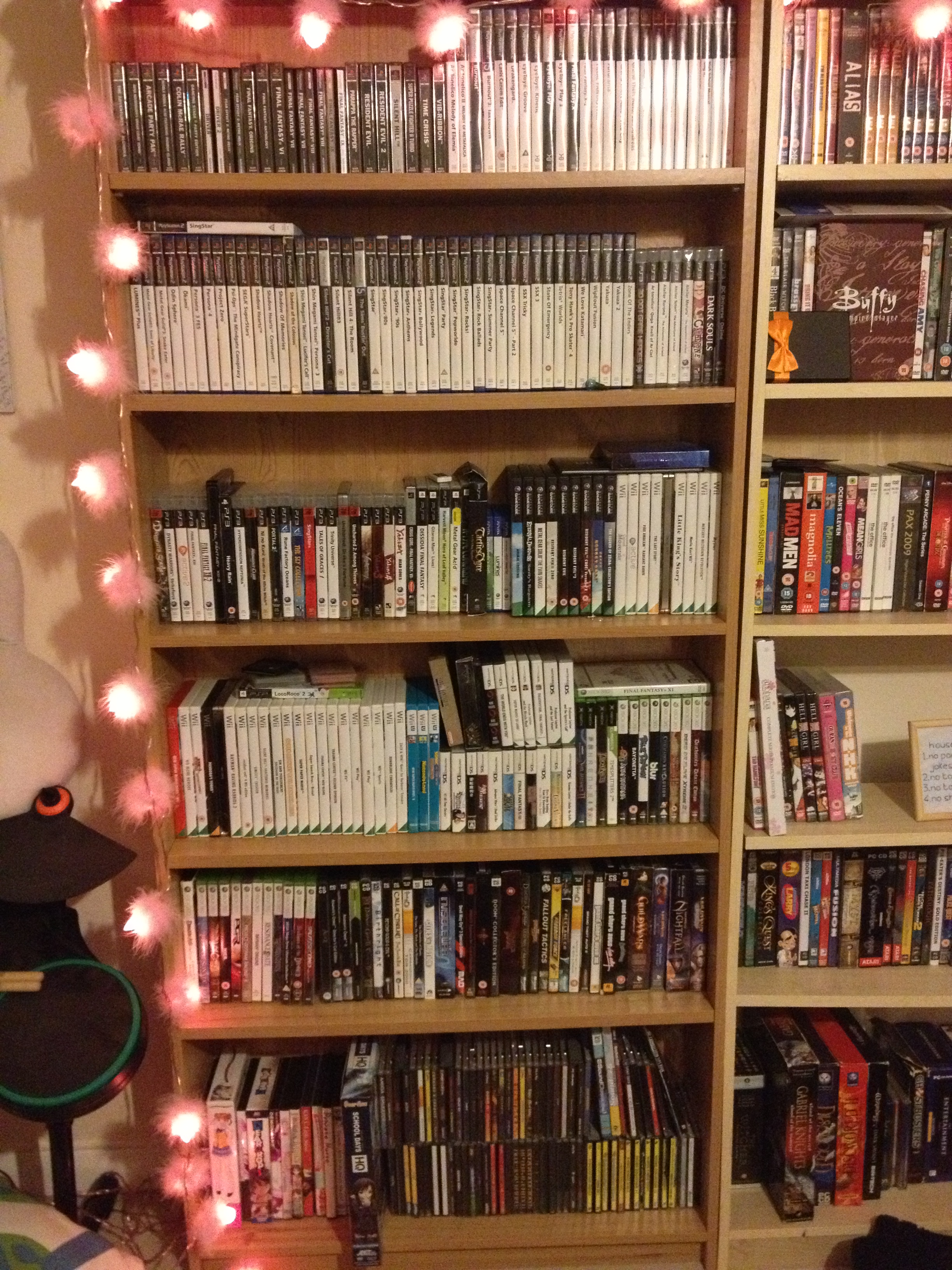
photo (3)If you're curious, here's my game shelf as it stands right now. (The fairy lights were Andie's idea, but they are pretty sweet.) If you click to embiggen and zoom in on the image, you might even be able to see individual titles of at least some of the games. I haven't played all of these, not by a long shot, but they each — even the array of PS2 SingStar titles — represent something with genuine meaning to me. And that's pretty neat to think about.


1109: Killachine

Page_1Another day, another article declaring the console will be "dead" before we know it. Lots of people — mostly analysts and business-savvy people who work in the mobile and social sectors — have been saying things like this recently, so it must be true, right?

Nah. 'Tis bollocks, as usual. While it's impossible to deny the huge impact that mobile devices have had on bringing the concept of playing games to the masses — the actually-not-all-that-good Temple Run 2 recently surpassed a whopping 50 million downloads — to say that they are going to "kill" consoles and/or dedicated gaming handhelds is, frankly, ridiculous.

Why? Because they cater to completely different markets and tastes. Mobile and social games are, for the most part, designed for players to while away a few minutes while something else is going on — perhaps a lengthy dump, a wait for a bus or a particularly boring meeting with a conveniently-placed table to hide what you're up to — while computer and console games are, for the most part, designed for players to sit down in front of for a more protracted period of time and immerse themselves in the experience. There are exceptions in both cases, of course — hence the "for the most part" disclaimers — but, on the whole, that's where we stand. And there's nothing wrong with either aspect of gaming — they both exist, and they will both more than likely continue to exist.

The word "games" isn't all that useful any more, in fact, because the medium it describes is now too diverse to be covered by a single word. I can say "I like playing games" and that will mean something completely different to what someone else means when they say it. When I say it, I mean that I like relaxing on my couch with a controller in my hand, staring at the TV and immersing myself in a game with depth, an interesting story, or both. When someone else says it, they might mean that they have three-starred all the levels on Angry Birds, or that they fire up FarmVille during quiet periods in the office, or that they have fifteen Words With Friends games on the go at any one time. These are obviously completely different experiences, though there can be a degree of crossover between the two extremes — there's nothing to stop someone who, say, is big into competitive League of Legends play also enjoying playing Scramble With Friends against their less gaming-savvy friends and family.

Where we start to get problems is when developers and/or publishers from one group start to try and step across the invisible line into the other group. More often than not, this is seen in the form of mobile and social developers promising a mobile or social experience that will appeal to "core gamers" — in other words, the group that, like me, enjoys immersing themselves in an experience for hours at a time rather than as a throwaway diversion. It is, sadly, abundantly clear that a huge number of developers who try and take this route have absolutely no clue whatsoever how to design a game that will appeal to these players. The article I linked above is from the CEO of a company called Kabam, who specialise in developing a variety of almost-identical "strategy" (and I use the term loosely) games that supposedly appeal to "core" players. All of their games are the same (literally — I tested three side-by-side as an experiment once, and the quests the player was expected to follow were completely identical, right down to the wording) albeit with a slightly different visual aesthetic, and all of them are as dull as ditchwater.

The bewildering thing is that someone, somewhere, is playing these games — and, more to the point, spending money on them — enough to let them be considered a "success". So more and more of them start appearing, each inevitably following the exact same template, making all the same mistakes and pissing off the same people while somehow convincing the same others that reaching for their credit card is a really, really good idea.

Note that I'm not saying here that mobile, social and/or free-to-play games are inherently bad in and of themselves; it's that in many of these cases — particularly those that are supposed to be designed to appeal to "core" gamers — they are designed by people with an astonishingly strong sense of business savvy, and a complete lack of understanding in what makes a game actually fun or interesting to play. In other words, the fact that something is financially successful should not be the only criteria for it being considered "good" — you just have to look at Mobage/Cygames' shockingly awful Rage of Bahamutone of the top-grossing mobile games in the world, to see how this is the case.

No, the problem that we have is that everything new always has to "kill" something else. This flawed logic has been seen with numerous other technologies in the past; laptops would kill desktops, tablets would kill laptops, TV and video would kill the cinema… the list goes on. In very few cases is it actually true. Okay, DVD killed VHS, but that was a simple case of a superior format doing the same thing rather than two vaguely related — but not identical — things battling it out for supremacy. People still use desktops as well as laptops because big screens are nice and more practical in many circumstances. People still use laptops as well as tablets because typing on a touchscreen is still a horrid experience. People still go to the cinema as well as watching TV or DVD/videos because it's nice to see something on a huge screen with room-shaking sound.

Why does everything have to be reduced to binaries? Why does something new always have to "kill" something else, even if it clearly isn't performing the same function? Can't these people just accept that certain parts of the populace are happy with one thing, and others are happy with another?

Ahh, if only.

1108: Countdown to Internet

Page_1We finally get Proper Internet installed in our new flat tomorrow. If you are, at this point, scratching your head and pondering how on Earth I am writing this post when I do not have Proper Internet installed in our new flat already, fortunate circumstances meant that our new neighbours have BT as their service provider and thus have part of their bandwidth set aside as a public hotspot. Because we're also with BT, it means that we're able to make use of this hotspot for free.

You may think that sounds ideal, and it's certainly been better than nothing — without it I'd have spent about a billion pounds on working from coffee shops by now, or have struggled on with a data-capped 3G dongle — but it's had its share of annoyances. The main issue is that our neighbours' router is just slightly too far away for a reliable connection on devices like the iPhone and iPad — it's been fine on my laptop, but my Mac steadfastly refuses to stay connected for more than five minutes at a time. Since my day job requires me to download a lot of stuff from the App Store, I need my phone to have a reliable connection, because apps over a certain size are impossible to download over a mobile data connection — and besides, my mobile data connection has a bandwidth cap, too, which I hit last billing month thanks to the very issues I'm describing here.

The other irritant is the hotspot's "fair use policy", which means that "unlimited" use is, in fact, not unlimited at all — instead, once you hit a certain number of minutes used on your account (cumulative between all devices which have logged in using those details) you get put in a special Naughty Corner for people who use the Internet too much, and disconnected without warning every half an hour. This is especially infuriating if you've been typing an article into a web-based content management system such as WordPress, idly hit Publish without remembering to check if the connection is still active and promptly run the risk of losing all your work. (Fortunately, Chrome seems to cache the body of your text when this happens, but tends to lose headlines, tags and that sort of thing.) I have taken to both copying the entire body of my text before publishing and opening a new tab to any old site — usually Facebook, since I only have to type the letter "F" into the address bar in Chrome for it to suggest that to me and it loads quickly — just to make sure the connection hasn't gone tits-up.

It could, of course, be significantly worse. I've been re-reading some old issues of PC Zone recently, and they hail from the pre-broadband days when getting unlimited Internet access via your phone line was a new and exciting thing, but most people were struggling on with 0845 numbers that charged them the same rate as a local phone call while they were online. The letters page of one issue features a letter from someone who wished that multiplayer-focused games would go away — not for the same reason people say this today (oversaturation) but because, in the UK at least, it was a relative minority of people who could play these games at a practical speed and without their phone bill going through the roof.

I remember vividly trying to get a two-player game of Quake going via a direct modem connection a while back, and it was just impossible to do so. And all the while I was trying to get this going, the phone line was tied up and pissing off my parents. (You young 'uns don't know you're born, I tellsya.) We got direct-connect games of Command and Conquer and Red Alert going a few times, but Quake continually eluded us. It wasn't until I got to university and managed to figure out a way to use our free phone calls between rooms in our hall of residence to fake a Windows network connection that I was able to play a PC-based first-person shooter against another person for the first time. (Not coincidentally, those days spent playing Half-Life against my flatmates Sam and Chris are some of my fondest gaming memories of all time.)

Still, as I say… Proper Internet tomorrow. You don't realise how much you miss it until it's not there. It's such a big part of everyone's daily life now that the fact we used to only be able to use the Internet for short periods of time at specific times of day (phone calls were cheaper after 6pm!) is all but unthinkable. Nowadays, I'm bitching about the fact I can't watch Netflix and Crunchyroll over breakfast.

The perils of living in The Future, I guess.

1107: The Common Room

Page_1When I look back on past experiences, as I am often wont to do, one of the times I look back on most favourably was my time at sixth form. (For Americans, that's the equivalent of whatever you call 16-18 education, and is optional; those who want to go straight in to work or training or whatever can leave school at 16.)

There are plenty of reasons that sixth form was one of the happier times of my life, most significantly being the fact that all of the dickheads who had made a large proportion of my school life a misery left at 16, never to be seen again. I wasn't sorry to see them gone, particularly as their non-presence meant that I was left with just people I actually liked.

Our sixth form was based on the same campus as our secondary school, you see — it was part of the school, in fact — which meant that it was a lot smaller than a dedicated sixth form college and thus the sort of environment where it was completely possible to be friends with (or at least knoweveryone. This was a pleasant feeling; it brought a sense of comfortable familiarity to the daily grind, and it meant that you were rarely, if ever, thrown into an uncomfortable social situation whereby you were forced to work with people you'd never seen before in your life. (I know some people have no problem with that, but as you probably know if you've been reading this a while, I most definitely am not one of them.)

I enjoyed the learning side of sixth form. The teachers were far more informal, willing to let us call them by their first names and, in some cases, confiding in us about students lower down the school that they just didn't like. (One of our teachers pretty much believed that no-one under the age of 15 had any right to exist in public, and could often be seen tutting and shaking his head out of the window at some particularly rambunctious youngsters. Having spent some time at the chalkface myself, I now understand exactly where he was coming from.)

We learned interesting stuff, too. Learning A-Level Sociology, for example, was a completely different matter to learning GCSE Integrated Humanities, which was basically the same subject. We had hardcore textbooks and we wrote essays that included names and dates in brackets, like proper academics.

A-Level English was great, too — I enjoyed the language side far more than the literature side, I have to say — and we got to study all manner of interesting topics like the way children acquire language, pidgins and patois and even taboo language. There was a certain degree of novelty in being able to get away with writing the word "fuck" in an essay.

I think by far my fondest memories, though, are from the downtime between classes, during free periods and those times when we were avoiding going to the utterly pointless General Studies class. (I got an A in its final exam having attended one lesson out of two years' worth.) We'd hang out, we'd eat rather poor baguettes from the coffee shop at the recreation centre on the school campus, and we'd mess around with the "brand new" (rather battered, old and crusty) computers that the (actually) brand new sixth form centre had been provided with.

The computers were a source of constant amusement despite the fact that none of them were connected to the Internet. (The Internet was still in its relative infancy in those days, and having a school-wide network for students to use was unheard of.) The gentleman in charge of the computers was a chap called Adrian, who couldn't have been that much older than us and clearly didn't know the first thing about computers. He'd often berate us for completely nonsensical misdemeanours, and warn us of bizarre things like the fact that dropping paper down the back of the printer would supposedly make it catch fire. (Uh, no.)

We took great delight at tormenting Adrian at every opportunity. He sort of deserved it, because he was an interfering busybody who regularly got in the way of people actually trying to do useful stuff with the computers, and his overly-superior attitude (and complete lack of ICT knowledge) made him a worthwhile opponent. Consequently, we often engaged in various acts of light cyber-terrorism to mess with him. We'd set passwords on the screensavers, set all the computers to play a full-screen video of a chimp having a wee in its mouth (I think it may have been this one, though obviously this was long before YouTube, meaning someone must have brought it in on a floppy disk or CD — I never knew who) before subtly unplugging the mouse and keyboard, and on one memorable occasion we spent lunchtime making a complete game in Klik & Play called Cock Wars, which featured two crudely-drawn phalluses battling it out for intergalactic spunky supremacy, then left it running on every machine as afternoon classes started.

Our crowning achievement in trolling Adrian had to be what we did on our very last day at sixth form. Someone had discovered how easy it was to pop off the keys on the cheap and nasty computer keyboards that were hooked up to our cheap and nasty keyboards, so we had the bright idea of leaving Adrian a little message on one keyboard, just as our way of saying goodbye. Said message ended up being "BOLLOCKSPANTSHOMOCOCK" where once there had been a normal keyboard layout. You'll notice there are quite a few letter "O"s in that little sequence; this, of course, meant that we had to borrow keys from a variety of other keyboards, including those from different rooms. Sadly, we never got to see his reaction, and the Instamatic photo we took of the keyboard turned out to be far too blurry to make out the letters. Boo.

I do sort of feel a bit bad, looking back on those days — I know what it's like to be tormented by teenage charges — but then I remember how irritating Adrian was and how he would completely refuse to listen to someone who actually did know what they were talking about when it came to computers. He was completely unable to listen to reason, and… look, he was just a bit of a dick, all right? You'll have to take my word on this one; most of you will know I don't dislike people lightly. Besides, we never did anything that actually damaged the computers; the only incident that would have inconvenienced him at all would have been the keyboard thing.

Anyway, yeah. Sixth form was good times. I miss those days, but they're a long time ago now.

1106: Nepgagaga Complete... Mk2

Page_1I beat Hyperdimension Neptunia Mk2 tonight, and have now seen one of its seven endings. The one I got tonight was the most fiddly and awkward to get — those who have played the game will know it as the "Conquest Ending" — and was also very, very, dark. Said darkness was all the more effective considering how light and breezy the rest of the game had been; after some 20-odd hours of all-female yuri moe shenanigans in the party, to suddenly be confronted by something that was quite genuinely emotionally affecting was testament to what a good job the game had done in building up its characters' personalities and relationships.

But I shan't talk too much more about the plot for fear of getting into spoiler territory. I do, however, want to make a point of talking about the game itself a bit more, and reiterating a few things I have previously said about it.

The main thing that I would like to say about it is that it's quite possibly the most fun I've had with a JRPG in ages. It was consistently fun, didn't outstay its welcome (a single playthrough clocks in at under 30 hours on your first time through and is considerably quicker if you New Game+ it up after that) and made use of some great (and quite original) systems. It then wrapped the whole experience in a plot that, while a little preachy at times, provided a great opportunity for the characters and setting to shine and show that the world of Hyperdimension Neptunia was far more than just a one-trick pony of self-referential humour relating to anime and games.

It's a stark contrast to the first Hyperdimension Neptunia; I had a huge amount of fun with the original game, but any time I talk about it I feel the need to add a disclaimer that I'm aware of all its flaws and that it was critically panned on release. And that's at least partly justified; if you don't get into the plot, setting and characters of the first Hyperdimension Neptunia, there's little more than a mediocre dungeon crawler with an interesting combat system underneath — probably not enough to hold the interest of someone who is not fully invested in the experience.

The second installment, meanwhile, is quite simply a good game. While it's still got its cheeky, innuendo-filled self-referential sense of humour intact and its tongue firmly planted in its cheek for most of the way through, it doesn't rely on cheap gags and references alone to carry the experience. Beneath the silliness is a rock-solid JRPG with some really cool mechanics.
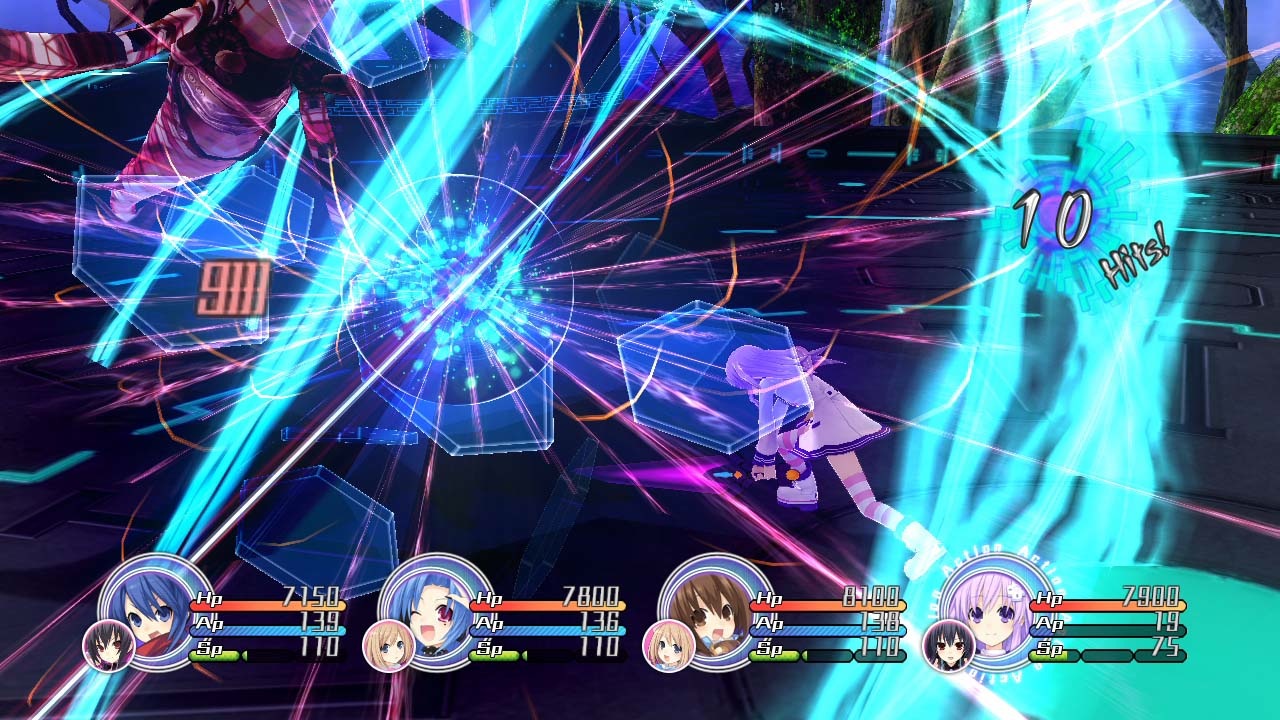
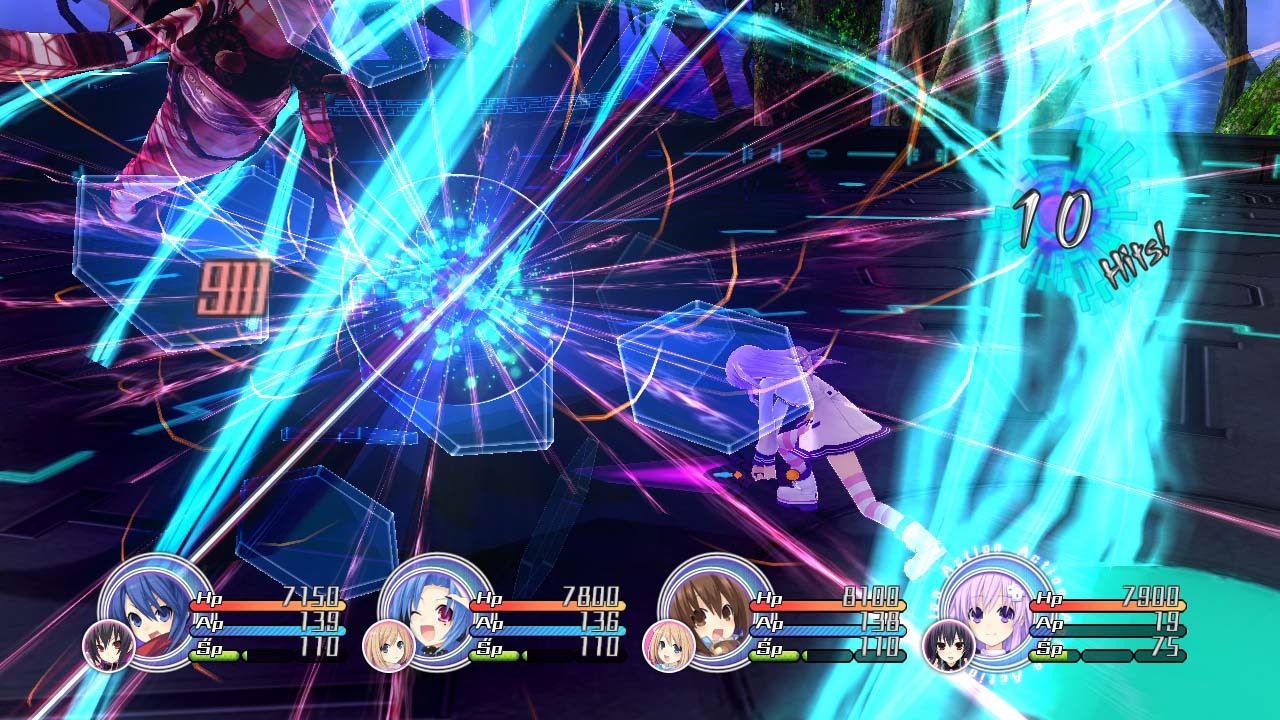
hyperdimension_neptunia_mk2_featured_screenshot_04Let's start with the combat system. Unlike the previous game, which followed a fairly conventional turn-based system coupled with a Xenogears-style combo-making mechanic, Hyperdimension Neptunia Mk2's battle system brings in some additional tactical elements that really change things up.

In the first game, each character had a set amount of "action points" (AP) to expend on their combos each turn, and various achievements such as breaking an enemy's guard or performing a special "combo link" move would give some of these points back, allowing a single turn to last for longer. You could also switch the currently-active member with one who was in the off-screen "back row" using certain special combo finishers, effectively allowing you a free turn if you were careful about your AP expenditure.

The second game maintains the AP system, but provides a degree more flexibility. Each character has a base amount of AP that top up to full at the start of each turn if they used them all the previous turn, but AP can also "overflow" over their maximum if the character deliberately finishes their turn early. This is a necessary tactic to unleash some of the more effective "EX combos" — special moves triggered by specific button combinations, some of which require more than a full AP bar's worth of AP to use.

Alongside the AP system is a new stat called Skill Points (SP). This is a mechanic in which hitting an enemy and taking damage adds to a bar which gradually counts up to 300. Characters' unique skills — now selectable from a separate menu rather than having to be incorporated into a combo — all cost a particular number of AP and SP to unleash, with the more devastating moves requiring more SP. SP skills vary from powerful attacks on a single enemy to area or line attacks, or buff/healing skills to benefit the party. Protagonist Nepgear and the other "CPU Candidate" characters can also transform into their "Hard Drive Divinity" goddess forms by spending 100 SP, but the remaining SP after the 100 ticks down each turn, and they revert to human when SP runs out completely.

There are three different types of move that can be performed in combat: fast moves hit multiple times and thus build up the SP bar faster, hard moves inflict more damage and are often magical in nature, and breaker moves concentrate on damaging the enemy's "guard" bar, which, when depleted, allows the player characters to do more damage than usual. Fighting effectively is a case of knowing what moves to use when — some enemies are more susceptible to magical hard attacks, for example, while others take more damage from multi-hit combos. Building up a big combo also helps Nepgear and her friends to maintain their goddess forms for longer.

Oh, you can move around in combat, too. It's surprising what a huge difference this makes; the simple addition of a mechanic whereby attacks affect a physical area rather than a specific enemy/character means that positioning is very important.
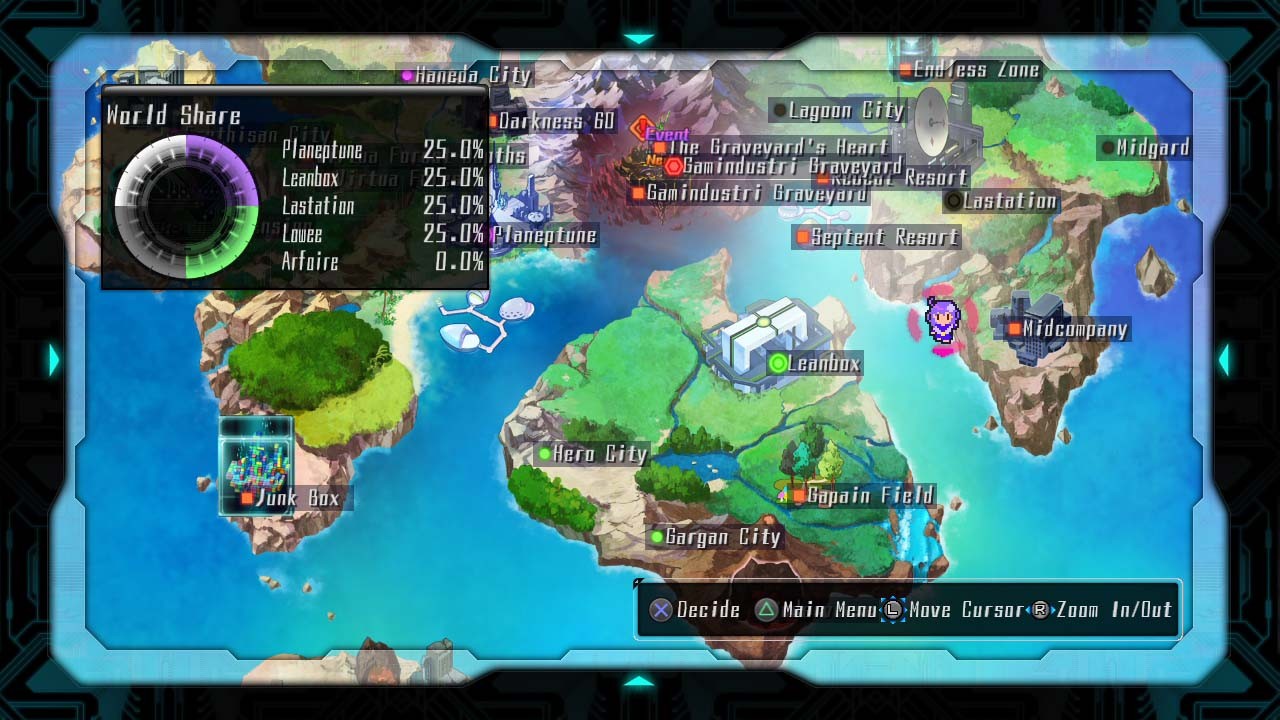
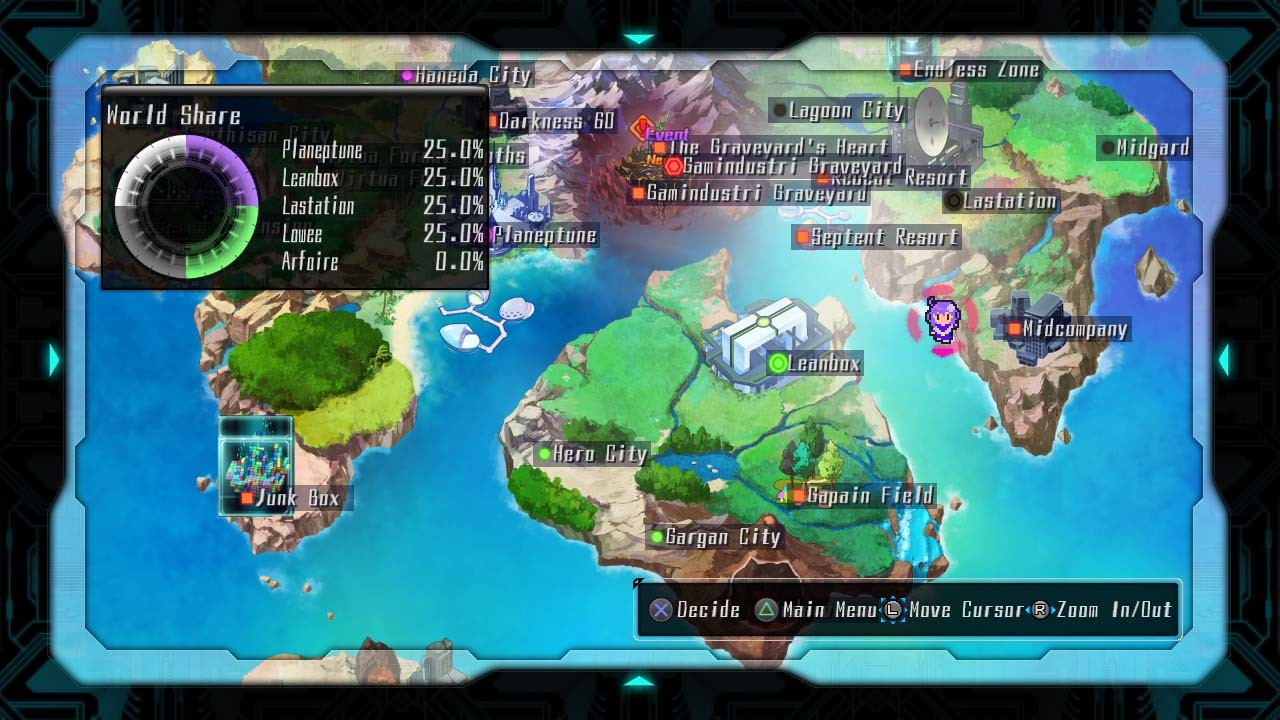
hyperdimenision-neptunia-mk2-01 (1)So that's the combat system. The other interesting mechanic is the "shares" system, which was also present in the first game but never explained at all, despite its manipulation being necessary to attain the "true" ending. The amount of control the game's four "friendly" nations and the antagonist faction have over the game world is reflected by the shares, and forms an interesting (if lightweight) strategic metagame atop the whole experience. There's an overall "world control" chart, which shows which faction has the upper hand — initially the antagonists by a considerable degree — and localised charts corresponding to each nation's capital and smaller, non-interactive towns around their landmass.

You can manipulate the shares by doing quests. Each quest has a sponsor city somewhere on the map — either one of the four capitals or one of each nation's smaller towns — and will increase one faction's shares in that area while depleting another's by the corresponding amount. By manipulating the shares, you can effectively change which faction controls each area, and which area has greater dominance over the world as a whole. It's not always simple, though — sometimes you'll have to run one quest to wrest an area's control away from the antagonists and into its native hands, then another to give these shares to another territory if necessary.

While it may be tempting to simply plough all your efforts into increasing Nepgear's native Planeptune shares as high as possible, this isn't necessarily advisable — controlling more than 55% of the world by a particular point in the story unlocks the aforementioned "Conquest" ending, which is rather traumatic if you're not ready for it!

The shares are used for a number of different purposes. Firstly, they affect various characters' stats — if you're using one of the "goddess" characters from the land of Lastation, for example, increasing Lastation's world share will make these characters stronger while others become weaker. It is possible to keep things nicely balanced if you want to use all the goddesses in your party — you'll just have to eradicate the antagonist's faction altogether to do that.

The second function of the shares is to help determine the ending you get. I've already mentioned the 55% world share that Planeptune requires for the "Conquest" ending; that's by far the hardest one to get, as it involves effectively taking over the other countries through a whole bunch of careful questing. Other endings have less stringent requirements; faction-specific endings simply require that particular capital cities have a strong majority control by their native territory as well as Nepgear having a good relationship with the goddess characters of the area, while the "human" ending requires that you avoid any sort of dominance whatsoever. Finally, the "true" ending, which goes on for a whole extra chapter after the game usually ends, requires that the world is divided up nice and neatly between the four factions, and that the antagonists are wiped out as much as possible.

Neptunia_Mk2_CastYou'll notice I've barely mentioned the plot at all in this post, and that's because I want to make a point about Hyperdimension Neptunia Mk2 — even without its big-eyed anime girl shenanigans, it would be a rock-solid game. It's a crying shame that so many people I've spoken to won't even consider playing it because of 1) its predecessor's poor reputation and 2) its aesthetic and character design. Hopefully the things I've said in this post have at least piqued your curiosity a little — it's a great game and genuinely well worth your time, and if you don't feel like you can stomach the first in the series (which I maintain is fun and entertaining despite its myriad flaws) it's perfectly accessible to newcomers.

I'll see you in Gamindustri!
1105: Braindead

Page_1It's coming up on 1am and I'm struggling of things to write here. But write I must.

Well, let's review how things are going. That's usually a good way to fill a day's post, as nothing especially interesting has happened today. Unless you count letting our pet rats out for a run around in the hallway and going to Yo! Sushi (not at the same time) as being somehow "interesting". I guess both of those are sort of interesting — I mean, I enjoyed them both — but really, you sort of had to be there in both instances.

It's coming up on the end of the first month of 2013, and we're still in that weird sort of limbo where it doesn't quite feel right to talk about the year being 2013. I mean, I'm not sure what I'm really expecting to "feel" different, after all, but a new year is always a symbolic sort of thing, after all.

This year has already started somewhat differently, though, because I'm in a nice flat in the city I wanted to (and indeed used to) live in. I'm close to my friends (geographically speaking, obviously) and have even had them over to visit more times in the last month than I did in the year and a half I lived in Chippenham, which is good and makes me happy. I feel like I'm in a relatively comfortable situation — I enjoy my job, particularly as I get to work from home; I have an awesome girlfriend who puts up with my idiosyncracies and shows an interest in the things I'm passionate about; I have two surprisingly entertaining pet rats to whom I probably attribute far too much in the way of perceived personality; I'm relatively comfortably off money-wise, having cleared a bunch of longstanding debts last year (though student loan is still outstanding and probably always will be, gah); and, to cut a long, tedious and fairly directionless list short, I'm feeling fairly positive about the future.

As anyone who has suffered with one of the various forms of depression and/or anxiety will attest, though, it's not always that easy to keep feeling positive, even though things are generally seemingly going sort of all right. It's easy to lapse into negative feelings or self-doubt, and wonder if the things you're doing are really the right things. It's easy to want to make big, grand gestures to define yourself and feel like your life is moving in the right direction, but at the same time it's difficult to either carry those things through — or even to know if they're the right thing to do in the first place.

I'm content for now, though, occasional lapses in mood aside. It's a pleasant feeling. I know I still have some way to go before feeling "better" — if it's ever truly possible to feel "better" from these sorts of issues — but I at least feel like I'm heading in the right direction. When I look back at some of the posts I made over a thousand days ago, I see someone who was desperately unhappy and struggling to make it through the day for much of his time. It's hard to let memories of bad times like that go, but I'd be lying if I said things weren't massively better than they were way back then.

Onwards and upwards, then. The end of January will see us take ownership of a new sofa that will hopefully fit up the stairs into our flat, have our Internet properly connected and subsequently feel like we're "properly" settled in.

Bring it on 2013, I'm a-ready for ya.