1124: Bovril

Page_1

(with apologies to Spaced.)

I actually intended to write this post yesterday, but instead became embroiled in the unpleasantness I describe in yesterday's post. If you would like to read yesterday's post, which you have probably noticed is password-protected now, please contact me via some other means than this website so I know who you are and I will happily furnish you with it assuming I am happy that I actually know who you are.

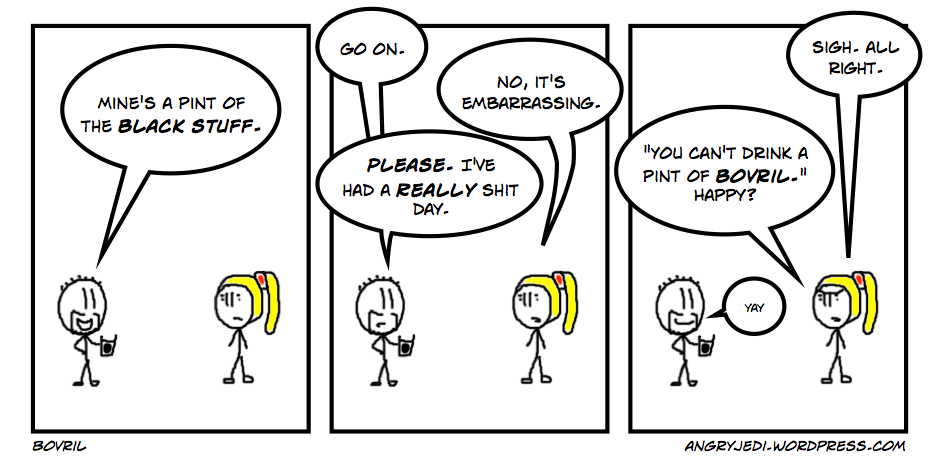
Regardless, here is a blog post about Bovril.

For those who are unaware — which is probably most of you who aren't from the United Kingdom or the Antipodean lands — Bovril is a thick, sticky, black-brown substance that looks like you could probably use it to tar roads with. It comes in small, distinctively-shaped jars with red lids, and is sometimes grouped in the same category as Marmite, which comes in the same shape of jar but with a yellow lid. The key difference between Marmite and Bovril — which are fairly similar in many ways — is that Marmite is made of yeast extract, while Bovril is something to do with beef. (I've never asked exactly what to do with beef it is, as I figured given how little it seems to taste of beef, I'm probably better off not knowing.)

There is another key difference between Marmite and Bovril, however, and that is the fact that you can make Bovril into a drink. Yes indeed; plop a dollop of the black goop into a cup, add boiling water, stir until it turns as black as a moonless midnight sky and then enjoy a… weirdly salty, not particularly pleasant hot beverage that certainly doesn't really taste of beef. (Besides, as I memorably once commented to my former housemate Claire — so memorably that she actually made a note of it, as I recall — "any drink that is beef is just wrong".)

I actually don't know whether or not it's possible to make Marmite into a drink. I guess technically there's no reason why it shouldn't work, but if any drink that is beef is just wrong then surely any drink that is yeast is just even wronger. Except for various alcoholic beverages. Although those tend not to be made of nothing but yeast. Anyway, fuck Marmite. (Not literally.)

You know what is a far better use of Bovril than turning it into a weirdly salty, not particularly pleasant hot beverage that certainly doesn't really taste of beef? Spreading it lavishly on toast. That way you end up with toast that would stick to a wall if you threw it at a wall (but then you wouldn't be able to eat it), and which tastes of something weirdly salty, peculiarly spicy and not at all beefy. It's worth noting at this juncture that amateurs should take care when spreading Bovril on toast because the application of too much Bovril to a single slice of toast when inadequately prepared will lead to that curious feeling where you feel like you don't have a roof on your mouth any more. Once you eat it, obviously. Just spreading too much Bovril onto a piece of toast doesn't magically strip off the roof of your mouth. That'd be weird.

You know what is an even better use of Bovril than turning it into a weirdly salty, not particularly pleasant hot beverage that certainly doesn't taste of beef, or spreading it lavishly on toast and ending up with something that tastes weirdly salty, peculiarly spicy and not at all beefy that would stick to a wall if you threw it at a wall (but then you wouldn't be able to eat it)? Spreading it lavishly on toast and then dipping said black goo-encrusted toast into a piping hot bowl of Heinz cream of tomato soup. (It has to be Heinz, otherwise the magic doesn't work.) What you end up with is a piece of toast that tastes weirdly salty, peculiarly spicy and not at all beefy covered in tomato soup, which makes everything involved in that equation taste approximately 4,000% better through reasons only known to the Food Wizards.

So anyway. That's Bovril. It's weird but sort of awesome, but like Marmite, you will either, as they say, love it or hate it. Try the tomato soup thing before you declare your feelings one way or another, however.
1123: Assholes with Nothing Better to Do

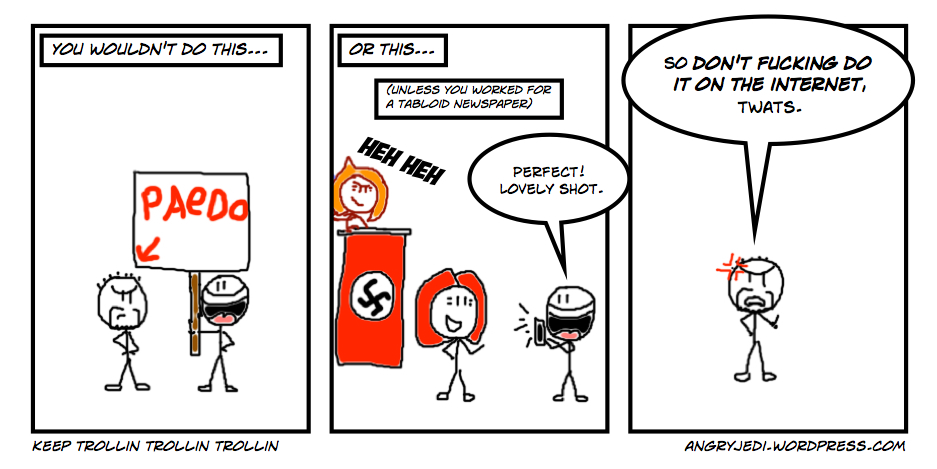
Page_1I don't know if any of you reading this have ever been properly trolled by someone who really knows what they're doing, but I have. Twice.

The first was during my GamePro days, and I believe I've mentioned it on this blog before. Basically there was this dude who frequented the GamePro Facebook page and was a bit of a nutcase, to put it mildly. He'd often come along and comment on updates, talking about how debit cards were somehow evil and various other ravings. He seemed mostly harmless, however, so he was tolerated, left alone and largely ignored by other members of the community.

That is, until I posted a news story about Singapore-MIT Gambit Game Lab's interactive JRPG-style exploration of queer issues, A Closed World. Suddenly, nutjob went on the offensive, posting raving comment after raving comment and directly attacking me, accusing me of being a paedophile and all manner of other slurs. Apparently he was a big fat homophobe as well as a crazy person, it seems, so he got summarily blocked from the GamePro Facebook page, reported to Facebook and also blocked from the main GamePro site despite his best efforts to continue harassing me. This rapid response (largely from me, I might add, without engaging with him) meant that he went away pretty quickly, thankfully, but it was still a somewhat unpleasant experience to go through, even though I knew that none of the things he was saying were true.

Something very similar happened today. Yesterday, I received a bizarre tweet from a complete stranger that wasn't a reply to anything which I had said, but which simply called me a "sick, sick man." I took a brief look at this person's profile and they appeared to be… not the sort of person you'd really want to associate yourselves with, let's say, so I immediately blocked them and thought nothing more of it.

Today I received an email from Rob, the owner of Games Are Evil, informing me that he'd received a voicemail from someone — someone who neither he or I knew, I might add. Apparently they'd made some rather unpleasant allegations about me and had supposedly contacted the authorities. Much like the previous time I was attacked without provocation, my heart almost stopped, even though I knew there was absolutely no truth to these allegations whatsoever. It took me quite some time to calm myself down.

Calm myself down I did, though, and I did a little digging, as I was suspicious about a few things. So firstly I went back and looked at the Twitter account that had sent me the strange message last night. The location on it matched the location the caller was supposedly from, and the first name on the account also matched the Twitter account. Things were starting to fall into place.

I checked the WHOIS records for Games Are Evil and discovered that, as I suspected, Rob's phone number and contact details were recorded alongside the site's other information, which explained how this person was able to contact him by phone when the only information on the site itself is a selection of email addresses. The only question left was why someone would do all this.

And the best answer I can come up with is "because they had nothing better to do." My attacker is, according to his Twitter profile, a member of an anti-blogger group with a spectacularly offensive name whom I'd never heard of prior to today, and it seems they have something of a habit of attacking people in this manner for reasons best known unto themselves. It seems that today, I was just unlucky enough to be the one in the firing line. I'm now not all that worried about this ridiculous turn of events, because frankly I don't really see the "authorities" — if they were contacted at all, which I seriously doubt — trusting the word of someone who voluntarily chooses to associate themselves with a group called… well, this. (Wikipedia link, offensive name. You have been warned.)

Still, it sucks that there are people out there malicious enough to pull shit like this against complete strangers. May they all fall off a cliff and land arse-first on a sharp spike. Cunts.

So yeah. Happy Valentine's Day and all that.

1122: Coke Zero May or May Not Taste Like Ass (Inspired by Mike Minotti)

Page_1Today's topic comes to you courtesy of GamesBeatGameStuff and the Exploding Barrel Podcast's Mike Minotti, one of the finest gentlemen I've ever had the pleasure of meeting and one of the biggest fans of Tales of Game's Presents Chef Boyardee's Barkley, Shut Up and Jam: Gaiden, Chapter One of the Hoopz Barkley SaGa I know.

Today I am going to talk about Coke Zero. I have not drunk Coke Zero for at least a year now, because the last time I drank it it tasted like ass. Not literally like ass, obviously — not that I actually really know what ass tastes like — but like shit. Not actual shit, but… oh, you get the idea. It didn't taste good.

Or at least, it didn't taste good after you drank it. Specifically, it had this weird sort of aftertaste thing going on that made your mouth feel all fuzzy and weird afterwards. While you were actually drinking it — particularly if it was nice and cold and in a can — it tasted surprisingly like Coke. And considerably more like Coke than Diet Coke, which doesn't taste like Coke at all. Diet Coke also tastes like ass. But a different kind of ass. The kind of ass that hits you up front with its flavour rather than lingering somewhere around the roof of your mouth making you wonder at what point during the day a leprosy-ridden hobo with an upset stomach farted directly into your oral cavity and you immediately forgot about it. You know, the sort of ass that the Coke Zero of two years ago tastes like.

As I say, though, I haven't had a Coke Zero for a very long time so any accusations of it tasting like ass may, in fact, be completely unjustified at this point in time, and thus I apologise to any dedicated Coke Zero drinkers (such as Mr Mike Minotti) who may take offense to my remarks. Mr Mike Minotti does raise a good point with regard to Coke Zero, though — given that it has no sugar and is supposedly zero calories because it's made of antimatter or something, why didn't it just replace Diet Coke? Were the Coke overlords somehow afraid that the people who inexplicably liked the taste and tooth enamel-stripping properties of Diet Coke would rise up against them and usher in some sort of new world order of black-brown fizzy liquid?

Actually, they probably were, huh. That's probably why Coke Zero is a thing. It's a thing for people who like Coke more than people who like Diet Coke like Coke, and for people who like Coke more than Diet Coke, but also people who don't like the amount of calories and sugariffic goodness that Coke has in it. Coke for people in denial, if you will. Compromise Coke. The Khitomer Accords of Coke, allowing people who like Coke and people who point disapprovingly at people who like Coke to live in harmony with one another. Peace and tranquility.

Actually, that doesn't sound too bad, really. Now I'm thirsty…

1121: Dreamscape

Page_1I had a "game dream" last night. As any longtime gamer will tell you, these happen with increasing frequency the more you like or have spent time playing a particular game, are often extremely vivid and are usually quite memorable, too.

In my case — and disappointingly for this blog post, which is about to get a whole lot of padding — I can't remember the specific details about said dream. What I can remember, however, is the peculiar combination of games that formed the basis of said dream. First up were Ar Tonelico, which is my new RPG jam having finished Hyperdimension Neptunia mk2; and Hyperdimension Neptunia mk2 itself — hey, I really, really liked it, okay? These two aren't especially weird to put together, since Ar Tonelico's developer Gust also contributed to Hyperdimension Neptunia and was even personified in the game as the character called, err, Gust.

Combining with Ar Tonelico and Hyperdimension Neptunia was the visual novel Kira Kira, which I was reading shortly before I went to sleep last night, so it's perhaps unsurprising it put in an appearance. Kira Kira doesn't really fit with the other two, though — it may also be Japanese, but it's 1) not an RPG 2) not in a fantasy setting and 3) not quite as "crazy" as the other two.

This isn't as bizarre an inclusion as the presence of CD Projekt Red's dark fantasy opus The Witcher, however, which also put in an appearance courtesy of its white-haired protagonist Geralt, who looked very much out of place alongside the colourful characters from the other games.

As I say, I can't remember what actually happened in the dream, so this story is mostly a waste of time, but I thought it was an interesting combination of things that my subconscious chose to put together — particularly since I haven't played The Witcher for quite some time.

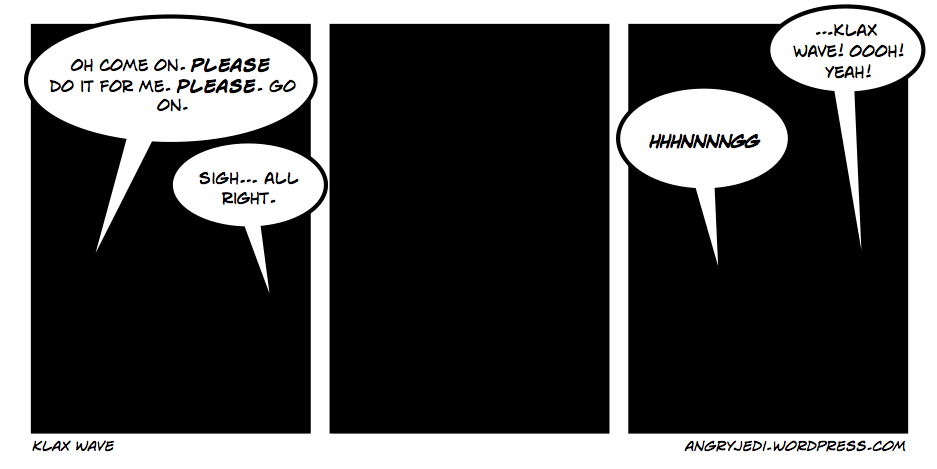
Game dreams don't always blend together experiences like this. Sometimes they're a focused experience based on a single game. Puzzle games used to be particularly bad for this — I remember shortly after getting my very own Lynx (Atari's ill-fated 16-bit handheld which was absolutely enormous) and playing a whole bunch of Klax that I had a number of Klax-related dreams, which mostly centred their attention on my mental image of the female voice that whispered such sweet nothings as "Klax Wave!" and "Yeah!" and "Oooh!" while you were playing. (I think it was the latter that made me go weak at the knees. It was quite a sexy "Oooh!". I have tried to find it on YouTube but instead found nothing but Flight Simulator videos. Apparently "KLAX" is the abbreviation for Los Angeles International Airport. What was I talking about again?)

Um, anyway… Yeah.

Dreams are a strange thing. I am fairly convinced that you can influence your own dreams strongly by what you're doing immediately before you go to sleep (wash your mind out, pervert) but it seems that the most vivid dreams tend to show themselves when you're not specifically trying to think really hard about something, and instead have a mind full of things that have stimulated it. In my case last night, the rather wordy prose of Kira Kira obviously kept my mind active as I drifted off to sleep, and then other influences that I felt strongly about drifted in there, too.

That still doesn't really explain the presence of The Witcher, but eh, I'm tired, so I'm off to read a bit of Kira Kira and then go to sleep for hopefully some more subconscious happy fun times. See you on the other side.

1120: Warm Symbol

Page_1So I finally popped my Fire Emblem cherry today. This is a series that I've been aware of on the periphery of my vision for some time, but have never actually got around to exploring. Which is sort of weird, really, because it's exactly my sort of thing.

Naturally, because I'm an arbitrary sort of person, I am not playing the newly-released Fire Emblem Awakening on 3DS (largely because it's not out yet, and also because Andie is away all week and has taken the 3DS with her) — no, instead, I am playing the Gamecube game Path of Radiance, which I acquired at great expense recently after being informed that I should probably play it before the Wii version Radiant Dawn that I got for a pocketful of change when Game was undergoing its, uh, "troubles" a while back.

Although Fire Emblem Awakening's immensely positive reception from press and public alike has caused the series to enjoy unprecedented visibility recently, it's entirely possible that some of you reading this may, like me, have missed out on it so far. So allow me to explain.

Fire Emblem is a strategy RPG series developed by Intelligent Systems, who over the years have also been responsible for the Paper Mario and Advance Wars series as well as the excellent 3DS puzzle games Pushbloxpullmo or whatever they're called in each territory. It is closer in execution to a strategy game with a linear campaign like Advance Wars than something more explicitly RPG-ish like Final Fantasy Tactics, but the important thing about it is that you're taking it in turns with the enemy to move little dudes around on a grid-based map and beat the snot out of each other, much like a board game.

Even the mechanics are very similar to Advance Wars — certain units may only perform "direct" attacks by standing next to enemies; others may only perform "indirect" ones by standing a square away from their target. Attacking an enemy isn't a guarantee you'll get away unscathed, either — a typical combat exchange between two units allows both attacker and defender to strike, assuming the defender survived the initial blow, of course.

I often find strategy games somewhat daunting as I'm not very good at them, but the relatively little I've played of Path of Radiance so far does a good job of introducing concepts to you very gradually and letting you explore them for yourself. At the core of the combat system is a sort of "rock, paper, scissors" system whereby characters with swords are better against ones with axes, characters with axes are better against those with lances, and characters with lances are better against those with swords. This is gradually built upon with ranged combat, mounted units, magic-using units who can cast spells using a staff, static ballistae on the battlefield and numerous other considerations. It eventually — presumably, anyway, I'm only four missions in — builds up to something of satisfying complexity, but which remains straightforward enough to be easily understandable for even rookie wargamers.

Then there are the interesting other mechanics laid atop these foundations. In maps based on towns, for example, you can spend a turn "visiting" any building with an open door, which leads to a short conversation with the inhabitant and usually an item. It also secures that building and prevents the enemy from destroying it; conversely, an enemy who gets to an open-door building before you will raze it to the ground, preventing you from getting at the goodies within and making you feel bad for the residents in the process.

And, of course, there's the series' trademark: permadeath or, in other words, if you lose a unit it's gone forever. This is a thorny issue for some — some believe that it adds an extra layer of excitement to the game (I'm inclined to fall into this camp) while others simply find it frustrating. Others still find themselves appreciating the permadeath system, but restarting any mission they lose one of their units on — a point which Matt's blog post linked above argues may be missing the point a little!

I'm a fan of the permadeath system. The last game I played that was vaguely like Fire Emblem was Aselia the Eternal, which featured a similar system whereby if you lost a particular character, they were gone forever. I managed to get all the way through the entire game (with a few tactical reloads, admittedly) only using one single unit in the final battle. (Her sacrifice was worth it.) I tend to find that a permadeath system is best paired with a strong sense of characterisation, however; for some people, the feeling of having nurtured an awesome character up to level amazing is enough, but for me I like to know who this person is before I feel bad about losing them. It's something that Aselia the Eternal did particularly well with its incidental scenes between its protagonist and his troops, and it also looks like Fire Emblem will be this way, too.

I'm very early in the game so far but I can tell it's going to be a pretty cool experience, plus its extremely linear mission-based nature means that it's friendly to being played alongside other stuff and has natural "break points" to stop, which is good. I will probably play it alongside Ar Tonelico and the other bits and pieces I'm enjoying at the moment, and then move on to Radiant Dawn when I'm done. By the time I'm finished with that, you never know, the 3DS Awakening might be out over here in Europe!

1119: My Deep-Seated and Irrational Annoyance at Clichéd Rhythmic Patterns

Page_1I have, as the title of this post suggests, a deep-seated and irrational annoyance at clichéd rhythmic patterns.

By clichéd rhythmic patterns, I mean two specific rhythmic patterns. These are as follows:

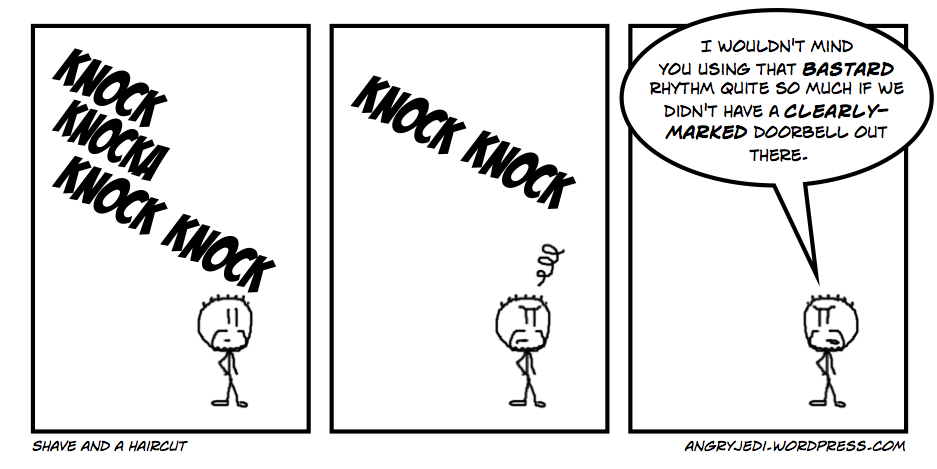
Screen Shot 2013-02-10 at 22.49.17…also known as "knock knock-a knock knock… knock knock" or "shave and a haircut, two bits" (don't look that up on Wikipedia like I did, you'll fall into one of those Internet research rabbit-holes and end up reading about Denglisch when you're supposed to be doing something else) and its best friend:

Screen Shot 2013-02-10 at 22.52.34…also known as "bang, bang, bangbangbang, bangbangbangbang, bangbang" or "that annoying football rhythm".

(Incidentally, you can tell how much these rhythms annoy me from the fact that I took the time to use Logic to actually write them out for inclusion in this blog post. And if they're wrong… well, I don't care, because I hate the fucking things.)

I have absolutely no idea why these two rhythmic phrases irritate me quite so much, but it is sufficient to put my teeth on edge any time someone uses them in any context, whether they're drumming their fingers idly, knocking on my door or hitting a drum. Actually, that's not quite true; in the case of the second one, I became particularly irritable towards it when I was a music teacher and the various little scrotes I was teaching thought it was both hilarious and incredibly clever to use it every time I asked them to make up a rhythm of their own. (It also, by tenuous extension, brought back painfully embarrassing memories of a year 7 music class back when was a pupil, where my friends and I thought it would be awesome to recreate the Pink Panther theme using a set of Indian bells we had and then building the rest of our piece off that. Unfortunately, we didn't get any further than the initial "ding ding-di-ding ding-di-ding" bit in our rehearsal, leading to a mortifyingly awful performance to the rest of the class that was almost completely improvised.)

But yes. Apart from that, I'm not entirely sure why these two rhythms irritate me quite so much, but they really do. I have a suspicion it may be something to do with my own attitude towards creativity and always wanting to see and hear new things. I feel a little uncomfortable when certain things repeat themselves — I feel odd practicing the same piano piece for several days in a row, for example, especially if people are listening; and I even feel peculiar if I watch a stand-up comedian's DVD and I recognise some of the material they've used from previous shows. (Bill Bailey, one of my favourite comedians ever, is somewhat prone to this… though in his case he often starts off a routine in the same way as in a previous show and then veers off in a completely different direction, which is a very effective method of making the audience pay attention.)

With that in mind, then, I think my negative response to the two rhythms above may well be nothing more than me simply wishing that people would be a bit more creative when they're banging on things rather than using these age-old rhythms that have seemingly been passed down from generation to generation for the sole purpose of irritating people like me.

Or there may simply not be a reason at all. It is an irrational annoyance, after all.

Basically, what I'm trying to say is very simple: if you bang on my door using one of the above rhythms, I will not be held responsible if I accidentally end up banging on your face using the other. With a hammer.


1118: My 1,118th Blog Post Can't Be This Cute

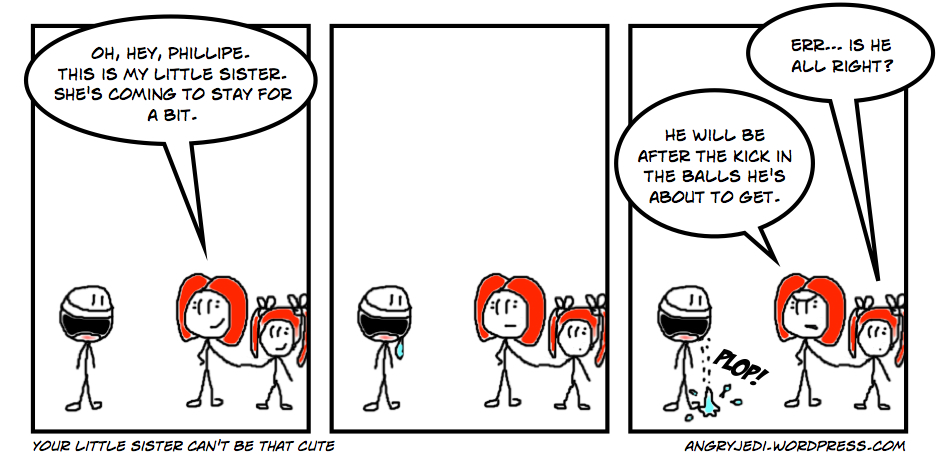
Page_1Anime is full of surprises and frequently subverts your expectations, prejudices and preconceptions. In few places is this more apparent than in the recent show Oreimo, also known as Ore no Imouto ga Konna ni Kawaii Wake ga Nai or, literally in English, My Little Sister Can't Be This Cute.

Now, with a title like that, you'd be forgiven for thinking that this show is one of two things — or perhaps both. One: moe moe happy funtimes featuring a wacky little sister running around being cute. Two: incestuous "sister complex" story in which male protagonist ends up falling for his little sister through various shenanigans they get up to together. While I can't speak for number two in the show as a whole — I've only watched four episodes so far, so I'm still half-expecting them to pull the frequently-used "but they're not blood relations!" trope out of the bag (please don't spoil it even if that is the case!) — number one couldn't be further from the truth. Far from being a wacky show about nothing in particular as I expected it would be, Oreimo is, it turns out, an oddly personal show about being true to oneself and accepting each others' idiosyncrasies.

The concept is fairly straightforward. The main character Kyosuke is a 17-year old high school student who has had a somewhat strained relationship with his 14-year old sister Kirino for some time now. The reasons why they have been struggling aren't explained, at least at the start of the show, but it's clear that there's a certain degree of tension between them, whether that be the usual case of siblings resenting one another or something more. Kirino is a model student — she's pretty, she's popular, she gets good grades and she's a top athlete — and she also makes a lot of money doing modelling work for various catalogues and magazines.

But she has a secret.

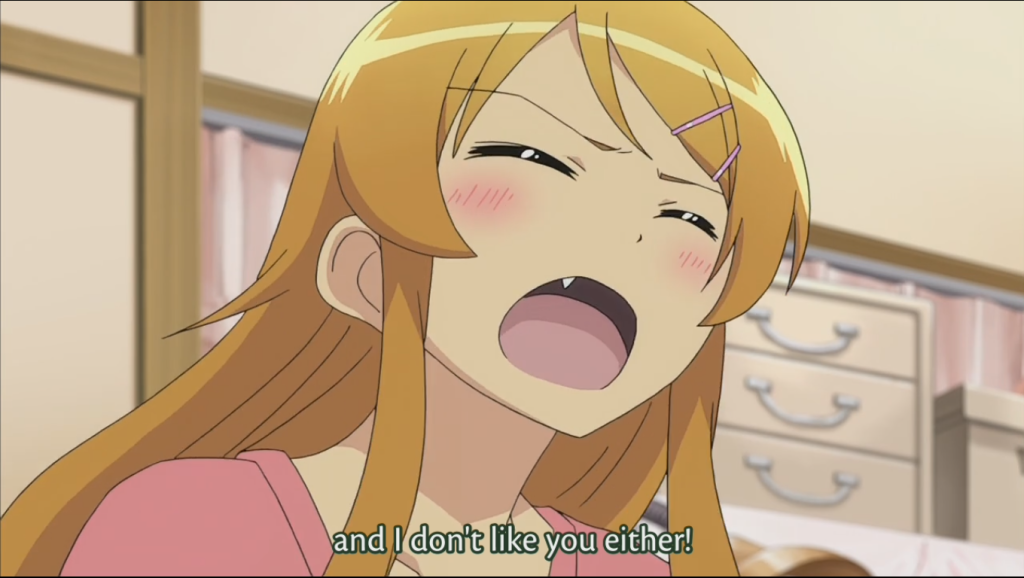
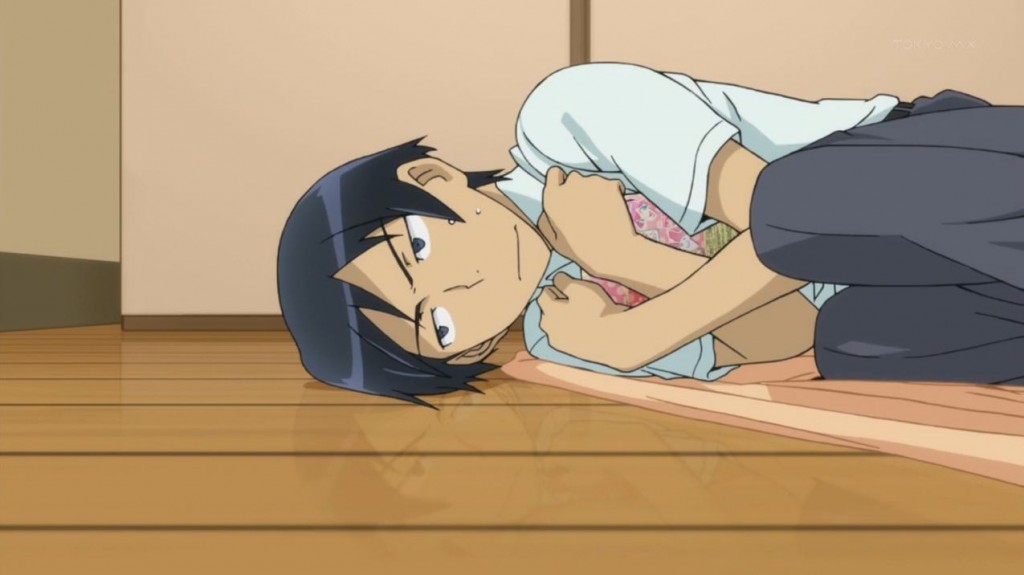
Oreimo12-23Early in the first episode, Kirino makes a bold move. She comes to Kyosuke's room in the middle of the night, wakes him up and confesses something that she's been hiding for a long time: she's a secret otaku with a hidden closet full of anime, manga, doujinshi and eroge — all paid for with her modelling earnings — with a particular focus on one particular (fictional) magical girl show, and also on anything related to little sisters. Kyosuke initially isn't sure how to react, but it becomes clear that Kirino wants his help, even though her own pride and somewhat tsundere nature prevents her from stating this outright. He agrees to help her work out how to handle her secret "addiction" and figure out what to do with her life, because the stress of leading a "double existence" is starting to take its toll on her, as she feels uncomfortable showing the world who she really is.

As the series progresses, Kirino learns to make friends who are into her secret hobby, and comes to trust them. Kyosuke watches with some degree of pride as he sees his little sister starting to open up and be herself, but it isn't an easy ride — particularly when her two worlds start to collide as the siblings' parents and Kirino's non-otaku friends start to find out what has been going on. Kirino faces constant judgement and scorn from people who look down upon her hobby, and has a habit of becoming defensive and lying as her first reaction, often leaving Kyosuke to take the fall — something which he usually resigns himself to without complaining, even when it involves (as it frequently does) him being kicked in the testicles.

The face of a defeated man.

When it comes down to it, though, Kirino will often (eventually) stand up for herself and say what she believes in; she's passionate about her hobby, and over time begins to accept the fact that there will always be people out there who will judge her for it — often without knowing anything about it. Kyosuke, meanwhile, comes to understand his little sister a bit better, and also becomes something of a focal point for all her friends and acquaintances when various problems arise.

The nice thing about Oreimo that I've seen so far is that, a little like the excellent series Welcome to the NHK, it deals with subject matter that divides opinion but does so without being judgemental or preachy about it. You don't get the impression from watching the show that it specifically wants you to think that being an otaku is either okay or that it is vile and shameful; it simply presents things the way they are, places a strong focus on the concepts of people's "public" and "private" faces, and others' reactions to those faces. Far from being wacky, silly fun times, it's actually proven so far to be an interesting, very human story that doesn't hide behind moe shenanigans despite having, as the title suggests, a super-cute female lead. (It could probably do without some of the occasional curiously-angled shots of said super-cute female lead's bum, admittedly, but… well, there's not much you can do about that, really.)

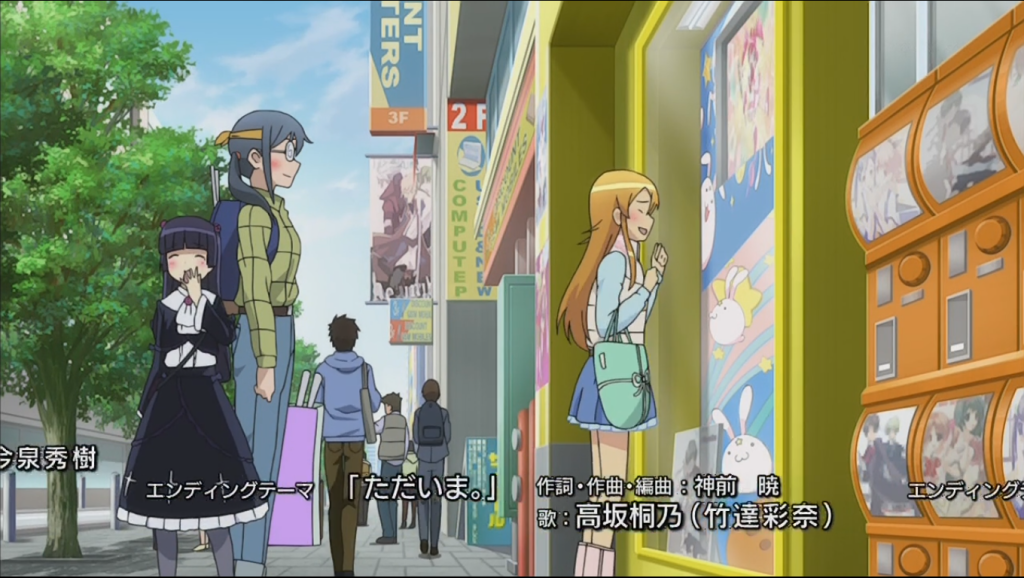
Oreimo12-42Anyway. Thus far I've been enjoying it a lot, and am looking forward to seeing how it continues. Further reports will undoubtedly follow.

1117: Another Game with a Barely-Pronounceable Title

Page_1If you had no idea what genre a game called Ar Tonelico: Melody of Elemia fell into, it's highly likely that you'd guess that it was a JRPG. And you'd be absolutely correct. It's a title that doesn't make a whole lot of sense if you know nothing about the game, though to its credit, unlike many other barely-pronounceable game names, its relevance does become apparent almost immediately. However, it's still pretty much the exact opposite of the rather literal naming conventions adopted by social and mobile games these days, which tend to be called things like "City Wars" and "Farm Town" and "Slots".

Strange name aside… yes, I've been playing the PS2 game Ar Tonelico: Melody of Elemia, hereafter referred to as Ar Tonelico to save me typing out that whole title every time. I knew literally nothing about this game prior to firing it up for the first time, but had been urged to do so by a friend over at the Squadron of Shame who has been accompanying on my journey through the oddest and quirkiest undiscovered treasures that the Japanese role-playing game genre has to offer. I promised him that the next game I played after I completed the crap out of Hyperdimension Neptunia mk2 would be Ar Tonelico, so here I am.

So what's it all about? Well, if you live in the UK, don't count on any help from the box or manual — the game never saw an official release in the UK despite being fully-translated into English, and instead your best bet for a copy these days is Italy, of all places. It's rather peculiar to think of Italians playing JRPGs, but there you go.

Anyway. Ar Tonelico initially appears to be a rather straightforward JRPG with a floppy-haired, youthful protagonist wandering around the world seeking adventure on a Grand Quest to Save the World. And on the one hand, it is. On the other hand, however, it does a lot of very, very interesting things that have really made me sit up and pay attention, even only about four hours into the whole experience.

For starters, there's a deep crafting system to explore. This is a game from Gust, developers of the Atelier series (which I am yet to try but have all the PS3 incarnations of on my shelf), and their specialism is deep crafting systems. In Ar Tonelico's case, it takes the form of the peculiarly-named "Grathmeld" system, in which you have to find recipe cards around the world and in shops, find ingredients inside chests, shops and monsters and then fuse them all together using crystals. When you craft, you get a fun little animated sequence of your character Lyner assembling whatever item it is, then if it's a new item he has a fun little conversation with one of the other characters about it, and a discussion often ensues about what the new item should be called. You can't freely rename items, which is a shame, but you do get to choose between a couple of different suggestions, and the game then tracks which character named which item, which is a nice touch.

Perhaps the most bewildering aspect of the game is its battle system. For the first hour or two, it's a very conventional turn-based "attack, magic, item" affair. But as soon as you encounter the "Reyvateil" characters, also known as Song Maidens, things start to get interesting.

Reyvateils sit in the back row of your party and don't follow the usual turn order. Instead, they act like a mage or priest in an MMO, sitting behind the front row of fighters charging up spells (or Songs, in this case) to have various effects, while at the same time the front row is knocking seven shades of shit out of the enemy and ensuring the Reyvateil doesn't take damage. A strong focus is placed on the party's "harmonics" with the Reyvateil, with this represented by a bifurcated horizontal meter at the bottom of the screen. The left half of the bar fills when the front row lands successful attacks and drops when they take damage. The right half of the bar fills as the Reyvateil chants to charge up a spell. Should the two halves meet, the whole party goes up a "Harmonic level", which means the Reyvateil's spellcasting speeds up and the front row gain access to stronger attacks. The Harmonic level at the end of the battle also determines what rewards you receive.

There's another consideration in that system, which is the cap on the Harmonic level. At the start of each battle, you can only level the Harmonics up to 2; to increase the cap, you have to let the Reyvateil unleash her magic and deal enough damage for a separate bar to fill and open up the next level cap. The trouble is, at least early in the game, most enemies are absolutely obliterated by the Reyvateil's Song Magic, so you'll sometimes find yourself deliberately pulling your punches a little in an attempt to earn some higher Harmonic levels. It's an interesting system that will doubtless come into its own in more difficult battles later.

By far my favorite part of the game so far, however, has been the "Dive" system, where the protagonist Lyner is able to enter the subconscious of a Reyvateil and learn more about her. A Reyvateil's subconscious is split into ten distinct levels, each of which is made up of a number of different locations. Lyner must spend "Dive Points" earned through battle — which represent the trust the Reyvateil holds in him — to trigger various events, with revelations and strange happenings often unlocking new spells for the Reyvateil to cast in the real world. These vary from simple attack magic to "green magic" spells which can be cast outside of battle, usually to solve puzzles.

In gameplay terms, it's an elaborate means of unlocking abilities. But in story terms, it's a way of literally doing a deep dive into a character and discovering their innermost secrets. The scenes I've seen already have been heartfelt, interesting and help make me interested in the character. I'm very intrigued to see how they continue as the game progresses, as it's clear that the whole point of the "Dive" system is to help the Reyvateil come to terms with repressed memories and emotions in a vaguely similar manner to Persona 4's "Midnight Channel" — or perhaps just to peek in on some embarrassing things they'd rather forget about.

At four hours in, that's about all I can say so far, but I'm enjoying it a great deal. It looks super-dated — it's in 4:3 aspect ratio running on the PS2 and it pretty much looked like a PS1 game in the first place — but none of that matters to me. It is worth noting that it has an astonishingly good soundtrack, and that the English dub appears to be handled by the entire cast of Persona 3, which is fine by me — if a little odd to hear voices I recognise playing characters I'm less familiar with. (If you're wondering why I'm not playing with the Japanese voices, which are also included on the disc, it's because the FMV sequences in the game use the English voices, and it would be somewhat jarring to go back and forth between the two. The game also isn't fully-voiced, either, so it doesn't make as much difference as it would have in, say Hyperdimension Neptunia mk2.)

I'll be sticking with this one, then — though I may well be splitting my time between it and the Gamecube version of Fire Emblem when that eventually arrives. (The new 3DS version isn't out here until April, and I'm told I should play the Gamecube version before the Wii version that I scored for a song when Game was in trouble a while back.)

1116: Neptunia Master System mk2

Page_1I finally completed the shit out of Hyperdimension Neptunia mk2 tonight. And by that I mean I did pretty much everything it was possible to do in that game. I feel confident in saying it's one of the most consistently fun JRPGs I've played for quite some time — not necessarily the best, no, but certainly one that most definitely has its heart in the right place.

It was a really interesting game on the whole, and one that clearly knew its (small, niche) audience very well. I found it particularly interesting that instead of making a direct sequel to the first game, which apparently sold pretty well in Japan but bombed over here due to appalling review scores, they instead chose to reboot the setting and characters, creating a game which newcomers could happily start with but which those who played through its predecessor could appreciate on a deeper level. Neptunia mk2 wasn't a retelling of the first game's story — it was a completely new tale that pretty much assumed the first game didn't happen. This was a little jarring at first, as characters showed up whom I thought should know each other having played the first game, and the characters IF and Compa were obviously retconned to be childhood friends. Over time it ceased to matter, though, and it became clear that Neptunia mk2 was intended to be taken on its own merits without the baggage of its predecessor — a sensible choice, I'm inclined to think.

Besides proving to be a good jumping-on point for the series (the physical package's apparent rarity aside), Neptunia mk2 also dialed back its reliance on rather forced game and anime references for its humour, instead opting to focus on its distinctive and entertaining (if rather archetypal) characters. The one notable exception to this was in the game's "true ending" path, where there's a wonderful scene shortly before the final boss that features the "older sister" characters (meant to personify the seventh-generation consoles plus the ditzy Neptune/Sega, who has no idea what she's doing and is more interested in cookies than ruling the world) arguing over whose console is best, while the "younger sisters" (who are really the main characters of the game, and who personify the current-generation handheld systems… and, err, the Game Gear) sit and play Monster Hunter together while talking about how awesome Shenmue was.

A side-effect of the above is that the game's endearing sense of humour can be enjoyed by pretty much anyone, regardless of your knowledge of the video games industry as a whole. Those who have been playing for a long time, however, will appreciate the numerous sly nods and winks throughout — an area called Atari Marsh; a city called Sim City; characters called Cave and Falcom; and enemies that resemble everything from Tetris blocks to Dr Kawashima's freaky floating head from the Brain Age/Brain Training series.

The overall plot, which is essentially an anti-piracy, pro-"reward the creators of the content you enjoy" parable, initially appears to be a bit heavy-handed with its message, but this is nicely subverted by the time the previous game's protagonist Neptune puts in an appearance and berates the other characters for "sounding a bit preachy and stuff". It has a good narrative arc, building to a suitably dramatic conclusion and one of seven different endings — including a shockingly dark one that is quite impressive in its brutality. (Though it could possibly have gone even a bit further than it did.)

One of the most interesting things about it is its female-centric nature. While there's a lot of fanservice in it — within five minutes of starting, there are three quasi-"bondage" scenes; several characters are prone to flashing their panties at every opportunity (and the in-game camera is happy to encourage this); and a number of the "event" pictures feature a childishly amusing "jiggle" feature that… well, you can probably imagine — it's difficult to look on the game as being particularly anti-women.

In fact, it's very positive about a lot of things to do with sex and gender. The whole (enormous) party of playable characters is made up of women, for starters, and while many of these use anime archetypes as the basis for their personality, they're all their own individual characters with their own quirks and ways of interacting with each other rather than being nothing but shallow stereotypes. This team of ass-kicking women doesn't once rely on a man to help them out throughout the course of the entire story — and in fact, the few faceless appearances that men do make throughout the plot tend to depict them as shallow, image-obsessed borderline sex pests, with the exception of the boss character Brave, who is more of a Transformer than a man anyway. (Any good that Brave does for the male gender's representation in the game is immediately undone by Trick, however, who it's not an exaggeration to say is a revolting robotic paedophile, and one of the most delightfully odious characters I've had the pleasure of virtually beating up for a long time.)

There are also no unnecessary romantic scenes in the game, though there's a subtle implication that all the main characters in the story are gay and that there's nothing wrong with this whatsoever. (Because, you know, there isn't.) This doesn't mean lesbian melodrama or anything, either; rather, it's simply accepted that some of these girls like each other a bit more than others, and this is depicted in the way that they interact with one another with obvious tenderness and care. It's clear that these characters and their relationships have been written with genuine affection and a desire to make them believable people rather than just tits and arse, and I came away from the experience feeling like I had a good understanding of who they were, who they got along with the best and who they clashed with. It was one of those experiences where the final credits rolled and I felt like I was going to miss the characters, which is always a good sign.

So that's that. It's all done. No more Neptunia… at least until March, when the third game in the series arrives and I will inevitably become obsessed all over again.

1115: Twittertwat

Page_1Quite a few people I know have quit Twitter in the last year or so. A few of them have also come back again, and some have gone through this process more than once, but a few have gone, never to return, either. Fortunately, in the cases of people I'm actually interested in staying in touch with, I have alternative means of contacting them, and Twitter was only ever a way of easily sending short messages to them — a global texting service, if you will.

I use Twitter a lot, for engaging in conversations, posting links to my work and just generally being part of the global community. But over the past few weeks, I'm starting to understand why increasing numbers of people are jumping ship.

The experience is, of course, as with so much else on the Internet, exactly what you make of it, and I've taken fairly ruthless control of my experience by simply blocking people I find objectionable and/or annoying. Not necessarily people who are being abusive — I appear to be a relatively inoffensive tweeter that doesn't attract trolls compared to some — but people whom I just don't want to hear from. (If only real life were that simple.)

Even with doing this, though, it's still increasingly frustrating when the entirety of my timeline is taken up by some sort of snark on one subject or another. Today, there were several subjects — a report by Edge about the next-generation Microsoft console which framed a bunch of rumours as if they were confirmed facts; the ECA announcing that HipHopGamer was going to be their new ambassador; and something about J. J. Abrams and Valve. I've only really dipped in and out of Twitter today, and the snark in relation to all of these things was unbearable then, so I can't imagine how irritating it would have been had I had a client open all day.

This is the thing, though. There's nothing really fundamentally wrong with having strong opinions on matters such as those mentioned above — which will, of course, mean nothing to people who don't follow the games industry — but Twitter is not a particularly good place in which to have discussions about those opinions. It's fine for raising awareness of something — perhaps posting a link to a relevant story — but when people start trying to have "debates" about these things, it all sort of starts to fall apart a bit, really. Any pretext of rational discussion is inclined to quickly go out of the window in favour of short, snappy arguments, and the ease with which a tweet can be posted means that things are often spoken in haste without any real thought. To me, the very benefit of arguing a point using the written word is that you can take your time over it and consider it carefully; not so if you're in a Twitter argument.

I haven't been involved in any of these discussions/debates/arguments as I know how they inevitably go. I also know the people to avoid engaging with by now — those who seem to take offense at everything it's even slightly possible to take offense to. Even though I don't engage with them, though — and in many cases, as mentioned above, have blocked them — it's still exhausting to feel that there are certain subjects which just can't be broached; certain turns of phrase which can't be used; certain words which are off-limits. (And I'm not talking about anything explicitly offensive like racial epithets or anything like that; I'm talking about words which these people specifically choose to interpret using the worst possible meaning rather than the tone and context in which they were intended.)

I'm rambling a bit, I know, but the gist of the matter is that this week I've come closer to quitting Twitter altogether than I have ever done. Twitter has been an important part of my life for a long time, a key way in which I stay in touch with a lot of my international friends and the means through which I first met Andie, but I'm beginning to feel that "honeymoon" period is over. It doesn't feel like the warm, welcoming, positive community it used to be. Perhaps that's just the people I follow, and I'm long overdue for a ruthless unfollow-and-block session — or perhaps people really are being more snarky than they were. Either way, the negativity is starting to get to me a bit.

It's doubtful that I will quit Twitter at any point in the near future — I still have too many friends who use it as their primary means of communication, and it's still the best way to quickly and easily share things that probably don't really need to be shared with the world — but I just found it mildly interesting that this is the closest I've ever come to actually ditching it.