#oneaday Day 884: No more resisting. I am a Zelda fan

I have written about this a number of times in the past (most recently exactly a year ago, weirdly), but I think it's time to admit once and for all that I am, in fact, a fan of The Legend of Zelda.
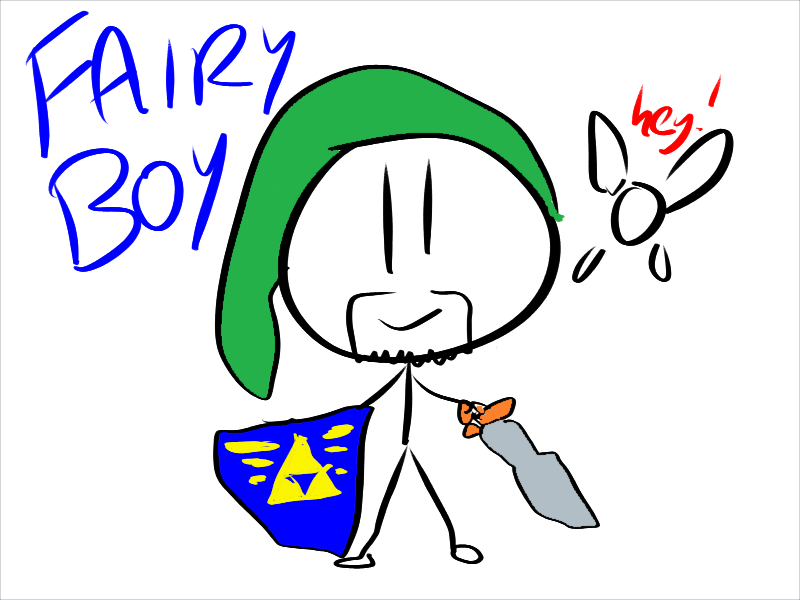
This is not a controversial opinion, I know, but let me talk about it a little bit, because I find my own response to the series kind of interesting. I have, over the years, convinced myself that I am a bit "meh" on Zelda as a whole, and I'm not entirely sure why, given how I've always had a good time with it. With the recent Switch 2 remake of Ocarina of Time, though, there really is no mistaking it: The Legend of Zelda is, to me, one of the greatest series of video games ever created, and continues to be wonderful to this day, with nary a misstep to its name (aside from the CD-i games, but those don't really count).

(This is not an invitation for you to tell me how much you don't like Breath of the Wild and Tears of the Kingdom. I don't care.)

I mentioned in my post last year that a lot of my… resistance, I guess you'd call it? Yeah. A lot of my resistance to the series over the years stems from that period when Final Fantasy VII and Ocarina of Time were both the "big games" that my friends and I were playing through at almost the same time.

Final Fantasy VII had blown us all away with its spectacular, cinematic, deep and lengthy story and — to us as RPG newbies, anyway — unusual, interesting gameplay. Ocarina of Time, meanwhile, while undoubtedly a good game, just didn't feel quite as… impressive to our shallow, ill-informed eyes. We used to joke that after playing Final Fantasy VII, my friend Woody refused to believe that any game that came on fewer than three CDs would ever be any good — but we all secretly sort of felt something similar. Although in retrospect it's impressive quite what Ocarina of Time managed to achieve in 32MB of cartridge space — compared to Final Fantasy VII's three CDs, most of which were filled with FMV sequences — at the time it was hard not to feel like it was a bit less overtly… wow.

Then there was the "inverse hype" problem, where for a very long time prior to Ocarina of Time's release, it was hyped up as being akin to the Second Coming of Jesus, like all other video games were going to cease to matter; as if just standing within the shadow of Zelda 64 (as it was known prior to the Ocarina of Time subtitle being revealed) would cause every other game to spontaneously turn to dust and scatter on the wind. On the one hand, if you bought into this, it was exciting, but at the same time, it did, at times, feel a little excessive — especially for those of us who, at the time, had both PlayStations and Nintendo 64s and thus felt no real need for fanboyism or favouring one platform over another. Eventually, it just got kind of exhausting.

Looking back, of course, it was silly to compare Final Fantasy VII and Ocarina of Time, as they're both very different kinds of game that can — and do — quite happily coexist. Knowing that also allows me to view the Ocarina of Time remake on Switch 2 through relatively clear eyes. And you know what it's teaching me? I've actually always liked Ocarina of Time a lot more than I had previously thought or cared to admit.

You might think that this is just the shiny new remake talking — but honestly, the remake is so true to the N64 original in terms of structure and gameplay that it is helping me appreciate and remember things about the older incarnation — things that are amplified, but not changed, in the remake. Consequently, I know that if I were to boot up the N64 version right now, I'd have as good a time with it as I am with the Switch 2 version.

Like, for example, I'm sure there are at least some of you out there who have always thought Zelda is kind of twee nonsense. Little fairy kid with pointy ears skips through the forest and beats a big bad guy? Childish nonsense, surely. But no; spend some time with the Zelda series as a whole and you'll develop a firm appreciation of the fact that it is actually surprisingly dark on a fairly consistent basis — with Ocarina of Time, in many ways, being second only to its direct follow-up, Majora's Mask, in terms of moodiness.

I wouldn't necessarily go so far as to say the game has been designed with adults in mind, which is something I would say about the Metroid series, but there is definitely a strong amount of "fairy tale fucked-upness" about Zelda that, with my old and jaded eyes, I feel that if anything, I am appreciating more now than I ever did back in the day. It's the subtle things; the things that you wouldn't necessarily notice as a wide-eyed child, but which you appreciate as a cynical adult. Especially, yes, That Bombchu Lady.

And when I think back on the time I have spent with the Zelda series over the years, I can honestly say that I've never had a bad time with a Zelda game. This curious sense of "resistance" that I describe above sometimes prevents me from making much progress with them — particularly the sprawling quests of Breath of the Wild and Tears of the Kingdom — but, partway through Ocarina of Time as I am right now, I think I can quite comfortably and confidently say that yes, I am, in fact, a Zelda fan, and I really should get it out of my head that I am somehow not. And then, after I'm done with Ocarina of Time, finally get around to scratching Tears of the Kingdom off my "to complete" list, too.


Want to read my thoughts on various video games, visual novels and other popular culture things? Stop by MoeGamer.net, my site for all things fun where I am generally a lot more cheerful. And if you fancy watching some vids on classic games, drop by my YouTube channel.

If you want this nonsense in your inbox every day, please feel free to subscribe via email. Your email address won't be used for anything else.
#oneaday Day 881: It is 2026 and I'm playing Ocarina of Time, Doom and Final Fantasy

It is very easy to shake your head at Modern Gaming™ and despair, but at the same time, great things are happening — even at the big-budget, top-tier end of things. They are especially great if you are a Gamer of a Certain Age.

For me, some of my fondest gaming memories hail from the mid to late 1990s. Wolfenstein, Doom and Quake are defining gaming experiences for me. Final Fantasy VII shaped my primary gaming tastes. And, of course, The Legend of Zelda: Ocarina of Time was a wonderful shared experience for all of us who owned Nintendo 64s at the time it came out. Which was, basically, everyone in my entire friendship group.

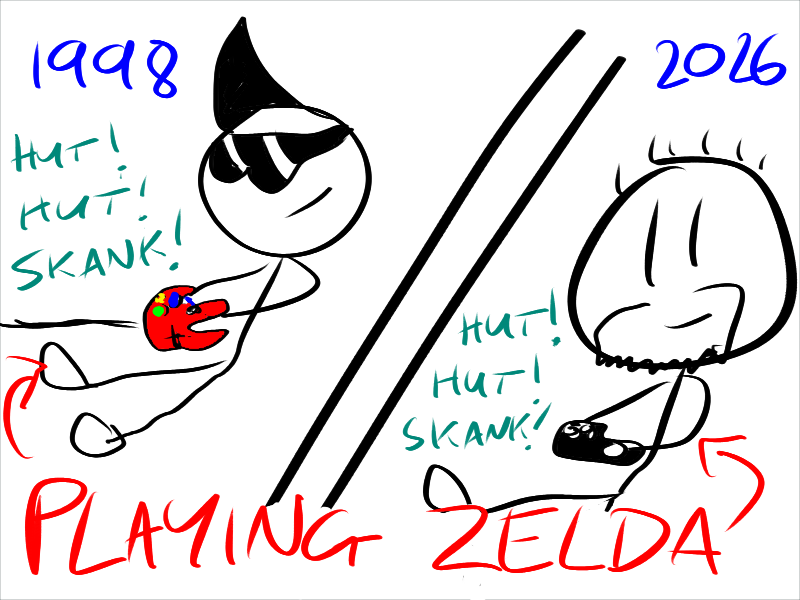
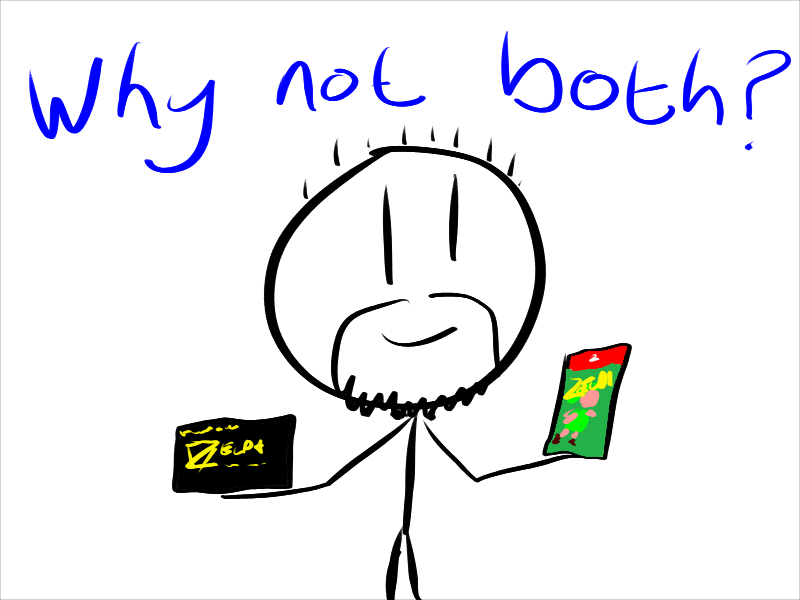
Now, nearly 30 years later, it's kind of amazing to think that I am still here, still playing games… and still playing The Legend of Zelda: Ocarina of Time, Doom and Final Fantasy — albeit not in their original forms. I'm playing the Nintendo Switch 2 version of Ocarina of Time, which is beyond beautiful; I'm playing Doom on a console I helped bring to market, in a release that I wrote the documentation for; I'm playing Final Fantasy in the form of Final Fantasy Resonance, a game which is both an excellent Final Fantasy in the old-school mould, and a wonderful homage to Final Fantasy history in its own right.

It's kind of funny in a way. I often think about games that have come out in the last… 15-20 years, say, and wonder if any of them will ever have the same kind of cultural penetration of things like Pac-Man and Space Invaders. Games that, while you might not necessarily want to play them all the time, can be universally agreed upon to be both important and good. The games I've previously mentioned all fall into this category, too; Doom has endured for so long for very good reason, and has seen numerous rereleases over the years; Ocarina of Time is actually on its second remake and third rerelease after the Gamecube port and the 3DS remake; and Final Fantasy is a series that has very much moved with the times — not always in a way that everyone likes, but one cannot deny that it has always done its very best to stay up to date.

I look at something like Horizon: Zero Dawn — which, admittedly, is a game I didn't like very much — and wonder if people are still going to be talking about that in 20 years in the same way that the aforementioned titles are held in complete and utter reverence by both players and game makers. What about Gears of War? Halo? Gears is apparently having a bit of a comeback, but Halo has been absent from many people's lives for so long at this point that it has almost become irrelevant.

I wonder how much of it is down to a sense of universal appeal versus things that are ostensibly aimed at "adults". Of the titles I referenced above, only really Doom can, perhaps, be argued to be aimed vaguely in the direction of adults — and even then, not really. Doom is, at heart, a teenage, heavy metal, power fantasy. Even back on its original release, its violence was almost cartoonish, despite being relatively bloody; its "scary" elements tempered somewhat by a driving soundtrack and a relentless pace. People remember Doom and Doom II a lot more fondly than Doom III because Doom III tried to go all-in on the "this is a scary game for adults" thing, and while it was good — it really was! — you just… don't hear people talk about it any more.

And that's where I kind of fall with a lot of the modern games that seem to be a big hit one minute, then almost completely forgotten about the next. Sure, having a middle-aged protagonist who is sad and says "fuck" a lot is very much a sign of the times… but it doesn't have that same timeless appeal that things like Ocarina of Time and Final Fantasy do.

As someone interested in gaming history, I feel like it's going to be very interesting looking back on the last 15-20 years or so in retrospect. It's already interesting to look back on the Xbox 360/PS3 era, because there's a whole ton of stuff that completely flew under the radar on those consoles. That's a different thing from having timeless appeal, of course, but it can sometimes throw up some thoroughly interesting experiences.

That's probably a tale for another day, though. For now, I'll just say that the couple of hours of Ocarina of Time I've played this evening are absolutely marvellous, and I'm delighted that this remake has come out as well as it has. It strikes that perfect balance I was talking about the other day, where it is simultaneously respectful to its source material, and simply a great new game in its own right, for those who have never played it before.

I would play some more but I smell real bad so I better go have a bath.


Want to read my thoughts on various video games, visual novels and other popular culture things? Stop by MoeGamer.net, my site for all things fun where I am generally a lot more cheerful. And if you fancy watching some vids on classic games, drop by my YouTube channel.

If you want this nonsense in your inbox every day, please feel free to subscribe via email. Your email address won't be used for anything else.

#oneaday Day 880: Remakes and originals can and should coexist

Earlier today, the one and only Jeff Grubb of Giant Bomb posed the question "what game remakes have effectively replaced the original?" It's an interesting question, so I thought I'd take today to ponder it myself in a bit more detail than my skeet in reply to him.

Remakes are on everyone's mind right now because the Switch 2 remake of The Legend of Zelda: Ocarina of Time is out tomorrow, and the reviews have been glowing. To most reviewers, it appears that nu-Ocarina is a respectful remake that simultaneously pays homage to the original and provide a solid, self-contained experience in its own right, accessible to newcomers as much as it is to series veterans — or, indeed, old farts like me who were There For It First Time Around.

My simple response to Jeff was that a good remake doesn't replace the original; it complements it. What happens next is down to the individual, with the remake pointedly not saying one way or the other is the definitive approach.

Someone who plays a remake could find themselves interested in the history of what they just played; having learned it is a remake of an earlier game, they could find themselves drawn down a rabbit-hole of investigating games from a different time — and, in the case of younger players, games that may well have been released before they were even born. This could, in turn, develop an interest in broader gaming history and retro gaming as a hobby — something which I, of course, would heartily encourage.

At the same time, someone who plays a remake could find themselves completely satisfied with the self-contained experience that the remake provides. They know it's a remake of an older thing, but they also know that it stands by itself and doesn't require or assume knowledge of said older thing. They can enjoy a brand-new, modern game that is informed by classic titles of the past, but not have to deal with all the challenges that looking into old games can present you with — whether that's dated visuals, lower quality sound, less refined controls and game design. These are not things that bother me personally, but I can imagine that someone who grew up with, say, the PlayStation 4 and Switch as their first gaming consoles might find it hard to go back to games from the original PlayStation and N64, for various reasons.

Then, of course, there are situations like the Final Fantasy VII Remake trilogy, where what they're doing is not really a "remake" at all, but rather a considerably expanded retelling of a story that goes off in some interesting other directions. These can still be responded to in both of the above ways, however; some folks who came to Final Fantasy VII Remake first might find themselves curious to play the original Final Fantasy VII, while others will be happy with the modern games as their sole point of contact.

Of course, I would absolutely love it if all people were willing to dive back into gaming history and give older games the time of day. There's still a ton of value to be found in older games — even in ones that, for example, use control schemes that have long since been abandoned in favour of modern analogue controls.

Take the original Tomb Raider, for example. This is a game designed entirely around its rather rigid, clunky-by-modern-standards controls. It is a product of its time and represents a style of gameplay that we don't really have in the same form any more — but it's still perfectly playable if you meet it on its own terms and learn how to play it. At the same time, I understand completely why the more recent Tomb Raider games have gone in a more "modern third-person shooter" kind of angle. But one absolutely does not negate the other, at all.

I know not everyone is a fan of them, but I like remakes. They provide a new way to experience an old thing — and, if you were around for the old thing's original appearance, might just remind you why you used to like it so much. And, at the same time, they make the old thing much more accessible to newer or younger players. What happens from there is really up to them — but I hope it's the beginning of an enriching, fascinating journey of discovery.


Want to read my thoughts on various video games, visual novels and other popular culture things? Stop by MoeGamer.net, my site for all things fun where I am generally a lot more cheerful. And if you fancy watching some vids on classic games, drop by my YouTube channel.

If you want this nonsense in your inbox every day, please feel free to subscribe via email. Your email address won't be used for anything else.