2146: More Xenoblade

0146_001

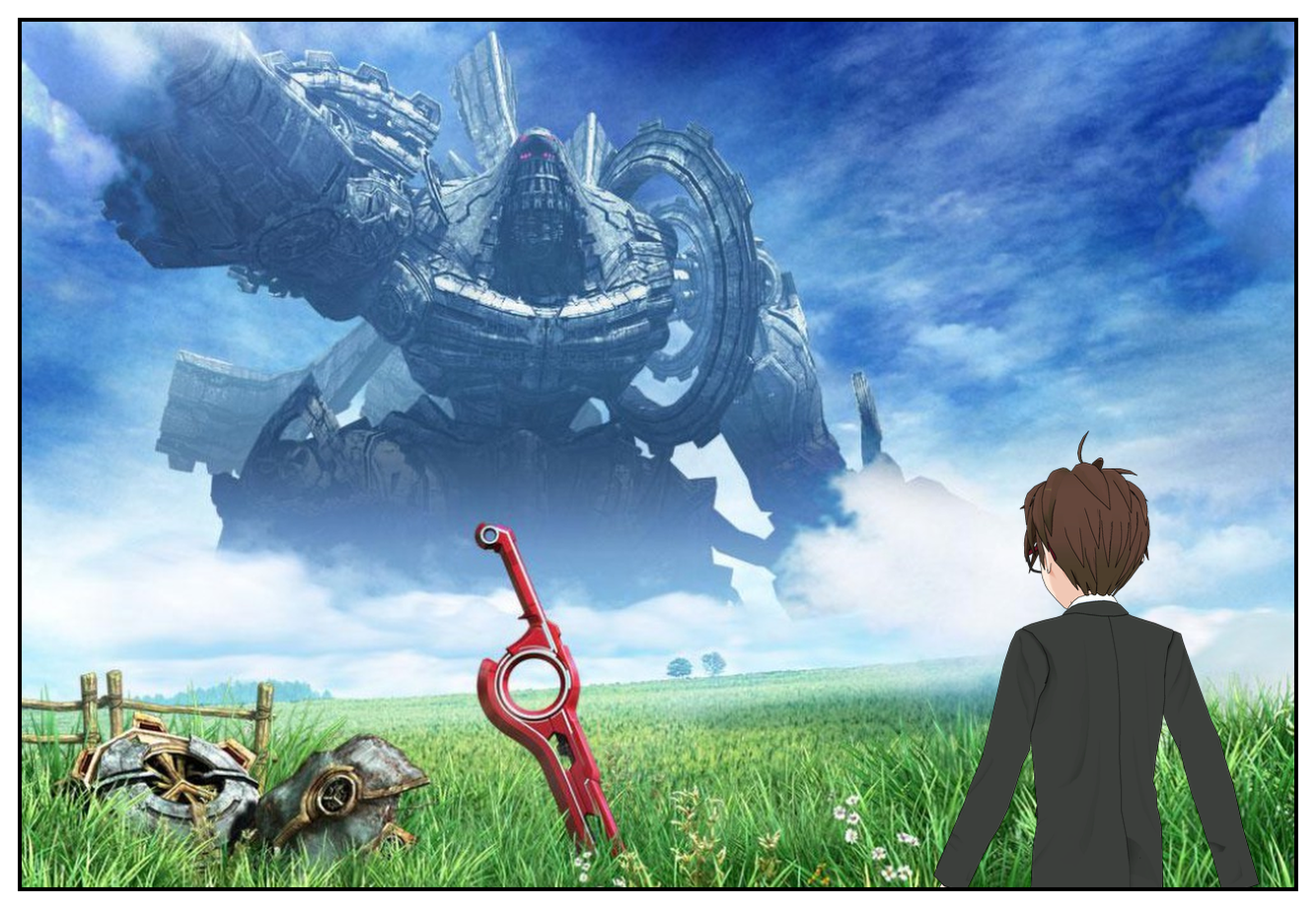
Pretty much all I've done today is finish off a bit of work I had to do and play Xenoblade Chronicles X, so I'm going to talk a bit more about my experiences with the latter.

If yesterday's entry didn't already make it clear, I love it. It's actually not the kind of RPG I traditionally used to love, so this surprises me; it's open world, it's non-linear, it's nowhere near as story-centric as many other RPGs out there… but it's compelling, addictive and beautiful.

I think one of the things I like most about it is that it feels something like the realisation of a longstanding fantasy. Let me explain.

Way back in secondary school, I was renowned among the teaching staff as someone who put way too much effort into creative writing assignments, usually delivering pages and pages of epic prose where my classmates would put in maybe one or two at most. I can still remember most of these stories I wrote, from early example Timeslip (a riff on Back to the Future, which my friend Daniel was obsessed with, that featured a time-travelling lorry rather than a DeLorean, and what was essentially Rainbow Road from Super Mario Kart to represent the pathways between times) to later pieces such as my A-Level English Language assignment, where I delivered a surprisingly confident but harrowing first-person stream-of-consciousness narrative from the perspective of a girl who was raped.

Anyway. One of the stories I wrote — I forget exactly when, but I do remember writing it — was called Colony. Having somewhat grand plans for what I had written, I had tagged it Chronicles of the Scorpio, Book 1, despite having not even finished the entire story of Colony. That is beside the point; what is important is what Colony was about.

Colony was loosely inspired by a PC CD-ROM game I'd been playing called Alien Legacy. This concerned an interstellar colonisation ship waking up its crew a long way from where they were supposed to be, and the crew and colonists having to make the best of the situation in which they found themselves. Colony featured a similar kind of situation, with the UNS Scorpio finding itself pulled through a wormhole into (if I remember correctly) the Beta Caeli star system, which conveniently had an M-class planet for humanity to plant itself on. The remainder of the story — which I finished — described the colonists' struggle for survival as they discovered they were not entirely alone on this planet, and so on and so on.

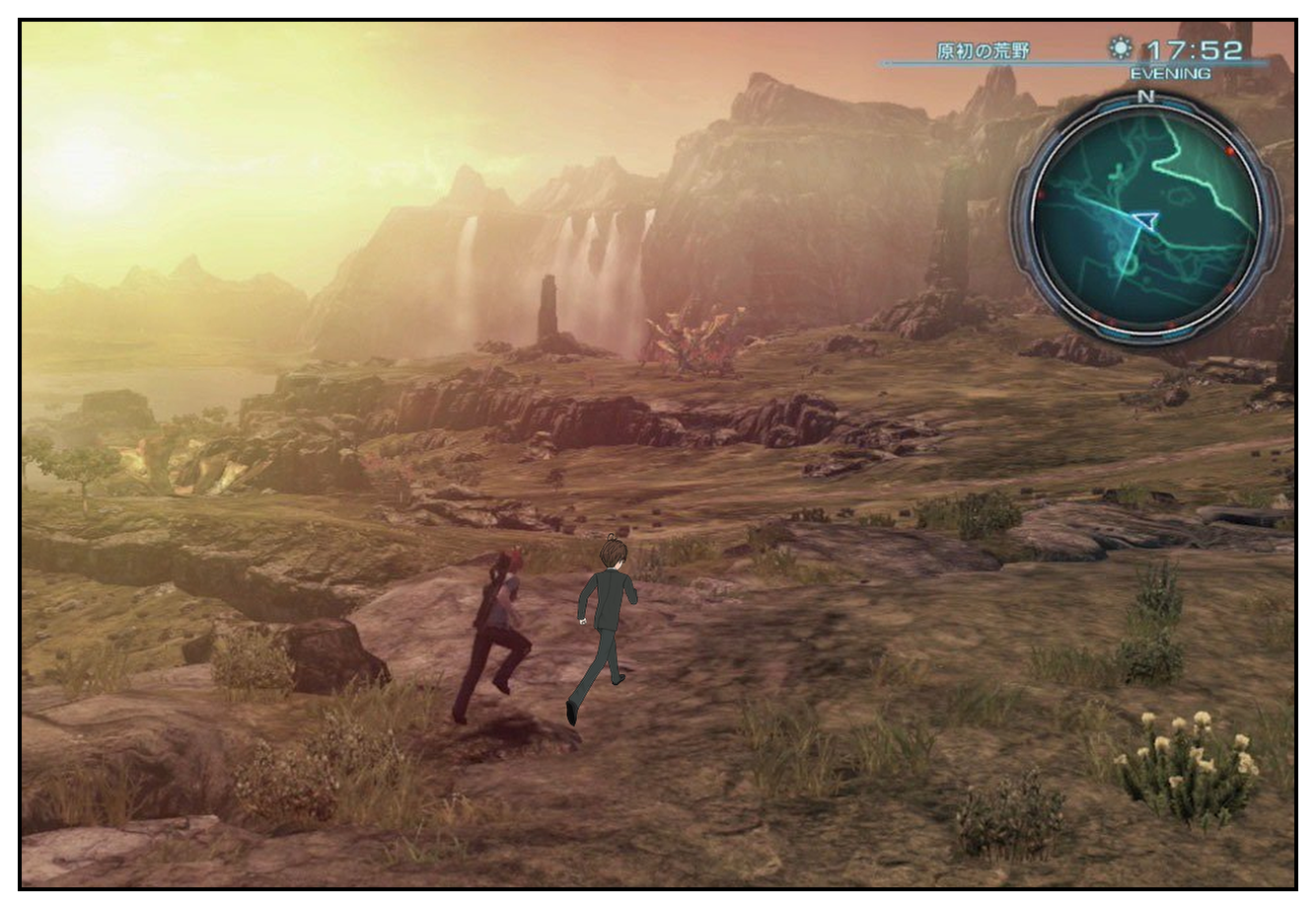
To the point, then: the thing I like about Xenoblade Chronicles X is that it feels like I'm exploring that story: one that's been stuck in my head since I was a teenager. I don't think I've ever played a game with such a brilliant sense of exploration, discovery and having to fend for yourself on a very alien world, and Xenoblade Chronicles X's handcrafted setting puts the randomly-generated locales of Minecraft and its ilk to shame by being absolutely fascinating to explore. The experience of surveying planet Mira is exactly how I pictured the characters in Colony spreading out from their initial base camp to discover exactly where they had landed.

There's so much to do, with an excellent sense of constant progression. You can follow the story missions — something that I haven't done much yet so far — or you can make an effort to survey as much of the planet as possible. It's extremely satisfying to take a look at the Segment Map on the GamePad screen and see a number of little checkmarks indicating that you've completed that particular area… but it's also somewhat daunting to see how many other areas don't have little checkmarks in them and realise quite how much there is left to do.

I am fine with this, though. The sheer amount of stuff to do in Xenoblade Chronicles X distinguishes it significantly from MMORPGs, which is what it's getting most frequently compared to: rather than grinding out the same content over and over again in an effort to get an incrementally small reward and creep up in power week by week, you can pretty much always be doing something different and be making progress somehow: you can be levelling up your character, or increasing the rank of your current class, or increasing your rank in the BLADE organisation, or earning money, or gathering resources, or researching weapons for the arms manufacturers, or… you get the idea.

The online seems like fun, too, though I've only dipped my toes into it so far. Taking the form of short, instanced missions for up to four players at once, the Squad Missions feature allows you to play with others and cooperate to take down some tough challenges together. The game is set up in such a way that direct communication isn't necessary, with characters instead using the "Soul Voice" system to automatically shout out things to each other and boosts to your abilities being appropriately applied if you respond correctly to these shouts. It's also possible to communicate through emotes and, if you so desire, the slightly clunky "Free Report" system, which is not quite real-time text chat, but it's testament to the game's solid systems that four strangers can come together and take on some significant challenges without any need for voice or text chat to coordinate things. I wonder if this will still be the case at higher levels? We shall see, but being only level 15 so far, I have a way to go yet!

Anyway. If you've been dithering over whether or not Xenoblade Chronicles X is worth a purchase, stop; it absolutely is. (And, to answer a question from the comments yesterday, no you don't need to play Xenoblade Chronicles first, because they're two completely independent games.) It's one of the most ambitious, impressive RPGs — no, games, full stop — that I've ever played, and it deserves a big, appreciative audience. I'm telling you now, games industry; if this game gets passed over in Game of the Year talk, we are going to have some serious words…
2145: Xenoblade Chronicles X First Impressions

0145_001

So, Xenoblade Chronicles X came out today, and I picked up a copy.

Is it any good? Well, after eight hours of play in one day, I think it's fairly safe to say that yes… yes it is.

38 words is not quite enough to articulate why this game is worth your time and attention, however; so I shall attempt to elaborate somewhat. I wrote a little the other day about how much I enjoyed the previous Xenoblade Chronicles game on the Wii, and much of that still applies, though as I suspected from what I'd heard prior to release, Xenoblade Chronicles X is a bit of a different beast to its predecessor.

Let's start from the beginning, then. Xenoblade Chronicles X casts you in the role of a survivor of a spaceship crash on the planet Mira. The game begins with you being rescued from your stasis escape pod and emerging into this strange new world with no recollection of who you are/were. You're surprised to discover that the remnants of humanity have been somewhat busy in the intervening two months between the ship crashing and your rescue, but you quickly adjust to life in New Los Angeles, a city constructed from the wreckage of your former ship's habitation module.

In those two months, it seems said remnants of humanity have organised themselves in what appears to be a fairly efficient manner. Of chief importance to the building of humanity's new life on Mira is the organisation known as BLADE, which stands for Building a Legacy After the Destruction of Earth, but which everyone just calls Blade, because that's cooler.

BLADE is responsible for most of the day-to-day running of life on Mira for humanity. Its employees go out and explore the world, gather materials, keep the more feisty members of the local fauna in check, deploy probes and set up resource infrastructures. It doesn't take long for you to be inducted into the ranks of this group, and before long you're swearing allegiance to one of the "Divisions", which determines the most efficient means you have of ranking up within the BLADE organisation, though regardless of your allegiance you're free to pursue any activities you see fit.

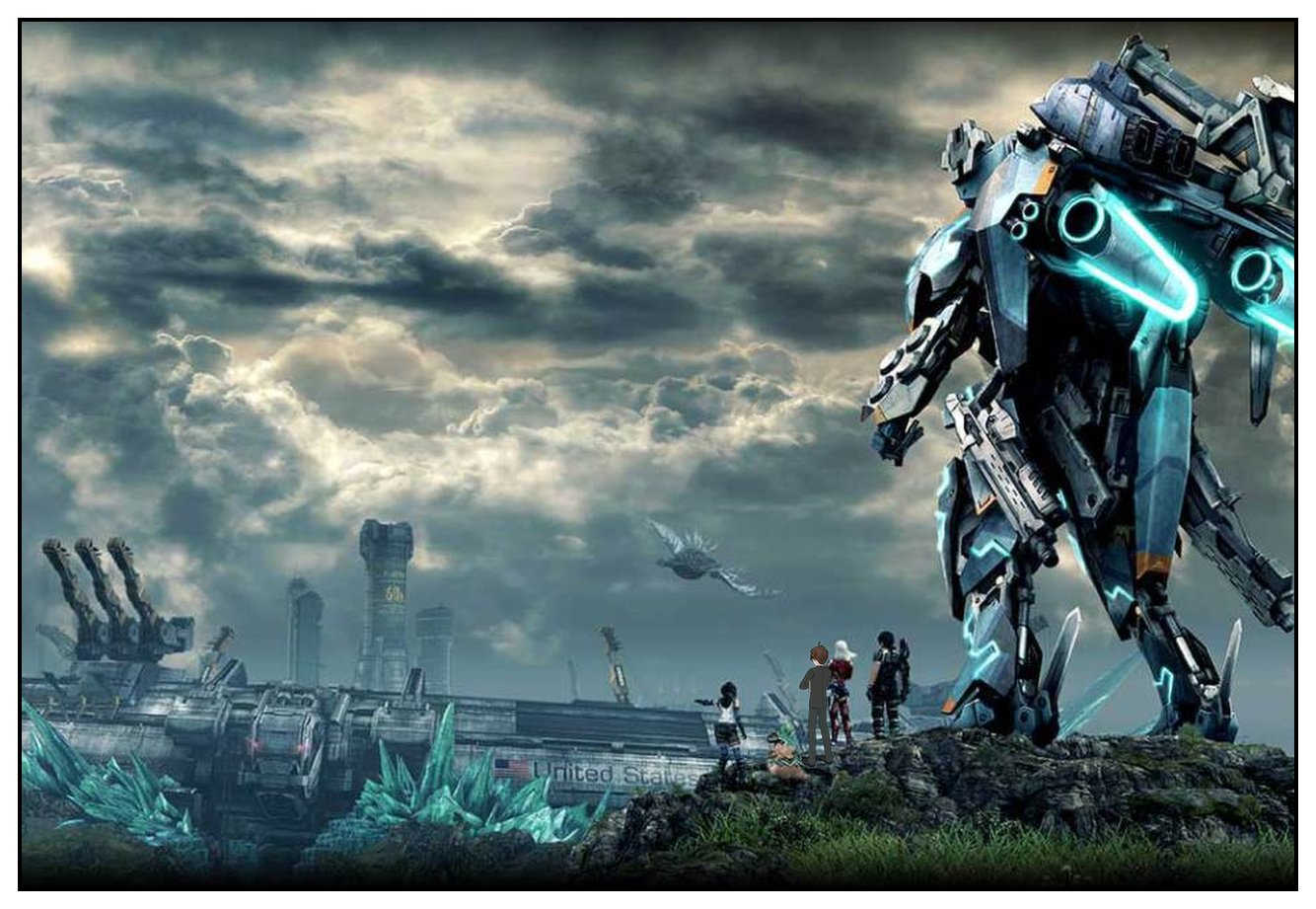
Once you step outside New LA onto Mira proper, there's plenty to do. Like the previous Xenoblade game, the world is strewn with collectables that can be put into the Collectapedia; there are plenty of enemies to fight of all shapes and sizes — with the biggest being some of the biggest… things I've seen in any video game ever, including Shadow of the Colossus — and there's a ton of exploration to be done. By wandering around, you'll discover landmarks, sightseeing spots, unexplored areas such as caves and ruins, places to install mining equipment and all manner of other things.

When you get into combat, you're presented with a system somewhat like the previous game's, but with a number of refinements. Of chief importance is the "Soul Voice" system, whereby party members can chain attacks together by shouting things out during battle based on various trigger conditions. By using the appropriate Arts when your companions yell out the relevant things (which are colour-coded to make things easier for you) you can achieve various helpful bonuses and special effects. Likewise, when you perform a particular ability and then hit the B button at just the right time, you can encourage your allies to trigger a Soul Voice in the same way. Combat feels fluid and interesting, and the fact you can switch between ranged and melee weapons at will means you can tweak your playstyle how you see fit — a fact that is further compounded by the array of different character classes on offer, which you're free to switch between whenever you like.

There's also some online functionality that is pretty interesting. After clearing the third chapter of the main story, you sign up for a "Squad", which is an online group of up to 32 players. Once you're in a Squad, you receive notifications about their achievements and gain the ability to make "reports" about things that go on around the world, things you've done or simply to chat. You can trade things with other players, too, and there are communal Squad objectives to complete collectively as a group.

For those who want to take things a step further, there's a full multiplayer mode where you can take on Squad Missions together in parties of up to four people. These tend to be short, timed missions where you have to achieve specific objectives such as defeating enemies, but playing alongside other people and chaining your Soul Voice effects into each other has a markedly different feel from playing with the AI characters. It's also a good opportunity to admire other players' custom avatars, since the game features a vanity system whereby you can wear one set of gear for its stats, then apply the appearance of a different set for your own custom outfit.

Xenoblade Chronicles X is a game that appears to be incredibly daunting in its scope, with numerous intertwining game systems that, after the initial few story chapters, it leaves for you to explore for yourself rather than guiding you through by the hand. The electronic manual is essential reading, since not everything in the game is explained in tutorials, and there are a few bits and pieces that will doubtless prove bewildering without explanation.

So far I've had an absolute blast, though. The environments are spectacular, the creatures are weird, wonderful and gigantic, the combat is fun, the story is enjoyable, the characters are pleasant to hang around with, and the setting is well-crafted with a pleasing sense of coherence to the whole thing.

In short, it's pretty gobsmacking, not only as a game in its own right, but in how much of an improvement over its predecessor it is, too. And it's doubly impressive for being quite this spectacular on the Wii U, by far the least powerful of the current generation of consoles. Frankly, if this game doesn't shift a few Wii U systems, nothing will, because I find it hard to believe anything more impressive will be squeezed out of Nintendo's hardware.

2143: Anticipating Xenoblade

0143_001

I'm picking up a brand new game release on Friday. It's not often I buy a new game the moment it's released, but in the case of Xenoblade Chronicles X, I feel almost obliged to, given that it's not only a game that's been a long time coming, but also a game that's likely to be one of the most impressive titles for Nintendo's underappreciated Wii U console — much like its predecessor was for the original Wii.

I don't know a lot about Xenoblade Chronicles X as yet save for the fact it's a bit of a departure from the style of the previous game; I've been deliberately avoiding too much coverage of it because it's one of those titles for which I'm keen to go in almost completely blind, much as I did with Xenoblade Chronicles. I can, however, talk a little bit about my memories of Xenoblade Chronicles, and why they lead me to anticipate Xenoblade Chronicles X quite so much.

I'm not massively familiar with the overall Xeno metaseries. I played Xenogears back when it was originally released on PS1 and enjoyed it a lot, despite its rushed second disc. To date, I know nothing at all about the Xenosaga series, and my next contact with the overall Xeno quasi-franchise was Xenoblade Chronicles on Wii. Again, I came to this knowing almost nothing about it save for the fact it was one of three games for the Wii that a pressure group known as "Operation Rainfall" had been encouraging Nintendo to bring to the West, the others being The Last Story from original Final Fantasy creator Hironobu Sakaguchi, and the unconventional, wonderful Pandora's Tower from Ganbarion.

In other words, I picked up Xenoblade Chronicles based entirely on hearsay — people whose opinion I respected said that it was an important release, and that as someone who enjoyed JRPGs, I would do well to check it out. It was also noteworthy in that it actually made it to Europe before North America, which is not something that tends to happen all that often with localisations, and its dub featured English, rather than American, voiceovers — a fact which gave it a considerable degree of charm as well as inadvertently creating a number of memes that persist to this day, including "I'm Really Feeling It" and "Now it's Reyn Time", the former of which was helped enormously by protagonist Shulk's inclusion in the Wii U version of Super Smash Bros.

Anyway. Booting up Xenoblade Chronicles for the first time, I was confronted by a JRPG experience quite unlike any other JRPG I'd played to date. Well, that's not quite true; it was a bit like Final Fantasy XII in many ways, but it definitely had its own unique identity that combined influences from traditional, story-heavy Japanese role-playing games; open-world, mechanics-centric Western role-playing games; and the sheer, daunting amount of content found in your typical massively multiplayer online RPG.

Of particular note was its combat system, which is the main aspect that Xenoblade Chronicles X carries across from its predecessor. Allowing you to take direct control of any of your current three party members, gameplay changed significantly according to how you chose to play each character. Each party member had a fairly obvious "role" in the party that they were supposed to play, but there was a decent amount of customisation between learning new Arts and Skills for them, as well as the limited number of Arts the characters could have equipped (and, thus, usable) at any given moment.

Combat was much more than simple hack-and-slash; in fact, simply running up to an enemy and hoping to whittle down its health was an invitation to disaster, even early in the game. Instead, you needed to know your characters' abilities, including positional bonuses, and make appropriate use of them at the right times. This is where MMO influences showed themselves once again; since you were only controlling a single character, you had to trust that your AI-controlled companions were up to the task of doing their job — which, to their credit, they usually were — while you concentrated on doing yours.

I typically played as Shulk for most of the game; Shulk, in party-based MMO terms, would have been a melee DPS class somewhat akin to a rogue, dragoon or monk in Final Fantasy XIV. In other words, his abilities were largely focused on both dealing damage and inflicting debuffs on enemies, and many of them were conditional on him being in a particular position in relation to the enemy. One of his Arts required him to hit an enemy from behind, for example, while another had bonus effects when used from the side. Mechanics such as this kept combat dynamic and interesting rather than simply having two groups hacking away at each other until one or the other's HP ran out.

Then there was the world. Oh, goodness, the worldXenoblade Chronicles was running on one of the weakest consoles of that particular generation, but it managed to be one of the most impressive games there was in terms of scope and visual design. Unfolding on the overgrown, long-dormant bodies of two mysterious giant mech-type things known as the Bionis and the Mechonis, Xenoblade Chronicles' world combined the realistically natural with the fantastic to create an absolutely beautiful, memorable world with some genuine landmarks that were worth seeking out just to admire the visual majesty of. I still remember vividly the first time I came across Makna Falls and had to stop and just admire this beautifully crafted environment for a few moments; it was somewhere I'd want to actually go in reality, such was its beauty.

To reiterate an earlier point, I know very little about Xenoblade Chronicles X, and that includes details about its world. If it's half as interesting and thrilling to explore as its predecessor, though, I'm excited to jump in and start running around… and later, to start stomping around it in the big mech-like Skells.

Xenoblade Chronicles X is out on Friday. There are online and multiplayer features in the game, so if you're planning on playing it and would like to do stuff with me, let me know and we can exchange Wii U friend details.

#oneaday Day 808: Xenoblade Chronicles is Out Tomorrow, and Here's Why You Should Play It

20120406-005656.jpg

As a European, I was lucky enough to be able to play the Nintendo-published, MonolithSoft-developed Wii role-playing game Xenoblade Chronicles last year. It ended up being my favourite game of 2011, and many North American gamer friends were suitably jealous that I had been able to play it through while they hadn't. I didn't feel too guilty, though, because North America has its own branch of Atlus and doesn't have to depend on other publishers to bring titles like the Persona series over.

But I digress. Xenoblade Chronicles is out tomorrow — April 6 — in North America, and here is why you should play it if you're an American. Or even if you're not.

The Japanese role-playing game genre is often accused of stagnation and a lack of innovation. This is, in fact, not particularly true — even the much-maligned Final Fantasy XIII was trying things which other role-playing titles hadn't attempted before. Okay, they weren't always successful, but it was at least attempting to innovate.

The real issue is actually that for whatever reason, Japanese role-playing games (and, to a certain extent, Japanese-developed games in general) have lost the resonance they once had with the core gamer audience in the West. Players are quick to judge them as clichéd and derivative before moving on to whichever game starring men in armour with guns is the flavour of the week. Specific attempts by Japanese developers to create games that appeal to Westerners end up having limited niche appeal despite their quality (see: Platinum Games' Vanquish, which isn't an RPG but demonstrates the point effectively) or end up being laughable attempts to pander to the Japanese image of what a Westerner supposedly wants (see: The Last Remnant).

Xenoblade Chronicles is a remarkable game because it nails that balance between Western and Japanese sensibilities, making a game that combines the positive aspects of WRPGs (freedom, exploration, a degree of sort-of-non-linearity) with those of JRPGs (stronger storytelling, more memorable, well-defined cast members, a firm sense of being unafraid to continually up the ante). The result is quite brilliant, and a significant step forward for the genre in one possible direction it way wish to take in the future.

The game casts players in the role of Shulk. Initially, he seems like every other teenaged JRPG hero, but a number of aspects make him stand out. He doesn't whine. He's not moody or angsty. He's just a guy, but he has a personality. He has friends, too, who form your early party in the game, and these, too, don't fall into the trap of clichéd character archetypes. This pattern continues throughout the course of the whole game. Even the "small furry thing" character introduced later in the story isn't typically irritating — he's quirky and silly, sure, but his character is defined well, and he proves to be more than just a means through which to provide silly slapstick gags.

The diverse, likeable cast you find yourself travelling with over the course of Xenoblade Chronicles' lengthy adventure provides several highlights to the game experience. Firstly, and most simply, they're a good ensemble cast who help drive the story forward. That's not their only function, however. As you might expect from an RPG, they each have their own role to play (natch) in combat, and finding the best combinations of three characters to take into battle is a key part of the experience. This affects not only your battle effectiveness, but also one of many stats that the game tracks in the background — Affinity.

Affinity is, quite simply, how much characters like each other. Characters with high Affinity with one another fight better alongside each other, but as their relationship develops, they also have the opportunity to participate in numerous "Heart to Heart" events that are scattered around Xenoblade Chronicles' vast world. These short sequences provide the opportunity for two party members — not necessarily including protagonist Shulk — to spend a little alone time with one another and get to know each other a little better. These typically involve multiple-choice conversations, providing the "correct" answers to which will give a big boost to the pair's Affinity with one another. (Giving "incorrect" answers often provides very amusing exchanges and still gives a smaller Affinity boost, however, so you shouldn't feel like you have to reach for the walkthroughs immediately.)

Affinity doesn't just affect combat and unlock Heart to Hearts, however; there's a host of little touches in the game that it affects, most notably during and after combat. Rather than simply yelling individual stock "battle victory" phrases, characters will often have short conversations with one another. This banter between characters is a real highlight of the experience, and while you will have heard everything they have to say a good few times by the end of the game, they remain entertaining and endearing.

Speaking of combat, Xenoblade Chronicles' battle system is a refreshing change from the turn-based systems that Japanese role-playing titles usually adopt. You control a single character out of the three in your active party, and are able to freely move around during combat. You and your party lock on to a single enemy at a time and automatically attack it, though many battles involve multiple assailants. In order to gain the upper hand in battle, it becomes necessary to make use of the unique skills the character under your control has.

Most characters have more skills than it's possible to hold in the "quickbar" at the bottom of the screen, so it becomes possible to customize the way they play to your own personal style. Some skills manage aggro, some attack areas, some provide more damage or inflict status effects when unleashed from beside or behind an enemy. Some skills are dependent on other characters doing things like knocking the enemy down or stunning them, and the AI which controls the other two party members does an absolutely astounding job of keeping up with what you're doing and understanding the strategy you're going for. It's very rare that you will be cursing the game for causing you to fail — more often than not it's a result of you either adopting a poor strategy, or simply needing to go and do something else for a while until you're a little stronger. This doesn't mean you have to resort to grinding, either — inevitably there will be some quests you have missed that you can go back and do, and returning to earlier-visited locations often throws up even more things to do.

Another great thing about the combat is that you can elect to control any of the game's cast in battle, not just Shulk. Each character plays in a significantly different manner to all of the others, so if you find yourself getting bored of the same old skills over and over, simply switch to another character for a brand new experience. Fed up of tanking? Spend some time with Sharla, a ranged character with healing abilities. Or Melia, a magic-user who can summon elementals that either provide ongoing buffs or can be "unleashed" to deal direct damage. Or the aforementioned small furry creature, whose skill names are genuinely hilarious.

Perhaps the strangest but coolest innovation in the combat, however, is the fact that you're occasionally presented with "visions" of the immediate future, usually when a character is either about to die or be afflicted with a debilitating status effect. A countdown timer starts, and you're given the opportunity to either do something to take attention off the enemy's target or warn another party member. If you do the latter, you're able to pick one of the warned character's skills to unleash — usually either a healing or aggro-management skill — and hope for the best. If you do the former, you have until the countdown timer depletes to do something very special, or your party member will suffer their grisly fate. It's a neat system that isn't overused.

Outside of combat, there's plenty to do, too. Exploring each of the game's massive zones rewards you with experience points and uncovers part of the map as you discover each sub-area. There are collectible items scattered around each area at random, with rewards on offer for collecting whole sets. Those who find item-hunting frustrating, however, may instead complete these quests by trading with other non-player characters. There are rare monsters to take down, loot to find, secret locations to discover. Xenoblade Chronicles' world is more than just a pretty backdrop for combat — it's a rich, beautifully-rendered environment in which to spend time, and it looks gorgeous. This may be a Wii title, and it may have been even more lovely to see it in HD, but it doesn't detract from the fact that the hugely-varied vistas you find yourself running and fighting over throughout the course of the game look simply magnificent. There's a waterfall you'll come across partway through the game which is genuinely breathtaking to look at, for example — you'll know it when you see it.

If the game's combat, quests and exploration aren't enough for you, there's also a deep Achievement system to delve into. Since these Achievements aren't online-connected, they're simply there as challenges for you to undertake, and all provide you with experience point rewards. In essence, they're mini-quests (although some will take you the majority of the game to complete) and rarely feel as "gratuitous" as some examples seen on Xbox Live and PSN. Rather, they provide yet another means of getting an enormous amount of entertainment out of an already vast, sprawling title.

This isn't even getting started on the deep crafting system, which allows characters to team up to create enhancements for their weapons and armour, with the results of their collaborative efforts dependent on their Affinity and compatibility with one another. Or the fact that the game allows you to change the time and fast-travel at will, eliminating a lot of the inconvenience and backtracking endemic to the genre. Or the colony-building minigame. Or the fact the voice acting is all British rather than American, giving the game a unique aural aesthetic in a genre typically dominated by whiny teenagers and squeaky-voiced females. Or the fact that when you're all done, you can New Game+ it and do the whole thing again with your levels, Affinity and a suitably broad spread of awesome equipment intact — something I will be doing when North America gets its hands on the game tomorrow.

Xenoblade Chronicles is, in short, a magnificent evolution of the Japanese role-playing game genre. While it's easy to dismiss it as "an offline MMO" or "a Final Fantasy XII wannabe", the reality is something quite different. This is truly a game that is greater than the sum of its already-fantastic parts, and one which will have you bellowing "Now it's Reyn time!" at your friends for months to come.

(Grab yourself a copy soon, though, as this is the kind of game that will get pretty tough to find pretty quick.)

#oneaday Day 648: Xenoblade Chronicled

Finished Xenoblade Chronicles and can say with some confidence that it's my Game of the Year so far. With only a few months left and only a few things on the horizon which could be contenders, it's looking good for Monolithsoft's epic RPG extravaganza.

Of course, my Game of the Year vote is of interest only to my friends. Gamer culture at large will undoubtedly vote Battlefield 3, Modern Warfare 3 or Uncharted 3 (hang on a minute… there's a pattern there somewhere) as GotY. But that doesn't matter.

Xenoblade Chronicles toes the line perfectly between JRPG and WRPG. On the J front, you have your floppy-haired protagonists who wield physically improbable weapons; you have your large-breasted female companions (one of whom spends most of the game clad in "armour" that really wouldn't protect anything besides her modesty — and even then only just); you have your small, annoying creature; you have your ultimately quite predictable JRPG finale (I still love 'em, I don't care how cliched they are). On the W front, you have a huge open world with minimal loading breaks — individual zones are huge in area and packed with things to do: monsters to kill, quests to complete, people to find. Straddling the line between both, we have an excellent combat system somewhat reminiscent of MMOs like World of Warcraft or, probably more accurately, Guild Wars.

Why the Guild Wars comparison? Well, like that game, you only have a finite number of skills which can be "equipped" at once, from a larger potential bank. The number of skills you acquire in Xenoblade Chronicles isn't as ridiculous as NCSoft's title, but then you do have several characters to manage all at once. Mercifully, you only have to control one of them at once, with the AI doing an excellent job of performing whatever role each character is ideally suited to in the party.

Gameplay-wise, it's top notch. Simply proceeding through the areas, completing quests and following the story when I'd "cleared" an area was enough to get me almost to the very end — there was only a few levels' worth of grinding required to safely get through the home straight, and by that point you've learned plenty of EXP-boosting skills so it's not as painful as it could be.

This is all very clinical and mechanical — and that's fine, as an RPG can live or die on its mechanics. But the real star of the show in Xenoblade Chronicles is its cast. Brilliantly voiced by an English cast, the characters are all memorable and, despite my "floppy haired protagonist" comment earlier, manage to not fall into the usual stereotypes. Each of them is an interesting individual whom you get to know throughout the course of the game, both through story sequences and through optional "heart to heart" conversations, where two characters have a chat and come away from it either liking each other a little more or a little less.

Characterisation isn't just limited to story sequences, however — different combinations of characters in a battle party elicit different battle cries and responses to one another. And, as characters develop their Affinity for one another, they start to talk to each other during battle differently, often engaging in some light-hearted banter that makes them seem a lot more human. Okay, you'll hear "what a bunch of jokers!" and "my rifle's getting hotter!" an awful lot throughout the course of the game, but on the rare occasions where they start teasing each other after a successful battle, it'll definitely raise a smile.

For me, the sign of a good RPG is whether you have a kind of "empty" feeling after it's all over — you won't be spending any more time with these characters, and that's sad. I felt it particularly strongly with Persona 4, whose ending sequence made me tear up, and I'm not ashamed at all to admit it. Xenoblade Chronicles gives me that feeling, too. It's a different sort of ending to Persona, but once it's over you have very much left those characters behind to get on with their lives in their post-adventure world. It's a bittersweet moment.

By far the saddest thing about Xenoblade Chronicles, however, is how few people will get to play it. While it got a release in this country, it's likely to become harder and harder to find as the months go on — and there's sure to be plenty of people who will dismiss it out of hand purely because it's on the Wii. This isn't even getting into the whole fiasco of Nintendo of America stubbornly refusing to bring the game to the States, despite there clearly being an audience for it. The game is already translated and ready to go — we Europeans have to deal with American spellings in most games, so would it really kill you to put up with the words "armour" and "learnt"? No — but Nintendo of America apparently doesn't see it that way, presumably believing that sales will be poor.

The thing is, though, Nintendo is in a difficult position right now. The 3DS is ailing, the Wii is fading and the core of the gamer community has all but left the company behind. For Nintendo of America to bring Xenoblade Chronicles to the States would be a gesture of goodwill to all the loyal fans who still defend the company, even amid its gradual move away from the core audience. It would give people more faith in Nintendo's current and future products, and, in the long term, it would help attract people to the Wii U as people see it as a system that will cater to the core.

Sadly, it doesn't appear it's going to happen — so if you're an American and you would very much like to play Xenoblade Chronicles, I would say don't hesitate — import it, mod your Wii and enjoy. There's over a hundred hours of absolutely top-tier entertainment there, and you will not regret the time you spend in its highly distinctive world.

Now I better go to bed. Off to Legoland tomorrow!