#oneaday Day 286: It's Xenoblade time

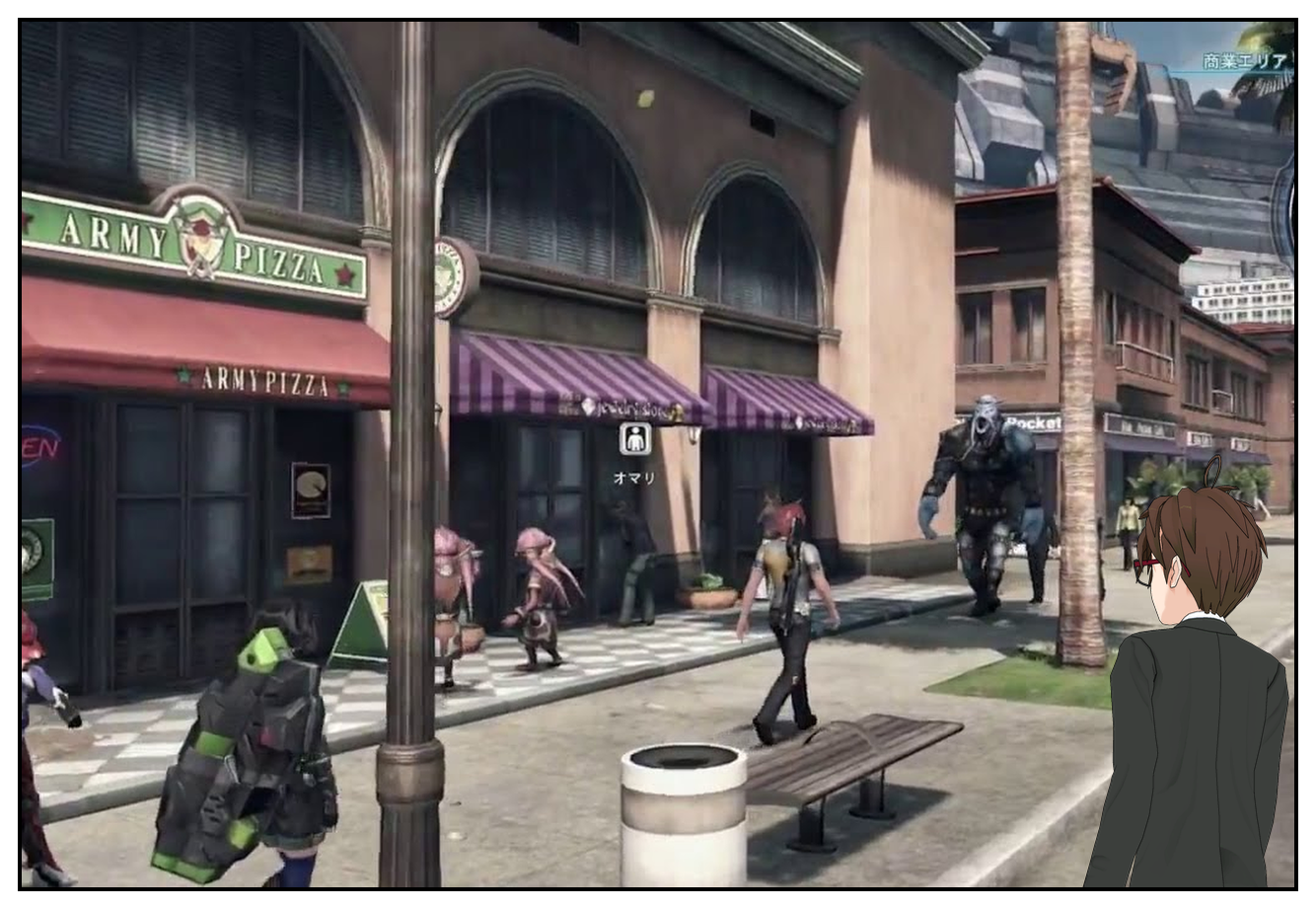
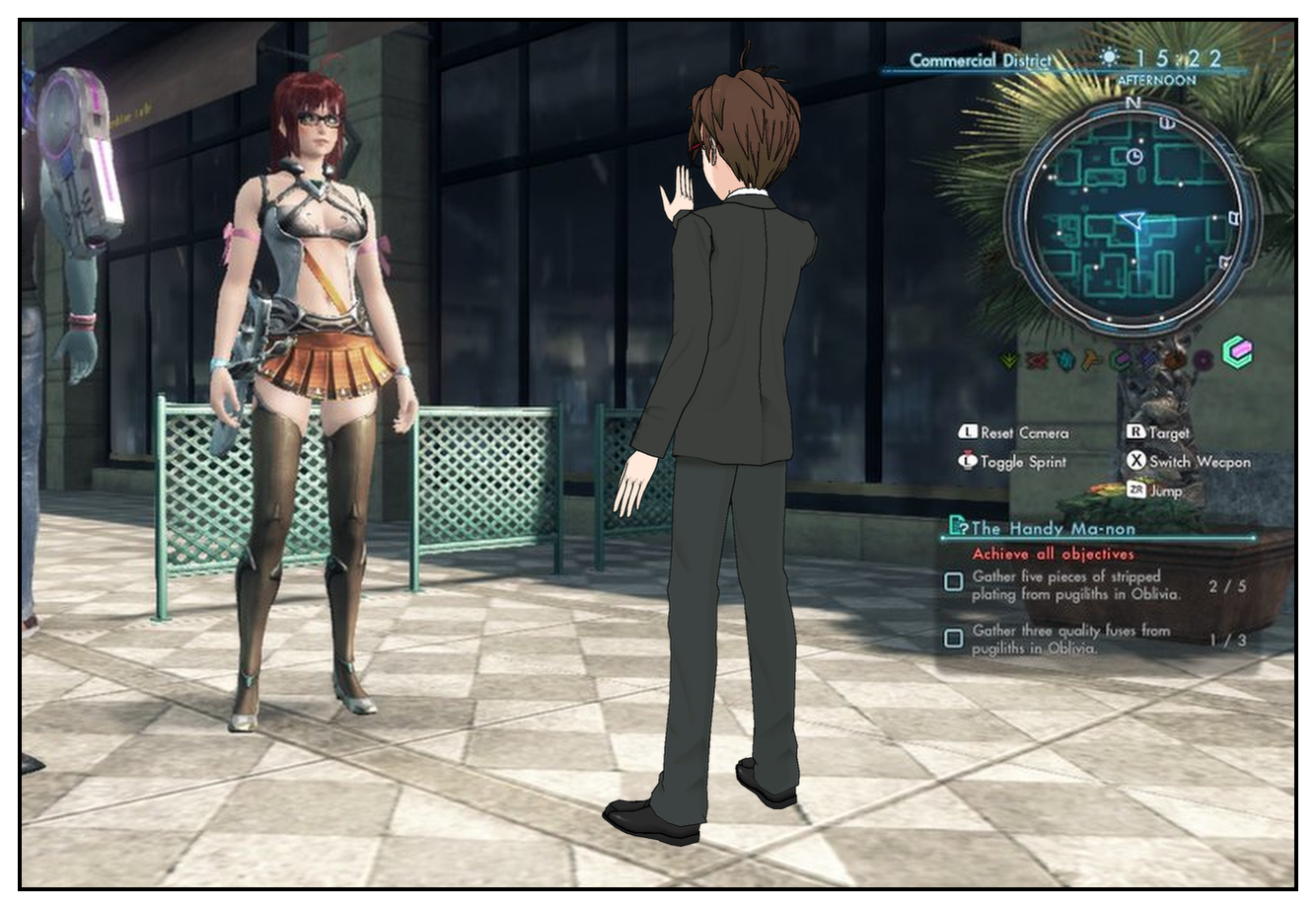
It's Xenoblade Chronicles X: Definitive Edition release day, and I was very good and didn't even boot it up until I'd done all my work for the day and emptied the cats' litter trays and gone out to get some stuff from the shop. Still managed nearly four hours of getting into the swing of things.

It's a delight to return to this game. As I've alluded to several times, I'm going to do some more in-depth coverage of this over on MoeGamer as I play through, but I thought I'd also post some first impressions from the Switch port here, since it's what the majority of my evening has consisted of.

It's been a long time since I played the Wii U version (ten years, in fact!) but a lot of things already feel comfortably familiar. I even inadvertently picked the exact same voice for my character that I did first time around, though I didn't realise I'd done that until she came out with one particular line that suddenly triggered a memory.

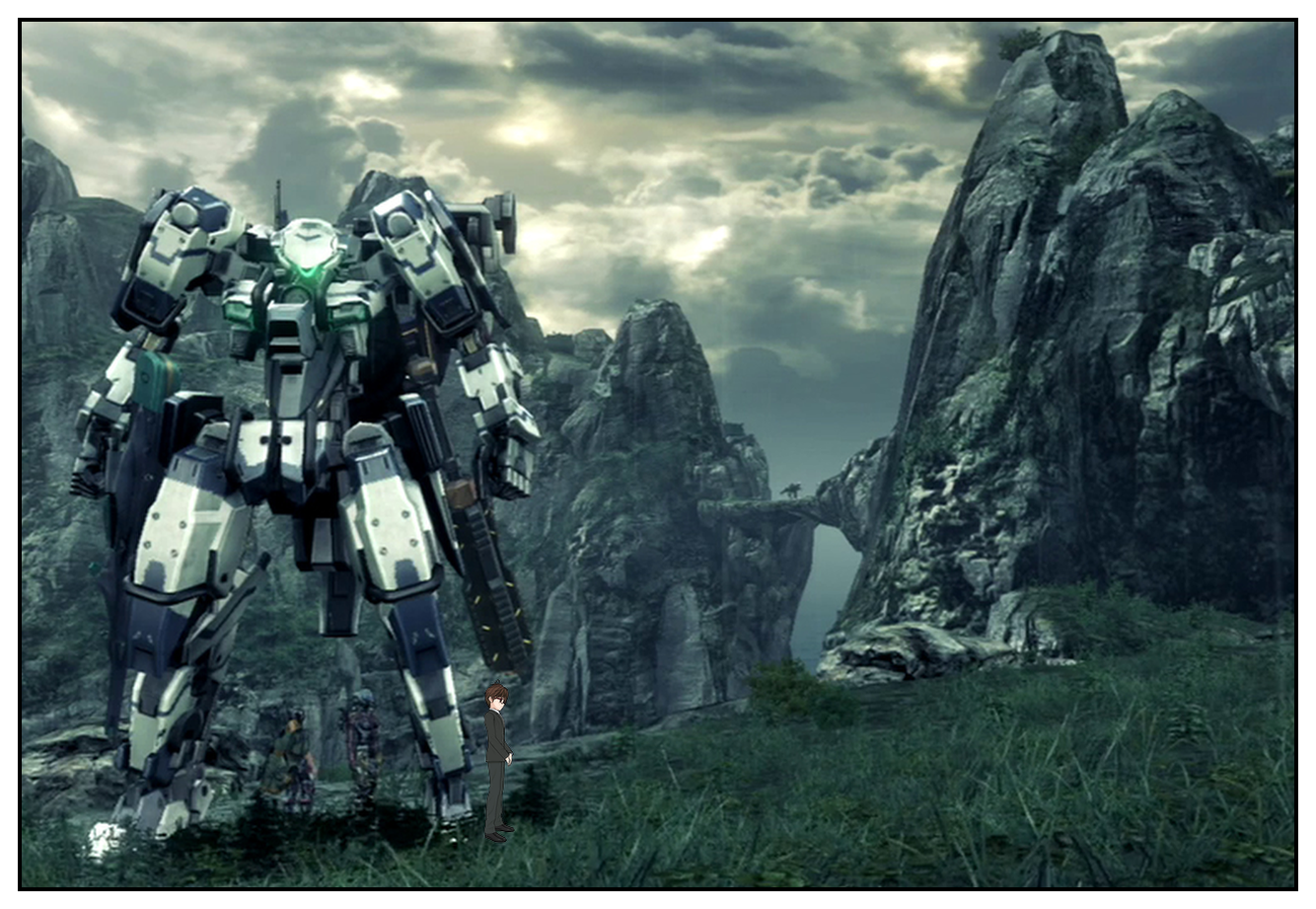
Xenoblade Chronicles X is an absolutely massive game, but it does a good job of easing you into things. The early story missions take you through the absolute basics you'll need to know to get up and running, then by about the third chapter you can start enjoying some of the game's more "freeform" structure by taking on various missions. As you continue to progress the main story, you unlock other features such as the online modes and the ability to pilot (and later fly) the "Skell" giant robots. Crucially, though, the game doesn't throw all this at you at once. You can quite feasibly spend a very long time playing the game before even getting anywhere close to jumping into a Skell.

The main thing I was wondering about, which is how they'd implement the hex-based "segment map" that was originally on the Wii U GamePad's screen while you played, has been incorporated about as well as they could have done given the Switch's lack of a second screen. It's now a separate Map screen that you can access from the game's main menu, which means you can't look at it while you're wandering around, but it does also mean you can concentrate on it without having to worry about Tyrants coming to attack you while you tinker with your mining probes.

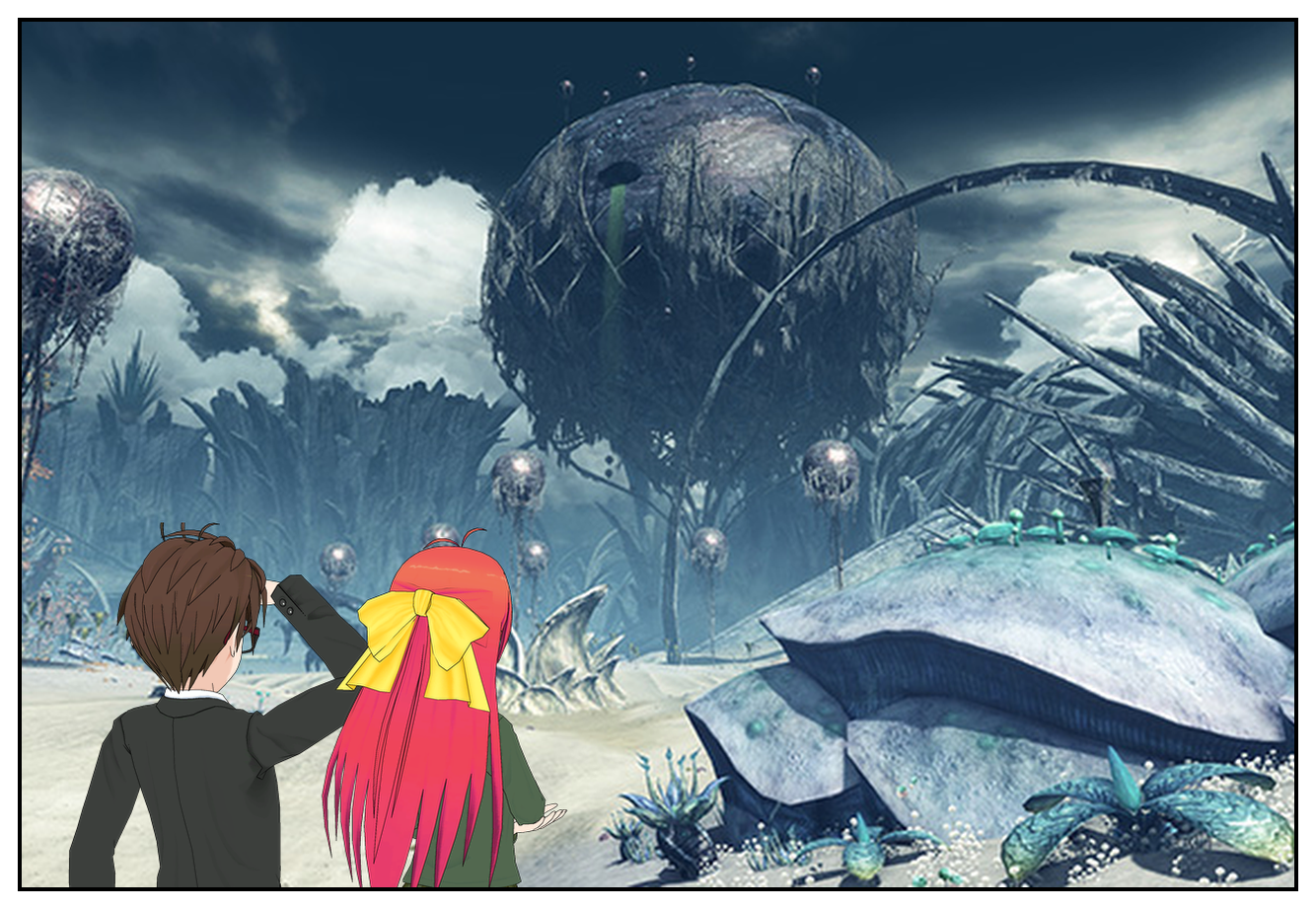
Performance and visuals-wise, the Switch version does a great job. There are understandable technical limitations of the same ilk seen in other Xenoblade games on the console — most notably characters and some objects "popping in" as you approach rather than being drawn from a distance — but, given the scale of the game and the relatively underpowered hardware it's running on, it's just fine. The tweaks to the interface to make it more readable are very welcome indeed, and I suspect even more so for those playing in handheld mode; this is really a game made for big TVs, though, as the vistas throughout remain absolutely spectacular.

Coming to this almost straight off the back of Xenoblade Chronicles Definitive Edition, it's also interesting to note how different the combat feels. While the basic mechanics are almost identical, the focus on responding to your party members' callouts and the ability to switch between ranged and melee weapons on the fly really makes battles feel a lot more dynamic. Enemies move around a lot more, too, meaning you also have to move a lot more to be able to strike them from the side or behind — and a welcome addition over the original Xenoblade's combat is a clear on-screen indicator as to whether you're considered in front of, flanking or behind an enemy.

I'm very happy to be back on Mira, and since I have no other "big games" going on right now, I'm going to see quite how much of this game I can complete this time around. Because although I finished the storyline of the Wii U version, I feel like I only scratched the surface of the things the game has for you to do. Because as I saw someone else point out the other day, Xenoblade Chronicles X is actually two stories: one is about your companion Elma rather than you, and that's the "main scenario" you go through. The other is the emergent narrative you build yourself: your career with BLADE, the missions you complete, the people you encounter, the choices you make. And it's that latter part that goes on for a lot longer than the relatively short main scenario.

Because I was deep into Final Fantasy XIV at the time Xenoblade Chronicles X came out for the first time, I felt a certain amount of "guilt" at getting too invested in the latter. But since I've drifted away from Final Fantasy XIV for the moment, Xenoblade Chronicles X is getting my full attention. And if you're yet to play it, I highly encourage you to check it out this time around. You no longer have the excuse that it's on a platform that no-one owns, because it's on one of the most popular console platforms in the known Universe.

Anyway. I wanted to post something about it today at least. I should probably go to bed now, but there are missions to do, things to find, Tyrants to fight…


Want to read my thoughts on various video games, visual novels and other popular culture things? Stop by MoeGamer.net, my site for all things fun where I am generally a lot more cheerful. And if you fancy watching some vids on classic games, drop by my YouTube channel.

If you want this nonsense in your inbox every day, please feel free to subscribe via email. Your email address won't be used for anything else.

#oneaday Day 227: Back on the Bionis

Having finished Fire Emblem Engage and entered my "waiting for Xenoblade Chronicles X" holding pattern in earnest, I couldn't resist any longer and started up Xenoblade Chronicles: Definitive Edition. It's a long time since I played the original Xenoblade Chronicles, and I feel like it will be good to revisit it before playing X, since X was actually the first "sequel" in the series; Xenoblade Chronicles 2 didn't come along until much later.

I'm not playing Xenoblade Chronicles 3, which I haven't played at all yet, because I will want to give that my full attention when I get to it, and I am reliably informed that with the way I play, I will likely take upwards of 150 hours to fully enjoy it. The original Xenoblade Chronicles, meanwhile, while still pretty massive, is a tad shorter, and I have faith I can get through it to my satisfaction before March 20, when X drops.

It's been thoroughly refreshing to go back to Xenoblade Chronicles, and I'm reminded of quite how much I like it. It really is a game that goes "what if the open-world bits of an MMO, but single-player?" and runs with it. This is a marked contrast from something like Final Fantasy XIV, where the open world stuff is fun while you're going through the story, but it pretty much ceases to be relevant once you get to endgame and spend the majority of your time in instanced multiplayer scenarios.

What do I mean by "MMO, but single-player?" A few things, really. Firstly, a big world to explore, based on roughly level-stratified zones — though each zone does have a few high-level surprises scattered around the place to make later revisits worthwhile. Secondly, a heavily quest-based structure. You probably can blast through the main story of a Xenoblade Chronicles game pretty quickly, but the appeal is in getting to know the world as a whole and all the incidental characters that populate it, so if you don't do a bit of questing, you're missing out on a significant part of the fun.

Sure, some of those quests may fall into the "kill [x] [y]s" or "get [x] drops from [y]s" territory, but what these quests do is encourage you to visit different areas of the world and discover what there is to see. And while you're doing that, you'll almost certainly feel a bit of that "I wonder what that thing over there is" wanderlust… and chances are, you'll find something interesting there. Xenoblade Chronicles' world is specifically designed to reward exploration, so it's worth your while to go poking your nose wherever you can.

The third way that Xenoblade Chronicles resembles an MMO — arguably more so than some of its follow-ups — is in its combat system, which uses a hotbar of abilities (or "Arts", as they're called), which each have a cooldown before you can use them again. The emphasis is less on finding a "rotation" as in some MMOs, however, since your auto-attacks are a lot more formidable than in something like Final Fantasy XIV, and instead on using your Arts as effectively as possible, ideally by meeting additional conditions that allow them to do more damage or inflict status effects on enemies.

Take protagonist Shulk, for example, who is a solid fighter, but not a tank by any means; that role is ably fulfilled by the first party member you get, Reyn. This leaves Shulk free to deal damage while Reyn attempts to keep aggro off him as much as possible, and to further support that, many of Shulk's Arts are positional, meaning that you need to be standing to the side or back of an enemy to make full use of them. Thus you end up taking a very similar approach to how a lot of MMO combat works: the tank stands with the enemy facing them, while the rest of the party stands behind or to the side of the enemy and pelts them from there.

Each playable character in Xenoblade Chronicles handles rather differently despite all using the same hotbar system. The aforementioned Reyn, for example, needs to focus on generating aggro as much as possible, but he's also able of dishing out some decent damage while he's doing so, too. Contrast with Sharla, the second party member you get, who is a ranged combatant with solid healing skills. Sharla is able to disengage from the main melee and hit enemies from afar with her rifle, as well as flinging out healing and buff Arts on her party members. She also has to manage the heat of her rifle; as well as dealing with time-based cooldowns, using her Arts also causes her rifle to overheat, so you have to make sure she takes the time to vent the heat every so often.

The nice thing about Xenoblade Chronicles is that you can play any one of these characters, or just stick with one for the duration, since the AI that controls the other two party members while you fight as the third is pretty solid. There's no need to "program" the AI like in Final Fantasy XII's Gambit system — although fans of that game will probably agree that programming Gambits is fun — as under most circumstances, assuming they have a decent hotbar of Arts, they will perform their role in the party admirably.

Xenoblade Chronicles: Definitive Edition does actually add a little wrinkle to this in the form of its "Time Attack" challenges that are scattered throughout the world. These are strange portals that take Shulk and company to a mysterious temple where a Nopon "sage" challenges them to fend off several waves of enemies as quickly as possible. A selection of these challenges see you having to fight with a fixed party — and with the challenge dictating which character you control. This means that even those who play Shulk for the entire main game will need to take a bit of time to get to grips with the other playable characters, which is nice. The Time Attack challenges are, of course, completely optional — as is a lot of Xenoblade Chronicles — but they do offer some nice rewards, so they are worth engaging with.

Anyway, I'm having a real good time with Xenoblade Chronicles: Definitive Edition. It's a pleasure to revisit this world after more than a decade, and with the enhancements the Switch version offers. The game still looks great, particularly with its landscapes; it was one of the finest looking games on Wii, and the subtle enhancements made to bring it into the HD age on Switch mean that it's still recognisable, but looks better than ever — with only a few slightly wooden animations here and there betraying its real age.

I'm fully intending to play through all of Xenoblade Chronicles before Xenoblade Chronicles X arrives in March, and I will, of course, be writing about both over on MoeGamer, as I think it will be fun to compare, contrast and reflect on the series' evolution. Perhaps I'll revisit Xenoblade Chronicles 2 before playing 3… I'm feeling like we might be in for a good few months of Xenoblade at this point, and I'm not complaining.


Want to read my thoughts on various video games, visual novels and other popular culture things? Stop by MoeGamer.net, my site for all things fun where I am generally a lot more cheerful. And if you fancy watching some vids on classic games, drop by my YouTube channel.

If you want this nonsense in your inbox every day, please feel free to subscribe via email. Your email address won't be used for anything else.
#oneaday Day 214: Anticipating Xenoblade... again

I'm a big fan of the Xenoblade Chronicles series from Monolithsoft and Nintendo, though I must confess I am very behind; I haven't yet played Torna, The Golden Country (the spinoff to the second game) or Xenoblade Chronicles 3 yet, nor have I replayed Xenoblade Chronicles: Definitive Edition on Switch. And yet here I am, gradually getting hyped for the return of Xenoblade Chronicles X in March.

Xenoblade Chronicles X is kind of special, see. While most of the rest of the series is pretty well-known to be awesome, outside of the few folks who can't handle anime-style aesthetics, Xenoblade Chronicles X has always been more of a cult favourite. For starters, it came out on Wii U, which means only a few people bought it, and it's also quite a different beast to the mainline Xenoblade Chronicles titles, arguably making it a bit more of an acquired taste for some.

Lest you're unfamiliar, the Xenoblade Chronicles series are a range of vast, open-world RPGs that take the concept Final Fantasy XII kicked off — MMO-style mechanics and structure in a single-player game — and run with it. For miles and miles and miles.

The mainline Xenoblade Chronicles titles are beloved not just for their expansive, beautifully crafted worlds, but also for the wonderful characters that make up the main cast. Each of them feature a wonderful balance between player freedom and in-depth storytelling, allowing you the opportunity to experience a truly epic narrative while also getting to know the complete, vast world very well.

Xenoblade Chronicles X differed a little from what was, at the time, its only predecessor, in that it downplayed the central narrative somewhat. Indeed, it's possible to blast through the entire main story of Xenoblade Chronicles X much quicker than any other game in the series. And this led some people to think that it "wasn't as good" as the original Xenoblade Chronicles.

In fact, Xenoblade Chronicles X isn't any lighter on story content than its predecessor. It's just structured very differently, primarily because of its overall concept. Rather than going on a long "hero's journey"-style quest, you're simply part of an organisation. Sure, you end up being the one who does some important and noteworthy things, but when it comes down to it, you're just another cog in a machine much bigger than you are.

Xenoblade Chronicles X's concept is that you, and a chunk of other humans, have crash-landed on an alien planet called Mira, and there's absolutely no hope of getting your spaceship back into space; moreover, there's likely no Earth to go back to, since the whole reason you were in space was escaping an alien invasion.

Consequently, rather than sitting around crying and gradually turning into cavemen, the former crew of the spacecraft decide to repurpose what's left of the ship as a city, then set about exploring the planet and making the best use of the resources that surround them. To that end, you're recruited as a BLADE: a Builder of the Legacy After the Destruction of Earth. This means you need to go out, find resources, build things to exploit those resources, deal with the local fauna, collect things and just generally make a big ol' map of Mira as a whole. And Mira is very big.

While playing Xenoblade Chronicles X, there's a really nice feeling that you're playing a game that is as much strategy/management game as it is RPG. On the Wii U, the Gamepad's second screen featured a hex-based map of the planet that you could use to plan your expeditions, build things and invest in areas; the long-term gameplay of Xenoblade Chronicles X involves "conquering" each of these hexes in various ways, be it through completing missions, discovering landmarks, defeating powerful foes or various other objectives.

And every time you come back to the city of New Los Angeles, as it becomes known, you will have new people to talk to, new sidequests to discover, new little stories about humanity's home away from home. It's a massively immersive game that I feel like I barely scratched the surface of back when I played it on Wii U, and I'm really looking forward to giving it another go when the Switch version rolls around.

Couple that with some interesting and quite innovative online features — which will be much easier to take advantage of on a platform people actually own — and you have a game that promises to take up a lot of your life.

Oh, and it has an amazing soundtrack that you will either love or hate.

I'm sure there's plenty more about the game that I've forgotten, but I do remember the game as a whole with great fondness from when I first played it and declared it my Game of the Year nearly ten years ago… and bemoaned the fact that it didn't get anywhere near the press attention and general praise that it clearly deserved, likely primarily because it was a Wii U game, and what kind of idiot bought a Wii U? (Hi.)

So yeah. Expect great enthusing about Xenoblade Chronicles X when it comes out. I'm just wondering whether or not I can fit in Torna, The Golden Country and/or Xenoblade Chronicles 3 before that happens… given that I'm playing through Fire Emblem Engage also right now.


Want to read my thoughts on various video games, visual novels and other popular culture things? Stop by MoeGamer.net, my site for all things fun where I am generally a lot more cheerful. And if you fancy watching some vids on classic games, drop by my YouTube channel.

If you want this nonsense in your inbox every day, please feel free to subscribe via email. Your email address won't be used for anything else.
2176: Life on Mira

0176_001

I finished the main story of Xenoblade Chronicles X today, but my time with the game is far from over, since there's still a whole lot to do once you clear the story.

I wanted to reflect a little on my experience with the game so far — 100 hours' worth — and reiterate that I think it was absolutely the best game released last year that I had the good fortune to play. There may be some spoilers ahead, but I'll try and keep them to a minimum.

The most common criticism I've read of Xenoblade Chronicles X is that its story is "weak" or "not as good as Xenoblade Chronicles". While I don't disagree that its manner of storytelling is an acquired taste, I don't agree at all that its story is weak or of poor quality — nor do I agree with the assertion that the characters aren't particularly well-defined.

Let's take the first point first. I've already commented on this in depth in this post, but it bears mentioning again: Xenoblade Chronicles X's storytelling is about more than the main scenario quests and the cutscenes. It's an immersive storytelling experience in which you are part of the world of Mira, and things unfold around you, both with and without your intervention. The world changes and evolves as you complete missions and develop your relationships with characters, though the impact of your actions may not necessarily be immediately apparent. As you spend time in New Los Angeles and interact with its populace — initially all human, but later integrating several different xenoform cultures — you start to get a very strong sense of time and place from the people of Mira. It's ultimately one of the most well-realised worlds I've come across since the Final Fantasy MMOs — and, from me, that's high praise indeed, since these have previously been some of my favourite game worlds to hang out in.

Xenoblade Chronicles X's main story is a relatively straightforward affair, though its final act gets into some intriguing philosophical territory. But in many respects, the main story is the least important part of the overall narrative experience: the "true" Xenoblade Chronicles X, if you like, is in going about your day-to-day life as a BLADE, completing missions, interacting with others and developing your understanding of the world as a whole. Sidequests happen in the strangest of places at times, and you'll encounter a huge cast of weird and wonderful characters, many of whom have "affinity" links with one another just waiting to be discovered. Each of these sidequests is crafted with care, attention and meaning, and many of them tell their own compelling little "short stories" in their own right; others still form part of a larger ongoing narrative proceeding in the background alongside the main scenario. As a complete package, it's hard to think of an RPG with quite such a comprehensive narrative that you can explore in as much depth as you like.

Now, on to the second point: that of the characters. It's true that the main scenario largely focuses on the characters of Elma, Lin and Tatsu, with even your avatar not getting a lot in the way of development — though it's worth noting that in stark contrast to many JRPGs, you can play your character's personality in a lot of different ways, and there are often consequences for the choices you make — but to say that the other characters don't get explored is nonsense. For one, all the playable characters have their own chain of affinity missions and heart-to-heart events to explore as you develop your relationships with them, and some of these are even prerequisites for proceeding through the story. Plus, all of them have their own unique things to say during and after battle, with certain character pairings even having unique conversations with one another. Pleasingly, this even includes your avatar (who has a voice in combat despite being a silent protagonist for most of the game) — many of the things he/she says are responded to by other party members, which makes you feel like a more important part of the team than you might do otherwise.

Again, you're free to explore this side of the narrative in as much or as little depth as you please, since most of the affinity missions are optional affairs. The content is there, though — like most things in Xenoblade Chronicles X, though, it simply isn't handed to you on a plate. I like that, though; it gives a feeling of achievement when you discover something.

Final-ish thoughts for now, then? Xenoblade Chronicles X is a masterpiece of sci-fi, and the sci-fi game I've wanted to play since I was very young. It's not perfect by any means — the Wii U hardware arguably holds it back a little at times, though not as much as the original Wii held back titles like the original Xenoblade Chronicles and The Last Story — but it really is an astoundingly good game, and a truly impressive achievement. It deserves to be celebrated a whole lot more than I've seen, and I shall continue to bang my drum about it for as long as anyone will listen.

2168: Xenoblade Chronicles X: My Game of the Year

0168_001

It being the 28th of December, I feel fairly confident in declaring my own personal Game of the Year, and it will probably not surprise any of you to hear that it is Monolithsoft's spectacular Wii U role-playing game Xenoblade Chronicles X. In this post, I will attempt to explain exactly why this game has impressed me so much — and why I'm disappointed (though, I must admit, unsurprised) that the popular games press has given so little attention and/or Game of the Year consideration to it.

The first thing to note about Xenoblade Chronicles X is that it is not Wii classic Xenoblade Chronicles. Aside from a number of similarities in the combat system — including a bunch of abilities that have been brought over wholesale from the original game — Xenoblade Chronicles X is a completely different affair to its predecessor. Where Xenoblade Chronicles' focus was on its strong, linear narrative punctuated by sidequests, Xenoblade Chronicles X's main scenario is, in many ways, the least important part of the whole package, with the incredible sense of worldbuilding produced by the numerous sidequests and optional events instead being the main point of proceedings.

Let's go back a step, though, for the benefit of those who are unfamiliar with Xenoblade Chronicles X in general, and consider it on its own terms rather than getting too hung up on comparing it to its predecessor — which, as we've established, is a different (and not necessarily superior or inferior) experience.

Xenoblade Chronicles X's setup is classic sci-fi. Earth gets caught in the crossfire between some powerful alien races, and looks set for certain destruction. Numerous people manage to escape on colony ships, which take to the stars in search of a new home. Our story concerns the White Whale, a ship which crash-landed on a planet called Mira when one of the alien forces responsible for Earth's destruction caught up with it and destroyed it.

The White Whale broke up on its destruction, but its habitation section remained intact, and humanity quickly set about converting this part of the ship into Mira's first human city. Being modelled on 21st century Los Angeles, the city is dubbed New Los Angeles, and it doesn't take long for a suitable system of social structure to be put into place and help ensure everyone is doing their bit for humanity's survival.

Key to these efforts is BLADE, an organisation concerned with Building a Legacy After the Destruction of Earth — do you see what they did there? BLADE is made up of several Divisions, each of which specialises in important tasks for humanity's continued survival, be it scouting for raw materials, defending the city from dangerous indigenous creatures or maintaining the peace within the city walls.

Your character — for you can create your own avatar in this, rather than playing a pre-scripted character as in the original Xenoblade Chronicles — awakens in a crashed escape pod with the obligatory JRPG amnesia. Discovered by a young woman named Elma, who immediately shows herself to be a capable combatant and responsible individual, you're brought back to New LA and you join BLADE. From there, you become part of humanity's efforts to settle on Mira — and to defend your people from the threat of the Ganglion, a collective of aliens who want nothing more than to wipe humanity off the face of the universe for reasons known only to themselves.

As you progress through Xenoblade Chronicles X, more and more interesting things open up to you. The first couple of chapters are story-centric, but allow you to wander off and explore the game's enormous open world on foot as you see fit if you so desire. Once these are out of the way and your character has joined BLADE, you can start taking on missions, which range from simple MMO-style "collect this" or "kill this" Basic Missions to scene-setting, context-providing Normal Missions and character-centric Affinity Missions.

You're free to progress through the twelve chapters of the game's main story at whatever pace you choose, and the narrative is actually designed in such a way that it doesn't provide a sense of dissonance if you leave the main scenario hanging for a while. Instead, each chapter of the main scenario is effectively a self-contained mini-story in its own right, so there's no sense of putting Important Shit on hold while you go and pick flowers or hunt dinosaurs or whatever. This means that Xenoblade Chronicles X's story becomes as much about what happens in between those major story beats as it does during the more dramatic, cutscene-heavy nature of the main scenario.

In fact, in many ways, it's the side missions of Xenoblade Chronicles X that are the best part of the game, because they render the strange world of Mira and humanity's attempts to start over in far more detail than a linear story ever would. The side missions introduce numerous alien races, for example, many of whom choose to move in to New LA and coexist with humans after your successful first contact with them. Side missions also affect the world, and many of them are written in chains, where events that transpired earlier have an impact on what happens later, with some even having branching outcomes and questlines according to decisions you made earlier in the game.

Character development and customisation is pretty spectacular, being more akin to what you'd probably expect from a Western RPG than a Japanese affair. Your own character is completely customisable: you can switch between classes (and the associated weapons) at will, and mastering a particular branch of classes masters its weapons, allowing you to use them (and their associated abilities) in whatever combinations you see fit. You can also equip your character in armour that you feel suits your play style well, be this damage-absorbing heavy armour, evasion-heavy light armour or a mixture. Armour and weapons can be customised with augments, and upgraded with minerals mined via probes you place around the open world during your exploration. New armour, weapons and vanity clothing can be crafted. And your actions will cause various arms manufacturers to set up shop in the city, with the quality of their wares improving as you use their equipment and donate resources to their respective causes.

Once you hit the game's halfway point, a whole other set of systems opens up as you gain access to "Skells", the giant mechs that have been seen throughout much of the game's promotional material. Skells are just as customisable as characters, perhaps even more so; they're equipped with a vast array of weapons, each of which corresponds to a particular ability as well as affecting the Skell's performance as a whole. You can swap out various pieces of armour and weapons, paint it a lurid shade of pink and name it "Murderbot" if you so desire. And then you can equip the rest of your squad with them once they reach level 30, too, building your party into an unstoppable force of Big Stompy Robots.

Pleasingly, gaining access to Skells doesn't mean that you never participate in the excellent on-foot combat ever again. Rather, both in-Skell and on-foot fighting each have their own benefits according to what you're doing. Skells are generally better for fighting larger opponents, while you get more experience for taking down opponents on foot. On-foot combat also features a mechanic called "secondary cooldowns", where if you let a skill charge twice instead of just once before using it, it will have some form of added effect that could be anything from additional damage to being able to immediately reuse it. Skell combat, meanwhile, allows you to bind enemies so the rest of your team can wail on them uninterrupted, and also has an entertaining mechanic called Cockpit Time, where you get an awesome in-cockpit view of your character pulling levers and flipping switches to unleash the Skell's weaponry on your opponent. You are invincible while this is going on, too, so you can enjoy it without having to worry.

Later still in the game, you gain the ability for your Skells to fly, which gives the game a whole different feel again. Flight allows you to access numerous locations that you wouldn't have been able to get to before — plus Mira looks pretty beautiful from the air. It's also incredibly impressive that Xenoblade Chronicles X's world is genuinely seamless — you can take off from New LA's residential district in your Skell, take to the skies and fly all the way north to the fiery region of Cauldros on the other side of the ocean without seeing a single loading screen.

Xenoblade Chronicles X is, for me, my Game of the Year because it makes me happy on so many levels. It's a beautiful realisation of a classic sci-fi concept that has fascinated me for years. It features some of the best worldbuilding and sense of the setting being a real place that I've seen outside an MMO. It has incredible — and unconventional — music. And it tells great stories: the main scenario is interesting, compelling and dramatic, but just as entertaining are the more subtle stories told by the sidequests, the gossip you overhear in the streets and your own personal career as a BLADE.

Xenoblade Chronicles X deserves to be hailed as a classic. It's the most ambitious, impressive console RPG I've seen for years — perhaps ever — and, while it has its flaws and perhaps may not gel with everyone who tries it due to the obtuseness of some of its systems, it succeeds far better in its attempts to provide a convincing simulation of surviving life on a new and hostile planet than any number of procedurally generated Early Access Minecraft knockoffs you'd care to mention.

Buy a Wii U. Buy Xenoblade Chronicles X. This game deserves to be a success, and it deserves to be celebrated much more than it has been to date.

2161: Story is About More Than Cutscenes

0161_001

One of the most common complaints I've read about Xenoblade Chronicles X recently is that "the story isn't as good as Xenoblade Chronicles". And, if you look at it in a somewhat superficial manner, that's true to an extent; it suffers a little from the open-world RPG's perennial problem that is putting Important Things on hold while you go and pick flowers or whatever.

You may feel this way until you get your head into the mindset of Xenoblade Chronicles X. It's not a typical JRPG with a fast-paced, completely linear storyline that you can then break completely when the game opens up towards the end. With a few exceptions — most notably the giant mech "Skells" and, later, the ability to fly in them — much of the game is open to you from the very outset, and the whole game is designed around the concept of "what would happen if you (and the rest of humanity's survivors) were stranded on an alien planet with no hope of getting away any time soon?"

In that sense, Xenoblade Chronicles X's narrative — and the way it is told — starts to make a whole lot more sense. The story isn't just about the "story quests" and the cutscenes they incorporate; there's only twelve chapters to the main story, after all. Instead, the complete Xenoblade Chronicles X narrative consists of a blend of all the game's elements: your freeform career as a BLADE operative and the emergent narrative that comes from your adventures in the field; the simple, short stories that come from the Normal Missions and give context to many of the NPCs in the world — and, in many cases, have significant impacts on the world as a whole; the more in-depth, character-centric stories of the Affinity Missions — which also have cutscenes and are fully voiced, unlike the Normal Missions; the conversations you overhear from NPCs you meet in town and in the field; the implied, non-explicit narrative you can deduce from the scenery of the world; and, finally, the "main" story itself.

I mentioned at the beginning the open world RPG's curse of the party putting saving the world (or equivalent activities) on hold while they went to pick flowers, but in fact Xenoblade Chronicles X has been designed with that very criticism in mind. It's strongly implied that a fair amount of time passes between each of the story missions, since there are numerous references to time-consuming things happening "off-screen" throughout. Rather than simply asking you to accept that several days/weeks/months have passed, however, it's more than likely that, unless you're taking a "critical path" approach to racing through the storyline as fast as you can, a significant amount of time probably will have passed between each of the story missions. And it's in those "in between" moments that Xenoblade Chronicles X has some of its most interesting moments.

The aforementioned Normal Missions, for example. While these may appear to have had less attention lavished on them than the cutscene-heavy Affinity and Story Missions, in actual fact they tend to have more noticeable impacts on the world as a whole. As a result of Normal Missions and your choices therein, characters move around and live or die; buildings are built or destroyed; relationships between characters change; and, in the most drastic example of things changing as a result of your actions, new alien races move into the human city of New Los Angeles, meaning that you can then see them wandering around the streets as random crowd NPCs, talking to named members of their species and even accepting missions from them. As you play through the game, your understanding of Mira — and the wider universe outside the planet — begins to grow, as you get a feel for who the Ma-non, Zaruboggan, Prone and numerous others are, and, more importantly, how they feel about both one another and humanity.

The complete picture you build up in your mind as you play is one of the most comprehensively detailed pieces of worldbuilding I've seen for a very long time. It brings to mind the whole idea of "extended universes" for things like Star Trek and Star Wars, only in this instance, the "extended" universe is right there in the game for you to discover if you see fit. There's no obligation to do most of this stuff — though some story missions have prerequisite Affinity or other missions before you can proceed — but doing so makes the game several orders of magnitude more rewarding, as it starts to tell its story in all manner of different ways rather than simply through cutscenes.

As the year draws to a close, there's no doubt in my mind that Xenoblade Chronicles X is absolutely my "game of the year". It's full of all the things that I love, and, while its way of doing things may not to be everyone's taste — particularly the complexity of its systems and the subtleties in its storytelling — I feel pretty confident in saying that it's a landmark game that deserves to be counted among the greats of not just the RPG style of game, nor just the sci-fi genre of narrative games, but of gaming as a whole.

2154: Another Xenoblade X Post

0154_001

In conversation with a friend the other day, I realised one of the things I really like about Xenoblade Chronicles X: it feels like a new perspective on a genre of game I liked but was never particularly good at: the strategy/management/"god-game" genre, particularly with a sci-fi focus. Stuff like Alien Legacy, Outpost and its ilk.

The "new perspective" I mention refers to the fact that rather than acting as an overseer to your colonisation efforts, taking a somewhat detached view of everything that is going on and rarely, if ever, getting up close and personal with your colonists, Xenoblade Chronicles X sees you right in the middle of things. You're not running the colony as such, but everything you do has such a significant impact on the game world that you might as well be.

The feeling of "being inside" a strategy game is further compounded by the game's FrontierNav system, which uses the Wii U's GamePad to display a hex-based map of the planet Mira, the game's setting. Through methodical exploration and completion of objectives, you gradually "conquer" Mira hex by hex, setting up an infrastructure in the process. Placing data probes not only allows you to generate passive income of both credits and the raw material Miranium, it also allows you to collect rare resources from specific hexes, store more Miranium, increase the output of connected probes and all manner of other things. There's actually a rather deep metagame of chaining probes together to maximise your income between all your sites.

And it's important, too; this isn't an RPG where you can just grind out money until you can afford the best equipment in the game. Instead, this passive income is one of the only ways for you to be able to afford things, and Miranium is incredibly important for a wide variety of purposes: investing in arms manufacturers to unlock new gear, upgrading existing equipment, crafting new items and donating to various causes in exchange for credits and other rewards.

Early in the game, this metagame doesn't seem all that important, since you quickly find yourself with far more money than you know what to do with, meaning you can spoil yourself rotten on gear purely for aesthetic value thanks to the game's "fashion gear" system. Once you gain the ability for you and your party members to use the giant walking mechs called "Skells", though, your expenses start to mount up. Miranium is used to refuel them, while credits are needed to purchase frames, armour and weapons for them. Multiply these expenses by all the party members you want to equip with Skells (which is probably all of them eventually) and you'll be spending a lot of money in total — but these investments are ultimately for the good of the colony as a whole.

What's really interesting about Xenoblade Chronicles X compared to many other open-world games — and particularly MMOs, which it's most commonly compared to — is the fact that, as mentioned earlier, your actions have a clear and tangible effect on the game world as a whole over the course of the whole story. For example, one chain of sidequests sees you helping to gather resources to build a water purification plant out in the wilds of Primordia; later, you're sent there to investigate an incident out there, and it's actually there on the lake where there was once just a rocky beach. Characters that were once standing around in town are now there, and it has its own little plotline to follow.

You're not alone on Mira, either; the main scenario introduces you to a few members of other alien races on the planet — both indigenous and extraterrestrial — but there are plenty more sidequests that bring you into contact with all manner of other weird and wonderful peoples, and completing their requests causes them to immigrate to your colony. Once they're there, they set up shop in a particular area and you'll see them wandering the streets. Many of them provide beneficial services to the colony as a whole, and so your experience grows.

It's a really satisfying, organic sense of progression through more than just bars getting longer and numbers getting bigger. There's a wonderful sense of New Los Angeles becoming a real, living place, with people going about their business and clashing cultures learning to understand one another. It is, by far, the heart and soul of Xenoblade Chronicles X, which doubtless won't be entirely to everyone's taste — particularly those who prefer more structured linearity in their RPGs — but, for me, it's basically created the sci-fi game I always wanted to play: a game where I not only get to build a colony on a new world, but where I get to actually run around inside that colony, meet people, help them, go out into the world and make an impact on said new world as I help humanity spread its wings in its new home.

Did I mention Xenoblade Chronicles X is an amazing game? No? Go buy it now. I want more of this sort of thing, please.

2152: Skelleton Crew

0152_001

I've finally reached a point in Xenoblade Chronicles X where I can start using "Skells", the game's giant robot mech thingies that bring to mind Xeno series progenitor Xenogears. I'm not sure I've mastered them at all yet, but they certainly add some interesting things to the mix — and, like most things in Xenoblade Chronicles X, you're left to experiment a bit rather than having every piece of information you need spoon-fed to you.

A Skell is separate from your character; it's effectively a new party member that replaces one of the on-foot characters. To acquire one, you need to complete the main scenario up and including Chapter 6, then complete the Skell License quest in the BLADE Barracks, which tasks you with completing an appropriate objective for each of the Divisions. Once you've done this, you'll be generously provided with your first Skell for free, which allows you to get a feel for things somewhat. You and your party members will have to reach level 30 before you're able to make use of any more Skells, though — but when all characters are at the appropriate level you can have an entire party of Skells when necessary.

That "when necessary" part is important; while it can be most enjoyable to go stomping all over everything and overkilling them with a giant robot, Xenoblade Chronicles X's enemies and level scaling take size as well as level into account. In other words, let's say you're level 25: on foot, you can happily take down things around your own level — perhaps even slightly above — of a similar size to you. Tackle anything bigger, though, like the giant insects that you'll see in Primordia, and you'll almost certainly get flattened.

This is where Skells come in. Adding just one Skell to a party tips the balance in your favour, because a Skell is stronger than a person, and its simple presence increases the passive defense value of everyone on foot in the party. Adding more than one Skell to your party increases your overall total power level considerably. To give an idea of the difference it makes, earlier tonight I was reasonably comfortably taking on large enemies over 10 levels higher than me using two Skells: a Heavy-type one on my character, and the default (actually not very good) freebie you get on Elma. The two on-foot party members were usually KO'd by the time the fight was over, but since even KO'd members get experience for kills in Xenoblade Chronicles X — assuming the whole party doesn't wipe — this wasn't really a problem.

So Skells allow you to take on enemies that are both higher level and larger than you. They don't make you invincible, though; you have to be a bit careful. Running out of HP in your Skell doesn't kill you, but it does destroy the Skell, forcing you to continue the fight on foot. What happens then depends on if you pass the "Soul Challenge" reaction test as you eject from the Skell: get a Perfect rating and you're fine, though you'll still have to go back to base to pick up your repaired Skell; get a Good rating and, again, you'll be fine, but you'll lose one insurance "point" from your Skell when you retrieve it — once these are all gone, you either need Salvage Tickets or deep pockets to recover your wreck; miss the Soul Challenge completely and you'll eject from your Skell with 1HP, which is seriously dangerous.

Skells have a few interesting mechanics in battle. Firstly, they can Bind enemies that are Staggered. Stagger is a status effect that is usually a cue to use an Art that has the Topple effect, knocking the enemy to the floor and giving you a few seconds of uninterrupted pummelling as they try to get back to their feet. Bind, meanwhile, temporarily puts the Skell out of action while it holds the enemy in place, but the enemy is completely disabled for longer than your typical Topple effect. Successfully Binding an enemy also restores some of your Skell's fuel, which is necessary to use it in battle (and, later, fly).

The second interesting Skell mechanic is called "Cockpit Time", and it's awesome. Randomly throughout the battle, the camera will zoom inside your Skell's cockpit to show your character sitting in the seat, working the controls and generally wrecking the enemy's shit. When this happens, you are temporarily invincible and all your skill cooldowns reset, meaning you can immediately use them all again without having to wait. It happens at random, but it can make a huge difference, particularly in longer fights.

The third Skell mechanic worth playing with is Overdrive. On-foot characters can use Overdrive when they build up 3,000 TP and can then get various bonuses by stringing longer and longer combos together. Skells, meanwhile, build up GP rather than TP by fighting — and much quicker than on-foot characters — and, again, can trigger Overdrive when this reaches 3,000. Skell Overdrive doesn't have a combo counter; instead, it just has a timer that randomly extends when it expires, possibly according to how much punishment you've been dishing out in the meantime. Combine Overdrive with Cockpit Time and you become an absolutely unstoppable killing machine for a few seconds. The feeling of power is simply marvellous.

I haven't yet looked into optimising my Skells; the interesting thing about them is that the various weapons you equip to their hardpoints correspond to Arts you can use in battle, so optimising presumably means finding a good balance of stats, damage types, special effects, augments and Arts types. By tweaking your loadout, you can also effectively change the "role" of your Skell in a party situation; loading up on weapons with a Taunt ability turns you into an effective tank, for example, while other weapons come with Arts that can apply debuffs, affect enemy and party stats or boost damage from particular aspects of the enemy. It's all very deep and customisable.

I'm yet to find quite the right balance between being on foot and being in my Skell — I'm sure there's some sort of benefit to fighting on foot, perhaps against smaller enemies — but it's been really interesting to explore so far. At 50 hours into this incredible game, I feel like I'm still learning things. And that's pretty awesome.

2149: Helping your Squad in Xenoblade X

0149_001

Been dabbling with and investigating Xenoblade Chronicles X's online functionality today, so I thought I'd share some findings, because the game itself doesn't make things entirely clear if you don't know where to look for information. Said online functionality is possibly the most interesting use of connectivity in an ostensibly single-player RPG since the Souls series, though, so it's worth exploring.

Squads

A Squad is a group of up to 32 players who are effectively put together in a "lobby" of sorts. You don't actually play together for the most part, but the 32 players in a Squad can communicate with each other through the BLADE Report system, and the avatars of Squad members will show up in each other's games.

Whenever you start a new session of Xenoblade Chronicles X, you have three choices:

  • Lifehold Squad indicates that you want to focus on single-player activities, so you won't be bothered too much by the online functionality.
  • Conquest Squad indicates that you're open to cooperative online shenanigans.
  • Friend Squad allows you to join a Squad a friend is a member of.

Note that a Squad isn't persistent, so you don't need to take note of the Squad number you join. If you want to play with friends, just use the Friend Squad mode. Otherwise, use the Conquest Squad mode if you want to play with others, and Lifehold Squad if you want to focus on soloing.

Communicating

The BLADE Report system allows you to communicate with others in your Squad. It's anonymous for the most part, so some players have taken to "signing" their messages. With only 48 characters to play with per message, though, space is at a premium.

Use BLADE reports to offer advice, ask questions or brag. If asking a question, be as specific as you can within the character limit, since it may not be obvious what you're talking about if you're vague.

You can also communicate with other players when you're in a Squad Mission by using the Emotes palette on the GamePad. Some emotes are purely animations, but most of the first page of them have accompanying voice clips.

Scouting

"Scouting" refers to hiring other players' characters into your party, and making yourself available for hiring in turn.

There are two means of Scouting: via the Scout console in NLA's Administration District, and by running into an avatar randomly around NLA or in the field. Friends' avatars seem to show up more frequently around the entrance to BLADE Barracks, assuming you're in a Squad with them, so if you want to deepen your Affinity with a friend's character, this is the easiest place to find them.

Scouting through the Scout console will cost you credits according to the level of the character you're hiring, but you'll be able to keep them in your party for longer — generally 120-240 minutes. Scouting via running into a character in the field or around NLA is free, but they only stick with you for half an hour.

While partying with Scouted characters, you'll notice a small white gauge under their portrait. This is their Scout Level, which will increase the more you complete activities with them. Increasing Scout Level nets you various rewards and also allows you to do more things together — just raising it from 1 to 2, for example, allows for use of the Personal Greeting instead of the Public Greeting.

To make yourself available for Scouting — you'll receive rewards if other players hire you — use the Scout console and the Manage Registered Avatar option. Also check the Settings menu; there's an option in there to automatically update your Scout avatar when you save your game.

Squad Tasks

Periodically, a Squad Task HUD element will appear in the lower right of your screen. This details several tasks for the Squad as a whole to complete before a timer expires: they will either involve killing enemies (yellow, orange or red icons) or collecting Collectibles (blue icon).

In order to see what each task is, hold R and tap L to cycle through the tasks. Note that you won't get any help on where to find the targets, so ask your comrades using a BLADE Report if you're not sure.

Yellow Hunt targets ask you to kill any enemies of a broad group such as Piscinoids, Humanoids or Mechanoids. Orange Hunt targets ask you to kill any enemies of a subgroup, such as Duogills, a subgroup of Piscinoids. Red Hunt targets ask you to kill a specific enemy, usually a Tyrant. Generally speaking, yellow targets will require the Squad to down 20 enemies of the relevant type, orange needs 10 and red needs 5.

Contributing to and clearing Squad tasks will net you Reward Tickets, which can be traded in at the Network Console in your BLADE Barracks. The rewards are mostly crafting materials, but this can be an easy way to acquire quest items or materials you need to develop or upgrade equipment without having to hunt hundreds of monsters or pray for good luck when grabbing Collectibles.

It's in everyone's interest to complete the Squad Tasks, so be sure to use BLADE Reports to tell others where targets are and encourage cooperation.

Squad Missions

Squad Missions are cooperative multiplayer missions for between one and four players. A Squad Mission opens up whenever one of the Squad Tasks is cleared — you'll know this has happened because the greyed-out "SQUAD MISSION" text on the Squad Task HUD will turn blue and start to pulse. The more Squad Tasks the Squad clears, the more Missions will open up — and the better rewards will be on offer.

To start a Squad Mission, go to your BLADE Barracks and use the Network Console, then choose Squad Missions to see what is available. Time Attack missions unlock after Chapter 4 when you fight the first major story boss, and Support Missions unlock after you clear the main story.

A Squad Mission has a minimum level and a sync level. You must meet the minimum level requirement to start the mission, and if you exceed the sync level you will be synced down to it for the duration of the mission.

When starting a Squad Mission you have the option of completing it with your current party (which could consist of NPCs and Scouted player avatars) or to actively recruit. If you choose the latter option, all players in your Squad will receive a notification that you are recruiting for a Squad Mission and have the opportunity to join you if they meet the requirements.

When you start a Squad Mission, you'll be placed in a new instance of your BLADE Barracks Network Room. When other players show up, they'll automatically appear in your party. You can start the mission by using the door near the Network Console, or if you're not the party leader — i.e. you joined another player's recruitment drive — you can indicate you are ready by attempting to use the door. Players who are ready will have a green checkmark on their portraits in the party list, and the icon over their heads will pulse. If you're leader, it's your call as to whether or not you start a mission without a full complement of four people or wait for reinforcements.

Once the mission is underway, you have a limited amount of time to complete the objectives in the lower right of the screen, and a limited number of retries — usually 3. A retry is used up when a player chooses to respawn rather than waiting for a comrade to resurrect them; when the last retry is used, the mission will automatically fail, so if you're down to the last one, don't attempt to respawn unless you're sure everyone else is about to die.

On the subject of resurrecting other players, remember that you need 3,000 TP to get someone up. The quickest way to build up TP is to use your melee weapon, even if you're a ranged class such as Enforcer, Psycorruptor or Mastermind. Resurrecting another character will usually trigger a Soul Challenge, too, so be ready to hit B at the right time to give them some free healing. If you have any direct healing Arts, too, now would be the time to throw them at the person you just got up.

Divisions

At midnight every real world day, Division Spoils are dished out. Rewards on offer include consumable or saleable items and can be very useful in your adventures. The exact rewards available are determined by the Division rankings for the previous day, and ranking is determined by how many BLADE Points each Division earned collectively. You earn BLADE Points for pretty much any activity you do in the game, but you earn significantly more for the two "specialist" tasks each Division is known for.

BLADE Points are also used to rank up within BLADE, so it's in your interest to pick a Division that fits with what you enjoy doing most. You can change at any time, though, so don't sweat the initial decision too much.

Divisions also have support effects. You can take advantage of these by talking to your Squad's characters in the field or in NLA, or they will activate automatically under certain circumstances — check the icons under the minimap to see which are currently active for you.

Conquest and Nemesis

Completing Squad activities will fill the Conquest gauge, which you'll see on the Squad selection screen. When this is full, a Global Nemesis will appear as a Squad Mission and be available for a limited time — generally several real world days.

Fighting a Global Nemesis is a case of dealing as much damage to it as possible before your pretty much inevitable defeat. The more HP gauges you deplete, the better your rewards will be when the Nemesis period is over, or in the unlikely event that it is completely defeated.

You can't just spam the Global Nemesis mission and chip away at its overall total HP, though (known as RP, for some reason) — you need BLADE Medals to jump in to a Nemesis encounter. These are acquired through completing Squad Tasks and Squad Missions, so if you want to take on these powerful enemies, jump into the online stuff and help out other players whenever you can!

2148: Xenoblade X Tips and Tricks

0148_001

I've been playing Xenoblade Chronicles X for about 25 hours so far, and I've picked up a few tips and tricks along the way. I will now share them with you, in case you're a newcomer to the game somewhat daunted by the sheer scope of what's on offer.

Your character

  • Don't sweat early decisions like which Division to join too much; you can change most things later. About the only thing you can't change is your character's basic appearance.
  • Progression is measured in three main ways:
    • Your character level (sometimes referred to as your "inner level") which increases with experience points gained, and affects your base capabilities.
    • Your class rank, which increases with class experience, and which unlocks new Arts and Skills as you rank up. When you reach rank 10, you unlock one or more new classes in that particular tree.
    • Your BLADE level, which increases with BLADE points, acquired through pretty much everything you do in the game, and which unlocks new facilities in the Barracks as well as allowing you to level up your Field Skills. The rate at which you acquire BLADE points for various activities is determined by your Division, so pick a Division that encourages you to do the things you enjoy the most for fastest progress.
  • Speaking of Field Skills, level up Mechanical first, since you'll always need this to install probes.
  • You can change class at any time. Note that each class has its own signature pair of weapons, so ensure you have appropriate gear before changing.

Equipment

  • Determine whether your class's strengths are in ranged or melee combat — this is partly determined by the weapons you use, and partly by the Arts you have equipped. Focus on acquiring equipment that plays to your strengths; for example, the Enforcer class tree particularly specialises in ranged combat, so pick equipment that emphasises your Ranged Attack and Ranged Accuracy stats.
  • A higher Attack value on a weapon isn't necessarily better; check the attribute of the weapon, too. Sometimes a weapon with a non-physical attribute and a lower Attack score can be more effective than a physical weapon with a higher Attack attribute; insectoid enemies, for example, are weak against Thermal damage and strong against standard physical damage.
  • The colour of a piece of equipment indicates its rarity and quality. White equipment is basic, green is Unique, blue is Rare, yellow is rarer (I've forgotten the official term offhand) and orange is Intergalactic.
  • Augments are important. Two weapons that look the same but have different augments can have a very different impact on your character. Using the ranged Enforcer class as an example again, there's not a huge amount of point equipping a gun that boosts your Melee Attack stats; better to play to the class's strengths and try to boost range.
  • Don't forget Augments can be upgraded at the AM console in NLA. You'll need Miranium and crafting materials to do this. By upgrading Augments, you can make a piece of equipment several orders of magnitude better than it was when you first acquired it, but note that there's a maximum total number of times each weapon can be upgraded.
  • New equipment will become usable every 5-10 levels or so, but you should also make sure you level up the AMs by using their equipment and donating Miranium to unlock additional options within each "tier" of equipment.

Combat

  • The most important thing in combat is positioning. Try and put yourself to the side or rear of the enemy whenever possible, as this boosts accuracy and damage. Use the Sprint function liberally in battle to change position quickly, and take note of the position indicator at the bottom right (the thing that says something like "FRONT / MIDDLE") — this indicates your relative horizontal and vertical positions to the enemy. Ideally, you want to be at "BACK / ABOVE" and least ideal would be "FRONT / BELOW".
  • When using Arts, there's really no reason not to go for positional bonuses when available. Familiarise yourself with your equipped Arts outside of battle and be prepared to shift your position to unleash them from the appropriate location.
  • For Arts that offer bonuses for things like Aura use, keep an eye on your TP meter, because you may need that TP for something other than an Aura at some point.
  • Pay attention to Soul Voice; it's the main way of keeping your party standing. When a character calls out to you, match the colour of their speech bubble to the colour of an Art for a bonus effect and a small heal to both you and the person calling out. (Appropriate arts will also pulse on your action palette to allow you to pick a suitable one to use.)
  • Set up your own character's Soul Voice to play to your party's strengths. If you're rolling with a group of melee specialists, you're not going to be much help yelling for them to use ranged Arts. Also take the time to customise the four Custom Voice options to suit your play style; there's some really nice effects in there, such as temporarily invincibility if you Sprint for three seconds.
  • Hit every Soul Challenge you can. Not only does this trigger a Soul Voice from your character, it also does a significant heal on the whole party. In longer fights against tougher foes, it is essential you hit these, so practice that timing!
  • Watch your enemies closely. There are no telegraph markers for most attacks, so you'll need to learn the visual cues to avoid taking too much damage. A helpful indicator is whether the position indicator is flashing red or not; if it is, you're in melee range, and will be hit by melee Arts. You'll hear a buzzer sound when you enter melee range, too, so take a step or two back if you're wielding your ranged weapon at the time.
  • Breaking enemy appendages is useful for several reasons. Firstly, the more appendages you break, the more damage the enemy takes. Secondly, certain special attacks are tied to particular appendages. Thirdly, breaking an appendage usually triggers a Soul Voice. Fourthly, breaking specific appendages allows you to acquire specific drops from the enemy related to that appendage.

Exploration

  • You're actually fairly mobile even on foot. Sprint when you can, because not only do you move faster, but you also jump significantly higher. This is useful for hopping over obstacles or "mountain goating" up cliff faces.
  • Install every probe you can. Every successfully installed probe nets you Miranium and credits income, but also acts as a fast travel location.
  • Probe sites shoot a beam of light into the sky to help you find them. If you know you're in the right hex but can't see the beam of light, look up to see if it's on top of a mountain or cliff, and if you still can't see it, it's probably underground in a cave somewhere.nearby.
  • When you install a probe, the hexes around it on the Segment View map reveal their main feature. To complete a hex's Sector Recon, you need to complete the objective indicated by the icon. A page icon indicates a mission takes place there (but doesn't necessarily start there); a sparkle icon indicates a specific treasure to be found; a monster icon indicates the Tyrant in that hex must be defeated.
  • NPCs with recon info will have a gold smiley face speech bubble icon over their heads. Walk near them to eavesdrop on their conversation and automatically update your map. The hex they referred to will be marked with "New" on the GamePad; tap it once to reveal the details, and it will be marked with a checkmark to show you've read the information but not yet acted on it.
  • The world layout isn't like an MMO, with "levelled" zones; instead, each hex on the map has an overall danger level in relation to your character's inner level. Don't be afraid to go into areas with higher level enemies, because sometimes you need to pass through these to get to where you're going. Do take care around enemies with red eye or lightning bolt icons, however; steer clear of them to avoid detection.
  • If you see something that looks interesting, go and check it out. It might be a landmark, scenic viewpoint or unexplored area, and these are all worth experience.
  • Grab every Collectible you see lying around on your way to a destination. Some are used as quest items; some are crafting materials; some are simply things to put into your Collectopedia. Curators in particular also gain a decent amount of BLADE points per Collectible acquired.

Online

  • It's worth playing online if you can, since there are helpful rewards available, including:
    • Division Spoils, which unlock at midnight each day according to the total number of BLADE points each division acquired
    • Squad Tasks, which are shared objectives (usually killing specific enemies or types of enemy) that reward everyone in a Squad with Reward Tickets for completing them
  • Reward Tickets can be traded in for a huge variety of material items. If a quest or upgrade is calling for a specific item and you don't feel like killing hundreds of enemies in the hope of a rare drop, see if you can afford it with your Reward Tickets; just use the terminal in the BLADE Barracks to check.
  • If you're stuck on something, try sending a Free Report asking for help; someone might have an idea. Free Reports have a very tight character limit, but be as specific as you can, since it may not be obvious where you are or what you're talking about.
  • Don't forget to register your character as scoutable at the console in the Administration District. You can also hire other players' characters here, and you can also team up with other players' characters if you come across them in the field. Note that they'll only stick with you for half an hour if you do this, whereas hiring them from the console will keep them with you for 2-4 hours depending on their Scout Level. The former is free, however; the latter can get expensive!
  • To encourage other players to scout your character, be sure to customise your Public and Personal greetings as well as your Fashion Gear. Having a distinctive character means people are more likely to pay attention and hopefully hire you.

Think that'll do for now. More tips once I get a bit further and unlock Skells!