#oneaday, Day 254: Be The First Of Your Friends To Like This

I remember back in primary school we were encouraged to never use the words "nice" or "said" because they were boring. There are always better words to use, we were told, so we should be creative and extend our vocabularies.

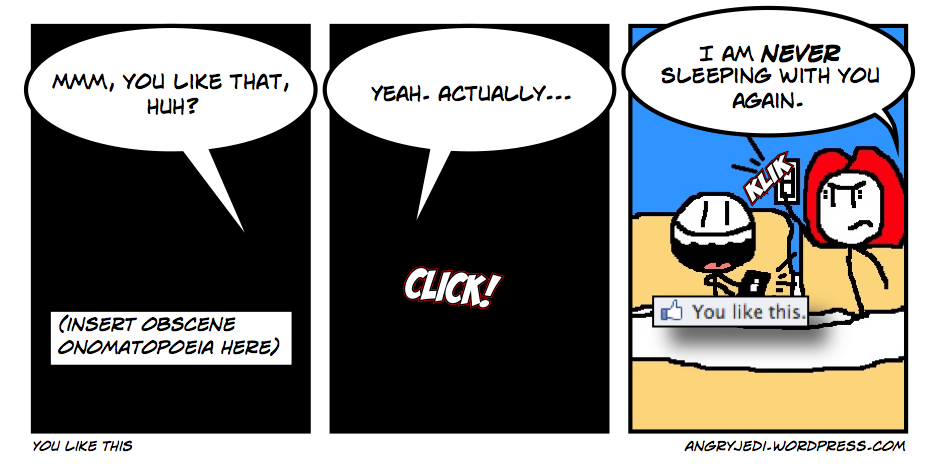
Fast forward to today and we have much the same issue with the word "like", a word which is rapidly losing all meaning thanks to its total domination over the social networking space. Every day on Facebook, it's a fair bet that there is at least one entry in everyone's news feed that says "Amber likes OMG!! Where did you get you're shoes LOL! on ♥." or "Bob likes I hate it when your trying 2 go 2 sleep and u cant on Likebook." Not only do these sentences make no sense, they're a symbol of a peculiar shift in communication styles that has taken place in recent years, particularly amongst teens and tweens.

Essentially, rather than just typing "I hate it when you're trying to go to sleep and you can't" and sharing that particular inanity with the world (not to mention spelling it correctly), it seems that it's now much more the done thing to go and find a website which lists hundreds of said inanities for the sole purpose of allowing people to Like them on Facebook. There's a kind of "distancing" involved. Anyone can click "Like" on something. As soon as you write it yourself, it becomes more personal, and harder to do.

Trouble is, the word "Like" is being used so much that it stops making sense sometimes. Or its context is completely inappropriate. Take the latest "check-in" craze, GetGlue, which is actually a pretty neat idea. Users tag the things that they, yes, like as well as the things that they dislike and can then get suggestions of other things they might like based on other users' tastes. Fair enough. However, when a site offers you the opportunity to not only "Like" ebola but also check into it, you have to question if the correct terminology is really being used in this instance.

And where's the opportunity to dislike things? GetGlue is unusual in that it does specifically allow people to say "I don't like this". There's no opportunity to do that on Facebook. If a friend posts a status update that informs everyone that, say, their leg has fallen off and their family are dead and not only that, someone posted a bag of poo through their letterbox then the only things to do are to "Like" it, which seems rather tactless and inappropriate, or to actually leave a comment which will probably start with "I wish there was a Dislike button" and end with too many exclamation marks.

Perhaps Facebook is attempting to make us all more positive. Instead of writing "I'm so sad. My family are dead, my leg has fallen off and someone posted a bag of poo through my letterbox" which, let's face it, no-one is going to click "Like" on, perhaps you should put a positive spin on it. "My family are dead, my leg has fallen off and someone posted a bag of poo through my letterbox. But at least I found 76p in small change in my jacket pocket, Snickers later ftw!!!"

aplenty from there on, I feel.

#oneaday, Day 222: I'm Right, You're Wrong

Having an argument is a great way to ruin an otherwise perfectly lovely day. The argument could be over anything. It could be over whether or not you think the latest changes that Facebook have made to their site are good or not. It could be whether or not you think raspberry ripple is the best flavour of ice-cream. It could be over whether or not you think the Pope is a massive douchebag. And, if it's on the Internet, it's probably over something utterly irrelevant and useless.

So here's a few steps on how to do it better.

Step 1: State your hypothesis

"PS3 sucks!"

Step 2: Offer convincing evidence for your hypothesis

"Because Xbox 360 rulez!"

Step 3: Offer a source for your evidence

"My mate Joe said so, too."

Step 4: Await response

"PS3 doesn't suck!"

Step 5: Respond to response

"Yes it does!" (Return to Step 4 until both sides have been made abundantly clear. This should take approximately 30 minutes, or five pages of forum posts.)

Step 6: Make up a statistic and quote it

"80% of people who tried both consoles said that PS3 sucks!"

Step 7: Await response

"Well I think Xbox 360 sucks!"

Step 8: Quote Nietzsche

"Admiration for a quality, art or rival games console can be so strong that it deters us from striving to possess it."

Step 9: Await response

"You're a douche, do you know that?"

Step 10: Respond to response

"Your face is a douche."

Step 11: Await response to response

"Your mom is a douche."

Step 12: Respond with nonsensical, illogical response

"That's not what she said last night."

Step 13: Await confusion

"What?"

Step 14: Take advantage of confusion

"So it's settled then!"

Step 15: Gloat

"I win. Douche."

And so it goes. One of the strange things about this always-connected, everyone-has-a-voice society is that everyone feels the need to have a contentious opinion on something. This happens (albeit not always to the degree described above) on all manner of topics, from the most irrelevant of fanboy conflicts to far-reaching opinions on matters such as racism. And no-one will ever back down, because there's always another website that "proves" their point, always another statistic from some made-up society somewhere.

It baffles me sometimes, because all this time that gets wasted arguing could be far better used enjoying both things that are being argued over. Of course, part of the issue in some cases revolves around people defending the camp they placed their flag in first. In many cases, people can't afford to buy both, say, a PS3 and a 360. So they stake their claim to one or the other and then justify their choice to anyone who will listen, and a bunch of people who won't also. That way, by branding the thing they haven't got "crap", they feel better about not owning it, even if they're secretly bitter that they can't make use of its exclusive features, software or delicious strawberry flavour.

Of course, some people are just asses and feel the need to disagree with everyone and everything. And those people are called assholes.

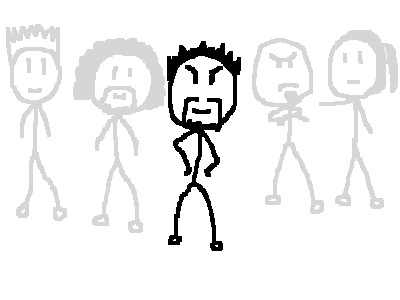
(If you're wondering about the inexplicable German in the cartoon above, you can blame both me and RothDog. Drawing nonsensical cartoons involving German stickmen arguing was always an excellent way to pass the time in tedious German lessons back at school. This strip is a recreation of the first ever one we drew.)

#oneaday, Day 217: "Book? LOL!"

I forget the exact circumstances of when I came across the quote in this post's title. It may have been on some form of social networking website, or dating site, or something like that. But it was a good few years back now.

The context of the quote was in one of those sections you get on pretty much all online profiles that asks you to list your favourite music, films, TV shows and books. This person's favourite books were listed as "book? lol".

That struck me as rather sad, but perhaps a little unsurprising given the general attention span of most people these days. Why sit down with a book which delays gratification and requires active use of the brain when you can be immediately bombarded with information via TV and the Internet?

It's an age-old argument of course, and one which has probably been running ever since every new information-giving technology came along. However, it seems particularly ironic in the context of the Internet, given that much of it is, in fact, text. Sure, there are pretty pictures and buttons that fart when you click on them and pornography, but it's still fundamentally built on text. You're reading text right now. Is your head hurting yet?

The fact that everyone has a voice on the Internet is one of those things that is debatable as to whether it is a Good Thing or not. But as part of having that voice, everyone has the opportunity to give their thoughts and expand on them as much as they want to. The sad thing is, though, in many cases, people don't feel like they have the time to read (or write) a full, well-considered argument. Instead, they denounce it as a "wall of text" and choose not to read it.

It happens in video games, too. A friend of mine once said that he couldn't get through Phoenix Wright: Ace Attorney because there was "too much reading". It's a game about a lawyer. I'm not sure what else he was expecting.

As a writer, as someone who crafts language and bends it to my will in the name of pretentiousness, self-expression, catharsis and humour, this is sad. The English language is a powerful tool that can say many things. As, indeed, are other languages. But it seems that for many these days, the priority is for quick, snappy, "efficient" communication. And sure, there are situations in which this is entirely appropriate. But I say that shouldn't be the norm. People shouldn't be afraid to speak their mind in as much length as they wish.

My mind is particularly drawn to the early days of the Squadron of Shame. Long before we started producing our podcast, we ran lengthy discussion threads on a variety of games on 1up.com's Radio forum. We'd started as a result of one of the 1up Radio features, so that was our spiritual home. Many of the people who populated that forum were articulate sorts who agreed with my thoughts above, so there were plenty of like-minded individuals there who enjoyed taking part in our discussions and posting their own "walls of text".

But one day, the Powers That Be at 1up decided that it would be a great idea to merge all the forums into "Games" and "Not Games". This meant that lengthy, in-depth discussion threads from groups such as the Squadron were crammed into the same space as "OMG HALO IS BETTR THAN KILZONE". Naturally, this led to problems. In one of the last discussions we had on those boards—on the subject of the peculiar PS2 game Psi-Ops—the posting was almost immediately derailed by a particularly notorious troll who posted "OMG FUCKING MASSIVE WALL OF TEXT" in giant red letters. Said "wall of text" was maybe six or seven paragraphs long and was interesting to read, but as soon as troll boy showed his face, the discussion went off track, not helped by many people (including myself) rising to his bait.

It's a pity that to some people the desire to speak in detail, at length and to produce a coherent argument is seen as a negative thing. Personally I would have thought that a forum—by its very nature an asynchronous method of communication in which people can take their time to consider their responses—was the ideal environment in which to have these lengthy discussions. But apparently not.

This is perhaps an unnecessarily negative picture, of course. There are still people who read books. There are still people who like to post more than five words at a time. There are still people who don't decide to ignore all the rules of spelling, punctuation and grammar "just because it's the Internet"—who came up with that stupid idea, anyway? It's just a pity that, at times, they seem to be declining in number.

Oh well. If you read through all that, you can count yourself amongst the élite!

#oneaday, Day 199: Waving Goodbye

So, Google Wave is going bye-bye, huh? Can't say I'm particularly surprised. As cool an idea as it was, there just wasn't the buy-in from people that it deserved. Largely because a goodly proportion of the Internet population didn't seem to understand what it was actually for.

It's easy to assume people who didn't "get" Wave are just a bit slow. But the fact is, Google never did a great job of explaining what the technology was for in the first place.

"Yay, collaborative editing!" they'd say.

"Yay, we can do that with Google Docs!" everyone else would say.

"Yay, you can see people typing!" they'd say.

"Yay, who gives a shit?" everyone else would say.

"Yay, it's like a combination of email, Twitter and a word processing document!" they'd say.

"Yay, I've never wanted to combine those three things together!" everyone else would say.

It's a pity, as I've seen some genuinely interesting uses of Wave out there. One particularly cool Wave I was invited to took the form of a moderated "text adventure", where participants could direct the protagonist (played by the moderator in the role of an interactive fiction-style narrator) by inserting commands. Eventually, the non-linear nature of Wave allowed two parallel storylines to develop at once—one happening in the present, another as a flashback. Wave's ability for anyone to edit and insert new content at any point in the "conversation" meant that these two things could continue going on without becoming overly confusing.

Then there were all the possibilities for things like education. But then you have to deal with your average teacher's technophobia.

When I was working in schools, I had a grand idea that Wave could be used for the preparation of interactive resources. The fact that media such as YouTube videos, flash thingies, pictures, text, hyperlinks and even iFrames could be inserted meant that Wave could have been an ideal tool to use on interactive whiteboards during lessons, and also a good means of collaborative planning if teachers in question weren't able to meet and discuss things. As they frequently aren't.

As a result of many of these things, I had a Wave account which largely went unused because no-one else was using it. This is a shame, as I could see the potential in the service. But the fact the service was invite-only for so long, and then by the time it went public people were still scratching their heads and wondering what to do with it—these things meant that it didn't have a particularly "mass market" appeal for the average Internet user.

All is not lost for the moment, anyway. Wave is going to remain open—Google have just said they're stopping development on it. They've also open-sourced a goodly proportion of the code, so enterprising clever people with mathematics in their brains will be able to pull it apart and make it better, faster, stronger, I'm sure.

So it was a swing and a miss for Google on this one. To be honest, though, I think it's good to see them experimenting with different technologies as a company. It would be very easy for Google to just think "Right. We do these things. And we do them well. Let's just stop there and make bundles of money and stick them in our ears." But no; they seem to be on a constant quest to make the lives of the Internet's denizens better. Sometimes these things work. And sometimes they don't.

So raise a glass to Google Wave, the web app that couldn't. And start speculating on what they might be up to next!

#oneaday, Day 186: How To Laugh On The Internet

The acronym "LOL", originally short for "laughing out loud" has lost all meaning. This is entirely thanks to Internet denizens who believe it is an adequate substitute for any punctuation mark ever. It's true. Try it sometime. Don't forget to strip out all capital letters.

"Would you like to go to the shops?" becomes "would u like to go 2 the shops lol"

"I went to the shops to buy some butter, but they had run out." becomes "I went 2 the shops 2 buy sum butter lol but they had run out lol"

"Now is the winter of our discontent / Made glorious summer by this sun of York; / all the clouds that lour'd upon our house / In the deep bosom of the ocean buried." becomes "now is da winta of our discontent lol made golrius summer by dis sun of york lol all da clouds that lourd upon our house lol in da deep bosom of da ocean buried lol"

Ouch, that actually hurt.

Anyway, the fact is, "LOL" is meaningless. Coming up quickly behind it in the meaningless stakes are other acronyms such as "LMAO" and "PMSL". So I feel, Internet, it is time to educate you in the ways of laughter which uses more characters but is infinitely more expressive. You'll find there's a laugh for every occasion.

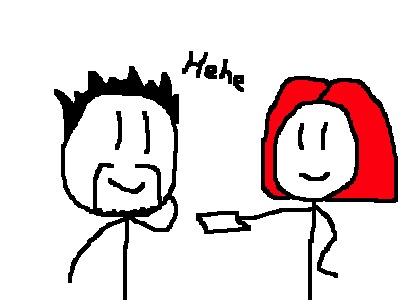
"Hehe"

Mild amusement. This can be used for something that was only intended to be a little bit funny, or perhaps something that you didn't find that funny yourself but don't want to offend the other person by not laughing at it. It's also less girly than some other alternatives. An optional trailing full stop may be added.

CORRECT USAGE: "I thought I'd forgotten my keys earlier. But they were in my pocket the whole time!" — "Hehe"

INCORRECT USAGE: "YARR HARR FIDDLEDEDEE, BEING A PIRATE IS ALL RIGHT TO BE! DO WHAT YOU WANT CAUSE A PIRATE IS FREE, YOU ARE A PIRATE!" — "Hehe"

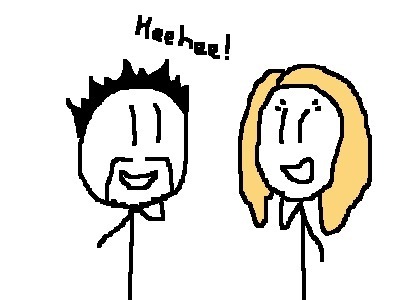
"Heehee"

Flirtatious laughter. Perhaps someone has said something a little bit contentious or naughty and you want to giggle with them. "Heehee" is the perfect laugh for this purpose.

CORRECT USAGE: "Well, we went back to her house and then, well, I'm sure you can imagine what happened…" — "Heehee"

INCORRECT USAGE: "Lindsay Lohan is like a child with ADD! Neither of them can finish a sentence!" — "Heehee"

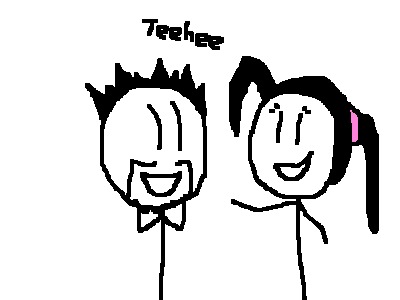
"Teehee"

The naughty laugh. An upgrade from "heehee", often used when slagging someone off behind their back, making illicit plans or making thinly-veiled references to something filthy the two of you—or indeed someone you mutually know—got up to recently.

CORRECT USAGE: "Well, last night certainly didn't suck… but someone sure did." — "Teehee"

INCORRECT USAGE: "The Master is rising! And soon the world will be ours!" — "Teehee"

"Haha(hahahahahahahahahahahahaha)"

The all-purpose "that's funny" laugh. The minimum number of "ha"s is two, otherwise it's a "Ha!" which is not a laugh at all, more a triumphant call of… something. The more "ha"s which are added to the end of the "haha", the funnier the thing is. "Haha" is mildly funny. "Hahahahahahahahahaha" is extremely funny. Optional additions may include all-caps or exclamation marks. These are both intensifiers.

CORRECT USAGE (mildly funny thing): "Knock knock." — "Who's there?" — "Doctor." — "Doctor who?" — "You just said it!" — "Haha"

CORRECT USAGE (exceedingly funny thing): "[insert most things that @DRUNKHULK says on Twitter]" — "HAHAHAHAHAHAHAHAHAHA!"

INCORRECT USAGE: "Sir. The rebels have been crushed!" — "Haha"

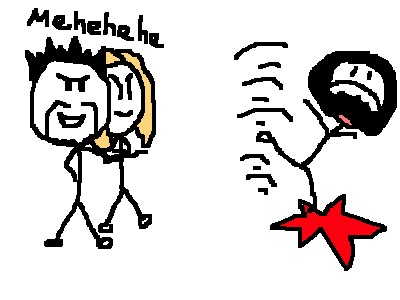
"Mehehe(hehehehehe)"

The "mildly evil" laugh. Are you about to do something that's wrong, and you just don't care? Are you talking smack about someone? Have you made plans to do something which may cause mild embarrassment, discomfort or itching to a third party? Have you just witnessed something unfortunate occurring to someone you don't like much? Then this is the laugh for you. The number of "hehe"s on the end may again be varied. All-caps and exclamation marks are not usually added to an instance of a "mehehehehe".

CORRECT USAGE: "I'm going to invite them over, but then I won't answer the door!" — "Mehehehehe"

INCORRECT USAGE: "A man walks into a bar and says 'ouch!'" — "Mehehehehe"

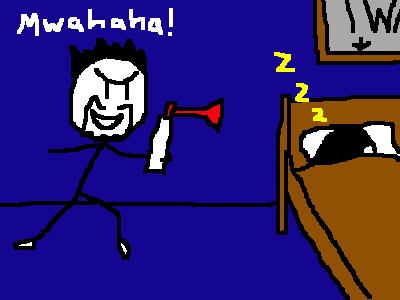
"Mwahaha(hahahahaha)"

The "moderately evil" laugh. Are you about to do something very wrong? Or perhaps you're joking about doing something wrong that you'd never actually do but think would be quite entertaining, if evil, if you did? Have you successfully got one up on someone you moderately-to-extremely dislike? Then this is the laugh for you, complete with variable-length "hahahaha" on the end. All-caps and exclamation marks may be adopted for this laugh if appropriate, depending on the evility of the situation. However, in extremely evil situations, consider upgrading to "Muhahahahahaha!"

CORRECT USAGE: "And then I told her 'by the way, your skirt is TOTALLY tucked into your panties'. She looked mortified!" — "Mwahahahaha!"

INCORRECT USAGE: "Aww, look at that cute little kitten!" — "Mwahahaha!"

Not to be confused with "Mwah", which is blowing a kiss.

"Muhahahahahahaha!"

The "very evil" laugh. You are an evil overlord, emperor or other figure who strikes fear into the hearts of your enemies. You are either about to do something terribly evil, have just done something terribly evil or take delight revelling in your evil-ness. Whatever the reason, this laugh is part of your arsenal of verbal weapons with which you may strike fear into the aforementioned hearts of your aforementioned enemies, along with sentences such as "I am afraid it is YOU who are mistaken" and "No, Mr Protagonist, I expect you to die". All-caps and exclamation marks are frequently applied for intensification purposes.

CORRECT USAGE: "MUHAHAHAHAHAHA!"

INCORRECT USAGE: "Oh look, your baby cousin is smiling for the first time!" — "MUHAHAHAHAHAHA!"

DISCLAIMER: I am not aware of any legitimate historical evidence which quotes Hitler as saying "MUHAHAHAHAHA!" But I bet he did.

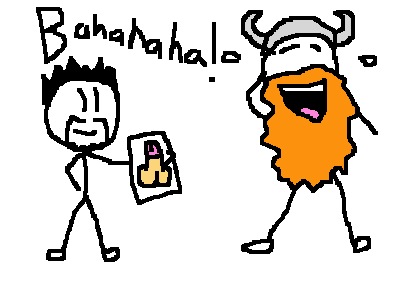
"Bahahahahaha!"

The belly laugh. This is a hearty chuckle at something you find genuinely amusing. The kind of laugh that Father Christmas or a Viking would use whilst sitting in front of a roaring log fire. Works well with a smoker's cough.

CORRECT USAGE: "I want a bicycle like in E.T. so I can follow you through the skies, Santa!" — "Bahahahahaha!"

INCORRECT USAGE: "That duck just fell over." — "Bahahahahaha!"

"Gahahahahahahaha!"

The Brian Blessed laugh. I don't think anything else needs to be said about this one. Usually combined with all-caps and exclamation marks.

CORRECT USAGE: "CRY HAVOC! AND LET SLIP THE DOGS OF WAR! GAHAHAHAHAHAHA!"

INCORRECT USAGE: "I posted a rude message on that forum." — "GAHAHAHAHAHAHA!"

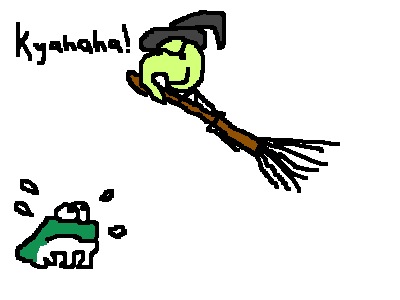
"Kyahahahahaha!"

The witch's laugh. An evil cackle if ever there was one. Doesn't really work when men do it. Even evil wizards don't tend to go "kyahahahahaha".

CORRECT USAGE: "And now, my pretties, into the pot you go! Kyahahahahaha!"

INCORRECT USAGE: "Do you remember that time my pants fell down?" — "Kyahahahahaha!"

So as you can see, there is a laugh for pretty much any situation. I trust this will be the last time I ever see you using acronyms to represent laughter and/or punctuation.

Please feel free to share any additional variants you may be aware of in the comments.

#oneaday, Day 169: Wrong Again, Internet

If you've been on the Internet at all for the past couple of days, you've probably seen at least one person make the assertion that at some point in Back to the Future, Doc Brown sets the clock in the DeLorean to a date 25 years in the future. That date is supposedly today. Or possibly yesterday.

This rumor is a nice thought, so everyone has been retweeting it like crazy. Pity it's unlikely to be true, since the BTTF movies were set in 1985, 1955, 2015 and 1855. None of those are 25 years in the future from the film's original release date. The closest is 2015. But that's clearly 5 years away.

The interesting thing about this is how quickly it spread across the Internet without a shred of proof to back it up. No-one, at the time of writing, has posted a still from the film. Not even a bad Photoshop job. But somehow, everyone's just accepted this blindly.

I know that ultimately it doesn't really matter in this case, but isn't it a little scary that thousands, possibly millions of people across the world blindly stated this as fact without bothering to question it or research it?

Twitter is like a global game of Chinese Whispers sometimes. All it takes is one influential tweeter to post something contentious and the world will jump on it. Sometimes this is a good thing – the huge display of generosity from the public upon the death of Frank Sidebottom's creator Chris Sievey, for example, raising well over £20,000 for his funeral costs.

And sometimes this is a bad thing. How many times has Twitter been swept by false announcements of someone's death? It's a common joke now that any time someone's name comes up in the Trending Topics that they might have died.

What happens if something seriously untrue spreads this way though? Serious accusations about someone in high office? Reports of a disaster which never happened? Earth-shattering news which is just an outright lie?

It's an alarmist way of looking at things, of course. But the Internet has proved time and time again that it can make the most stupid shit into a star, or the most outlandish fact seem like reality.

So think before you RT, kids! Winners don't use Wikipedia!

#oneaday, Day 148: We Live In The Future

Screw this motion control crap – I just watched a press conference on the other side of the world while lying in bed with my phone.

That was a tweet from Alex Martin that I received a few minutes ago. And when I think about what I've done today, it's pretty clear that we are most definitely living in the future.

I started my day feeling a bit lonely as I hadn't seen any actual real people for a little while. So I went out to the coffee shop and took my netbook with me. While I was there, I gratuitously solicited questions for my Formspring account (which people were more than happy to furnish me with) and also dropped in on the freshly-created Squadron of Shame Squawkbox.

I ended up sitting in that coffee shop for about four hours, discussing things with people from all over the world – some deep and profound, other things less so. Then it was time to come home, because as part of my job as a News Editor for Kombo.com I was on the "home team" for the E3 coverage.

I'm gutted that I'm not actually at E3. But the experience I've had throughout the course of this evening is the next best thing. I've had IM windows open with people frantically telling me to cover stories. I've had the Squawkbox open to see the Squad's reactions. And I've had Twitter open to see everyone else's reactions. As sad as it sounds, despite sitting on my own in my study in front of the computer, I've not been alone tonight. There have been many people with me, all following the same things, watching the live streams on their computers. It's as if we were all in the audience together, making sly comments to one another.

Whenever Microsoft showed off the ability to watch, say, Netflix movies as an Xbox party, I always thought it seemed a bit pointless. But after sitting watching the E3 conferences with a group of friends who aren't even on the same continent let alone in the same room as me, I think I've reconsidered a little bit.

Obviously there's no substitute for real human interaction. But when the real thing isn't possible, the fact that we live in the future makes a very adequate substitute. So big love, kudos and respect to everyone who's helped make today a huge amount of fun, and I look forward to doing it all again very soon.

I have plenty of thoughts about what's been shown at E3 so far but I've been posting news articles all day and frankly I'm completely burnt out. So I'll save further thoughts until I'm a bit more awake.

Job interview tomorrow. Quite looking forward to it. It may not be the ideal job for my current situation, but it's a foot back on the ladder and has the potential to lead onto better things. So right now I'll take what I can get.

One thing's clear to me right now as it approaches 3AM where I'm sitting: I'm certainly feeling a lot more positive than I did when I woke up this morning. And it's thanks to you, Internet. Big love to you all.

#oneaday, Day 94: Year 7, Years Later

Times change, especially when it comes to kids. As new parents inevitably say at some point or another, "they grow up so fast". One minute they're a mewling, puking, shitting machine that whinges and moans about everything. Then they move out of their teenage years and leave home.

I jest. Actually, no I don't, really.

I spent today doing supply teaching work for a local school. A local secondary school, to be as specific as I'm going to get in this post. As far as days at school go, I've had worse. Largely because I knew I was leaving at 3pm and that I was only there for a day, which meant that even if it was a nightmarish experience, I was going to escape pretty quickly anyway. This meant I could take a fairly relaxed attitude to the whole day and not get wound up by children who obviously do their very best to drive their teachers nuts at every opportunity. Water off a duck's back. It was a new feeling. I liked it.

What I didn't like so much was the discovery that Year 7 are into hardcore pornography, and aren't shy talking about it in rather loud voices in the middle of a music lesson.

Now, I may have led a somewhat sheltered existence being a rural, country village boy, but I don't think I even knew what "hardcore pornography" meant when I was in year 7. As I recall, most of my conversations in Year 7 revolved around whether the Sega Mega Drive or the Super NES was the best, and whether it was pronounced "Rye-oo" or "Ree-oo". Much like today, in fact. The most anything even vaguely sex-related came into conversation was if someone fancied someone else – and even then, it was never talked about in terms of sex, just in terms of an Alan Partridge-esque "ooh, I'd like to… kiss her". Oh, and there was the one time someone put a condom over a shower head in the boys' PE changing rooms and turned the water on. We were all delighted to discover that said prophylactic would reach all the way down to the floor if you kept filling it with water.

But no porn. At least, no-one talked about it, anyway.

Part of the reason for this shift in the, ahh, "interests" of 11-year olds is clearly due to the Internet. Most of the discussion that these kids were having (and ignoring requests to please shut up about it, I might add) revolved around the sites that they liked to visit. There was no shame in this discussion, no taking the piss out of each other that "urrgh, you're doing that so you can have a wank!" – just pure, unadulterated filth. From 11-year olds.

Now, all right, the area that the school in is, shall we say, not the best. But I was still pretty surprised and shocked to hear these sorts of things come out of the mouths of 11-year olds.

The regular teachers at this school seemingly weren't, however. "Miss says this class is sex-mad, sir. Sex-mad! Sex sex sex," one helpful young man informed me. I wasn't arguing.

The moral of this story, dear readers, is clear, then. If you're a parent, then for God's sake take an interest in what your kids are doing on the Internet. Talk to them about what is and isn't appropriate for them. By all means talk to them about offensive content and what they should do if they come across it (get your mind out of the gutter) but don't just leave them to their own devices. From that springs porn-addicted, shit-talking, ill-informed arseholes who will inevitably grow up to become /b/. And do you really want to create an entire generation of /b/?

On Virtual Worlds

I haven't really blogged about this much on this particular site, but I figured it's time to sit down and talk about it as it's something that I've found consistently interesting for quite a few years now.

The subject is virtual worlds – online spaces where tens, hundreds, thousands of people can log in and join a virtual community for one reason or another… it may be purely to socialise, it may be to battle monsters, it may be to have fun, it may even be to have sex. And I'm not talking about community or social networking websites here, as those are a different beast entirely. No, I'm talking about actual virtual worlds, where you can wander around as an avatar, explore the world, meet other people and interact with them in any of the ways described above.

There's literally hundreds of virtual worlds available for people to use nowadays, of many types – some are more "gamey", others are more "social", others still are focused on the less salubrious side of online interactions. Today I want to focus particularly on the virtual world of Second Life and its appeal to me, despite its many, many flaws.

I remember first hearing about Second Life while I was big into The Sims. My whole flat at university became obsessed with The Sims shortly after I built our first house, made virtual representations of all six of us in the flat, then realised that we didn't have enough money to buy beds to begin with, so the whole "family" slept in recliners. Over the years – yes, I was that guy – I bought most of the expansions and later moved on to The Sims 2.

I was, like many other fans of the series, extremely excited at the prospect of The Sims Online, offering the opportunity to have the same kind of fun, but with other people involved. It never made it over here to the UK – at least, not in any prominent way – so I never got the opportunity to try it. I forget exactly how I came across Second Life as a result of this, but it was something I stumbled across without hearing anything about it beforehand, and I thought that the concept sounded rather like The Sims Online, with players being able to design their own virtual person and "live" in a virtual world. As it happens, it has very little to do with The Sims Online, but I wasn't to know that at the time.

For the uninitiated, Second Life is an ambitious virtual world project by Linden Lab, offering "players" (and I use the term loosely, as it's really not a "game" as such… unless you choose to make it as such, which we'll discuss later) the opportunity to enter a world that is almost entirely user-generated. Buildings, textures, landmasses, interface features, animations, body parts, clothing – everything is created by the residents of the virtual world, and this is the thing that initially fascinated me. I couldn't comprehend the idea of being able to log into something where the content was so fluid, where there wasn't a static virtual world that was always the same every time you logged in, with monsters in the same place, prime "camping spots" and so on. So I signed up and signed in, not really knowing what to expect.
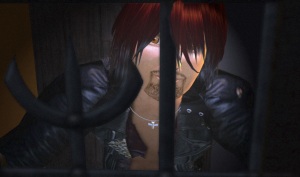
at-the-gateSecond Life is a peculiar experience the first time you log in, especially if you're more used to aforementioned online games with static content, such as World of Warcraft. You quickly become used to the concept of "rezzing", which is the process whereby you enter a new location and you can see things downloading and appearing around you. This is disconcerting the first time it happens (and more than a little irritating if you find yourself stuck against a wall which hasn't appeared yet) but, like many things in the world, you become used to it the more it happens. Similarly, you become used to the fact that other residents' avatars also go through this rezzing process in front of you, so it's entirely possible that someone could appear in front of you with no hair and no face until the textures and shapes have downloaded. Rezzing accidents are the subject of many a good laugh amongst SL residents, but they are accepted as part and parcel of life in the virtual world. People more used to traditional MMOs will likely find it a complete turn-off though – at least until they accustom themselves to it.

Upon arrival in SL, the question on many residents' lips is "what on earth am I supposed to be doing?" And the answer is not simple. Explore, interact, build things, take photographs, join groups, play games, look at art, shop, fuck, roleplay, pretend to be a vampire… the list goes on for a mile, and all of these interactions are built using the basic engine of the Linden Lab-developed software, with extensions built, designed and scripted by residents of the world, just like everything else. People make in-world money either by paying out of their own pocket to buy "currency" – or by working a job, just like real life (albeit with MUCH better hours). It's always interesting to hear how seriously people take their SL jobs, whether they're a DJ in a club streaming their music through something like ShoutCast, a live musician, a virtual performer, a dancer, a greeter, a builder, an estate agent, a facility manger, a prostitute, a Game Master for roleplaying areas – again, the list of things goes on, and people have the opportunity to completely subsidise their virtual existence through virtual hard graft if they so desire.

Another thing that is almost immediately noticeable about SL is the sheer diversity of the avatars present. And we're not talking a set choice of races here, with arbitrary "body size" sliders. We're talking complete customisation. We're talking this situation here:
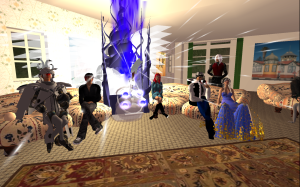
snapshot_111This wasn't anything particularly special happening – it was a discussion group where we sat down and had a civilised chat about a set topic. Like a real-world discussion group in fact.

And that's the thing with Second Life. It has this immensely odd (yet perfectly natural-feeling once you've been there a while) ability to combine the mundane and the absurd. Everyone is distinctive in Second Life – because you're not limited to hard-coded appearance options, you can be whoever you want to be. You don't even have to be human. I picked up an awesome Pac-Man avatar the other day that allows you to spawn dots and ghosts and turn any place you go into a game of 3D Pac-Man.

In fact, the question of not being human is one of the more interesting sides to Second Life that I haven't explored yet. It also happens to be the side that there's a lot of sordid assumptions about, particularly around the "furry" avatars. Yes, there are people who choose to represent themselves as furry animals and then have simulated sex whilst masturbating furiously at the sight of their interlocked pixels. But equally there are people who choose to represent themselves as furry animals just because they like them. On one memorable occasion I was spending some time at a hangout with my earliest friends in SL (who are still good personal friends to this day, I might add) and I was introduced to an immensely clever man from a university who was working on lots of exciting things to do with AI. My friend Lyndy, who introduced me, assumed that because I "knew about computers" I'd be able to chat to this guy no problem. However, he was explaining concepts that were way over my head… but they were interesting to hear. The really peculiar thing, though, was that he was dressed as a fox. Not a foxy lady, no, an actual fox. In a waistcoat. If anyone remembers a really old DOS point-and-click adventure called Inherit the Earth… the main character from that? Fox-in-a-waistcoat called Rif? That's about it.

Why do I remember that? I never even played it.

Second Life is flawed in many ways. I've talked about this many a time with Jennatar, and she suggested the notion that virtual worlds are a much younger technology than the Internet. Currently with virtual worlds, she says, we're at a similar sort of stage to the Internet was in in the early 90s in that there's a lot of stuff out there to explore, but navigation, user interfaces, efficiency and practicality haven't quite reached the level of stability you'd need to be completely "mainstream". This means that titles like Second Life are, at least for now, going to be "niche" interests. However, interestingly, the "niche" for Second Life perhaps isn't what you'd expect – an oft-quoted "statistic" is that of the many residents of the world, a significant majority of them are female and over 30. This is certainly true amongst my circle of online friends – I think there's one guy and about thirty gals on my friends list. This is also backed up by the fact that the "retail" sector in the world is very much female-dominated, with vast business empires and shopping malls devoted to female clothing, hair, animations and the like, with male products often relegated to the virtual equivalent of a dusty old cellar. One may argue that this may lead to a lot of males representing them as females, and of course this goes on – given the opportunity to live out a fantasy life, I'm sure there's plenty of men out there who wonder what it would be like to be a woman – and a hot one at that (no-one is ugly in SL unless you make a specific effort to do so!) – and give it a try.

There's a kind of implicit understanding amongst residents though – don't ask, don't tell. If someone doesn't want their "first life" brought into it, then you don't ask. If it's a female on the screen, then as far as you're concerned, it's a female you're dealing with. I actually don't have a problem with this. Perhaps it's because I'm not spending my time going around having sex with these people, but it certainly doesn't bother me – if they choose to represent themselves in that way, for whatever reason that might be, then that's their business.

Despite its many flaws and its perceived "niche" interest, I have a lot of time for Second Life. It's an experience that is very much made by the people you interact with. Without people to meet, talk to and interact with you're relying on stumbling across interesting content solo – and while there is plenty of interesting stuff to do by yourself, it's always better to share with other people. Much like real life, in fact.
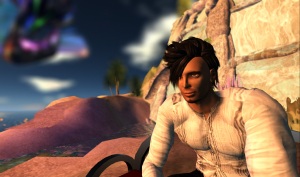
quiet-thunder

I'll certainly be very interested to see how virtual worlds develop over the years. Will Second Life remain in its pioneering position of almost entirely user-generated content? Will it be overtaken by something else? Who knows. I do know that I have made some genuinely close friends in its strange world, many of whom I am unlikely to ever meet face-to-face. And I'm fine with that. By having their "virtual" face in front of me on the screen – even if it's nothing like their real-life face – I still feel like I "know" them better than people I interact with on the Internet in less direct ways. Perhaps "know" is the wrong word – it's difficult to describe, but knowing someone's avatar feels a lot more "physical" (for want of a better word) somehow than a username on a page of text.

It's not an experience for everyone by any means. It would bore the pants off someone expecting to play an exciting game, because it's not a game. But as a means for virtual social interaction, it's an interesting experiment… one that still has a long way to go, but also has an incredible amount of potential.

I blog about my experiences in the world in more detail here. I post my photos from the world here. Feel free to check them out if you're the slightest bit interested.
Weirdness of the Web: PMOG

I came across this the other day when browsing through friends' Twitter profiles. As if Twitter didn't waste enough time with publicly announcing that you were taking a dump (a tweet that, mercificully, neither I nor anyone else that I "follow" has felt the need to share… as yet) I happened to come across something called PMOG on the page of one Jennatar.

PMOG stands for Passively Multiplayer Online Game and I guess it's one of those Web 2.0 thingies that you always hear people rabbiting on about. I was intrigued by the title, to be honest, so I decided to check it out.

PMOG takes the form of a Firefox extension that you install and it does all kinds of interesting things while you're just going about your normal daily life on the Web. Firstly, you gain Datapoints for browsing websites. Secondly, players sometimes leave items on webpages including Crates, which can contain Datapoints, Mines, which cause players to lose Datapoints (and which cause Firefox to wobble around like it's having a spaz attack), Portals, which link to another website with only a little hint about what it might be (though there are NSFW tags on ones which… well… aren't) and some other bits and pieces.

The great thing is, these things only pop up if you're running the PMOG toolbar, so you can make it leave you alone whenever you like. But then you'll miss out on the mysterious portal which has appeared on your Facebook page, linking you to a video of, I don't know, some dancing kittens or something.

It's an interesting idea and it's already made me check out a number of sites I'd heard of but never got around to investigating in any great detail.

Crap. As if I need another excuse to waste time on the Web.