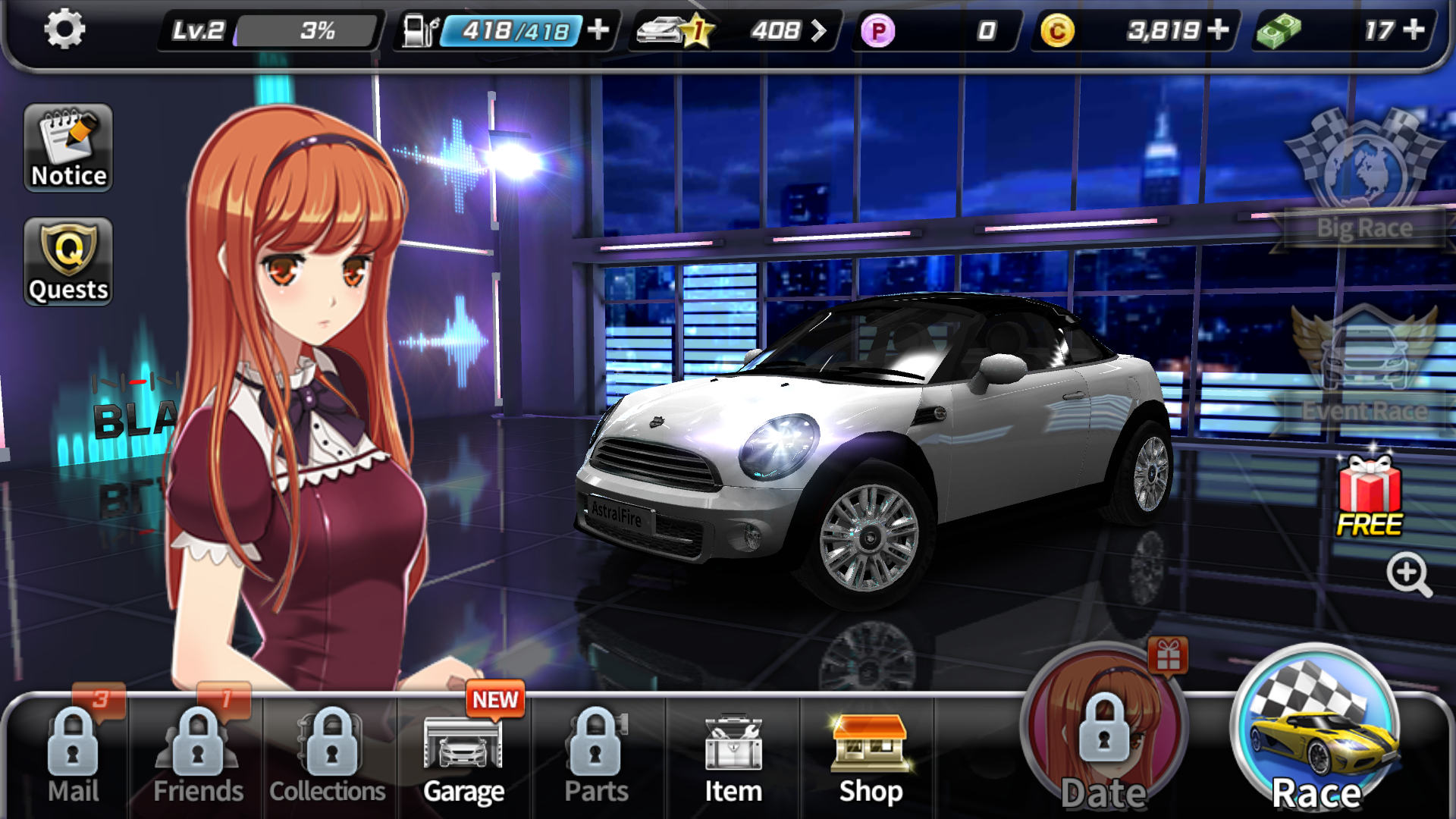
#oneaday Day 270: New Suikoden being a mobile game sucks, stop trying to pretend it doesn't

Apparently Konami announced a new Suikoden game! Hooray! Hold your horses there, Bucko, they announced that it's a free-to-play mobile game with microtransactions. How do you feel about that?

If your first reaction to this was violent revulsion, congratulations, you still have good sense. But I've seen a surprising amount of resistance to the perfectly reasonable viewpoint that a beloved series getting a free-to-play mobile game is shit. And I think we're long past the point where we should be making excuses for this sort of thing.

"But phones are the most popular gaming platform!"

This argument has been trotted out for nearly two decades at this point, and it doesn't mean anything. Yes, you can point to numbers, and based on raw figures, there are probably more people playing games on phones than on any other platform — possibly all platforms put together. But those numbers don't mean anything.

Instead, we should be focusing on the quality of the experience. And while there certainly are games for phones that are peers of full-price PC and console games, designed to keep you feeling invested and involved in the gameplay over the long term and make you feel like you got value for money, the overwhelming majority of them are free-to-play, microtransaction-infested shitholes that inspire some of the most formidable instances of Stockholm syndrome I think I've ever seen. (And the phone games that are the peers of PC and console games… are probably available on PC and console.)

Pro-tip: if you ever have to use the phrase "it feels like a proper game" when you're playing a mobile phone game, that game is not a good game. Likewise, if you ever have to utter the phrase "well you don't have to spend any money at all", you have already lost the battle.

I've been through my gacha phase, during which I said both of those phrases on more than one occasion.

I played some Fate: Grand Order, some Granblue Fantasy, Arknights, Azur Lane, Goddess of Victory Nikke, Final Fantasy Record Keeper, Final Fantasy Brave Exvius and Dragalia Lost. I even played some obscure ones even further back — anyone remember Ayakashi: Ghost Guild? Brave Frontier? Valkyrie Crusade? Didn't think so. Anyway, one thing was constant with all of these games when I played them: I spent more time trying to find the "proper game" in each of them than they really deserved, and came away from each and every one of them wishing that they were something else: something more substantial than boring interaction-free story sequences followed by battles that required no strategy beyond "equip items to make big number". Final Fantasy Brave Exvius came the closest to feeling like an actual Final Fantasy game, but it was all smoke and mirrors; the "wandering around town" part had no substance to it whatsoever.

Not one of them felt like an actual game. And I gave all of them tens of hours in an effort to understand their appeal. And I was forced to conclude that, indeed, they were little more than thinly veiled casinos where you gambled real money in the hope of getting the picture (and sprite, if you're lucky) of the hot anime girl you most wanted to fuck.

And in some cases, the "sex sells" aspect of this was so flagrantly transparent Azur Lane and Goddess of Victory Nikke are particularly outstanding in this regard — that it's actually offensive. Not because of the content of the artwork, which, let's be clear, is absolutely lovely and super-sexy when taken in isolation, and totally fine that it exists in and of itself. The offensive thing is how that sexy artwork is used to manipulate lonely, horny players into spending way more money than any of these games deserve.

So I swore off them, and I am seeing nothing about this new Suikoden game so far to suggest that it's going to be any different.

Is this elitist? Supposedly it is. But as someone who has been involved with video games since their very earliest days, I absolutely cannot look at a mobile phone game that asks you to pay up repeatedly and without limits, and which ties both mechanical and narrative content to what is effectively gambling, and see it on the same level as a game developed for PC or console where you buy it once, pay up front and then play it as much as you want without it even looking in the direction of your wallet.

Because let's face it, this is exactly the form the Suikoden mobile game is going to take. No amount of fancy 2D-3D HD pixel art on polygonal backdrops is going to change the fact that it will be gacha hell at its heart. The number of musical tracks on its soundtrack does not mean that it is going to be a good, fair game. And because games like this are "live service" games, folks who could be making a proper new Suikoden game for PC and console, like people actually want, will be doomed to continually churning out content for this until it is inevitably "sunset" in a year's time when they realise that no, they actually can't take on Genshin Impact.

There's been a lot of talk today about people being overly negative about this, not having played the game and suchlike. And look, I get it. I hate it when people are negative about things they haven't played.

But this is different from someone talking shit about a game that you like. There is considerable historical precedent for a free-to-play mobile game based on a beloved franchise to be a pile of predatory, manipulative bullshit that closes down six months after launch because no-one ever actually wanted it.

And I have seen zero reason so far to believe that a Suikoden mobile game will be any different. I'll be happy to be proven wrong, but I am not holding my breath.


Want to read my thoughts on various video games, visual novels and other popular culture things? Stop by MoeGamer.net, my site for all things fun where I am generally a lot more cheerful. And if you fancy watching some vids on classic games, drop by my YouTube channel.

If you want this nonsense in your inbox every day, please feel free to subscribe via email. Your email address won't be used for anything else.

2389: Mobius Final Fantasy: Also Doing Mobile Free-to-Play Games Right

0389_001

Square Enix is on a roll with the mobile games at the moment; a few months after Final Fantasy Brave Exvius hit the market, we find ourselves faced with a brand new free-to-play Final Fantasy game for mobile devices in the form of Mobius Final Fantasy, a game that has been shrouded in a considerable amount of mystery for a while, but which is finally available to play for both iOS and Android devices.

Let's get one thing out of the way first: this is a distinct experience to both Final Fantasy Record Keeper and Final Fantasy Brave Exvius, and has a very strong identity in its own right. In fact, I'd go so far as to say that despite it being based around the usual "gacha" core of drawing and upgrading cards to progress, it is one of the most distinctive, original mobile games I've ever had the pleasure of playing. And if you know how much I hate 98% of mobile games, you'll know that's high praise indeed from me.

Mobius Final Fantasy casts you in the role of (insert your name here), who finds himself drawn through time and space to the ruined world of Palamecia, which appears to have been laid waste to by the malevolent force that is Chaos. Alongside the other "Blanks" who appeared in Palamecia alongside you, you must begin a journey to determine your worthiness to become the Warrior of Light and defeat Chaos once and for all.

If all this sounds rather familiar, you'd be absolutely right; Mobius Final Fantasy draws heavily from the very first Final Fantasy game in terms of thematic ideas, even going so far as to include a number of characters with the same names — most notably Garland and Princess Sarah of Cornelia. It remains to be seen whether these individuals are actually the same people as in the original Final Fantasy — Palamecia was the name of the empire in Final Fantasy II, not the original, so it's entirely possible their resemblance and nomenclature is pure fanservice — but it's a nice touch if nothing else.

Gameplay-wise, however, Mobius Final Fantasy is entirely original, although its overall aesthetic is somewhat similar to Final Fantasy XIII in terms of character and interface design.

Playing Mobius Final Fantasy involves traversing a node-based world map, with each node housing a number of different battles and perhaps a stronger boss to fight. Most of the nodes represent your journey across the ruined world of Palamecia, but some are dungeons that have several floors to clear and sometimes even an area you can explore freely at the end. Unlike many free-to-play mobile games, after just a few short hours of gameplay, Mobius Final Fantasy opens up and starts to give you a considerable amount of freedom in where to go and what to do. There's always an obvious place you should be going next to advance the story, but in some instances you'll be presented with a path that won't open until you clear a particular quest — and you'll have to find the target for that quest yourself by exploring.

You don't freely explore the areas (thankfully, since controlling free movement in mobile games using just a touchscreen is horrid) but rather advance from battle to battle, defeating enemies and earning rewards along the way. The emphasis, in other words, is very much on fighting.

So it's fortunate that Mobius Final Fantasy has such a fun, interesting and original battle system. Rather than reskinning Brave Frontier as Brave Exvius did, or taking the retro approach of Record KeeperMobius Final Fantasy has its own take on how you fight. You're alone, for starters; no party members to back you up here, but you are able to take a number of different "cards" into battle, each of which has an ability attached and an elemental affinity.

The flow of combat is relatively straightforward, though takes a little explaining. Normal attacks deal damage and also draw out elemental orbs of four out of five possible types: fire, water, earth, wind and life. Each Job can only draw three of the elemental types plus life orbs, which are drawn at a much lower chance than the others. These elemental orbs are primarily used to trigger the abilities on your cards, each of which have a requisite number of a particular element before you can unleash them.

The card abilities have two main functions: to exploit elemental weaknesses of enemies, and to make their "Break" gauge vulnerable. This latter feature is somewhat akin to Final Fantasy XIII's "Stagger" system, whereby if you empty an enemy's gauge, they will become significantly weaker against your attacks along with being unable to hit you for a short period. If you can Break an enemy, in most cases you'll be able to press the advantage right up to victory before they're able to get back on their feet.

But what if you don't draw the right elemental orbs to use your abilities? Well, here's the other use for them: you can absorb them, which removes them from your stock and gives you temporarily increased resistance against that element (or, in the case of life orbs, heals you). That's not the only effect, though; absorbing elemental orbs in this way shifts the balance of elements, making you less likely to draw that type from enemies for a short period and consequently more likely to draw the others. In this way, you can absorb an element an enemy is strong against, which in most cases will make you strong against the enemy's attacks, and increase the likelihood that you draw orbs suitable for unleashing abilities that will damage the enemy to a greater degree.

I don't feel like I've explained that all that well. Let's give a practical example.

Battle begins. You're faced with an enemy that has a wind affinity. You're playing a Ranger job, so your normal attacks will draw water, wind, earth or life orbs — no fire for Rangers.

You attack three times, the standard amount you are able to do in a single turn. In doing so, you draw a bunch of wind orbs and a couple of earth, though not enough to use an earth ability. A wind-element enemy would be weak against earth abilities, so it's in your interest to get one up and running as soon as possible.

The enemy attacks. You take a bit of damage, though nothing to worry about.

For your first action, you absorb the wind orbs you drew last turn. This gives you temporarily increased resistance against wind attacks — i.e. any attacks the enemy will throw at you. It also makes you less likely to draw wind orbs for a few turns.

For your second action, you attack. This draws enough earth orbs to attack an earth ability, which requires four orbs to use.

For your third action, you unleash your earth ability, which causes the enemy's Break bar to turn red and become vulnerable. Your turn is over.

The enemy attacks. You take a bit of damage again, though a bit less this time thanks to your increased wind resistance.

Next turn, you throw out three normal attacks, which are enough to empty the vulnerable Break bar of your opponent. It enters Break status, and you get another turn as it topples to the ground. You throw out three more normal attacks, which are now significantly more effective against your downed foe, and defeat it. You win! One step closer to Warrior of Light-hood.

What all this means for Mobius Final Fantasy is that it's by no means a glorified clicker game with boring, automated combat like so many other "card battle" games on mobile. There's depth and strategy here, but it's presented with such glorious visual panache that you can't help but be drawn in to this strange ruined world, particularly as the exciting battles are punctuated with fully voiced cutscenes (with dual audio, for those who prefer Japanese speech) and some beautiful sights.

I'm relatively early in the game so far, and the game as it stands only features two "chapters" of the main story so far (plus a special region for grinding XP and other resources against the clock) but it's already clear that Mobius Final Fantasy is something quite special. And that's the last thing I ever expected to say about a mobile game in 2016.

I'm very interested to see where the game goes next and how it expands on its already solid mechanics over time — and I'm invested in the story, too; I want to know whether or not this actually is Final Fantasy I's world — which is plausible, given that part of Final Fantasy I's plot dealt with Chaos creating a time loops, and "Mobius" can be used to describe the characteristic "infinite loop" symbol — and, if not, what on Earth happened to allow Chaos to ruin it as comprehensively as he did.

Find out more about Mobius Final Fantasy at the official site; there are links to download it for iOS and Android devices there, too.

2213: Paying Not to Play vs. Games That Let You Break Them

0213_001

I'm currently grinding my way through to the Platinum trophy on Hyperdimension Neptunia Re;Birth 2, and in the process I've unlocked a considerable number of the "Plans" in the game's "Remake" system. For those who haven't played any of the Re;Birth games, these are essentially a crafting system that allow you to bolt various bits and pieces onto the base game. These bits and pieces range from a boost to the amount of experience points you gain from battle to new items being available to purchase in the shops.

Re;Birth 2 goes further than its predecessor did with the Plans by pretty much allowing you to break the game altogether. Between the Plan which allows you to automatically defeat enemies you outlevel on the dungeon screen without having to actually do the battle and the "Symbol Attack Gains" Plan, which allows you to still get experience, credits and items as if you had done the battle, grinding to the game's various endings is arguably a little too easy, particularly if combined with boosts to experience and suchlike.

At least, I'd say this was a little too easy were it not for the fact that I've played a bunch of Compile Heart games now, and their endgame is always like this: characters continuing to level after the usual cap of 99, stats increasing to ludicrous levels, superpowered equipment boosting them still further. In Neptunia's case, the exaggerated power levels of the endgame is arguably all part of the satire and parody that the series is based around: RPGs are known for having big numbers in them in their final hours, so here are bigger numbers than you've ever seen (outside of the Disgaea series, that is) popping out of enemies as you batter them around the face and neck repeatedly with various sharp implements.

In the case of the Re;Birth games, how much you break the game is entirely up to you. You don't have to turn any of the plans on if you don't want to, but if you do so, it makes working your way through the alternative endings considerably easier — and manages to remain fun in the process, since there's more to the game than just battles. It's inherently satisfying to see Nepgear closing in on level 400 as I approach the "True" ending on my third playthrough, and I'm fully intending on blasting through the other endings after this too.

Hyperdimension Neptunia U allows you to completely break it, too, particularly in its endgame. As you clear various components of the game, you unlock various cheats which range from having infinite EXE Drive power for super-special moves to not actually taking any damage from enemies, essentially making you invincible. And yet that game managed to remain fun despite the option to completely break it; testament to its overall charm and the fact that it had a metagame structure that I found enjoyable to grind through in the name of a Platinum trophy.

As I play these deliberately broken games, I can't help but compare them to what a lot of mobile games do. In the case of mobile games — free-to-play ones, anyway — you generally have the option to pay real money to break the game in some way, be it eliminate grinding, get an overpowered new character/item/weapon or somehow otherwise break the usual rules of the game. Some games are more aggressive than others in trying to convince you to part with your cash, with the most egregious technique being the vile "Energy" bar that throttles how much you're allowed to play in a single session without either waiting or paying up.

In essence, by paying up to get an advantage in mobile games, you're more often than not paying not to play the game: paying not to have to collect things, or grind experience points, or earn money, or fuse cards to make better cards, or whatever. Most well-designed free-to-play mobile games do have a means of earning the premium currency required to do most of these things, but in many cases this is painfully slow — fast enough to give you a taste, but just slow enough to make you think it can't possibly hurt to pay 99p for 15 gems or whatever. And once you do that, any sense of achievement is gone, because you know you didn't really "earn" whatever you got from it: you just bought it.

Contrast with, say, the Plans in Re;Birth 2, which are also providing the opportunity to not play part of the game — battles with enemies much lower level than you — but demand that you earn the right to do that before you're able to take advantage of it. Or contrast with Neptunia U's cheats, which unlock by completing aspects of the game: again, you have to earn your right to make the rest of your grind easier.

In the latter cases, it's still a player-friendly move that helps save them some time while still being able to explore and enjoy everything the game has to offer, but it carries with it a sense of achievement: the feeling of having earned and unlocked something, rather than just reaching for the credit card when things get a bit tough.

I sincerely hope free-to-play games don't become the norm, simply for this reason. Paying to skip things or acquire things without having to earn them makes the whole thing feel rather meaningless to me. I know not everyone feels this way, but so long as there are still full-price premium games that don't want to keep charging me to keep playing — or to not play — then I'll keep buying 'em.

2009: Into the Nexus

0010_001

Up until a few days ago, I thought I hated MOBAs1. Turns out I just hated Dota 2.

Actually, let me qualify that. I hate playing Dota 2, but I don't hate it. It's one of those games that, like Dark Souls or any fighting game released after the original Street Fighter II on Super NES, I feel like I'm doomed to never be any good at, and consequently have reached a point of acceptance where I feel I can and should respect it from afar, but not even attempt to get into it. And that's fine by me.

Let me qualify that further by saying that I feel there are way too many MOBAs on the market these days, as many developers appear to be seeing it as the new2 fad to latch onto in the (usually vain) hope that they will attract a large, world-beating multiplayer community.

With all that in mind, well, Blizzard's Heroes of the Storm is really good.

heroes-storm1

Heroes of the Storm is a MOBA that brings together a series of characters from Blizzard's various games from over the years — primarily Warcraft, StarCraft3 and Diablo, with a guest appearance from The Lost Vikings — and throws them into battle against one another in the usual 5v5, destroy-the-other-team's-base-before-they-destroy-yours MOBA gameplay.

Heroes of the Storm has a few little twists on the formula, though. For starters, individual players on your team don't level up independently of one another; you have a collective pool of experience that you share, so you all level up at the same time. You still need to do your part to make sure your team levels up faster than your opponents, particularly in the early stages of a match, but there's less feeling "left behind" than there is in stuff like Dota and League of Legends, in my experience anyway.

Tied in with this is the fact that a lot of the stupid arbitrary maybe-skill-maybe-luck-based bullshit that Dota includes — "Last Hit"4 being the one that always wound me up the most — is conspicuously absent from Heroes of the Storm, and it's much more fun as a result. It means you can focus on the overall team strategy rather than micromanaging your character to such a degree that it can become very distracting — if you're a newcomer, anyway; I'm sure veteran Dota players can Last Hit pretty much at will.

Then there's the fact that there's more than one map, and each map has its own little quirks. Some have two lanes to attack down, some have three. Some have objectives you need to defend to gain a temporary advantage, some have special enemies you need to defeat. Some have collectible items to unleash powerful attacks, and one even has an entirely separate "dungeon" map for you to descend into when the time is right. The objectives and the rewards you get from them don't necessarily make or break a whole battle, but they can make things swing one way or the other — and even provide a means for a struggling team to make a spectacular comeback, rather than being stomped into the ground.

HoSClasses

All of this is wrapped up in matches that generally don't take any longer than twenty minutes to play, as compared to the 30-90 minute slugfests that games of Dota can easily become. It's simple to understand, accessible and actually enjoyable to me, even as a newcomer and someone who is not generally very good at strategy games.

I haven't yet dared play a game against human opponents, but I feel much more inclined to give it a shot in this than in the notoriously elitist and short-tempered communities that play a lot of Dota and League of Legends. If you, like me, have been skeptical about MOBAs but like the idea of them, give Heroes of the Storm a shot. It is free, after all.


1 MOBA: Multiplayer Online Battle Arena, a team-based game where two teams compete for dominance of a map by attempting to destroy the other team's "core" by infiltrating their base.

2 Well, not that new any more, I guess.

3 The way they're capitalised differently has bugged me for years now.

4 Last Hit: a mechanic whereby you only get experience points for a kill if you were the last person to deal damage to it. Satisfying to veterans, the most fucking annoying thing in the world for newbies.

1967: Drift Girls - Surpassing My Expectations

A few weeks ago, I happened to come across a site promoting an upcoming new mobile game called Drift Girls. On paper, it sounded like my sort of thing — a combination of dating sim and arcade driving mechanics — but I was wary of it for being on the mobile platform, primarily because playing driving games with a touchscreen suuuuuucks.

Regardless, I signed up to be informed when it was available (and to be in with a chance of winning some in-game goodies when it launched) and I was pleased to see this morning that the game had apparently launched either last night or early this morning. So, with some trepidation, I decided to fire it up and take a look.

And… and… well, it's good. Really good, actually.

Screenshot_2015-06-09-10-16-12

The basic structure is similar to most other free-to-play gacha games out there, since those are a proven model for profitability, expandability and social features. In this case, the things you're collecting, fusing, evolving and upgrading are cars and car parts, and as usual there's more than a slight element of "gotta collect 'em all!" to the gameplay — though personally speaking, I find collecting things like cars somewhat less compelling than collecting characters, so I feel far less "guilt" in this game when sacrificing things I don't need to level up the things I am using.

There are a few twists, though. Firstly, unlike some past street racing-themed free-to-play games that didn't even bother to depict the races — yes, this is a thing that actually happened, and several times, as I recall — Drift Girls has some really rather lovely-looking 3D racing sequences that make good use of the limitations of touchscreen-based mobiles to provide an enjoyable, snappy experience that rewards skill as well as making the numbers on your stat sheet go up.

Screenshot_2015-06-09-15-38-07

The control scheme works because it doesn't expect you to do too much. All you have to do is rev your engine at the start line, preferably so it's in the green area of your rev counter to get a Perfect Start, and then press and hold one of the two directional "drift" buttons when you reach a corner. Timing your drift appropriately will increase your speed through the corner as well as earn you nitro boosts, which can be either triggered for a big speed boost or saved until you finish for some bonus monetary rewards when you finish the race. That's it, essentially; the challenge comes from increasingly complex courses and increasingly unforgiving opponents, so you'll need to improve both your own skills and your car's stats in order to progress beyond a certain point.

Here's where the dating sim aspect comes in. Shortly after the opening, the game presents you with three eligible young bachelorettes and invited to spend some time with one of them. You can take the girl on dates or buy her gifts to increase her affection, and higher affection means that she provides you with more significant bonuses as well as some other… benefits. Yes, if you max out her affection, you can shag her… I'm sorry, "take her on an overnight date", which, if you pick the right place to take her, will confer on you a long-lasting 100-point stat bonus, which is significant in the early game.

Screenshot_2015-06-09-15-47-53

Mechanically, then, the girls are "equipment" of a sort, but the developers have actually bothered to put some effort into the writing, with each girl having a distinct personality, a backstory that she gradually reveals as you get to know her over the course of a few dates, and her own set of reactions to various in-game events such as winning, losing, challenging particularly difficult races and all sorts of other things. You're even rewarded for each of these events that you see, even if it's only a couple of lines, so there's incentive to stick with one girl and get to know her fully — though you can also be a bit of a player if you really want to, too.

It would be easy to dismiss Drift Girls as shallow fluff of the usual sort you see on mobile, and sure, there's a certain amount of the usual free-to-play stuff going on — energy bars, premium currency, that sort of thing — but like many of the other actually good free-to-play games I've had the pleasure of playing recently, the game isn't stingy with rewards for non-paying players, and it's overall a highly polished experience that is just plain good. Not "good for a mobile game", but good.

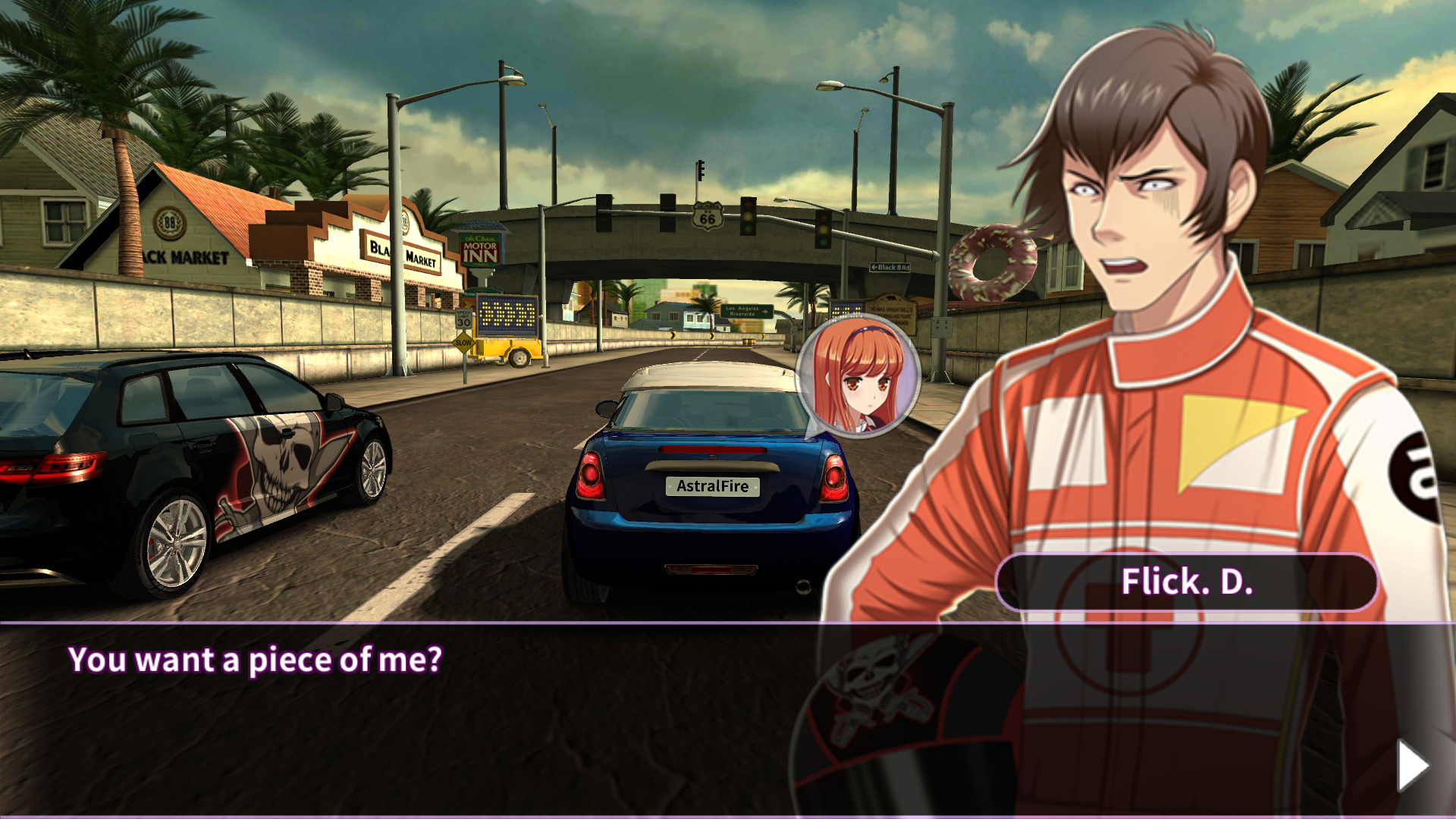
If the premise sounds intriguing, then I recommend giving it a shot — and feel free to add me as a friend in the game under the ID "AstralFire".

Grab it from Google Play or the App Store.

1945: Mobile Free-to-Play: Another Tale of East vs. West

Brave Frontier has some lovely and distinctive artwork; screenshots in this post are all from it.

I've been highly resistant to mobile free-to-play games for some time now, a fact I primarily attribute to the extremely well-paid but soul-crushing period I spent reviewing them for the industry-facing sites Inside Mobile Apps and Inside Social Games, both of which have subsequently been folded into AdWeek's SocialTimes blog.

I describe this period as "soul-crushing" not because I disliked the work or the people I worked for — on the contrary, it was an enjoyable opportunity to work with some fun people — but because it was just so utterly disheartening, as a fan of "games as art", to see the cynical money-machine games being churned out by the boatload, with no-one truly having the confidence to innovate, instead simply reskinning established systems with a different theme and hoping no-one would notice.

Amid the dross churned out by companies like Zynga, King and their ilk, there were the occasional little gems, though, and they almost always hailed from our Eastern cousins in Korea, Japan and other nearby regions. Eastern mobile game development was by no means infallible, of course — titles which grew to inexplicable popularity, such as Rage of Bahamut, were often just as vapid as their Western counterparts — but on the whole, when a genuinely good free-to-play mobile game hit the app stores, it was, more often than not (and with a few notable exceptions) of Eastern origin.

Screenshot_2015-05-18-22-02-50
This feisty lady is the pride of my party at present.

Fast forward to today and I find myself enjoying not one, not two, but three separate free-to-play mobile games, and there's a fourth that I had some fun with but have left alone for a while now. All of these games are, once again, of Eastern origin; meanwhile, offerings from established Western big hitters like Zynga, King, Nimblebit, Gameloft and EA all fail to hold my attention because they're still relying on the same old crap they were a few years back when I was reviewing them.

So what's the difference with these Eastern-developed games? Well, primarily it's the amount of effort that appears to have been put into them — and the fact that they're fun.

Brave Frontier, which I've talked about in a few previous entries, for example, is an enjoyable battle-centric RPG in which you assemble a party of collectible heroes, power them up and send them on quests — either story-free "Vortex" quests which are themed each day of the week and allow you to acquire specific items more easily, or a lengthy, story-driven campaign that, while cliched, has actually proven to be surprisingly compelling so far.

Puzzle and Dragons, meanwhile, takes the Puzzle Quest formula of combining casual colour-matching puzzle gameplay with Pokemon-esque collection and levelling mechanics, creating an engaging, enjoyable game that blends the best bits of RPGs and puzzlers.

Love Live! School Idol Festival, on the other hand, not only serves as wonderful fanservice for the anime show itself — which I'm currently in the middle of watching, and am enjoying a great deal — but is also a really fun rhythm action game.

Finally, I don't play much of Valkyrie Crusade any more, but it made enough of an impact on me to want to write about it in a bit more detail over on MoeGamer.

Screenshot_2015-05-18-22-07-52Interestingly, all four of these games are based on the same basic system — something which I criticised Western-developed free-to-play mobile games for above — but manage to distinguish themselves from one another by the additional elements they stack on top of this basic structure. Western free-to-play games, conversely, tend to adopt one system and stick with it, without adding anything in particular to the formula.
There are a few common systems in use in Western mobile free-to-play games.

There's the "citybuilder" genre, which superficially resembles simulation classics like SimCity and Transport Tycoon, but actually requires no strategic thought or knowledge of human geography. Instead, these games effectively act as a simple toy set in which you wait for timers to expire, then tap on buildings to get money out of them, which you then subsequently invest in more buildings so you end up with more timers to wait to expire and then tap on. Paying up in these games can skip timers — which are often ridiculously lengthy — and allow you to get more currency without having to actually "grind" to acquire it. Examples of this type of game include Nimblebit's Tiny Tower, EA's The Simpsons: Tapped Out and numerous attempts to stomp SimCity into the ground, Fox's Family Guy: The Quest for Stuff and Gameloft's My Little Pony. Farming games such as SuperCell's Hay Day and Zynga's own FarmVille are also pretty much the same as citybuilders, too, except they involve building up a small farm instead of a whole city. Mechanically, however, they're exactly the same.

There's the "casual puzzler" genre, which generally rips off PopCap's Bejeweled by challenging you to swap coloured gems/sweets/fruits/farm animals around to make lines of three or more like-coloured gems/sweets/fruits/farm animals, at which point they disappear and more take their place. These generally involve a linear sequence of levels, and paid options in the games generally take the form of additional "lives" to continue playing after failing a level several times — lives otherwise regenerate over a long period of real time — and, in many cases, power-ups to make the game significantly easier, to a game-breaking degree in some cases.

Then there's the "midcore strategy" game, which, in the same way as the "citybuilder" genre bears only a superficial resemblance to the original SimCity, bears only the most cursory of resemblances to actual strategy games. Midcore strategy games generally involve building a base through a similar means to a citybuilding game — yes, that means more timers to tap on, this time to get resources — and recruiting units, which also take varying periods of real time to build. There's usually a competitive element to them, though, where you can take your recruited units to another player's base and throw them at it in the hope that they might be able to do some damage. While these sequences tend to resemble classic real-time strategy games such as Command & Conquer and StarCraft, the lack of input you generally have means that coming up with a "strategy" is next to impossible, so it becomes more a matter of a numbers game: how many powerful units can you afford to throw at your foes? Payment options in these games are generally similar to citybuilders — speed up timers, buy currency, acquire exclusive units and buildings to give yourself an advantage over other players.

There are other types of Western-developed mobile free-to-play games, but these three types are by far the most widespread. The thing they all have in common is that the paid options deliberately break the game; they're effectively paid cheats. The most egregious example of this is the ability to simply buy in-game currency rather than having to earn it: it effectively removes any need for the player to develop any sort of "money-making engine", which has been a core part of simulation and strategy games involving resource management since the early days. But "power-ups" such as those seen in King's games are almost as bad; in some cases, these power-ups even allow you to completely skip a level, meaning you're effectively paying not to play the game. (Powerups like this are inevitably paired with unreasonable difficulty spikes or nigh-unbeatable levels, forcing many players into a position where they feel they have to pay up if they want to continue playing.)

The three Eastern games I mentioned above, as I noted previously, are all ostensibly based on the same system, known as gacha. This is a system based on those capsule toy machines that you see in supermarkets, and which are rather popular in places like Japan. Essentially, using either a currency earned in-game or one that you purchase with real money, you can "draw" something to add to your collection — a playable character in Brave Frontier's case; a monster to add to your party in Puzzle & Dragons' case; a card depicting one of the Love Live! cast in the case of School Idol Festival. Generally speaking, the things you draw using the "hard" currency — the one you can pay for — are better than the ones you acquire using the currency you earn in-game (which usually takes the form of a "social currency", earned through interacting with other players in a rather limited manner). This may sound game-breaking in the same way as buying a power-up in Candy Crush Saga or buying currency in CityVille, but there's a key difference: you still have to do something with the things you acquire by paying, and they're not an immediate "win" button. Sometimes you're not even able to use them right away.

Take Brave Frontier as an example. While it may be tempting to simply throw money at the game in an attempt to recruit an entire party of five- and six-star heroes, this simply won't work early in the game due to the "cost" limit placed on your party, which increases as you level up your player. Not only that, but these five- and six-star heroes still start at level 1, so you'll still need to actually play the game in order to level them up and get them fighting at their maximum potential; otherwise, they simply look cool.

Notably, these games generally also allow you to acquire the "hard" currency at a slow rate and enjoy a trickle-feed of these high-quality heroes/monsters/adorable wannabe idols. And, in fact, this makes acquiring one feel more meaningful and more of an event; it actually makes it feel less like the game is trying to force you to spend money, and instead inviting you to do so if you'd like to enjoy more of the same. I don't mind admitting that I tossed a fiver at Brave Frontier during a special "you might get one of these special heroes!" event the other day because I've been enjoying playing it; I certainly haven't, at any point, felt like I need to spend money on it to enjoy it, however; my current party (which is pretty kick-ass, I have to say) has been assembled entirely for free.

The big contrast between Eastern and Western philosophy with these games, then, appears to be the attitude towards getting the player to pay up. Western games, in my experience, are fond of creating what is rather horrendously called "fun pain", which can be alleviated by paying up; in other words, inconveniencing the player in an otherwise fun experience to such a degree that they reach for the credit card just to shut the game up. Eastern games, meanwhile, appear to provide paid items as an optional extra that is, under no circumstances, required to have an enjoyable experience with the game.

The other thing that's interesting is that Eastern games appear to be more open to the idea of combining different gameplay types together — Puzzle & Dragons, for example, combines an interesting twist on match-3 puzzlers with RPG and gacha mechanics, while Valkyrie Crusade features gacha, turn-based RPG combat, deckbuilding and optimisation, and even citybuilding, the difference in its use of the latter aspect being that while you're waiting for your wait timers you have other things to do rather than twiddling your thumbs or reaching for the credit card.

There are exceptions to both of these rules, of course; there are great Western free-to-play mobile games just as there are horrible, shitty, exploitative Eastern free-to-play mobile games. But on the whole, in my experience, it would appear to be the Eastern-developed games that have the right idea — creating a fun experience and hoping at least a few people will be happy to pay up in gratitude for a fun experience — while the Western free-to-play mobile market, more concerned with making a quick buck, seems to be floundering somewhat.

1462: Filthy Lucre

lucreThere are many things that bug me about free-to-play games — specifically, those of the mobile and Facebook variety — but one of my biggest bugbears is the ability to purchase in-game currency. Frustratingly, this is an option that has transcended its free-to-play origins and is now starting to infest other types of game — including full-price retail games on the new consoles.

The ability to purchase currency is usually touted as a time-saving feature that eliminates the need for grinding. In some cases, it's simply that — an option. In others, it becomes abundantly clear before very long that the game's economy has been balanced on the assumption that most players probably will purchase in-game currency at some point, and consequently those who just want to play the game without having to get their credit card out every ten minutes can just go fuck themselves.

Now, in many ways, choice is a good thing. Not everyone has time to spend earning virtual money in games to achieve somethingorother. But does that mean they should have the option to spend real money in order to get ahead in the game? I'm not so sure.

You see, the second you put that option there, it devalues the efforts of those willing to put in the work to earn the money themselves. Why would you bother working for something if you can just throw money at it, effectively paying to not play the game?

The reason I bring this up is that my Free Company in Final Fantasy XIV has started saving up for a medium-sized plot of land on which to build a house for guild activities. We already have a small plot, but the shed-like house that fits on the small plots is already full to bursting with the furniture that the crafters have been churning out. Consequently, active members of the guild have been working together to earn money in order to purchase one of the larger plots, which allows you to build significantly larger houses.

This evening, we spent a couple of hours in a "spiritbonding party" — we grouped up together, equipped with items of jewelry that weren't part of our normal equipment loadout, and then proceeded to battle hordes of monsters until said pieces of jewelry were "spiritbonded" to us — a mechanic in Final Fantasy XIV that means you can then break the item of equipment down and turn it into "materia". Materia are items that can be socketed into pieces of equipment for various stat bonuses, and certain among them — particularly the better ones — sell for pretty high prices due to their usefulness in completing the high-level "A Relic Reborn" quest that culminates in a character acquiring their almost-best weapon.

As you may have surmised already, someone in the guild had the bright idea of mass-producing a bunch of these jewelry items, taking them to an area with enemies that respawned quickly, and then indulging in some mass Water Sprite genocide until we had all Spiritbonded with the items enough to turn them into materia. We could then sell the resulting materia and plough some (or all, depending on how generous we were feeling) of the profits into our fundraising efforts for the new house.

The point is, while the act of going through the spiritbonding process is rather tedious — it largely involves killing lots of things that you're way overpowered for — it was something that brought a lot of us together for an enjoyable time. The experience was meaningful, worthwhile and even fun for the fact we were working together on it, even though the actual things we were doing were pretty mindless. And, when each of us successfully and finally spiritbonded with the items we had equipped, there was a feeling of achievement; a feeling of achievement that amplified considerably when the little message popped up on screen some time later saying that the materia we created had sold for a respectable amount of money; a feeling of achievement that amplified even more when voluntarily donating some of our own in-game currency to the guild coffers.

Everything I've described above would have been utterly meaningless had the option to purchase currency been in there. Attaining the medium-sized house would have felt like a hollow victory, as we wouldn't have done it through our skill and dedication to the game — we'd have done it through how deep our collective pockets are. That carries no meaning in the game world; one of the nicest things about Final Fantasy XIV's land of Eorzea is that the real world never intrudes. There's no "cash shop", the game never once asks you for your credit card details — you set up your subscription before you start playing — and once you're in the virtual world, everything you do relates to the virtual world somehow. It's a highly immersive experience, and one of the best things about the game.

Drop in a "Buy Gil" button and that goes out of the window. When working hard to attain something challenging in the game that costs a lot of money, the thought would always be there: "I wonder if I should just pay up and get it instead." And sure, it's certainly nice in the short term to be able to buy your way to victory — but in the long run, it's much more satisfying to know that everything you've achieved is because you've put the effort in.

A bit like life, you know.

1336: Where's My Paid-For Version?

Disney released a sequel to its popular iOS game Where's My Water? recently. Where's My Water?, if you're unfamiliar, is supposedly one of the best iOS games out there, and even managed to pick up an Apple Design Award at WWDC in 2012. It's an extremely popular game that was well received by both press and public alike, and spawned a couple of spin-off games prior to the recently released official sequel.

The official sequel is, inevitably, free-to-play, unlike the 69p original. Said original did have in-app purchases, yes, but they were mostly actual additional content — new levels and so on — plus, until recently, the game was continuously supported with weekly challenges that kept the game relevant over time. (The removal of these weekly challenges in the most recent update has annoyed a bunch of players, incidentally, but surely they can't expect Disney to continually support a game from 2011 forever.)

Where's My Water 2 has, unsurprisingly, been torn a new one by App Store reviewers for being free-to-play — and with good reason. Like Plants vs. Zombies 2, there is not one single convincing reason why making it free-to-play is a good thing for anyone except Disney. At least you can play Plants vs. Zombies 2 for as long as you like, however; Where's My Water 2 adds the ultimate insult of incorporating an energy mechanic into the game, effectively blocking people from continuing to play every few levels unless they pay up.

hate energy systems. They were a fucking pain in the arse when I had to review mobile and social games because they meant I could only play the game for a certain amount of time before having to leave it for several hours (because I sure as fuck wasn't paying), and they're a fucking pain in the arse if I just want to enjoy a mobile game these days. They're a slap in the face to the player, and effectively a sign that the developer/publisher of the game don't trust their player base to actually slip them some money if they're enjoying themselves. It represents the absolute worst of everything about free-to-play, and it needs to stop.

I'm glad that App Store reviewers are starting to speak up against things like energy systems and excessive in-app purchases, because it's getting out of control. I find myself actually wanting Where's My Water 2 to fail, because it will teach Disney a lesson. This may sound harsh — I haven't played Where's My Water 2, so for all I know it could be a great game, and I'm sure the dev team worked hard on it — but this continuing trend of games that hold their content hostage needs to stop. Rather than it being an incentive to download and try something for myself, I will now actively avoid games on the App Store that are "free". And since most of the games on the App Store are now "free", this means I'm simply avoiding most of the stuff on the App Store, which is probably doing a great disservice to the few people out there who are doing great work, and who are treating their players with respect.

You want to see how to do free-to-play right? Go play Card Hunter.

1259: Gross

My year and a bit reviewing social and mobile games was enough to make me never, ever want to play one of them ever again, but I feel it is worth educating people on the things that these games are doing — seriously unpleasant things.

I'll preface this with the caveat that not all social and mobile games do these things. But a huge majority of them do. And you should be aware of it, if you're not already.

First thing to do is read this.

If you read that, I probably don't actually need to say any more. But I will anyway.

"Coercive monetization." Sounds horrible, doesn't it? Well, it is; it's the practice of convincing players that they "need" to spend money, and that it's their "choice" to spend money. It's underhanded trickery, in other words, and it's massively commonplace in the free-to-play sector — but particularly in the realms of mobile and social games.

That post's author Ramin Shokrizade describes the use of coercive monetization techniques in relation to "fun pain" — a term coined by Roger Dickey from Zynga to describe games that actively put obstacles in the way of the player's fun. These could be any of a wide variety of things — an energy system telling them they can't play any more; a timer saying they can't use this building/hero/object until it's been readied/built; an object which is just slightly too expensive, and which is all but necessary to progress. All of these things are used in order to get the player making that all-important first payment — to "convert" them from a freeloading bastard (albeit one with some common sense) into a person blindly willing to continue paying into an obviously manipulative business model while under the illusion of having "fun".

Shokrizade cites one of my least favourite games ever in his piece — King's Candy Crush Saga. This game is immensely popular, yet is 1) a Bejeweled ripoff and 2) one of the most manipulative, exploitative, outright unpleasant games I have ever encountered.

It begins innocently enough. You're given levels that are pretty straightforward to complete, and you'll make good progress through them. Gradually, they'll get more difficult, but not noticeably so — not until you reach an artificial barrier on the game map that requires you to either spam your friends with requests or pay real money to progress. Since to many people, spamming one's friends with Facebook requests is becoming something of a taboo, many choose to pay the $1 fee to progress — but in doing so they break that seal and "convert" themselves into a paying player.

King knows this, and thus makes the levels after this barrier noticeably more difficult. But it doesn't do this in a fair way; as with Bejeweled (and particularly its free-to-play social counterpart Bejeweled BlitzCandy Crush Saga is primarily based on luck rather than skill — you can't plan ahead because you don't know what's going to fall from the top of the screen, so more often than not running out of moves is unavoidable. What Candy Crush Saga does as it progresses is weight the behind-the-scenes random number generators significantly against the player so it will be very difficult for them to progress without paying up for boosts, or extra lives, or permanent upgrades, many of which are extremely expensive.

You may feel that there's no harm in this, and indeed some people make it a badge of personal pride to play through something like Candy Crush Saga without paying a penny. But in the process, they're having a frustrating, boring experience. Why would you deliberately do that to yourself, when you can pay, say, $1 for the iOS version of Bejeweled and have literally infinitely more fun than with Candy Crush Saga?

These manipulative business models are not harmless, nor are they worthy of praise, regardless of how many millions of dollars they're bringing in every day. They're making money from conning gullible idiots — and while some of you may argue that people with no common sense need to be woken up a bit, it's not really fair to take advantage of people in this manner, particularly when many of them are children.

I find the whole practice utterly reprehensible, and I can't help hoping that the whole bubble on free-to-play social and mobile games bursts very soon. Unfortunately, with the amount of money many of the more popular titles are making every day — and the sheer number of the bastard things that are released each day — I don't see that happening any time soon, making mobile gaming in particular all but a lost cause for me these days.

Do yourself a favour: if you're currently playing something like Candy Crush Saga or its ilk, stop. You're being manipulated. Find a low-cost game with the same mechanics, pay for it, then play it as much as you want. This is the way it's always been in the past, and I long to go back to a time where that is the only model.

"Coercive monetization" is gross. It is borderline unethical. So don't support it.

1173: Am I Missing Something?

Yesterday, game-centric social network Raptr reported that in the month of March, its members played more of King's Candy Crush Saga than StarCraft II, World of Tanks and Halo: Reach (all historically very popular games) combined.

This is significant for a number of reasons. Firstly, it shows that Raptr is getting some pretty wide usage by more casual gamers as well as those who care about achievements, hour counts and whatnot — demonstrating (arguably) that a lot of people playing Candy Crush Saga are "serious" enough about their gaming to sign up for a game-centric social network and tracking service.

Secondly, it shows something we all know: the vast numbers of people playing Facebook and mobile games far outstrips those who have perhaps grown up with the industry and who play what one might call "traditional" video games — players whom mobile and social gaming companies euphemistically refer to as "core" gamers.

The second point isn't all that surprising; how many people do you know who don't have a Facebook account? While we're not yet in a world where every single person is permanently jacked in to the social network via a transmitter in their spinal column, I'm willing to bet that regardless of your age, there's probably a large proportion of the people you know who have Facebook accounts, and of those people most of them have probably tried playing some games at least once. The exact same situation is true when we consider smartphone ownership these days — of those who have acquired a new mobile phone recently, it's highly likely that it was one of the two most well-supported platforms out there: iOS and Android. And of those who haven't acquired a new mobile phone recently, a lot of people are investigating tablets as a home computer solution — pretty much all of which run, you guessed it, iOS and Android.

It's the first point that surprises me, though. Raptr is the sort of service that is historically only of interest to those "core" gamers we mentioned earlier, as your average soccer mom who only plays games on Facebook has no real need or desire to keep up with industry happenings or the latest stupid thing that a Microsoft employee has said on social media — let alone how their number of hours played stacks up against their friends. So what does it mean when the number of hours racked up on Candy Crush Saga outstrips some of Raptr's most heavily-tracked, popular titles?

Well, it could mean one of a couple of things. Firstly, it could mean that Facebook and/or mobile gamers are more serious about tracking their playtime and achievements in the games they play than most people thought. I find this rather difficult to believe, to be honest, as the sort of people who only play Facebook and mobile games are typically playing them as a means to fill a spare few minutes rather than as an engaging form of entertainment that they feel particularly passionate about.

Secondly, it could mean that those "core" gamers out there are playing Facebook and mobile games as well as (apparently, more than) "traditional" computer and console games that are aimed specifically at them? Judging by the notifications that pop up on the Raptr client that runs on my PC, this is much more likely; there are several people on my friends list whom I would describe as "core" gamers by that definition, but who are regularly seen playing everything from FarmVille to Marvel Avengers Alliance and Candy Crush Saga.

One question, though: why?

No, seriously, why?

If you're a "core" gamer by the popular definition, you're serious about your interactive entertainment. You might play games instead of (or as much as) watching movies and TV shows. Your exact reasons for playing may vary — those who enjoy Call of Duty play it much like a competitive team sport, while people like me prefer narrative-centric experiences that stimulate similar parts of the brain to movies and TV shows — but the fact is, you're highly likely to make time for your gaming rather than indulge in it as an idle diversion. You'll sit down, you'll play a game for a not-inconsiderable amount of time, then you'll switch off and do something else. Or pass out with the controller in your sweaty mitts.

So if you're investing time and probably money into what is, after all, a hobby rather than a mindless pastime, why, dear "core" gamers, aren't you playing anything better? Don't get me wrong, Candy Crush Saga has performed so well because it's a polished product that is pretty accessible even to those who haven't played many games before, but 1) it's a Bejeweled ripoff, and Bejeweled 3 (or just Bejeweled as it is called on mobile) is a better game with more variety; 2) it's rammed to the gills with obnoxious enforced "social" features that don't actually promote social interaction at all (ask for lives! ask friends to unlock levels! brag about your score!); 3) it's rammed to its other gills with obnoxious monetization — aside from the fact that every so often you'll run into a wall where it literally just stops you from playing unless you either wait for several hours or pay money, there's one powerup in the game that costs £35 and can be used once per level. Thirty-five pounds. Bejeweled 3, which, as previously mentioned, is an infinitely superior game that doesn't bug you every five fucking seconds to insert coins or invite friends, costs £14.99 — less than half the price of that one powerup in Candy Crush Saga — on Steam (and is regularly reduced in price in sales), and sixty-nine pence on mobile phones.

"But Candy Crush Saga is free to download!" I hear you cry. "Surely people aren't dimwitted enough to repeatedly spend money on this when they could just buy a copy of Bejeweled outright and then never have to pay again!" Wrong. Candy Crush Saga is, as I write this, the number 1 Top Grossing app on the App Store. Note: "app" not "game". (It is also the number 1 Top Grossing game, but that shouldn't be surprising given its other position.)

Let me reiterate that. Candy Crush Saga, which is free to download, is making more money than apps that cost money. By a significant margin. It is making more money than high-quality productivity apps for professionals, which typically carry a relatively hefty price tag. It is making more money than high-quality "pay once, play forever" games. It is making more money than Bejeweled, which is basically the same fucking game for the price of a packet of Chewits. It is making more money than anything else on the App Store.

It is at this point I throw my hands up and say I absolutely do not understand why this is the case. It absolutely boggles my mind, because can see why I wouldn't want to repeatedly and indefinitely churn money into a game that isn't noticeably better than another game I've already paid for once (Bejeweled), so why can't these hundreds, thousands, millions of other people? It does not make any sense whatsoever. And this isn't even considering the question above of why on Earth "core" gamers are apparently playing this game so much when there is so much other good stuff out there — too much for one games enthusiast to ever hope to fit into one lifetime, even if they became hikikomori in order to try and do so.

I am so, so torn about this sort of thing, and have been for a while now. On the one hand, it's great that more and more people are embracing video games as a pastime, form of entertainment or even hobby. On the other, the swathes of people who are coming to gaming as a result of free-to-play mobile and social games are perpetuating a business model that, while immensely profitable, is not particularly friendly to the consumer and is actually quite unsafe to people who don't keep a tight rein on their finances. More people playing games? Good. Sending the message that charging £35 for one powerup is okay? Very, very bad.