#oneaday Day 309: The most enduring game genres are the ones we used to think were too prolific

I settled down this evening to play some PC Engine games on my Coregrafx Mini, a delightful little mini system that I'm very fond of, but which I realised contains a number of games that I haven't explored at all as yet. The pull of Soldier Blade is, I'm afraid, often far too much to resist, as it was once again this evening — though I did at least spend some time with Lords of Thunder, which I've not got around to trying before. (It is hard.)

One thing occurred to me while I was playing, and that is the title of today's post: the fact that game genres we used to think were overdoing it a bit have ended up being the most enduring; the ones that have "aged the best".

What I mean by this is that back in the 16-bit console era in particular — I'm talking Mega Drive, Super NES and PC Engine to an extent (yes, I know the PC Engine isn't actually 16-bit, but its capabilities put it pretty much up there with the Mega Drive, so shut up) — reviewers were often a bit jaded and cynical any time certain types of game showed up. There was a near-constant cry of "where's the originality?" among critics of the period, and this, to an extent, filtered down to members of the public who, at the time, only really had the word of the folks who wrote for the magazines to go on, since the Internet wasn't yet a thing.

There are several game genres that spring immediately to mind when I think about this: shoot 'em ups, fighting games and beat 'em ups. Yes, the latter two are different, despite the term "beat 'em up" being used interchangeably to describe both in the UK in the late '80s and early '90s. (If you're wondering, fighting games refer to competitive games where combatants — either human or computer-controlled — fight in closed arenas one-on-one, or perhaps in tag team battles, while beat 'em ups typically involve one or more players cooperating against a stream of enemy characters, often, though not always, going on a journey as they do so.)

Shoot 'em ups, beat 'em ups and fighting games reached a point where they elicited little more than groans from the jaded reviewers of the period. This led to situations that are laughable in retrospect, such as the TV show GamesMaster rating the UK release of the absolutely classic and genre-defining NES beat 'em up River City Ransom (known as Street Gangs over here) just 32%. In the show's defence (slightly), the game didn't show up over here until 1992, three years after its original release and well into the next generation of games consoles. Still, 32% is an embarrassing rating for a game that is quite rightly regarded as incredibly important to gaming development and history. But I digress.

The point is, members of the games press were — perhaps understandably — jaded at the number of shoot 'em ups, beat 'em ups and fighting games that were coming out, particularly from 1991 onwards, post-Street Fighter II. I say "perhaps understandably" because gaming back then didn't have quite the same breadth it does today; technology precluded certain types of game that we take for granted today from being made back then. Consequently, for someone whose job it was to look at the games coming out each month and then write about them, one could understand why it might get a bit tiresome if there didn't appear to be much variety — or originality, as was the constant refrain back then — in each new crop of new stuff.

But, as it turns out, there were a lot of shoot 'em ups, beat 'em ups and fighting games made for a very good reason: these are three very flexible genres that you can do a lot with, and all three of them have also scaled well with advancing technology.

Let's focus on shoot 'em ups, because that's what I've been playing this evening. You can go back to a shoot 'em up from 30-40 years ago (Xevious is 42 years old, fact fans, and Space Invaders is just shy of 50) and still have a good time with it today, even if you weren't there for it first time around. The genre has evolved over time, yes, in terms of both presentation and mechanics. But there's a timeless quality to it that means, outside of games that really didn't get it even when they were originally released — and there are plenty of those — the 30-40 year old games are just as playable and accessible today as they ever were. Likewise, if it were possible to take a game like, say, Eschatos back to the past, a Raiden fan would be immediately at home.

The same is true for both fighting games and beat 'em ups, too. I probably don't need to tell you that fighting games remain one of the most popular forms of competitive video game out there; while they have grown in complexity over the years, the fundamentals are still pretty much just as they were in 1991 with Street Fighter II. In fact, some fighting game pros even specifically recommend beginners should start with Street Fighter II to get accustomed to the genre without added complications like special meters and peculiarly named mechanics found in later titles.

The beat 'em up has had a slightly rougher ride over the years — at least it seems that way to begin with. It found favour until the early '90s due to it being a great means of showcasing beautiful character and background pixel art. It reached a particular high with Konami's excellent licensed arcade games such as Teenage Mutant Ninja Turtles, The Simpsons and Asterix (kudos if you played the last one, it remains my fave of those games), but then sort of fell off the map a bit for a while.

At least, it seemed to. What actually happened is that it became the basis for a whole bunch of other, brand new genres that were suddenly made possible thanks to the advent of the 3D age: action-strategy games like the Dynasty Warriors series; arena combat games like the Senran Kagura titles; character action games like the God of War, Devil May Cry and Bayonetta series. All are definitely their own discrete types of game these days, but they can all be traced directly back to beat 'em ups. And, in more recent years, the traditional belt-scrolling beat 'em up has made a triumphant comeback with excellent titles like Streets of Rage 4, Fight 'n' Rage and Teenage Mutant Ninja Turtles: Shredder's Revenge.

I think the difference people would point to today, as outlined above, is that these days, we have a lot more choice. Hundreds, possibly thousands, of new games come out each week, and they cover all manner of interactive experiences, ranging from the comfortably familiar to the gleefully experimental. Shoot 'em ups, fighting games and beat 'em ups are no longer seen as passé and unoriginal because they get more lost in the noise these days — and, with the possible exception of fighting games, they have somewhat declined in importance to the overall market. If a company wants to make money these days, they do a big open world game or a cinematic action game about a middle-aged white dude being sad. Shoot 'em ups and beat 'em ups in particular have become niche interest, and fighting games, although popular and doubtless very important to the bottom line of companies like Capcom, have a considerably higher barrier to entry than they used to.

But none of them have gone away. None of them have declined in importance so much as to be completely unviable as a commercial prospect today, or completely unknown to those who came to gaming in more recent years. And many of those games that were decried as unoriginal, boring takes on crowded genres back in the early '90s are judged much more generously and accurately today.

And that's good. When the day comes when there's a gaming system with no good shoot 'em ups or beat 'em ups (I can personally take or leave fighting games, to be honest, but I do respect them), that's the day I don't buy that gaming system. Thankfully I don't think that day's coming any time soon — and even if it did, there is a vast library of stuff from the years that have led us up until this point to explore, both through emulation and official rereleases for modern platforms. I think I'll probably be OK.


Want to read my thoughts on various video games, visual novels and other popular culture things? Stop by MoeGamer.net, my site for all things fun where I am generally a lot more cheerful. And if you fancy watching some vids on classic games, drop by my YouTube channel.

If you want this nonsense in your inbox every day, please feel free to subscribe via email. Your email address won't be used for anything else.
#oneaday Day 186: Alpha male

One of the reasons I was quite keen to get my hands on Evercade Alpha, the latest product from my place of work, was to give Getting Into Fighting Games an honest go. I've attempted to do this a few times — I even bought Street Fighter 6 on launch — but have always ended up bouncing off for one reason or another, and the notoriously impenetrable nature of the genre hasn't helped matters.

This evening, I sat down and had a few goes at Street Fighter Alpha. And I actually had a good time! I won't say I was especially "good" at it, and the intricacies of the genre still elude me somewhat, but playing with good quality arcade controls on the Evercade Alpha made the whole experience feel a lot more accessible and intuitive than ever before.

I think one of the things that confuses me most of all about fighting games is how each character has an absolute shit-ton of moves that you can perform: with six buttons and an eight-directional joystick, that's already a lot of possible moves, and then add command inputs or charge moves into the mix and you have an overwhelming variety of possibilities. My biggest question when pondering fighting games from afar has always been "how the hell do you decide what to do when?"

I don't have an answer to that just yet, but even with just a few games of Street Fighter Alpha I started to feel things becoming a bit more intuitive. I moved away from my SNES-era strategy of only ever using the heavy attack buttons, and found success with some speedy jabs and good use of projectiles — which are much, much easier to pull off with an arcade stick, if anyone were still in any doubt about that. I felt like I had a reasonable grasp of "the basics" with Ryu, and I gave Rose a bit of a go, too. She's rather more complicated to use, from the looks of things, but I actually had my overall best performance out of several shots at the game using Rose. I don't know that I'd go so far as to "main" her just yet — I'm nowhere near the level where I even contemplate having a "main" — but I'm definitely intrigued to try her out a bit more and get to grips with what some of her moves actually do.

Because I think the answer to my earlier question — "how the hell do you decide what to do when?" — comes with experience. The more you play a character, the more you understand what each combination of button and direction does, and that, in turn, gives you a better idea of what might work well in different scenarios. You'll get a feel for the different moves' reach, power level and vulnerability to countering, and, over time, you'll (theoretically) be able to make snap tactical decisions in the middle of a match.

I'm nowhere near there, yet. But I'm actually looking forward to spending some time learning. I don't have any grand designs on being a competitive player or anything like that, but it would be nice to be able to play at least a couple of fighting games to a level beyond basic button-mashing. And, so far, Street Fighter Alpha has felt surprisingly accessible, with its relatively limited roster and fairly straightforward mechanics. Plus the art style is great — and only gets better later in the series. (But the later Alpha games also get considerably more complicated!)

So yeah. That's what I've spent my evening doing. I was going to play some Super Mario RPG, but by the time I'd finished wrapping Christmas presents earlier, the amount of time before "I should probably go to bed" had elapsed to such a degree that playing some short-form arcade stuff was probably a more sensible idea. So that's what I did.

And now, I should probably go to bed.


Want to read my thoughts on various video games, visual novels and other popular culture things? Stop by MoeGamer.net, my site for all things fun where I am generally a lot more cheerful. And if you fancy watching some vids on classic games, drop by my YouTube channel.

If you want this nonsense in your inbox every day, please feel free to subscribe via email. Your email address won't be used for anything else.
2305: Fighting Talk

0305_001

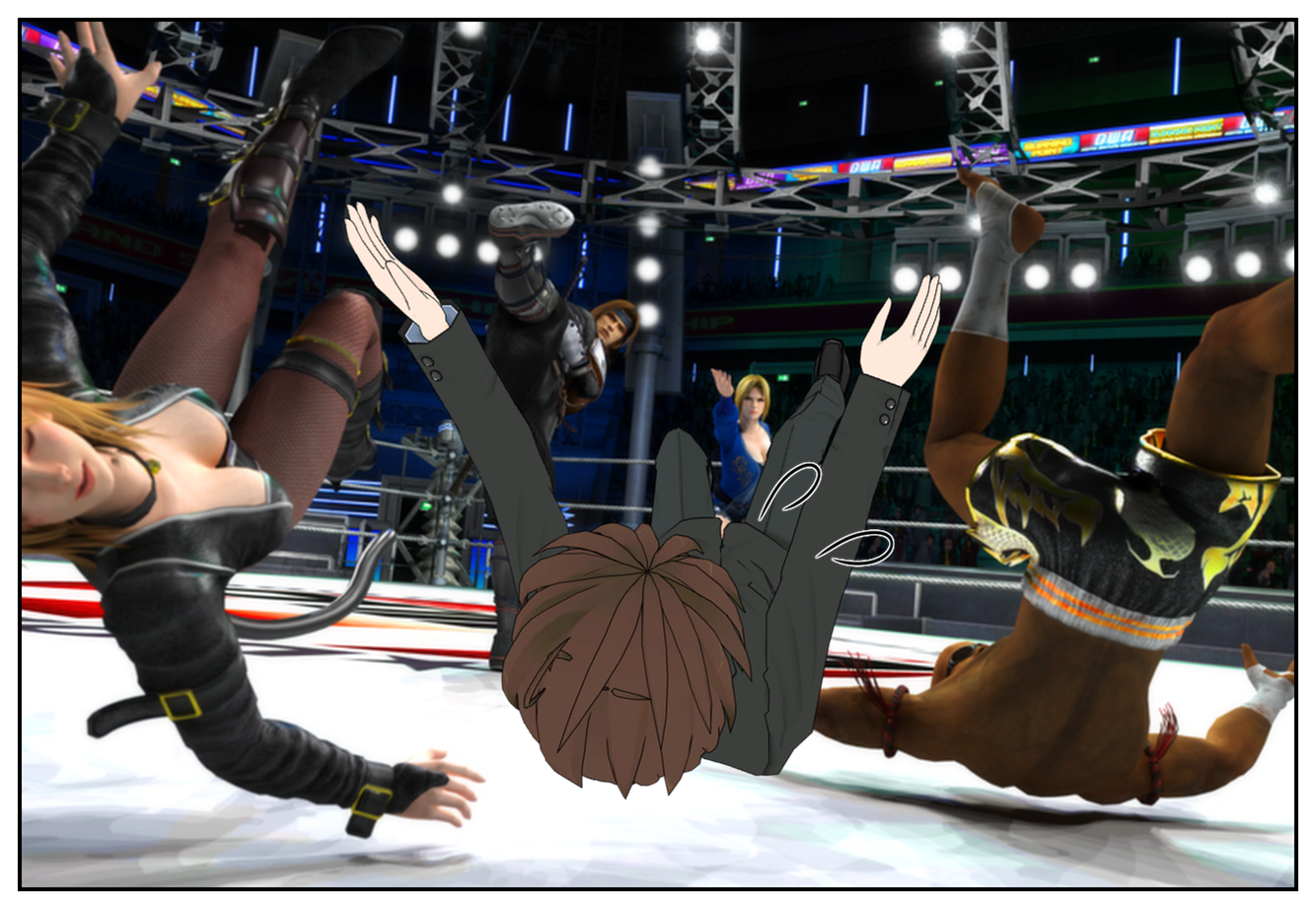
I spent a bit of time playing some Dead or Alive 5 Last Round online with a friend from Final Fantasy XIV earlier. (Hi, Neon!) I've never really played a fighting game online before — it's a genre that has something of a reputation as being brutally unforgiving to newcomers, and with good reason, since the fighting game genre is one that attracts significant numbers of people good enough to actually get paid to play these games.

Thankfully, my friend Neon appears to be of a roughly equal level of skill to me, since we had a series of matches and we both came out roughly equal in terms of victories and losses.

So far in Dead or Alive 5 I'd been focusing on the Training mode, attempting to learn some combos and moves for characters I liked the look of, because I'd love to get past the "button mashing" phase that everyone goes through when they first pick up a fighting game. As such, I was a bit hesitant to even jump into the story mode, because I didn't feel like I knew any characters well enough. But I thought I'd give fighting another person a go — and I'm glad I did.

Fighting Neon gave me a potent reminder of exactly why I've always liked the Dead or Alive series in preference to perhaps more established, popular fare like Capcom's Street Fighter series. It's kind of hard to describe the exact feeling, but I think it's best described as the game feels instinctive, almost primal. You can spend hours learning the specific button combinations to pull off specific moves at the right time — and doubtless the really good players do that — but at a fairly rudimentary level, which is where I'd generously put myself, the fighting system works in such a way that you can look at what's going on on the screen, push directions and attack buttons and have something that "feels" right unfold in front of you. Opponent blocking high blows? Get in there with some low kicks. Taunting you? Charge in and tackle them with a running throw. Knocking you off balance with a flurry of blows? Block, block, block dammit, oh for fuck's sake. (I never have quite mastered blocking in fighting games; given how important and helpful — and tied to the series' iconic countering system — it is in Dead or Alive, I should probably do something about that.)

I haven't yet picked a "main" to play with. I will almost certainly end up going with Kasumi, at least initially, because Kasumi is hot and I vaguely know some of her effective moves. Today I also particularly enjoyed playing as Hitomi (who appears to have wonderful reach with her kicks) and Momiji (though I haven't done any training with her yet, so I was taking wild stabs at her moves). I also discovered that, as I previously thought, I want to steer clear of slower, heavy-hitting characters, because I very obviously don't know how to handle them effectively and tend to get my ass handed to me if I try and fight with them in the same way as the Kasumis and company of the world.

My few games today were an eye-opening experience, then. I'm definitely up for playing some more; if you, too, suck at fighting games and would like a punching bag to play with, feel free to hit me up on PSN under the ID Angry_Jedi.

2090: Fighting Games Are Confusing Love Max!!!!!

0090_001

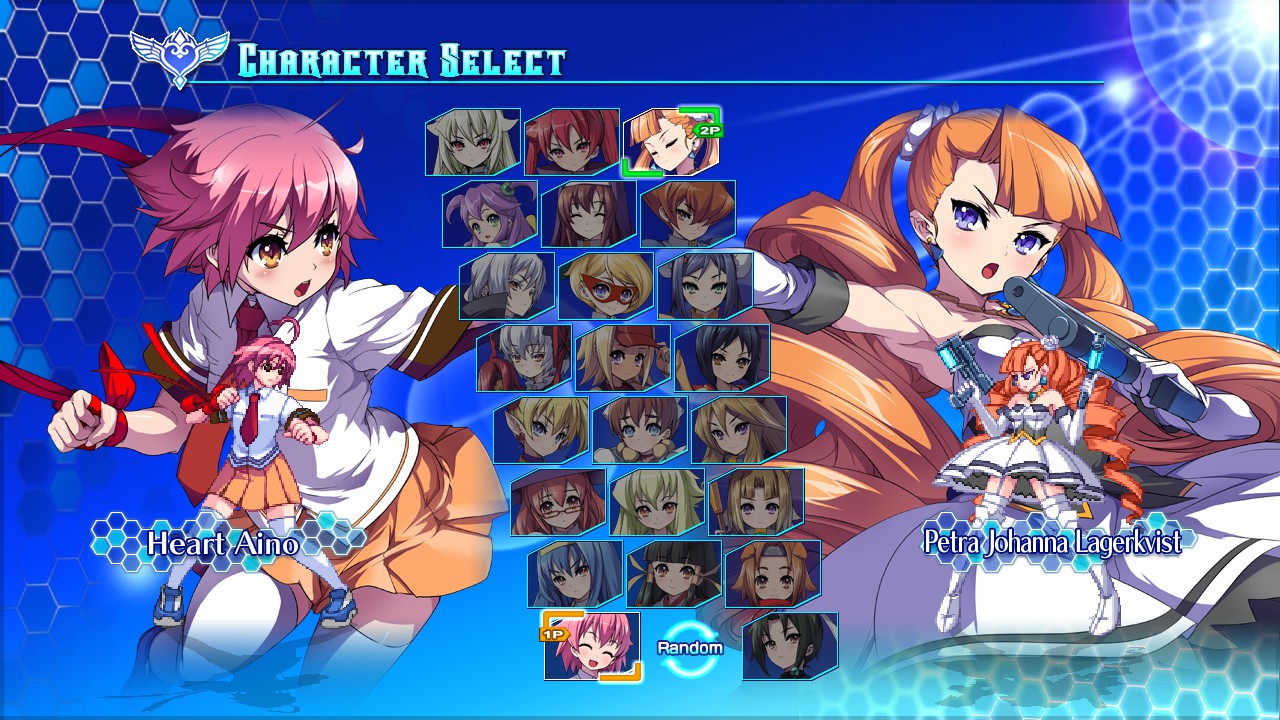
Was playing a few games with Andie earlier, and on a whim I decided to give Arcana Heart 3 Love Max!!!!! a try, since it had been eyeing me up from the Steam store for a while, and I'd been curious to give a modern fighting game a go.

My history with fighting games is a bit patchy. I played a lot of Street Fighter II back on the Super NES; I had an American copy, so it ran in super-widescreen thanks to NTSC/PAL differences, but it was still pretty fun. I also played a bit of Street Fighter IV on the 360, and various installments in the Dead or Alive series over the years. But I've never really got my head around anything more complex than the original Street Fighter II which, as fighting game enthusiasts will doubtless know, is considerably simpler than the monstrosities we have today.

One of the reasons I decided to give Arcana etc etc a go was because it appears to be regarded as a reasonably accessible example of a genre that has become increasingly impenetrable to newcomers over the years. It still has its fair share of complexity, mind you, and a few systems whose use isn't immediately obvious — not to mention a lack of in-game tutorial — but once you get your head around the basic systems, it's relatively straightforward.

arcana2

The basic controls are pretty simple. You have a light, medium and heavy attack, and standard Street Fighter-style button combinations (various quarter and half-circles along with the Dragon Punch Z-shape plus an attack button) tend to unleash special moves for most characters. There's also a "homing" button, which is Arcana Heart's main distinguishing feature from other games of its ilk; tapping this causes you to home in on your opponent, and tapping it again causes you to home in more quickly while allowing you a certain degree of control over your trajectory. By using this, you can have some pretty impressive mid-air battles rather than being confined to the ground; it also makes for some interesting dodging mechanics that I haven't quite got the hang of yet.

The Arcana part of the title refers to a significant addition to the usual fighting game formula: as well as selecting a character, you also pick an Arcana to assign to them. Each of these Arcana have their own set of benefits and drawbacks as well as a few extra special moves; essentially, they allow you to tweak and customise the character you're using in various ways according to how you like to play. It also effectively makes the character roster expand considerably, as equipping a new Arcana in many cases makes a character play rather differently.

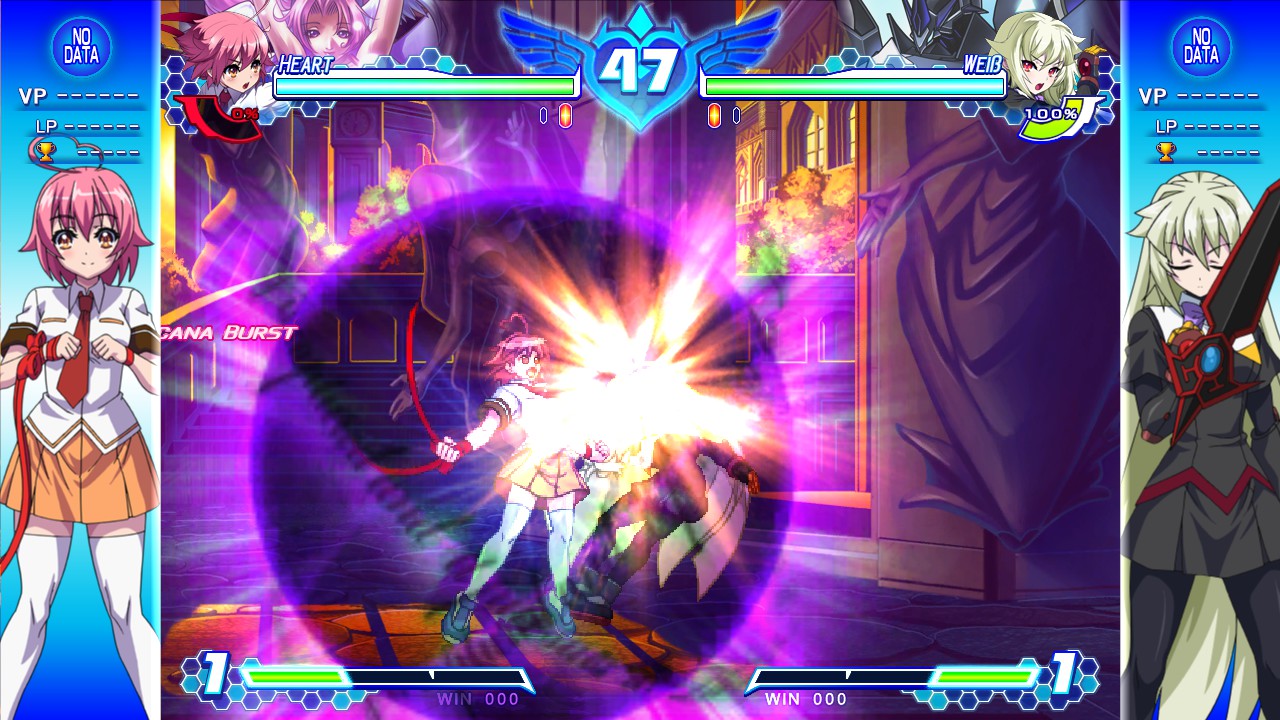
The bit that usually confuses me about modern fighting games is all the gauges on screen at any time. Arcana Heart, despite doing a piss-poor job of explaining these in the game itself, is relatively easy to understand once you know what they all do. Your health bar is self-explanatory; the little curvy bar next to it is called the "Focus bar" and allows you to trigger a short-lived mode where you move faster and have some other buffs; the bar at the bottom is your "Arcana bar" and is expended on super-special moves of various descriptions. The Arcana bar starts at one-third of its maximum possible value; in order to expand it, you have to land attacks or get hit, but the bar will only grow if it's not in the process of recharging. In other words, you have to restrain yourself a bit with the supers if you want to grow the bar to its maximum potential, which you'll need to do if you want to unleash the most devastating moves in your character and Arcana's respective arsenals.

arcana1

I absolutely haven't got my head around how to play the game well yet, but I feel I at least understand the basic systems, which is more than I can say for some other modern fighting games out there. I feel like with a bit of practice — as well as curtailing my tendency to panic when playing fighting games and lapse into button-mashing mode — I might be able to get the hang of this, and hopefully have the opportunity to teach it to some friends, too, as I can see it being a lot of fun against other people owing to its inherent ridiculousness.

A decent investment, then; I'll be curious to see how much — or indeed if — I improve with a bit of practice.

#oneaday Day 940: Insert Coin

When I was young, I loved arcades. There was something magical about going to one of those dingy rooms, inserting your pocket change into a slot and playing games that were far beyond anything home computers and consoles offered. The arcade experience was all the more "special" here in the UK, as traditional game arcades tended to only be found at the seaside. As a resident of a landlocked county growing up, a trip to the seaside was typically a sign that it was "holiday time" — and, consequently, "arcade time."

I liked the arcade experience so much I regularly tried to recreate it at home. I liked playing games that specifically called the feeling of playing an arcade game to mind — I recall Stratos on the Atari 8-bit being one of the earliest examples, later followed by the (rather poor) Atari ST ports of titles like Turbo OutRun and After Burner. I also loved the original Starfox/Starwing for how much it felt like it could have been an arcade machine — everything about its presentation called to mind a "50p a go" sit-down machine that was actually hooked up to my television. Especially the noise it made when you pressed Start on the title screen. (Seriously. I loved that game almost entirely for how arcadey that noise was.)

For some reason, though, I've never owned an arcade stick — the ultimate accessory in making your home gaming systems feel authentically arcadey. I think it's been partly due to the fact that I've never been particularly good at fighting games — the primary reason most people get such a peripheral. But with Persona 4 Arena and Dead or Alive 5 coming soon, I figured it was time to take the plunge and give one a try, particularly as it would also likely prove to be a fun addition to the "bullet hell" shmups I like playing, too.

The stick I eventually settled on — after the whole CeX/PS3 Street Fighter IV stick debacle, now thankfully resolved — was the catchily-named Qanba Q4RAF. I can pretend to know what I'm talking about when I say that this stick has Sanwa components and is dual-modded out of the box to allow compatibility with PS3, Xbox 360 and PC. The latter feature is the primary reason I chose this stick — it's not the cheapest, but given that I wouldn't have to buy additional sticks for the other systems if I found myself enjoying the more authentic "arcade" experience, it seemed like a sensible option. I have it on the good authority of the Internet that Sanwa components in an arcade stick are A Good Thing, too, so there's that.

I spent a bit of time trying it out today. In Street Fighter IV on the PC, it performed admirably, and allowed me to reliably perform a Shoryuken motion without any difficulty whatsoever — something I have always had trouble doing on a pad, and particularly on the Xbox 360's dreadful D-pad. Just the positioning of the buttons made a lot of moves significantly more comfortable to perform, too. So while I am no expert at virtual fisticuffs as yet, I feel that using the stick will certainly help me to get better.

I also tried it out with Deathsmiles on the 360, one of my favourite shmups. Here, the stick really came into its own, allowing easy shooting in both directions as well as access to the game's other functions. The digital stick proved a lot more sensitive and accurate than I expected, too, allowing for very precise movement amid the hails of bullets. I'm looking forward to trying it out with titles like DoDonPachi Resurrection, Akai Katana and Gundemonium Recollection.

Finally, I tried it with Scott Pilgrim on the PS3. Again, it worked well, with the chunky controls and clicky stick feeling very much like the way this game was intended to be played. A successful test all round, then — and absolutely no issues in switching between the three different platforms.

I'm a total convert, then — and now very much looking forward to the experience of playing Persona 4 Arena properly arcade-style. Hell, just looking forward to playing Persona 4 Arena. Damn, I miss those characters.