#oneaday Day 486: Investing in retro the right way

I've talked about this once or twice before, but it doesn't hurt to say it again. I firmly believe that we've reached a point in time where collecting retro games is impractical, undesirable and inconvenient.

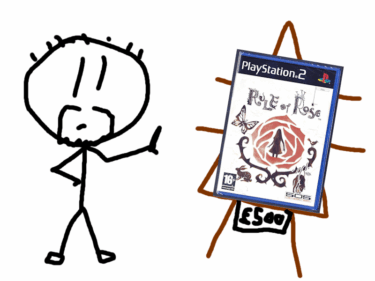
Don't get me wrong; there will always be an appeal to having original hardware and original media, and I don't begrudge anyone their choice to build up a substantial retro collection. I also think it's a bit sad that we've reached the stage we're at now. But with the absurd, exploitative prices that are being charged for both systems and media today — coupled with the fact that there's no real guarantee either of those things will actually work when you get them — I am very much a convert to the school of thought that says you're better off spending the money you would have spent on one copy of Rule of Rose for the PlayStation 2 on ways to get a "modern retro" setup up and running.

There are many ways you can do this. The absolute simplest way is to buy retro rereleases, either on modern platforms that you happen to own, or with specialist devices such as mini consoles or, of course, the Evercade. There are many benefits to these modern rereleases, such as bugfixes of games that shipped in a dodgy state back in the day, modern convenience features such as save states, rewind functions and in-game reference material, plus the fact they're generally a whole lot cheaper than buying the original releases and still fun to collect. If you were to buy all the games on the recently released NEOGEO Arcade 1 cartridge for Evercade in their original format, you'd be talking four figures. The cart is twenty quid. Do, as Atari once said, the math.

The only downside to officially licensed rereleases is that those licenses are sometimes hard to come by — or even completely impossible. Don't expect to see too many rereleases of racing games with licensed cars or licensed soundtracks, for example. Don't expect to see movie licenses making a return, either. But you might be surprised what licensors are still willing to play ball with, as the Evercade library to date shows.

Another relatively straightforward way is to devote a PC or similar device (like a Raspberry Pi, Steam Deck or Chinese gaming handheld) to it and install a suitable suite of emulators and organisation tools.

For Windows PCs that you also want to do other things, I would recommend Launchbox (even if they took to using odious AI images in their promotional emails of late), as this is not only a good means of organising all the games you might want to play, it also automatically retrieves additional information like box art, descriptions and even PDF copies of manuals where possible. The paid version also has a "Big Box" mode where the interface is designed to be used with a controller on a TV.

For other devices that are going to be dedicated to retro gaming, I highly recommend Batocera, which is a Linux distribution, but don't run away scared. It's all preconfigured to work in a similar fashion to something like Launchbox, and is pretty straightforward to get games up and running in. It's also highly customisable, so you can make the whole thing look and feel how you want it to.

The relative "luxury option", particularly if you still have a CRT knocking around that you want to use for the authentic look and feel, is MiSTer. As I've alluded to in a few posts recently, the absolute easiest way to get started with this is with a prebuilt device like the Multisystem 2 (my device of choice) or the upcoming SuperStation One. Alternatively, you can built your own — that's nowhere near as scary as it sounds, and it allows you a tad more customisability, though with the pricing of the Multisystem 2 and SuperStation One it's actually cheaper to buy one of those prebuilt options in a lot of cases — though note you will still need to provide accessories and storage.

If you're lucky enough to still have working classic hardware around, the first thing I recommend you do is investing in a modern power supply for them. My Mega Drive was prone to rolling noise on the screen with its original power supply, but replacing it gave a completely stable, flicker-free picture.

Once you've done that, invest in an EverDrive. Cheaper flashcart options exist, but EverDrives are premium products that support pretty much everything you might want to play on a piece of classic hardware. Not only that, in the case of systems that had add-ons, they can simulate the presence of the add-on, too — for example, the Mega EverDrive Pro can run Mega CD games.

For classic home computers, flashcarts are also available, or there are also plenty of media emulators you can use to "trick" the computer into believing it's using a real floppy drive or tape deck. For the Atari 8-bit, for example, I enjoyed using the SDrive-MAX device, which allows you to load executable files, disk images and tape images from an SD card. Similar devices are available for most classic computer platforms.

I won't lie; it's easy to spend a few hundred quid on this stuff — possibly even over a thousand. But once you're done, you have a great setup for what is, after all, the important bit of being interested in retro games: actually playing the games. And the kit you have will play pretty much anything without you having to pay some rando on eBay a three-figure sum just to play one game.


Want to read my thoughts on various video games, visual novels and other popular culture things? Stop by MoeGamer.net, my site for all things fun where I am generally a lot more cheerful. And if you fancy watching some vids on classic games, drop by my YouTube channel.

If you want this nonsense in your inbox every day, please feel free to subscribe via email. Your email address won't be used for anything else.

#oneaday Day 264: Flashcarts: a retro essential?

I can't remember if I mentioned it on here before, but even if I did, I'm going to mention it again anyway: I recently ordered an FXPak Pro for my Super NES, to add to my collection alongside the Everdrive 64 X7 I got a while back for my Nintendo 64, and long-term I intend to also get Everdrives for the Mega Drive, Master System, NES and possibly Game Boy Advance.

For the unfamiliar, an Everdrive is a cartridge for a retro gaming system that allows you to pop in an SD card full of game ROMs, then play them on original hardware. The FXPak Pro is a similar device, but it's distinguished from Everdrives primarily due to its origin, but also because it is capable of emulating the custom chips that many SNES cartridges had in them, such as the famous Super FX chip that powered Starwing.

Most of these devices also have additional benefits such as being able to back up save data and even make use of emulator-style save states in some circumstances — one model of the Mega Drive one can even full-on emulate a Mega CD without having to have an actual Mega CD attached — but their main appeal element is the ability to play any games you want on original hardware without having to use original cartridges. Of course, this generally involves piracy, but at this point, none of the original makers of games on old games consoles are making any money from you buying an original cartridge anyway, which means the often exorbitant prices they go for are pretty much pure profit for the individuals or organisations involved.

A while back, I was all about building a curated collection of games for vintage systems, and there's part of me that would still like to do that. But I have had a few considerations arise over the last couple of years: the first being the available space I have, which is rapidly running out (although I've reclaimed some by banishing some items to the loft and rearranging some of the other shelves) and the second being that I had a run of bad luck with buying second-hand cartridges.

To give specifics, I attempted to buy the game Desert Strike for SNES, a game I never actually owned back in the day, but always enjoyed any time I borrowed it from a friend or played it at their house. I paid £8 for a copy from CEX, and was a little put out to discover when it arrived that it didn't work. Well, it sort of worked; the Electronic Arts logo on startup was garbled, in-game graphics occasionally corrupted and it would just randomly reboot sometimes. This problem persisted even after several sessions with the contact cleaner and cotton buds. The cart was just fucked.

No matter, I thought, it's only £8, I'll buy another copy and return this one if I can be arsed — though I knew from experience that if I attempted to return it to CEX, they'd almost certainly test it, find it didn't appear to work, then refuse me a refund, despite them selling it to me in a faulty state in the first place. So I bought another copy. And the same thing happened.

Couple that with several experiences I've had where I bought games where the save batteries had failed, and, y'know, I just can't be bothered with all the faffing around with aging, failing media when there's a better option just sitting there. Playing on original hardware definitely has its own distinct appeal from playing on emulation or even official rereleases on modern systems, so going the Everdrive or FX Pak Pro route just makes a lot of sense when my priority is not "investing" in a collection, but instead just enjoying the games.

I will add to the above that, if a game I'm particularly fond of or always wanted to play should suddenly become available commercially, I will happily pay up money for it, and have done on numerous occasions, even if I'd already played and beaten the game via "unofficial" means. It's the right thing to do. But there are myriad games out there that are never getting a rerelease for all manner of stupid reasons, and that doesn't mean no-one should be able to play them any more.

So, long-term, I'm intending that all my retro systems will be equipped with Everdrives or equivalents so they can be used and enjoyed without having to roll the dice on whether aged media is still in working order. And once that's all sorted out, I'm looking forward to spending some quality time with some classic games — both ones I loved back in the day, and hopefully some new discoveries, too.


Want to read my thoughts on various video games, visual novels and other popular culture things? Stop by MoeGamer.net, my site for all things fun where I am generally a lot more cheerful. And if you fancy watching some vids on classic games, drop by my YouTube channel.

If you want this nonsense in your inbox every day, please feel free to subscribe via email. Your email address won't be used for anything else.

#oneaday Day 97: EverDriving the '64

Inspired by my success with the GDEMU for the Dreamcast, I decided to pick up an EverDrive 64 for my Nintendo 64. Long-term, I'm planning on grabbing one of these excellent devices for all my cart-based consoles, as I've been burned just once too many by duff cartridges purchased from second-hand sources. As much fun as it is to collect things and have the satisfying tactile thunk of slamming a cartridge into a slot, it's even more fun to have games that actually work.

For the unfamiliar, an EverDrive is a cartridge designed to work with a cartridge-based system… obviously. In most cases, they have a micro SD card slot, on which you load some simple OS files for the thing to be able to do its thing, and then any ROM files you want to use. This effectively means in most instances, you can carry around the complete library for a system on just one cartridge. Very convenient — particularly as the EverDrive also takes care of managing save data, and even allows you to back up and restore Controller Pak saves so you don't need umpteen of the little buggers to be able to save your progress.

The one small issue I've found is that when running NTSC games on my PAL N64, there's a horrible "ghosting" effect on the image that makes playing those games undesirable. It's a bit of a shame, as there are a few North American NTSC N64 titles I wouldn't mind playing, but to be honest, I suspect the EU library will keep me busy for quite some time.

This evening I've been exploring a few games I've always been curious about, but never had the opportunity to play for one reason or another. The two that I've probably had the most fun with are both Midway titles, as it happens, and both arcade conversions: San Francisco Rush and Gauntlet Legends.

San Francisco Rush is an arcade racer that is markedly different from most other arcade racers from the '90s that I'm familiar with. Probably its most notable standout feature is that its courses are relatively "open", often offering alternative routes and shortcuts, and in some cases allowing you to proceed around a section of the course in the opposite direction to the rest of the pack and still end up where you're going.

Of course, open-structure races aren't a particularly uncommon sight these days — to be honest, it's harder to find a modern racing game that isn't open world outside of the hardcore sim sector — but I suspect back in the '90s, San Francisco Rush would have been quite the unusual little thing.

It's also noteworthy in that it's an arcade racer where you really do have to slow down for corners. If there's a drift function, I certainly haven't got to grips with it; thus far I've had a reasonable amount of success with just actually using the brakes (or at the very least letting off the accelerator) ahead of sharp corners — and with the game being set in San Francisco, there are lots of sharp corners.

The visuals are fairly ugly by modern standards, though I found that I quickly stopped noticing the low-resolution blurry nature of the game, and the fact that many of the races are covered in fog is entirely appropriate for the setting. It thus far seems to be an enjoyable racer, and with a decent amount of longevity, too; the main "championship" mode is 24 tracks long, thankfully with the ability to save your progress.

Gauntlet Legends, meanwhile, is a successor to the classic 4-player dungeon crawler from Atari Games. It takes the action into the polygonal 3D realm, though still plays mostly like a top-down maze game. It has all the classic Gauntlet elements present and correct: finding keys to open doors, standing on switches to open up walls, blasting generators to stem the tide of monsters. It adds a few new elements to the mix, though, including an inventory where you can activate and deactivate power-ups at will, and some RPG-lite mechanics whereby you can level up and improve your stats.

Perhaps most importantly, your health doesn't tick down gradually as you play. Bliss! This makes it one of the few Gauntlet games that it doesn't feel utterly futile to play; as much as I like old-school Gauntlet, the various home ports tend to trivialise themselves by providing you the opportunity to "insert coins" as much as you want, affording you effectively unlimited health.

Not so in Gauntlet Legends! Instead, you lose health at a much more sensible rate if you get hit or caught in a trap, and healing items give you a meaningful amount of health back. Plus you can buy more health with the gold you earn in levels, and you also get more health every time you level up.

Probably the thing I'm most impressed with about Gauntlet Legends is how smoothly it runs. While it doesn't run at a rock-solid framerate, it happily gets up to a full 50fps (I'm running PAL, remember) when you're wandering around exploring, and while the frame rate does drop a bit when the screen gets busy, it's never to an unplayable degree, and the controls always remain nicely responsive.

I'm looking forward to spending a bit more time with both games, along with revisiting some old favourites and discovering some new titles. If you have an N64 and a bit of cash to splash, I can highly recommend an EverDrive; I suspect it's going to revitalise my interest in this classic system, and I'm looking forward to getting one for my other classic consoles, too. After payday, though; they ain't cheap!


Want to read my thoughts on various video games, visual novels and other popular culture things? Stop by MoeGamer.net, my site for all things fun where I am generally a lot more cheerful. And if you fancy watching some vids on classic games, drop by my YouTube channel.

If you want this nonsense in your inbox every day, please feel free to subscribe via email. Your email address won't be used for anything else.