#oneaday Day 690: Tickets, Please!

RememberTheme Park? That awesome sim from Peter Molyneux's pre-Lionhead studio Bullfrog? Good, wasn't it? Not only did it have bags of charm and character, but its attractive presentation (albeit with a few grammatical errors — "charity begin's at home" anyone?) masked an incredibly deep, immensely satisfying business sim.

And the things you could tweak and spy on! You could find out what an individual little person wandering around was thinking. You could adjust the amount of salt on the chips and inflate the prices of the conveniently adjacent drinks stand. There were tons of rides on offer. Even building your queues was a strategic challenge — how do you make them look shorter than they actually are? And when you had a badass park, you could sit back and watch the money roll in, satisfied with the knowledge of a job well done.

Fast forward to this week, and Theme Park has been released on iOS. "Yay!" you may be thinking, eager to sink your teeth into something with more depth than the ubiquitous Tiny Tower. "Finally, a true classic of PC gaming resurrected for the smartphone era!"

It's not an unreasonable thing to be excited about. Theme Park's mouse-driven interface would be ideally suited to a touchscreen, particularly a nice big one like an iPad, and the original game itself still holds up well today.

As you may already know, however, the version of Theme Park which has hit iOS is not the original Bullfrog classic. Very far from it, in fact. It's a brand new game.

No bad thing, you might be thinking. RollerCoaster Tycoon picked up the park management reins a while back and has been doing well since, so why not incorporate some advances in the genre?

Why not indeed. Instead, EA in their infinite wisdom have decided to turn Theme Park into a freemium social game with quite the most outrageously priced premium items I've ever seen.

Let's take the social game angle first. Aesthetically, many social games resemble the isometric 3D strategy games of the late 90s in terms of visual presentation, but that's where the resemblance ends. Gameplay is generally pretty free of any strategy, instead involving buying the most expensive/best item you can afford/have unlocked, and then clicking on everything you've built every few minutes to collect cash and experience points. As you level up, you unlock different items. Occasionally there are incredibly patronising quests to complete. The whole thing is one big Skinner box, designed to get you hooked enough to want to spend money.

Real money can be spent on the acquisition of "Super Tickets", which can themselves be spent on either speeding up lengthy build times, unlocking rides early or, and here's the kicker, purchasing some "premium" rides which can only be bought with Tickets. If you've played The Sims Social, it's just like the items that can only be purchased with premium currency SimCash.

So far, so freemium, you might think. But the real kick in the teeth is the price of some of these items. The most expensive rides cost in the region of £35 to purchase. £35. For one virtual item in one not very good game. That's £35 you could spend on an actual game in a shop. Or a large selection of actual full games on the App Store. You could even purchase several Square Enix titles from the App Store for that, which just goes to show how insanely priced it is.

Fortunately, App Store reviewers, usually imbecilic morons but for once seeing the Emperor in all his nudey glory, have been rightly panning the game for this. Unfortunately, it only takes one "whale" to buy even one of those premium items to make the whole thing worthwhile for EA.

So in short, I'm disappointed. I'm disappointed that such a beloved game franchise is tarnished with this nonsense. And I'm disappointed at the shameless money-grubbing that this title represents.

But am I surprised? Of course I'm not, and that's perhaps the saddest thing of all.

#oneaday Day 687: E for Exploitative, A for Arseholes

EA and I are done. I will not be purchasing any of their future titles (with the possible exception of BioWare titles — though even those are becoming prone to the problem I'm about to describe) and I think the world should pay attention to what they're up to, rather than simply letting them get away with it.

What, then, is their sin?

Exploitation of consumers, to put it in simple, general terms. This accusation covers a variety of unpleasant behaviour, and none of it is good for people who like playing games and holding on to their money. Let's delve into these things one at a time.

Origin

Let's start with EA's digital distribution platform Origin. I don't have a problem with digital distribution platforms which aren't Steam, but EA needs to accept that I, along with many other gamers out there, choose to rely on Steam for the vast majority of our PC gaming needs.

There are a variety of reasons for this, not least of which is Steam's ubiquity and social functionality. If you want to see what your friends are up to in an Xbox Live style, chances are, you'll be able to see via Steam. Most people even add their non-Steam games to their Steam library, so you'll always be able to see what they're up to.

Origin has designs on this too, with its own integrated social functionality, but no facility to add non-Origin games. And given that the platform launched with only EA titles, few people are going to want to switch to Origin as their primary means of communicating with friends during gameplay. It's just silly to try. Steam works, no pun intended. It works well. That's why it's popular.

Alongside this, there's the shady business of EA removing its titles from Steam on the grounds of mysterious, non-specific "policies" that supposedly no other digital distribution services impose on poor little EA. Funny how these objections only arose shortly after Origin showed up.

And then there's the fact that increasing numbers of people are reporting that they're losing access to their games — even single-player titles — following often wrongful bans from the EA forums. Granted, some people who have been in touch deserved a forum ban (come on, do you really think making your username "TheGreatRapist" is really going to depict you as a fine, upstanding member of the community?) but even then, there is no way that behaviour on forums should prevent people from accessing the content they have paid for. Rock, Paper, Shotgun is running a good investigation into the matter at present.

And then there's EA's stubbornness even when it comes to online games. In their recent mobile releases (which we'll come on to shortly) all online functionality is handled not through Game Center which is, let's not forget, built in to iOS, but instead through Origin. This has the ridiculous side-effect of meaning that you can't use the Game Center app to do things like check high scores or compare games — something which it is designed for.

Anyway. Enough about Origin — except for the fact that EA's adoption of that particular name is like rubbing dirt into the good name of Origin Systems, who produced some of the finest games ever created.

Project Ten Dollar

This is all the rage now, and not just with EA. I blame EA for introducing it, however, since it was they who talked about it first. But it is not cool to lock off content from full-price games, whether it's single player or multiplayer. If I pay £40/$60 for a new game, I damn well expect to get what I paid for on the disc without having to enter a selection of alphanumeric codes. And if I buy a used copy of the game, I likewise expect to get full access to the game. People don't tear out the last five chapters of a second-hand book, people don't erase five random scenes from a second-hand DVD. So why should a game be gutted for those of us who didn't want to buy it new, whether that's due to financial constraints or simply being unable to find a new copy?

An episode of Extra Credits had a good solution for this which would be perfectly palatable to me. If they must lock off content, then charge less for the game in the first place. Sell me a disc with the single player gameplay on for considerably less than $60 and charge me an additional $15-20 for the multiplayer mode — a $15 to $20 that I don't feel obliged to pay, largely because I rarely play multiplayer modes, anyway — particularly in games that don't need them.

As it is, Online Passes are a transparent method of fleecing more money out of consumers. They are indefensible.

Drip-Feed DLC

This largely relates to BioWare games. I would much rather have a full-on expansion pack for $15-20 than drip-fed DLC which often adds very little to the experience. The few pieces of Dragon Age DLC I've played really weren't worth the money — they didn't even integrate with the main campaign — and they've put me off checking out Mass Effect 2's offerings.

Part of this is for pricing reasons. But part of it is, again, due to the fact that I'd much rather have the whole game up front. In the case of Mass Effect 2, why not hold the release back and include the content in the game? Answer: because it makes more money, which is kind of the root of all these problems. Money-making trumps consumer convenience and goodwill every time.

Thar Be Whales!

By far the most obnoxious behaviour that EA has been indulging in recently relates to its mobile games. First of all, they updated their iOS version of Tetris. This is not, in and of itself, a bad thing. All iOS developers update their games fairly regularly, whether that's with bugfixes or additional content. And, for the most part, buying that app in the first place means that developer is happy to provide additional content to you for free throughout the product's active development lifecycle.

Not so with EA. They removed the original version of Tetris from the App Store before replacing it with the new version, meaning that even people who had already bought the original and wanted to take advantage of the new features had to pay again. Dishonest.

Couple that with the fact that the game has added compulsive, manipulative social game features such as an utterly meaningless "rank bar" and virtual currency — both of which you can pay real money to jack up at a higher rate — as well as a subscription option (for Tetris! Seriously!) and you get something altogether unpleasant.

Then there's Theme Park. Theme Park was a brilliant strategy/building game which many people would love to play again today in its original form. It doesn't need anything changing. But no — EA decided that it really needs to be a gameplay-free social game, complete with aforementioned compulsive, manipulative mechanics such as an XP bar and purchasable virtual currency. Not only that, though, but some of the rides in the game cost up to $100 of real money to purchase. Let that sink in for a moment. To buy certain attractions in Theme Park, you need to pay more than the cost of one and a half full-price console titles.

The trouble is, there are just enough idiots out there who have more money than sense who will pay these ludicrous prices just to be "the best". These people are unaffectionately known as "whales", for obvious reasons — and it only takes a few of them to make such a business strategy worthwhile.

In all, I'm pretty ashamed of EA right now, and have no desire to give them any of my money for the foreseeable future. The trouble I have is that they're swallowing up otherwise reputable companies like BioWare and forcing them to fit in with their shady business practices. I have no doubt that Mass Effect 3 will be a great game, but I also know that it will have an Online Pass, it will doubtless have a "robust post-release DLC strategy", it will surely cut out content from the main game to sell back to me at a later date, and it will almost certainly only be available on Origin for PC.

I long for the days when EA were the ones with the funny logo that looked like EOA, and they make games like M.U.L.E. and Racing Destruction Set. I know you can't go back, but you can move in a direction which doesn't make you look like you just want to squeeze your customers for every penny they've got, rather than provide them with quality entertainment.

In summary: sod off, EA. Get back to me when you've had some humble pie.

Talking Point: What do you do when a favourite developer (BioWare) is an cahoots with an organisation like EA? I like BioWare games, as I've said above. But I'm strongly tempted to not buy any more for the reasons outlined above. I certainly won't be purchasing anything from Origin and especially if it's an Origin exclusive. Competition is good. Removing your products from the competition (Steam) is not.

#oneaday Day 644: This Post is Pre-Owned and Proud

Fellow daily blogger and #oneaday 2010 alumnus Ian Dransfield posted a good rant about Online Passes earlier, and I thought I'd add my two-penneth.

These arguments have been made before, and will doubtless be made again, but people need to stand up to this behaviour and stop defending it. Why? It's quite simple.

Online passes are completely indefensible.

It really is that simple. There is no reason for a publisher to lock off sections of content from people who have purchased copies of their games legally other than the completely mercenary "to make extra money." Sure, publishers don't make any money from preowned game sales — the thing which systems like this have been clearly set up to combat — but let's look back, shall we? We survived the PS2 era with a flourishing second-hand game market. Grew enormously, you might say. Even the early part of this console generation did just fine without requiring you to enter three or four codes before you can even play the fucking game you paid money for.

One frequently trotted out excuse from publishers is that online passes help pay for server space and maintenance. Again, in previous generations and on the PC, that has never been an issue, so it's a spurious argument at best. The argument is often extended to point out that when a second-hand copy of a game is sold, some space on the server must be created for the new player when, in fact, an extra copy of the game has not been paid for. Fine, but bollocks; the previous player is no longer playing it because he traded it in, meaning their precious server space can be taken up by the new owner. Easy.

This isn't even getting into the fact that this argument is completely destroyed by games such as Arkham City, which lock single player content behind an online pass. And exactly what, pray, are those gamers who don't have their consoles connected to the Internet supposed to do? Just go without? Well, yes, apparently, so it seems.

It astonishes me (and Ian, for that matter) that there are people out there who will happily defend this obnoxious practice — people who are the very consumers getting bummed senseless by it. It's unnecessary, it's indefensible and it's just plain rude to consumers. And it's giving me pause when considering whether or not to purchase new games — an issue which started to grow as DLC and later Game of the Year editions started to rear their heads.

Let's take Uncharted 3 — a game which, by all accounts so far, is likely to be pretty brilliant. The Uncharted series is known for its excellent single player campaigns with strong stories, wonderful characters and spectacular setpieces. And yet news has emerged recently that the game will be making use of both an online pass to access the multiplayer, and a Season Pass allowing people to "preorder" downloadable content. The presence of both of these rubbish things is making me not want to purchase a new copy of Uncharted 3 when it's released. Because I'm unlikely to play the multiplayer anyway, I may as well wait a while and pick up a preowned copy for cheaper, thereby depriving Sony and Naughty Dog of the money that I actually wanted to give them for producing a spectacular game.

I'm hoping these horrific business practices will cause the "mainstream" part of the industry to implode at some point in the future, because at the moment the vast majority of the gaming population is proudly presenting its collective posterior to the likes of EA, THQ and Ubisoft and allowing itself to be repeatedly violated with a large phallus made of money. It doesn't have to be like that. If an independently developed game such as Dungeon Defenders can be one of the most-played online games on PC while costing $15 and without demanding anyone purchase any kind of pass for the privilege of playing online, then large publishers such as EA clearly don't need any money.

The sad thing is, though, that the desire to play the latest and greatest games as soon as they're released is a far stronger impulse than the "hang on, I'm being bum-burgled here" sensation. People want to play things day one, and by buying new copies they figure the online pass thing won't affect them. But in doing so, they're indirectly giving publishers the A-OK to carry on with these anti-consumer measures. And that's not OK.

#oneaday, Day 274: Seven Deadly Sims

[Click the comic to see a bigger version if you can't read the text.]
The Sims shouldn't be good. It really shouldn't. It represents all the things that people say they'd never want to do in a game. People always say that they don't want their characters modeled in such detail that they need to eat, sleep, poo and the like. But it was this level of detail that brought the original The Sims game to life.

Over time, the series has developed in many wild and crazy ways. To the casual observer, each game may appear to be fundamentally the same. But in fact, each new game (and, for that matter, each new expansion pack) has changed the way the game is played to a considerable degree. So much so that The Sims 3 now has the potential to go in any one of a wild number of disparate directions according to what the player feels like doing at any time. What other games do you know where you can do this:

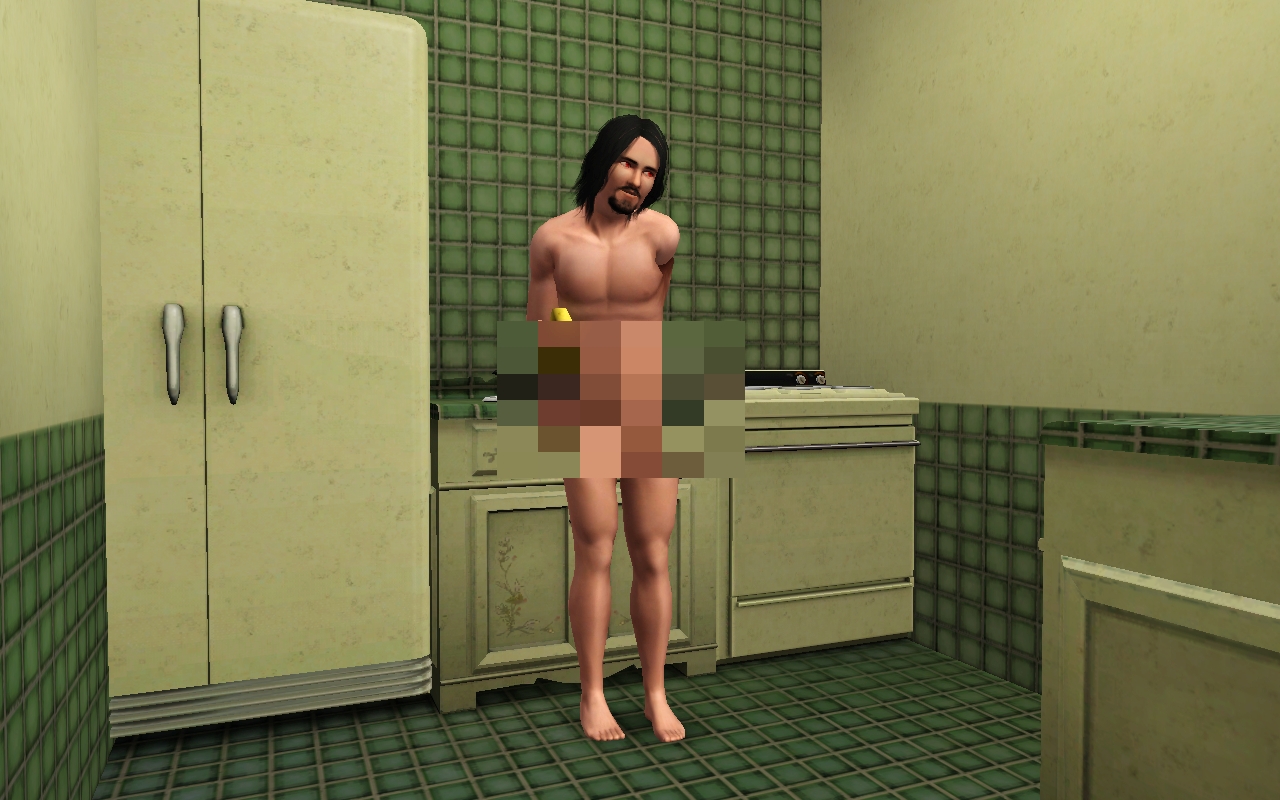
Evil Jeff Grubb takes a sponge bath in the kitchen.

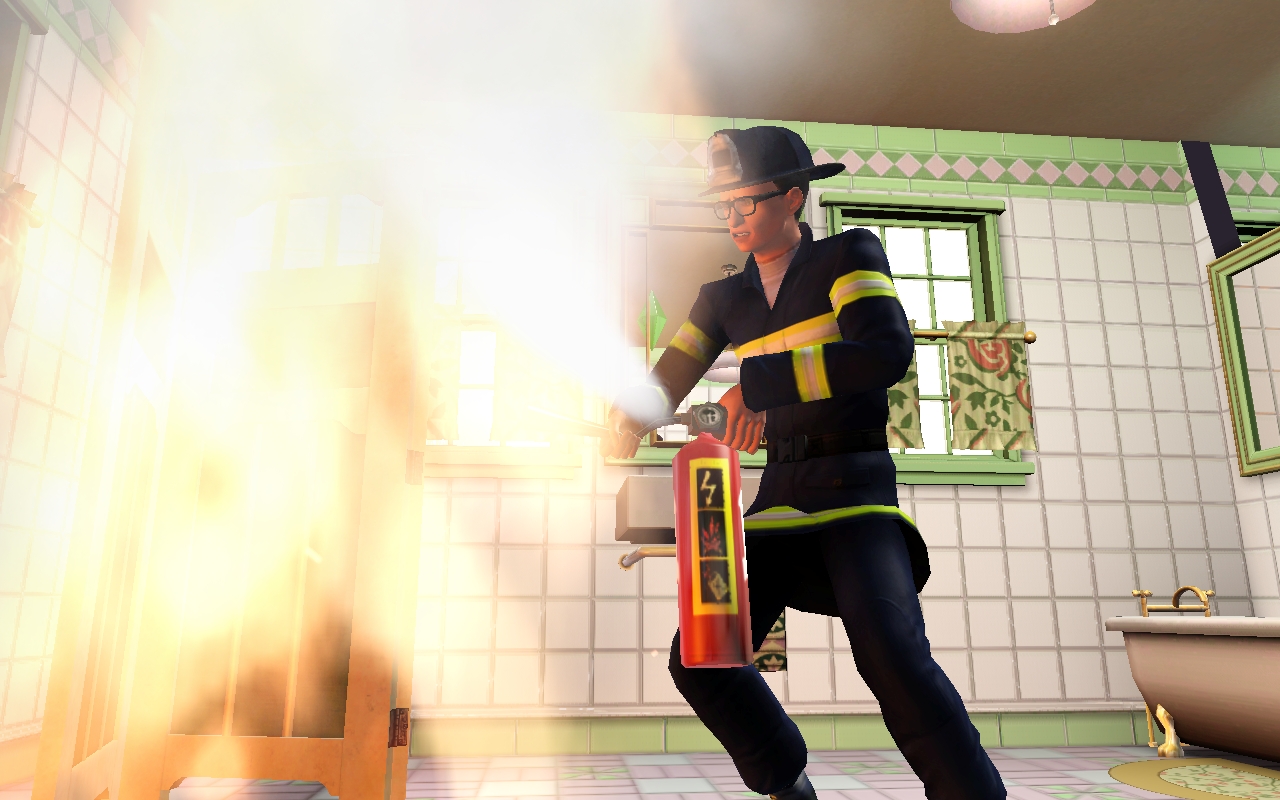
AND this:

Non-Evil Mike Rougeau puts out a fire. Professionally.

AND this…

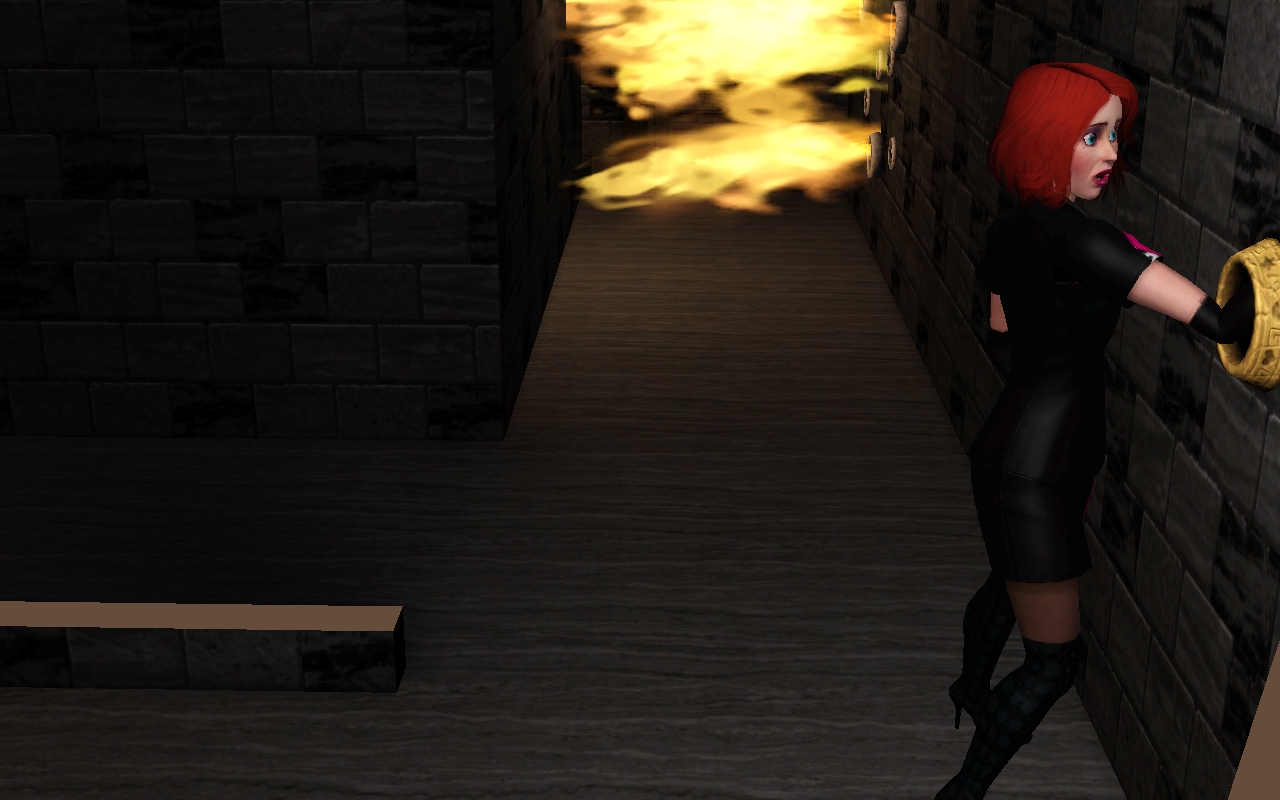
Amarysse attempts to find her way around a flaming death trap in an ancient Chinese tomb.

AND this…

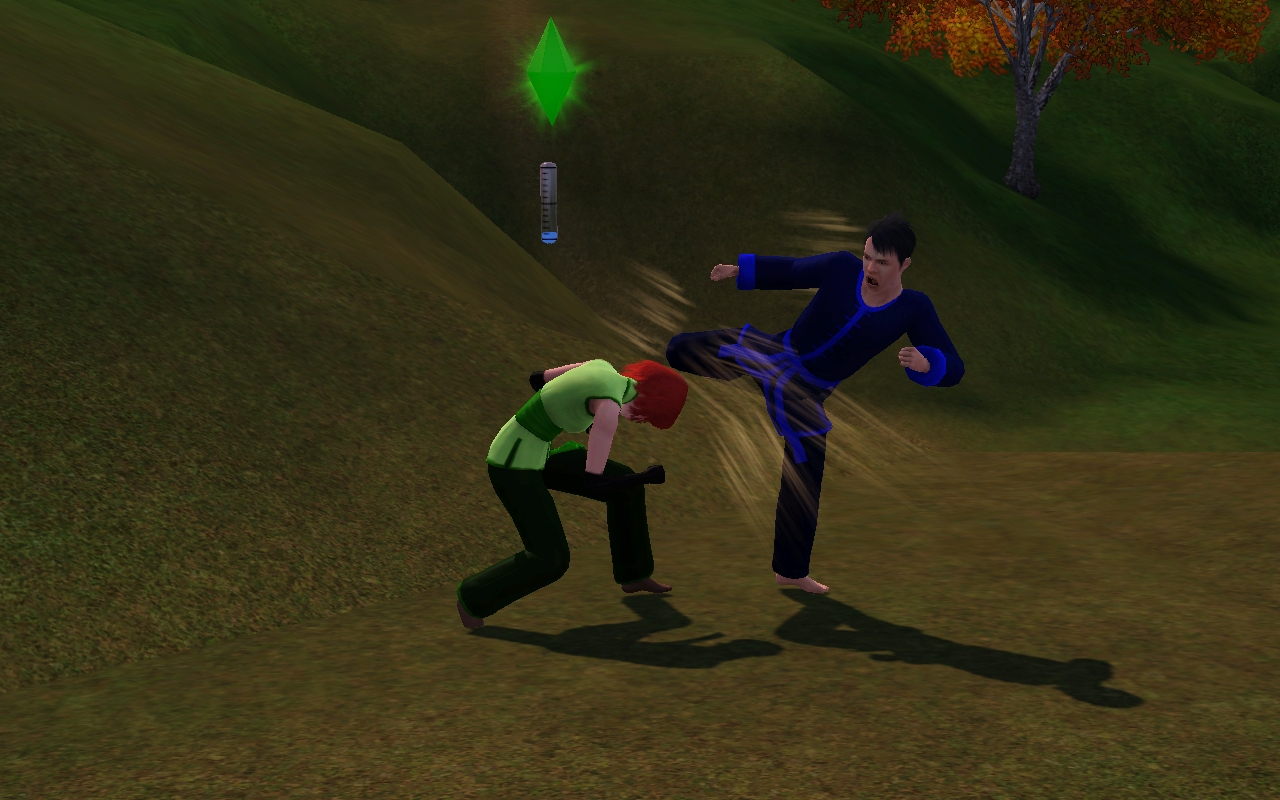
Amarysse spars with a fellow martial artist.

AND this…

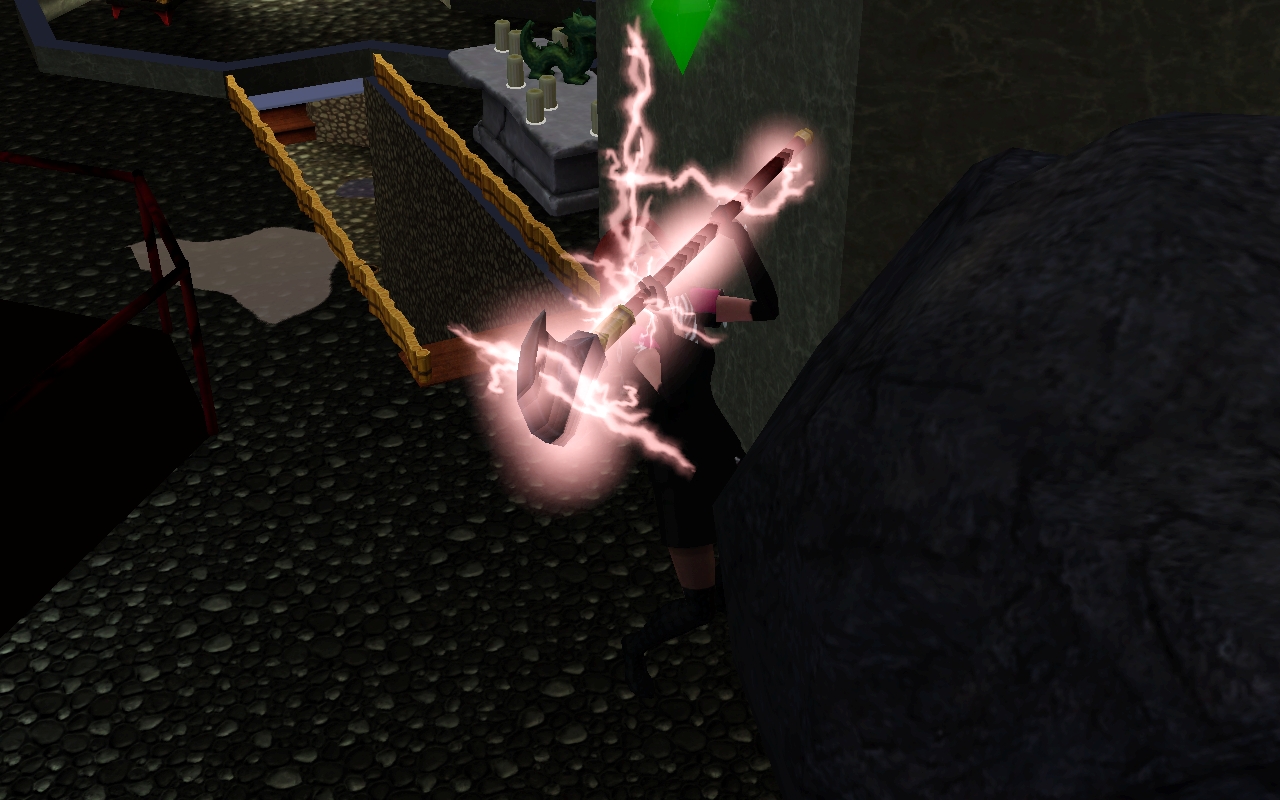
Amarysse prepares to use her magic axe to smash the crap out of a boulder.

AND… you get the idea.

The Sims 3, with its current two expansion packs World Adventures and Ambitions, represents an enormously diverse experience that is by no means just about telling little people when to go to the toilet. No, what we have is probably pretty close to what Will Wright originally intended when he envisioned the series. A life simulator. A game where the player is pretty much free to do as they please.

If they want to stay at home and concentrate on building a family, they can do that. If they want to go out and explore perilous dungeons around the world, they can do that. If they want to try and prove they're the best at a tricky profession, they can do that too. Or if they want to try and juggle all those things? Well, they can do that too. Amarysse, depicted above, is a successful athlete, lesbian, adoptive mother to a young child, treasure hunter and local hero in parts of China. And she's only about halfway through her life. By the time she eventually shuffles off this mortal coil and it's time for her adoptive son to take up the mantle of her family and prove himself, she'll have a whole ton of experiences to look back on.

As you may have gathered, I have very much rediscovered The Sims recently. And if you've never given it a try, I can highly recommend it, even if you've never been a fan of the series before. You will be able to find something in that game for you to enjoy. Even if it's something along the lines of this.

Af Wubbas Do (Or: Evil in the world of The Sims)

So I bought The Sims 3. So I like The Sims, and have done since the first one. So I usually buy most, if not all of the expansion packs. What of it? Huh?

If I sound defensive, it is of course because The Sims is seen by many as one of the banes of the hardcore gamer. I've found it fascinating over the years, though. Ever since first playing Sim City, then being able to fly around a Sim City 2000 save game in Sim Copter, I wondered for the longest time how cool it would be to get right down to the "personal" level… and the original iteration of The Sims delivered bigtime. It became a social event, too – I was living in halls at university at the time, so inevitably I made all of the people in our flat as best I could. Everyone came by regularly to see what was going on and laugh at who had pissed themselves or passed out from exhaustion that day (hey, managing six people is tricky!) and it is a source of many fond memories.

Fast forward to today, and we have The Sims 3. Some things haven't changed much (the basic gameplay still involves bossing your Sims around and making sure they don't shit themselves, though this has been played down a little in favour of "Moodlets" – mood "buffs" and "debuffs" – this time around), and others have changed a great deal. The biggest change is the much-vaunted "open world" design of the game. In practice, this means that Sims can walk out of their front door, walk down the street and go and visit someone else. The difference this makes is enormous – no longer are you confined to your own house or specific "community lots" – now you can actually explore the world, and there's a bunch of gameplay elements to reflect that. You can go fishing, collect things, find "treasure" – in many ways, the design of the game is getting closer and closer to something along the lines of an MMORPG.

Anyway, this time around, as usual, I made myself and my wife and am playing them "straight" – that is, attempting to be as successful as possible and maintain the family bloodline. As such, as Sim Pete and Sim Jane enter their twilight years, their two kids are growing up nicely and developing into fine young men. I just hope they don't die before the kids reach adulthood, which is, of course, a possibility!

Having read some articles online, the Prima official guide (which is a good, fun read if you're interested in the game and its mechanics) and, most notably, this touching and heartbreaking blog about two homeless Sims, I was intrigued to try out a completely different kind of Sim, using some of the more… shall we say "unpleasant" Traits on offer at character creation. Here were the results:

This is Lars. As you can probably see, he's a miserable git. Maybe people laugh at his Sephiroth hair and overuse of man-makeup. Whatever the reasons, he's become a bitter and twisted individual. He's Grumpy pretty much all the time, which makes it difficult to keep him happy. He's also Evil, which means he delights in the misfortune of others.

Naturally, he has an evil-looking house surrounding by a grungy-looking moat/swamp combo. He deliberately designed it to annoy his neighbours, who have a very pleasant-looking house.

Lars wanders over to pay his new neighbours a visit and is confronted with Roxy, a young woman whom he takes an immediate dislike to due to her looking "a bit hippie".

The conversation turns sour quickly. Roxy recoils in horror as Lars starts yelling at her for no other reason than he felt like it. He insults her appearance and her house. (Most of this was without any intervention from me.)

Lars decides enough is enough and spontaneously decides to attempt to punch out Roxy. He fails once. Humiliated, he tries again and is victorious. Both sims are left feeling faintly ashamed, but Lars is pleased that he's caused some misery.

Dusting himself off, Lars turns to Roxy's roommate, who has been watching in horror at the sideshow unfolding in front of her. Lars is sweetness and politeness, though, and uneasily (and some may say foolishly) she allows him into her house. Roxy is not happy.

"What a nice house," thinks Lars, his Kleptomaniac Trait itching. He restrains himself for the moment, as people are watching and he's already made a… memorable first impression.

In an attempt to ingratiate himself with his hostess (and perhaps build up some misplaced trust which could come in handy later…) Lars decides to tell the one about the broccoli, the tomato, the carrot and the pepper. Roxy's housemate isn't sure what to make of Lars' aimless ramblings. But then there's a clattering thump behind them.

Roxy has passed out on the floor. Evidently the exertions of meeting Lars for the first time were too much for her. Lars, Roxy's housemate and Madame Dungarees all have their own thoughts on Roxy at this point.

At this point, the household gets another visitor. Lars doesn't even bother to find out her name before he starts spreading gossip about how unlucky Roxy is. "She sure was unlucky to meet me today," he cackles.

The visitor is unimpressed. Lars sneers, knowing that the poison has been dripped. Roxy blushes as she listens to him carry on.

Lars starts on Roxy again, who looks close to tears. Roxy's housemate, getting rather fed up of this, starts thinking about going to bed and just leaving them to it.

Roxy decides to stand up to Lars and squares up to him. Her housemate stares into space behind the quarreling pair.

Finally, as Lars goes to give Roxy a good slap around the kisser, Roxy's housemate finally decides enough is enough and politely asks Lars to leave on account of his "misbehaviour".

He graciously leaves, bidding his hostess farewell. Then he tips their trashcan over…

…and steals one of their porch lights, not because he needs one, but because he can.

Tired and hungry, Lars heads home to contemplate the evil he has committed that day. Preparing himself a piece of toast, he suddenly realises that his house doesn't have any chairs in it, so, unprompted by me, he decides to settle down on the toilet to enjoy his toast.

I was laughing hard by this point. This was such a different experience to anything else I'd done in The Sims before. Sure, you could play an evil God and kill them off by rebuilding their houses in ways that, shall we say, weren't to their advantage, but the "negative" social interactions were always seemingly discouraged. By playing an Evil Sim, you're actively encouraged to be mean and nasty to as many people as you can. The Sim's Wishes reflect that, showing their heartfelt desires to go out and steal candy from a baby, or slap a special someone.

The expressiveness on the faces of the Sims has developed a lot over the years. Check out the faces that Roxy pulls as Lars is mean to her. I also found it pretty funny that Lars did a lot of the unpleasant things to Roxy completely of his own volition thanks to the "free will" option. He obviously felt an uncontrollable urge to make his presence known to his new neighbours, so I just kind of went along with it. It was fun, in an ever-so-slightly wrong way.

Give it a try. Playing an unconventional, flawed character presents some interesting challenges that you'd never come across if you were playing relatively "straight-laced".