#oneaday Day 266: Beetle Drive

After writing a bit about flash cartridges the other day (and, err, ordering one for my Mega Drive when I saw it was payday) I thought it was probably time I sat and played some of the stuff I had on my Everdrive 64 X7 hooked up to my Nintendo 64. So I did. And I'm reminded that while the Nintendo 64 was a rather odd system in many ways, it also had some great games.

I will probably write some more on these over on MoeGamer at some point, but in the absence of anything particularly interesting happening today, I thought at least a couple of them would make worthwhile blog fodder.

The first one I decided to give a bit of a go was Beetle Adventure Racing, a game which I remember reviewing well back in the day, which I know is often featured in "best of Nintendo 64" retrospectives, which I know my brother likes and which, somehow, I have never gotten around to trying. So I decided I would fix that issue and try it.

Beetle Adventure Racing is really good, you guys. I'm kicking myself for not trying this sooner — and kicking myself for not taking a punt on it back in the days when the N64 was current, either, because I would have absolutely loved this.

For the unfamiliar, Beetle Adventure Racing is an arcade racer from Electronic Arts (boo, hiss, I know, but we still liked them back in the N64 days) and Pilotwings 64 co-developer Paradigm Entertainment. It was created at least in part as a sort of "advergame" for the new-model Volkswagen Beetle, which launched in the late '90s, right when the N64 was in its heyday. It's not obnoxious about it, mind; it's just a game in which all the cars happen to be '90s New Beetles, and apparently Volkswagen weren't all that precious about what EA and Paradigm did to them, because Beetle Adventure Racing sees you doing some ridiculous things with them.

At its heart, Beetle Adventure Racing is a relatively straightforward arcade racer. You can play single events as either full-field races, duels against a single opponent or time trials. There's a championship mode with several difficulty levels, each of which unlocks some new tracks. You can play two-player races. And there's a four-player battle mode that, back in the days when I had three-dimensional friends and we, as a people, went around to each other's houses on a fairly regular basis, I feel we would have had a lot of fun with. One day. Maybe.

The "Adventure" part of the title comes from the design of the courses. While they're relatively straightforward (albeit surprisingly long by genre standards) circuit races at first glance, it won't take you long to notice that there seem to be a lot of scenery elements that just beg the question "I wonder if I can go over there". And the answer, usually, is yes. Track splits in two? Pick a direction. Road goes one way, railway lines head the other way into a boarded-off tunnel? Crash through that sucker and see what's in there! Curious-looking pathway running parallel to the main course, then branching off in a different direction? Check it out next lap.

Now, the nice thing about the course design in Beetle Adventure Racing is that taking these detours doesn't put you at a disadvantage, despite, in some cases, appearing to lead you in a completely different direction to the "official" course. Nope, a lot of them are, in fact, shortcuts that let you skip parts of the track — or at the very least take a different route to get to the same destination.

In the championship mode, they have a secondary purpose, too: they tend to conceal boxes with numbers on them. Crashing into these boxes gives you points. If you get 50 points in a single race, you get a continue that lets you try again if you mess up. If you get 100 points, you get a "bonus" that the game is rather coy about — I believe it's extra stages for the battle mode. There are also, I've just discovered, three hidden "flower boxes" in each stage that unlock "cheats". I haven't even seen one of these yet.

Anyway, the long and short of it is in Beetle Adventure Racing it pays to really explore the different tracks, understand the different routes it's possible to take and practice nabbing the bonus boxes at every opportunity. Because while it's relatively easy to win the novice-level races without putting yourself out too much, combining the point-scoring (and the flower box-hunting) with still winning the race makes things much more interesting than your average arcade racer.

And the tracks! While obviously a little limited by the late '90s tech and the system the game is on, they're proper "thrill ride" courses. One takes you through a not-particularly-subtle Jurassic Park homage, complete with T-Rex bursting through the bushes at the side of the course. One takes you through a volcano. An icy course sees you careening through crystal caves and negotiating huge frozen obstacles. And, as previously mentioned, they're all long, meaning you get plenty of time to enjoy them, and there are plenty of opportunities to spot the different shortcuts, detours and otherwise optional areas.

It's not quite the same as today's "open world" racers, where it's possible to go very off-piste, often to the detriment of your race performance. In Beetle Adventure Racing, the alternative routes are very much designed as integral parts of the courses, rather than simply a thing to go "huh, cool" at, then return to following the guide line for maximum efficiency.

It's a joyful, silly game that I've had a lot of fun with so far — and will likely continue to do so for quite a while yet. In fact, I think I will go and do just that right now.


Want to read my thoughts on various video games, visual novels and other popular culture things? Stop by MoeGamer.net, my site for all things fun where I am generally a lot more cheerful. And if you fancy watching some vids on classic games, drop by my YouTube channel.

If you want this nonsense in your inbox every day, please feel free to subscribe via email. Your email address won't be used for anything else.
#oneaday Day 238: The Sims is still good

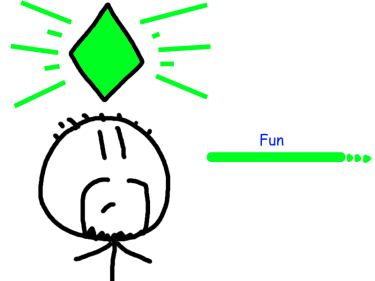
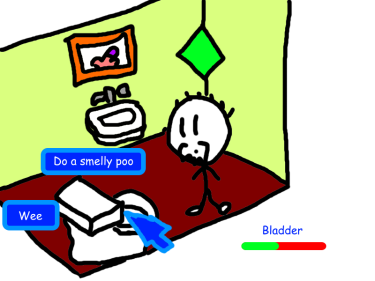
The rumours were true! Just ahead of the series' 25th anniversary, EA dropped rereleases of The Sims and The Sims 2 on their own storefront and Steam earlier today, for the eminently reasonable price of £34.99 for the both of them. Considering they both come with all the expansions (well, I think The Sims 2 might be missing the IKEA "stuff" pack, but that's about it), I'm perfectly happy to pay up for them both, particularly considering The Sims has never had a digital release, and The Sims 2 has been unavailable for a long time.

"But you can get them both for free!" the entitled corners of the Internet shout. "They're abandonware, and that means you can legally download them for free!" Well, firstly, one, no it doesn't, because abandonware isn't actually a thing, legally speaking, and two, it is important to support official rereleases of stuff like this, because it gives a thumbs up to companies making a commitment to actually preserving their history and making it available to everyone, even those who weren't there for it first time around. It's no good carrying on about "preservation" if you don't support actual attempts to do that. Piracy is all well and good if there is no other way, but official preservation efforts should be supported. Yes, even if they're by EA.

Both rereleases have been updated so that they work just peachy on Windows 10 and 11, and The Sims is able to run in much higher resolutions than it ever has before, and in widescreen. Okay, the game could arguably do with a UI scale option when playing at 1080p or higher, but it's not unplayable by any means, particularly if you're playing on a big TV as I have been.

I've spent a few hours revisiting The Sims this evening by making a rough recreation of my original "Hartley Family" save file, which featured me and the other members of my hall of residence flat at university struggling to survive. I am reminded that the original The Sims is actually surprisingly challenging compared to some of its follow-ups; thus far, keeping on top of six people's needs has been quite difficult, particularly with a lack of substantial income. Things will get easier once some of them start getting promoted and bring in a bit more money each day, but for the moment it's very much in "scraping by" territory.

Also one of them has died already after burning down the kitchen, but I managed to "Plead" with the Grim Reaper quickly enough for him to be able to return as a zombie. I have made a promise to myself that I'm not going to save scum at all, I'm just going to deal with the consequences of everything that goes on as it happens. Emergent narrative and all that.

I'm interested to spend a bit more time with the original The Sims, as back when it was current, I had a lot of the expansion packs, but not all of them. I don't think I had Superstar, Unleashed or Makin' Magic, and those are three that have some substantial additions to the gameplay — the pursuit of fame, pets and the ability to cast spells using appropriate components respectively.

At present, I've got one of the six Hartley family members equipped with a magic wand and (thus far) the ability to turn someone into a toad, and another who keeps slipping off to the "Studio Town" area to go and sing karaoke badly (earning a whopping 5 Simoleons per performance at present) but so far, it's a struggle to keep their mood high enough to be able to truly take advantage of those features. Much as with real life, getting a solid and stable income stream is important if you want to start doing anything out of the ordinary.

So that's that. The Sims and The Sims 2 are both available on Steam and EA's own storefront right now, either separately or in a bundle together. You also get a "free" copy of The Sims 4 with them, but since that went free-to-play a while back anyway it's probably best ignored unless you want to get into DLC hell. The rereleases of both The Sims and The Sims 2 are complete, meanwhile (aside from the aforementioned Ikea pack for The Sims 2) and should keep you busy for a very long time indeed.

I'll probably write more about one or the other or both at some point, but for now, I'm happy. It's been a nice bit of nostalgia to revisit The Sims — and a reminder that as cynical as people got about the series over the years (not without good reason), it's still just a damned fine game at heart, too.


Want to read my thoughts on various video games, visual novels and other popular culture things? Stop by MoeGamer.net, my site for all things fun where I am generally a lot more cheerful. And if you fancy watching some vids on classic games, drop by my YouTube channel.

If you want this nonsense in your inbox every day, please feel free to subscribe via email. Your email address won't be used for anything else.
#oneaday Day 234: The return of The Sims?

Supposedly The Sims and The Sims 2 are getting the rerelease/remaster treatment at some time around the end of the month. It is the 25th anniversary of the series this year, and it appears that EA is actually listening to people for once and (supposedly) bringing back two of the most fondly regarded entries in the series, neither of which have been available for a very long time — and I don't believe the original The Sims has ever been available digitally, since it came from that dark and mysterious time where you had to go to a shop to buy PC games. (Yes, I miss it. I would be much more of a PC gamer if it was possible to have a physical PC game collection.)

I used to really enjoy The Sims. The original game came out at an absolutely perfect time for me: while I was at university. As someone who had previously enjoyed the SNES version of SimCity (aka the best version… apart from the bugs) and Sim City 2000, I was intrigued to see creator Will Wright doing something a little bit different. The idea of a "life simulator" was something that had captured my imagination from around the 16-bit age; Activision's Little Computer People existed, but I wondered what something with a bit more "game" to it might look like.

Something really enjoyable, as it happened. The Sims, just in its base form, was an absolute revelation. Not only did I have fun with it, but everyone in my flat at university enjoyed getting involved, too. I'd made virtual versions of all of us, and everyone liked to check in every so often to see how we were all getting along. Because I rather overdid the size of our house when I started playing, we all had to sleep in recliners in the large communal living area for a while, but as everyone got jobs and started bringing in the Simoleons, we were able to live a rather luxurious life.

The Sims is interesting to think back on, because it's from a time where you could release a "sandbox" game and it wasn't anything unusual. Moreover, these games didn't need anything like achievements, daily quests or other engagement-bait to get people to enjoy playing them. They were enjoyable just because… well, because they were good. I'm actually rather interested to revisit the original The Sims just to see how well it holds up today. Obviously the graphics will look a tad dated, but I bet the gameplay still has it where it counts.

The Sims 2 I remember owning, playing and enjoying, but I don't recall playing it quite as much as the original for one reason or another. It certainly wasn't because I didn't like it or anything — I recall picking up several of the expansions for it — but for some reason it doesn't stick in my mind quite as much as the original. I know it's an especially fondly regarded entry in the series, though, so it might be fun to have another look at.

I really enjoyed The Sims 3, even though that was really the point that EA started truly taking the piss with the number of expansions and "Stuff" packs — something which has been taken to a frankly obscene degree with The Sims 4, which I've never played. I had a lot of fun with the World Adventures expansion in particular; I really liked the "dungeon crawling" subgame that added to the mix, as it made you make use of the game's mechanics in a rather different way.

I'm normally loathe to give EA money, particularly as they seem all-in on the AI fad right now, but I might make an exception if they don't fuck up the ports of these games — which is, of course, a distinct possibility. But we'll see; sources seem to reckon we'll see them by the end of the month, and there ain't much left of the month. Further reports as events warrant!


Want to read my thoughts on various video games, visual novels and other popular culture things? Stop by MoeGamer.net, my site for all things fun where I am generally a lot more cheerful. And if you fancy watching some vids on classic games, drop by my YouTube channel.

If you want this nonsense in your inbox every day, please feel free to subscribe via email. Your email address won't be used for anything else.
2494: Space Rogue

0493_001

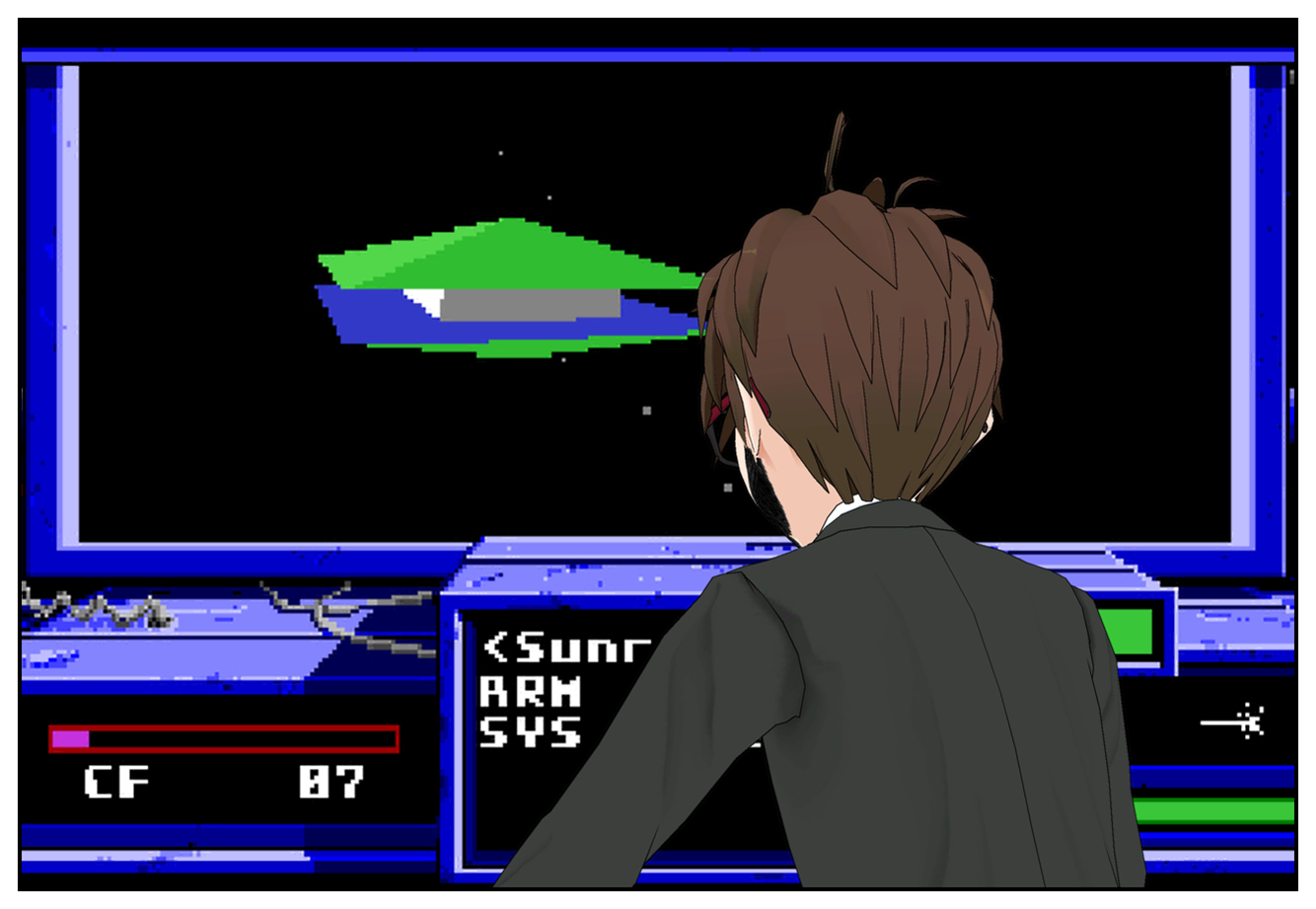
I was pleasantly surprised earlier today to see GOG.com release an elderly Origin (old-school Origin the software company, not Origin the unnecessary piece of EA bloatware) title called Space Rogue.

I was particularly surprised to see Space Rogue on GOG.com, primarily because they had already released a game of the same name that had no relation to it — although in retrospect, given that a considerable amount of discussion around the newer game was along the lines of "hey, remember that old Origin game called Space Rogue?" I should have perhaps seen this coming. Still, it's a pleasant surprise regardless.

I have very fond memories of Space Rogue. It was a game from the 16-bit computer era with everything that entailed, which usually meant a box packed with stuff other than the game disks. In Space Rogue's case, there was a wonderful "in-character" manual for the spaceship you pilot in the game, complete with sarcastic notes scrawled "by hand" in the margins. I really miss this kind of thing; the only place we tend to get "feelies" like this any more is in limited edition releases of games, and those tend to be considerably more expensive than standard editions.

But I digress. Space Rogue was an interesting game for its blend of genres — part space sim, part RPG. Origin proved themselves to be masters of both over the years — with their most well-known series including Wing Commander (space sim) and Ultima (RPG) — but Space Rogue was an early example of mashing the two together, which makes it, to date, still pretty distinctive in its respective genres. Sure, titles like Star Citizen, No Man's Sky and Elite have all taken a few tentative strides in the direction of allowing you to get out of your ship and do stuff other than fly around, but none yet have captured what Space Rogue did, which was include a fully-featured "walking around" mode as well as its 3D polygonal space flight sequences.

Details of the plot of Space Rogue elude me, though there are odd bits that I still remember. Of particular note was a lengthy sequence that I was thoroughly enamoured with as a youngster in which you play messenger boy between two sisters living on different space stations. The sequence culminates with one of the sisters throwing her arms around you and thanking you for all your hard work. I found this to be a satisfying conclusion to the episode, even presented purely in text as it was.

I also remember the space stations having various different designs, and greatly enjoying the experience of landing on the one that looked like an aircraft carrier in space. Elite Dangerous does very good space station docking sequences, but 20 years ago, Space Rogue was my favourite.

also remember the spaceflight sequences having a peculiar "Newtonian" movement option, in which rather than adopt the usual space sim convention of always thrusting forwards and simply turning the direction you're moving, you could spin your ship around and face one direction while moving in another, allowing you to, say, shoot enemies who were on your tail while running away from them.

Due to technological limitations of the time, not all of the space flight sequences took place from the 3D cockpit view. Long-range navigation unfolded from a top-down map that clearly used the same engine as the on-foot segments. While relatively primitive in comparison to the 3D graphics, it gave the game a good feeling of "context" and of moving across vast distances.

I have no idea if Space Rogue is still a good game, but I'm interested to try it again anyway. While it's not a game that ever went down in any Great Gaming History books or whatever, it's nonetheless a game I consider to be a defining experience in my youth, and as such even if it plays like a dog in 2016, I will always have a soft spot in my heart for it.

1655: Tease Me, Tease Me, Tease Me... Actually, Don't

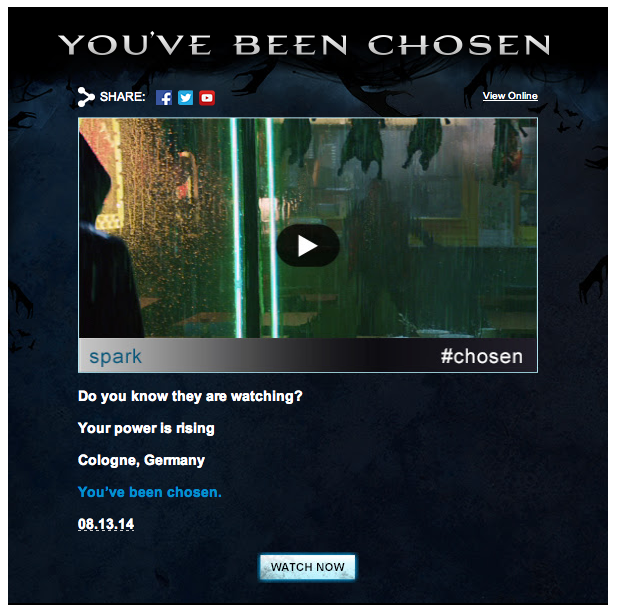
I'm not entirely sure how I got onto EA's mailing list, having not played any of their games for a substantial period of time, but I do know all it took to get me to immediately unsubscribe: this email.

Screen Shot 2014-08-01 at 00.09.31

Said email came from BioWare, a company whose games I used to happily purchase "day one" when they came up, but whom since being absorbed by EA a few years back have become increasingly disappointing — to such a degree that now, when they send me a "teaser" email like this, I don't find it exciting, I instead find it bothersome.

This isn't exclusively directed at BioWare, of course. I have very little time for teasers anyway these days, and their use in the increasingly sprawling marketing campaigns for big-budget games is getting to a stage where they simply dissuade me from wanting to check the game out rather than intriguing me.

I started feeling this way while I was working in the games press. Teasers are infuriating to receive as a news writer, because more often than not there's absolutely nothing to write about. As a general rule, I avoided writing about them altogether unless there was enough intriguing material therein to spin a story out into at least 300 words. In most cases, there wasn't, and inevitably there were plenty of other more interesting things I could write about on any given day, so I was inclined to write about those instead. I can't help feeling that this is the precise opposite of what whoever came up with the teaser campaign may have had in mind when they lovingly constructed it.

Now I no longer work in the games press, teasers are even more irritating. They clutter up news sites who are less discerning about what they cover than I am — the above email has likely been spun into at least one "BioWare is Working on Something" story somewhere on the Internet by now — and, when I have neglected to unsubscribe from a company's newsletters and promotional emails like I had apparently done with EA, they clutter up my inbox, and believe me, that doesn't need any help filling up with crap.

What I find somewhat hilarious is when mobile and social game developers decide to do teasers for their upcoming games. As much money as these types of game inevitably make at the hands of stupid people, I simply can't take them seriously; nor can I believe that anyone could possibly get excited about the prospect of a new mobile game from notorious free-to-play conmen like, again, EA, King or numerous others.

I long for the days gone by, when protracted marketing campaigns simply didn't seem to happen. You got previews in magazines, sure, but these actually told you something about the game. Like, you know, its title — something which the BioWare email conspicuously fails to mention. (I don't know if the video gives any more information because I didn't watch it. Instead of watching it, I unsubscribed from EA's mailing list. Good job, there.) Or details about what kind of game it is. Or a bit about the story. Or anything.

That anything is how you get me interested in a new game — not waffling around the point with vague, pointless emails that tell me nothing. Show me something interesting — show me a reason to care, otherwise, spoiler, I won't give a shit.

1473: Ruined

Oh, EA. Why. Why. Why. Why.

I am, of course, talking about the new iOS version of Bullfrog's classic Dungeon Keeper, which was released today and is, of course, utter bobbins.

Why? Because it's a free-to-play mobile game.

And yes, I think we've reached the stage where it pretty much is reasonable to brand free-to-play mobile games a universally bad thing, because the fucking awful ones far outnumber the very, very few good ones. In fact, I can't think of any good free-to-play mobile games offhand, whereas on PC I can name plenty.

Dungeon Keeper does every offensive thing it's possible for a shitty free-to-play mobile thing to do. It has wait timers, it has premium currency, it has the ability to purchase resources and other things rather than collecting them yourself (by, you know, playing the game) and worse than all the monetisation crap is the fact that they've taken a game that was originally an interesting, fun and original idea and made it into something utterly predictable and boring.

Dungeon Keeper is clearly aiming to ride the coat-tails of popular "midcore" strategy games such as Clash of Clans but this isn't a particularly good thing, either; Clash of Clans is an unashamedly pay-to-win title whose "top players" ride high in the leaderboards for no other reason than the fact they have paid more money into the game. Thousands of dollars, in many cases.

This is the second time EA has trawled Bullfrog's back catalogue to "re-imagine" them for iOS — the first being Theme Park — and it's the second time it's proven to be a complete insult to the memory of a great game. The people behind this monstrosity should be disgusted with themselves — as profitable as free-to-play games are and as much sense as they make from a business perspective, there's no getting away from the fact that the games themselves are complete shit, being devoid of any real depth and compromising good game design in the name of being more exploitative .

Stop it, EA. The people you're hoping to court with these games' names are the people you're pissing off the most.

1147: SimCity Limits

So I played an hour or two of the new SimCity earlier, and I have some thoughts. I shall now elaborate on these thoughts for your reading pleasure.

  • After the game applied a patch (which took a few minutes, though this may be more down to the fact that I hadn't long started up my computer and it was still doing that inexplicable hard-drive churning Windows does for about half an hour after you turn it on when you've had a computer for more than a year or so), I logged straight in and started playing with no hiccups whatsoever. Looks like those server issues are mostly sorted out — though there are plenty marked as "full". The team at Maxis/EA have bumped up the server number by a significant amount, however, so you should always be able to find one on which you can play. Pleasingly, too, you can play on any server in the world, meaning cross-region play is viable.
  • Is the "online-only" requirement a form of DRM? Frankly I don't give a shit, much like I didn't with Diablo III. As far as I'm concerned, it's an online game, regardless of the previous games' single-player status. Thinking of it in that way, regardless of the reasons for it, means considerably less frustration. It's annoying when you can't log in, yes, but it's annoying when you can't log in to World of Warcraft or Guild Wars 2, too. Getting irritable doesn't solve the issues, though. Go and play something else for a bit. There are enough neat things added to the game by it being online that I have no problem with it requiring a connection to play. It should have worked perfectly on launch day, yes, but I am yet to see any online game from any publisher — even those who know what they are doing — not have server issues for the first few days after launch. We should be past that by now, but we're not; that's a fact we can do little about.
  • The actual online component of the game is very cool, giving the game "world" a much greater feeling of life than in any other past SimCity game. I was playing a small two-city region with a friend earlier, and I was constantly kept updated as to what was going on in their city as well as mine. I could set up trade routes, send gifts of products or money or volunteer some of my "spare" emergency services to go and help out in their city, which brought me some money. There's actually a pretty neat requirement to cooperate here — if your city is manufacturing tons of stuff and has nowhere to sell it, you'd better ask the other people in the region nicely if they wouldn't mind awfully building some commercial districts so that you can send them your goods. The various city plots also all have various resources that can be tapped using the right specialist buildings, so there's plenty of scope for collaboration there.
  • The actual gameplay is simultaneously familiar and probably the biggest change to the series since it went isometric-perspective with SimCity 2000. Gone is the grid-based system, meaning you can build roads in any shape you like, and even make them actually curve. Gone is the rectangular zoning system, replaced with the ability to only zone immediately along roads, with the maximum building size on a road determined by how big the road is. In comes a much deeper use of various buildings like the police station and fire station, all of which can be expanded by bolting extra bits on to them such as new garages, offices, prison cells and other things appropriate to the structure in question. There's a huge amount of depth, but it's kept accessible by a simple, logical interface in which clicking on a particular category of items to build also summons relevant overlay information relating to, say, power, water or crime.
  • The available area for buildings cities is quite small, but again I don't mind too much. I don't think I ever played a previous SimCity well enough to fill a full region, so I'm absolutely fine with the small space. When it's full, I can either work hard to try and optimize it, knock it down and start again, or go and play in another region altogether. The game features a sort of "win condition" if you want one — each region has a space for a "Great Work" that generally requires the collaboration of all the cities in the area to complete, and if you want to say that you've "won" when you've built one, so be it.
  • The soundtrack is lovely, being composed by one Mr Chris Tilton of Alias and Fringe fame.
  • The tutorial is a bit patronising. I've played too many Facebook games to tolerate condescending pulsing arrows telling me what I should click on. I couldn't see a means of skipping it, either, though it did at least have some useful information to impart.
  • On the whole, it's pretty good. It scratches that nice "creative" itch that SimCity has always stimulated, and the collaborative aspect opens up some really interesting possibilities. Once the server issues are stabilised and the team at Maxis can start concentrating on doing things like the regular special events and competitions, it's going to be a really cool experience, I think.

#oneaday Day 864: Spore-adic

20120601-022035.jpg

On a whim, I started playing Spore again recently, this time with the Galactic Adventures expansion installed, which I never got around to trying previously. I still haven't got far enough in my new game to come across any of the aforementioned Galactic Adventures, but I thought I'd revisit my thoughts on the original game, as I last contemplated it way back in 2008.

Spore caught some flak on its original release for a number of reasons — mainly dodgy DRM with very strict activation limits and early online connectivity issues (some things never change, huh?) — but also attracted criticism for not living up to its hype. Originally dubbed SimEverything, the game was supposed to be Will "SimCity" Wright's last great masterpiece, simulating the entirety of life right from single-celled primordial soup up to space exploration. A lofty goal, for sure. But how well did it manage, really?

Beginning as a single-celled organism that is either carnivorous or herbivorous, you're thrown into the primordial soup and tasked with surviving. Carnivores must eat little red chunks, herbivores must eat little green chunks. Both can be found just floating in the water, but carnivores can help the process along by killing other organisms. Herbivores, conversely, spend a lot of time running away to begin with.

As you eat, you gain DNA points which can be spent on improving your creature with various parts. In order to evolve your creature, you must mate with another of your kind, which pops up the creature editor and allows said parts to be bolted on. These range from various fins and tentacles that improve speed and agility, to spiky things, poison-spitters and other defensive measures. It's even possible, with enough available points, to replace the creature's mouth to turn it from a herbivore into a carnivore — or even to give it two mouths, allowing it to eat everything.

This process continues for a while, with your creature regularly expanding in size until once screen-filling enemies become tiny little minnows in the background, until you eventually fill the progress bar at the bottom of the screen and evolve a brain. At this point, it's possible to continue swimming around in the soup to gain further points and collect any parts you missed, but the game nudges you in the direction of the next stage, which focuses on your creature's life.

After climbing out of the ocean and evolving legs (which you attach yourself as you see fit), you then get to explore the surface of the randomly-generated world your game takes place on. At this point, progress mostly comes about through either befriending or destroying other species. New creature parts can be found on long-dead skeletons on the planet, and the player's creature evolved with these parts, each of which offer various bonuses to either social or combat abilities.

Upon confronting another creature and choosing whether to befriend or kill it, a little minigame occurs. Combat is rather MMO-ish, with a small hotbar of up to four different abilities available. Socialisation, meanwhile, involves watching what the rival creatures do and copying their moves. As this phase progresses, the player's creature gains the ability to bring along a "pack" of other creatures — either of their own species or allied organisms — which makes both socialisation and combat easier.

To make life a bit more interesting, certain species are naturally aggressive and will attack anything on sight, and there are a few "epic" creatures wandering around who are considerably larger than everything else on the planet. These can be defeated in combat with a bit of care, but for the most part they're something to avoid and admire from afar.

Once the Creature phase is over, the Tribe phase begins. Here, the player is no longer in control of a single member of their species, but instead takes on a more "overseer" role, controlling their tribe like an RTS. Progression through this phase is determined by either befriending or destroying rival tribes.

You begin this stage with a small, simple village and the ability to construct a few "tools". Food must be gathered to feed the tribe and is also used as currency to purchase tools and create new tribe members. Tools fall into two main categories, as with creature parts: social and combat. Social tools take the form of musical instruments, while combat tools are weapons and a healing ability.

Upon meeting another tribe, like in the Creature phase, players must choose what stance to approach them in. If approaching in social stance, both tribes will line up in front of each other and one will "perform" for the other. The "audience" tribe will call out different instruments that they want to hear, and the player must quickly activate their instruments to please them before the audience gets bored. Combat is simple point-and-click RTS-style, though there is also a hotbar of special abilities according to what weapons the tribe has equipped at the time.

Following this point, the game enters the Civilization stage, where the player must conquer the planet they are on by taking over, buying or destroying all the rival cities. The game becomes more complex at this point, with a lot more building, trading and military conquest — though as with the previous components of the game, this phase can be passed through peacefully with a bit of effort.

Following this, the Space phase begins, and some would argue this is where the game begins proper — indeed, this is the phase that the Galactic Adventures expansion concentrates entirely on. Players must explore the galaxy in their custom-designed ship, fly down to planets, collect items, terraform, secure "spice" mines, trade with other species, complete missions, defeat enemies and, eventually, if you want to "finish" the game, build yourself up enough to take a lengthy expedition to the centre of the galaxy — a risky prospect, since this is where the Borg-like Grox, the main antagonists of the game, live.

So Spore certainly does follow life from its humble beginnings up to the space age, and it's very satisfying to look at the comprehensive "history" screen in the game and see how your creature has evolved over time. The main criticisms that were levelled at the game on its original release, however, were more to do with the fact that none of the game's phases had a lot of depth to them — it wanted to be "five games in one" but didn't really pull it off as well as some people wanted.

It doesn't really matter, though. Revisiting it now has reminded me that Spore is a very entertaining game — sure, it's pretty lightweight compared to some heavy hitters in the strategy and god game genres, but that only serves to make the game accessible to all. I'm actually rather glad about this, since I find a lot of strategy games rather heavy going and consequently find myself trounced by computer or human players on a regular basis. I can succeed in Spore while still feeling like I've been challenged somewhat, and simply enjoy the sense of progression, discovery and ever-expanding scale that the game offers — not to mention its wry sense of humour and wonderfully self-referential nature. The game even plays music from M.U.L.E. at certain points, for pity's sake.

And I haven't even mentioned what was one of the main draws of the game on its original release: its focus on user-generated content. All through the game, your galaxy is populated by creations from other players. With the Galactic Adventures expansion, this user-generated content goes far beyond player-made creatures, buildings and vehicles — there are full missions designed by players. It's impressive that it all works as well as it does — content simply "invades" your game seamlessly, and built-in community features allow you to rate, comment on or, if necessary, ban content without leaving the game.

I haven't yet touched the Galactic Adventures content since my current save has only just advanced to the Civilization stage, but I'm looking forward to investigating it. Further thoughts will follow when I've had time to check it out. In the meantime, if you get the chance to grab a cheap copy of Spore, it's well worth a shot.

#oneaday Day 802: On 'Entitlement', and How the Games Industry May Have Brought This on Themselves

20120331-013201.jpg

Yet another op-ed discussing the controversy of Mass Effect 3's ending dropped today, this time from Gamesindustry.biz. In it, author Rob Fahey notes that "the advent of the Internet generation has done something deeply unpleasant and disturbing to the word 'fan'", going on to describe how the word has gone from meaning "I like this, it speaks to me on some level, I enjoy it, and I'm willing to spend money on it and advocate it" to "I like this, and thus it belongs to me, I own it, and I deserve a say in its future and its direction."

I don't argue with Fahey's key point here — that there are people out there who believe that they should have a say in the way their favourite franchises are run — but I do object to several things about this article. My main point of contention is that the tone of the piece is yet another example of the games press being unnecessarily confrontational towards members of the public, lumping everyone who disliked Mass Effect 3's ending together into one homogenous group. In reality, it's rather different — while it's true that there are people who have gone to the extremes of setting up petitions and complaining to official bodies over the ending, there are also people out there who dislike the ending because it's badly written, because it feels half-finished, because it feels like an excuse to tack on the obnoxious "Hey! Buy DLC!" dialog box after the ending, and many other valid reasons to say it is a bit poo. (I'm paraphrasing from discussions with several friends and podcasts I've listened to here, as I have not played the game and, as you likely know very well by now, will not be doing so.)

Fahey does, however, then touch on an important subject which I believe is what has led us to this whole mess in the first place over the course of the last few years.

"Game companies are excited, delighted, by the idea of having loyal fans," he writes. "Game companies have engaged with their fans, closely and directly. They nurture their communities. In BioWare's case, and God knows they're probably regretting this now, they openly talked about how important fan feedback is to them, about how Mass Effect was a series driven by its fans. It's become a creed, a mantra. The fans are important. We love our fans. We listen to our fans. Tell people that often enough and they start to believe you — and on the Internet, there are a whole lot of people who don't need much of a push to believe that they're important and must be listened to."

This is correct, but it is not the fault of the fans themselves. Rather, this situation has been exacerbated by the direct engagement with the audience that Fahey notes above. Fahey does concede that the industry has "forgotten that creativity isn't about the audience, first and foremost, it's about the creator" but seemingly shies away from what has actually caused this problem.

Two words: social media.

In BioWare's case, their seemingly exemplary social media strategy of direct, personal engagement with fans has actually turned out to be their downfall. Let's take a look at a bit of background to this.

For starters, a while back the company's own social media coordinator Erika Kristine took the bold step of providing an open link to her own personal Facebook profile. Fans were able to befriend her and talk to her directly — though, disappointingly, as an attractive female, many of the comments she ended up getting on her page and photos tended to be of the "ur so beautiful" creepy variety rather than people wanting to engage with her. Perhaps unsurprisingly, her personal Facebook presence appears to have vanished, to be replaced by a "fan page" which hasn't been updated since November of 2011. The damage was done, though — longtime fans knew that Erika, a human being, was in charge of BioWare's social media, and thus opened the gates for "negotiation".

Then there was the FemShep incident. What was previously a quirky subculture of the Mass Effect community — the cultish love for the female incarnation of Commander Shepard, voiced by Jennifer Hale — was adopted as a marketing tool by EA and BioWare. We started to get promises of FemShep trailers, FemShep art on the box, FemShep this, FemShep that. The whole thing came to a head with the odious "beauty pageant" public vote where subscribers to BioWare's Mass Effect page on Facebook were able to vote on which of a variety of computer-generated hotties — very few of which are actually possible to create using the in-game character creation tools — would become the "official face of FemShep". When the community objected to the fact that a "predictable" blonde, blue-eyed FemShep was winning the competition, the company opened another round of voting, this time providing a choice of hair colours for the same model FemShep. (We ended up with a redhead — a decision I applaud, but that's beside the point.)

These aren't isolated incidents, and they're not limited only to BioWare and EA. Most major game publishers these days have hopped on the social media audience engagement bandwagon and regularly post questions, invite feedback and hold votes for everything from which athlete should be on the front cover of this year's Madden game to what colour Serah's panties should be in the inevitable upskirt scene in Final Fantasy XIII-2. All right, I made that last one up, but given that Konami promoted NeverDead with an interactive picture where the game's heroine Arcadia stripped off more and more clothing as more people Liked the page, it's not beyond the realm of possibility. This revolting marketing ploy has thankfully disappeared now the game's page has moved to Timeline view.

Given the way developers and publishers interact with their fans, though, is it any wonder that some have started to feel like they have the right to exert some degree of "crowdsourced control" over their favourite franchises? If they can influence what FemShep looks like, why can't they influence the ending of Mass Effect 3?

In short, the industry has backed itself into this corner and no amount of complaining about how "entitled" the more vocal fans are is going to change that. These fans may well have a sense of entitlement, but that has come from somewhere — it hasn't just appeared from thin air. And no-one seems willing to acknowledge this fact, perhaps largely because it's much too late to do anything about now. Pandora's Box has been opened, Liked and Shared with eleventy bajillion people around the world, and it's going to be very difficult to close it again.

In order to fix this, developers and publishers need to take a step back from their audience, to stop engaging with them quite so directly and to stop soliciting feedback on every little irrelevant detail of, say, how many tassels there should be on the new Assassin's Creed dude's hoodie. If developers don't want a repeat of this whole Mass Effect 3 fiasco, then they need to stand back behind a barrier that carries a big sign reading "Look, chumps, we made this, and we hope you enjoy it. You're free to not enjoy it if you so please, but it is what it is — finished, complete, tied up with a pretty pink bow. If you enjoy it? Great. We'll keep making more if you keep buying them. If you don't like it? Don't buy it, then we'll know we need to do something else."

"This isn't a situation that'll change overnight," concludes Fahey's piece, "not least because immense inertia defines the role of 'fans' in our industry — but it's important for game creators to realise that things don't have to be this way. Engagement with fans doesn't have to mean letting the lunatics run the asylum, or even giving them the impression that they've been given the keys to the office."

His conclusion here is valid — this is exactly what game creators need to do. You can't crowdsource a big-budget game and expect it to come out coherently, so don't encourage people to think that's an option. However, the fact that some people have already come to that conclusion thanks to social media oversaturation doesn't make them "sociopaths", as Fahey calls them — it means that they have been brought to that conclusion via precedents set by the people they are complaining to. Similarly, those who simply dislike the ending on the grounds that it's just not very good — particularly when the rest of the series is used as a yardstick to measure it against — aren't being "entitled" or "sociopathic", they're just rather unfortunately finding their opinions lumped in with those who are taking more extreme arguments.

I hope the industry learns from this experience, but I have a suspicion it won't.

#oneaday Day 697: The Sims FreePlay

I was harsh on EA the other day, and I stand by most of my comments. Theme Park is a disgrace to the memory of Bullfrog's classic, the handling of Tetris was ridiculous, Origin is still a load of old wank and the company's insistence on using it rather than established networks like Game Center and OpenFeint is just plain arrogant.

However, they have got one thing right recently, and that's their latest iOS release: newest entry in the The Sims family The Sims FreePlay.

The Sims has been undergoing quite a few changes over recent years. First The Sims 3 brought open-world gameplay to the series. Then the World Adventures expansion gave the game a (very light) sense of narrative and some dungeon-crawling, puzzle-solving gameplay. Then Ambitions allowed us to follow our Sims to work for the first time in quite a while. Late Night brought new social interactions, Generations fleshed out the gameplay of various underused life stages and Pets brought, err, pets.

Meanwhile The Sims Social launched on Facebook and proved enormously popular despite not actually being that good. The Farmville-esque mechanics of "get your friends to help" seemed somehow more appropriate in the setting of The Sims, however, and there was a very, very mild hint of asynchronous multiplayer as you occasionally saw what your friends had done while they visited you the last time they were playing. I saw many people who didn't typically try Facebook games giving The Sims Social more of a chance than they would normally. Ultimately, though, it was an exercise in extracting as much money from you as possible, with a wide variety of in-game items only purchasable through the premium hard currency of SimCash. It also uses the immensely irritating (but profitable) "pay to play" system of slowly-recharging "Energy", only allowing you to perform a certain number of actions in a set time period.

Yesterday, The Sims FreePlay launched for iOS devices. There have been several previous The Sims 3-branded iOS games, but none of them have been that good, somehow missing out on the magic of the PC originals, much like The Sims Social. The Sims FreePlay takes a radically different approach to the whole series, however, and one which fits ideally with an iOS player's lifestyle.

There's one simple, fundamental change which has occurred to make this possible: make it real-time.

The Sims has typically operated with vastly accelerated time, so we can witness their birth, growth, life and death over the course of a few days rather than a lifetime. And in gameplay terms, this has fit the series well — part of the appeal of The Sims 3 in particular is building a dynasty of Sims who have grown to dominate the town in which they live. If you had to live out their lives in real-time, this would lead to a lot of downtime.

However, think about when you pick up your phone. You do it during a lull in conversation, when you're on the toilet, when you're bored, while you're watching a TV programme that you're not really interested in but your significant other wants to watch. The Sims FreePlay is designed for these situations. Pick it up and there'll be something to do for a few minutes, whether that's collecting money from your Sims, sending them to work, forcing them into a party situation or gathering them all together for a collaborative gardening effort. Once they're busy doing whatever you've told them to, you can leave them to it — for hours at a time, in many cases.

The game experience is tied to a social game-style levelling system, but this isn't a social game. There's no visiting neighbours, no helping friends with quests (which begs the question why it requires an Internet connection to play, but we'll leave that aside for the moment), no Energy system — just you and your Sims. Or, specifically, when you start, your Sim. Singular.

When you start the game, your town will be empty aside from the Sim you created. As you complete tasks and get your little person to engage in activities, however, you gain XP. The longer an action takes, the more XP you get. As you level up, you unlock the right to have more Sims in your town — though bringing them in either costs Simoleons (money) to build the house, or Lifestyle Points (earned through completing goals, reaching "relationship milestones" and numerous other criteria) to build a prefabricated "theme" home. Both of these currencies can be purchased with real money if you desire, but, crucially, you're not nagged to do so (unlike in Theme Park, which gives you a quest teaching you how to purchase premium currency — shameless much?) and you can earn both through normal play if you're patient enough. If you're determined to play for free, you're going to have to think carefully about your time management and what you want your slowly-expanding army of Sims to accomplish, because once they start a task, it can't be stopped except by expending your finite supply of Lifestyle Points to "rush" finishing it.

This actually adds an interesting degree of light strategy to the gameplay. If one of your Sims has a large variety of garden plots that could potentially prove profitable, you're going to need to enlist the other Sims in the neighbourhood to help out, because one Sim can only plant and tend one plot at a time, and needs to be present for the entire period of the seed's growth — up to 24 real hours in some cases. This means if you have a garden with, say, five plots, you'll need five Sims to be able to take full advantage of it — and while they're doing that, they can't be doing anything else. It becomes an exercise in weighing up whether it's worth committing a Sim to a lengthy and potentially profitable project, or whether you'd rather take a more active role in their life and guide them through a number of smaller tasks. Do you send them to work for six hours, thereby guaranteeing a nice paycheck, prospects for promotion (leading to more money in the future) and the ever-important XP? Or do you leave them behind looking after their house?

This shift in focus away from managing the needs of an individual Sim (or family) to overseeing the entire community works well for the series. It's a markedly different experience from, say, The Sims 3 — but we already have The Sims 3 so why reinvent the wheel? What we have in The Sims FreePlay is a game you can pick up for a couple of minutes at a time, set your little people off doing something and then safely forget about until a Push notification pops up reminding you that Pete Davison has finished his bath. In this sense, it's a bit like Nimblebit's Tiny Tower, a simple but effective game which has proven enormously popular, even among those who typically decry this style of simplified sim (no pun intended) as being "rubbish" — myself included.

Perhaps the most interesting thing about The Sims FreePlay in the context of EA's recent actions is that the company appears to be experimenting. It's undergone a considerable period of expansion in recent years, gobbling up a large variety of studios from all sectors of the "games industry" at large — ranging from triple-A developers to social game specialists. The different approaches taken by its most recent titles make it very clear that the company is trying to find the "best" (i.e. most profitable) approach to move forward. We have the subscription model (Tetris — not the first game I would have picked to try that model on), the "gouging whales" model (Theme Park and its $70+ rides) and the "patient people play for free" approach of The Sims FreePlay.

It's fair to say the publisher pissed off a lot of people — including me — with Tetris and Theme Park in particular. But, as they say, we learn from our mistakes — if there's any justice, The Sims FreePlay will prove the most popular of EA's recent titles and show them that this is the way to treat iOS and casual players: with respect, not expecting them to pay to play, but offering them the chance to if they do happen to appreciate the game in question.

EA's still got a long way to go to prove to me that they're not money-grubbing bastards who care more about their bottom line than the goodwill of their player base(s). But The Sims FreePlay is a good start.