I've done it! I've finally played a game of HeroQuest with actual real human people. And we had a really good time! We got through the first two quests in the First Light campaign — I've bought both First Light and the big-box core set, but I wanted to give First Light a go because it's a completely different campaign to the big-box core set, and the big-box core set campaign is largely based on the 1989 original, which I was already familiar with.
Both sets stand by themselves, and both are a good means of getting into HeroQuest as a hobby; the main difference is that First Light is a lot cheaper and comes in a smaller box, because it lacks the big collection of plastic miniatures included in the big-box core set. And, having played the game with those big-box core set miniatures today, I'm glad I picked it up; making the whole game a lot more "3D" really adds to the atmosphere and makes it look great on the table. (For the budget-conscious, the cardboard standees for monsters in First Light have some great artwork on them — and you do still get miniatures for the heroes and a recurring dragon boss — but all the furniture items are flat cardboard tiles that just show a plan view of the furniture. They serve their purpose, but it's hard to deny that the 3D furniture is just better.)
Playing Zargon (known as Morcar in the European '80s version) is an interesting experience. One thing you have to remember while playing is that although you are technically an "adversary" for the Hero players, you are not necessarily trying to defeat them. You are, instead, attempting to facilitate a fun session of storytelling, using the game mechanics as a framework, and that sometimes means quietly fudging things a bit, rebalancing the difficulty on the fly and responding to things that happen in a way that isn't necessarily laid down for you in the Quest Book in black-and-white.
Some people turn their nose up at HeroQuest because of its simplistic mechanics, and I can totally understand that; there are games with similar theming that go much harder on strategy and tactics, with each encounter feeling a lot more like a tabletop wargaming skirmish than a dungeon crawl. For some, that's what they want; for me, though, I've always been very fond of HeroQuest's straightforward mechanics, because not only do they keep the game pacy and help emphasise the collective, emergent narrative of the players' quest, they also make it very easy for newcomers to pick up. There's very little trawling through an epic rulebook once you have the basic rules sorted, which means there's very little downtime, and a lot more time for moving, fighting and searching things — because those are the three main things you do in HeroQuest.
The two quests we played today were enjoyably different from one another. The first was a relatively open-plan dungeon in which the Heroes, by chance, picked the "correct" way to go at the beginning and ended up at the concluding encounter relatively quickly, but in the process they also missed out on potentially collecting a bit more treasure. The second quest had an interesting series of magic portals that could send the Heroes to different parts of the dungeon, some of which connected with one another and some of which did not.
The second quest was noticeably harder than the first. The Heroes did have a bit of a run of bad luck with dice rolls — particularly once they opened up a secret room and found a pair of Mummies, which are surprisingly tough enemies to beat — but that made their eventual victory over the quest's "boss" feel hard-earned and definitely worthwhile. And relatively little Zargon fudging was required to keep everyone alive!
The cool thing is that I think the Hero players learned something from how these two quests went down — notably, that it is helpful to stay together, but in a tactically advantageous formation so, for example, the Wizard doesn't get twatted in the face, so the Barbarian doesn't block doorways and so everyone is able to get a chance to line up and punch something. The Wizard got equipped with a staff after the first quest, which allows him to attack diagonally, so that helped inform some tactics, and the Heroes have also determined that getting themselves some better equipment probably wouldn't be a terrible idea, either.
Lots of scope for growth, and the players enjoyed themselves enough to want to play it again! So with any luck, in a couple of weeks' time, it'll be hitting the table again and the campaign can continue.
I'm really very happy about this. I've been wanting to run a proper game of HeroQuest since I was, like, ten, and now I am. And I'm having fun! Sometimes you just need patience. And to buy the game multiple times in the intervening years.
Want to read my thoughts on various video games, visual novels and other popular culture things? Stop by MoeGamer.net, my site for all things fun where I am generally a lot more cheerful. And if you fancy watching some vids on classic games, drop by my YouTube channel.
If you want this nonsense in your inbox every day, please feel free to subscribe via email. Your email address won't be used for anything else.


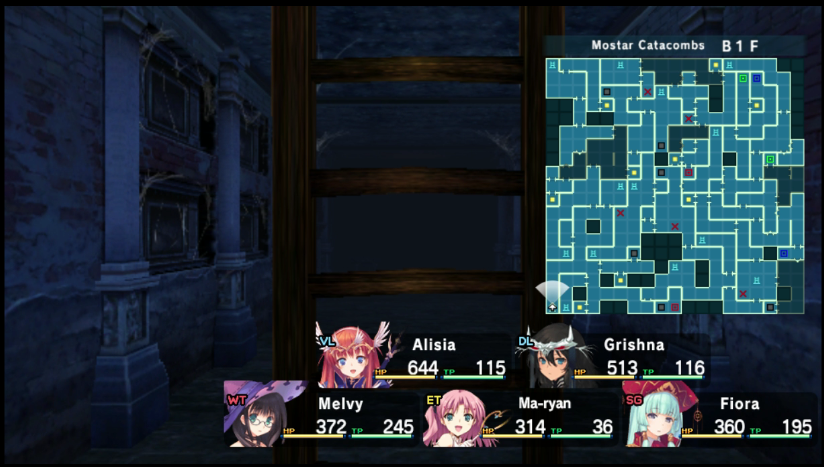
 Way back before I started doing this daily blogging shenanigans — yes, there was a time when I was an erratic blogger, just like normal people on the Internet — you may recall that I once gave a harrowing account of the adventures of Count Kurt von Hellstrom and his merry band of warriors, otherwise known as the characters my friends and I rolled to play a campaign of Games Workshop's tabletop roguelike Warhammer Quest. On the off-chance you haven't been reading this blog since December 2009,
  The
The 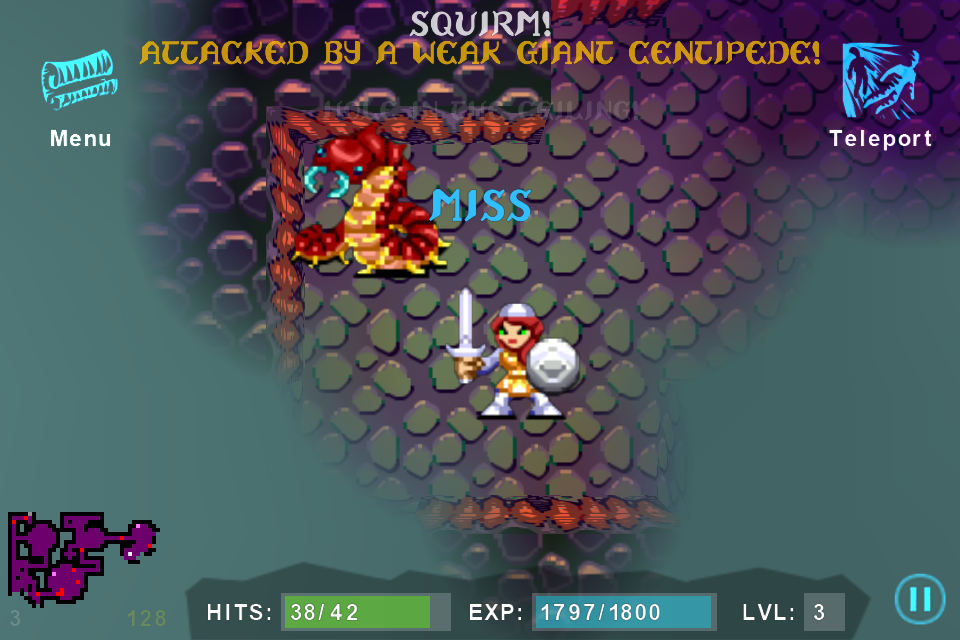 Sword of Fargoal is actually a remake of an old Commodore 64-era title which didn't look like the picture above. No, it looked like this:
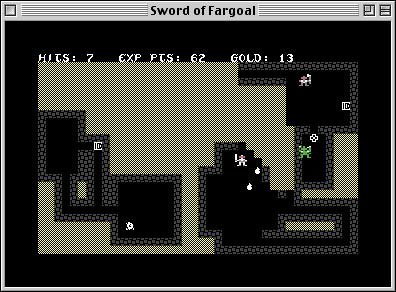 The best thing about Sword of Fargoal is its simplicity coupled with a surprising amount of hidden depth. While Angband is rather intimidating to get started with, with pretty much every key on the keyboard (shifted and non-shifted) mapped to something, Fargoal simply requires that you get to grips with moving and using a context-sensitive button in the top-right corner. And keeping an eye on the text display at the top of the screen for hints and cues, too. Combat is a case of running into an enemy—the player and monster will then take turns bashing each other until one or the other falls over or one runs away. Gold is collected to sacrifice at altars throughout the dungeon for experience point bonuses. And the rest is left to the player to discover. The more you play, the more you start to notice little graphical details and cues tipping you off to the location of traps or treasure.
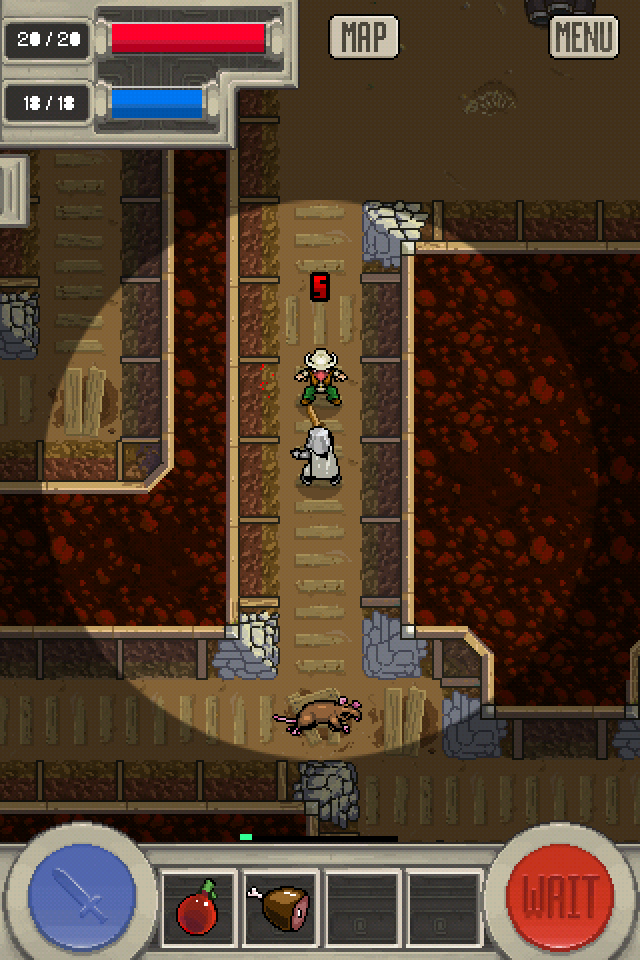 Then we have 100 Rogues, which takes a slightly different approach to that of Sword of Fargoal. While Fargoal's quest is lengthy, 100 Rogues can potentially be beaten in one sitting. Key word here being "potentially". 100 Rogues is particularly brutal, fond of surrounding the player and battering them to a pulp. Fortunately, the player also has a Diablo-style skill tree at their disposal, including a number of attacks that can beat back several enemies at the same time.
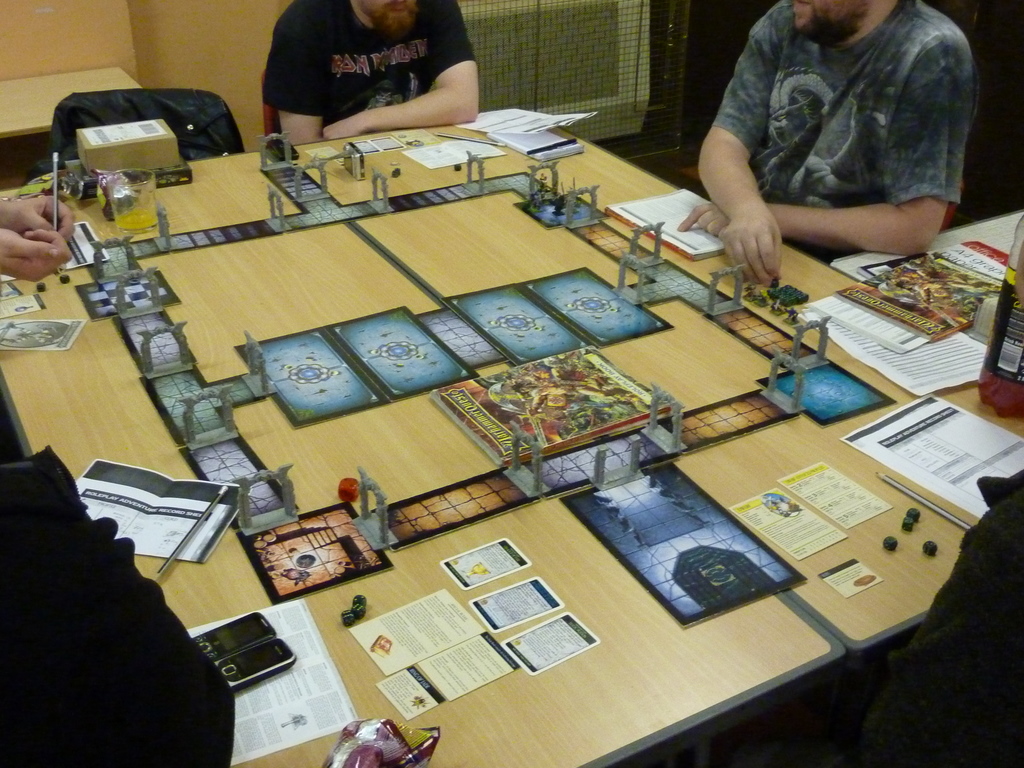 Finally, one of my favourite roguelikes of all time is Warhammer Quest, a game that involves you having people you actually don't mind being in the same room with. Featuring all the genre staples—a randomly generated dungeon, permadeath, brutal difficulty, vast amounts of phat lewt—it's very much the board game equivalent of Rogue et al. Even better, everyone gets to join in on the fun—there's no need for a Game Master player (unless you really want to use one) as the rules cater fully for monster "behaviour".