#oneaday Day 655: I would rather play Atari 2600 games than mobile games

I probably don't need to say anything more than the headline, but I will expand on it for the sake of having actually written something today. I mean what I say, though! I would genuinely rather play literally anything on the Atari 2600 than a modern mobile game. And with the 2600 being so easy to emulate these days — not to mention the fact I have worked on both devices and game cartridges featuring Atari 2600 games — you can even take the experience on the go with you.

I remember when mobile gaming first became a thing with the Java phones. Well, actually, technically it first became a thing with Snake and the other games no-one remembers on the Nokia 3210 and company. But expandable mobile gaming — by that I mean the ability to download new games onto your phone — really took off in the Java era.

At first, it was mildly exciting… at least until you downloaded a Java game and realised that a lot of them were Not Very Good. Often not for lack of trying, and there were some genuinely decent ones — I recall a good version of Lumines, for example — but for the most part, they were a pale imitation of even the dedicated handheld games consoles that were around at the time. The Game Boy and its successors ruled the roost in that regard for a good long while — and deservedly so.

The advent of iOS was a huge shift, though. Anyone who was around for the launch of the App Store will doubtless remember things like ngmoco's output (before they became free-to-play garbage peddlers), Epic's "Castle" tech demo that eventually became Infinity Blade, and doubtless many others that are lost to time. Quite literally in many cases, because these were digital-only games that were often exclusive to iOS — and while I'm sure some have been preserved, I bet there are plenty more that we'll never see again.

Things seemed… interesting for a while. The ambition of this new breed of mobile game was hard to fault, but many folks (including me) found that touchscreens were less than ideal for console-style experiences. The best games were ones that were built around the inherent limitations and inaccuracy of a finger-based touch interface — or which used other methods of control, such as tilt.

Then, one day, Apple announced that it would be introducing the concept of "in-app purchases". I knew immediately that this would be an awful idea, as the general gaming community had a collective bee in its bonnet about DLC at the time, and adding DLC to mobile games sounded like a really bad idea in that climate.

Unbelievably, though, I underestimated quite how awful things would end up becoming in the mobile space. While there are still a few "premium" games available for a one-off purchase these days, most of them are available on other platforms with actual controllers, leaving the vast majority of mobile-exclusive titles these days as free-to-play gacha crap.

I've done my time in the gacha mines. I've made the mistake of thinking I'd sling a game twenty quid to "support" it because I'd been playing it quite a bit and I liked the look of the current character banners. But in more recent years I've become hyper-aware of quite how much those games exploit horny young men in particular, with massively sexualised artwork designed not to add depth to the characters they depict, but purely to get said horny young men convinced to open their wallets in the hope of acquiring a JPG — or an animated GIF if you're lucky — of their favourite waifu in a skimpy outfit. And I say this as someone who likes sexy games!

No more. I swore off all mobile games quite some time ago now, and I don't feel like I'm missing out on anything. Now, at the times when I would typically want a mobile game — when I have a few minutes to spare, when I'm bored, when I just want something to do with my hands that I don't have to think about too much — I will quite happily reach for an Atari 2600 game, because those fit the bill perfectly.

Your average Atari 2600 game can be played for sessions of maybe 1-5 minutes at a time, and that feels like a satisfyingly self-contained play session. You can keep playing to beat your high scores, or to get a little further, or compete against a friend if you're playing together — or you can move on to something else, and have another 1-5 minutes of fun. And at no point in the entire process will these games attempt to monetise your erection.

On that note, may I remind you that Activision Collection 2 is coming to Evercade next month…?


Want to read my thoughts on various video games, visual novels and other popular culture things? Stop by MoeGamer.net, my site for all things fun where I am generally a lot more cheerful. And if you fancy watching some vids on classic games, drop by my YouTube channel.

If you want this nonsense in your inbox every day, please feel free to subscribe via email. Your email address won't be used for anything else.

#oneaday Day 518: '80s Activision had the juice

I frigging love '80s Activision games, particularly on the Atari 2600 and Atari 8-bit. I grew up with the ones on Atari 8-bit, of course, and since I never had a 2600 back in the day, those are a (relatively) more recent discovery. But I adore every one of them, and I'm beyond thrilled that I've been part of bringing them back to a new audience on Evercade.

The first of our Activision cartridges isn't out yet, but I, of course, have a copy. Perks of the job and all that. It's already becoming one of my most-played Evercade cartridges, and I don't see that changing any time soon.

We're actually doing three collections in total (this isn't Super Secret information, it was in our press release) and I've been largely responsible for the curation of said collections. All three of them are very strong indeed (you'll have to wait and see the lineup for the others, which are coming next year!) but this first collection comes out of the gate swinging with some of my absolute favourites.

My personal highlights are MegaMania, Enduro, Crackpots and River Raid, with honourable mentions to Beamrider and Demon Attack, games I've gotten to know a bit more recently.

MegaMania is one of the absolute best fixed shooters of the early '80s. Pitting you against waves of strange household objects, this "space nightmare" keeps things constantly interesting, as each wave has its own distinctive movement pattern — and then once you've cleared a complete loop of all of them, they go and change up their patterns a bit, just to keep you on your toes. It's a beautiful example of how utterly elegant some early games can be: it's simple to understand, has a brilliantly paced difficulty curve, a well-crafted scoring system and is endlessly replayable.

River Raid is, of course, a pioneering vertically scrolling shoot 'em up, whose noteworthy features include the ability to adjust your speed as you fly and the necessity to refuel your aircraft while negotiating obstacles and blasting enemies. The fact that this game was crammed into 4 kilobytes of ROM will never not be amazing to me. Carol Shaw was an actual wizard — not just for the game's technical accomplishments, but for the fact that, like MegaMania, it's an incredibly well-paced, considerately designed game that is likewise replayable until the end of time.

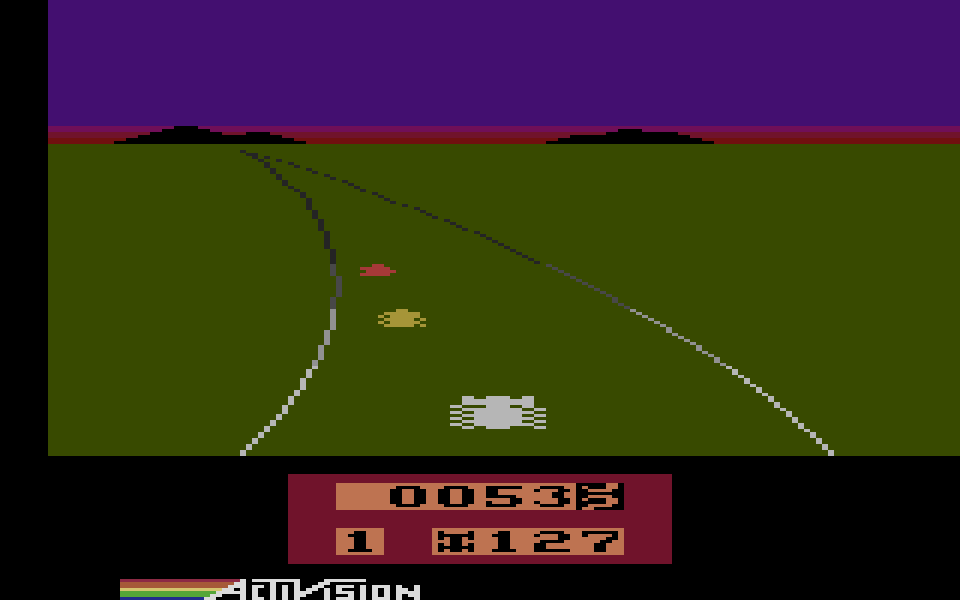
Enduro is the spiritual precursor to the home computer game The Great American Cross-Country Road Race, a game which I played as a child many years before I ever encountered Enduro for the first time. Enduro is, partly by necessity of the more primitive hardware it's running on, a simpler game, but I think its simplicity is also a core part of its appeal. All you have to do is overtake a set number of cars as a full day-night-and-weather cycle of a set duration proceeds: overtake 200 cars on the first day, then 300 each day thereafter. Your final score is how many "miles" you successfully drove before failing to qualify for the next day, and the score is presented using a lovely rolling analogue counter effect. I would have loved that as a kid — hell, I love it now.

Crackpots is a relatively recent discovery, and a game I feel I would have probably been terrified of as a kid. Again, the concept is simple: bugs are climbing your building, and you must drop flower pots on them. With each wave of bugs cleared, a new colour appears, and each colour of bug has a distinctive movement pattern. When you've cleared one loop of all the bug types (black, blue, red, green) the cycle repeats, but faster. The bugs chew through a layer of your building every time you let too many past you, and this affects the pace of the game from thereon. After too many layers of your building have been eaten, the game is over. It's pure high score fodder, and once again, beautifully paced and designed, with a dynamic difficulty level that raises and lowers according to how well you're doing.

Beamrider is, in essence, another fixed shoot 'em up, but it probably has more in common with Atari's Tempest than anything else, in that rather than moving freely, you switch between distinct "lanes" that the enemies proceed down. Thus there's a much stronger element of precision and even strategy to Beamrider than some other games, and the presentation, considering the host platform, is very good indeed. It's another game I got to know quite recently — there is an Atari 8-bit version, I believe, but I never encountered it back in the day.

Demon Attack is a game that I became familiar with after watching Classic Game Room's Atari 2600 reviews many, many times. It's a very simple fixed shooter, in which all you have to do is blast demons in the sky above you. Only three demons appear at once, and only one of them fires at you. It should be primitive and stupid and dumb, but it's incredibly compelling, particularly once the pace of the game increases and the demons start splitting into smaller bits. This one actually wasn't an Activision game back in the day; it was by Imagic, but Activision got the rights to all the Imagic stuff at some indeterminate point in the past. So yes, the Evercade Activision cartridges will have some of the Imagic stuff, too.

I'm quite fond of Activision Anthology on the PlayStation 2, but the last time I played it, I spotted quite how poor the emulation is in that version. It's not altogether surprising — there have been 23 years of advancements in emulation since — but, given how accessible good quality emulation of these games is about to become with the Evercade cartridges (and, hell, how easy it is to get 2600 up and running on systems like MiSTer and cheapo Chinese handhelds) it's a little hard to go back to. The built-in "badge" challenges, weirdo visual effects and '80s soundtrack are fun, though. I feel like we'll never see a compilation quite like that ever again.

But anyway. I am banging on about this because I spent today making a video about the upcoming cartridge. Watch out for it on the Evercade YouTube channel soon!


Want to read my thoughts on various video games, visual novels and other popular culture things? Stop by MoeGamer.net, my site for all things fun where I am generally a lot more cheerful. And if you fancy watching some vids on classic games, drop by my YouTube channel.

If you want this nonsense in your inbox every day, please feel free to subscribe via email. Your email address won't be used for anything else.
#oneaday Day 396: The purity of early gaming

I consider myself quite fortunate in that I'm able to enjoy a full spectrum of video gaming, ranging from the very earliest titles up to the most modern releases. The only part of gaming that really leaves me cold is multiplayer-centric titles — I just find they don't hold my interest in the long term.

I feel particularly blessed to be able to enjoy stuff from the early '80s, because I know the primitive presentation of stuff from this era can be a turnoff to some. But I absolutely love it; settle me down in front of a bunch of Atari 2600 or Intellivision games — or, indeed, home computer games from the era — and I can quite happily fill an evening just as well as I could playing a modern, complex title.

As I've grown older and spent a significant portion of my life writing about and making videos about games, particularly those from this early era, I feel like I have a solid appreciation for simple but solid design, and games that are inherently designed to be highly replayable. Sure, you can't "finish" a lot of these games in the same way as modern titles, and to some that's inherently less satisfying, but you have to look at them a bit differently.

Take one of my favourite games of all time, River Raid, for example. River Raid is a vertically scrolling shoot 'em up that, in theory, goes on forever. You can't "beat" River Raid. But you can develop a sense of satisfaction from attaining a high score, or reaching a particular level when starting from the beginning, or overcoming a specific challenge that has given you grief for a while.

But it's not even about making progress sometimes. Sometimes it's just about engaging with an inherently pleasing experience. The best early '80s games feel good to play. They achieve this through good handling, effective presentation, a feeling of fairness, and plenty of other elements besides. I enjoy playing Night Stalker on Intellivision not in pursuit of high scores, but simply because it feels nice to play it.

So with that in mind, for this trip down to the office and the accompanying overnight stay — this time at my parents' house because my usual hotel was fully booked — I've brought nothing but early '80s fun to occupy myself. And before I head off to sleep, I think I'll enjoy a round or two of some all-time favourites. Maybe some Cloudy Mountain to start off…?

Gaming Comfort Food

Just recently I have been suffering from what mental health professionals tend to refer to somewhat euphemistically as "low mood" — which is to say I've been feeling really fucking depressed. Video games have long been a part of my own personal coping mechanism for times like this, but I've been somewhat surprised of late as to the specific experiences I've found myself gravitating towards.

In the past, I'd historically try and immerse myself in a thoroughly involving game with a good story to try and get away from feeling bad about everyday life. And don't get me wrong, that's still very much appealing, and something I will absolutely continue with until the end of time. But specifically during my most recent depressive episode, I've found no greater joy than that which I have discovered in the depths of really old video games. Specifically, Atari 2600 and Intellivision titles.

I didn't grow up with the Atari 2600 — it was always the poor cousin to the Atari 8-bit home computers that were in our household during my childhood — but in more recent years I've come to regard the classic system with considerable fondness. This is a result of a combination of factors: the number of times I've watched Mark Bussler's "Classic Game Room" videos on YouTube, where he seems to hold even the very worst Atari 2600 games with a considerable degree of affection, and the Atari A to Z Flashback project I did myself on YouTube, which involved playing through 150 Atari games, many of which were 2600 titles.

The Intellivision, meanwhile, is not a system I had any contact with whatsoever growing up, but having explored it through a combination of Intellivision Lives! on PS2 and the two Evercade Intellivision compilations — both of which I was heavily involved with the production of on the documentation and testing side of things — I have also come to regard it with some fondness. And there are a few games I find myself continually coming back to.

So just for a bit of fun today, I thought I'd pick out a few games that I've been drawing distinct comfort from recently. And if you're open to the idea of really old games — I realise they're an acquired taste for many — then I encourage you to give these a go when you're feeling low. They might just give you the lift you need.

Motocross (Intellivision)

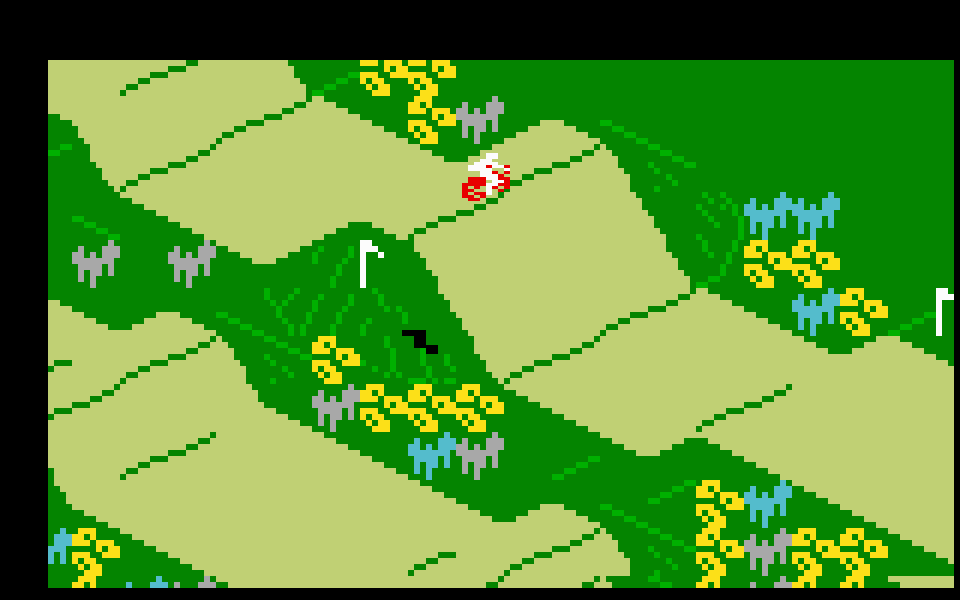
When I first saw Motocross, I thought it looked like a load of old shit. When I first played Motocross, I thought it was a load of old shit. And yet this is probably the Intellivision title I've found myself returning to most frequently of late — there's an undeniably addictive quality to simply chasing your own best times around the three included courses, and on top of that there's a course editor included for you to make your own challenges.

Motocross is an isometric perspective racing game that was noteworthy at the time of its original release for its relatively realistic physics — indeed, the programmer used to troll people in the office by turning the gravity down really low then giggling as people launched themselves into the stratosphere from the various jump ramps.

It's slow and sluggish to play and the scrolling is terrible — the Intellivision wasn't great at that — but once you look past the surface-level ugliness there's a game that strikes a good balance between accessibility and being technically demanding underneath. I've been finding it a great comfort of late.

Enduro (Atari 2600)

The spiritual precursor to The Great American Cross-Country Road Race, Enduro from Activision is an all-time classic for Atari 2600. The concept is simple: you simply have to overtake a set number of cars over the course of a virtual in-game day. If you succeed, you get to keep racing for another day; fail and your race is over. Your aim is simply to record as high a distance as possible on the satisfyingly "rolly numbers" odometer at the bottom of the screen.

Enduro is cool because it's a simple, early vanishing point racer that plays to the Atari 2600's strengths and doesn't try to do anything too ambitious in terms of gameplay. Presentation is another matter, however; this was a noteworthy game back in the day for incorporating a full day-night cycle, variable weather conditions and even a rudimentary form of lighting simulation.

Enduro is simple enough to pick up and play, but massively addictive because of that. You always feel like you might be able to push yourself just that little bit further — and that's just what you need when you're feeling a bit low.

Berzerk (Atari 2600)

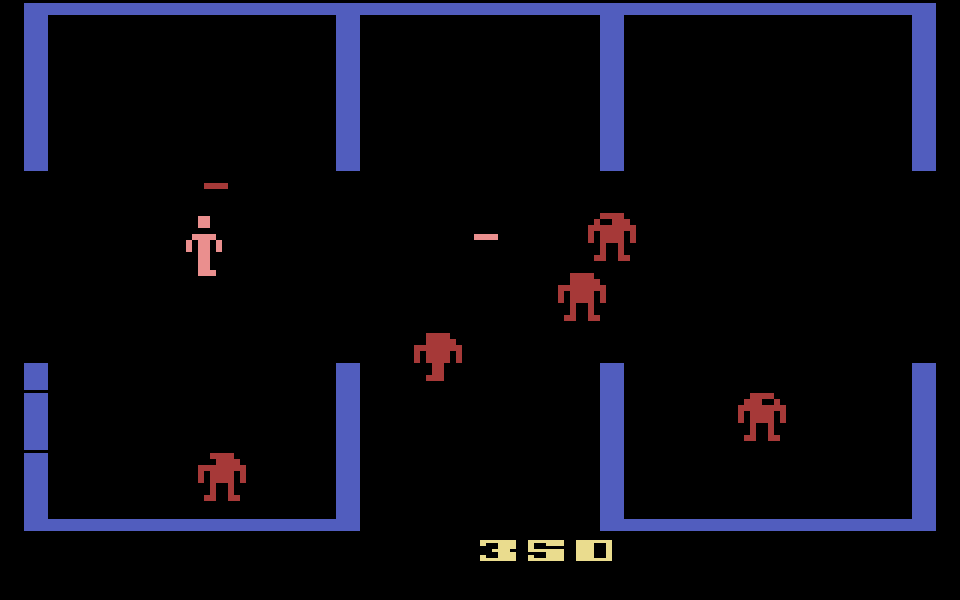
It may not be the prettiest or best version of Berzerk — the Atari 8-bit version is rather more authentic to the arcade machine, complete with digitised speech — but the 2600 version has a distinct character all of its own, and it's a ton of fun to play.

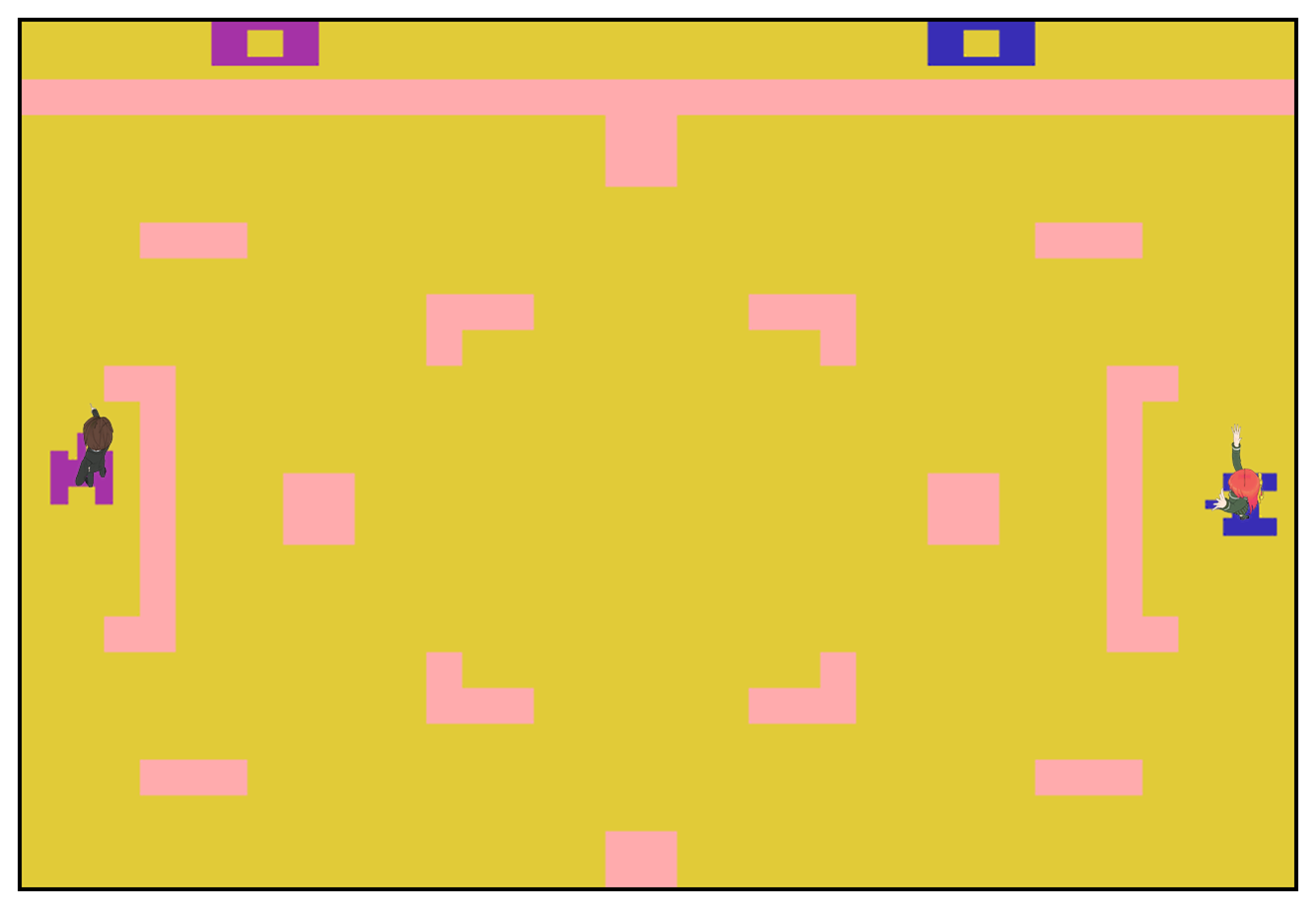
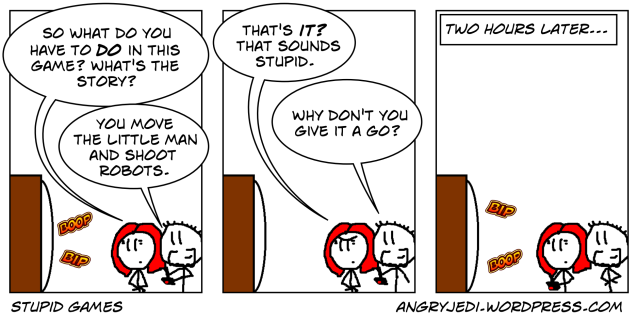
For the unfamiliar, Berzerk involves nothing more than moving your little man around and shooting the robots. Clear a room full of robots and you get some bonus points, but stick around too long and Evil Otto comes chasing you down. Like most 2600 games, it's simple but effective, and it really keeps you on your toes as the pace gradually increases.

Cloudy Mountain (Intellivision)

The Intellivision Collection 2 cartridge for Evercade contains two of the platform's best and most ambitious games: Cloudy Mountain (formerly Advanced Dungeons & Dragons Cartridge) and Tower of Doom. Both of these are games that I find myself coming back to regularly, but Cloudy Mountain is probably the one I turn to more often if my brain isn't quite functioning quite correctly and I just want something to fiddle around with for a few minutes.

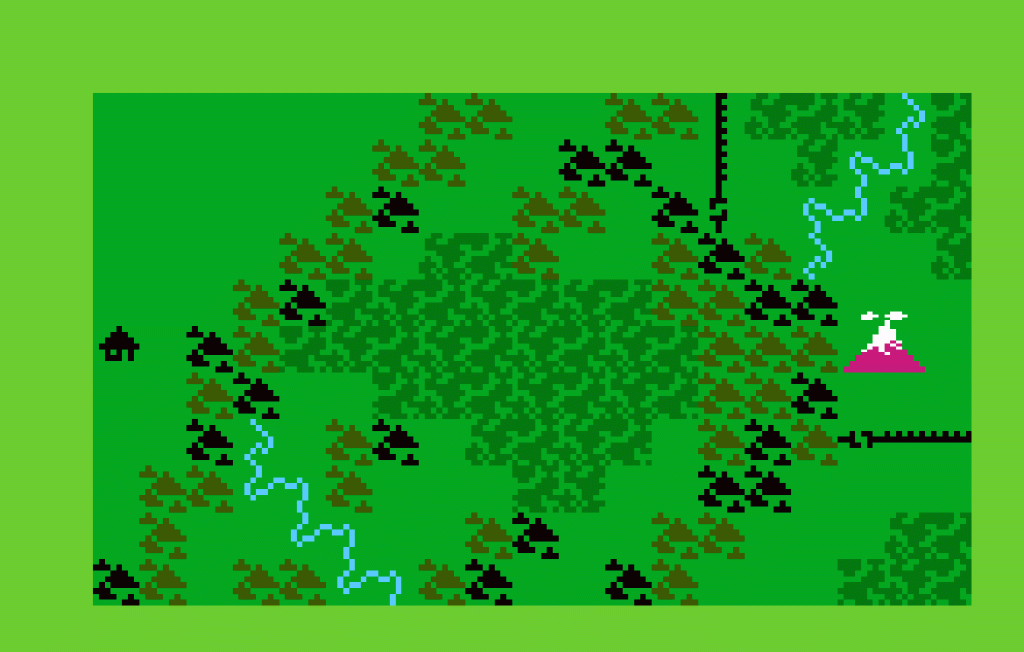
In Cloudy Mountain, your aim is simple: get your party of three bow-wielding warriors from the little house on the left of the map to the eponymous mountain on the right side of the map. Once there, defeat the two winged dragons guarding the two halves of the Crown of Kings, then grab said Crown and enjoy your well-earned sense of victory. Along the way, you'll have to explore randomly generated dungeons and find helpful items to traverse the various obstacles on the map, with your only defence being your dwindling stock of arrows.

Cloudy Mountain is one of those games that looks and sounds like it might be quite complex when you first try it, but it's actually quite simple — and as such it's a great game to jump into if you just want to play something that doesn't make too many demands of the player.

Missile Command (Atari 2600)

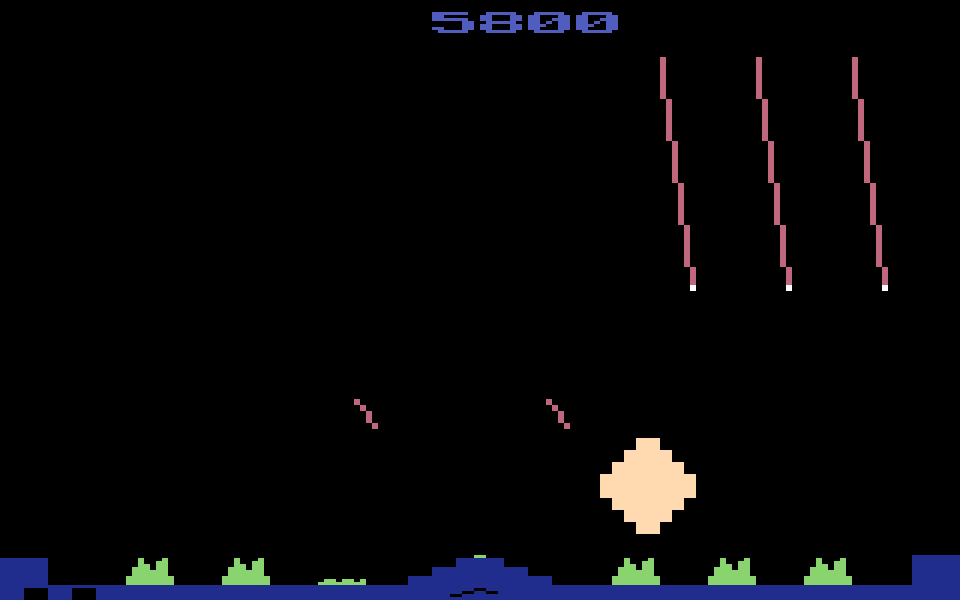
Missile Command is an inherently stressful game, particularly in its arcade incarnation, but I've found the Atari 2600 version on its default difficulty level to strike a good balance between challenge and accessibility. Despite lacking a few features from the arcade game, it plays really well and is an enjoyable game to pick up when I'm not in a great mood.

Most of you reading this probably know Missile Command already, but in case you don't: missiles fly in from the top of the screen, and you have to blast them by setting off explosions in the sky and catching the "heads" of the missile trails in them. Clear out a wave and you get bonus points and the action accelerates. You lose when the six cities you're supposed to be defending get nuked — an inevitability in a game like this, as Missile Command is at least in part a depiction of the futility of nuclear war.

I didn't enjoy Missile Command a ton when I was younger — and I would have probably written the 2600 version off purely for being on the 2600 — but in more recent years I've come to really love this version, and it's a great stress reliever, as well as something of a stress-causer at its higher levels!


So there you go. I'm not going to pretend these games will appeal to everyone these days — for some, they're just too old to be enjoyable, either mechanically or in terms of presentation — but I've been drawing specific comfort from all of these just lately. So if you've found yourself in a similar position, consider returning to your roots and seeing what some of the very earliest games have to offer — you might just find yourself surprised.

2278: Difficulty Switch A and B

0278_001

Spending a bit more time with Atari Vault over the last few days makes me appreciate one of the most interesting things about the 2600 — and something that, to my knowledge, hasn't really been done on any other console since: its use of difficulty switches and game selectors.

It wasn't unusual to see 2600 cartridges promising "9 video games" or similar on their front covers; by modern definitions, this wasn't entirely accurate, as each cartridge did indeed contain just one game, but tended to have multiple variations available to play. In some cases, these variations were minor — difficulty modes, essentially — but in others, they changed the gameplay fairly drastically. And along with these selectable games, the 2600 also afforded both players the opportunity to select their difficulty independently of one another.

Handicap systems are still found in modern multiplayer games in various ways, the most common of which being racing games' tendency to give the pack's back markers a slight speed boost to allow them to catch up a bit. But on the 2600, this was a revolutionary feature: by setting difficulty levels independently for each player, it became possible for experienced players to play "fairly" with newcomers, youngsters or those who simply didn't have quite the same dexterity and/or ability to handle those horrible Atari joysticks.

The ways that the difficulty switches were implemented varied from game to game. In the case of Air-Sea Battle, for example, the difficulty switches allowed players to set the size of their bullets independently — less experienced players could have larger bullets, making it easier to hit the targets. In Combat, the difficulty switches adjusted the speed of the player's bullets — more experienced players could choose to have slower shots, making it easier for their opponent to dodge. (Of course, you could then tweak the difficulty further by playing one of the variants where you could "bend" your shots around corners by steering after firing.)

It's a really interesting idea, and one of the coolest things about the 2600. I knew about the existence of these switches before — I've played some 2600 games before — but it hasn't been until I've actually started investigating some of these games in detail that I've really appreciated the surprising amount of interest and flexibility that they bring to these rough-looking but surprisingly fun old games.

Plus another nice feature of 2600 games I've discovered is that they're straightforward and easy to learn enough that my wife and I can play together without me having to spend hours explaining how to do things, or for us to play with an enormous skill imbalance thanks to the fact I have more experience than her. Thanks to the 2600's switches, we can tweak the experience to one that we both find challenging, but fair — and, it has to be said, the 2600 had some enormously fun two-player games that, while simple, can get very, very competitive very quickly!

2276: Video Computer System

0276_001

As I wrote in a few posts recently, I've been checking out the new Atari Vault compilation on Steam. Rather than talking about a specific game today, I wanted to talk a little bit about the value of the compilation as a whole, and why I'm enjoying exploring it.

Atari Vault is a compilation of somewhere in the region of 100 Atari games from the '80s. The bulk of the compilation consists of VCS 2600 games, but there are some arcade games in there too, including the likes of Crystal Castles, Missile Command, Major Havoc and Liberator.

I've owned a number of previous similar compilations in the past, and have typically gravitated towards the arcade games, since they seem more "palatable" from a modern perspective than the extremely primitive-looking 2600 games. I recall growing up with the Atari 8-bit home computers, and in comparison to those, 2600 games looked primitive even back at that time when it was relatively current, and as such, I've always found them a little offputting. I've made a specific effort to explore them a bit more this time around, though, and I've been pleased to discover some really interesting games.

Take Haunted House, for example. This is a fairly straightforward top-down "find all the things" game with an intriguing twist: you're in the dark. With your character represented as nothing more than a pair of eyes, you navigate around by either bumping into walls or lighting matches to illuminate the area immediately around you. A single game of Haunted House requires that you find all the pieces of a… thing… an urn? And you have to do so while using as few matches as possible and losing as few lives as possible, for this being a haunted house, it has a number of unpleasant beasties lurking around just waiting to nibble on you.

Or take Save Mary, a prototype game that never saw commercial release, but which presented an interesting twist on vaguely Tetris-ish block puzzles. The eponymous Mary is trapped at the bottom of a pit which is slowly filling with water. You control a crane and have to drop blocks into the well for Mary to climb up. You need to get her high enough to be able to grab her with the crane and save her. Once you've done this, you have to do it again, only with significantly more awkward-shaped blocks. The peculiar variation on the typical block puzzle formula is the fact that Mary has a mind of her own (albeit a predictable one) and you have to be careful not to squish her with the blocks you drop as she wanders back and forth trying to get to high ground.

Or how about Atari Video Cube, a really simple but surprisingly compelling puzzle game loosely based on Rubik's Cube? Controlling a weird little man (who has a name and a backstory and everything, though I can't remember it offhand), it's your job to pick up coloured squares from each of the 3×3 faces of the cube and lay them down so that each side is a solid colour. To make this more difficult, to pick up a coloured tile, you have to swap it with the one you're holding, and to make it even more difficult, you can't walk through tiles that are the same colour as the tile you're holding, even if they're on a different face of the cube.

The 2600 back catalogue appears to be filled with these sorts of interesting little games that we'd probably find laughable if released as full-scale, full-price commercial releases today, but as part of this compilation, they provide a surprising amount of entertainment value — and, in some cases, represent types of games that are very much deserving of a modern remake.

My only issue with them from a modern viewpoint is the fact that 2600 games tend to end rather abruptly, regardless of whether you "win" or "lose", and this can sometimes make victories over a particularly difficult level feel a bit less than satisfying. Still, this was from an age where gaming was quite a social pursuit — many of the 2600 games are very much designed to be played together with a partner — and so, I feel, a key part of the fun back then must have been making your own fun with the games to a certain extent; similar to how a tabletop game doesn't automatically set off fireworks as soon as you win, neither does a 2600 game. The celebrations and victory rewards are entirely up to you; I recommend betting each other a slice of pizza or a big lump of cake on a game of Combat and see how much you like each other by the end of the evening!

#oneaday, Day 65: Step into my Game Room

This post makes me sad, because I can't help thinking a lot of people on that thread are missing the point somewhat. I'm hugely excited for Game Room. I wasn't at first, but since hearing that there are not only arcade treasures in there but also Atari 2600 and Intellivision games too, my interest has been steadily growing until now I'm at the stage where it's just after midnight and moments ago, I switched on my Xbox just to see if they released things at midnight, or in the morning. (It's in the morning, for those who were curious.)

The arguments made in the first post are ones that we're hearing a lot – not just in the context of Game Room, but also in the context of digital distribution in general. The biggest concern people have with digital distribution is that one day, your content will be switched off and, despite having paid for it, you'll no longer be able to use it. This is a fair concern, as no-one likes splashing the cash on things that they won't be able to use at some point in the future – but when you think about it, in the world of tech, this is nothing unusual. Products come and go, specifications increase, chipsets change – and at some point it's necessary to leave the old behind. Did people complain that the Amiga wasn't backwards-compatible with the Commodore 64? Do music enthusiasts complain that it's getting harder and harder to find a cassette deck to play those old albums that you only bought on cassette because they were cheaper?

Well, yes, they probably do, but that's beside the point. What I guess I'm trying to say is this: isn't the "built-in obsolescence" of digital distribution the same thing? I have a stack of PC games in a box here, some of which it isn't possible to run any more. Okay, maybe with some tweaking and playing with software like DOSBox it's possible to get it going – but to a (for want of a better word) "casual" user, they're defunct and obsolete. The only difference with potentially-expiring digitally distributed products is that there's no workaround like DOSBox. Once the content's gone, it's gone. And yes, that's not a great thing, but it's not something to be surprised about.

The other objection people have is that Game Room will charge you again to play titles you already own Xbox Live Arcade versions of – titles like Gauntlet, Smash TV and the like. The simple solution to this is, of course, to not buy them again – but there's also the fact that the Arcade and Game Room versions are actually rather different beasts. The Arcade editions of the games are generally enhanced with leaderboards, online play and in some cases, new graphics. The Game Room versions are exactly as they were all those years ago. It may be that some people will be more than happy to buy a game again for the sake of having a completely authentic experience – others should simply avoid those games that they have already purchased.

I think the most exciting thing that a lot of people are missing, though, is that Game Room represents possibly the first fully-legal console-based multiplatform emulator out there. The constantly-rehashed argument from Game Room objectors is that "you can get all those games for free online". Yes, sure you can, but via means of questionable legality. Downloading a ROM for an arcade title is, legally speaking, only allowed if you actually own another copy of the game in question. Of course, people ignore this rule all the time – especially for the sake of hard-to-find games – but I for one think that it will be pretty neat to have these games available legally and without having to do any command-line or front-end faffing like you have to do with emulators like MAME. Again, it's a point in favour of the casual users, many of whom probably haven't even heard of an "emulator". Let's not kid around, either – it's also going to be nice to play some of these from the comfort of the sofa rather than the computer desk.

So I for one am firmly in favour of Game Room, particularly if the rumours of there being over a thousand games set for release in it over the next few years have any truth. Yes, it is a means for Microsoft to make money – but this is just the same as a whole lot of things on Xbox Live already are, much as a lot of things on PSN make money for Sony, and the Wii Shop Channel makes money for Nintendo.

What do you think? Are you going to be downloading Game Room and any games? Or are you going to be leaving the past in the past?