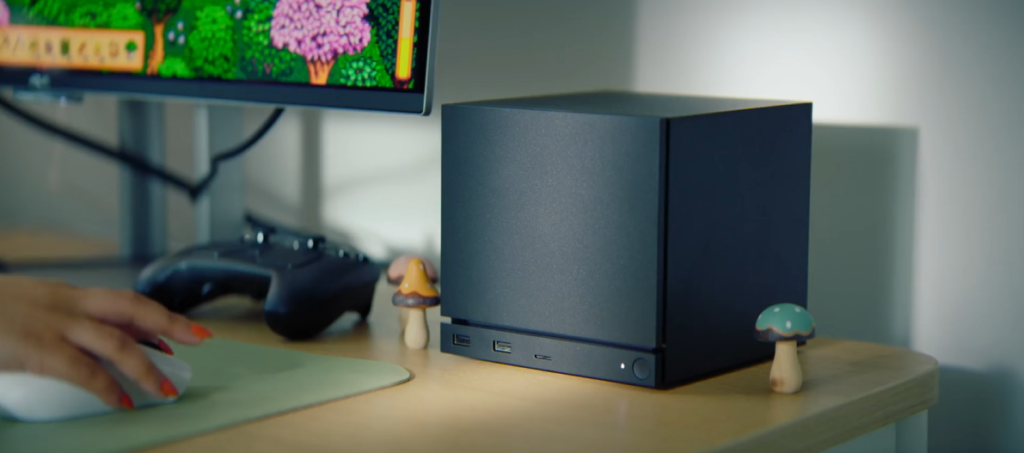
Valve apparently announced the price of their long-awaited Steam Machines today and, unsurprisingly, given the general price of tech right now, they ain't cheap. They're "starting at £879" not cheap, and that only gets you 512GB of storage; they break the £1,000 mark if you want the 2TB model, though both are expandable with microSD cards.
We have long since reached a point where it is not particularly cost-effective to start taking an interest in modern gaming if you are not already involved in the overall ecosystem and thus resigned to vast swathes of your monthly pay packet disappearing on your chosen hobby. Sure, you can get away with a somewhat lower-end mini PC if all you want to play is relatively small-scale indie games — but even those lower-end mini PCs are going up in price nowadays. Therefore, it is worthwhile looking at more cost-effective options for enjoying video games — even if the video games you will be enjoying are a few years old. Good games are still good years after they're released, you know! So here's my personal recommendations on that front.
Evercade
Of course I'm going to recommend Evercade because I work for them, but the reason I work for them is because I was all-in on the idea of the system from day one. A new, affordable system with a focus on retro gaming that provides officially licensed physical releases of classic games from home consoles, computers and arcade machines? Regardless of if I'd ever managed to secure employment with Blaze, makers of the Evercade, I would have been a "full setter" from day one — indeed, when the original handheld released, I immediately took advantage of the "All-In" bundle to get the first 10 cartridges included with the system.
Why recommend something like Evercade when emulation and other options exist — some of which we'll talk about in just a moment? Well, that "officially licensed" part is important. The current state of the games industry may appear to be teetering on the brink of unsustainability, but that doesn't mean people who enjoy video games want the whole thing to collapse. It would be rather nice if we could recover from this situation we're currently experiencing — and one way to help that come about is to support officially licensed rereleases of classic games, updated to play nice with modern audio-visual equipment, particularly televisions. On top of that, Evercade also plays host to physical releases of a lot of "modern retro" titles — games originally designed with vintage hardware in mind, but developed in recent years.
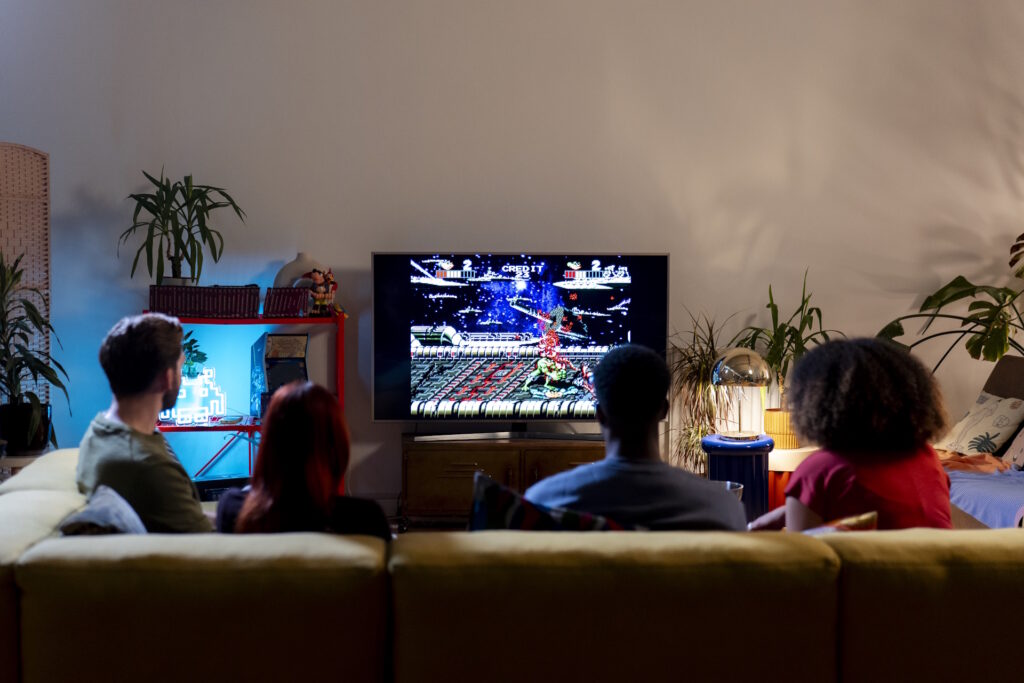
Many of the rights holders of these old games are also game companies that exist in the modern sector, and so throwing your support behind retro rereleases that don't require turbo nutter ninja bastard hardware to run is one way of helping ensure we still have a healthy video game economy whenever the AI bubble finally bursts and — hopefully — hardware prices start to settle back to what we have previously thought of as "normal".
Plus the physical nature of Evercade collecting allows you to rediscover the fun of having a shelf full of games to pick from, rather than a boring old list of downloads on your PC, many of which you scroll past without even noticing every single day.
MiSTer
Evercade is great, but there are some classic games that are never, ever going to get a rerelease for one reason or another — be it the rights holders being unwilling to put them out again, more complex licensing situations (such as video games based on movies, or which feature licensed music, vehicles or actors' likenesses) or some other reason entirely. For those situations, that's where what I would describe as more "community-focused" solutions come into play — as a general concept, this covers emulation, but I would specifically call out the MiSTer project as being a particularly worthwhile investment in these peculiar times.
For the unfamiliar, MiSTer is a platform based on "FPGA" (Field Programmable Gate Array), which is a technology I have absolutely no understanding of whatsoever, save for the fact that it effectively allows a device to recreate the way another piece of hardware would have worked in the past, not through simulation in software (which is how emulation works), but through a reconfigurable chip that basically "pretends" to be the old system. Some describe it as "hardware emulation"; all you really need to know is that, under most circumstances, it results in the most authentic recreation of a classic console, home computer or arcade cabinet possible, particularly if you happen to have an old CRT television hanging around that you can hook it up to. (Never fear if you don't, however; one of the core concepts of MiSTer from the outset was to provide a relatively straightforward means of enjoying classic "hardware" on modern displays, and the platform has a variety of built-in and fully customisable visual filters that allow you to recreate the CRT "look" if you so desire.)
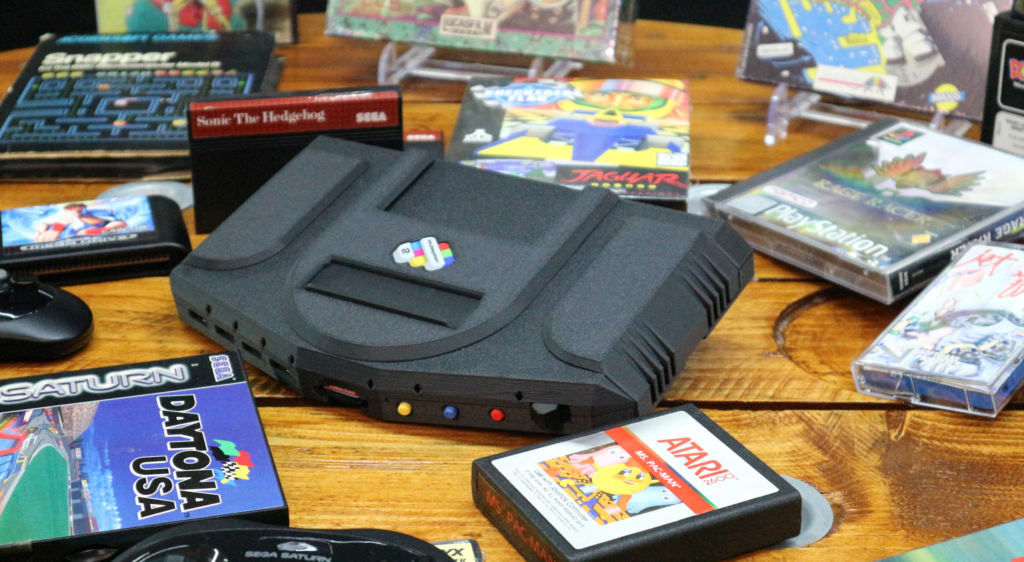
MiSTer is a project you can build yourself, but it's actually probably more cost-effective these days to go for a pre-built solution such as Heber's Multisystem 2 (pictured above, which I use) and Taki Udon's SuperStation One. You will also need to add some form of storage to whatever setup you go for, which is likely to be the expensive bit these days; however, it's a one-off expense, and you can look at it as a lump sum you are spending on your own entertainment, rather than buying a bunch of individual things piecemeal. Tot up how much you've spent on individual games in the last year or so, and an SSD probably won't seem quite so expensive.
MiSTer requires a bit of setting up, including installing the actual software on the device to make it work, and then loading up your storage medium of choice with games — which, of course, you will have to "procure" yourself. For everything from the earliest games consoles right up to PlayStation, Nintendo 64 and Saturn, however, a MiSTer is all you need for… honestly probably enough games to last you the rest of your life.
Why do I recommend this and not investing in some classic hardware? Several reasons. One, classic hardware is prone to failure. Two, the games for classic hardware are often ludicrously expensive these days thanks to all the arseholes who have bought them as "investments" rather than to enjoy them — and you paying £400 for a copy of Buggy Run on Sega Master System doesn't help anyone other than the person you're foolish enough to hand over those notes to; the original creators certainly don't see a penny of that money! And three, getting classic hardware working on modern displays can be a bit of a pain… or at least demand you invest further expenses in a decent scaler.
Sixth- and seventh-generation consoles
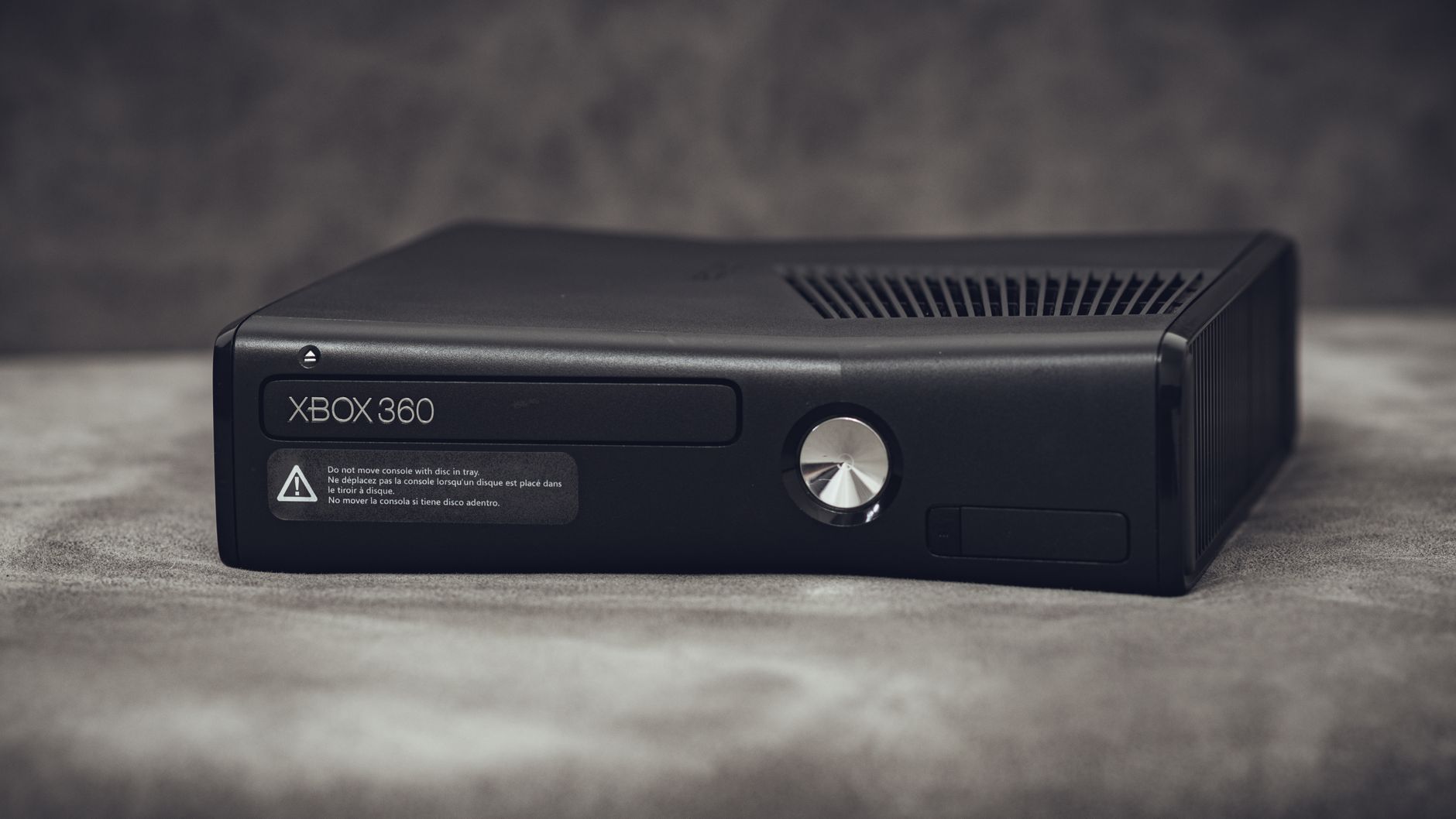
If you have the cash, I would recommend investing in, at the very least, an Xbox 360. This platform has a vast library of excellent games available, many of which can be bought for not very much money at all, and doesn't require any faffing around to get working on a modern TV. You may also wish to consider a PlayStation 3, as there are a number of exclusives on both platforms — plus a few cases where either the 360 or PS3 version is just plain better for one reason or another.
After that, a Nintendo Wii or Wii U is well worth considering. The Wii U, while mocked in its lifetime for its small library of games, has some absolute bangers, plus it is backwards compatible with the Wii, which has a vast library of excellent games, many of which can, again, be picked up for not very much money at all. Wii U is an HD console that can be connected to a modern TV, but the original Wii is a standard-definition console, though it can still be hooked up to a modern TV via component cables for a 480p "Enhanced Definition" picture. If you don't have component inputs on your TV, you will probably want to run an original Wii through a scaler, as composite or SCART inputs on modern HDTVs — if they even have them any more, which I'm sure some models don't — are complete cack.
Speaking of standard definition, this brings us onto the other worthwhile investment: a PlayStation 2. Again, you can actually run one of these through component cables — and even get an actual high-definition signal with a few very specific games — but you will probably want to also grab yourself a scaler if you take your PS2 gaming seriously. And you should take your PS2 gaming seriously, as the system plays host to one of the richest, most diverse libraries of any system ever released, with titles ranging from bargain bin puzzlers to sprawling epic, cinematic affairs — and some of the best RPGs ever created. While the latter can command high prices these days, many PS2 games — and good ones! — can be picked up for not very much money, making it easy to build a library of stuff that will keep you busy for a good long while.
If you're feeling flush, an original Xbox and Nintendo Gamecube are worthwhile investments, as both have some nice exclusives and in the case of multiplatform games, Xbox and/or Gamecube versions are often superior to their PS2 counterparts. Do note, however, that original Xboxes sometimes need a bit of maintenance, and Gamecube games tend to be significantly more expensive than equivalent games on other platforms from the same period. Also be aware that the earlier models of Wii also play Gamecube games, so you may not even need to buy a separate Gamecube if you're lucky enough to track down one of those. (You can tell if you have one of those by if it has a removable panel with Gamecube controller ports underneath.)
Let's price a starter setup as outlined above from a hardware perspective:
£ 89.99 - Evercade VS-R
£264.00 - MiSTer Multisystem 2 (analogue-compatible model)
£ 47.99 - 512GB microSD card (price from Amazon 22/6/2026)
£110.00 - Xbox 360 250GB "E" model (unboxed from CEX 22/6/2026)
£ 65.00 - Nintendo Wii (unboxed from CEX 22/6/2026)
=======
£576.98
About half the price of the top-end Steam Machine, and between that lot, you should have access to more than enough games to keep you busy for a very long time indeed — and no need to spend half your life complaining about derivative triple-A trend-chasing, microtransactions, mandatory 50GB updates, lengthy install processes and shoehorned-in multiplayer modes.
Plus if you have friends over, they'll think your setup is super cool. And if they don't, question whether they really were your friends in the first place.
Want to read my thoughts on various video games, visual novels and other popular culture things? Stop by MoeGamer.net, my site for all things fun where I am generally a lot more cheerful. And if you fancy watching some vids on classic games, drop by my YouTube channel.
If you want this nonsense in your inbox every day, please feel free to subscribe via email. Your email address won't be used for anything else.