#oneaday Day 81: Pep Talk

I am failing hard at my weight loss and fitness goals, so I am going to use today's opportunity to give myself something of a pep talk. Hopefully laying down the things I've been feeling — and how I feel about things not going the right way — on "paper" will help me put them into perspective and move forwards.

First of all, I'll say that "failing" is probably the wrong word. I have suffered a temporary setback. It is a temporary setback that has been going on for probably a couple of months at this point, but if we're looking at the big picture, I'm still a stone lighter than when I started all this. That is Progress, and I shouldn't put myself down too hard when I have made Progress.

However, my trouble is that I've become complacent. My brain has figured that it knows what I'm "supposed" to do in order to keep the weight loss going, and it has led me to assume that it knows best and is able to do the "right" things instinctively.

Well, brain, you cannot do these things instinctively. You have been making a right hash of things of late. But it's not too late to sort things out. You need to take a moment to reflect why you're doing this, then recalibrate yourself to follow the Slimming World programme carefully, methodically and fastidiously. No thinking "oh, a quick Meal Deal won't hurt". No thinking "ah, one Greggs won't hurt". No thinking outright potentially harmful thoughts like "maybe I just won't eat for most of tomorrow".

No, brain, instead, you know you have a clear structure within which to work. And that means making an effort to prioritise the foods that Slimming World defines as "free" — for the unfamiliar, this includes not only the usual sort of fruits and vegetables that you'd expect, including potatoes, but also pasta, rice and some grains.

On top of that "free" stuff, you have two "Healthy Extra A" choices, which are carefully measured things in the dairy area, and one "Healthy Extra B" choice, which is fibre-related, and usually takes the form of something like a carefully measured bowl of Shredded Wheat, two slices of wholemeal bread, stuff like that.

And on top of that, you have your "Syns", which covers everything else. And these are the things that are probably the most important to count. Because while you can technically have anything on Slimming World, it's important to ensure you're 100% aware of what you're putting in your mouth and how much of it you're putting in your mouth, too. One or two little treats that are a couple of Syns each are fine; a whole "Sharing" bagful is not.

Since the first time I did Slimming World (and had a lot of success with it first time around), they've started to place a greater focus on "trigger foods", and I think that's something I really need to be mindful of. Trigger foods are the things that "set you off" onto a path that will harm your overall weight loss. In my case, it's things like getting a big bag of some sort of "treat", be it sweet or savoury, and telling myself "I'll just have a bit at a time". I inevitably do not have a bit at a time and end up eating the whole bag. This is, as I'm sure you can appreciate, a Problem.

Thing is, I am aware of the behaviours I'm exhibiting, and how they're symptomatic of someone with an addiction. I have seen them in other people who were addicted to things other than food. Trouble is, an addiction to food, which is clearly what I am having to deal with, is not something which is taken anywhere near as seriously as an addiction to alcohol or drugs, but clearly it can be harmful.

And it's not as if I don't want to fix myself. I'm fed up of not being able to sleep well because my whole body hurts. I'm fed up of not physically being able to do things because I'm too big. I'm fed up of it being difficult to find clothes that fit. And I'm fed up of still living with this fucking hernia that randomly flares up into excruciating pain on an unpredictable basis, and being unable to get treatment for it because I'm too fat.

Annoyingly, I've tried seeking medical help for this, and all I got was a useless "course" where I spoke to someone on Zoom once every two weeks, got no particularly helpful advice that I didn't know already, was repeatedly asked if I wanted bariatric surgery (I emphatically do not, for a variety of reasons) and made hardly any progress. So I guess it's up to me.

So brain, you have two options. Give up, which I know you don't want to do, or start taking this seriously. Start writing down everything you eat, including when you have "too much". Start measuring those Healthy Extras and counting those Syns. And be fastidious about it. Don't be afraid to mess up and acknowledge that you messed up; in writing this post in the first place, I'm admitting to myself that I messed up. And don't be in denial that there is a problem here which needs to be solved.

This evening, it is time to reflect and consider the situation. From first thing tomorrow morning, it's a clean "break" from the past, and a new beginning. Let's get this done.


Want to read my thoughts on various video games, visual novels and other popular culture things? Stop by MoeGamer.net, my site for all things fun where I am generally a lot more cheerful. And if you fancy watching some vids on classic games, drop by my YouTube channel.

If you want this nonsense in your inbox every day, please feel free to subscribe via email. Your email address won't be used for anything else.
#oneaday Day 80: Gaming specialism vs. generalised mediocrity

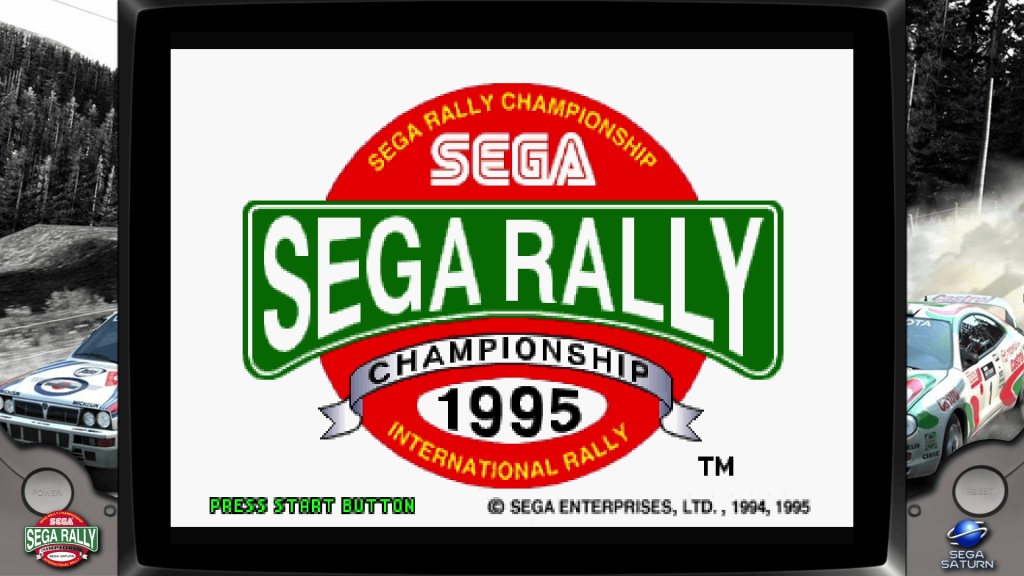
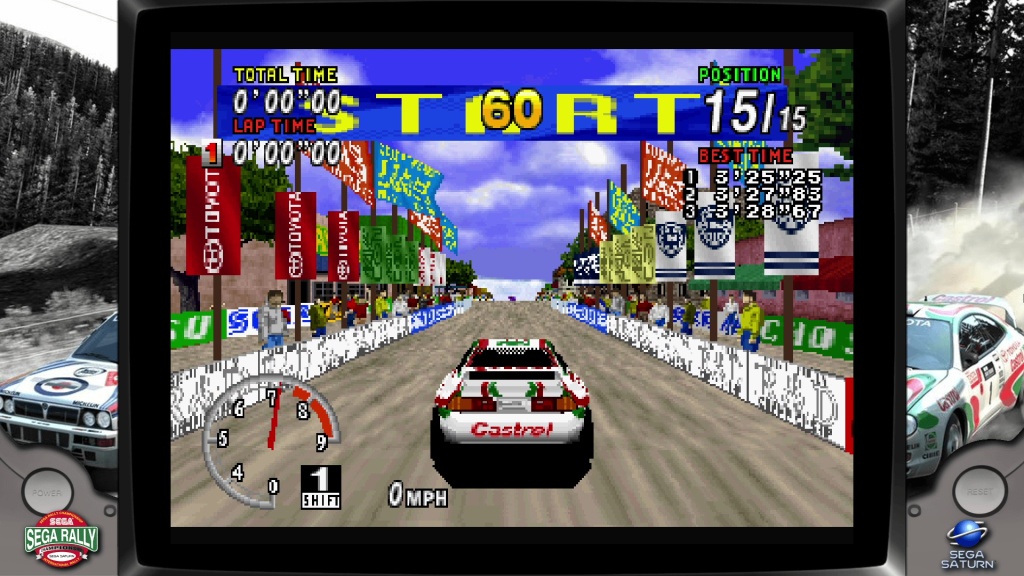
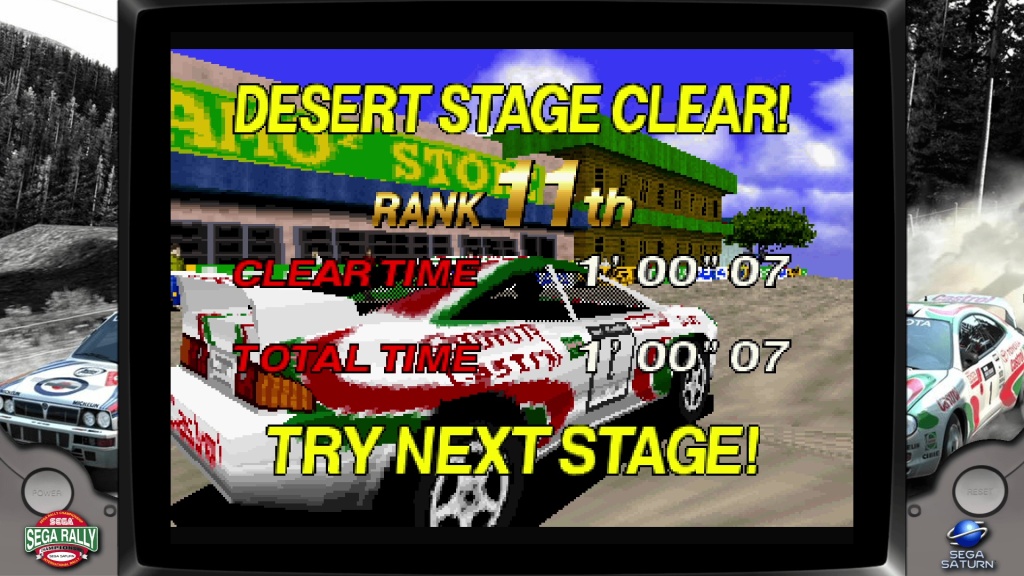
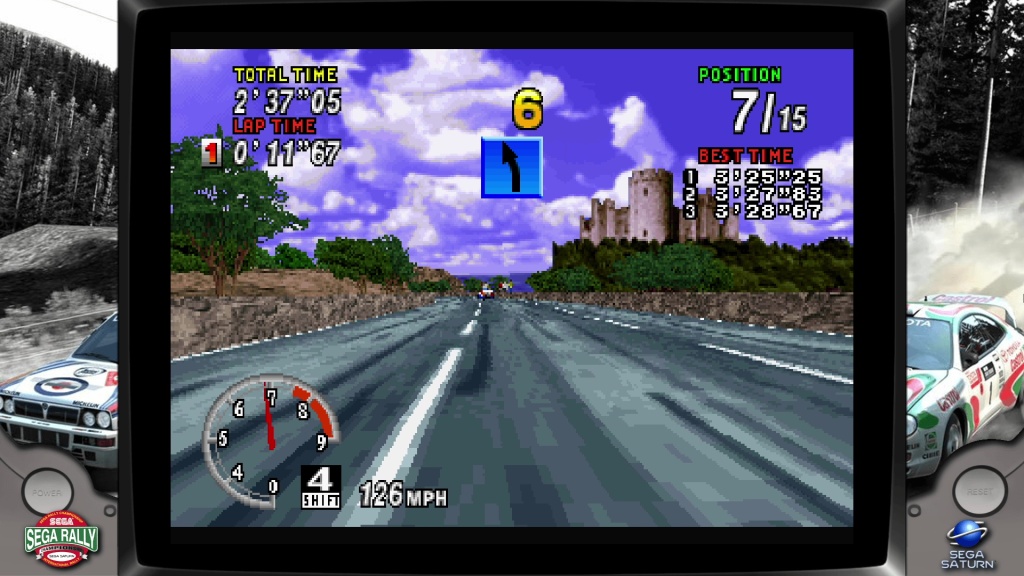
I decided to hop on board with a friend's "high score" (well, "best time", really) challenge over on his Discord today. The game? Sega Rally on the Saturn, a game (and console) I have precisely zero experience with outside of an occasional go on an arcade machine back in the '90s.

Unsurprisingly, I am not yet at a standard where I can even enter the challenge, given that it requires participants to complete all three stages of the game and post a time on the game's high score table. But I'm not mad about that. In fact, it brought something into focus that I've probably been aware of for a good long while, but which I hadn't really thought about actively before.

A key difference between older, arcade-style games and the stuff we typically get today is that older games demand that you specialise — get really good at one very specific thing — while today's games only demand that you reach a bare minimum acceptable standard in a wide variety of different activities.

Using racing games as an example, when you play Sega Rally, outside of stuff like the Time Attack and two-player modes, you're always doing the same thing. You're always racing the same three courses in the same order using one of the two same cars each time. Minimal variables. Minimal randomisation. Maximum scope for learning how to play the game well, and developing specific strategies that work for you.

Compare with a modern-day racing game. Leaving aside the fact that arcade-style racers barely exist any more outside of the indie space, today's racing games are much more likely to give you hundreds of individual challenges to complete, and never really demand that you get good at one of them to a notable degree. Rather than specialising in one very specific thing, you are developing a standard of generalised mediocrity — enough to get by, but nothing more.

Of course, some players choose to take things a little further and want to top the online leaderboards or beat things on the hardest difficulty, obtain "S-Ranks" or whatever. But I'm willing to bet that a statistically significant portion of players of any given game featuring a wide swathe of content (ugh, I know, but bear with me) will play each thing the precise number of times they need to in order to mark it as "complete", and then never touch it again.

I'm not saying either of these approaches is wrong per se — although I suspect a game as "content-light" as Sega Rally would be a hard sell as a full-price game today — but it is interesting how different those two types of game feel. My brief jaunt with Sega Rally this afternoon was genuinely exciting. I could see myself improving as my lap times got better with each attempt — and the successful completion of the challenge was within sight. Add the competitive element to that (once I've actually cleared the three races, of course) and you have even more exciting thrills.

This isn't to say that games like this don't exist in the modern day, either — although they're less common. The last time I really feel like there was a highly competitive, specialised game that I spent a significant amount of time with was probably Geometry Wars 2 on Xbox 360, and that must be pushing 20 years old at this point. But it was the exact same sort of thing I was feeling today with Sega Rally: a specific, well-defined, non-randomised challenge, and the desire to do well at that one thing.

The other benefit of games like this is that they're much more friendly to shorter sessions. This makes it ideal for those of you who have been browbeaten into believing you "don't have time" to play games any more, or if you only have a half hour before your food arrives, or before you have to catch the bus, or log on to Teams and pretend that you're working or something.

There's something to be said for the "no strings" aspect of these games; the fact that they don't demand your commitment over the long term, and they're not trying to bribe you into making that one game your complete lifestyle with things like Battle Passes, microtransactions, progression systems and other such shenanigans. On top of that, it often just feels like games that have a small number of very specific challenges to complete are probably better designed; if you only have three tracks in your racing game, you better make sure they're damn good ones, whereas if you have 100 tracks, who cares if one or two are a bit of a stinker?

If you haven't played a "specialised" game like Sega Rally for a long time, I highly recommend the experience. Boot it up, spend some time with it, enjoy the experience, then set it aside and do something else. Far from being a "waste of time", as certain quarters of modern gaming might like you to believe, I think you might be surprised what a pleasantly invigorating experience it is… and how likely you might be to come back and try again later.


Want to read my thoughts on various video games, visual novels and other popular culture things? Stop by MoeGamer.net, my site for all things fun where I am generally a lot more cheerful. And if you fancy watching some vids on classic games, drop by my YouTube channel.

If you want this nonsense in your inbox every day, please feel free to subscribe via email. Your email address won't be used for anything else.
#oneaday Day 79: Some first impressions from Rance Quest Magnum

I've decided that to help me out when I want to write a longer, more substantial piece on MoeGamer about a particular game, I'm going to start using my daily posts here — when I don't have anything "better" or more pressing to talk about, that is — to keep notes on my impressions about what I'm playing as I go along.

So, having finished Doom 2016 and not quite feeling in the mood to get back to Trails in the Sky: Second Chapter just yet — and very much feeling like I wanted something with a bit of colour and joy in it, given my general low mood — I decided to fire up Rance Quest Magnum for the first time.

For the unfamiliar, Rance Quest Magnum is the eighth title in the Rance series of 18+ role-playing games from Alicesoft. The Rance series, if you're unfamiliar, is noteworthy for being almost as old as Final Fantasy, and an important part of Japanese gaming history. It was very late to get localised, however, as the fact many of the games feature a hefty amount of sexual assault in them (including incidents perpetrated by the protagonist) presumably meant a lot of companies thought it was too much of a risky prospect.

But MangaGamer, bless them, got over it, and have been steadily releasing Rance games for a while now. They started with Rance 5D and VI — with 5D being a soft reboot of the series, and thus a good starting point — and continuing on with the remakes of the first two games in the series, Rance 01 and Rance 02, the grand strategy game Sengoku Rance, then Rance Quest Magnum and most recently the penultimate installment Rance IX. I've written about a number of these in the past — see MoeGamer for my thoughts on Rance 5D, VI and Sengoku, and Rice Digital for my exploration of Rance 01 and 02.

You can find more (a lot more) about the history of this series at those links, so if you want to know more, go give them a click so I can get on with talking about what I actually want to talk about.

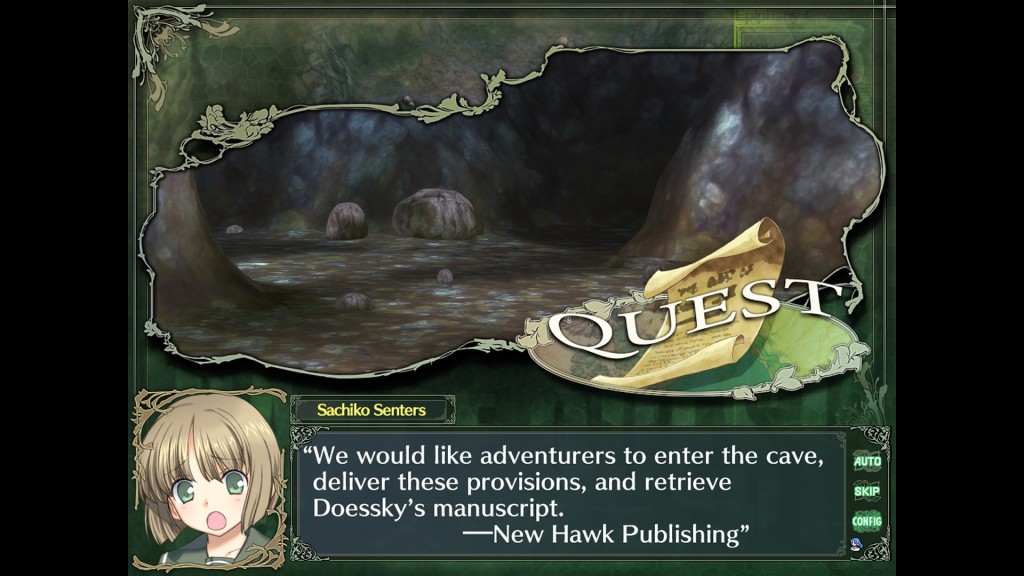
Rance Quest Magnum, like most entries in the Rance series, completely reinvents its core structure and mechanics. While Sengoku Rance was a grand strategy game with some RPG elements, Rance Quest Magnum is kind of-sort of a more conventional RPG. Except it's a kind of-sort of conventional RPG in a different way to Rance VI: Collapse of Zeth, which was a first-person "blobber" dungeon crawler at heart.

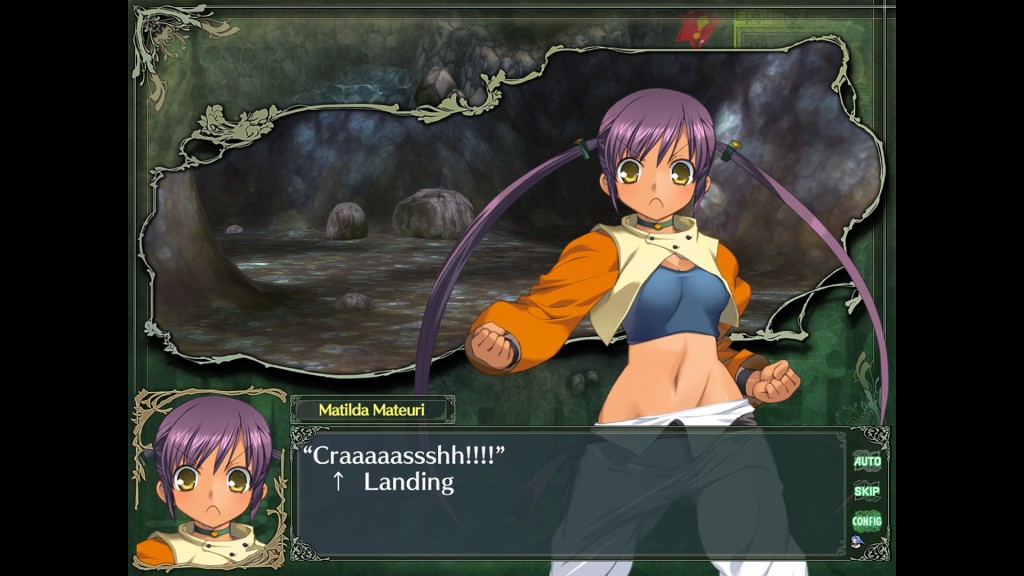
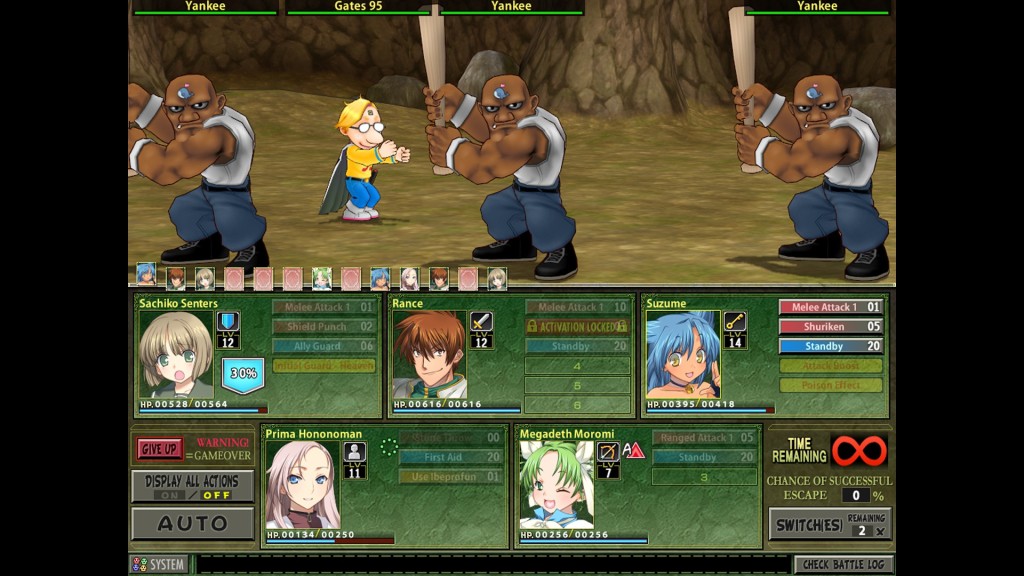
Rance Quest Magnum instead adopts a heavily quest-based structure. There's no "world map" to wander around, and quests are self-contained challenges, some of which have unique dungeons, others of which reuse maps used elsewhere. The main "RPG" action of the game primarily unfolds from a top-down perspective, with Rance represented as a polygonal "chibi" form of himself, similar to how stablemate Evenicle does things — and yes, I've covered that also. Although Evenicle had a world map so itself was a completely different sort of game to Rance Quest Magnum.

So each quest in Rance Quest Magnum unfolds across one or more top-down maps. On each map, you explore, find treasures, get into fights and attempt to complete your quest objectives. When you've completed your quest objective, that's it — you leave the map. You can, however, repeat previously completed quests, which allows you to investigate the map more thoroughly, see events with choices unfold in different ways (which in turn can unlock new quests), acquire new treasures and, of course, grind for experience, money and items.

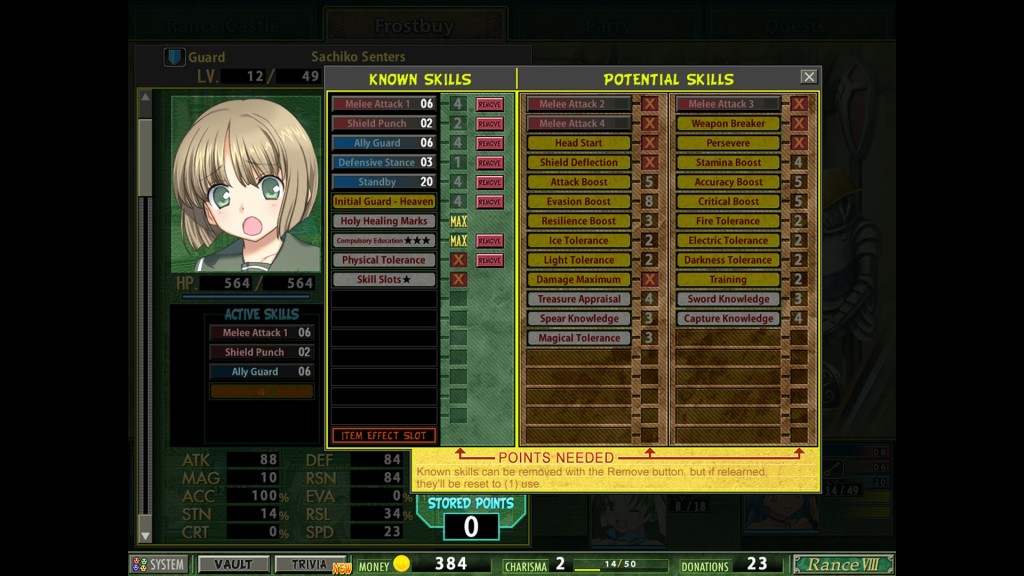
Rance Quest Magnum's core mechanics make use of an interesting skill system. Each character has a certain number of skill slots, and is usually able to increase these by purchasing a particular passive skill on level up. The skill slots can be used for either active skills, which are used in combat, or boost skills, which directly impact stats and overall effectiveness in battle. Characters can also have completely passive skills, which they just need to have learned in order to take advantage of; they don't need to be slotted.

Active skills have a set number of uses per quest, and you can increase this count by spending the skill points acquired on level up. If you do this, it, of course, means that you can't learn a new skill instead — but sometimes it's more helpful to be able to perform a particular action more often than have a greater choice of actions available, particularly given that you can only equip so many of them at once anyway.

Among the passive skills, meanwhile, are skills that appear to have nothing to do with combat; the character Sachiko, for example, who is a student, has a skill that represents her putting some time in to study when Rance isn't dragging her along to dungeons, and Rance himself, of course, has a "Sexual Prowess" skill.

The limited number of times each active skill can be used is sort of a callback to how Rance VI: Collapse of Zeth and Sengoku Rance did things, though a little different to both cases. In Rance VI, each character had a "stamina" rating, which represented how many battles they could participate in before becoming exhausted; aside from that, they could use any of their skills as you saw fit according to the situation. Sengoku Rance, meanwhile, gave each character a certain number of "action flags", representing how many actions they could take in a single battle or dungeon delve. In the latter case, you could swap out characters from your complete squad if someone became exhausted or incapacitated.

You can do this in Rance Quest Magnum, too, though the number of times you can swap party members around is limited by Rance's "Charisma" stat, which starts at zero to represent him bumming around being a violent nuisance at the outset of the game. For context, towards the end of Sengoku Rance, Rance's longtime companion and slave Sill Plain became encased in enchanted ice that doesn't melt naturally, and despite being firmly in denial, the beginning of Rance Quest Magnum indicates that he has not taken this all that well. His level has dropped massively, he's reverted to his very worst extremes of brutish behaviour, and he's generally having a negative impact on the world and people around him.

Rance is a thoroughly interesting character in that although he is indisputably an asshole, he has had a major impact on world events for the better across all his previous adventures. Indeed, if you look into the overall lore of the Rance series, his very existence is considered to be something of an anomaly, with the "gods" behind the running of the world keeping him around because he keeps things interesting. He's not a "hero" by the definition of the "Planner Scenario", which the world of Rance operates under, but he does have the interesting distinction of being born without a level cap, which means it's possible for him to grow to extraordinary levels of power over the course of Rance Quest Magnum.

This is why it's interesting to see him effectively starting again from almost zero in Rance Quest Magnum. His "loss" of Sill has clearly hit him hard, and it takes a fair bit of encouragement from the people around him to get him off his arse and pursuing some sort of cure for her. In the early hours of the game, he's completing quests for pretty much selfish reasons, but I'm willing to bet that over the course of the game as a whole, his attitude will change — particularly if and when he manages to sort out Sill's situation.

I'm really enjoying the game so far. Like most Rance games, it strikes a nice balance between interesting gameplay, well-written dialogue and cheeky, provocative humour. The mechanics and progression systems in particular look set to be very interesting indeed, and I'm looking forward to seeing how the quests progress as you continue through the game.

I'm sure I'll have a lot more to say on the game after a few more hours with it, but suffice to say for now, I think I made the right choice deciding to make a start on it.


Want to read my thoughts on various video games, visual novels and other popular culture things? Stop by MoeGamer.net, my site for all things fun where I am generally a lot more cheerful. And if you fancy watching some vids on classic games, drop by my YouTube channel.

If you want this nonsense in your inbox every day, please feel free to subscribe via email. Your email address won't be used for anything else.
#oneaday Day 78: The Colour of Flavour

I think it's kind of interesting how specific colours have very much come to be associated with specific flavours — and that those colour assignments are almost (albeit not entirely) universal, at least when it comes to packaging.

Take a green packet of crisps, for example; you know that depending on if it follows the Walkers or Golden Wonder model, it will be either salt and vinegar or cheese and onion flavour. Red packets will be salted. Crimson will be smoky bacon. Orange will be chicken. Brown will be beef.

But it's not just crisps. You can generally identify tinned fish by its colour: sky blue for tuna, pink for salmon, sardines and mackerel can vary, but often red or dark blue.

And it's not even food for humans that follows these conventions. The packets of cat food we have follow a similarly recognisable system, too: sky blue for tuna, pink for salmon, red for beef (outside of crisps, this is a common assignment), orange for chicken.

These often make a certain degree of sense. Onions are greenish, for example, so it makes sense for them to be assigned the colour green. Bacon is pink and goes a bit darker when you cook it — particularly if it's smoked — so crimson makes sense. Blue makes sense for tuna because it's from the sea and the sea is commonly represented as blue, and salmon is iconically pink, so its packaging is pink. Brown and red both make sense for beef based on its colour after and before cooking, and its status as the most common "red meat".

I suspect we're at a point where we can directly associate tastes with colours in an almost synaesthetic manner, even outside of the examples that have some logic behind them. If someone says a fizzy drink "tastes like red", I bet you know what they mean, don't you? And interestingly, a drink tasting like "red" does not mean it tastes like either salt or beef. This even progresses into areas that make no sense, like "blue raspberry". Raspberries aren't blue. And yet if I say "blue raspberry" to you, I bet you know what it tastes like. (Very little like raspberries, as it happens.)

I've mentioned in my writing and my videos before that I feel like I have a certain degree of synaesthesia. When I'm playing a video game, for example, sometimes on-screen actions will be satisfying in a way that I can only describe as them "tasting" nice or having good "mouthfeel". I wonder how much of that is something that has happened independently of all this, and how much is a result of how much, today, we directly associate colours with flavours.

Apparently from a casual Google, I'm not the first person to feel like this. There's a paper from 2015 published on Biomed Central that is "on the psychological impact of food colour", for example. Their hypothesis was that "colour is the single most important product-intrinsic sensory cue when it comes to setting people's expectations regarding the likely taste and flavour of food and drink."

I've only skimmed the study so won't go into detail, but one interesting thing that was picked out was how these colour-flavour assignments can have different cultural meanings. For example:

A diagram of cross-cultural colour-flavour associations, demonstrating a dark red drink and a sky blue drink.

Beneath the images are Taiwanese and British flags indicating the perceived flavours of those colours in the different territories.

In Taiwan, the red drink is assumed to be cranberry. In the UK, cherry or strawberry.

In Taiwan, the blue drink is assumed to be mint; in the UK, raspberry.

The paper's "conclusion" section seemed remarkably inconclusive, though it did admit that "colour cues influence our food and drink-related behaviour in a number of different ways" and "food colouring undoubtedly plays an important role in driving liking and the consumer acceptability of a variety of food and beverage products".

It also noted that "identifying consistent colour-flavour mappings and training the consumer to internalise other new associations is one of the important challenges facing the food marketer interested in launching new products or brand extensions in a marketplace that is more colourful than ever."

So basically, a lot of it comes down to marketing. I still think it's interesting how obvious "standards" have developed, though — and it's interesting to consider that those standards might not be universal from one country to another.


Want to read my thoughts on various video games, visual novels and other popular culture things? Stop by MoeGamer.net, my site for all things fun where I am generally a lot more cheerful. And if you fancy watching some vids on classic games, drop by my YouTube channel.

If you want this nonsense in your inbox every day, please feel free to subscribe via email. Your email address won't be used for anything else.
#oneaday Day 77: I'm not sure I'm enjoying New Doom

A little while back, I felt the need to start something new and not RPG-shaped, so I thought I'd finally get around to giving the Doom reboot from 2016 a go. After several nights of playing it and being roughly halfway through the single-player game, I'm not 100% sure if I'm enjoying it or not.

This is not a slight against anyone who does think it's good — I know how annoying it is when you love something and someone turns up to shit all over it. But I wanted to pop my thoughts that I've had about the game on paper so I can make better sense of them, and perhaps get a better idea of whether or not I actually like it.

The fact I'm asking this question at all can be looked at in one of two ways. Firstly, if you have to ask if you're enjoying something, you're probably not. Alternatively, secondly, if you're not sure you're enjoying something but you hesitate to say that you dislike it, you probably are enjoying at least something about it. So my opinion is somewhere between those two extremes, I guess.

First, let's ponder the things I do like. I do like the way the weapons behave and the overall "feel" of the game. There's a really nice fluid sense of movement to how you move around, defeat enemies, clamber up onto platforms and perform Glory Kills. The way enemies are highly reactive to how you shoot them and blast into bloody chunks feels entirely appropriate for a modern take on Doom, but also reminds me of older games such as Sega's The House of the Dead. This is a good thing.

It's nice to play a first-person shooter that moves at speed, has levels that aren't linear corridors, and which doesn't kill the pacing of its combat with constant reloading. Doom 2016 has all its weapons act like its classic counterparts, where direct analogues exist — that means no reloading ever, with the exception of the shotguns, but there it's just part of the overall firing animation anyway, so no harm done. The chaingun is particularly great; the original Doom's chaingun always felt rather weedy (at least partly because it just played the pistol sound effect in rapid succession) but Doom 2016's is an absolute beast — as it should be.

Now, onto things that I am less crazy about. Chief among these is the game's overall pacing. Whereas progressing through a classic Doom level feels like it always keeps you on your toes, in Doom 2016 it feels like you're moving from "encounter" to "encounter". It has that thing where you'll be clambering through the environment and come to a wide open area, and immediately your brain will think "I'm about to get swarmed by enemies". It's inevitably right. It's predictable, and it doesn't quite feel right. It makes the levels feel like you're jumping from "exploration mode" to "battle mode", whereas classic Doom felt like it integrated the two aspects much more elegantly.

This isn't necessarily a bad thing in and of itself. The Shadow Warrior reboot from a few years back was also designed like this, and I think it worked rather well there. It just doesn't feel quite right for Doom.

The one thing I don't like at all is how it clearly thinks it's being some sort of witty anti-corporate satire, but it's so absurdly over-the-top about it I just find myself being pulled out of the experience. Any time you hear the UAC pep talks over the computer systems on the Mars base, the things being said are increasingly ridiculous, and it crosses the line between plausible satire and just being stupid for the sake of it. I don't come to a Doom game for the plot in the first place, so this aspect of things feels incredibly ham-fisted and I do not like it at all.

The parts I can't quite make my mind up about are all the bits where it's not being a fast-action first-person shooter. The levels are all huge and quite interesting to explore, particularly with all the hidden collectibles around the place, but it also feels like it brings the "explore, battle, explore" cycle into even sharper focus than it already is — at the end of a level, you'll typically find the exit door sitting there ready and waiting for you, and the rest of the level open for you to explore almost completely unopposed in most cases. Sometimes a few enemies are tucked away off the critical path, but more often than not the secrets are concealed behind traversal puzzles rather than combat encounters. This doesn't feel very Doom.

I do, however, like the fact that every stage has a reasonably obvious terminal where you can download the full map data for the level and thereby see which areas you have already explored and which you haven't. Collectibles are also marked on the map, so there's no farting around pressing the "Use" button (why on Earth is it R3, by the way?) against every wall in the hope something might open up somewhere.

Parts I'm leaning towards disliking are the presence of an upgrade system and "Challenges". There are times when Doom 2016 almost feels like it wishes it was Diablo or something of its ilk, whisking you away to a completely separate environment to complete a self-contained challenge and rewarding you with some sort of "loot" if you are successful. Some of these challenges are incredibly irritating to complete, such as one where you have 1 point of health and have to defeat 8 increasingly tough enemies using just the basic Shotgun weapon. They're optional, yes, but once you're in one if you're anything like me you'll likely feel like you have to complete it before you continue on your way.

The mods for the weapons have some quite interesting effects, but I think I'd rather just have an alt-fire mode for each weapon and not have to faff around with upgrading it. Because upgrading it involves acquiring "upgrade points", which you get through killing enemies in a stage and finding secrets. I guess if one is being charitable, one can look on it as a modernisation of the "Kills / Items / Secrets" breakdown you get at the end of a classic Doom stage, only here it actually has a tangible benefit on your game. But still, unlocking abilities doesn't feel very Doom.

Same for upgrading your health, armour and ammo maximums. The former two almost feel worthless given how quickly monsters batter down your entire health bar (and how quickly you can restore the whole thing with a Glory Kill or two) and the latter just makes the early game frustrating as you're constantly running out of ammo in a game where that shouldn't be an issue.

I understand there is an "Arcade Mode" available in the game and I'm now wondering if I should have just played that from the outset, because it's all the extra bells and whistles that have been added atop an attempt to modernise the classic Doom formula that feel like they're annoying me to varying degrees.

On the whole, I don't hate the game. The bits that annoy me aren't putting me off enough to not want to play it through to completion. But the game as a whole is reminding me what a beautifully polished, finely honed game the original Doom is — and how, without a doubt, I would probably still rather play that than this, particularly now its recent 576th rerelease, this time running on Night Dive's excellent Kex Engine, has a bunch of new levels (again) in it.

I'm going to see Doom 2016 through to completion. But I don't think I'm inclined in any way to want to "100%" it or spend any additional time with it beyond that required to beat the single-player campaign. And I guess that's fine. I only paid about a fiver for it, after all, so I can't really complain all that much.


Want to read my thoughts on various video games, visual novels and other popular culture things? Stop by MoeGamer.net, my site for all things fun where I am generally a lot more cheerful. And if you fancy watching some vids on classic games, drop by my YouTube channel.

If you want this nonsense in your inbox every day, please feel free to subscribe via email. Your email address won't be used for anything else.
#oneaday Day 76: Nopegrade

I'm due a phone upgrade. This is probably the first time I've come to that point and haven't been tempted to immediately get a new shiny phone. And the reason? So many of the latest models appear to be absolutely rammed to the gills with "AI" features I don't want anything to do with.

And it's a shame, because some of these phones do otherwise look good. The Google Pixel 9 looks like it has an excellent camera, for example, and that's pretty high up my list of priorities these days. The newest Samsung devices also look quite nice, and having had a Samsung device for my last couple of phones, I'd be quite happy to go with them.

If it wasn't for the bloody AI crap, that is. I know I could just "not use it", but that's not really the point. I don't really want to send any sort of message that AI junk is something that I'm interested in in the slightest, and my concern is people happily jumping on with Google Pixel 9 and "just trying out" Gemini will just prolong the amount of time we all have to suffer with AI garbage being jammed into places we don't want it.

I'm sure there are some "valid" uses for AI, but honestly, I don't really see the usefulness right now. Earlier on, I watched a Marques Brownlee review of the Google Pixel 9, and everything that was "AI-powered" seemed very superfluous and unnecessary. An on-phone image generator? Cool, now I can steal artwork wherever I am in the world! An assistant I can talk to about what I should do about a wasp infestation? I'd rather talk to a real person that doesn't hallucinate, thanks. The ability to turn on my lights with my voice? 1) I can already do that with several other devices and 2) I don't want to do that. The ability to insert myself into a photo I wasn't in? Cool, now I can create "memories" of things that didn't actually happen. I'm sure that's healthy.

It's the voice stuff that really gets me. I genuinely do not understand how any of that is desirable. How is getting an Amazon Alexa, Google Gemini or whatever to read out your email headers better than tapping on the email icon and looking at them? How is getting a device to give you a "daily briefing" better than just doing a quick round of your favourite websites to check on the headlines? How is bellowing "SET A TIMER FOR THREE MINUTES… no, THREE minutes. THREE. MINUTES." better than going to the clock app and typing the number "3"?

It isn't. These things are all gimmicks. They're not actually useful. The grand dream is presumably some sort of omniscient, omnipresent Star Trek-style capital-C Computer that we can call upon to dispense its knowledge and information wherever we are at any time of day. But we're not there yet. We're not even close to being there yet, with how unreliable and hallucination-prone modern AI still is. And if reports are to be believed, we've already pretty much hit a cap on how good the current "AI" tech can get, because the various models are already starting to feed on themselves, making hallucinations more likely, not less likely, as they inadvertently guzzle up AI-generated swill rather than material that has had a human involved at any point during its creation.

And it disgusts me to see how many publishing companies are gleefully signing up to feed their writers' work into ChatGPT, almost certainly without consulting the actual writers for their consent beforehand. Today it was Condé Nast. Previously it was Vox Media. And I'm sure there's a lot more all over the place, too.

I cannot wait for this odious trend to be over. And I suspect it will be over within a few years, as the money is almost certainly going to run out. None of these models are sustainable; none of them have a "killer app" that convinces naysayers that actually, AI might be quite good after all; none of them even really have a marketable product beyond "look at this thing that might one day be able to do something vaguely useful (but doesn't just yet)".

The sooner that fucking sparkly magic icon goes away, the better.


Want to read my thoughts on various video games, visual novels and other popular culture things? Stop by MoeGamer.net, my site for all things fun where I am generally a lot more cheerful. And if you fancy watching some vids on classic games, drop by my YouTube channel.

If you want this nonsense in your inbox every day, please feel free to subscribe via email. Your email address won't be used for anything else.
#oneaday Day 75: Not Well

I've been unwell for the last couple of days. I don't know whether it's a delayed reaction to going to London last week or if it's just a seasonal thing, but I've been feeling pretty rotten. Spent most of this evening asleep, and didn't even end up feeling super rested because I was having sad and upsetting dreams.

But oh well. These things happen, they are a fact of life. At least with how most of us are still able to work from home, being ill doesn't mean having to take a whole day off work. In fact, when I'm feeling fairly wretched, I'm more than happy to do some work anyway because it's something to do and it helps keep my mind off things. Right now, we're doing some preparatory work for the Evercade cartridges coming in the first half of 2025, and we've already got some excellent stuff lined up. Obviously I can't talk about that in any more detail than that, though!

The situation I described yesterday appears to mostly be settling down, thankfully. A couple of people have left the Discord in question, which is a shame in at least one case, but everyone else (except arguably one person, whom I had to reprimand privately earlier, and who was less than gracious about it) seems to have stopped being quite so childish about the entire situation. I'm still baffled at supposedly grown adults behaving like primary school children, though… although given my local Slimming World group has groups of older ladies who have to be asked to stop talking while the consultant delivers the session, perhaps I shouldn't be so surprised.

I haven't really played any games for the past few days because I just haven't really felt like I've had the mental energy for it. I have watched a lot of episodes of Star Trek: Deep Space Nine, though, and I'm now into the fifth season, which I believe is virgin territory for me. I might have seen the first couple of episodes at some point, but beyond that, I think it's all new to me. I'm particularly interested to see how the whole Dominion War arc proceeds, because I've been specifically avoiding a lot of Star Trek material that is positioned as being after the Dominion War — with one exception being the excellent Star Trek Resurgence, which I highly recommend to those who enjoy both Trek and Telltale Games' past work.

I have been playing the piano, though. In fact, my long sleep tonight meant that today is the first day I haven't played it since it arrived, but I'll get back onto it tomorrow. At the moment I'm still just playing a few bits and pieces to get back into the swing of things, but I think from next week I'm going to try and start doing a bit more structured "practice" again. That feels like a good and healthy habit to get back into, and perhaps alongside that I can revitalise my enthusiasm for the gym while I'm establishing habits.

Good intentions and all that. Anyway, now it's late, so I think it's probably time to go back to bed, maybe watch another Deep Space Nine, and get some more sleep. Hopefully I'll feel better tomorrow.


Want to read my thoughts on various video games, visual novels and other popular culture things? Stop by MoeGamer.net, my site for all things fun where I am generally a lot more cheerful. And if you fancy watching some vids on classic games, drop by my YouTube channel.

If you want this nonsense in your inbox every day, please feel free to subscribe via email. Your email address won't be used for anything else.
#oneaday Day 74: Flashbacks

Yesterday, we updated the rules on a Discord server I help run. The rules did not change from what they were before; they were simply expanded and clarified in a way that allows any of us on the moderation team to easily step in if things look like getting out of hand.

And you know, people absolutely lost their shit over it to a frankly baffling degree. We had people claiming that the server had been "destroyed", that they were no longer able to express themselves fully, that mods were "power hungry"… if you've been on the Internet any length of time all this will be familiar, I'm sure, particularly if you were ever part of forum culture.

I have found the whole experience baffling and extremely frustrating. The new rules amount to "don't be a hateful bigot", "don't be mean to other people" and "please use the channels as they are designed to be used". Bizarrely, it's that last one that got people most upset, because apparently asking people to keep off-topic discussions to the off-topic channel is something approaching a fascist dictatorship.

All this gave me exceedingly unpleasant flashbacks of "behaviour management" when I was working as a teacher. A classroom full of screaming children and a Discord server full of crying adults who are very much old enough to know better are remarkably similar. And it all comes down to people, regardless of age, having a great amount of difficulty with someone who isn't them laying down boundaries.

In both cases, kids and adults, they feel they're not able to behave as they please. In both cases, the rules are in place to help keep things somewhat more orderly: so that lessons can be taught in the classroom, and so that people who came to the Discord server to get specific information can find that information in the latter case.

No-one has quite gone as far as throwing out the "but my free speech!" card as yet but some people came remarkably close earlier. And I suspect we will continue to have some unrest for a few days.

I don't get it. I've always been quite happy to follow the rules when I've been invited into someone's house, be it real or virtual. I'm still mortified about one time, aged 12, when I used the word "bog" to refer to the toilet at a friend's house, only to be admonished that "we don't use that word in this house" (or at least not in front of his mother anyway). If someone asks me to behave myself online, I behave myself. It's really not all that difficult.

I suspect much of it stems from the people in question never having had those boundaries set in the past, and not knowing what to do when they are set — even if they were already following the rules anyway. I suppose it's easy to feel a weird sort of guilt when you're involved in a community and that community feels the need to lay down the law, even if you know you had nothing to do with it.

But honestly, come on now. If you have difficulty with rules that amount to "don't be a dick" and "use this server for its stated purpose", that's an issue with you, not the rules.


Want to read my thoughts on various video games, visual novels and other popular culture things? Stop by MoeGamer.net, my site for all things fun where I am generally a lot more cheerful. And if you fancy watching some vids on classic games, drop by my YouTube channel.

If you want this nonsense in your inbox every day, please feel free to subscribe via email. Your email address won't be used for anything else.
#oneaday Day 73: Stylised TV

One of the things that I'm finding most striking about watching through Star Trek: Deep Space Nine is how the show is, on the whole, willing to experiment with structure, presentation and the entire way an episode's story is told. I don't know if it's just that I haven't watched a really good TV show for a long while or if things really were a lot more ambitious in this regard in the '90s; either way, I've found it very striking.

There are several episodes that defy the conventions of what I think of as "regular TV" — or perhaps it's more accurate to say what I perceive as the "norms" of the show. The first of these that springs to mind is the early fourth season episode The Visitor, which is frequently held up as an example of the show at its absolute best. And interestingly, it's an episode of the show where it's at its least "sci-fi", outside of one significant aspect.

Spoilers ahead, though this episode is nearly thirty years old at this point, so I'm going to assume most of you reading this who might be interested in watching it will have probably seen it by this point.

In The Visitor, we are introduced to an old man who lives by himself. It's a dark and stormy night, and a young woman comes knocking at his door, seeking shelter from the rain. The old man introduces himself as Jake Sisko — but at this point, we, the audience, know Jake Sisko as the 18 year old son of the show's lead, Captain Benjamin Sisko.

The old Jake explains to the young woman that at some point after he turned 18, his father died.

Boom. Right in there with the intrigue. Had Star Trek: Deep Space Nine really killed off its lead in the second episode of its fourth season? No, of course it hadn't, and everyone watching knew that was the case. But it was still one hell of a way to get the audience's attention prior to the opening credits rolling.

The Visitor continues with old Jake telling the story of what happened to his father — apparently an accident aboard the USS Defiant pushed Ben out of sync with reality, causing him to "time jump" at various intervals. He'd return to Jake for a while — sometimes a few days, sometimes just a moment — and Jake would be older, but he'd not have aged a day.

Long story short, Jake spends his life trying to figure out what exactly is going on with his father, and how he might be able to save him. Eventually he comes to the conclusion that the only way for him to prevent his father from springing through time, attached to him by an invisible thread, is for him to die. And so, it gradually becomes clear over the course of the episode, that old man Jake Sisko is going to die, and that this is the only way for Ben to return to his own time.

The way this episode is presented is beautiful. It cuts back and forth between Old Jake simply telling the story to his companion, and us actually seeing what was going on at various points in Old Jake's "past" — including some delightful "aged up" takes on Dr Bashir and Jadzia Dax. It's just so unusual and beautifully directed that it remains one of the most memorable episodes of the series to this day; I remembered it fondly from when I first saw it on VHS tape roughly when it was "current", and it hasn't lost any of its impact in the intervening years.

I'm now getting into episodes that are less familiar to me, because I drifted off watching Deep Space Nine partway through the fourth season. Not because I wasn't enjoying it, but because I didn't really have the money or space to keep investing in VHS tapes with just two episodes on each!

Recently, I watched an episode called Rules of Engagement, and this also does some interesting things with its direction. The concept of this episode is that Worf is facing a hearing for supposedly destroying a civilian vessel during a confrontation with the Klingon Empire, who are, throughout the fourth season, being A Bit Of A Dick, to put it mildly.

Similar to The Visitor, a lot of the narration takes place in the "present" through the words of the participants in the hearing, but it also cuts to scenes that are being remembered by the people involved and the witnesses. In these instances, there are situations where the characters are going about their business as they did back in the way, but narrating them as they go — and even speaking directly to the "viewer" at various points. Seeing a character in a TV show directly address you, as if you are a participant in proceedings — in this case, casting you in the role of one of the participants in Worf's hearing — is quite unusual, and it's used to striking effect in this episode.

I'm sure from some perspectives both of these framing devices can be looked upon as a little cheesy. But I was struck by both of them as being thoroughly unusual and interesting. Like I say, it's entirely possible that I just haven't watched any "good TV" for quite some time (I can't remember the last series I watched from start to finish. Possibly Fringe? And that was years ago) and thus haven't seen anyone being particularly ambitious with direction and storytelling. But it doesn't really matter; what matters is that Star Trek: Deep Space Nine still stands out as spectacularly good television, even nearly 30 years later.


Want to read my thoughts on various video games, visual novels and other popular culture things? Stop by MoeGamer.net, my site for all things fun where I am generally a lot more cheerful. And if you fancy watching some vids on classic games, drop by my YouTube channel.

If you want this nonsense in your inbox every day, please feel free to subscribe via email. Your email address won't be used for anything else.

#oneaday Day 72: A life less ordinary

I can't shake the feeling that life just used to be… more interesting. When I look back on the last time I did this #oneaday thing and consider all the things that happened back then, and I look at today, I can't help but feel that while there were things that happened back then I'd rather not go through again, things were certainly more interesting and exciting.

Part of this is self-inflicted, of course. I'm not the same person I was ten years ago for a variety of reasons: physically, mentally and emotionally. I'm older, so of course the day-to-day nature of one's life changes as you age. But in the middle of all that there was COVID, and that, for me, is where a lot of the dissatisfaction I'm feeling right now started from.

Sure, it was easy to joke about the COVID lockdowns as being government-sanctioned "not having to go out and interact with three-dimensional people". And that was fun for a bit. Plus I certainly don't want to go back to a full-time office job, because working from home is just way more convenient. Any bosses who are attempting to get their workforce back into the office full time are just trying to exert control over them: simple as that. And, frankly, fuck that.

But the COVID lockdowns also brought with them the inability to see friends and family, and that lack of socialisation has persisted long after the lockdowns ended. My "IRL" friends were already reaching a point where they rarely wanted to do anything together due to them starting families and whatnot, but things haven't picked up at all ever since their children grew up a bit and the restrictions on us doing things together lifted. Even trying to get any of them to play something online occasionally is like pulling teeth from a particularly bloodless stone.

And daily life feels increasingly dominated by "online" and social media. I've doubtless spoken before about how odious I find TikTok and short-video culture, but every time I inadvertently come into contact with a vertical video of someone yelling at their phone camera, I'm reminded that the world moved on and kind of left me behind a bit.

To be perfectly honest, I'm pretty sure the world left me behind 20+ years ago. I'm pretty sure I was at my happiest and most content between 1997 and 2002 — the years from sixth form to the end of university. I had friends, I had hobbies, I had things I could go out and do, and I never felt the same sense of indefinable "pressure" on my mental health that I do today. Sure, there were things I wish I had done differently and regrets I have, but I was happy and satisfied with my lot in life.

Today? I feel like I'm being ungrateful when I say that I'm dissatisfied with existence, because I have a lot that I should be thankful for — a wonderful wife, two gorgeous cats, a nice house, a video game collection that would blow the mind of my teenage self — but life in general just feels so empty. And I don't really know what to do about it other than wallow in nostalgia and think about how nice things used to be.

Oh well. I don't have any solutions for that right now, so I think I'm just going to go upstairs and watch another episode of Star Trek: Deep Space Nine.


Want to read my thoughts on various video games, visual novels and other popular culture things? Stop by MoeGamer.net, my site for all things fun where I am generally a lot more cheerful. And if you fancy watching some vids on classic games, drop by my YouTube channel.

If you want this nonsense in your inbox every day, please feel free to subscribe via email. Your email address won't be used for anything else.