#oneaday Day 445: An evening with MiSTer

The many, many gigabytes of Stuff I'd been copying to my MiSTer Multisystem 2 finally finished during the workday today, so as soon as I was off the clock it was time to dive in and try some things!

I had a couple of unfortunate hiccups along the way, most notably with Starwing, which kept freezing up and crashing, seemingly at random. I tried several different ROM files and that didn't seem to fix it; other SNES games seemed to work fine, but other Super FX games (such as Yoshi's Island) also displayed the same lockup problems with the same or even greater frequency. A bit of digging around the Internet revealed that the SNES core is seemingly having a few woes with Super FX games right now, so I guess I'll just have to wait until that's sorted to get my Starwing on. Unfortunate, but it's not as if there's nothing else on there to play!

My second hiccup was with the Atari ST. I set it up to use Pera Putnik's excellent hard drive image of games that had been converted to run from hard drive and under pretty much any revision of the operating system (under normal circumstances, quite a few ST games can be very picky about this) and… starting any game up resulted in the dreaded "bombs" — the ST's error screen. Then I remembered that it's recommended you run the games from this hard drive image with more than a megabyte of RAM due to the extra features that have been bolted onto them, such as save states. On my real STE I was running them with 4MB and it worked great, so I bumped the MiSTer's virtual ST RAM up to 4MB and suddenly everything was working perfectly. Wonderful.

I had a bit of a tinker with the 60Hz games, too. The 60Hz squish that is my TV's trademark is a tad variable depending on what system you're using — presumably it relates to the specific resolution a console is outputting, which would account for why ColecoVision is super squished, while SNES, PS1, PC Engine and suchlike just have black borders no bigger than your typical unoptimised PAL conversion from back in the day — but the performance is absolutely lovely. I tried the NEOGEO core, and it's beautiful.

For me, I think the biggest thing that CRTs provide over and above modern displays is the sheer smoothness of movement, particularly with something like scrolling. I'd long suspected that this was the case, and while I was setting up the MiSTer I put it to the test, running a game through both the analogue and HDMI outputs simultaneously. On the CRT, the scrolling was silky smooth. On the HDMI monitor, it was pretty smooth, but nowhere near as slick. Granted, the HDMI monitor I'm using is not exactly one optimised for gaming (it's an office castoff from a friend) but the difference was… marked.

So what have I actually played this evening? A few things! I didn't want to be jumping around too much, so I tried to pick a few things that I could settle in with for a while. I was hoping to spend the whole evening revisiting Starwing, since I haven't played that properly for many years, but, well, see above for what happened there.

After a bit of fiddling around trying (and failing) to get that to work, I booted up a game I'd only ever played a demo of previously: Kula World (aka Roll Away to Americans) on PlayStation. This is a puzzle game in which you control a beach ball on some suspended platforms, and your aim is to gather the keys to open the exit, perhaps score some bonus points along the way, then get to the exit. The twist is that as well as rolling along the platforms and jumping, you can also roll around the "end" of platforms to move onto different faces, thereby opening up different angles of exploration. The game starts simple but becomes a bit of a brain-bender before long, particularly as you're against the clock on each stage!

Then I thought I'd have a poke around in the AmigaVision collection, which is a huge pile of Amiga games with a nice front-end launcher. I plumped for HeroQuest II: Legacy of Sorasil, a game I've always been curious about — and a tad bitter that it never came to ST, as I really enjoyed the original HeroQuest on ST. I reckon the ST could definitely handle HeroQuest II — though I suspect the fact it was a 1994 release was the main reason we never saw an ST version, rather than fears the platform wouldn't be able to handle it. By 1994, I'm pretty sure we'd converted to being an MS-DOS and Windows 3.1 household, though the STs still got some use by my Dad for MIDI purposes. The Amiga, meanwhile, was still clinging on for dear life at this point, bless it.

I'm really impressed with the home computer experience on MiSTer so far — though given the project's origin primarily as a means of emulating Amiga and ST in FPGA hardware, this probably shouldn't surprise me. The Atari 8-bit core is very pleasing indeed, happily runs both disk images and Atari executable .xex files, and makes the correct noises while loading. I haven't tinkered with the C64 and Spectrum cores as yet, but I suspect those will be just as enjoyable to play around with.

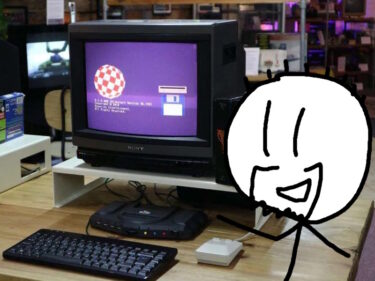
I made the right choice hooking up a keyboard and mouse to the MiSTer from the get-go. Having it ready to go as both a classic computer and a games console really showcases the flexibility of the device — and the many generously provided USB ports on the Multisystem 2 mean there's no real swapping things around needed. I'm definitely looking forward to getting back into some proper classic computing with the system — I might see if I can make more sense of the programming tutorials in magazines than I could as a kid, and actually see if I can learn something along the way. We'll see.

For now, I'm very happy indeed. It was a lengthy process to get everything setup — and it doesn't have to be quite as lengthy as what I did, but I wanted a fairly "future-proof" setup — but now I can just flip a switch and be in retro heaven without having to swap cables around or remember where I put fifteen different power adapters. Plug and play! It'll never catch on.


Want to read my thoughts on various video games, visual novels and other popular culture things? Stop by MoeGamer.net, my site for all things fun where I am generally a lot more cheerful. And if you fancy watching some vids on classic games, drop by my YouTube channel.

If you want this nonsense in your inbox every day, please feel free to subscribe via email. Your email address won't be used for anything else.
#oneaday Day 444: The 60Hz Squish

The MiSTer is nearly completely set up! It's just copying over a shitload of PlayStation and Saturn games, and then it will be ready to go. I got a replacement SCART cable today, and I'm delighted to report I can now get an absolutely lovely picture on my beloved old CRT, which means the MiSTer can be used to enjoy a retro gaming experience as "authentic" as it's possible to get without using real hardware.

I've elected to load the system up with primarily PAL-format ROMs. I know some folks will get sniffy about this, but I have three reasons for doing so.

Firstly, I live in the UK. PAL gaming is what I grew up with, and part of getting the MiSTer set up and working is about recreating that classic experience of using computers and consoles on this Sony Trinitron TV — which is the same one we used to run the Atari ST through back at my parents' house, and which is the same one I took with me to university and played PlayStation games on, right up until I bought an absolute monster of a CRT from a local second-hand shop in my second year at university. That TV, sadly, died after probably one too many house moves (it moved to three different houses in Southampton, then another in Winchester before finally giving up) but the CRT I'm using now is still going almost as strong as it ever was.

Secondly, this TV has a peculiar idiosyncrasy where it is capable of displaying a 60Hz signal, but rather than switching "modes" to do so, it instead just takes the reduced number of lines from a 60Hz/NTSC signal (480 vs 576 for PAL) and plonks them in the middle of the screen as-is. This means that, in stark contrast to slightly later TVs with marginally better 60Hz compatibility, where switching to 60Hz ensures you get a screen-filling picture and slightly better frame rate with more prominent scanlines, running 60Hz systems and games on my particular TV results in varying degrees of picture squish, ranging from "a bit" to "I never knew the ColecoVision had a 16:9 mode". As such, since I'll be primarily using the MiSTer on this CRT, the optimal experience for me is actually to use 50Hz versions of games.

Thirdly, I feel like to a certain extent, PAL gaming history gets a bit forgotten about. It was quite a challenge to track down EU/PAL-specific ROMsets for each console that I want to run on the MiSTer, but I took the time to do so, and I think it will have been a worthwhile use of my time to do so. A lot of complete ROMsets archived online these days are US-centric, and, sure, the 60Hz NTSC versions of games may, in most cases, be the "best" way to experience these games, but that doesn't mean the PAL experience should be erased from history. In fact, there are several cases where PAL versions of games were substantially different from their North American counterparts, with a great example being the Gex games on PlayStation; the voice of the titular character was completely different between the US and Europe, giving each version a very different feel. Several Gran Turismo titles, too, also had markedly different soundtracks between regions.

So yeah. Outside of a few NTSC-specific things I'm loading on where there was no PAL equivalent (we missed out on a lot of RPGs until the PS2-3 era!) this MiSTer is primarily going to be a celebration of the PAL experience. And I'm really looking forward to this danged copy job being over and done with so I can actually sit down and play with the thing!

Still, this is what I signed up for. I knew it was going to take a while to get everything up and running. It's going to be well worth it when it's done.


Want to read my thoughts on various video games, visual novels and other popular culture things? Stop by MoeGamer.net, my site for all things fun where I am generally a lot more cheerful. And if you fancy watching some vids on classic games, drop by my YouTube channel.

If you want this nonsense in your inbox every day, please feel free to subscribe via email. Your email address won't be used for anything else.

#oneaday Day 443: MiSTer whatchacallem whatcha doin' tonight

So! My MiSTer Multisystem from the lovely folks at Heber and the Retro Collective arrived yesterday, and… I've been spending a lot of time setting it up. This was entirely expected, so I'm not annoyed or anything — though I was a tad surprised that the update_all script took nearly 24 full hours to complete. It's my fault for running it on Wi-Fi in the room that has the weakest Wi-Fi signal in the whole house. I thought before I started, "I wonder if I should do this over Ethernet," and I knew on some level even then that the answer to that was an emphatic "yes", but still.

Anyway, it is done now, and now I have a working, functional MiSTer Multisystem up and running. There's one thing I haven't been able to test thus far, which is analogue connectivity to a CRT TV — it seems the cable I bought to use with the MiSTer isn't quite right, so I have some replacement options arriving tomorrow — but from a very brief play earlier, I'm very impressed so far. While there is plenty of scope for nerdy nerds to get deep into the weeds tinkering with things and trying to "optimise" their experience, after running update_all and installing some games, the whole thing is remarkably straightforward and easy to use, particularly if you're just connecting up to an HDMI display.

On the offchance you don't know what a MiSTer Multisystem is, it's… well, it's sort of complicated. MiSTer itself is an open-source project that uses FPGA hardware emulation to recreate the experience of using classic computer and gaming hardware. It is different from software emulation for reasons I don't entirely understand, but the gist of it is that an FPGA chip can be reconfigured by issuing it commands, and in doing so you can make an extremely accurate simulation of a physical piece of electronic hardware. The upshot of it is that FPGA emulation has the potential to be much smoother and more authentic to the original experience than software emulation is.

The MiSTer Multisystem — or, to be more accurate, the MiSTer Multisystem 2, which is what I've got — is an attempt to make MiSTer more accessible. For many MiSTer users, putting together a MiSTer system involved getting a DE-10 Nano little computer-on-a-board thing, plus some I/O boards, putting them altogether in a stack and then installing the software on an SD card. As hardware projects go, it's not especially complicated or super-expensive, but there was definitely a market for a more "consolised" experience. MiSTer Multisystem 2 takes all the pain out of the actual hardware side of things in that it's a ready-to-go console available in both digital (HDMI) only or digital-and-analogue (HDMI plus VGA and/or SCART) forms. The whole thing is pre-assembled, no need to build anything, and it's also not reliant on the DE-10 Nano, either, which can sometimes be tricky or expensive to track down.

You still have to set the software side of things up yourself, though this is made pretty straightforward through the aforementioned update_all script, which connects to the Internet and downloads pretty much everything you need apart from the actual games themselves — and even then, it will even download the arcade games that the MiSTer's various "cores" support, so once you've run it, you'll have things to play, ready to go, even if you don't add any of your own ROMs and disc images to the system.

MiSTer itself is modular and expandable, and so too is the Multisystem 2. A cartridge slot allows for the connection of "SNAC" (Serial Native Accessory Converter) cartridges, which allow you to plug in original control pads and accessories for a variety of systems, plus the system has 7 USB ports for connecting controllers, keyboards, mice, external storage devices, Wi-Fi dongles and any other gubbins that might be useful. There are also some slots inside the system itself, accessible by removing the special flaps at the side, though exactly what those are used for is not yet known.

But anyway! Once you're up and running, you pick something from the main menu to play, the "core" for the device the system is emulating will boot up, and then you're away. Some excellent video options allow for some quite convincing CRT emulation on HDMI displays, and if you have a model that supports analogue video output, you should be able to just plug in an RGB SCART cable and connect to a suitable display. I'm hoping to take advantage of that side of things when my new cables arrive tomorrow.

I have a lot of games still to transfer to the system, but I think I've earned a bit of a play for the rest of this evening. Hopefully by the end of tomorrow I'll have this thing up and running and ready for a whole heap of fun!


Want to read my thoughts on various video games, visual novels and other popular culture things? Stop by MoeGamer.net, my site for all things fun where I am generally a lot more cheerful. And if you fancy watching some vids on classic games, drop by my YouTube channel.

If you want this nonsense in your inbox every day, please feel free to subscribe via email. Your email address won't be used for anything else.
#oneaday Day 399: Tiresome

It is the weekend, and I am tired. It has been a very busy period at work for various reasons. It would probably be unprofessional of me to explain further, but suffice it to say for now that the struggles we've been dealing with have been external in nature, and the people who've been pestering us about certain things for years had better bloody well appreciate what we've been getting up to!

It's tiring, but it's also worthwhile. I spent a goodly portion of this afternoon just Getting Things Organised, and it was a lot more satisfying than I thought it would be. I had been putting off this particular specific task of Getting Things Organised for a while, but I had said I would get it done by the end of the week, and that's exactly what I've successfully done. My Things That Are Now Organised will hopefully help me out in the day-to-day running of my job, and, with any luck, make my life a bit easier. We shall see.

There's lots of exciting things coming up for Evercade. The new Super Pocket devices are out now, bringing with them a built-in selection of NEOGEO and Data East games. I've also got an early copy of our first NEOGEO cartridge, so I will be looking forward to sitting down and actually taking some time to enjoy these games, rather than writing documentation for them or testing them. I'll also be spending a bunch of time playing Roguecraft DX when that comes in, but we haven't had the advance copies for that just yet.

Then there's all the stuff we haven't announced yet! There are some great things coming later in the year and early next year. I've been working on some of the first cartridges that we have planned for 2026 recently, and it's going to be another fantastic year. Evercade really has gone from strength to strength since it launched against all odds in 2020, and I'm proud to be part of the whole thing. If you'd told child me that one day I'd be working on producing official rereleases of some of my all-time favourite games, I'm sure he'd be delighted. He might wish that this role had come about a little sooner in my life, but, well, we can't have everything, and at least I can enjoy it now. I am right in the target audience for the products I'm working on.

I'm looking forward to a nice break, though. I think I mentioned the other day that Andie and I are going to Center Parcs again later this year, in September. It's going to be lovely to have some time away, particularly as we're staying for a little longer than we have done on previous visits. It will hopefully be time to thoroughly unwind and relax before having to jump back into our respective job roles, both of which have been a tad stressful for a while!

Still, rather what I've been doing than… well, pretty much anything else I've done in what can laughably be called my "career" to date. I'm doing something I (mostly) enjoy in a field I care deeply about, my contributions are appreciated, and I'm paid well for the privilege. Not a lot to complain about, aside from people being rude on social media. Things could be (and have been, at various points in my past) a lot worse!

Anyway. I'm off to go start enjoying my weekend, perhaps with a few of those NEOGEO games. I never have finished Metal Slug before… perhaps it's time I gave it a proper shot?


Want to read my thoughts on various video games, visual novels and other popular culture things? Stop by MoeGamer.net, my site for all things fun where I am generally a lot more cheerful. And if you fancy watching some vids on classic games, drop by my YouTube channel.

If you want this nonsense in your inbox every day, please feel free to subscribe via email. Your email address won't be used for anything else.

#oneaday Day 396: The purity of early gaming

I consider myself quite fortunate in that I'm able to enjoy a full spectrum of video gaming, ranging from the very earliest titles up to the most modern releases. The only part of gaming that really leaves me cold is multiplayer-centric titles — I just find they don't hold my interest in the long term.

I feel particularly blessed to be able to enjoy stuff from the early '80s, because I know the primitive presentation of stuff from this era can be a turnoff to some. But I absolutely love it; settle me down in front of a bunch of Atari 2600 or Intellivision games — or, indeed, home computer games from the era — and I can quite happily fill an evening just as well as I could playing a modern, complex title.

As I've grown older and spent a significant portion of my life writing about and making videos about games, particularly those from this early era, I feel like I have a solid appreciation for simple but solid design, and games that are inherently designed to be highly replayable. Sure, you can't "finish" a lot of these games in the same way as modern titles, and to some that's inherently less satisfying, but you have to look at them a bit differently.

Take one of my favourite games of all time, River Raid, for example. River Raid is a vertically scrolling shoot 'em up that, in theory, goes on forever. You can't "beat" River Raid. But you can develop a sense of satisfaction from attaining a high score, or reaching a particular level when starting from the beginning, or overcoming a specific challenge that has given you grief for a while.

But it's not even about making progress sometimes. Sometimes it's just about engaging with an inherently pleasing experience. The best early '80s games feel good to play. They achieve this through good handling, effective presentation, a feeling of fairness, and plenty of other elements besides. I enjoy playing Night Stalker on Intellivision not in pursuit of high scores, but simply because it feels nice to play it.

So with that in mind, for this trip down to the office and the accompanying overnight stay — this time at my parents' house because my usual hotel was fully booked — I've brought nothing but early '80s fun to occupy myself. And before I head off to sleep, I think I'll enjoy a round or two of some all-time favourites. Maybe some Cloudy Mountain to start off…?

#oneaday Day 394: Motivation located

I finally got together the motivation and energy to make some videos, which you'll be seeing over the course of the next little while over on YouTube. I made four in total, which I'm pleased with, as that means I don't need to be in a rush to make any more for a little while. Not that I ever "need" to be in a rush, but I've felt in a bit of a rut with the channel recently, and have really struggled with motivation.

Not so today, though! I think it helped that it's rained a fair bit over the last few days, and that's cooled things down a bit, meaning it's not quite so unbearable to just exist. It's amazing quite how much energy a bit of heat can sap from you; I'm sure I could have probably mustered up some energy to do something vaguely productive if I really cared that much, but I think the "break" also did me a bit of good and revitalised my enthusiasm for some of the things I want to cover.

Today's videos see me returning to the Atari 8-bit for the first time in a while. Every time I come back to the humble 8-bit after spending a bit of time away, I'm reminded how much I love that system. Seeing its fonts is like coming home; it's a comforting, warm blanket that makes me feel thoroughly pleasant. I'm sure part of this is nostalgia talking, but I do genuinely mean it when I say I find it a comfort. I got to know the Atari 8-bit and its capabilities so well when I was a child fiddling around with Atari BASIC that just the sight of half-height, double-width Graphics 1 characters is enough to make me smile today. Throw in the games I grew up playing, and, well, that's a happy place I feel like I should probably spend some more time in, judging by how much I enjoyed today's recording session.

The games I covered today are Donkey Kong, Donkey Kong Junior, Mountain King and Stealth. There was no particular reason for picking these, aside from knowing that Donkey Kong Bananza is on the way for Nintendo Switch, so I thought it would be fun to look at the "Nintendo on Atari" games; Mountain King I chose because I happened to rewatch Classic Game Room's review of the 2600 version the other day, and Stealth… I can't quite remember what brought that to mind recently, but it's a game I've always loved. Or, perhaps more accurately, I always loved its prototype version, Landscape, which we had on one of our Big Box of Pirated Disks that everyone had back in the 8-bit era.

I haven't published any of the videos yet, but make sure you're subscribed over on YouTube if you want to see them when they go up. I'll likely put one up tomorrow, and the rest over the course of the next little while. I have my monthly trip to the office on Tuesday night to Wednesday this coming week, so that will be… fun, probably? I don't relish the long drive every time I have to do this visit, but it is always nice to see everyone. Unfortunately I don't get to stay in a hotel this time because the usual place I book was full up this time around, and the local Travelodge wanted £120. I'm not paying over a hundred quid to stay in a fucking Travelodge, particularly with how they've repeatedly fucked up bookings I've tried to make with them in recent months. So anyway. I will be staying with my parents and delivering my Dad his belated Father's Day gift, which I inadvertently delivered to myself instead. Whoops.

Anyway, videos are uploaded, eyelids are drooping and it's a school night so I guess I better get to bed. Enjoy the vids once they're up!


Want to read my thoughts on various video games, visual novels and other popular culture things? Stop by MoeGamer.net, my site for all things fun where I am generally a lot more cheerful. And if you fancy watching some vids on classic games, drop by my YouTube channel.

If you want this nonsense in your inbox every day, please feel free to subscribe via email. Your email address won't be used for anything else.
#oneaday Day 391: Step out of my Game Room

Every now and then, I like to hit the "Random Post" button on this site and see what I was writing about at some point in the past, be it a few weeks ago or, in some cases, years ago.

Today, the Random Post button threw up this post from early in my first run around the #oneaday track. For those too lazy to click (I know you are, everyone is these days), it was a post about the then-imminent arrival of Game Room on the Xbox 360, and some feelings of positivity towards the whole thing.

For the unfamiliar, Game Room was a piece of software for the Xbox 360 that allowed you to kit out a virtual arcade and populate it with not only virtual tat, but also real games. The software was free, but in order to get any real use out of it, you had to buy either individual games or bundles of games. These games could then be placed into your arcade as "machines" that you could go and play, and, in an attempt to get people to care about Xbox Avatars, you could sometimes see virtual representations of people from your friends list wandering around and playing the games.

What was rather interesting about Game Room for me at the time was the fact that it included not only arcade games — which we already had a few of in downloadable form via Xbox Live Arcade — but also Atari 2600 and Intellivision console games. I had a passing familiarity with some 2600 hits at the time, but Intellivision was completely alien to me, so I was fascinated by the prospect of discovering some new favourites from the dawn of gaming.

There were a lot of objections to Game Room prior to its release, though. Indeed, that post was partially in response to a post on the official Xbox forums (RIP), where an Xbox player called "A Patch of Blue" described the upcoming programme as "a shameless attempt to siphon off Microsoft Points by dumping regurgitated content into our laps with a pretty bow on it". Their primary objections were that the games cost an equivalent of $3 each (a bit tight, I feel) and also that "guests" in your arcade could only play a game once before having to pay-per-play to the tune of 40 Microsoft Points (approximately 50 cents) unless they went away and bought it themselves.

Here's part of my response:

The biggest concern people have with digital distribution is that one day, your content will be switched off and, despite having paid for it, you’ll no longer be able to use it. This is a fair concern, as no-one likes splashing the cash on things that they won’t be able to use at some point in the future – but when you think about it, in the world of tech, this is nothing unusual. Products come and go, specifications increase, chipsets change – and at some point it’s necessary to leave the old behind. Did people complain that the Amiga wasn’t backwards-compatible with the Commodore 64? Do music enthusiasts complain that it’s getting harder and harder to find a cassette deck to play those old albums that you only bought on cassette because they were cheaper?

Well, yes, they probably do, but that’s beside the point. What I guess I’m trying to say is this: isn’t the “built-in obsolescence” of digital distribution the same thing? I have a stack of PC games in a box here, some of which it isn’t possible to run any more. Okay, maybe with some tweaking and playing with software like DOSBox it’s possible to get it going – but to a (for want of a better word) “casual” user, they’re defunct and obsolete. The only difference with potentially expiring digitally distributed products is that there’s no workaround like DOSBox. Once the content’s gone, it’s gone. And yes, that’s not a great thing, but it’s not something to be surprised about.

Oh, dear 2010 Pete. How silly you were. How foolish. How you should have probably listened to A Patch of Blue. Because you can't play anything you bought for Game Room any more, can you? No, you can't, because they switched the servers off, and that means, for some reason, you can't play any of the stuff you paid for.

Actually, I do maintain that Game Room was a lot of fun while it lasted. In particular, I adored the real-time leaderboards, because it was a genuine game-changer in stuff like River Raid for 2600 to see yourself climbing the rankings as you played. No-one has done anything quite like it since; even Hamster's otherwise excellent Arcade Archives releases on modern platforms only update the leaderboards after you've completed a run and specifically told it to update your score.

That sort of stuff, being server-driven, obviously couldn't last forever. But completely switching off the entire application, meaning you could no longer play anything, even single-player stuff with no leaderboard functionality, was kind of shitty, and I'm still a tad bitter about it.

Game Room was a great idea for numerous reasons. As I point out in that post from 2010, Game Room was the first real attempt to put out a fully legal, officially licensed, console-based multiplatform "emulator for the common man" system out there. There was no faffing around with configuration, no diving into dodgy ROM sites looking for the games you wanted. You just fired it up, bought the stuff you wanted, played, and enjoyed the features it offered. It's unfortunate that it's no longer accessible, as there was no "end of life" plan beyond "just turn it off".

These days, we have other options for officially licensed ways to play classic games, including my place of work, the aforementioned Arcade Archives series, compilations for modern platforms and numerous other products. Most of these have been designed in such a way that they will continue to function indefinitely — assuming you have them downloaded, in the case of digital products like the Arcade Archives games — which is an improvement over Game Room's completely closed, proprietary and online-dependent ecosystem.

I still miss Game Room, though. I'd love to see someone take its really good ideas — chief among them that real-time leaderboard thing — and run with them in a way that's a bit more considerate to players over the long term, and compliant with things like the Stop Killing Games initiative.

Hell, this sort of thing is the exact situation Stop Killing Games is seeking to prevent happening again: it's not saying that Microsoft would have needed to run things like the leaderboard servers indefinitely, because obviously that's not practical or cost-effective. But in an ideal world, I'd still be able to open up Game Room today and still play all the games I bought to use with it. As it stands, the money I spent on it — and I seem to remember I spent a fair bit on it — now has absolutely nothing to show for it.

So yeah, 2010 Pete. I admire your optimism, but I'm sorry to say that it was misplaced. Still, I know you enjoyed it while it lasted, so it's not a complete loss. But I hope you learned your lesson.

I did.


Want to read my thoughts on various video games, visual novels and other popular culture things? Stop by MoeGamer.net, my site for all things fun where I am generally a lot more cheerful. And if you fancy watching some vids on classic games, drop by my YouTube channel.

If you want this nonsense in your inbox every day, please feel free to subscribe via email. Your email address won't be used for anything else.
#oneaday Day 358: Retrofest 2025

Today I went out! All by myself and everything. Specifically, I went to Retrofest 2025, a new event held in sunny Swindon that promised a room full of sweaty old men and their peculiar computers, and delivered on that promise in spades. While the event was short on things to actually buy and come home with, it was thoroughly interesting to see some of the things people (and a few organisations) had chosen to exhibit from their personal collections.

I took a few photos from throughout the day. This isn't a comprehensive rundown of everything by any means, but I'll attempt to remember what everything was and tell you a bit about it. In no particular order:

Those who know me well will know that I have a major soft spot for Philips G7000 "Videopac Computer", a games console with a membrane keyboard. This is the "PS5 Pro" equivalent of that system: the G7400, which only came out in France to my knowledge. It runs all the G7000 games, including enhanced visuals for some of them, as well as more advanced titles specifically designed for it. That big grey lump on the back of it is a module that attempts to turn it into more of an actual computer, featuring additional RAM and Microsoft BASIC for programming.

Sadly, this wasn't up and running to play with, but it was a pleasure to actually see one.

Here's an Atari XE Games System, colloquially known as the XEGS. I've never actually seen one of these in the flesh. This was an attempt by Atari post-ST to revitalise the flagging 8-bit range by rejigging the 65XE computer into a games console with a detachable keyboard. Unlike the 5200 from several years earlier, the internals of the XEGS were identical to the Atari 8-bit home computers, so you could use pretty much any software and peripherals with it.

If this all sounds a bit like Atari didn't really know what they were doing at the time… you would be absolutely right. This thing is still cool, though. I like how the function keys look like those flying saucer sherbet sweeties.

I was really interested to see this, a device known as both the CreatiVision and the Dick Smith Wizzard. Those who follow my videos may recall I saw this device advertised in an early issue of Page 6 magazine and had never heard of it. I asked the owner, Quang from Asobi Tech, about it. Apparently it's an Italian system from a roughly similar era to the ColecoVision (as one might expect from the design). Its capabilities are also roughly similar — which in turn means that it has similar capabilities to the MSX standard — but it's not cross-compatible with either the ColecoVision or the MSX itself.

Its notable feature is the full keyboard that spans the two controllers. These can either be used as an individual set of buttons for two players (presumably with overlays available) or "docked" into the system for a full-width keyboard of sorts.

The system wasn't a success, but it somehow made it to Australia, which is where the Dick Smith branding came from. Dick Smith was basically Australia's Alan Sugar, and he loved putting his mug on everything he sold, and the "Wizzard" was no exception.

Here's a fully working Asteroids Deluxe cabinet, the middle-sized one that lacks the "floating" backdrop of its larger counterpart. I spent quite a lot of time playing this today, and it turns out I don't dislike Asteroids as much as I thought I did.

Part of it was down to playing with those lovely leaf-switched arcade buttons and hearing the sound booming out from the internal speakers. But I just found myself enjoying the game in general a lot more than I have in the past.

The owner of the Asteroids Deluxe cabinet, streamer Rage Against The Retro, also brought a selection of other systems, all playing Asteroids. On the left there is a Vectrex, and situated next to it is an Apple Macintosh Plus. There's an Amiga A600 just to the right, also.

It occurred to me when playing both the Asteroids Deluxe cabinet and the Vectrex that I'd never actually played games on an authentic vector monitor before. The effect (which absolutely does not come through on either photos or video) is stunning, particularly the piercing brightness of your shots. This is one thing that emulation absolutely cannot do complete justice to.

Here's two very tiny TVs, both hooked up to games systems. The bigger one was hooked up to the A600 from the previous image, while the teeny one was attached to a Spectrum. Both were playing variants of Asteroids; the Amiga had follow-up Blasteroids, while the Speccy was playing a decent recreation of the arcade original.

More Asteroids! This time we've got an Atari 7800 playing a recent(ish) port, plus there's the Spectrum running one of the tiny TVs. Note the custom arcade controls Rage had set up to mimic the arcade version's control panel.

Here's some interesting rarities. On the left, we have two variations of the COMX-35 computer, which was designed to be low-cost, but which seemingly failed to leave any impression on the industry whatsoever. At least part of that may be down to the fact that it used the distinctly non-standard RCA 1802 processor while most other home computers of the era were using either the Zilog Z80 or the MOS 6502. It also had a peculiar 35K of memory. But it did have a built-in joystick, making it a nice little games machine.

On the right, we have Bandai's RX-78 "Gundam" home computer. And yes, it was named after the giant robots in an attempt to make it more appealing. This completely failed, however, as the system disappeared quickly with only about 20 pieces of software available in total. It looks neat though!

Here's a closer look at the COMX-35, with its chiclet keys and its fun quasi-industrial design. The more I look at this thing, the more I like its overall aesthetic.

And the RX-78 up close, too. Note the BASIC cartridge plugged into the back, ready for 10 PRINT "FARTS" 20 GOTO 10 shenanigans, and the matching joystick to the right.

This beauty is a Commodore RX-64, a "luggable" version of the Commodore 64 with integrated keyboard, floppy disk drive and monitor. Unsurprisingly, this beast of a thing completely failed on the market due to the fact it weighs ten and a half kilos and cost over a thousand dollars in the mid '80s, when the C64 itself was less than half that price.

It is a lovely thing though, and Commodore enthusiasts seem to enjoy it a lot. I can see why — it's fun to have everything integrated, and despite a few differences in the OS ROMs, it's mostly fully compatible with disk-based Commodore 64 software. It can't load tapes, though, as it has no tape controller at all.

This may look out of place, but the show was at Swindon's "STEAM" railway museum, and this little display was part of a display on train sets run by digital controllers from the 1970s. I didn't look into this too closely, but as someone who occasionally had the opportunity to play with Hornby trains when I was little (my family had a nice collection stuffed up in the loft that occasionally came down for an outing), it was nice to see this.

Here's some prototype Acorn machines. Without these, you might not have a smartphone! Yes, that's right, the "A" in "ARM" was originally for "Acorn", though now it is for "Advanced". ARM processors first appeared in Acorn Archimedes machines, which were a generation beyond these initial prototypes; these things would have ultimately become the BBC Micro and the Electron.

This is a teletype machine! This was an incredible amount of tactile fun to type stuff on, and unlike a regular typewriter it would type things back at you! You could also run a program on it that would punch out a message on the roll of paper tape to the side. I don't really know what this was "for", as such, but it was very cool!

Here's a pre-production prototype of the Dragon 32, the computer that Americans know as the TRS-80. Well, there are a few differences, but they're pretty similar internally. I don't know much about this machine but it certainly has its fans on both sides of the pond.

This is a Commodore MAX. I don't really know what this is! Apparently this was a cousin to the Commodore 64 that was mostly sold in Japan. It has similar capabilities to the C64, but a lot less RAM and a really horrible membrane keyboard. It also lacks much of an internal OS on ROM at all, making it more of a games machine that can do a few computery things than a full-on home computer.

This is a Spectravideo device that allows you to program in BASIC on the Atari 2600. At least, it does if you can figure out how on Earth to actually type things on it, because it uses a weird keyword-based system where pressing a single key inputs a full command, similar to Sinclair's BASIC. This is another thing that I'd seen in a magazine in a video I'd made, but had no idea even existed until quite recently. A thoroughly interesting little thing, though!

Finally, here's probably the rarest thing at the show: a Mattel Aquarius II home computer. The Aquarius range was such a flop for Mattel that it was cancelled mere months after its release, and as such very few Aquarius II units made it out into the wild. We're talking like maybe 25 out there — and this is supposedly the only one known to be in full working order. It's owned by a chap who has been developing games for the system for a while — at this point, he has now made more games for the Aquarius range than were released for it in its original lifespan.


And that's that! It was a really fun day out, and I enjoyed it a lot. It was good to see some YouTuber friends, set a few high scores, have a play with some intriguing rarities and see what the retro enthusiast community in general was up to. Particular shout-out to this guy, who is doing near-arcade perfect ports to the BBC Micro, of all things. His Missile Command and Frogger were particularly stunning.

Anyway, now I am very tired so I am going to go and lie down. If you're in the Swindon area tomorrow, first of all, I'm sorry, and second of all, maybe try and pop in to Retrofest — I'm pretty sure there's still a few tickets available. You can find out more here.


Want to read my thoughts on various video games, visual novels and other popular culture things? Stop by MoeGamer.net, my site for all things fun where I am generally a lot more cheerful. And if you fancy watching some vids on classic games, drop by my YouTube channel.

If you want this nonsense in your inbox every day, please feel free to subscribe via email. Your email address won't be used for anything else.
#oneaday Day 356: Bellyachin'

Well, I didn't finish Kathy Rain 2. I think I'm on the last "day" of it, though, so I should have it all wrapped up by the end of tomorrow evening, I reckon. I could have probably pushed through it tonight, but I hadn't written this, and I hadn't done stupid social media things that I do every day (the "#365games" tag on Bluesky) and I have had a stomachache all day, so I thought I should probably call it a night.

Of all the aches and pains it is possible for one to experience, few are worse than a lingering stomachache, because while something like an achey back or joints can be at least temporarily relieved by moving around a bit, a stomachache stubbornly sits there and demands your full attention, even when you have a lot of things to do. And I had a lot of things to do today, let me tell you.

It was the Evercade 5th Anniversary Showcase today, during which we revealed two more NEOGEO cartridges, two cartridges from Taito (surely a pleasant surprise for everyone who thought Taito stuff was forever confined to built-in games on specific pieces of hardware), and a single-game cartridge featuring the truly excellent Roguecraft DX, an enhanced and expanded version of a very good (and award-winning!) Amiga game that came out last year.

It was a good show all round, and I think most people were happy. There were the usual moaners and complainers, but I'm pretty much just tuning them out at this point, because 95% of them are moaning and complaining about things we haven't said, just working on doomsaying and assumptions. And when someone's being like that, it's frankly not worth getting involved.

I'm really excited about the stuff we've got coming up this year. It's a relief to have been able to let the cat out of the bag for some of it today, but there's even more coming later in the year that I think people are going to be even more excited and surprised by. Evercade has been going from strength to strength in terms of the quality licenses we've been able to agree each year, and this year in particular is a string of big names. I obviously can't tell you what the unrevealed ones are as yet, but if you're into your retro gaming, you'll be pleased to see them, I can tell you that.

I should probably stop typing before I say anything I shouldn't, and go and lie in bed groaning until this stomachache goes away. It is small consolation that Andie has also been suffering today, suggesting to me that something we both ate yesterday probably wasn't good, likely the burgers we had for dinner. That also, hopefully, means we'll both be feeling better tomorrow. But for now, I anticipate an uncomfortable night ahead, perhaps with a side of thunderous farting. Yes, I could definitely go for a thunderous fart or two right now.


Want to read my thoughts on various video games, visual novels and other popular culture things? Stop by MoeGamer.net, my site for all things fun where I am generally a lot more cheerful. And if you fancy watching some vids on classic games, drop by my YouTube channel.

If you want this nonsense in your inbox every day, please feel free to subscribe via email. Your email address won't be used for anything else.

#oneaday Day 351: Mission accomplished

I did what I set out to do today, which was to record the voiceover for my MotorStorm video (I'd already taken the footage) and edit it together, plus record a Let's Play for The Sword of Hope. I actually ended up liking The Sword of Hope enough to record three episodes, and I'm going to play it through to completion, so some more recording of that is on the agenda for tomorrow.

This is good. This was fun. Sometimes what you need to do is just do something a bit different from the norm to get you reinvigorated and reinspired to work on things that are important to you. The fact I've just made a video on a PS3 game and a Game Boy game doesn't mean I'm abandoning the home computer stuff on my channel — it just means that I felt like doing something else for a bit, so I'm doing that. It is, after all, my channel, and while I'm creeping close to 4,000 subscribers now, none of my audience is so entitled that they've ever complained when I felt like taking a hard turn into something completely different for a while.

I've also decided to attend the RetroFest 2025 event in Swindon next weekend. My blog post a little while back about The Cave got me thinking that it's been a long time since I actually got out of the house to see some of the equally nerdy old men who also make YouTube videos about old computers from various different perspectives, and it would be nice to actually be sociable for once. Yes, I may have a cripplingly low sense of self-esteem due to my physical appearance repulsing me, but these folks are all nice people, and I had a nice time the last time I spent the day with them, so all good.

I also grabbed Roadcraft on PC yesterday, which seems to be a pleasantly relaxing sim about driving big Tonka trucks through the mud, laying roads and establishing infrastructure. I liked the developer's previous game Snowrunner, and this is a similar sort of affair, only with a bit of a different focus. The controls are simpler than Snowrunner, too, which has made some particularly hardcore simheads a bit sniffy about the new games, but honestly it's a change for the better. I still don't really know what "differential lock" does, but at least I can remember what button turns it on and off now.

Anyway. My MotorStorm and The Sword of Hope videos are all rendered now, so I'll be posting those over the course of the next little while. And I'll be recording some more The Sword of Hope — and maybe some other bits and pieces, too — tomorrow. So I should probably go get some sleep now, because, as ever, I have left this to the last minute. One day I will get into the habit of writing this at a time well before my brain starts entering its shutdown mode, but today is not that day. So, dear reader, I will bid you farewell before IT'S NOW SAFE TO TURN OFF YOUR PETE


Want to read my thoughts on various video games, visual novels and other popular culture things? Stop by MoeGamer.net, my site for all things fun where I am generally a lot more cheerful. And if you fancy watching some vids on classic games, drop by my YouTube channel.

If you want this nonsense in your inbox every day, please feel free to subscribe via email. Your email address won't be used for anything else.