
#oneaday Day 299: Switch 2 Tax

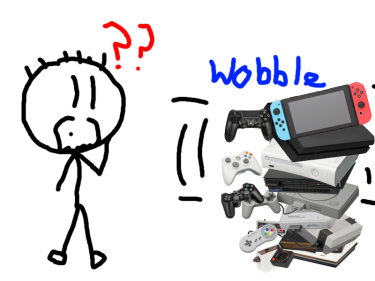
It was the Nintendo Switch 2 reveal today. And while there's a lot to like about the system — 1080p and up to 120fps handheld, 4K docked, HDR, nifty online socialisation functions, upgrades to certain Switch games that include both a performance boost and new stuff for the games — one thing is giving me a lot of pause that I wasn't feeling before the announcement.

And that one thing is the price of games. As someone who collects physical video games, I naturally will want to continue doing that for any new console hardware I pick up. But the new Mario Kart is seventy-five fucking pounds for a physical version, and the new Donkey Kong game is sixty-six quid.

Donkey Kong is just on the borderline of what I'll consider paying if the game is legitimately good (and it's a real borderline case here as I don't really like Donkey Kong as a character), but more than £70 for a game that will almost certainly also have paid DLC is well over that line for me. I'm sure Mario Kart World, as the new game is called, will be very good, and I'm quite curious to play it — but £75 to have a copy on my shelf (and not much less than that for a digital-only version) feels… excessive. And I'm someone who voluntarily pays £35 to limited-print companies for £10 indie games just so I can have them on my shelf.

This feels like a mistake for Nintendo. It feels like it might put all the goodwill they built up with the Switch at serious risk of unravelling. I'm sure they will justify it by saying the new cartridges are higher capacity, the tech is more advanced or whatever, but it still feels like… a lot.

Couple that with the fact that while the launch lineup looked neat, there wasn't a singular game that made me go "yes, give it to me, I need this right now". We had a bunch of very welcome ports of stuff like Hitman: World of Assassination, Cyberpunk 2077, Final Fantasy VII Remake Intergrade (though no mention of Rebirth, interestingly) and numerous others, a Bravely Default remaster that I've been hoping we'd see for quite some time, the aforementioned new Mario Kart and Donkey Kong games, and a few other bits and pieces that were perfectly nice enough, but not really "system sellers" for me.

Not yet, anyway. I have no doubt I'll probably end up with a Switch 2 eventually. But today's announcement makes me feel like I probably don't need one at launch. Probably. Probably.

There's a few days until preorders open. I will have to mull it over quite seriously. Quite seriously indeed. In the meantime, though, it's not as if I'm short of regular-ass Switch games to play, including a selection of pretty chunky RPGs I still haven't gotten to.

So we'll wait and see, I guess. It was a good presentation, and there's a lot to like about Switch 2. But I feel like a lot of people who were all set to preorder day one are now having very serious thoughts about the situation, just like I am. I feel like this should have been an easy win for Nintendo, but as it stands, they could potentially have a problem here.


Want to read my thoughts on various video games, visual novels and other popular culture things? Stop by MoeGamer.net, my site for all things fun where I am generally a lot more cheerful. And if you fancy watching some vids on classic games, drop by my YouTube channel.

If you want this nonsense in your inbox every day, please feel free to subscribe via email. Your email address won't be used for anything else.

#oneaday Day 297: Transgender Day of Visibility - Video Game Edition

It is, apparently, Transgender Day of Visibility. My Bluesky feed has been festooned with cyan, pink and white banners all day, so the "visibility" part is definitely doing all right — but, of course, there is still a lot of work to do in terms of trans acceptance, particularly with the steps backwards in tolerance and inclusiveness that the United States administration appears determined to go through with right now.

So with that in mind, I hope no-one will find this patronising or anything, but I thought I'd highlight some trans game developers I've become familiar with over the years and point you in the direction of some of their works. I'm not going to go too deep into their respective histories, because 1) those histories are pretty well documented elsewhere online, where they have been considered to be anybody's business, and 2) if they aren't, it's not really anyone's business. So today we will mostly be focusing on their accomplishments.

Danielle Bunten Berry

Perhaps the most famous name on this admittedly fairly short and hastily assembled list, Dani Bunten Berry was responsible for some of the most ambitious, audacious games of the early 8-bit microcomputer era.

Her most famous work is probably M.U.L.E., an economic simulation that began life on Atari 8-bit and was subsequently ported to a variety of other home computer and console systems. There have also been several attempts to bring M.U.L.E. to the tabletop to varying degrees of success, but part of M.U.L.E.'s genius is that it can only really be done justice on a computer.

People are still playing M.U.L.E. in its original form today. People are playing hacked versions that allow online multiplayer. There have been several modern ports of the game. It's a widely beloved game with good reason — don't let that "economic simulation" descriptor put you off. It's easy to pick up and straightforward to play, and every game is a little bit different — particularly if you're fortunate enough to play it with other human players. A four-player game of M.U.L.E. is very different to a single-player game against three computer opponents.

That's not the only amazing game to her name, though. She also made Seven Cities of Gold, one of the first ever open-world sandbox games. Casting players in the role of Spanish explorers, the game tasks you with just… well, exploring. There was no set goal, no "right" or "wrong" way to play; just a set of mechanics for you to engage with, and the rest of your time with the game would be spent creating a unique emergent narrative all your own.

Dani Bunten Berry was sadly taken from us in 1998, but her legacy lives on, both through her classic games that are still being enjoyed to this day, and through the games that they inspired.

Cathryn Mataga

Perhaps not quite as well-known a name as Dani Bunten Berry, Cathryn Mataga has nonetheless given us some excellent games over the years, beginning with the 8-bit microcomputer titles Zeppelin and Shamus, and moving on to work on a variety of excellent role-playing games, including the original 1991 MMO version of Neverwinter Nights, and several Dungeons & Dragons games: Gateway to the Savage Frontier, Treasures of the Savage Frontier, Stronghold, and Dark Sun Online: Crimson Sands. She also worked on Rampage 2: Universal Tour, but we won't hold that against her.

One of her most notable achievements was the Game Boy Color version of questionable "classic" laser disc game Dragon's Lair. Unlike the original Game Boy version, which was actually a reskinned Spectrum game port, the Game Boy Color version was more akin to the Atari ST and Amiga versions, which recreated the video sequences of the laser disc original with enormous, screen-filling sprites overlaid atop static backdrops. The result is a game that is still… well, it's still Dragon's Lair, but the technical achievement on a cart-based 8-bit handheld format is absolutely something else.

Rebecca Heineman

Rebecca Heineman is arguably best known as one of the first ever video game tournament champions, but she is also a talented, experienced and prolific developer and writer. After winning the Space Invaders tournament that gave her an initial taste of fame, she was offered writing and consultancy jobs, and as part of all this, still aged just 16, she happened to mention that she had, in her free time, successfully reverse-engineered game code for Atari 2600 games, as you do, allowing her to develop software for the machine without having to go through Atari. This early hacking experience got her a job at strategy game specialists Avalon Hill, where she made a game engine and base code for a variety of projects as well as a ton of documentation and a full game all of her own.

In subsequent years, she worked on a variety of projects, including the notorious Chuck Norris Superkicks for multiple platforms, but really hit the ground running when she co-founded Interplay alongside Brian Fargo, Jay Patel and Troy Worrell. At Interplay, she worked on a variety of projects as programmer, with probably the most high-profile among them being Wasteland and The Bard's Tale. She also designed The Bard's Tale III: Thief of Fate, Borrowed Time, Mindshadow and numerous others, before moving on to other projects.

She's still active in and around the industry today, and can often be found chatting on Bluesky. It's clear that the passion and enthusiasm for video games and development has never truly left her, and it's inspiring to see, to be sure.

Jennell Jaquays

I must confess, I didn't know this name before I looked at Rebecca Heineman's website, but after reading her story, I feel compelled to include her.

Jennell Jaquays, who was Rebecca Heineman's wife, is sadly no longer with us, as she passed on in January of last year. But her influence can be keenly felt in both the tabletop and video game spaces. Her early career included contributing to a variety of tabletop role-playing game publishers, with her Dungeons & Dragons modules Dark Tower and The Caverns of Thracia often held up as her most influential work. She is regarded as a pioneer of non-linear, flexible, multi-path scenario writing, as opposed to the more typical straightforward and linear scenarios that tended to be published at the time. Supposedly, the term "Jaquaysing" refers to creating scenarios with this sort of thing in mind — though this comes from an uncited reference on Wikipedia, so maybe take that with a pinch of salt.

In the video game space, she worked at Coleco, creating several of the excellent arcade game ports for that system, including Pac-Man and Donkey Kong. She put together one of the first actual development studios for making video games — at the time, many games were solo efforts — and went on to contribute to Epyx, Interplay and Electronic Arts. She had a stint as a level designer at id Software in the late '90s, working on Quake II and Quake III Arena, and went on to develop a pioneering video game education programme, as well as some particularly effective advocacy for LGBTQ+ folks that lead to Barack Obama taking action on banning conversion therapy back in 2015.


There are a lot of wonderful people throughout video game history. These are just four that I consider well worth celebrating. Of course, every day should be about including and accepting people regardless of their age, race, gender identity, sexuality or any number of other characteristics — but it becomes more and more clear by the day that we still have a lot of work to do. That's why days like today are so important — now, perhaps, more than ever in recent memory.


Want to read my thoughts on various video games, visual novels and other popular culture things? Stop by MoeGamer.net, my site for all things fun where I am generally a lot more cheerful. And if you fancy watching some vids on classic games, drop by my YouTube channel.

If you want this nonsense in your inbox every day, please feel free to subscribe via email. Your email address won't be used for anything else.
#oneaday Day 296: Hefty project

I put together a new video this weekend. Just the one, because it turned out being quite a beefy one to put together, but hopefully you will appreciate the effort once it's live, which will probably be tomorrow.

Inspired by the recent launch of the Fun Factor Podcast, I thought it was high time I got back to my retrospective look back over the issues of Page 6/New Atari User magazine that I started a while back, but only got around to doing two issues of. The reason I've been putting off doing any more may well already be self-evident: each "episode" of this takes quite a bit of time and effort to put together!

I mean, to my satisfaction, anyway. I could just turn the camera on, rabbit on about what's in the magazine and leave it at that. But one thing I like about doing these videos — and the bit that's particularly time-consuming — is that I can supplement the magazine's contents with actual footage of the things that are being discussed, whether those are programming techniques or the latest games. Getting together all that footage as well as recording the actual run-through of the magazine takes quite a bit of time all together — but the end result is worth it. I like these videos.

If you haven't seen the previous ones, by the way, may I present them below. Here's a look at the very first issue of Page 6, including the back story of where it came from and what it means to me:

And here's a look at the second issue, in which we observe the rise of a mostly forgotten piece of '80s slang: the adjective "keen" to mean "cheap" or "eminently reasonable", which I had never come across before. Well, I mean, I had, because I'd read this issue before, but somehow it had never struck me as odd:

As I note in the videos, these old magazines are of tremendous importance to me, and I'm happy to have the opportunity to be able to share them with everyone through the medium of video. The ability to splice in footage of the stuff being talked about allows you to get some context that you might not have had just reading the magazine back in the day, and this is a part of retro gaming culture that I'm always happy to celebrate in one form or another.

The new episode is uploading and processing right now, so it should be live on YouTube tomorrow as soon as I've done a thumbnail and all the other gubbins for it. Watch out for it then — stop by my channel and subscribe if you haven't already. Go on. You know you want to.


Want to read my thoughts on various video games, visual novels and other popular culture things? Stop by MoeGamer.net, my site for all things fun where I am generally a lot more cheerful. And if you fancy watching some vids on classic games, drop by my YouTube channel.

If you want this nonsense in your inbox every day, please feel free to subscribe via email. Your email address won't be used for anything else.
#oneaday Day 295: The sky isn't falling

I've had a pretty stressful week, the reasons for which I won't get into for now, but suffice it to say they were work-related issues. (Nothing anyone who cares should be worried about, I hasten to add; part of the problem is my own disproportionate sense of panic-stress to even slight mishaps. And that is, essentially, what happened this week.)

I don't like getting stressed out or annoyed at my current job because, for the most part, I actually like it and want to stay there. At this point I think it's the job I've held on to for the longest without going insane, but I do find myself worrying that The Way My Brain Is is just sort of fundamentally incompatible with… work.

I don't mean that I don't want to do anything, or that I just want to sit around all day doing nothing. I've been there, I've done that, and it's nowhere near as much fun as you might think. I am grateful for my current position, and I believe that if I were to leave (I'm not planning on doing so!) I would be missed, which is more than can be said for some positions I've held in the past.

But still, there's the stress. I'm beginning to feel like work-related stress may simply be an unavoidable part of literally every position out there, and that kind of sucks. Because if I can still be feeling the kind of stress that makes me not want to get out of bed in the morning at a job I actually like and want to keep, it really doesn't feel like there's a way to escape it at all, short of winning the lottery, jacking it all in and living purely for whatever you, specifically, want to do.

Even then, though, the modern world manages to bring in stress. If I were to win millions and be able to quit my job comfortably, I would almost certainly want to continue writing and making videos. And I would not be doing those in an attempt to make money; I would be doing it purely because I want to. But I just know from bitter experience even if you're doing something you absolutely love doing and expressing pure, unbridled enthusiasm for it, there's always someone lurking around a corner waiting to make your day miserable with an unpleasant comment or a wilful misinterpretation of something you say.

The only escape, really, is to completely cut yourself off from everything and live off the grid from a social perspective, only making use of the Internet for essential things. Because at this point, I feel like completely living without the Internet at all is probably impossible.

But anyway. The stress this week was not pleasant, but I survived it, and I need to tell myself every time something like this happens that the world is not, in fact, ending, regardless of anything that has happened. Instead, it seems that Shit does indeed Happen, whether or not you think it "deserves" to, and the only real way to stay standing is just to weather the storms that come your way every so often, learn any lessons that can be learned from the situation, and hopefully come out of the other end stronger.

That's what I should tell myself when this happens. But we all know that's probably not going to happen. The next time Stress Happens, it will have the exact same effect on me, and I will come to this same vaguely philosophical conclusion after the fact once again. It has happened before, and it will happen again.

Oh well. Something about recognising a problem is the first step and all that.

Time for bed, I think!


Want to read my thoughts on various video games, visual novels and other popular culture things? Stop by MoeGamer.net, my site for all things fun where I am generally a lot more cheerful. And if you fancy watching some vids on classic games, drop by my YouTube channel.

If you want this nonsense in your inbox every day, please feel free to subscribe via email. Your email address won't be used for anything else.

#oneaday Day 294: Microsoft Teams is where joy goes to die

Working from home is, on the whole, infinitely preferable to having to do a daily commute into an office to spend time with people I don't know very well or like all that much and attempt to find ways to look busy and/or enthusiastic about working on things I don't give a shit about. (To that I will also add: it is infinitely preferable to have a job you give a shit about, populated by people you like, which thankfully I have. I've paid my dues at shitty jobs full of shitty people.)

But there's one thing I have come to hate about working from home, and that is waking up of a morning and seeing Microsoft Teams notifications already waiting for me. It's my own fault, really, for allowing Teams onto my phone, but there are occasions when it's useful to be reachable when not sitting in front of the work computer, so there it is for now.

I hate Microsoft Teams. I don't really know why. It's not as if it's a completely broken, non-functional piece of software; by Microsoft's standards, it's reasonably not-bad, though like all their other modern pieces of software, it defies pretty much all interface standards which Microsoft set themselves with their own operating system, which continues to baffle me. Plus, as with everyfuckingthing else these days, "AI" is starting to creep into it with the ability to "add chatbots" to conversations.

I think it's just the utter joylessness of it as an application. It's a piece of software primarily designed for facilitating boring online meetings that only the person hosting them actually gives a shit about, and even with the inclusion of the ability to post GIFs in text chat (because, of course, what says "professional" more than copyright-infringing memes?) it just feels so incredibly po-faced at all times.

Now don't get me wrong, I don't want Teams to turn into Discord with its cutesy wutesy oopsy woopsy we made a fucky wucky update notices and gradual introduction of myriad stupid features no-one actually wants or needs. But it's also a program I just find depressing to open up.

And, as I say, I don't really 100% know why I feel that way. Functionally, it's inoffensive, if riddled with strange design decisions. Practically, it's useful for being able to converse with colleagues easily. And yet I still hate it. I hate its ability to intrude on things you're doing. I hate the fact people can just "call" you without you giving your consent. And, as I say, there are few things worse than waking up of a morning and seeing there are already a bajillion Teams notifications waiting for you.

Maybe I should just delete it from my phone and if people can't reach me until I'm at my computer, that's tough shit. I mean, that's no different from working in an office and no-one being able to reach me until I'm at my desk and within reach of my work phone, right?

Not that I ever answered my work phone when I actually had one in the few office jobs I've ever had, mind. Email or bust.

Anyway, I'm going to bed now. Notifications off!


Want to read my thoughts on various video games, visual novels and other popular culture things? Stop by MoeGamer.net, my site for all things fun where I am generally a lot more cheerful. And if you fancy watching some vids on classic games, drop by my YouTube channel.

If you want this nonsense in your inbox every day, please feel free to subscribe via email. Your email address won't be used for anything else.

#oneaday Day 293: Nintendo Direct immediate reactions

There was a Nintendo Direct today, almost certainly the last one we'll ever see devoted to the original Nintendo Switch. So it seems fitting to go through the stuff that was announced and discussed and provide my own personal feelings about them.

Note: my own personal feelings. If you feel differently about any of these things, great! You have an opinion and a personality. You are not wrong for feeling differently to me, just as I am not wrong for feeling differently to you.

Standard procedure Internet of 2025 disclaimer over, let's get to it, shall we?

Dragon Quest I & II HD-2D Remake

Brilliant news. I haven't bought III yet, let alone played it, but I'm thrilled we finally have a modern way to play early Dragon Quest games that isn't those fucking awful mobile phone ports with the horrible visuals. Here's hoping they give IV, V and VI similar treatment, because while I'm lucky enough to own the Nintendo DS versions, I certainly wouldn't complain at the opportunity to play them on the big screen.

To date, the only Dragon Quest I've played to completion is IV. I got right to the end of V, but was underpowered for the final boss and couldn't be arsed to grind, so I never got around to beating it. I loved it up until that point, though. Bianca was my waifu.

No Sleep for Kaname Date

HELL YES. I love Kotaro Uchikoshi's work, and the two AI: The Somnium Files games are absolute masterpieces. I'm thrilled that we're getting another one. If you're yet to play the first two, I highly recommend setting some time aside for them (they're both pretty chunky by adventure game standards) and playing them fully. Can't wait to get back into that world with those wonderful characters.

Raidou Remastered

I never played the Raidou Kuzonoha games back on PS2, and they're super-expensive to collect today. I remember several folks whose opinions I trust enthusing greatly about them 15-20 years ago though, so I'm excited that I'll finally have the opportunity to check one of these games out. And that Shoji Meguro soundtrack sounds great.

I know absolutely nothing about the game other than it's supposed to be a pretty good time, so I'll likely be going in fairly blind to this. But I will be going in!

Shadow Labyrinth

Pac-Man-themed exploratory platformer? Interesting, and I can see the potential there. The "dark and edgy" thing is a bit of a turnoff, to be honest, but if the game's decent I can live with it. Not something I'm on the edge of my seat waiting to play, but I will follow with interest.

Patapon 1+2 Replay

Yes! Never really played the PSP versions much beyond trying them out at a friends house a very long time ago, but I liked their vibe and their music. Plus me and my wife often tease our cat Patti by going "pon, pon, Patti-pon", so it will be nice to finally educate my wife on where that actually came from.

Story of Seasons: Grand Bazaar

I've played a few Story of Seasons/Harvest Moon games in my time and quite enjoyed them, but my trouble is I've got it in my head that they sort of never end. I don't think that's actually true, and that my opinion is probably largely based on the number of people who have been playing Stardew Valley for approximately 300 years, but it's kind of put me off jumping into any of the more recent ones. I think the last one I played was the one on Gamecube?

Certainly not against this, but not rushing out of my way to pick it up, either.

Metroid Prime 4: Beyond

Cool that it actually exists and seems to be a decent way along. I've still never played a Metroid Prime game, though, so my excitement for this is somewhat tempered compared to many other folks. I do like Metroid from my relatively limited contact with the series to date (mostly Super Metroid) — I just haven't made the time for other entries in the series so far.

Disney Villains Cursed Café

I quite like the concept of this, as the "make drinks for patrons who have their own stories to tell" thing has been done well previously by VA-11 HALL-A and Coffee Talk. I just wonder if the Disney Villains thing won't end up holding it back rather than making it interesting. After all, I suspect there's fairly strict writers' guidelines in place on what these characters are and are not allowed to "do" in narrative terms.

Witchbrook

Well this looks adorable! I have a lot of time for school-themed games, and throw in a bit of magic that isn't the work of a raging transphobe and you have a winner, so far as I'm concerned. Will it beat Mana Khemia? It'll probably be a rather different experience, but I'm very much up for this, particularly with its lush pixel art.

The Eternal Life of Goldman

I must confess, I couldn't remember what this was just from the title as I think I tuned it out a bit when I was watching the show (no shade on the game, I was working at the time) but looking back at it now, it looks kind of neat. The animation on the characters is lovely, but the backdrops look a bit drab. If this has a decent story or some more varied environments, I might give it a look.

Gradius Origins

Yes please. The other Konami collections are excellent, so I will be happy to add this one to the mix.

Rift of the Necrodancer

I like Crypt of the Necrodancer, but my first impression of this is that it loses a bit of its charm by being a more conventional rhythm game rather than a combination of rhythm game and RPG. The visuals are nice, though, and it looks like it plays well enough. I was a bit concerned about the number of times they mentioned DLC, though. Perhaps one to wait for a "Complete" physical release of.

Tamagotchi Plaza

Do not care. Never had a Tamagotchi, have no attachment to them whatsoever, and the dentistry bit looked like one of those spam mobile games. No thank you.

Pokémon Legends: Z-A

I've never been a big Pokémon fan, though I moderately enjoyed Sword/Shield a while back. Another one I'll keep a bit of an eye on, but probably won't rush out to buy.

Rhythm Paradise Groove

I feel the exact opposite about this as I do about Pokémon. A new Rhythm Paradise/Rhythm Heaven/whatever you call it in your neck of the woods is an insta-purchase for me after loving the DS and Wii versions.

Virtual Game Cards

Seems like a decent solution to sharing digital games. A little more cumbersome than it perhaps needs to be, but that's Nintendo for you. I do like that you can "lend" digital games to family members, though; I've been hoping for a way to do that so my wife can play the Atelier Arland series for a very long time.

SaGa Frontier 2 Remastered

I bounced off this hard on PS1 but I'm much more open to it these days. The art is kind of weird though; the heavily pixelated characters on the upscaled backdrops just look a bit odd. Not "ew, I'm never buying this" odd, just a bit odd. Which would be firmly in keeping with SaGa in general.

Monument Valley

Hooray! A mobile game breaking free of its mobile prison! I was always curious about this but had absolutely no desire to play it on a mobile device. Now I don't have to!

Everybody's Golf: Hot Shots

Yes please! Arcadey golf games are very much my jam, and while the Mario sports games are insistent on getting a bit too experimental with their more recent installments, this looks like it will be a good old-fashioned silly golf game. I am definitely there for this.

Marvel Cosmic Invasion

I have zero stakes in the Marvel race, but Tribute Games is always a good time. As someone else pointed out earlier, I hope they don't just get stuck doing licensed stuff until the end of time, though.

Tomodachi Life: Living the Dream

I had zero contact with (and, really, interest in) the original Tomodachi Life, but I know it's responsible for some funny moments. I also remember having some funny times with… what was it called, Miitomo? So I'll have a look and see what this is, but not one I'll be rushing out to buy or anything

Nintendo Today

Sure, Nintendo. Another app just for your news. I'm fine with this.


On the whole, I think it was a pretty good presentation! As some folks pointed out, this can be looked on as the Switch's last desperate gasp before Switch 2 shows up, and thus there's a lot of "niche interest" stuff here. But that's good! I like niche interest! I am the niche! So I say bring it on.


Want to read my thoughts on various video games, visual novels and other popular culture things? Stop by MoeGamer.net, my site for all things fun where I am generally a lot more cheerful. And if you fancy watching some vids on classic games, drop by my YouTube channel.

If you want this nonsense in your inbox every day, please feel free to subscribe via email. Your email address won't be used for anything else.
#oneaday Day 292: Thriving within limitations

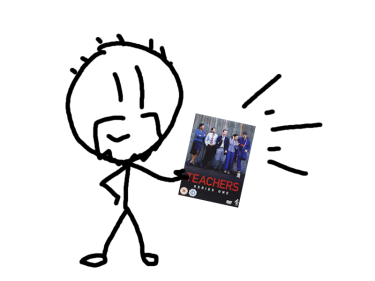
Most of you reading this who are at least A Certain Age will probably think back on your school days with varying degrees of fondness, but I suspect pretty much all of you are glad that those days are behind you for one reason or another — the chief one being the freedom you have once you are no longer constrained to an institution's timetable and rules.

As I get older, this is probably the rose-tinted nostalgia talking, but I increasingly miss that whole sense of structure that the school day had. I'm talking as a student here, not as a teacher; as a teacher, the school timetable was nothing but a source of stress, particularly when I forgot I was supposed to be "on duty" (whatever that actually means) and ended up on the receiving end of snarky comments from dickhead colleagues. But I digress.

No, I'm talking about the sense of structure you have when you are a student: the knowledge of exactly what is going to happen when for the day ahead, and the fact that you know your time is most likely going to be spent in at the very least a vaguely productive manner for the next 8 hours.

Sure, there were always the lessons that summoned up the inevitable sense of dread — Maths for me — and, of course, there was always the blind panic you'd feel when you realised you hadn't done the homework for the lesson that was scheduled for immediately after break, leading to frantic completion of said homework outside, leaning on a wall and hoping your teacher for the next period doesn't wander past and clock what you're doing.

But for the most part, it was nice to wake up of a morning and know what to expect. It was nice to have "favourite days" because that's when your best lessons were. It was nice to know exactly when you'd have the opportunity to work with your friends, or learn from a favourite teacher.

If this all sounds insufferably swotty, I don't know what to tell you; outside of some bullying incidents (where I was the victim, I hasten to add) I mostly thrived in secondary school in particular, and I enjoyed having things that I was good at, and which got acknowledged as things I was good at. Because heaven knows I wasn't "cool", and I knew that wasn't likely to change, ever.

I often find myself thinking whether the daily grind of work could be made better if I split it into discrete "periods" like the school day, with specific times set aside to do specific things. I suspect it actually might, but actually developing that schedule has been my sticking point. As a lot of my work is pretty self-directed, I'd be responsible for both setting and sticking to that schedule, and I'm not sure that's what worked well for me back when I was at school. Rather, I think I thrived because I had a schedule set by someone else, and during that schedule I was told exactly what to do, and exactly what was expected of me — again, by someone else.

I know part of "growing up" is being able to do those things for yourself, but lest we forget, I am what is politely termed these days as "neurodivergent", and thus I find myself wondering if I wouldn't just be better off in a situation where someone sits me down, says "9am-10am, you're doing this. 10am-11am, you're doing this. Then go have a bit of a break. Then 11.15-12pm, you're doing this…" and so on.

Sure, we have weekly Teams meetings (God, I hate Teams meetings… scratch that, I hate meetings in general) but those aren't exactly what one might call "engaging" in the same way a good old-fashioned school lesson was. Perhaps I was just fortunate enough to have, on average, very good teachers, and in other places, school is, in fact, ideal preparation for a life of adult misery in Teams meetings. But I doubt it.

Anyway, perhaps I should actually make an effort and try the "schedule" thing for myself. Who knows, it might actually work? Can't hurt to try, right?


Want to read my thoughts on various video games, visual novels and other popular culture things? Stop by MoeGamer.net, my site for all things fun where I am generally a lot more cheerful. And if you fancy watching some vids on classic games, drop by my YouTube channel.

If you want this nonsense in your inbox every day, please feel free to subscribe via email. Your email address won't be used for anything else.

#oneaday Day 291: If you like old games mags, here's a podcast you might like

The other day, I was contacted relatively out of the blue (no pun intended) on Bluesky by a chap called Ty Schalter, who wanted to let me know he and a fellow writer, journalist and author, Aidan Moher, were launching a new podcast, and would I mind giving it a bit of a nudge on socials.

Firstly, I was flattered that Ty thought I had anywhere near enough reach online to make a difference these days, but I indeed shared it anyway, and am, in fact, doing so again right now. Secondly, I was 100% on board with the concept for the podcast, which was to take a fond look back at classic games magazines. Here's the first episode for you to enjoy:

Now, as I stated in no uncertain terms just the other day, I am a big fan of old computer and video games magazines, and am always up for some discussion of them. These days, it's a bit tempting for everyone to look at the worst of their output, go "ugh, cringe" and leave it at that, but Schalter and Moher are doing the subject justice, judging by their first episode; they're acknowledging that while there are often faults we can pick from a 2025 perspective, these magazines were a vitally important part of gaming culture, particularly in the days before we had always-online Internet and, later, mobile phones.

What you've gotta remember is that in the '90s, if you had an Internet connection at all, it was a dial-up one that you had to ration your time with so as not to leave yourself with an astronomical phone and/or usage bill; earlier than that, the only online services out there were self-contained bulletin board systems. There was also a curious "in-betweeny" phase in the early '90s where services like AOL and CompuServe came to prominence; these offered global online services somewhat akin to the modern Internet, but in their own curated walled gardens. Later, both services provided access to the broader Web, but initially, they were their own little communities.

Why is this important? Because it meant that it was nowhere near as easy to talk about games with people as it is today. There was no magic black slab in your pocket that connected you to the rest of the world, and there was no guarantee that when you "logged on" with your computer that you'd find someone you wanted to talk to. There certainly wasn't the opportunity for carving out your own little space online as there is today, and absolutely no social media. (Maybe it wasn't all bad.)

This meant that magazines played a crucial role for video game enthusiasts: they were the main way that people who enjoyed games found out about new releases, the latest news and in-depth information about stuff that was already out. They were a point of common contact that, when we met up with our "real-life" friends (remember them?), we could use as the basis for a discussion. They were a connection to the outside world — and for many of us, a lifeline that made us feel much less alone in our passion for what is, most of the time, a fairly solitary pastime.

Schalter and Moher get this. They understand that for many of us, magazines were "the gaming community". We came to the mags not just for the games, but in many cases, for the personalities involved and the opinions we trusted. We'd obsess over a 250-word review of a 40-hour RPG, reading it repeatedly and drinking in the screenshots, wondering what it would be like to actually play the thing. We'd base our purchasing decisions on the arbitrary numbers the reviewers thought up, for better or worse. And we'd get to know the studios behind our favourite games through special features, interviews and preview reports.

Many of these things can be argued to still be present in today's games press, to be sure. But the daily churn of gaming news online makes it somehow less special than it was to get a monthly magazine. What game would be on the cover? What games would get in-depth features? What games were getting walkthroughs, tips and cheats? Would there be any cool cover-mounted gifts or bonus booklets included?

While it can be funny to look back and laugh (or cringe) at The People We Were 20-30+ Years Ago, it's important to take a look at the full picture for an understanding of why things were the way they were — and why so many people are still nostalgic for an era long past.

That's what the Fun Factor podcast seemingly aims to explore, and judging by the first episode — which features lengthy reminiscences about Final Fantasy VII that I'm sure will be familiar to anyone Of A Certain Age — it's going to be a good listen over the long term.

So go give that first episode a listen now, and if you're so inclined, support the podcast on its official website. You can also follow the pod, Ty and Aidan over on Bluesky.

I'm excited to see where the show goes from here, as it's a subject near and dear to my own heart. And if you have any fond nostalgia for that supposed "golden age" of magazines, I recommend checking it out, too. 'Cause heaven knows we could all do with some fun, happy stuff to enjoy right now, I'm sure.


Want to read my thoughts on various video games, visual novels and other popular culture things? Stop by MoeGamer.net, my site for all things fun where I am generally a lot more cheerful. And if you fancy watching some vids on classic games, drop by my YouTube channel.

If you want this nonsense in your inbox every day, please feel free to subscribe via email. Your email address won't be used for anything else.

#oneaday Day 290: Foxit? More like Fuckit

Good one, I know.

As I alluded to yesterday, I've been spending a bit of time collecting together scans of old computer and video games (and Computer & Video Games) magazines with a mind to sticking them on an old Kindle Fire tablet to use as a portable "magazine reader". As part of that process, today I found myself looking for PDF readers, both for Windows and for Android.

I wanted one for Windows so that I could potentially use it to make some videos about the magazines I don't have hard copies of, and neither Chrome nor Firefox's built-in PDF handling quite does what I wanted. (Chrome, notably, still lacks the ability to display two-page spreads but assume there is a "cover page", meaning it fucks up magazine and book layouts and there's nothing you can do about it.) So I did what any normal person does, and I Googled it, even knowing that Google itself has been gradually going down the toilet.

After skipping past the fucking useless AI summary and sponsored links, I clicked on an article that was absolutely bullshit SEO bait ("The best free PDF readers for Windows!") but was at least from a vaguely reputable outlet, TechRadar. This article informed me that Foxit was the best PDF reader for Windows.

Great, I thought. I've used Foxit before in the past. I doubt it's changed that much.

EH. WRONG.

Foxit has enshittified itself beyond all recognition. Not only has it made the inexplicable decision to model its UI on Microsoft's odious "Ribbon" interface, it also boots up with a floating "AI" button that you can't get rid of without some tinkering deep in the options and then quitting and restarting the program.

Let's take each of these in turn. First, the Ribbon.

I hate the Ribbon. I've despised the Ribbon ever since Microsoft introduced it in Microsoft Office 2007, and every time I use a program that uses this obnoxious piece of crap instead of normal toolbars and drop-down menus, I make a specific effort to find something else to use instead.

The Ribbon is an eyesore. The Ribbon takes up far too much space on the screen. The Ribbon's myriad tabs and huge buttons make it a massive chore to find simple functionality, since each tab is organised with no real care or attention. It doesn't conform to any standard functionality, so you'll find the same functions in different places in different applications, and it feels the need to take over the entire fucking window when you want to do something as simple as open, save or close a file, or look at the program's settings page.

In Foxit's specific case, I am honestly struggling to think of why a supposedly "lightweight" PDF reader has enough functions in it to warrant having a multi-tab Ribbon. I need a PDF reader to do one thing: read PDFs. Occasionally I might need to copy and paste images and text from a PDF, and the ability to take a snapshot of a section of a PDF and save it as an image is always nice. But I do not need multiple tabs worth of disorganised functionality, making it a chore to do something as simple as display two pages side by side and let me flip through the entire document like… well, like a magazine or book.

This is what people are talking about when they say "the computer" is constantly being enshittified. Things that worked perfectly well are being "updated" for no other reason than to say that they have been updated. Simple, straightforward, intuitive interfaces that remained standard conventions for decades are being uprooted in favour of borderline abusive design that forces you to click through page after page of crap in order to find the one thing you're looking for. And for what? To say that the company is "growing"? To say that the company is "innovating"? Fuck that. Just make me a fucking PDF reader that lets me read PDFs.

Which brings me to the "AI" button. I do not need a fucking AI button in my PDF reader. If I have opened something in a PDF reader, I intend to read it or print it. I am not going to ask a fucking chatbot that gets things wrong an average of a third of the time you ask it things to "summarise" the thing that I'm trying to read either for information or pleasure. I am not going to ask a fucking chatbot that gets things wrong an average of a third of the time you ask it things to "analyse" the document or figure out "trends". I am a human being. I have a brain. I can do these things myself. I do not need "AI" to "do it more quickly". Believe it or not, I enjoy reading. I enjoy researching. I'm not so fucking lazy that I need a fucking chatbot (&c. &c.) to take the human part out of the equation. Because that's just depressing.

Things weren't much better on the Android front. I tried Foxit on Android as well, just out of curiosity, and sure enough, while it lacked the Ribbon (the one benefit of a phone screen is that it's too small for such a shitty interface) it still had the odious little AI bubble. So I uninstalled it immediately.

If you've been in a similar situation at any point, may I recommend Sumatra PDF for your desktop PDF reading needs, and PDF viewer lite for Android. Both of those seem to fit my needs perfectly well right now: no ads, no subscriptions, no Ribbon, no AI, no bullshit. Just a thing to read PDFs with. Which should not be a hard thing to find in 2025. But apparently this is the world we've built for ourselves.


Want to read my thoughts on various video games, visual novels and other popular culture things? Stop by MoeGamer.net, my site for all things fun where I am generally a lot more cheerful. And if you fancy watching some vids on classic games, drop by my YouTube channel.

If you want this nonsense in your inbox every day, please feel free to subscribe via email. Your email address won't be used for anything else.
#oneaday Day 289: Some games magazines I used to like

I love old games magazines, and will frequently re-read them years after they were relevant. In fact, I'm currently in the process of assembling a collection to bung on an SD card and pop in my otherwise unused Kindle Fire 7 to use as a portable retro magazine library. I've also got a vague plan to make some more videos on classic magazines, as I really enjoyed making the first two on Page 6 magazine — you can watch those here (issue 1) and here (issue 2).

In the absence of anything else to write about — I've been playing Xenoblade Chronicles X for most of the weekend, and I already wrote about that earlier — I thought I'd give a rundown of some magazines I used to like, and which I may well take some time to cover on YouTube at some point.

Note: I say "magazines I used to like"; most of them are magazines I knew someone who worked on, usually my brother. I make no apologies for this.

Page 6/New Atari User

This is the one I bring up most commonly on my channel, and for good reason: three members of my family (my Dad, my brother and me) were involved in it at various points, and it's the magazine that launched the career of my brother — a career that, with him being a big bossman at IGN now, he's still in.

Page 6, as it was initially known, started life as a user group newsletter. Within one issue, the editor Les Ellingham had decided that he wanted to fulfil a grander ambition: to publish the UK's first Atari-specific magazine. And he only went and did it. For an astronomical amount of time, considering the subject matter, too; Page 6 ran in one form or another from December of 1982 until the autumn of 1998, and it was still covering the Atari 8-bit in its very last issue.

Page 6 was an enthusiasts' magazine. It wasn't a games magazine; Les in particular was keen to stress from the outset that while computers were excellent games machines, there was also a ton more you could do with them. And part of the point of the magazine was to educate people on the possibilities their computers offered. It achieved that through articles about software releases (including both games and "serious" software), interviews, tutorials, type-in listings and plenty more.

It was always a pleasure to read. One gets the impression that it was a real labour of love for Les in particular, and there are plenty of occasions where his editorial page came across as very frustrated that other people didn't seem to care quite as much as he did — but I cared. I still do care. Page 6 was a formative part of my youth, and revisiting old issues today, I still feel a lot of the same magic I felt in the early days of computing.

Read them all at Atarimania.

Atari User

Showing up a little later, Atari User from Database Publications (later Europress) launched in 1985 and ran until November 1988, at which point Page 6 acquired the rights to the Atari User name and rebranded as New Atari User. Page 6 was still on the newsstands at that point, and it was thought that the Atari User name would attract more casual interest, since "Page 6" is a nerdy reference to an area of the Atari 8-bit's memory that only people already well-versed in the system's "culture" would understand.

At heart, Atari User was a similar sort of magazine to Page 6, covering both games and "serious" applications, perhaps with a slightly greater focus on things that, if not games, were at least entertainment of a sort. Like Page 6, there were a variety of features each issue, including type-in listings, and often some interesting-looking "Gadgets" sections for electronics projects you could do with your Atari. I never tried any of them — I was a bit young — but they always looked interesting.

I enjoyed reading both Page 6 and New Atari User because they each had a very different style to them. Page 6 always felt like it took itself very seriously, with a fairly no-nonsense, stern, professional-looking layout in each issue — not to say that individual articles lacked personality and humour, mind; I'm talking purely aesthetically — while Atari User made use of the bigger budget it had thanks to being part of a larger corporation by producing colourful issues with large, attractive pieces of artwork and photography throughout. I was sad when Atari User went under, as it was one of those magazines that it was just fun to look at thanks to its colourful cover art.

Read them all at Atarimania.

Antic and ANALOG

Antic, subtitled The Atari Resource, was one of two Atari-specific magazines from the States, with ANALOG (short for Atari Newsletter And Lots of Games) being the other. You could get them both relatively easily in this country via specialist importers. Antic and ANALOG were both, like Page 6 and Atari User, magazines that revelled in the joy of home computer ownership. Part of that was gaming, yes, but it was also about programming, productivity and creativity.

I actually haven't revisited Antic and ANALOG for many years and I think I'm long overdue to, as I remember enjoying them both. I do remember Antic having noticeably thicker issues, while ANALOG became renowned for its excellent machine language type-in listings. So they're both going on my portable magazine library, assuming it works as I hope it does.

Read Antic and ANALOG at Atarimania.

Games-X

Page 6 was where my brother got started writing about games, but it was Games-X that truly launched his career properly; he left home to work on it, and it ended up being the beginning of a whole life in the games press.

Games-X was unusual: it was a weekly games magazine (a decision which founder Hugh Gollner later described as "a big mistake" financially), and most other magazines at the time were monthly. Page 6 was bi-monthly (as in, every two months, not twice a month). This naturally allowed it to be a lot more "up to date" with gaming news than many other magazines, but it was also fun to be able to buy a new games magazine every week, initially for just 60p an issue.

Games-X covered that strange period late in the ST and Amiga's lifespan when consoles were just starting to really get a foothold in the UK. The majority of the focus in each issue was on home computer games, but there was a dedicated console section — and the next magazine my brother worked on after Games-X was Mega Drive Advanced Gaming.

Games-X had a fun, irreverent attitude to it and, in many ways, was very "'90s", with everything that entails. I still really like it, though, and think it stands out as a magazine that deserves to be remembered a bit more than it is.

Read them all at RetroCDN.

Advanced Computer Entertainment (ACE)

I don't think I actually had many issues of this, but I enjoyed every one of them a great deal. Advanced Computer Entertainment, or more commonly just ACE, was a multi-format magazine that one gets the impression liked to think it was a cut above the other games magazines around at the time. It was still about video games, sure, but it lacked some of the '90s abrasiveness of other publications, and took things a bit more "seriously", for want of a better word. One might call it the Edge of its day, only marginally less pretentious. (And yes, I checked; Edge launched in 1993, while ACE folded in 1992.)

That is, after they got over an initial rocky patch where there were more errors in the early issues of ACE than I think I've ever seen in any other magazine. Typos, mistakes, outright blank sections of pages — they had it all. But once it settled down, it was a very high quality magazine that I always enjoyed. The magazine was noteworthy for its "Pink Pages" section in the rear, a no-nonsense "reference" guide to new releases, charts and review summaries, plus a bizarre "Stock Market" section that never really made much sense, but I believe it was an early attempt to try and aggregate review scores for various developers and publishers, if I remember rightly.

I rather liked that ACE took things seriously. The silly humour of other magazines could be entertaining, to be sure, but it was nice to be able to read a magazine about games that was just… about games, rather than about its writers trying to launch a comedy career. As with Page 6, that's not to say that individual articles and writers lacked personality or a sense of humour; it's just that humour wasn't the main point, whereas with some other magazines around at the time, particularly once we moved into the 1990s, it felt like they were trying to be a funny magazine first, about video games second.

Read them all at Atarimania.

PC Zone

Now, this may make me sound a bit like a hypocrite after what I literally just said, but I always enjoyed PC Zone, even before my brother's time there as editor and publisher. PC Zone in its prime always felt like it struck a good balance between humour and information, and I loved it for that. It acknowledged that games were fun, silly and often stupid, but also recognised that people were passionate about them — sometimes to a fault.

PC Zone is also noteworthy in retrospect for being an early outlet for Charlie Brooker, and his articles were always a highlight, as were his eminently silly The Cybertwats cartoon strips, which got the magazine a bunch of complaints on multiple occasions, particularly after he depicted Lara Croft machine-gunning someone's cat to a particularly violent and bloody demise.

When people talk about old magazines being fun, I think of PC Zone. While in retrospect some of it may have been a bit "lads mag"-ish (see: front cover depicted above), it never really felt particularly exclusionary. Plus I spent two weeks doing work experience in their offices and, although I didn't really do much other than make a lot of cups of coffee and tea (and write a review of Virtua Fighter PC) that fortnight remains one of the happiest of my life.

Read them all at Pix's Origin Adventures.


And there's more I could be going on with, but I think that's probably plenty for now. If you're a retro computer and gaming enthusiast, you could do far worse than familiarise yourself with the above publications. And the links I've provided will let you do just that.

Note: I will not be held responsible for anyone complaining at you suddenly taking a lot longer in the toilet.


Want to read my thoughts on various video games, visual novels and other popular culture things? Stop by MoeGamer.net, my site for all things fun where I am generally a lot more cheerful. And if you fancy watching some vids on classic games, drop by my YouTube channel.

If you want this nonsense in your inbox every day, please feel free to subscribe via email. Your email address won't be used for anything else.