1901: Good Friday? All Right, I Guess

Today is technically a "holiday", though when you don't have a regular job normal days and holidays tend to all blend together somewhat. Still, at least it being a holiday means that I can technically not work and not feel guilty about it, so there's that.

It's been one of those days that has just sort of passed by without any particular incident or noteworthiness, and as such there's not a whole lot for me to talk about today, really. Andie and I both got up late — we were both really tired, so a lie-in until midday was thoroughly needed — and then we've both spent most of the day playing Final Fantasy XIV. I'm almost at level 48 on Bard, which will be my fifth battle class levelled to 50 when it's done — I should hopefully get that finished tomorrow. After that, I have Arcanist and Pugilist to get out of the mid-teens, and Lancer and Rogue to level from scratch. And then all the bloody crafters, though to be honest those aren't very difficult to level, just a bit time-consuming.

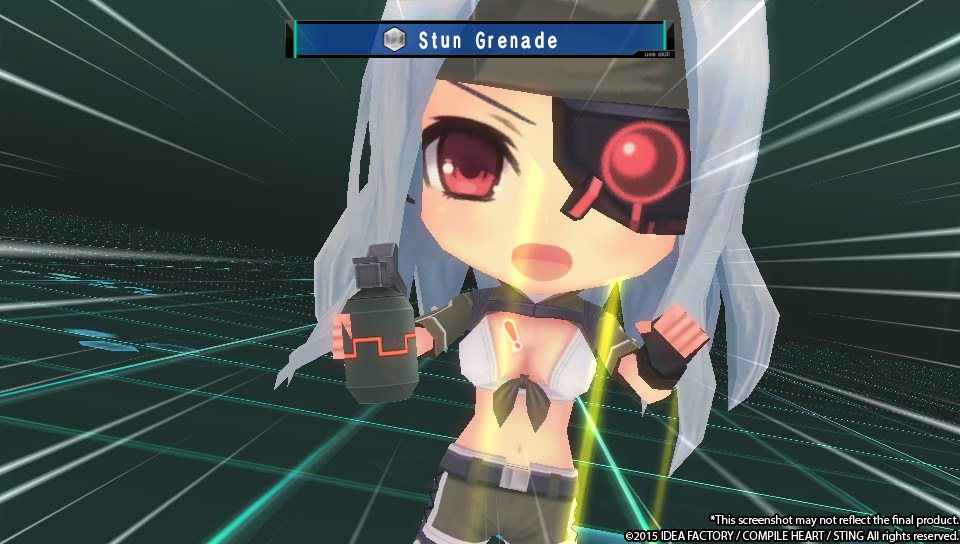
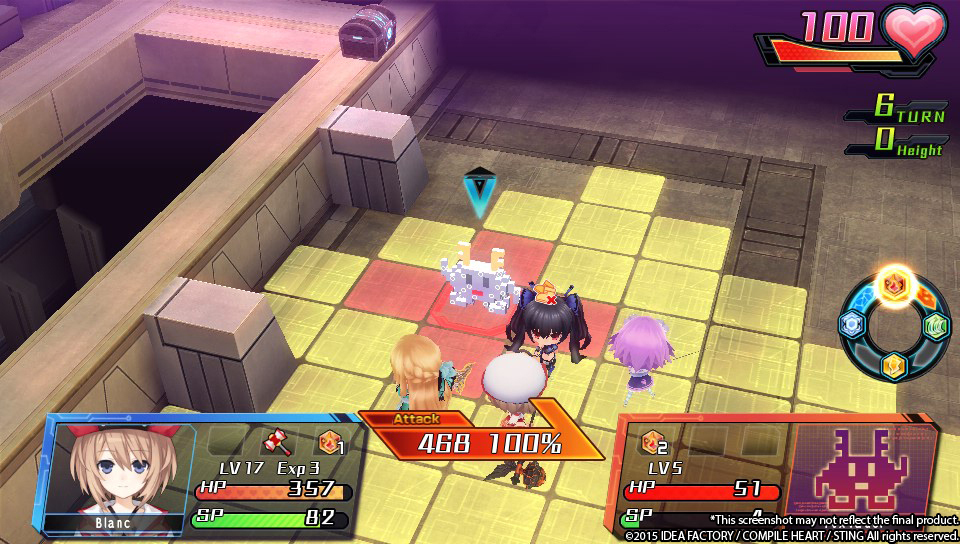
I've also been playing some more Hyperdevotion Noire over the last few days, and I'm thoroughly smitten with it. I was initially a little put off by the chibi characters — I prefer more coventionally proportioned characters for the most part — but they actually work well in the battle scenes, making it clear who is where, which way they are facing and so on. Outside of battle, you still get the full-size portraits in story sequences — plus the beautifully drawn event scenes, too — so I'm happy with that. (Also, Chibi Female Solid Snake is adorable. As is the personification of Dragon Quest. As indeed are most of the characters.)

Nothing special planned for tomorrow, it's looking like a lazy Easter weekend. Andie and her mother are going out to town tomorrow, but I will probably stay in. With money a bit tight at the moment, it's probably best I stay away from places that sell things I might want to buy. Like, say, PlayStation 4s. That ain't going to happen until I have some more money coming in, but I'm working on that.

And after that, Sunday is raid night, of course. We will probably be taking our first serious look at the Final Coil of Bahamut, though one of our number still wants to get their own clear of Turn 9, since his unlocking of Final Coil was actually achieved by someone else playing his character. I'm all for that; Turn 9 is a fun, if intense, fight, and the last time we tackled it we cleared it within 3 attempts, making the weeks of practice look somewhat trivial!

Anyway. I've spun this post out for long enough without really saying anything, so it's time to head to bed and maybe play with my beloved Noire a bit. Here's to boring but peaceful days.

1900: 20th Century

Post 1900. Feels like a significant number. I feel I should do something significant, but I'm not sure what.

Perhaps a reintroduction for those who are just joining me, and an explanation of what that "1900" is all about.

Hello. I'm Pete. I've been writing on this blog every day for the past 1900 days. It initially started as a Twitter-based challenge called #oneaday in which the participants were challenged to write absolutely anything every day for a year. I joined a little late, only hearing about it midway through January of 2010, but I decided it was something I wanted to be a part of, so I jumped in. Not everyone who started made it to the end of the year — hell, some people didn't make it to the end of January — but I did. So I carried on. And on.

And now here I am, over five years later, still doing this for my own amusement more than anything else, but also as a means of self-expression, catharsis, stress-relief or simply a place to enthuse about things I'm excited about when no-one else wants to listen. I do that last one a lot.

The last five years have been a rocky road, and not in the pleasant chocolatey way. I'm still in the midst of a fairly unpleasant time of my life thanks to not currently having a regular source of income after a series of unfortunate and horrible episodes of being screwed over, though hopefully the income situation will change soon following some recent events.

I live in a house that I own with my fiancee Andie; we're getting married in June of this year. We have two rats called Clover and Socks. We would like either a cat or a dog, but haven't decided which yet, and figure the former in particular might be an unwise choice while the rats are still around — which hopefully they will be for at least a little while yet.

I'm a musician. Piano is my first instrument, and recently I actually bought my first real (albeit cheap and slightly battered) piano, having been getting by on an electric piano for the last few years — it's just not the same. I also play the clarinet and saxophone; just recently, I've been doing some clarinet teaching for the first time in years in some local primary schools. While sort of fun, it's also been reminding me why I don't want to go back to classroom teaching ever — oh, yes, I'm a qualified classroom teacher with a specialism in music.

I play a lot of Final Fantasy XIV. My character's name is Amarysse Jerhynsson, and you can find her on the Ultros server. To my surprise, Andie started playing a little while back and now possibly plays even more than I do, even coming raiding with me on Sunday nights.

I love Japanese games. I often celebrate them on this blog, but also write about them in more detail on my other site MoeGamerI set up MoeGamer after being laid off from Eurogamer offshoot USgamer last year. I don't get to update it as often as I'd like to — at least partly because lots of Japanese games are pretty long and I like to have beaten them before I write about them in detail! — but it provides a means of continuing the thing I enjoyed best about my time at USgamer: my weekly JPgamer column, in which I regularly enthused about the Japanese games that other publications ignored at best, ridiculed at worst.

Aside from Final Fantasy XIV, I am currently playing Hyperdevotion Noire and Senran Kagura Shinovi Versus on Vita. I am absolutely loving both. Noire is a surprisingly competent strategy RPG (or unsurprisingly, if you're more familiar with developer Sting than I am) featuring characters who have become firm favourites over the last couple of years. Senran Kagura, meanwhile, continues the series' tradition of blending enjoyably cheeky fanservice with genuinely good stories about the nature of good and evil, what it means to be a shinobi and how you go about finding your place in the world.

I am fat. I have recently started attending Slimming World sessions and have so far lost over 2 stone in 10 weeks, so that's going quite well. I don't know if I'll be able to keep up that pace, but if I can get even vaguely close to my self-imposed target I'll be happy.

I am depressed, and have lost at least one job as an indirect result of this. Recently, I finally plucked up the courage to go to the doctor and talk about it. The doctor complimented me on my thoughtful, philosophical attitude towards it — she caught me on a good day — and prescribed me some anti-anxiety meds. I can't say whether or not they're actually doing anything yet, but, well, baby steps and all that.

To the person who came to this blog by searching for "video games with a lot of pantyshots", may I recommend the Dead or Alive series, Rival Schools on the PSone, Senran Kagura, and any visual novel that errs on the side of "eroge" without getting into weird shit.

To the person who came to this blog by searching for "huniepop kyu", this is for you.

This is Kyu, the magic fairy who's going to make you better at talking to girls.

To the people who have been following along for the last 1900 days, thanks for indulging me for so long. To the people who have joined me recently, hello, welcome, and perhaps you understand me a little better now.

1899: Continued Shrinkage

Slimming World tonight, and I'm pleased to report that I lost another 3.5lb this week, which puts me in the "Club 10" category; I've lost 10% of what my body weight was when I started. If I can keep at or below this weight for 10 weeks, I get a free week of membership: a small reward, but an incentive nonetheless.

I'm pleased at how well I've managed to stick with it so far. The fact that the "diet" itself isn't anywhere near as restrictive as a lot of other plans has helped me maintain my motivation to keep with it. I can continue to eat many of the things I enjoy, so long as they're prepared appropriately — in most cases, this means substituting oil for low-calorie cooking spray, which I haven't noticed having a particularly big impact on flavour. It obviously rules out things like deep-frying, which is a shame as there are certain things — hash browns are one — which are unquestionably superior when deep-fried compared to baked, but it's something I can live without.

Or rather, I don't necessarily have to live without these things so long as I pay attention to their "syn" values. Syns are abstract values that I believe are somewhat tied to calorific content, but also seem take into account things like sugar, fat and so on. The pronunciation of the name is perhaps a little misleading — they're not "sins", but rather short for "synergy" in that they provide controlled doses of the parts of a balanced diet that are easy to let run away with themselves — things like the aforementioned fats and sugars. We need these things to function — we need calories, too — but having too much of anything is where problems start. By limiting "syn" intake to 5-15 a day — I normally err towards the 15 mark, since I still enjoy my food — it's much easier to keep a handle on what's going in. And that, in turn, helps the weight continue to fall off: since I've started, which was, I believe, about 10 weeks ago, I haven't had a single week where I haven't lost weight as yet. I'm sure it'll happen eventually — every week I expect to have reached that plateau and have to start working a bit harder — but for now, the efforts I'm making are being rewarded.

And that's a good feeling. At a time in my life where I can't honestly say things have been going particularly "well" — though things are marginally better than they have been thanks to me getting some sporadic work here and there — it's nice to have one thing where I'm consistently and regularly having the opportunity to genuinely celebrate some success. And I'm pleased that the Slimming World group I'm a member of — as with most Slimming World groups, from what I'm given to understand — is more than happy to celebrate that success and keep me motivated to continue.

That and the fact I tried a pair of jeans on earlier that I couldn't do up a few months ago and they went on easily.

1898: A Realm Concluded

It was an interesting day for Final Fantasy XIV today, as it saw the release of Patch 2.55, also known as Before the Fall Part 2. This was a highly anticipated patch primarily for the fact that it promised to bring the A Realm Reborn storyline to a conclusion as well as set up the events of the upcoming expansion pack Heavensward, due out in June.

So far as "game content" goes, there wasn't a huge amount of new stuff in this one — the main attraction was the one new Trial on the Steps of Faith, which we'll talk a little about in a moment. But "content" was never really the intention of this patch; it was always intended to be a narrative-centric patch to send off Final Fantasy XIV version 2.x with a suitable bang and prepare the playerbase for what might await them in Heavensward.

I shall endeavour to refrain from major spoilers in this post, but a few mild ones may slip in.

The storyline for Before the Fall Part 2 primarily concerns the Dravanian Horde's initial assault on the isolated land of Ishgard, a nation which was once part of the Eorzean Alliance alongside Ul'Dah, Gridania and Limsa Lominsa, but which subsequently closed off its borders and effectively locked the majority of its people inside its city walls. The Dravanians — who are big fucking dragons — have been making incursions into Ishgardian territory for some time thanks to a longstanding war between the two nations, and indeed the adventurers of Final Fantasy XIV repel their attacks on a number of occasions through the dungeons you challenge over the course of your career.

This time it's different, however; there's rumblings of one of the Great Wyrms making an appearance, and before long due to various unfortunate circumstances and villainy, the Ishgardian protective wards on the giant bridge The Steps of Faith are under assault from Vishap, probably the biggest enemy in the entire game, and his assembled Dravanian forces. The new Trial sees you and seven companions battling Vishap as he makes his inexorable progression across the Steps of Faith, hopefully taking him down before he breaches Ishgard's last line of defence.

Following the pattern of past patches, this big battle (and it's a pretty huge, quite challenging battle) isn't the endpoint of the story; far from it, in fact. The overall conclusion to the A Realm Reborn storyline is quite genuinely shocking, surprising, dramatic and emotional. Oh, and long; the game warns you before triggering these cutscenes that you're going to be sitting and watching for quite some time. It's a worthy watch, though, and it drives home the fact that on the whole, A Realm Reborn has done a significantly better job with storytelling than pretty much any other MMO out there. You'll care about these characters and what happens to them — be it triumph or tragedy, and for sure there's a bit of both in the ending.

The finale isn't perfect — some have already criticised the parts where it takes agency away from the player character, though it didn't personally bother me all that much — but it forms a fitting conclusion to A Realm Reborn, bringing a sense of closure to the storylines that have been running for the last couple of years now while simultaneously building anticipation for Heavensward through the introduction of some new characters, the reintroduction of some we haven't seen for a while and an extremely intriguing cliffhanger right at the very end.

Now all we have to do is wait until June to find out what happens next… although in the meantime, we still have the Final Coil of Bahamut to defeat, so I'm sure that will keep us busy until the expansion arrives!

1897: Ruins of the Moon

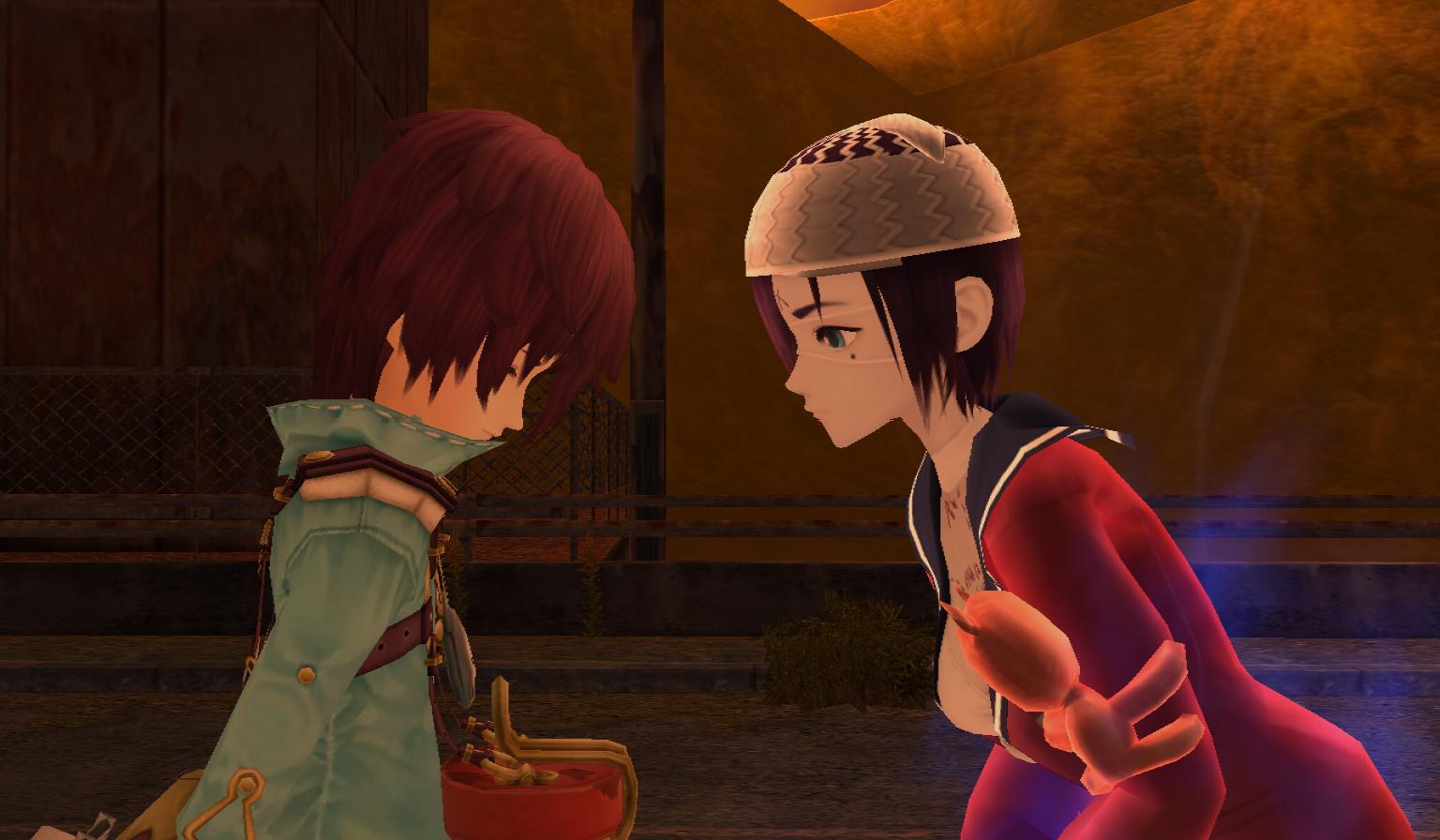
It occurs to me that I never gave some final thoughts on Fragile Dreams after I finished it the other day, so I shall do my best to rectify that right now. There will be spoilers ahead!

Fragile Dreams wasn't a particularly outstanding game from a mechanical perspective — its use of the Wii Remote and Nunchuk combo made combat in particular extremely cumbersome, a fact not helped by the extremely limited repertoire of moves available for each weapon and the seeming inability to dodge quickly — but it nonetheless proved to be a consistently compelling experience from start to finish.

Fragile Dreams also didn't quite match up to its own ambition in storytelling: the final hours descend somewhat into your fairly typical "madman wants to destroy the world" (in this case, destroy the world again) scenario, and the overall plot itself is riddled with holes and inconsistencies. But again, this certainly didn't diminish from the overall experience.

Fragile_Dreams-thumb-550x361-27947

Fragile Dreams was an oddly beautiful game. Despite being a low-resolution Wii title, it looked good. It had a distinctive aesthetic all of its own, and immediately set itself apart from other post-apocalyptic adventures by the simple use of colour and contrast throughout. There's a fair amount of crawling around in the dark by torchlight, but the game sensibly breaks this up with some colourful segments. Escape from a subway system earlier in the game and you're treated to the gorgeous, rich colours of dawn in the sky. Pick your way through a forest to a secluded hotel and you're surrounded by lush greenery. It's a far cry from the greys and browns that usually come with the post-apocalyptic territory, and it made the game less of a chore to play than the trudging through endless wastelands of something like the Fallout series.

There were some interesting characters, too. Much of the story is about protagonist Seto's desire to find someone with whom he can share his experiences — to laugh, to cry, to point out how beautiful something is. The characters he does run into throughout the course of the story all provide him with a certain degree of companionship, but none are quite the same as actual human company.

First he runs into what appears to be a piece of military hardware called "Personal Frame" or "PF", which has its own artificial intelligence and personality. PF provides good company for Seto for a few hours as he explores, and it's clear that Seto starts thinking of "her" (for although she looks like a backpack-mounted radio, she has a female voice) as a friend. This friendship is cut short, however, when PF's battery runs out and she "dies", leaving Seto all alone once again.

Then he runs into Crow, a somewhat androgynous-looking boy who appears to have cats' eyes and fangs. Crow initially antagonises Seto by stealing his locket — which is full of precious memories, including a screw he took from PF's "body" — and this results in a chase all over the abandoned theme park Crow calls home. Crow eventually admits defeat after taking a nasty fall from the park's Ferris wheel; seemingly against all odds, he survives, and claims to accept Seto as a friend, even going so far as to steal his first kiss because "that's what friends do" — something which Seto is somewhat surprised by, but which he doesn't reject outright. It becomes clear that all is not quite right with Crow, however, as many of the things he says are direct quotations from a children's storybook Seto finds a little earlier; indeed, Crow's true nature is revealed later when Seto discovers him slumped in a room with hundreds of discarded robotic bodies: Crow is indeed a robot, and their budding friendship is once again cut short as his batteries expire, leaving him, like PF, as an empty shell devoid of life and consciousness.

fragile-dreams-screenshots-11

Seto's next encounter is with Sai, the ghost of a young woman who appears to have committed suicide or at least succumbed to a drug addiction; this isn't made outright explicit, but can be easily inferred from the pills scattered around her dead body and the syringes, tourniquets and other paraphernalia littering the room. Sai doesn't mention this and Seto clearly doesn't understand it, so nothing more is said; the two develop a close and honest friendship as a result, with Sai accompanying Seto for most of the rest of the game from this point onwards. Again, though, although Sai and Seto become fast friends, it's not quite the same as real human company for Seto; in a heartfelt speech to Sai, Seto admits that he just wants to share his experiences with someone else, to feel their warmth, to feel like he isn't alone, and for that, a ghost just isn't going to cut it, hence his game-long search for the mysterious silver-haired girl Ren.

The characters are all interesting, unconventional and have plenty left open to interpretation, and this is something of a pattern for the game as a whole. One of the strongest pieces of narrative design in the game comes through the use of "memory items"; bits and pieces of junk that Seto comes across in his journey that have the last memories of the dying world's inhabitants infused into them somehow. Some of these are mundane, some of them are profound, some of them form part of a larger story, some of them hint at the truth behind the situation in which the world finds itself. There's a sequences of recollections between a young woman whose legs became paralysed when she was a little girl and her botany-obsessed childhood sweetheart Mao that is particularly heartbreaking, for example.

After a while, then, you start to build up a very vivid mental picture of the game world both as it exists now and as it existed prior to the disaster that wiped everyone out. It's pretty bleak and lonely, but also fascinating to explore, and one of the most interesting things about the experience is how many unanswered questions it leaves at the end. Whether this is intentional or simply due to the writers not having thought about it — a bit of both, I feel, if an interview I read a few days ago is anything to go by — doesn't really matter in the end, since it's this thought-provoking nature that will keep you thinking about Fragile Dreams long after you've finished it.

1896: Mastering War

Ahead of the release of Final Fantasy XIV's expansion Heavensward, I've been levelling some of the other classes that I either haven't touched or had only levelled a little bit. Today I reached level 50 on my fourth battle class: Warrior. (My previous 50s were Black Mage, White Mage and Paladin, in that order; I now play Paladin more than anything.)

Warrior is one of the two tank jobs in the game — i.e. their job is to maintain the attention of enemies and get punched in the face so the rest of the party doesn't get punched in the face. Having gained a lot of experience with how Paladin does things, I have to admit I was somewhat skeptical about how different Warrior could possibly be. After all, their reason for existing is the same, and it's not like damage-dealing classes where you can make a distinction between ranged and melee characters; a tank is, by its very nature, a melee class.

I've been pleasantly surprised by how different it feels, though. This is down to several factors, both mechanical and aesthetic.

On the mechanics front, Warrior initially appears to be a more complex class to play. Whereas Paladin only really has two main "combos" of abilities to worry about — one for single-target threat generation, one for maintaining your stock of MP so you can keep aggro on larger groups — Warrior has several more, each of which has its own function. There's a basic aggro-generating combo that is the backbone of your single-target tanking, but there are also two combos that branch off the damage-increasing "Maim" skill, one of which reduces the enemy's damage output, another of which reduces their resistance to a particular kind of damage while increasing the healing you receive. Alongside this, fighting as a Warrior in your tank stance builds up stacks of "Wrath" which, when they reach five, can be expended for one of several special abilities.

So, to put things simply, there are more buttons to press as Warrior — or, more accurately, more different combinations of buttons to press according to the situation. Paladin is mostly about managing your defensive abilities to mitigate as much damage as possible; there's still an element of this with Warrior, but it's a much more aggressive, active class with self-heals and attacks that inflict various status effects.

Aesthetically is the other big different. Although most classes in Final Fantasy XIV work off a 2.5 second global cooldown (i.e. 2.5 seconds has to elapse before you can use another ability) and consequently play at the same "pace", Warrior and Paladin feel worlds apart due to their animations and sound effects. Paladin's sounds are higher in pitch, the animations more fluid; Warrior's animations look more cumbersome and make lower-pitched, heavy-sounding impacts. The reason for this big difference is the difference in weapons, of course — Paladins use a one-handed sword and shield, while warriors use axes as big as themselves — but it's surprising quite how pronounced the contrast is between the two classes, even though the basic "pace" of how they play is very similar.

Having got Warrior to 50, I'm not sure if I'll do much more with it, but I'm glad I've experimented with it and now have the flexibility to use it in endgame content when I want to. Overall I prefer the faster-feeling fluidity of Paladin, plus I know that class a lot better and thus feel more confident using it in difficult fights, but I'm not going to rule out a bit more axeplay in the future!

What's next? Probably Bard, which I've already got to level 40; while a ranged DPS like my Black Mage, Bard plays very differently owing to the fact you don't have to stand still to use abilities and don't have as much of a set skill rotation as Black Mage does. After that it's on to the classes I haven't used much or at all before: Monk, Dragoon, Ninja and Arcanist (which becomes both Scholar and Summoner).

1895: More Noire

Been playing some more Hyperdevotion Noire today, so I make no apologies for spending another post talking about it.

I am enjoying it a whole lot so far, and although I'm still relatively early on in the game, the interesting mission and map design is starting to shine through as the game adds more and more map gimmicks and mechanics to take into account while playing.

Of the last few missions, I've played, for example, one saw my party of four (Noire, Neptune, Vert and Blanc) fighting against the emphatically-not-Chun-Li-oh-wait-she-clearly-is "road pugilist" Lee-Fi. She was on the far side of a large arena whose walls were electrified, which means that knockback attacks had a use beyond simply getting enemies away from you. Some of the floor was electrified, too, necessitating careful route planning and an understanding of the game's "orientation" system, whereby the direction a character is facing when they start moving (you can change it freely) determines the initial direction they move if the target space is not in a straight line from their current position.

This was followed up by a fight against the emphatically-not-Solid-Snake-with-tits-oh-wait-she-clearly-is superspy Lid, whose battlefield was riddled with booby-traps, necessitating, again, careful navigation while fending off her supporting units. Two strips of the battlefield are also covered by large, heavy damage-dealing cannons, too, though once you notice that they can only fire in a straight line immediately in front of them it's easy enough to avoid them.

This was then followed by a battle against the Agarest-inspired character Resta, who was on the other side of a huge chasm, the only means of traversing which was a rickety railway carriage that could only hold three of your four party members at once. Resta also has an absolutely devastating super-move which obliterated my party in a single turn by dropping giant explosive bunches of bananas on their heads, so after my second "Game Over" of the game (the first being not paying attention to the cannons in Lid's stage) I realised that it was essential to take her down in a single turn and not get distracted by her supporting units, since the mission objective was simply to defeat her, not everything on the map.

Thus far the game has put up a reasonably stiff challenge. The first couple of missions are deceptively simple, but beginning with the Lee-Fi fight, things have been getting noticeably more difficult — and a little more gradually than most Neptunia games, which are somewhat notorious for inconsistent difficulty spikes throughout most of the experience, then becoming ridiculously easy once you pass a particular level threshold. The difficulty hasn't been insurmountable, though, and the new mechanics have been introduced gradually enough that I haven't felt as overwhelmed as I have done in similar games like Advance Wars and Fire Emblem, where I often can't work out why my strategy failed when it inevitably does. Here, failure seems to generally be the result of not paying enough attention — and given that you can examine all the units on both sides of the battle before you start fighting, there's really no excuse for the mistakes I have made up until this point; I've certainly learned to carefully survey the battlefield before charging in now!

I've always quite liked tactics games and even finished Final Fantasy Tactics way back in the day, but Hyperdevotion Noire is the first one I feel like I'm understanding a little better. It's designed well, plays well, looks great and features probably my favourite cast of characters in gaming. What's not to like?

1894: Goddess Black Heart

Finally got around to firing up the rather grandiosely titled Hyperdevotion Noire: Goddess Black Heart today, and I'm pleased to report that thus far it appears to be excellent.

scr15

For the unfamiliar, Hyperdevotion Noire is another installment in my perennial favourite game series Hyperdimension Neptunia, or more accurately, it's one of several "spinoff" games that have broken free of the main continuity… not that Neptunia has ever been a series particularly concerned with internal continuity. In other words, it stands by itself as its own self-contained story, though naturally you'll probably get more out of it if you're already familiar with the characters and concepts involved.

Unlike most of the Neptunia games, Hyperdevotion Noire puts, oddly enough, PlayStation personification Noire in the leading role. Unfolding in a separate, parallel setting to the main Neptunia games (the land of "Gamarket" instead of "Gamindustri"), Hyperdevotion Noire opens with Noire dominating much of the world with her superior military might, army of generals (each of whom represents a well-known game series, such as the Metal Gear-inspired girl named "Lid" seen in the screenshot below) and overwhelming support from the people. Unfortunately, her position as top dog isn't to last; after being tricked into releasing the power of her "Shares" — the source of a Goddess' power in the Neptunia universe — monsters run amok in her city, people disappear and her once-trusted generals start fighting among themselves. It's up to Noire — along with the rest of the Neptunia gang, who show up pretty near the beginning of the whole affair — to sort out the mess she had a part in creating, find out who the mysterious woman "Eno" who set these events in motion is (hint: she looks uncannily like recurring series villain Arfoire) and ultimately unite Gamarket.

It's up to you, meanwhile, to take care of Noire and help her out as she goes about her business. Yes, like fellow spinoff Hyperdimension Neptunia: Producing Perfection, Hyperdevotion Noire puts the player in the game as a first-person protagonist rather than simply telling the story of the main cast. Recruited as Noire's secretary shortly after meeting her, you're tasked with managing the party, strategising in battle, renovating and decorating Noire's headquarters and helping her make appropriate policy decisions as the citizens of Lastation come to her with requests.

scr19

The meat of the game comes in the battle sequences. Rather than being a dungeon-crawling, item-gathering/crafting RPG as the mainline Neptunia installments are, Hyperdevotion Noire is a strategy RPG, developed by Sting (of Gungnir, Knights in the Nightmare and Yggdra Union fame). Mainline Neptunia games have always had a slight element of tactics to their battle sequences thanks to positional bonuses, cleaving attacks and formation skills, but battles in those games are generally pretty short; punctuation to dungeon crawling. In Hyperdevotion Noire, a single battle represents a complete encounter and provides you with specific objectives: sometimes you'll simply have to defeat all enemies; sometimes you'll have to defeat a specific enemy; sometimes you'll have to complete objectives before a specific number of turns pass.

The game does a good job of introducing concepts to you gradually, and there's a bunch of interesting systems at play. Core to the game is the "Lily Boost" system, whereby characters can power up their relationship values with other characters, earn "Lily Points" and reduce the cost of their special moves by triggering their skills when adjacent to other characters, which causes the supporting characters to give the acting character an adorable little peck on the cheek. Chu! Although cheeky and flirtatious, the system adds an interesting dynamic to battles: you have to think very carefully about both turn order and formation when setting up attacks, especially when you're dealing with enemies who can hit several tiles at once. It's no good getting all set up for a four-way snog if an enemy with a massive cleave is just going to kill all of you at once when it comes to their turn, after all.

That's not all to think about, though. Battle maps include treasure chests in awkward-to-reach locations, which you'll need to acquire before completing your objectives if you want the goodies therein. A Final Fantasy X-style "Overkill" bonus rewards you with rare drops if you defeat an enemy with far more damage than you need to. Maps have variable elevation and environmental hazards — both of which can be conveniently bypassed if you switch the goddess characters into their flying "HDD" forms, but in order to do this you'll need to build up the Lily Points gauge first, and then it only lasts for three turns, so you need to make the most of it. Setting a specific character as the "leader" of the squad confers special bonuses (and, sometimes, penalties) on the group as a whole. Characters each have their own array of "challenges" to complete, each of which rewards them with significant stat bonuses.

scr13

There is a hell of a lot of game here. This is nothing new for a Neptunia game — I've easily spent over 100 hours on the last few installments in an attempt to get the Platinum trophies and hidden goodies — but considering this is a "spinoff" game and not technically part of the main series, it's impressive. I'm only a short way in to the overall plot so far, but I'm already enjoying both the narrative and gameplay sides; it's shaping up to be a fine installment in a favourite series, and all the more noteworthy for doing something a little bit different.

1893: Sweet Vanilla Salt

I started watching Toradora! after finishing Golden Time because it's an earlier work by the latter's writer, and as my posts from a short while back will attest, I enjoyed the latter very much indeed.

I knew nothing about Toradora! going in save for the fact that it was well-regarded by quite a few people (the exception being Andie's sister, who thought it was "tripe", but conceded that she was not the target audience) and it had even been a "jumping-on" point to anime for a lot of people. So I was confident it would at least be an entertaining watch if nothing else.

Toradora! tells the story of the relationship between the "Dragon" and the "Tiger", better known as protagonist Ryuji and leading lady Taiga. Neither of these are typical leads according to slice-of-life/romance anime tropes: Ryuji is (at least initially) feared by his classmates for his sour-faced, intimidating appearance — a genetic inheritance from his father, whom it seems is no longer around thanks to seemingly being involved in some questionable activities — while Taiga is… well, she's very short, and not at all happy about it, particularly as the combination of her height, slight figure and somewhat petulant tendencies tend to make her come across as considerably younger than she actually is.

Ryuji and Taiga are brought together by their attraction to each other's friends; Ryuji likes Taiga's friend Kushieda who, as a spunky, loud genki girl is the polar opposite of Taiga in terms of personality, while Taiga likes Ryuji's friend Kitamura. Ryuji discovers Taiga is living a somewhat lonely existence in the apartment building next to his house: she's living all alone in an apartment too big for her, and clearly doesn't know how to take care of herself. Ryuji, having had to be the "man of the house" for some time thanks to his departed father and his dirty stop-out of a mother, takes it upon himself to look after her, cooking her meals and helping her out with all sorts of domestic chores.

Unfortunately, this, of course, leads to misunderstandings when people see them together, and this in turn makes their pursuit of their prospective paramours somewhat more challenging. I have little doubt that the two of them will end up with one another by the end of the series — though I will be pleasantly surprised if the show goes another route — because they complement one another nicely. Taiga doesn't show any fear towards Ryuji and sees him for who he is; at the same time, Ryuji manages to bring out a side of Taiga she doesn't show many people: an honest, frank and vulnerable side. It's a rocky relationship, to be sure, but it has the makings of an entertaining watch indeed.

As I said above, I'm only four episodes in so far, but I'm enjoying it a lot. It's sharply written, with some genuinely funny moments, and the cast of characters all have their own little surprises that defy the initial impressions they might make. I'm intrigued to see where it goes and how the relationships depicted in the show develop over time, and can already appreciate why this is such a well-regarded series.

1892: Shrunken

Slimming World meeting tonight, and I'd lost another 2.5lbs this week. That means for the last 9 weeks I've consistently been losing weight, and I've now lost a little over 2 stone in total.

To say I'm pleased is an understatement. I still have a long way to go, of course, and I intend to keep doing what I'm doing as it seems to be working, but it's been heartening to see the lifestyle changes I've made since joining the programme having a noticeable and positive effect.

There's a few major changes to what I was doing before that have taken some adjusting to, but which are now fairly comfortably part of my usual routine. Firstly, I've cut right back on dairy; I used to drink a lot of milk which, of course, has its own health benefits, but which is also calorific and packed with fat. I've never been a mega-fan of cheese — I like it well enough, but I can happily live without it — so that's been fairly straightforward to cut out, too. Instead, using the Slimming World "Healthy Extra" system, I limit myself to one latte in the morning (with 250ml milk measured) or 30g of cheese in a meal. I can spend some "Syns" to have both in a single day — I did tonight, in fact — but I'm now pretty much in the habit of keeping my dairy intake controlled.

Secondly is keeping an eye on what I drink, as this is probably where a lot of calories have snuck up on me in the past. I like to drink cold drinks, particularly cans, so I've switched exclusively to diet or "Zero" drinks instead of the Fat Cokes I used to enjoy. I'm still not a huge fan of Diet Coke, but other diet versions of popular drinks have proven surprisingly palatable. I actually think I prefer Diet Pepsi to regular Pepsi and Pepsi Max now, and Fanta/Sprite/Lilt/Dr Pepper/Irn Bru Zero are all pretty much indistinguishable from the "real thing", and those are all drinks I like, so the fridge is kept well-stocked with those for when I want a cold drink, and it's squashes or water at other times.

Thirdly is the aforementioned "syns", keeping an eye on what other things I'm eating over the course of the day. The nice thing about Slimming World is that a lot of food is "free" (i.e. you can have as much as you like — and this includes stuff like pasta, rice and lean meat) but you also have the flexibility to use these "syns" to slip some extra stuff in there, too. (The "syn" part is from "synergy", not "sin"; they're supposed to complement the "free" foods and fill in the gaps for a balanced diet with things like sugar, fat and whatnot — the things that can easily get out of control, but which are still necessary for a decent diet.) Checking syn values of various foods has been eye-opening, and also helps me to make better choices when things are on offer. This doesn't mean I can't treat myself — indeed, when I went over to Boston for PAX, I pretty much took a few days completely off from the programme as it simply wasn't practical to follow when I didn't have full control over what I'd be eating — but it does mean that I can think more carefully about what I'm eating and drinking.

So it's going well so far. I'm sure the weight loss will slow down or even stagnate at some point, but it's encouraging that I've managed to lose so much so (relatively) quickly. A few people have commented that they can see the difference, and for once, I think I can, too. I'm still not happy with my body — I have a lot of weight to lose — but I'm happier with it than I was nine weeks ago, and hopefully that pattern will continue. Whether I'll make it into the realm of the normal-sized people I don't know — genetically, the odds are stacked somewhat against me — but I can but continue trying.