2011: Let's Talk!

0012_001A little while ago, I wrote about chat app Discord and how I thought it was a jolly fine piece of software that had all but replaced Skype and various other solutions for, among other things, in-game voice chat.

Besides high-quality voice chat, Discord is also pretty great for creating text chat servers with custom channels (each of which can have their own permissions set if you so desire) and various other bits and pieces here and there. The app is clearly largely designed with the Final Fantasy XIV community in mind, given its built-in commands to search sites like XIVDB and Gamerescape, but it's also a flexible, lightweight, easy-to-use and cross-platform chat app that is super-easy to get signed up for and really easy to use.

So I'd like to invite you along to come and chat! I created a server named after my other website MoeGamer, along with a bunch of channels. The server is primarily intended for people to talk about Japanese video games, anime, manga and the like, but there are a selection of other channels for people to talk about what they might be interested in. I've had a few people sign up over the course of the day, but not really much participation as yet; understandable, really, since no-one wants to be the first person to say something!

A request, then, dear reader. If you'd like to have a chat with me and hopefully some other like-minded individuals, please do two things for me.

Firstly, join the server here. (You can use Discord via the Web, but I recommend downloading the standalone app for the best and most flexible experience.)

Secondly, participate! Jump into a channel you like the sound of — the invite link I've provided will take you to a "welcome" channel that gives you a summary of what all the other channels are all about — and start talking. Even if no-one seems to be saying much to begin with, people who join the server and channels will see the conversation history when they come along for the first time, so if there are some comments, thoughts and even pictures for people to respond to when they sign up, new members will be more inclined to start participating themselves.

I'd love to build this server into a nice little community where we can chat, share stories, share pics and share our thoughts on all things anime, gaming, manga and whatnot. Discord is a great means of doing just that, and I'd love to see more people making use of it and supporting the great work the developers are doing — it's currently only in alpha, and is already a really well put together piece of software. And who knows? You might even make a few new friends or discover a few new interests in the process.

See you there!

2010: Monster, Monster, Mon, Mon, Mon, Mon, Monster

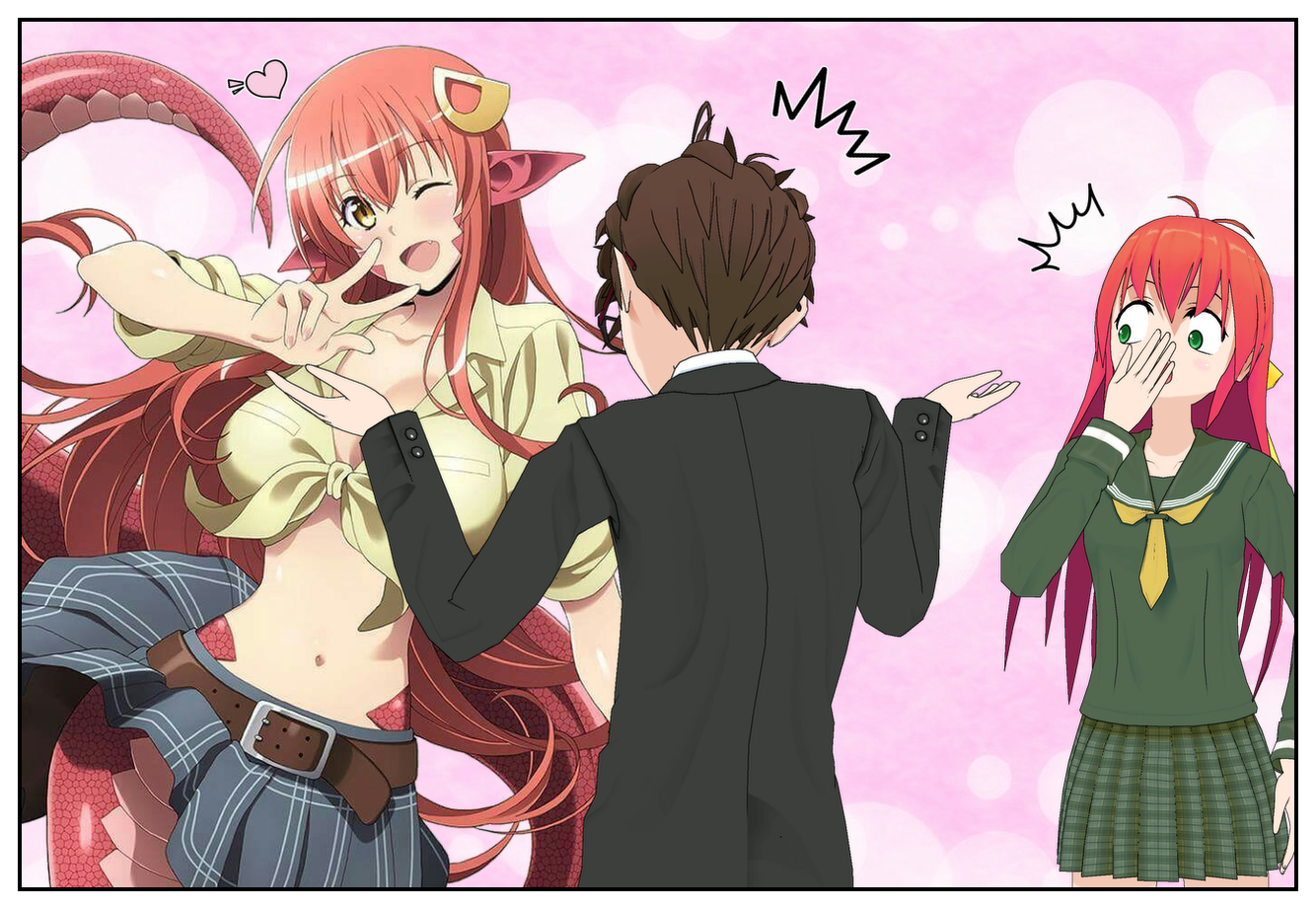
0011_001One of the highlights of the current anime season for me right now is Monster Musume: Everyday Life with Monster Girls (typically shortened, as appears to be the custom nowadays, to MonMusu).

MonMusu is a show that I wasn't sure about when I first heard the concept. I enjoy a harem-type show, I enjoy fanservice and I enjoy slice-of-life, so all the ingredients were there to interest me, but one thing made me hesitate a little: the "monster girls"1 part.

Don't worry, I'm not going to go back on the thousand and one rants I've made on the subject and brand it "creepy" or anything, but the idea of monster girls is an aspect of anime that I simply don't have much experience with. Typically, I've found the harem/fanservice/slice-of-life shows that I've enjoyed the most in the past to have characters that I either find relatable or so overflowing with moe that it's impossible not to fall in love with them. And, I assumed, part of this would be dependent on me finding them physically attractive.

Papi
Papi's introduction in the original manga.

The reason why I was hesitant about the idea of monster girls is that they're a peculiar, striking phenomenon — at least as they're depicted in anime. The girls of MonMusu are all relatively typical, pretty anime girl tropes of various descriptions "up top" — Miia is a ditzy, adoring "childhood friend" type, Papi is a loli, Centorea is a haughty, aloof, "presidential" type with huge knockers — but below the belt they're… well, monsters. Miia is a lamia, Papi is a harpy, Centorea is a centaur.

If you, like me, have no experience with the concept of monster girls, this is initially jarring. Miia, the first to be introduced, is a delightfully adorable (if somewhat clingy) character… and then you look down and she has several meters of giant, thick, scaly snake tail. Papi acts like a little kid despite being a lot older than she looks… but she has wings instead of arms and bird legs. Centorea… well, her arse is a horse. This takes some getting used to — with no small amount of thinking "i-is it all right to find them kind of hot…?" along the way — and I wouldn't be surprised if there are people out there who fall at this first hurdle.

But it may not surprise you to find out that this reaction is, I feel, entirely intended, and in fact a core aspect of MonMusu as a whole. The overall concept for the show concerns "non-human" individuals such as the aforementioned (and a few others who will be introduced in later episodes) engaging in cultural exchange with human society, primarily through homestay visits such as those foreign students sometimes do in the real world. The show's protagonist, as harem shows tend to go, finds himself with a house gradually filling up with chaotic monster girls, and having to come to terms both with their ignorance about aspects of human society and his own feelings towards them.

monmusuuuProtagonist Kurusu is a remarkably tolerant individual who takes most things in his stride — and he proves himself early on to be a dependable, reliable sort of person who stands up to people he feels are "wronging" those that he cares about. The main concept of MonMusu is, of course, a thinly-veiled racism allegory, and Kurusu represents an idealised interpretation of what a truly tolerant, inclusive sort of person should strive to be. He doesn't treat the monster girls any differently to how he would treat human girls; he doesn't refer to them as "monster girls"; he's patient and he explains things to them when they don't understand — which is pretty often, as you might expect. But he's not perfect, either; he's a young man who has no experience with women (and even admits outright that he's a virgin in an early episode) and consequently has hormones going pretty crazy in his body — particularly as the girls engage in provocative behaviour or fight over his affections. He's a good protagonist for this type of show, in other words — and mirrors the journey the audience goes on as they overcome the initial hurdle of trying not to judge the monster girls by their "monstrous" aspects and instead see them as just people.

There's a lot to like about MonMusu so far — and, like most anime shows I've watched that initially seem to be fairly throwaway, dumb fun on the surface, there's a lot more going on than there might appear to be at first glance. I'm really interested to see how it develops, and I'm no longer concerning myself with whether or not I'll have developed some sort of snake fetish or the like by the end of the season!


1 Monster Girl: Girl inspired by mythological creatures; a mermaid would be a popular, recognisable example. Instances in MonMusu range from lamia (snake-tailed woman) to centaur (human head and upper body, horse legs and lower body) and some sort of scary spider lady thing.

2009: Into the Nexus

0010_001

Up until a few days ago, I thought I hated MOBAs1. Turns out I just hated Dota 2.

Actually, let me qualify that. I hate playing Dota 2, but I don't hate it. It's one of those games that, like Dark Souls or any fighting game released after the original Street Fighter II on Super NES, I feel like I'm doomed to never be any good at, and consequently have reached a point of acceptance where I feel I can and should respect it from afar, but not even attempt to get into it. And that's fine by me.

Let me qualify that further by saying that I feel there are way too many MOBAs on the market these days, as many developers appear to be seeing it as the new2 fad to latch onto in the (usually vain) hope that they will attract a large, world-beating multiplayer community.

With all that in mind, well, Blizzard's Heroes of the Storm is really good.

heroes-storm1

Heroes of the Storm is a MOBA that brings together a series of characters from Blizzard's various games from over the years — primarily Warcraft, StarCraft3 and Diablo, with a guest appearance from The Lost Vikings — and throws them into battle against one another in the usual 5v5, destroy-the-other-team's-base-before-they-destroy-yours MOBA gameplay.

Heroes of the Storm has a few little twists on the formula, though. For starters, individual players on your team don't level up independently of one another; you have a collective pool of experience that you share, so you all level up at the same time. You still need to do your part to make sure your team levels up faster than your opponents, particularly in the early stages of a match, but there's less feeling "left behind" than there is in stuff like Dota and League of Legends, in my experience anyway.

Tied in with this is the fact that a lot of the stupid arbitrary maybe-skill-maybe-luck-based bullshit that Dota includes — "Last Hit"4 being the one that always wound me up the most — is conspicuously absent from Heroes of the Storm, and it's much more fun as a result. It means you can focus on the overall team strategy rather than micromanaging your character to such a degree that it can become very distracting — if you're a newcomer, anyway; I'm sure veteran Dota players can Last Hit pretty much at will.

Then there's the fact that there's more than one map, and each map has its own little quirks. Some have two lanes to attack down, some have three. Some have objectives you need to defend to gain a temporary advantage, some have special enemies you need to defeat. Some have collectible items to unleash powerful attacks, and one even has an entirely separate "dungeon" map for you to descend into when the time is right. The objectives and the rewards you get from them don't necessarily make or break a whole battle, but they can make things swing one way or the other — and even provide a means for a struggling team to make a spectacular comeback, rather than being stomped into the ground.

HoSClasses

All of this is wrapped up in matches that generally don't take any longer than twenty minutes to play, as compared to the 30-90 minute slugfests that games of Dota can easily become. It's simple to understand, accessible and actually enjoyable to me, even as a newcomer and someone who is not generally very good at strategy games.

I haven't yet dared play a game against human opponents, but I feel much more inclined to give it a shot in this than in the notoriously elitist and short-tempered communities that play a lot of Dota and League of Legends. If you, like me, have been skeptical about MOBAs but like the idea of them, give Heroes of the Storm a shot. It is free, after all.


1 MOBA: Multiplayer Online Battle Arena, a team-based game where two teams compete for dominance of a map by attempting to destroy the other team's "core" by infiltrating their base.

2 Well, not that new any more, I guess.

3 The way they're capitalised differently has bugged me for years now.

4 Last Hit: a mechanic whereby you only get experience points for a kill if you were the last person to deal damage to it. Satisfying to veterans, the most fucking annoying thing in the world for newbies.

2008: The Wheels Are in Motion

0009_001

Had some exciting conversations today, and I think it's probably all right if I tease a few details of what I've been up to… and what I'm going to be up to.

After my post the other day regarding game criticism, the modern games press and ways that we might all do things a bit better, I got to talking with a few people, one of whom was Mr Matt Sainsbury over at Digitally Downloaded. Matt and I have been trying to find an opportunity to work together for quite some time, but the whole thing of there really not being much money in the enthusiast press scene made me hesitant. I didn't want to get myself into a situation where I was working my ass off and creating work I was really pleased with and not being able to be appropriately compensated for it, in other words. (This isn't anything against Matt or Digitally Downloaded, I might add; rare indeed is the enthusiast gaming site that actually pulls in enough money to pay its staff, which is one of the big problems with the ad-based revenue model I talked about.)

Anyway, long story short: our conversations about magazines attracted a decent amount of interest, and so we decided to discuss things further. And then we decided to act on these discussions by attempting to put together an honest-to-goodness magazine about games, providing the sort of coverage that we want to read, and covering the sorts of games that could really do with a bit more love from the press in general.

Our approach is going to be to take a different "topic" or "genre" (the latter inspired by literary criticism rather than game mechanics) for each issue, and then focus the whole issue around it. We're nailing down the specifics of the complete format, but this will allow us the flexibility to write some long-form essays about topics that interest us, as well as shorter reviews for games that fit in with the topic. Crucially, going with a topic-based approach rather than keeping things tied to whatever has come out recently means that each issue can effectively be "timeless" and collectible, remaining constantly relevant rather than only being relevant for the month of release. The traditional periodical model of games magazines is of no use whatsoever in the age of instant information on the Internet, so it's much better to use the print medium for things it's particularly suited for — in this case, long-form writing presented in a visually attractive manner. (Hopefully, anyway; it'll be my first time flexing my DTP muscles for quite some time!)

Here's a couple of cover mockups I and another Digitally Downloaded staffer put together earlier; that should give you a nice little teaser!

Issue 1 draft cover

draft_2

If you think all this sounds quite similar to what we were doing with the Squadron of Shame SquadCast during the period where we experimented with topic-based shows, you'd be absolutely right — though the nature of print means that the approach is somewhat different. Regrettably, we've really struggled to get people together and/or fired up for recording further podcasts, so that's been on the back-burner for a while. In the meantime, then, there is this project, and I'm really excited about it.

I've written a lot of things over the past few years — not just on this blog, but professionally, and in other personal places, too — but there's something that will always be magical and wonderful about print media to me. The prospect of being involved in print media always makes me far more excited than the possibility of getting my words on a website — and always has done. I think it's to do with the potential for having a tangible, physical object in your hands at the end of it all as the fruits of your labours rather than "just" words on a website. I mean, in both cases the important thing is still the words that you've written, but there's something I just love about being able to hold something I've written, pick it up, show it to people, read it on the toilet and whatever.

So yes. That's what I'm going to be up to alongside the other work I'm doing at the moment. We're aiming for our first issue to release around the end of next month (probably just digitally initially, we'll look at genuine physical print options later), so please watch out for it and consider grabbing a copy! Also, if you're interested in participating and contributing, let me know, privately if need be!

2007: Rias is Love

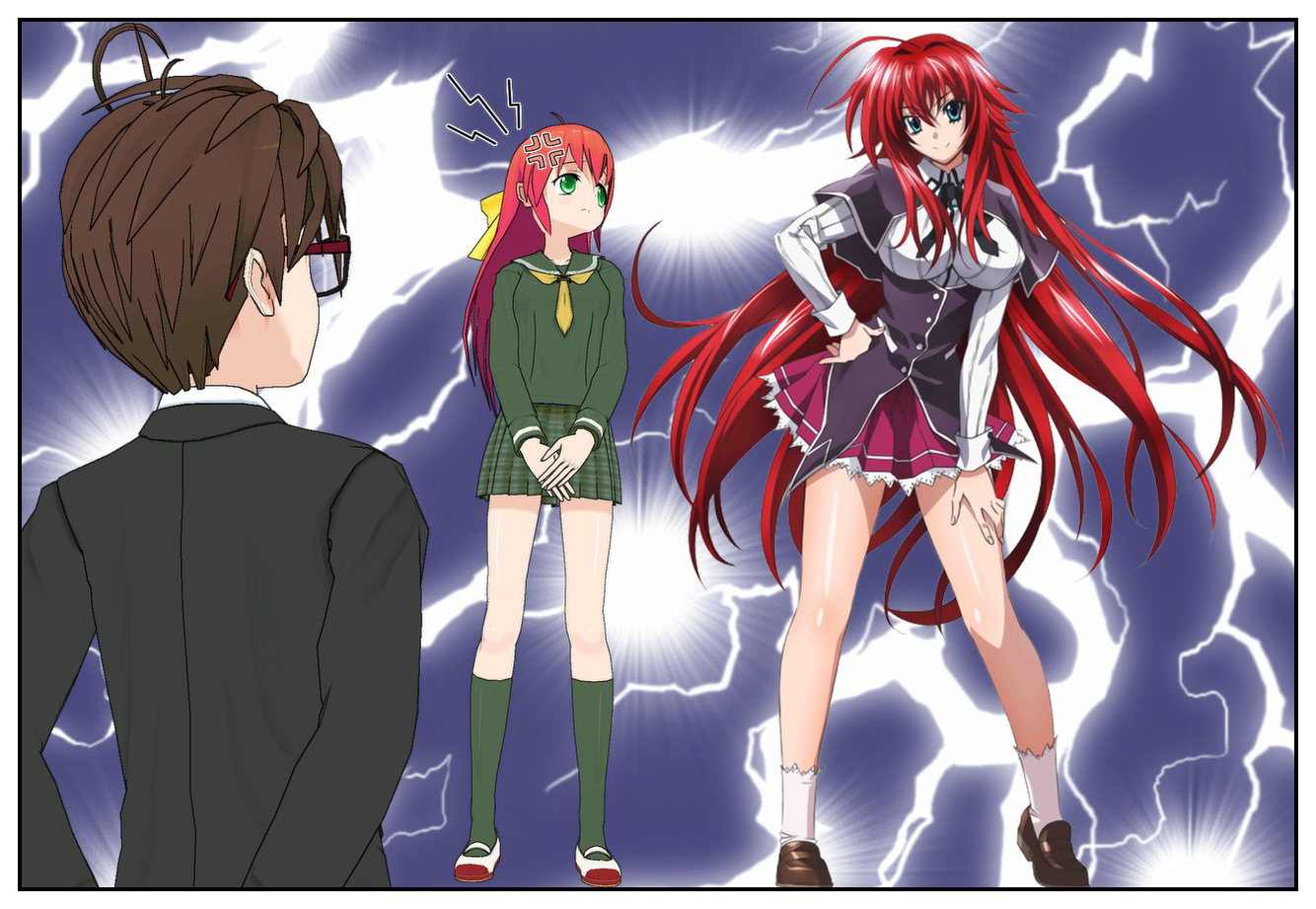
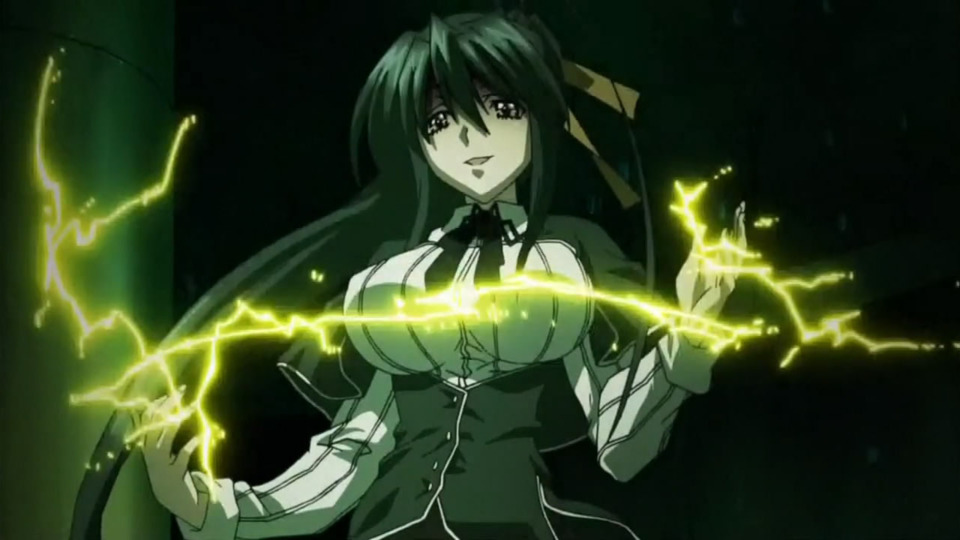
0008_001In between the "current" anime shows I've been trying to keep up on this season, I've been gradually working my way through High School DxD (no, I still don't really know what the DxD is for — likely something to do with devils) and like it more with each episode.

It's very much an acquired taste — it's very in-your-face with its nudity and violence (particularly the former; the latter isn't especially gory as such, but it can be pretty brutal, and there are some fairly strong and unpleasant threats made at the very least) and consequently both of those things are something you have to be 100% on board with before watching, but if you are, it's a wild and thrilling ride with some stunning fight scenes, an amazing soundtrack and some extremely memorable characters whose "iconic" status in the world of anime fandom is well-deserved.

DxD_OCR_Girls_Bckground_Render

I've found High School DxD an interesting show to watch because it's one of the few anime I've watched to date that is largely action-focused rather than slice-of-life. I'm a big fan of slice-of-life, because it appeals to that part of me that is fascinated by watching relationships unfold (and, sometimes, collapse) but as my love of JRPGs and Japanese shoot 'em ups in the video gaming world will attest, I'm certainly not averse to some high-octane action, too, and High School DxD delivers that in spades.

One thing that feels a little jarring when you first come across it in a show like this is how much like a Japanese role-playing game the action sequences are. I don't literally mean that they're taking it in turns to do things, but they do do things like shouting out the names of their moves, unleashing attacks that level the surrounding scenery and take impacts that would flatten a real human being in an instant. It's a particularly Japanese stylistic element — Western superhero-type stuff, which is kind of the closest equivalent, doesn't seem to be quite so overblown in its action sequences except when it's being specifically inspired by anime (the final battle of The Matrix trilogy springs to mind here) and thus it's a bit of an adjustment you have to make. Even as a fan of the aforementioned Japanese role-playing games, where this sort of thing is de rigueur, it took a little while for me to embrace the fact that yes, they were doing these things absolutely unironically — and it was awesome.

4344052-512436-high_school_dxd___03___large_17

Special mention should be given to leading lady Rias Gremory here. While the show is a textbook "harem" setup — pervy main character, bevy of beautiful ladies inexplicably throwing themselves at him, eventual and gradual redemption of protagonist into a generally decent person — Rias is a highlight. If this was a visual novel (which it probably is in Japan) then she would be the "true route". She's a strong, interesting character with plenty of depth to her that is gradually revealed piece by piece over the course of the show's episodes. Her relationship with protagonist Issei is intriguing, too; she knows full well that he is overflowing with teenage hormones, and knows just how to take advantage of this fact — but she also clearly comes to regard him with genuine affection.

And yet she's a devil. This is probably the most interesting thing about High School DxD: it's a show that centres on ostensibly "evil" characters and portrays them as "the good guys". And it's not even portraying them as anti-heroes; when they're not battling in alternate dimensions to figure out whether Rias has to marry Lord Phoenix, the devils are shown responding to peoples' requests for help. Okay, accepting a devil's help does come with a price — making a pact with them — but this is not portrayed as anything that is especially bad for the people involved, and in many cases — particularly when Issei is concerned — the "help" involved is little more than being there for someone who is lonely, or upset, or distressed about something. There is, I feel, some sort of message about religion bringing comfort to those in need here — albeit from the opposite angle to what is typically portrayed.

695242-high_school_dxd___07___large_35

You may well feel I am reading too much into a show that starts its credits sequence every episode with its entire female cast being completely naked (and concludes each episode with all of them doing various stripper dances) but, as I've argued on numerous previous occasions, embracing sexuality in an artistic work doesn't preclude it from having meaningful things to say — and in this respect, DxD is absolutely more than just fanservice. It's an exciting, thrilling show that I'm very keen to see more of. Fortunately, I have another two seasons to enjoy yet…

2006: Interstellaria

0007_001

I'd made a promise to myself not to get suckered into trying any more endearingly retro-styled 2D pixel-art exploration-centric games, because the last few I've tried (Terraria and Starbound spring immediately to mind) ended up being enormously disappointing and pretty boring to me. (I'm not necessarily saying they're bad, mind, more that the Minecraft model of "here's a world, do stuff in it" just doesn't really appeal to me any more.)

However, I happened to see Interstellaria on Steam earlier today, and for just £7 I felt I had to take a look at it. And, for once — so far, anyway — I wasn't disappointed.

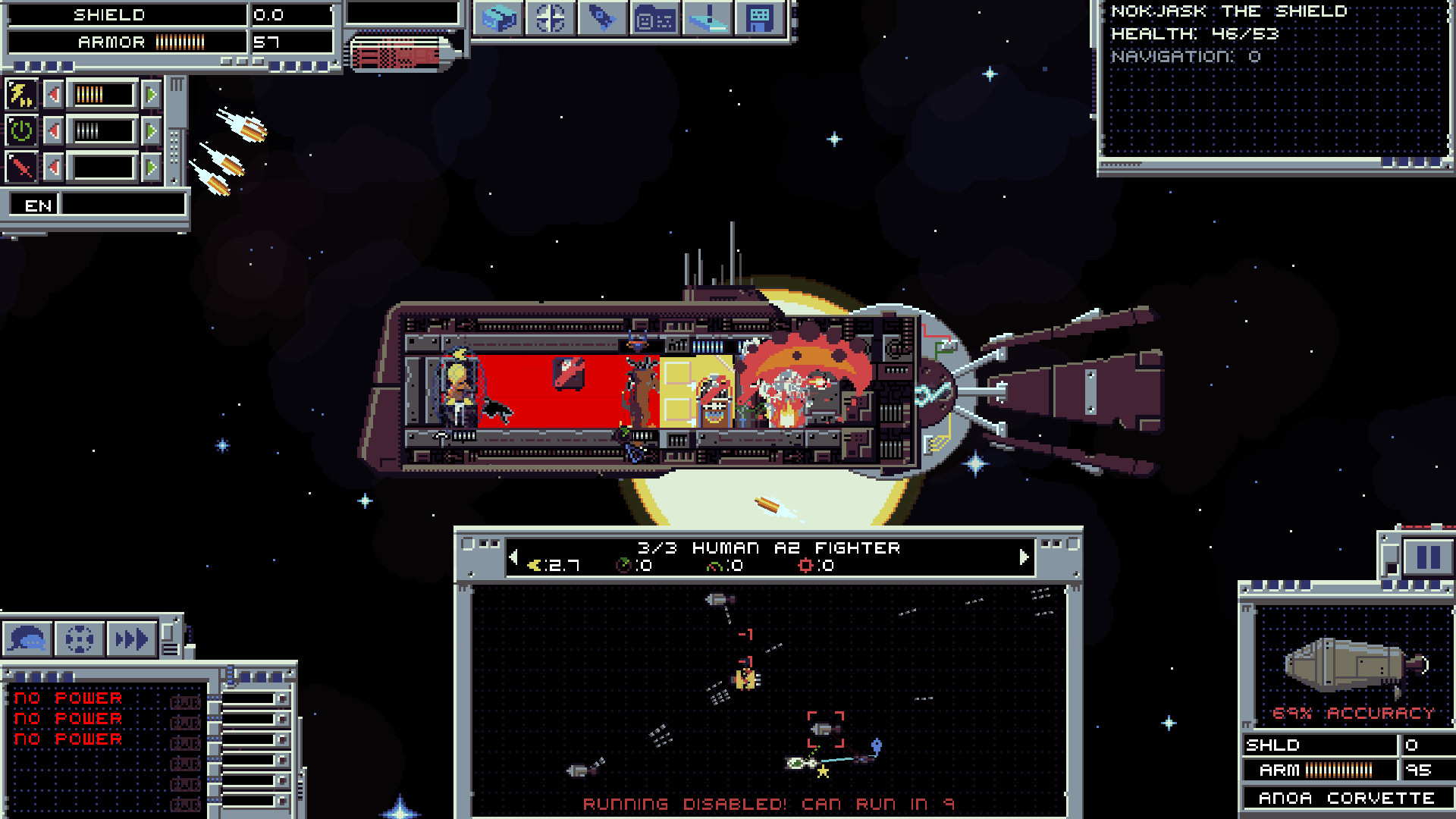
Interstellaria is perhaps best described as a successor to the old late-'80s/early-'90s space exploration games like StarflightStar Control II and Space Rogue. You get a ship, you recruit a crew, you upgrade your ship, you explore the galaxy, you fight things, you discover treasures, you uncover a galaxy-spanning mystery and (perhaps) save the universe in the process.

interstellaria1

Interstellaria throws you straight in to its world from the outset. Thrown out of your erstwhile home by your flatmate who is no longer content to have a scrounging, unemployed wastrel living rent-free under their roof, you take to the streets in search of gainful employment. After dismantling a robot for the nice man who lives just over the road from you, you find yourself recruited into the slightly shady-seeming crew of a starship that is about to take off. The starship begins its grand adventure and fends off a pirate attack in a thinly-veiled combat tutorial, then is ripped to pieces by an unknown enemy craft, but not before your former captain runs away, leaving you in charge of the crash landing from which you are ultimately the only survivor.

Fortunately, it seems, you've crash landed on a planet where there's another starship that's almost in working order. You come across a fellow survivor and team up to get the elderly ship back into space again, and from there it's up to you to start discovering the truth behind the mystery of the "Abductors", a race of aliens who appear to be giving the galaxy a certain degree of grief.

interstellaria2

From here on, you have freedom to explore and do stuff around the galaxy, though you're nudged pretty strongly in the direction of following the plot. Gameplay is split into a few different areas: managing your ship, space combat and planetary exploration.

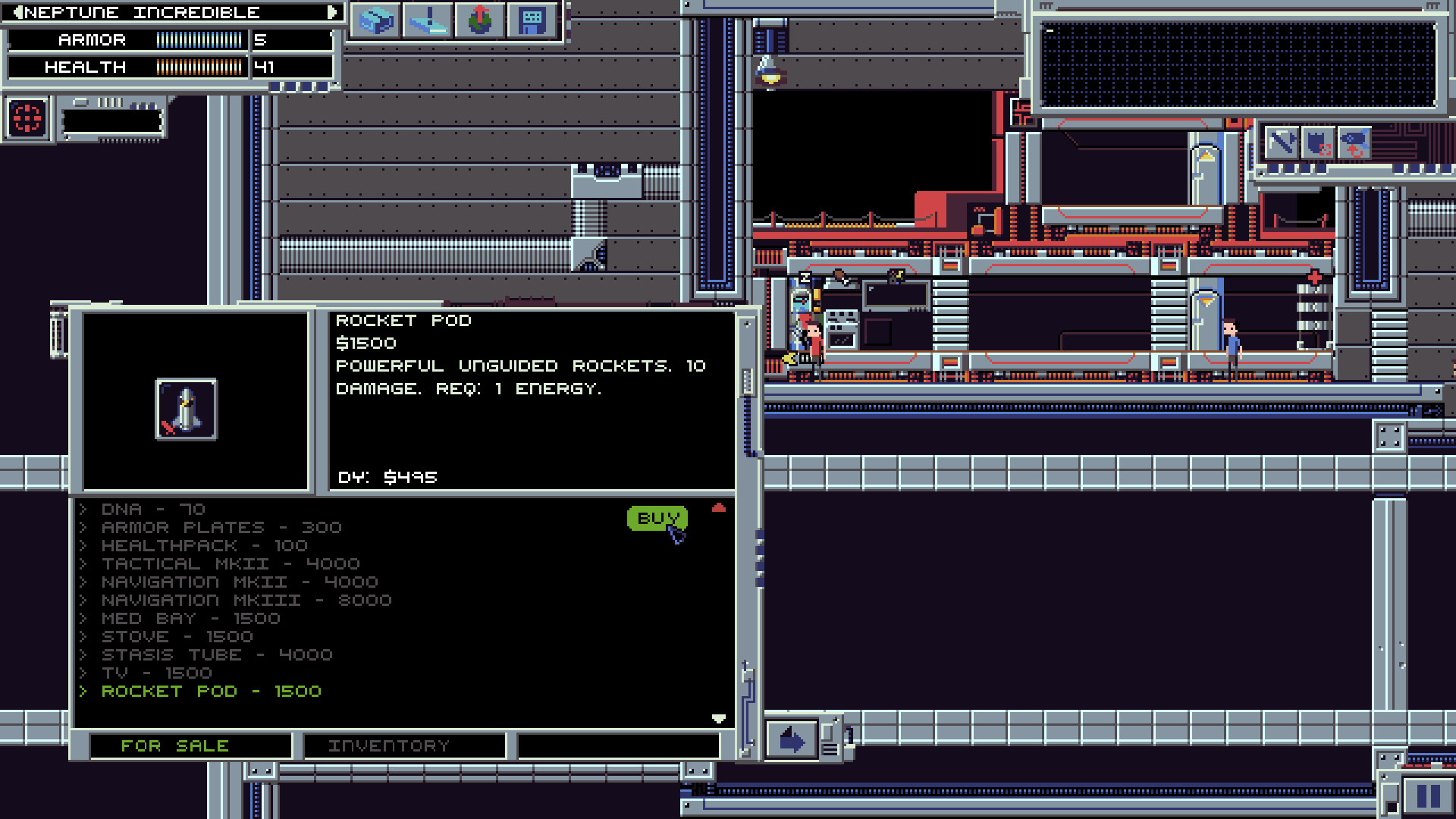
Managing your ship is a little like FTL: Faster Than Light in that you have to assign crew members to stations according to their skills (which develop over time). You also have to take care of your crew's needs — hunger, boredom and fatigue — by providing them with facilities to relieve these issues whenever necessary. The ship you start with has both limited space to include modules — there's pretty much room for basic navigation, sensors, engineering and tactical stations and one of each of the "needs" modules and not much else — and power to devote to them, so you have to juggle power around according to your ship's needs at any given moment.

Get into combat and you'd better hope you remembered to put some power into the weapons systems and charge them up, because you'll need them. Unfolding on a small tactical display (which provides more information if you have someone manning the sensors) you can move your ship around in real time as well as see incoming missiles, cannon fire and other projectiles. In this way, you can dodge and avoid enemy fire while attacking your foe; it's an interesting, slow-paced take on "bullet hell" in some ways, and it's a nicely unconventional take on space combat that is in keeping with the 2D pixel art aesthetic.

interstellaria3

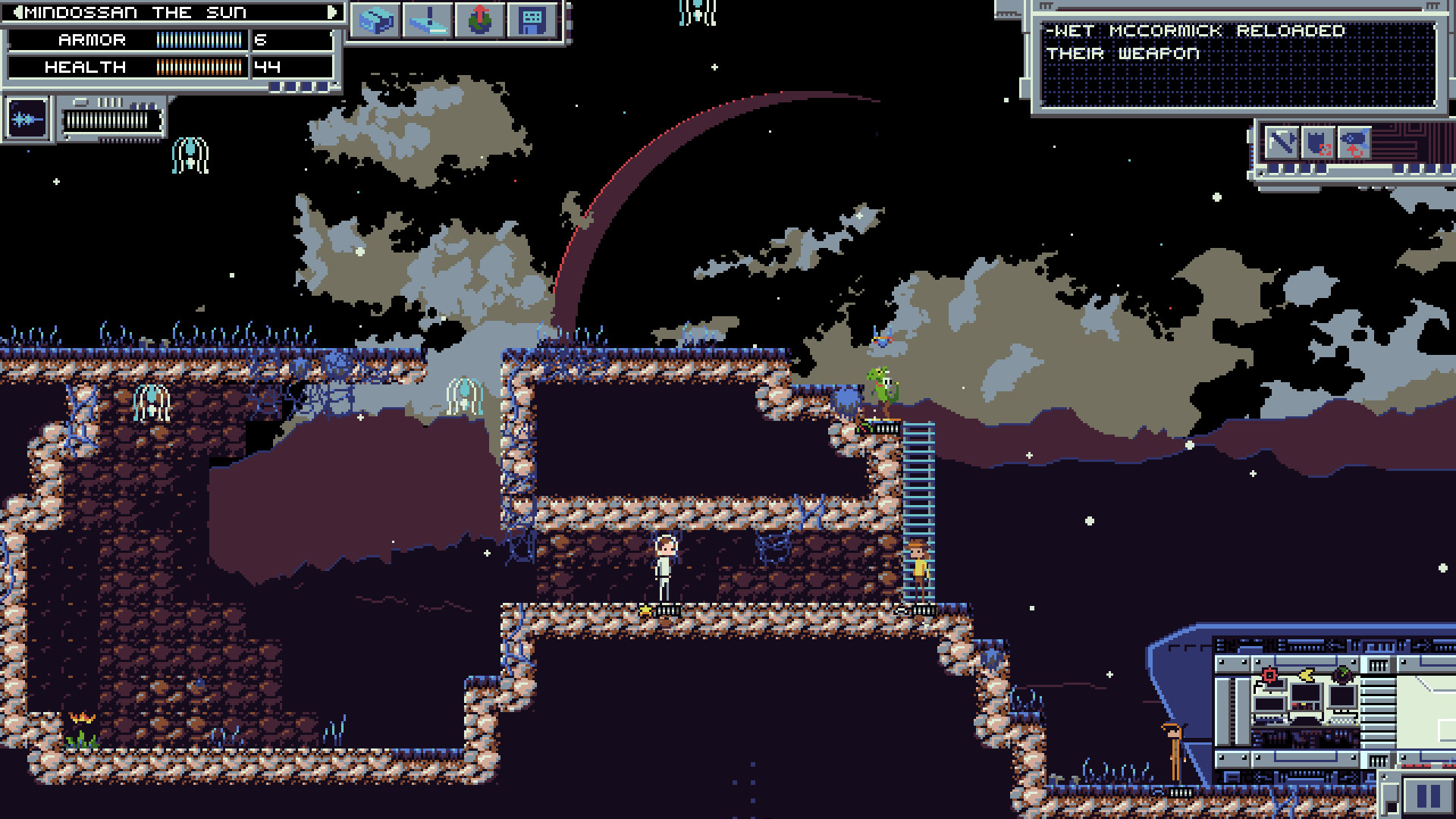
Head down onto a planet and you'll have the option of visiting one or more different landing sites, assuming the planet has a breathable atmosphere. Each landing site is a few screens wide (rather than a never-ending procedurally generated world) and usually features some enemies, some resources to harvest and, occasionally, interesting artifacts, characters and plot-related shenanigans. Controlling each of your crew members independently (or as a group) you can direct them to explore, harvest materials, enter into combat with enemies and interact with the locals. Each planet has a distinctive look, feel and soundtrack (the music is by chiptune artist Chipzel and is really rather good) and manage to feel relatively "organic" without falling back on random procedural generation. (At least I don't think so.)

The game's not without its flaws — the interface is a bit clunky in places, the keyboard inputs aren't as responsive as they could be, camera controls on ground missions are bugged and combat is… lacking in depth, to say the least — but all these issues are more than made up for by the fact that it's the first game in a very long time that I feel has proven to be an adequate successor to the classic space exploration sims I mentioned earlier. It has a lot of potential to improve over time, and is already an interesting, charming game that is well worth your time, particularly if you're feeling nostalgic.

2005: Dan's List of Vita RPGs

0006_001This is one of those posts I write specifically to respond to something someone asked me recently where Twitter or chat messages aren't a particularly ideal solution to give an answer. In most cases, though, people other than the original person who asked can also get something out of my response, so I post it here.

In this case, my good friend Dan Lipscombe enquired as to whether I could give him any Vita RPG recommendations.

Well, of course I can!

Here goes, then. Some Vita RPGs that are either well-regarded or that I have personally enjoyed. This isn't an exhaustive list by any means!

Persona 4 Golden
p4g_screens_adayinthelife_withmarie

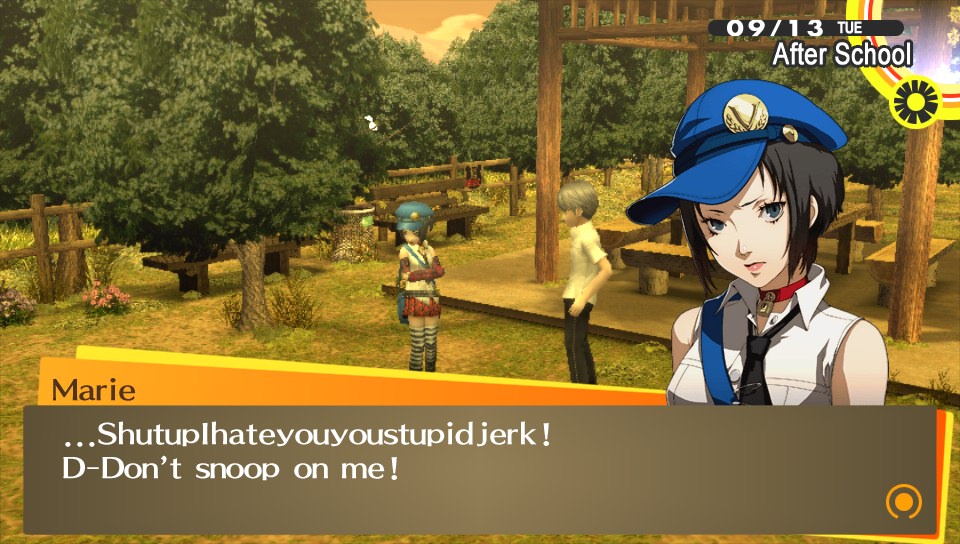
This is the one everyone recommends, and with good reason; it's great. Even if you played the original Persona 4 on PlayStation 2, Golden is worth playing due to its amount of additional content and tweaked gameplay.

If you're unfamiliar with Persona 4, it's a combination of murder mystery, school life simulator, dungeon crawler and Pokemon. Taking on the role of a transfer student to a school out in the sticks of Japan, you start investigating a spate of strange murders that sees people disappearing then showing up a few days later hung upside down from television aerials. It's up to you and your school friends to discover the truth behind what is going on, which is far stranger than you might expect.

Persona 4 Golden is an excellent game that has transcended its originally niche appeal to become a truly mainstream title that most people have heard of by now. It's well worth playing through to completion — though be warned, it is long. Like, 80+ hours long, even if you don't do much of the optional side content. It's a journey well worth taking, though, and the lengthy slog makes the characters' personal journeys all that more meaningful.

Hyperdimension Neptunia Re;Birth
neprebirth

There are three Hyperdimension Neptunia Re;Birth games on Vita. There's no real requirement to play them in order, since they're self-contained stories that don't really have anything to do with each other, but playing them in order will give you a better understanding of the characters — plus an appreciation for how the series has continually grown, developed and changed for the better over time.

Neptunia's concept is based on anthropomorphised game consoles going about their business in the land of Gamindustri. The three games' stories veer off in different directions, but there are usually strong anti-piracy messages involved, along with commentary on not forgetting the past, the futility of fanboyism and general satire of both games industry and anime culture.

The Neptunia games are occasionally clunky, sometimes balanced questionably and not the most technically impressive games you will ever see — but my God, are they ever charming and delightful, not to mention rare examples of comedy and satire in games actually working well.

Hyperdevotion Noire

scr15

A spinoff of the main Neptunia series, Hyperdevotion Noire focuses on PlayStation personification Noire and gives the tsundere princess her own personal story. Unlike the regular Neptunia series, Noire is a strategy RPG a la Fire Emblem and Final Fantasy Tactics. A wide cast of characters, each of whom personify a well-known Japanese game series (such as Final Fantasy, Dragon Quest and Resident Evil) all have unique abilities, strengths and weaknesses, and "gimmicks" in each stage force you to think a lot more strategically than "charge at the enemy and cut them down in order".

I'm not normally very good at strategy RPGs, but Noire is accessible, fun and enjoyable — plus it continues the series tradition of good humour, charm and satire, and Noire is absolutely a strong enough character to carry her own game.

Demon Gaze
demon-gaze-prometh

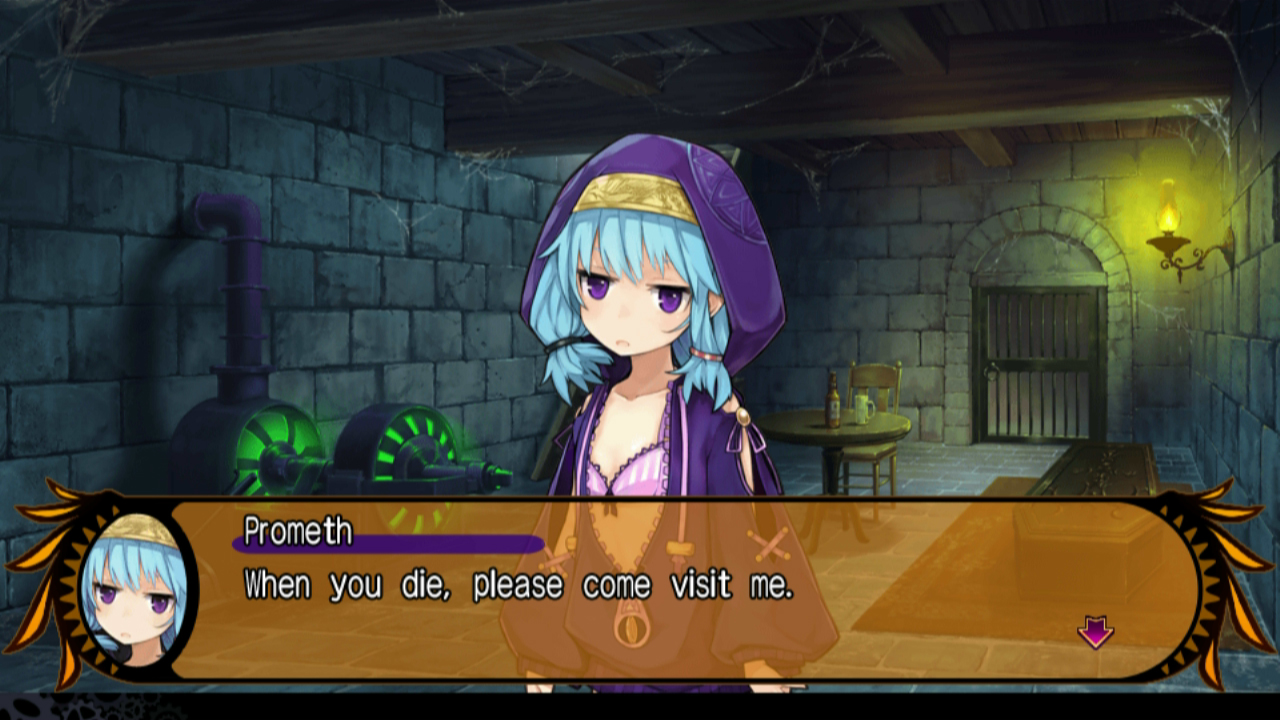
If you liked old-school dungeon-crawlers on PC — I'm talking stuff like Wizardry, Lands of Lore and Might & Magic — then you might want to give Demon Gaze a shot. Creating your own custom party of adventurers, you venture forth into an array of dungeons to battle terrible demons, capture them and make use of their power.

In between your adventures, there's a delightful little soap opera going on in the inn that you and your party call your home, with a cast of colourful characters getting up to all manner of mischief. It's a lovely blend of the narrative-centric approach that more conventional Japanese RPGs tend to take, and the mechanics-centric, challenge-heavy nature of first-person "gridder" dungeon crawlers. It also has absolutely gorgeous artwork, and an unconventional but enormously catchy soundtrack that makes use of Vocaloid voice synthesisers.

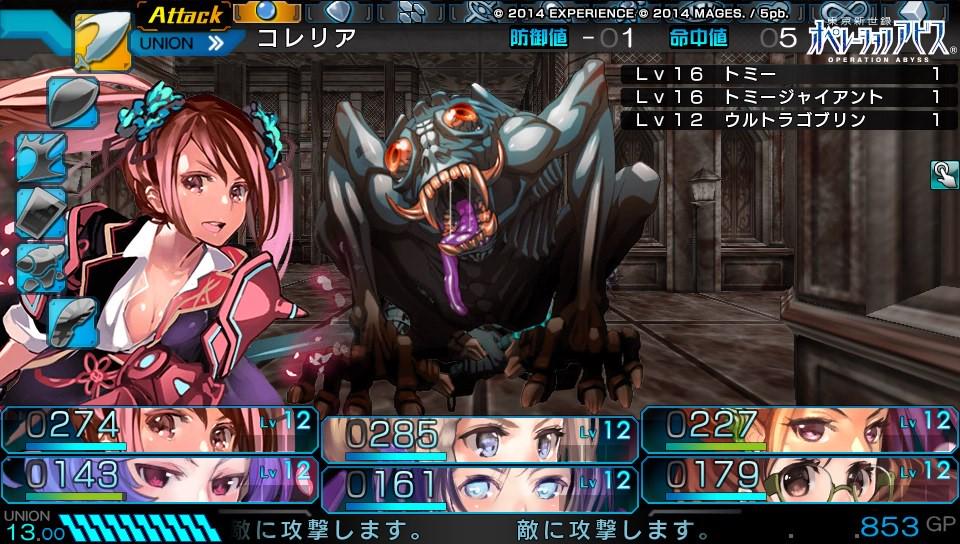
Operation Abyss
operation-abyss-new-tokyo-legacy

I haven't actually played this one yet, but it's on my shelf; given that it's from the same folks who made Demon Gaze, though, it's a fair bet that it will be similarly good, and the people I know who have played it have enjoyed it a whole lot.

Trails in the Sky
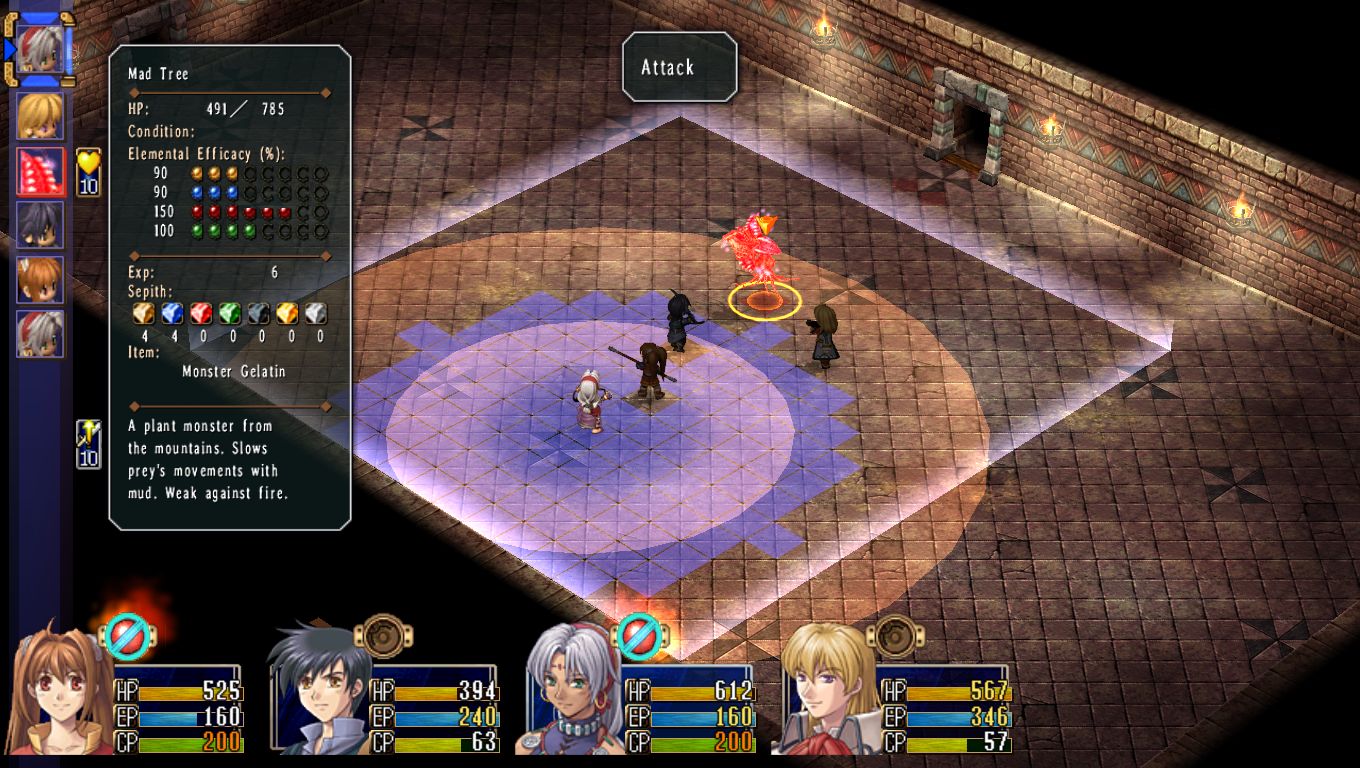
Technically a PSP game, this is downloadable and playable on Vita, and well worth your time. Following the adventures of Estelle and her adoptive brother Joshua as they attempt to become full-fledged "Bracers" — essentially state-supported mercenaries — Trails in the Sky is a sprawling adventure with a beautifully crafted world, some wonderful writing and a fun battle system.

The game blends the sidequest-centric nature of Western RPGs with the more linear storytelling typically found in Japanese RPGs to great effect. The sidequests each have their own little stories and characters to explore, and really help the world to feel truly alive.

Criminal Girls

This one won't be for everyone due to its relatively explicit sexuality, particularly exploration of sadomasochistic themes. If you can deal with that sort of content, though — along with the fact it's very obviously a PSP port — Criminal Girls tells a fascinating tale of personal redemption for a colourful cast of characters as they come to terms with traumatic experiences from their past and attempt to move beyond them.

Criminal Girls is noteworthy for its exploration of "trust" through both its narrative and its mechanics — I wrote in more detail on this topic here.

Akiba's Trip

Not an RPG in the typical sense, Akiba's Trip is most akin to Sega's Yakuza series in that it provides an open world that covers a relatively small geographical area — in this case, Tokyo's Akihabara district — and a ton of things to do, plus a nigh-unparalleled sense of atmosphere thanks to its detailed world.

Thrown into the underworld by your discovery of — and recruitment into — the ranks of the "Synthisters" (essentially synthetic vampires), it's your job to find out where this scourge has come from and put a stop to it — while simultaneously keeping your little sister happy, taking photos for tourists and attempting to end up in the arms of one of the game's lovely leading ladies.

Akiba's Trip has fun brawler-style combat with a huge selection of upgradeable weapons ranging from baseball bats to bus stop signs and computer monitors. Combat involves smacking Synthisters around a bit until they're in a position where you can grab their clothes and rip them off them, which exposes them to sunlight and, in true vampire tradition, causes them to combust.

Steins;Gate

This isn't an RPG at all, but if you own a Vita (or PS3… or PC) and haven't read this extraordinary visual novel, you need to right now. Blending real-world urban myths (such as the legend of John Titor and questions of what CERN are really up to with that big underground particle accelerator) with a creative yet plausible interpretation of how time travel and parallel worlds might work, Steins;Gate follow the adventures of an impressively unreliable narrator as he tries his best to stop something horrible happening to someone he cares about.

Here's a full review of it.


There are tons more great RPGs and visual novels available on Vita, but I've rambled on for over 1,200 words now, so that should be enough to get you started. Hope you enjoy at least some of these!
2004: Some Idle Thoughts About Game Reviews, Game Criticism and Alternative Ways of Doing Things

0005_001I participated in an interesting conversation on Twitter earlier today (in fact, it's still going on as I type this) on the subject of game reviews and game criticism.


It's been pretty apparent for a while now that the current model of reviewing games is not ideal for the industry as a whole. From a consumer perspective, it's arguably valuable to have some sort of thoughts up by the time a new product is released, but this leads to a "race to be first" (or, at the very least a "race to be up by embargo time") when it comes to coverage which, in many cases, can lead to the sacrificing of depth in the name of speed.

Plus there's the matter of opinions changing over time, and initial opinions being incorrect, ill-founded or based on limited exposure and immersion.

Games-X was one of the earliest magazines my brother worked on -- and, to my knowledge, the only weekly newsstand games mag.
Games-X was one of the earliest magazines my brother worked on — and, to my knowledge, the only weekly newsstand games mag.

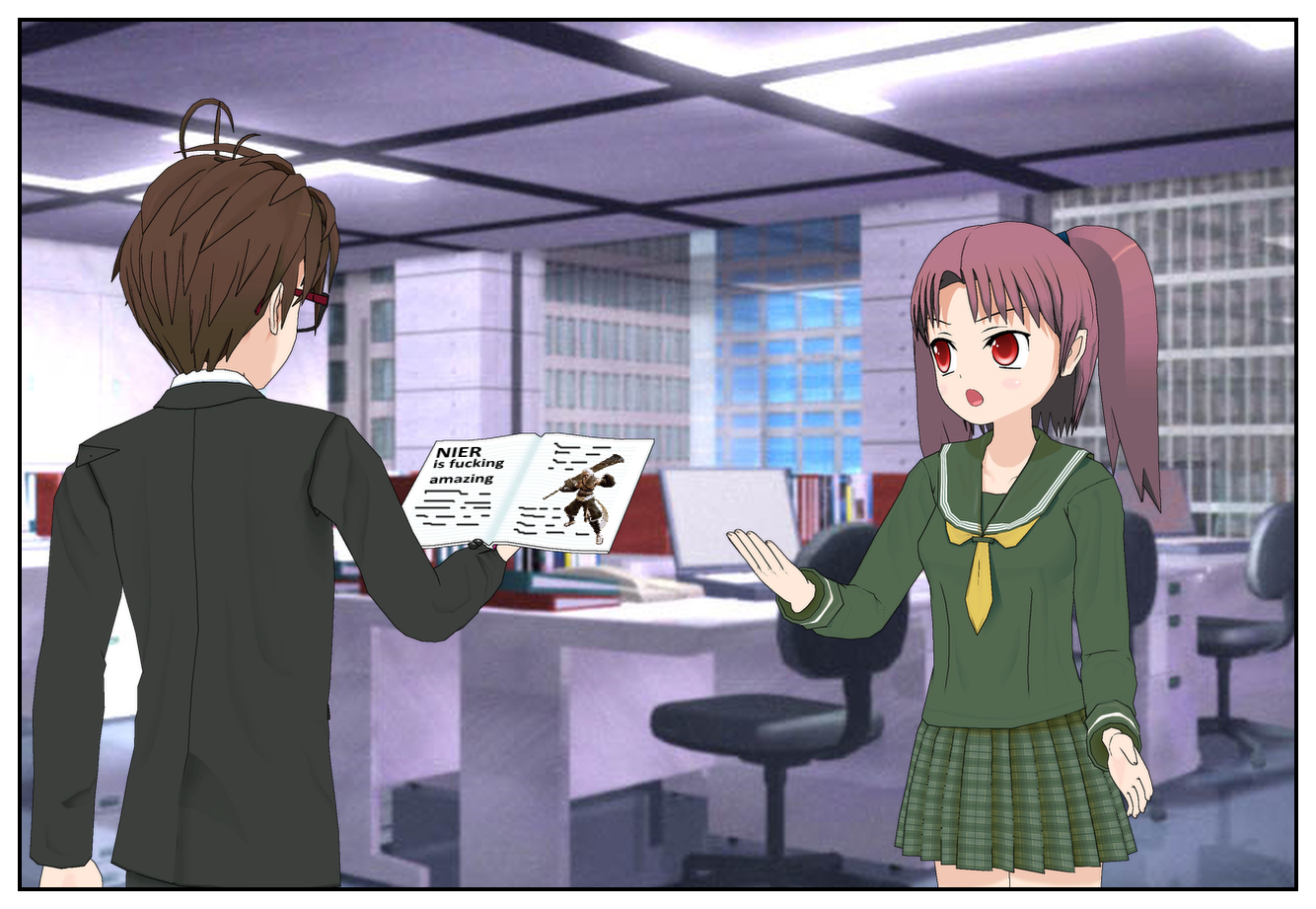
"I like how no-one criticises Nier now," tweeted Mr Matt Sainsbury of Digitally Downloaded, one of my favourite places to go for fair, balanced coverage of the sort of things that I'm into these days. "Now everyone remembers it as pure art. Pity they didn't realise this when the game was new. Actually, screw it. I'm calling this now. 50 years from now Nier will be the games industry's Citizen KaneCitizen Kane only got the respect it has now after a couple of decades. I think Nier will be that game."

Matt has a point. Nier's Metascore — a somewhat questionable aggregation of a variety of review scores from across the Internet through unclear, possibly not particularly scientific means — sits at 68 for the PlayStation 3 version and 67 for the Xbox 360 version. Taken as a pure figure, 68 is well above average, but in the world of games scoring, "not quite 7 out of 10" is regarded as a "bad" game that most people will avoid. (There are exceptions to this rule, of course, like me — someone who gladly paid money for Hyperdimension Neptunia despite its Metascore of 45 — but for the most part, people will avoid anything under about 80/8 out of 10 or so.) Consequently, Nier was regarded as "not very good" on its original release, and a lot of people avoided it as a result.

Edge is one of the few remaining newsstand magazines, but it suffers a little for being both mainstream and industry-centric.
Edge is one of the few remaining newsstand games magazines, but it suffers a little for being both mainstream and industry-centric.

Zip forward to E3 of this year, however, and by far the most exciting announcement for many people was the impending sequel to Nier, developed as a collaboration between original director Yoko Taro and Platinum Games. Apparently, it seems, in the intervening period between Nier's original release and its mediocre reviews, a number of people decided to take a chance on it despite its lukewarm critical reception and discovered that, contrary to what the reviews suggested, it is actually a beautifully crafted work of art that not only tells a compelling story, it actively subverts and deconstructs the audience's expectations in terms of both narrative and mechanics. Unfortunately, that 68 Metascore stands as a permanent blot on its copybook, so it will forever be regarded as a work of "unappreciated genius" by some, and a game not worth bothering with by many others. It's astonishing that we're even getting a sequel at all.

The case of Nier highlights a key flaw in the current model of video game reviews and criticism, then: the fact that the value of a work doesn't necessarily become immediately apparent, and that it's often necessary to spend a protracted amount of time both engaging with the work and reflecting on it in order to come up with some truly meaningful thoughts about it. Meanwhile, the current review model doesn't take into account the matter of specialist, niche interests, instead approaching every review from some sort of non-existent "everyman" perspective and concentrating far too much on a title's immediate appeal rather than its lasting cultural contribution (if any) and, as business types are wont to say, its "long tail". (This doesn't even get into the matter of games that actively grow and change over time like MMOs, but that's a subject for another day.)

I've been thinking about how things might be done a bit better, assuming money were no object — the reason we have today's "race to be first" model is due to the press' over-reliance on pay-per-click advertising, so until we find an alternative means of getting people to pay for content, whether or not it will make money is always going to be a determining factor here.

Specialist games magazines do exist and can do well -- PC Pilot's been around for a while now.
Specialist games magazines do exist and can do well — PC Pilot's been around for a while now.

My ideal scenario would be an outlet or publication that employs specialist writers in various different fields, rather than a small team attempting to cover as many bases as possible. Perhaps the publication itself has a laser-sharp focus on a particular genre or style of game, or perhaps the writers, between them, divvy up the things they feel comfortable and confident writing about.

Specialist writers is a starting point, but it's not enough. Take the "race to be first" out of the equation, too. Give writers sufficient time to immerse themselves in a particular work in order to be able to form some coherent, deep and meaningful thoughts about it, whether positive or negative. Allow them the opportunity to develop feelings towards a game that go well beyond "immediate impressions" and instead enter the realm of true criticism and analysis. Give the games the chance to demonstrate what their cultural impact, if any, is.

So how can this be done? It's difficult to say, but I can't help but feel that the return to a traditional magazine model would probably be a good way to go about doing this. There are a few reasonably successful Internet-distributed modern gaming magazines around these days — Kill Screen and Five Out of Ten spring to mind — but these tend to still have a fairly broad focus on titles with mainstream appeal that have already been talked about to death. The current Five Out of Ten, for example, features articles about Mario Kart 8, Bayonetta, The Binding of Isaac, Baldur's Gate, XCOM and Magic: The Gathering, all of which are subjects that have had no shortage of coverage over the last 20 years or so. Granted, Five Out of Ten (and Kill Screen, for that matter) tends to come at these subjects from unconventional angles, but it's still wringing out material from the same old games we read about on big sites like GameSpot, IGN and their ilk.

The reason I feel a magazine-based model is appropriate is because you can set a much more infrequent publication cycle. There's no rush to get coverage out on day one, so long as there's at least some relevant material in each issue. When you have a set deadline and publication date, it's much easier to plan in advance what you're going to cover when. And if you're planning this far in advance, you can elect to focus on a much smaller number of titles and approach them from a specialist perspective rather than taking a scattershot approach of trying to cover everything.

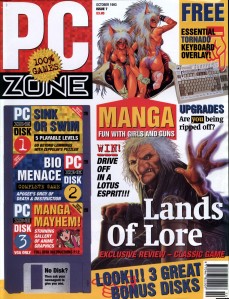
The sadly defunct PC Zone was noteworthy in that its online material complemented rather than recreated its hardcopy content. Also it had a cover feature about hentai games way back in 1993. Bold!

Now, here's the thing. A magazine is all very well and good, but given the average attention span of people on the Internet these days, it's important to have some form of ongoing conversation up and running, too, so I feel the magazine itself should probably be supported by regular coverage of some description. Crucially, though, this regular coverage shouldn't fall into the trap of being the usual news/reviews/previews model, because otherwise why bother with the magazine side of things at all. Instead, leverage the immediacy of Internet blogging and make the daily updates more personal to the individual writers; rather than an individual article being a review of a specific thing, perhaps it could be their thoughts on a pertinent topic of the moment — or here would be a good opportunity to present some initial impressions of a new game without giving a final judgement on it.

My idle thoughts on this would see a magazine released at regular intervals — perhaps every two months, particularly if it would have to start on a volunteer/contribution basis — along with one daily online update at a predictable time from the regular "staffers". Ideally there would be enough staffers for there to be a different person writing each day, allowing the audience to develop a personal relationship with favourite writers and know that, say, they could read my thoughts on Tuesdays, or Writer B's comments on Wednesdays, or whatever. This way the content is kept flowing and relevant on the Internet — as well as providing a "personal" touch that allows the readers to feel closer to the writers, which is the biggest strength of immediate Internet writing — but it affords the writers the time to immerse themselves in the things they want to write in more detail about for the more lengthy, substantial magazine articles.

As for funding, well, the ad-based model needs to go away ideally, though the use of daily updates could still bring in a few pennies if the content is compelling enough. Instead, the magazine — or indeed the content as a whole, including the website — needs to be compelling enough to convince people that they would like to contribute regularly to it through a service like Patreon or the like, or simply through purchasing individual copies of the magazine as they're released.

I wonder if this is in any way a viable model for doing things. I'm actually quite curious to give it a go, but I wouldn't be able to do it by myself by any means. If any of the above is of interest to you, then — and you're interested in taking it seriously and giving it a solid shot to see what happens — then get in touch and we can talk more about hammering out some details.

2003: Sound! Euphonium

0004_001

Anime, as a medium, is most well-known for its more exaggerated aspects. Exaggerated action in titles like High School DxD, Attack on Titan and Sword Art Online; exaggerated comedy in shows like To Love-Ru, Squid Girl and Monster Musume; exaggerated horror in shows like Hell Girl and… uh… some others (horror is one angle I'm not massively familiar with as yet). Even pornographic hentai anime tends to be exaggerated, with participants screaming in pleasure (and usually narrating the action just in case it wasn't already abundantly clear what was going on) and gentlemen ejaculating with the force of Niagara Falls several times in the space of five minutes without any need for recuperation in between.

Uh, what was my point again? Oh, right. Anime is most well-known for being exaggerated. But occasionally something comes along that subverts your expectations and proves that not only is anime a particularly good medium for this sort of exaggerated action — the use of animation means that you can depict things that are physically impossible and/or impractical to show with traditional live-action special effects, as I discussed some time ago — but it's also a really solid medium for down-to-earth, human, heartfelt and honest drama.

There are a number of good examples of relatively "low-key" drama anime; the most well-known ones are things like Clannad and AnoHana, which are both notorious for being particularly emotional, particularly towards their conclusions. More recently, I've been very much enjoying a curiously named show that was fairly popular last season: Sound! Euphonium, also known as Hibike! Euphonium or simply anime-eupho depending on who you're talking to on which platform.

euphonium_y02

Sound! Euphonium is a show, like most anime, about high school kids. (There's a very good reason for the perpetual use of school as a setting for anime, but that's a subject for another day.) As the peculiar title suggests, it's also a show about music. But this isn't an exaggerated Love Live! kind of affair, where the kids involved have unrealistic goals that they manage to magically attain without any real explanation (not that there's anything wrong with that; I adore Love Live!) — Sound! Euphonium focuses on the rather mundane experiences of a school concert band.

Sound! Euphonium centres largely on Kumiko Oumae, a euphonium-playing girl just starting her high school career shortly after her middle-school concert band just missed out on attending a national competition. Kumiko is wracked with guilt over her last words to her former bandmate Reina Kousaka, who was utterly convinced that their band deserved to go the distance — Kumiko disagreed and incredulously asked Reina if she truly believed that they would have ever made it to Nationals. Reina, understandably, was upset at this line of questioning, and the two parted on bad terms.

Hibike! Euphonium - 03 - Large 32

Kumiko is surprised to discover that Reina is also attending the high school she chose; she's surprised because Reina has a great deal of talent on her instrument — the trumpet — and the ambition to compete at a national level. Meanwhile, the school they are both attending has a concert band that, upon their arrival, is best described as somewhat mediocre; Reina had her pick of the prestigious schools in the area, many of which have much better concert bands, but she chose the same one as Kumiko for some reason. It later transpires that the reasons for her decision were something to do with the teacher who takes over coordination of the concert band — and who encourages the students within to push themselves as hard as they can through some harsh but fair methods — and perhaps even something to do with her feelings for Kumiko herself.

What I particularly like about Sound! Euphonium is the fact that it's one of the most realistic depictions of high school music I've ever seen. It takes great care to show characters using their instruments correctly and realistically — and not just while they're playing them; incidental footage during scenes shows characters cleaning their instruments and performing proper maintenance, too. Having lived the concert band life at school — including some competitions and tours, though nothing at a nationally recognised level — I find Sound! Euphonium's depiction of this aspect of high school life enormously compelling and pleasantly nostalgic.

Eupho

One thing it captures particularly well is the inherent romanticism and intimacy I've always found in making music as an ensemble. During my hormonal teenage years, the majority of people I found myself attracted to were somehow connected to me through the arts in one way or another — primarily through music. While my feelings were usually unrequited, that never really mattered too much; the thrill of sitting next (or near) to someone I liked and making music with them was usually more than enough. The feeling of "butterflies in the stomach" I'd get on the evening of a concert performance as I shared my nervousness with my friends and the object(s) of my affections was something I found intoxicating and exciting; while it was never the primary reason I enjoyed making music — that was always the simple joy of… well, making music — it was a happy perk.

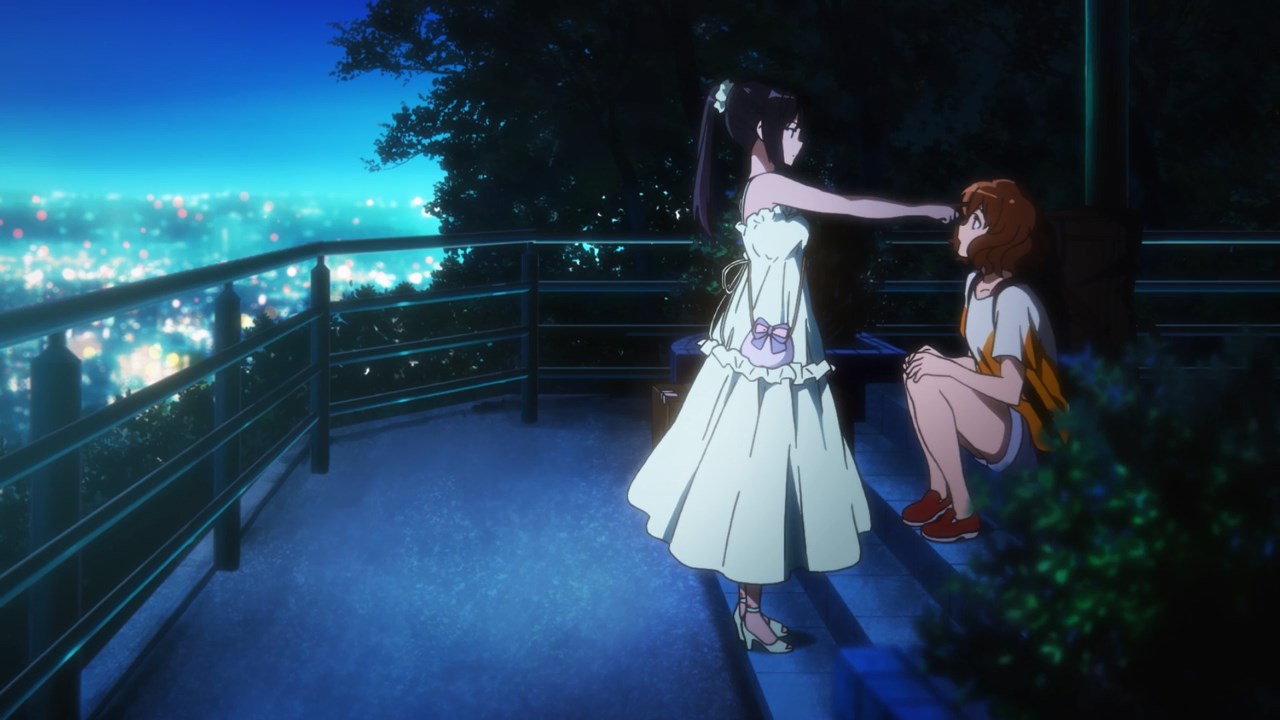
Sound! Euphonium captures this feeling particularly well in its later episodes. An extremely intimate moment between Kumiko and Reina in one episode in particular makes for one of the most honest, heartfelt scenes I've seen in any story for quite some time — and after this scene has taken their relationship to a new level (no, they don't get it on or anything like that, before your filthy mind starts running away with you, pervert) the chemistry and electricity between these two characters is palpable: every glance between them becomes wistful and lingering; every touch becomes sensual and exciting; every unspoken understanding between them clearly deepens their connection without a single word being said. I haven't yet seen the entire run so I don't know how — or if — their relationship resolves itself or pans out, but at the stage I'm currently at, it's enormously exciting and compelling to see.

euphonium_y00

Sound! Euphonium is well worth a watch, then, particularly if you're a fan of somewhat more understated drama. Kumiko is a fascinating character, clearly struggling somewhat with a degree of social anxiety and depression — which, as you may well expect, makes her enormously relatable for me — and her relationships and interactions with her friends and bandmates make for compelling drama. It's a very honest, heartfelt show, and a marked contrast to the more exaggerated end of the anime spectrum — and for that reason, I have a feeling it will stay with me long after I've seen the final credits roll.

2002: Arcade Games are Alive and Well

0003_001

We live in an age where the default assumption about video games is that they will be big-budget affairs with star-studded voice casts, more pyrotechnics than a Michael Bay movie and, indeed, a budget to match. The reason for this is that many of the games that become household names — Call of Duty, Assassin's Creed, Grand Theft Auto — very much fall into this category, at least partly due to their marketing budget, but also due to their perceived "quality". Games have moved on since their roots in the '70s and '80s, or so the popular theory seems to go, and we should be looking to our interactive entertainment for challenging creative works that offer interesting new spins on social themes; deep emotional narratives; and innovative play mechanics.

As someone who grew up roughly alongside the birth of gaming (give or take a few years; I wasn't quite around for Pong) I think I speak for many other members of my cohort when I say that the above is all very well and good and should be celebrated when it's done well, but sometimes all you want to do is shoot or punch the shit out of some things without having to think about anything too complicated.

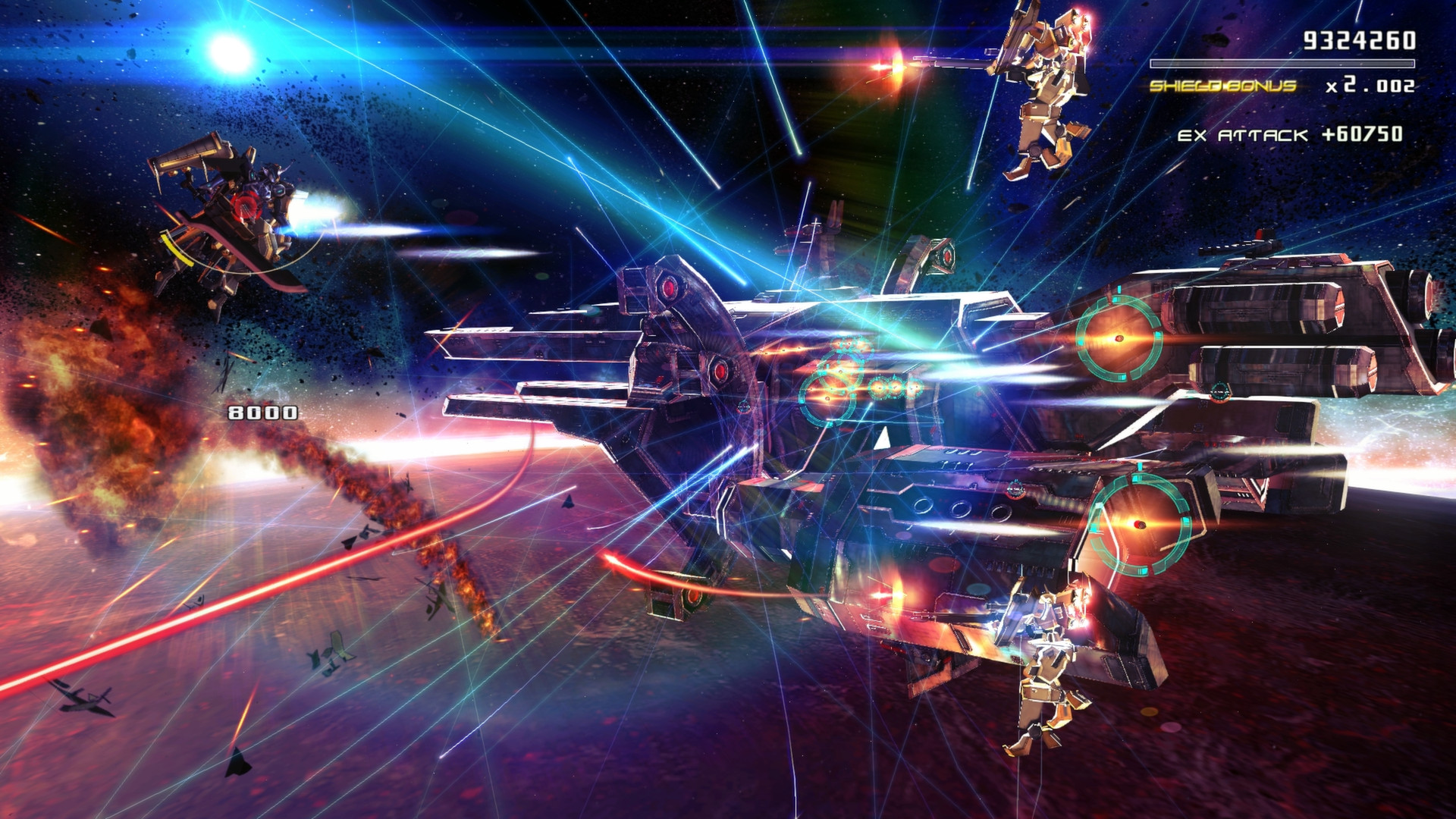
Astebreed is a great shooter with a ton of immediacy but a rewarding amount of depth for those willing to learn its intricacies.

One of the things I've been gratified to discover about the PlayStation 4 as a gaming platform is that it appears to be becoming an excellent home to a wide variety of arcade-style experiences as well as the big-budget, big-name games of today. The PC has been happily championing this sort of thing for a while thanks to its well-established digital distribution systems, and the Xbox 360 looked for a while like it might be assisting in the revitalisation of the "arcade-style" experience thanks to Xbox Live Arcade (which started to disappear up its own arse once things stopped costing 400 or 800 Microsoft Spacebux and instead took 1200 as the "default") but I feel like this is a field where the PlayStation 4 in particular is really starting to come into its own.

While I'm still ploughing through Omega Quintet on PlayStation 4 (I'm approaching the Platinum trophy now, at last!), the last few games that I've bought and really enjoyed on the platform are all short, arcade-style, score attack-type titles that are just plain fun. None of them are trying to say anything particularly deep and meaningful (with the possible exception of Astebreed, which has one of the densest half-hour narratives I think you'll ever find in a video game) and are instead focused on the simple joy of play: the thrill of taking on seemingly insurmountable odds, the fun of seeing scores climb into the millions, the satisfaction of beating your friends.

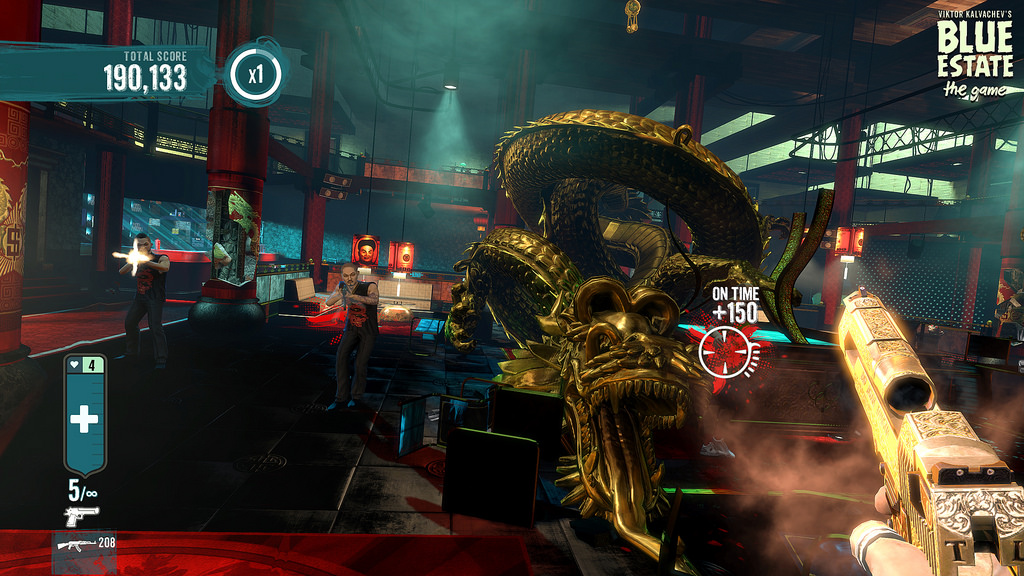
Blue Estate is pretty much a PS1/Dreamcast-era lightgun shooter, making good use of motion controls to approximate the arcade experience.

The games in question — and doubtless there are more, but these are the ones I've been particularly enjoying — include cinematic Japanese shoot 'em up Astebreed, Western bullet-hell shooter Jamestown+, the Defender-inspired Resogun, the inordinately satisfying rock-bursting shmup Super Stardust and lightgun-style rail shooter (a genre I thought was dead) Blue Estate. If you're looking for a quick fix of gaming and don't have the time or inclination to sit down and start chipping away at something more substantial like an RPG, I can happily and confidently recommend all of the above; they're fun, they have a ton of immediate appeal but a lot of hidden depth, they're easy to understand and teach to others (and, in most cases, have some form of multiplayer mode) and, for those concerned about such things, they're cheap.

Smoky, beer-scented arcades may well be fast becoming a thing of the past, but the arcade-style experience still very much lives on at home on PS4… and on Vita too, for that matter, but that's probably a whole other day's post, so we'll leave that for another day!