2325: Science Club

0325_001

I've never thought of myself as particularly "scientifically minded" — I always felt like I hated maths at school, although thinking about it I did end up doing reasonably well at it at GCSE level, and I did actually genuinely enjoy science lessons — but in the last few years in particular I've found myself very interested in TV shows that deal with scientific principles, preferably in an entertaining sort of way.

There are a few shows I have in mind for this sort of thing which if you, like me, are interested in generic sciencey things but perhaps don't have the opportunity to study them as a career (or as a hobby), you might want to check out.

First up is Brainiac, which I'm pretty sure I've talked about on these pages before. Brainiac is a show that aired on satellite channel Sky One between 2003 and 2008. Featuring Richard Hammond (best known for Top Gear and Total Wipeout) in the presenter's chair, sternly reminding viewers Not To Try This At Home, the show was designed to be "science entertainment" in that it set up all manner of experiments with genuine scientific principles in mind, but executed them with a fair degree of tongue in cheek. This made it both genuinely interesting and informative to watch as well as being something you could just chill out in front of and have a good laugh with. Despite having watched most of the episodes several times, I happily return to it every so often; it's a pity it's not on a service like Netflix for some better quality videos — I have to rely on dodgy downloads or YouTube at present.

Next up is Mythbusters, an American show which takes nuggets of popular wisdom and puts them to the test in various ways. The show's hosts have a background in special effects, so they often make use of this knowledge to perform their experiments in unnecessarily spectacular ways. It takes a little while to get into the show's groove if you're not accustomed to the hosts' rather dry, deadpan sense of humour, but it's very entertaining and, again, informative if you pay attention to the science bits.

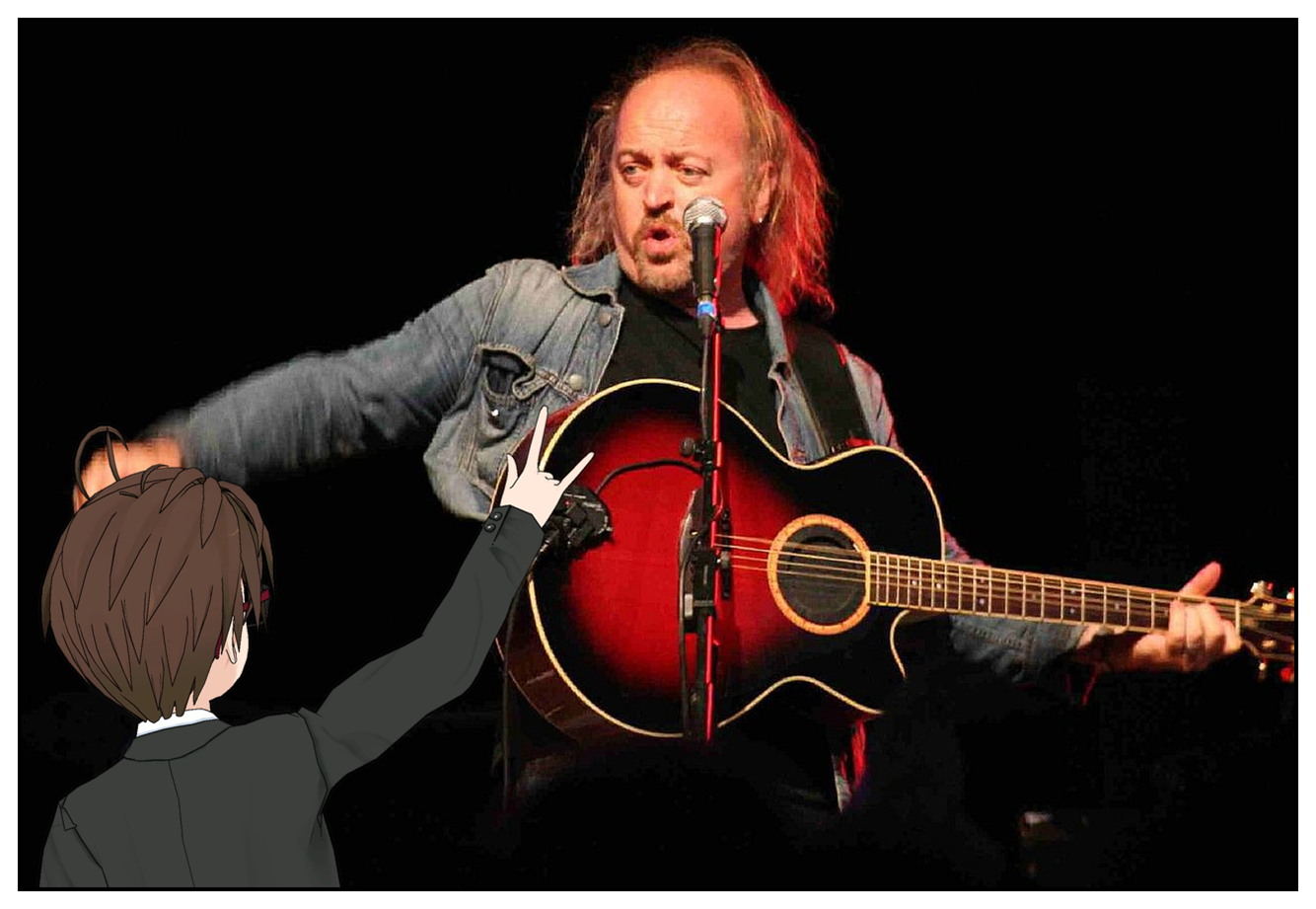
Finally is my most recent discovery, Dara O'Briain's Science Club. O'Briain is primarily known as a comedian and host of topical panel show Mock the Week, but over the last few years he's been spreading his wings a bit and taking on subjects such as mathematics and now science. He's clearly a clever man, and he has some even cleverer friends who come out to play for Science Club. Each show focuses on a specific topic and explores it in detail, and the topics under the microscope (sorry) range from the human brain to the possibility of space travel and Mars colonisation. The show incorporates experiments, "live" studies involving the studio audience, documentary-style footage and layman's explanations of complicated scientific concepts. It's an extremely compelling show, and it's probably a mistake for Andie and I to watch it when we're trying to get to sleep, because it's the kind of show you want to pay attention to!

And on that note, I'm off to bed to learn some science and perhaps, maybe, get some sleep.

2307: The Trip

0307_001

When I can't sleep or am otherwise in a position where I am too mentally impaired to do anything active — in other words, all I want to do is stare dumbly at a screen — rather than, as some people do, put the TV on and just watch it, even if I'm not interested in what's on, I like to trawl Netflix for things I've never seen and haven't even heard of before, but which sound interesting.

I've discovered a bunch of interesting things this way, the last of which was the rather wonderful (if cringeworthy) W1A, and more recently I've been watching a show called The Trip, starring Steve Coogan and Rob Brydon.

The Trip is an interesting concept that builds on the fashionable "fake docudrama" trend that began with The Office. Casting Coogan and Brydon as fictionalised, exaggerated versions of themselves, the series follows them as they take a tour of the North of England, stopping at some of the supposed best restaurants in the region with a mind to writing an article for The Observer Magazine. Coogan's original plan for the trip was to take it as a romantic getaway with his American girlfriend Misha, and still be able to use it as paying work, but prior to the start of the series, she moves back to the States to pursue her own career dreams in Hollywood, leaving Coogan more distraught and lonely than he'd care to admit, only inviting Brydon seemingly as a last resort.

The pair's trip across the North is largely irrelevant to the main point of the show, though it does take in some of Northern England's most spectacular sights, a number of which I hadn't heard of before. Instead, the main aspect of the show is the relationship between Brydon and Coogan, and more specifically how Brydon's easygoing nature and sense of contentment with his life — even as he is, according to Coogan's standards, less successful than his friend — gradually draws out Coogan's true feelings about his situation.

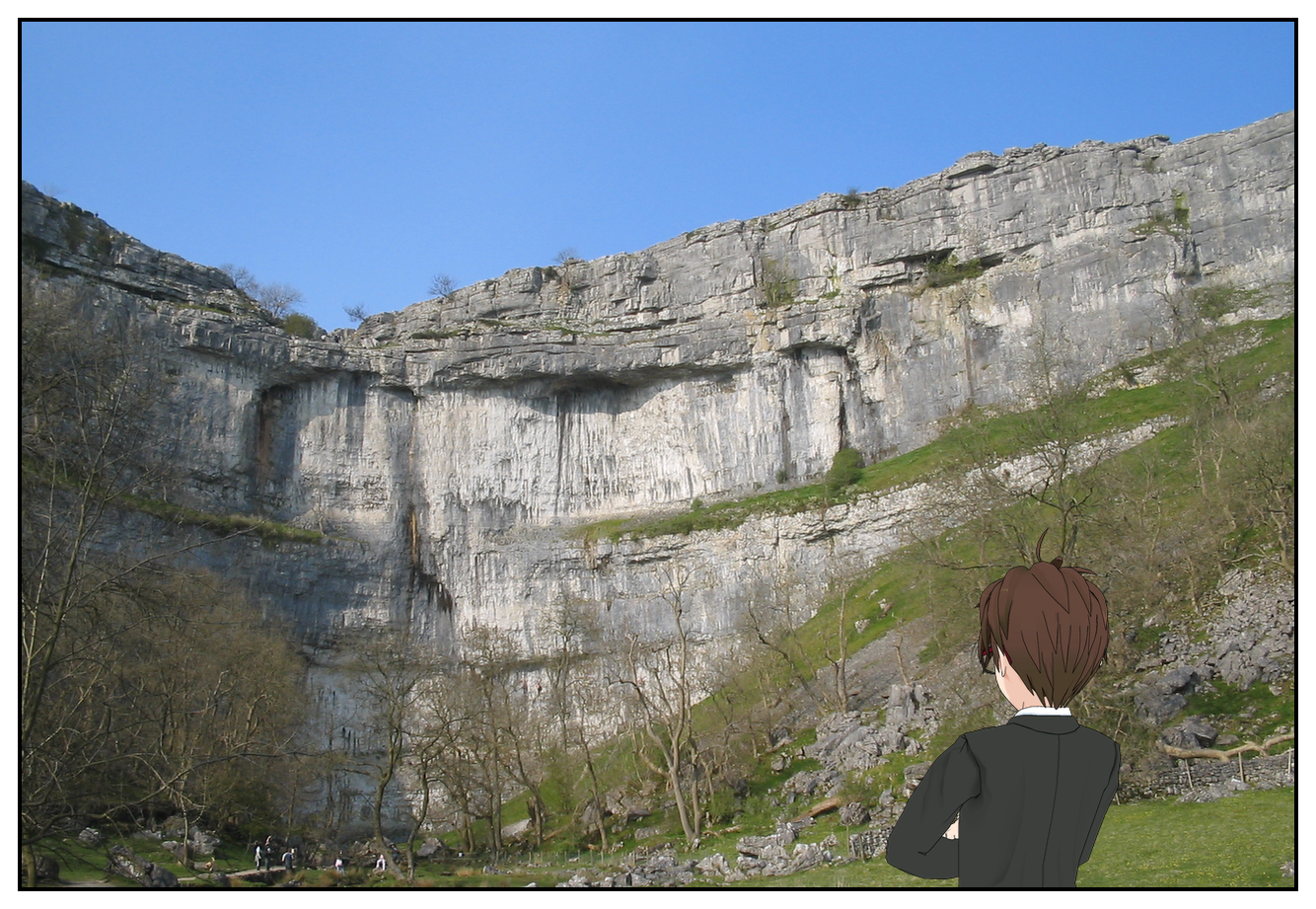
Brydon lives in a small but comfortable family home with his wife and children; Coogan lives in a fancy apartment in London by himself now that Misha is gone. Brydon enjoys his life and calls his wife just to hear her voice, flirt with her and occasionally get a bit down and dirty with her; Coogan calls Misha in the States, sometimes forgetting the timezone difference, sometimes not respecting what she wants, perpetually unusure of what he wants. Brydon brings a sense of levity to any situation he's in, often filling uncomfortable silences with his (admittedly impressive) impersonations of famous people — something which Coogan is forever frustrated that he's just not quite as good at as Brydon; Coogan takes everything much too seriously, sometimes admonishing Brydon for his happy-go-lucky approach to life, sometimes clearly wanting to say what's really on his mind and on one — only one — occasion frustrating a for-once quiet Brydon, who just wants to enjoy the scenery, with a lengthy geological explanation of how the Malham Cove limestone pavement came to be.

The contrast between Coogan and Brydon is potent; it shows two ways you can approach modern life. You can follow Brydon's path, which is arguably the most traditional, straightforward, unambitious path, and enjoy a happy, contented life while never quite attaining true dizzy heights of, say, stardom or being the top of your field. Or you can follow Coogan's path, which is a much more significant gamble: throw everything you have into trying to be the best in your field that you can be, and run the risk of being frustrated that other people can't see what you know about yourself. Coogan's frustration — outright depression, at times — at his situation is downright heartbreaking; his gamble hasn't at all paid off, though he does have the opportunity to make one final one by moving to the States with Misha to do a pilot TV show for HBO. By the end of the first season, however, Brydon has clearly rubbed off on him: after what is clearly an agonising session of soul-searching, he decides not to take that gamble, and instead — presumably — to focus on making himself happy rather than continually being let down by his life and the people he thought he cared about.

The Trip is a funny show; it's a comedy at heart, and the interactions between Brydon and Coogan are well-written, snappy and genuinely amusing. But there are considerably more tragic undertones with Coogan's own personal journey as the titular trip continues. While Coogan comes across as an arrogant dickhead at the start of the show — and still bears this character trait to a certain extent at the end — as the episodes proceed and we get an occasional glimpse into what he's really thinking and feeling, it's hard not to feel bad for him, and the contrast between how his and Brydon's respective lives have turned out is certainly thought-provoking.

I haven't yet watched the second season, but on the strength of the first, I'm very interested to. If you like well-written, fairly gentle, character-driven comedy drama with more than a slight tinge of pathos — as many other good comedies have — then The Trip is well worth your time to take on.

2290: The Excruciating Accuracy of W1A

0290_001

The other night, I was randomly trawling Netflix for something to watch while I couldn't sleep, and I stumbled across a BBC show I'd never seen before called W1A. I later discovered that this was the follow-up to Twenty Twelve (which I also haven't seen yet), and is one of the most effective "fake documentary" series I've seen since the original British version of The Office.

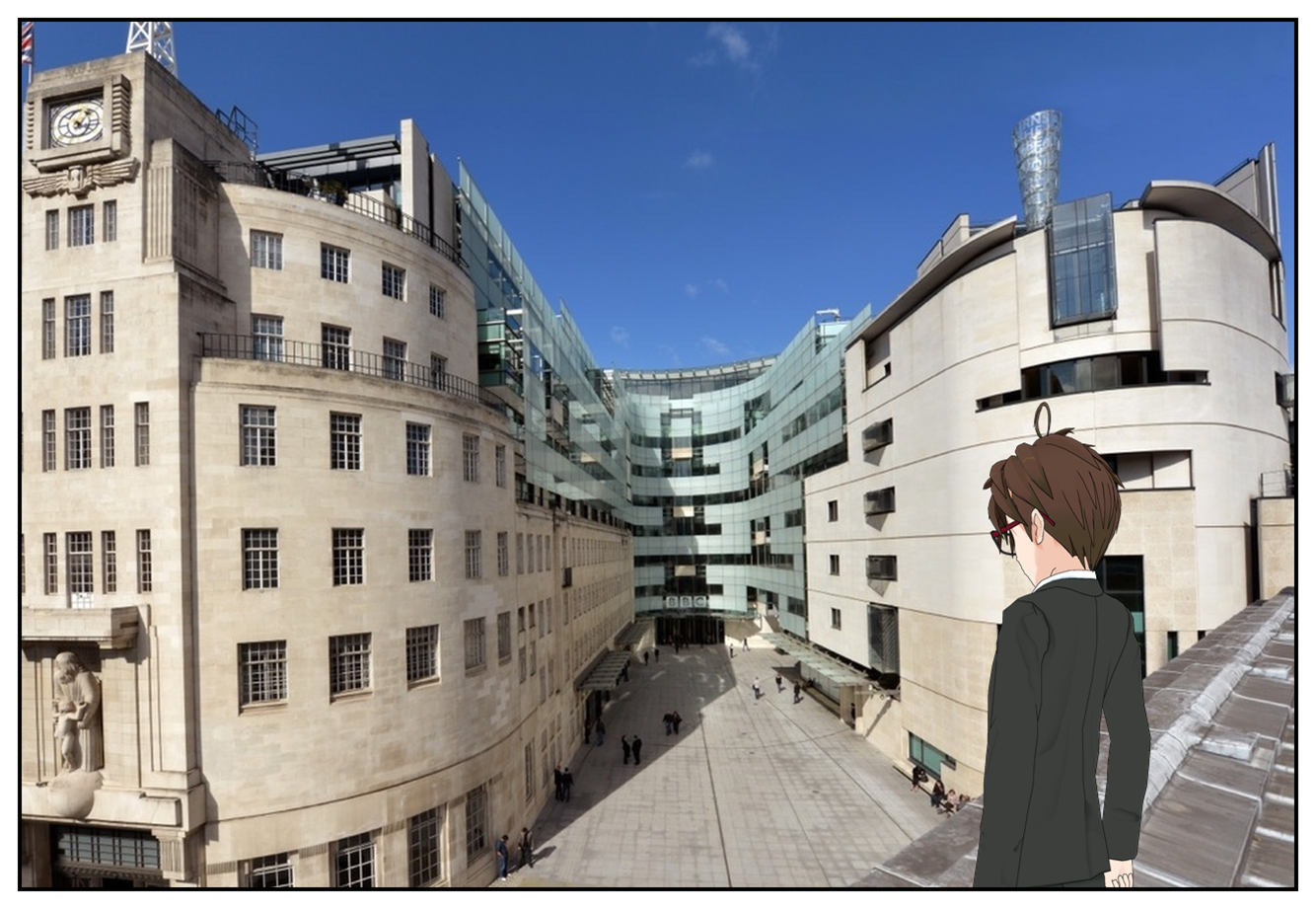
W1A focuses on the BBC itself, which is a pretty ballsy move given how scathing the show is of BBC corporate culture. Casting Hugh "Downton Abbey" Bonneville in the role of Ian Fletcher, the BBC's new Head of Values, the show follows Fletcher's efforts to make sense of the waffling business-speak world that one of the world's most celebrated broadcasters has become in the last few years. Fletcher is by no means a blameless character in all this, but he, by far, comes across as one of the most "normal" and relatable characters in the cast.

The reason for this is that the rest of the cast members are exaggerated parodies of various office archetypes. I would say that they are exaggerated to the degree of absurdity, but not far through the first episode I realised that I had met and interacted with each and every one of these archetypes at various points in my professional life — in education, in office work and in retail — and suddenly it didn't feel quite so absurd after all. It was still amusing, but in a tragic sort of way; the realisation hit me that this is what the world has become these days.

One of the most frequent character traits on display is relentless, unnecessary positivity, even when it's completely inappropriate. It's not unusual to see serious issues being raised in meetings, with the only responses from around the table being a chorus of "Brilliant." "Great." "Well then." "Marvellous." and "Okay then." Likewise, to my chagrin, I've caught myself using some of the character traits of intern Will, most notably his blind agreeing (and declaration that it's "cool" and "no worries") with everything that people say, only to admit that he didn't actually hear what he just agreed to just a moment later.

While I find W1A pretty excruciating to watch — particularly when Jessica Hynes and her painfully millenial PR company "Perfect Curve" are on screen — it's nonetheless rather compelling and almost reassuring in a strange sort of way: a viewer's initial reaction to these seeming caricatures — their repetitiveness and their relentless, inappropriate cheerfulness — as them being absurd in some way is entirely deliberate. The writers of the show know how ridiculous and absurd the situation is, along with all the nonsense that goes on in modern corporate culture — which more often than not cares more about outward appearances than actually making life good for its employees and clients — and the show itself acts as a means of people who are tired of this aspect of modern life to come together, point and laugh, then perhaps go and have a little cry in the corner.

You're not alone in hating the way the world has turned out, says W1A. We hate it too; we've just decided to laugh at it, because what's the alternative?

2253: It is the Piece of a Smile Everyone Acquires

0253_001

I've already written generally about how much I like yuri/shoujo ai slice-of-life anime Yuru Yuri, but I wanted to single out a particular episode as a great example of what this genre does really well: the third season's eighth episode, boasting the impressively Engrish title It is the Piece of a Smile Everyone Acquires.

Yuru Yuri has a few aspects in common with other, similar slice-of-life shows, but the show it reminds me of most is Squid Girl/Ika Musume — a show where, despite its fantastical, ridiculous premise, manages to be oddly believable and comforting in how it depicts its relationships between characters. It's not so much the thematic similarities that I'm concerned with, more the format: Ika Musume explicitly splits each of its "episodes" into several smaller vignettes that tell miniature stories in their own right, and within these vignettes the show often experiments with form, structure and even aesthetic. Its most striking episodes are the ones where it goes completely off-piste, such as those that feature the "miniature Squid Girl", whose sequences are completely dialogue-free, and which make wonderful use of music and animation to produce surprisingly evocative, emotive scenes.

The similarities between Yuru Yuri and Ika Musume struck me during the pre-credits opening of It is the Piece of a Smile Everyone Acquires because it adopts a similar approach to the aforementioned "miniature Squid Girl" episodes: it's completely dialogue-free, focuses on a character that isn't normally at the forefront (or, in the case of mini-Squid Girl, isn't normally in the show at all in that form) and does all its storytelling through its soundtrack.

In the case of It is the Piece of a Smile Everyone Acquires, the episode opens by focusing on the student council president, a character who is so meek and timid that we only ever see her mouthing words in regular episodes; she has no voice, so far as the audience is concerned. The characters always understand, her, though, which is the core joke of her character, but this opening sequence approaches it from a different angle, showing how she understands people — and makes herself understood — without the use of words.

Yuru Yuri already has a wonderfully evocative soundtrack that complements its on-screen action perfectly, but this opening sequence in It is the Piece of a Smile Everyone Acquires takes things to a new level: adopting an almost programmatic approach to its music, with distinctive themes and instrumentation being used for the individual characters who show up over the course of the sequence, it's a fine example of how words, sometimes, simply aren't necessary: you can make an interesting and heartwarming piece of art using only visuals and sound. (You can make an interesting and heartwarming piece of art using only one of those things, too, of course, but this is a TV show we're talking about here; to deliberately refuse to use one of the core features of the medium is noteworthy.)

The rest of the episode is entertaining in itself, too, but somewhat more conventional for the most part; this pre-credits sequence, however, was so striking I felt I had to write something about it. I'd share the video here if it was on YouTube, but no-one appears to have ripped it; you can, however, watch the full episode on Crunchyroll at this link, and I can highly recommend the whole series from the very beginning if you want some enjoyable, lightweight fluff to cheer yourself up with.

2247: Yuru Yuri: Charming, Dumb, Gay as a Window

0247_001

I finally started watching the third season of Yuru Yuri, an anime whose first two seasons I found immensely enjoyable despite it being one of those "slice of life" affairs where pretty much nothing of note happens throughout.

Yuru Yuri is packed with charm and some wonderful characters, though, and it's through the strength of these characters that the show truly shines.

For the uninitiated, Yuru Yuri follows the total lack of adventures of a group of four schoolgirls who form a club that doesn't really do anything except hang out and drink tea. Over the course of the first couple of series, a few other regular cast members were added, and each of these put in frequent appearances in the third season — so frequent, in fact, that, judging by the new title sequence, they're now considered to be core members of the cast rather than regular recurring characters.

The astute and/or weebtastic among you will know that yuri is used to refer to Japanese popular media with lesbian undertones (or indeed explicit overtones) and the inclusion of this term in the show's title is no coincidence. There are no male characters in the show whatsoever, and there are numerous members of the cast — both regular and irregular recurring — who clearly have the hots for another one of the girls.

The most obvious is first-year Chinatsu's infatuation with her cool, calm and collected senpai Yui, but there's also the clear attraction between the mostly sensible (but painfully tsundere) student council vice-president Ayano and the utterly chaotic, hilarious Kyouko, who is a total dick but somehow immensely likeable with it. Then there's former series protagonist Akari's older sister Akane, who puts up a facade of being the sensible onee-san, but is actually a complete siscon, degenerating into wildly inappropriate acts with Akari's possessions whenever she's by herself (or thinks she's by herself). And Chinatsu's sister Tomoko, who is infatuated with Akane. And… you get the idea. There's a whole lot of lady-love going on.

This isn't an ecchi show by any means, though; the yuri side of things isn't fetishised at all, and we never actually see anything going on between these characters. It's a show that, when it deals with feelings of affection, prefers the more romantic side of love in the schoolyard rather than anything overtly sexual. It's all sidelong glances, lingering looks, wondering if that contact was intentional; of course, some characters make their feelings more obvious than others — Chinatsu and Ayano both being the most obviously gay for their respective objects of affection, albeit in different ways — but still, for the most part, the show depends on the feeling of "will they ever realise or acknowledge their feelings for one another?" and actually resolving one of these strung-out instances of romantic tension would almost certainly throw the rhythm and feel of the show off somewhat.

Mostly, though, Yuru Yuri is a show that makes me feel happy when I watch it. It's not deep and meaningful and it doesn't have anything especially profound to say beyond "friends are great", but it's always a pleasure to enjoy an episode. It's one of those shows where you feel like you're being included in a group of friends just hanging out and having fun; there's no real point to it all, but it's nice to experience nonetheless.

2199: Ever-Late to the Party: Fringe

0199_001

Couldn't get to sleep the other night and didn't quite feel like I had the mental capacity to watch something in Japanese (i.e. anime) so instead I trawled Netflix for a few moments and eventually settled on a show I've been meaning to watch for a long time: Fringe.

I knew very little about Fringe going into it, save that it seemed to be pretty well-received, and that my acquaintance Chris Tilton, who had appeared a couple of times on the Squadron of Shame SquadCast, had assisted creator J.J. Abrams' regular partner Michael Giacchino on the soundtrack. Other than that, I was going in pretty much blind, and had managed to remain unspoiled to date.

Turns out it's a fantastic show, and exactly the sort of thing I enjoy, so I'm well and truly hooked.

For those who, like me, have somehow let Fringe pass them by until now, here's the pitch: FBI agent Olivia Dunham becomes involved in investigations of weird happenings collectively known as "The Pattern" after she starts looking into the inexplicable melty-face issues that struck an inbound flight from Hamburg to Boston. In order to investigate these strange occurrences, she enlists the help of Dr Walter Bishop, a somewhat eccentric but clearly brilliant man who had been locked up in a mental institution for the preceding 17 years. In order to get Walter out of the institution, she also has to enlist the help of his son Peter, who has a past that can be charitably described as "checkered" and together, if you'll pardon the cliche, They Fight Crime.

If this setup sounds a little X-Files-ish, you'd be absolutely right, though rather than going in the "aliens!" direction, Fringe instead looks at seemingly paranormal phenomenon through the lens of "fringe science" — being able to explain them through scientific theories that may appear ridiculous to the layman, but which Walter proves time and time again to have some basis in reality. Or at least the reality that Fringe depicts, anyway.

Fringe's biggest strength is in its characters. Olivia is, in many ways, the most "normal" of the bunch — at least in the initial episodes — and the perfect foil to the somewhat tense relationship between Peter and Walter. Walter, meanwhile, is downright fantastic, punctuating his explanations and hypotheses with seeming non-sequiturs; sometimes they end up being relevant, and sometimes he really is just commenting on how much he enjoys a glass of milk fresh from the cow he keeps in his laboratory "because they're the closest thing to humans, genetically, which makes them ideal test subjects".

This isn't to downplay the ongoing narrative and its stranger aspects, meanwhile; J.J. Abrams has proven on numerous occasions — Alias springs immediately to mind — to be good at stringing out mysteries with apparently supernatural elements to them, and Fringe is no exception to this. Over the course of the first few episodes, we're introduced to a number of elements, some of which appear again in subsequent episodes, but which aren't explicitly pointed out to the viewer. Already I can see it's a show that would reward a repeat viewing knowing the full truth — which, only five episodes or so in, I have no idea of yet — because you'll doubtless spot things that you wouldn't have given a second thought otherwise.

I'm really intrigued to see where this series goes. And yes, I know I'm late. But I'm watching it now, okay? (Also, it's inspired me to go back and play Cognition again thanks to its thematic similarities. So that's good! I never finished the fourth episode, after all…)

2130: Scrub Up

0130_001

I've been watching Scrubs on Netflix recently, because somehow, despite E4 showing it nearly every minute of every day for several years (the other minutes being taken up by Friends) I've never actually seen the whole thing all the way through. I've seen most of it, but I've not seen the later seasons in particular.

Scrubs is an interesting show in that it strikes a good balance between comedy and drama. It's not a show that you can particularly pigeonhole easily, because it's experimental and strange and isn't afraid to have one-off episodes exploring interesting, weird concepts. In many ways, it's a bit like earlier shows that took a similarly experimental approach in a fairly mundane setting — I'm thinking stuff like Ally McBeal here — but it very much has a feel that is all its own.

One of the reasons I've been enjoying it so much recently is because I'm finding protagonist JD to be quite relatable, in a number of different ways. In particular, his naiveté and hesitance to truly join the "adult" world — even when confronted with challenging situations, such as those that he faces in his job as a doctor every day — are very familiar feelings to me, and as JD gets older over the course of the show's complete run, it's almost comforting to see that he doesn't really get any more comfortable with being a "grown-up"; although he's only a fictional character, it's nice to know that the way I feel sometimes isn't entirely unfamiliar to others!

Scrubs is also fun for the fact that it captures the atmosphere of working in a stressful environment rather well. There are people who handle stress with aggression and impatience — particularly if, like in Dr. Cox's case, they're dealing with other issues alongside anything that crops up at work — and there are people who deal with it using humour. There are some who take the humour further and confront difficult concepts by making use of black humour, and there are others who, at times, allow emotions to get the best of them. And then there are those who are able to leave all the troubles and difficulties of the working day behind them the second they walk out of the door; while this is arguably the best approach for one's mental health, is this really the best thing for those you are taking care of?

To cut a long story short, then, watching Scrubs on Netflix has given me an appreciation of why this show has remained so consistently popular since it first appeared in 2001. I haven't yet seen the notoriously different final season, though I'm curious to, even if it's as much of a shift from the original format as it apparently seems to be. Even if it's rubbish, though, there's plenty of good stuff in the preceding seasons, and it remains timeless television that I can see remaining relevant to many people for many years to come yet.

2077: Narrative Media

0077_001

Since I've become particularly interested in Japanese popular media, I've often found myself pondering which particular aspect is my favourite — in other words, what do I feel is the "best" means of enjoying a story that, in many cases, spreads its tendrils across a number of different forms of media with varying degrees of success?

There's not really an easy answer to that, but I feel my own personal attitude towards it is inclined towards whatever the original version of the work was composed in, where available. This isn't a hard and fast rule, by any means — on balance, I think I slightly prefer the anime of High School DxD to the manga, for example, and there are a number of interesting spin-off games that tell a completely different story to an anime or manga series, making them worthwhile in their own right — but I do tend to find myself preferring to experience a story as originally intended.

Part of the reason for this is enjoying a story in its original medium means that you don't "miss out" on anything. In theory, anyway; that theory runs that a creative work is composed for a specific medium, and then adapted to other media at a later date. The adaptation process often involves editing, changing and even cutting content from the original, usually as a means of ensuring that the important beats of the story fit into what may be a more restrictive format. Consider an indefinitely running manga series that is adapted into 20-minute anime episodes, for example; you're going to lose some detail, like it or not, unless you want the pace of the show to slow to a crawl. (Some long-running shows do indeed take this rather leisurely pace to their ongoing storyline, but for the most part, manga-to-anime adaptations tend to try and get through a significant amount of printed content over the course of 12-13 episodes.)

That said, different media are more or less appropriate for different ways of exploring material. Anime, as the most visually flexible of these media, allows you to outright depict things happening without having a narrator explain things (as in a visual novel, manga or light novel) and take a more subtle approach, implying things rather than making them explicit. At the other end of the spectrum, a novel relies almost entirely on the reader's imagination, perhaps stimulated a little by illustrations here and there. The nature of text means that the inner thoughts and feelings of characters can be explored in much more detail than in an anime, and even from multiple perspectives.

Visual novels, meanwhile, tend to unfold from a single first-person narrative perspective. This allows for in-depth exploration of a specific character and their responses, feelings and attitudes towards various situations — as if you "were" that character. It's not quite the same as a full-on game where you take full control of a character, mind; most visual novels give you relatively limited choices as to how they proceed, and the protagonist otherwise has a mind of their own: you're just along for the ride. Some visual novels do experiment with multiple perspectives — The Fruit of Grisaia's various routes each feature a sequence where the main heroine of that route narrates an important event in their lives, be it to the reader or to protagonist Yuuji; Deus Machina Demonbane, meanwhile, features a first-person protagonist narrator, but occasionally slips into third-person to depict things happening elsewhere when appropriate. For the most part, though, when you come to the end of a visual novel, the character you almost certainly understand the best is the protagonist.

Video game adaptations — i.e. those that aren't visual novels — present their own challenges by allowing the player to control iconic characters and perhaps make them behave in ways that aren't necessarily in keeping with their character as depicted in other media. This is partly a matter of attitude, though; someone who is already particularly engaged with a series and comes to a video game adaptation after reading the manga/visual novel/light novel or watching the anime may well find themselves "method acting" as the character they find themselves in full control of, even if the game mechanics do provide the opportunity for them to do unexpected and strange things.

In other words, I don't really have a concrete answer for the question. At the moment, I'm particularly enjoying reading The Fruit of Grisaia's visual novel, and after hearing how the anime adaptation packs the VN's many hours of narrative and interesting happenings into just a single season, I feel that the VN is probably the best means of experiencing this story in full detail. At the same time, I'm enjoying the video game of Sword Art Online, the manga of Monster Musume, the anime of Himouto! Umaru-chan — there really isn't a straightforward answer as to which one is "best".

It sometimes pays to explore a single work in different media, though; the unwritten rules that "the book is usually better than the film" and "video game adaptations are universally terrible" don't always apply!

2043: This Would Go Great with Cola

0043_001One of the highlights of the current anime season is Himouto! Umaru-chan, a rather odd little show that takes the Squid Girl approach of splitting each "episode" up into several shorter little vignettes in which nothing really happens, but it's entertaining nonetheless.

Umaru (as I shall refer to it hereafter for simplicity's sake) is a show that exemplifies the Japanese concepts of honne and tatemae, these being a person's "true feelings" and their "public face" (or, literally, "facade") respectively. Title character Umaru is the very model of beauty and respectability when she's out in public: she's the darling of her whole school, always gets the best grades, is good at sports and is respected by everyone. Back home, however, she's a lazy slob who sponges off her long-suffering brother and sits around in her hamster hoodie playing games and drinking cola all day.

Himouto!.Umaru-chan.full.1907662

Umaru highlights this contrast by literally changing the character's appearance when she switches from one "face" to the other. When she's out in public being the beautiful and respected Umaru-chan, she's the epitome of moe — long, flowing hair; big, sparkling eyes; a calming, gentle voice — but when she gets back home she immediately becomes represented by a short, aggressive, chibi character that is cute in an entirely different way to "full-size" Umaru. Her behaviour and mannerisms are completely different, her voice becomes louder and more forceful, but it's abundantly clear that this is when she's at her happiest.

As the series progresses, Umaru reveals a third persona: that of the elite gamer "UMR". UMR is something of a balancing act between the two extremes she had previously exhibited up until this point; she's realistically proportioned and acts like a normal human being, but is passionate and enthusiastic about gaming — not to mention in possession of some serious skills. UMR is by far the most naturally likeable of all Umaru's personalities since she tends to keep things fairly low-key — she even dresses considerably more conservatively than her "ideal schoolgirl" persona — but is also a lot more honest about who she really is.

ebina

The idea of the necessity of putting up a facade for the rest of the world to respect you is a defining characteristic of the series, and it's not just Umaru who exhibits this. Umaru's friend Ebina, for example (above), is an attractive, busty young girl who draws the eyes of everyone around her, but she's afraid to open her mouth in case her country bumpkin dialect slips out, as it occasionally does when she's feeling at ease and comfortable. Likewise, recurring character Kirie is completely unable to approach moe Umaru at school, despite wanting to, but she manages to bond with lazy slob Umaru — whom she actually believes to be Umaru's younger sister, just to complicate matters — over games, cola and laziness.

Over time, these characters all become better defined, and their different personas start to merge into one another. I'm interested to see whether or not the series intends to "say anything" with this concept by its conclusion, or whether it's simply going to continue using them for comic effect. Either way is fine by me; Umaru is not the kind of show that particularly feels like it needs to have a strong moral message — though I won't deny it will be somewhat satisfying to see the precocious little slob version of Umaru get her comeuppance for taking her poor brother for granted by the end of the run!

Regardless of how it ends, Himouto! Umaru-chan has been a really fun series so far, and I hope there's more in the future.

2020: Original Content

0021_001I've been watching a fair bit of Netflix's original content lately. I'll freely admit that I'd been resistant to the idea of an online service's exclusive content through irrational prejudices, but I'm pleased to have been proven very, very wrong indeed.

Let me explain those irrational prejudices first.

I grew up in a bit of a golden era of TV, full of popular shows ranging from Friends to Star Trek: The Next Generation via Buffy the Vampire Slayer and Angel. These shows ran for a long time, attracted passionate fanbases and, in many cases, were big-budget productions that put out some impressive stuff on a week-by-week basis. Conversely, in the early days of Internet video, Internet video series tended to be done on the cheap; there's nothing wrong with that per se, of course, but that cheapness didn't just extend to production values — it also extended to quality of talent in all aspects of the production. A side-effect of the whole "suddenly everyone is a content creator" aspect of Web 2.0 or 3.0 or whatever it is we're on now.

So, then, I didn't make much of a habit of watching regular Internet video series for quite some time. To this day, there are very few YouTube series that I follow, and I generally preferred to grab a DVD or Blu-Ray box set of a favourite TV series and binge-watch it over the course of a month or two. No waiting for new episodes, no having to watch according to someone else's schedule — just literally content on demand.

With my lack of involvement in Internet video, then, I maintained the assumption that Internet-exclusive video would be cheap, shitty productions that weren't really worth bothering with. I even continued with this assumption as people started praising Netflix's first original series House of Cards — largely because the subject matter didn't really interest me — but just recently, I've finally come around to it, and I'm impressed.

The two shows that have made me a believer in Internet-exclusive content and convinced me that Netflix is absolutely a contender in the original TV programming department are Bojack Horseman and Unbreakable Kimmy Schmidt. I watched both on the recommendations of other people, and both have been highly enjoyable, not to mention well up to the standard of the stuff you get on TV or in DVD box sets.

bojack1

Bojack Horseman is an animated show about a washed-up '90s sitcom veteran who just happens to be a horse-man. Not like a centaur, he's just literally a dude with a horse's head. Over the course of Bojack Horseman, we're introduced to a number of different characters, some of whom are regular human beings and others of whom are, like Bojack himself, anthropomorphised animals. This is a wonderful source of comedy: for the most part, the animal people act just like normal humans, but just occasionally — just often enough to be funny without feeling like a forced joke — they'll exhibit some sort of behaviour that their animal counterpart would do.

Bojack Horseman isn't just cheap laughs, though. It's one of those "adult animation" shows that looks ridiculous and silly on the outside, but which has a heart underneath. Bojack is a deeply flawed yet somewhat sympathetic character struggling to come to terms with the fact that he 1) isn't as famous as he used to be and 2) might actually be a horrible person. The series explores his character in great detail — partly through the eyes of his biographer Diane — and we learn a great deal about him. He's certainly much more than — and I'm sorry — a one-trick pony.

kimmy-schmidt

Unbreakable Kimmy Schmidt, meanwhile, is a live action show from the pen of Tina Fey. It concerns a young woman who was kidnapped and kept underground for fifteen years by a ne'er-do-well claiming to be a "Reverend" saving them from the Apocalypse. Since Kimmy was kept sheltered from all of existence for these fifteen years, she knows pretty much nothing about how the world works, and gets into numerous entertaining misadventures in New York as a result.

Unbreakable Kimmy Schmidt, like Fey's other work, is sharp, quick witted and frequently scathing. Kimmy is lovably naive without being irritatingly stupid, and the supporting characters are all strong in their own right — albeit often being somewhat exaggerated caricatures. It's a show in which not a great deal actually happens from one episode to another, but the whole thing has a ton of heart and soul to it, and the entire story arc is nicely and neatly wrapped up by the end of the run. I wouldn't be averse to another season of it, but the beauty of it as it exists right now is that it doesn't really need one, since it's told Kimmy's story pretty much from start to finish over the course of 13 episodes.

And that's sort of the beauty of what Netflix is able to do here. Without the pressure from networks and advertising, the teams coming up with this stuff have a lot more freedom than they would if they were composing for traditional television. This, in turn, allows them to be a lot more experimental, daring and interesting with what they're coming out with, and we're already starting to see what a positive effect that has on output.

I'm over my prejudice towards Internet-exclusives, then — though a ton of YouTube-exclusive stuff is still a load of old wank — and am now much more inclined to check out Netflix's original content than I would previously have been. I'm sure there'll be plenty more of Bojack Horseman and Unbreakable Kimmy Schmidt's calibre in the future, and I'm looking forward to watching them when they appear.