#oneaday Day 323: Bing biddly bing bong bingy bong boooo

Regular readers will recall I started rewatching Friends a while back. I'm up to the fifth season out of ten as of the time of writing, and I'm really enjoying it.

The "culture shock" of watching it for the first time in more than ten years has mostly dissipated now, and the fact that no-one is ever seen fiddling with a mobile phone, looking things up on the Internet or experiencing life entirely through their camera lens feels pretty much natural now. Stop to think about it, and it's still clear that the world has changed a lot — mostly for the worse, I'd say, unfortunately — but after a while, Friends has, for me, shown that it has that magical "drawing you in" nature that means it doesn't matter that it's dated in some ways.

Friends was never really about a specific time period, anyway. Sure, it acts quite nicely as a snapshot of the late '90s and early (pre-smartphone) '00s now, but I'm not sure it was ever intended to be that. Instead, it was a show that was always about the people: specifically, it was about the concept of found family, and how the group of people you chose to surround yourself with was just as important as — or in some cases, more important than — those you were related to by blood.

I must admit to a certain melancholy about viewing Friends in this light, because for all the wonderful conveniences and whatnot we have today, I miss just… hanging out with friends. I miss everything from walking a couple of miles into town during a free period of sixth form in order to get peer pressured into buying a new N64 or PlayStation game. I miss skipping lectures to go play Perfect Dark. I miss Board Game and Curry Night being a regular thing. In short, I very much miss having that "found family", because in 2025… it just doesn't feel like it's there any more, for a whole manner of reasons, not just technology-related.

But at the same time this is why I find an occasional rewatch of something pleasantly familiar like Friends to be extremely comforting. I may not literally be there with the main cast — and I wasn't back at the time, either — but the nice thing about the show is how it makes you feel included. You see the ups and downs of each of the main cast's lives; you see the little in-jokes they have with one another and you understand where they came from, because you were there when they were first coined. And you root for them; even seeing what colossal dildos they all are at various points in the series — particularly both Ross and Rachel — you cannot help but root for them and wish them happiness.

And the nice thing is, you know they get that happiness, because it's that kind of show. Even if you've never seen the show all the way to the end, you almost certainly know what at least some of the main "resolutions" are going to be. Arguably it's only really Joey who is left without a real sense of wrapping things up neatly — and his spin-off series didn't really fix that either, though I must confess I haven't seen it — but even so, one gets the feeling he's probably going to be all right.

It's a bit sad how many of the Friends cast are no longer with us. Matthew Perry was, of course, a tragic loss a couple of years back, and I was sad to learn recently that James Michael Tyler, who played the recurring coffee house barista Gunther, passed away in 2021. Add this to the fact that several people from Star Trek: Deep Space Nine, which I watched all the way through a while back, are also no longer of this world, and it's a little bit sobering. At least they all have a wonderful legacy to leave behind.

This got a little more morbid than intended, but whatchagonnado. Friends is still a wonderful thing, and I am really enjoying my rewatch of it. There's nothing quite like returning to the media you loved in your formative years to bring a teensy bit of comfort to the bleakness of modern existence. If you haven't done it for a while, I highly recommend it.


Want to read my thoughts on various video games, visual novels and other popular culture things? Stop by MoeGamer.net, my site for all things fun where I am generally a lot more cheerful. And if you fancy watching some vids on classic games, drop by my YouTube channel.

If you want this nonsense in your inbox every day, please feel free to subscribe via email. Your email address won't be used for anything else.
#oneaday Day 252: Lighter fare

Whew, that was heavy going yesterday huh? I am pleased to report that it resulted in some healthy and worthwhile discussions, so I'm pleased I plucked up the courage to write it. But I figured I should probably go a little lighter this evening. And not just because I've left it until 1am to write this.

I've been enjoying working my way through the first season of Angel as some bedtime viewing, and I'm now about halfway through the fourth disc of the set. I'm glad that this show is just as good as I remembered; I'm always a little concerned when revisiting an old favourite after many years, but thinking back on things, there's been very few, if any, occasions when I've felt let down by something I used to love.

Perhaps this is because in a lot of ways, I've never really left the past completely behind. I often think back fondly on my school and university days, for example, which is when I was enjoying shows like Friends and Angel, and hell, I still play a lot of the video games I played from before I was even ten years old.

There have only been a couple of things that I'm hesitant to go back to, and they're all things that raging transphobe Graham Linehan was involved in — stuff like Father Ted and The IT Crowd. But then I haven't had a problem going back to Angel knowing that Joss Whedon is a bit of a tool, because "his" shows were much more about the writers, the directors and the actors than just him. So I'm sure if I went back to Linehan's shows I'd be separating art from artist in no time, because they, too, are all about their casts and their performances.

In fact I think these days it's much too easy to get hung up on whether the creator of a former favourite is actually an awful person or not. In some respects, I think I was happier just not really knowing anything about anyone, and just letting the creative works speak for themselves. But that's not really an option these days.

Anyway, regardless of all that, Angel is still good. And I think that's all I really want to say today!

#oneaday Day 248: Bing biddly bing bongy bing boo

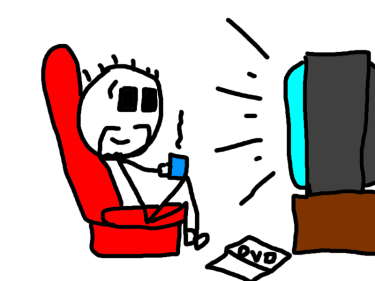
I watched the first episode of Friends over lunch today. By my reckoning, it's over 10 years since I last watched Friends all the way through, and I've had a bit of a hankering for it recently. It's nothing to do with the inexplicable rise of Friends merchandise (up to and including Krispy Kreme doughnuts) in the last year or so but rather simply the fact that Friends always was, more than pretty much anything else on television, my "comfort show".

I was always aware that Friends was going to age. Hell, when I first started watching it, the first season in particular already looked very dated in terms of the fashion sense and hairstyles. But there are ways in which it shows its age now that I wouldn't have considered back when I was obsessively watching it as a teen.

The laugh track, for example. Audience or canned laughter has completely fallen out of favour for TV shows over the course of the last 20-25 years or so, to such a degree that there are those who find it (if you'll pardon my use of GenZ vernacular for a moment) "cringe". Even people who were there for it first time around.

Honestly, I've never had a problem with a laugh track. In fact, with Friends, it was part of the experience — as emphasised by the YouTube videos that remove it and make Ross in particular look like a psychopath as a result. But it was more than just a signal of when something funny had happened; I really enjoyed hearing the audience reactions that were other than just laughter.

For example, during that all-important moment in the second season where Rachel learns exactly how much Ross was in love with her in his late teens and ends up kissing him, there's an absolutely glorious moment as she walks across the room to him in complete silence, the only sound being her shoes echoing on the hardwood floor of Monica's apartment. Then, as she comes up to Ross and grabs his face in preparation to kiss him, there's an audible gasp from an audience member that feels completely genuine. Then, when the kiss happens a moment later, there is cheering, screaming and applauding. It's an amazing moment, made all the more amazing by how the audience had clearly been rooting for them, but were unsure if the writers were ever going to resolve that particular dangling thread.

Friends, like many shows of its time, was filmed in front of a live studio audience, and this allowed the cast to work around the laughter and other reactions. Supposedly Lisa Kudrow, who played Phoebe, absolutely hated it when the audience interrupted her lines with laughter, but she never let it show. At the other end of the spectrum, it's abundantly clear that the late, great Matthew Perry adored playing to the crowd, with much of his delivery reliant on pausing for reaction and playing off the audience's response. It's different from what TV shows today do, yes, but it's not an inferior way of doing things by any stretch of the imagination.

Sometimes this backfires for a non-native audience, such as when a guest star shows up to rapturous applause from the American audience, but no-one in the UK has any clue whatsoever who the person in question is. (Okay, I very rarely knew who the person was, outside of a few obvious exceptions like when George Clooney and Noah Wyle, riding the peak of ER's fame at the time, showed up.) But you can get something from that even if your response isn't the same as the audience's; it's a sign that Friends was huge, and Hollywood people were almost certainly queueing around the block to make a guest appearance in what was, for a long time, the hottest sitcom in town.

With the bizarre resurgence in Friends merchandise there has been recently, I wonder how much it really resonates with a modern audience — i.e. those who grew up after the launch of smartphones, and after the ubiquity of the Internet had been well and truly established. Very few people in Friends even have a mobile phone, and computer use is rare to see, often the subject of comedy. The way people develop interpersonal relationships has changed massively since Friends' time. Hell, even the concept of just hanging out with your friends in person at their place is likely to be completely alien to some people — I was there for it, and it even feels like a distant memory to me, to be perfectly honest.

But the strength of Friends wasn't necessarily that it was a snapshot of a time and place — although, many years after it was current, it functions quite nicely as just that — but rather that it was a show with some strong, well-defined and nuanced characters, with a wide array of interesting storylines, many of which were rather boundary-pushing at the time of the show's original broadcast. So far as I'm concerned, it still holds up very well as a "comfort show" for me due to its familiarity — and I suspect, so long as a younger viewer can get around the culture shock of certain ubiquitous aspects of 21st century life just being flat-out absent from much of the show's run, there's still a lot they can get from it, too.

There is, I'm sure, plenty you can criticise Friends for if you want to get on the tedious "everything is problematic" bus, but fuck that. I love Friends, I always have done, and starting this new rewatch afresh this lunchtime, I suspect I always will.


Want to read my thoughts on various video games, visual novels and other popular culture things? Stop by MoeGamer.net, my site for all things fun where I am generally a lot more cheerful. And if you fancy watching some vids on classic games, drop by my YouTube channel.

If you want this nonsense in your inbox every day, please feel free to subscribe via email. Your email address won't be used for anything else.
#oneaday Day 247: Enjoying things as we used to

One thing I'm becoming increasingly conscious of as time goes on is how my attitudes towards enjoying my hobbies have… well, they've stayed the same, really, but other people are changing around me, even people who are older than me who I would have thought would be even more set in their ways than I am.

I'm thinking of two particular examples when it comes to this. First is the "I don't have time to play long games any more" person, who no longer wishes to commit to any game over the 20 hour mark because they'll "never finish it", ostensibly because they are "much too busy" now to be able to commit to it.

In some cases, this may be true, particularly if the person in question has started a family in the interim. But realistically speaking, I know a lot of people who say this actually have pretty much the same amount of free time as they had 20+ years ago, and are thus talking bollocks.

Why do they think they have no time, though? Because daily life has changed. We are so overstimulated with our daily lives — and particularly the ever-present nature of the Internet and its endless reams of Content™ — that it's easy to feel overwhelmed, like you simply don't have time to just switch off from all that and enjoy something that takes your full attention. What if you miss a pithy tweet from someone? (To that I would say "get off Twitter, it's a Nazi bar") What if you don't see breaking news happening as it breaks? (To that I would say "we used to do just fine with news bulletins on the TV at 1pm, 6pm and 9pm") What if you miss a message from someone you like? (To that I would say "most forms of online communication are inherently asynchronous, meaning it doesn't really matter if you reply now or in 6 hours' time")

But I get it. It's easy to get locked into that "loop" of cycling around the same three websites, hoping something interesting happens. And before you know it, several hours have passed — several hours you could have (and should have) spent doing something much more enjoyable. This is one of the biggest reasons I've tried to curtail my own social media activity as much as possible, and why I'm still not entirely convinced that signing up to Bluesky wasn't a big mistake. But we'll see on that. At least Bluesky isn't a Nazi bar now.

The other situation that gives me pause these days is when coming across people who won't even consider starting to watch a TV series if they don't have access to every piece of information ever written about it immediately. In a couple of Discords I'm in, there are people who won't start a new TV show if there isn't also a YouTube channel of some boring GenZ type holding a lapel microphone in their hand (clip it to your shirt, for fuck's sake) giving "summaries" of what went on in a monotone drawl.

This latter one is absolutely alien to me, because it makes watching a TV show into a complete chore — to say nothing of how much time it adds to the complete series' runtime if you insist on watching BrackityPoop420 read out an AI/Wikipedia summary of what you literally just watched along with each episode. I watched all of Star Trek: Deep Space Nine last year and the only time I looked at a wiki or any sort of commentary was to see if the actors I thought I recognised actually were the actors I thought they were. (They usually were.)

I feel like our overall sense of media literacy has taken a real tumble over the course of the last 20 years, and I feel it myself at times, too. Last night, I watched the first episode of The Wire, and I found it enjoyable, but a little hard to follow to begin with. By about halfway through, I'd settled a bit more into the rhythm of things and I think I'll find the rest of the series a little more palatable, but that first half an hour made me think "have I made a mistake here?"

20+ years ago, we would quite happily pick up a box set of some show that we liked and watch it repeatedly. This was partly down to how media was relatively expensive compared to what you can pick it up for these days, but I feel it also helped our overall sense of media literacy to be more willing to do the work ourselves and watch something again to see how we responded to it second time around. Today, there are two things standing in the way of that: one being the crippling fear of spoilers, and two being the constant desire to consume new content.

I've talked before on here about how much I object to the use of the word "content" (and "consume", for that matter) when we're talking about creative works and art. And nowhere is this more apparent than with folks' media literacy. It's not about watching something and understanding it deeply any more; it's about watching as much as possible, as fast as possible.

And this isn't an exaggeration; Netflix has gone on record as saying that numerous shows and movies on its service are specifically designed to be "second screen experiences" that people don't really have to pay attention to, and the proliferation of people who will quite happily admit to watching everything on 1.5x normal speed "just so they can get through more" is… well, I don't like it.

Just recently, I picked up a few box sets of DVDs from CEX because they were dirt cheap. I've grabbed The Wire, Angel, Scrubs and Friends — all complete runs. I already have Buffy the Vampire Slayer and Battlestar Galactica (which, probably 10+ years after acquiring, I must shamefully admit I am still yet to watch) and there's probably a couple of other series I might nab at some point (notably some Star Trek series, maybe Frasier and House) — and then I think I might be happy with just that. Watching new stuff is cool at times, but it can also be overwhelming — and it can also cause things you once loved and thought were a fixture in your head to just… fall out. I can't remember a lot of what happened in Angel, for example, and I fucking adored that series when it first came out.

I think it's okay if you don't "get" something first time you watch it, or if it takes a little while to get into the groove of a new series, like I suspect I'm going to be with The Wire. I'm going to consciously try to resist running straight to a wiki wherever possible, though; we used to live without these things and still be able to enjoy our media, so I'm pretty sure I still can live like that.

Also I still have time to play long RPGs. And I suspect I always will.


Want to read my thoughts on various video games, visual novels and other popular culture things? Stop by MoeGamer.net, my site for all things fun where I am generally a lot more cheerful. And if you fancy watching some vids on classic games, drop by my YouTube channel.

If you want this nonsense in your inbox every day, please feel free to subscribe via email. Your email address won't be used for anything else.

#oneaday Day 242: City of Angel

I finally got around to starting to watch the DVD box set of Angel I nabbed for cheap from a CEX a while back.

Aside: I still object to the use of "box set" to describe a run of something being on a streaming service. One, because there's no fucking box. Two, because "box set" implies that you own it, and we all know that streaming services often "lose" shows with little to no warning. And three, because there's no fucking box.

Angel and its predecessor Buffy the Vampire Slayer are two of my favourite TV shows from "back in the day", and I haven't revisited either for a long time. To be honest, in recent years I'd been feeling a little odd about them given that Joss Whedon is apparently not a very nice person, but at some point you have to 1) separate art from artist and 2) remember that Whedon was just one part of what made those shows so good.

And so it was that I found myself watching two episodes of Angel back-to-back last night. And I enjoyed them a lot. It's always a pleasure to go back to what is probably now considered "old TV", because it's a reminder of how much things have changed… and how, although we do have some legitimately great series these days, I still, on the whole, prefer that blissful late '90s-early 2000s era. And y'know the really great thing? You can nab DVD box sets of the complete runs of all these series for a fraction of the cost buying one season of them would have cost back in the day.

Sure, for that price you probably won't get a fancy-pants Blu-Ray version, but in many cases I think that honestly might be preferable; there have been all too many examples of Blu-Ray upscales being a bit of a mess, and while standard definition shows can look a bit grimy at times, that sometimes adds to their appeal somewhat. It certainly does with Angel, and I'm sure it will with other shows, also, such as The Wire, which I've never seen, just remembered I'd never seen, and now have an £8 box set of the entire thing headed my way before I'd even finished writing this post.

But anyway. Angel. On the off-chance you're not familiar, here's the gist. Angel was a recurring character in the early seasons of Buffy the Vampire Slayer. He was a thoroughly good-looking young man in the "smouldering, brooding" mould and, of course, he was a tragic hero in that he was a vampire who had been cursed with a soul. That effectively put him on the side of the "good guys", and our heroine Buffy ended up falling hard for him. One thing led to another, they boned, and we learned exactly what the release conditions of Angel's curse — that he would return to his vampiric form if he ever experienced "one moment of true happiness" — really meant.

Long story short, Buffy managed to successfully re-curse Angel, moments before he was dragged into Hell for quite some time, and when he came back he quite understandably decided that he probably needed a bit of space. So he left Sunnydale, the setting of Buffy the Vampire Slayer, and headed off to Los Angeles to start his own spin-off series. There, he became a sort of supernatural private investigator, initially supported by Doyle, a demon that has premonitions supposedly sent by the "powers that be", and Cordelia Chase, the "spoiled rich girl" character from Buffy the Vampire Slayer who had something of a humiliating crash back down to Earth when she, too, moved to LA, hoping to find fame and fortune.

It would have been easy for Angel to simply become Buffy, But Somewhere Different, but it quickly distinguished itself with a much darker tone. It went heavier on the gore — though not excessively so — and didn't shy away from looking at the bleaker side of life in the city. Don't get me wrong, Buffy got pretty dark, too, particularly in its later seasons, but Angel's 18 certificate is there with good reason.

I can't remember a lot about the complete run of Angel, which is why I'm keen to revisit it, and I really enjoyed the couple of episodes I watched last night — particularly since, as you can probably tell from yesterday's post, I was feeling pretty bleak and dark myself.

In some respects, it's obviously aged — no-one in Angel has a smartphone, for example, because it predates them, and any computer use is on a big chunky desktop PC with a CRT monitor, which is always a delight to see — but that's no bad thing. The nice thing about Buffy and Angel when they originally released was that they felt very much "of their time" — not in a way that they would age poorly, but in that they represented a good snapshot of what life was like during the years they were broadcast. Retrospectively, that makes these shows particularly interesting to look at, and contemplate quite how seismic some of the changes we've seen in society in the last 25 years have really been. (And not for the better in a lot of cases, I'd say.)

Anyway, I'm not going to rush through Angel — I'm probably going to put it on a rotation with the aforementioned The Wire and some other things I nabbed in an impromptu CEX order not ten minutes ago — but I am going to enjoy it. And if you've never seen it, I'd encourage you to seek it out; it's a great example of TV from that era, and deserves more recognition than it tends to get.

And yes, I heard the recent story about there being a possibility of a Buffy the Vampire Slayer reboot. Not sure quite how to feel about that right now, but we'll see. For now, the original (and Angel) still exists, and is still good, and whatever ends up happening with any sort of modern reimagining won't change that.


Want to read my thoughts on various video games, visual novels and other popular culture things? Stop by MoeGamer.net, my site for all things fun where I am generally a lot more cheerful. And if you fancy watching some vids on classic games, drop by my YouTube channel.

If you want this nonsense in your inbox every day, please feel free to subscribe via email. Your email address won't be used for anything else.

#oneaday Day 165: A first look at Ludwig

Like many of us, I have become increasingly disillusioned with the role of police in today's society. I'm not an "ACAB" (look it up… actually, don't) type, but there have been too many instances in my personal experience of a clear crime being reported to the cops and them basically going ¯\_(ツ)_/¯ before spectacularly failing to do anything whatsoever. Despite this, I love a good detective drama, police procedural, anything like that. And so it was with some curiosity that I decided to start watching Ludwig from the BBC, a David Mitchell-fronted detective drama with a bit of a twist.

In Ludwig, Mitchell's character John Taylor is a renowned puzzle author who goes by the name "Ludwig", a nom de plume he adopted when first developing puzzles as a child while listening to Beethoven symphonies on vinyl records.

As the series opens, he is contacted by his identical twin brother's wife Lucy, who has booked a taxi for him to take the 150-mile drive to come and see her, but refuses to tell him anything. John, we quickly learn, is not a sociable type, and dislikes leaving the house at the best of times; Lucy, having known him (and his brother) since childhood, knows very well that presenting him with incomplete information will drive him nuts enough to actually leave his house and discover what mystery awaits his solution.

Turns out that Lucy's husband, John's brother James, has gone missing. He left behind a curious note basically telling his family to flee as quickly as possible; Lucy, being a headstrong type, refuses to do this and instead recruits John to pose as James — they are identical twins, remember — in an attempt to discover the truth of what happened to him. The only slight snag in this? James was a detective working at the local constabulary, meaning John must sneak into an environment he has no professional knowledge of and attempt to find some information from under the noses of people that, presumably, James knows quite well.

Matters are further complicated where, upon John's arrival at the police station, he is almost immediately dragged off to go and look at a crime scene. Caught in a situation where he is simply not able to refuse his partner, he ends up attending the scene of a murder and is completely out of his depth. After briefly fleeing the scene on the pretence of "getting some air", he realises that the case is nothing but a logic puzzle; putting on his "puzzling" hat, he then proceeds to solve it in the same manner he would solve one of those old logic puzzles from the books with the guy in his pyjamas on the front.

His unorthodox methods net him a suspect and a confession, though his colleagues and superiors note that had the confession not been forthcoming, the complete lack of evidence would have made the case impossible to prosecute.

What then follows is John continuing to pose as his brother, working on several cases while attempting to ascertain the truth of what happened to his brother. It gradually becomes apparent that his brother left a trail of puzzle-like "breadcrumbs" to follow, leading John to believe that his disappearance was not accidental or circumstantial; it was planned out in advance. And cracking a cipher James left behind in his notebooks is going to be key to getting to the bottom of the case.

So far I've watched two episodes of the series with Andie and we've both enjoyed it a lot. Mitchell is, of course, playing a variation on the bumbling, socially awkward character he always plays, but it works well in the context. The positioning of an obviously autistic character in a professional role he is absolutely not comfortable with (or trained for) is, at times, borderline farcical, but suspension of disbelief allows you to simply enjoy the spectacle of what unfolds. They mysteries presented are intriguing and keep you guessing, and John's tendency to follow through on his "hunches" keeps things interesting and pacy.

The music throughout each episode is absolutely excellent, too; perhaps predictably for a show called Ludwig, it's all based on themes by Beethoven. Rather than just using the themes straight, however, they are all interesting rearrangements, with variations on Für Elise making up the majority of the soundtrack and the show's main theme.

Genre critics might argue that each individual episode maybe wraps itself up a little too neat and tidily to be truly plausible — in both the episodes so far, the case being solved was dependent on one of the suspects "cracking" under the pressure of John's logical deductions — but honestly? I don't care. For the most part, I don't engage with any form of fiction, regardless of medium, to ponder its realism; I engage with it to be entertained and to get to know interesting characters. And Ludwig certainly provides both in spades. It's good, old-fashioned, entertaining television that strikes an excellent balance between drama and moments of levity, as one has surely come to expect from anything with Mitchell involved at this point.

It's a short series — just six hour-long episodes — so I'm looking forward to seeing where things go. I'm definitely glad I started watching it, and if you enjoy a good mystery, I'd recommend you give it a look, too.


Want to read my thoughts on various video games, visual novels and other popular culture things? Stop by MoeGamer.net, my site for all things fun where I am generally a lot more cheerful. And if you fancy watching some vids on classic games, drop by my YouTube channel.

If you want this nonsense in your inbox every day, please feel free to subscribe via email. Your email address won't be used for anything else.

#oneaday Day 132: Broadcast Television

It must seem incredibly quaint to people who grew up after a certain point to know that when we wanted to watch something on television, we used to be beholden to an arbitrary schedule that wasn't decided by us, the viewers.

Sure, pay-per-view and on-demand services existed, but they were often extremely expensive and in some cases still beholden to someone else's  schedule.

Today, of course, if you want to watch something you just call it up from any of the bazillion streaming services available, or raid your network-attached storage that is loaded up with pirated movies you've torrented over the course of the last decade.

Streaming services have their own drawbacks, of course, with the two main ones being that there are about as many streaming services as there used to be cable packages, and the dreaded "analysis paralysis", where being given complete freedom to choose anything often causes you to end up choosing nothing.

The reason I bring this up is because while we've been away on holiday, we haven't had any TV-connected streaming devices with us. And you know what? It's been kind of nice. We've watched a bit of telly while we've been here, and it's just been whatever happened to be on while we wanted to just zone out for a bit. And broadcast television as it exists today is more than happy to cater to this type of viewer.

You know the sort of thing: shows that require zero commitment or even attention, like game shows and reality TV programmes about traffic police. Mindless garbage, to be sure, but somehow to me will always feel less offensive than attention-deficit slop on services like TikTok and YouTube Shorts. Perhaps that's just my age talking — and to be clear, there's plenty of broadcast TV I find too offensively awful to even watch as background noise — but everything we've watched "by chance" this week feels like something I've actually got something from, even if it's just some general knowledge trivia. I absolutely do not get that from "pov: u ordered a large fish and chips at wetherspoons".

Anyway, it's time to go home tomorrow, so it will likely be back to not watching any broadcast TV at home. It's been a nice change, though, and a reminder that some forms of media still aren't quite as dead as some people would like you to believe.


Want to read my thoughts on various video games, visual novels and other popular culture things? Stop by MoeGamer.net, my site for all things fun where I am generally a lot more cheerful. And if you fancy watching some vids on classic games, drop by my YouTube channel.

If you want this nonsense in your inbox every day, please feel free to subscribe via email. Your email address won't be used for anything else.
#oneaday Day 131: Mandela Affected

Well, I've been well and truly hit with the Mandela Effect today.

Earlier, I was playing Maniac Square, a puzzle game by Spanish arcade developer Gaelco. Andie overheard the music and asked, "why does that game have the Blue Peter music?"

"It doesn't," I said, absolutely convinced of this fact. Blue Peter, as everyone knows, has Sailor's Hornpipe (or, to give it its more correct name, College Hornpipe) as its theme. The same one they play at the Proms every year.

Except it doesn't.

Blue Peter, I have learned, actually uses a tune called Barnacle Bill. It's similar, but different. Have a listen.

Here's Sailor's Hornpipe, with a YouTube thumbnail that resembles the Blue Peter logo, just to add insult to injury:

And here is the Blue Peter theme in one of its more famous incarnations by Mike Oldfield of Tubular Bells fame:

You will hopefully forgive me for getting the two confused. But wait! What's this?

It's only bloody Mike Oldfield doing the Sailor's Hornpipe. And just to confuse matters, his rendition of Barnacle Bill for Blue Peter in the '80s is often misattributed to being a B-side to Tubular Bells called, you guessed it, Sailor's Hornpipe. Except that one actually is Sailor's Hornpipe.

For anyone reading this who isn't British, I'm sorry. I'm not sure I can adequately explain Blue Peter to you other than to say it was a children's TV show that, during my childhood at least, made a lot of things involving "sticky-backed plastic", and occasionally also had wild animals shitting in their studio. It's also the origin point, for a certain generation anyway, of the phrase "here's one I made earlier".

You're going to go and tell me that isn't true either now, aren't you?


Want to read my thoughts on various video games, visual novels and other popular culture things? Stop by MoeGamer.net, my site for all things fun where I am generally a lot more cheerful. And if you fancy watching some vids on classic games, drop by my YouTube channel.

If you want this nonsense in your inbox every day, please feel free to subscribe via email. Your email address won't be used for anything else.
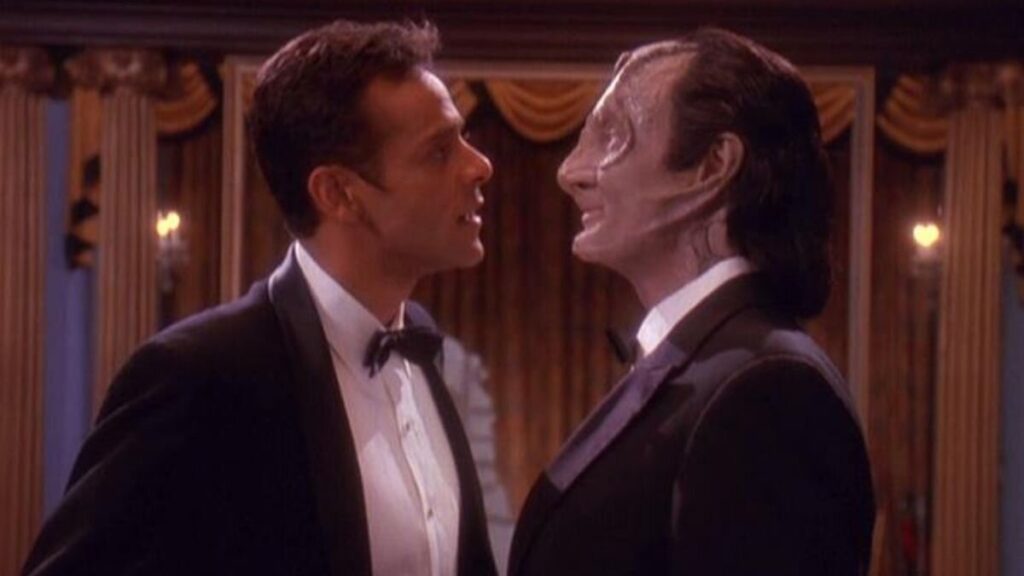
#oneaday Day 127: What You Leave Behind

Well, I've done it. I've made it through all of Star Trek: Deep Space Nine at last, and I'm pleased to report that it was fantastic. A consistently excellent show from start to finish, and a real demonstration of why '90s Trek is so fondly regarded to this day.

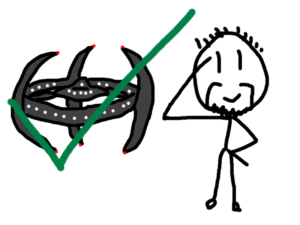
I should probably add at this point that there may be spoilers ahead. I have somehow managed to go this long without having any of the latter part of Deep Space Nine (which I hadn't seen prior to this watchthrough) being spoiled to me, so on the offchance there's anyone in the world still left in that position, I thought I'd give you due warning. After this image of Doctor Bashir and Garak smouldering with unresolved sexual tension, anything goes discussion-wise.

One of the things I've always liked about Star Trek is that it strikes a good balance between being convincingly "sciencey" and having quasi-mystical elements. That's the kind of sci-fi I like: where there's a high level of technology and cool spaceships, but also where there's still stuff that science can't quite explain, or which feels like it drifts somewhat into the realm of fantasy. As someone who enjoys nothing more than an RPG where you kill God (or equivalent) at the end, I always have time for pseudo-mystical fantasy, even in a sci-fi setting; in fact, I tend to find that particularly "hard" sci-fi — that is to say, sci-fi that paints an overly practical, "realistic" image of the future without any overtly fantastical stuff, is a bit of a turn-off.

Deep Space Nine had this right from its very first episode, where leading character Ben Sisko encounters "The Prophets", aka the noncorporeal entities that live outside of linear time inside the Bajoran wormhole. And this element runs as a constant thread through the entire series, right up until its climactic confrontation, placing Ben Sisko, Emissary of the Prophets, up against his most fearsome foe: the Emissary of the Pah-wraiths, who, of course, turns out to be Gul Dukat.

Gul Dukat is a thoroughly interesting character throughout the entirety of Deep Space Nine, and played brilliantly by Marc Alaimo. Beginning as a somewhat smarmy individual that is clearly bitter about the Federation occupying the space station he used to be in charge of, the episodes that involve him reveal a character with a considerable amount of depth and complexity — and one who goes through almost as much shit as Miles O'Brien. Sadly for Dukat, he doesn't pull through in the way O'Brien tends to; his eventual fate is unglamorous, but for him to be the "final boss" of the series, defeated by Sisko flinging himself into the fire with a Pah-wraith-possessed Dukat in tow, is entirely appropriate.

The whole Dominion War arc, which takes up a significant portion of Deep Space Nine's complete runtime, is kept consistently interesting by allowing us to see it from a variety of different perspectives. Even the Dominion's grunt soldiers, the Jem'Hadar, are given some complexity through episodes such as "Hippocratic Oath" and "Rocks and Shoals". And the sinister twist of Section 31, while relegated somewhat to background lore, provides a good means of giving the Federation a bit of interest, too.

One of the things Deep Space Nine shows repeatedly is that even the forces we have previously been led to believe are the "goodies" have their dark sides — and likewise, traditional "baddies" can have solid redemption arcs, too. The narrative arc of Dumar, set up to be a character the audience is supposed to loathe when he kills Dukat's daughter Ziyal — one of the few indisputably "good" characters in the series — is thoroughly fascinating, with his descent into alcoholism and bitterness and his emergence on the other side with a new-found determination to cast off the shackles of the Dominion's oppression. It's fitting that he die a martyr.

Kai Winn is another character who I was pleased to see eventually get their comeuppance. I wasn't sure if they were going to go full-on "Evil Space Pope" with her during the finale, but it is, again, entirely fitting that she have all the power and glory denied to her at the last minute as Dukat steals the show. She was a consistently loathsome character throughout her entire run in the series, so seeing her fall to evil out of her lust for power and end up incinerated for it was thoroughly satisfying.

It's kind of sad that the end of the series marked so many "farewells" from the regular cast, but it makes sense; Deep Space Nine was not the kind of Star Trek that would necessarily lend itself well to a movie in the same way as The Next Generation was, and so it felt appropriate for most people to go their separate ways at the conclusion. I was surprised at the inconclusive fate of Sisko himself — I was expecting him to pop back into existence, Q-style, towards the end of the episode — but again, with the buildup of him being part Prophet throughout the latter seasons, it made sense for him to at least temporarily be "at one with them", if not actually dead.

Anyway, I'm relieved, as finishing Deep Space Nine now means I feel like I can engage with Trek media produced since that series finished. The Dominion War was such an important event in Star Trek canon that I had always been hesitant to engage with anything post-Deep Space Nine for fear of inadvertently spoiling myself, but now I feel like I'm free to explore the wider Trek universe, be that through other series or video games. And there are a fair few Trek video games I'm interested in trying.

That said, I do kind of want to see how Voyager goes for its whole run. That's another one I haven't seen all the way through, so as far as my Star Trek journeys go, that one might well be next on the list.

Later, though. We're off on holiday on Monday, and I wanted to finish Deep Space Nine before then, as it would have been frustrating to have just a couple of episodes left and no means of watching them while we were away! Now I just need to finish Silent Hill 2 before the end of tomorrow and I can go away with no regrets…


Want to read my thoughts on various video games, visual novels and other popular culture things? Stop by MoeGamer.net, my site for all things fun where I am generally a lot more cheerful. And if you fancy watching some vids on classic games, drop by my YouTube channel.

If you want this nonsense in your inbox every day, please feel free to subscribe via email. Your email address won't be used for anything else.

#oneaday Day 96: Lower Decks

I was resistant to the idea of watching Star Trek: Lower Decks for quite some time. I was put off by a combination of some truly terrible trailers, the fairly generic-looking "adult animation" art style it uses, and the fact that its creator had some involvement in Rick and Morty, a show I couldn't even make it through the first episode of without feeling mildly ill.

But then I got thinking: I fucking hate it when people write stuff off based on superficial things like art style, so I should endeavour to not do that either. And, discovering that the complete run of Star Trek: Lower Decks to date appears to be on Prime Video, I decided to watch an episode or two, just to see what it was like.

And you know what? It's all right. The first couple of episodes are a bit heavy on the Gen Z-baiting manic energy, but after that it settles down a bit and starts to be a lot more witty and fun. There's still a certain amount of that 2024 "energy" to it, which I'm sure will turn some people off, but it's by no means a tedious Seth McFarlane-alike show. In fact, despite having a very different tone to live-action Star Trek, it actually manages to do quite a good job of feeling plausibly like what a comedy set in the Star Trek universe would feel like.

Because that's what it is. It still has many of the elements of classic Trek: characters with a bit of depth to them; relationships that come to light over the course of several episodes; creative takes on alien races; and, of course, the all-important technobabble. It just has a rather more overtly irreverent tone than live-action Trek; this isn't to say that live-action Trek was never funny, but rather it tended to be a more gentle, subtle sort of humour, whereas Lower Decks is rather more self-conscious about it.

Of the episodes I've watched so far, I think my favourite has been the third one, Temporal Edict, which is a funny take on something my wife and I discuss rather frequently: the amount of time wasted in an average day at a full-time job.

The episode concerns the captain becoming aware of the crew's use of "buffer time", a concept where they tell a superior that a particular job will take much longer than it will actually take, allowing them to look like a "hero" when they complete it in a fraction of the time they said they would, and also affording them time to slack off without anyone noticing. The episode explores the disastrous situation that would arise if everyone was well and truly "on the clock" at all hours of the day, and how it would almost certainly be counterproductive to try and micromanage people to this degree. It was a clever episode that, like classic Trek, takes a look at a real-life concept through the lens of sci-fi and invites us to have a good old think about it.

In short, I'm rather impressed with Lower Decks so far, and am pretty sure I'll watch it all the way through on Prime Video at the very least and perhaps even pick up the series on disc to keep. I guess it remains to be seen whether or not it wears out its welcome by the end of five 10-episode seasons, but everything I've heard from people who are already fans seem to suggest that it only gets better from hereon. I'm certainly willing to give it the chance to prove itself further.


Want to read my thoughts on various video games, visual novels and other popular culture things? Stop by MoeGamer.net, my site for all things fun where I am generally a lot more cheerful. And if you fancy watching some vids on classic games, drop by my YouTube channel.

If you want this nonsense in your inbox every day, please feel free to subscribe via email. Your email address won't be used for anything else.