Just a few days after I bemoaned the fact television is generally awful, today I discovered Brainiac. I had heard the name before, but I had never watched it before. Now I'm hooked, already.
For the uninitiated, Brainiac is essentially a kids' science show for adults. This means that it undertakes thoroughly silly experiments, such as attempting to see which pieces of hospital equipment make the most practical vehicles when propelled by carbon dioxide fire extinguishers, and infuses them with a layer of good old-fashioned British innuendo, such as a leather-clad scientist lady asking "how hard is your thing?" before inviting a selection of nerdy-looking men to display their hard objects to her, which she then drops a ton of bricks on, angle grinds and sets fire to.
Hosted initially by Richard Hammond of Top Gear fame and later Vic Reeves of, err, Vic Reeves fame, it's a thoroughly silly show that doesn't try to be anything more than it is — a bunch of grown men and women performing throughly silly yet visually entertaining exercises under the tenuous pretence that they're "doing Science". GLaDOS would be proud.
I suppose thinking about it, it's perhaps, ironically, not the most cerebral show in the world — the last one I watched featured an experiment to determine which foodstuffs produce the smelliest farts, judged by a member of the crew who'd been on holiday recently rating them out of ten and memorably describing the smell of a fart from a man who'd been eating nothing but Brussels sprouts as "like a hermit's earmuff". But then there are genuinely interesting scientific titbits, too, such as the revelation that custard is a non-Newtonian liquid, which means when impacted it has the properties of a solid and otherwise has the properties of a liquid. This means, as the team (including Jon Tickle of Big Brother fame) demonstrates, that it's possible to walk across a swimming pool filled with custard, so long as you keep moving. If you stop, you'll sink into it like quicksand.
I haven't sat down and genuinely watched kids' TV for quite some time — I've had no real reason to, as I've not had a hangover for quite a while — so I'm not sure if kids have an equivalent "YAY SCIENCE!" programme available for them to watch. I remember there being quite a few programmes involving "YAY SCIENCE!" and "YAY MATHS!" when I was little — mostly involving Johnny Ball, as I recall — but I have to admit I'd be surprised if the same sort of thing still existed today.
Still, there's nothing stopping the kids from watching Brainiac, of course — it appears to air on Sunday mornings, so what's to stop them wondering why the men with the objects look so uncomfortable when the nice lady in the tight suit asks them how hard is their thing?
Here's a clip for you to enjoy if you've never had the pleasure.
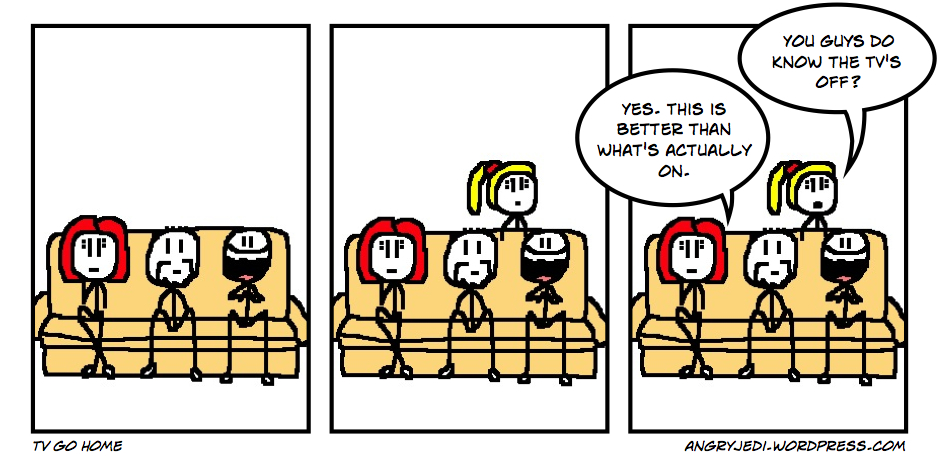
TV is rubbish. TV is so rubbish that I generally avoid the act of watching it whenever possible, usually preferring to catch the few things I do actually think are worth watching via video on demand services or purchasing a DVD.
It's difficult to pin down exactly what the most rubbish thing about TV is, though. Is it the asinine programming, in which the nation still doesn't seem to have noticed that The X-Factor, Britain's Got Talent, Over the Rainbow, Shitbag Maria and literally (okay, maybe not literally) tens of thousands of other shows are all actually exactly the same thing? Yes.
Is it the stations' inability to record more than one promo reel for an upcoming show and then bombard you with the same 15 clips every 5 minutes until the show actually starts and you find yourself actively wanting to avoid it? Yes.
Is it the fact that the BBC1 announcer sounds like he's extremely uncomfortable when announcing programmed? Yes.
Is it the fact that Dave, despite having about 15 years worth of Top Gear repeats to draw on, insists on playing the same episode at least twice in one day, so that you can watch half of it at lunchtime and randomly turn on the TV around dinnertime to find yourself picking up exactly where you left off? Yes.
Or is it the fact that advertisers treat you like idiots? "We're real lawyers," say InjuryLawyers4U (pro-tip: if you have to make your main selling point the fact that your law firm employs "real lawyers", you're not exactly filling me with confidence). "I got the money I needed with QuickQuidDotCoDotYouKay," says a woman with an unconvincing mouth and all the sincerity of a jam sponge. "Special K is only for women with body image issues!" implies a cereal advert. "Only women may shop in Boots!" suggests Boots, having now used the same piece of music for so long that even fans of the Sugababes want to throw things at the TV every time the ads come on. "All men are bellends who only care about sticking their cock in things and drinking, possibly at the same time!" imply 95% of adverts. "If you smell nice, slutty women will fall at your feet and get their baps out!" screams the Lynx advert, thereby condemning the entire country to continually smelling like a gypsy's jockstrap. YES.
So in short, TV is shite and the few genuinely good things that do get made either get buried in the schedules and forgotten (Firefly) or repeated so often you can watch them with the sound off and do the dialogue yourself without any difficulty (Friends).
Thank God for whoever decided that video on demand might actually be a good idea. Because although you still occasionally get shitty adverts, you can easily avoid all the crap with the added bonus that you don't have to fit your schedule around an inanimate object — it fits its schedule around you. And that's the way it should stay.
I'd say "sorry for the late entry", but looking at the clock it's somehow only 11pm and yet my pissed-up state makes it feel a great deal later, and that going to bed and sleep would be a Very Good Idea right now. In fact, I'd already gone to bed before I realised I hadn't written today's entry, and promptly leapt out of bed to sort out that situation forthwith. Fortunately, my awesome girlfriend Andie has already succumbed to the lure of sleep, so she probably won't notice that I snuck off to write this, at least until tomorrow morning, when she might read it.
The reason I'm so pissed-up is because of the Eurovision song contest. It's been some time since I last watched it, but as I recall, the last few times I watched it also involved a great deal of drinking, even without the use of The Eurovision Drinking Game, the rules of which seem to vary from social group to social group.
Tonight's rules involved drinking whenever you saw someone (not necessarily a lead singer) who was "hot", any time there was a key change (disappointingly infrequent this year) and, as the evening proceeded, a variety of other criteria, including light-up outfits and "if you felt like it".
As I say, it's been a while since I watched Eurovision and the songs on display this year seemed disappointingly short of the usual cheesy nonsense and skirt-ripping usually on display. France, in particular, seemed to be taking the whole thing very seriously, with a quasi-operatic number that seemed completely out of place. I hasten to add we've turned it off before all the voting is over — mostly because the voting goes on for hours and hours and hours but at least partly because of the amount of vodka and Tizer (classy) that has been consumed throughout the course of the evening.
Jedward were on fine form representing Ireland, exhibiting a song which required them to do little more than shout a bit whilst dressed as homosexual space marines while their backing singers did 95% of the work. The UK's entry Blue was rather weak, with some dodgy tuning issues in the solo singing, but some nice harmonies. As usual, there were conspiracy theories about the UK entry's mixing making it appear worse than it was, which I feel is missing the point somewhat — however much we used to enjoy dancing to Blue in Kaos "back in the day", they were never that good really, were they?
Germany's entry was notable for featuring a spectacularly hot lead singer (the same one as last year, I believe, not that I watched it last year) and a song that was actually quite listenable and a bit Portishead-ish. The fact it was quite listenable, however, meant that it was completely inappropriate for Eurovision.
In fact, the whole thing was disappointingly light on eccentricity this year — there was no Norwegian death metal, and only one group featured a unicycle. Maybe next year it'll get back on track.
Also, it's not the same without Wogan.
Anyway. I'm off my face (and surprisingly coherent despite this) so I'm off to bed now. Good night.
It's said that you can't switch on your TV and not be able to watch an episode of Top Gear, Friends or Scrubs. And far from being a bad thing, I feel this is very much a good thing. Your opinion on the matter will, of course, vary according to your opinion of the programmes in question. But I happen to like them all very much.
Friends in particular, it has to be said. Friends finished long ago now, of course, but it will always hold a fond place in my heart. I started watching it when I was back at school, and it quickly became one of those shows that I felt the need to tape every single episode of, and ended up with several bajillion VHS cassettes' worth.
I'm not sure exactly what it is that I like about it. I think it's the fact that the characters are very strong and recognisable — so much so that their own mannerisms have entered the realms of popular culture.
There's also the fact that most people can relate to at least one of the characters. Amongst all my friends, I know plenty of people who are Joeys, Rosses, Chandlers, Monicas, Phoebes and Rachels. And plenty who are combinations. (I also know plenty of people who are the cast of The Inbetweeners, too, but that's another story altogether.)
Mostly, though, I think it's the fact that every episode is both inoffensive and amusing, easy to watch and seemingly infinitely rewatchable. The ultimate in disposable TV. Comfort viewing.
It'll be a sad day for me if E4 ever stop showing episodes of Friends. For one, it'll mean I finally have to bite the bullet and purchase the complete DVD box set, something which I've successfully managed to avoid doing for the last ten years.
In unrelated news, it's my birthday tomorrow. I will be 30. How exciting! Or possibly depressing, I haven't quite made my mind up yet. (Except my lovely girlfriend is whisking me away for a fantastic birthday weekend, so the event itself will be totally brilliant and awesome, so that's pretty much decided. Hurrah!)
There's a ton of untapped potential in the world of the crossover. Comics have been wise to this for a long time, with DC and Marvel in particular being highly aware of the fact that all their superheroes are running around disparate parts of the same world and might just bump into each other on occasion.
But what would happen if some of the more bizarre crossovers came to fruition? Well, let's explore that, shall we?
Castlevania: Deep Space Nine
The most modern the series has got was with Soma Cruz, and even then it was still all bats and caves and swords and whatnot. Castlevania should go to space, and specifically to Deep Space Nine. Why? Because I had a dream about it so therefore it must be a good idea.
Benjamin Sisko discovers that as well as being the Emissary he is also a descendent of the Belmont clan and—horrors!—Dracula has found a way to harness the power of the Bajoran wormhole to summon forth the forces of Darkness into our reality. Fortunately, power of said wormhole also manages to summon Alucard, with little to no explanation as to why (this is Castlevania, you don't ask silly questions like "why?") who very carefully passes Sisko the Vampire Killer whip. Thus begins an exciting and thrilling co-operative adventure throughout the many decks of Deep Space Nine, culminating in a thrilling showdown with Dracula, who reprises his famous "What Is A Man?" speech in zero gravity.
Features narration by Patrick Stewart, as is the law for all new Castlevania games.
Dragon's Den: Origins
The Archdemon is rising, and the world needs a hero. But heroes don't just come out of nowhere. They need to be found.
Enter The Dragons: Peter Jones, Deborah Meaden, Theo Paphitis, Duncan Bannatyne and James Caan. A series of aspiring Heroes of Ferelden climb the stairs of destiny and pitch their ideas with which they believe they'll be able to take down the Archdemon. Only by securing a Dragon's investment in their expedition will they have a chance of success, otherwise they'll be doomed to wandering the land in rusty chainmail using swords that fall apart as soon as you hit a log with them.
Superman: The Krypton Factor
A brand new gameshow featuring Superman attempting to overcome a variety of physical and mental challenges, all of which are laced with kryptonite. Will Superman survive this episode? Will he finally succumb to kryptonite's influence? As the series finale, Superman has to defeat Gordon Burns in single combat, as it turns out that Burns, too, is also a superhero, but one who draws power from kryptonite instead of being weakened by it. WHO WILL PREVAIL?
Total WipeOut HD Fury
A combination of futuristic racing and people falling in the water repeatedly, the twist is that the courses which the high-speed anti-grav racers and the people running around have to follow are the same, causing significant risk to life and limb for anyone hopping over those giant Super Mario mushrooms whilst the pack bears down on them at approximately 700mph. The winner is the team whose antigrav racer and panicking human both survive.
The Hairy Bikers in: Road Rash
The Hairy Bikers have had enough, and have decided to take on a gruesome, brutal world tour atop their throbbing motorbikes. Along the way, they smack the shit out of anyone unfortunate enough to cross their path, collect the meat from the smouldering corpses and cook it into a delicious recipe between each stage of their journey.
There's a specific breed of British comedy that's been around for a few years now that's a far cry from the "old school". Mostly, it can be recognised by the presence of any or all of the following people in the cast: Simon Pegg, Nick Frost, Mark Heap, Dylan Moran, Tamsin Greig, Richard Ayoade, Matt Berry, Kevin Eldon, Stephen Merchant. Yes, I know there are others, but the above-mentioned each have a number of different shows to their name with a considerable amount of crossover. Also, they're the only ones I can remember the names of without resorting to Googling.
Anyway. This specific breed of British comedy is quick-fire, clever and often quite surreal. As such, it doesn't appeal to everyone. There are some items on this list that Americans in particular find very difficult to fathom. And indeed some Brits find it quite hard to fathom, too. But I can highly recommend at least giving all of them a shot if you're not already familiar with them. And if you are already familiar with them, the UK-based people (and those who are clever at faking UK IP addresses) will probably be interested to know that all the Channel 4-based ones are available via YouTube.
So, onward then.
Spaced
It'd be remiss of me not to mention Spaced, probably the most accessible of all these shows, even though I'm pretty sure most people are very familiar with it by now. A tale of relatively normal people in circumstances that are frequently anything but normal, it's a stylish show crammed full of smileworthy cultural references and some truly wonderful character work. It put Simon Pegg and Nick Frost firmly on most people's radars, and is pretty much the reason Shaun of the Dead exists.
There are so many amazing scenes, but this has to be my favourite.
Black Books
Black Books is some gloriously surreal character-driven comedy based largely around the wonderful chemistry between Dylan Moran, Bill Bailey and Tamsin Greig. It's a simple show with some completely off-the-wall humour that is a little too much for some people. But it managed to hold its own for three seasons, which is pretty good going for a low-budget Brit comedy, even if our seasons are considerably, considerably shorter than an American season.
Like Spaced, there are a ton of fantastic scenes to choose from, but it's difficult to beat this one.
Big Train
Big Train is a sketch-based show on which Pegg, Heap and many others had one of their first "big breaks". It almost defies description, such is the diversity of the sketches in which they engage. But it carries the cast's trademark surrealist humour, allowing you to escape into a land of pure nonsense.
Garth Merenghi's Darkplace
A great idea for a show, this. Darkplace is a fictional TV show presented with occasional talking-head segments from completely fictional writers and actors. The TV show itself is convincingly low-budget and awful—so much so that it's intentionally unintentionally hilarious—and the whole thing is a fantastic parody of the terrible crap that we see on our TV at times.
The IT Crowd
Another piece of genius small-scale character-driven comedy, this one has successfully made the transition across the pond for many people. Featuring a cast who are perfect comic foils for one another, a setting which most people can relate to and a variety of mundane-yet-hilarious situations, this has to be one of my favourite shows.
Green Wing
I've only just discovered this as I'll confess I didn't quite "get it" when it was first shown on TV, though this was probably largely due to the fact I only ever caught little bits of it. It's a heavily stylised show set in a hospital with very little discernible medical content, and one of the strangest casts of characters you'll ever see. I am now addicted to it
There. Enjoy. Should keep you busy for a little while.
The other night, I posted a question on Formspring. I thought I sent it to just a couple of friends but apparently somehow shared it with the entire Internet, as a lot of people, some of whom I hadn't come across on Formspring before, appeared to be very enthusiastic to answer it. I was somewhat surprised at the amount of depth people were putting into their answers, because it was, after all, a somewhat flippant question that I wasn't expecting people to take seriously at all. How wrong I was.
This was the question:
Out of The X-Factor/American Idol and equivalents; Jersey Shore; the music of Girls Aloud; the Call of Duty series; and cakefarts (don't look it up, it's exactly what it sounds like), which has had the most beneficial impact on society, however small?
My thinking behind it was this: here is a list of arbitrarily-chosen things that are all either irritating, disgusting, amusing or awesome depending on your outlook. Is there one that people see as significantly "better" than the others?
Turns out not, actually. Everyone had some good points to make.
Cakefarts by far. Yes, I am familiar. And yes I've gotten a lot of friends with it.
It's probably important to choose who you're going to show Cakefarts to carefully, because after all, it is exactly what it sounds like. But it's the sort of thing you can show to people and they certainly won't forget it in a hurry. (If you're not familiar, seriously, don't look it up, especially if you're at work; the clue's in the name) If you are acquaintances with people who don't "get" the Internet, you'll be an Instant Legend.
@Cidergirli agreed with AJ, but for different reasons:
I'm going to have to go with cakefarts, purely because it's the only one which appears to be open and honest about its use of cake. Also: cake.
@MJPilon had a thoughtful take on the issue and came out in favour of American Idol/X-Factor:
The answer I have off the top of my head is American Idol and equivalents because despite all the craziness that has sprung up around these shows, at their heart, these shows demonstrate that people should not give up on their dreams and that if they work for it, they can achieve what they desire. Anything which can still evoke these feelings and notions in people are beneficial for society.
He was concerned immediately after that he may have missed the point of the question, but I think that's a decent answer; though personally I feel that "ambition" shouldn't require a TV show to inspire people to reach for the stars.
@C64Glen came out in favour of Girls Aloud, though not for the reasons you might expect. Or possibly the reasons you might expect, given his username. I wasn't familiar with the factoid he shared, though. TIL.
Girls Aloud easily, some of the tracks and production on the 'Out of Control' album is great. Some of it by former C64 musician Matt Gray. E.g. Untouchable (instrumental)
@Shinogu showed where his priorities lie with his response:
Jersey Shore? They were the only people of that selection at the LittleBigPlanet 2 World Record event.
@Cilllah, ably aided by @Culley25, got straight to the point of the matter:
All of them prove one very important fact – mental illness makes money.
Fair point. @Bungiesgirl then came up with an image that you will either find delicious or nightmarish depending on your opinion of two of the things mentioned in the original question:
Surely it is a combination of Girls Aloud and Cakefarts?! Girls aloud because they have a hot(ish) redhead, cakefarts just for the LOL! preferably these two things should be brought together into one super site of Girls Cakefarts Aloud.
I like the redhead in Girls Aloud. Nicola. She has a name. Nicola. I like Nicola. I understand she's not the most popular option. That's just fine by me.
Sorry, where was I? Oh, right. @minifig came up with some fair points in favour of Girls Aloud and Call of Duty, with a disclaimer:
Call of Duty probably wins it, since the development of the game has at least pushed a few technological boundaries a little way, and probably just enough to outweigh the huge timesink it is for the people that play it. However, I think Girls Aloud probably come second since:
1. They have a couple of songs that aren't too offensive and
2. The amount of masturbation they've induced may well have had an impact to reduce the fertility of large numbers of men, thereby reducing the world's already excessively large population.
Not that I like either CoD or Girls Aloud.
It was around this point that the answers started to gradually increase in length, depth and intensity of feeling. Here's @docbadwrench:
Thankfully, I only know what a few of those things are. However, I think I get the general point.
Based upon the available data, I would have to conclude that Call of Duty has the most beneficial (though incredibly small) impact upon society. It encourages aiming, which is highly important if you use a gun.
In fact, if all fans of the aforementioned list could improve their aim, then they might kill one another; this could be another net gain for society. Perhaps, if we could plant subliminal messages into Call of Duty games encouraging people to buy guns. Then, extending the message further, perhaps their American Idol viewing parties would include handguns, just lying around on the table, in case there's a conflict about whether the latest off-key primadonna is the bestest of them all.
Definitely Call of Duty.
"allpointsnorth", whom I'm not sure I know on Twitter (apologies if I do) had this to say:
I suppose the knee jerk and natural response is that none of those programmes have any beneficial impact, but that would be a touch lazy and, not really fair.
Like most things it depends upon how you measure it. If we take beneficial to mean that more people enjoyed it so it must be more beneficial then I suppose I'd have to say Call of duty? 55 million sold worldwide. I guess Call of Duty would also fall into the 'brought economic rewards to many' view of beneficial too, though I'm sure that Jersey Shore brings in the cash too as will Girls Aloud.
However, I'm not really a big fan of measuring society against some sort of scale. I don't think it really works like that. To break society down in such binary ways is tempting as it allows us to explain and comprehend the world around us so much more simply. However, society isn't simple and what benefits one, no doubt, harms another. Even if that harm falls into a socially acceptable form of harm that we ignore.
Of the things here I'd say that Girls Aloud benefited me most as I've enjoyed a selection of their poptastic hits and the videos to go with them more than Jersey Shore, Call of Duty or Cakefarts – none of which I have seen. So, clearly, the music of Girls Aloud is the winner here and has done the most to benefit society at large.
Interesting point. What is "beneficial" to society? Is it something that brings economic rewards? Something that benefits art and culture? Something that makes people happy?
@planetf1 had a simple but accurate answer to my question:
I'd go for xfactor/idol simple as it's given a lot of people pleasure, helped many with a career/breaking into the music industry, has stimulated discussion & allowed many people to share a common experience.
Discussion there certainly is; like it or hate it, during any high-profile "reality" show on TV, Twitter will be abuzz with discussion about the show in question, whether it's in-depth debates about which floppy-haired twat is the "best" or people ranting and raving how much they don't care about whatever programme it is.
Two more, then we're done. @MituK had this wonderfully analytical, scientific approach to share on the subject:
Ooh, interesting. Well, let's assume that 'beneficial impact' can go into negatives, and assess each accordingly.
I know that there is a difference between X-Factor-type-shows and Jersey Shore, but both seem to elevate fame for it's own sake; even where hard work and talent are not what is being rewarded. This has led to a whole generation(s) of kids valuing fame for it's own sake, rather than as a consequence of hard work. Definitely negative impact. We'll give this a -5 rating for 'beneficial impact'
Similarly, the music of girls aloud – this has created tunes I can happily bop along to when in the mood, but it's also meant Cheryl Cole, who most little girls (according to a recent survey) would like to grow up to be, so this creates the same problem as described in the first paragraph. We'll give this an arbitrary rating of -0.5, weighing up those two things…
The CoD series – hmm, perhaps there has been no negative impact other than the already-existing self-perpetuating desire for studios to churn out yet more of these types of games. HOWEVER, it's existence has no doubt also inspired some of the many smart people interested in game design to want to create more interesting video game experiences (think indie scene). So, perhaps in a way this has had beneficial impact of +2 (of course I'm being idealistic here).
Cakefarts get a 'beneficial impact' rating of 0, because that is precisely how long I want to think about cakefarts.
So, on that scale, CoD wins, I guess!
And finally, @jennfrank shares a convincing argument in favour of Jersey Shore:
I've had more conversations about Jersey Shore than I've ever had about Idol or Talent or Call of Duty, and while these are all legitimate cultural milestones, OH MY GOD, don't get me started on all the million reasons Jersey Shore is my heart and soul.
I love these earnest people earnestly, without a wrinkle of irony–I do!–and I love their passion for life and their perfectly foreign codes of morality and chivalry and fashion. But it's this amazing anthropological study that no other show dares attempt, which is edgy in its way, and the cast, in turn, are these amazing actors who improvise their warts, these utterly authentic famewhores who relish in their own faults and even explain them all out, looking directly into the camera in partial states of drunkenness and undress.
Watching the show, for me, reproduces much the same crackle I felt as a tween watching early Real World, but instead of feeling a voyeur's envious thrill at the specter of adults away from home for the first time, I instead know the envious thrill of watching kids away from home for the first time. So it's the same, and it's not the same.
Also, these folks are classy: Snooki is a NYT bestselling author, and Jenni "JWOWW" Farley is a spectacularly talented painter.
So there you have it. Points in favour of all of them, and proof positive that easily-derided cultural phenomena sometimes carry more significance than you might think personally.
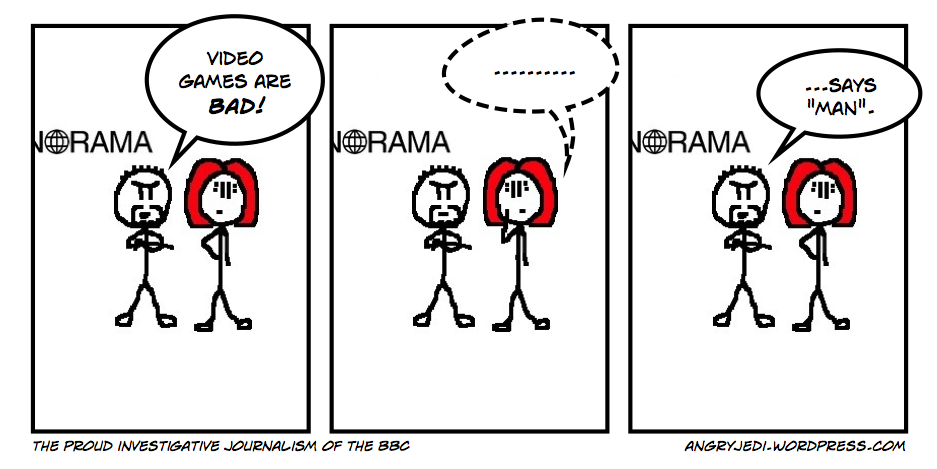
An hour ago, the BBC aired an episode of Panorama, our go-to investigative journalism programme, on the subject of video games. The subject, predictably, was the ever-present "are video games addictive?" question that has been raised and not answered many, many times prior to now.
The programme made a few fair points that are more common sense than anything else. Firstly, those with addictive personalities are prone to becoming addicted to games. Many games have in-built reward mechanics which those who get easily addicted to things will… well, get addicted to. Social games like Farmville, MMOs like World of Warcraft and popular multiplayer titles like Call of Duty all take great pains to ensure a regular stream of rewards and gratification being sent in the player's general direction. Whether it's a "medal", a "completed quest" or simple experience points, there's a constant flow of something that leads the player to believe they're achieving something. Those who become addicted to things easily can use that as a justification.
Secondly, the programme pointed out that parental controls need to be used more effectively. Many children and teenagers are given free reign on their use of video games and as such don't limit themselves on how much to play, to the exclusion of other things. Parents need to get better-informed about the facilities available to them to control their children's playing habits. This is, sadly, something that many parents are very resistant to, despite the fact that the tools are there for use, particularly on the Xbox, which offers some of the most robust family controls that there are—as does the Mac, oddly enough.
There were no concrete conclusions drawn, however. The "conclusion", if you can call it that, was that more research was needed from an independent body.
The thing is, this discussion has been going on for decades now, and no-one has thought to actually do that research in an appropriately investigative and non-biased manner.
I was reading through a few Formspring answers from Leigh Alexander (I think) the other day and she made the very good point that those of us out there who write about games can't be called "journalists" in the same sense as those who write for, say, national newspapers on breaking stories. Our role as members of the games press involves reporting on carefully-disseminated information provided by PR companies, critiquing products on general release (occasionally before general release) and sometimes interviewing a developer from the industry. There's no real "investigation" there, there's no hard-hitting stuff. That's not necessarily a bad thing, but given that mainstream media tends to come down on the more negative side of the fence when investigating gaming, I think there's certainly scope for a counter-argument: someone who does know the industry well investigating the burning issues. And investigating them thoroughly using established journalistic, sociological research techniques.
Who's going to be the first person to step up and do that, though? More to the point, would anyone read it or take it seriously? Gamers, by their very nature, are defensive creatures, having been made out to be "the bad guys" by the mainstream media once too often. And those not "in the know" are often inclined to have their minds made up by sensationalist stories in the aforementioned mainstream media.
I started watching Mad Men recently thanks to the generous loan of the Season One and Two DVDs from my old school friend and fine, upstanding gentleman Mr Andy Plummer, with whom I met up with for the first time in nearly ten years recently. Of the last two times I saw Mr Andy Plummer, the first involved the pair of us, drunk as skunks, consuming a pound of Tesco Value Mild Cheddar cheese between us at about 3 o'clock in the morning. No bread, no crackers, just cheese. It seemed like a fantastic thing to do at the time. The second time involved someone (I forget exactly who, though I know for certain it wasn't me) vomiting copiously out of a mutual friend's bedroom window onto the corrugated plastic roof of their student house's conservatory. The next morning involved dangling a mop out of the window and attempting to remove the… actually, this is completely beside the point, not to mention disgusting so I shall leave the rest to your imagination.
Anyway, Mad Men. I didn't know anything about it prior to watching it save that it was set in the 60s, featured the delectable and hefty-bosomed Christina Hendricks and involved a character named Don Draper. Beyond that, I just know that a lot of people whose opinion I trust and respect were going crazy over it, so I figured I probably ought to check it out.
I'm glad I did. I'm taking my time getting through the series as it's the sort of show that you have to pay attention to. The characters featured, while mostly obnoxious, chauvinistic pigs, are all individual and interesting, and you end up liking them against your better judgement. Or if not "liking", then at least being interested in seeing what happens to them next. Draper, in particular, has a lot of baggage which may go some distance to explaining why he is the way he is.
The upshot of the characters being such arses all the time is that when one of them does show some humanity and vulnerability, it's extremely affecting. Towards the end of the first season (trying to avoid spoilers here for those who intend to watch it), one character takes very ill, for example, and the fact he's shown to be a human being with real emotions as he faces his own mortality is a deeply affecting, poignant moment.
One of the best things about the show is its casual acceptance that it is the 1960s and Life Was Different Then. Characters drink and smoke to excess without a second thought. No-one has ever heard of "drunk driving", or if they have then no-one cares. Parents get their kids to mix their cocktails. Disciplining children through the medium of giving them a good hiding is accepted and even, in some cases, encouraged. And there are constant references to events that really happened throughout the time period. But it never feels like the show is ramming "IT'S 1960!!" down your throat—it feels like a natural, organic setting and after a few episodes of culture shock, you're right there with them. Just make sure you come out again afterwards.
If I could level a criticism at the show it's that I'm not sure where it's "going". It's very character-driven and there doesn't appear to be much of an overarching "plot" as such. This is fine, as I'm a fan of character-driven material, and the developments through which even minor characters in the show go are fascinating, entertaining, often amusing or tragic to watch. I've certainly found myself flip-flopping back and forth on a number of characters, thinking they were arrogant, greasy, disgusting assholes one minute and figures to be pitied the next.
Where it'll all end, I have no idea. But I'm certainly enjoying the ride so far.
Most times I watch TV, I'm reminded why I don't watch TV any more, besides the occasional isolated incident of The Apprentice (which I can't really be bothered with this year, anyway). And the reason for that is that 99.87% (approximately) of it is complete, unadulterated, unfiltered dross and bollocks, and the rest are reruns of old, unadulterated, unfiltered dross and bollocks.
Now I understand and appreciate that some people enjoy zoning out in front of the TV and enjoy having things that they don't have to think about. I do the same with video games. But at least I'm interacting with video games, and even the most mindless, dumbest video game requires at least a bit of co-ordination and use of your reflexes. Unless it's Farmville, in which case you just require to be non-vegetative enough to click a mouse a few thousand times. But even that demands more brainpower than staring at the TV.
Not all TV is rubbish of course. But I find myself picking up favourite TV shows on DVD rather than watching them when they air. There are a couple of reasons for this: firstly, being tied down to a schedule at the behest of an inanimate object is a pain that I can do without. Secondly, if I really get into a show, it's nice to be able to watch several episodes of it in succession to get a greater sense of "coherence" than watching a one-off. Try watching a season of 24 when it airs on TV as opposed to being able to watch several in a row on DVD and you'll see what I mean. Not that I ever got into Lost (the TV schedule thing meant I lost—no pun intended—interest about halfway through the first season) but I imagine that, with all its confusion, would be much the same.
The kind of TV that doesn't lend itself to a sense of "coherence"—random quiz shows and reality TV—doesn't particularly interest me anyway. So everyone's a winner, then. TV can keep its dross, its reruns, its uninspired crap and endless repetitions of Alexander the fucking Meerkat adverts. I'll stick to my DVDs, iPlayer and 4OD, thanks.
Will we eventually reach a stage where the concept of traditional TV broadcasting itself is obsolete? Thanks to services like those I've just mentioned, it's entirely possible to have a completely personalised staring-at-the-gogglebox experience consisting entirely of programmes you actually enjoy. And with services like Netflix, LoveFilm and MUBI offering a variety of niche as well as mainstream content, you can even populate your own personal TV and movie playlist with things that would never have been on TV in the first place.
Also there is no need to wait for Alexander the fucking Meerkat to come on screen to go and have a toilet break, either.
The more I think about it, the more this concept sounds very appealing. But will the TV studios ever go for it? The concept of "primetime" is still very firmly in the heads of most broadcasters, and so it's likely that scheduled programming will continue for at least a little while yet. But as time goes on? Who knows. Perhaps one day TV will move to an exclusively on-demand system.
 Just a few days after I bemoaned the fact television is generally awful, today I discovered Brainiac. I had heard the name before, but I had never watched it before. Now I'm hooked, already.
 TV is rubbish. TV is so rubbish that I generally avoid the act of watching it whenever possible, usually preferring to catch the few things I do actually think are worth watching via video on demand services or purchasing a DVD.
 There's a ton of untapped potential in the world of the crossover. Comics have been wise to this for a long time, with DC and Marvel in particular being highly aware of the fact that all their superheroes are running around disparate parts of the same world and might just bump into each other on occasion.
 There's a specific breed of British comedy that's been around for a few years now that's a far cry from the "old school". Mostly, it can be recognised by the presence of any or all of the following people in the cast: Simon Pegg, Nick Frost, Mark Heap, Dylan Moran, Tamsin Greig, Richard Ayoade, Matt Berry, Kevin Eldon, Stephen Merchant. Yes, I know there are others, but the above-mentioned each have a number of different shows to their name with a considerable amount of crossover. Also, they're the only ones I can remember the names of without resorting to Googling.
 The other night, I posted a question on Formspring. I thought I sent it to just a couple of friends but apparently somehow shared it with the entire Internet, as a lot of people, some of whom I hadn't come across on Formspring before, appeared to be very enthusiastic to answer it. I was somewhat surprised at the amount of depth people were putting into their answers, because it was, after all, a somewhat flippant question that I wasn't expecting people to take seriously at all. How wrong I was.
 An hour ago, the BBC aired an episode of Panorama, our go-to investigative journalism programme, on the subject of video games. The subject, predictably, was the ever-present "are video games addictive?" question that has been raised and not answered many, many times prior to now.
 I started watching Mad Men recently thanks to the generous loan of the Season One and Two DVDs from my old school friend and fine, upstanding gentleman Mr Andy Plummer, with whom I met up with for the first time in nearly ten years recently. Of the last two times I saw Mr Andy Plummer, the first involved the pair of us, drunk as skunks, consuming a pound of Tesco Value Mild Cheddar cheese between us at about 3 o'clock in the morning. No bread, no crackers, just cheese. It seemed like a fantastic thing to do at the time. The second time involved someone (I forget exactly who, though I know for certain it wasn't me) vomiting copiously out of a mutual friend's bedroom window onto the corrugated plastic roof of their student house's conservatory. The next morning involved dangling a mop out of the window and attempting to remove the… actually, this is completely beside the point, not to mention disgusting so I shall leave the rest to your imagination.
 Most times I watch TV, I'm reminded why I don't watch TV any more, besides the occasional isolated incident of The Apprentice (which I can't really be bothered with this year, anyway). And the reason for that is that 99.87% (approximately) of it is complete, unadulterated, unfiltered dross and bollocks, and the rest are reruns of old, unadulterated, unfiltered dross and bollocks.