I watched my first ever episode of CSI today. Or CSI: Miami, to be exact, since the original CSI isn't on Netflix as far as I can make out.
I enjoyed it! It reminds me how much I do enjoy police procedurals and crime thrillers — yes, even the cheesy, stupid, unrealistic ones — when I watch them, yet it's pretty rare I'll actually seek them out. It's one of those things that I forget I like, if that makes sense, and I'll just occasionally stumble across the, and remember all over again.
As with many forms of non-interactive media, I find myself thinking that there should be more procedural games. Trauma Team on Wii was a great example — particularly from the crime scene investigation angle — plus the Ace Attorney series has always provided a neat combination of private detective-style investigation and courtroom drama. I'd like to see more of that kind of thing.
There's the Police Quest series, of course, which I'm still yet to try, though those have the dubious distinction of being Sierra adventures (i.e. already brutally difficult, and not necessarily in a fair way) that are notoriously finicky about you actually following police procedure to the letter. There's nothing wrong with this, of course — how many other "police sims" are there out there? — but it doesn't necessarily push exactly the same buttons as a police procedural drama on TV.
I'm surprised that over the years we haven't seen more games branching out into popular TV genres. We've done sci-fi and fantasy to death, obviously, because both of those are eminently compatible with the most common means through which we interact with a game world: attacking it. We've also seen crime drama through the eyes of the criminals a lot thanks to titles like Grand Theft Auto and Saints Row. But what we haven't seen a lot of is a game about being a doctor, or a policeman, or a lawyer, or a journalist. I remember having a conversation with fellow Squadron of Shame members a while back about how cool it would be to play a war-themed game in which you weren't one of the American soldiers on the scene, but instead an embedded war reporter tasked with covering the conflict from the front lines. Plenty of scope for interesting storytelling there, plus gameplay that doesn't involve shooting people with a different skin colour to your character.
We could even expand that, though. Sci-fi and fantasy games don't have to be about killing, either; how about a sci-fi "future police" game? Or a "future medicine" game? (I guess that's Trauma Center, but still.) Or a game where you play a member of the Watch in a typical fantasy city? Plenty of scope for interesting things, and yet — at least in the mainstream — we still rely on the same old stuff.
Ah well. The times are a-changin', and we are starting to get more and more interesting thematic content in our games that isn't just about stabbing and shooting. I just wish there was a bit more.
I watched an episode of Channel 4's docusoap/fly on the wall show Educating Yorkshire earlier and, as I could have predicted, I found it most enjoyable.
You see, despite my unpleasant experiences at the chalkface a few years back, I still find myself interested in the world of education. I find schools to be fascinating places, with their collection of hundreds or even thousands of diverse people thrown together and expected to survive without killing each other. They're a great source of stories, both from the perspective of the teachers and the pupils, and I am constantly fascinated by fiction set in schools. (This explains my love of the following things: Buffy the Vampire Slayer; appalling high school drama movies; slice of life anime; visual novels)
Educating Yorkshire is set up well to tell some of these supposedly real stories, and it tells them well. Over the course of the single episode I watched today, we learned about the school's headteacher and his ideals; the students' attitudes towards him; the "back stories" of two persistent troublemakers; and a few other things besides. Although everything that happened was mundane to the max, these stories were presented in a compelling manner that made them interesting.
One image I absolutely could not get out of my head, though, was how much typical disciplinary proceedings at a school resemble a police interrogation — or at least one as depicted in the media. Before long, I was picturing Cole Phelps from L.A. Noire yelling at a kid ("[DOUBT] You did it, didn't you, you sick son of a bitch!") and pondering if there might be a market for a video game in which you play a teacher and have to investigate these incredibly mundane transgressions.
Well, I'd play it, even if no-one else would. Though given some of the creative interactive experiences we're starting to get today, now, I can't help but feel I might not be alone!
I've written about this on at least one occasion before, but the fact that Breaking Bad is on television again has reminded me of the curiously inverted effect that hyperbole has on me. In other words, the more people waffle on about how amazing something is, the less I want to pay any attention to it whatsoever. I've long since muted everything to do with Breaking Bad for this reason, as it's completely dulled any enthusiasm I might have once had for something that is — by most accounts — very good.
Breaking Bad is a curiously extreme example of what I'm talking about. It's doubly infuriating because everyone posting about it on social media is also being incredibly conscious of spoilers — Breaking Bad fans hate spoilers — and thus what we end up with at the time a Breaking Bad episode is broadcast is a string of tweets that say absolutely nothing. To be more precise, they tend to be nothing but a string of tweets of people going things like "OH MY GOD" and "WOW" which has absolutely no meaning whatsoever to those who aren't watching the show.
Now, I'll grant that Twitter provides a reasonably practical means for Breaking Bad fans to get together and discuss the show — or, more accurately, "react" to it in real-time — but it really doesn't inspire anything like in-depth discussion, and thus I have to question the value of doing this, particularly as it has several knock-on effects: 1) people who don't like Breaking Bad get pissed off 2) people who might have wanted to watch Breaking Bad at some point get fed up and decide they don't really want to watch it until everyone shuts the fuck up about it and 3) the people who are actually watching Breaking Bad are only giving the show half their attention because they're flip-flopping back and forth between the TV screen and their phone.
I tried the "livetweeting" experience a couple of years back when I got vaguely into The Apprentice. I picked up a few followers in the process and found some entertaining people, too, but it really wasn't worth it; the number of people who got irritated at it didn't really make up for the people I "met" in the process, and the interactions I was having with others who were "reacting" to the show in real time were superficial at best. I didn't find it particularly valuable, in other words; certainly no more so than sitting around watching a show with friends in the same room, which is something I don't tend to do — TV, for me, tends to be an accompaniment to something else (like eating dinner) rather than an activity in itself.
More than the fact I didn't find it particularly valuable socially, though, I just found it frustrating to do — if I was tweeting while watching, I found myself unable to concentrate on what was going on on the screen, so eventually I gave up, much to the relief of my Twitter followers.
Ultimately, it's your Internet; if you want to "ooh" and "aah" at Breaking Bad while it's on, feel free — I simply reserve the right to mute your ass if you do it too much!
Grump over. Time to go to a pre-wedding celebration.
At the insistence of my good friend Lynette (well, all right, she mentioned it a couple of times and I was intrigued) I have been watching an anime series called Revolutionary Girl Utena, also known in various places as Shoujo Kakumei Utena and La fillette révolutionnaire Utena.
Utena, as I shall refer to it from hereon, is clearly from a very different period to the anime I have watched to date. It has a very distinctive "'90s anime" appearance to it, particularly with regard to character proportions and design — everyone has chins that could cut glass, and all the girls have inhumanly long legs, a fact usually accentuated by their clothing — but it still makes use of a lot of common non-realistic "stylized" features that we see in modern anime, particularly with regard to facial expressions and the way people move.
Thematically, it's also of a genre I haven't really explored before — technically, it could be described as a "magical girl" anime since Utena regularly gains special powers accompanied by special effects and recognisable catchphrases, but it's a lot more than just Pretty Girl Fights Crime. No; so far I'm only relatively few episodes into the whole thing but it's very clear that there are a lot of things going on.
A friend of mine described Utena as being "like a fever dream" and that's absolutely true. There's a curious sense of surrealism about most of the episodes, with fairly mundane activities juxtaposed with obviously fantastic happenings that only certain characters are aware of. The whole thing is also absolutely riddled with imagery and visual metaphor, some of which are more obvious than others and most of which only contribute to the strange, surreal feelings of things not quite being what they seem.
But you probably want to know what it's all about, right? Well… as I say, I've only seen a few episodes so far so I can't comment with full authority on everything that has happened, but here goes.
Utena is a statuesque high school girl who habitually dresses as a boy. The reason for this is that when she was younger, she was helped by a kind "prince", who gives her a ring with a rose signet and tells the young Utena that it will "lead her to him". It transpires that there are other people out there who wear the rose signet on their rings, and they're at Utena's school. Specifically, they're the student council, who appear to have some sort of special relationship with an unknown entity, person or organisation known as "End of the World" and are keen to "smash the world's shell to bring about revolution" as dictated by their creed. ("If it cannot break out of its shell, a chick will die without being born. We are the chick. The world is our egg.")
Key to the plans of the Student Council is the "Rose Bride" Anthy Himemiya, who also happens to be a student at Utena's school — and who appears to share some characteristics with the "prince" from Utena's past. Anthy, for the most part, appears to be a normal girl, but whoever is "engaged" to her "possesses" her and can make her do anything they want. Through a series of unfortunate happenings, Utena becomes engaged to Anthy and then proceeds to protect her from the other members of the Student Council, who all have their own reasons for wanting to possess the "power of Dios" that Anthy contains.
The interesting thing about the series so far is that no-one is really outright "evil" — there are plenty of obnoxious characters who are unpleasant or dislikable, but they all appear to have their reasons for doing the things they do. In fact, there are several characters who, despite being on the Student Council and thus at various points taking the role of "antagonist", are actually rather sympathetic and/or likable. It's really cool, and I'm looking forward to finding out the truth behind some of them.
Anyway, given that I'm only partway through the series' first story arc, that's really all I can say for now, but I will say that I'm enjoying it, even if it's currently very confusing and bewildering. I get the impression that's entirely deliberate, though — I wonder how many answers I'll have by the end of it all?
Anime is full of surprises and frequently subverts your expectations, prejudices and preconceptions. In few places is this more apparent than in the recent show Oreimo, also known as Ore no Imouto ga Konna ni Kawaii Wake ga Nai or, literally in English, My Little Sister Can't Be This Cute.
Now, with a title like that, you'd be forgiven for thinking that this show is one of two things — or perhaps both. One: moe moe happy funtimes featuring a wacky little sister running around being cute. Two: incestuous "sister complex" story in which male protagonist ends up falling for his little sister through various shenanigans they get up to together. While I can't speak for number two in the show as a whole — I've only watched four episodes so far, so I'm still half-expecting them to pull the frequently-used "but they're not blood relations!" trope out of the bag (please don't spoil it even if that is the case!) — number one couldn't be further from the truth. Far from being a wacky show about nothing in particular as I expected it would be, Oreimo is, it turns out, an oddly personal show about being true to oneself and accepting each others' idiosyncrasies.
The concept is fairly straightforward. The main character Kyosuke is a 17-year old high school student who has had a somewhat strained relationship with his 14-year old sister Kirino for some time now. The reasons why they have been struggling aren't explained, at least at the start of the show, but it's clear that there's a certain degree of tension between them, whether that be the usual case of siblings resenting one another or something more. Kirino is a model student — she's pretty, she's popular, she gets good grades and she's a top athlete — and she also makes a lot of money doing modelling work for various catalogues and magazines.
But she has a secret.
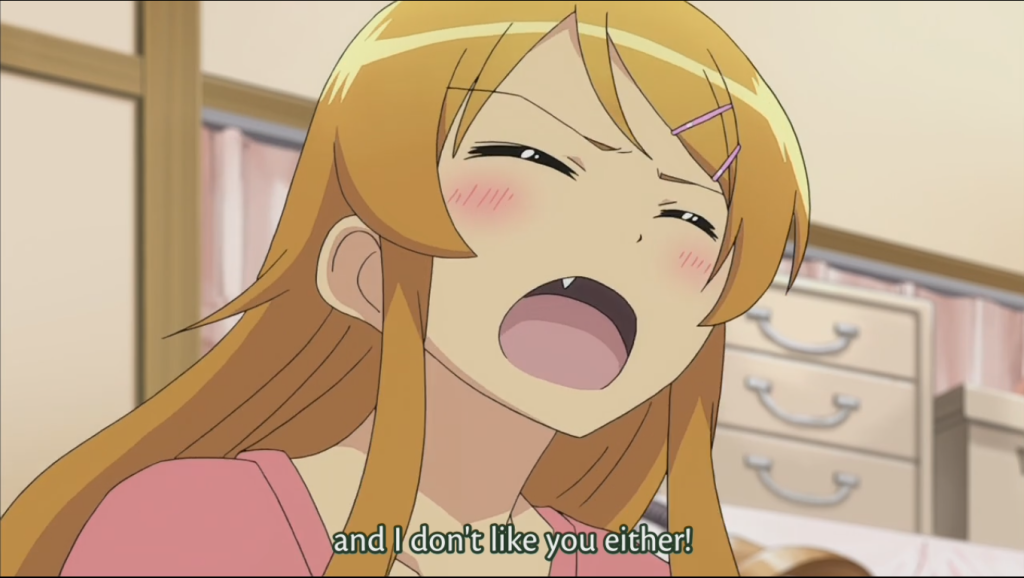
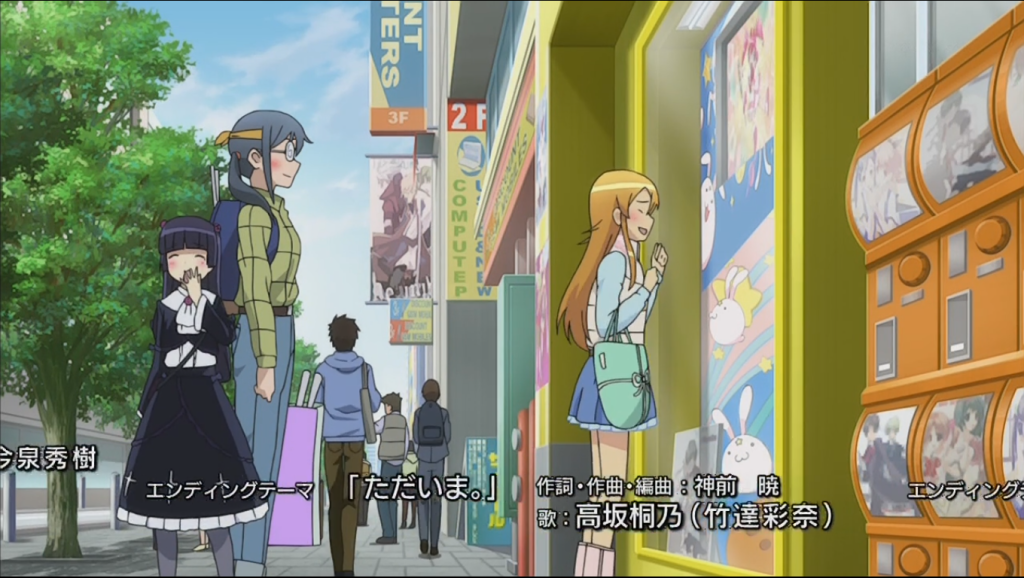
Early in the first episode, Kirino makes a bold move. She comes to Kyosuke's room in the middle of the night, wakes him up and confesses something that she's been hiding for a long time: she's a secret otaku with a hidden closet full of anime, manga, doujinshi and eroge — all paid for with her modelling earnings — with a particular focus on one particular (fictional) magical girl show, and also on anything related to little sisters. Kyosuke initially isn't sure how to react, but it becomes clear that Kirino wants his help, even though her own pride and somewhat tsundere nature prevents her from stating this outright. He agrees to help her work out how to handle her secret "addiction" and figure out what to do with her life, because the stress of leading a "double existence" is starting to take its toll on her, as she feels uncomfortable showing the world who she really is.
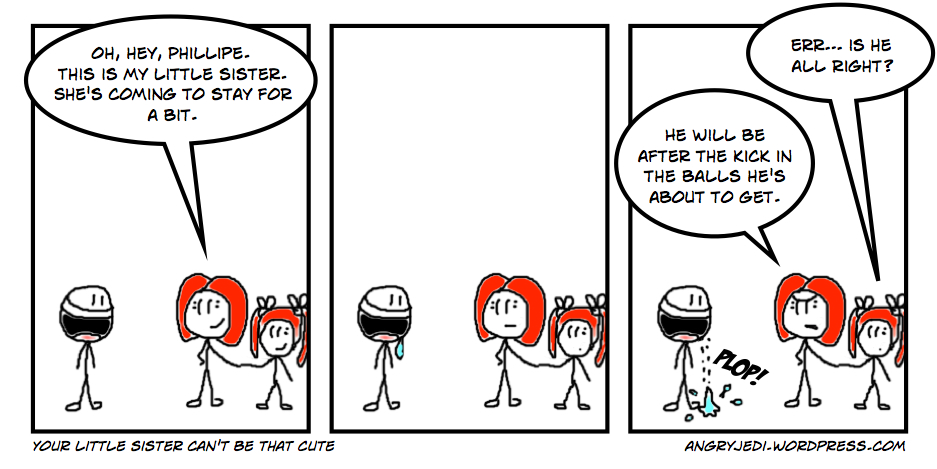
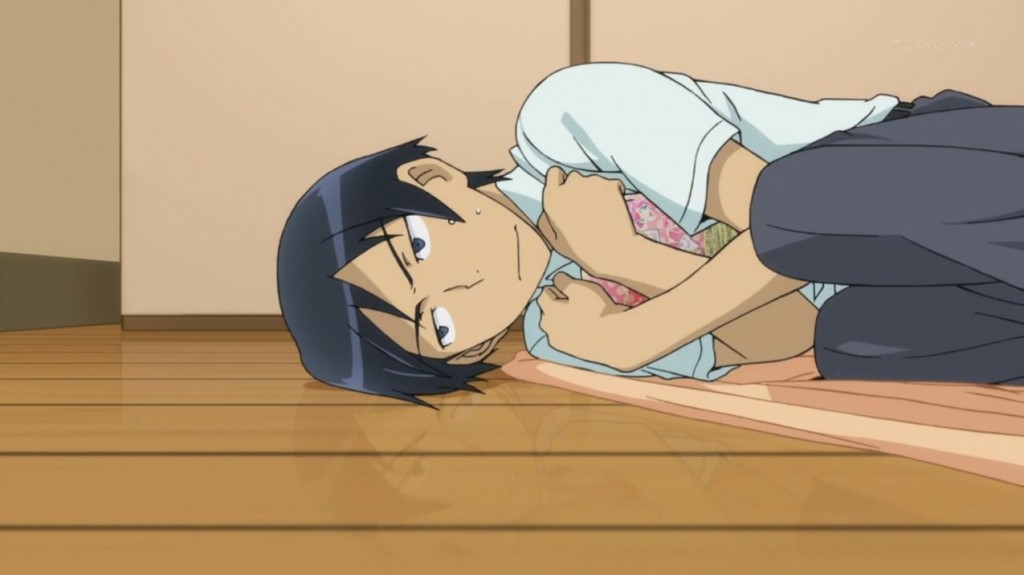
As the series progresses, Kirino learns to make friends who are into her secret hobby, and comes to trust them. Kyosuke watches with some degree of pride as he sees his little sister starting to open up and be herself, but it isn't an easy ride — particularly when her two worlds start to collide as the siblings' parents and Kirino's non-otaku friends start to find out what has been going on. Kirino faces constant judgement and scorn from people who look down upon her hobby, and has a habit of becoming defensive and lying as her first reaction, often leaving Kyosuke to take the fall — something which he usually resigns himself to without complaining, even when it involves (as it frequently does) him being kicked in the testicles.
The face of a defeated man.
When it comes down to it, though, Kirino will often (eventually) stand up for herself and say what she believes in; she's passionate about her hobby, and over time begins to accept the fact that there will always be people out there who will judge her for it — often without knowing anything about it. Kyosuke, meanwhile, comes to understand his little sister a bit better, and also becomes something of a focal point for all her friends and acquaintances when various problems arise.
The nice thing about Oreimo that I've seen so far is that, a little like the excellent series Welcome to the NHK, it deals with subject matter that divides opinion but does so without being judgemental or preachy about it. You don't get the impression from watching the show that it specifically wants you to think that being an otaku is either okay or that it is vile and shameful; it simply presents things the way they are, places a strong focus on the concepts of people's "public" and "private" faces, and others' reactions to those faces. Far from being wacky, silly fun times, it's actually proven so far to be an interesting, very human story that doesn't hide behind moe shenanigans despite having, as the title suggests, a super-cute female lead. (It could probably do without some of the occasional curiously-angled shots of said super-cute female lead's bum, admittedly, but… well, there's not much you can do about that, really.)
Anyway. Thus far I've been enjoying it a lot, and am looking forward to seeing how it continues. Further reports will undoubtedly follow.
It's funny to think that it was only this time last year that I played Katawa Shoujo, rekindled my love for all things Japanese and got properly "into" the visual novel medium. Over the course of last year, I played a bunch of VNs and took some tentative steps into the world of anime, too, and I haven't really looked back since. I've found a medium (well, several forms of closely-related media, really) that "speaks" to me, and that's always a pleasant feeling, particularly when there is a whole shitload of stuff in that medium for you to explore and discover.
Because it was only last year that I got into all this shit, though, it was only last year that I found out what the word "tsundere" means. I had occasionally heard it mentioned by people I knew were into anime and Japanese games, but I'd never thought to look it up before — perhaps because I assumed it was an obscure, specialist piece of jargon relating to something that I wasn't, at the time, particularly immersed in.
There's a good chance that there are a few of you reading this who have absolutely no fucking idea what I'm talking about right now, so allow me to educate you. Then you can walk away from one of these posts feeling like you've learned something for once. Wouldn't that be nice? Of course it would. Let's go, then.
"Tsundere" is a word primarily (though not exclusively) used in relation to characters in Japanese media (manga, anime, games and everything in between) who run "hot and cold". Tsunderes are usually female, though not always. The word is a portmanteau that combines parts of two different words to describe the two main moods of the character — tsuntsun describes the part of the personality that is aloof and/or irritable or even outright hostile; deredere describes the soft, squishy and adorable lovestruck centre that the abrasive exterior is protecting.
The tsundere is a stock character in a variety of Japanese works, and can pretty much be guaranteed to put in an appearance in any "harem" stories — i.e. those that include a male protagonist and a disparate gaggle of female heroines who flock to him for various reasons that are not always to do with love or sexuality. (Popular anime Sword Art Online has been described by some as a harem work, for example; even though the main focus of the story is on the romantic relationship between protagonist Kirito and female lead Asuna rather than Kirito attempting to knob his way around cyberspace, a number of episodes introduce a female character who is drawn to the protagonist for some reason before disappearing without a trace by the next episode.) They are a character type that is obviously exaggerated for either comic or dramatic effect — sometimes both — and thus it's unlikely that you'd find a real-life tsundere. At least, not one that takes quite the same form as you'd see one in an anime or game.
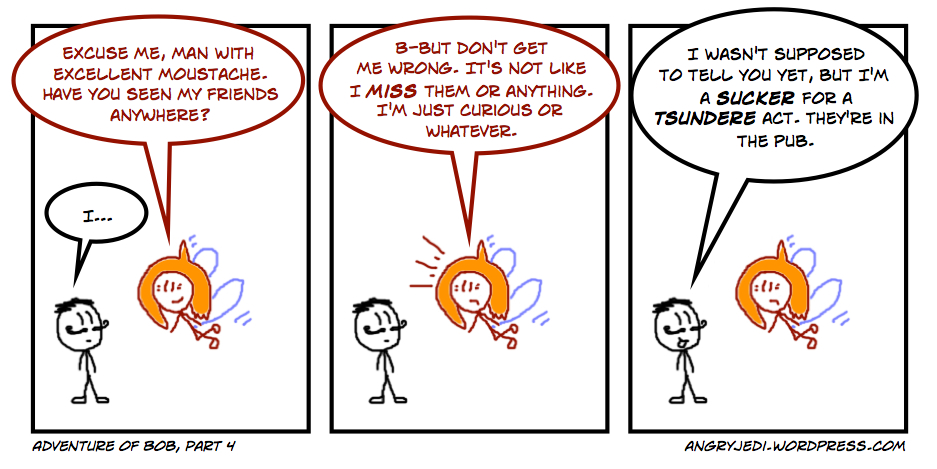
The tsundere can be recognised through a number of different means. Most commonly, it's through the use of the iconic combo of stuttering slightly when around the object of their affections, and the curiously-specific denial of something that belies their deredere side through what initially appears to be tsuntsun behaviour. ("What? I-it's not like I've been thinking about you or anything…!") Other tell-tale signs include excessive use of the word "baka" (idiot, stupid) for the slightest misdemeanour and blushing beet red when confronted with an obviously romantic or sexual situation that they haven't steeled themselves for.
Most tsunderes have tsuntsun as their default behaviour pattern and lapse into deredere when they let their guard down, but characters who represent an inversion of this format exist, too, spending most of their time adorably lovestruck and occasionally lapsing into abrasiveness and hostility if provoked. The latter type can easily be confused with the yandere, which also has deredere as their default behaviour type, but hides proper full-on psychotic mania underneath if the object of their affections either doesn't want them or is taken away from them. (A tell-tale sign that an anime yandere is about to go bonkers, incidentally, is that their eyes go completely blank, lacking the usual "sparkles" seen in the corner of anime eyes. If a character goes like that, you should probably get worried, and you can pretty much guarantee that someone is going to die very soon.)
Yanderes aside, the tsundere's behaviour is usually tolerated and accepted by their friends, and rarely commented on directly — it's just the sort of person they are. The object of their affections usually has to take the brunt of the tsuntsun side, but close friends who want to help the tsundere get closer to the person they obviously like often have to deal with this, too. More often than not, the long-suffering best friend either just shakes it off or is completely oblivious to it, having presumably learned to tune it out a long time ago.
There's something oddly attractive about a tsundere character, which probably explains why it's such a commonly-appearing trope. I couldn't possibly speak for everyone on why this is, but from my own personal perspective, I find the commonly-used "hard-hearted bitch showing a softer side" approach to be an effective one that helps me to sympathise with the characters in the relationship. Reasons that "tsuntsun by default" tsunderes act the way they do vary by story, but one thing is constant — letting that deredere side out is a sign that they're letting down the barriers around themselves and showing another character that they both trust them and care about them. It can be a very touching moment if handled effectively.
Here are a few of my favourite tsunderes. Oh come on, you knew this was coming.
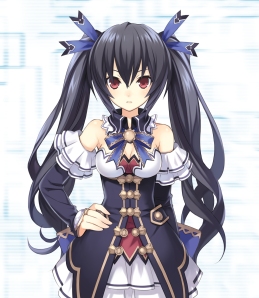
Noire (Hyperdimension Neptunia)
Noire, the character who represents Sony and the PlayStation in the Hyperdimension Neptunia series of games, is very obviously a tsundere thanks to her regular use of curiously-specific denials when talking to Neptune in particular. She seems aloof, arrogant and abrasive most of the time, but gradually reveals herself to be someone who just really likes to try and do their best at all times. She obviously likes Neptune, despite what often appears to be open hostility, and has found that her efforts to make the land of Lastation as good as it can be have left her lonely.
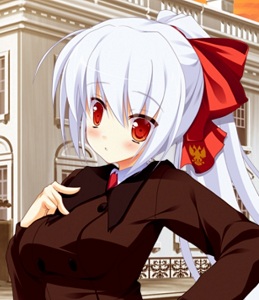
Irina (My Girlfriend is the President)
Irina Vladimirovna Putina, the Rusian [sic] president in the visual novel My Girlfriend is the President, is a textbook tsundere. Spending most of her time early in the game alternating between yelling at the protagonist Junichiro and twatting him around the head with her slapping fan every time he does something pervy (which is quite often), she eventually shows a softer side and ends up being a positive influence on Jun. Jun also has a positive effect on her; while she manages to mellow him out somewhat, his easygoing nature helps her be less uptight.
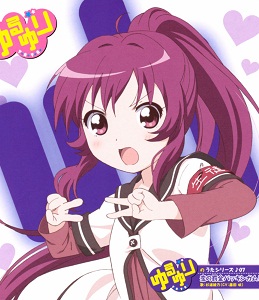
Ayano (Yuru Yuri)
Poor old Ayano is the butt of a bunch of jokes in the slice-of-life anime Yuru Yuri. The feisty redhead is obviously carrying a rather large torch for resident chaotic character Kyoko and is completely unable to express her feelings adequately, instead regularly flying into a blind rage at Kyoko's slightest misdemeanours. Kyoko, being Kyoko, doesn't mind at all, and is oblivious to Ayano's feelings. The only one who is truly aware of Ayano's crush is student council member Chitose, who regularly fantasises about the pair of them, usually resulting in a violent nosebleed.
I went through a phase a few years back of watching just two or three different TV series over and over again on a cycle. They were my passive-consumption "comfort food", if you will — things I turned to when I didn't really want to do anything, but didn't really want to fall into that pit of depressed ennui that normally ends up with staring at the wall for hours at a time. Those shows included Spaced and Black Books, which are two series I still own the DVDs for and will never get rid of, and Friends, which I have never owned a complete collection of but have had scattered home-recorded VHS tapes and a few purchased DVDs and videos over the years — also, for many years, it was on a constant cycle of repeats on E4 alongside Scrubs.
Friends is something that I've watched so many times now that I can pretty much recite it word for word along with any episode that's on. It kind of fell out of favour with the public in its latter stages as many people saw it as outstaying its welcome, but I enjoyed it consistently all the way through. As I say, it was comfort food; you knew what to expect with every episode. It was never anything adventurous, but the characters were both relatable and attractive, the situations they got into often personally relevant, and the quips and jokes memorable and, yes, genuinely amusing.
I started re-watching Friends again the other day having come into possession of a complete collection, only this time around I'm watching the "extended cuts" that came out a few years back. These aren't Lucasesque "special edition" versions, they're simply about 5 minutes longer per episode, with numerous scenes restored to their full length and, in many cases, adding a whole bunch of additional context and depth to the characters and setting that simply wasn't there before due to the constraints of the TV scheduling.
I'm really enjoying them so far. This extra footage means that watching the show again after a few years' break strikes a wonderful balance between the comfortably familiar and the brand-new — and, given how well I know the original versions, I can immediately recognise when something is new. In many cases, scenes that had rather awkward and obvious edits on TV now make much more sense, and in some cases there are scenes that I simply don't think were even there at all in the first place — Joey's first meeting with his colourful agent Estelle, for example.
More than the pleasure of getting some "new" Friends to watch, though, I'm overwhelmed with the feeling of comfortable nostalgia that watching this show always infuses in me. I've spent so much time with these characters inside my TV over the years that I feel like they're my friends, too — a fact helped by the fact that I still, to this day, tend to group people in my mind according to which one of the main cast they most remind me of. (Shh. Don't tell anyone.)
One thing I'd forgotten about is that the show appeared to coin the term "friend zone" back in its first season, where Joey uses it to describe Ross having waited too long to make his move on Rachel. I shan't get into any of that endless discussion over people who use the term "friend zone" today because it's inordinately tedious and frustrating, but I wonder how many people remember where it actually came from and its original context. A few years back, I would have deemed it unthinkable for someone to not have knowledge of Friends, but a lot of years have passed since then.
And yet, I struggle to think of a recent TV show I've been quite as attached to as Friends. I've enjoyed various American comedies that have come since — How I Met Your Mother was originally sold to me as something of a successor to Friends in many ways, and I have major soft spots for Parks and Recreation and 30 Rock — but for me, nothing will ever be quite the same as the time I spent with Monica, Phoebe, Rachel, Ross, Chandler and Joey. However well (or otherwise) you think it may well have aged, there's little denying that for many people of a similar age to me, Friends was and is a touchstone of popular culture that will always carry at least some degree of personal resonance.
I finished watching another new anime tonight specifically so I could write about it for today's post. Oh, don't worry (as if you were) — I was enjoying it a lot, so I was more than happy to zip through it and see how it concluded.
Kokoro Connect is its name, and it's an interesting one. It's also not at all what it makes itself out to be initially, which I can't help but feel is perhaps not to its benefit. But that aside, it's worth a watch, and here's why.
The elevator pitch of Kokoro Connect is as follows: five high school students have escaped their school's You Must Join A Club rule by establishing the Student Cultural Society, or StuCS for short. Ostensibly, StuCS is responsible for putting together a school newspaper, but in actuality they spend most of their time hanging out in their club room in relative privacy, talking to one another.
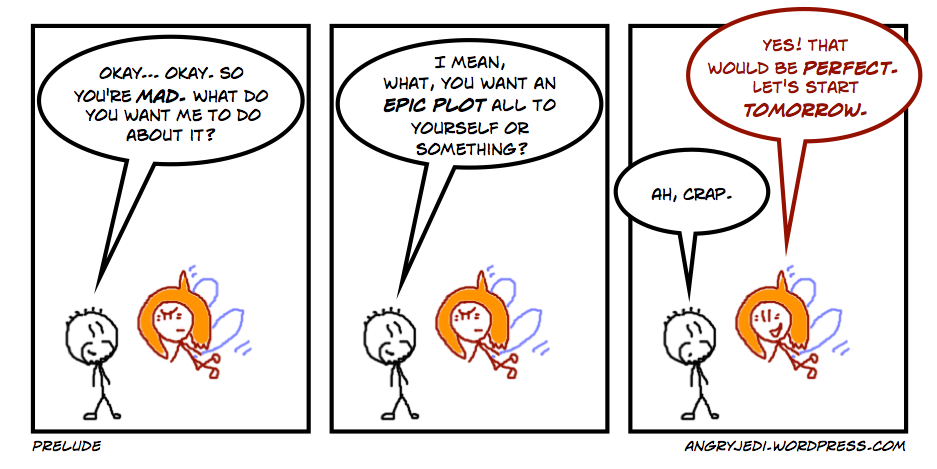
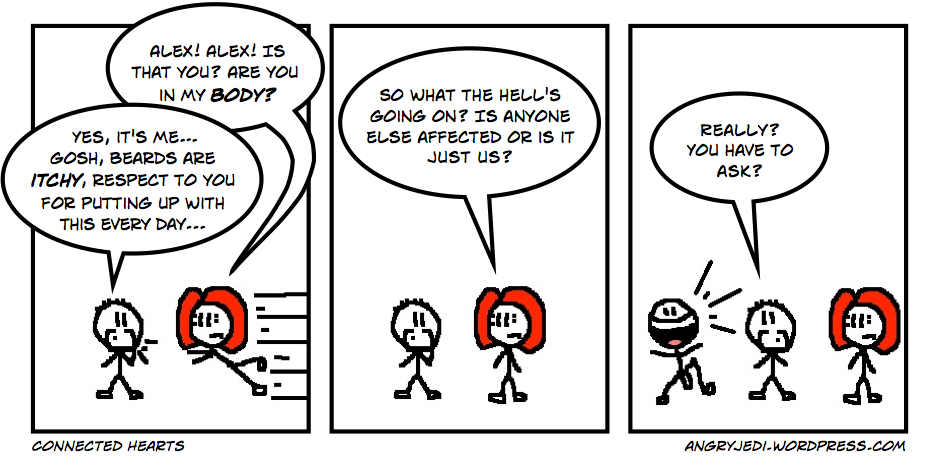
Everything is shaken up one morning when two of the group show up visibly shaken by what appeared to be a strange dream they both had at the same time. For half an hour, they believe that they had switched personalities, with their respective consciousnesses swapping places and then shooting back with no explanation. The others are understandably skeptical of this bizarre story… until it happens again while everyone is watching. Thus begins a rather peculiar tale.
That's how Kokoro Connect sells itself, anyway. The reality is, in fact, much more interesting, as while the whole "body-swapping thing" is cool, it's a difficult concept to sustain over a long period. Consequently, the supernatural "hook" of Kokoro Connect actually ends up taking a back-seat to the real reason to watch it — its five characters and their growth over the course of the show's 13 episodes.
Kokoro Connect's cast is a relatively diverse one, initially appearing to cover a selection of predictable tropes. We have Taichi, who is the relatively "blank slate" male character; Aoki, who is the jocular "best friend" character; Yui, who looks (presumably unintentionally) identical to Asuna from Sword Art Online and is the "quiet girl"; Iori, who is the "loud, immature girl"; and Himeko, who is the "cold, aloof, mature girl".
As you might expect from modern anime, however, none of these characters are quite what they appear to be at first glance. I shall resist spoiling exactly what's up with each of them — because there is something "up" with all of them — but suffice to say that they all have plenty of hidden depth that is explored throughout the course of the series. The various supernatural happenings (which eventually extend beyond body-swapping) serve as a trigger for each of them to confront their various issues and discover their "true" selves — sometimes independently, but more often than not with the help of their friends.
Kokoro Connect is, at its core, a show about friendship and the way people can and/or should help each other through hardships. A key theme is whether or not you should always help someone when they're hurting, or whether or not it would be more beneficial to let them work things out themselves in the long run. A question that is asked explicitly partway through the run, in fact, is whether or not you should hide from your problems (both individual and collective) or face them head-on, knowing full well that doing so will probably hurt both you and those around you.
It's actually quite Persona-ish in many ways — specifically, it's a lot like Persona 4, which is about people accepting themselves, including the parts they might not want to acknowledge. The supernatural aspect of Kokoro Connect is significantly toned down compared to Persona 4 and is never really adequately explained — a situation which may well be resolved in the four new episodes set to be released next year — but it doesn't really matter. If it wasn't there at all, these would still be interesting characters and interesting stories. (This does, of course, raise the question of why it's there in the first place, but it does serve as a good catalyst for a number of subplots throughout the show's run.)
If I had to critique the show specifically, I'd say that a couple of the characters' "issues" are resolved a little too quickly and I would have liked to see some more time spent exploring them, but to be fair, no-one ever comes out and suggests that they've been magically "fixed" — the resolution of said issues tends to be of the "I think I know how I might be able to deal with this now" variety rather than anyone having a "magic bullet" to administer.
This aside, it's a great watch with some very likeable characters who make up a good ensemble cast. There's a nice balance of light-hearted comedy alongside the fairly serious issues the story tackles, and it isn't afraid to depict high school kids like how high school kids actually are rather than the squeaky-clean paragons of virtue they're sometimes portrayed as. (There's a particularly toe-curling exchange of "secrets" between Taichi and Himeko at one point, but I'll spare you the details.) This latter aspect is another thing that the Persona series was particularly good at, and it's a big draw here, too.
All round, then, if you like character-driven stories that tackle personal issues with just a dash of the supernatural, then you should give it a shot. If you can get Crunchyroll where you are, you can do just that right here.
One of the things I always find most memorable about any story I experience, be it a book, TV show, movie, anime or game, is the characters. If the characters aren't interesting, chances are I'm not going to get hooked in. It's the reason I usually cite as to why I loved the open-world adventuring of Xenoblade Chronicles but find Bethesda role-playing games and most MMOs rather tiresome after a while, but it applies to pretty much any medium.
As such, I would like to present to you a randomly-chosen selection of five of my favourite characters that have popped into my head immediately upon attempting to think of my favourite characters. If that makes sense. I make no apologies for the fact that some or all of these are likely to be big-eyed anime or computer game people.
Grace (Gabriel Knight)
Most people cite Tim Curry's memorable portrayal of the lewd, womanising bookshop owner in Gabriel Knight: Sins of the Fathers as the highlight of that game, but the unsung heroine of the piece is most definitely Grace Nakamura, his long-suffering assistant.
Grace is a realistic female character in that she's not there to be eye candy, she's not there to be a useless sidekick hanging on everything the hero does and she actually has a personality. She doesn't take any shit from Gabriel, and you'd better believe that he regularly gives her shit — his always-rejected advances are a highlight of their interactions, and yet it's clear that the pair of them do, in fact, care deeply for one another, otherwise Grace would have been out the door long ago.
The exact nature of Grace and Gabriel's relationship, at least in the first game, is kept deliberately rather ambiguous. Grace often acts as something of a mother figure towards Gabriel, though it's never quite clear if she actually wants to "tame" him or simply sand down a few of his rough edges. Gabriel is certainly receptive to the things she says and appreciates the hard work she puts in for him — and yet the clear sexual tension between the two of them goes unresolved. Proof that you can have two characters of the opposite sex to one another without them ending up in a predictable love scene.
Angel (Buffy, Angel)
Buffy the Vampire Slayer and its spin-off series Angel remain two of my favourite TV shows of all time. David Boreanaz's brooding vampire Angel appears in both, but really comes into his own when he gets his own series.
It would have been easy for Whedon and the gang to leave Angel as your stereotypical brooding vampire, haunted by his past and trying to make amends for deeds that can never be forgiven. And indeed for many of his appearances early in Buffy, he's little more than that, providing a convenient "forbidden love" interest for Buffy while allowing the show to explore some traditional vampire themes.
In Angel, however, he cuts loose and we get to see him for who he really is. Sure, he broods and spends a lot of time sitting in the dark — something that is regularly commented upon by his companions — but he also does a fine line in completely deadpan one-liners.
Also, this.
Incidentally, a comment on that YouTube video reads thus: "I always thought Angel was a ponce in the first three season of Buffy…then He moved to L.A. L.A. changes people."
Kyoko, as you can probably tell from the image above, does not give a shit what people think of her, and she's immensely entertaining as a result. She's often the instigator of the various scrapes the group gets into, and her hyperactivity is a big part of what gives the show so much energy. Part of her appeal comes from the fact that her blonde-haired, blue-eyed appearance sets her up to be "the pretty one" and she then subverts stereotypical expectations completely with her wild and crazy behaviour.
At the same time, though, she's a dedicated friend and companion, and the whole "possibly unrequited love" thing going on between her and the huggably tsundere student council vice president Ayano (whom I also considered including on this list, but settled on making her my Facebook avatar instead) is another big draw for those who enjoy seeing blushing anime girls simpering at one another and then denying their feelings vehemently. I-It's not like Ayano wants to spend every waking moment with Kyoko or anything, after all! Idiot!
Seiko (Corpse Party)
Seiko was one of my favourite characters from Corpse Party, a game with an incredibly well-defined and interesting cast all round. The best thing about Seiko, though, was how self-consciously "not girly" she was. She's open, honest, brash, crass and, a bit like Kyoko, does not give a damn what people think of her. At the same time, she's cheerful and does her best to keep the people around her in high spirits, even as they are trapped in a horrifying, terrifying situation from which there appears to be no escape.
It becomes clear after only spending a short amount of time with her in the game that she has a number of deep bonds with her friends — particularly with the character Naomi, for whom it's rather strongly implied that she's harbouring romantic and/or sexual feelings.
To say too much more about Seiko would probably be to spoil Corpse Party more than I'm willing to, but suffice to say that she's a definite highlight of the game. And, oh look! Corpse Party is half-price on the PlayStation Store (PSP and Vita) right now. You should go and buy it if you have a Sony handheld, otherwise I'm not sure we can be friends any more.
Polgara (Belgariad, Malloreon)
David Eddings' Belgariad and Malloreon series are rather traditional pulp fantasy novels in many ways, but a few aspects of them cause me to remember them fondly — and I've even re-read the whole set of books several times, which is not something I normally do.
One of these aspects is Polgara the sorceress. For those unfamiliar with Eddings' epics, they follow a relatively traditional pattern in which an unassuming young farmhand named Garion gradually gathers a party of various ne'er-do-wells and, through various combinations of circumstances — spoiler! — becomes incredibly powerful, battles against an evil god and wins.
One of Garion's constant companions throughout the entire series is his "Aunt Pol," who has been a constant presence in his life since childhood. It transpires that "Pol" is actually Polgara, a four thousand year old sorceress and daughter of Belgarath, sorcerer of legend and he who recovered the mystical artifact The Orb of Aldur from — look, let's just say he's Kind of a Big Deal, all right?
The reason Polgara is interesting is not because she's a kick-ass sorceress, though, it's the fact that she's a very well fleshed-out character with a hell of a lot of hidden depth. Garion learning the truth behind her heritage in the Belgariad is just the tip of the iceberg — Eddings went on to publish two additional books known as Belgarath the Sorcerer and Polgara the Sorceress which explained the ancient magicians' history in exhaustive detail, giving the entire world in which the two series were set an extremely strong feeling of being a "real" — or at least believable — place. Polgara and Belgarath's constant presence throughout the world's history give you something to latch on to as millenia tick by in the pages of the books — and yet both of them remain entertainingly "human" despite their obvious… non-humanness.
____
That was fun. I'll do this again sometimes soon. I won't ask what your favourite characters are, because no-one ever replies when I end a blog post with a question. I'll just say good night and leave it at that!
Well, as I suspected might happen when I wrote my first post on the subject of Yuru Yuri, I appear to have become mildly addicted to the thoroughly silly adventures of the Amusement Club.
For those who missed aforementioned post and are too lazy to click on the link and see what I'm talking about, Yuru Yuri is a show about lesbian schoolgirls. No, not like that. That is basically what it is, though. (A show about lesbian schoolgirls, not porn.) It's a show that features an all-girl cast where homosexual feelings towards one another are the norm rather than the exception — rather refreshingly, the show regards same-sex feelings of attraction and love as just something that happens rather than something that is in any way "shocking" or out of the ordinary. It's not a show that's trying to push a particular agenda on its viewers, in short — certain members of the cast feel certain ways towards one another, and they just happen to be girls. Which is cool with me.
After a little while, this simply becomes something you accept in the world of Yuru Yuri, and you are then able to focus on the real highlight of the show — the characters. This is not a show where anything earth-shatteringly important happens, you see; no-one is struggling with Big Issues, no-one is feeling a sense of guilt over their sexuality, no-one suffers anything other than the most temporary setbacks (and then usually only for laughs) and no-one gets hurt in anything more than the most ridiculous slapstick fashion — we're in the territory of comedy "bumps" popping out of people's heads here, which is something I don't think I've seen since I was a kid.
But no; there are no Big Issues to come to terms with, which lets the characters shine simply by being themselves. It's an excellent and diverse cast made up of an interesting mix of established tropes and characters who subvert said tropes nicely.
Chinatsu, Akari, Yui and Kyoko, the four girls who make up the school's "Amusement Club" pictured above, are the main stars, with Akari ostensibly being the "protagonist". Akari's main distinguishing feature is that there is absolutely nothing remarkable about her whatsoever, however, which tends to lead her being the butt of many episodes' jokes as she gets left behind entirely or, in some cases, ends up turning completely invisible due to her lack of presence. She is endearing and entertaining in her own right, however, and despite the show's joking insistence that she is not worth focusing on, she's sweet and cute. She also has the most terrifyingly creepy siscon older sister I've ever seen, too — in one particularly hilarious and memorable (if weird as fuck) scene, said sister settles in for a comfortable evening home alone, clutching her Akari body pillow which she's dressed in one of Akari's uniforms, and wearing a pair of Akari's knickers on her head. It's a gloriously uncomfortable scene, particularly when Akari comes home early and her sister only just manages to hide the evidence of her misdeeds.
Yui, meanwhile, is "the sensible one", and a bit of a tomboy. She's the sort of character who rarely smiles and is quite softly-spoken. In many ways, she's the mother figure of the group, as she lives by herself and puts up with the others — particularly Kyoko — invading her home and demanding food. Yui sometimes seems to be a bit of a "blank slate", but occasionally we get a glimpse of her humanity through her getting into a video game or playing with her younger relative Mari. Yui is also particularly skilled in dealing with Kyoko, regularly shutting down her often-incoherent hyperactive rants with just a single word.
Chinatsu is the exact opposite of Yui. A lively, energetic young girl with bright pink frizzy hair in bunches, Chinatsu is carrying a rather large torch for Yui and will do anything to try and get closer to her. While she is initially presented as a sweet, innocent, shy girl, it becomes very apparent very quickly that Chinatsu can be aggressive, grumpy, mean and a bit of a bully at times — though she's not particularly good at any of those things, often leaving her looking rather ridiculous. She's also terrible at drawing, creating pictures that look like something out of a particularly unpleasant horror movie.
Kyoko is the clear highlight of the show, however. Kyoko does not give a shit what anyone thinks and just does what she feels like. She clearly has some sort of attention-deficit disorder, and is usually hyperactive. Despite this, however, she is fiercely loyal to her friends and clearly values her time with the group. She's also caring and considerate, and is also the most obviously "gifted" of the group — not only is she a talented (and respected) doujinshi manga artist, but she's also able to score full marks on almost every test she takes with minimum effort, much to the chagrin of her rival Ayano. She's also mildly obsessed with Chinatsu's unbearable cuteness, and takes every opportunity to find an excuse to make her cosplay as "Witch Girl Mirakurun", to whom Chinatsu bears an uncanny resemblance even when out of costume.
Although these four make up the main cast, the secondary characters are all interesting and entertaining too, particularly in the second season, where they each get much more of a chance to shine. We have the aforementioned tsundere student council vice-president Ayano, who likes Kyoko but would never admit it; her best friend Chitose, who has a habit of getting nosebleeds as a result of perverted thoughts about Ayano and Kyoko getting together every time she takes her glasses off — and also goes on a kissing rampage any time she ingests chocolate; and the ever-entertaining duo of rivals Sakurako and Himawari who are absolute polar opposites in almost every way but clearly care deeply for one another. Sakurako is extremely childish, aggressive, demanding, hot-headed and flat-chested; Himawari is mature, motherly, firm but fair and in possession of a fine pair of breasts which Sakurako is quite understandably very jealous of.
The way these girls interact with one another and play together is the reason to watch Yuru Yuri. You can get to the end of an episode and realise that absolutely nothing happened beyond "some girls hung out together" — but that despite this, you still had an entertaining experience. It's one of those experiences where you feel like you're "friends" with the characters and that you're getting the opportunity to just chill out and hang around with them. It's not a show that's going to slap you around the face with The Feels on a regular basis, nor does it ever claim it's going to be, but for something that's just plain fun to watch, I think it's going to be hard to beat.
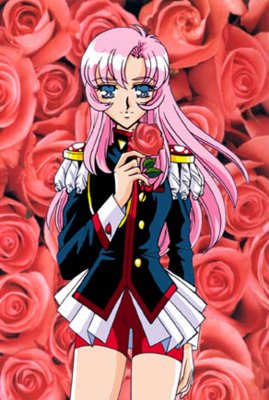 At the insistence of my good friend Lynette (well, all right, she mentioned it a couple of times and I was intrigued) I have been watching an anime series called Revolutionary Girl Utena, also known in various places as Shoujo Kakumei Utena and La fillette révolutionnaire Utena.
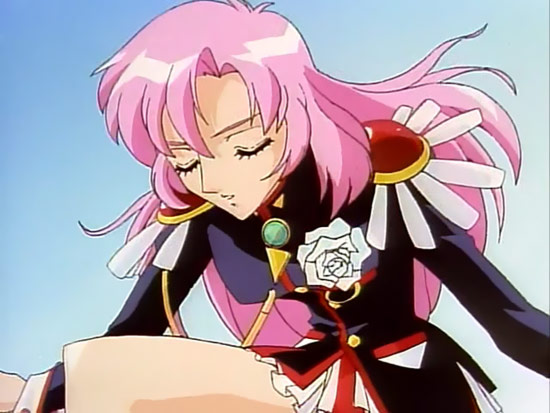 Utena is a statuesque high school girl who habitually dresses as a boy. The reason for this is that when she was younger, she was helped by a kind "prince", who gives her a ring with a rose signet and tells the young Utena that it will "lead her to him". It transpires that there are other people out there who wear the rose signet on their rings, and they're at Utena's school. Specifically, they're the student council, who appear to have some sort of special relationship with an unknown entity, person or organisation known as "End of the World" and are keen to "smash the world's shell to bring about revolution" as dictated by their creed. ("If it cannot break out of its shell, a chick will die without being born. We are the chick. The world is our egg.")
 Noire (Hyperdimension Neptunia)
 Irina (My Girlfriend is the President)
 Ayano (Yuru Yuri)
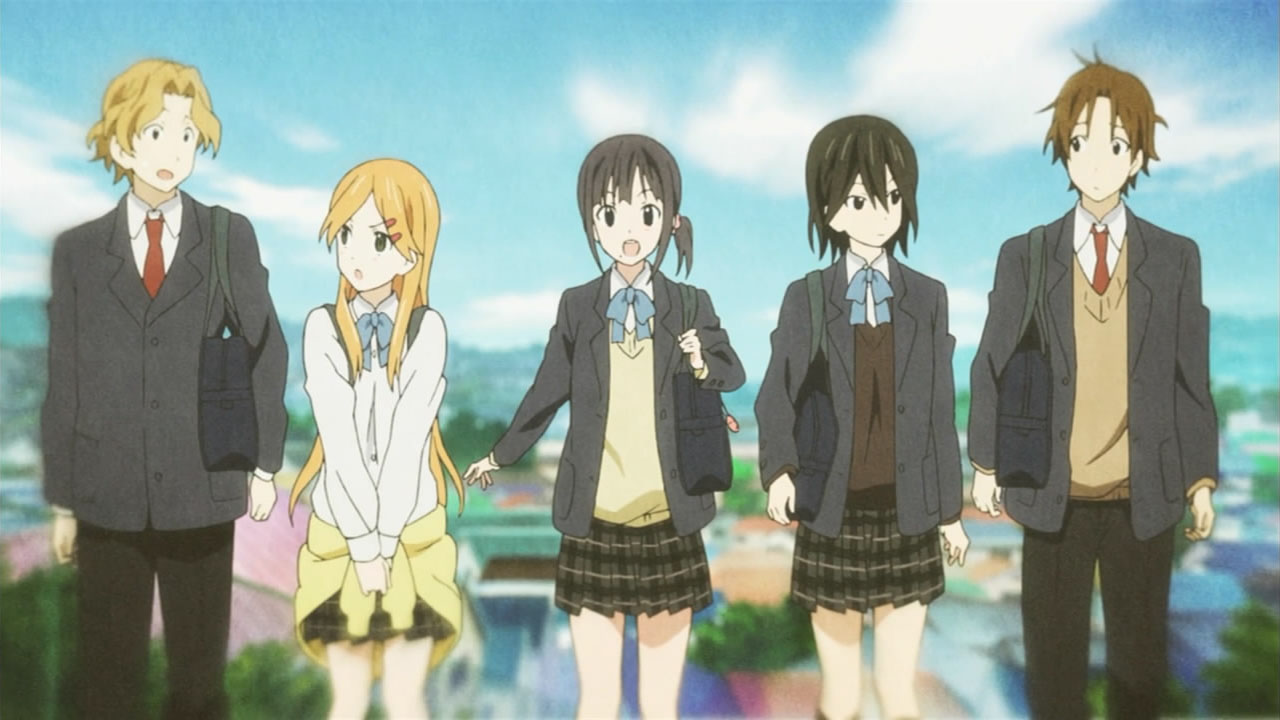 Kokoro Connect's cast is a relatively diverse one, initially appearing to cover a selection of predictable tropes. We have Taichi, who is the relatively "blank slate" male character; Aoki, who is the jocular "best friend" character; Yui, who looks (presumably unintentionally) identical to Asuna from Sword Art Online and is the "quiet girl"; Iori, who is the "loud, immature girl"; and Himeko, who is the "cold, aloof, mature girl".
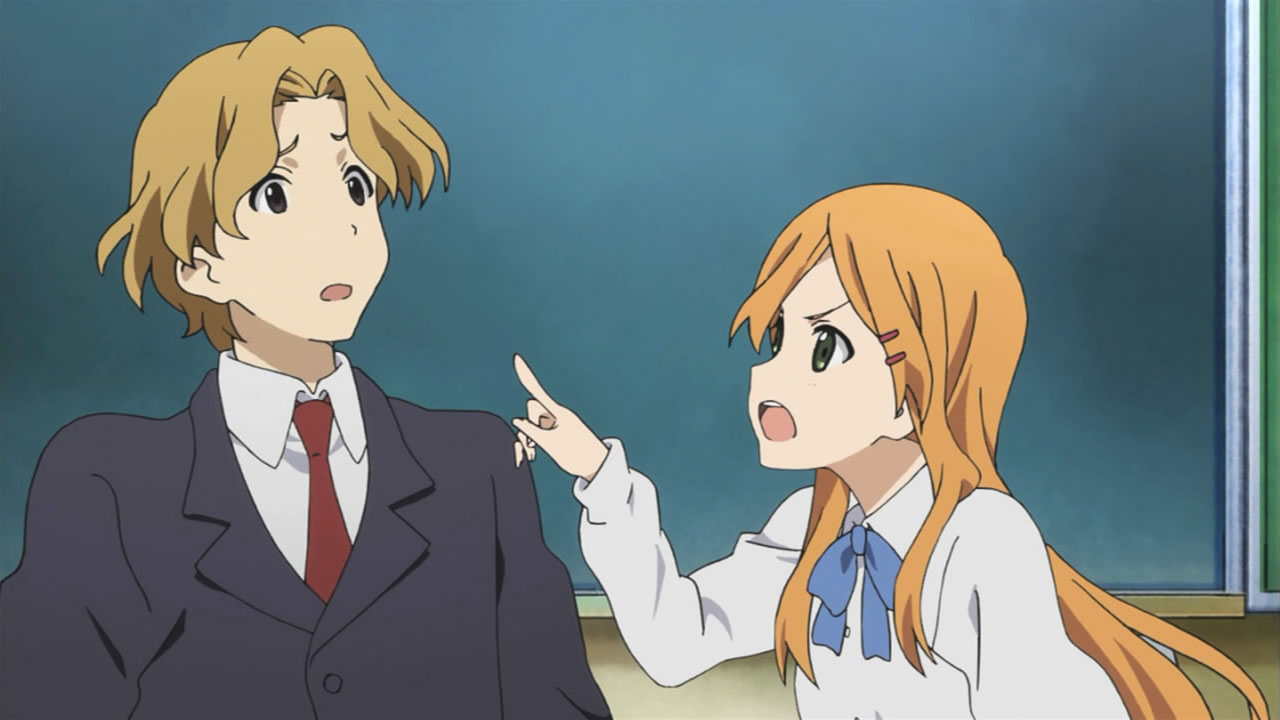 It's actually quite Persona-ish in many ways — specifically, it's a lot like Persona 4, which is about people accepting themselves, including the parts they might not want to acknowledge. The supernatural aspect of Kokoro Connect is significantly toned down compared to Persona 4 and is never really adequately explained — a situation which may well be resolved in the four new episodes set to be released next year — but it doesn't really matter. If it wasn't there at all, these would still be interesting characters and interesting stories. (This does, of course, raise the question of why it's there in the first place, but it does serve as a good catalyst for a number of subplots throughout the show's run.)


