2191: On the Objectification of Waifus, and Why Anita Sarkeesian is Wrong (Again)

0191_001

The yawning portal of despair that is Anita Sarkeesian's mouth once again creaked open earlier today, and as usual a stream of ill-informed rhetoric belched forth, bringing pain and misery to all within earshot. This time around she was mad about arses. She was mad that female characters had nice arses that game developers liked to show off, but she was also mad that male characters had their arses hidden by cloaks if they are Batman.

The above is, of course, a rather sweeping simplification of what she was arguing, but I don't want to provide an in-depth critique of her latest video, largely because I can't stomach watching her smug face whining any more. Instead, I want to refute one of the core aspects of her overall argument: the fact that women are objectified in games, and that this is bad.

Actually, no; I'm not going to refute the fact that women are objectified, because they are. And so are men, but I'm not going to focus on that aspect, either; let's stick to the women. So to speak.

The key point that Sarkeesian perpetually misses when talking about the depiction of women in video games is that the most popular characters — male or female — are pretty much always popular for reasons other than their appearance. We'll go into some specific examples in a moment, but it's also important to acknowledge that appearance is important, and that objectification does occur — it's just not the sole, driving force that Sarkeesian seems to think it is, and it's frankly rather insulting to everyone for her to suggest that men are only interested in looking at nice arses and nothing else.

Men are, of course, interested in looking at nice arses, and here's a key point. Objectification and judging by appearance occurs immediately the moment a player is first confronted with a new character — and particularly when the player is offered a selection of characters to choose from. At this point, the character becomes the "face" of the product that is the game, and it's perfectly natural for someone to gravitate immediately towards someone they like the look of for whatever reason. Depending on the person, this reason may well be that they find the character physically attractive — but it can also be that they find them amusing or relatable, like the way they're dressed, remind them of someone else, remind them of themselves or any number of reasons.

Importantly, though, whether the player is inclined to stick with that character in the long term is not determined by objectification and their appearance. It's all to do with personality, character and capability. A character can be the most gorgeous, hottest piece of ass you've ever seen, but if they're boring, they're not going to hold a player's interest.

Let's consider a few examples. These are based on my personal experiences with these characters, and anecdotal evidence of what I have seen others saying about them.
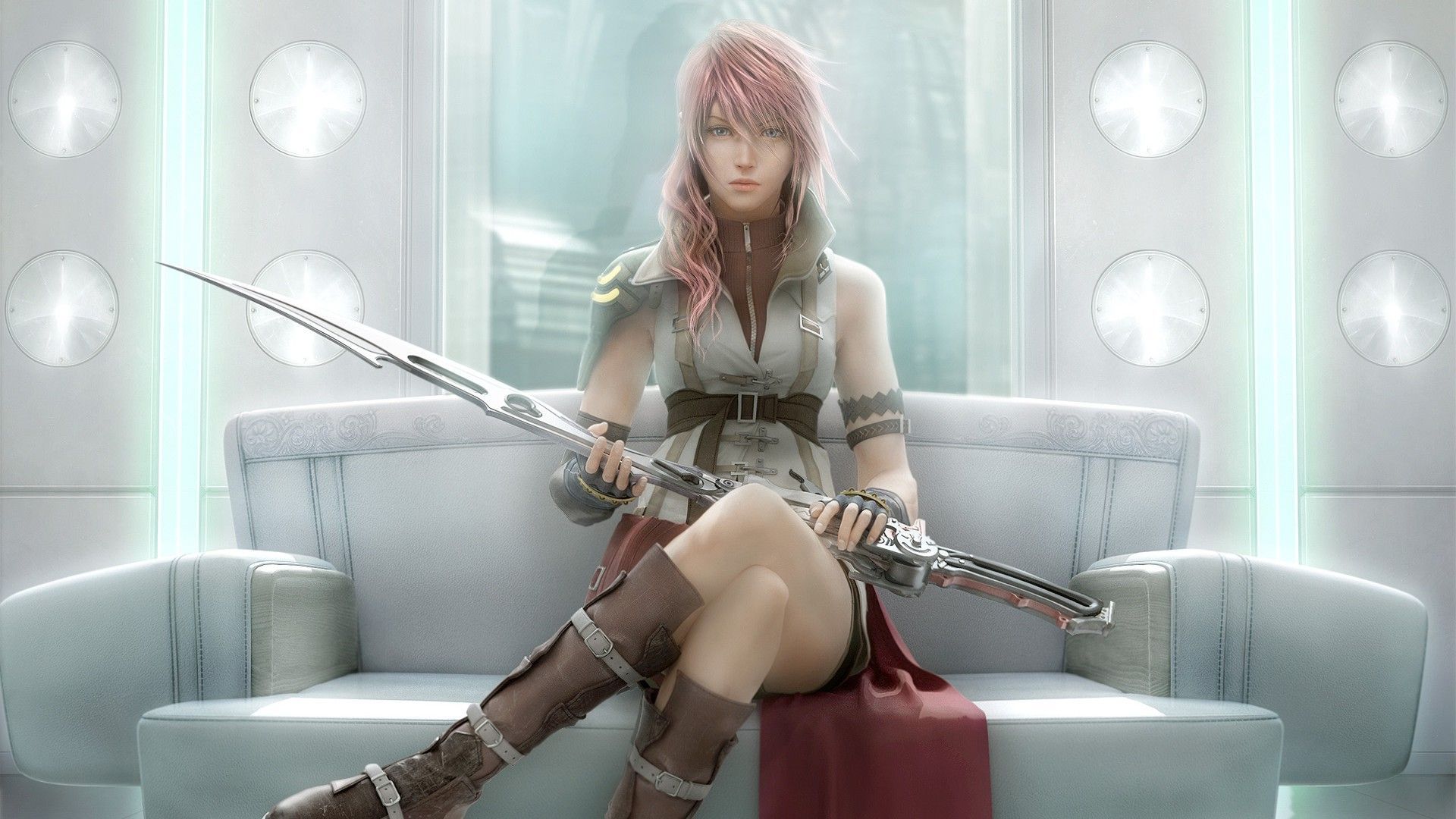
lightning-final-fantasy-xiii-game-hd-wallpaper-1920x1080-2941

This is Lightning from Final Fantasy XIII. She's an extremely attractive, striking character, but in an understated rather than self-consciously sexy way. She's slim but toned, wears a short skirt, has pleasingly tousled hair, has perpetually pouted, parted and moist lips, and wears sexy boots.

She's also one of the most widely disliked characters in the entire Final Fantasy series thanks to being seen as "boring". This is partly due to her single-minded nature, partly due to the rather monotone delivery by voice actor Ali Hillis and partly due to the fact that, as the main player-protagonist character in the game, she was pretty obviously kept as a bit of a "blank slate" for the player to interpret and identify with as they saw fit.

I personally don't think she's all that bad, but there are far more interesting characters in Final Fantasy XIII. Lightning does, however, act as a suitable proxy for the player to interact with the world and its inhabitants, and in that respect she's a successful game protagonist. I just don't see many people declaring her as a "waifu".

Hyperdimension_neptunia_wallpaper_by_missy28352-d643m0u

This is Neptune and Nepgear from the Neptunia series. They are very popular "waifu" choices, but you'll note that they both err rather on the side of "cute" rather than "sexy", leaving aside their plugsuit-style HDD/goddess forms seen in the background of the image above. Actually, that raises an interesting point: those who proudly declare Neptune or Nepgear as a favourite character or "waifu" tend to do so with their human incarnations in mind, not the sexed-up HDD versions.

Why are Neptune and Nepgear popular then? Because they have strong personalities, and are interesting characters. Neptune is one of the most incompetent RPG protagonists the genre has ever seen, although her scatterbrained nature acts as an eminently suitable metaphor for the chaotic way most people play RPGs — putting the world on hold to go and grind out some sidequests — while Nepgear is the perfect foil to her sister, being nice, polite, quiet, intelligent and, frankly, a bit of a doormat to everyone around her.

While I won't deny that there are people out there who want to sexualise these two (there's plenty of Rule 34 artwork out there to confirm that) it's also true that the vast majority of Neptunia fans who pick a favourite — whether it's Neptune, Nepgear or any of the other main cast members — are doing so not on the basis of which one they want to fuck the most, as Sarkeesian suggests, but rather the one that they simply enjoy spending time with the most.
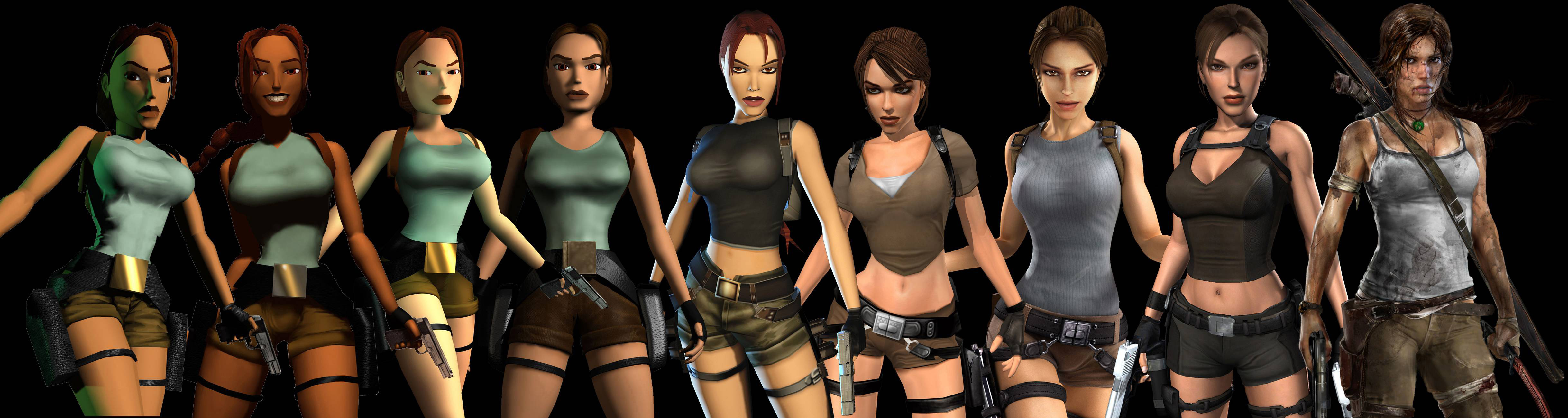
lara_croft_evolution_new

Here are the various incarnations of Lara Croft from the Tomb Raider series over the years. While Lara tends not to inspire the same sort of fanatical "my waifu!" declarations that female protagonists of Japanese games — and the reasons for that are a whole other matter worth discussing another time — she's still a popular character, and not because she's sexy.

Oh, sure, her tiny shorts and enormous rack made for some striking box art back when the original Tomb Raider came out, but if there was no substance to her, she wouldn't have been able to hold down a series for so long. A series that has been "rebooted" twice, yes, but a series in which she has remained a fairly consistent character, all told: a strong, confident, somewhat posh British woman with a plummy accent, a penchant for gunplay and acrobatics, and a desire to constantly challenge herself.

Moreover, she manages to be a female character that doesn't alienate anyone: she's not "girly" in an exaggerated manner, but nor is she overly masculine or aggressive. She manages to occupy a somewhat understated middle ground similar to what Lightning's creator Toriyama was presumably going for, only with arguably slightly better results. In other words, she has appeal elements designed for lots of different people and, despite her "sexiness quotient" being toned down a bit over the years, particularly in the most recent games, she's still a good-looking lady. But, importantly, that's not why people like her.
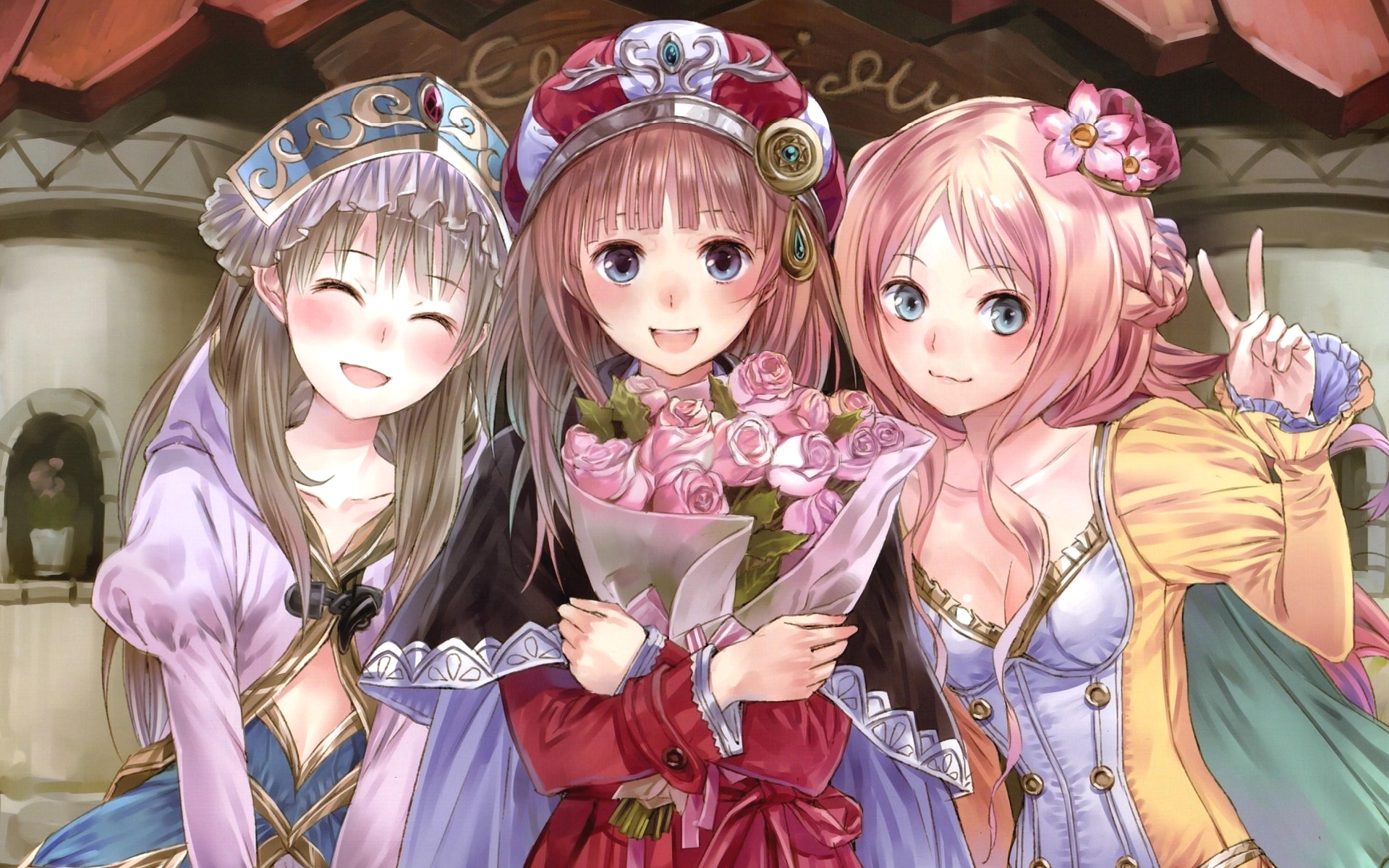
atelier meruru, atelier rorona, atelier totori, kishida mel, merurulince rede arls, rororina fryxell, totoori

Finally for now — I could happily go on with this all day — here is Totori, Rorona and Meruru from the Atelier Arland series. All pretty young things, I'm sure you'll agree, and all clearly designed to initially draw the player in with their attractiveness — or, perhaps more accurately, cuteness, much like Neptune and Nepgear.

But, again, anyone who proudly declares any one of these girls as their "waifu", or just as a favourite character, is not doing so because they want to fuck them. No; they're doing so because they like Rorona's optimistic but clumsy nature; Totori's inherent sweetness; Meruru's lively, bubbly personality. Again, it's a case of wanting a "relationship" of sorts with these characters — of wanting to hang out with them as people, rather than objectifying them as something to jack off to.


Objectification and aesthetics play an important role in determining our initial attraction to something. But a relationship built purely on physical attraction and nothing deeper is a relationship that will not last long — and a relationship that will be forgotten shortly after it has ended. This is not what modern gamers are looking for — and it is not what the vast majority of modern games are providing.

Men are complicated creatures. No, people are complicated creatures. To boil down everyone's thinking to "everyone judges everything by appearance" is both reductive and unhelpful. And yet this is exactly what Sarkeesian is doing — just another reason she continues to lose credibility with pretty much everything she says.
2189: Reflections on the Last Five Years, Or: Life After Games Journalism

0189_001

I've had a whole lot of thoughts swirling around in my head for some time now about various matters, and I feel as a therapeutic exercise — not to mention an opportunity for some of you to get to know me a bit better — it's important that I express them somehow. I know all too well how frustrating, stressful and ultimately unhealthy it can be to have unresolved emotions and thoughts surrounding things that have happened to you — particularly bad things — and so this is my attempt to reboot my mind and try to move on a little.

Consequently, certain aspects of this post are more than likely to rub a few people up the wrong way. To those people whose jimmies are rustled I say simply: fuck you, I don't give a shit, and if you really cared you wouldn't have done the things you did in the first place.

In the interests of at least a facade of professionalism, I will not be naming individuals who have had a negative impact on my life in this post, though it will doubtless be extremely obvious to anyone who has been following me for a while who the people in question are. I will, however, be naming the companies involved, since that is less personal; everyone knows how unpleasant it is if you Google your own name and find something not terribly complimentary, whereas, unless you own a monolithic corporation, you probably care a little less about someone talking smack about your monolithic corporation. That's how I'm going to attempt to justify myself about this, anyway.

Also, this post is crazy long, so for the benefit of those who only read on my front page, here's a Read More tag.

Continue reading "2189: Reflections on the Last Five Years, Or: Life After Games Journalism" →

2185: #WaifuWednesday

0185_001

I don't really have the mental capacity to write anything particularly deep or meaningful today, so here are some pictures of pretty girls.

purplesisters

This is Purple Sister (left) and Purple Heart (right), the HDD/goddess forms of Nepgear and Neptune from the Hyperdimension Neptunia series respectively. This is one of my favourite pieces of official artwork for the series.

ikaruga

This is Ikaruga from Senran Kagura, displaying an uncharacteristically exhibitionist side of herself. Normally very prim and proper, we can probably assume that she is in private while this is going on, but I also have little to no doubt that Katsuragi is hiding somewhere just out of shot.

deviluke

The three Deviluke sisters from the To Love-Ru series. Lala (centre) is the original and best, but she was somewhat sidelined after the first series in favour of her two sisters Nana (left) and Momo (right).

miia

Miia from Monster Musume, who simultaneously encapsulates the inherent sexiness and strangeness of the lamia while also fulfilling the "doting girlfriend" trope nicely. Darling!!

saopantsu

A pleasantly candid shot of Asuna (canonical girl) and Lisbeth (best girl) from Sword Art Online.

nozomi

Nozomi from Love Live, who might be my favourite…

makipic

…although it might also be Maki.

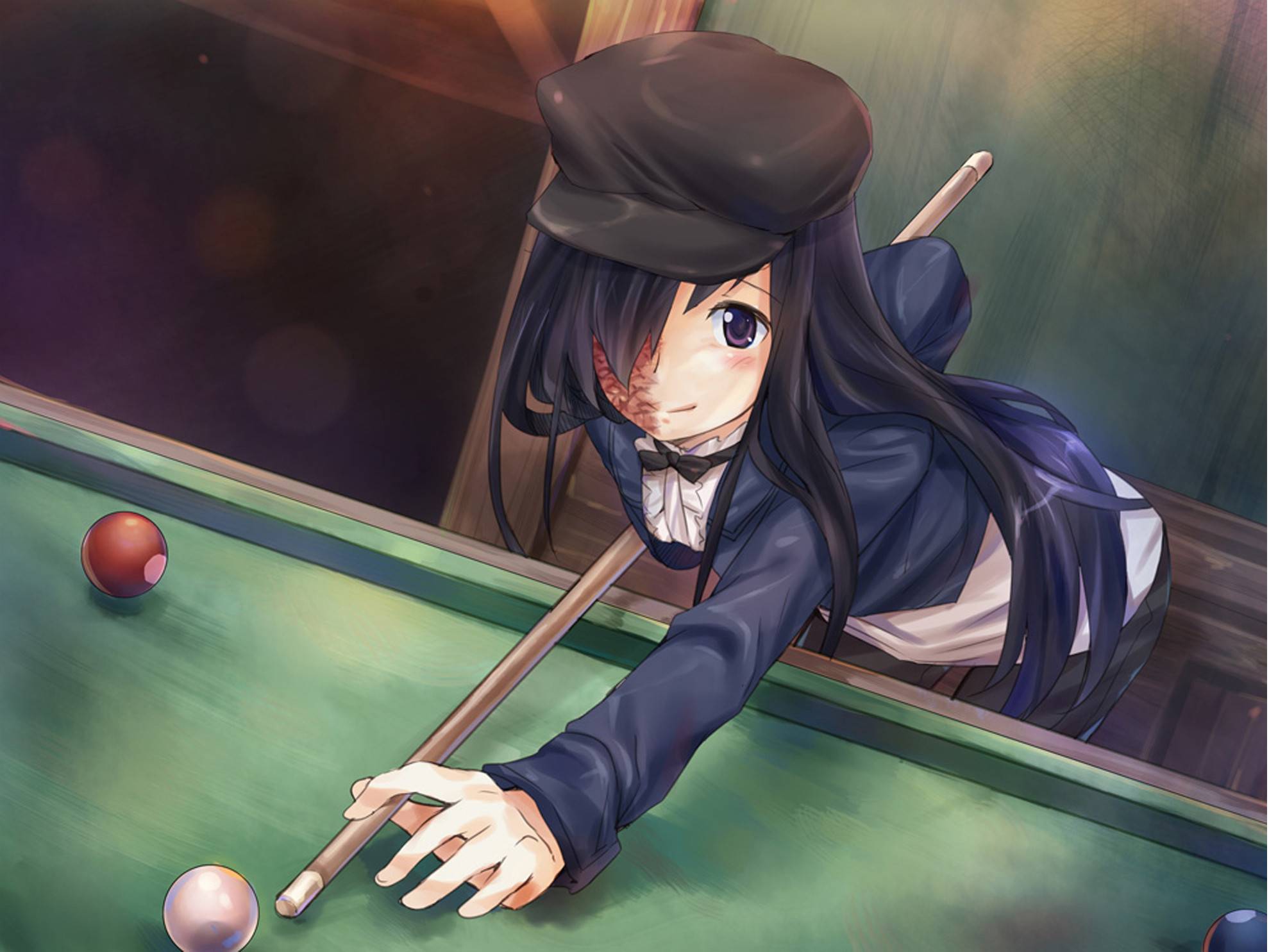
410811-katawa-shoujo-hanako-playing-pool

Hanako from Katawa Shoujo definitely deserves a mention.

2015-10-23_00038

And we'll close with Amane from The Fruit of Grisaia, who adorns my actual real-life wallet, and so I guess probably tops some sort of waifu leaderboard somewhere.

That's your lot for now. Hopefully I will be feeling better tomorrow and have something a bit more substantial to share with you all. In the meantime, enjoy the pics.

2181: Coming to a Head

0181_001

I generally try and steer clear of Internet drama as much as possible, but sometimes it's impossible not to see what's been going on when it's all over a website you use regularly.

Most recently, Twitter has seen some interesting happenings that make it feel like the ongoing culture war between "loudmouthed, self-professed progressives (who aren't actually all that progressive at all)" and "people who just want to be left the fuck alone to talk to their friends about things they enjoy without being shamed for it" has been coming to a head. And it's been kind of fascinating to watch, particularly as the most recent happenings make one wonder what role — if any — sites that provide a means of communication, such as Twitter, have in these sort of sociopolitical debates.

The most recent drama surrounds one Milo "Nero" Yiannopoulous, a writer for the conservative/right-wing news site Breitbart. Nero is, to put it mildly, something of a controversial, divisive figure: he's brash, opinionated, flamboyantly homosexual and vehemently against the rise of "third wave" feminism — that particular ideological offshoot that we've seen in the last few years that seemingly concerns itself more with scoring "victim points" than actually promoting any sort of societal change for the better. At the same time, he's also someone who stands up for what he believes in, protective of people and groups he cares for and willing to go against the grain when he believes that the "grain" is going in the wrong direction.

I find him quite amusing to read at times. I don't follow him on Twitter, but in my occasional (non-participatory) explorations of what GamerGate subreddit KotakuInAction is up to, I tend to keep abreast of what he's been up to, and occasionally feel inclined to read some of the things he's posted on Breitbart. I don't agree with everything — many things, if I'm honest — that he says, but I do agree with some others. I find his writing entertaining to read, though, and challenging to my preconceived notions about particular issues. His writing makes me think, in other words, and contemplate how I feel about something, whether or not it's the same as what he thinks about the thing in question — and that's something that journalists should aspire to, in my opinion, wherever they are positioned on the overall political spectrum.

Anyway. The issue is with Nero's behaviour on Twitter, and with his subsequent treatment. He frequently comes under fire for "harassing" people himself, and for "inciting harassment" by drawing attention to things that people have said by using Twitter's built-in "quote and comment" functionality that they added to Retweets a while back. So strong is the backlash against him that a couple of days ago, his "verified" checkmark was removed from his Twitter account, seemingly as a punishment for the way he had behaved.

Thing is, the "verified" checkmark is not supposed to be a mark of good behaviour or anything; all it's supposed to be is an indicator that yes, this particular Twitter account is indeed the person or company that it claims to be. And Nero is Nero, no doubt about that. Taking it away for the way he has behaved on Twitter — whether or not you feel that was justified — is, frankly, insane, because it doesn't stop him being the person he is.

Naturally, as these things tend to go, the Internet reacted immediately, with a wide variety of Twitter accounts immediately rebranding themselves as "Milo Yiannopoulous" and adopting his avatar as their profile picture, making the timeline an occasionally extremely confusing place to navigate. Alongside this, the hashtag #JeSuisMilo — a reference to the #JeSuisCharlie hashtag movement from around the time the offices of French satirical newspaper Charlie Hebdo were attacked in Paris last year — was launched in an attempt to show solidarity with Nero and disapproval for Twitter's peculiar (and, as of the time of writing, unexplained) actions.

Various people, including writer and former Conservative MP Louise Mensch, did some digging and discovered the Twitter account of Michael Margolis, aka @yipe, the "engineering manager" at Twitter itself. Examining Margolis' retweets, likes and replies to people made it look to some like there were some conflicts of interest going on, with many people alleging that Margolis was inappropriately using his position at Twitter to do favours for "progressive" types — such as reporting Nero through means other than the usual channels.

All this is hearsay and conjecture, so far as I can make out, but it raises some interesting questions, for sure. Twitter is intended to be an open, free communication platform for everyone to use. It's not supposed to be moderated or policed — with the sheer number of users and messages that are exchanged every day, it's simply impossible to do so. Instead, Twitter operates on the (arguably flawed) assumption that, much like society, people will naturally peel off into their own groups and interact with one another, with any cross-cultural clashes able to be resolved through use of the mute and block functions — or, in extreme cases, through Twitter's formal reporting processes.

I have some experience with Twitter's formal reporting procedures. Some of you may recall a couple of years back I suffered a campaign of targeted harassment from a notorious group of Internet trolls known as the GNAA. At the time, this group were targeting people who were fans of the My Little Pony: Friendship is Magic TV show, and since I'd recently discovered this, I had the word "Brony" (the term for an adult-age fan of the show) in my Twitter profile bio. This, it seems, was an invitation for the group in question to start accusing me of being a paedophile, even going so far as to look up the WHOIS information of websites I'd linked to from my Twitter profile or this site, then phoning up the owners of said websites (which, in this case, were the owner of Games are Evil, a site I was running at the time, and my brother) and repeating said vile accusations.

It was an extremely unpleasant, scary experience, not so much because of the torrent of abusive tweets coming my way — those were easy enough to ignore and block using Twitter's basic tools — but because it was spilling over into the real world like this. Consequently, rather than simply shrugging the situation off, I reported it to Twitter and to my local police station. The latter were unable to do much about it — I suspected as much, but I thought it was worth doing anyway — and the former were simply useless, claiming that they were unable to intervene in this situation because it amounted to a "disagreement" rather than "harassment" by their definition.

In other words, under Twitter's definitions, you have to be receiving some pretty damn vile harassment before their formal reporting procedures will actually do anything — or, at least, this was the case back in 2013, anyway. For everything else, you have to just deal with it, or leave the site altogether — which I did for a while, but came back after I felt worse about being alone and isolated than I did about being targeted by trolls.

In a way, I understand the way Twitter reacted the way they did to my situation. I wasn't directly in danger or anything, and in retrospect the behaviour of the trolls was little more than the sort of casual abuse-hurling you'd get in the schoolyard. This isn't defending it by any means, of course — I had certainly done nothing to deserve such treatment, and I was genuinely very afraid while it was all going on — but in the grand scheme of things, it perhaps was barely a blip on the radar of Bad Shit happening in the world. By acting upon it, Twitter would be setting a public precedent, and this would then have to be followed up on in future to ensure that their policies were being enforced in an even-handed and fair manner — and I got the distinct impression that Twitter support felt that the whole thing was rather more trouble than it was worth.

This little digression is an explanation of the fact that Twitter is generally very hesitant to intervene in situations where people "disagree" with one another by their definition — and their definition of "disagreeing", at least as it stood in 2013, was rather, shall we say, lenient. So for a Twitter employee to put across the impression of giving preferential treatment towards particular individuals is not a particular fair and even-handed way to approach the situation. Moreover, Nero's behaviour in the instances where he was accused of "inciting harassment" wasn't anything out of the ordinary — he was simply using Twitter's own tools (in this case, the "Quote Tweet" function) to highlight some things he wanted to discuss or bring to the attention of his audience.

Several interesting questions are raised as a result of this debacle, however. The first is whether or not popular Twitter users such as Nero should be held responsible or accountable for the actions of their followers when they do something to make a conversation or comment public. Twitter does have tools to minimise contact with people you haven't specifically authorised to talk to you — most notably the ability to make your account private, locking it down to everyone except those who follow you — but at its core it's designed to be a means of public discourse: the world's biggest cocktail party, where anyone and everyone is free to wander around, listen in on what everyone is saying and contribute their own thoughts and feelings to a conversation, regardless of whether or not they know the existing participants.

In this instance, Nero was simply using Twitter as intended, so is it his fault if some followers took it upon themselves to be unpleasant little scrotes towards the person he quotes (whom, it has to be said, appears to be a fairly unpleasant little scrote herself — not that this justifies any sort of abuse)? I certainly don't have an easy answer to that.

The second question raised by all this — particularly Margolis' alleged involvement, which is yet to be conclusively proven — is whether or not social media companies as a whole or their employees have any sort of obligation to make decisions about users based on political or ideological viewpoints. The argument in this instance is whether or not the removal of Nero's verified status — his "punishment" — is justified on the grounds that he disagrees (there's that word again) with the views of third-wave feminism. Or, to take it as a broader picture, whether or not any user should be punished in any way for expressing an opinion that differs from the accepted "norm", or which some claim to find "offensive", or which is regarded as "unacceptable" in some way.

You get into dangerous territory with that last section. Twitter is a private company, however, so it is, of course, free to police its platform however it pleases, and if it wants to become some sort of "safe space" where third-wave feminists and their white knight "allies" can happily skip through fields of flowers (not white ones, though, because white people ruin fucking everything, apparently) then that is the company's decision entirely. Since it has always sold itself as a means of free expression and communication for people all over the world, however, there's an argument that we are taking a few tentative steps into a somewhat Orwellian area — though it is also worth noting that should Twitter actually decide to go down this route wholeheartedly, the market will be flung wide open for a new, alternative means of communication and expression for people who are no longer welcome under the New Tweet Order.

Personally speaking, I would rather Twitter remain completely apolitical, and continue to act as a means of free communication for groups all over the world covering a wide variety of viewpoints and ideologies, many of which would clash with one another if they came into direct contact. It's been a valuable tool in times of crisis, such as during the massacres in Paris, the assaults in Cologne over the New Year period, and during the riots in Egypt a while back. More than that, though, it's brought people together who may never otherwise have had the chance to talk to one another. It's allowed friendships and even relationships to blossom, and it's allowed differing viewpoints the chance to interact and attempt to understand one another. It's been inestimably valuable from that perspective, and for it to start pushing one particular political viewpoint or ideology as somehow "superior" or "correct" would go against this openness that has been its most key feature ever since day one.

More than that, though, regardless of whether or not you think Nero is a twat or a genius, removing his verified status as a "punishment" is just plain stupid. What kind of message, exactly, is that supposed to send? "You said the wrong thing, so you are no longer you?" What utter nonsense.

Perhaps this is why I don't run a huge, successful social media enterprise. Or perhaps the rest of the world really has gone completely and utterly mental.

2172: Happy New Year, 2016

0172_001

Happy new year! It's the beginning of another arbitrary division of time which we ascribe more meaning to than is strictly necessary. And yet, as always, it's difficult to resist the allure of thinking that "this time, things will be better".

2015 was pretty shit. Not just for me, but for a lot of people I know. And that sucks. I hate to see people I know and care about having a shitty time, but it does make me feel slightly better (if a little guilty) to know that I wasn't the only one dealing with difficult shit.

I don't know whether or not 2016 will be better or not. I'd like to hope it will be, but realistically I know that there's no reason it will be. I don't have anything in particular to look forward to, but at least I don't think there's anything I'm particularly dreading either. Compare and contrast with the start of 2015, where it was gradually becoming apparent that I was getting forced out of my job (albeit one I didn't like anyway) and where my own personal well-being with particular regard to my weight was at something of a low ebb, and the start of 2016 already looks a little more positive in comparison.

2015 wasn't all bad, of course. I got married, for one thing, and that was pretty great. I met a bunch of new friends, too, and developed my interests further and deeper. I successfully got through what was quite possibly the second work-related nervous breakdown I've suffered in my life and out of the other side mostly intact. I lost nearly six stone in weight (though have probably put a bit back on over the Christmas period — we haven't been terribly strict!) and feel noticeably better about myself.

So I guess I should be feeling all right about looking forward to the new year. There are still lots of things I'm worried, anxious and upset about. But the only thing I can really do about them is keep on pushing forwards and hope things work out for the best in the long term. After all, that approach has got me this far, even if I'm not exactly in the position I thought I'd be in at the age of 34 when I was younger.

Happy new year, everyone. May 2016 be a good year for you, and if you, too, suffered a mountain of stress and other shit in 2015, may it soon be nothing but a distant memory. Thank you all for your support and kind words over the last 365 days, and here's to many more good times and pleasant chats as we slide inexorably into the future.

2171: Pain

0171_001

There are many types of pain in the world. There's physical pain, which can range from mildly annoying to excruciating and debilitating. There's mental pain, which, likewise, can range from occasionally distracting to life-consuming. There's emotional pain, which ranges from feeling a bit blue to wanting to end your own existence.

Few things compare to the pain you feel when helpless to do anything to help someone you love, though. This pain cuts deep, right through your very soul, and threatens to rip out the very core of your being. It's as excruciating, life-consuming and debilitating as all of the very worst the other kinds of pain have to offer, with the added joy that there's absolutely no way whatsoever to treat it. If there were, you wouldn't be feeling it in the first place.

Mostly this pain stems from a position of impotence: a position of complete powerlessness to do anything to help resolve that which is causing your special person anguish. It's the frustration at not knowing what to do, and at the things you do try not being enough or not working. It's the realisation that there really is nothing you can do but watch as someone else suffers, and just hope that people who are better qualified to sort things out are able to sort things out — or, in the worst possible circumstances, that things will just resolve themselves somehow.

I do not know how to deal with that pain, and I am suffering dreadfully from it. And I feel bad bringing it up, because the pain I feel is something intangible that is a consequence of someone who is physically suffering. But it's there, nonetheless, and it probably needs "treatment" of some sort just as much as the physical pain does.

I don't even know where to begin, though. Let's hope that the old saying about time healing all wounds is really true.

2167: Boxing Day

0167_001

Today was Boxing Day, apparently a day when everyone and his dog decides to go shopping, because having a single day of the year when you can't go shopping is apparently too much for some people to deal with.

While I certainly don't begrudge people the business they have brought my place of work over the festive period, since they keep me in a job for the time being, I do find myself a little bewildered at the eagerness to get right back out into an absolutely rammed town centre and do something it's possible to do almost every single other day of the year.

I guess it's the promise of "sales" that has people enraptured with the idea of immediate post-Christmas shopping: the prospect of being able to pick up a bargain with any money and/or vouchers that came their way to celebrate the anniversary of the birth of our Lord, but looking around town today I can't honestly say that I saw anything I'd particularly regard as a "bargain". Sure, some stuff was maybe a little bit cheaper than it is usually, but we're talking a reduction of like 20-25% at most in many places, which doesn't amount to all that much.

Mostly the thing that bewilders me about immediate post-Christmas shopping is the fact that people are willingly giving up time where it's absolutely fine — even encouraged — to slob around at home doing nothing of any consequence save for eating, drinking and playing with toys, and instead spending money they probably don't really have on things they're not sure they want, perhaps for people they don't really like.

Oh well. As I say, I certainly don't begrudge these people their choices, since the amount of money we took today — a lot of it cash, too, making for some impressive wads in the tills — is proof enough that online hasn't quite killed the high street just yet, and it's keeping me in employment for the moment, and hopefully for a bit longer after the holiday season is officially over. That last bit remains to be seen, so fingers crossed.

As for me, though, I don't plan on doing any shopping anywhere other than Steam over the next few days, and I don't have to get off the sofa to do that. I have two days off now, so I will most certainly be doing as little as possible over the course of the next 48 hours to ensure I'm rested, relaxed and ready for action as we creep towards the new year.

I hope you all had a thoroughly pleasant Christmas, and that you're having the chance to enjoy at least a bit of a rest over the holiday period.

2162: That Not-So-Wonderful Time of the Year

0162_001

It seems to me that this holiday season has been, for many people, a period of inordinately, disproportionately Bad Times. I've had some shittiness to deal with myself, which I won't go into here, but just from browsing my Twitter feed each day it's clear that I'm not alone in having a tough time of it right now.

This post, then, is perhaps to reassure those who are feeling a similar way that they're not alone, that there are other people out there who understand the way they are feeling, and who would hang out with them, play video games with them, share lewd pictures of anime girls with them and/or hug them as appropriate. I say this as someone who would enjoy all of the above with the people I'm talking about.

This holiday season feels like a highly concentrated form of the tension that has permeated all of 2015. There's been a thoroughly unpleasant undercurrent of "walking on eggshells" with regard to political correctness, and it feels like it's been coming to a head recently.

Arguments over whether or not Hermione in the Harry Potter series is black erupted today, with both sides attempting to claim some sort of moral superiority in a frankly rather childish, stupid and utterly pointless conflict that didn't need to happen in the first place. But this is far from the only thing that's been highly charged; even the new Star Wars movie became politicised, with some commentators making more of the fact that its leads feature a black person and a woman than the fact that, by all accounts, The Force Awakens appears to be something of a return to form for the series.

Among it all, the ever-bubbling conflict between the so-called "Social Justice Warriors" — blowhards who want to look like they're saying the "right" things with regard to political correctness, but who are actually just seeking glory for themselves rather than having any real interest in changing society for the better — and people who just want to be left the fuck alone to enjoy whatever they want has continued, with the former group in particular continuing its trend of making wild accusations without any sort of proof, blaming all of society's ills on "GamerGate" and "the Men's Rights Activists" rather than taking the time to get to know any members of these groups and contemplate why they are at loggerheads.

This perpetual "culture war" makes me incredibly sad, because it has poisoned what used to be lively and interesting public discussion and debate over subjects such as video games. Anita Sarkeesian's appearance on the scene, with her oh-so-brave step of saying that sometimes common tropes in video games favour men over women — while conveniently ignoring the hundreds, even thousands, of excellent female characters in gaming — acted as a catalyst for all manner of nutjobs to come out of the woodwork, and this whole movement seems to have grown in prominence by a huge amount in the last year. Fans of Japanese games and anime on social media are particularly perturbed that there are no mainstream sites remaining that are willing to give niche Japanese titles the time of day, instead preferring to look at them on a superficial level, brand them "sexist" or "misogynist" and move on, when in fact, in many cases, these "otaku games" are far more progressive than any bullshit these loudmouths might come up with. Seeing these discussions makes me all the more sad that I was strongarmed out of my position at USgamer, where, as many of you know, I ran a weekly JPgamer column, celebrating the weird and wonderful entertainment that our friends in the East — and the intrepid localisation teams — brought us.

It's not so much the lack of media representation that saddens me in this instance, though; it's the sense of alienation I feel when I see people that I thought were friends starting to spout ill-informed nonsense in the name of being "progressive". Mockery, public shaming and similar behaviours are not progressive, and I cannot support them or anyone who condones them — speaking as someone who was bullied throughout school, and who suffered a horrendous targeted harassment campaign a couple of years back, I know what harm dogpiling can do to your wellbeing. It surprises and upsets me to see friends who once suffered the effects of being publicly humiliated by these assholes now joining their ranks and gleefully indulging in that sort of reprehensible behaviour. A case of "if you can't beat them, join them" perhaps — but whether or not that's the case, it still sucks to feel like you don't know someone any more.

This post has rambled and perhaps got a little off-topic somewhere along the way, but all these thoughts are swirling around my head right now, and this holiday season feels like something of a focal point for all the misery, tension and discomfort that 2015 has brought to numerous people I know, including myself. The world feels like it's getting worse, not better, and when you're someone who tries their best to be a good person and not hurt anyone, this is exceedingly frustrating and upsetting.

Hopefully 2016 will be a better time for everyone, but at this stage I'm not particularly confident. I hope I end up pleasantly surprised.

2151: Life Line

0151_001

"You’re on a long flight, and a palm reader sitting next to you insists she reads your palm. You hesitate, but agree. What does she tell you?"

Daily Post, December 10, 2015

[This didn't post yesterday for some reason, so here it is today.]

"Hmm," she says in a long, drawn-out sort of way, clearly milking the moment for maximum drama. I look around, conscious that other passengers are surreptitiously watching to see what's going on, clearly having overheard her request. Then I look back at her. She's gazing intently at my proffered palm, running her fingertip down what I assume, as a layman, to be my "lifeline", but she's saying nothing for the moment; all I can hear is the low drone of the engines, and the somewhat subdued conversation of the other passengers in the cabin.

"Your path has been a meandering one," she says at last. "You have stumbled headlong into chaos on frequent occasions, or perhaps it is more accurate to say that chaos has sought you out; it is hard to tell at this point."

I say nothing but incline my head slightly in silent agreement. Well, she's off to a running start, at least.

"You have endured many hardships on your travels," she says. "They may not have been physical hardships, or even hardships that people could see you struggling with, but they were hardships nonetheless."

I feel my skepticism fading away a little as she offers what appears to be an accurate assessment of my life to date; that said, there's still a little voice in the back of my mind pointing out that everything she's said so far is fairly ambiguous and could probably be applied to anyone.

"Your pain has helped to forge you," she continues. "Your struggles have made you stronger, but at a cost: turbulence, uncertainty, a lack of clarity."

I glance around to see how many passengers had reacted to the mention of "turbulence" — not a word you want to utter on a plane in most instances — but most people in the immediate area appear to have returned to their own business, or at least are being subtle about their eavesdropping if they are indeed indulging their own curiosity.

She's not wrong, but again, these statements could probably apply to anyone out there. Without context and specifics, I remain not entirely convinced of her reading's veracity.

"Your future remains uncertain," she says, her finger apparently reaching its destination on my palm and ceasing its movement; she doesn't break contact, however. "You desire nothing more than to know exactly what the future holds, and how you can ensure you are on the correct path. But the truth is that there is no correct path, only the path that you choose to take. While it may feel like you are at something of a crossroads right now, be sure that you will make a decision and proceed down a road, and that road will be the correct one for you. It may not be today, it may not be tomorrow, it may not even be next year. But your route will one day be illuminated, and you shall find your way."

She releases my hand, which plops back into my lap.

"Thank you," I say simply. Ultimately I'm not sure I've learned anything particularly new from her statements, but if nothing else they gave me pause to reflect on my life, the decisions I've made, the decisions that were made for me, and what the future might hold, as uncertain as it might be.

Finding that route will be scary, no doubt, but as I look at her gently smiling at me, I feel like there's at least one person out there who has faith I'll make the right choices somewhere along the way, and that everything will work out for the best.

I hope she's right.

2150: My Beard Controls the Universe

0150_001

I'm pretty sure most of us have behaviours and signals that things are going well or badly at any given time.

For me, it's the length of my beard and hair. Generally speaking, the more unkempt I look, the worse I am feeling; in other words, the length of my beard and hair are directly proportional (inversely proportional?) to my current state of mental health.

I trimmed my beard to a somewhat more manageable length this evening. It wasn't necessarily because I'm feeling any better about things than I have done, but it felt like something of a symbolic gesture if nothing else: the desire to see things change and get better. To put it another way, I trimmed my beard in anticipation of an improvement in my mental health. If it happens, great; if it doesn't, well, I have a somewhat neater beard than I had when I woke up this morning.

The length of various hairs growing out of my body isn't the only indicator of my mental state, though. The tidiness of the rooms in which I spend the most time is, too. Specifically, when we're talking about the lounge, which is where I'm writing this from right now, the amount of crap there is on the coffee table is generally directly proportional to how miserable I've been recently. There's a fair bit of crap on there at the moment, though at least part of that is down to the takeaway curry we had for dinner this evening.

I say all this, but it's entirely possible that it all works the other way around, of course. Perhaps my hair and beard being long is what causes my mental health to decline. Perhaps the messiness of my environment causes me to feel bad.

Or, perhaps, it's the more likely situation: both sides contribute to each other. I feel miserable, so I let things slide, then I see how much I've let things slide, and that makes me miserable, so I let things slide further because it doesn't feel "worth" doing anything about them, then I see how much worse things have gotten… you get the idea and see how this works, yes? This is, broadly speaking, how depression works, and how it can get you into an endless spiral, circling the Drain of Misery but never quite — in most cases, anyway — getting completely sucked down it.

I've been in worse situations in my life. Things could be much worse right now. Certain aspects of my life are fairly positive. But on the whole, there are a lot of influences making me a bit miserable at the moment. Not exactly how you want to be feeling going into the festive season, for sure, but all I can keep doing for now is looking forward and hoping for better days ahead, I guess.