2306: Happy Birthday, Discord

0306_001

Back in the early days of "going online" — after the days of Bulletin Board Systems but before the widespread Internet we know today — our family used CompuServe to get at information online.

For a teenager like I was at the time, it was very exciting. For the first time, I was able to "meet" and communicate with people from all over the world, discuss common interests and even exchange files.

One of my favourite features of CompuServe was an area it rather grandiosely referred to as the "CB Simulator", after the units used by ham radio operators to communicate with other enthusiasts over the radio waves. In reality, it was simply what we now know today as a chatroom, but it was a revelation to the young me, who had always had a bit of difficulty finding new people to talk to, particularly those who were into the same things.

In the CB Simulator, I could talk to people without fear of them, say, judging me for my appearance, or my mannerisms that clearly indicated I was uncomfortable with talking to strangers, or how I tended to go the colour of beetroot when talking to girls I liked. No; in the CB Simulator, I was able to communicate in the way I had always felt most comfortable: through the written word.

A few years later, when "the Internet" started to become more of a thing and self-contained, fenced-off communities like CompuServe and AOL were starting to become less of a thing, I looked into Internet Relay Chat, or IRC. There, I found a similar experience to that which I'd had in CompuServe's CB Simulator: the ability to communicate and express myself through text to people from all over the world. And now, I could "emote" too, which in turn led to my first experiences with online roleplaying through a group that "simulated" Star Trek missions through text chat.

I was kind of sad when chatrooms fell out of favour with the rise of what we now know as social media, but for those of you, like me, who always used to enjoy the real-time nature of talking in chatrooms, may I introduce you to the wonderful service that is Discord, which is now celebrating its first birthday.

Originally designed as a free, lightweight alternative to Skype and Teamspeak, Discord has been actively developed over the last year to become one of the best — arguably the best — real-time chat application out there, particularly if you're a gamer.

For the unfamiliar, it works in a slightly different way to instant messaging services such as Skype and its earlier counterparts AIM, MSN and Yahoo Messenger. Instead of focusing on private chats with individuals on your friends list, Discord is instead server-based, much like IRC was. Within that server — again like IRC — there are channels for whatever purposes the server admins desire. Anyone who is a member of that server — and servers can be public or private — can hop in to a channel and text chat. There's voice chat facilities, too, which have very good, reliable, clear voice quality and connections, making it an ideal solution for "party chat" on PC, or even using alongside games that don't normally offer voice communication: the Splatoon community, for example, use it quite a bit, since that game has no means of direct communication whatsoever.

Mostly the thing that excites me about Discord is how much it feels like those old IRC servers, only with a more modern coat of paint. Inline image posts, markdown formatting, animated GIFs and link previews are all a natural evolution of the purely text-based chat that IRC offered, and Discord's cross-platform nature — it works via the Web, on PC or Mac desktop clients or even on mobile — makes it an ideal means for keeping in touch with groups of friends or specialised communities.

I'm very happy that Discord has been such a success since it originally launched, and hope it continues to be A Thing for many years to come yet. It's been a great way for me to interact with friends from elsewhere on the Internet in new, more immediate ways than services like Twitter offer, and, depending on the server, it can be a nice quiet safe haven away from the noise of more public social media channels.

I'm a member of several different Discord servers, but the one on which I'm most active is probably the one I'm an admin of. If you'd like to stop by and say hi — the server is largely focused on video games, anime, lewds and general shitposting, but everyone there is just happy to have a good chinwag — then you can do so by following this link.

Happy birthday, Discord, and happy chatting to those of you who choose to come and join us!

2302: By the Power of the Virtues

0302_001

There's a new-ish trend on social media. And like most new-ish trends on social media, it's not a particularly pleasant one.

Known as "virtue signalling", it essentially involves people making public statements that make it abundantly clear that they hold what is widely regarded to be the "correct" viewpoint on something, be this feminism, homosexuality, Donald Trump, immigration, unisex bathrooms, whether or not we should leave Europe, gun control and whether or not Uncharted 4 deserved more than an 8.8 out of 10.

It's an offshoot of a couple of other social media behaviours that have been happening for a while, most notably Twitter's "dot-reply" practice, which gets around Twitter's usual behaviour of not showing people you follow replying to people you don't follow (because why would you want to "listen in" on a conversation involving someone you don't know?), and the related practice of people complaining at companies on Twitter without putting the company in question's user ID in an @mention at the start of the tweet. "Hey, @amazon, your customer service today was shocking!" — you know, that sort of thing.

Both of these practices — and virtue signalling too, for that matter — are a means of amplifying one's own voice and trying to get noticed. Typically, social media consists of lots of people on a reasonably equal footing all shouting into the void and occasionally having conversations with one another. When you bring in dot-replies, public replies and virtue signalling, however, it becomes less about your actual message and more about public perception of you. When you engage in any of these behaviours, you're trying your very best to get your message heard and, crucially, reshared by as many people as possible. In that way, the word can spread about What A Fine Example of Humanity you are, and you can subsequently reap the social capital rewards from successfully Saying the Right Thing in Front of the Right People.

Taking a public stand on things isn't necessarily a bad thing. But unfortunately, the very nature of social media has a habit of distorting messages beyond recognition, and when combined with such transparent attempts to spread your message as far and wide as possible as what we've just described, the global game of Chinese Whispers kicks into overdrive and your message — which may well have been flawed in the first place, or perhaps just misinterpreted somewhere along the line — gets taken at face value, for better or worse.

And people these days simply do not question the things that are presented to them. This is particularly bad on Facebook, where many people — particularly those less Web-literate — will happily share completely untrue stories without bothering to check the validity of them, and their friends, equally Web-illiterate, will share them further, until they've been around the world and back, with a significant number of people believing the load of old bollocks that some troll from 4chan probably dreamed up in an attempt to see how many idiots he could net.

It happens on Twitter, too, though, and through the media as well. A recent example came via the subreddit for Ubisoft's multiplayer shooter The Division, where a user made up a completely false glitch-based strategy for one of the bosses, and said "cheat" was picked up by numerous high-profile gaming websites without bothering to check whether or not it was legitimate for themselves. (It would have been easy enough to do so, given that the user in question actually posted another thread on Reddit at the same time with a legitimate strategy for the same encounter, admitting that his "glitch" was a complete fabrication.)

And this lack of questioning or critical thinking is poisonous when it's combined with virtue signalling. Opinions that someone made up become accepted as irrefutable fact simply because someone "important" shared them, or lots of people shared them. Take the Ghostbusters reboot trailer, for example — now famous for being the most disliked YouTube video in the site's history. The story runs now that it is the most hated video in existence "because of misogyny" — and there's simply no arguing with that, because so many people  have made loud, proud statements about how they're going to give Ghostbusters a chance because they're not misogynist at all, no sirree, and that means that anyone who simply thinks the trailer is shit (it kinda is) gets thrown under the bus with the genuine misogynists and the trolls who enjoy stirring the pot for the hell of it.

Generally speaking, I tend to take the attitude that if you have to shout loudly about what a wonderful person you are, you probably aren't a particularly wonderful person in the first place. So far I'm yet to be proven wrong with this theory.

2300: Buried Treasure

0300_001

Andie and I were both feeling a bit sorry for ourselves earlier (well, emphasis on me, somewhat; recent life has been getting me down a bit. All right, a lot.) so we decided to go out and do something together rather than sitting at opposite ends of the house playing computer games and not talking to each other.

Andie's sister Michelle had taken her Geocaching a while back, so she suggested we give it a try. Geocaching is something I've been meaning to try for a while but never got around to; it's also something that, I feel, is more fun with other people in tow, as you can put your heads together to solve problems then.

For the unfamiliar, Geocaching is a sort of real-world game that you play using a GPS-equipped phone, a pen and possibly some digging implements, tweezers and bramble-proof clothing. Hidden caches are marked on your map; you have to find them. Whoever hid the cache leaves a description, a hint and perhaps a hint photo to help you find them, then when you find it you open it, write your name and the date on the bit of paper inside it, log it on the website or phone app, then put it back so someone else can find it at a later date.

That's about it for the basics, really. There are different types of caches, including those that you're only "allowed" to register if you've fulfilled certain conditions beforehand, and those that hide their final location behind a series of riddles, but yes; the basic formula is go to place, find thing, log thing, put thing back.

What I find interesting (and pleasing) about the whole thing is that it's all built on trust, and people appear to stick to this honour system. I don't see any trolling on the cache pages, and I don't see any evidence of people deliberately and maliciously moving or hiding caches somewhere other than where they're supposed to be — both things I would have thought would be a risk with this sort of activity. But, at least in my local area, I haven't seen anything like that so far, though admittedly I've been out on just one excursion so far.

I think part of the reason that there's no trolling involved is that, despite technically being a "game" of sorts, Geocaching has very little in the way of actual "gamification", to use the buzzword that was popular a few years back. In other words, there's no scoring points, no earning experience, no levelling up, no badges — just a simple count of how many caches you've found and a map that gradually fills up with smiley faces as you successfully find the hidden goodies secreted at the various locations around your area — or indeed the area that you happen to be in, since one of the fun things about it is that you don't have to limit yourself to the local area, and can instead participate in it as an activity wherever you happen to be, assuming there are some caches hidden nearby.

It was a fun afternoon, then, and a pleasant way to spend a Saturday in the sunshine — though after all the walking we did we were both more than ready for a long sit down by the time we finished. I'm looking forward to giving it another try in the near future; there are still lots to find around Southampton, and I bet there's a whole bunch out in the New Forest, too…

2292: Thirty-Five

0292_001

It was my birthday today; I am now thirty-five years of age, which means on some forms I'm officially in the next age bracket. If ever there were a more obvious marker of our respective mutual creeping towards the grave, it is surely moving down through the age ranges on official forms. I'm not sure if this means I count as "middle-aged" or not yet and honestly I don't really care all that much; age has always just been a number to me, and, for better or worse, I've always preferred to act the age I feel rather than the age I am.

It was a pleasantly quiet day today — something much-needed for both my wife Andie and me after numerous recent stressors. We had a lazy morning, Andie made a "mug cake" in the microwave for me (delicious), and then we went out to our local Japanese eatery Zen for some sushi and deep-fried goods (also delicious). The remainder of the day has been spent writing an article about Senran Kagura's art and soundtrack, playing Final Fantasy X HD and, as a lazy post-dinner activity, a spot of Dead or Alive Xtreme 3.

I'm probably supposed to reflect on where I've come from and where I'm going on such a momentous occasion as my age going up by one. Right now that's a fairly depressing prospect, though, to be honest, so I'm going to refrain from going too much into that. Let's just say that things haven't been great, but plans are in motion to make life a little better, even if it takes a while to bring them to fruition.

For now, I'm pursuing home-based work so I can be with my wife while she's off work with her chronic pain condition; hopefully this will provide enough of an income to at least survive on, if not live a particularly exciting life, but then I never really lived much of an exciting life anyway, with the most exciting things I tend to buy being either video or board games. With that in mind, please do get in touch if you have any (paying!) writing work that I might be able to do from home — or if you'd like to support me directly, please consider making a pledge to my Patreon, which was set up with a mind to making my work on MoeGamer a bit more regular and in-depth.

You may ponder why I don't pursue writing gigs in the games press any more. To be honest, I wouldn't mind that, though the way I've been treated in the past has somewhat soured me on the business as a whole — plus there's the fact that the mainstream games press (i.e. the ones that pay) all still have the "feminism" stick firmly jammed up their collective asses which, far from promoting the amorphous concept of "diversity" as they'd like to think, actually just stifles criticism from a variety of perspectives, not to mention thoughtful, meaningful exploration of games on the more provocative end of the spectrum. And as my good friend Chris was kind enough to say the other day, I'm better at writing about games than 1,200 word reviews talking about how nice the graphics are and whether or not there's any screen tearing, or 500-word news pieces on industry Twitter spats and inevitably fake rumours about new Nintendo hardware.

MoeGamer, as it stands, is an experiment in sustained long-form writing on very specific topics in games, and if this proves to be worthwhile I'll consider expanding the project into perhaps putting together a book or two. That would be exciting. As longstanding readers well know, I firmly believe that there's an absolute ton of scope for thoughtful, interesting, meaningful analysis of games beyond what the current clickbait model of games journalism focuses on, and longform articles not beholden to advertisers or honest-to-goodness books are clearly the way to go for this sort of thing.

Other people out there are already doing this sort of thing; Boss Fight Books is a particularly interesting project, though it takes a somewhat scattershot approach to which games are noteworthy for one reason or another, and many (though not all, thankfully) of the authors involved are members of "the clique" of games writers and developers that has made viewpoints that deviate from the standard (and fallacious) "everything is sexist and gamers are awful people" rather unwelcome. In other words, I don't see them publishing a book exploring the satire of Hyperdimension Neptunia or the meaning carried in the sexual content of The Fruit of Grisaia any time soon.

Basically, now I've made the decision to, at least for the immediate future, stay at home for work, I can start looking at ways to 1) pin down a reasonably secure monthly income and 2) start pursuing passion projects in earnest. Because for all the noble intentions in the world, the last thing you want to do after coming home from a 9-5 is sit down at the computer and do something else that feels like it's "productive", even if it's something you do genuinely really want to do. I'm going to have to make some decisions on how to proceed from here — do I keep attempting to promote my Patreon, or look into something like Kickstarter to fund a book series? Do I look into monetising MoeGamer's content somehow, or share it across some other channels such as video? (I kind of hate video for anything other than TV shows and the occasional Zero Punctuation; give me some nice words any day, millennials' attention spans be damned.) Do I attempt to pitch some articles to mainstream games press sites? (Probably not.)

There are lots of things to think about and it's both exciting and scary. I want everything to be all right, as it emphatically isn't right now, but at least I have options to explore, so everything isn't hopeless quite yet. I hope, anyway.

Now, I'm off to bed to hopefully sleep soundly, and then I'm going away for the Bank Holiday weekend to play some board games with friends and probably get attacked by a dog. I sincerely hope this coming weekend is as relaxing as I need it to be, as the last few… weeks, months, I lose track… have been pretty hellish stress-wise, and I'd rather have just one weekend where I can just enjoy myself without having to worry about anything.

Thankfully, I don't see anything standing in the way of that happening, so expect suitably enthusiastic reports throughout the weekend, and be prepared to commiserate with me on my inevitable losses at games that involve any sort of strategic thinking.

2290: The Excruciating Accuracy of W1A

0290_001

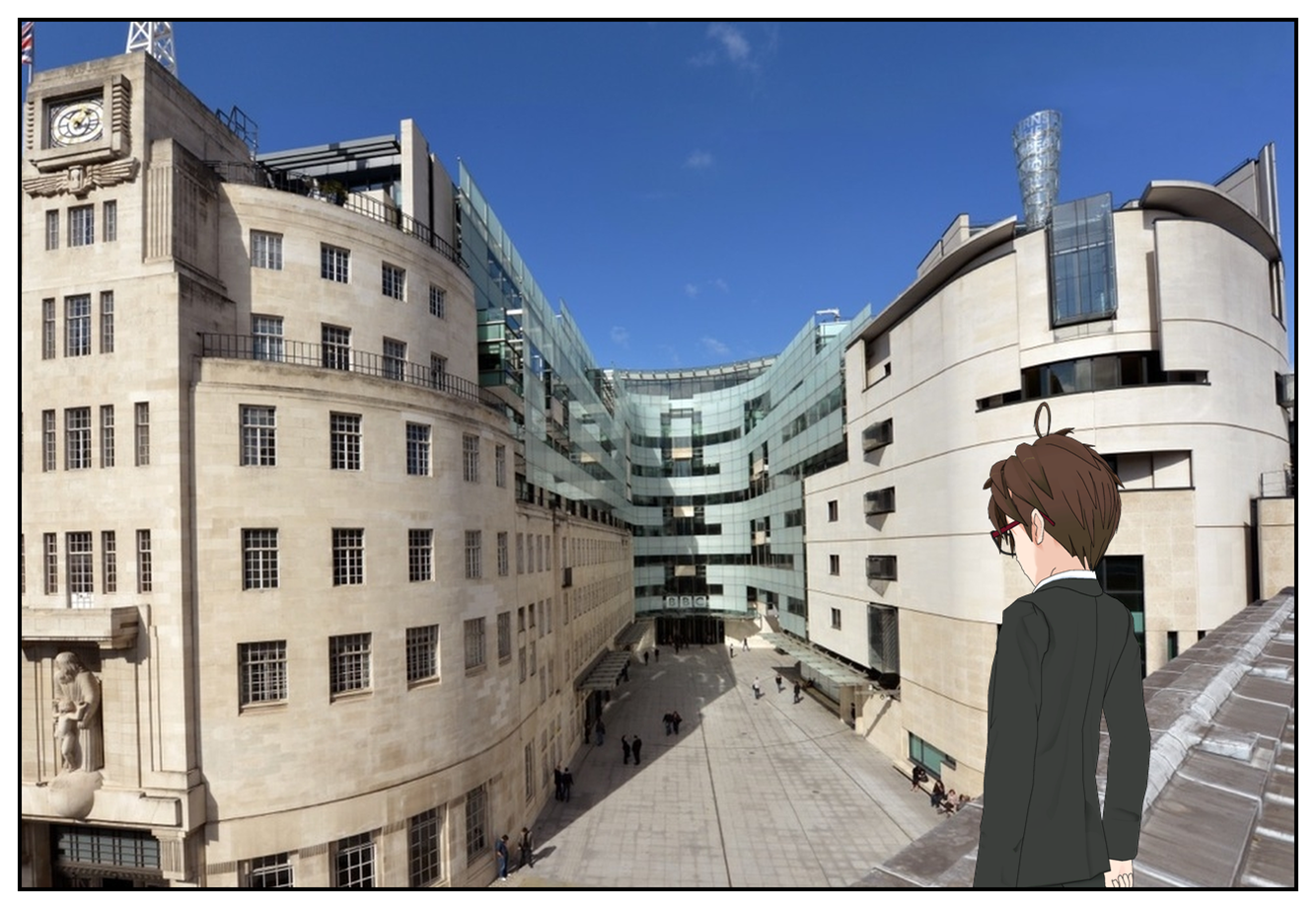
The other night, I was randomly trawling Netflix for something to watch while I couldn't sleep, and I stumbled across a BBC show I'd never seen before called W1A. I later discovered that this was the follow-up to Twenty Twelve (which I also haven't seen yet), and is one of the most effective "fake documentary" series I've seen since the original British version of The Office.

W1A focuses on the BBC itself, which is a pretty ballsy move given how scathing the show is of BBC corporate culture. Casting Hugh "Downton Abbey" Bonneville in the role of Ian Fletcher, the BBC's new Head of Values, the show follows Fletcher's efforts to make sense of the waffling business-speak world that one of the world's most celebrated broadcasters has become in the last few years. Fletcher is by no means a blameless character in all this, but he, by far, comes across as one of the most "normal" and relatable characters in the cast.

The reason for this is that the rest of the cast members are exaggerated parodies of various office archetypes. I would say that they are exaggerated to the degree of absurdity, but not far through the first episode I realised that I had met and interacted with each and every one of these archetypes at various points in my professional life — in education, in office work and in retail — and suddenly it didn't feel quite so absurd after all. It was still amusing, but in a tragic sort of way; the realisation hit me that this is what the world has become these days.

One of the most frequent character traits on display is relentless, unnecessary positivity, even when it's completely inappropriate. It's not unusual to see serious issues being raised in meetings, with the only responses from around the table being a chorus of "Brilliant." "Great." "Well then." "Marvellous." and "Okay then." Likewise, to my chagrin, I've caught myself using some of the character traits of intern Will, most notably his blind agreeing (and declaration that it's "cool" and "no worries") with everything that people say, only to admit that he didn't actually hear what he just agreed to just a moment later.

While I find W1A pretty excruciating to watch — particularly when Jessica Hynes and her painfully millenial PR company "Perfect Curve" are on screen — it's nonetheless rather compelling and almost reassuring in a strange sort of way: a viewer's initial reaction to these seeming caricatures — their repetitiveness and their relentless, inappropriate cheerfulness — as them being absurd in some way is entirely deliberate. The writers of the show know how ridiculous and absurd the situation is, along with all the nonsense that goes on in modern corporate culture — which more often than not cares more about outward appearances than actually making life good for its employees and clients — and the show itself acts as a means of people who are tired of this aspect of modern life to come together, point and laugh, then perhaps go and have a little cry in the corner.

You're not alone in hating the way the world has turned out, says W1A. We hate it too; we've just decided to laugh at it, because what's the alternative?

2286: Disappointment

0286_001.png

This post is a response to WordPress' "Daily Post" writing prompt for today.

My immediate reaction to the word "disappointment" when seeing today's writing prompt was… well, disappointment in The Daily Post's prompts of late.

Longtime readers may recall my occasional use of The Daily Post's writing prompts and the fact that they led to some interesting explorations of topics I might not normally explore on this blog. My default go-to topics for writing about are video games, games journalism and mental health issues, but the prompts from The Daily Post gave me a nudge to consider other topics now and again, whether they be nostalgic, hypothetical or just plain weird.

Lately, though, the prompts on the site have just been single words, and these don't inspire me nearly as much as the questions or phrases that used to make up The Daily Post's bank of writing prompts. I'm trying to pin down exactly why the change to this style of prompt fills me with such disappointment, and I think it's because it provides the opportunity for too broad a range of things to write about; single-word prompts are too flexible.

Let me explain what I mean. When I decide to make use of a writing prompt for a day's post, I like it being in the form of a question or an exam-style "Phrase. Discuss." prompt because it provides some sort of direction to the writing. Creativity is, to me, at its most interesting when you work within some sort of constraint, because you then have to not only use your creativity to produce the work itself, but you also have to use your creativity to perhaps bend the rules of the constraint in question, too. A single word doesn't constrain me at all; I can still pretty much write about anything tangentially related to, say, "disappointment", and I've technically fulfilled the brief. That, to me, isn't a helpful writing prompt. That, to me, makes me feel like I should have just started writing any old thing off the top of my head rather than looking for a prompt.

I'm aware that my experiences and feelings about this aren't going to be the same as everyone else's, and that there are doubtless plenty of bloggers out there who relish the chance to tackle the challenge of a single-word prompt and make it interesting. But for me, I always found The Daily Post much more enjoyable when it provided much clearer briefs and prompts on what to write about — and much more interesting to see how other people interpreted these briefs, too.

Hopefully we'll see a return to form for The Daily Post at some point in the near future. If not, well, I may have to contemplate setting up something of my own. I can't be the only one feeling disappointment in this way!

2281: Trying Times

0281_001

I'd like to be fairly open about this, within reason, as I don't want to sound like I'm constantly moaning about stuff — particularly with my desire to be more positive that I expressed the other day — but I feel it's important to share with those of you who read regularly and whom I consider to be friends.

It's a difficult period of life right now, as you might have surmised from some recent posts. I'd like to talk a little about what's going on and why, and how you might be able to help.

Basically the main trouble we're having stems from a chronic pain condition my wife has which is called, if I remember correctly, interstitial cystitis, also known as the rather literal "painful bladder syndrome". The issue has been bothering her for well over a year now, and for the last few months she's been off work due to how bad the pain has been. With me having also been out of work since my seasonal position at Game came to an end in January, as you can probably imagine, this has made financial security something of an issue. Technically I do have a new job now, but as I'll explain in a moment, the situation isn't exactly ideal.

Of greater concern than the financial issues — though they are related — is the matter of mental health, both for my wife and for me. Andie's inability to work has led to her being practically housebound, which as anyone who has been housebound will know, can lead to feelings of loneliness and isolation that can sometimes escalate into more severe negative feelings. Without going into details — this isn't the time or place for that — suffice it to say that Andie has had a very difficult time of it with both her mental and physical health over the last few months, and it's by turns heartbreaking, upsetting, frustrating and infuriating to cope with for me, since there's literally nothing I can do about it.

The reason I say the situation with my new job isn't particularly ideal is that, as anyone who has been left alone and isolated with mental health issues will know, being by yourself when you're feeling particularly low isn't a good or safe situation to be in. I know, I've been there — though thankfully the negative feelings I had never escalated to such a degree that I did myself serious harm. (The most I did to myself was bruise my hand a bit from thumping the floor in frustration.) My new job is in Basingstoke, which is at least half an hour's drive away and thus puts me out of range of being able to easily rush back if necessary. It puts Andie in the position where she feels like she has no-one to call on for help in the day if she needs it, and it puts me in the position where I don't know what state I might find her in when I get home, which is, naturally, rather worrying.

So with that in mind, for the next week or two I'm going to be taking some time to make sure she's all right — and that I'm all right, for that matter. We're getting some help and support from various sources — both family and medical — but anything those of you out there in friend-land can offer would be most welcome, even if it's just a kind word and a chat now and again. (If you do feel inclined to help us out financially, may I direct you to my Patreon page, where you can help me make my writing into a proper income stream.)

I hope things are going to be all right. It's easy to fall into a pit of negativity when this sort of thing happens and there doesn't seem to be any sort of easy solution. But with the right help and support, we'll hopefully make it out of this particular pit, be able to get back on track and start living our life the way we want it to again. That would be very nice right now.

2280: Three Wishes

0280_001

For a man of my age, I probably give the whole question of "what would you wish for if you got three wishes?" rather more time and attention in my head than it deserves, what with it being something (probably) impossible, but it's something to keep my mind occupied with when I'm trying and failing to fall asleep.

I've had numerous possible answers over the years — never resorting to "I wish I had three more wishes", I might add — but right now, at a particularly shitty point in my life, I find myself settled on three pretty-much definite answers.

  • 1. I wish my wife and I would be in 100% perfect health, mentally and physically. I've struggled with mental health for more years than I was probably aware of it, and it hasn't gotten any easier over the years. In fact, as I get older, it's got more and more difficult, particularly since several attempts to get a career started have gone nowhere — often through no fault of my own, as in the case of my misadventures in games journalism — and left me feeling increasingly useless and worthless to the world at large with each passing year.

    Alongside that, my wife has been struggling with a chronic pain condition that I'm always forgetting the name of for well over a year now, and it's taking its toll on both of us. She's been off work for several months now, and the pain has had a severe effect on both her mental health and, by extension, since I'm unable to offer any sort of help besides just being here when I can, my own as well.

    If we were both 100% perfectly healthy mentally and physically, we could get on with enjoying our lives the way we both want to. Life wouldn't feel like a constantly uphill struggle which, frankly, it does at the moment.

  • 2. I wish I had a million pounds. It may be a cliche to wish for a large amount of money, but if I had a large amount of money, it would remove the other main stressor in my life that is at least partly related to our physical and mental health issues: money worries. I don't even want to buy anything particularly extravagant with my hypothetical fortune; I'd simply pay off my debts, quit my job and continue living the way I do at the moment, pursuing my own passion projects in my own time without having to worry about where the money to pay the next bills and the mortgage is going to come from. The rest of the money would simply go towards day-to-day expenses and perhaps a few guilt-free treats.
  • 3. I wish I had the ability to switch between being a man and a woman at will. This one is less grounded in my actual real-life everyday existence right now, since having the ability to do this wouldn't make my current situation any better, but it's something that I've always returned to when pondering this question, and a concept in general that I've always found fascinating from the perspective of walking in "someone else's" shoes. I won't lie, part of my curiosity in this regard is sexual in nature — I mean, come on — but also I feel it would just be interesting to be able to switch between two completely different bodies and appearances at will, making use of the most "appropriate" one for various situations, whatever that might mean.

So there's my three wishes. If any Internet-connected genies are watching, I will happily accept just the first two if you're running a bit short on mystic mojo.

2273: One an Hour

0273_001

(11:23) Today I am going to write one sentence each hour.

(12:35) It's going well so far; I've remembered to follow up the first sentence with this one.

(13:26) Could do with a poo; not currently in an ideal situation to do so.

(14:22) Still need a poo, but I will survive, dammit; I will survive!

(15:07) Semicolons sure are useful for exercises like this; they effectively allow me to cheat the system and write more than one sentence at once.

(16:15). Lacerated my thumb on a security box; now both of my thumbs have been mangled by retail work.

(17:31) I'm having a poo; at last, sweet relief, and after this I'm going to go and play some old Atari games before dinner thanks to the excellent compilation Atari Vault.

(18:58) Ooh, nearly forgot to write something this hour; got in there with two minutes to spare.

(19:53) Gave the Prison Break heist in Grand Theft Auto Online another go; we still can't nail that last part, though this time our failure was more due to the game glitching than actual incompetence for once.

(23:05) GOD FUCKING DAMMIT.

See, I could have been dishonest there and just made up sentences for the hours I forgot about, but my integrity means too much to pull the wool over your eyes in such a manner, dear reader.

Oh well, it was fun while it lasted; certainly made working on a Sunday a smidgen more palatable. I have tomorrow off, which is nice; I do like a nice midweek day off, although I only have one before it's back to work for three days. I shouldn't complain, I guess; it's money, and the place where I work so far appears to be inoffensive enough for the time being.

Tomorrow will be spent sleeping, completing some freelance work assignments and playing lots of video games, in that order. The remainder of this evening will be spent playing video games, too.

2272: Mistakes Happen

0272_001

One thing I've learned about myself over the last few years is that I learn most effectively by making mistakes. Once I make a mistake once, I tend not to make it again.

This is quite an effective means of learning, which is why the expression "learn from your mistakes" is a thing, presumably, but in my case I think it comes from the very real fear of being wrong, of doing something wrong, of being judged incompetent at something — even something I know deep down that I'm perfectly competent at.

Impostor syndrome is a very real thing, and I know quite a few people who suffer from it — including myself. It's the constant and occasionally paralysing fear that you won't be able to do something, or that you've found your way into a situation that you don't "belong" in, and that you'll be "found out" by someone at some point, then punished in some way for being somewhere you don't "belong".

I've felt impostor syndrome a whole lot over the years. I felt it in teaching, even though I regularly got positive feedback on my lessons — feeling like I didn't "belong" wasn't helped by the fact that I'm simply not an assertive enough person to control a room full of 30 teenagers, of course. I felt it in games journalism, where I always felt like I was enormously lucky to have the positions I did have — again, even when I received positive feedback on the efficiency, accuracy and engaging…ness of my work. And I've felt it in the retail positions I've held, being hesitant to perform certain duties for fear of doing them "wrong" and fucking things up for other people.

I think that latter point is the most important part for my brain: it's not necessarily a fear of failure that gives me difficulty, but more a fear that I'll do something wrong that affects someone else in a negative way, and that they will, consequently, be upset, annoyed or angry at me as a result. In my experience, it's actually pretty rare for someone to get upset, annoyed or angry at me as the result of a mistake I've made — probably because most of the mistakes I've made over the years have actually been pretty minor and, for normal people, nothing to worry about whatsoever.

That's the thing, though; part of this whole sense of anxiety is feeling like any mistake is the worst thing ever, and that it will be a permanent stain on your record for all eternity. You'll always be "the guy who messed up that one time". You only have one chance to prove yourself, and if you blow it, your days are numbered.

I know that these things aren't true, of course, and becoming very much aware of the fact that I do clearly learn from making mistakes is making me feel a bit more positive about the whole thing. Most of the mistakes I make in my day-to-day life are as a result of not knowing something rather than any actual incompetence, and so it doesn't serve any particularly useful purpose to dwell on them or feel bad: if they're the result of not knowing something, then a good means of not making that mistake again (and, by extension, feeling bad about making a mistake) is to find out the thing I don't know and remember it. And because there's such a strong incentive at stake, I tend to really remember those things I learn in this way.

It may not be a particularly ideal way of doing things — in an ideal world, no-one would make any mistakes whatsoever and everything would be the very picture of perfection and efficiency — but it works for me. And besides, an ideal world sounds kinda boring, doesn't it? Because there can be a funny side to mistakes, too, and the other thing I'm starting to realise and accept is that it's all right to laugh at mistakes both you and others make — in fact, it's important to, because laughter can help defuse negative feelings and show that really, in the grand scheme of things, the mistake itself doesn't matter all that much to anyone involved.

Tomorrow I will probably make some more mistakes. Tomorrow I will probably learn some new things. By the end of tomorrow, perhaps I will be a slightly better person.