1509: Love Trouble

Having finished Clannad a while ago, I needed my next anime fix. So the logical thing to do seemed to be to ignore all the things I've bookmarked and queued on Crunchyroll, and the DVDs I've bought but haven't watched yet, and instead check out something that I've often seen mentioned (largely by J-List, which tends to be my main source of "have you heard of…?" content when it comes to anime) but didn't know a whole lot about: To Love-Ru, alternatively known as Toraburu (which actually makes a little more sense, as it's supposed to be a pun on the word "trouble" — hence the title of this post — and "toraburu" is how you would pronounce the English word "trouble" using Japanese syllables).

As I say, I didn't know much about To Love-Ru before I watched it other than it involved a cute pink-haired girl with a tail and was a tad fanservicey. Frankly, I stopped being ashamed of enjoying fanservicey content a long time ago — why deny that you like something? — and so, unlike many other people when confronted with the prospect of fanservice, didn't see the latter aspect as a negative thing at all. Beyond that, I knew nothing. It looked and sounded like enjoyably lightweight fluff, though, and after the emotional turmoil that Clannad put me through, that's exactly what I wanted.
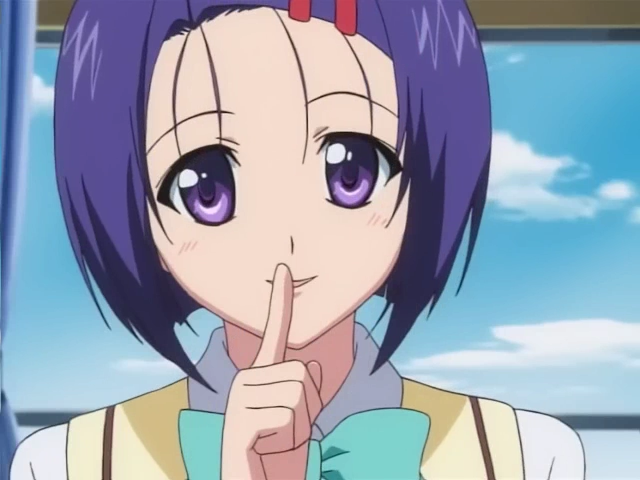
Shh. Don't tell anyone Pete admitted to liking fanservice.

I've learned one thing in the few episodes I've watched so far, then: the "alien girl visits Earth" trope I was introduced to with the excellent if ridiculous Haiyore! Nyaruko-san is apparently widespread enough to be a genre in its own right. To Love-Ru has a lot in common with the aforementioned Nyaruko, as it happens, primarily in terms of the dynamic between the hapless protagonist Rito and Lala, the pink-haired, tail-sporting cute girl.

Rito, much like Nyaruko's protagonist Mahiro, is a boy in his mid-teens who is clearly at the age where he's just starting to get interested in girls. He's had his eye on his classmate Haruna for some time, it seems, but just as he thinks he might build up the courage to talk to her, Lala bursts into his life in explosive fashion, and subsequently begins a chain of increasingly ridiculous events.

Lala is from the planet Deviluke, and through an unfortunate series of coincidences — her running away from home to avoid an arranged marriage, her ship being shot down over Earth, her teleporting herself free of the wreckage and ending up in Rito's bathtub — ends up engaged to Rito. (Deviluke custom dictates that grabbing a woman's breasts is a proposal; something that Rito did completely accidentally while his bathtub appeared to be exploding around him as Lala made her entrance.) What then follows is an increasingly farcical comedy as Rito attempts to come to terms with being engaged to a perpetually energetic alien princess with a habit of getting herself and everyone around her into trouble, and whether or not he has finally had his last chance to confess to Haruna.

Somewhat like Nyaruko again, there's a fair amount of sexual tension between Rito and Lala, though this is largely due to the fact that Lala is completely unashamed of her body and appears to be completely lacking in the ability to feel embarrassed, even when, for various reasons, all her clothes fall off. Rito, meanwhile, seems to constantly find himself in compromising positions with Lala just as Haruna is walking around the corner, leading to plenty of comic misunderstandings (and embarrassment on Rito's part) along the way.

Like many shows of this type, incidental characters often get some of the most memorable moments, and Lala's personal bodyguard Zastin, an imposing figure clad in spiky armour, speaking in that stereotypical "badass" anime voice, is a particular highlight. After an initial misunderstanding when he first meets Rito, he subsequently has a habit of dropping in at unexpected moments; it's always amusing when Rito shows up home from school and Zastin is there in full armour happily drinking tea with Rito's younger sister.
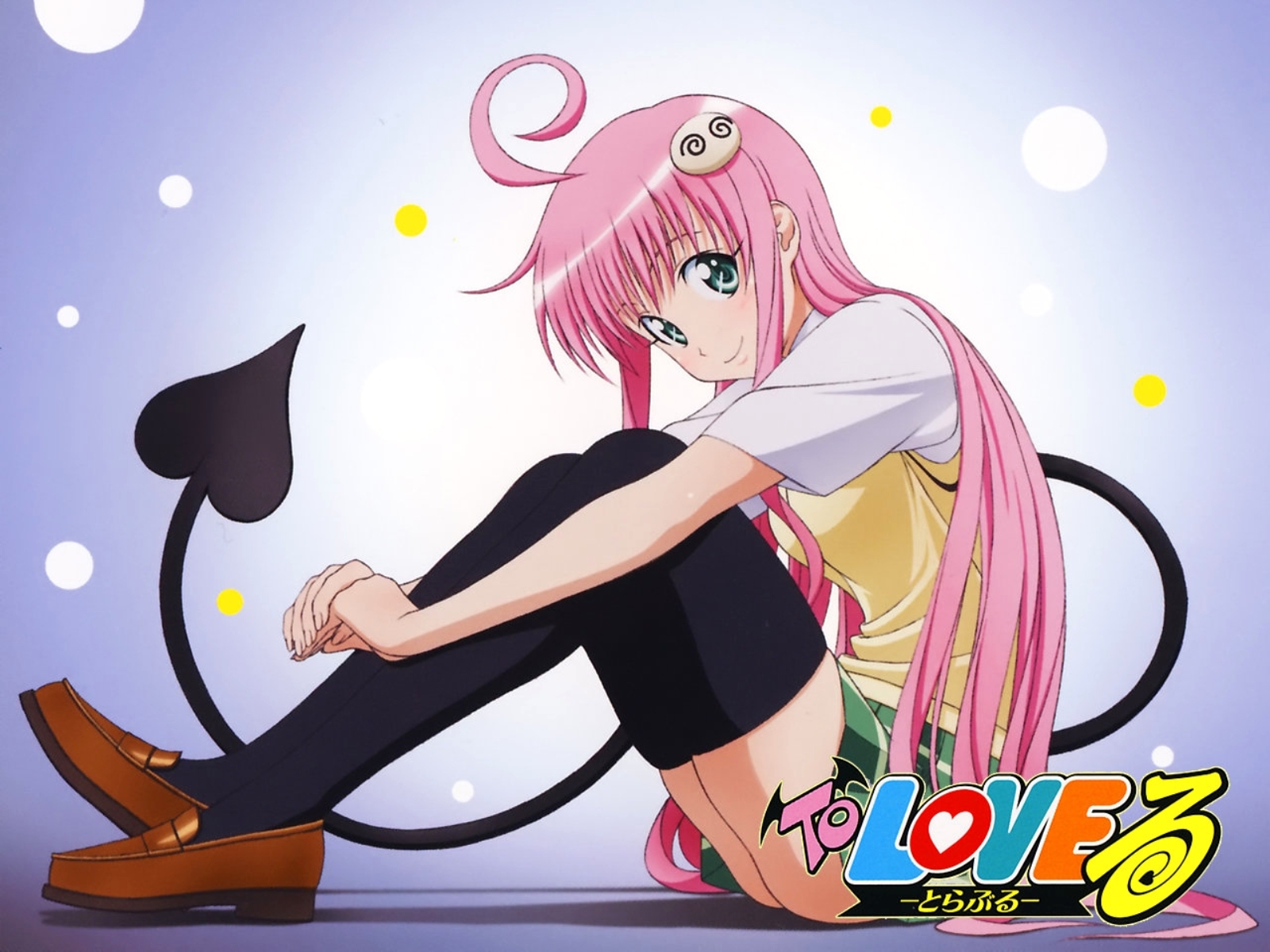
Lala. See? Cute.
Lala. See? Cute.

The main draw to keep coming back, though, is Rito's relationships with the various women in his life. It becomes clear very quickly that despite his protestations and his constant reassurances that he is in love with Haruna, he cares for Lala very deeply, even though she is a constant pain in the backside for him whenever she's around. Likewise, Lala treats Rito with genuine affection — though being from a literally alien culture, she sometimes doesn't treat him with the same degree of consideration that we humans typically expect from one another. And then on top of all that, it gradually becomes obvious that Haruna has feelings for Rito, too, but that Lala is constantly getting in the way between these two apparently star-crossed lovers.

Will they ever get together, or is Rito doomed to an admittedly fun-looking life with the overly energetic Lala? I have no idea as yet, since I'm only a short way into the series as a whole, but I'm looking forward to finding out.

1506: A Girl Who Lives in a World That Has Ended

Did I say that I finally finished watching Clannad all the way through? I'm not sure I did. Anyway, yeah; I finally finished watching Clannad all the way through. And what a fantastic series it was.

Its reputation as "the crying anime" is well-earned, particularly during the second "After Story" season. After Story is just made up of moving scene after moving scene, delivering frequent emotional gutpunches without a moment's remorse, though the first season certainly wasn't averse to all this.

I particularly enjoyed it because it didn't feel the need to spell absolutely everything out. It was mostly realistic and down-to-earth, but there were occasional subtle suggestions that there was something peculiar or possibly supernatural going on. It never took over the story — and, in fact, it was never truly explained conclusively — but it was there. It gave the whole thing a very strange atmosphere throughout; as I've mentioned before, even during fairly happy, joyful scenes there was a strange undercurrent of melancholy about the whole thing.

It helps that the show is held up by a strong, interesting cast, each of whom have their own stories to tell. Stars of the show are, naturally, protagonist Tomoya and heroine Nagisa — Tomoya is relatable and empathetic without being bland, while Nagisa has a few moe appeal elements without taking things too far — but the supporting cast are worthwhile additions, too.

Tomoya's friend Sunohara provides some often-needed comic relief while dealing with his own personal struggles. Twin sisters Kyou and Ryou make up the tsundere and "sweet, shy girl" part of the cast nicely, with the twist that both of them may or may not have their own interest in Tomoya. Tomoyo, who is disappointingly absent from the series after it moves on from the cast's school life and into adulthood, is an ass-kicking student council president-type who doesn't take any shit from anyone. Kotomi is a wonderfully flawed genius with an airheaded personality (and a total inability to play the violin) but a keen mind.

Even the characters who are seen even less frequently are well-defined and memorable. Particular highlights are Nagisa's parents Akio and Sanae, who are polar opposites in almost every way, and Sunohara's sister Mei, who is simply adorable, but who also cares for her brother without getting into the incestuous territory that many shows stray into.

In a way, the manner in which various characters drift in and out of the "main" cast of the show is reflective of real life. After all, how many people you knew at high school are you still in touch with? Relatively few, I'd guess, but you'd still have a good catch up with them if you happened to be in the same place, I imagine. The same is true of Clannad's cast and unfolding story — it's Tomoya and Nagisa's tale primarily, but people come and go as their respective lives grow and change.

Interestingly, one of the most interesting things the series does is outside of the main story arc, and it betrays the show's roots as a visual novel. At the end of both the first and second series, there's a "bonus" episode in which we get to see a "what if?" scenario where Tomoya gets together with someone else — Tomoyo in the first series, and Kyou in the second. Kyou's was a particularly good episode, and it actually made me want to see more of her; she was one of my favourite characters throughout the show, and should I ever get the opportunity to play the original visual novel in English — I'm not entirely sure if the fansub project was ever completed — I have a sneaking suspicion she'd be the route I went for first of all.

Anyway. It was a sometimes painful, emotional struggle to make it through the complete series, but it was excellent. Memorable characters, touching moments, beautiful artwork and a satisfying conclusion; it's an anime well deserving of its "classic" status, and if you think you can deal with All the Feels, I'd recommend you check it out when you get a chance.

1480: Before the End of After Story

Looking back over these entries, I can see that I started watching the Clannad anime quite some time ago, and still haven't quite finished it. I'm closing in on the end, though, but it's tough going. Really tough going.

In short, its reputation as "the crying anime" is pretty well-deserved, given that the last three episodes have all, well, you know. Let's just say that watching them first thing in the morning while trying to get fired up to do some work perhaps wasn't the best idea.

This isn't a bad thing, of course, and one of the things I've come to particularly like about Clannad is that, despite its reputation, it's not overtly emotionally manipulative. There's a lot of filling in the blanks yourself, a lot of figuring things out — and that moment when you come to a realisation yourself is what hits the hardest. Certain things aren't made at all explicit, leaving you to come to your own conclusions about what happened. Said conclusions may not be particularly difficult to come to — I'm trying to remain spoiler-free here for the sake of those who haven't seen it — but still, somehow, you're left with a few questions as to whether or not you're really right. After one episode I watched, I simply couldn't go back to it for a couple of days because the possibility of something awful having happened that I wasn't sure I'd reached the correct conclusion about was something I couldn't quite deal with at the time. Eventually I found the courage, though; like any tragedy, you have to face up to things sooner or later.

Part of this vaguely ambiguous feeling about it stems from the faintly otherworldly, dream-like atmosphere it has. I commented back when I was watching the first series that there was something of an air of melancholy flowing through the backdrop of even the most joyful scenes, and this continues during the After Story second arc. After Story also contains more in the way of outright tragedy, but the obviously bad things happening aren't necessarily the most affecting moments — it's the consequences that sometimes come two or three episodes later that hit the hardest.

Similarly, After Story continues the seemingly unrelated parallel storyline that appears to have nothing to do with the main narrative, but which occasionally kind-of-sort-of-possibly-maybe? reflects what's been happening in terms of tone and overall feeling. Having not yet watched until the very end of the whole series, I can't yet tell if this is wrapped into the overall narrative in a specific way, or whether it remains as it was left at the end of the first series — as a story one of the characters ends up telling — but it's certainly something that regularly gives you food for thought throughout the entire run.

I'm appreciating it because I find the protagonist Okazaki quite relatable, too. He's a young man (I know I'm not quite so young as I used to be, but humour me) who appears to have a certain degree of difficulty showing outward signs of emotion, but who occasionally explodes with pent-up feelings that simply can't be held in any longer. To those not familiar with him, he might seem cold or morose, but the complete run of Clannad reveals him to be a sympathetic character who quietly deals with his own turmoil as best as he can while trying not to bother other people with the things that are on his mind. Despite this, he's a passionate, caring person who tries to do the right thing and gets frustrated when the injustices of the world conspire to prevent him from doing just that. He's humble and realistic; he doesn't get ideas above his station, but he wants to try and do what he can for the people who love him.

I'm intrigued to see how it all ends. I have about five or six more episodes left, I think, and things are starting to tie themselves up towards a conclusion. I have literally no idea how it will actually finish right now, though I'm sure there will be more tears before the final credits roll.

1351: After Story

I was surprised to discover that Manga Video had a booth at the Eurogamer Expo over the weekend, so I took a moment to rifle through their collection between seeing various bits and pieces.

As good fortune would have it, it would seem that Clannad After Story has recently been released in "complete series" box set format, so I snapped up a copy — £25 is eminently reasonable for six DVDs, particularly when compared to some other anime DVDs, and particularly particularly when compared to the exorbitant prices Forbidden Planet charges for anime DVDs.

Ever since I got to the end of Clannad — which wasn't that long ago — I've wanted to see After Story, which picks up directly where the original leaves off. It's the anime adaptation of the second half of the original visual novel, and continues the story beyond the end of school over the course of the following seven years.

This alone makes it noteworthy in anime, since most "slice of life" or school-based drama shows restrict themselves to just the school years, so it's unusual to see the characters actually grow older and move on from school and into their lives proper. Indeed, this is usually the case with visual novels, too, which often tend to have high school-age protagonists and heroines, and stick that way. There are exceptions, of course — Kana Little Sister and Kira Kira immediately spring to mind — but it's something that, in my experience anyway, happens more often than not.

I've only watched a single episode of After Story so far so I can't comment with any great authority on what the new series is like, but I'm looking forward to exploring it. The original Clannad series didn't end how I was expecting it to end — no spoilers — but in retrospect, I think this was because I wasn't aware that After Story was not just a direct follow-up, but the continuation and conclusion of the complete narrative.

I can guarantee now that it's going to make me cry at least once, though. I found the Fuko arc in the first Clannad series incredibly emotional, and if After Story is going to go where I think it's going to go, it's going to be about three bajillion times worse. That's okay, though; the reason I'm even watching Clannad in the first place is because I know it's sad. This may sound like a strange reason to watch something, but there's something oddly enjoyable (if that's even the right word) about getting emotionally engaged with something to such a degree. People still watch sad movies and listen to sad music, after all — and, despite the fact I know absolutely nothing about Breaking Bad (and don't want to right now, thanks; I'm going to watch it when everyone else shuts up about it, which should hopefully be soon now that it's finished) I understand that it's not exactly the most cheerful thing on the tellybox.

Further reports as I continue watching, I'm sure.

1342: Hidden World

I've been continuing to watch Clannad, and I'm thoroughly enamoured with it. I haven't yet finished it, though I am pretty sure how it's going to end and I am also pretty sure that if it follows the path I think it's going to follow it's going to be very, very sad in the way I perversely enjoy so much.

Mild spoilers ahead?

One of the things that has struck me throughout is how quietly weird it is. For the most part, it's your usual sort of slice-of-life story complete with all the clichés that usually involves — someone trying to resurrect a long-dead school club; a harem of female characters who each initially seem to encapsulate one main defining factor but later reveal themselves to have hidden depths and/or dark pasts; a protagonist who is down on his luck but inspired to become a better person by said group of girls.

But then it goes and throws a few curveballs along the way, the first of which is the character Fuko, whose physical presence and relationship with the other characters is seemingly impossible due to the fact that she's really lying in hospital in a coma. After her particular story arc is finished, she disappears, not only from regularly appearing in episodes but from the characters' memories, too — though every so often she shows up for a brief cameo in a future episode, usually in some botched attempt to make a difficult situation better. Since I haven't finished watching the series as a whole yet, I don't know if the deal with Fuko is truly and conclusively explained, or if it's left somewhat open to interpretation. I'd be fine with either, actually, though at my current point 18 episodes deep into the complete run, I'm torn between a few theories.

Then there's the character Kotomi, who initially appears to be the resident socially-inept "weird genius" character, but whom it transpires has some forgotten history with the protagonist. Not only that, but her parents were supposedly researching some sort of theory about when the universe was created, a tiny dimension was sealed away. I don't know if that gets resolved, either.

And then there's the occasional cuts to "the girl who lives alone in a world that has ended" with her mechanical companion. These sequences are almost Nier-like in their bleakness, and at present I have no idea how they fit into the narrative as a whole.

I'm absolutely and completely intrigued by what's going on, though. Someone is clearly going to die at some point, or perhaps they're already dead. There's a feeling of "fever dream" about the whole thing, where it's not quite all making sense yet, but I feel I'm getting closer to the truth.

In other words, I'm very much looking forward to seeing how the whole thing plays out — and it's pretty much a given that I'll be checking out Clannad After Story once I'm done, too. Expect some more spoileriffic thoughts when I've made it through the whole lot.

1331: Not That Irish Band

Been a while since I talked anime (relatively speaking, anyway) so, well, here we go.

I finished watching the second season of Haiyore! Nyaruko-san recently and enjoyed it a great deal — perhaps not quite as much as I liked the first season, but certainly enough to regard it very fondly — and have now moved on to a series I've seen a lot of people mention in the past, but have never checked out myself: Clannad.

I know very little about Clannad save for the fact it was originally a visual novel (that, to my knowledge, never received an official English release, nor a complete fan-translation — do please correct me if I'm wrong) and that it was a show with a certain degree of notoriety for being emotional and moving. As those of you who have been following me a while will know, I have a real soft spot for emotionally engaging media, and take a perverse pleasure from works that are genuinely "harrowing" in some way. I liked Corpse Party so much, for example, because I found it genuinely horrifying, disturbing and upsetting — you might think that would make it unappealing, but in my mind it was just a sign that it was achieving exactly what it set out to do. I think fondly of To The Moon because it legitimately made me properly full-on cry at the ending, and I feel the same way about Kana Little Sister. You get the idea.

So I was always going to check out Clannad sooner rather than later, despite knowing next to nothing about it. And after four episodes, I still know next to nothing about it, but I do know enough to talk a little about my first impressions and what I like about it.

Clannad initially appears to be one of the many slice-of-life high school comedy dramas that make up so much of the modern anime landscape. I'm a big fan of this style of thing, so I have no problem with this, but I'm also conscious of the fact that some people don't like it quite so much.

Where Clannad differs from your usual slice-of-life business is in its atmosphere. On the surface, it's the usual sort of high-energy, high-intensity chaos that this type of show is known for, but there's a very peculiar atmosphere overlaid on the top of it all. Specifically, despite the show's initial impression of being colourful, vibrant and full of energy, there's a very clear sense of melancholy about it, too; a feeling of loneliness.

This is partly personified by the character Nagisa, a lonely girl whom the protagonist comes to befriend. Exactly what Nagisa's deal is hasn't quite been revealed yet, but it's clear that she's a sickly girl — she missed a year of school and had to repeat, and in one early episode she just collapses in the rain without explanation. I have the distinct feeling that Things are going to Happen with Nagisa at some point in the series, though exactly what I don't know just yet — and I'm avoiding spoilers like the plague for the moment.

Nagisa isn't the only source of this loneliness, though; occasionally, the show cuts to a seemingly completely incongruous sequence where a young girl lives alone at the end of the world, and ends up building herself a mechanical friend out of junk. I have no idea of the relevance of all this, yet, whether it's real, dream, metaphor or all three, but it's certainly got my attention.

There's not a lot more I can really say about the show as yet, save for the following opinions: 1) The art and animation is gorgeous. 2) Its visual novel roots are obvious, what with the protagonist's recurring encounters with the female leads. 3) It has the most irritatingly catchy ending song ever. (Dango, dango, dango, dango, dango daikazoku!)

More to almost inevitably follow once I've watched a bit more.

1321: My Blog Post Can't Be This Cute

I thought I hadn't written about OreImo before, but apparently I have, and with almost the same title as this post, too. Oh well. I'm going to write about it again, then I'm going to watch the last two episodes that are disappearing from Crunchyroll at 9pm PT this evening, because I'm hooked.

OreImo, or, to give it its full title that I have to look up every time, Ore no Imouto ga Konna ni Kawaii Wake ga Nai (My Little Sister Can't Be This Cute) is a really interesting show that wasn't at all what I expected it was going to be, and it made that fact abundantly clear within a few moments of it starting. I was expecting some sort of lighthearted slice-of-life anime with a long-suffering male protagonist dealing with the wacky behaviour of his moe moe little sister. Instead, what I got was an intriguing exploration of a number of interesting characters, and a genuinely surprising story that I found hard to predict — not in the sense that it was chaotic, but in that I was never quite sure which direction they were going to take it.

I'll refrain from posting spoilers here in case you're intending to watch it, but suffice to say it explores a number of interesting themes: what it means to be an otaku; dealing with the conflict between your public persona and your "true self"; what it means to confide in someone; the nature of true friendship; and the fickleness of teenage love. There is also an undercurrent of "will they, won't they" incestuousness, which makes some people uncomfortable, but having watched (nearly) the whole series now I'm firmly convinced that this feeling of discomfort is entirely deliberate. I shall say no more on the matter for now.

The characters involved are all interesting to explore, too. The protagonist Kyousuke is a late-teens guy who clearly thinks he's going nowhere, and appears to be quite depressed about it as a result — along with the fact that, at the outset of the series, his relationship with his little sister Kirino appears to be broken beyond repair. The two series then unfold as he tries to repair the rift between them by attempting to understand her and her tastes a little better.

It's not just a two-hander, though — there are others involved, too, and they each have interesting roles to play. Kuroneko, for example, is a character even more obsessed with anime culture than Kirino is, and appears to live her life in a constant delusion that she actually is one of her favourite manga characters — or at the very least, puts across that impression in order to escape from reality. Saori, another "otaku" character that Kirino gets to know early in the series, is also escaping from reality, but for different reasons — to explain why, however, would be a spoiler, so I'll refrain from talking further.

At the other end of the spectrum is Ayase, Kirino's supposed best friend and someone who is not at all sympathetic to otaku culture and tastes. Seeing Ayase struggle to come to terms with the truth about her best friend — and her feelings for Kyousuke, for that matter — is one of the more interesting parts of the show. Plus she's kind of a badass, too.

It's nearly 1am here, but I have a couple of episodes to watch before sleep if I'm going to catch them before they're gone, so I'm out of here. Good night!

1320: Anime After Hours

I started a new anime discussion community over on Google+. You can find it here. If you're wondering why I chose Google+, the most-frequently-ridiculed-by-people-who-have-never-used-it social network on the Internet, it's because Google+'s Community tools are both really good and extremely simple to use, with unnecessary fluff kept to a minimum. Also, it's ad-free, which is lovely.

Anyway, my thinking behind creating the Anime After Hours community, as it's called, was relatively simple. There are a number of anime communities on G+ already, but the vast majority of them tend to end up doing the same things: posting pictures without context (usually with at least one commenter yelling at the poster to remember to put a source in their post); asking the same simplistic questions over and over again; playing tagging and meme games; and only discussing the most popular, mainstream titles.

This is all fine, of course; it's great that there are active communities that allow people to discuss the mainstream side of anime — stuff like Naruto, Pokémon and the like — and that are friendly to the younger end of the market. But, as any anime fan who's looked a little deeper into the medium will know, there's a lot more going on than just Naruto. A lot of anime is aimed at more mature audiences; late teens at the earliest, grown adults in some cases. And I'm not just talking about ecchi or hentai adult content; I'm also talking about shows that take in mature subject matter, or which are violent, or which kids simply wouldn't get.

As I watch more and more anime series and find myself discovering the things I like, I was becoming more and more conscious of the fact that there was a serious dearth of places for people around my age to discuss the medium — it's difficult to be heard in the rapid posts of G+'s more popular anime communities, for example, and they're not saying anything particularly interesting anyway. As such, Anime After Hours was designed as a place for people to come and discuss their favourite anime, whatever form that might take. It's an inclusive community that will accept anyone, on the understanding that it's a community for talking and discussing, not for superficialities. Already there's 13 members, which isn't that much, but we've started kicking off some interesting discussions — and I'm sure as (if?) more people roll in, the community will become more active.

So consider this your invitation, dear reader; if you're the slightest bit interested in anime and you've been looking for a place to come and discuss the medium free of Naruto-loving kids, you know where to come. All you need is a Google account.

See you there?

1305: Kiss Kiss

Okay. After mentioning it the other day in my lengthy post about hentai, I feel compelled to talk a little more about the anime KissXSissince I've watched a few more episodes of it now and am about halfway through the complete run.

KissXSis is, let's not mess around here, not a fine work of art. I am finding it entertaining, certainly, but I question as to whether or not it's "good". It's certainly not something that everyone would appreciate, given that it's riddled with gratuitous fanservice throughout and actually gets a whole lot racier in certain episodes than I thought it was going to.

Speaking completely honestly and frankly, though, this is quite refreshing in a strange sort of way. It's a show that has absolutely no shame whatsoever — in its subject matter; in its gleeful celebration of eroticism; in its acknowledgement that teenagers — both male and female — are horny little fuckers. While I'm well familiar with this side of Japanese culture from eroge, this is, I think, the first show that actually goes noticeably further in this direction than others I've seen.

Let's back up a mo just in case you're unfamiliar with this series — and let's face it, unless you've specifically sought it out for one reason or another, you probably are. (I'm actually fuzzy on exactly how I came across it in the first place, to be honest; I think I may have stumbled upon it on a fansub site or something.)

KissXSis is a slice-of-life anime (there, that's probably enough to put a bunch of you off; as regular readers will know, however, I'm a big fan of this sort of thing) in which the male lead Keita is constantly harassed by his twin stepsisters Ako and Riko. Keita — initially at least — knows that despite the fact he is not related to his sisters by blood — and despite the fact his father (his blood parent) is seemingly desperate for him to get with one or both of them — it would probably be a bad idea to do anything inappropriate with them. That doesn't stop them from trying, however, and indeed the temptation proves to be a little too much for Keita on more than one occasion — though the show consistently interrupts anything truly outrageous happening before it gets out of hand.

If that were all, the show could have probably hobbled along as something of a one-trick pony for twelve episodes or so, with Ako and Riko concocting increasingly elaborate plans to seduce Keita — and indeed it looks as if it might go that way in the first couple of episodes. As the series progresses, though, the cast gradually expands and Keita's relationships become more complex. We have his awkward relationship with the quiet, shy librarian girl Miharu whom Keita regularly ends up accidentally and unintentionally doing totally inappropriate things to, usually as an indirect result of the twins' interference; we have his "childhood friend"-type relationship with his underclassman Mikazuki, a loli with an pantsu-flashing fetish whose innocent appearance belies the fact she's actually far more mature than her 23-year old sister; and, in the arc I'm just getting into, said 23-year old sister — also Ako's homeroom teacher — turns out to not only be a closet otaku, but also a bit of a pervert herself, much as she'd rather deny that fact to herself and everyone around her.

It's a horny little show, much of whose humour revolves around sexuality and inappropriateness, and it's perhaps for this reason it's not all that well-known over in the West — I don't believe it's had an official translation or localisation, which might explain the hack job on the subtitles in some of the episodes I've watched so far. It's oddly endearing, though, and like a good eroge it knows when to turn up the heat and when to relax. It's a massive prick-tease for a significant proportion of its screen time, and if you're as shallow a pervert as I am that will doubtless be enough to keep you watching. However, alongside all this is an amusing — if occasionally uncomfortable — tale about teenagers coming to terms with themselves and their feelings, told by a genuinely memorable cast of characters. Ako and Riko in particular are both genuinely loveable characters and I've found myself rooting for them to get with Keita even despite the inherent "wrongness" of it all.

So, then, while it's not a show I'm going to recommend specifically to you or to anyone, I'll just say that I am enjoying it as a bit of a guilty pleasure at present and leave it at that. You may do with that information as you please. (Except blackmail. I hate blackmail.)

(Oh, and it has one of my favourite ending animation/song combos I've seen. Super-simple, but super-effective. I'll leave you with it.)