2077: Narrative Media

0077_001

Since I've become particularly interested in Japanese popular media, I've often found myself pondering which particular aspect is my favourite — in other words, what do I feel is the "best" means of enjoying a story that, in many cases, spreads its tendrils across a number of different forms of media with varying degrees of success?

There's not really an easy answer to that, but I feel my own personal attitude towards it is inclined towards whatever the original version of the work was composed in, where available. This isn't a hard and fast rule, by any means — on balance, I think I slightly prefer the anime of High School DxD to the manga, for example, and there are a number of interesting spin-off games that tell a completely different story to an anime or manga series, making them worthwhile in their own right — but I do tend to find myself preferring to experience a story as originally intended.

Part of the reason for this is enjoying a story in its original medium means that you don't "miss out" on anything. In theory, anyway; that theory runs that a creative work is composed for a specific medium, and then adapted to other media at a later date. The adaptation process often involves editing, changing and even cutting content from the original, usually as a means of ensuring that the important beats of the story fit into what may be a more restrictive format. Consider an indefinitely running manga series that is adapted into 20-minute anime episodes, for example; you're going to lose some detail, like it or not, unless you want the pace of the show to slow to a crawl. (Some long-running shows do indeed take this rather leisurely pace to their ongoing storyline, but for the most part, manga-to-anime adaptations tend to try and get through a significant amount of printed content over the course of 12-13 episodes.)

That said, different media are more or less appropriate for different ways of exploring material. Anime, as the most visually flexible of these media, allows you to outright depict things happening without having a narrator explain things (as in a visual novel, manga or light novel) and take a more subtle approach, implying things rather than making them explicit. At the other end of the spectrum, a novel relies almost entirely on the reader's imagination, perhaps stimulated a little by illustrations here and there. The nature of text means that the inner thoughts and feelings of characters can be explored in much more detail than in an anime, and even from multiple perspectives.

Visual novels, meanwhile, tend to unfold from a single first-person narrative perspective. This allows for in-depth exploration of a specific character and their responses, feelings and attitudes towards various situations — as if you "were" that character. It's not quite the same as a full-on game where you take full control of a character, mind; most visual novels give you relatively limited choices as to how they proceed, and the protagonist otherwise has a mind of their own: you're just along for the ride. Some visual novels do experiment with multiple perspectives — The Fruit of Grisaia's various routes each feature a sequence where the main heroine of that route narrates an important event in their lives, be it to the reader or to protagonist Yuuji; Deus Machina Demonbane, meanwhile, features a first-person protagonist narrator, but occasionally slips into third-person to depict things happening elsewhere when appropriate. For the most part, though, when you come to the end of a visual novel, the character you almost certainly understand the best is the protagonist.

Video game adaptations — i.e. those that aren't visual novels — present their own challenges by allowing the player to control iconic characters and perhaps make them behave in ways that aren't necessarily in keeping with their character as depicted in other media. This is partly a matter of attitude, though; someone who is already particularly engaged with a series and comes to a video game adaptation after reading the manga/visual novel/light novel or watching the anime may well find themselves "method acting" as the character they find themselves in full control of, even if the game mechanics do provide the opportunity for them to do unexpected and strange things.

In other words, I don't really have a concrete answer for the question. At the moment, I'm particularly enjoying reading The Fruit of Grisaia's visual novel, and after hearing how the anime adaptation packs the VN's many hours of narrative and interesting happenings into just a single season, I feel that the VN is probably the best means of experiencing this story in full detail. At the same time, I'm enjoying the video game of Sword Art Online, the manga of Monster Musume, the anime of Himouto! Umaru-chan — there really isn't a straightforward answer as to which one is "best".

It sometimes pays to explore a single work in different media, though; the unwritten rules that "the book is usually better than the film" and "video game adaptations are universally terrible" don't always apply!

2048: You're A Monster

0048_001As I've mentioned a couple of times recently, I've been reading the Monster Musume manga as well as keeping up with the anime adaptation, and I've been enjoying both a great deal.

While Monster Musume is, on the surface, a somewhat pervy ecchi harem series with all the requisite sexual tension plus copious boob and panty shots (albeit attached to non-human girls with "monstrous" features), at its heart beats a heart of gold and a number of positive messages: accepting people for who they are without judgement; not relying on first impressions to figure people out; standing up for what you believe in; and forgiving people when they make a mistake, particularly if they make it while they're trying to learn something new.

I find the monster girl angle particularly interesting. As I noted when I first started checking out the anime, I'm unfamiliar with the monster girl trope in general, so it was somewhat jarring to see these obviously non-human girls initially; they've clearly all been designed with traditionally attractive anime/manga character visual tropes in mind, but in most cases there's just enough of the monstrous to make you feel a little uncomfortable if you're not already au fait with taking a walk on the wild side.

BL8LlZr

In the case of Monster Musume, we have Miia's extremely long snake tail, its companion clumsiness and her specifically snake-like characteristics such as her fangs and the fact she sheds her skin regularly; we have Papi's bird legs and wings instead of arms attached to a distinctly young-looking body; we have the fact that Centorea's arse is a horse (and her knockers are enormous); we have the fact that Suu is a slime girl who initially is completely unable to communicate through any means other than mimicking the things she has observed others doing; and, of course, we have Rachnea the spider-lady.

It's interesting how the sequence in which these girls are introduced goes: although Miia is one of the more "monstrous" girls in a visual sense, in terms of character she's probably the most "normal", albeit rather more lovestruck than your average young woman. Papi is naive and innocent — considerably more stupid than her supposed actual age, with her intelligence and common sense more appropriate for her somewhat childlike appearance — and doesn't quite fit in to "normal" society as a result, but is still reasonably recognisable as acting somewhat "human-like". Centorea lives by some distinctly "fantasy world"-style values — all "honour" this, "my lord" that, plus her arse is a horse. Suu is in many ways the most "alien" of all the monster girls, at least in the early chapters; she has no idea that she regularly puts poor protagonist Kimihito at risk of drowning every time she embraced him a bit enthusiastically, and her initial inability to communicate puts her at a distinct disadvantage compared to the other girls (while also providing plenty of comic relief, as you might expect). Mero — who, so far, has been the least interesting, least developed character to me — presents an interesting take on attitudes to folklore by being obsessed with the tale of The Little Mermaid, but for its tragic angle rather than its romantic aspects.

In many way, though, Rachnera is one of the most interesting characters. In terms of visual design, being a spider woman, she's the most obviously "non-human" of the lot; while Suu acts in an alien manner, she at least takes on humanoid form at the best of times. Rachnera, meanwhile, is quite literally an enormous spider with a woman's upper half, and is consequently quite frightening to look at, particularly given how she's introduced in some delightfully creepy scenes. Kimihito is true to his values, though, and doesn't judge her by her appearance at all; when he first encounters her, he even appears largely dismissive of her monstrous nature and fetishises her spider legs, being a self-confessed "leg man".

dddd

Rachnera is one of the most grounded, honest characters in Monster Musume, as it happens. She arguably acts in the most "adult" manner of the whole lot — though this can be taken in several ways, since not only is she mature in her attitudes and responses to situations, she's also very sexually aggressive. More importantly, though, she's completely at ease with herself, accepting both her monstrous nature (and all the difficulties that can sometimes cause) and her sexually adventurous side, particularly her predilection for bondage play, which a number of different cast members end up on the receiving end of with varying degrees of willingness.

To me, Rachnera was the most initially jarring monster girl to make an appearance — largely because I still haaaaate real spiders — but from what I've seen of her so far, she's also one of the most likeable. She's not necessarily the one I find the most attractive (I think that dubious honour goes to Miia) but, well, she does have a fine pair on her, and she's an interesting character whom it would probably be fun — if, at times, unsettling — to hang out with.

I'm looking forward to the rest of the series and seeing how these characters develop. It's easy to dismiss Monster Musume as cheap fanservice — as it is with many things that initially appear to be cheap fanservice — but as I've said, beneath the boobs and lamia panties (they're stick-on!) and sexual assault by slime girls, it's a delightful series with a wonderfully positive message.

I'm glad my friend Chris convinced me to check it out for myself, because without his wild enthusing about monster girls, I would have probably thought I'd be too squicked out by the girls' more monstrous aspects to enjoy it. But, as it turns out, it's not at all difficult to start accepting people just as people, regardless of what their extremities look like…

2046: Reading Material

0046_001

Since my post a few days ago about getting into manga, I've been well and truly bitten by the bug, as it were, and I'm also about to branch out into my first light novels, which we'll come onto a little later.

So far, I've read the first volume of Monster Musume, Is It Wrong to Try to Pick Up Girls in a Dungeon?  (better known as DanMachi) and High School DxD, and have subsequently picked up the subsequent five volumes of Monster Musume and two more of High School DxD. (The later volumes of DanMachi have proven surprisingly difficult to track down, a fact not helped by the fact that Amazon has its listings for the light novel and manga versions all squished together into a not-particularly-clear form.)

Longtime readers or those who know me will recognise all of the above titles as series that I've watched the anime of, and this was a deliberate choice. I was initially hesitant to do so, but it turns out that reading the manga having seen the anime (or, I imagine, vice versa — I haven't done this way round yet) doesn't particularly diminish the experience any. In fact, in many cases the manga, being slightly longer in form than your typical anime's 13 20-minute episodes, goes into more detail than its animated counterpart, often with new story threads, deeper exploration of characters and sometimes even a different overall tone.

Light novels, meanwhile, are something I haven't explored at all, and until recently I wasn't even particularly sure if there was a distinction between them and, you know, just a plain ol' novel. "Light novels" are very much a Thing in Japanese popular culture, though, with many popular series starting as a light novel and subsequently being adapted into other forms of media such as manga, anime, video games and visual novels, so I was curious to investigate this particular part of culture.

I haven't read any yet, but I have picked up two volumes of Sword Art Online: Progressive, a retelling of Sword Art Online's original Aincrad arc, focusing on more personal stories and a single "floor" of the game at a time. It's an ambitious project, considering the Aincrad arc supposedly unfolded over the course of several years and 75 floors — the first two volumes just cover floors 1 and 2 — but I'll be interested to see if it comes to fruition, plus the Sword Art Online anime drew some criticism from certain quarters for rushing through the narrative of the original light novel it was based on, so I'll be interested to see the story retold (and tweaked a bit, from what I understand) from a new perspective.

Anyway, if you were wondering, a "light novel" appears to be the Japanese equivalent of young adult fiction: relatively short works, often illustrated, but primarily text-based rather than the visual nature of manga. I'm interested to dive in; it's actually been quite a while since I've read any book (i.e. one with words rather than one with pictures and speech bubbles — not that there's anything inherently "inferior" about that format) so this will be a nice return to form if the Progressive novels prove to be a compelling read; I used to absolutely devour books, but for one reason or another, I've not really found a lot of time for reading in the last few years.

Ironic, really, considering the number of words I've typed on this here blog over the last few years — including a substantial number of fiction prose — but perhaps this will give me some ideas of my own!

2045: Pondering Localisations and Translations

0045_001

There was a bit of salt being spilled earlier today on the subject of translations and localisations. It's clearly a topic that people feel very strongly about so I'm not going to give a "judgement" one way or the other on it, simply share my own thoughts.

The discussion surrounding this issue came about as a result of Gaijinworks' recent release of Class of Heroes 2 on PSP. Gaijinworks is a company that specialises in localisations of Japanese games, and is made up of, among other people, former Working Designs staffers. Working Designs was a company from the PS1 era who also specialised in localising Japanese games.

The use of "localisation" rather than "translation" is important there, because the two terms refer to two distinctly different schools of thought on what to do when bringing non-English material into English-speaking territories. A translation is exactly what it sounds like: it's taking the original text and, as literally as possible, reproducing it in another language. A localisation, meanwhile, takes the essence of the original text but takes varying degrees of artistic license with it in order to make it more accessible to people outside of its original audience.

The furore over Gaijinworks' localisation of Class of Heroes 2 largely stems from the fact that, in the eyes of many people who prefer more literal translations, the team had taken unnecessary liberties with the original text, even going so far as to put in completely incongruous ability names for certain character classes — the most egregious being the Samurai class' use of "Pimp Slap" and "Hammer Time". The whole thing would have probably died down a bit quicker were it not for whoever runs Gaijinworks' Twitter account turning on the snark and speaking to disappointed customers in a tone that… wasn't entirely appropriate, shall we say. Consequently, the company has done a bit of damage to its reputation among fans of Japanese games; on the one hand, both Working Designs and Gaijinworks are known for their talent in localisation rather than translations, so people should have perhaps expected something like this to happen; on the other hand, however, responding to criticism with snark and the suggestion that people learn the original language (sure! It's just that easy!) isn't the best way to recover an unfortunate situation.

But I don't want to dwell on that too much, because I'm sure there's still plenty more arguing to do there — and anyway, to be perfectly honest, localisation that takes some liberties doesn't really bother me all that much, so long as the essence of the original text and characters is left intact.

A good example is the Ace Attorney series by Capcom. In Japan, these are set in Japan, known as Gyakuten Saiban (Turnabout Trial) and star a character called Naruhodou Ryuuichi. In the West, they are set in the USA (albeit a version of the USA where there are traditional Japanese villages randomly scattered around the place) and their protagonist is called Phoenix Wright. There are all manner of other changes around the place — and the games aren't any weaker for it. In fact, Westernising it made it a lot more accessible to a much wider audience — so much so that it's widely renowned as one of the best mainstream adventure game/visual novel series in recent years.

The reason a lot of companies choose to localise rather than translate is to do with things that… well, simply don't translate. In the cast of Ace Attorney, the protagonist's name "Naruhodou" is based on the Japanese word "I see" — something that your average, non-Japanese-literate Westerner wouldn't know. Making his surname "Wright", though, opens up all sorts of potential for punning fun — potential that the games seize at every opportunity. Right, Wright? Or should I call you Phoenix Wrong?

Then there's things like the fact that Japanese puns work in a completely different way to English ones; take Squid Girl, for example. In the Japanese original, Squid Girl ends all her sentences with the words "de geso" instead of the more common "desu" (roughly, "it is"), the former being a bastardisation of "desu" that incorporates the Japanese word for "squid legs". Likewise, all the episode titles are expressed as questions, only using the word "ika" (squid) at the end of the sentence rather than the particle "ka" which denotes a question. Because both of these puns rely on Japanese grammar and particles, which are very different to English, it's simply not possible to translate these things directly. So instead we get a localisation, where Squid Girl speaking in English instead takes the English approach to punning, shoehorning in references to squids and ink at every opportunity. Squidn't that ink-redible?

Ahem. Anyway. The point is, in some circumstances, localisation works well and helps to expand the audience of something beyond what it would have if it remained more true to the original. This is particularly true when it comes to cultures that are very different from one another — such as, say, Japanese and American or English cultures. People like to be comforted by the familiar, and making something more comfortable is a sure way of getting people who might not have otherwise given a particular game a chance to actually try it out for themselves.

On the flip side, localisation loses some "authenticity", and consequently isn't entirely appropriate in all circumstances. Take the Persona series, for example; its third and fourth installments in particular are heavily based on Japanese culture, particularly surrounding teenage and high school life. While there are similarities between Japanese and Western high-schoolers, there are enough differences — particularly with regards to things like how people address one another — to make it worthwhile using a more literal translation. Not only does it make the experience more authentic for those who wish to use it as a means of immersing themselves in a culture they find fascinating, it also provides a very effective means of learning about that other culture from scratch.

Some games take this idea of education and really run with it. Visual novel Steins;Gate, for example, includes an in-game glossary that explains everything from otaku terminology to Japanese cultural norms as you work your way through it — the first instance of a non-English term or reference is highlighted, providing the player with the opportunity to look it up, and from that point on, it simply uses the term as it would be used in Japanese. In this way, you familiarise yourself with everything from elements of Japanese popular culture to ways in which people address one another — and again, it's a fascinating way of learning something while you enjoy the story.

And then there are situations where either approach could work. A good example would be something like the Hyperdimension Neptunia series, whose English scripts over the years (initially by NIS America, now by Idea Factory International) have had a somewhat mixed reception from longstanding fans — particularly those familiar with the original scripts. There are some changes that just seem to have been put in for the sake of a quick pun that wasn't present in the original — the English version's use of "CPU" (Console Patron Unit) instead of the Japanese version's "megami" ("goddess"), for example, as well as Neptune's use of distinctly Western-style slang. Personally speaking, this sort of thing doesn't bother me too much — it works as a pun, although arguably it's making a bigger deal of the whole "look! all these girls are games consoles!" thing than the original Japanese script did — but there are some people who get pretty upset about this sort of thing.

I guess what we can conclude from all this is that, unfortunately, there is no one single optimal way to handle these things. Localise things too much and you risk alienating the purists who want something that is as true as possible to the original text. Conversely, translate something too literally and you either get something that reads very awkwardly in English, or something that isn't entirely accessible to someone who isn't already familiar with various aspects of Japanese culture. The ideal situation would appear to be somewhere in the middle, but very few people seem to get that balance absolutely right, and doubtless we'll continue to see salt being spilled any time things tip a bit too far in one direction or another.

Me? I really don't mind either way. I relish the opportunity to learn more about a culture I find fascinating through more literally translated works, but equally I very much enjoy a good localisation that remains reasonably true to the tone and intention of the original; in the latter case, it might perhaps help to think of it as a "remake" of sorts rather than a translation. Or it might not, in which case you can feel free to rant and rave about it as much as you like on social media. More often than not, though, I'm simply happy to have these games (and anime series, and manga series, and visual novels…) brought to the West in my native language so that I can enjoy them in some form, even if it's not always quite the exact same as the original.

2043: This Would Go Great with Cola

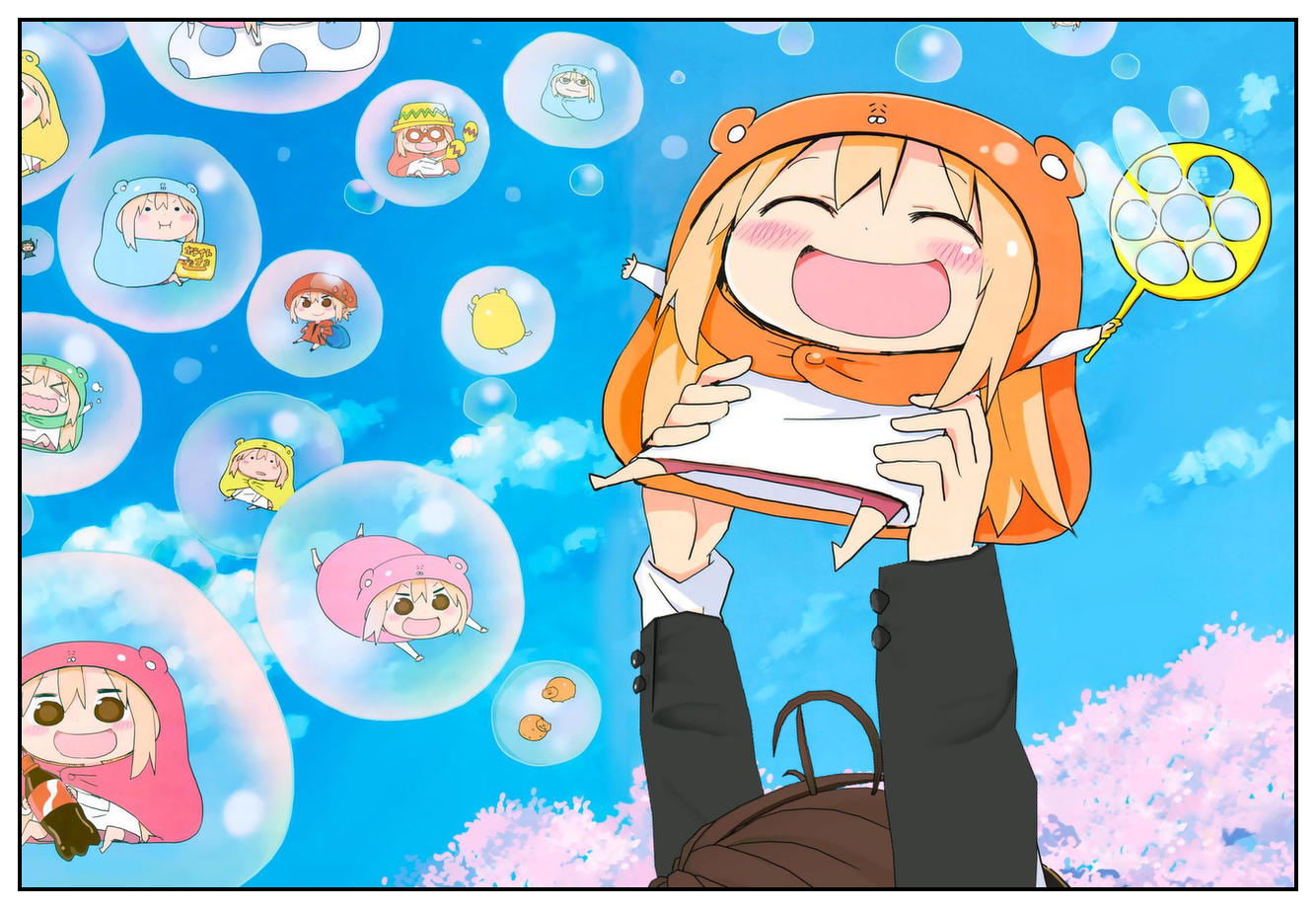
0043_001One of the highlights of the current anime season is Himouto! Umaru-chan, a rather odd little show that takes the Squid Girl approach of splitting each "episode" up into several shorter little vignettes in which nothing really happens, but it's entertaining nonetheless.
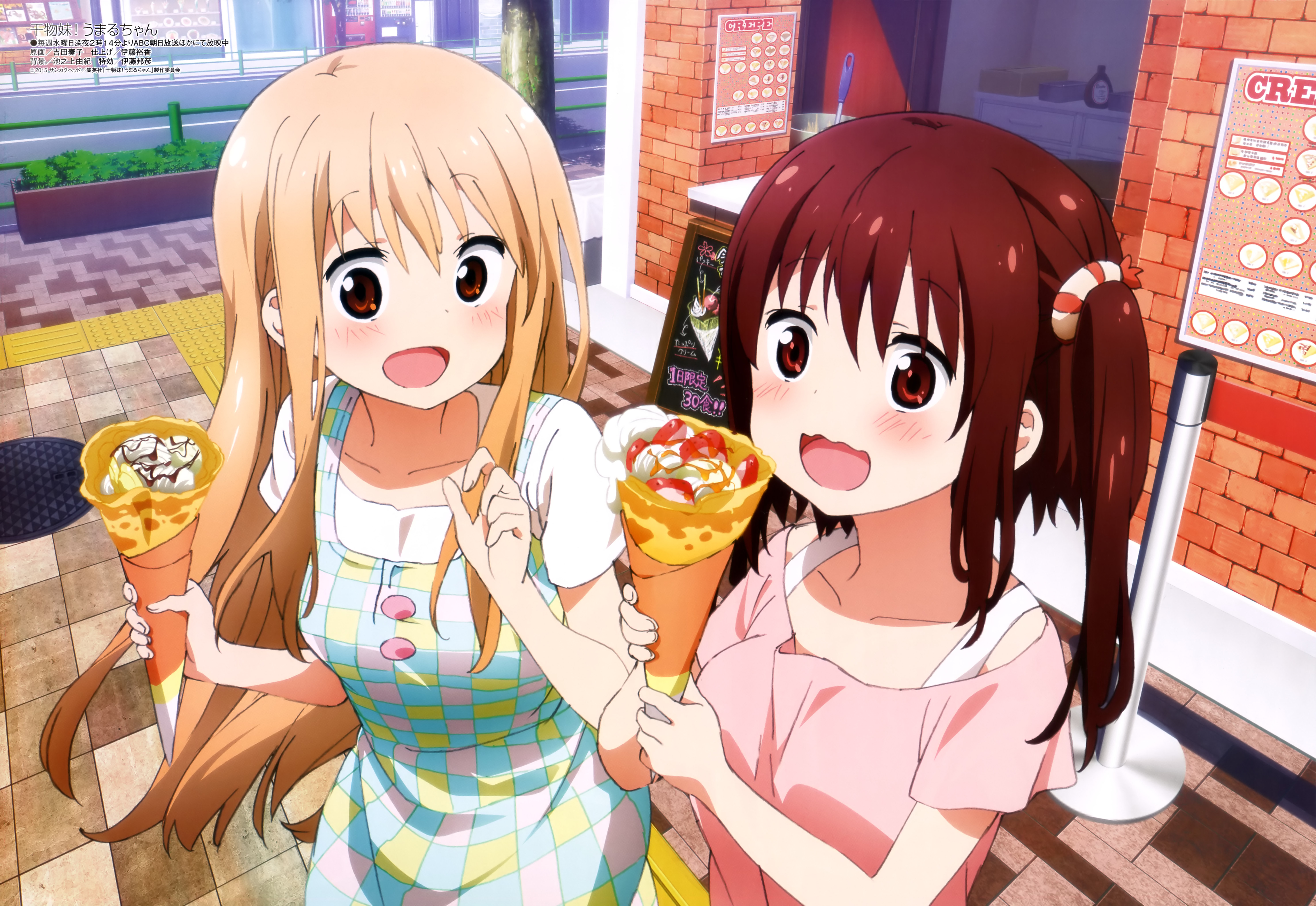
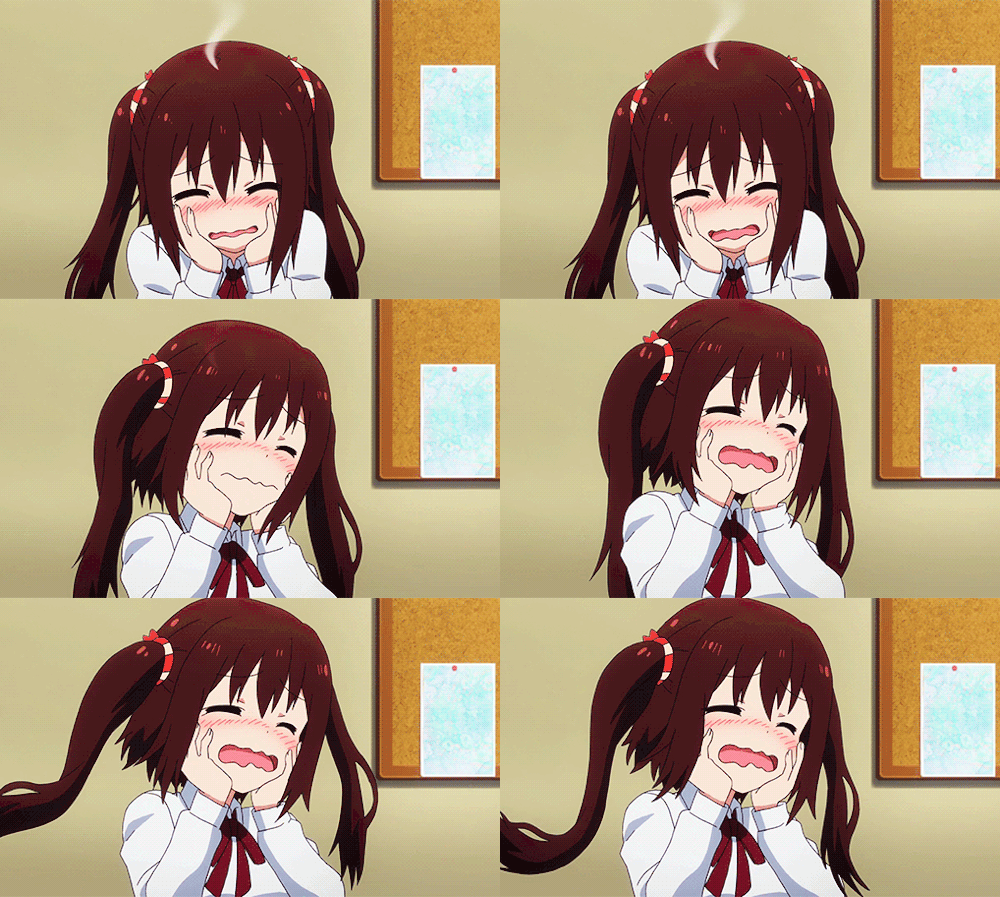
Umaru (as I shall refer to it hereafter for simplicity's sake) is a show that exemplifies the Japanese concepts of honne and tatemae, these being a person's "true feelings" and their "public face" (or, literally, "facade") respectively. Title character Umaru is the very model of beauty and respectability when she's out in public: she's the darling of her whole school, always gets the best grades, is good at sports and is respected by everyone. Back home, however, she's a lazy slob who sponges off her long-suffering brother and sits around in her hamster hoodie playing games and drinking cola all day.

Himouto!.Umaru-chan.full.1907662

Umaru highlights this contrast by literally changing the character's appearance when she switches from one "face" to the other. When she's out in public being the beautiful and respected Umaru-chan, she's the epitome of moe — long, flowing hair; big, sparkling eyes; a calming, gentle voice — but when she gets back home she immediately becomes represented by a short, aggressive, chibi character that is cute in an entirely different way to "full-size" Umaru. Her behaviour and mannerisms are completely different, her voice becomes louder and more forceful, but it's abundantly clear that this is when she's at her happiest.

As the series progresses, Umaru reveals a third persona: that of the elite gamer "UMR". UMR is something of a balancing act between the two extremes she had previously exhibited up until this point; she's realistically proportioned and acts like a normal human being, but is passionate and enthusiastic about gaming — not to mention in possession of some serious skills. UMR is by far the most naturally likeable of all Umaru's personalities since she tends to keep things fairly low-key — she even dresses considerably more conservatively than her "ideal schoolgirl" persona — but is also a lot more honest about who she really is.

ebina

The idea of the necessity of putting up a facade for the rest of the world to respect you is a defining characteristic of the series, and it's not just Umaru who exhibits this. Umaru's friend Ebina, for example (above), is an attractive, busty young girl who draws the eyes of everyone around her, but she's afraid to open her mouth in case her country bumpkin dialect slips out, as it occasionally does when she's feeling at ease and comfortable. Likewise, recurring character Kirie is completely unable to approach moe Umaru at school, despite wanting to, but she manages to bond with lazy slob Umaru — whom she actually believes to be Umaru's younger sister, just to complicate matters — over games, cola and laziness.

Over time, these characters all become better defined, and their different personas start to merge into one another. I'm interested to see whether or not the series intends to "say anything" with this concept by its conclusion, or whether it's simply going to continue using them for comic effect. Either way is fine by me; Umaru is not the kind of show that particularly feels like it needs to have a strong moral message — though I won't deny it will be somewhat satisfying to see the precocious little slob version of Umaru get her comeuppance for taking her poor brother for granted by the end of the run!

Regardless of how it ends, Himouto! Umaru-chan has been a really fun series so far, and I hope there's more in the future.

2039: He's On the Manga

0039_001

I decided today — and not for the first time — that with my interest in all things Japanese, it was high time that I got involved in manga: the print side of Japanese popular entertainment, and, in many cases, the original source of various series that go on to become popular anime series.

People who are big into manga are always going on about how the original manga (or, if you're a real otaku hipster, light novel) is, more often than not, better than the 13-episode anime adaptation. And, to be fair, I can sort of see their point; while anime has a lot more immediacy about it thanks to the combination of colour, music, sound, voice acting and, you know, animation, the longer format of manga allows it by its very definition to go into more detail, to explore characters, themes and storylines further, and to provide a more "comprehensive" experience for fans. Plus it's the otaku equivalent of watching a movie adaptation of a book and going "well, the book was better" (which it often is).

Anyway. The manga I decided to jump into are ones that I'm already reasonably familiar with the anime adaptations of. I considered picking up the Sword Art Online manga, but I kind of want to check out the light novels rather than the manga, since that was the original original version, and most people say that it explores the storyline at a much more manageable pace than the breakneck speed of the anime. Instead, then, I picked up the first volumes of Monster Musume and High School DxD.

I haven't checked out DxD yet, but I've read the first couple of chapters of Monster Musume. So far I'm impressed with how true the anime has stuck to the tone and feel of the manga, though the manga itself is a bit more explicit in a number of ways — most notably with the presence of nipples, but also in another sense in that it fleshes out the storyline and characters' inner thoughts a lot more. So far it hasn't been vastly different from the anime, but I understand that differences between anime and manga tend to come a little later as a series progresses; anime often skip out large chunks of the manga with varying degrees of success, and I believe in Monster Musume's case there are characters who are in the manga who aren't in the anime. Possibly. Maybe.

The other advantage of reading the manga — assuming you stick with it through multiple volumes, of course — is that you can read further on in the story than the anime tends to go. A lot of 13-episode anime seasons end just as they're getting interesting — DanMachi (aka Is It Wrong to Try to Pick Up Girls in a Dungeon?) was the last show to do this — and then present their audience with a substantial and frustrating wait before they can see any more. Meanwhile, in many cases, the manga comes out first, allowing you to continue following your favourite characters' (mis)adventures well before the adaptation hits the airwaves.

So far I don't know how long I'll stick with these series or any others I decide to pick up. I've enjoyed the couple of chapters of Monster Musume that I've read so far, and it's a fun, different way to engage with a series that I've come to enjoy a whole lot since it launched. So we'll see!

I should probably reorganise my bookshelves in anticipation, though…

2037: I Killed a Volcano

0037_001Another Sword Art Online Re:Hollow Fragment post, I'm afraid, but, well, deal with it; it's good, I'm enjoying it, and I want to talk more about it.
I was describing the game to a friend earlier and the thing that struck me is how utterly different from your typical JRPG it is. It's extremely non-linear at heart — that is to say, there are a number of parallel linear objectives to follow at any given moment, but it's always entirely up to you which one you pursue at any given moment, or even whether you pursue them at all or just decide to grind out a few levels fighting powerful enemies.

So far the "main" quests I've encountered include the ascent of Aincrad, which is the way you "beat" the game; the storyline that unfolds as you unlock access to each part of the Hollow Area; the "Grand Quest" which mysteriously appears on one trip to the Administration Area; and a line of waifu-specific objectives that demand you go into the Hollow Area with a specific companion and complete a particular kind of Hollow Mission, the exact details of which are usually given in fairly vague terms, so you have to figure out exactly which missions will fulfil their criteria for yourself.

In my relatively brief session on the game earlier, I chose to forego the waifu quests I had previously been working on (largely because I couldn't find a Hollow Mission that involved fighting kobolds or goblins to progress Silica's questline) and instead continue with the Grand Quest. This part of the game — which I believe was added in a free update post-release on the original Vita version — involves entering a mysterious new part of the already mysterious Hollow Area, known as the Abandoned Area, and promises the reward of powerful new Sword Skills that you can't get anywhere else.

The Abandoned Area is introduced to you with a beautiful garden, one end of which is dominated by an enormous pair of doors — doors which are, of course, locked. However, since Sword Art Online is well and truly aware that it is a game, it very much follows the rules of a game, and consequently there are two obvious depressions in the door where "something" most certainly fits. And, wouldn't you know it, there are two pathways out of the garden, each of which leads to a different "dungeon" area — one in some fiery caves, another in the mountains. And oh! It just so happens that your map indicates that there's a powerful Area Boss waiting in the furthest reaches of each of these areas. Guess what you have to do to progress the Grand Quest?

It's not just as simple as wandering in and smacking the boss about a bit, though, not least of which because the bosses are challenging encounters with plenty of mechanics to figure out. In order to even get at the boss of the fiery cave area, you need to complete a number of different Hollow Missions that reveal some interesting facts about the local fauna — most notably the explosive bugs that become petrified when they die, and which conveniently explode with sufficient force to knock down walls when triggered by the correct catalyst. Once you've discovered this useful piece of information, you then have to scour the area for other instances of these petrified bugs, blow them up and see if they reveal a convenient pathway through to the boss.

The mountain area is similar in execution, though it is set up in such a way as to prevent you from progressing too far without completing the fiery caves first — you need a key item to melt open a door that is frozen shut. In this area, however, you quickly encounter the Area Boss without too much difficulty, who promptly screeches at you with a noise so terrible you're forced to retreat. The challenge here, then, is to uncover a means of protecting yourself against his powerful sonic attacks. I'm yet to discover exactly what that means is, but it will almost certainly involve a convenient Key Item somewhere, because that's how games work and, as previously noted, Sword Art Online is very much aware that it is a game.

The fiery cave area boss — dramatically known as Gaiard the Volcano — is a great fight that is far more than simple hack and slash. It's a fight where you'll have to pay attention to what moves are coming up — they are telegraphed in various ways — move carefully to avoid them, order your companion around (assuming you brought one with you) and take every opportunity you have to get in your most powerful attacks. It's an intense fight that really doesn't let up for a moment; opportunities to attack are short and easy to miss if you're not paying attention, and you need to keep a close eye on your partner's condition, too; letting them die is as instant a Game Over as if you died yourself. It's extremely satisfying when you finally clear it, however; it took me a good few attempts, but like the very best boss fights, it never felt like I was being smacked around by cheap, unfair moves — I learned something every time and progressed a little further, until eventually I was able to counter almost all his earth-shaking attacks and take full advantage of the openings that were presented throughout the battle.

If you're the sort of person who enjoys setting their own objectives and pursuing things in whatever order they like, then, Sword Art Online Re:Hollow Fragment is something that will very much appeal. Plus I was delighted to see today that it appears to be a top-seller on PSN right now, which means that it's a game that is getting noticed, played, enjoyed and promoted by people who like it. That makes me really happy; while it is far from the most technically proficient game in the world — the upscaled PSP graphics and somewhat inconsistent frame rate will be a culture shock for many — it's a beautifully designed, enormously addictive and extremely playable game that I can see myself spending a very long time with before I move on to something else.

2034: The Hollow Area

0034_001Been playing some more Sword Art Online Re:Hollow Fragment for the past few days, and I'm thoroughly enamoured with it. It's quite unlike any RPG I've played before, though I must say, it does a pretty good job with the whole "simulated MMO" deal, particularly as you can even play it in cooperative multiplayer.

I've mostly been exploring the "Hollow Area" part of the game, which is the vast new section originally added in the Vita version of the game; the original PSP version only covered the last 25 floors of Aincrad up to the final boss on Floor 100. Aincrad is a mostly linear experience; the Hollow Area, meanwhile, though gated by story progression in a few places, is much more non-linear in nature since you can freely move between regions, take on any "Hollow Missions" you choose or simply explore, fight monsters and seek treasure.

Interestingly, this aspect of the game is the one area where Re:Hollow Fragment differs from a real MMO: while the first time you enter a new zone in an MMO you'll probably take some time to explore and map it fully, most MMOs design their areas in such a way as to be easily navigable by large groups of people, and once you've been everywhere, you've been everywhere; no further exploration needed. When it comes to dungeons, any kind of exploration is usually discouraged entirely in favour of a linear sequence of encounters culminating in one or more highly scripted boss fights. There's nothing wrong with this; when it comes to herding a group of players towards their objective together — particularly when they might not be able to communicate with one another due to issues such as the language barrier, console players not having a keyboard to hand or people simply being unwilling to talk — it's best to keep things as simple as possible so no-one gets lost, everyone can have a good time and work their way through efficiently.

Since Re:Hollow Fragment doesn't have to worry about "real" players (for the most part — multiplayer assumes you're already familiar with how the basic game works) it's free to be a bit more interesting with its areas. So we have mazes, networks of caves, perilous clifftops (that you can fall off and die instantly) and dungeons with multiple routes and secret passages, many of which you'll need to pay return visits to at a higher level to get the most out of. It's an absolute pleasure to explore, and all the more rewarding when you come across a powerful monster to fight or a treasure chest containing an awesome treasure item.

The "powerful monster" aspect is worthy of some note. I'd heard a few people compare this game to Monster Hunter when it first came out; I haven't played Monster Hunter myself so can't comment with a huge amount of authority, but it never struck me as a particularly obvious comparison to make. That is, until I started ranking up some of the regions in the Hollow Area and coming across the "NM" (Named Monster) and "HNM" (Hyper Named Monster… I think?) encounters, which pit you against powerful, boss-tier enemies that demand a little more than just hack and slash. Now I kind of Get It… that moment when you think "That thing looks awesome… let's kill it!"

That said, the game isn't particularly hack and slash even with its trash mobs, anyway; it has an interesting combat system based around a combination of carefully timed button presses (Phantasy Star Online-style) and skills with cooldowns a la traditional MMOs. While Kirito starts a fair distance down the Dual Wielding path he's depicted following in the anime, you're free to change to any other weapon type whenever you like, and in fact if you want to farm Skill Points to learn new abilities, you're going to need to do that, since Skill Points are earned most reliably by levelling up weapon proficiencies. What's nice is that each weapon type has its own unique set of skills to learn along with its own unique animations and timings for "Exact Attacks". Branching off each weapon type are support skills, too, ranging from healing and buffing to passive abilities that improve your overall position in battle.

Then there's the Implementation system, which works alongside the skill system. While the skill system is presented as being part of the Sword Art Online game Kirito and his friends are trapped in, the Implementation system is the game's equivalent of turning on Google Labs in GMail; it tasks you with "researching" various things during Hollow Missions (and only during Hollow Missions) and then rewards you with experimental game adjustments — anything from stat buffs to the ability to receive new item drops from NMs and HNMs — and even entire new game systems, such as the Original Sword Skill system, which essentially allows you to record a "macro" of your favourite skills and chain them together at will. The challenges you'll be tasked with completing range from the simple (defeat 20 enemies) to the infuriating and time consuming (land 200 perfectly timed Exact Attacks) but the rewards are very much worth it, and this array of challenges — there are well over a hundred of them in total, I believe — give the game a great deal of variety as it becomes less about simply hacking your way through monsters as quickly as possible, and more about defeating them in specific ways in order to efficiently complete these research objectives.

Perhaps one of the most interesting things about Re:Hollow Fragment is the fact that all this stuff is technically optional. All you have to do to finish the game is climb to floor 100 of Aincrad, beat the last boss and hooray, you win. Any RPG player worth their salt knows that making a beeline straight for the final boss is rarely a good idea, though; sure, you might clear the game quickly, but you'll also miss out on potentially some of its coolest aspects. As such, I'm unsurprised to have found myself well and truly captivated by exploring the Hollow Area, while my progress on Aincrad has stalled after just two floors. The Assault Team don't seem to mind, though, and the game's generous complement of waifus are more than happy to accompany me on my various adventures, so all's well.

I can see myself spending a long time with this game, and I'm actually keen to play some more multiplayer (particularly as two trophies relate to multiplayer sessions — though you can play "solo multiplayer" in a party with your characters from single player) — it's been a very pleasant, enjoyable surprise so far, and I'm looking forward to continuing to explore its hidden depths. And then jumping right into Lost Song when it comes out in a few months!

2026: Hollow Fragment

0026_001The next "big game" of the moment for me is Sword Art Online: Re: Hollow Fragment, a PlayStation 4 rerelease of an earlier Vita game, which itself was an expanded version of an even earlier PSP game. The Vita version had a notoriously dreadful translation, but I'm pleased to report that the PlayStation 4 version is at least readable — though the conversation system is still bafflingly nonsensical at first.
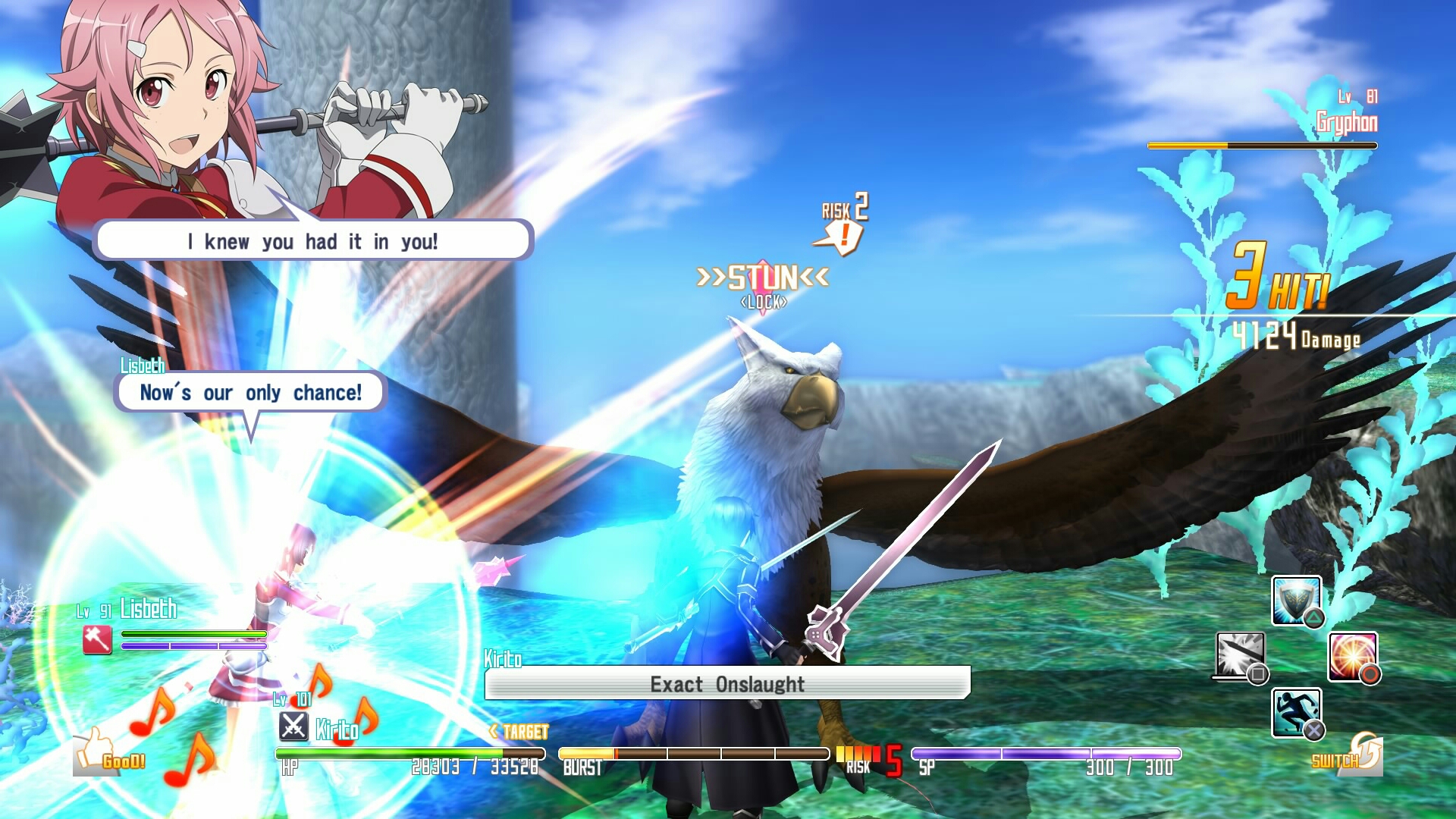
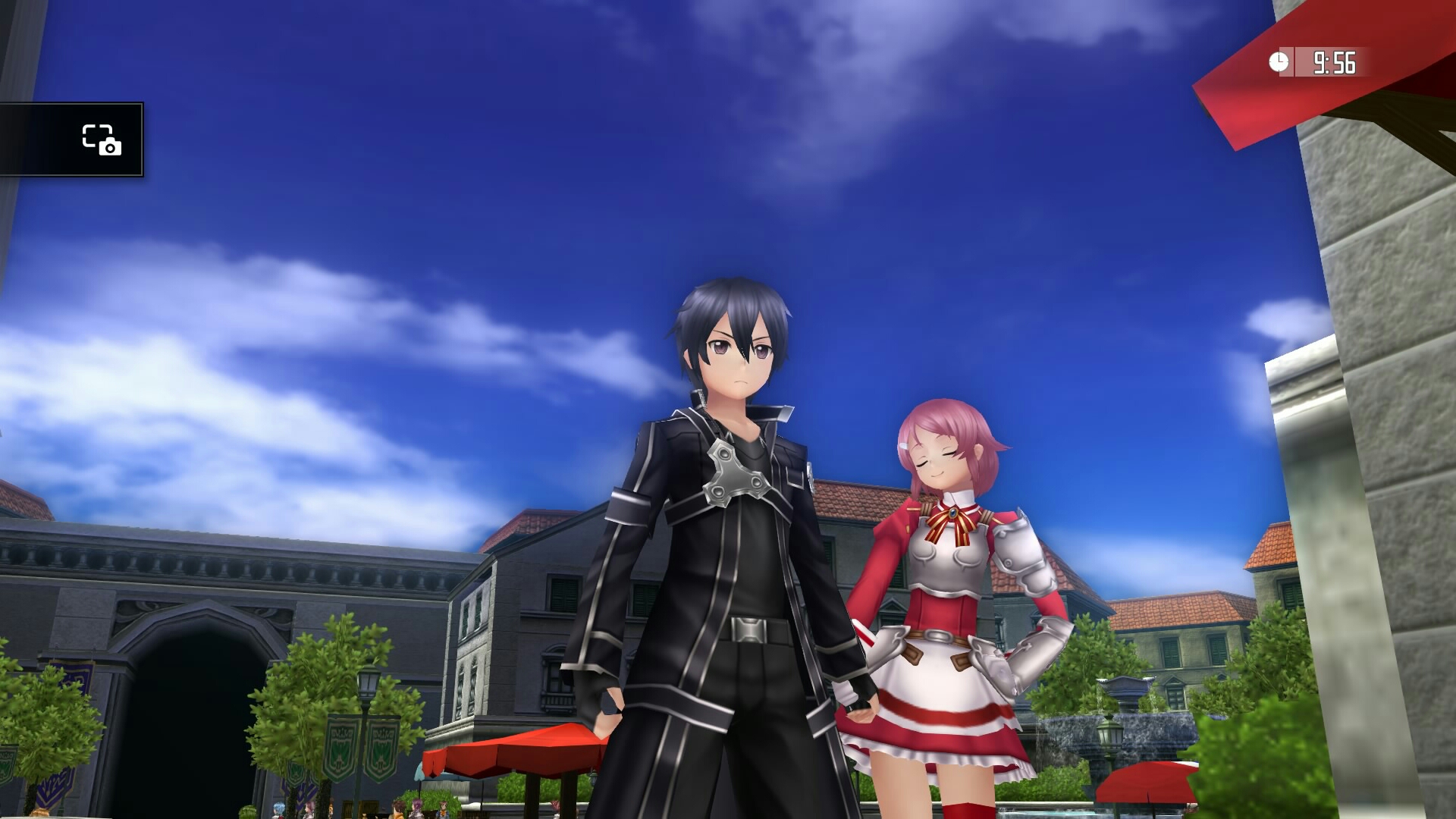
Sword Art Online, for those not into the animes, was a popular show a couple of years back. It was one of those "mainstream" shows that became really popular and which everyone subsequently decided they hated for one reason or another. I never quite understood the hate; sure, it was cheesy as fuck in places, but it was an enjoyable, beautifully presented show with an amazing soundtrack and a concept I've always loved ever since I played .hack for the first time: the MMO that is trying to kill you.

1269018045555712327

The Sword Art Online anime concerns Kirito, a protagonist who is a blatant self-insert for the writer, but I won't hold that against anyone, since self-inserts can be a wonderful means of escapism. Kirito becomes trapped in the new virtual reality MMO Sword Art Online after the game launches out of beta and the "logout" button is removed by its designer, capturing all 10,000 launch day players in the virtual world. To make matters worse, said designer — the villain of the piece — informs the players of a little tweak to the rules of the game: if they are forcibly removed from their VR equipment, or if they run out of HP and "die" in the game, then their VR equipment will fry their brain with microwaves, killing them instantly.

There's a get-out clause, though; if the game is cleared by someone defeating the final boss on the 100th "floor", everyone who survived will be allowed to escape. After two years of the game, it becomes apparent that this goal is still a long way off, and player numbers are dwindling as more and more people either fall victim to carelessness or despair along the way. Ultimately, the first arc of the anime concludes with Kirito and his friends defeating Sword Art Online's designer and freeing themselves from the virtual world of Aincrad, only to find themselves in numerous subsequent adventures in other virtual worlds. You'd think they'd learn.

20150807192933

Hollow Fragment, meanwhile, takes place in a reality where Kirito's defeat of Heathcliff at the end of the first arc was not the end of Sword Art Online, and the players find themselves still trapped within the game. Moreover, they discover that once they pass the 75th floor — the floor where Kirito defeated Heathcliff — they are unable to return to the lower floors, and many of their skills and items become "corrupted", mere shadows of their former selves. The game, then, continues; it looks as if the only way to escape really will be to defeat the boss on the 100th floor.

Except that's not all, because clearing out 25 floors of dungeon would be far too easy a task. In the opening of the game, Kirito finds himself transported to the "Hollow Area", an unexplored part of the Sword Art Online world where strange things happen and rare, high-level monsters and items abound. Acting as a sort of "testing area", the Hollow Area allows Kirito to uncover a number of mysteries surrounding the virtual world of Aincrad as well as beef up his own character's power significantly through various research trees. The flow of the game then becomes a journey back and forth between three distinct components, then: Aincrad, the Hollow Area, and what I like to refer to as Waifutown.

20150807192908

Aincrad is pretty straightforward. Upon arriving on a new floor, you're shown a big tower off in the distance and informed the boss is waiting for you at the top of it. Between you and said tower are several overworld areas populated by enemies, so you'll need to fight your way up to the boss room in order to challenge it. Along the way you'll also need to gather intelligence on the boss by completing quests and defeating specific named monsters (NMs) as well as helping your fellow "players" to level up enough to take on the challenges ahead. Each "floor" is pretty linear in its design, though the dungeon at the end of it is more maze-like and unfolds across several levels, and you'll be doing a fair amount of backtracking to complete quests.

The Hollow Area works a little differently. Rather than a linear sequence of areas leading to a dungeon maze, the Hollow Area is an interconnected network of zones more akin to a regular RPG or even MMO map. The Hollow Area is split into several different regions, each of which you'll need to build up points in by completing "Hollow Missions" that appear and disappear in real-time as you play. While completing Hollow Missions, you can take on research tasks, which give you specific objectives to complete; once these are completed, you can then implement the research into Kirito's character to improve it. You have to content with bosses here, too, though in the Hollow Area they guard region transitions rather than separate floors.

20150807192902

Waifutown, meanwhile, is what you do when you're not adventuring. The town on the 76th floor that acts as your adventuring home base is home to most of the characters who got their own episode in the original Sword Art Online anime arc, along with a couple from the later arcs (Leafa and Sinon) who have been shoehorned in for the sake of having a few more waifus to pursue. In town, you can shop, upgrade weapons and hang out with your fellow adventurers. This latter aspect is important; by hanging out with your prospective adventuring partners, you can increase your relationship with them (up to and including sleeping with them) which subsequently helps them perform better in battle. By building up your relationship as well as "training" their AI by praising it when it does well, you can tailor each of the companion characters to your own liking. Or you can pick a waifu and spend the whole game with them if you so desire.

Sword Art Online is an enormous and surprisingly complex game. There are a lot of different systems at play — it's going all-out with the "simulated MMO" aspect in this regard — and, while it's daunting to begin with, the many different ways in which it's possible to progress in the game make it feel like you're always achieving something, and that there's always a choice of things to do at any given moment. While its graphics look like butt outside of the beautiful 2D artwork — its PSP roots are very apparent — it really doesn't matter all that much; it plays satisfyingly well, feeling quite like a high-speed Phantasy Star Online at times, and there's a wonderful, constant sense of discovery and exploration as you work your way around this strange and wonderful virtual world. (And yes, I'll probably make a video about this at some point so you can actually see how it plays.)

20150807205839

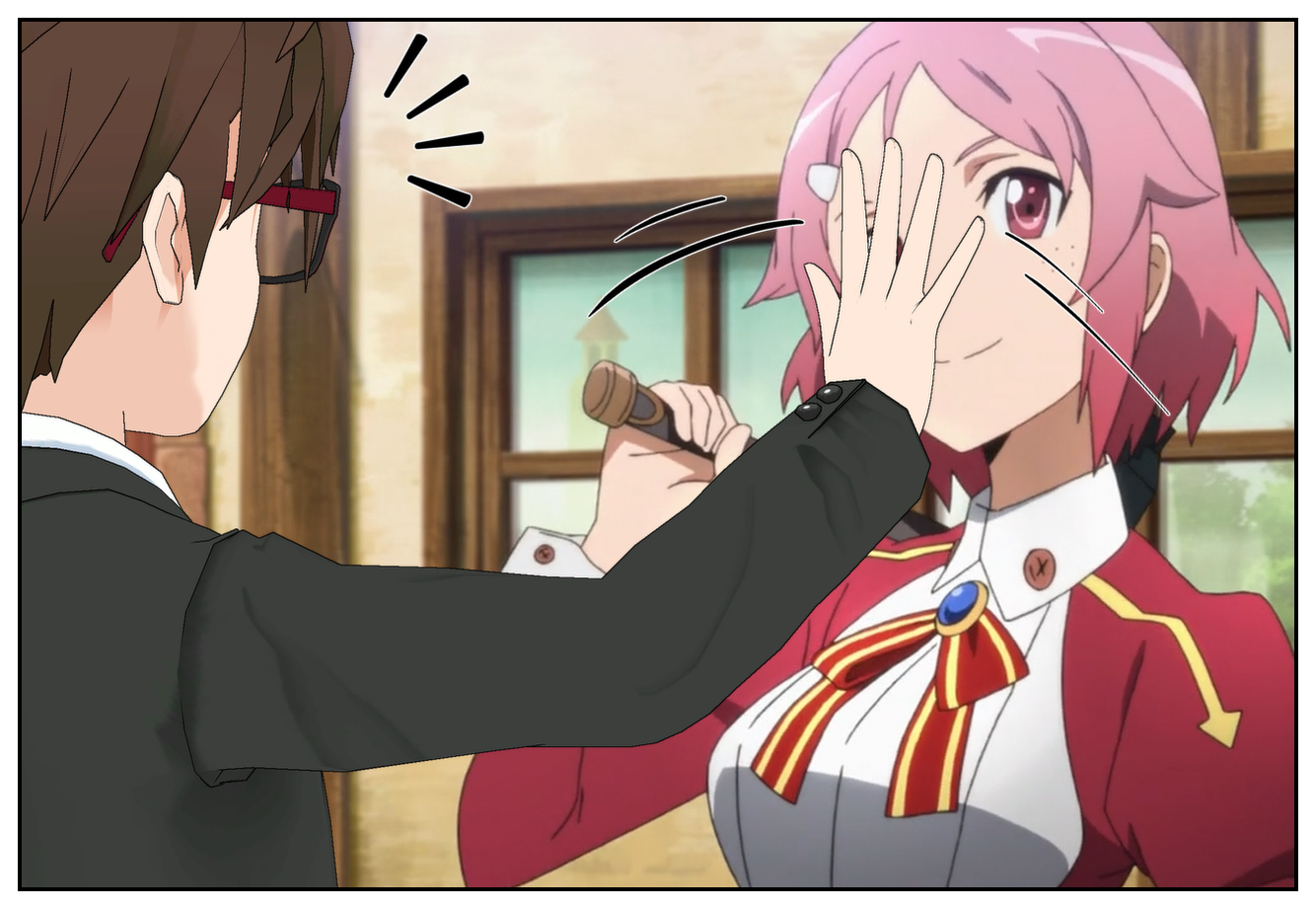
Also you can bed Lisbeth. 10/10

2012: Tentacle Bento

0013_001It occurs to me that I haven't yet written about Tentacle Bento, a card game I picked up at PAX but have only recently had the opportunity to try for the first time.
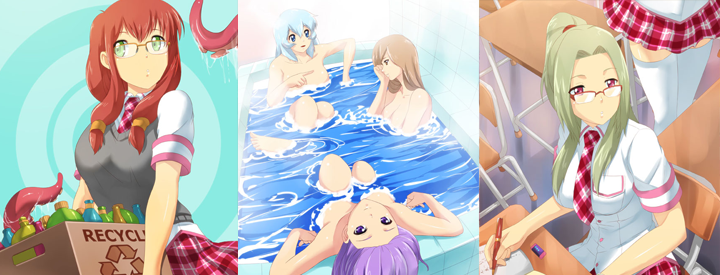
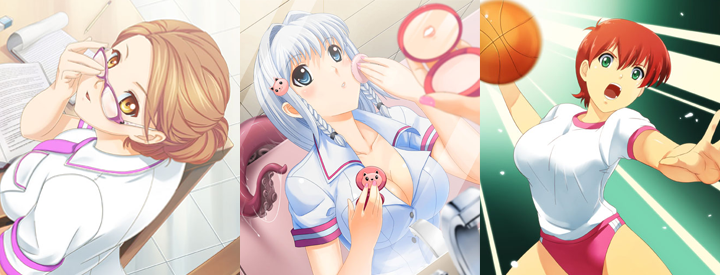
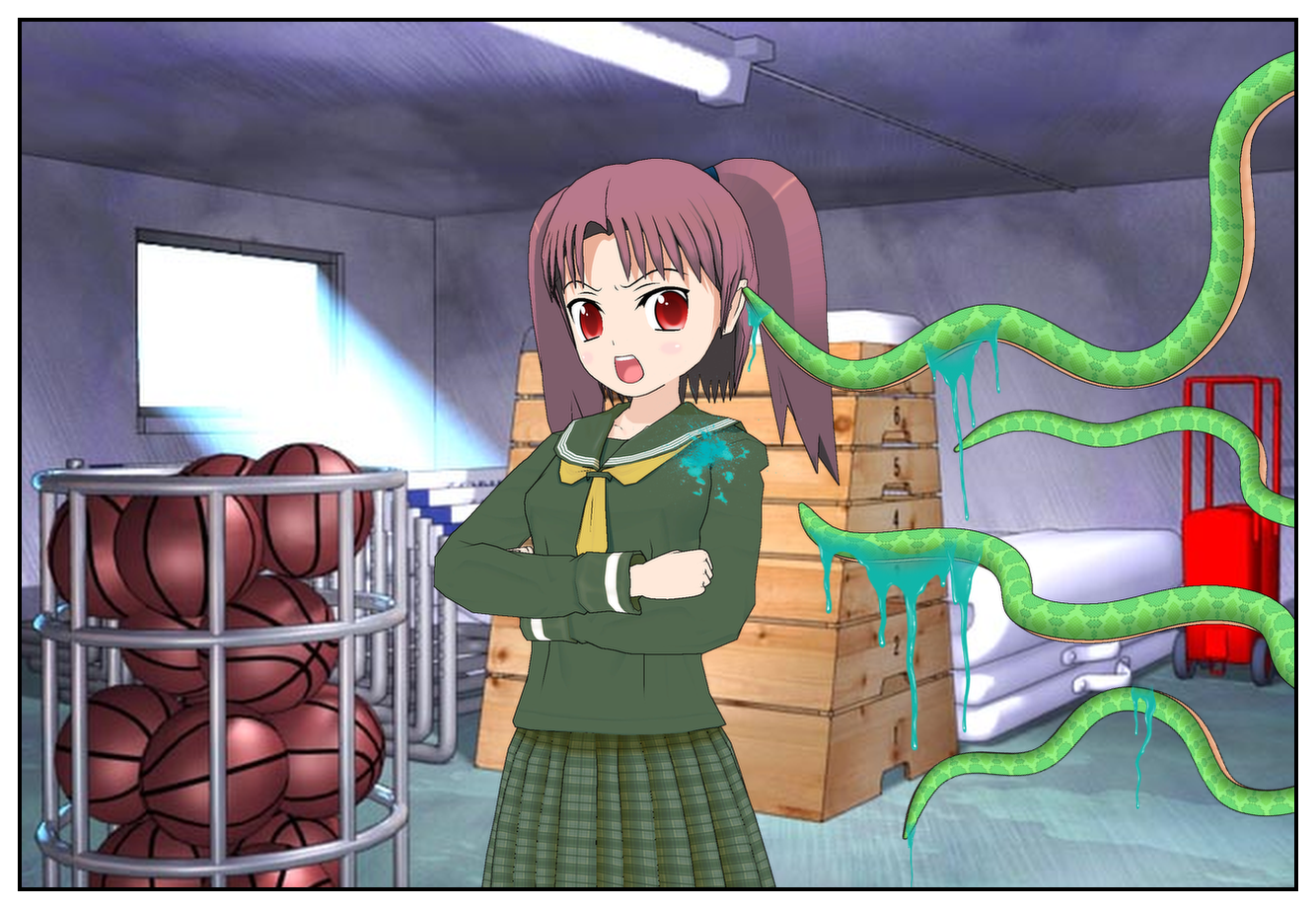
Tentacle Bento is a fairly simple game whose concept made the Outrage Brigade piss their collective pants a while back, which these days, to be honest, is enough to make me want to check anything out. Essentially, it's an anime-inspired (all right, hentai-inspired) game in which you and your friends take on the role of ill-defined tentacle monsters of some description, and your task is to sneak into the all-girls' school Takoashi University and "capture" as many nubile young ladies as you possibly can before the end of term.

pic1322392

Lewd premise aside, Tentacle Bento is actually a pretty fun game. It's largely based around playing sets of cards — known as "captures" in the game — in order to score points at the end. In order to play a capture, you have to play a location, a capture event and a character at the same time. Playing a location, capture event and character of two or more different suits is a "sloppy capture" and allows you to get something on the table, but only lets you capture one girl at a time. Playing a complete capture of the same suit, however, is a "noble capture" and allows you to capture up to three girls at the same time. It also allows you to add extra girls of the same suit to a capture from your hand once you've put it on the table, up to a maximum of three girls per capture.

Alongside the basic location, capture event and character cards are a few special types of cards. All-Star cards can only be captured through a noble capture — and, moreover, can be the only girl in that capture. They have specific special effects once they're played; normally a noble capture has a special "mayhem" effect (ranging from changing the direction of play to passing cards around the table) according to the suit it was, but All-Stars override and replace this effect.

Special character cards, meanwhile, have (usually negative) effects to play on other players. Some prevent players from playing certain types of captures, others need to be dismissed via meeting a particular condition, and some can be passed around. Several of them complement and interact with one another nicely, making for some enjoyable moment-to-moment strategy.

Finally, Event cards occur immediately when someone draws them on their turn. These have immediate — and often game-changing — effects. They also act as the game's timer — once the fourth Event card comes up, the game is over, and players score points according to the captures they have on the table, and lose points for the girls and All-Stars they still have in their hand.

pic1322391

It's a pretty simple game to get to grips with, and there's a fair amount of randomness involved — particularly with the events — so it's not especially deep, all told, but it is a whole lot of fun, primarily for the impromptu mini-narratives that the capture combinations inspire. Once capture might see three girls having a wardrobe malfunction in the headmaster's office; another might see a lone girl attempting to have a cuddle party by herself on the school racetrack; another still might see two girls having a pillow fight in the nurse's office.

Despite the morally questionable premise — if you know what tentacle monsters typically get up to, you know what I mean — the game is designed with good humour and wit. The cards all incorporate entertaining little snippets of flavour text, many of which are genuinely amusing both to people who recognise anime tropes and normies alike.

All in all, it's very much a filler game rather than something you'd take particularly seriously, but I like it a whole lot and am looking forward to giving it another shot at some point in the near future. I was surprised how much my regular gaming group — most of whom aren't particularly involved in anime culture — took to the game, so hopefully it will hit the table again soon.