#oneaday Day 314: The news churn

There was a good piece over on Aftermath today titled "Video game blogs from the 2000s were fast, reckless and very bad at news". The gist of the piece was that video game websites that adopted a continuously updating "blog" format, in contrast to the "magazine" approach many earlier gaming sites had used, inadvertently set in place a format for games journalism that isn't particularly helpful for readers, and is definitely not good for the writers.

The piece goes on to note that the pressure to have [x] number of articles per day, or the fact that many writers were paid (a pittance) by the article placed a great deal of pressure on the site's writers to make even the most mundane, pointless bullshit somehow "newsworthy". It is this, among other things, that led numerous websites to continuously and uncritically quote Wedbush Securities analyst Michael Pachter whenever he spouted off something that was either immensely obvious (the new Grand Theft Auto will probably sell well!) or so utterly vague as to be completely useless.

I wasn't involved in the biz at the start of this, but I definitely felt its effects. When I joined GamePro in 2011, the site was just starting to experiment with a new format for its news coverage. At the start of my shift each day, I was to dig up a bunch of stories and post them as just headlines and a brief summary on a front-page forum as a sort of "news briefing". Then, later in my shift, after the stories had all had a bit of time to percolate, I would write one or two up in further detail based on which of the posts had seemingly been the most popular, judged primarily by comments.

GamePro's readers initially fucking hated it, because the way it was implemented cluttered up the front page of the site's main forums, and I wasn't a huge fan of it, either, because it felt like the time I spent digging up those initial stories — which, more often than not, took the form of either another site having reported on something first, or a press release we'd received that morning — could have almost certainly been better used finding bigger stories to explore, or writing features, or reviews, or anything other than desperately, vainly scrabbling for just a scrap of news, please, guvnor.

That said, over time it did seem to settle down a bit, I broke a few genuine exclusives and provided some good editorial commentary on other stories that were happening, and I was told on multiple occasions that the work I was doing was playing a big role in giving the site a nice uptick in traffic.

Of course, even that uptick was all for naught when IDG Media unceremoniously closed the site and the magazine just before Christmas that year, meaning I woke up one morning all set to do work, only to find that not only was there no job to work any more, all the stuff I had written was about to become absolutely impossible to find due to the inexplicable decision to fold some (not all) of GamePro's material into the unrelated publication PC World. Good stuff. (If you dig deep enough into PC World's atrocious search function, you can still find the odd bit of my stuff, but it's not easy to find, which was great for building a portfolio, I can tell you.)

Something similar happened at USgamer, also. When we started the site, the intention was for the whole thing to be a return to something like the 1up.com days: a primarily personality-driven site, where each of the writers would have their own specialisms, and they would be free to write about whatever they wanted, developing their own little sub-communities in the process.

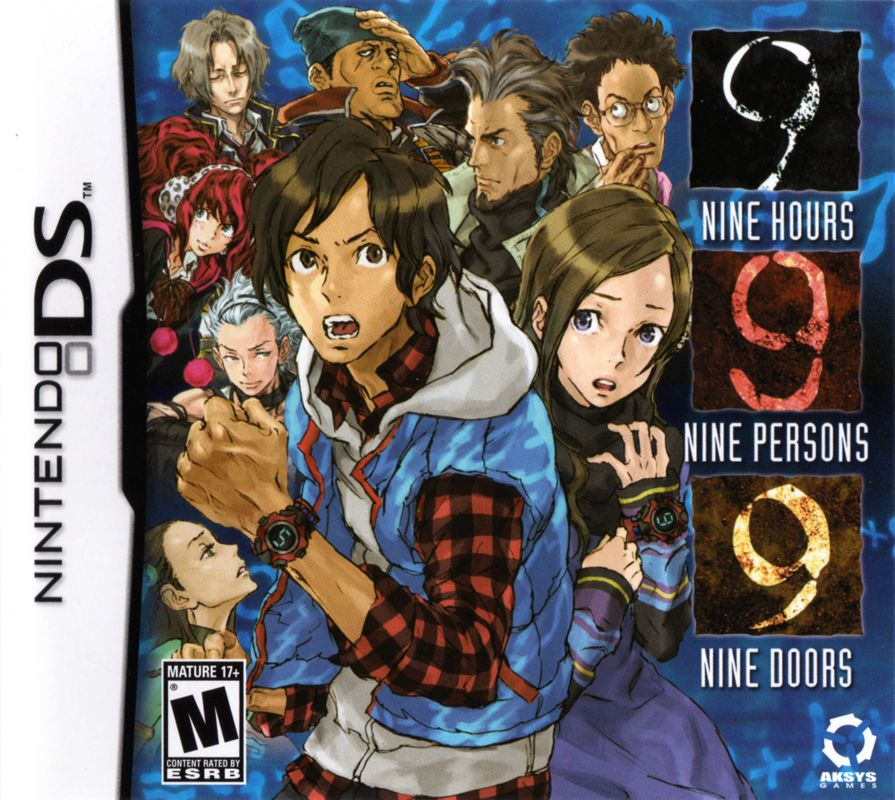
That went great for a while! I wrote about anime RPGs and visual novels, another chap wrote about racing sims, and all the other people on staff each had their own Things, too. Comments from the community were positive; I can't speak specifics to the other folks' work as I didn't tend to delve into their comment sections, but on my pieces, there was always a great deal of appreciation for my work making USgamer a site that was welcoming and inclusive to a portion of gaming that didn't always get a lot of love and respect from the mainstream sites. This was all pre-Gamergate, I'll add, so there was no culture war bullshit going on; it was just folks who liked anime-style games, including those with mildly provocative content (as there was a fair amount of in the mid-2010s) having an appreciation for a site that didn't just write their favourite games off as being for perverts or whatever.

That lasted for a few months, but then an edict came down from On High (in this case, USgamer's parent company Gamer Network) that we needed to juice the numbers. In other words, abandon everything we'd done to make the site unique and start the daily churn of news and guides that is so painfully familiar to this day. I went from being able to post whatever I wanted to having to get manual approval for each and every news story I wanted to post, and I was outright forbidden from covering certain games.

Eventually, when I was laid off from the site — again, through waking up one morning only to discover I didn't have a job any more — I was forced into spending the majority of my days rejigging and reposting "guide content" from Prima Games, which was also under the Gamer Network umbrella at the time. Out of spite, I stuck with several of my regular weekly columns even with this SEO-juicing bullshit I had been lumbered with, and it was that degree of spite for what the site had become that eventually led me to create MoeGamer: a site where I could play by my rule and cover whatever the fuck I wanted, and fuck traffic numbers.

MoeGamer itself has had a few evolutions over the years. Initially, it was an occasional blog where I basically continued writing my JPgamer column from USgamer — I'd just write about things that interested me, or which I'd happened to play recently, or which had been on my mind. Eventually, when I was working a series of very boring office jobs that had nothing to do with the games press, I launched my "Cover Game" feature, with a mind to giving underappreciated, oft-overlooked titles the level of detailed coverage that your average traffic-baiting triple-A title did. At the height of my boredom in the office, I was posting stuff on MoeGamer daily, including episodes in each multi-part Cover Game feature, plus shorter one-off articles about things that I found interesting, or had happened to collect back when CEX did free shipping (ahh, those heady days), or that I had always loved but never written about.

Today, I actually like my day job, so MoeGamer has had to take a bit of a back seat, but I'm still writing over there sporadically. It's nice to have a space that is for a specific subject, and a contrast from this general-purpose thought-dumping ground that is this blog. I don't have any intention of making MoeGamer "big" or "famous" or trying to make money from it; it's just my site about games I like, and over the last 10+ years I've filled it with a lot of work I'm very proud of. Today, I think I'm more proud of what I've built with MoeGamer than my all-too-brief time as part of the professional games press.

I've pretty much taken the MoeGamer approach with YouTube, too, albeit with more of a focus on retro games than RPGs and visual novels. And y'know what? While my channel hasn't exploded in terms of growth since I launched it (or since I started using it a bit more actively around 2018 or so), it has seen steady growth without me putting any effort whatsoever into either algorithm-baiting or SEO juicing. I have over three and a half thousand subscribers over there right now, and while that's a drop in the ocean compared to the Mr Beasts of this world, I feel creatively fulfilled and proud of what I've done, and am not an awful human being.

So much about the modern Internet sucks, and as Ed Zitron frequently notes, so much of it is about the growth-at-all-costs mindset. It's not just business that this "rot economy" infests; it's creative pursuits, hobbies, specialist fields. So many people are desperate to monetise everything they put online that the actual value for the people looking at the articles, videos and suchlike is diminishing — and the conditions for those producing the work are becoming increasingly intolerable. Throw AI garbage into the mix — and the fuckers who are now flooding YouTube and social media apps with AI-generated bilge that they pump out all day every day — and you have a real melting pot of absolutely rancid filth.

It's definitely a good idea for people who are Into Things to retreat into their own little specialised corners of the Internet, rather than the whole Internet being treated as some great Marketplace of Shit. This is happening to a certain degree, with many communities forming on Discord these days — though Discord itself isn't immune to enshittification, and I suspect we'll all have to find a new home before long — but I do miss the glory days of forums. I really do. I know a few forums still exist, but the 1up.com Radio Boards days are long gone, and every day I miss them a little more.

This has been quite the ramble, and I'm not sure I made a specific point along the way, but hopefully you understand what I was waffling on about. I am grateful to Past Me for setting up spaces like this blog and MoeGamer for me to continue to express myself, and as time goes on I feel personal spaces like these are going to once again become an important part of life online. Because the alternative is wading out into the mires of advertising-laden shit that is the rest of the Internet, and that gets less appealing day after day.


Want to read my thoughts on various video games, visual novels and other popular culture things? Stop by MoeGamer.net, my site for all things fun where I am generally a lot more cheerful. And if you fancy watching some vids on classic games, drop by my YouTube channel.

If you want this nonsense in your inbox every day, please feel free to subscribe via email. Your email address won't be used for anything else.

#oneaday Day 308: The apparent need to hate

It's been interesting to see the public response to Blue Prince since it came out yesterday. A bunch of folks on Steam, the absolute worst place to talk about video games, seem oddly resistant to the idea that it might actually be quite good.

(For the record, I'll note that for now, after about 6 hours of play, I'm definitely enjoying Blue Prince, but I'm not yet convinced of all the "Game of the Year!" accolades it's already getting. I am open to it convincing me, however.)

Earlier, I saw someone praising a negative review by saying "finally, an honest review", and others noting that the "positive reviews are suspicious", despite the vast majority of them being articulate and knowledgeable about the game and its appeal elements. In the Discussions tab, which is where hope really goes to die, there are some folks getting legitimately angry that some people are enjoying the game more than they do.

I'm not entirely sure why this is occurring, either. Blue Prince is not, to my knowledge, a particularly — and you'll pardon me for using this obnoxious word — "woke" game in that it doesn't force Gamers™ to acknowledge the existence of black, female, homosexual or transgender people. (If it does later, it certainly doesn't within its first 6 hours of play. This is not a criticism — more a side-effect of the way the game is designed and structured, since you are alone while you play, and the other characters appear in photographs, notes, journal entries and suchlike.)

I mention this because the attitude I'm seeing from some people is normally reserved for the "anti-woke" crowd when they want to tear a game down for challenging their narrow-minded perceptions of the world. But… there's seemingly nothing like that in here, which makes the sheer passion with which some people seem to hate this game on principle all the more confusing.

Now I will admit that Blue Prince is probably not a game for everyone. It is slow-paced, thoughtful and contemplative. There's nothing that one would call "action". It requires that you learn its rules through play rather than having your hand held through tutorials. And it is a game where, despite there being no real "skill" involved from a hand-eye co-ordination perspective, you will still fail a lot before you roll credits on it — and where you will doubtless fail even more after those credits have rolled and there is more to discover.

I get that. When I encounter a game like that, my response is to go "Eh, okay, I see why some people like that but it's not for me." Then I turn it off, uninstall it, whatever, and I don't play it again. I might return to it when some time has passed — there are several games I've come to appreciate many years after I bounced off them when I first encountered them — but, in most cases, I won't be mad at the game. I think the maddest I've got at a game was with Call of Duty: Modern Warfare 3, because I found the single-player campaign in that singularly insulting to my intelligence, but even then I just… did what I outlined above. I uninstalled it, then I didn't play it again. Job done.

The funny thing about the people getting absolutely frothing mad about Blue Prince right now is that in most cases, they are revealing themselves to have not understood what the game is doing. Blue Prince is deliberately obtuse in some ways, yes, but I am particularly stupid when it comes to things like this and I got the general vibe of what's expected of me pretty quickly. The people getting most upset by it are the ones who seemingly want a simple, straight line to the finish, to max out all the achievements and say they're "done" with it. Rather delightfully, Blue Prince is not at all forthcoming with achievements and trophies; it eschews the usual "started the game!" and "got a Game Over!" achievements in favour of a small collection of awards that demonstrate you've made meaningful progress. The fact that this is probably making some people mad is quite enjoyable.

Also whiny little babies pissing and moaning about "no ultrawide support" can get in the bin. Buy a normal person monitor, or play the game in 16:9. No-one gives a shit about your "no ultrawide, no buy" policy.

Anyway, Blue Prince has been a good time thus far. Like I say, so far I remain unconvinced of its "Game of the Year" status, but I'm willing to keep plugging away at it to see what I can discover, because there's enough here that I do like. And if I end up tiring of it? I won't be mad, and I won't feel like I've wasted my time. It's nice to be part of the current conversation for once and to experience something that has clearly resonated with a lot of people for one reason or another.


Want to read my thoughts on various video games, visual novels and other popular culture things? Stop by MoeGamer.net, my site for all things fun where I am generally a lot more cheerful. And if you fancy watching some vids on classic games, drop by my YouTube channel.

If you want this nonsense in your inbox every day, please feel free to subscribe via email. Your email address won't be used for anything else.

#oneaday Day 304: Web maintenance at the worst times

I found it very hard to get out of bed this morning. The reason for this is simple: I stayed up until 2AM doing maintenance activities on this site and MoeGamer that could have almost certainly waited until a more sociable hour, but once I'd started, I wanted to see them through.

Y'see, both my sites have gone on a bit of a journey. They were both originally hosted on WordPress.com, with this blog being on a free account and MoeGamer being on a "Premium" paid tier. I was starting to reach the limits of what I could do with the Premium account in particular — most notably with regard to media storage space — and thus I moved MoeGamer to a self-hosted WordPress.org installation on a Bluehost hosting account.

Before anyone jumps in to decry Bluehost as being shit: believe me, I know. That is the reason neither of my sites are hosted with Bluehost at this point. But we'll come back to that.

As anyone who has ever tried to migrate a large site from WordPress.com to WordPress.org will tell you, the supposedly simple and straightforward migration process is anything but. What is supposed to happen is that you hit "Export" on your WordPress.com site, which spits out your site's contents as XML files, then you hit "Import" on your WordPress.org site, wherever you've hosted it, and it will recreate your site. Posts, pages and comments will go right back in, and the import process is supposed to look for any media you posted and automatically go and retrieve it from your old site, then transfer it to your new one.

Notice how I emphasise "supposed to". Because in the multiple times I have done this over the years, not once has it ever worked how it is, apparently, supposed to. Not only that, but the documentation on WordPress' own site refers to features and options that do not actually exist. Take these instructions for exporting your Media Library, for example. By following these instructions, even if the "automatic" process described above didn't work, you should be able to just tell WordPress.com to export all your media files into a big ol' .zip file, then import them all in one go to your WordPress.org installation.

Just one problem: the options they tell you to click on do not exist. Maybe they once existed and now do not, but right now — and for multiple years at this point, since I've done this several times with different sites — they do not exist, making them completely useless as instructions.

There are plugins that are supposed to help with this sort of thing. You can't install plugins on a WordPress.com site unless you're subscribed to the obscenely expensive "Business" plan, but you can install plugins on WordPress.org. Except you then run into the minefield of whether or not the plugins in question actually do what you think they're supposed to do, or if they're just some dodgy, shady thing trying to get you to sign up to their "Pro" account because the one vaguely useful option they have is paywalled.

And this is to say nothing of most web servers' tendency to crash if you throw too much data at them in one go. I have several thousand posts on both here and MoeGamer, and attempting to import them all at once would crash the import process every time. I ended up having to go a hundred at a time, which took a very long time, I can tell you, particularly as it would still crash on occasion. And amid all that, if it wasn't already clear, it didn't automatically import my old media and transfer it across to the new site; instead, it just left links to the old media and then… didn't do anything else.

So what I ended up with was two sites that were full of images that were hotlinked from an account I wasn't paying for any more, and which I wanted to close down. And it took me until last night to figure out some possible solutions.

For the record, I used two distinct plugins. Firstly, I used the Auto Upload Images plugin, which actually does do what the media import process is supposed to do: it looks for externally hosted images, then it imports them to your media library and updates the <img> tags to point to your new media library copies. The one downside I found with this plugin is that rather than importing the old images under the same date structure as the old site, it imports them all "today". This is down to a limitation with how WordPress handles files, I think, so no big deal — but it did cause an issue.

On both my sites, a lot of older images had automatically been set to allow people to click on them to see the full size versions. The links were now pointing at the old version of the image, while the <img> tags were showing the new versions. Not only that, but the mismatch in dates meant that some of these clickable links were just completely broken.

To resolve this, I took something of a nuclear option: I used the Broken Link Checker plugin to scan my site for all its links, searched those links for anything that was pointing at the old wordpress.com site and then just batch "unlinked" them. That means that the new images would be safely in place, the broken links would be removed and everything from thereon should, in theory, be hunky-dory.

There are a few things that have broken along the way, like any Gallery posts I hosted have lost all their images and I don't see any means of fixing that aside from doing them all manually, plus there's been the usual "link rot" of old copyright-infringing YouTube videos no longer being available online. Plus any audio media seems to have gone walkies, too, but again, no big deal, really; I don't think anyone expects a website that has been around for nearly 20 years to suffer from no link rot whatsoever.

But anyway. I got rather involved in this process last night, starting around 11pm. I knew, looking at the clock, that I shouldn't start doing something like this so late in the evening. But then I did, and hyperfixation kicked in, and I kept going until everything was, so far as I can tell, sorted. I mean, my galleries and audio bits are still broken, but I can live with that. What I didn't really want to live with was several thousand broken image links that led nowhere. And I think I've fixed that issue.

If you happen to notice anything wrong with any old posts you find yourself reading, do let me know and I'll see if it's possible to fix them. In some cases, that may be possible; in others, less so. As I say, it's part and parcel of a site being live for this long, even if it has moved hosting and domain names multiple times in its lifespan. But hopefully it's going to stick around right here for quite some time, so I wanted to fix as many of the annoying little issues as possible. So here we are!

I hope the three or four of you who actually read this appreciate the work I put in!


Want to read my thoughts on various video games, visual novels and other popular culture things? Stop by MoeGamer.net, my site for all things fun where I am generally a lot more cheerful. And if you fancy watching some vids on classic games, drop by my YouTube channel.

If you want this nonsense in your inbox every day, please feel free to subscribe via email. Your email address won't be used for anything else.
#oneaday Day 298: Can you give up your phone?

I watched a good video earlier, and I recommend you do too if you have a spare 46 minutes and 4 seconds. It's by a chap called Eddy Burback, who makes videos that are just… about stuff. He always puts in a decent amount of research to the topics he talks about, he makes his discussions both interesting and personally relevant, and he's genuinely entertaining. If you've never watched his stuff before, this video is a great place to get to know him.

For those too lazy or disinclined to click that video and actually watch it, his aim was to go 30 days with his smartphone locked up in a safe so he couldn't use it at all. He wasn't denying himself access to the Internet, social media or anything like that, and he set up an old Mac laptop in the corner of his living room to access iMessage if he needed it, but only allowed himself a cumulative total of 5 minutes across the entire month to check it. He found, among other things, that after checking it once, he decided he didn't really need to check it at all.

The other things he did were deliberate, conscious steps "backwards". He set up a landline with an on-device answering machine. He made plans with friends over the phone, and then just showed up at the place he said he'd be at the time he said he'd be there, rather than constantly checking in via text or chat. He navigated by looking things up on the computer at home, then either writing things down in a notepad or just remembering them. He bought a physical pre-payment card to ride the bus rather than using an app. He handled electronic "tickets" for events and facilities such as the cinema by printing out a hardcopy.

And he seemed happy. I'm sure part of this was to aid with the storytelling — you tend to go into a project like this with a hypothesis that you kind of want to prove — but I don't doubt that spending a month without habitually, obsessively checking one's phone is a healthy thing to do. And as time goes on, I increasingly find myself wanting to do just that.

There are, as Burback talks about in the video, drawbacks. If you're not someone who likes talking on the phone, a landline isn't going to do you much good — and likewise if your friends tend to interact with you primarily via text message or chat applications. On top of that, landlines attract spam calls even more than mobiles do. This means you can very easily find yourself feeling even more isolated than you were already, which is probably counter-productive to the intent of the experiment: the aim is to get off your phone so that you can enjoy living your life a little more, and part of that is spending time with friends. If you can't get in touch with those friends via any means other than a text or chat message, that's a problem.

Most other things, there are ways round, though. For navigation, you can still print out maps and directions from sites like Google Maps and Mapquest (which, yes, still exists!). For convenient payments, most places accept contactless cards now, particularly since the pandemic almost outlawed cash altogether. For public transport, pre-paid cards exist, even if you have to go digging to a retailer who actually remembers where they keep them after not selling one for a decade or more. And for making arrangements with friends? Well, if they're good friends, they'll respect your lifestyle decision and be willing to interact with you and make plans via whatever means you are allowing, such as the phone; the fact that people were perfectly fine with adapting to his situation is one of the things Burback seemed most surprised about.

One thing Burback found was that without the constant connectivity a phone in your pocket brings, he was much less likely to cancel plans on a moment's notice or suddenly decide he wasn't in the mood for something. Instead, if he'd made plans, he'd made a commitment to another person, and not showing up for that commitment would be letting them down. Of course, sometimes these things are unavoidable — but that's why you still have means of communicating like the landline or email. It's not like locking your smartphone away completely cuts you off from society altogether. It just means that you are reachable on your own terms.

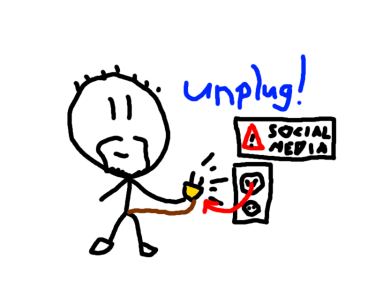
And I think that's the important thing. It allows you to really take control of your own life. It means you are not beholden to social media algorithms and the arbitrary schedules of whether or not "interesting" people are online posting mindless content that doesn't really enrich your life in any way. It means you're more likely to pick up a book and read it all the way through, instead of scrolling through 50 TikTok videos, not taking anything in from any of them.

Completely getting rid of your phone is obviously a drastic option. But the conclusion Burback came to was that while there are undoubted conveniences — and pleasures — to having a smartphone accessible at all times, having a month completely disconnected from it allowed him to develop a more healthy relationship with it. He was less inclined to doomscroll through social media, less inclined to experience the world through a camera app rather than his own eyes, and more inclined to having fewer but more meaningful interactions with the people who are important to him. And that, in turn, left a lot more time for doing things that he found enjoyable and pleasurable: watching movies, reading books, all that sort of thing.

I won't lie: that sounds nice. I have already cut back on using my phone a lot compared to what I used to do with it, but there are still times when I really resent its presence. Perhaps I should try a similar experiment sometime.


Want to read my thoughts on various video games, visual novels and other popular culture things? Stop by MoeGamer.net, my site for all things fun where I am generally a lot more cheerful. And if you fancy watching some vids on classic games, drop by my YouTube channel.

If you want this nonsense in your inbox every day, please feel free to subscribe via email. Your email address won't be used for anything else.

#oneaday Day 294: Microsoft Teams is where joy goes to die

Working from home is, on the whole, infinitely preferable to having to do a daily commute into an office to spend time with people I don't know very well or like all that much and attempt to find ways to look busy and/or enthusiastic about working on things I don't give a shit about. (To that I will also add: it is infinitely preferable to have a job you give a shit about, populated by people you like, which thankfully I have. I've paid my dues at shitty jobs full of shitty people.)

But there's one thing I have come to hate about working from home, and that is waking up of a morning and seeing Microsoft Teams notifications already waiting for me. It's my own fault, really, for allowing Teams onto my phone, but there are occasions when it's useful to be reachable when not sitting in front of the work computer, so there it is for now.

I hate Microsoft Teams. I don't really know why. It's not as if it's a completely broken, non-functional piece of software; by Microsoft's standards, it's reasonably not-bad, though like all their other modern pieces of software, it defies pretty much all interface standards which Microsoft set themselves with their own operating system, which continues to baffle me. Plus, as with everyfuckingthing else these days, "AI" is starting to creep into it with the ability to "add chatbots" to conversations.

I think it's just the utter joylessness of it as an application. It's a piece of software primarily designed for facilitating boring online meetings that only the person hosting them actually gives a shit about, and even with the inclusion of the ability to post GIFs in text chat (because, of course, what says "professional" more than copyright-infringing memes?) it just feels so incredibly po-faced at all times.

Now don't get me wrong, I don't want Teams to turn into Discord with its cutesy wutesy oopsy woopsy we made a fucky wucky update notices and gradual introduction of myriad stupid features no-one actually wants or needs. But it's also a program I just find depressing to open up.

And, as I say, I don't really 100% know why I feel that way. Functionally, it's inoffensive, if riddled with strange design decisions. Practically, it's useful for being able to converse with colleagues easily. And yet I still hate it. I hate its ability to intrude on things you're doing. I hate the fact people can just "call" you without you giving your consent. And, as I say, there are few things worse than waking up of a morning and seeing there are already a bajillion Teams notifications waiting for you.

Maybe I should just delete it from my phone and if people can't reach me until I'm at my computer, that's tough shit. I mean, that's no different from working in an office and no-one being able to reach me until I'm at my desk and within reach of my work phone, right?

Not that I ever answered my work phone when I actually had one in the few office jobs I've ever had, mind. Email or bust.

Anyway, I'm going to bed now. Notifications off!


Want to read my thoughts on various video games, visual novels and other popular culture things? Stop by MoeGamer.net, my site for all things fun where I am generally a lot more cheerful. And if you fancy watching some vids on classic games, drop by my YouTube channel.

If you want this nonsense in your inbox every day, please feel free to subscribe via email. Your email address won't be used for anything else.

#oneaday Day 291: If you like old games mags, here's a podcast you might like

The other day, I was contacted relatively out of the blue (no pun intended) on Bluesky by a chap called Ty Schalter, who wanted to let me know he and a fellow writer, journalist and author, Aidan Moher, were launching a new podcast, and would I mind giving it a bit of a nudge on socials.

Firstly, I was flattered that Ty thought I had anywhere near enough reach online to make a difference these days, but I indeed shared it anyway, and am, in fact, doing so again right now. Secondly, I was 100% on board with the concept for the podcast, which was to take a fond look back at classic games magazines. Here's the first episode for you to enjoy:

Now, as I stated in no uncertain terms just the other day, I am a big fan of old computer and video games magazines, and am always up for some discussion of them. These days, it's a bit tempting for everyone to look at the worst of their output, go "ugh, cringe" and leave it at that, but Schalter and Moher are doing the subject justice, judging by their first episode; they're acknowledging that while there are often faults we can pick from a 2025 perspective, these magazines were a vitally important part of gaming culture, particularly in the days before we had always-online Internet and, later, mobile phones.

What you've gotta remember is that in the '90s, if you had an Internet connection at all, it was a dial-up one that you had to ration your time with so as not to leave yourself with an astronomical phone and/or usage bill; earlier than that, the only online services out there were self-contained bulletin board systems. There was also a curious "in-betweeny" phase in the early '90s where services like AOL and CompuServe came to prominence; these offered global online services somewhat akin to the modern Internet, but in their own curated walled gardens. Later, both services provided access to the broader Web, but initially, they were their own little communities.

Why is this important? Because it meant that it was nowhere near as easy to talk about games with people as it is today. There was no magic black slab in your pocket that connected you to the rest of the world, and there was no guarantee that when you "logged on" with your computer that you'd find someone you wanted to talk to. There certainly wasn't the opportunity for carving out your own little space online as there is today, and absolutely no social media. (Maybe it wasn't all bad.)

This meant that magazines played a crucial role for video game enthusiasts: they were the main way that people who enjoyed games found out about new releases, the latest news and in-depth information about stuff that was already out. They were a point of common contact that, when we met up with our "real-life" friends (remember them?), we could use as the basis for a discussion. They were a connection to the outside world — and for many of us, a lifeline that made us feel much less alone in our passion for what is, most of the time, a fairly solitary pastime.

Schalter and Moher get this. They understand that for many of us, magazines were "the gaming community". We came to the mags not just for the games, but in many cases, for the personalities involved and the opinions we trusted. We'd obsess over a 250-word review of a 40-hour RPG, reading it repeatedly and drinking in the screenshots, wondering what it would be like to actually play the thing. We'd base our purchasing decisions on the arbitrary numbers the reviewers thought up, for better or worse. And we'd get to know the studios behind our favourite games through special features, interviews and preview reports.

Many of these things can be argued to still be present in today's games press, to be sure. But the daily churn of gaming news online makes it somehow less special than it was to get a monthly magazine. What game would be on the cover? What games would get in-depth features? What games were getting walkthroughs, tips and cheats? Would there be any cool cover-mounted gifts or bonus booklets included?

While it can be funny to look back and laugh (or cringe) at The People We Were 20-30+ Years Ago, it's important to take a look at the full picture for an understanding of why things were the way they were — and why so many people are still nostalgic for an era long past.

That's what the Fun Factor podcast seemingly aims to explore, and judging by the first episode — which features lengthy reminiscences about Final Fantasy VII that I'm sure will be familiar to anyone Of A Certain Age — it's going to be a good listen over the long term.

So go give that first episode a listen now, and if you're so inclined, support the podcast on its official website. You can also follow the pod, Ty and Aidan over on Bluesky.

I'm excited to see where the show goes from here, as it's a subject near and dear to my own heart. And if you have any fond nostalgia for that supposed "golden age" of magazines, I recommend checking it out, too. 'Cause heaven knows we could all do with some fun, happy stuff to enjoy right now, I'm sure.


Want to read my thoughts on various video games, visual novels and other popular culture things? Stop by MoeGamer.net, my site for all things fun where I am generally a lot more cheerful. And if you fancy watching some vids on classic games, drop by my YouTube channel.

If you want this nonsense in your inbox every day, please feel free to subscribe via email. Your email address won't be used for anything else.

#oneaday Day 290: Foxit? More like Fuckit

Good one, I know.

As I alluded to yesterday, I've been spending a bit of time collecting together scans of old computer and video games (and Computer & Video Games) magazines with a mind to sticking them on an old Kindle Fire tablet to use as a portable "magazine reader". As part of that process, today I found myself looking for PDF readers, both for Windows and for Android.

I wanted one for Windows so that I could potentially use it to make some videos about the magazines I don't have hard copies of, and neither Chrome nor Firefox's built-in PDF handling quite does what I wanted. (Chrome, notably, still lacks the ability to display two-page spreads but assume there is a "cover page", meaning it fucks up magazine and book layouts and there's nothing you can do about it.) So I did what any normal person does, and I Googled it, even knowing that Google itself has been gradually going down the toilet.

After skipping past the fucking useless AI summary and sponsored links, I clicked on an article that was absolutely bullshit SEO bait ("The best free PDF readers for Windows!") but was at least from a vaguely reputable outlet, TechRadar. This article informed me that Foxit was the best PDF reader for Windows.

Great, I thought. I've used Foxit before in the past. I doubt it's changed that much.

EH. WRONG.

Foxit has enshittified itself beyond all recognition. Not only has it made the inexplicable decision to model its UI on Microsoft's odious "Ribbon" interface, it also boots up with a floating "AI" button that you can't get rid of without some tinkering deep in the options and then quitting and restarting the program.

Let's take each of these in turn. First, the Ribbon.

I hate the Ribbon. I've despised the Ribbon ever since Microsoft introduced it in Microsoft Office 2007, and every time I use a program that uses this obnoxious piece of crap instead of normal toolbars and drop-down menus, I make a specific effort to find something else to use instead.

The Ribbon is an eyesore. The Ribbon takes up far too much space on the screen. The Ribbon's myriad tabs and huge buttons make it a massive chore to find simple functionality, since each tab is organised with no real care or attention. It doesn't conform to any standard functionality, so you'll find the same functions in different places in different applications, and it feels the need to take over the entire fucking window when you want to do something as simple as open, save or close a file, or look at the program's settings page.

In Foxit's specific case, I am honestly struggling to think of why a supposedly "lightweight" PDF reader has enough functions in it to warrant having a multi-tab Ribbon. I need a PDF reader to do one thing: read PDFs. Occasionally I might need to copy and paste images and text from a PDF, and the ability to take a snapshot of a section of a PDF and save it as an image is always nice. But I do not need multiple tabs worth of disorganised functionality, making it a chore to do something as simple as display two pages side by side and let me flip through the entire document like… well, like a magazine or book.

This is what people are talking about when they say "the computer" is constantly being enshittified. Things that worked perfectly well are being "updated" for no other reason than to say that they have been updated. Simple, straightforward, intuitive interfaces that remained standard conventions for decades are being uprooted in favour of borderline abusive design that forces you to click through page after page of crap in order to find the one thing you're looking for. And for what? To say that the company is "growing"? To say that the company is "innovating"? Fuck that. Just make me a fucking PDF reader that lets me read PDFs.

Which brings me to the "AI" button. I do not need a fucking AI button in my PDF reader. If I have opened something in a PDF reader, I intend to read it or print it. I am not going to ask a fucking chatbot that gets things wrong an average of a third of the time you ask it things to "summarise" the thing that I'm trying to read either for information or pleasure. I am not going to ask a fucking chatbot that gets things wrong an average of a third of the time you ask it things to "analyse" the document or figure out "trends". I am a human being. I have a brain. I can do these things myself. I do not need "AI" to "do it more quickly". Believe it or not, I enjoy reading. I enjoy researching. I'm not so fucking lazy that I need a fucking chatbot (&c. &c.) to take the human part out of the equation. Because that's just depressing.

Things weren't much better on the Android front. I tried Foxit on Android as well, just out of curiosity, and sure enough, while it lacked the Ribbon (the one benefit of a phone screen is that it's too small for such a shitty interface) it still had the odious little AI bubble. So I uninstalled it immediately.

If you've been in a similar situation at any point, may I recommend Sumatra PDF for your desktop PDF reading needs, and PDF viewer lite for Android. Both of those seem to fit my needs perfectly well right now: no ads, no subscriptions, no Ribbon, no AI, no bullshit. Just a thing to read PDFs with. Which should not be a hard thing to find in 2025. But apparently this is the world we've built for ourselves.


Want to read my thoughts on various video games, visual novels and other popular culture things? Stop by MoeGamer.net, my site for all things fun where I am generally a lot more cheerful. And if you fancy watching some vids on classic games, drop by my YouTube channel.

If you want this nonsense in your inbox every day, please feel free to subscribe via email. Your email address won't be used for anything else.
#oneaday Day 288: Some interesting links I found this week

I'm trying to do a bit less scrolling through what little social media I still use, and a bit more reading of interesting blogs, articles and what have you. To that end, I've set up Feedbin as an RSS reader (it's pretty good — subscription-based, unfortunately, though that does mean it's nice, clean and ad-free) and am taking a bit of time each day to just read some interesting things. Moreover, if someone happens to share an interesting-looking site, I'm adding it to my Feedbin so I can keep up to date with other posts on those sites, rather than simply forgetting they exist like I have done in the past.

To that end, I'd like to share a few posts I happened to run across this week. Not all of them are recent posts, but I happened to read them this week in my travels around the Internet. You might enjoy them too, so here they are.

The Case Against Gameplay Loops

https://blog.joeyschutz.com/the-case-against-gameplay-loops

This is a nice post that echoes some of my own thoughts on the weird increase there has been in people talking about "gameplay loops" recently. Many games are based on a gameplay loop, for sure, but it's often quite reductive to talk about them that way, and it's certainly not good for talking about games as a creative medium or work of art.

Writer Joey Schutz echoed my own concerns about being conscious of gameplay loops to the detriment of your own enjoyment, which I wrote about here. He cited the example of the game Tactical Breach Wizards, a game which I've heard good things about from people whose opinions I trust.

"[This game] felt fresh and interesting, with good mechanical hooks and nuanced abilities," he wrote. "But at some point along the way, it began to feel stale to me. After beating a boss, the game declared in big, bold letters 'Act 2 out of 5 COMPLETE'. My God… 3 more acts and I'm already tired! So I put it aside and went on with my life."

The fact that this kind of thinking is causing people to fall out of love with games well before finishing them is what concerns me. Schutz quotes some figures about estimated completion rates and, as someone who finishes pretty much every game he starts, this makes me sad.

But anyway. This post was good and you should read it.

Constraints are the Point

https://hey.paris/posts/constraints-are-the-point

This is a nice simple one: a response to all the wild flailing and gesticulating generative AI enthusiasts engage in any time they talk about how generative AI is going to "revolutionise" gaming.

"Imagine being able to walk up to an NPC and ask them anything!" they say.

"Nobody actually wants that!" anyone with any sense says.

I've pretty much spoiled this whole post with the above description, but you should read it anyway, as it's a lot more thoughtful about it than I am.

Why DigitallyDownloaded.net isn't going to review Assassin's Creed Shadows

https://www.digitallydownloaded.net/2025/03/why-were-not-going-to-review-assassins-creed-shadows.html

Matt of Digitally Downloaded is a personal friend of mine, and I 100% support him in his decision here, especially after having seen the harassment he gets after terminally online fanboys look him up via Metacritic if he gives a game an "outlier" score.

I feel for Ubisoft right now — and it's not often I'll say that, I can tell you — because no-one should have to put an anti-harassment support plan in place for releasing something they've worked hard on for a very long time. But the "discourse" around this game is absolute garbage-tier, demonstrating the absolute worst of the disgusting culture war that continues to rage around popular entertainment.

"Poorly analyzed US-centric garbage" – Why do Americans keep ignoring European gaming history?

https://www.timeextension.com/news/2025/03/poorly-analyzed-us-centric-garbage-why-do-americans-keep-ignoring-european-gaming-history

I've pretty much covered this in yesterday's post, but it was interesting to see a Bluesky spat covered on a commercial website. If you didn't catch some of the better responses throughout the day (or you're not on Bluesky), this is a good look at what happened.

The Dying Computer Museum

https://ascii.textfiles.com/archives/5672

From Jason Scott of the Internet Archive and textfiles.com, this is a sobering read about what happened to what appeared to be a thriving computer museum after its main benefactor passed on. I'm sure this isn't the case for all museums, but I sincerely hope that similar efforts to preserve computing history in this country have a suitable plan for what happens after their main curators pass on, because it'd be a terrible shame to see stuff that had been put out for the public to enjoy to end up on the auctioneer's block, doomed to end up in a private collection and never seen again.


Anyway, that's that. I hope you enjoyed those. I don't know if I'm going to do a post like this every week, but I am going to make an effort to bookmark interesting things as I come across them, then share them when I can. So look forward to another post like this in the near future, I guess! I'm going back to Xenoblade Chronicles X now. Ta-ta!


Want to read my thoughts on various video games, visual novels and other popular culture things? Stop by MoeGamer.net, my site for all things fun where I am generally a lot more cheerful. And if you fancy watching some vids on classic games, drop by my YouTube channel.

If you want this nonsense in your inbox every day, please feel free to subscribe via email. Your email address won't be used for anything else.

#oneaday Day 287: European video game history discourse is happening again

As the title says, European video game history discourse is happening again. I'm not going to link to the post in question, because I like the chap who inadvertently kicked this off and I don't want him to have to put up with any more angry Europeans than he already is contending with. But I will comment on the whole subject, because it's a topic worth discussing with some commonly held assumptions that need challenging.

So here we go.

"The Great Video Game Crash" didn't happen in Europe

This point is one that, I think, is finally getting through to a lot of people. The notorious "crash" of 1983 following the absolutely flooded market of third-party Atari 2600 games was a purely North American phenomenon, and it only affected the console market.

It was a bad thing, to be sure, putting a lot of developers and publishers out of business, and it can probably be pointed at as the main reason that platforms like the ColecoVision and Intellivision didn't survive. And it's definitely true that the arrival of the NES on the scene marked a renaissance for the console games market in North America.

But it just didn't happen in Europe. I didn't even know it was a thing until the Internet came about. The reason? Because most of us in Europe were happily making use of home computers at the time, and we continued to do so throughout most of the '80s and early '90s.

Europe's console game sales are a miniscule fraction of those seen in the States

The same reasoning can be applied to this. Yes, I entirely believe that considerably fewer console games were sold in Europe than in North America. This is because consoles weren't nearly as widespread as home computers were. Growing up, I didn't know anyone who had a console for many years. I didn't even know for sure if the ColecoVision came out in Europe until quite recently when I found an ad in an old home computer magazine.

But I did know people who had home computers. We had Atari 8-bits. My best friend in primary school and a girl I moderately fancied both had BBC Micros. Another friend had a Spectrum. Another still had a Commodore 64. One even had an Electron.

There are a few considerations here. One, home computer games were often much cheaper than console games — though this wasn't always the case, particularly for games distributed on ROM cartridge. Cassette-based games were very cheap, though, particularly on the Spectrum and C64, and disk-based games weren't crazy expensive for the most part — though disk drives were, since back then they essentially had a whole other computer inside them to control the damn things!

However, what you also have to consider is that many games had considerably wider reach than their commercial, officially recorded sales figures might suggest due to piracy. Piracy was absolutely rife in the early home computer sector, and while this probably wasn't good for the overall health of the industry, it somehow never caused a "crash". Piracy has also, long term, been amazing for preservation purposes, because pirated disks (pretty much always disks) often had pre-release or beta versions of games on them, and in many cases these particular versions of these games were not preserved by their original developers and publishers.

Thirdly, home computers were programmable. And, outside of dedicated games magazines, which were in a minority compared to "general computing" magazines for quite a few years, most publications encouraged computer users to get involved in programming their machines themselves. Magazines published type-in listings each month, allowing you to get "free" software in exchange for the cover price of the magazine, a bit of your time and some blank media to save it on. Public domain libraries appeared and thrived. And many folks simply wrote their own software to do something their computer couldn't already do. With BASIC built-in to pretty much every 8-bit machine, anyone could become a programmer just by turning the damn thing on.

Home computers continued to thrive even with the advent of consoles

The NES didn't "save" gaming in Europe in the same way that it did in the States. It was present, sure, but the only person I know who had one was my Uncle Peter (or perhaps more accurately, his daughter Gemma). We certainly didn't have one. I knew one guy who had a Master System, but I think he only had one game for it and he certainly didn't consider himself a gaming nerd.

Console gaming really started to pick up in Europe — or at least in the UK, from my experience — with the advent of the 16-bit era. That's when we really started to get a glut of specialist gaming magazines focusing on individual platforms, and that's when I knew more people who started to get Mega Drives and SNESeses.

But those consoles never replaced home computers. My best friend in high school, Edd, had a Mega Drive, but he spent much more time on his Amiga 500. I had a SNES, but I still spent much more time on the Atari ST and even the Atari 8-bit, which we still kept out and in use for many years. And the press reflected this, also: multiformat magazines tended to prioritise Amiga and Atari ST, with console games often relegated to their own little section, like they were a curiosity. And just as there were specialist gaming magazines for platforms like the SNES and Mega Drive, there were also individual mags for the ST and Amiga, too. And in many cases, those mags were more substantial than their console counterparts — often aimed at a slightly more mature audience, too.

Not only that, but the "free software" sector continued to thrive, too. While the ST and Amiga didn't ship with built-in BASIC like their 8-bit predecessors, there were still plenty of easily accessible packages for both that allowed anyone to get programming. Public domain software, likewise, continued to thrive, with public domain titles distributed through magazine coverdisks, through public domain libraries and through early online services such as bulletin boards.

Particularly notable from this era are STOS and AMOS, flavours of BASIC for Atari ST and Amiga respectively, which featured game-centric features such as sprites, sound generation, interrupt-based music and all manner of other good stuff. Both, as you might expect, were widely used to make both public domain and commercial titles by enthusiast developers. STOS and AMOS were made by Francois Lionet and Constantin Sotiropoulous, the former of whom founded Clickteam. Clickteam made Klik and Play, which saw several follow-ups, the latter of which, Multimedia Fusion (or just Clickteam Fusion now), is still in use to this day to make commercial games. Played Freedom Planet? You've played a game whose lineage can indirectly be traced back to STOS.

Things only really shifted firmly in favour of consoles when the PlayStation showed up, but even then, MS-DOS PC gaming had already hit its stride with the advent of 256-colour VGA graphics and sound card support.

Without the European home computer scene, there's a lot of today's developers that wouldn't exist

This is the most important thing to bear in mind, I think. So many of today's developers and publishers can be traced directly back to '80s home computer labels.

Codemasters? They used to specialise in budget-priced cassette games made by teenagers in their bedrooms. Rare? They started out making Spectrum games. Sumo Digital? They can be traced back to Gremlin Graphics, who were there from the very early days of 8-bit home computer games. And there are countless more; if you were to go through everyone Of A Certain Age in today's European games industry, you will almost certainly find a significant portion of them who cut their teeth working on home computer games.

Hell, this is even the case in the States, too. Folks who were making home computer games in North America, in many cases, continued on into careers in the later console sectors. I learned the other day that Cathryn Mataga, maker of the excellent Shamus and Zeppelin on Atari 8-bit, also made the frankly incredible port of Dragon's Lair to Game Boy Color, to name just one example.

Revenue isn't the whole story, not by a long shot

It keeps coming back to this. Sure, the money numbers might look smaller for the European games industry throughout the '80s. But in terms of the usage of these systems, the passion, the things that are harder to track through anything other than anecdotal evidence and the lived experiences of folks who were there? Absolutely nothing beat the home computer scene of the 8-bit and 16-bit era in Europe.

Hell, our favourite Atari computer magazine ran from 1982 until 1998. That's an astonishing achievement for a publication that covered the Atari 8-bit platform from its very first issue right up until its sad finale. And Atari 8-bits were a niche platform; the Spectrum, Commodore 64 and Amstrad all did way better in the market.

Look, I'm not saying American video game history isn't important. It is. It's where video games as we know them today were born, after all. But we've gotta get over this assumption that anything that happened outside of North America or Japan was somehow not important. '80s home computing was — is — much more than just a fad or a scene. For many folks, it was video games. For many folks, it was life. And acknowledging that doesn't make Pong, the Magnavox Odyssey, the Atari 2600 or the NES any less cool or revolutionary.


Want to read my thoughts on various video games, visual novels and other popular culture things? Stop by MoeGamer.net, my site for all things fun where I am generally a lot more cheerful. And if you fancy watching some vids on classic games, drop by my YouTube channel.

If you want this nonsense in your inbox every day, please feel free to subscribe via email. Your email address won't be used for anything else.

#oneaday Day 285: On that thing what Gareth Southgate said

Former England manager and renowned penalty whiffer Sir Gareth Southgate recently delivered the prestigious Richard Dimbleby lecture, as reported by The Guardian (and doubtless some other places, but The Guardian is where I saw it).

The thrust of Southgate's speech was the plight of young men, and how they are, I quote, "feeling isolated, grappling with their masculinity and with their broader place in society".

I agree with this part, though I'd probably broaden it to "most men" rather than just "young men". We are encountering a problem I could have predicted a decade ago: that strides forward in progressive attitudes are leaving some men feeling somewhat cast adrift.

This isn't to say that the broad shifts in progressive attitudes are in any way wrong, I hasten to add, whatever the current United States administration might be attempting to do right now. No, on the contrary, it's good that, on the whole, we have much less sexism, racism, homophobia and transphobia than we used to have. We haven't eliminated any of these problems, unfortunately, but progress has been made.

As part of all that happening, though, there was a certain amount of demonisation of privileged groups in society. Not universally, by any means, and again, I'm not saying that white men deserve to be "better" than anyone else. But for a good decade or more, men have been facing something of an existential crisis as society attempted to "make up" for their historical position of privilege. And this, in turn, has led to things like the loneliness epidemic among young men, the alt-right pipeline and all that business. That's a thing that has happened. The question is why.

Southgate argued that these men "spend more time online searching for direction and are falling into unhealthy alternatives like gaming, gambling and pornography". This quote, unsurprisingly, is the one that has been largely taken out of context and objected to. And I don't disagree with the people who did that. While gambling is hard to defend, I firmly believe there's a place in society for both gaming and pornography, and that neither of them are inherently evil things. The problem, as with so many things, is the groups that spring up around those things.

Which, as it happens, is what Southgate's speech went on to criticise.

"This void is filled by a new kind of role model who do not have their best interests at heart," he said. "These are callous, manipulative and toxic influencers, whose sole drive is for their own gain. They willingly trick young men into believing success is measured by money or dominance, never showing emotion, and that the world — including women — is against them. They are as far away as you could possibly get from the role models our young men need in their lives."

The key nuance that Southgate is missing here is that while some "influencers" (ugh, I hate that word, but I'll use it for the sake of quotations in this instance) in the gaming, gambling and pornography spaces are having a harmful effect on young men's wellbeing, this is not a universal thing by any means. (Again, I'd make the argument that gambling is the hardest to defend here, but even that's by no means a universal negative — look at things like The National Lottery and the charitable organisations attached to them.) I hate to be all "not all [x]", because people seem to take that as you having lost an argument, but it really is the case in this instance.

What he's getting at is exactly what I described above (and back in this post) — disenfranchised young men are finding what they believe to be "role models" in figures like Andrew Tate and Jordan Peterson, who are saying the things they want to hear, and reinforcing harmful attitudes. And these figures "recruit" from fields that young men are interested in — like gaming, gambling and pornography.

The nuance is that gaming, gambling and pornography aren't themselves to blame for the existence of Tate, Peterson and others like them, but rather they just happen to be where figures like that found their most fertile markets. Being into gaming, gambling or pornography doesn't mean you're immediately going to get sucked down the alt-right pipeline into a life of perpetual fury at the world — but I can see how that happens, as I've described elsewhere.

I think it's important to highlight the positives of these things. Gaming, in particular, is probably the fastest growing creative medium in the world, and is a truly democratised form of art. Anyone from a solo independent developer to a huge multinational corporation can make a game, and the market will support that. Granted, it's harder for a solo independent developer to make as much of a splash as a huge multinational corporation with an army of marketing specialists, but it's not impossible — look at stuff like Vampire Survivors and even Minecraft's origins.

Gambling, as I say, is harder to defend, but not impossible. While a gambling addiction can be utterly devastating to individuals and families alike, I don't see the harm in an occasional flutter on the National Lottery, particularly when the money is going to Good Causes™. Sports betting, I'm not even going to try and defend. But you hopefully see my point.

And pornography. While there has always been exploitation and suffering surrounding the production of pornography, today we have a society where sex workers aren't treated as something shameful to be swept under the rug, but where they have meaningful contributions to online discourse, and where the most prolific, uh, performers can make a surprising amount of money, often for just posting videos online. We have artists who focus on drawing pornography as a means of self-expression, or to cater to the tastes of their audience. And that audience gets to explore their fantasies and learn about their tastes in a safe environment.

All of these fields have their negative, toxic ends. "Gamer" discourse surrounding the recently released Assassin's Creed Shadows, for example, shows that we still have a lot of work to do with regard to racism. I don't know anything about the gambling influencer sphere, but it doesn't seem like… something I want to get involved with. And, of course, pornography still has the exploitation element, even in seemingly democratised scenarios such as OnlyFans.

But then… doesn't anything have its toxic element? Southgate's own field of football has its own problems with racism, homophobia, xenophobia, hooliganism and violence, but I don't see him acknowledging that. It feels just a little disingenuous to specifically pick out the things he did in his speech; it's approaching "moral panic" territory, and while there are things we can work on with regard to all of those fields, I don't think it's justified to make blanket statements like "gaming is an unhealthy alternative to having a father figure".

Toxic influencers are a different issue to the games industry in general. The games industry has its own problems that it still needs to grapple with, but it is not a direct, straight line from gaming to Andrew Tate. Southgate argues that "success is about much more than the final score; it isn't a straight line, and it's not a single moment". The same is true for negative cycles, too; you can't point to one single thing and go "that is the cause of all my woes".

For my part, I believe the increasingly abusive practices of algorithm-driven social media are more harmful than anything else when it comes to the situation men find themselves in these days. Because social media is how those harmful messages get out and how they are spread — often with the full approval of the platform holders, because they know the most toxic waste of the Internet is that which gets the most "engagement". But social media is just part of a much more complicated picture, and one we could do well with trying to zoom out and see the entirety of.

Men are suffering. Men are feeling isolated. Men are grappling with their masculinity and with their broader place in society. Gaming and pornography, like anything else, within reason, can be a comfort for those men when engaged with in moderation. They are not the enemy. It is, however, correct to say that toxic "influencers" are a real problem, so that is what we should perhaps be looking at more closely.


Want to read my thoughts on various video games, visual novels and other popular culture things? Stop by MoeGamer.net, my site for all things fun where I am generally a lot more cheerful. And if you fancy watching some vids on classic games, drop by my YouTube channel.

If you want this nonsense in your inbox every day, please feel free to subscribe via email. Your email address won't be used for anything else.